
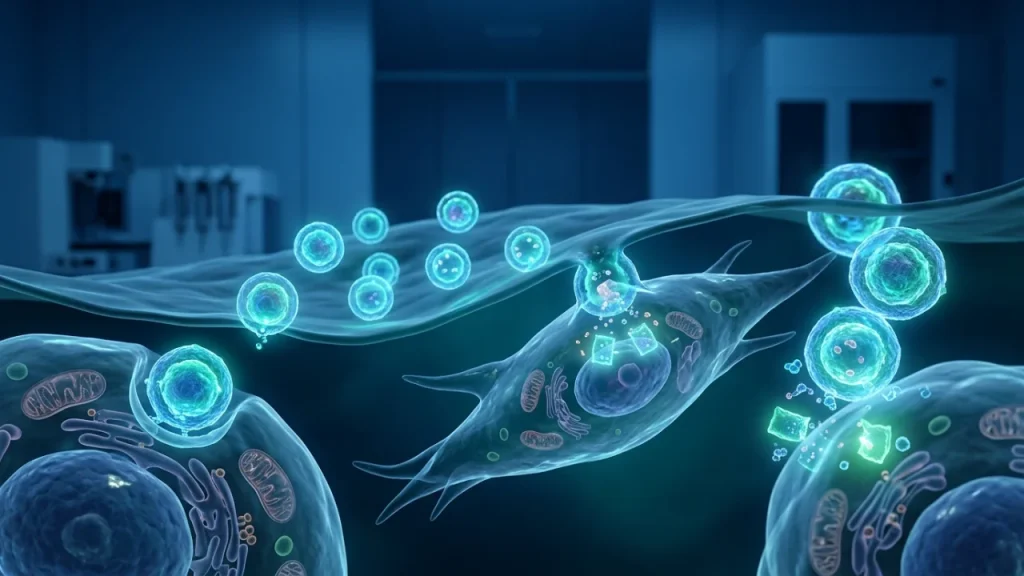
What Is Exosomes Training and Why It Matters Now
Understanding the Basics of Exosomes Training
Exosomes training teaches skincare experts about tiny cell messengers. These messengers are called exosomes. They are natural nanoparticles released by cells. Think of them as tiny packages. Cells send these packages to communicate with each other. This training provides a deep dive into their science and safe use.
This education is not a simple product tutorial. It is a full curriculum in regenerative science. Professionals learn what exosomes are and where they come from. They study how exosomes carry signals and materials. These signals can tell skin cells to repair themselves. They can also encourage collagen production.
A key part of exosomes training involves understanding sources. Exosomes come from different types of cells. Stem cells are a common source. These exosomes carry specific instructions for healing. The training covers how these vesicles are collected and purified. Safety and quality standards are a major focus.
The core purpose is to move beyond surface-level care. Skincare has long focused on topical products. These products work on the outer layers of skin. Exosomes work on a cellular level. They influence the skin’s biological processes from within. This represents a fundamental shift in approach.
Professionals learn the mechanisms of action. They see how exosomes are absorbed. The training explains how exosomes deliver their cargo. This cargo includes proteins, lipids, and RNA. These molecules can change cell behavior. For example, they can reduce inflammation or speed up wound healing.
Practical application is another critical module. Training shows how to integrate this knowledge into practice. It covers consultation techniques for client education. Proper storage and handling methods are taught. Professionals learn to manage client expectations realistically.
The timing of this education matters now for several reasons. The field of regenerative aesthetics is growing fast. New research emerges constantly. Clinicians must stay ahead of the science to offer safe care. Patients are also becoming more informed. They ask detailed questions about new treatments.
Without proper training, risks can increase. Misunderstanding the science leads to improper use. This can result in poor outcomes or wasted resources. Comprehensive education ensures treatments are based on evidence. It helps professionals select the right protocols for different skin concerns.
This foundational knowledge builds professional confidence. A trained expert can explain complex science in simple terms. They can distinguish between genuine science and marketing hype. This builds trust with clients who seek advanced skincare solutions.
The curriculum often includes several key areas: – The biology of exosome biogenesis and release. – Methods for characterizing and verifying exosome quality. – Clinical indications and current research findings. – Ethical considerations and regulatory guidelines. – Hands-on demonstration of assessment techniques.
This training ultimately bridges a major gap. It connects cutting-edge laboratory science to daily clinical practice. It turns a complex biological discovery into a usable tool. Skincare professionals become more than technicians. They become informed practitioners of cellular communication.
This knowledge is crucial for the next era of skincare. It moves the industry toward more personalized and results-driven care. Understanding exosomes is the first step in mastering this new toolkit. The following sections will explore the specific benefits this expertise unlocks for practice and patient results.
Why Modern Aesthetics Demands This Knowledge
The skincare industry is no longer just about surface-level care. It is moving toward cellular-level repair. This shift creates a new demand for professional knowledge. Modern aesthetics now requires an understanding of regenerative science. Professionals must grasp how cells communicate to heal. Without this, treatments may become outdated.
Client expectations have changed dramatically. People now research treatments online before consultations. They encounter terms like exosomes and growth factors. They ask informed questions about mechanisms and safety. A professional without deep training can only give vague answers. This erodes trust and credibility quickly. In contrast, a trained expert can explain the science clearly. They can map a client’s specific concern to a biological process. This builds immense confidence and justifies treatment plans.
The competitive landscape is another key factor. Many clinics now offer advanced regenerative procedures. Simply having a new device or product is not enough. The real differentiator is the expertise behind its use. Clinics with properly trained staff can achieve better, more consistent results. They can also manage client expectations more effectively. This leads to higher satisfaction and more referrals. Exosomes training provides this critical edge. It transforms a service from a generic offering into a specialized protocol.
Consider the pace of scientific discovery. New studies on extracellular vesicles are published weekly. These findings can change best practices for treatment. A one-time seminar is not sufficient. Continuous education is essential to stay current. A structured training program provides a framework. It helps professionals evaluate new research critically. They can separate solid evidence from exaggerated claims. This protects their practice and their clients.
Several clear trends make this knowledge non-negotiable: – The rise of combination therapies using exosomes with other modalities. – Increased regulatory scrutiny requiring documented competency. – Client demand for personalized, evidence-based treatment pathways. – The need to mitigate risks associated with improper product handling.
A professional’s value is increasingly tied to their specialized knowledge. Technical skill in applying a product is just one part. Understanding why and when to use it is far more important. This is where comprehensive exosomes training creates true experts. It empowers professionals to make smart clinical decisions.
The market rewards this expertise directly. Clients are willing to invest more in treatments they understand and trust. They seek practitioners who act as educators and guides. This relationship is the foundation of a modern, successful practice. Training in exosome science directly supports this model.
Ultimately, this knowledge future-proofs a career. It prepares professionals for the next decade of innovation. Aesthetics is converging with medical biotechnology. Those without a foundation in cellular science will struggle to adapt. This training matters now because it defines the new standard of care. It moves the profession from cosmetic application to targeted biological intervention.
The next logical step is seeing how this applied knowledge transforms real-world outcomes and practice growth.
How Exosomes Training Differs From Traditional Courses
Traditional aesthetics courses often focus on technique. They teach how to perform a procedure. They list product steps and safety rules. This is important foundational knowledge. Yet it rarely explains the deep science behind the tools.
Exosomes training represents a different educational model. It starts with cellular biology. Students learn how cells communicate. They study tiny vesicles called exosomes. These vesicles carry signals and materials between cells. This is not just theory. The training directly links this science to skin health and repair.
A standard course might state that a product improves skin texture. An exosome curriculum explains the mechanism. It details how exosomes can influence fibroblast behavior. Fibroblasts are the skin cells that make collagen. Training shows how exosomes may carry instructions to these cells. The goal is to promote natural collagen production. This is a fundamental shift from just applying a product to understanding its biological action.
The depth of study also differs greatly. Consider these key contrasts:
- Traditional learning often treats products as single solutions. Advanced training frames exosomes as part of a system. It covers how they interact with other treatments like microneedling or lasers.
- Old models may skip the immune system. New curricula examine exosome sources and preparation. They stress why these factors matter for safety and results.
- Basic courses give protocol handbooks. Expert training develops critical thinking. It teaches professionals to assess client biology. They learn to tailor approaches based on individual needs.
Hands-on practice in these programs is also unique. It goes beyond simple injection methods. Labs often include sample analysis exercises. Professionals might use microscopes to view cellular structures. They practice handling protocols that maintain vesicle integrity. This builds respect for the biological material they are using.
Assessment methods evolve too. A traditional test might ask for procedural steps. An exosome exam could present a complex client case history. It would ask the professional to design a treatment plan based on cellular science principles. This tests applied knowledge, not just memorized facts.
The timeline for learning expands significantly. A typical technique class might last one day. Comprehensive exosomes training unfolds over weeks or months. It allows time for concepts to settle. It includes mentorship and discussion forums. This supports true integration of knowledge into practice.
This difference creates a new kind of practitioner. They are not just technicians following steps. They become clinical decision-makers grounded in regenerative science. Their consultations change because they can explain processes at a cellular level. This builds immense client trust and justifies treatment plans.
Ultimately, this training closes the gap between aesthetics and biomedical science. It provides the “why” behind the “how.” This empowers professionals to innovate within their practice safely. They can better predict outcomes and manage expectations. The next logical question is how this deep learning translates into tangible benefits for both the practitioner and their clients
The Real Benefits of Proper Exosomes Education
Proper exosomes training transforms a professional’s daily practice. It moves them from following trends to understanding biological cause and effect. This creates tangible benefits for their business and client results.
One major benefit is precise treatment personalization. A trained professional can analyze a client’s skin concerns at a cellular level. They don’t just see dryness or fine lines. They consider factors like fibroblast activity and inflammatory signals. This knowledge allows for tailored exosome protocols. They can adjust vesicle sources or delivery methods for each person. This leads to more effective and predictable outcomes.
Risk management improves dramatically. Exosomes are powerful biological signals. Without deep training, a practitioner might misuse them. Comprehensive education covers critical safety protocols. Professionals learn to verify product purity and activity. They understand proper storage and handling to preserve function. They also learn to screen clients for unsuitable conditions. This reduces potential side effects and builds a strong safety record.
Client communication becomes a powerful tool. Patients today are informed and skeptical. They ask detailed questions about the science. A technician with surface-level training might give vague answers. A professional with exosomes education can explain processes clearly. They can describe how vesicles carry instructions to skin cells. They can discuss realistic timelines for collagen production. This transparent communication builds exceptional trust. It justifies treatment value and fosters long-term loyalty.
The professional’s confidence and authority grow. They are no longer just offering another facial. They are providing a science-backed regenerative treatment. This positions them as a true expert in their market. It allows them to command appropriate fees for their advanced skill. Their consultations become educational experiences that stand out.
Finally, this education future-proofs a practice. Aesthetic science evolves rapidly. New research on extracellular vesicles emerges constantly. A professional grounded in core principles can adapt. They can critically evaluate new studies or products. They can integrate genuine advancements while avoiding marketing hype. This ensures their practice remains relevant and cutting-edge.
The real benefit is a sustainable, respected, and effective practice. It is built on a foundation of genuine expertise.
- Enhanced clinical decision-making for complex cases.
- Ability to troubleshoot and adjust protocols based on client response.
- Stronger collaborative relationships with referring medical providers.
- Development of a recognized specialty that attracts ideal clients.
- Contribution to better industry standards and patient care.
This comprehensive skill set directly impacts client satisfaction and retention. Satisfied clients see visible, lasting results. They become advocates for the practice. This creates a virtuous cycle of growth and reputation. The investment in deep learning pays continuous dividends.
Ultimately, proper education turns a procedure into a precision therapy. It matters now because patients demand both safety and efficacy. They seek experts who can deliver on both promises. Exosomes training provides the toolkit to meet this demand fully. The next consideration is how to identify a quality educational program in a growing field.
Who Should Consider Exosomes Training Programs
Exosomes training is not for every skincare provider. It serves professionals ready to move beyond basic techniques. This education demands a solid foundation in skin biology and clinical practice. It is designed for those seeking a deeper therapeutic role.
Certain professionals gain the most from this knowledge. Consider your current practice and goals. This training fits you if your work involves complex client needs. These are cases where standard approaches fall short.
Aesthetic nurses and nurse practitioners are primary candidates. They already administer injectables and advanced treatments. Exosomes training adds a powerful regenerative layer to their work. It allows them to address skin healing and quality with new precision. They can combine these protocols with other procedures for enhanced results.
Medical aestheticians with advanced licensure also benefit greatly. Their focus is often on corrective treatments and long-term skin health. Understanding exosome science lets them optimize treatment plans. They can better support client recovery and improve treatment outcomes. This knowledge elevates their consultative role.
Dermatologists and plastic surgeons should consider this training as well. For them, it integrates regenerative science into surgical or medical care. It offers adjunctive protocols for wound healing and scar management. This can improve patient satisfaction and visible results.
The training is also crucial for clinic owners and medical directors. They must make informed decisions about incorporating new technologies. A proper exosomes training program provides the framework for safe adoption. It helps establish clinic-wide protocols and ensures staff competency.
Your practice type is another key factor. Consider training if you specialize in anti-aging or restorative treatments. It is vital for clinics focusing on post-procedure recovery. Professionals working with acne scarring or pigmentation issues will find it highly relevant. The science applies directly to these challenging conditions.
A strong interest in continuous learning is essential. This field evolves quickly with new research. Successful participants are naturally curious about cell biology. They enjoy understanding the ‘why’ behind a treatment’s effect.
Think about your client conversations. Do clients ask for the latest in regenerative science? Are they increasingly informed and selective? This training equips you to answer complex questions confidently. It builds trust through demonstrated expertise.
The commitment involves both time and intellectual engagement. Programs require focused study on cellular communication mechanisms. You will learn about vesicle cargo, surface receptors, and signaling pathways. This is applied science, not just theory.
Investing in this education signals a serious professional stance. It shows a commitment to evidence-based aesthetic medicine. This attracts a clientele that values expertise and safety. It sets your practice apart in a competitive market.
Ultimately, the right candidate views skin care as a form of medicine. They see their role as a facilitator of the body’s innate healing processes. Exosomes training provides the scientific language and practical tools for this approach. If this aligns with your philosophy, then this advanced curriculum is your logical next step. The subsequent step is evaluating what constitutes a comprehensive and reputable program structure.
The Science Behind Exosomes and Cellular Communication
What Are Extracellular Vesicles Exactly
Cells are not isolated units. They constantly talk to each other. This communication is vital for health and healing. One key method of this talk involves tiny messengers. These messengers are called extracellular vesicles.
Think of a cell as a busy factory. It produces packages for delivery. Extracellular vesicles are those packages. “Extracellular” means outside the cell. “Vesicle” means a small, fluid-filled sac. Cells release these tiny sacs into the spaces around them.
These vesicles carry important cargo. This cargo includes proteins, lipids, and genetic instructions. The cargo is protected inside the vesicle’s membrane. This membrane is like a secure envelope. It ensures the message arrives intact at a target cell.
There are different types of extracellular vesicles. They are categorized mainly by their size and how they are made. The main types you will hear about are exosomes, microvesicles, and apoptotic bodies.
Exosomes are the smallest type. They typically measure between 30 and 150 nanometers. A nanometer is one billionth of a meter. For scale, thousands of exosomes could fit across the width of a single human hair.
Cells create exosomes inside special compartments. These compartments are called multivesicular bodies. The cell then releases exosomes to the outside environment. This process is like a factory loading trucks from its shipping dock and sending them out.
Microvesicles are larger than exosomes. They bud directly off the cell’s outer membrane. Imagine a soap bubble pinching off from a larger bubble. That is similar to how microvesicles form.
Apoptotic bodies are the largest vesicles. Cells release them during programmed cell death. Their role is more about clean-up and disposal. In aesthetic and regenerative science, exosomes and microvesicles are the primary focus.
The structure of an exosome is crucial for its function. It has a lipid bilayer membrane. This membrane is studded with specific proteins. These proteins act like address labels. They help the exosome find and fuse with the right target cell.
Inside, the exosome’s core holds its functional cargo: – Signaling proteins that can turn processes on or off. – Growth factors that encourage cell proliferation. – RNA molecules, like mRNA and miRNA, which carry genetic instructions.
This cargo is not random. A cell carefully loads it based on the message it needs to send. A healthy skin cell sends different signals than a stressed or damaged cell.
Understanding these vesicles is the first step in grasping regenerative science. It explains how cells coordinate repair without direct contact. This foundational knowledge directly supports effective exosomes training. Such training delves into how we can harness this natural system.
In short, extracellular vesicles are the body’s natural delivery network. Exosomes are a key specialized courier in that network. They deliver precise instructions to coordinate complex biological functions, including skin renewal and repair. This sets the stage for understanding how this science can be applied in practice.
How Cells Use Exosomes to Send Messages
Cells constantly send and receive vital messages. They do not use phones or emails. Instead, they dispatch microscopic exosomes. This process is precise and deliberate. It begins inside the cell. A special compartment called an endosome forms. It gathers specific molecules for delivery. These molecules are the message cargo.
The endosome’s membrane then pinches inward multiple times. It creates many small vesicles inside itself. This structure is now a multivesicular body. Think of it like a shipping container full of individual packages. Each small vesicle inside is an exosome in waiting. The cell carefully selected its contents earlier.
Next, this multivesicular body moves through the cell. It travels to the outer membrane. It then fuses with this cell wall. The fusion releases the exosomes into the space outside the cell. This space is the extracellular matrix. The exosomes are now in the body’s delivery network.
Their journey is not random. The proteins on the exosome’s surface act as navigation tags. These tags match specific receptors on target cells. It is a lock-and-key system. An exosome from a fibroblast might seek another skin cell. An exosome from an immune cell will look for a site of inflammation.
Upon finding the right cell, the exosome docks. It can deliver its message in two main ways. First, it can fuse with the target cell’s membrane. This merger dumps the cargo directly into the cell’s interior. Second, the target cell can swallow the entire exosome. This process is called endocytosis.
Once inside, the exosome’s payload is unpacked. The signaling proteins activate new pathways. The growth factors trigger repair and renewal. The RNA molecules provide new instructions. The target cell reads these instructions and changes its behavior accordingly.
For example, a damaged skin cell sends stress signals via exosomes. Neighboring healthy cells receive these signals. They then start producing more collagen and elastin. They also begin dividing more to replace lost tissue. This is coordinated healing without a central command center.
The entire system relies on accuracy. Faulty addresses or corrupted cargo can cause problems. Proper exosomes training teaches professionals about this precision. It highlights why sourcing and handling matter greatly in treatments.
This communication happens billions of times each day in your body. It maintains skin health, coordinates immune responses, and repairs daily damage. Understanding this flow of information is key to applying regenerative science correctly. It shows why mimicking this natural process requires deep respect for its complexity.
The next logical question is application. How can this innate messaging system be used purposefully in aesthetic practice? This leads to the principles of therapeutic use, where natural biology meets clinical intention.
The Role of Exosomes in Skin Repair Processes
The skin is a master of repair. When it gets damaged, a precise sequence begins. Exosomes are key messengers in this process. They carry the signals that start and control healing.
Imagine a small cut. The injury immediately disrupts the local cells. These stressed cells release a specific set of exosomes. Think of them as emergency alerts. These exosomes travel to nearby healthy cells and stem cells. Their cargo delivers a clear message: “Begin repair now.”
This triggers several coordinated actions. First, inflammation must be carefully managed. Early exosome signals help recruit immune cells to clean the site. They also tell these immune cells when to stop. This prevents excessive inflammation that can harm good tissue.
Next, new tissue must be built. Exosomes from fibroblasts, the skin’s building cells, carry direct orders. – They instruct cells to produce more collagen and elastin proteins. – They encourage new blood vessel formation for better nutrient delivery. – They guide skin stem cells to multiply and migrate to the wound area.
Collagen production is a prime example. Fibroblasts make collagen, but they need instructions. Exosomes from healthy skin cells provide a perfect blueprint. They deliver growth factors and RNA molecules. These molecules act like a detailed construction plan. The fibroblast follows this plan to make the right type of collagen. It forms it in the correct, strong, woven pattern. Without these exosome instructions, collagen can be laid down poorly. This leads to weak or scarred tissue.
The final phase is remodeling. The fresh scar tissue is not perfect at first. It is often disorganized. Over weeks, exosomes continue to direct the cleanup. They signal for unnecessary cells to be removed. They guide the realignment of collagen fibers. This makes the healed tissue stronger and more flexible.
Aging skin shows what happens when this communication slows down. Older cells send fewer exosomes. The messages they do send can be less clear. The repair signals become weaker and slower. Collagen production drops. Wounds heal with more visible scars. The skin’s natural renewal cycle falters.
Therapeutic use aims to support this fading system. It introduces a concentrated dose of clear, youthful signals. This is where proper exosomes training becomes critical for professionals. They must understand these natural repair pathways deeply. This knowledge allows them to use exosome-based treatments correctly. They can mimic the body’s own timing and targets.
This natural repair process is efficient and intelligent. It uses minimal energy for maximum effect. Every step relies on accurate exosome communication. Disrupting one step can delay the entire healing sequence. Supporting the process means understanding each phase, from the first alert to the final polish of new skin.
Mastering this science allows professionals to work with biology, not against it. The next step is applying these principles in a clinical setting with precision and care.
Key Components Found Inside Exosomes
Exosomes are not empty bubbles. They carry a precise cargo of molecular instructions. This cargo is what allows one cell to change another cell’s behavior. Think of an exosome as a tiny delivery truck. Its packages contain different types of biological messages.
The most important cargo is RNA. This is not the DNA in your cell’s nucleus. RNA is a working copy of genetic instructions. Cells pack small RNAs into exosomes. These RNAs can silence genes in the target cell. They can also turn other genes on. For example, one microRNA might tell a fibroblast cell: “Make more collagen now.” Another might signal: “Stop this inflammation.”
Proteins form another major part of the cargo. These are not random proteins. They are carefully selected. Some proteins are growth factors. They stick to receptors on a target cell’s surface. This binding starts a chain reaction inside the cell. It is like turning a key to start an engine. Common growth factors in exosomes include TGF-β and VEGF. TGF-β helps control cell growth and collagen production. VEGF tells the body to build new blood vessels.
Other proteins are enzymes. Enzymes speed up chemical reactions. An exosome might deliver enzymes that help break down damaged tissue. This cleanup is vital for making space for new, healthy cells. Structural proteins are also present. They help give the exosome its shape and help it fuse with the target cell.
Lipids are a third key component. They form the exosome’s membrane itself. This lipid bilayer does more than hold the cargo. Specific lipids on the surface act like address labels. They help the exosome find the right cell to deliver its message. Some lipids can also have direct signaling effects when they interact with a target cell.
The exact mix of RNA, proteins, and lipids defines the exosome’s mission. A stem cell’s exosomes carry a different cargo than an immune cell’s exosomes. This is why source matters in treatments. The cargo must match the desired therapeutic goal.
Here is a summary of common cargo types and their primary jobs: – MicroRNAs: Gene regulators. They fine-tune protein production in the recipient cell. – Growth Factor Proteins: Signal starters. They trigger pathways for growth and repair. – Enzymatic Proteins: Biological catalysts. They help remodel the extracellular matrix. – Surface Lipids: Delivery addresses and fusion helpers. They ensure precise targeting.
The beauty of this system is its efficiency. One exosome delivers a coordinated set of instructions. It does not send just one signal. It delivers a full program. This program can guide a cell through a complex task, like initiating repair or reducing inflammation.
Understanding this cargo is the foundation of effective exosomes training. A professional must know what these molecules do. They need to understand why cargo quality and consistency are critical. A treatment is only as good as the messages it carries.
This molecular knowledge shifts the view from “applying a substance” to “delivering precise instructions.” The next logical step is examining how professionals learn to handle these powerful signals with skill and safety in practice.
Why Exosomes Training Covers Cellular Biology
Cells constantly talk to each other. They do not use words. They use chemical and physical signals. Exosomes are a primary language in this conversation. To work with exosomes, you must understand this cellular language. This is the core reason exosomes training begins with biology.
Think of a skin cell that is damaged. It sends out specific exosomes. These exosomes carry a distress signal. Nearby healthy cells receive this signal. They then start repair processes. A professional applying exosomes is joining this conversation. Without biology knowledge, it is like speaking at random. You might send the wrong message entirely.
Training covers how cells make exosomes. This process is called biogenesis. It starts inside the cell’s endosomal system. Multivesicular bodies form inside the cell. These bodies contain tiny vesicles. These vesicles are the future exosomes. The cell loads them with precise cargo. Then the body fuses with the cell’s outer membrane. The exosomes are released into the space outside.
The release rate is not constant. A stressed cell may release more exosomes. A cancerous cell can release ten times more than a healthy one. The content of those exosomes also changes. This shows why source material is so critical in treatments. Biology explains these variations.
Next, training focuses on how exosomes find their targets. This is called targeting. Exosomes have address proteins on their surface. These proteins match receptors on certain cell types. A liver cell exosome will likely find another liver cell. A fibroblast exosome targets skin structure cells. This is not random delivery. It is a precise postal system.
Understanding targeting prevents wasted treatment. If exosomes lack the right surface signals, they may not reach the goal. They could be cleared by the immune system instead. Biology training teaches professionals to verify these targeting mechanisms.
The final step is uptake and instruction. The exosome must be taken inside the target cell. This can happen through membrane fusion or engulfment. Once inside, the exosome releases its cargo. The microRNAs and proteins get to work. They alter the cell’s behavior.
This is where cargo knowledge meets cellular machinery. A professional needs to know what happens next. For instance, a growth factor protein might activate a pathway called MAPK. This pathway tells the nucleus to make proteins for collagen. Without this map, results are unpredictable.
Here are key biology topics covered in foundational training: – Cell structure and function: Knowing organelles like the endosome and nucleus. – Signal transduction: How a message outside the cell creates change inside. – Receptor biology: How cells recognize specific signals. – Basic genetics: How microRNAs regulate gene expression without altering DNA. – Tissue types: Understanding differences between skin, bone, and muscle cells.
This knowledge turns application into strategy. You are not just placing particles on skin. You are directing a biological program. You know which cells will likely respond. You understand the time frame for cellular changes. You can anticipate how different conditions might affect the outcome.
For example, aged skin has fewer receptors for certain signals. Biology explains this. A trained professional might adjust their protocol accordingly. They might choose exosomes from a source known for high ligand content. This bridges science to practical results.
Ultimately, cellular biology provides the rulebook. Every treatment interacts with these rules. Ignoring them leads to guesswork and inconsistent outcomes. Mastering them allows for precise, effective interventions. This foundational science empowers professionals to move beyond standard protocols. They can think critically about each unique case, ensuring the powerful language of exosomes is translated correctly into clinical results.
The next step is applying this knowledge to real-world practice, focusing on safety and skill development in handling these complex biological tools
Core Components of Comprehensive Exosomes Training
Essential Topics Covered in Quality Exosomes Training
A complete exosomes training program moves from theory to applied science. It covers specific, actionable subjects. These topics ensure a professional is fully prepared. They go far beyond a simple product tutorial.
First, training must detail exosome sources and manufacturing. Not all exosomes are the same. Professionals learn about different cellular origins. Mesenchymal stem cells are a common source. These cells come from tissues like bone marrow or fat. The health and age of the donor matter. The training explains how cells are grown in controlled labs. It covers how exosomes are collected and purified. This knowledge is critical for judging quality. It helps professionals select the right tool for each client’s needs.
Next, a core module focuses on safety and regulatory standards. This is non-negotiable. Training reviews current guidelines for biologic materials. It teaches proper handling and storage protocols. Exosomes are sensitive to temperature and time. Professionals learn how to maintain product integrity from vial to skin. They also study contamination prevention. Sterile technique is emphasized throughout. This unit ensures patient safety is the top priority.
Another essential topic is clinical assessment and consultation. This is the diagnostic skill set. Professionals learn to analyze different skin conditions at a cellular level. They study how aging, sun damage, and scarring present biologically. Training covers client history evaluation. It teaches which factors might affect treatment outcomes. This allows for realistic goal setting. It ensures the right protocol is chosen from the start.
The heart of practical training is application methodology. This is the “how” of delivery. Courses should compare techniques like micro-needling, ultrasound, or direct application. They explain the depth and target for each method. For instance, micro-needling creates temporary channels. This allows exosomes to reach deeper skin layers. Training covers device settings, pressure, and patterns. It emphasizes consistency and even coverage. Hands-on practice is vital here.
Finally, a robust program includes outcome management and combination strategies. Professionals learn what results to expect. They understand the typical timeline for cellular response. Training also covers how to combine exosomes with other treatments. It might discuss pairing with laser therapy or specific topical creams. The goal is to build synergistic treatment plans. This maximizes benefits for the client.
These components form a complete educational framework. Each topic builds upon the last, creating a competent practitioner. This structured knowledge turns science into safe, effective practice. The next logical step is mastering the actual hands-on technique during a procedure.
Practical Skills Developed Through Hands-On Learning
Hands-on practice transforms theory into reliable skill. This training develops precise motor control. Professionals learn to handle delicate biological materials correctly. They practice drawing exosome solution into a syringe. This action must be smooth and steady. Jerky movements can damage the fragile vesicles. Trainees feel the correct resistance. They see how the liquid should look in the chamber.
Proper skin preparation is a critical first skill. The skin must be perfectly clean. Trainees practice systematic cleansing with sterile gauze. They learn to assess skin tone and texture by touch. Is the area oily, dry, or inflamed? The practitioner must identify micro-wounds or irritation. This step prevents contamination. It ensures the treatment starts on an ideal canvas.
Application technique requires the most repetition. For micro-needling, this involves mastering device control. The correct pressure is neither too light nor too deep. A light touch does not create effective channels. Excessive pressure causes unnecessary trauma. Trainees practice on synthetic skin or safe body areas first. They learn to maintain a consistent rolling speed. The device must not linger in one spot. Hands-on sessions build the muscle memory for even, uniform coverage. This creates a predictable pattern of micro-channels for exosome entry.
Mixing and dilution protocols are practiced meticulously. Exosome solutions often require preparation. Trainees use sterile saline or other carriers. They practice gentle swirling to mix, not shaking. Shaking can damage the exosomes’ structure. They learn to check for clarity and consistency visually. This ensures the final product is active and ready for use.
Sterile field management becomes second nature. Professionals set up their workspace before every simulated procedure. They arrange sterile drapes, gloves, and equipment in a specific order. Any break in technique means starting over. This rigorous practice prevents infections. It protects both the client and the integrity of the treatment.
Direct observation of skin response is a key diagnostic skill. During practice, trainers apply solutions to small areas. Trainees then watch for immediate reactions. Does the skin show mild erythema? This is a normal sign of increased blood flow. Does it show excessive redness or welts? That may indicate a technique error. Learning this visual feedback loop is essential for real-world adjustments.
- Device handling and calibration
- Solution preparation and handling
- Sterile technique and field maintenance
- Application pressure and pattern consistency
- Immediate post-application assessment
These practiced skills build clinical confidence. A practitioner’s hands learn what their mind understands. This reduces hesitation during actual client sessions. It leads to smoother, safer procedures with predictable outcomes. Mastery of these physical acts ensures the science of exosomes is delivered effectively every single time. The final pillar of expertise then becomes managing the client’s journey after they leave the treatment room.
How Training Teaches Product Formulation Evaluation
A high-quality exosome product is not defined by a single feature. Professionals learn to assess a combination of critical factors. This skill is central to comprehensive exosomes training. It ensures the treatment’s active ingredients are potent and pure. Practitioners must become savvy evaluators. They look beyond marketing claims to examine hard scientific data.
First, training covers source and characterization. Where do the exosomes come from? Ethical, documented cell sources are fundamental. Trainees learn what characterization reports should show. These reports prove the vesicles are truly exosomes. They confirm the correct size, which is typically under 150 nanometers. They also verify the presence of standard marker proteins. This data is non-negotiable for any reputable supplier.
Next comes quantification and concentration. More exosomes are not always better. But a precise, consistent count is vital. Training teaches how to interpret particle concentration data. This is often measured in particles per milliliter. A reliable product will have a specific and declared concentration. Professionals learn why this matters for dosing correctly. They understand that vague terms like “high potency” are not scientific measurements.
Viability and functionality are the ultimate tests. Exosomes must be alive and active to work. Comprehensive education delves into storage and handling protocols that protect function. It also covers key functional assays. These tests show if the exosomes can perform their natural roles. For instance, can they support fibroblast growth in a lab setting? Training provides the framework for asking for this proof.
- Purity from contaminants like cellular debris
- Confirmation of key regenerative cargo (proteins, growth factors)
- Validated cold-chain logistics for delivery
- Clear reconstitution and handling instructions
- Third-party verification of all critical data points
Finally, training emphasizes clinical correlation. Laboratory data must connect to real-world outcomes. Professionals review case studies and published research. They learn which biomarkers or results often link to better clinical improvements in skin. This creates a feedback loop. Observing client results then informs future product selection. A practitioner builds an evidence-based library in their mind. They can match product profiles to specific client needs and goals.
This rigorous evaluation process becomes a standard protocol. It protects clients and builds practice credibility. A professional equipped with this knowledge makes confident choices. They select formulations with a high probability of biological activity. This turns a promising treatment into a reliable one. The next logical step is understanding how to integrate this powerful tool into a complete treatment plan for lasting skin health.
Mastering Safety Protocols in Exosomes Training
Safety is the first practical skill taught in serious exosomes training. It is not just a list of rules. It is a deep understanding of why each step matters. This protects both the client and the professional. Training begins with source and purity. Professionals learn to ask for documents. These documents prove the exosomes come from a safe, controlled origin. They also confirm the exosomes are free from harmful agents. This includes viruses, bacteria, and endotoxins. Contaminants could cause serious reactions. Proper screening prevents this.
Handling is the next critical layer. Exosomes are delicate biological tools. They are not simple creams or serums. Training covers the entire cold chain. This term refers to keeping the product constantly cold. The cold chain starts at the lab. It continues during shipping. It ends at the clinic’s refrigerator. A break in this chain can ruin the product. Inactive exosomes offer no benefit. Professionals learn to monitor temperatures with data loggers. They also learn proper storage methods.
The preparation process has specific safety steps. This is called reconstitution and handling. Exosomes often come as a frozen powder or liquid. They must be mixed correctly. Training teaches the use of sterile technique. This work often happens in a clean environment, like a laminar flow hood. It prevents airborne contamination. Professionals learn which solutions to use for mixing. They learn what not to use. Certain common solutions can damage the exosomes’ fragile membrane. Damaged exosomes will not work.
Application protocols are equally precise. Skin preparation is vital. The goal is to create pathways for exosomes to enter without causing harm. Training details appropriate cleansing methods. It specifies which pre-treatment procedures are safe. For example, mild micro-needling might be suitable. Aggressive ablative laser treatment right before is not. The timing and order of steps are part of the safety plan.
Finally, training addresses client assessment and consent. Not every client is a good candidate. A thorough health history review is essential. Professionals learn key questions to ask. They identify conditions or medications that might require caution. This is part of ethical practice. Clear communication about realistic outcomes is also a safety issue. It manages client expectations and builds trust.
Comprehensive exosomes training turns safety from a worry into a standard routine. – Verification of sterile sourcing and testing – Mastery of unbroken cold-chain management – Aseptic preparation techniques – Protocol-specific skin preconditioning – Structured client screening and education
Each step is a safeguard. This rigorous approach minimizes risk and maximizes potential for positive results. It allows the professional to apply advanced science with confidence. Safety protocols ensure the biological activity chosen so carefully is delivered effectively and responsibly. This foundation is what makes the transition from theory to trusted treatment possible and reliable for any practice focused on lasting client health and skin vitality.
Mastering these protocols completes the practitioner’s technical knowledge. The final piece of education focuses on strategic use within a complete treatment plan for optimal skin rejuvenation over time, which will be detailed next.
Integrating Science with Clinical Practice Skills
True expertise in regenerative aesthetics requires more than just knowing facts. It demands the ability to apply science in a real treatment room. Comprehensive exosomes training bridges this critical gap. It connects cellular biology with hands-on clinical practice.
Think of it like learning to drive a car. You can read the manual. You must also get behind the wheel. Training provides that essential hands-on experience. It turns abstract concepts into reliable skills.
This integration happens through several key methods. First is scenario-based learning. Trainees work through common clinical situations. They practice deciding when exosome therapy is the best choice. They also learn when other treatments might be better. This builds clinical judgment.
Second is technique simulation. Professionals practice the entire treatment process. This includes proper storage and handling of vials. It covers correct mixing and preparation methods. It involves precise application techniques for different skin areas. Repeated practice creates muscle memory and confidence.
A core skill is learning to “read” the skin’s response. Training teaches what to look for after application. Professionals learn to identify normal, positive reactions. They also learn to spot signs that need attention. This monitoring is part of the treatment’s success.
Integration also means combining exosomes with other procedures. Science shows timing matters. For example, applying exosomes after a microneedling session can be highly effective. The micro-channels create pathways for delivery. Training provides guidelines for these combinations. – Protocol for use after laser treatments – Guidelines for pairing with growth factor serums – Strategies for integration into long-term care plans
Another vital component is outcome documentation. Professionals learn how to track results objectively. They use standardized photography under consistent lighting. They record client feedback systematically. This data helps refine future treatments. It moves care from guesswork to a precise practice.
Communication skills are equally scientific. Training coaches professionals on explaining complex science simply. They learn to use clear analogies clients understand. For instance, comparing exosomes to “instructional messengers” for skin cells. This builds informed consent and trust.
Finally, integration involves business practice ethics. Training covers realistic marketing of regenerative science. It emphasizes evidence-based claims over hype. This protects the client and the professional’s reputation.
The goal is seamless practice. The science informs every action. The clinical skill executes it reliably. This fusion is what defines a competent practitioner. It transforms a powerful biological tool into a trusted, repeatable treatment. Mastery here sets the stage for the ultimate goal: designing personalized treatment journeys that deliver lasting rejuvenation.
Applying Exosomes Knowledge in Clinical Settings
How Exosomes Training Prepares for Client Consultations
A client consultation is the first critical test of a professional’s expertise. Exosomes training builds a framework for this conversation. It moves beyond simple service menus. The professional learns to conduct a structured skin assessment with a new purpose. They are not just looking for wrinkles or dryness. They are identifying cellular communication deficits. This shift in perspective is fundamental.
Training provides the language to explain this science simply. A professional can describe exosomes as tiny biological packages. These packages carry instructions and building materials between cells. In aging or damaged skin, this messaging system slows down. The goal of treatment is to deliver a concentrated dose of these natural messengers. This helps restart the skin’s own repair processes. This explanation builds a logical foundation for the treatment.
The consultation becomes a collaborative investigation. The professional uses knowledge from their exosomes training to ask targeted questions. They inquire about past procedures and healing responses. They discuss the client’s cellular health indicators. This might include questions about sleep quality, stress levels, and nutritional habits. These factors influence exosome activity within the body. This holistic approach positions the professional as a true skin health expert.
A key part of training is learning to manage expectations with scientific facts. Professionals practice explaining what exosomes can and cannot do. They clarify that results are progressive and biological. They avoid promising instant transformations. Instead, they frame outcomes as a restoration of optimal cellular function. This honesty prevents disappointment and builds long-term trust.
Professionals also learn to tailor their explanations to individual clients. For a results-focused client, they might emphasize the evidence behind the protocols. For a science-curious client, they can briefly detail the cargo inside exosomes. This cargo includes growth factors and signaling proteins. Training provides analogies for different learning styles.
- For example: Comparing exosomes to “software updates” for tired skin cells.
- Or describing them as “special delivery trucks” bringing repair supplies to a construction site.
These metaphors make an abstract concept tangible and memorable.
Risk communication is another vital skill gained from training. A trained professional can clearly explain safety protocols. They discuss the rigorous sourcing and testing of clinical-grade exosomes. They outline the sterile handling procedures used in every treatment. This transparent discussion alleviates client concerns before they are even voiced.
Finally, the consultation integrates all prior learning into a custom plan. The professional synthesizes data from the assessment. They combine it with their understanding of exosome mechanisms. Then they propose a coherent treatment strategy. This strategy includes the number of sessions needed for a measurable biological response. It also includes complementary treatments that may enhance outcomes.
This entire process stems from deep educational confidence. The professional is not selling a mystery serum. They are guiding a client through a logical, science-based rejuvenation pathway. Their authority comes from knowledge, not marketing claims. This transforms the client relationship from transactional to advisory.
Mastering the consultation sets a clear trajectory for success. It ensures client understanding and commitment from the very start. This informed beginning is essential for achieving the consistent, documented results that define modern aesthetic practice. The next step involves translating this agreed-upon plan into precise, technically flawless treatment execution.
Developing Treatment Plans with Exosomes Training
A well-crafted treatment plan acts as a biological roadmap for skin renewal. It is not a one-size-fits-all formula. Instead, it is a dynamic protocol built on diagnostic findings. This is where exosomes training proves its practical value. Trained professionals learn to match specific exosome signals to distinct skin concerns.
The first decision involves determining the primary treatment goal. Is the aim to accelerate wound healing after a procedure? Or is it to combat chronic inflammation seen in aging skin? Perhaps the focus is on stimulating new collagen in sun-damaged areas. Each goal suggests a different application strategy. For example, post-procedure healing often benefits from an immediate, targeted application. Addressing photoaging may require a series of broader applications over time.
Next, the professional decides on the treatment frequency and total number of sessions. This is based on the natural cycle of skin cells. Skin cells turn over every four to six weeks. A single exosome application can influence this cycle. However, sustained change often requires multiple sessions. A common initial protocol involves three treatments spaced four weeks apart. This timing aligns with cellular renewal. It allows the cumulative signaling effect to build. Follow-up or maintenance sessions might then occur every six to twelve months.
The method of delivery is another critical choice. The plan must specify how exosomes will reach the target cells. – Topical application after micro-needling is common. The micro-channels allow direct access to the dermis. – Direct injection into specific areas allows for a high local concentration. – Combination with other energy-based devices can enhance uptake. The choice depends entirely on the skin’s condition and the desired depth of effect.
Dosage is a fundamental parameter guided by training. Clinical-grade exosomes are measured in particles or micrograms. Training provides a framework for selecting an effective dose. Factors include the treatment area’s size and the severity of the condition. A thin, fragile skin area under the eyes needs a different approach than a thicker cheek area with deep wrinkles. The professional calculates this, ensuring sufficient signal without waste.
The plan also integrates exosomes with other skincare products. A trained professional knows which active ingredients support exosome function. They might recommend specific peptides or growth factors for home use. These products can prepare the skin before treatment. They can also help maintain results afterward. Crucially, they will advise against ingredients that could cause inflammation or interfere with signaling during the critical post-treatment period.
Finally, every plan includes clear benchmarks for progress. These are not vague promises of “glowing” skin. They are objective measures agreed upon during consultation. Benchmarks could be a reduction in specific wrinkle depth measured by imaging. They could be a decreased redness scale for inflammatory conditions. Setting these points allows for honest evaluation after each session. The plan can then be adjusted based on this biological feedback, ensuring the protocol remains responsive to the individual’s unique cellular response. This meticulous, science-grounded approach transforms theoretical knowledge into predictable, superior clinical outcomes.
Combining Exosomes with Other Treatment Modalities
Exosomes are not a standalone treatment. Their power is unlocked when combined with other clinical procedures. This combination creates a powerful regenerative effect. Think of a procedure like microneedling as creating a construction site. It makes tiny, controlled channels in the skin. These channels are pathways for exosomes to enter. The exosomes then act as the architects and foremen on that site. They deliver precise instructions to the skin’s cells. This guides the healing process toward optimal repair.
Microneedling provides a classic example of this synergy. The needles cause a minor, intentional injury. This triggers the skin’s natural wound-healing response. Inflammation and cell signaling begin. Applying exosomes immediately after this procedure is strategic. The exosomes enter through the micro-channels. They then modulate the inflammatory signals. They guide fibroblasts to produce high-quality collagen. The result is better structure and smoother skin than with microneedling alone. The procedure creates the opportunity, and the exosomes direct the outcome.
Other modalities also pair effectively with exosome therapy. Laser resurfacing treatments work in a similar way. They remove damaged outer layers of skin. They also generate heat in the deeper dermis. This heat stimulates a repair response. Applying exosomes post-laser can calm excessive heat-related inflammation. It can also steer collagen remodeling to prevent scarring. This leads to more comfortable healing and improved results.
Radiofrequency devices use energy to tighten skin by heating tissue. This heat prompts existing collagen fibers to contract. It also signals for new collagen production. Exosomes can enhance this signaling network. They support the fibroblasts that must generate new structural proteins. The combination can lead to more pronounced and longer-lasting tightening effects.
The timing of application is a critical skill from exosomes training. Professionals learn when to apply the exosomes for maximum effect. – For microneedling, exosomes are typically applied immediately after creating the channels. – After laser procedures, they are often applied once the initial heat has dissipated. – With some radiofrequency devices, they might be applied both before and after to prime and then guide cells.
This knowledge prevents waste and ensures biological activity aligns with the skin’s repair phases.
Combining treatments also allows for a tailored approach to different concerns. A professional might choose a gentle microneedling depth for overall rejuvenation with exosomes. For deeper scars, they might select a more aggressive laser setting, knowing exosomes will aid complex repair. This flexibility is key. It moves beyond a one-size-fits-all use of any single device.
Safety is paramount in these combinations. A trained professional understands contraindications. They know not to combine exosomes with treatments that cause extreme inflammation or necrosis. The goal is controlled, therapeutic injury followed by intelligent repair guidance. Proper exosomes training covers these protocols in depth.
Ultimately, combining modalities leverages the strengths of each tool. The mechanical or energy-based procedure creates a biological demand for change. The exosome treatment supplies the precise information to meet that demand effectively. This collaborative approach achieves outcomes that neither could reliably produce alone, marking a sophisticated step in modern aesthetic practice rooted in cellular science.
Managing Expectations Through Educated Communication
A client’s skin cannot regenerate like a sci-fi movie. Change happens at the cellular pace. This is the first truth an educated professional communicates. Training in exosome science provides the facts behind this pace. Practitioners learn the timeline of cellular signaling and protein synthesis. They can then explain why visible results take weeks to months. This stops false hopes before they start.
Managing expectations begins with understanding the mechanism. Exosomes are instructions, not instant fillers. A trained professional explains this clearly. They might say, “We are sending precise messages to your skin cells today. Your cells must then read these messages and act on them. This biological process takes time.” This frames the treatment accurately. It builds trust through transparency.
An expert uses specific, simple analogies. They could compare exosomes to a seed packet and the skin to a garden. The procedure plants the seeds. Watering and sunlight represent the body’s own healing processes. The garden does not bloom overnight. This makes abstract science tangible. Clients visualize the process instead of just waiting for a result.
Exosomes training covers typical response ranges. Practitioners learn what is normal. They know that initial redness is common. They understand that some clients see subtle brightening in two weeks. Others may need three months for collagen remodeling to show. This knowledge prevents panic. It also prevents premature disappointment.
Key points a professional communicates include: – Results are progressive and cumulative. – The goal is improved skin function and quality, not just a single erased line. – Multiple sessions are often necessary for significant change. – Individual biology greatly influences the outcome.
This education also involves saying “no.” A trained practitioner can identify unsuitable candidates. They use their knowledge to protect clients from wasted investment. For example, they might explain that active, severe rosacea requires stabilization first. Exosomes are not a rescue drug for intense inflammation. Setting this boundary is a sign of expertise, not a limitation.
Realistic before-and-after pictures are crucial tools. Training emphasizes using clinical photos that show genuine, moderate improvement. These photos should highlight texture and tone changes, not just wrinkle deletion. They set a believable standard. Clients appreciate honesty over hype.
Follow-up communication is part of the protocol. A professional schedules check-ins not just as sales opportunities, but as educational touchpoints. They might ask about skin hydration or sensitivity changes at week two. These subtle shifts indicate cellular activity is underway. Pointing this out keeps the client engaged in the process scientifically.
Ultimately, educated communication manages satisfaction. A client who understands the science judges results by different metrics. They look for stronger skin, less irritation, and gradual renewal. They value the long-term health approach. This transforms the client-practitioner relationship into a collaborative journey based on biological truth, setting the stage for advanced treatment planning rooted in individual progress reports.
Adapting Protocols Based on Individual Client Needs
No two clients present the same skin. Their cellular environment is unique. Exosomes training provides the framework to assess these differences. Practitioners learn to customize protocols from the very first session. This customization is not guesswork. It is a deliberate process based on biological signals.
The initial consultation becomes a diagnostic tool. A trained professional looks beyond surface concerns. They evaluate the skin’s inflammatory status. They assess barrier integrity and cellular turnover rates. This evaluation dictates the starting point for exosome application. For instance, a client with a compromised barrier needs a different strategy than one with simple photoaging.
Protocol adaptation happens across several key variables. The first is frequency. Some clients may benefit from closely spaced initial sessions. Others might need longer intervals between treatments. This allows the skin to fully respond and integrate signals. The second variable is preparation. The skin’s condition prior to application is critical. Training covers specific pre-treatment regimens to optimize the recipient environment.
The third variable is combination. Exosomes are rarely used in isolation. Knowledgeable practitioners select synergistic partners. They might combine them with specific growth factors or gentle microneedling depths. The choice depends on the client’s primary goal. Is it scar remodeling, hydration, or overall rejuvenation? Each goal suggests a different supporting act.
Consider a practical example for two common clients. Client A has early signs of aging and relatively healthy skin. Their protocol might focus on prevention and quality enhancement. A series of three sessions over six months could be ideal. Client B has post-inflammatory hyperpigmentation and sensitivity. Their protocol requires a gentler approach. It would likely start with barrier repair before introducing exosomes. The concentration and delivery method might also differ.
Monitoring guides ongoing adaptation. This is where exosomes training proves vital. Practitioners are taught to read subtle skin responses. Increased luminosity or improved texture after two weeks is positive feedback. Persistent redness or sensitivity requires a protocol pause. The professional adjusts the plan based on this biological dialogue.
This adaptive approach maximizes safety and results. It prevents over-treatment of fragile skin. It also ensures robust skin receives sufficient stimulus for change. Customization turns a general treatment into a targeted intervention. The practitioner acts as a guide, steering the process with scientific insight.
Ultimately, adapting protocols solidifies the practitioner’s role as a regenerative specialist. It transforms a service into a truly clinical procedure. Every decision is rooted in an understanding of cellular communication. This method builds trust and delivers superior, personalized outcomes. It prepares the professional to handle complex cases with confidence, ensuring each client’s journey is as unique as their biology.
The next logical step involves measuring these personalized outcomes objectively, moving from observation to data.
Advancing Your Practice with Exosomes Expertise
How Exosomes Training Creates Professional Differentiation
Exosomes training moves a practice beyond standard procedures. It builds a foundation in regenerative science. This foundation is not common in aesthetic fields. Most skincare education focuses on surface-level techniques. It teaches how to apply products or use devices. Advanced exosomes education is different. It delves into cellular communication. Practitioners learn why treatments work, not just how to perform them. This creates a clear professional distinction.
Consider a typical client consultation. A standard consultation might discuss skin type and concerns. A practitioner with exosomes expertise conducts a biological assessment. They analyze cellular health and signaling potential. They explain how exosomes can influence specific pathways. For example, they can describe fibroblast activation for collagen. They can detail antioxidant enzyme delivery for protection. This shifts the conversation from beauty to biology. Clients notice this profound difference immediately.
This knowledge builds unmatched trust. Clients seek experts who understand mechanisms deeply. They value practitioners who can explain the science simply. A professional can clarify how exosomes differ from growth factors or stem cells. They can outline the journey of a vesicle from product to cell. This transparency demystifies advanced treatments. It turns skepticism into confidence. The practitioner becomes a reliable source of truth in a crowded market.
The expertise also enables superior results and safety. Trained professionals can identify ideal candidates. They also know when to avoid treatment. They understand contraindications based on cellular activity, not just surface symptoms. This reduces adverse events significantly. It leads to more consistent, impressive outcomes. Satisfied clients become powerful advocates for the practice. Their testimonials highlight the specialist’s unique skill set.
What specific skills set these practitioners apart? Their competency shows in key areas:
- They can interpret client health history through a regenerative lens. They connect systemic conditions to skin healing capacity.
- They master aseptic handling and storage protocols for maximum vesicle viability, ensuring product potency.
- They design phased treatment plans that align with the body’s natural repair cycles, not arbitrary calendars.
- They can troubleshoot stalled results by hypothesizing about cellular signaling blockages and adjusting strategies.
This specialization justifies premium service positioning. Clients pay for expertise, not just vials of solution. They invest in a guided journey into skin health. The market increasingly recognizes this value. A basic technician offers a standard treatment. A regenerative specialist offers a customized science-based protocol. The business advantage becomes obvious.
Furthermore, this differentiation is future-proof. Regenerative aesthetics is the next frontier. Training in exosomes prepares a practice for coming innovations. New technologies will build on these core principles. The practitioner with a solid foundation can adapt quickly. They can evaluate new research and integrate valid findings. They become leaders, not followers, in their field.
Ultimately, exosomes training creates a visible gap between informed specialists and general providers. It elevates clinical conversations and builds lasting client relationships based on demonstrated knowledge. This expertise is the definitive factor for professionals aiming to lead in modern aesthetics.
The final measure of this differentiation is seen in practice growth and client loyalty over time.
Building Credibility Through Evidence-Based Practice
Evidence-based practice starts with knowing the science behind the signal. Exosomes are not magic. They carry specific instructions. These instructions are called cargo. Cargo includes proteins, RNA, and growth factors. A trained professional understands this cargo. They know what different exosomes can do. This knowledge turns a generic treatment into a targeted protocol.
For example, some exosomes may carry signals for collagen production. Others might focus on reducing inflammation. A practitioner with proper exosomes training can explain this simply. They can match a client’s specific skin concern with the probable exosomal solution. This is key for credibility. Clients hear a clear scientific story. They do not hear vague promises.
This approach relies on published research. A trained specialist stays updated. They follow studies from cell biology journals. They understand basic experimental design. This allows them to separate strong evidence from weak claims. They can answer client questions with facts.
Consider a client with slow-healing skin. An informed practitioner can explain the role of exosomes in cell communication. They can describe how treatment aims to boost the body’s own repair messages. The explanation is grounded in real physiology.
Building credibility involves several clear steps.
- First, assess the client’s skin with a scientific mindset. Look for signs of poor cellular communication or weak repair.
- Next, select a treatment rationale based on known exosome functions. Link the choice directly to the assessment.
- Then, explain the process using simple analogies. Compare exosomes to text messages between cells.
- Finally, set realistic expectations based on biological timelines, not wishful thinking.
This method builds immense trust. Clients feel confident. They are not just buying a procedure. They are investing in a logical plan rooted in science. The practitioner’s language changes. They use terms like “signaling pathways” and “cellular response.” They do this without confusing the client. The goal is education.
Credibility also means acknowledging limits. Exosomes are powerful tools. They are not a cure for every skin condition. A trained expert knows these boundaries. They can identify good candidates for treatment. They can also advise when other approaches are better. This honesty strengthens the professional relationship.
The result is a stronger practice reputation. Clients share their positive experiences. They talk about the expert care they received. They mention the clear explanations. This word-of-mouth is powerful marketing. It attracts clients who value expertise over price.
Your practice becomes known for its scientific approach. This reputation sets you apart in a crowded market. It justifies your position as a leader. Evidence-based practice is your foundation. It makes every treatment decision transparent and defensible.
This logical framework naturally leads to the next stage of growth: integrating this credibility into every client conversation for lasting impact.
Staying Current with Evolving Exosomes Research
Exosome science does not stand still. New studies are published every week. These studies refine our understanding. They sometimes change old ideas. A fact learned two years ago might be updated today. For a skincare professional, this is critical. Your expertise must evolve with the science. Stagnant knowledge quickly becomes outdated knowledge. This can affect client results and safety.
Consider the journey of exosome research itself. Early work focused on their role as cellular trash bags. Scientists thought cells used them to remove waste. That view is now obsolete. We now know exosomes are precise communication tools. They carry specific instructions. This fundamental shift happened through relentless research. It reshaped entire fields. Similar shifts continue to happen now but at a faster pace.
Staying current is not just about reading headlines. It involves understanding new mechanisms. For instance, recent research explores exosome “cargo loading.” Scientists are learning how cells choose what to pack into these vesicles. Some studies look at temperature effects on exosome stability. Others investigate how different growth factors work together. This depth matters for treatment protocols. A superficial grasp is not enough for true expertise.
An advanced exosomes training program addresses this directly. It does not end with a certificate. The best training establishes a framework for lifelong learning. It teaches you how to evaluate new studies. You learn to distinguish strong data from weak claims. This skill protects your practice from chasing trends without evidence.
The practical reasons for continuous education are clear: – Treatment efficacy can improve. New research may reveal better application techniques or optimal dosing. – Safety profiles become clearer. Long-term studies provide data on outcomes and potential risks. – Client questions will get more sophisticated. Informed clients read about breakthroughs online. You need to provide accurate context. – Professional credibility depends on it. Citing a three-year-old study as the latest word shows you are not current.
Imagine a client asks about a new study on exosomes and hair growth. If you have not engaged with the latest literature, you cannot answer well. You might miss an opportunity to expand your services safely. Conversely, deep knowledge lets you assess the study’s real relevance for your practice. You can explain its limitations and potential.
The field’s velocity is a feature, not a bug. This rapid change is what makes exosomes training so valuable as an ongoing process. It turns a treatment modality into a living, evolving specialty. Your practice is not just applying a product. It is applying a constantly updating body of knowledge. This commitment positions you at the forefront of regenerative aesthetics.
Ultimately, your education is a continuous loop. You learn, you apply, and then you learn again from new science. This cycle ensures your practice remains grounded in the most current evidence available. It transforms short-term training into permanent professional growth, securing your role as a reliable expert in a landscape defined by discovery.
Expanding Service Offerings with Exosomes Training
Exosomes training provides the map for navigating new aesthetic territories. This knowledge directly translates into expanded services for your clients. You move beyond standard protocols into personalized, regenerative strategies.
Think of exosomes as precise cellular messengers. Different cells send out different cargo. Training teaches you to select the right exosomes for the right goal. This is not a one-size-fits-all approach. It is targeted medicine applied to aesthetics.
Your practice can grow into several new areas with this expertise. Consider these common client concerns that exosome science addresses.
- Skin rejuvenation goes deeper than surface hydration. Exosomes can signal fibroblasts to produce more collagen and elastin. This improves skin density and firmness from within. The result is a natural, structural rejuvenation.
- Scar revision becomes more biological. Exosomes can modulate the healing process. They help remodel scar tissue and improve texture and pliability. This applies to both acne scars and surgical scars.
- Hair restoration enters a new phase. Follicle cells respond to exosomal signals. Training shows you how to support the hair growth cycle at a cellular level. This complements existing treatment modalities.
- Post-procedure recovery accelerates. After laser treatments or microneedling, exosomes can calm inflammation and speed repair. This reduces client downtime and improves final outcomes.
Each service starts with a deep understanding of mechanism. You know why a specific exosome profile might help with pigmentation versus volume loss. This allows for clear client consultations. You explain the science behind the recommendation, building immense trust.
For instance, you can address stubborn hyperpigmentation. You learn that certain exosomes carry messages that regulate melanin production in skin cells. Your treatment plan uses this science. You explain it as guiding the skin’s own cells to achieve a more even tone, not just bleaching a spot.
This expansion is also about safety and realistic expectations. Proper training shows you the limits alongside the potential. You learn which clinical situations have strong scientific support. You also learn which areas are still emerging. This protects your clients and your professional reputation.
Your practice transforms from a service provider to a science-based solutions center. Clients seek you for your authoritative understanding of cutting-edge biology. They come for treatments that work with their body’s innate systems.
This expertise creates a significant practice distinction. It allows you to offer next-level care grounded in evidence. The next step is integrating this knowledge seamlessly into your daily practice workflow and client conversations.
Preparing for the Future of Regenerative Skincare
The science of exosomes is moving fast. New discoveries happen every year. Professionals with deep training are ready for them. They are not left behind. This preparation is the core of future-proofing a skincare practice.
Think about new sources for exosomes. Today, most come from stem cells. Tomorrow, they may come from specialized skin cells. These cells could send very specific repair messages. Training gives you the framework to understand these new options. You can evaluate them critically for your clients.
The same applies to new delivery methods. Current techniques use needling or lasers. Future methods might use sonic waves or topical gels with special carriers. You will understand the principles of skin barrier penetration. This knowledge lets you adopt new tools wisely. You assess their real mechanism, not just marketing claims.
Your exosomes training builds this adaptive expertise. It is not a one-time certificate. It is an ongoing learning mindset grounded in core science. This foundation allows you to integrate new findings seamlessly.
Consider personalized skincare plans. In the future, exosome profiles might be matched to a client’s unique genetics or skin conditions. This is called precision aesthetics. To use it, you must understand exosome cargo. You need to know about proteins, lipids, and RNA messages. Basic training provides this essential vocabulary.
You become a trusted guide in a complex field. Clients face confusing information online. They will rely on you to explain what is real and what is hype. Your authoritative voice comes from this foundational education. You translate cutting-edge science into safe, effective treatments.
The business benefit is clear. Practices built on science attract clients seeking real results. They also attract top-tier staff. Talented professionals want to work with leaders who invest in knowledge. Your practice becomes a center for advanced care.
Preparing for the future involves several key actions: – Follow peer-reviewed journals on extracellular vesicles. – Attend annual scientific updates from accredited institutions. – Network with other scientifically-focused practitioners. – Explain new concepts to clients using simple, accurate analogies.
This proactive approach turns change into an opportunity. Instead of reacting to trends, you help set them. You introduce new protocols based on evidence, not just novelty.
The ultimate goal is lasting client outcomes and practice growth. Regenerative skincare is a long-term journey. It requires a professional who understands the body’s healing language at a cellular level. Exosomes are key messengers in that language. Mastering their fundamentals means you are fluent today and ready for new dialects tomorrow.
This expertise positions you at the forefront of a major medical-aesthetic shift. You are prepared not just for the next product, but for the next scientific paradigm. The final piece is turning this knowledge into a confident, daily practice that clients feel and see
Taking the Next Steps in Your Exosomes Education Journey
Evaluating Quality Exosomes Training Programs
Choosing the right exosomes training program is a critical decision. It shapes your clinical skills and scientific understanding. Not all courses offer the same depth or value. You must learn to separate foundational education from superficial overviews.
Look first at the instructors’ backgrounds. Lead educators should have active roles in relevant research or clinical practice. Check their published work in credible scientific journals. A qualified teacher explains complex mechanisms with clear examples. They connect lab science to treatment protocols.
The curriculum must cover core scientific principles. A strong program explains exosome biogenesis. This is the process cells use to create these vesicles. It should detail cargo loading. This means how exosomes get their signaling molecules. The course must explain targeting mechanisms. This shows how exosomes find specific cells.
Practical application modules are non-negotiable. Training should move from theory to hands-on skill development. Look for content on proper handling and storage techniques. These factors protect exosome viability. Instruction should cover client assessment strategies. Learn to identify which clients are good candidates. Protocols for combining exosomes with other modalities are also key.
Evidence-based content is the cornerstone of quality. The program should constantly reference clinical studies and trial data. It should openly discuss current limitations in the science. A good course teaches you how to interpret new research yourself. It builds your ability to think critically.
Examine the structure and format of the training. Comprehensive programs often use a blended learning model. This mixes online theory with in-person practical workshops. The in-person component is vital for technique mastery. Ensure there is a pathway for ongoing support or advanced modules after the core course.
Assess the stated learning outcomes. A quality program provides clear goals. You should know exactly what you will be able to do after completion. For example, you should be able to explain exosome action to a client simply. You should be able to design a basic treatment plan based on skin concerns. You should understand safety standards and contraindications.
Finally, consider the community and accreditation. Training from a recognized academic or medical institution carries weight. Some programs offer access to a network of practitioners for continued discussion. This peer group is invaluable for problem-solving and staying updated.
Investing in rigorous exosomes training builds a lasting foundation. It ensures your practice is guided by knowledge, not just trends. This careful selection process leads directly to confident, competent clinical application for superior results.
Committing to Ongoing Learning in Aesthetic Science
Completing your initial exosomes training is a major achievement. It is not the final destination. The science of regenerative aesthetics moves forward constantly. New discoveries emerge every year. Your education must continue to keep pace.
Think of your knowledge as a living system. Like skin cells, it needs regular renewal. A single course provides a snapshot of the science. That snapshot can become outdated. Ongoing learning ensures your practice remains effective and safe. It protects your clients and your professional reputation.
The field evolves in clear ways. Researchers identify new types of vesicles with specific functions. Studies reveal better methods for storing and applying exosome products. Clinical trials confirm new treatment protocols for different skin conditions. You need a plan to track these changes.
Commit to a routine of professional development. Dedicate regular time to it. Even one hour each week creates a strong habit. This commitment separates a true expert from someone who simply completed a class.
Use multiple sources to build a complete picture. Relying on just one source is not enough. A robust learning mix includes several key elements.
- Read published scientific papers in dermatology journals. Focus on the abstract and conclusion sections first. This gives you the core findings quickly.
- Attend annual conferences or specialized webinars. These events present the latest research before it becomes widely known.
- Participate in professional forums or study groups with other practitioners. Discussing complex cases with peers deepens understanding.
- Review updated safety guidelines from major dermatology associations. Regulatory standards for biological products can change.
Hands-on skill refinement is also crucial. Your technique must evolve with the science. Consider advanced practical workshops every 12 to 18 months. These sessions often introduce new application tools or delivery methods. They provide supervised practice on the latest protocols.
Teaching others solidifies your own expertise. Explaining a complex mechanism to a client tests your true grasp of the concept. Consider mentoring newer practitioners in the future. Sharing knowledge forces you to clarify your own thinking and stay sharp.
Finally, adopt a mindset of curious skepticism. Not every new study is definitive. Not every marketed breakthrough is real. Your foundational training gave you critical evaluation tools. Use them constantly to assess new claims. Ask about sample sizes in research. Look for replication of results. Question the source of the information.
This journey of ongoing learning ensures your practice is built on a rock, not on sand. Your initial training provided the map and the compass. The commitment to continuous education provides the fuel for the entire journey. It transforms static information into dynamic, practical wisdom that grows over time. This proactive approach ultimately defines the modern aesthetic scientist, ready for whatever comes next in this exciting field.
Implementing Knowledge from Exosomes Training Safely
Implementing new techniques requires a structured plan. Your first application should not be on a complex case. Start with a straightforward scenario. This builds confidence and reinforces your foundational skills. A solid exosomes training program provides these clear implementation guidelines.
Begin with a thorough client consultation. Update your intake forms to include specific questions. Ask about recent procedures or illnesses. These factors can influence treatment outcomes. Explain the science simply. Avoid overwhelming clients with technical jargon. Use analogies like “cellular messengers” or “repair signals.” Ensure informed consent is truly informed.
Sterile technique is non-negotiable. Exosome products are biological materials. They require handling like a sensitive serum. Your workspace must be impeccably clean. Follow the preparation steps exactly as trained. Do not improvise with mixing or storage. Contamination risks both safety and efficacy.
Consider a phased integration into your practice. – Week 1-2: Review your training notes and protocols. – Week 3-4: Perform your first treatment on a low-risk case. – Month 2: Gradually introduce the option to suitable clients. Document every detail meticulously. Record the product source details. Note the lot number and storage conditions. Write down the application method and dosage used. Take before-and-after photos with consistent lighting. This creates a valuable record for you and your client.
Managing client expectations is a critical skill. Do not promise miraculous results. Explain that regenerative processes take time. Visible improvements may unfold over weeks. Some clients may need multiple sessions. Be clear about what the science can and cannot do. This honesty builds long-term trust and prevents disappointment.
Establish a follow-up protocol. Check in with clients at 48 hours post-treatment. Ask about any sensations or reactions. Schedule a formal follow-up at two weeks and again at one month. This allows you to assess progress objectively. It also shows clients you care about their results beyond the initial appointment.
Safety monitoring is your top duty. Know the signs of a normal response versus a concern. Mild redness or warmth can be typical. Significant swelling, pain, or rash is not. Have a plan for managing potential adverse events. Know when to contact a medical professional. Your training should outline these parameters clearly.
Integrating this knowledge elevates your entire practice. It encourages a more scientific approach to all treatments. You will start to see skin biology differently. This mindset improves your consultations for even basic procedures. Your confidence will grow with each successful application.
Finally, connect your new skills to business operations. Update your service menu with clear descriptions. Train your front desk staff on how to answer basic questions. Ensure your pricing reflects the advanced nature of the service and product costs. Ethical practice means transparent communication about value.
Implementing knowledge safely turns theory into tangible expertise. It protects your clients and your professional reputation. Each careful application solidifies your learning and prepares you for more advanced cases ahead. This disciplined approach ensures your practice remains both innovative and trustworthy
Measuring Success After Completing Exosomes Training
Completing your exosomes training is a major achievement. But how do you know it was truly successful? Success is not just a certificate. Real success shows in your daily practice and client results. You need clear ways to measure it.
Start by tracking your own confidence and speed. Before training, you might have hesitated with new science. Afterward, note how you explain exosome science to clients. Are you using simpler terms? Is your explanation clearer? Time yourself. A shorter, confident consultation is a good sign. It shows you have integrated the knowledge.
Next, measure client outcomes objectively. Do not rely on vague feelings. Use consistent methods for every client. This creates reliable data.
- Take standardized before-and-after photos. Use the same lighting, angles, and expressions each time. Compare these photos at set intervals, like two weeks and one month post-treatment.
- Use client surveys with specific questions. Ask about improvement in specific concerns like hydration, texture, or redness. Use a simple scale from one to five.
- Record clinical observations in notes. Note changes in skin tightness, pore appearance, or glow. Use the same descriptive words each time.
Look for patterns in your data. For example, you may see that most clients show improved hydration scores by week two. Another pattern might be faster recovery times for certain skin types. These patterns prove the treatment’s value. They also guide you in making future recommendations.
Another key metric is client retention and referrals. Satisfied clients return for more services. They also tell their friends. Track how many clients book follow-up exosome sessions. Count how many new clients come from referrals specifically for this treatment. A rising number here signals trust and proven results.
Your professional growth is also a measure. Are you now mentoring colleagues on the topic? Have you been asked to speak about exosomes at a local meeting? These actions show you are seen as an expert. They mark a shift from student to resource.
Finally, review your safety record. A successful practice has zero major adverse events. It has a clear plan for managing minor reactions. Count how many times you used your safety protocol successfully. A perfect record here is the most important success metric of all.
Measuring success turns abstract learning into proven expertise. It provides evidence for your practice growth. This evidence builds your reputation as a skilled professional. It also prepares you for the next level of advanced study in regenerative aesthetics.
Joining the Community of Exosomes-Trained Professionals
Learning does not stop when a course ends. True expertise grows through ongoing exchange. Completing your exosomes training is a starting point, not a finish line. You now share a unique scientific language with a global group of professionals. This community becomes your most valuable resource.
Think of it as a living library. Textbooks contain static information. A community holds dynamic, real-world knowledge. One member may have seen a specific skin response ten times. Another may have perfected a mixing technique. A third might know the latest research on vesicle stability. Together, they solve problems faster.
Connecting with peers provides crucial support. Aesthetic treatments involve complex decisions. Discussing challenging cases with trained colleagues offers new perspectives. You can share de-identified photos and notes. This collaborative analysis leads to better client outcomes. It also builds your confidence.
This network also accelerates your practical skills. Consider these common learning opportunities: – Reviewing different application protocols for various skin concerns. – Comparing notes on ideal client education methods. – Discussing subtle signs of exceptional treatment response.
These conversations turn theory into refined practice. You learn what works beyond the textbook.
The community also keeps you scientifically current. Exosome research evolves rapidly. New studies are published every month. No single professional can read everything. A network distributes this task. Members can flag important findings. They can explain complex papers in simple terms. This shared vigilance ensures your practice stays modern and safe.
Your documented success metrics now serve a wider purpose. They contribute to collective evidence. Sharing your data on client results helps validate the field. It moves the industry from anecdote to aggregated proof. This evidence raises standards for everyone.
Finding this community requires active steps. Look for dedicated forums or study groups formed by training institutions. Seek out professional associations focused on regenerative aesthetics. Attend conferences where you can meet peers in person. Present your own case studies when possible.
Engaging actively builds your reputation. Answer questions when you can. Ask questions when you are unsure. This reciprocity establishes trust. Over time, you may move from participant to mentor. You guide newcomers just as others guided you.
The ultimate value is better client care. A supported professional makes fewer errors. A connected professional adopts best practices sooner. An informed professional provides clearer explanations. This directly benefits every person who trusts you with their skin.
Your journey now becomes shared. The isolated learner transforms into a collaborative expert. This community becomes the engine for your long-term growth and the field’s credibility. It is the logical next step after mastering the fundamentals and measuring your own impact.