
What Is Microneedling with Exosomes and Why It Matters for Your Skin
Understanding the Basics of Microneedling with Exosomes
Microneedling creates tiny, controlled injuries in your skin. These are not cuts you can see. They are micro-channels. Your body sees these channels as a signal to repair itself. This natural repair process makes new collagen and elastin. These proteins give skin its firmness and bounce. The treatment has been used for years to improve texture and scars.
Exosomes are a new step in this process. They are natural signaling particles. Your own cells make and release them. Think of exosomes as tiny instruction packets. They carry messages and building materials between cells. In skin care, these packets come from stem cells. They tell your skin cells how to heal better and faster.
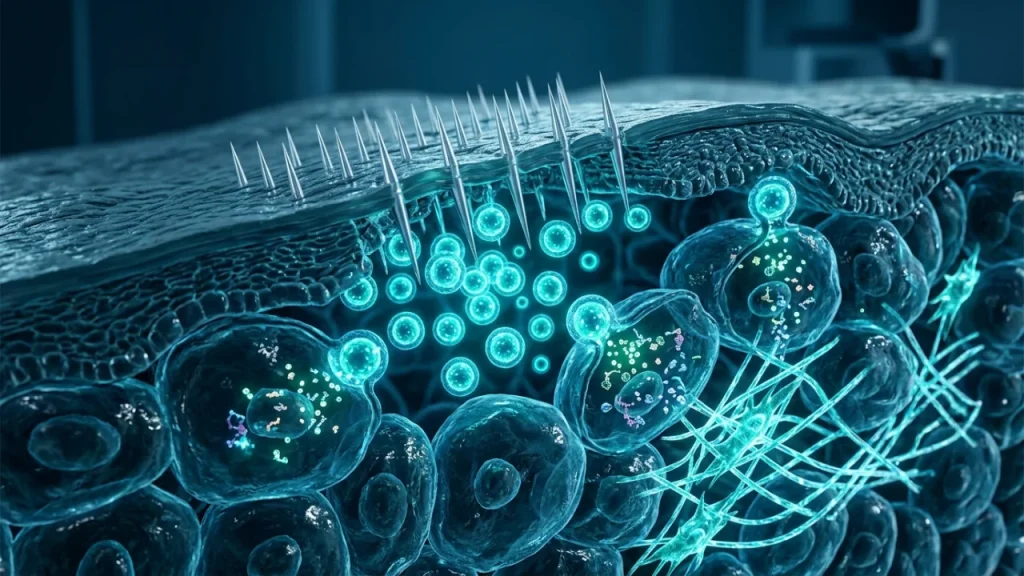
So, what is microneedling with exosomes? It is a two-part treatment. First, a device creates micro-channels. Second, a solution rich in exosomes is applied. The micro-channels act like delivery doors. They allow the exosomes to go deep into your skin. They do not just sit on the surface. This direct delivery is key to the results.
The exosomes then get to work. They send precise repair instructions to your skin cells. They tell fibroblasts, which are collagen-making cells, to become more active. They also calm inflammation and guide new blood vessel formation. This turns a general repair signal into a targeted rejuvenation program. The goal is smarter healing, not just more healing.
Why does this combination matter for your skin? Traditional microneedling relies only on your body’s standard response. Adding exosomes upgrades that response. It provides expert guidance. The process can lead to several improvements: – More efficient collagen production for tighter skin. – Better wound healing with less downtime. – Enhanced overall skin quality and resilience.
The procedure merges a physical tool with biological communication. The needles create an opportunity. The exosomes maximize that opportunity’s potential. This fusion aims for results that are both noticeable and natural-looking. Your skin is encouraged to improve its own structure and function.
This approach represents a shift in cosmetic treatments. It moves beyond simple damage and repair. It focuses on precise cellular communication for regeneration. Understanding this basic concept shows why the technique generates significant interest. It combines a proven method with next-generation science for a powerful effect on skin health and appearance. The next logical question is how this process unfolds step by step during an actual treatment session.
How Microneedling Creates Pathways for Better Absorption
The outermost layer of your skin, the stratum corneum, is a formidable shield. It is made of dead, tightly packed cells. This layer excels at keeping things out, including helpful molecules like exosomes. Simply applying exosomes to the surface has limited effect. They cannot penetrate this dense barrier on their own. This is where microneedling provides a critical physical solution.
A microneedling device uses fine, sterile needles. These needles create hundreds of microscopic channels in the skin. The channels are incredibly small. They are measured in microns, which are thousandths of a millimeter. The needles bypass the tough outer shield without removing it. They create temporary pathways directly into the living layers beneath. This process is often called creating “micro-channels.”
These micro-channels serve two immediate purposes. First, they trigger a controlled wound healing response. This was described earlier. Second, and key for this treatment, they act as direct delivery routes. The channels provide a clear passage through the barrier. Topically applied exosome solutions can now flow into these fresh pathways. They move from the surface into the deeper dermis.
The depth of needle penetration is carefully controlled. It targets the papillary and mid-dermis. This is where crucial cells like fibroblasts live. Fibroblasts produce collagen and elastin. The goal is to place exosomes precisely where these cells operate. Surface application cannot achieve this targeted delivery. The micro-channels make it possible.
Think of it like a sophisticated irrigation system for your skin. The stratum corneum is hard-packed soil. Water poured on top mostly runs off or evaporates. Microneedling creates tiny, deep holes in that soil. Now, water can channel down directly to the root zone. The exosomes are the nutrient-rich water. The micro-channels guide them to the cellular roots.
This method is far more efficient than passive absorption. It ensures a significant volume of exosomes reaches the target area. The channels remain open for a short time after treatment. This allows continued absorption of the applied solution. The skin’s natural healing processes then begin to close these micro-channels within hours. This seals the exosomes inside, where they can work.
The creation of pathways solves a major problem in skincare. Many potent ingredients cannot penetrate effectively. Microneedling with exosomes combines physical engineering with biological science. The needles solve the delivery puzzle. The exosomes then execute a complex repair program inside the skin. One enables the other.
Without these pathways, exosomes largely sit on the surface. Their messages go unheard by the deeper skin cells. With the pathways, communication is direct and immediate. This turns a topical application into an intradermal treatment. The procedure maximizes the investment in the exosome solution itself.
Understanding this delivery step clarifies why the technique is a fusion. It is not two separate actions happening side-by-side. The microneedling is designed specifically to enable the exosomes’ function. The mechanical action and the biological agent are interdependent. This synergy is central to the treatment’s reported effectiveness for skin rejuvenation.
The logical next question concerns safety and experience. How does this precise process feel, and what ensures it is controlled?
The Role of Exosomes as Cellular Messengers in Skin Health
Exosomes are tiny natural messengers. Your own cells make them constantly. Think of them as microscopic delivery trucks. They carry important instructions from one cell to another.
These instructions are not random. They are precise biological signals. The signals tell cells how to behave. They can order a cell to calm down, to repair itself, or to create new collagen.
This communication system is vital for healthy skin. Young, resilient skin has a lot of this chatter. Cells efficiently coordinate renewal and repair. As we age, this natural communication slows down. Cells become less responsive. The repair signals get weaker or lost.
This is where applied exosomes come in. They are harvested from stem cells grown in labs. These stem cells are prodigious producers of potent exosomes. The collected exosomes are purified into a solution.
The solution is rich with specific instructions. It contains hundreds of different signaling proteins and growth factors. Each one has a potential role.
- Some signals tell fibroblast cells to wake up and produce new collagen and elastin.
- Other signals direct blood vessels to improve local circulation.
- Further instructions help regulate inflammation, calming irritated skin.
- Additional messages support the skin’s own stem cells, encouraging them to be more active.
The goal is not to add foreign material. The goal is to restart your skin’s own native language. It gives your cells a clear, strong set of instructions they may have stopped receiving.
This matters because it addresses the root cause of aging skin. Many treatments only tackle the surface effects. They plump lines temporarily or exfoliate dead layers. Microneedling with exosomes aims deeper. It seeks to change the cellular environment itself.
The exosomes deliver a program, not just a single ingredient. It is a coordinated set of commands for regeneration. This makes the approach fundamentally different from using a single growth factor or vitamin.
The science shows these messengers are smart. They have targeting abilities. They can find specific cells that need help. Once they arrive, they transfer their cargo directly into the recipient cell.
The cell then reads the instructions and acts on them. This process can shift the skin from a passive state to an active repair state. The results are not just cosmetic masking. They are a functional improvement in skin biology.
Understanding this turns the treatment from a mystery into a logical step. We first create pathways with microneedling. Then we fill those pathways with expert cellular messengers. The messengers then direct the healing that the needles initiated.
This synergy is why the combination matters so much for your skin. It links physical intervention with intelligent biological guidance. The next logical point is how this targeted activity translates into visible changes over time.
Key Differences Between Traditional Microneedling and Exosome-Enhanced Treatments
Traditional microneedling works on a simple principle. It creates controlled micro-injuries in the skin. These tiny channels trigger the body’s natural wound healing process. Your skin responds by producing new collagen and elastin. This process is effective but relies entirely on your body’s current capacity to heal.
Your body’s response can be slow or incomplete. Age, sun damage, and stress deplete your skin’s resources. The healing signals may be weak. The result is often a long recovery period. Visible redness and swelling can last for days. The final collagen boost is real, but it takes many sessions to see major change.
What is microneedling with exosomes changes this equation fundamentally. It does not just start a process and hope for the best. It provides the tools and instructions for optimal repair. The exosomes act as biological guides. They turn a generic injury response into a targeted regeneration program.
Think of the difference like this. Traditional microneedling is like poking holes in a garden and waiting for rain. The exosome-enhanced method is like poking holes and then immediately watering with a nutrient-rich solution. The second approach gives the garden exactly what it needs to thrive.
The key differences are clear in both process and results. – Healing Intelligence: Traditional needling relies on a general inflammatory signal. Exosomes deliver specific directives. They can tell cells to calm inflammation, not just start it. This leads to smarter, more controlled healing. – Recovery Speed: With exosomes, the initial redness and downtime are often much shorter. The provided signals help skin cells organize repair faster. Patients may see a calmer complexion within a day or two. – Result Quality: The new collagen formed under exosome guidance is often of higher quality and better organization. It more closely resembles youthful, undamaged skin structure. The outcome is not just more collagen, but better collagen. – Treatment Scope: Standard microneedling mainly targets collagen production. Exosome messages can address multiple concerns at once. They can support pigment correction, barrier repair, and hydration by addressing different cell types.
The core reason for these differences is information. Traditional microneedling gives your skin a problem to solve. The exosome-enhanced version gives it both the problem and the solution manual. Your cells are not left guessing what to do next.
This leads to faster and smarter skin recovery because the pathway is clear. Energy is not wasted on excessive inflammation or trial-and-error repair. Resources are directed efficiently toward rebuilding strong, healthy tissue.
The clinical impact is significant. Where traditional methods might require four to six sessions for noticeable improvement, combining with exosomes can reduce that number. Each session becomes more productive. The results are also more comprehensive, improving skin function at a cellular level.
Ultimately, adding exosomes transforms the treatment from a mechanical stimulant into a complete regenerative therapy. It upgrades the body’s innate ability with precise external intelligence. This partnership between physical channels and biological messaging creates a superior outcome for rejuvenation that is both visible and sustainable.
Why This Fusion Represents a Leap in Regenerative Skincare
The leap forward lies in direct delivery. Your skin cells already communicate using exosomes. This is a natural process. However, that natural signaling can be slow and scattered. It is like sending a letter through regular mail during an emergency. What is microneedling with exosomes does differently. It delivers a concentrated dose of pre-programmed messages right to the address.
Think of the micro-channels as secure entry points. They bypass the skin’s tough outer barrier. This barrier normally blocks large molecules. The channels allow exosomes to reach the living dermal layer directly. No energy is wasted breaking down this barrier. The exosomes arrive intact and ready for work.
Their work is instructional. Each exosome carries specific cargo. This cargo includes proteins, lipids, and genetic material like RNA. These are not simple building materials. They are precise commands. They tell your skin’s cells what to do and how to do it.
The commands can trigger several key actions. – They can instruct fibroblast cells to produce more collagen and elastin. This is done efficiently. – They can signal to melanocytes to normalize pigment production. This helps with tone. – They can order stem cells to activate and migrate to areas needing repair.
This method uses the body’s own healing language. But it amplifies it significantly. Traditional treatments rely on causing controlled damage. The body then must interpret this damage and start repair from scratch. The response can be inefficient or excessive.
Adding exosomes changes this dynamic entirely. The skin does not have to figure out the problem alone. It receives a detailed plan immediately after the micro-injuries are made. The repair process starts from a position of knowledge, not guesswork.
This leads to a smarter inflammatory response. Some inflammation is necessary for healing. Too much causes prolonged redness and downtime. Exosome signaling helps modulate this reaction. It guides the immune cells that arrive at the treatment site. It tells them to focus on rebuilding, not just reacting.
The result is a more efficient use of your body’s resources. Cellular energy goes into structured regeneration. The outcome is better tissue quality. Skin rebuilds with improved architecture. This means longer-lasting results from each session.
The fusion matters because it aligns technology with biology. Microneedling opens the door. Exosomes provide the blueprint for what happens next. This partnership creates a synergistic effect. The whole becomes greater than the sum of its parts.
It represents a shift from simple stimulation to true cellular guidance. This is why it is considered a leap in regenerative skincare. It does not just ask your skin to heal itself. It actively teaches it how to heal better, faster, and more completely. The next logical question is how this precise guidance translates into tangible benefits for specific skin concerns.
The Science Behind Exosomes and Their Impact on Skin Cells
What Are Exosomes Made Of: Proteins, RNA, and Growth Factors
Exosomes are not empty bubbles. They are tiny cargo ships loaded with precise molecular instructions. Their power comes entirely from what they carry inside. This cargo is a concentrated mix of bioactive molecules. Each molecule plays a specific role in cellular communication and repair.
The primary components can be grouped into three key categories.
First are proteins. These include enzymes and signaling molecules. Enzymes can speed up chemical reactions in target cells. Signaling molecules can bind to cell surfaces. This binding triggers specific actions inside the skin cell. For example, some proteins directly tell a fibroblast to start producing collagen. Others work to break down damaged proteins that clutter the skin.
Second is RNA, particularly messenger RNA (mRNA). Think of mRNA as a set of photocopied blueprints. A skin cell’s machinery reads these blueprints. It then uses them to build new proteins on demand. An exosome can deliver mRNA instructions for creating fresh elastin or calming inflammation. This allows the receiving cell to temporarily change its function. It follows the new plan provided by the exosome cargo.
Third are growth factors. These are potent signaling proteins. They are like master switches for cellular activity. Growth factors specifically tell cells to grow, multiply, and specialize. In skin, they direct stem cells and fibroblasts to become more active. They are crucial for initiating and sustaining the regeneration process after microneedling creates those micro-channels.
This combination is what makes microneedling with exosomes so transformative. The procedure delivers this complete toolkit directly into the skin’s strategic layer. The cargo works in a coordinated way. Proteins give immediate signals. RNA provides longer-term building plans. Growth factors fuel the entire regenerative engine.
The exact mix of cargo is not random. It reflects the state and type of the parent cell that released the exosome. Healthy, rejuvenating cells send out exosomes packed with helpful instructions. This is why sourcing matters in the broader field, though we discuss no brands here. The goal is always to deliver a cargo that says “repair” and “renew,” not “damage” or “inflame.”
Understanding this composition explains the precision noted earlier. It is not a generic stimulus. It is targeted information transfer. Each component has a defined job in guiding the skin’s healing response. The proteins, RNA, and growth factors work together. They ensure the repair process is efficient, structured, and intelligent.
This molecular toolkit directly impacts how skin cells behave after treatment. Cells become more productive and focused. They waste less energy on guesswork. Now we can explore what this refined cellular behavior looks like in practice for common skin concerns.
How Exosomes Communicate Between Cells to Reduce Inflammation
Inflammation is the skin’s natural alarm system. It signals that damage has occurred. However, prolonged or excessive inflammation is harmful. It can delay healing and even break down collagen. Exosomes offer a sophisticated solution to this problem. They carry direct instructions to calm this response.
Think of a skin injury like a microneedling channel. Damaged cells send out distress signals. These signals call immune cells to the site. This is normal. But sometimes the alarm keeps ringing too long. Exosomes act as intelligent messengers that deliver a “stand down” order.
They do this through precise molecular cargo. This cargo directly influences immune cell behavior. – Certain microRNAs inside exosomes can silence genes that produce inflammatory proteins. – Proteins on the exosome surface can bind directly to immune cell receptors. This blocks pro-inflammatory signals. – Other cargo molecules promote the activity of regulatory T-cells. These cells specialize in calming immune overreactions.
This is not a blanket suppression of immunity. It is a targeted recalibration. The goal is to shift the healing environment from a state of reactive alarm to one of organized repair. Chronic inflammation often involves a loop of continuous signaling. Exosomes can interrupt this loop at several points.
For example, a key inflammatory signal is called TNF-alpha. Some exosomes carry molecules that inhibit its production. Another common signal is IL-6. Exosomal cargo can reduce its release from cells. By modulating these specific mediators, exosomes reduce redness, swelling, and heat at the treatment site.
The result is a more efficient healing process. Energy is diverted away from unnecessary inflammation. This energy is then redirected toward regeneration and rebuilding. Skin recovers faster from procedures like microneedling with exosomes. Post-treatment redness and sensitivity diminish more quickly.
This anti-inflammatory effect also has long-term benefits for common skin concerns. Conditions like rosacea or general sensitivity are fueled by inflammatory pathways. Calming these pathways at a cellular level can lead to more resilient skin. The skin’s barrier function often improves as inflammation decreases.
Ultimately, this communication showcases the intelligence of biological signaling. Exosomes provide the skin with the information it needs to heal optimally. They help turn down the volume on damaging noise. This allows the constructive processes of collagen and elastin production to take center stage. This precise cellular diplomacy is what makes their role in modern rejuvenation so profound and distinct from older methods that merely triggered inflammation hoping for a rebound effect.
The Process of Cellular Uptake: How Skin Cells Receive Exosomal Messages
Exosomes do not simply float past cells. They deliver their instructions through direct, physical interaction. This process is called cellular uptake. It is the critical step that turns a biological signal into a cellular action.
Think of a skin cell as a secure building. The exosome is a special courier with the right clearance. It does not just knock on the main door. It has specific methods for entry and delivery.
The primary method is membrane fusion. The exosome’s outer layer merges directly with the cell’s membrane. This is like two soap bubbles becoming one. The exosome’s cargo is emptied directly into the cell’s interior fluid, the cytoplasm. Key signaling molecules and growth factors are released instantly.
Another common method is endocytosis. The cell’s membrane recognizes signals on the exosome’s surface. The membrane then folds inward. It wraps around the exosome to form a small pouch inside the cell. This pouch is a vesicle. The exosome’s contents are safely inside the cell now. The vesicle can then break down to release the cargo.
Some exosomes transfer material without full entry. They can dock temporarily on the cell’s surface. They then transfer specific proteins or RNA directly through temporary channels. This is a rapid form of signaling.
The design of the exosome makes this possible. Its membrane is studded with adhesion molecules. These act like keys. They bind to specific receptors on the target skin cell. This ensures the message goes to the right address. A fibroblast cell, which makes collagen, will have different receptors than an immune cell.
Once inside, the exosomal cargo gets to work. Messenger RNA can be used by the cell’s machinery to produce new proteins. MicroRNAs can silence genes that promote inflammation or aging. Proteins can activate pathways for repair immediately.
This targeted delivery system is a major advantage of microneedling with exosomes. The micro-channels created during treatment do more than induce collagen. They create a temporary network of pathways. These pathways allow a high concentration of exosomes to reach deeper skin layers quickly. The exosomes are placed close to their target cells, like fibroblasts and keratinocytes.
The efficiency of uptake influences results. Factors include exosome size, surface markers, and the health of the recipient cell. Younger, more active cells may integrate signals faster. This precise mechanism explains why effects can be both rapid and long-lasting. The cell does not just get a one-time stimulus. It receives a blueprint and tools for sustained change.
In essence, cellular uptake transforms a general treatment into a targeted conversation. The skin cell is not passively affected. It actively accepts and implements a regenerative program delivered by the exosome. This direct instruction is why the impact on skin texture, tone, and resilience can be so profound. The next logical question is how these translated instructions manifest as visible improvements in skin structure and firmness over time.
Exosomes and Collagen Production: Building Firmer, Younger Skin
Collagen is the main structural protein in your skin. It provides firmness and support. As we age, collagen production slows down. Existing collagen fibers also break down. This leads to thinner, looser skin with wrinkles. A primary goal of skin rejuvenation is to reverse this process. The aim is not just to add collagen volume. The goal is to restore its healthy, organized architecture.
Exosomes address this problem at a cellular level. They carry direct orders for collagen synthesis. These orders come in the form of specific growth factors and signaling molecules. Key players include Transforming Growth Factor-beta (TGF-β) and connective tissue growth factor (CTGF). These are not simple nutrients. They are precise commands.
When an exosome delivers TGF-β to a fibroblast, it triggers a cascade. The fibroblast receives a clear instruction to become more active. It shifts from a resting state into a productive phase. The cell’s machinery starts reading the genetic blueprint for Type I collagen. This is the most abundant collagen in skin. Messenger RNA inside the exosome can also provide direct templates for this process.
The result is a measurable increase in procollagen production. This is the precursor molecule to mature collagen. Studies show exosome-treated fibroblasts can produce significantly more procollagen than untreated cells. This is a direct biochemical outcome. It explains the foundational change behind microneedling with exosomes.
But exosomes do more than just tell cells to make more collagen. They also guide how that collagen is organized and preserved. They send signals that regulate the enzymes responsible for collagen breakdown. These enzymes are called matrix metalloproteinases (MMPs). Exosomes can help reduce excessive MMP activity. This protects the existing collagen network from unnecessary degradation.
Furthermore, exosomal signals promote better collagen maturation and cross-linking. New collagen fibers need to align and bond together properly. This creates a strong, resilient meshwork. Think of it as the difference between a pile of bricks and a well-built brick wall. Exosomes help instruct the body to build the wall.
The combined effects lead to visible and tangible improvements in skin over time. – Increased density: New collagen fills in thin areas, making skin feel thicker. – Improved firmness: A stronger collagen network provides better support, reducing sagging. – Smoother texture: A more organized structure fills fine lines and evens out the surface.
This process is not instant. It follows the natural biological timeline of collagen remodeling. Initial changes can be seen within weeks as cells become activated. True structural rebuilding takes months. The new collagen integrates slowly into the existing matrix. This results in gradual, natural-looking improvement.
The impact extends beyond just collagen. Exosome signaling also boosts elastin and hyaluronic acid production. These are other vital components of youthful skin. Elastin provides snap-back elasticity. Hyaluronic acid hydrates and plumps the tissue. The fibroblast receives a comprehensive regenerative program.
In summary, exosomes transform fibroblasts from aging, sluggish cells into active construction units. They provide both the blueprint and the ongoing instructions for rebuilding skin’s support structure. This cellular-level activity is why treatments like microneedling with exosomes can improve firmness so effectively. The next consideration is how this internal rebuilding translates into external improvements in tone, hydration, and overall skin vitality.
Research Evidence Supporting Exosome Efficacy in Dermatology
Research shows exosomes carry specific instructions that change how skin cells behave. Scientists isolate these vesicles from stem cells grown in labs. The exosomes are then studied for their effects. Numerous peer-reviewed studies confirm their regenerative potential.
One key area of research focuses on wound healing. Experiments use models of injured skin. Adding exosomes to these wounds speeds up closure significantly. Treated wounds show faster formation of new blood vessels. They also show more organized collagen deposition. This is crucial for microneedling, as the procedure creates controlled micro-injuries.
Another major finding involves collagen production. Fibroblasts treated with exosomes become more active. They produce more Type I collagen. This is the main structural protein in young, firm skin. Studies measure this increase using precise biochemical assays. The effect is dose-dependent and consistent.
Exosomes also combat inflammation, a key factor in aging. They carry molecules that calm overactive immune cells in the skin. This reduces redness and swelling after procedures. A calmed environment is better for rebuilding tissue. Chronic inflammation breaks down collagen, so controlling it is vital.
Research into aging skin models provides direct evidence. Scientists use fibroblasts from older donors. These cells are often slow and dysfunctional. When exposed to exosomes, their behavior changes. They start to resemble younger cells in their function. Their metabolic activity increases. Their ability to move and repair improves.
Safety is a primary focus of dermatology studies. Exosomes are not living cells. They cannot replicate or turn into unwanted cell types. This makes them a lower-risk regenerative tool compared to whole stem cells. Research has not shown significant adverse reactions in these models.
The evidence points to a multi-target approach. Exosomes do not just do one thing. Their cargo works on several pathways at once: – They turn on genes for making structural proteins. – They send signals that increase cell survival. – They promote the formation of new, healthy blood vessels. – They modulate the immune response to support repair.
This body of research forms the foundation for clinical use in treatments like microneedling with exosomes. The science moves from lab dishes to animal models, and now to human clinical observation. While large-scale human trials are ongoing, the preclinical data is robust and compelling.
It translates to predictable clinical benefits seen after treatment. The reduction in downtime patients experience is linked to the anti-inflammatory findings. The gradual improvement in firmness ties directly to the collagen studies. This scientific backbone provides confidence in the treatment’s rationale. Trust comes from understanding that the process is not magic, but applied cell biology. The next logical step is to see how these cellular effects improve specific skin concerns people see every day.
Benefits of Microneedling with Exosomes for Common Skin Concerns
Reducing Fine Lines and Wrinkles with Enhanced Cellular Repair
Fine lines and wrinkles are signs of slowed cellular activity and damaged skin structure. Microneedling with exosomes directly addresses this slowdown. The treatment creates a controlled injury with tiny needles. This injury is a signal for the skin to repair itself. The addition of exosomes supercharges this natural process. It provides a precise set of instructions to aging skin cells.
Think of microneedling as opening tiny doors in the skin. The exosome solution is then applied topically. These vesicles enter through the micro-channels. They deliver their cargo directly to the dermis. This is where collagen and elastin live. The cargo includes growth factors and RNA messages. These components tell fibroblast cells to become more active. Fibroblasts are the skin’s collagen factories.
The result is a two-phase repair response. The first phase is rapid and anti-inflammatory. Exosomes calm the initial treatment response. This reduces redness and swelling faster than microneedling alone. The second phase is the regenerative build-up. This is where long-term smoothing happens. Fibroblasts start producing new collagen and elastin fibers. They also make more hyaluronic acid. This acid helps skin hold moisture.
The renewal process improves skin texture in measurable ways. Lines begin to soften from the bottom up. New collagen plumps the skin from within. This adds subtle volume under wrinkles. The skin’s foundation becomes stronger and more elastic. This enhanced cellular repair leads to a cumulative effect over weeks. Results are not immediate like a filler. They develop as your skin naturally regenerates.
Key mechanisms behind this smoothing effect include: – Increased production of Type I and Type III collagen. These are the main structural proteins in young skin. – Enhanced elastin fiber organization. This improves skin snap-back. – Better protection of existing collagen from breakdown enzymes. – Improved hydration at a deep cellular level.
This process is fundamentally different from topical creams. Creams work on the surface layers. What is microneedling with exosomes achieves is a deeper, cellular communication. It changes the behavior of your skin’s own cells. The treatment turns back the clock on cellular fatigue. It helps skin act younger.
The final outcome is a gradual refinement of the skin’s surface. Deep wrinkles may become less pronounced. Fine lines around the eyes and mouth can soften significantly. The overall skin tone appears more unified and firm. This approach tackles aging at its source: diminished cell function. The next logical benefit is an improvement in skin that has lost its vitality from sun exposure and scarring.
Improving Skin Texture and Tone for a More Even Complexion
Skin texture often suffers from more than just lines. It can feel rough or look uneven. This unevenness comes from two main issues. Discoloration creates patches of darker pigment. Surface irregularities create shadows and highlights. What is microneedling with exosomes addresses both problems at a cellular level. The treatment does more than just add bulk with collagen. It sends precise instructions to normalize skin function.
Hyperpigmentation is a common texture concern. Sunspots and melasma are examples. They occur when skin cells produce too much melanin. Melanin is your skin’s natural pigment. Exosomes carry specific messages to these overactive cells. These messages help recalibrate pigment production. The goal is not to erase all color. The goal is to restore an even, natural tone. This process reduces the appearance of dark spots over time.
The physical feel of skin is equally important. Enlarged pores and minor scars can create a rough surface. They cast tiny shadows that amplify texture issues. New collagen from microneedling fills in these minor imperfections from below. Exosomes enhance this process. They guide fibroblasts to build smoother, more organized collagen networks. This new matrix supports the skin’s surface like a fine mesh. It makes pores appear smaller and less defined.
The result is a dual improvement in how skin looks and feels. – Color becomes more uniform as pigment cells behave in a balanced way. – The surface reflects light more evenly due to improved smoothness. – Skin feels softer to the touch because the top layer is better supported.
This effect is distinct from using bleaching creams or abrasive scrubs. Those approaches can irritate and damage the skin barrier. Exosome therapy works through signaling, not force. It encourages your skin to correct itself. The micro-channels from microneedling are crucial here. They allow the exosomes to reach the exact cells that need instruction. These are the cells responsible for color and surface structure.
The timeline for these benefits follows the skin’s natural cycle. You may notice initial brightness after a few weeks. Significant evening of tone often takes longer. Full effects develop over two to three months. This matches the time needed for new, healthy skin cells to rise to the surface. Patience is key because the change is cellular and genuine.
Improving texture and tone builds a clearer canvas for overall radiance. When color is even and the surface is smooth, skin looks healthier intrinsically. This sets the stage for addressing another visible sign of aging: a loss of that vital, firm appearance in sagging skin.
Targeting Hyperpigmentation and Sun Damage Through Smart Healing
Sun damage often leaves a lasting mark in the form of dark spots. These spots are clusters of pigment called melanin. Melanin is made by cells named melanocytes. In healthy skin, this pigment spreads evenly. After sun exposure, these cells can become overactive. They produce too much pigment in certain areas. This creates patches darker than your natural skin tone.
Traditional fading treatments often work by force. They may use acids to peel the dark surface away. Some use intense light to break up the pigment. These methods can be effective. However, they can also irritate the surrounding skin. This irritation can sometimes trigger more pigment production. It is a counterproductive cycle.
Microneedling with exosomes takes a different path. It uses communication instead of force. The micro-channels created by the needles do two important things. First, they tell your skin a controlled injury has occurred. This triggers a natural repair mode. Second, they create temporary pathways for the exosomes.
The exosomes are the key messengers. They carry specific instructions to the cells in the treated area. For dark spots, these instructions target the overactive melanocytes. The signals do not shut the cells down. Instead, they help recalibrate them.
Think of it like resetting a thermostat. The exosome signals help return the melanocytes to a balanced state. They encourage normal, even pigment production. This is why what is microneedling with exosomes is so relevant for sun damage. It is a targeted strategy for cellular retraining.
The process focuses on optimizing your skin’s innate healing intelligence. The micro-injuries from the needles start the repair cascade. The exosomes then guide that cascade toward a precise goal: correcting pigment errors.
This leads to a clearer fading process. The dark spots do not just get zapped or peeled off. They gradually fade as new, healthy skin cells replace the old ones. These new cells are formed under the influence of balanced signals.
The results follow your skin’s natural renewal timeline. You will not see spots vanish overnight. Initial lightening may be visible in a few weeks. Continued improvement happens over two to three months. This is the time needed for new epidermal layers to surface.
The benefits are specific and sustainable. – It targets pigment without harming surrounding tissue. – It reduces the risk of post-inflammatory darkening. – It supports the skin’s barrier throughout the process. – The result is even color that blends seamlessly with your natural tone.
This method offers a sophisticated solution for a common frustration. It moves beyond surface-level correction. By addressing the cellular signaling behind hyperpigmentation, it promotes genuine, long-lasting clarity. This intelligent approach to healing not only resolves existing damage but also helps set a new, balanced baseline for future skin health.
Minimizing Acne Scars and Post-Inflammatory Redness
Acne scars are a sign of healing that went off course. When skin is inflamed, the repair process can become disorganized. This often leaves behind textured pits or raised, red areas. Traditional methods can be harsh. They might remove surface skin but do little to correct the deeper structural problem.
This is where what is microneedling with exosomes becomes a key concept. The combination tackles the scar issue at its source. Microneedling creates a controlled injury in the scarred area. This restarts the skin’s natural healing cycle. But this time, exosomes guide the process correctly.
Exosomes carry instructions for organized repair. They signal to your skin’s fibroblast cells. These cells are responsible for building collagen. In acne scars, collagen is either broken down or piled up haphazardly. Exosomes promote the production of new, healthy collagen fibers. These fibers are laid down in a neat, cross-linked pattern.
This structured rebuilding fills in atrophic scars. These are the depressed or pitted scars. Gradual filling occurs from the bottom up. It also helps flatten raised hypertrophic scars. The process remodels excess collagen into a smoother form.
For post-inflammatory redness, the approach is different. This redness is from dilated blood vessels and lingering inflammation. Exosomes deliver anti-inflammatory messages directly into the skin. They calm overactive immune signals. They also support the strengthening of capillary walls.
The results develop over several months. This matches your skin’s regeneration timeline. You need patience for true remodeling.
- Texture improves as new collagen fills depressions.
- Redness diminishes as inflammation resolves.
- Skin tone becomes more even and unified.
The treatment is precise. It focuses on damaged areas without harming healthy skin nearby. This precision reduces recovery time. It also increases the treatment’s overall efficiency.
Your skin’s appearance after acne becomes softer and more refined. Scars become less distinct. They blend into the surrounding skin texture. Redness fades to a neutral tone. The goal is not necessarily perfect, untouched skin. The goal is skilled, biological correction.
This method offers a fundamental advance in scar management. It does not just disguise imperfections. It actively remodels them by directing cellular behavior. This leads to durable improvements that align with your skin’s own biology.
The same principles of intelligent healing apply here as with sun damage. The next logical step is to see how this fusion strengthens the skin’s daily defense system.
Boosting Skin Hydration and Barrier Function for Healthier Skin
Healthy skin acts like a strong, well-built wall. It keeps moisture in and keeps irritants out. This wall is your skin barrier. Many common issues weaken this barrier. Dryness, sensitivity, and even some fine lines start here. What is microneedling with exosomes for this concern? It is a targeted repair mission.
The treatment works on two connected levels. First, microneedling creates temporary micro-channels. This is not just for delivery. It triggers a mild, helpful wound response. Your skin gets a signal to start its natural repair process. This includes producing fresh, healthy barrier lipids.
Second, exosomes enter through these channels. They bring precise instructions to your skin cells. Think of them as tiny messengers with blueprints. They tell your cells to make more of the proteins that hold moisture. They also signal for increased production of ceramides, cholesterol, and fatty acids. These are the essential bricks and mortar of your skin’s wall.
The result is a denser, more competent barrier. A stronger barrier means better hydration. Water cannot escape as easily from within your skin. The environment inside becomes more stable and supportive for cells.
Here is what improves in practical terms: – Moisture loss slows down significantly. Your skin retains its natural hydration longer. – The skin feels smoother and more plump. This is due to better water content in the upper layers. – Resistance to external stressors increases. Pollutants and allergens have a harder time penetrating. – Sensitivity often decreases. A robust barrier calms overreactive nerves.
This is not about adding a surface layer of moisture. It is about fixing the source of the leak. The process rebuilds your skin’s own ability to manage hydration. The effects are biological and long-term.
The benefits build over weeks after your treatment. Your skin cells use the exosome signals to change their behavior. They keep producing better barrier materials. You may notice your skincare products work more effectively. This happens because a healthy barrier allows for proper absorption without irritation.
Ultimately, this creates a foundation of resilience. Skin that can defend itself is skin that stays healthier and younger-looking. It is less prone to daily damage from the environment. This fortified state is the perfect lead-in to discussing how the treatment tackles signs of aging at their root.
Strengthening the barrier directly combats fine lines and loss of firmness. Well-hydrated skin cells function optimally. They produce collagen and elastin more efficiently. The next section explores this regenerative boost in detail.
What to Expect During and After a Microneedling with Exosomes Procedure
Step-by-Step Guide to the Microneedling with Exosomes Treatment Process
The microneedling with exosomes procedure is a precise clinical session. It typically takes about 60 to 90 minutes from start to finish. Your visit begins with a thorough cleansing of your skin. A medical professional will remove all makeup, oil, and surface debris. This step ensures a perfectly clean canvas for the treatment. It also helps prevent any potential irritation.
Next, a topical numbing cream is applied to your entire face. This cream needs time to work. You will wait for about 20 to 30 minutes. The numbing sensation feels like a heavy tingling. It makes the treatment comfortable for most people. You will be awake but relaxed. The professional will then remove the numbing cream completely.
The core of the treatment now begins. A sterile microneedling device is used. It has fine, medical-grade needles. These needles create micro-channels in your skin. The channels are incredibly tiny. They are not visible to the naked eye. The process is not painful due to the numbing cream. You will feel a vibration and pressure. The device moves across your skin in a systematic pattern. This ensures full coverage.
The creation of micro-channels is a controlled process. It triggers your skin’s natural initial repair response. More importantly, it opens temporary pathways into your skin. These pathways allow for direct delivery of the exosome solution. The exosomes are applied immediately after needling.
The exosome solution is gently smoothed over your treated skin. The professional may use a tool or gloved hands for this. The liquid contains billions of signaling vesicles. These exosomes enter through the fresh micro-channels. They bypass the tough outer barrier of your skin. This delivers them directly to the living layers where cells can use their instructions.
You might feel a cool sensation during application. The solution is often kept refrigerated for stability. After application, there is a short waiting period. This allows for optimal absorption into your skin.
A calming serum or moisturizer is then applied. It often contains soothing ingredients like hyaluronic acid or peptides. This final layer helps comfort your skin post-treatment. It also supports the initial healing phase.
Your skin will look pink and feel warm after the session. This is a normal and expected reaction. It resembles a mild sunburn. The professional will give you clear aftercare instructions before you leave.
The entire process is designed for safety and biological effect. Understanding what is microneedling with exosomes involves knowing these steps. The micro-channels enable the exosomes to work from within. This direct access is key to the treatment’s regenerative power. Your skin now has the signals it needs to begin its renewal process. The following days are when this internal work truly starts.
Pre-Treatment Preparation: How to Get Your Skin Ready
Proper preparation is essential for your skin’s response. Getting ready starts weeks before your appointment. This proactive approach supports better results. It also minimizes potential side effects. Your skin’s condition when you arrive matters greatly.
Consultation with your provider is the critical first step. You must discuss your full medical history. Share all medications and supplements you take. Certain substances can increase bleeding or sensitivity. Blood thinners and some anti-inflammatory drugs are common examples. Your provider needs this information for your safety. Be honest about any skin conditions you have. Active acne, rosacea flares, or cold sores must be managed beforehand. A history of poor wound healing or keloid scars is also vital to mention. This conversation tailors the procedure to your unique biology.
Sun protection becomes non-negotiable during preparation. Avoid direct sun exposure for at least two weeks prior. Do not use tanning beds. Sunburned or tanned skin cannot undergo treatment. It increases the risk of adverse effects like pigmentation changes. Wear a broad-spectrum sunscreen daily. Use SPF 30 or higher. Reapply it every two hours when outdoors. This protects your skin’s baseline health. It ensures your skin cells are not already stressed from UV damage.
You will receive a list of products to pause using. Stop using retinoids and retinols about one week before treatment. This includes prescription creams like tretinoin. Harsh exfoliants should also be discontinued. Avoid alpha hydroxy acids and beta hydroxy acids. Do not use scrubs or chemical peels. These agents increase skin sensitivity and thinning. Their continued use could lead to excessive irritation. Your goal is to arrive with a calm, robust skin barrier.
Certain lifestyle factors play a role in healing. Stay well-hydrated in the days leading up to your session. Drink plenty of water. Good hydration helps your skin’s elasticity and recovery processes. Avoid alcohol for 24 to 48 hours beforehand. Alcohol can dehydrate you and promote inflammation. Do not schedule dental work immediately before or after your facial treatment. Dental procedures can involve bacteria that might pose a risk.
Prepare your skin gently on the day of your procedure. Cleanse your face with a mild, non-exfoliating wash. Do not apply any makeup, moisturizer, or serum. Arrive with a completely clean, bare face. This allows for proper antiseptic cleansing in the office. It prevents any product from being driven into the micro-channels.
Shaving is an important consideration for men. If you treat an area with hair, shave it one or two days before. Do not shave on the morning of your appointment. Fresh shaving can create micro-cuts and increase sensitivity.
Understanding what is microneedling with exosomes includes recognizing this preparatory phase. It is a collaborative process between you and your provider. These steps prime your skin to be a receptive canvas. They create optimal conditions for the exosomes to perform their work effectively. Your disciplined preparation directly influences the smoothness of your experience and the quality of your outcome. Once these steps are complete, you are ready for the transformative in-office procedure to begin.
Sensations and Duration: What the Procedure Feels Like
The microneedling device uses fine, sterile needles to create temporary micro-channels in your skin. This is not a single needle. It is a tip holding many tiny needles. Their movement across your skin is very rapid. Most devices make hundreds of micro-openings per second. Your provider will apply a topical numbing cream first. This cream sits on your skin for about 20 to 30 minutes. It greatly reduces sensation. You will feel pressure from the device’s movement. You may hear a faint humming sound. The sensation is often described as a light sandpaper vibration or a tingling prickling. It is generally well-tolerated. Discomfort levels can vary by individual and the treatment area. More sensitive areas like the forehead may feel slightly more intense. The procedure itself is relatively quick. The active microneedling portion typically takes 15 to 20 minutes for a full face.
The exosome solution is applied immediately after creating the micro-channels. This step involves no extra discomfort. The liquid is gently patted or rolled onto the skin. Your skin may feel cool and wet. The micro-channels act as direct pathways. They allow the exosomes to bypass the skin’s outer barrier. The exosomes deliver their regenerative signals directly to the deeper layers. This is where your collagen and elastin live. You will rest for a short time after the application. This lets the solution absorb fully. The entire in-office visit usually lasts about 60 minutes. This includes your consultation, numbing time, the procedure, and final instructions.
Immediately after, your skin will look flushed and feel warm. It will resemble a moderate sunburn. This is a normal and expected response. The redness shows increased blood flow to the area. This blood flow brings nutrients and signals healing. Mild swelling is also common, especially around delicate eyes or cheeks. These visible effects are temporary. They typically fade significantly within 24 to 48 hours. Some pinkness might linger for a couple of days. It is easily concealed with mineral makeup if needed. You will not have open wounds or significant bleeding. The micro-channels are superficial and close very quickly.
Understanding what is microneedling with exosomes includes knowing this sensory timeline. The brief period of sensation leads to a manageable recovery. The procedure’s duration is efficient for a professional treatment. Your comfort and time are both respected in the process. This knowledge prepares you to approach your session with realistic calm. The immediate aftermath sets the stage for the invisible regenerative work to follow in the coming weeks.
Immediate Aftercare: Essential Tips for the First 24 Hours
Your skin is actively healing in the first 24 hours. This period is critical for setting the stage for optimal results. Think of it as protecting a fresh investment. The micro-channels created during your procedure are now closed. However, your skin’s barrier function is still temporarily compromised. Your primary goals are simple. You must shield the skin from harm. You must also support its natural repair processes.
Gentle cleansing is your first step. Use only lukewarm water and a very mild, non-foaming cleanser. Do not use any scrubs or washcloths. Your fingertips are the best tools. Pat your skin dry with a clean, soft towel. Do not rub or pull at the treated area. This gentle approach prevents irritation. It also avoids introducing bacteria.
Hydration is non-negotiable. Your skin will feel tight and dry as it heals. Apply the provided post-procedure serum or moisturizer as directed. Reapply it frequently throughout the day if needed. This constant hydration soothes the skin. It also creates an ideal environment for cellular communication. The exosomes you received are already at work. Keeping the skin hydrated helps their signals travel effectively.
You must avoid certain things completely for the first day. This list is important for your safety and results. – Avoid direct sun exposure entirely. Do not go outside without a wide-brimmed hat if the sun is up. – Do not apply any makeup, especially with brushes or sponges that could harbor bacteria. – Skip all active skincare ingredients. This includes retinoids, vitamin C serums, and acids. – Avoid strenuous exercise that causes heavy sweating. – Do not swim in pools, oceans, or hot tubs. – Resist the urge to touch, scratch, or pick at your skin.
Sun protection deserves its own emphasis. Even brief exposure can cause hyperpigmentation in healing skin. Physical protection is best right now. Stay in the shade. Wear protective clothing. If you must be outside, use a mineral sunscreen with zinc oxide. This ingredient sits on top of the skin. It reflects UV rays away immediately without chemical absorption.
You might wonder about what is microneedling with exosomes achieving during this time. The answer lies beneath the surface. While you focus on gentle care, the exosomes are signaling your skin cells. They instruct fibroblasts to produce new collagen. They calm inflammation and coordinate repair. Your external care protects this delicate internal conversation.
Listen to your skin’s sensations. A feeling of warmth or tightness is normal. A burning or stinging sensation is not. Contact your provider immediately if you experience severe pain or other unusual symptoms. This is rare but important to know.
Stick to simple, bland skincare products during this window. Do not introduce anything new to your routine. Drink plenty of water to support overall hydration from within. Get adequate rest to allow your body’s energy to focus on healing.
The first 24 hours set a strong foundation. Following these steps minimizes risks of complications. It maximizes the treatment’s potential from the very start. This diligent aftercare seamlessly transitions into the next phase of recovery where visible changes begin to emerge.
Long-Term Recovery and When to See Visible Improvements
The skin’s repair process continues actively for weeks after your session. Initial redness typically fades within two to three days. Minor peeling or flaking might occur around day three or four. This is a normal part of cellular turnover. Do not pick or pull at this skin.
Your deeper skin layers are busy. This is where what is microneedling with exosomes truly unfolds. The exosomes delivered during the procedure continue their work. They send signals to your skin cells for several days. These signals guide the repair and regeneration process.
Collagen production is not an instant event. It is a gradual biological construction project. Fibroblasts receive instructions to build new collagen and elastin fibers. This process builds a stronger, more resilient skin foundation. You will not see this new collagen immediately. It takes time to manufacture and organize.
Most people notice their first visible improvements around the four-week mark. Skin often appears smoother and more radiant. Fine lines may start to look softer. These early changes are due to enhanced hydration and initial tissue remodeling. The most significant results come later.
True structural rejuvenation becomes more apparent after three months. This timeline aligns with your skin’s natural collagen cycle. It takes about 90 days for new collagen to mature and become visible. You may see continued improvements for up to six months after a single treatment.
Consider these general phases of long-term recovery:
- Weeks 1-2: Surface healing completes. Skin may feel dry or slightly textured as it fully recovers.
- Weeks 3-4: Early glow and improved texture emerge. Skin tone can begin to look more even.
- Month 2: Continued refinement in texture and pore appearance. Skin feels firmer to the touch.
- Month 3: Visible reduction in the appearance of fine lines and wrinkles. Enhanced firmness is noticeable.
Multiple sessions are often recommended for cumulative benefits. A series of treatments allows for progressive collagen building. Each session adds to the structural foundation. Your provider will suggest a personalized plan based on your goals.
Protect your investment with consistent sun protection every day. UV exposure can break down new collagen. It can also cause hyperpigmentation in the newly healed skin. Use a broad-spectrum sunscreen daily without fail.
Maintain a simple, effective skincare routine. Gentle cleansers and good moisturizers support the skin barrier. Antioxidant serums can help protect your new collagen. Avoid harsh physical scrubs or strong acids for at least two weeks post-treatment.
Signs that warrant a call to your provider include persistent redness beyond one week, signs of infection like yellow pus, or severe breakouts in the treated area. These events are uncommon but important to address quickly.
Your skin’s final results reflect a completed biological process. The combination of micro-channels and exosome signaling creates an optimal environment for change. Patience is key as your skin rebuilds itself from within. This understanding of the timeline helps you appreciate each stage of your skin’s transformation journey.
Making an Informed Decision About Microneedling with Exosomes
Who Is a Good Candidate for This Skin Rejuvenation Treatment
Microneedling with exosomes is not a one-size-fits-all procedure. Its success depends heavily on matching the treatment to the right person and the right skin concern. Understanding who benefits most helps set realistic expectations. It also helps you have a more productive conversation with a qualified provider.
Good candidates typically share a few common traits. They have specific skin goals that align with what the science can address. They are in generally good health. They also understand and accept the natural timeline for results we discussed earlier.
This treatment excels at targeting specific signs of aging and skin damage. It is particularly effective for people with early to moderate photoaging. This includes fine lines, especially around the eyes and mouth. It also includes a loss of skin firmness or elasticity. Dull, tired-looking skin with uneven texture is another primary target. The micro-injuries boost collagen, while the exosomes guide repair for smoother, brighter skin.
Another key group of candidates are those dealing with certain types of scarring. Microneedling with exosomes can improve the appearance of atrophic scars. These are scars that sit below the skin’s surface, like some acne scars. The process encourages the skin to fill in these depressed areas with new, organized tissue. It is less effective for raised, hypertrophic scars.
People struggling with stubborn hyperpigmentation may also be good candidates. This includes sun spots or post-inflammatory hyperpigmentation from old acne. The micro-channels help topical agents penetrate better during aftercare. The exosomes’ signaling can help normalize overactive pigment-producing cells. Multiple sessions are usually needed for significant lightening.
So, who might not be an ideal candidate right now? There are important contraindications to consider.
- Active skin infections or inflammations: This includes active cold sores, warts, or severe, widespread acne. The procedure could spread the infection.
- Certain medical conditions: Uncontrolled diabetes or autoimmune disorders that impair healing can pose risks.
- Specific medications: Blood thinners or recent use of isotretinoin (Accutane) require careful evaluation by a doctor.
- Pregnancy and breastfeeding: While likely low-risk, elective procedures are typically postponed due to limited safety data.
- History of poor wound healing or keloid scarring: Individuals prone to abnormal scarring need a specialist’s assessment.
Your skin type is also a factor. What is microneedling with exosomes capable of across different tones? Modern techniques make it safe for all skin types, from very fair to very dark. However, practitioners must use proper needle depths and settings to minimize risk. The main risk for darker skin tones is post-inflammatory hyperpigmentation. A skilled provider will tailor the protocol to manage this risk effectively.
The best candidates are realistic and patient. They know this is a regenerative treatment, not an instant filler or laser peel. They are committed to the aftercare protocol, especially daily sunscreen use. They view it as an investment in their skin’s long-term health, not just a quick fix.
Ultimately, a consultation with a licensed professional is essential. They will examine your skin, review your history, and discuss your goals. This determines if you are a suitable candidate for what is microneedling with exosomes. This informed decision is the first step toward achieving your desired rejuvenation safely and effectively.
Potential Side Effects and How to Manage Them Safely
Understanding potential side effects is key to a smooth recovery from microneedling with exosomes. Most reactions are mild and temporary. They are signs of the skin’s natural healing process kicking in. Knowing what to expect helps you manage your recovery calmly.
The most common reaction is skin redness. Your skin may look like you have a mild sunburn. This redness typically fades within 24 to 48 hours. Some pinpoint bleeding might occur during the treatment itself. This minor bleeding stops quickly.
Mild swelling or tightness is also normal. This feeling usually lasts for one to three days. Your skin may feel sensitive to touch. A sensation of warmth or heat is common in the first few hours post-treatment.
Temporary dryness and flaking often follow. As the outer skin layer renews itself, light peeling can happen. This is not a severe peel like after a chemical treatment. It is a gentle shedding of old skin cells.
Here is how to manage these common side effects safely: – Apply cool compresses gently for the first few hours to reduce redness and swelling. – Use only the gentle, hydrating skincare products recommended by your provider. Avoid active ingredients like retinols or acids for at least five days. – Keep your skin moisturized with a simple, fragrance-free cream or ointment. This combats dryness and supports the barrier. – Drink plenty of water. Hydration supports healing from the inside out. – Strictly avoid sun exposure. Wear a broad-spectrum sunscreen daily if you must go outside. New skin is very vulnerable to UV damage.
Some less common effects require more attention. You might experience minor bruising, especially in more delicate areas. Bruises fade on their own within a week. Tiny whiteheads or minor breakouts can sometimes appear as pores purge. Do not pick at them.
A key risk for all skin types is post-inflammatory hyperpigmentation. This is when treated areas temporarily darken. It is more common in darker skin tones. Meticulous sun protection is the best prevention. A skilled provider uses correct needle depth to minimize this risk.
Signs of a complication are distinct from normal side effects. Watch for symptoms of infection. These include increasing pain, yellow pus, or spreading redness long after treatment. Severe swelling that worsens after two days is also a warning sign. Allergic reactions to topical products used during the procedure are rare but possible. They may cause intense itching or hives.
Contact your provider immediately if you notice any severe symptoms. Do not wait for them to resolve on their own. Prompt professional care can address most complications effectively.
The recovery timeline is generally straightforward. Most visible redness clears within two days. You can often apply makeup after 24 hours if your skin is not too sensitive. The deeper collagen remodeling work continues unseen for weeks. This is the true benefit of what is microneedling with exosomes.
Patience and proper aftercare are your most important tools. Following these guidelines protects your results. It also ensures your skin heals optimally to reveal its renewed appearance. This careful management turns the immediate reaction into a successful long-term outcome.
Comparing Costs and Value: Is Microneedling with Exosomes Worth It
The cost of a microneedling with exosomes session is higher than a standard microneedling treatment. This price difference reflects the advanced biological material used. Exosomes are not a simple serum or chemical. They are sophisticated signaling tools derived from stem cells. Their production and verification require complex technology. This scientific backbone justifies a premium.
You are investing in a different kind of result. Standard microneedling primarily stimulates your skin’s own repair mechanisms. It is a call to action for your collagen. Adding exosomes changes this process fundamentally. Exosomes deliver direct instructions to your skin cells. They guide healing and enhance regeneration at a cellular level. Think of it as upgrading a construction crew’s tools while also giving them a detailed blueprint.
The value becomes clear when you consider the potential outcomes. The combination aims for more than just smoother skin. Key benefits can include: – Improved skin strength and elasticity from higher-quality collagen remodeling. – Enhanced healing that may reduce downtime and side effects like redness. – More comprehensive rejuvenation targeting texture, tone, and luminosity. – Longer-lasting results due to the fundamental cellular communication.
A single session can show noticeable effects. However, most providers recommend a series for optimal impact. Typically, this involves three to four sessions spaced a month apart. The initial cost should be viewed as an investment in this full protocol. Comparing per-session prices is less useful than evaluating the total package cost and its projected outcomes.
Consider the longevity of the results against the cost. A procedure that requires yearly touch-ups has a different long-term cost than one that maintains results for eighteen to twenty-four months. The regenerative signals from exosomes are designed to create sustained improvement. This can mean fewer maintenance treatments over time. Your overall financial outlay may balance out.
Your personal skin goals are the final measure of value. For someone seeking modest texture improvement, standard microneedling may be sufficient. For individuals addressing significant sun damage, aging concerns, or seeking optimal regenerative effects, the exosome enhancement offers distinct advantages. It elevates the procedure from mechanical stimulation to intelligent cellular communication.
Always consult with a qualified provider about realistic expectations for your specific case. They can outline what improvements you might see. They can also explain how many sessions they recommend for you. This professional insight is crucial for your decision.
Ultimately, determining if microneedling with exosomes is worth it depends on your priorities. If you value cutting-edge science and seek potentially stronger, longer-lasting regenerative results, the investment aligns with that goal. It is a choice for those who view skincare as a long-term science-based commitment, not just a temporary fix. This understanding empowers you to choose a treatment path that matches both your skin’s needs and your expectations for innovation.
How to Choose a Qualified Provider for Your Exosome Treatment
Choosing the right professional is critical for your safety and results. This decision directly impacts your treatment outcome. You need a provider with specific training in advanced regenerative techniques.
Start by verifying medical credentials. The ideal provider is a licensed dermatologist or plastic surgeon. These doctors have deep knowledge of skin anatomy and healing. Nurses or physician assistants under direct supervision can also be excellent. Always confirm their license is active and in good standing.
Ask specifically about their training in exosome therapy. This is a new and complex field. A qualified provider will have completed dedicated courses on exosome science. They should explain where they received this education. They must understand the source and quality standards of the exosomes they use.
Inquire about their practical experience. Ask how many microneedling with exosomes procedures they have performed. An experienced provider will have a consistent protocol. They can show you before-and-after photos from their own practice. Be cautious of providers who are trying the treatment for the first time on you.
The consultation is your most important tool. A good provider will spend time assessing your skin. They will discuss your medical history and goals. They should explain the procedure steps clearly. They will also detail the risks and realistic outcomes.
Listen for key details about the exosomes themselves. The provider should know if the exosomes are derived from stem cells. They should explain how the exosomes are processed and stored. Reputable clinics use exosomes from labs that follow strict safety testing. Avoid clinics that cannot answer these basic questions.
- Check the clinic’s overall standards. The treatment room should be clean and professional.
- All needles must be sterile and single-use. Exosome vials should be handled with care.
- The staff should follow clear safety protocols.
Discuss the full treatment plan. A qualified provider will not promise miracle results from one session. They will outline a typical series, often three treatments spaced a month apart. They will explain the expected healing timeline. They should provide clear aftercare instructions.
Trust your instincts during the consultation. You should feel heard and respected. Your questions should be answered patiently and thoroughly. Pressure to book immediately is a warning sign. A professional respects your need to consider the information.
Finally, understand the costs involved. The price should reflect the provider’s expertise and product quality. Extremely low prices may indicate inferior products or limited experience. A transparent clinic provides a clear cost breakdown before treatment.
Selecting your provider requires careful research. This investment ensures your procedure is both safe and effective. It turns scientific potential into a real-world result for your skin. Your due diligence here protects your health and maximizes your treatment’s value, leading you to final practical preparations.
Integrating Treatment into a Holistic Skincare Routine for Lasting Results
Your skin’s renewal process continues for months after a microneedling with exosomes session. The treatment provides a powerful regenerative signal. Your daily routine protects this progress. Think of your skincare as the essential maintenance for a new foundation. A holistic approach combines gentle care, targeted support, and lifestyle habits. This integration locks in benefits for lasting results.
Start with a core principle: do not irritate healing skin. For the first few days, follow your provider’s strict aftercare. After initial healing, adopt a permanent gentle philosophy. Use a mild, pH-balanced cleanser twice daily. Avoid harsh physical scrubs or abrasive tools. These can disrupt the skin’s barrier and undo progress. Pat your skin dry instead of rubbing it.
The next pillar is consistent hydration and barrier support. A robust skin barrier keeps moisture in and irritants out. Look for products with ceramides, fatty acids, and cholesterol. These ingredients repair the lipid layer. Hyaluronic acid serums attract and hold water in the skin. This plumping effect complements the collagen building from your treatment. Apply these to damp skin for better absorption.
Sun protection is non-negotiable for lasting results. UV radiation is the primary cause of skin aging. It breaks down collagen and can hyper-stimulate pigment cells. Use a broad-spectrum SPF 30 or higher every single morning. Reapply every two hours if you are outdoors. Wear protective hats and seek shade. This one habit vastly improves your long-term outcome.
You can add active ingredients to support exosome functions. Antioxidants like vitamin C and niacinamide help neutralize free radicals. They create a healthier environment for skin cells. Peptides are small protein fragments that can support collagen production. Introduce one new product at a time. Wait a few weeks before adding another. This prevents overload and lets you monitor your skin’s response.
Your lifestyle directly impacts your skin’s health. Consider these supportive habits: – Stay well-hydrated by drinking water throughout the day. – Eat a diet rich in colorful fruits, vegetables, and lean proteins. – Aim for consistent, quality sleep to allow cellular repair. – Manage stress through activities like walking or meditation. – Avoid smoking and limit alcohol consumption.
Do not overwhelm your skin with too many products. A simple, consistent routine is more effective than a complex one. Listen to your skin’s signals. If redness or sensitivity appears, scale back to just cleanser, moisturizer, and sunscreen. Allow your skin to recover.
Schedule periodic consultations with your provider. They can assess your skin’s condition every six to twelve months. They might recommend a follow-up treatment or adjust your care plan. This professional guidance ensures your routine evolves with your skin’s needs.
Ultimately, microneedling with exosomes is a catalyst. Your daily habits are the sustaining force. This powerful combination leads to truly transformative and enduring skin health. The journey continues with a commitment to intelligent, gentle care every day.