
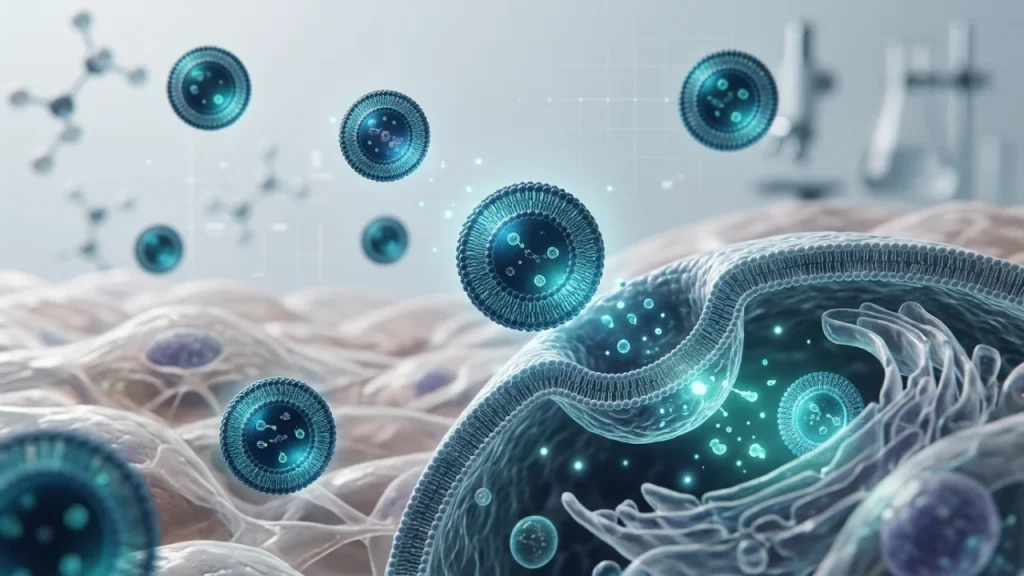
What Are Skin Exosomes and Why Should You Care?
How Skin Exosomes Deliver Messages Between Cells
Think of your skin cells as a busy city. They need to talk to each other to stay healthy. Skin exosomes are their messengers. These tiny packages carry important instructions.
Cells create exosomes inside themselves. They fill these vesicles with special cargo. This cargo includes proteins and RNA. RNA is a set of molecular instructions. The cell then sends the exosome out into the space between cells.
The exosome travels until it finds another cell. It docks on that cell’s surface. The two membranes fuse together. The exosome delivers its cargo directly into the recipient cell. This process changes what the receiving cell does.
It is a precise form of communication. It is not a general broadcast. It is a targeted delivery. The message depends entirely on the cargo. Different cargo sends different signals.
For example, a stressed cell might send an alert. Its exosomes could carry signals for repair. A healthy fibroblast might send growth factors. These encourage collagen production nearby. The system keeps skin balanced and responsive.
The cargo inside skin exosomes is diverse and powerful. Key components include: – Signaling proteins that tell cells to grow or calm down. – microRNA molecules that can turn specific genes on or off. – Enzymes that help break down or build new structures. – Growth factors that directly support tissue repair.
This delivery system is fast and efficient. Messages move directly from cell to cell. There is no wasted signal. The effect is local and controlled. This makes the process natural and potent.
Why does this matter for skin health? Damaged or aging cells often send poor messages. Their exosome cargo can be unhelpful. It might even promote inflammation. Restoring healthy communication is key. Introducing well-defined skin exosomes can help reset this dialogue.
They provide correct instructions to tired cells. Think of it as updating the cellular software. The new data tells cells to act younger and healthier. This leads to visible improvements in the skin’s appearance and function.
The entire process relies on biological precision. It is how your skin maintains itself every day. Harnessing this system offers a new approach to care. It works with your skin’s own natural language. The next step is understanding what makes these messengers so special for renewal.
Why Skin Exosomes Are Better Than Surface Creams
Most skincare creams work on the surface. They moisturize the top layer of your skin. They might smooth lines temporarily. But their active ingredients face a big barrier. This barrier is called the stratum corneum. It is your skin’s outermost shield. Large molecules cannot pass through it easily. This limits how deep a cream can work.
Skin exosomes take a different path. They are not designed to sit on the surface. They are designed for cellular delivery. Think of surface creams as sending a letter to a large office building. The letter might get stuck at the front desk. Exosomes are like a secure, internal email sent directly to the right department inside. The message gets delivered exactly where it needs to go.
The key difference is the target. Creams target the skin’s structure. Exosomes target the skin cells’ behavior. This leads to deeper, more lasting changes. Here is how this works in practice.
A cream with collagen peptides cannot add new collagen directly. It may provide some building blocks. Your fibroblasts must still use them. An aging fibroblast might be slow to respond. Skin exosomes can carry instructions to that fibroblast. They tell it to become more active and produce its own collagen again. The effect comes from within the cell itself.
Surface treatments often address symptoms. Dryness is a symptom. A cream adds moisture from the outside. Exosomes can help address a cause. They might carry signals that improve the skin’s own ability to retain water. They support the cells that make natural moisturizing factors.
The timing of results also differs. Creams can give quick cosmetic effects. These effects often wash away. Changes from cellular communication take more time to show. But these changes are building something real. Your own cells are creating improved skin tissue.
Consider these points: – Depth of action: Creams work on the epidermis or upper dermis. Exosome signals can reach the deeper dermal layer where live cells operate. – Nature of change: Creams often coat or plump. Exosomes aim to change cell activity and protein production. – Duration: Surface effects last until the next wash or as long as the product is applied. Cellular changes can last through the natural skin cycle.
Why should you care about this difference? It is about solving problems at their source. Tired cells lead to thin skin, slow healing, and wrinkles. Resetting their instructions tackles these issues fundamentally. It is a shift from managing appearance to influencing health.
This does not mean creams are useless. They are vital for protection and hydration. But for regenerative effects, working with cellular language is stronger. Skin exosomes offer that precise dialogue. They use your skin’s own biological system for renewal. The next question is how this approach translates to specific skin concerns people face every day.
The Natural Origins of Skin Exosomes in Your Body
Your skin cells are constantly talking to each other. They do not use words. They send tiny packages instead. These packages are called exosomes. Think of them as microscopic mail carriers. Every single skin cell can make and release them.
Skin exosomes form inside a cell. A small compartment inside the cell folds inward. It captures proteins and genetic instructions. Then it pinches off. This creates a tiny bubble, or vesicle, inside the cell. The cell then pushes this vesicle out into the space between cells. Now it is an exosome, traveling with its important cargo.
What is inside these natural packages? The cargo is specific and powerful. – Instructions in the form of RNA. This tells another cell how to behave. – Proteins that can activate repair processes. – Growth factors that encourage cell renewal.
This system is not new. Your body has used it for your entire life. Healthy cells use exosomes to maintain order. They send signals for routine repair and balance. Damaged or stressed cells send different signals. They might call for help or spread inflammation.
The number of exosomes changes with your skin’s state. Young, healthy skin has a vibrant exchange. Aging or sun-exposed skin sees less communication. The messages can become confused or weak. This is where the science of skin exosomes becomes exciting. Researchers study the signals from healthy, young cells. They learn how to support your skin’s own language.
Why does this natural origin matter? It means these messengers are biocompatible. Your body already knows them. They are not foreign chemicals. They are part of your skin’s native communication network. Using them in advanced care is about amplifying your biology. It is giving your cells clearer instructions and better tools.
This process happens at a scale that is hard to imagine. Billions of these events occur in your skin daily. It is a hidden world of constant chatter. When we harness skin exosomes, we are not inventing a new treatment. We are learning to speak your skin’s own language more fluently. This sets the stage for understanding how this natural system can be directed toward specific goals, like repair or rejuvenation.
How Skin Exosomes Boost Collagen Production
The Direct Signal That Tells Cells to Make More Collagen
Collagen is the main structural protein that keeps your skin firm and smooth. Its production naturally slows down as we age. Skin exosomes carry direct orders to reverse this slowdown. They tell your skin’s collagen-making cells to get back to work.
These cells are called fibroblasts. They live in the deeper layer of your skin, the dermis. Think of them as factories. For years, they produce strong collagen fibers. Over time, the factory manager stops sending clear instructions. Production lines slow. Skin begins to sag and wrinkle.
Skin exosomes act as a new management memo. They deliver specific instructions straight to the fibroblast factory floor. The message is clear: make more collagen. This is not a vague suggestion. It is a targeted command.
The instructions come packaged inside the tiny exosome vesicle. They include key molecules: – MicroRNAs that silence genes telling the cell to be idle. – Growth factors that bind directly to the fibroblast’s surface. – Signaling proteins that activate the cell’s internal collagen machinery.
Here is how the process works step by step. First, exosomes from healthy, active cells are applied or naturally targeted. They travel to the dermis. Next, they fuse with waiting fibroblast cells. Then, they release their molecular instructions into the cell’s cytoplasm.
The fibroblast receives the package. Its internal machinery reads the instructions. The cell’s nucleus gets the signal. It switches on genes responsible for collagen synthesis. The factory floor lights up again. Raw materials are gathered. New collagen proteins are assembled and shipped out.
This newly made collagen integrates into the existing skin matrix. It reinforces weak areas. It adds density and support. The result is improved skin firmness and elasticity. Fine lines may appear plumped from within.
The power lies in the specificity of the signal. General skincare ingredients often work by reducing inflammation or providing nutrients. Skin exosomes do something different. They issue a direct, biological command for a single task: produce structural proteins.
This method works with your skin’s own language. It uses the body’s native signaling system for repair. The goal is not to add a foreign substance. The goal is to make your cells perform their natural function better and for longer.
Research shows this signal can be very effective. Studies using models of aged skin see a measurable rise in collagen markers after exosome signaling. The increase happens because the cells are responding to a familiar, precise call to action.
The entire process highlights a shift in advanced skincare. We are moving beyond feeding cells to instructing them. The future of firm, youthful skin may depend less on passive topical agents and more on guiding cellular conversations toward clear, productive outcomes like robust collagen production. This sets the stage for exploring how these signals can be further refined for even more targeted results.
Why Collagen from Skin Exosomes Lasts Longer
Collagen made by your own cells is more permanent. This is a key benefit of skin exosomes. Topical treatments sit on the surface. They can hydrate or protect. But they wash off. Their ingredients often degrade in sunlight or air. Their effect is temporary by design.
Exosome signaling changes the skin from within. It triggers your fibroblasts to build new collagen networks. This new collagen is native to your body. It integrates directly into your existing skin matrix. Think of it like repairing a brick wall with original bricks from the same quarry. The new bricks bond strongly with the old ones.
Synthetic or applied collagen faces rejection. Your skin sees it as a foreign material. The body’s enzymes quickly break it down. This is why topical collagen creams cannot add lasting structure. They may moisturize but they do not rebuild.
Exosome-stimulated collagen avoids this problem. It is recognized as “self.” The body’s natural maintenance systems protect it. This leads to greater longevity. The structural improvement persists for weeks or months after the initial signal fades.
Several factors contribute to this durability. The collagen produced is type I and type III. These are the main structural types found in young, healthy skin. The production process mimics natural development. The fibers are organized correctly. They form strong cross-links with surrounding proteins.
- Native Integration: New collagen weaves into your existing matrix seamlessly.
- Biological Recognition: Your immune system sees it as part of you, not an invader.
- Correct Structure: Fibers are assembled properly for strength and function.
Research supports this lasting effect. Studies track collagen levels over time. In models, the increase from exosome signals remains elevated much longer than from topical agents. The reason is cellular memory. The signal resets the cell’s priority toward sustained production.
The result is cumulative improvement. Each signaling event can build upon the last. This creates a more resilient foundation over time. Surface-level treatments cannot achieve this depth. They offer a temporary fix, not a foundational upgrade.
Skin exosomes facilitate true skin remodeling. This is not a superficial plumping. It is a gradual restoration of the skin’s core architecture. The effects develop slowly and last longer because they are woven into your biology.
This durability shifts the value proposition. It moves skincare from daily correction to periodic reinforcement. The goal becomes long-term resilience, not just short-term appearance. The conversation in your skin continues to build a stronger framework long after the initial message is sent.
This lasting power naturally leads to a question of safety and compatibility with our own biology.
Visible Results: Firmer Skin and Fewer Wrinkles
Enhanced collagen production directly changes your skin’s physical structure. This change leads to visible improvements. You can see and feel these results. The most noticeable effect is increased firmness.
Think of your skin’s support layer as a mattress. Over time, the springs inside can sag. Collagen fibers are like those springs. New, properly formed collagen adds tension back into this network. Your skin no longer feels loose or soft. It gains a more toned and resilient feel. This firmness provides a lifted appearance, especially around the jawline and cheeks.
With better support, fine lines begin to soften. Wrinkles often form from repeated motion. They also form from structural collapse. Collagen plumps the area under these creases. It acts like a natural filler from within. Deep folds may become less pronounced. Fine lines can become nearly invisible. The surface texture becomes smoother.
This smoothing effect extends to skin texture. You may notice fewer large pores. Pores can appear larger when surrounding collagen weakens. The skin stretches slightly around them. New collagen tightens this border. It makes pores look smaller and less defined. Overall skin tone appears more even and refined.
The timeline for these results is gradual. You will not see overnight transformation. Lasting change takes time. Initial firmness might be felt within several weeks. Visible smoothing of lines often takes a few months. The process continues as collagen networks mature.
Key improvements include: – Improved skin elasticity and bounce. – Reduced depth of expression lines. – A more toned facial contour. – Smoother skin texture around pores.
These changes happen because new collagen integrates into your skin. It is not a surface layer. It is a fundamental part of the tissue. The effects look natural because they are natural. Your skin is literally rebuilding its youth from the inside.
This approach differs from temporary solutions. Topical creams may coat the skin to hide lines. Injectables fill space for a period. Exosome-guided collagen renewal addresses the root cause. It restores the architecture that keeps skin smooth. The result is not just a change in appearance. It is a change in actual skin quality.
The visual outcome is cumulative. Each phase of collagen production adds more support. Improvements build upon themselves over time. This creates a sustainable path toward younger-looking skin. The finish line is not a single point but ongoing resilience.
Seeing these results requires consistent cellular signaling. The process relies on clear biological communication. This leads to an important consideration for any treatment: how to ensure these messages are delivered effectively and safely to your unique skin cells.
Skin Exosomes and Inflammation Control
How Exosomes Calm Redness and Irritation
Skin inflammation is a sign your immune system is working overtime. It sends out alarm signals. These signals cause redness, heat, and irritation. Chronic inflammation can break down collagen and elastin. This speeds up skin aging.
Skin exosomes offer a sophisticated way to calm this process. They do not simply block signals. They actively retrain the cellular conversation. Think of them as skilled diplomats in a tense situation. They deliver instructions that promote balance and repair.
Here is how they work to control redness and irritation.
Exosomes carry specific instructions to immune cells. A key cell type involved is the macrophage. Macrophages can exist in two main states. One state promotes inflammation. The other state supports healing and cleanup.
Exosomes can encourage macrophages to switch to the healing state. This shift changes the chemical environment. Pro-inflammatory signals decrease. Anti-inflammatory signals increase. The result is a direct reduction in visible redness and swelling.
The messages inside exosomes are precise. They include proteins and genetic material like miRNA. These molecules target specific pathways in skin cells.
For example, they can inhibit a major inflammatory pathway called NF-κB. Blocking this pathway stops a cascade of irritation. It is like turning down the volume on a loud alarm.
The effects are measurable in clinical settings. Studies show exosome application can lower levels of key inflammatory markers. These markers include TNF-α and IL-6. Reducing these markers leads to calmer skin.
The benefits extend beyond temporary relief.
- Exosomes help restore the skin’s barrier function. A strong barrier keeps irritants out and moisture in.
- They support tissue repair by encouraging cells to move into damaged areas.
- They modulate overactive immune responses seen in conditions like rosacea or after procedures.
This makes them valuable for reactive or sensitive skin types. The approach is fundamentally different from masking redness with cosmetics. It addresses the underlying biological miscommunication.
Consider sunburn or a minor abrasion. The skin becomes hot, red, and tender. This is acute inflammation. It is a necessary first step for healing. But sometimes the inflammatory response does not resolve properly. It becomes chronic or excessive.
Exosomes can help guide this response back to a normal timeline. They promote resolution rather than suppression. Your skin heals more efficiently with less collateral damage.
The outcome is skin that looks and feels soothed. Persistent redness can diminish. Reactivity to common triggers may lessen over time. This creates a more resilient complexion.
This process relies on the effective delivery of these natural messengers. It connects directly to the previous discussion on collagen renewal. Clear cellular communication supports both structural rebuilding and inflammatory balance. Together, these actions form a comprehensive strategy for skin health.
The next logical question involves safety and how these messengers are prepared for use. Their natural origin is key, but specific steps ensure their purity and activity.
Repairing Damaged Skin with Exosomal Pathways
When your skin is cut, a complex repair program activates immediately. Skin exosomes are key messengers in this program. They carry precise instructions to coordinate the healing process. Their goal is to restore the skin’s structure with minimal lasting marks.
The first phase is building new tissue. Fibroblasts are the skin’s construction cells. They must move to the wound site and produce new collagen. Exosomes direct this traffic. They signal fibroblasts to migrate into the damaged area. Once there, exosomes stimulate these cells to create fresh, healthy collagen fibers. This new collagen forms the foundation for repaired skin.
But not all collagen is the same. Scar tissue often contains collagen that is densely packed and disorganized. This makes it look and feel different from normal skin. Skin exosomes help guide fibroblasts to produce a more natural, flexible collagen matrix. This results in tissue that integrates better with the surrounding skin.
The next critical phase is remodeling. After the initial patch is built, the body must refine it. Think of it like smoothing fresh concrete before it fully hardens. Exosomes manage this refinement process. They help balance enzymes that break down excess collagen. They also support the formation of new blood vessels to nourish the healing area. This organized remodeling is what reduces visible scarring.
Key actions of exosomes in wound repair include: – Directing cell migration to the precise location needed. – Switching fibroblast activity from scar-forming to regenerative. – Regulating the breakdown of temporary repair structures. – Encouraging the growth of a supportive network of tiny blood vessels.
Healing is not just about closing a gap. It is about restoring function and appearance. Chronic wounds, like some diabetic ulcers, struggle because these cellular signals fail. The repair program gets stuck. Introducing functional skin exosomes can restart these stalled processes. They deliver the missing instructions directly to local cells.
The potential to minimize scarring is particularly significant. Hypertrophic scars and keloids represent an overactive healing response. Exosomes can modulate this overactivity. They promote a more measured and organized repair timeline. This leads to smoother, more pliable skin after injury.
The entire process hinges on effective cellular communication. It is a natural biological conversation that exosomes facilitate. By supporting this dialogue, we assist the skin’s innate ability to heal itself optimally. The outcome is not just healed skin, but skin that closely resembles its original state.
This leads to a broader view of skin health as a dynamic system of signals and responses. Understanding these pathways allows for more sophisticated interventions that work with biology, not against it. The next consideration is how these natural messengers are sourced and prepared to ensure they deliver their intended benefits safely and consistently.
Long-Term Benefits for Sensitive Skin Types
Sensitive skin often reacts because its alarm system is too easily triggered. Immune cells in the skin, like sentinels, can overreact to mild stimuli. This leads to redness, heat, and discomfort. Skin exosomes communicate directly with these immune cells. They carry messages that help calm the overactive response.
The process is precise. Exosomes deliver specific instructions to the cells. These instructions can reduce the production of inflammatory signals. Think of it as turning down the volume on a loud alarm. The result is less irritation and a more balanced skin environment. This is not a surface-level mask. It is a cellular-level adjustment.
For conditions like rosacea or persistent redness, this approach is key. Traditional treatments often work by broadly suppressing inflammation. Exosomes aim to retrain the cellular conversation instead. They promote a state of tolerance. The skin becomes less reactive over time.
The long-term benefits come from this retraining effect. With repeated, appropriate use, the skin’s baseline inflammation can lower. This leads to several measurable improvements:
- A visible reduction in persistent background redness.
- Fewer and less severe flare-ups from common triggers.
- A strengthened skin barrier that better retains moisture.
- Improved resilience against environmental stressors like pollution or temperature changes.
This happens because exosomes support the skin’s own repair and regulation cycles. They provide the tools cells need to function properly. The skin’s natural defense mechanisms become more efficient and less frantic. It is a shift from constant reaction to maintained balance.
Importantly, this method is inherently gentle. Exosomes are natural biological vehicles. They do not introduce harsh foreign chemicals. Their action is based on communication, not force. This makes them a compelling option for skin that reacts badly to many conventional active ingredients.
The goal for sensitive skin is lasting comfort and strength. Skin exosomes offer a path to achieve this by addressing root causes. They help reset the inflammatory dialogue within the skin’s ecosystem. The outcome is skin that not only looks calmer but is fundamentally less prone to overreaction.
This foundational calming effect also sets the stage for improved overall skin health and function, which we will explore next.
Strengthening the Skin Barrier with Exosomes
How Skin Exosomes Improve Moisture Retention
A healthy skin barrier acts like a wall made of bricks and mortar. The “bricks” are skin cells called corneocytes. The “mortar” is a mix of lipids like ceramides. When this mortar is complete and intact, it seals in moisture. When it has gaps, water escapes and dryness occurs. Skin exosomes deliver precise instructions to the cells that build this wall.
They tell skin cells to produce more of the key barrier lipids. This includes ceramides, cholesterol, and fatty acids. These lipids are essential for a tight seal. More lipids mean fewer gaps in your skin’s natural barrier. This improved structure physically traps water inside the skin tissue.
Exosomes also boost the production of natural moisturizing factors. These are molecules inside skin cells that attract and hold water. Think of them like tiny sponges. With more sponges, each cell can retain more moisture. Your skin stays hydrated from the inside out.
The communication doesn’t stop there. Skin exosomes support the proteins that form strong connections between cells. These proteins are called claudins and occludins. They work like sturdy clasps. Stronger clasps create a tighter, more cohesive barrier layer. This makes it harder for moisture to leak out.
The result is a dual-action improvement. First, the barrier structure itself becomes more robust. Second, the water-holding capacity within cells increases. This leads to clear, measurable changes in skin quality.
- Skin feels smoother and more supple to the touch.
- The visible appearance of fine, dry lines diminishes.
- Skin maintains hydration longer after cleansing or exposure to dry air.
- It becomes less prone to tightness or flakiness.
This process is fundamentally different from applying a surface moisturizer. A cream adds a temporary external layer of hydration. It can wash or rub off. The work of skin exosomes happens at the cellular level. They help your skin build its own superior moisture-retention system. This is a long-term upgrade to your skin’s natural function.
Improved moisture retention also reinforces the calming effects discussed earlier. A well-hydrated barrier is less vulnerable to irritation. It is more resilient against external stressors. The skin can focus on healthy maintenance instead of constant repair. This creates a positive cycle of strengthening and calming.
Ultimately, holding onto moisture is a key sign of skin health. By optimizing the barrier’s structure and content, skin exosomes address a core reason for dryness. They provide the tools for your skin to hydrate itself more effectively. This foundational improvement supports every other aspect of skin vitality, from elasticity to a radiant glow.
Protection Against Environmental Damage
Your skin faces daily attacks from its environment. Two major threats are ultraviolet (UV) rays from the sun and microscopic pollution particles in the air. These stressors do not just sit on the surface. They penetrate and create free radicals inside your skin cells. Free radicals are unstable molecules. They steal electrons from healthy cell structures, causing damage. This process is called oxidative stress. It breaks down collagen, triggers inflammation, and can alter your skin’s DNA.
Skin exosomes deliver a powerful counter-strategy directly to your cells. They carry specific instructions and tools for cellular defense. Think of them as emergency response teams. They arrive with blueprints for antioxidant enzymes and signals to activate your skin’s own repair programs. Antioxidants neutralize free radicals. They donate an electron without becoming unstable themselves. This stops the chain reaction of damage before it harms vital cell components.
For UV protection, exosome communication is crucial after sun exposure. UV rays can weaken the skin’s natural defense signals. Skin exosomes help restore this communication. They encourage cells to produce more of their own protective melanin. They also support the repair systems that fix DNA errors caused by UV light. This is not a sunscreen. It is a reinforcement of your skin’s internal recovery processes.
Pollution defense works on a different front. Tiny particles like PM2.5 can stick to skin and seep into pores. They generate a constant low level of inflammation. Skin exosomes help fortify the barrier from within, making it harder for particles to enter. More importantly, they carry anti-inflammatory messages. These messages tell cells to calm down and not overreact to the pollutant irritation. This prevents the chronic inflammation that leads to dullness, sensitivity, and premature aging.
The protective benefits are clear and measurable. – Cells show increased activity of natural antioxidant enzymes like superoxide dismutase. – Markers of inflammation, such as IL-6, are reduced after exposure to irritants. – The skin’s structural proteins, collagen and elastin, show less degradation when challenged.
This creates a more resilient skin ecosystem. A strong barrier keeps some threats out. A smart cellular response manages what gets through. The work of skin exosomes equips your cells with better tools for both jobs. Your skin becomes less reactive to daily environmental insults. It stays calmer and more stable over time.
Ultimately, this proactive protection helps preserve long-term skin health. It shifts the focus from repairing visible damage to preventing it at the source. By upgrading your skin’s cellular communication, you build inherent strength against the elements. This foundational resilience is key to maintaining a healthy, youthful appearance despite environmental pressures. The next logical step is to see how this enhanced function contributes to the skin’s visible renewal and rejuvenation.
Reducing Pigmentation and Evening Skin Tone
Skin exosomes carry specific instructions to help fade dark spots. They do this by talking directly to your skin’s pigment-producing cells. These cells are called melanocytes.
Melanocytes make melanin. Melanin is the pigment that gives skin its color. Sun exposure or inflammation can make these cells overactive. They then produce too much melanin in one spot. This creates a dark patch or age spot.
Exosomes deliver messages to calm this overactivity. They send signals that tell the melanocyte to slow down. The cell makes less excess pigment. This is a targeted approach. It addresses the cause, not just the surface stain.
The process involves key natural pathways. One important signal is about reducing an enzyme called tyrosinase. Tyrosinase is essential for making melanin. Skin exosomes can carry molecules that lower this enzyme’s activity.
Think of it like turning down a faucet. The melanin production slows to a normal rate. New dark spots are less likely to form. Existing spots can gradually fade as older, pigmented skin cells naturally shed.
This is different from harsh lightening creams. Some creams simply bleach or kill skin cells. Exosomes work by retraining your cells. They promote balanced, healthy function.
The benefits for skin tone are clear. – Exosome signaling helps disrupt the transfer of pigment packets to surrounding skin cells. – They support a more organized and even distribution of melanin. – The result is a reduction in concentrated dark areas.
Your complexion becomes more uniform. The contrast between dark spots and your natural skin lessens. This happens without harming your skin’s overall health or barrier.
These effects complement the barrier protection discussed earlier. A strong barrier prevents new inflammation. Less inflammation means fewer triggers for melanocytes to go into overdrive. It is a two-part strategy for clarity.
First, protect the skin from insults that cause pigmentation. Second, use cellular communication to correct existing uneven tone. Together, they promote lasting radiance.
The visual improvement is gradual and natural. It reflects a true change in your skin’s biology. Your cells are communicating better. They are returning to a balanced, healthy state.
This leads us to another critical aspect of renewal. Addressing pigmentation improves surface appearance. The next step is rebuilding the deeper support structure for lasting firmness and smoothness.
The Science Behind Skin Exosome Sourcing
Ethical Methods for Collecting Exosomes
Exosomes are collected from natural, living sources. They are not made in a lab from scratch. The process begins with donor cells grown under strict conditions. These cells are often human skin cells or stem cells. They are nurtured in a clean, controlled environment. This environment is free from contaminants. The goal is to keep the cells healthy and functioning normally. Healthy cells release high-quality exosomes.
The cells are placed in a special nutrient-rich liquid. This liquid is called a growth medium. Cells live and multiply in this medium. As they grow, they naturally release exosomes into the liquid. Think of it like a tea bag steeping in hot water. The cells (the tea bag) release beneficial particles (the exosomes) into the surrounding liquid (the tea). This method is entirely non-invasive for the donor cells. The cells are not destroyed to get the exosomes.
After a period of growth, the liquid medium is collected. It now contains exosomes along with other materials. The next step is isolation. Scientists must separate the tiny exosomes from everything else. This is a complex technical process. It often involves ultra-high-speed centrifugation. Spinning the liquid at immense speeds causes the exosomes to gather together. They form a pellet at the bottom of a tube. Other methods use filters or specialized chemicals.
The isolated exosomes are then analyzed for purity and identity. Researchers confirm they have the correct vesicles. They check for specific protein markers on the exosome surface. These markers act like a fingerprint. They prove the collected particles are genuine exosomes, not other cellular debris. This quality control step is critical for safety and consistency.
Ethical sourcing focuses on the origin of the donor cells. Responsible practices use consented and documented sources. – One common source is mesenchymal stem cells from donated umbilical cord tissue after healthy births. This tissue would otherwise be discarded. – Another source is a person’s own skin cells, obtained via a small, safe biopsy. – Laboratory-grown cell lines that originated from ethical donations decades ago are also used.
These methods avoid any harm to donors. They prioritize donor consent and transparency. The entire collection process is designed to be sustainable and repeatable. It does not deplete rare resources.
The final product is a concentrated solution of pure exosomes. They are stored in a stable form until use. This careful, multi-step process ensures the skin exosomes used in advanced dermatology are both potent and ethically sound. They carry the natural signaling power of healthy cells. This responsible foundation is what allows them to safely promote cellular communication in your skin, building on the benefits of tone and barrier repair to now address structural renewal from within.
Ensuring Purity and Safety in Exosome Products
Pure skin exosomes must be completely separated from other materials. The initial liquid from cell cultures contains more than just exosomes. It also holds proteins, fragments of dead cells, and other debris. Scientists use several physical methods to isolate the target vesicles.
A common first step is filtration. The liquid passes through very fine filters. These filters have tiny pores. The pores are measured in nanometers. They allow small exosomes to pass through. Larger particles and cell debris get trapped and are removed. This is a gentle, force-free method.
Ultracentrifugation is another key technique. Machines spin samples at extremely high speeds. These speeds can exceed 100,000 times the force of gravity. Denser particles, like exosomes, gather at the bottom of the tube. Lighter contaminants stay in the liquid above. The exosome pellet is then carefully collected.
After isolation, rigorous testing confirms purity and safety. This is non-negotiable for any credible product. Researchers run multiple checks on the final preparation.
They test for unwanted microbial life. This ensures no bacteria, fungi, or endotoxins are present. Even tiny amounts of these contaminants could cause skin reactions or infections.
They also measure specific protein markers. This confirms the identity of the vesicles as true exosomes. More importantly, they check for the absence of certain markers. These missing markers prove that larger, potentially risky cell structures have been removed.
A critical safety test looks for genetic material from the donor cells. The goal is to harvest the exosome’s signaling cargo, not transplant foreign DNA. Advanced methods verify that the preparation contains minimal or no intact donor DNA. This eliminates any theoretical genetic risks.
The entire process follows strict guidelines. These are often based on standards used for pharmaceutical products. Every batch is documented. The documentation tracks its entire journey from source to final vial.
This multi-layered approach creates a safe product. The final solution contains concentrated, pure signaling vesicles. It is free from harmful contaminants. This meticulous focus on purity transforms ethically sourced materials into a reliable tool. It allows skin exosomes to deliver their renewing messages without interference or risk. This sets the stage for understanding how these clean vesicles then interact with aging skin cells to prompt repair.
Why Source Quality Matters for Effectiveness
The cells that produce exosomes define the message they carry. Think of an exosome as a tiny letter. The cell writing that letter chooses the words. A stressed or aging cell sends a very different message than a young, healthy one.
Skin exosomes from ideal sources carry specific instructions. These instructions tell recipient cells to act in beneficial ways. The key mechanisms are clear and direct.
First, they can boost collagen and elastin production. Fibroblasts in the skin make these structural proteins. Exosomes from vigorous cells signal fibroblasts to make more. This improves skin firmness and reduces fine lines.
Second, they calm inflammation. Damaged skin often has a low level of chronic inflammation. This speeds up aging. Healthy exosomes carry molecules that tell immune cells to stand down. This creates a better environment for repair.
Third, they support the skin’s barrier. A strong barrier keeps moisture in and irritants out. Certain exosome signals help keratinocytes, the main barrier cells, function optimally.
The source material is everything. Exosomes from young, proliferating cells are packed with active components. These components include growth factors, signaling lipids, and protective microRNAs.
In contrast, exosomes from aged or senescent cells lack this rich cargo. They might even carry signals that promote aging in nearby cells. Using a poor source is like trying to copy a faded document. The message is weak or corrupted.
The sourcing timeline is also critical. Cells change over time in culture. Early-passage cells are closest to their natural, in vivo state. They release the most potent vesicles. As cells divide repeatedly, they become exhausted. Their exosome output declines in quality.
Effective sourcing requires careful selection at multiple points. – Donor age and health status provide the foundation. – The cell type must be relevant, like dermal fibroblasts or mesenchymal stem cells. – Culture conditions must nourish cells without causing stress. – The harvest timing must capture peak exosome activity.
This careful sourcing ensures a high concentration of beneficial molecules. It is not just about having many exosomes. It is about having the right ones. A pure batch of weak exosomes will have little cosmetic effect.
Quality sourcing creates a powerful signal cascade. One skin cell absorbs an exosome from a robust donor. It then activates its own renewal pathways. This cell may then release supportive signals of its own. A local network effect begins.
The result is targeted cellular communication. The skin’s own repair systems get a clear, strong instruction manual. They follow these instructions to improve visible skin structure and function.
Ultimately, the source defines the biological outcome. Superior sourcing transforms skin exosomes from simple carriers into precise rejuvenation tools. This leads directly to the next question: how these targeted messages translate into real changes for aging skin.
Formulation Challenges for Skin Exosome Stability
Keeping Exosomes Active in Skincare Products
Skin exosomes are delicate biological messengers. They are not simple chemical compounds. Their power comes from their intact structure and cargo. This creates a major challenge for skincare. The goal is to keep them fully active inside a bottle.
Think of an exosome like a tiny, fragile bubble. Inside it carries precious instructions. If the bubble pops or dries out, the instructions are lost. The same happens if it freezes incorrectly. The exosome becomes useless. Formulators must protect these structures at every step.
The first threat is temperature. Exosomes degrade quickly at room temperature. Refrigeration slows this down. For long-term storage, they are often frozen. But freezing presents its own danger. Ice crystals can form. These sharp crystals pierce the exosome’s membrane. This destroys its contents.
Scientists use cryoprotectants to prevent this damage. These are special stabilizing agents. They work like antifreeze for cells. They allow exosomes to freeze in a glass-like state without sharp ice. This process is called vitrification.
The second threat comes from the skincare formula itself. Many common ingredients can disrupt exosomes. Strong preservatives or certain surfactants can break them apart. High acidity or alkalinity can also denature their proteins. The formula must be biologically friendly.
Formulators must create a neutral, supportive environment. They often use buffering systems to maintain perfect pH. They select gentle preservatives that do not harm the vesicles. The base cream or serum must act as a protective cushion.
A third challenge is shelf life. An exosome product must remain potent for months after production. Accelerated stability testing is used. Scientists store products under stress conditions like higher heat. They then test the exosomes to see if they survive.
They check for key markers of activity. Are the vesicles still the right size? Do they still have their signature surface proteins? Most importantly, can they still deliver their message to skin cells? If any answer is no, the formula fails.
Successful stabilization often uses a layered approach. – The exosomes are first suspended in a stable buffer solution. – This suspension is then carefully mixed into the final product base. – The entire formula is packaged to block light and air exposure.
Even with perfect formulation, user handling matters. Storing the product in a hot bathroom can ruin it. Contaminating it with fingers can introduce bacteria. Following storage instructions is crucial for final effectiveness.
Ultimately, formulation is about balance. It bridges pure science with real-world use. A perfectly sourced exosome is only as good as its delivery system. Without stability, the cellular message never reaches its target. This leads directly to the final proof: how we measure real results on living skin.
The next question is how we verify these delicate particles actually work after facing these challenges.
Delivery Systems That Protect Exosome Integrity
A delivery system is like a protective capsule for skin exosomes. It shields these fragile vesicles from harm. The goal is to get them past the skin’s barrier. They must arrive at living cells fully intact and active.
Think of an exosome as a tiny, delicate message in a bottle. The delivery system is the sturdy ship that carries it. Without the ship, the bottle might sink or break before reaching shore. For skin, the “shore” is the deeper layers where cells can listen.
One common protective method is encapsulation. Here, exosomes are wrapped inside another material. This material is often a lipid or a polymer. It forms a protective shell around the vesicles. This shell guards against chemical breakdown. It also helps the exosomes stick to the skin longer.
Another key technology uses special gels. These gels are called hydrogels. They are mostly water, but their structure is a net. Exosomes get trapped in this net-like matrix. The gel releases them slowly over time. This controlled release is important. It means exosomes are not all exposed at once.
Some systems use nanoparticles as carriers. These are even smaller particles that exosomes can attach to. The nanoparticles help guide the exosomes into the skin. They act like a key, helping to unlock the skin’s outer layer.
What makes a good delivery system? It must have several features. – It must be compatible with exosomes. It cannot crush or dissolve them. – It needs to be stable itself in a cream or serum. – It should enhance penetration without being harsh. – It must finally release the exosomes so they can function.
Penetration is a major hurdle. The top layer of skin, the stratum corneum, is designed to block outsiders. Good delivery systems use safe enhancers. These might gently loosen the bonds between dead skin cells. This creates tiny, temporary pathways. The protected exosomes can then travel through these pathways.
Once inside, the system must degrade or release its cargo. The exosomes need to be free to find their target cells. A system that holds them too tightly is useless. Timing is everything. The best systems break down right when and where they are needed.
Research shows that protected exosomes perform better. They show higher cellular uptake rates. This means more skin cells actually receive their signals. Unprotected exosomes often break down on the skin’s surface. Their messages are lost.
The future of these systems is smart targeting. Scientists are working on “guided” delivery. The idea is to add markers to the protective carrier. These markers would seek out specific cell types, like fibroblasts or keratinocytes. This would make treatment even more precise.
In summary, the delivery system is a critical guardian. It ensures the journey from formulation to function is a success. Without it, even the best-prepared skin exosomes may fail. This protection directly sets the stage for their final action: creating a measurable change in the skin’s biology and appearance.
The next logical step is to ask how we see that change happen. We must measure the actual effects on real skin.
Testing for Consistent Potency Over Time
A powerful formula is useless if it loses strength on the shelf. Scientists must prove skin exosomes stay active from creation to application. This requires rigorous stability testing. The goal is consistent potency over time.
Potency means the exosomes can still do their job. They must deliver signals that change cell behavior. Testing checks this biological function, not just physical presence. A vial could contain intact exosomes that are biologically inert. That is a failed product.
Stability testing simulates real-world conditions. Researchers store samples under different stresses. They track changes in key features. This process has several core steps.
- First, scientists define critical quality attributes. These are measurable signs of function. They include particle count, size, and surface markers. Most importantly, they test biological activity in cells.
- Next, samples go into stability chambers. These control temperature and humidity. Common tests include long-term storage at refrigerated temperatures. Accelerated studies use warmer temperatures to speed up aging.
- At set time points, scientists pull samples for analysis. They compare them to a fresh baseline. They look for any significant drop in performance.
Biological activity tests are the true measure. Scientists apply aged exosome samples to cultured skin cells in a lab. They then look for specific cellular responses. For example, do the cells increase collagen production? Do they migrate faster to close a simulated wound? A potent batch will show these effects clearly. A degraded batch will show weak or no response.
Real-time stability data is gold. It tracks a product over its intended shelf life, like 12 or 24 months. This data confirms the storage conditions on the label are valid. It proves the formula remains effective for the consumer.
Formulation scientists use this data to improve the product. If potency drops, they investigate. Perhaps the protective carrier system needs adjustment. Maybe an antioxidant ingredient is required. Each test cycle leads to a more robust design.
The final proof is consistency across batches. Reproducibility is a major challenge in biology. Manufacturers must show that batch A performs like batch B six months later. Rigorous testing protocols make this possible.
In essence, stability testing transforms hope into guarantee. It moves skin exosomes from a promising idea into a reliable product. This scientific validation bridges the lab and the medicine cabinet. It ensures the complex cellular messages arrive intact, ready to work.
Clinical Protocols for Skin Exosome Treatments
How Doctors Use Exosomes in Dermatology Practices
Doctors now use skin exosomes as a powerful part of treatment plans. These tiny messengers are not a standalone miracle. They are a sophisticated tool integrated into broader skin health strategies. Their primary role is cellular communication. They deliver precise instructions directly to your skin cells.
A common application is healing and repair after procedures. Think of laser treatments or microneedling. These processes create controlled micro-injuries to stimulate renewal. Adding exosomes afterward can significantly improve recovery. They calm inflammation faster. They guide cells to rebuild tissue more efficiently. This leads to less redness and downtime for patients. It also often enhances the final results of the procedure.
Another key use is combating visible aging. As skin ages, cellular communication breaks down. Collagen production slows. Exogenous exosomes can help reset these signals. In practice, doctors might inject a preparation directly into targeted areas. This approach aims to rejuvenate skin from within. The goal is improved texture, firmness, and hydration at a cellular level.
Exosome therapy also shows promise for specific chronic conditions. For example, some protocols use them for stubborn hyperpigmentation. The exosomes can carry messages that help normalize melanin production in overactive pigment cells. They are also studied for inflammatory conditions like certain types of alopecia. The exosomes work to modulate the immune response around hair follicles.
The clinical protocol always starts with a detailed consultation. A dermatologist assesses your skin’s unique needs. They determine if exosome therapy is a suitable option for your goals. The actual delivery method is chosen based on this assessment.
- Topical application is used with needling devices to help the vesicles penetrate.
- Direct injection allows for precise placement into deeper skin layers.
- Combination therapy pairs exosomes with other modalities like growth factors or PRP.
Safety and sterility are paramount in the clinic. Doctors use only medical-grade preparations from regulated sources. The application process follows strict antiseptic guidelines, just like any other medical treatment. Patient expectations are managed realistically. Exosomes support the skin’s natural processes, but they are not an instant fix.
Results typically develop over weeks as the biological signaling takes effect. Most patients require a series of sessions for optimal outcomes. Maintenance treatments may be suggested to sustain the benefits over time. This reflects the ongoing nature of skin health.
The integration of skin exosomes into dermatology marks a shift toward regenerative medicine. It focuses on supporting the skin’s innate intelligence rather than just masking problems. This approach allows doctors to offer more nuanced and targeted care for complex skin concerns.
Personalized Approaches Based on Skin Needs
No two skin treatments are exactly alike. This is especially true for skin exosome therapy. The core principle is personalization. A doctor does not use a one-size-fits-all plan. Instead, they design a protocol based on your skin’s specific biology and your primary goals.
The first step is pinpointing the main concern. Different skin issues involve different cell types and signals. The treatment approach changes to match.
For fine lines and lost firmness, the target is collagen. Aging skin cells send weaker signals to fibroblast cells. Fibroblasts make collagen. A personalized protocol here focuses on rejuvenating this communication. Doctors often choose microneedling with topical exosomes. The needling creates micro-channels. It also triggers a minor wound-healing response. The applied skin exosomes then enter these channels. They deliver instructions directly to fibroblasts. The goal is to boost collagen and elastin production from within. This improves skin texture and tightness over time.
For redness and conditions like rosacea, the problem is inflammation. The immune system is overactive. A tailored approach uses exosomes for calming. These vesicles carry messages that can dial down inflammatory signals. Direct injection into affected areas might be chosen. This places the exosomes precisely where immune cells are active. The treatment aims to restore balance. It helps soothe persistent redness and reduce reactive flare-ups.
Hyperpigmentation, like sun spots, requires a different tactic. Here, melanocyte cells produce too much pigment. A personalized protocol targets this overproduction. Exosomes can carry instructions that regulate melanin synthesis. Combining exosomes with gentle laser treatments is common. The laser energy helps prepare the skin environment. The exosomes then guide the cells toward a more normal function. This leads to a more even skin tone.
For acne-prone skin, the concerns are multiple. They include active inflammation, scarring, and oil regulation. A combination approach is typical. It may address each issue in stages. First, exosomes can help calm active breakouts by modulating local immunity. Later, they support healthier healing to minimize scar formation. The protocol adapts as the skin changes.
Even the source of the exosomes can be part of personalization. While all skin exosomes share basic functions, their cargo can vary. Some preparations may be enriched for specific factors. A dermatologist selects the preparation that best aligns with your needs.
The number and frequency of sessions are also customized. Significant photoaging may require a longer series. A mild concern might need fewer appointments. The treatment plan is a dynamic roadmap, not a fixed recipe.
This level of customization is key to advanced care. It moves beyond simply applying a substance. It is about using biological tools to guide your skin’s own repair processes toward a specific goal. The next consideration is how to ensure these sophisticated treatments are both safe and effective in practice.
Monitoring Progress and Adjusting Treatments
Effective skin exosome therapy is a dynamic process. It does not end after a single session. Monitoring progress is essential for optimal results. Your dermatologist will track specific changes in your skin. This tracking allows for precise adjustments to your treatment plan.
Follow-up appointments are a standard part of care. They are typically scheduled at key intervals. Common intervals are two to four weeks after a procedure. These visits are not just quick check-ins. They involve a detailed assessment of your skin’s response.
The assessment uses both observation and technology. Your doctor will look for visual and tactile changes. They may also use specialized imaging devices. These tools can measure improvements beneath the skin’s surface. They assess hydration, collagen density, and inflammation levels.
Progress is measured against your initial baseline and personal goals. Success is not only about final outcomes. It is also about the quality of the healing journey. The right response should follow a predictable biological pattern.
Key signs of a positive response include: – Reduced redness and sensitivity after treatments. – A smoother skin texture over several weeks. – More even pigmentation in sun-damaged areas. – Gradual improvement in fine lines and firmness.
Sometimes, the skin’s response indicates a need for change. The treatment protocol may be adjusted. This is a normal part of personalized medicine. Adjustments ensure your skin gets exactly what it needs at each stage.
Common adjustments during a treatment series include: – Changing the interval between sessions. – Modifying the method of exosome delivery. – Combining exosomes with different supportive treatments. – Altering the concentration or volume used.
Patient feedback is a crucial data point. You are the one who feels your skin every day. You might notice subtle shifts in hydration or resilience. Sharing these observations helps your doctor make informed decisions. This collaboration makes the treatment truly personalized.
Long-term monitoring helps maintain results. After an initial series, maintenance sessions might be suggested. These sessions can support the skin’s new, healthier state. The goal is to extend the benefits over time.
This adaptive approach maximizes safety and efficacy. It respects that every person’s biology is unique. Skin exosome treatments are not a static product. They are a guided, living interaction with your skin’s cells. The final step is understanding the realistic timeline for seeing these cellular changes become visible improvements.
The Future of Skincare with Skin Exosomes
Emerging Research on New Exosome Applications
Scientists are now looking far beyond today’s uses for skin exosomes. Research labs are exploring how these tiny messengers could tackle major skin challenges. The goal is to unlock new healing powers. This work happens at the cellular level.
One exciting area is hair regeneration. Studies show certain exosomes can wake up dormant hair follicles. They send signals to cells in the scalp. This encourages hair to enter the growth phase again. Early research suggests this could help with pattern hair loss. It offers a potential new treatment that works by communication, not just blocking hormones.
Another frontier is wound healing, especially for chronic ulcers. Diabetic wounds often heal very slowly. Research indicates that skin exosomes can accelerate this process. They reduce inflammation at the wound site first. Then they instruct skin cells to move in and rebuild tissue faster. This could prevent infections and amputations.
Researchers are also designing “engineered” exosomes. Think of these as custom-made delivery trucks. Scientists can load them with specific healing molecules. For example, they could pack an exosome with antioxidants and a growth signal. This dual cargo could then target sun-damaged cells precisely. The skin exosomes become smart carriers for advanced repair.
The fight against scarring is seeing progress too. Hypertrophic scars and keloids form when healing goes wrong. New studies are testing exosomes that calm overactive fibroblast cells. These are the cells that make too much scar tissue. Early results show softer, flatter scars in lab models.
Here are some other applications now in early study phases: – Re-pigmenting skin for conditions like vitiligo by guiding melanocyte cells. – Soothing severe eczema by resetting the skin’s immune messages. – Protecting skin from radiation damage during cancer therapies. – Enhancing the survival of fat grafts used in reconstructive surgery.
The science is also improving how we get exosomes. New methods aim to make them more potent and stable. Some techniques focus on collecting exosomes from specific cell states. Others work on better storage so the vesicles stay active longer.
This wave of research moves skincare from correction to true regeneration. The future is about giving cells the exact instructions they need to fix complex problems. It is a targeted approach inspired by the body’s own language. Next, we must consider how this promising science integrates into real-world dermatology practice.
Integrating Exosomes with Other Skincare Advances
The true power of skin exosomes may be unlocked through combination. They are not meant to replace other treatments. Instead, they can work alongside them. This creates a more complete approach to skin health.
Think of exosomes as expert messengers. They can prepare the skin to better receive other therapies. They can also help the skin heal after a procedure. This teamwork can lead to stronger, longer-lasting results.
One key partnership is with laser and energy-based devices. These tools work by creating controlled micro-injuries. This process stimulates the skin’s natural repair. But the healing response can vary between people. Applying exosomes after such a treatment is being studied. The goal is to guide the repair process more precisely. The exosomes could deliver specific instructions to the wounded cells. This may lead to faster recovery. It could also reduce side effects like redness. Ultimately, it might improve the final cosmetic outcome.
Exosomes could also enhance topical skincare routines. Many potent ingredients struggle to penetrate the skin’s barrier. Exosomes naturally communicate with cells beneath the surface. Researchers are exploring them as advanced delivery vehicles. An exosome could carry a vitamin C molecule or a retinoid deep into the skin. This protects the active ingredient during transit. It also ensures it reaches the exact cells that need it. This makes each product in your routine potentially more effective.
The synergy extends to regenerative procedures like microneedling. Microneedling creates tiny channels in the skin. This allows for better absorption of products. Combining it with a solution containing skin exosomes is a logical step. The channels offer a direct pathway for the vesicles. They can then interact with dermal cells immediately. Early research suggests this combo may boost collagen production more than either method alone. It turns a mechanical process into a targeted biological conversation.
Looking ahead, integration with wearable sensors is a fascinating frontier. Imagine a small patch that monitors skin hydration or UV exposure. This data could trigger the release of exosomes from a connected reservoir. The exosomes would carry messages tailored to the real-time stressor. This creates a dynamic, responsive skincare system. It moves from periodic treatment to continuous, intelligent support.
The future is not about one miracle technology. It is about smart combinations. Skin exosomes offer a unique language for cellular communication. Pairing them with other advances creates a powerful dialogue. This integrated strategy promises more personalized and effective skincare for everyone.
Making Exosome Treatments More Accessible
The high cost of skin exosome treatments is a major hurdle today. This cost comes from complex production. Scientists must grow specific skin cells in labs. These cells release exosomes into their culture fluid. The exosomes are then collected and purified. Each step requires expensive equipment and strict quality checks. This makes current treatments a premium option.
Future accessibility hinges on scaling up production. New bioreactor technologies are key. These are large, automated vessels for growing cells. They can produce much more exosome-rich fluid at once. This is similar to how fermentation tanks produce yeast for bread. Greater volume can lower the cost per dose significantly.
Standardization is another critical factor. Right now, not all skin exosome preparations are identical. Their contents can vary. The industry is working on clear benchmarks. These benchmarks will define purity and potency. Consistent products will be safer. They will also gain wider regulatory approval. This builds trust with both doctors and patients.
Several paths could make these treatments more common. – First, as production scales, prices may drop for professional treatments like microneedling facials. – Second, research may find stable ways to include exosomes in at-home serums. This would require advanced encapsulation to keep them active. – Third, health insurance models might eventually cover exosome therapies for specific skin conditions, like severe scarring or burns.
The role of artificial intelligence should not be overlooked. AI can optimize the entire production process. It can monitor cell health in bioreactors in real time. It can predict the best conditions for maximum exosome yield. This increases efficiency and reduces waste, further cutting costs.
Consumer education will also drive demand and accessibility. As people understand the cellular science better, they may seek out these advanced options. Informed demand encourages more clinics to offer the treatments. More competition in the market can lead to better prices.
The goal is a shift from exclusive to inclusive care. Skin exosomes have unique biological power. Making them accessible does not mean lowering quality. It means innovating in manufacturing and delivery. The next decade will likely see a focus on these practical challenges. Solving them is the final step in bringing cellular skincare to a broader audience. This evolution promises to make targeted, effective skin health a reality for more people worldwide.
Practical Steps to Explore Skin Exosome Benefits
How to Evaluate Exosome Skincare Options
Choosing an exosome skincare product requires careful attention. You are looking at a new category of cellular communication. Not all products are equal. Your first step is to understand the source. Skin exosomes should come from human skin cells. These are often keratinocytes or fibroblasts. These cells naturally produce vesicles for skin repair. The source matters for biological relevance.
The production method is another key factor. Exosomes are collected from cell cultures. The cells must be healthy and stable. Look for information about “third-party testing.” Independent labs should verify the contents. They check for specific markers like CD63 or CD81. These proteins confirm they are true exosomes. The report should also show the particle concentration. This number tells you how many exosomes are in a dose.
You must consider formulation stability. Pure exosomes are fragile. They need protection to stay active in a bottle. Advanced serums use encapsulation technology. This acts like a protective shield. It guards the vesicles until they reach your skin. Ask how the product is stored. Some require refrigeration. Others are stable at room temperature due to their design.
Be wary of misleading claims. Some products list “exosome-conditioned media” or “lysates.” These may contain broken cell fragments. They do not offer the same targeted communication as intact skin exosomes. The product should clearly state it contains “isolated exosomes” or “purified exosomes.” Transparency is a sign of quality.
Here are specific questions to ask a provider or look for in research: – What is the exact cellular source of the exosomes? – Is there a certificate of analysis from an independent lab? – What is the concentration of particles per milliliter? – What is the proven shelf life and storage method? – Are there clinical studies or user trials on this exact formula?
Finally, manage your expectations. Exosome skincare works at a foundational level. It supports your skin’s own repair systems. Results are typically seen over weeks, not days. Consistency is important. Pair these advanced serums with good basic care. Use sunscreen daily. Maintain a simple cleanser and moisturizer routine. The goal is to create an environment where cellular signals can work effectively.
This evaluation turns a complex science into a clear checklist. It empowers you to make an informed choice in a growing market. Your next logical step is to understand how to integrate such a product into a complete skincare regimen for maximum effect.
Consulting Professionals for Safe Use
A qualified professional does more than just sell you a serum. They connect the complex science of skin exosomes to your unique skin biology. Think of them as a translator. They interpret your skin’s needs and match them with the correct advanced treatment. This step is crucial for safety and for getting real results.
Your skin has its own current state of health. A professional assesses this first. They look at your barrier function, hydration levels, and any inflammation. This check-up tells them if your skin is ready for active communication from exosomes. Applying a powerful signal to stressed or damaged skin can sometimes be counterproductive. A professional ensures the foundation is solid.
Experts also have access to medical-grade formulations. These are often different from over-the-counter options. They may contain higher concentrations or purer isolates of exosomes. A professional can select the exact formula for your goal. Their choices target concerns like scarring, deep wrinkles, or persistent redness with precision.
The application method itself matters greatly. Professionals often use delivery tools that enhance results. These tools create micro-channels in the skin’s outermost layer. This allows the exosomes to reach deeper target cells more effectively. Home application cannot achieve this level of delivery. It maximizes your investment.
Consider a professional consultation as a strategic planning session. You should come prepared with your own research and questions. Use the checklist from before. A trustworthy expert will welcome this dialogue. They should explain their chosen product’s source and data clearly.
Here are key points to discuss in your consultation: – Your specific long-term skin goals and any current medical treatments. – The practitioner’s experience and training with exosome-based therapies. – The exact protocol: how many sessions are needed and at what interval. – The realistic timeline for seeing improvements in your skin. – Any potential side effects or aftercare requirements.
This partnership helps avoid common pitfalls. People sometimes choose products meant for different concerns. A professional prevents this mismatch. They also provide correct aftercare advice to protect your skin and the treatment’s benefits.
Finally, a professional offers continuity of care. They can track your progress over weeks and months. They adjust the plan if needed based on how your skin responds. This adaptive approach is where true personalization happens. It turns a general scientific principle into your individual solution.
Your journey with advanced skincare is a process, not a single purchase. Expert guidance steers that process toward success, ensuring safety and efficacy every step of the way. This leads naturally to understanding the long-term commitment required for lasting change.
Setting Realistic Expectations for Results
Setting realistic expectations begins with understanding how skin exosomes work. They are not a surface layer. They are messengers. Your skin cells must receive these messages and then act on them. This cellular conversation takes time. It is not an instant change.
Think of it like planting a seed. You would not expect a tree the next day. The seed needs time to grow roots and sprout. Skin exosomes work in a similar way. They signal your skin’s own cells to perform better. The visible improvements come from your cells’ renewed activity.
You will likely not see dramatic changes after one treatment. This is normal. The initial phase is about cellular renewal beneath the surface. Many people report their skin first feels different. It may feel more hydrated or look calmer. Visible changes in tone and texture often follow.
A typical timeline for noticeable results spans weeks to months. Here is a general framework: – The first two to four weeks: This is the cellular activation phase. Your skin may begin to feel smoother. – One to three months: This is when improvements often become visible. You might notice a more even skin tone or a healthier glow. – Beyond three months: With a proper protocol, benefits like improved firmness can develop. Long-term results require consistency.
The number of sessions you have directly affects your outcome. A single session offers a signal. Multiple sessions provide a sustained conversation. This repeated communication leads to more cumulative and lasting effects. Your practitioner’s plan is designed for this progression.
Results also depend on your starting point and goals. Targeting early fine lines may show effects faster than addressing deeper concerns. Skin exosomes support your skin’s natural repair. But they cannot reverse decades of sun damage in a month. They help restore optimal function.
Patience is key. Unlike fillers that add volume immediately, this is regenerative science. The goal is healthier skin that acts younger. The best results are often described as a refreshed and revitalized appearance. Your skin looks like a better version of itself.
Do not expect perfection or a complete transformation. Expect measurable improvement in the specific concerns you targeted. Track your progress with photos in consistent light. Subtle changes week-to-week are easier to see this way.
This process requires a partnership with your skin. Giving it the right signals with skin exosomes is one part. Supporting it with good skincare and sun protection is another. This comprehensive approach locks in the benefits.
Understanding this timeline prevents disappointment. It allows you to appreciate the biological journey your skin is on. Realistic expectations lead to greater satisfaction with the subtle, smart changes of advanced care. This foundation prepares you for maintaining those results long-term.