
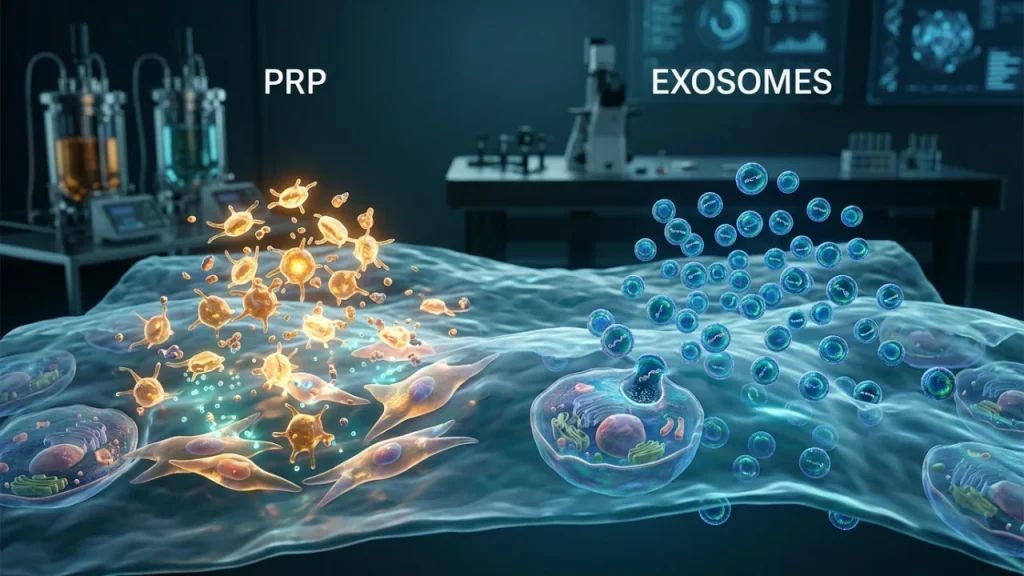
What Are PRP and Exosomes and Why Should You Care?
Understanding the Basics of Regenerative Medicine
Regenerative medicine aims to repair the body from within. It does not just manage symptoms. Instead, it uses the body’s own natural tools to heal tissues. Think of it as giving your cells better instructions and supplies. This approach is a big change for skin care. Traditional methods often work on the surface. Regenerative strategies target the deeper layers where aging truly happens.
Your body constantly makes new cells. It also sends signals to coordinate repairs. As we age, these processes slow down. Communication between cells gets weaker. Regenerative medicine seeks to restart these innate processes. The goal is to restore function and structure. For your skin, this means improving texture, tone, and firmness at a cellular level.
Two key tools in this field are Platelet-Rich Plasma (PRP) and exosomes. They are both derived from your body. Yet they work in very different ways. Understanding the prp vs exosomes difference starts with their basic roles.
- PRP comes from your blood. It is rich in growth factors. These proteins act like urgent repair signals. They tell cells to multiply and make new collagen.
- Exosomes are tiny messengers. They are released by cells, including stem cells. Exosomes carry precise instructions and nutrients. They help calm inflammation and guide cellular renewal.
Why should you care? These therapies move beyond simple surface treatments. They target the root causes of aging skin. This includes poor cell communication and slow collagen production. The promise is more natural and potentially longer-lasting results. It is about supporting your skin’s own biology.
This foundational idea leads directly to how each therapy works in practice.
How PRP Uses Your Body’s Natural Healing Power
Platelet-Rich Plasma therapy starts with a simple blood draw. Your blood is then spun in a centrifuge. This machine separates the components by weight. The result is a concentrated serum of your own platelets. This is the PRP.
Platelets are best known for clotting blood. But they have another vital job. They are packed with tiny sacs called granules. These granules hold hundreds of growth factor proteins. When platelets are activated at an injury site, they release this powerful cargo.
Think of PRP as your body’s emergency repair crew. The growth factors are its urgent broadcast signals. They create a strong local call to action. This process targets several key areas for skin rejuvenation.
- Fibroblast activation: Fibroblasts are your skin’s collagen factories. Growth factors like PDGF and TGF-β directly stimulate them. This tells fibroblasts to wake up and get to work.
- New collagen production: Activated fibroblasts start producing fresh collagen and elastin fibers. These proteins are the building blocks of firm, youthful skin.
- Angiogenesis: Growth factors like VEGF encourage the formation of new, tiny blood vessels. This improves blood supply and nutrient delivery to the treated area.
- Attracting stem cells: The signal cascade can also help guide your body’s own repair cells to the site.
The effect is a controlled, temporary inflammatory response. This is a normal part of healing. It jumpstarts your skin’s natural regenerative cycle. The goal is to shift tissue from a passive state into an active repair phase.
Results are not instant. The therapy sets the process in motion. Your cells then need time to respond and build new matrix. This biological cascade is why PRP is considered a regenerative treatment. It leverages your innate healing power.
However, this approach relies on your platelets’ current health and potency. Their signals are powerful but broad. This is a key point in the prp vs exosomes comparison. Exosomes offer a different, more precise type of cellular communication.
What Exosomes Are and How They Deliver Messages
Exosomes are tiny packages sent between your cells. They are about one-thousandth the width of a human hair. Think of them as microscopic mail trucks. These vesicles carry vital cargo from one cell to another.
Their cargo is complex and precise. It is not a simple signal. Each exosome contains specific instructions for the recipient cell. This cargo can include: – Proteins that give direct commands. – Lipids that help with structure and fusion. – Most importantly, genetic material like RNA.
This RNA acts like a software update. It can change what the target cell does. The receiving cell reads this new code. It may then start repairing tissue, reducing inflammation, or creating collagen. This process is highly targeted communication.
Exosomes are naturally produced by many cells. Stem cells are particularly active senders. Their exosomes carry pro-regenerative instructions. In therapy, these natural messengers are collected and concentrated. They are then delivered to a specific area needing repair.
The key difference lies in the message. PRP provides a loud, general alarm. It tells many cells to start working. Exosomes deliver detailed, custom blueprints. They tell specific cells exactly what to build and how.
This precision is central to the prp vs exosomes discussion. Exosomes bypass the need for your cells to first interpret broad signals. They deliver the repair instructions directly. This can make their action more efficient and predictable.
Their effect does not rely on your local cells’ immediate health. The information comes from outside, from young, potent donor cells. This offers a different regenerative strategy. It is about delivering smart data, not just triggering a local response.
Understanding this messenger system explains the next frontier in aesthetics. It shifts focus from simply stimulating your cells to directly programming them. This sets the stage for seeing how these two therapies compare in practice.
Key Differences Between PRP and Exosome Therapy
PRP is made from your own blood during a single appointment. A clinician draws a small sample and spins it in a centrifuge. This machine separates the platelet-rich plasma from other blood components. The concentrated PRP is then injected back into you. The entire process happens in about an hour. Exosome therapy uses a prepared product. The exosomes are sourced from donated mesenchymal stem cells grown in a lab. These cells release exosomes into their culture medium. Scientists then purify and concentrate these nanoscale vesicles. The result is a standardized, off-the-shelf vial of regenerative signals.
This leads to a major difference in consistency. Your PRP is unique to you. Its potency depends on your age, health, and platelet count that day. The concentration of growth factors can vary. An exosome product is manufactured to a consistent specification. Each vial aims to deliver a known quantity of regenerative messages. This can make outcomes more predictable.
The mechanism of action in your tissue is distinct. PRP works primarily through degranulation. Platelets burst and release their growth factor cargo all at once. This creates a strong but short-lived inflammatory signal to recruit local cells. Think of it as a powerful flare that burns bright and fast. Exosomes work through sustained communication. They are absorbed by target cells over time. They then continuously release their instructional molecules. This provides a longer, more modulated signal.
Consider the treatment focus. PRP is excellent for general revitalization. It improves the local environment by calling your cells to work. It is like fertilizing soil. Exosomes aim for specific cellular reprogramming. They can instruct fibroblasts to make more collagen of a certain type. They can tell inflammatory cells to calm down. This is like planting specific seeds with detailed growth plans.
The prp vs exosomes debate often centers on these points: source, consistency, and communication style. One uses your immediate biological resources. The other delivers pre-packaged instructions from young donor cells. Your choice may depend on your goals and the condition of your tissue. Understanding these key differences allows for a more informed conversation about regenerative potential. Next, we can examine which clinical concerns each approach addresses best.
Why Compare PRP vs Exosomes for Skin Health
Your skin’s aging process involves several clear problems. Collagen production slows down. Existing collagen fibers can become damaged. The skin’s repair signals get weaker over time. Both PRP and exosomes aim to fix these issues. But they do it in different ways. This is why the prp vs exosomes comparison is crucial for modern skin care. It is not about which one is universally better. It is about which tool fits your specific biological need.
Think of your skin’s condition as a construction site. PRP is fantastic for bringing in a large, motivated workforce quickly. It delivers many growth factors at once. These factors call your local repair cells to the area. This is ideal for general site cleanup and initial rebuilding. Exosomes act more like detailed architectural blueprints and specialized foremen. They deliver precise instructions to your existing cells. They tell them exactly how to rebuild stronger structures.
For example, consider sun damage and fine lines. PRP can improve overall skin texture and tone. It boosts general renewal. Exosome therapy may target the specific cellular dysfunction caused by UV exposure. It can help reprogram cells to behave in a younger, healthier way. Another key difference is the inflammatory response. PRP requires a controlled inflammatory reaction to start healing. This is part of its design. Exosomes often work to modulate inflammation. They can calm overactive immune cells in conditions like rosacea-prone skin.
Your choice may depend on your skin’s current state and your goals. – For overall revitalization and improving skin quality, PRP is a powerful, autologous option. – For targeting specific aging pathways with precise cellular communication, exosomes offer a targeted strategy. – For a potentially stronger and more combined effect, some clinics use them together in a specific sequence.
Understanding this comparison helps you set realistic expectations. It moves the conversation beyond marketing terms. You can now discuss which biological approach aligns with your skin’s narrative. Next, we will look at the evidence for specific concerns like elasticity, hydration, and texture.
How PRP Therapy Works Step by Step
The Science Behind Platelet-Rich Plasma
Platelet-rich plasma therapy uses your body’s own healing cells. Your blood contains tiny cell fragments called platelets. They are best known for helping blood to clot. But platelets do much more. They are packed with hundreds of growth factors and proteins. These are your body’s natural repair signals.
A small sample of your blood is drawn for the procedure. This blood goes into a special tube. The tube is spun in a centrifuge machine. Spinning separates the blood into distinct layers. The red blood cells sink to the bottom. The platelet-poor plasma rises to the top. The middle layer is the platelet-rich plasma. This PRP layer has a much higher concentration of platelets than normal blood. It is collected for treatment.
The science centers on what happens when these concentrated platelets are activated. They are typically activated right before use. This can be done with calcium or other agents. Activation makes the platelets release their healing cargo. This release is called degranulation. Think of a platelet as a tiny warehouse. Activation opens the warehouse doors. All the repair materials flood out.
These released factors include VEGF for building new blood vessels. They include TGF-beta for stimulating collagen production. They include EGF for encouraging skin cell renewal. This creates a powerful local healing environment. It is a biochemical call to action for your tissues.
The process initiates a controlled inflammatory response. This is a key point in the prp vs exosomes dynamic. Inflammation here is not bad. It is the first necessary phase of wound healing. It attracts your body’s repair cells to the area. It tells fibroblasts to start making new collagen and elastin. The goal is to kickstart your skin’s natural regenerative cycle.
In essence, PRP therapy gives your repair site a concentrated dose of its own instructions. It amplifies the body’s normal response to minor injury. But it does so without creating an actual wound. The result is enhanced tissue remodeling and rejuvenation from within. This foundational science sets the stage for understanding its clinical effects on skin texture and tone.
Preparing PRP from Your Own Blood Sample
The process begins with a standard blood draw, similar to a routine lab test. A clinician takes a small volume of your blood from a vein in your arm. This sample is collected into a special tube. The tube often contains an anticoagulant. This substance prevents the blood from clotting immediately. Keeping the blood liquid is crucial for the next steps.
This tube is then placed into a centrifuge machine. A centrifuge spins at very high speeds. This spinning creates a strong force called centrifugal force. Think of it like a fast spin cycle on a washing machine. The force separates the blood into distinct layers based on weight.
After the spin cycle finishes, the blood components settle into clear layers. The heaviest parts move to the bottom. The lightest parts stay at the top. From bottom to top, the typical separation looks like this: – Red blood cells form the dense bottom layer. – A thin, whitish layer called the buffy coat sits above them. This layer is rich in platelets and white blood cells. – The top layer is plasma, which is the liquid part of blood.
The goal is to harvest the platelet-rich portion. A technician carefully extracts this target layer. This is usually the buffy coat and some of the surrounding plasma. The rest of the blood components are set aside. What remains is your Platelet-Rich Plasma, or PRP.
The concentration of platelets in this PRP is key. It is measured compared to your normal blood count. A typical preparation aims for a three to five times increase. For example, if your baseline is 200,000 platelets per microliter, PRP may contain 1,000,000. This concentrated solution is now ready for activation.
This preparation phase is a core difference in the prp vs exosomes comparison. PRP is made from your own whole blood at the point of care. Its contents are defined by your personal biology at that moment. The entire process, from draw to final product, often takes under thirty minutes. You now have a personalized, concentrated healing serum derived entirely from your body. This sets the stage for its immediate clinical application.
Application Methods for PRP in Aesthetics
Once prepared, the activated PRP is applied to the skin. The method of delivery is chosen based on the treatment goal. Different techniques target different skin layers for specific effects.
The most common approach is microneedling with PRP. A device with fine needles creates tiny channels in the skin’s surface. This is not just for delivery. The micro-injuries trigger the skin’s natural repair process. PRP is then applied topically or injected into these channels. The growth factors rush into the stimulated area. They guide new collagen and elastin production. This improves texture, fine lines, and overall firmness.
Another method is direct injection, often called a “vampire facial” or PRP injection therapy. Here, PRP is injected into specific areas of concern. A practitioner uses a very fine needle for this. – Superficial injections can target the dermis to plump skin and reduce wrinkles. – Deeper injections can support volume in areas like the cheeks or under eyes.
PRP can also be used after laser treatments or light chemical peels. These procedures create a controlled injury to resurface the skin. Applying PRP immediately afterward provides a concentrated healing signal. It can help soothe the skin. It may also speed up recovery time and improve final results.
A simpler technique is topical application combined with micro-needling or after other procedures. The PRP serum is spread over the treated skin. It acts as a potent bioactive mask, absorbing into the fresh pathways created.
The choice between these methods depends on your skin’s needs. Microneedling with PRP is excellent for overall texture and tone. Direct injections are better for targeted volume or deeper wrinkles. This hands-on, customizable application is a key point in the prp vs exosomes discussion. PRP requires this direct clinical intervention to work. The growth factors must be placed precisely where they are needed to guide healing. The therapy’s success relies on both the quality of the preparation and the skill of its application. This direct placement contrasts with other regenerative approaches that may work through different signaling mechanisms.
How PRP Stimulates Collagen Production
Platelet-rich plasma works by sending a powerful repair signal to your skin cells. This signal tells them to build new collagen. Collagen is the main structural protein in your skin. It gives skin its firmness and strength.
The process starts with the platelets in the PRP. Platelets are tiny cells in your blood. Their main job is to clot blood and start healing. When activated by an injection, they release hundreds of proteins called growth factors. Think of these as urgent instruction messages.
These growth factors attach to specific receptors on target cells. Key target cells are fibroblasts. Fibroblasts live in your skin’s dermis layer. They are the factories that make collagen, elastin, and other support structures.
The binding of a growth factor is like a key turning a lock. It switches on the fibroblast. The cell gets a clear directive: begin collagen production. This triggers a multi-step chain reaction inside the cell.
First, the cell’s machinery reads the genetic blueprint for collagen. Then, it assembles long chains of amino acids. These chains are twisted into strong triple-helix fibers. Finally, the cell releases these new collagen fibers into the surrounding tissue.
This is not a quick fix. The process of making mature, strong collagen takes time. New collagen fibers begin to form within weeks. They continue to remodel and integrate over several months. This gradual buildup is why results improve over time.
Different growth factors in PRP have specific roles: – TGF-β (Transforming Growth Factor-beta) is perhaps the most important. It directly stimulates fibroblasts to produce collagen. – PDGF (Platelet-Derived Growth Factor) helps attract more fibroblasts to the area. – VEGF (Vascular Endothelial Growth Factor) promotes new blood vessel formation. This improves nutrient delivery for the building process.
The result is neocollagenesis. This term simply means “new collagen formation.” The fresh collagen fibers add density to the skin’s foundation. They fill in wrinkles from below. They improve overall texture and tightness.
This direct, hands-on signaling method is a core part of the prp vs exosomes comparison. PRP requires this initial, concentrated burst of instructions from platelets. The therapy’s effect depends on activating the patient’s own cells to do the long-term work of rebuilding. This mechanistic focus on fibroblast activation sets the stage for understanding how other regenerative signals might operate differently.
Typical Results and Timeline for PRP Treatments
Patients often see the first signs of improvement about four to six weeks after a PRP treatment. This initial change is usually subtle. Skin may look more radiant and feel slightly thicker. This early phase relies on the initial inflammatory signaling burst from platelets. The growth factors have instructed fibroblasts to start their work.
The most noticeable improvements typically appear after two to three months. This is when new collagen fibers have formed and begun to integrate. Fine lines, especially around the eyes and mouth, often soften. Skin texture becomes more even. The overall firmness of the skin improves. These changes are not dramatic but are visible.
Optimal results usually require a series of treatments. A common plan involves three initial sessions. These are spaced about one month apart. This series builds a strong foundation of regenerative signaling. It creates a cumulative effect for better collagen production. Maintenance treatments are then recommended once or twice a year. This schedule helps sustain the new collagen levels.
The longevity of results varies by individual. Factors like age, skin condition, and lifestyle play a role. Generally, results from a treatment series can last twelve to eighteen months. The new collagen your body makes is your own. It behaves like natural tissue and will gradually diminish over time without upkeep.
It is important to have realistic goals. PRP rejuvenation is a process of gradual improvement. It does not mimic the immediate, dramatic lift of a surgical facelift. Instead, it aims for a natural-looking refresh. The goal is healthier, more resilient skin from within.
Common treatment areas include the face, neck, décolletage, and hands. The procedure is also used for hair restoration. In that case, the timeline for seeing new hair growth is longer, often taking six months or more.
Understanding this timeline is key in the prp vs exosomes discussion. PRP’s effects are tied to your body’s speed of building new tissue. The therapy provides the instructions, but your biology sets the pace. This inherent biological timeline contrasts with other regenerative signals that may operate on a different schedule or mechanism.
The Role of Exosomes in Cellular Communication
What Are Extracellular Vesicles?
Cells are not isolated units. They constantly talk to each other. This conversation happens through tiny packages called extracellular vesicles. Think of them as microscopic mail carriers. They travel between cells, delivering important messages and cargo.
Extracellular vesicles is a broad category. It includes different types based on their size and origin. Exosomes are one specific, important type. They are exceptionally small, about one-thousandth the width of a human hair. Their size allows them to travel easily through tissues.
A cell creates exosomes inside itself. It forms a small bubble called an endosome. Inside this bubble, the cell packs specific molecules. These are its messages. The endosome then creates many even smaller bubbles inside itself. These are the exosomes.
The cell releases these exosomes into the space around it. This process is like a shipping department sending out envelopes. Each exosome carries a precise set of instructions from its parent cell. The contents can include: – Proteins that can change a cell’s behavior. – Lipids for building cell membranes. – Genetic material like RNA, which acts as a blueprint.
This cargo is protected during transit. The exosome’s lipid membrane acts as a secure envelope. It keeps the messages safe until they reach a target cell. The target cell absorbs the exosome and reads its instructions.
This system is vital for health. It helps coordinate tissue repair, manage inflammation, and maintain balance. In regenerative aesthetics, scientists harness this natural system. They study how these vesicles can send specific repair signals to aging skin cells.
Understanding this basic vesicle biology is crucial for the prp vs exosomes comparison. PRP uses your platelets to send a general “heal” signal. Exosome therapy aims to provide pre-packaged, targeted instructions. This difference in communication style is fundamental to their potential effects and timelines in treatment.
How Exosomes Carry Signals Between Cells
Exosomes do not travel randomly. They navigate to specific target cells. This targeting is a precise biological process. It ensures messages reach the correct address.
The exosome’s membrane is key. It is not just a simple bubble. It is studded with proteins and receptors. These act like address labels and docking ports. An exosome from a skin cell, for example, may carry labels recognized by other skin cells or fibroblasts.
The journey happens in the extracellular space. This is the fluid and matrix between cells. Exosomes can travel short distances to neighboring cells. They can also enter bodily fluids like blood or lymph. This lets them reach distant tissues.
Targeting relies on lock-and-key interactions. Proteins on the exosome surface are the keys. Corresponding receptors on a target cell are the locks. When a key finds its lock, the exosome docks. This binding is the first step in message delivery.
Several methods exist for cargo transfer. The primary method is fusion. The exosome’s membrane merges with the target cell’s membrane. It empties its instructional cargo directly into the cell’s interior. The target cell then reads and acts on these new instructions.
Another method is endocytosis. The target cell engulfs the entire exosome vesicle. It brings it inside in a new bubble. This bubble then breaks down to release the cargo.
The result is a change in the target cell’s behavior. The delivered signals can tell a cell to: – Increase collagen production. – Reduce destructive inflammation. – Accelerate its own repair processes. – Begin replicating.
This system is incredibly efficient. It allows for coordinated action across a tissue without direct cell-to-cell contact. A single cell can influence many others through these vesicles.
The precision of this targeting is a major point in the prp vs exosomes discussion. PRP releases a broad mix of growth factors into an area. It relies on proximity and chance for cells to respond. Exosome therapy, in theory, offers more directed communication through engineered targeting potential.
Understanding this delivery mechanism shows why source matters. Exosomes derived from different cell types carry different surface labels. Their natural programming directs them to specific tissues. This inherent intelligence is central to their therapeutic promise for regenerative goals.
Sources of Exosomes Used in Therapy
Therapeutic exosomes do not come from a patient’s own blood. They are harvested from other human cells grown in controlled laboratory settings. This is a key distinction in the prp vs exosomes debate. PRP uses your own platelets. Exosome therapy uses messengers from donor cells.
These donor cells are typically young, healthy, and prolific. Scientists choose specific cell types for their known regenerative signals. The cells are placed in a nutrient-rich solution. They multiply and release exosomes into this solution as they communicate.
The exosome-containing solution is then collected. Advanced filtration techniques separate the tiny exosomes from other components. The result is a concentrated dose of purified signaling vesicles.
Common source cells include mesenchymal stem cells (MSCs). These cells are found in bone marrow, fat tissue, and umbilical cord tissue. MSC exosomes carry strong instructions for tissue repair and calming inflammation.
Another source is fibroblast cells. Fibroblasts are the skin’s main collagen producers. Their exosomes often carry direct commands for building new collagen and elastin fibers.
The source cell type defines the exosome’s cargo. Think of it like receiving a memo from different company departments. An exosome from a skin cell carries a different set of instructions than one from an immune cell. Therapies select sources based on the desired biological effect.
Sourcing also ensures consistency and potency. Laboratory-grown cells provide a standardized product. Each batch contains a known concentration of exosomes with predictable signaling profiles. This contrasts with PRP, where growth factor concentration varies between people and even different draws from the same person.
The choice of source is therefore fundamental. It directly influences which cellular pathways will be activated in the patient. This targeted approach aims to send very specific repair commands to aging or damaged tissues. Next, we must examine how these purified exosomes are prepared for clinical use.
The Precision of Exosome Delivery Systems
Exosomes are nature’s targeted delivery system. They do not simply flood an area with signals. Instead, they seek specific recipient cells. This precision is key to their advanced function.
Think of a cell as a house. It has a unique address. This address is a pattern of proteins on its outer surface. An exosome carries a matching “shipping label” on its own membrane. This label is made of similar proteins and receptors.
The exosome navigates the body’s extracellular space. It searches for a cell with the correct address. When it finds a match, it docks. It can then deliver its cargo directly into that cell. This process ensures instructions go only to intended targets.
This targeting explains a major difference in prp vs exosomes. PRP releases growth factors into a general area. These factors act on any nearby cell that can receive them. It is a broadcast signal. Exosome therapy is more like sending a sealed, addressed letter.
The precision offers several practical benefits: – It increases efficiency. Less material is wasted on cells that do not need the signal. – It can reduce unintended effects. Signaling is confined to relevant cell types. – It allows for complex, multi-part instructions. Different exosomes can be sent to different cell types in the same tissue.
For example, in skin rejuvenation, one exosome might target fibroblast cells to build collagen. Another might target capillary cells to improve blood flow. A third could target immune cells to calm inflammation. All these actions can be coordinated simultaneously.
This targeted approach is why exosomes are considered a next-generation tool. They use the body’s own sophisticated communication network. Scientists are learning to direct this natural system for therapeutic goals. The next step is understanding how these precise commands translate into visible tissue renewal and repair.
Exosomes and Inflammation Modulation
Inflammation is your body’s natural alarm system. It signals that repair is needed. But sometimes this alarm does not turn off. Chronic inflammation can damage healthy tissue. It slows healing and drives aging. Exosomes offer a way to reset this system.
These tiny vesicles carry specific instructions for immune cells. Think of them as diplomatic envoys. They deliver messages that say “stand down” or “begin repair.” This is a key difference in the prp vs exosomes debate. PRP provides general factors that can stimulate healing. Exosomes provide direct commands to control the process.
The commands work through several precise actions. Exosomes can tell overactive immune cells to become calm. They can reduce signals that call more inflammatory cells to an area. They also promote the creation of anti-inflammatory molecules right at the site. This targeted modulation is efficient. It addresses the root cause without suppressing the entire immune system.
Consider a common issue like persistent joint pain or stubborn skin redness. The problem is often ongoing inflammatory signals. Exosome therapy can interrupt this cycle. It delivers instructions specifically to the cells fueling the fire. The goal is to change the local environment from a state of attack to a state of rebuilding.
This capability is vital for true regeneration. Lasting repair cannot happen in a inflamed zone. Cells are too busy defending to rebuild. By first modulating inflammation, exosomes create the right conditions. Then, other exosomes can safely deliver growth instructions for collagen or new blood vessels. This sequential logic is powerful.
The approach shows why exosomes are seen as intelligent communicators. They do not just add one type of signal. They can manage a complex conversation between different cell types. This orchestration is needed for difficult healing challenges. It moves beyond simple stimulation to intelligent regulation.
Understanding this leads to the next logical question. How do these precise commands actually renew tired or damaged tissue at a structural level?
Comparing PRP vs Exosomes for Facial Rejuvenation
Efficacy in Reducing Fine Lines and Wrinkles
Fine lines and wrinkles result from two main issues. The first is a loss of structural support. The second is repeated damage to skin cells. Both PRP and exosome therapies aim to fix these problems. Their methods and results differ in key ways.
Platelet-Rich Plasma, or PRP, works by delivering concentrated growth factors. These factors come from your own blood platelets. They act as a general stimulant for your skin’s cells. The goal is to boost collagen and elastin production. This adds volume and support under wrinkles.
The process shows gradual improvement. Results often need multiple sessions. The effect relies on your body’s cells responding correctly to the broad stimulation. Think of it as adding fertilizer to a garden. It encourages everything to grow better.
Exosome therapy takes a more direct and instructional approach. Exosomes carry specific commands to target cells. For wrinkles, they can deliver precise signals for collagen synthesis. They also promote elastin production. More importantly, they help modulate the aging environment.
This targeted communication addresses deeper causes. Exosomes can instruct cells to repair themselves better. They can improve the quality of the new collagen fibers. This leads to a different kind of result. The skin’s texture and resilience often improve more noticeably.
Comparing PRP vs exosomes here is useful. PRP provides a general boost using your body’s existing growth factors. Exosomes provide advanced instructions from young, healthy donor cells. They guide the repair process with more precision.
Consider the longevity of results. PRP effects may diminish as the initial growth factor surge fades. Exosome therapy aims for longer-lasting change. It does this by reprogramming cellular behavior for sustained improvement.
The choice depends on your goals and skin’s condition. For early signs of aging, PRP can offer good support. For more established wrinkles or poor skin quality, exosomes may provide a stronger regenerative signal. A consultation with a provider can determine the best path.
Understanding these efficacy differences helps set realistic expectations for facial rejuvenation outcomes. This leads naturally to considering how each therapy handles another key concern: restoring lost volume and facial contour.
Impact on Skin Texture and Elasticity
Skin texture improves when new collagen forms in an organized, dense network. PRP can stimulate this process. It delivers a broad mix of your own growth factors. These factors tell skin cells to become more active. They boost collagen and elastin production. This can soften fine lines and rough patches. The result is a smoother skin surface. However, the new collagen structure may not be perfectly uniform.
Exosomes approach texture differently. They carry precise instructions for skin repair. Think of them as detailed blueprints for building collagen. These blueprints guide fibroblasts to produce high-quality, well-organized collagen fibers. The new collagen matrix is more cohesive. This leads to a refined skin texture. Pores can appear smaller. The skin’s surface often feels exceptionally smooth and even.
Elasticity refers to your skin’s ability to snap back. It relies heavily on elastin and supportive proteins. PRP provides general support for these structures. It helps maintain existing elasticity and can offer modest improvement. The effect is like giving your skin a supportive nutrient boost.
Exosomes actively instruct cells to rebuild the elastic network. They send specific signals to enhance elastin production and organization. This can restore lost bounce and firmness. The skin may feel tighter and more resilient. This is a key difference in the prp vs exosomes comparison for elasticity.
Consider these practical outcomes: – PRP may improve skin plumpness and mild laxity. Its texture benefits are often gradual. – Exosome therapy can target crepey skin and more pronounced laxity. Texture refinement is typically more pronounced.
The choice influences the final feel of your skin. PRP supports your skin’s natural repair capacity. Exosomes aim to optimize and redirect that capacity for superior structural results. Your skin’s starting condition guides which approach is better for texture and bounce goals. This leads to another practical consideration: how these therapies interact with different skin types and sensitivities.
Brightening and Tone Evening Capabilities
Skin discoloration often stems from an overproduction of melanin. This pigment gives skin its color. Melanin is made by cells called melanocytes. These cells can become overactive. Sun exposure or inflammation are common triggers. The goal of treatment is to calm these cells and normalize pigment production.
PRP approaches this issue with general support. The growth factors in PRP can help reduce inflammation. Less inflammation means melanocytes get fewer “produce more pigment” signals. PRP also aids overall skin health and cell turnover. This can help fade existing discoloration over time. New, healthier skin cells may surface more evenly. The effect is indirect and supportive.
Exosomes take a more direct instructional role. They carry specific genetic messages and proteins. These messages can be delivered directly to melanocytes. The signals can tell the overactive cells to slow down melanin production. Exosomes may also target the pathways that cause post-inflammatory hyperpigmentation. This is discoloration that lingers after a pimple or injury heals.
Consider the practical differences in treating dark spots: – PRP works gradually by improving the skin’s overall environment. It is a broad-spectrum approach. – Exosome therapy aims to correct the specific cellular miscommunication causing the spot. It is a targeted strategy.
This highlights a core difference in the prp vs exosomes comparison for brightening. PRP offers a supportive backdrop for more even tone. Exosomes attempt to rewrite the instructions that led to uneven tone in the first place. For stubborn melasma or pronounced sun spots, the targeted approach may hold an advantage. The choice depends on the type and depth of your discoloration.
Furthermore, both therapies can influence skin radiance. Healthy, well-functioning skin cells reflect light better. This leads to a natural glow. PRP fosters this by nourishing cells. Exosomes may enhance it by optimizing cellular function. The resulting brightness comes from within, not from surface treatments.
Your skin’s tone and clarity are vital to a youthful look. Understanding these mechanisms helps set realistic goals. It also guides the next logical question: how long do these brightening effects last, and what does the treatment journey involve?
Longevity of Results from Each Treatment
The longevity of your results depends heavily on your skin’s natural biological cycles. PRP and exosome therapies work on different timelines. This is a central point in any prp vs exosomes comparison.
PRP delivers growth factors. These factors stimulate your existing cells. The effects are powerful but finite. The injected growth factors are used up by your body within days or weeks. However, they trigger a healing process. This process can continue for several months.
Think of PRP as giving your skin a strong, temporary boost. It jump-starts collagen production and cell renewal. The new collagen it helps create can last. Typical results from a PRP treatment series are seen for six to twelve months. After that, your skin’s natural aging process continues. Maintenance sessions are often suggested to sustain the effect.
Exosome therapy operates differently. Exosomes carry instructions. They change how your cells behave. The goal is not just a temporary boost. It is a reset of cellular communication.
The exosomes themselves do not stay forever. They are absorbed and used quickly. Yet the signals they deliver may have a lasting impact. Cells that receive new instructions can maintain those changes through several replication cycles. This could lead to results that persist longer from a single treatment.
Early clinical observations suggest exosome results may last twelve months or more. The science is still evolving. The duration likely depends on the condition being treated and your cellular health.
Consider these factors for both treatments: – Your age and skin quality. – Your lifestyle, like sun exposure and smoking. – The number of treatment sessions you complete.
Neither treatment stops aging permanently. They are regenerative interventions, not cures. PRP requires more frequent touch-ups to maintain its supportive environment. Exosome therapy aims for a deeper, longer-lasting correction at the cellular level.
Choosing between them often involves considering this timeline. Do you prefer gradual improvement with regular upkeep? Or do you seek a potentially longer interval between treatments? Your provider can help map a plan based on your goals for lasting rejuvenation. This leads to another vital consideration: the safety profile and what to expect during recovery.
Patient Suitability and Skin Types
The right treatment depends heavily on your skin’s starting point. Not all skin types respond the same way to regenerative therapies. Your cellular health and specific concerns are key factors.
PRP therapy relies on your body’s own healing resources. Its success is tied directly to the quality of your platelets and growth factors. This makes your overall health and age significant considerations.
PRP is often a strong match for patients with these profiles: – Those seeking general skin quality improvement without severe damage. – Individuals with mild to moderate skin laxity or early fine lines. – Patients who prefer using only their own biological materials. – People with a healthy lifestyle, as smoking and poor diet can weaken platelet function.
The treatment works by creating a supportive environment. It is less about issuing new commands to cells. It is more about boosting their natural repair work. Results can be excellent for maintenance and gradual rejuvenation.
Exosome therapy operates on a different principle. It delivers precise instructions to your cells. This approach can be effective even when the body’s natural signaling is weakened or confused.
Exosomes may be particularly suitable for these scenarios: – More mature skin with pronounced signs of aging. – Skin showing early photodamage or environmental stress. – Patients seeking to address texture and tone with a single, potent treatment. – Individuals whose prior PRP results were modest or short-lived.
The decision between prp vs exosomes often comes down to biological need. Think of PRP as reinforcing your existing team. Exosomes act like bringing in new expert coaches for that team.
Skin thickness and collagen density also matter. Thinner skin with less natural support may benefit more from the targeted instruction of exosomes. Healthier, thicker skin might respond robustly to PRP’s boost.
A consultation should assess your skin’s cellular vitality. This can be done through a detailed history and visual analysis. Some providers use specific imaging tools to guide this choice.
Your treatment goals are the final piece. Do you aim for subtle, ongoing enhancement? PRP could be ideal. Are you targeting a specific, stubborn concern for longer-term change? Exosomes might be the better path.
Understanding this fit ensures realistic expectations and optimal results. The next step is knowing what happens during and immediately after your chosen procedure.
PRP vs Exosomes in Scar Treatment and Repair
Mechanisms for Acne Scar Improvement
Acne scars form when skin healing is flawed. The repair process creates too little collagen or too much disorganized tissue. Both PRP and exosomes aim to correct this. But they use different strategies.
PRP works by flooding the scar area with concentrated growth factors. These are natural proteins that direct local repair. Think of them as urgent construction signals. The growth factors in PRP tell your skin’s fibroblasts to become active. Fibroblasts are cells that build collagen.
This activation starts a multi-step process. – First, it promotes new blood vessel growth around the scar. This improves nutrient delivery. – Next, it directly stimulates fibroblasts to produce new, healthy collagen fibers. – Finally, it encourages the remodeling of old, uneven scar collagen.
The result is a gradual filling of depressed scars. Texture becomes smoother. PRP leverages your body’s inherent, though possibly weakened, repair system.
Exosome therapy takes a more instructional approach. Exosomes carry precise commands to cells. For acne scars, these commands are highly targeted.
Exosomes can directly influence fibroblast behavior. They may instruct fibroblasts to produce specific types of collagen in a more organized pattern. They also carry signals that can calm persistent inflammation. This inflammation often slows proper healing in scars.
A key difference lies in communication scope. Exosomes can deliver microRNAs. These are molecules that can “reprogram” cellular activity. They might tell a cell to switch from making scar tissue to making normal skin tissue.
The choice in the prp vs exosomes debate for scars depends on scar type and biology. PRP is excellent for stimulating a generalized healing response in softer, rolling scars. Exosomes may be better suited for more stubborn, fibrotic scars. These scars need specific instructions to break down and rebuild correctly.
In practice, both improve scar appearance by enhancing collagen. PRP does it by rallying your body’s crew with a powerful signal. Exosomes do it by providing the crew with a detailed new blueprint for construction. Understanding these mechanisms helps set realistic goals for scar revision treatments.
Effects on Surgical and Injury Scars
Surgical cuts and injury wounds heal in defined stages. First comes inflammation. Then new tissue forms. Finally, that tissue remodels over months. Problems in any stage lead to poor scars. These scars can be raised, thick, or discolored. They may also feel tight or itchy.
PRP therapy intervenes during the early repair phases. It delivers a high concentration of growth factors directly to the wound site. This concentrated signal aims to optimize the body’s natural process. For a fresh surgical scar, PRP may help by: – Accelerating the initial closure of the wound with robust tissue. – Increasing blood vessel formation to improve nutrient delivery. – Encouraging a stronger, more organized collagen framework from the start.
The goal is to guide healing toward a better baseline. This can prevent a scar from becoming problematic later. It supports the entire crew of repair cells with enhanced resources.
Exosome therapy offers a different strategic advantage. It is particularly relevant for older, established scars that have finished remodeling poorly. These mature scars often have a dense, disorganized collagen structure. Fibroblasts within them are stuck in a repetitive, dysfunctional cycle.
Exosomes can deliver specific instructions to these resident cells. They carry molecules like microRNAs that can alter gene expression. For a thick surgical scar, this might mean signaling fibroblasts to: – Reduce their overproduction of rigid collagen type I. – Increase production of more flexible collagen type III. – Activate enzymes that break down excessive matrix. – Shift from a pro-inflammatory state to a pro-regenerative one.
This approach is less about adding general growth signals. It is more about reprogramming the local cellular environment. The prp vs exosomes decision here hinges on scar maturity and biology. PRP is a powerful booster for optimizing the initial healing trajectory. Exosomes act as a sophisticated retraining program for scars that have already healed suboptimally.
Some protocols now explore combining both modalities. The theory is synergistic. PRP could create a revitalized healing environment. Exosomes could then provide precise commands within that environment. This two-step approach aims to address both resource and instruction deficits in complex scar repair.
Ultimately, selecting a therapy requires analyzing the scar’s age, texture, and underlying cellular activity. This understanding allows for targeted interventions that move beyond simple surface improvement to address the scar’s fundamental biology.
Collagen Remodeling in Scar Reduction
Collagen is the main structural protein in your skin. In healthy skin, collagen fibers form a flexible, woven basket. This gives skin its strength and bounce. In a scar, this basket is damaged. The body repairs it quickly with a single type of collagen. This creates a dense, rigid patch.
This patch is mostly collagen type I. It is strong but not flexible. Healthy skin has a balanced mix of collagen type I and type III. Type III forms finer, more elastic fibers. A mature scar has very little type III collagen. This is why scars feel tight and look different.
The goal of advanced treatments is not just to add more collagen. It is to change the collagen type and structure. This process is called remodeling. Think of it as rebuilding a brick wall into a wire mesh fence. Both are strong, but the mesh moves.
Exosomes directly instruct cells to remodel collagen. They carry orders to the fibroblasts, the skin’s builder cells. These orders can do several key things. – They can tell the cell to make less rigid collagen type I. – They can signal the cell to produce more flexible collagen type III. – They can activate enzymes that carefully break down the old, dense collagen network. – They can guide new collagen to deposit in an organized, criss-cross pattern.
This is a precise retraining program for the scar tissue. The prp vs exosomes comparison is clear here. PRP provides growth factors that boost overall collagen production. This is helpful for newer scars that need building materials. Exosomes provide specific commands for quality control and architectural redesign. They are better for older scars that are already thick and stiff.
Remodeling takes time. The body must slowly break down old fibers and build new ones. This is why results from exosome therapies appear gradually over weeks or months. The change happens from within the scar’s deep structure. The surface texture softens as the underlying scaffold becomes more organized.
Effective scar reduction requires changing the collagen’s quality, not just its quantity. This shift from simple production to intelligent remodeling represents the next step in regenerative care. It targets the core reason a scar looks and feels abnormal, offering a path toward more natural skin repair.
Clinical Evidence for Scar Outcomes
Clinical studies provide a clearer picture for the prp vs exosomes decision in scar care. Research often measures scar improvement using validated scales. These scales assess hardness, color, height, and patient comfort. Objective data helps move beyond anecdotal reports.
One common finding is the reduction of scar thickness. Hypertrophic scars are raised and thick. Studies applying PRP show it can help flatten these scars. The growth factors stimulate new, softer tissue formation. This fills the area and reduces the scar’s prominence over several sessions.
Exosome research shows a different pattern of improvement. A key focus is on scar pliability and texture. Old scars often feel tight and hard. Clinical evaluations note increased softness after exosome treatments. This matches the biological mechanism of collagen remodeling. The change in flexibility is a major patient benefit.
Research also examines combination approaches. Some protocols use PRP and exosomes together. The idea is to combine building materials with smart instructions. Early reports suggest this may enhance outcomes. The PRP provides a regenerative scaffold. The exosomes then guide the repair process on that scaffold more precisely.
Patient-reported outcomes are vital. These measure itchiness, pain, and satisfaction. Both therapies show positive effects here. Reduced itching is a common early benefit. This improves quality of life during the treatment period. Pain from stiff scars can also decrease as tissue softens.
The evidence timeline differs between the two. PRP has a longer track record with more published studies. Exosome research is newer but rapidly growing. Current evidence for exosomes often comes from pilot studies and clinical observations. Larger trials are ongoing to confirm these early promising results.
Understanding this evidence helps set realistic expectations. No single treatment erases a scar completely. The goal is significant improvement in appearance and function. Clinical data supports both tools as valuable in the regenerative toolkit for different reasons. The next consideration is how these findings translate into an individual treatment plan.
Combination Approaches for Complex Scars
Some scars present a dual challenge. They have both poor structure and faulty healing signals. For these complex cases, a single agent may not be enough. This is where combination strategies with PRP vs exosomes become a considered option. The logic is synergistic. Each component addresses a different part of the problem.
Think of a scar as a poorly built house on unstable ground. PRP acts like raw materials and construction workers. It delivers fibrin and growth factors. These components build a new structural scaffold. However, instructions for this construction can be chaotic in old scars.
Exosomes provide the precise blueprints and foreman. They carry orders to cells. These orders can calm inflammation. They can direct fibroblasts to make organized collagen. They also encourage proper blood vessel formation. This creates a better environment for the PRP’s work.
The sequence of application matters. A common protocol has two steps. – First, PRP is injected into or under the scar tissue. This creates a fresh regenerative matrix. It stimulates local cell activity. – Second, exosomes are applied. They can be injected into the same area. They are sometimes delivered topically after micro-needling. The exosomes then guide the cells activated by the PRP.
This approach targets multiple healing phases at once. PRP jump-starts the proliferation phase. Exosomes help regulate and optimize this proliferation. They also push the process toward proper remodeling sooner. The goal is to avoid the disordered collagen buildup that caused the scar initially.
Clinical scenarios for combination therapy often involve specific types. – Hypertrophic scars that are thick and raised but confined to the wound boundary. – Atrophic scars, like those from acne, that have lost underlying support. – Stiff surgical scars that limit movement and cause discomfort.
The potential benefit is a more comprehensive correction. Structure improves from the scaffold effect. Texture and pliability improve from the signaling effect. Patient satisfaction may be higher for severe cases compared to single treatments.
Research into these protocols is still evolving. Early clinical observations report enhanced softening and flattening. The combined treatment may also lead to faster visible improvements. This could reduce the total number of sessions needed for a good result.
Safety remains paramount. Using both autologous PRP and purified exosomes maintains a high safety profile. There is minimal risk of allergic reaction or rejection. The main consideration is cost, as two biologics are used together.
Combination therapy represents an advanced tool. It is not necessary for every scar. For simple or new scars, one modality may suffice. For complex, old, or problematic scars, the dual approach offers a logical path forward. It merges the building power of PRP with the intelligent guidance of exosomes for a coordinated repair effort. This leads to a final practical discussion on choosing the right protocol for an individual’s unique scar history and goals.
Safety and Side Effects of PRP and Exosome Therapies
Common Reactions to PRP Injections
PRP injections use your own concentrated blood platelets. This makes them very safe. However, they are still injections. The process causes local tissue effects. Most side effects are mild and short-lived.
The most common reaction is temporary discomfort at the injection site. You may experience several things. – Pain or tenderness for a few hours after the procedure. – Redness and mild swelling in the treated area. – A feeling of tightness or fullness under the skin.
These local reactions are typical. They are signs of the intended inflammatory start to healing. Your body is reacting to the concentrated growth factors. This initial response usually fades within 24 to 72 hours. Simple measures can help manage it. Applying a cold pack reduces swelling. Avoiding strenuous activity for a day is also advised.
Bruising is another frequent occurrence. The injection needle can nick small blood vessels. This leads to visible bruising. The bruise color may change from red to purple, then to yellow. It normally clears within one to two weeks. The risk of bruising is higher if you take certain medications. Blood thinners like aspirin can increase bruising.
Some patients report a temporary increase in sensitivity. The area might feel tender or sore to touch. This sensitivity is part of the healing cascade. It typically resolves as the initial inflammation settles down.
A less common but notable reaction is a brief flare of old pain or symptoms. This is sometimes called a “healing crisis.” The theory is that PRP activates repair in dormant problem areas. This can cause a short-term increase in discomfort. It usually lasts only a few days before improvement begins.
Itching at the injection site is also possible. Itching is a normal part of skin inflammation and repair. It should be mild and temporary. Severe or persistent itching is not standard and should be reported.
Infection risk is extremely low with proper technique. Using your own blood eliminates disease transmission risks from donors. Sterile procedures prevent bacterial introduction. Signs of infection include increasing redness, warmth, severe pain, or pus. These signs are very rare but require prompt medical attention.
Understanding these common reactions helps set proper expectations for PRP vs exosomes treatments. PRP’s side effects are primarily local and related to the injection process itself. They reflect its mechanism of action. Knowing what to expect makes the experience less concerning. This foundation allows for a clear contrast with the side effect profile of exosome therapies, which is different in nature.
Potential Risks with Exosome Applications
Exosome therapies present a different safety picture than PRP. A primary concern is the source of the exosomes. Unlike PRP, which uses your own blood, most exosome treatments use donor-derived materials. This introduces questions about immune response. While exosomes are generally considered low in immunogenicity, a foreign biological product could theoretically trigger a reaction.
The manufacturing process is critical for safety. Exosomes must be purified from cell culture media. Any remaining cellular debris or growth factors from the production process could cause unwanted effects. Strict testing is needed to ensure the final product contains only exosomes and nothing else.
Potential side effects can vary based on the treatment area. For skin applications, reactions might include: – Temporary redness or swelling at the injection site. – Mild itching or warmth as the exosomes signal local cells. – A short-term inflammatory flare as part of the activation process.
Systemic effects are a topic of scientific discussion. Exosomes are signaling vesicles. Their messages could theoretically influence cells far from the injection site. This is an area of ongoing research to fully understand the scope of their activity.
The long-term behavior of applied exosomes is also studied. Scientists ask how long they remain active in the body. They also study how the body eventually clears them. These are important questions for treatment safety and planning.
Another key point is dosage. Determining the correct amount of exosomes for a specific purpose is complex. Too high a dose might over-stimulate cells. Too low a dose might have no visible effect. Finding the right balance is crucial.
This highlights a major difference in the prp vs exosomes debate. PRP’s safety is largely about the injection process and your own biology. Exosome safety is more closely tied to product quality and precise biological signaling. Understanding these potential risks requires trust in rigorous preparation methods. This leads directly to considering how these treatments are regulated for patient protection.
Allergy and Immune Response Considerations
The human immune system is designed to identify and react to foreign material. Your body’s response to any injectable treatment depends largely on whether it recognizes the substance as “self” or “non-self.” This is a core distinction in the prp vs exosomes conversation.
PRP is made from your own blood. Because it is autologous, meaning “from self,” the risk of a major allergic reaction is extremely low. Your immune system sees the platelets and growth factors as familiar. Any reaction is typically local inflammation from the injection process itself, not an immune attack.
Exosome therapies introduce external biological material. Even high-quality exosomes come from donor cells. The immune system may screen these vesicles. Key factors influence this screening:
- The source of the exosomes matters. Exosomes from human cells are generally better tolerated than those from other species.
- The purification process is critical. Any leftover cell debris or proteins from the donor can trigger an unwanted immune response.
- The recipient’s individual immune status plays a role. A person with a highly reactive immune system may respond differently.
A theoretical risk with exosomes is called anaphylaxis. This is a severe, whole-body allergic reaction. It is very rare but considered a potential risk with any biologic agent. Clinicians are trained to monitor for and manage this possibility.
Scientists also study immune priming. Could an initial exosome treatment sensitize the body? Could it cause a stronger reaction to a later treatment? Current evidence suggests this is unlikely with pure exosome preparations, but research continues.
For patients, understanding these nuances is vital. PRP’s safety profile regarding allergies is straightforward. Exosome therapy requires more scrutiny of the product’s origin and purity. Always discuss your full medical history with your provider, including any known autoimmune conditions or allergies. This information helps tailor a safe approach for your specific biology, guiding the choice between these advanced regenerative options.
Procedure-Related Complications to Avoid
Every medical procedure carries some risk. The skill of your provider is the biggest factor in avoiding problems. A clean technique and proper planning prevent most complications. This is true for both PRP and exosome therapies.
Injections can cause local issues. These are usually minor and temporary. Common examples include pain, swelling, or bruising at the injection site. Bruising happens when a small blood vessel is nicked. Swelling is a normal part of inflammation and healing.
More serious complications are rare but possible. They often stem from poor technique or unsanitary conditions. A key risk is infection. This can occur if the skin is not cleaned properly or if sterile equipment is not used. Signs of infection include increased redness, warmth, and pus.
Another risk is damage to underlying structures. This includes nerves, blood vessels, or even unintended tissue. For example, an injection placed too deep in the face could affect a nerve. This might lead to temporary weakness or numbness. Precise anatomical knowledge is crucial for your provider.
Improper handling of the biologic material itself is a critical point. For PRP, the blood must be processed correctly. If it is over-centrifuged, it can damage the platelets. If it is under-centrifuged, the plasma will not be rich enough. Both errors make the treatment less effective.
For exosome therapy, the preparation step is different but just as vital. The freeze-dried exosomes must be reconstituted with the correct sterile solution. They must be mixed gently to protect the vesicles. Rough handling can break the exosomes. This would ruin their regenerative potential.
You can take steps to reduce these risks. Choose a licensed and experienced clinician. Ask about their training in these specific procedures. A good clinic will follow strict protocols.
- The treatment room should be clean and dedicated to procedures.
- Your provider should wear gloves and use single-use, sterile kits.
- The product vials should be opened in front of you.
Discuss your medical history fully. Tell your provider about any bleeding disorders or if you take blood thinners. This information helps them adjust the technique. It minimizes your chance of bruising or bleeding.
The debate between prp vs exosomes often focuses on science. Yet the practical safety of your treatment depends largely on the clinic’s standards. A well-performed procedure maximizes benefits and minimizes downsides for either option. Your vigilance in selecting a qualified provider is your best defense against procedural risks, guiding you safely toward your aesthetic goals.
Long-Term Safety Data and Monitoring
Understanding long-term safety starts with what these treatments introduce to your body. PRP uses your own concentrated platelets. Your immune system already knows these cells. This makes severe allergic reactions or rejections very unlikely from a biological standpoint. The main long-term focus for PRP is on the treatment’s effects. The goal is for it to stimulate your own natural healing. Once that process is complete, the activated platelets have done their job. They are naturally cleared by your body.
Exosome therapy introduces external biological signals. These exosomes are not your own cells. They are derived from other human cells grown in controlled labs. Their long-term safety profile hinges on rigorous donor screening and manufacturing purity. Reputable sources test for hundreds of pathogens. They ensure no whole cells or genetic debris remain. The exosomes themselves are messengers, not living cells. They do not replicate or integrate into your DNA. They deliver instructions and then degrade.
Monitoring after treatment is key for both therapies. There are standard timelines for observing results and any reactions.
- Short-term (First 2 weeks): Watch for common, temporary side effects like redness, swelling, or tenderness at the injection site.
- Mid-term (1 to 6 months): This is the period for assessing the treatment’s effectiveness. Collagen production and skin improvement should become visible.
- Long-term (6 months and beyond): The focus shifts to the durability of results and watching for any delayed issues.
For PRP, long-term data is extensive due to decades of use in orthopedics and dentistry. Studies tracking patients for several years show a consistent safety record. The primary long-term concern is simply that the benefits may fade over time, requiring a follow-up session. No major systemic risks have been linked to properly performed PRP treatments over the long term.
The long-term data for aesthetic exosome therapy is still growing. It builds upon the known safety of exosomes as natural bodily particles. Current evidence suggests results are stable after the initial treatment period. Since exosomes are not permanent, their action is finite. The debate of prp vs exosomes on long-term safety often comes down to this: PRP has a longer track record in medicine, while exosome science points to a favorable biological profile. Ongoing research continues to solidify this data.
Your provider should offer a clear plan for follow-up. This plan helps track your progress and safety. Always report any unexpected changes, even months later. This responsible approach ensures your aesthetic journey remains safe well after you leave the clinic.
Cost and Accessibility of PRP vs Exosome Treatments
Average Pricing for PRP Therapy Sessions
The price for a single PRP therapy session typically starts around $500. Costs can rise to $1,500 or more. This range depends heavily on your location and the clinic’s expertise. A major city clinic often charges more than a practice in a smaller town. The provider’s training and reputation also influence the final price.
Several key factors determine where your cost falls within that range. The treatment area is a primary consideration. A focused facial treatment will generally cost less than a full-scalp procedure for hair restoration. The complexity of the session affects the price too. Some protocols use advanced preparation methods or combine PRP with other modalities.
You must consider the complete treatment plan, not just one session. Most patients require a series for optimal results. A common plan includes three initial sessions. These are often spaced one month apart. Maintenance treatments might be needed once or twice a year afterward. The total first-year investment can therefore be significant.
- Clinic overhead and geographic location
- The provider’s specific training and experience
- The size and number of areas being treated
- The technology used to prepare the PRP
- Whether it is combined with microneedling or laser
Prices are usually presented as per-session fees. Always ask what is included in that quoted price. A comprehensive fee should cover the consultation, blood draw, PRP processing, and the application procedure itself. Some clinics list these items separately. Be sure to get a clear total cost estimate for your entire proposed plan.
Insurance almost never covers aesthetic PRP treatments. These are considered elective cosmetic procedures. Patients pay out-of-pocket. Some clinics offer financing options or package deals for multiple sessions. Investing in proper treatment from a qualified professional is crucial for both safety and results.
Understanding this cost structure is the first step in comparing options. It sets a clear baseline for evaluating the different value proposition in the broader prp vs exosomes discussion. The next logical question examines the investment for the newer exosome-based approach.
What Influences Exosome Treatment Costs
Exosome treatments represent a more complex biological product. This complexity directly influences their price. The cost factors differ significantly from those for PRP. One major element is the source of the exosomes. They are not taken from the patient’s own blood. Instead, they are derived from specialized laboratory-grown cells. These are often mesenchymal stem cells.
The process to collect and purify exosomes is intensive. It requires advanced technology and strict controls. Scientists must grow the donor cells in a nutrient solution. The cells release exosomes into this solution. Then, the exosomes must be carefully separated. They are isolated from other cell debris and proteins. This purification step is critical for safety and potency. Not all clinics use the same quality of process.
Several key factors determine the final price for a patient.
- The scale and quality of the laboratory where exosomes are made.
- The number of exosome particles or the dose concentration in a single vial.
- The specific type of donor cells used to produce the exosomes.
- Third-party testing to verify purity, safety, and particle count.
- Whether the exosomes are combined with other procedures like microneedling.
A single vial of high-quality exosomes can be costly for the clinic to obtain. This is a primary reason treatment fees are higher than for PRP. There is also significant research behind proven formulations. You are paying for sophisticated science, not just a simple blood draw. Geographic location and clinic expertise also affect price, similar to PRP.
Insurance does not cover aesthetic exosome treatments. They are also elective procedures. Patients should expect full out-of-pocket costs. Some providers price by the vial. Others may charge by the area treated. Always ask for a detailed breakdown. Confirm what the quoted fee includes.
Understanding these factors explains the investment level for this newer option. It sets the stage for a direct value comparison between the two approaches.
Insurance Coverage and Out-of-Pocket Expenses
Insurance companies classify both PRP and exosome therapies as investigational for aesthetic purposes. This means they are not covered. You will pay for these treatments yourself. This is a key financial difference from many medical procedures.
The out-of-pocket models for PRP vs exosomes differ in scale. PRP is typically less expensive per session. Costs often range from several hundred to over a thousand dollars. Exosome treatments are a larger investment. They can cost several thousand dollars for a single procedure.
Clinics use different payment structures. It is important to understand them before treatment.
- A flat fee per vial. This is common for exosomes.
- A charge per area treated. This is seen with both PRP and exosomes.
- A package price for a recommended series of sessions.
Always request a detailed written quote. This quote should list every component. Ask what happens if you need a follow-up touch-up. Clarify if the fee includes the clinician’s time and any other materials.
Since insurance does not apply, some clinics offer financing plans. These can help manage the cost. Options may include medical credit cards or installment plans. Always review the terms and interest rates carefully. Do not assume financing is available. You must ask about it directly.
You are investing in a biological process, not a simple product. The price reflects research, technology, and expertise. For PRP, you pay for the processing of your own blood. For exosomes, you pay for a manufactured biologic product. This fundamental difference drives the cost gap.
Plan your budget for the full treatment plan, not just one session. Most protocols require more than one visit for optimal results. Factor in potential travel costs if seeking a specialist. Your financial planning should be as deliberate as your choice of treatment.
Understanding these payment realities completes the cost picture. It allows for a clear personal assessment of value and accessibility between these two advanced options.
Availability in Different Regions and Clinics
The availability of PRP and exosome treatments varies greatly by location. This is a key practical difference between them. PRP therapy is far more common. You can find it in many cities and towns. It is offered in various settings.
- Medical spas and dermatology clinics often provide PRP.
- Some orthopedic and sports medicine offices use it for joints.
- Even certain dental practices offer PRP for facial rejuvenation.
The equipment needed for PRP is relatively standard. It requires a centrifuge to process blood. Many clinics already have this technology. This wider availability makes PRP easier to access for most people. You likely have several providers within driving distance.
Exosome therapy is much less common. It is primarily found in specialized clinics. These clinics are usually in major metropolitan areas. Think large cities or regional medical hubs. The treatment requires sourcing a regulated biologic product. Not every clinic can or will handle this.
The regulatory landscape also affects availability. Rules differ by country and state. Some regions classify exosomes as a drug. This limits their use to specific licensed facilities. PRP, made from your own blood, faces fewer regulatory hurdles. It is often viewed as a simple medical procedure.
This means your geographic location heavily influences your options. Living in a rural area may make exosome therapy impractical. Travel would be necessary. For PRP, local treatment is a realistic possibility. This accessibility gap is a major factor in the prp vs exosomes decision.
When searching for a provider, use specific terms. Look for “regenerative medicine” clinics. These centers are more likely to offer both options. Always verify a clinic’s credentials directly. Ask about their experience with your specific concern. Do not assume all providers have the same skill level.
Your choice may come down to proximity versus potential benefit. PRP offers local convenience. Exosomes may require a dedicated trip to a specialist center. This logistical reality completes the picture of true cost and access. It ties the financial investment directly to the practical effort required for treatment.
Value Comparison Based on Results
The ultimate value of any treatment is measured by its results over time. This is where the prp vs exosomes comparison becomes most clear. The two therapies work through different biological mechanisms. These mechanisms lead to different strengths.
PRP delivers a concentrated dose of your own growth factors. These proteins act as strong signals. They tell your existing cells to repair tissue and make collagen. This is a powerful boost to your body’s natural healing process. The effects are reliable for conditions like mild joint inflammation or early skin texture issues. Think of it as amplifying your body’s current repair crew.
Exosome therapy operates on a higher level. Exosomes are not just signals. They are tiny information packets. They carry instructions that can change how target cells behave. They can turn on regenerative genes that are otherwise inactive. This can guide fundamental cellular repair.
Consider a comparison for skin rejuvenation. – PRP may improve skin thickness and hydration for several months. – Exosomes could potentially instruct fibroblasts to rebuild collagen networks more completely. This may lead to longer-lasting structural improvement.
The investment reflects this difference in action. A single exosome treatment often costs more than a PRP session. Yet one exosome procedure might achieve what requires a series of PRP treatments. You must calculate the cost per month of visible result.
For a chronic issue like tendonitis, PRP might reduce pain for a year. Exosomes might aim to actually heal the damaged tendon tissue. The goal is a more permanent solution. The value here shifts from managing symptoms to addressing the root cause.
Your personal health factors also affect value. Younger, healthier cells respond better to PRP’s signals. Older or more damaged tissues may need the precise instructions exosomes provide. The right therapy depends on your biological starting point.
Therefore, assessing value requires a long view. Do you seek a good maintenance option with local access? PRP offers strong value. Do you seek a potentially transformative treatment for a stubborn problem? The higher cost of exosomes may be justified by their mechanism. This leads to the final, most personal consideration: matching the treatment to your specific goal.
Future Directions in Regenerative Aesthetics
Emerging Research on PRP and Exosome Synergy
Scientists are now asking a powerful new question. What if we combine PRP and exosome therapies? Early research suggests they might work better together than alone. This is called a synergistic effect. One plus one could equal more than two.
The logic is clear. Each therapy has unique strengths. PRP provides a concentrated dose of your own growth factors. It creates a strong signal for healing to begin. Exosomes deliver precise instructions to cells. They tell cells exactly how to rebuild tissue. Used together, they may cover more steps in the repair process.
Think of building a house. PRP is like delivering a huge pile of materials and shouting “Start building!” Exosomes are like providing the detailed blueprints and skilled foremen. Having both could lead to a faster and sturdier result. Research is testing this idea in specific areas.
For wound healing, studies look at a two-step method. First, PRP is applied. It creates an active healing environment and attracts stem cells. Then, exosomes are added. They guide those newly arrived cells to form optimal new skin layers. This sequence may reduce scar tissue.
In hair restoration, the combination targets different phases of the growth cycle. PRP can wake up dormant hair follicles. Exosomes may then strengthen those follicles and improve their long-term health. The goal is not just more hair, but more resilient hair.
Joint repair experiments are also promising. PRP can calm inflammation in an arthritic knee. Exosomes might then instruct cartilage cells to regenerate. This two-part approach tackles both pain and structural damage.
The key to synergy is timing and ratio. Scientists are testing whether to mix PRP and exosomes before injection. They are also studying whether to apply them in a specific order. The right protocol is still being defined by clinical trials.
This research moves past the simple ‘prp vs exosomes’ debate. It explores a more integrated future for regenerative medicine. The combined approach aims to harness the broad activation of PRP with the targeted intelligence of exosomes. This partnership could set a new standard for efficacy.
However, these combined treatments are still experimental. Robust human data is needed to confirm the early findings from labs. This leads directly to the next critical consideration for patients: navigating the current evidence and regulatory landscape for these advanced therapies.
Innovations in Delivery and Formulation
Scientists are creating smarter ways to deliver regenerative signals. The goal is to protect these signals and guide them exactly where they are needed. This improves results and reduces waste.
One major innovation is in formulation. Researchers are embedding exosomes into special gels or scaffolds. These materials act like a supportive sponge. They hold the exosomes at the treatment site for a longer time. This slow release allows for sustained communication with local cells. It is a big step beyond simple liquid injections that can disperse quickly.
Targeting is another key area. Scientists are experimenting with ways to direct exosomes. One method uses ultrasound waves to push exosomes deeper into the skin. Another approach involves magnetic particles. These particles can gently guide exosomes toward a specific area, like a joint.
The delivery devices themselves are getting smaller and more precise. Microneedle patches are a prime example. These patches have dozens of tiny, painless needles. The needles are coated with or filled with exosomes and PRP growth factors. They create micro-channels in the skin for direct delivery. This method bypasses the skin’s main barrier layer efficiently.
Personalized formulation is also emerging. A patient’s own cells might be used to grow custom exosomes. These exosomes would carry a unique set of instructions tailored to that person’s biology. This moves beyond a one-size-fits-all model.
These advances address practical challenges in regenerative aesthetics. Better delivery means treatments could work with lower doses. It also means effects might last longer. The evolution from simple injections to engineered systems marks a new phase. This phase focuses on precision and control, refining the powerful ‘prp vs exosomes’ synergy discussed earlier.
The logical next question is how these lab innovations will translate into accessible patient care in the coming years, considering both promise and practical hurdles.
Personalized Approaches Based on Biomarkers
Personalized medicine is shifting from a general idea to a specific plan. This plan relies on biomarkers. Biomarkers are measurable signals in your body. They can come from blood, saliva, or even exosomes themselves. These signals tell a story about your health. They show your current cellular state and future needs.
Think of it like this. Two people may both want younger-looking skin. Their biomarkers could tell very different stories. One person’s biomarkers might show high inflammation. Another person’s might show slow collagen repair. A generic treatment would give them the same formula. A biomarker-based approach would give them different formulas.
The process starts with a detailed analysis. A doctor collects a sample from the patient. This is often a blood draw. The sample is analyzed for key biomarkers. These can include: – Levels of specific growth factors. – Signs of chronic inflammation. – Indicators of cellular stress or aging. – The unique cargo profile of the patient’s own exosomes.
This data creates a biological snapshot. It shows what your body lacks and what it has too much of. This snapshot guides the next step. Therapists can then design a targeted blend. This blend might combine PRP and exosomes in a specific ratio.
For example, a patient with low growth factor signals might get a PRP-rich formula. Another patient with poor cellular communication might get an exosome-rich formula. The exact ‘prp vs exosomes’ balance is decided by data, not guesswork. This makes treatment more effective and efficient.
Scientists are also looking at exosomes as biomarkers. The tiny vesicles your cells release carry information. Analyzing this cargo can reveal disease risks long before symptoms appear. Future therapies might use this data for early intervention. A treatment could be designed to correct these cellular messages before a problem fully develops.
The ultimate goal is dynamic personalization. A single treatment plan is not fixed for life. Biomarkers change over time. Future care may involve regular check-ups. These check-ups would track your biomarker levels. Your treatment formula would then be adjusted. It would evolve just as your body does.
This approach turns regenerative aesthetics into a precise science. It moves beyond treating just symptoms. It aims to correct the underlying biological imbalances unique to each person. The future lies in these detailed, data-driven portraits of health.
Regulatory Landscape and Standardization
The rapid growth of regenerative treatments has created a pressing need for clear rules. Regulatory bodies worldwide are now working to catch up with the science. Their goal is to protect patients while fostering innovation. This process is complex but essential.
A major challenge is defining what these therapies are. Are they a drug, a biologic, or a medical procedure? Each category has different rules for testing and approval. Clear definitions set the stage for everything else. They determine how safety and effectiveness must be proven.
Standardization is the next critical step. It ensures that a treatment labeled “PRP” or “exosomes” meets specific, measurable criteria. Without standards, quality can vary wildly between clinics. This inconsistency risks patient safety and makes results hard to compare.
Key areas needing standardization include: – Source material collection and handling procedures. – Precise methods for isolating and concentrating the active components. – Final product testing for purity, potency, and safety. – Strict labeling requirements that list exact contents.
For exosome therapies, the questions are even more complex. Scientists must agree on what counts as a therapeutic exosome. They need to measure not just the number of particles, but their biological activity. A reliable potency test is a major focus of current research.
The evolving debate on ‘prp vs exosomes’ highlights these regulatory differences. PRP, derived from a patient’s own blood, often falls under practice-of-medicine guidelines. Exosome products, frequently sourced from donor cells, are typically regulated as biologics or drugs. This fundamental distinction shapes their path to the clinic.
Future regulations will likely demand robust clinical data. Small studies will not be enough. Treatments must show consistent, measurable benefits in well-designed trials. This evidence-based approach will separate proven therapies from unproven claims.
For patients, this evolving landscape means greater safety and transparency. It will lead to certified clinics and qualified practitioners. Patients will have clear information on what they are receiving. They will understand the proven benefits and potential risks.
Ultimately, smart regulation does not stifle progress. It builds a trustworthy foundation for it. Standardization turns cutting-edge science into reliable medicine. This framework ensures that the promise of personalized regenerative aesthetics is delivered safely and effectively to all.
Predicting the Next Decade in Skin Regeneration
The next decade will move beyond simply applying a single treatment. The future lies in smart combinations. Imagine a therapy that uses both PRP and exosomes. Each could play a different, timed role. This approach could amplify results far beyond what one treatment can do alone.
Personalization will become precise. Doctors will not just use your own blood. They might select specific exosomes based on your cellular profile. These exosomes could carry instructions to calm inflammation or boost collagen. Your treatment plan would be as unique as your fingerprint.
The debate around ‘prp vs exosomes’ may become outdated. The focus will shift to synergy. PRP provides a rich scaffold of growth factors. Exosomes deliver precise commands. Using them together could guide healing more effectively. This combined strategy is a major research pathway.
Exosomes will also become messengers we can read. They will act as liquid biopsies for skin health. Scientists can analyze exosomes from your blood or skin. These tiny vesicles reveal what your cells are doing. This analysis could detect early signs of aging or damage long before it is visible.
Future clinics might offer a two-step process. First, a diagnostic test using exosomes pinpoints your skin’s needs. Second, a tailored regenerative cocktail addresses those exact issues. This turns aesthetics into predictive, precision medicine.
Key areas of development include: – Engineered exosomes designed to carry specific healing signals. – Topical products that use exosomes to effectively penetrate the skin barrier. – Standardized methods to ensure every treatment batch has reliable potency. – Long-term safety data from ongoing patient registries.
The goal is intelligent regeneration. The body’s own repair systems will be guided, not just activated. This means fewer treatments with longer-lasting effects. It also means treatments designed for your skin’s future health, not just a current problem.
The coming years will transform promise into routine practice. Regenerative aesthetics will become a data-driven field. It will merge diagnosis with treatment seamlessly. This evolution promises truly personalized, effective, and science-backed care for everyone.
Making an Informed Choice for Your Skin Goals
Assessing Your Specific Dermatological Needs
Choosing between advanced treatments starts with understanding your skin’s unique story. Your specific concerns point to different biological pathways. This means the best choice depends on your primary goal. Is it rebuilding lost structure or calming ongoing inflammation? Your answer guides whether PRP or exosomes might be more relevant.
First, define your main target. Are you aiming for structural regeneration or functional correction? These are two distinct processes.
Structural goals focus on rebuilding. They address a lack of foundational support. Common signs include: – Deep wrinkles that are visible even when your face is relaxed. – Skin that has lost firmness and feels thin. – Scars from acne or injury that appear sunken. – Overall volume loss in the cheeks or under eyes.
Functional goals focus on calming and regulating. They address processes that are overactive or imbalanced. Look for these signs: – Persistent redness or visible blood vessels. – Reactive skin that flushes easily. – A dull complexion with uneven tone or dark spots. – Sensitivity that leads to frequent irritation.
Now, link these goals to cellular mechanisms. Structural repair often requires a strong “build” signal. This signal tells fibroblasts to create new collagen. This is a key strength of PRP therapy. Your own platelets release a concentrated burst of growth factors right at the treatment site. It is a powerful call to action for your local cells.
Functional correction often needs a “calm and instruct” signal. This is where the prp vs exosomes comparison becomes clear. Exosomes excel at cell-to-cell communication. They can deliver instructions that reduce inflammation. They can help normalize overactive immune responses in the skin. They guide cells toward a more balanced, healthy state rather than just triggering a build-up.
Consider your skin’s timeline as well. Are you addressing past damage or preventing future decline? PRP is excellent for repairing existing deficits from aging or scars. Exosome therapy may be particularly strategic for proactive care. It aims to improve overall cellular function to slow future damage.
Your skin type also matters. Thicker, oilier skin often responds robustly to PRP’s growth factor surge. More sensitive, thinner, or reactive skin may benefit from the nuanced signaling of exosomes. Their action tends to be more modulating than stimulating.
A final, crucial factor is your patience for results and treatment frequency. PRP typically requires a series of sessions for optimal effect. Results build over months as new collagen forms. Exosome outcomes may appear more subtly but could involve fewer treatments due to their reprogramming effect on cell behavior.
By assessing your needs this way, you move from a general desire for “better skin” to a precise objective. This clarity is the first step in having an informed discussion with a qualified provider about your options. It prepares you to ask the right questions about which biological approach aligns with your goals.
Consulting with Qualified Medical Professionals
Your personal assessment is a powerful starting point. The next essential step is a consultation with a qualified medical professional. This expert will translate your goals into a safe, effective plan. They possess the training to interpret your skin’s unique biology.
Do not assume every clinic offers both advanced options. Begin by seeking providers with specific credentials in regenerative aesthetics. Look for dermatologists or plastic surgeons with dedicated training in these procedures. Their deep understanding of skin physiology is crucial.
A thorough consultation will cover several key areas. First, the provider will review your complete health history. They will examine your skin’s current condition under magnification. This analysis helps rule out any reasons these therapies might not be suitable for you.
The professional will then discuss your specific objectives. They can explain how the biological mechanisms of each treatment align with your aims. For instance, they might detail how exosomes could calm persistent redness. They may explain how PRP could target specific areas of volume loss.
Ask direct questions about their experience and approach. Inquire about the source and preparation protocols for the treatments they use. A reputable expert will welcome these questions. They should provide clear, understandable answers about the science.
Here are key topics to discuss: – The diagnostic tools they use to assess your skin’s needs. – The expected number and frequency of sessions for your goal. – The scientific rationale for choosing one modality over the other for you. – The safety profile and any realistic downtime you should plan for.
This collaborative discussion turns abstract concepts into a personalized strategy. It ensures the powerful biological signals of prp vs exosomes are applied correctly for your system. Your informed participation combined with their clinical expertise creates the ideal path forward. This partnership is the foundation for achieving meaningful, lasting results that align with your skin’s true requirements.
Weighing Evidence and Anecdotal Reports
Scientific evidence and personal stories offer different value. Understanding this difference is key. You will encounter both when researching prp vs exosomes. Peer-reviewed studies are the gold standard. These are papers reviewed by other scientists. This process checks the methods and results. It aims to ensure the findings are reliable.
Anecdotal reports are personal experiences. These include patient testimonials or online reviews. They are powerful and relatable. However, they are not proof for everyone. One person’s great result does not guarantee yours. Their biology and conditions were unique.
Look for these markers of strong evidence: – Studies published in recognized medical journals. – Research that clearly explains how many people were involved. – Work that details the methods used for preparation and delivery. – Findings that other groups have been able to repeat.
Personal stories have a place. They can highlight potential outcomes and patient satisfaction. They should not replace scientific data. A balanced view uses both. Let science inform your decision about biological mechanisms. Let anecdotes inform your expectations about the experience.
Be cautious of claims that seem too perfect. Be wary of information from sources selling a single product. True scientific progress is measured and reported with caution. It acknowledges limitations. For example, a study might show exosomes improve skin texture in 70% of participants. An anecdote might be one person’s dramatic photo.
Your goal is to build a realistic picture. Combine the objective data with subjective reports. This creates a full understanding of what these therapies can do. This informed approach protects you and sets clear expectations. It turns research into a useful tool for your health journey.
Creating a Realistic Treatment Plan and Timeline
A successful treatment plan starts with clear, specific goals. Do you want to improve skin texture? Reduce fine lines? Enhance overall glow? Vague desires like “look younger” are hard to measure. Define what success means for you. Write it down.
Next, understand the natural timeline of biological repair. These therapies signal your cells to work. Cells need time to respond. You will not see overnight miracles. This is a process, not an event.
Consider the core difference in prp vs exosomes. PRP uses your own concentrated growth factors. It requires a blood draw and processing. Your body recognizes its own platelets immediately. Exosomes are external signaling molecules. They are prepared from donor cells. They deliver precise instructions to your skin.
This difference influences planning. A typical PRP protocol might involve three initial sessions. These are often spaced four to six weeks apart. Maintenance might be needed every six to twelve months. Exosome therapy may follow a different pattern. Some plans use fewer initial treatments. The effects might last longer due to the potent signal.
Your plan should include these phases: – Initial treatment phase: This includes your first procedures. – Recovery and early response: Look for initial changes like hydration. – Collagen remodeling phase: This is where lasting results develop. It takes months. – Maintenance schedule: Plan how to sustain results.
Discuss realistic milestones with your provider. After one month, skin may feel smoother. After three months, improved texture might be visible. Full collagen results can take six months to appear. Do not judge results too early.
Budget is a practical part of the plan. These are often investment therapies. Understand the full cost of the proposed protocol. Factor in potential maintenance sessions.
Your personal schedule matters too. Plan for any needed downtime. Most therapies have minimal downtime. Some redness or swelling is common. Schedule treatments when you can accommodate this.
Combine therapies wisely. Sometimes a provider suggests PRP and exosomes together. This combination approach aims to synergize signals. Ensure each part has a clear purpose in your goal.
Patience is your most important tool. Biological processes cannot be rushed. Trust the timeline your cells require. A good plan sets the stage for realistic satisfaction. It turns hope into a structured path forward. This prepares you for the final step: choosing a qualified provider and clinic environment.
Final Thoughts on PRP vs Exosomes Decision
Choosing between PRP and exosomes starts with your primary goal. Think about what you want to fix. PRP uses your own concentrated growth factors. It is excellent for gradual collagen building. It improves skin texture and firmness over time. Exosomes deliver precise instructions to cells. They are potent signaling tools. They may target inflammation and support healing more directly.
Your biological starting point matters too. PRP relies on your body’s current platelet quality and vitality. Results can vary with age and health. Exosome products offer a standardized dose of signals. Their action is less dependent on your individual biology. This is a key difference in the prp vs exosomes debate.
Consider your timeline for results. PRP works through a natural cascade. Your cells must react to the platelet signals. Visible change is often measured in months. Exosome therapy aims to jump-start processes. Some early effects like hydration may appear faster. The full regenerative timeline still requires patience.
Think about treatment strategy. PRP is often used in a series. It builds results cumulatively. Exosomes might be applied in fewer sessions. They are sometimes used as a powerful boost alongside other procedures. Your provider might suggest a combined approach. The combination uses PRP as a scaffold and exosomes as precise instructions.
Here is a simple framework for your decision: – Choose PRP if you seek natural, gradual rejuvenation. It is a good choice for overall skin quality improvement. – Consider exosomes for targeted concerns or to enhance healing. They may suit complex or stubborn skin issues. – Discuss combination therapy if your goals are comprehensive. This uses both agents for synergistic effects.
Budget is a practical factor. Exosome therapies typically have a higher cost per treatment. PRP uses your own blood so material costs are different. Evaluate the total investment for your desired outcome. The best choice aligns science with your personal priorities.
There is no universal winner in the prp vs exosomes comparison. The right tool depends on your skin’s unique narrative. An expert provider will diagnose your needs. They match the mechanism to your goal. This informed choice turns complex science into a clear personal path. Your next step is selecting a clinic that guides this decision with expertise and care.