
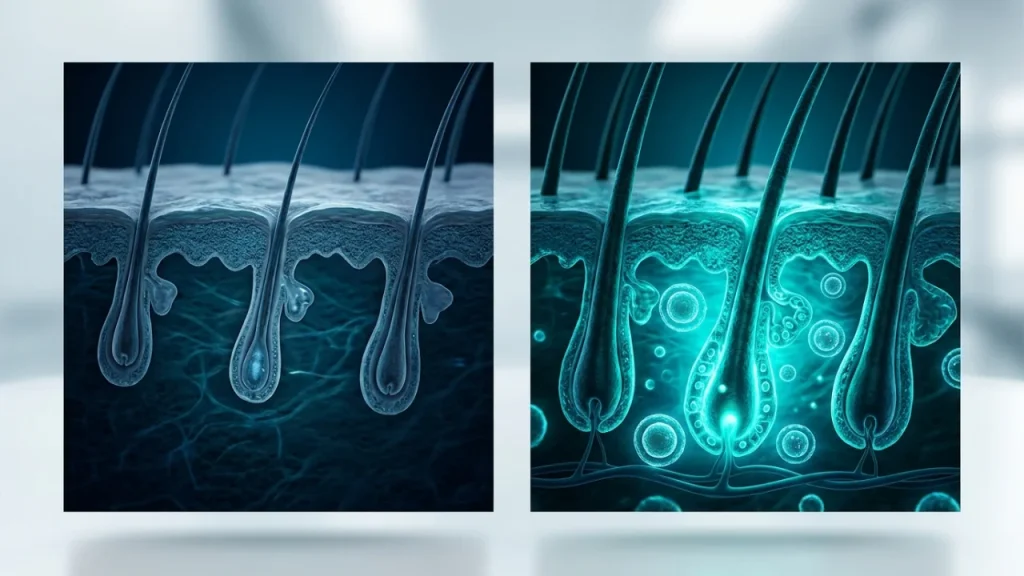
What Are Exosomes and Why They Matter for Hair Growth
Understanding Exosomes as Natural Messengers
Imagine your body’s cells have a tiny postal system. They send out microscopic packages. These packages are called exosomes. Exosomes are incredibly small vesicles. They are about one-thousandth the width of a human hair. Nearly every cell in your body can make and release them.
These are not simple bubbles. They are complex messengers. Cells create exosomes inside special compartments. They fill them with a precise cargo. This cargo includes proteins, lipids, and genetic instructions. The instructions are in the form of RNA. Then the cell releases the exosome into the bloodstream or tissue fluid.
The exosome travels until it finds another cell. It docks on that cell’s surface. It delivers its cargo directly into the target cell. This process changes what the target cell does. It is a core form of cell-to-cell communication. Think of it as a text message with an attachment sent between cells.
This system is vital for health. It helps coordinate immune responses. It aids in tissue repair. It maintains balance throughout the body. For example, stem cells use exosomes heavily. They send signals that help heal damaged areas.
Now, consider the hair follicle. A hair follicle is a tiny, complex organ. It needs clear signals to function well. It must cycle through growth phases smoothly. Problems can disrupt these signals. This leads to thinning hair or halted growth.
Exosome therapy aims to restore this communication. The therapy uses exosomes derived from stem cells. These exosomes are rich in growth factors and signaling molecules. They deliver a concentrated set of instructions to dormant follicles.
The goal is to “wake up” these follicles. The messengers tell the follicle cells to shift back into a growth state. They can improve blood supply to the area. They can also calm inflammation that may be causing damage.
Seeing exosomes hair loss before and after results hinges on this biological restart. The “before” state often shows weak signaling. The “after” state reflects renewed cellular dialogue. This is not about adding foreign chemicals. It is about enhancing the body’s own language.
The power lies in the specificity of the message. Different exosome cargos can trigger different effects. For hair, the focus is on proliferation and regeneration signals. This targeted approach makes it a unique strategy.
In essence, exosomes matter because they speak the native language of your cells. They use the body’s existing systems for change. This makes them a natural fit for regenerative goals like hair growth. Their role as messengers is the first step in understanding their therapeutic potential for hair restoration.
How Exosomes Differ from Stem Cell Treatments
Stem cell therapies and exosome therapies are fundamentally different. One uses whole cells as agents of repair. The other uses the powerful signals those cells produce. This is a crucial distinction for understanding modern regenerative medicine.
Think of a stem cell as a complete factory. It is a living entity. It can divide and change into different cell types. It also produces valuable products. Exosomes are one of its most important products. They are like specialized delivery trucks sent out from the factory.
Using whole stem cells is a complex process. The cells must be harvested from a source. They are then prepared and injected. Once in the body, they need to survive and function correctly. Their actions can be unpredictable. Scientists cannot always control what these cells will do next.
Exosome therapy simplifies this approach. It uses the prepared messages, not the living factory. Practitioners isolate the exosomes from stem cell cultures. They then apply these vesicles directly to the target area. This skips several uncertain steps.
The primary difference lies in mechanism. Stem cells may work by directly replacing damaged cells. They might also secrete helpful factors on site. Exosomes work purely through communication. They carry instructions that tell your existing cells how to repair themselves.
This leads to important practical contrasts: – Safety: Exosomes are not alive. They cannot divide or form tumors. This reduces a key risk sometimes associated with live cell therapies. – Precision: The cargo inside exosomes can be studied and selected for specific goals, like hair growth. – Storage and use: Exosomes are more stable than live cells. They can be stored longer without losing their function.
For hair loss, this distinction is vital. Injecting whole stem cells into the scalp aims to create new supportive cells. The hope is they will integrate and assist follicles. Exosome therapy has a more direct goal. It delivers growth signals to your dormant follicle cells immediately.
The “exosomes hair loss before and after” results you might see stem from this efficient signaling. The “before” picture represents a scalp environment lacking clear instructions. The “after” reflects the impact of targeted messages arriving directly at the follicles.
Another key point is the local effect. Whole stem cells might migrate or have systemic effects. Exosomes tend to exert their influence mainly where they are injected. This allows for focused treatment of thinning areas.
In summary, exosome therapy captures the beneficial output of stem cells while avoiding the complexities of using the cells themselves. It is a shift from trying to deploy cellular workers to simply delivering their blueprints for repair. This refined approach allows for targeting the precise biological conversations needed to encourage hair growth, setting the stage for understanding how treatments are actually performed.
The Science Behind Exosome Communication
Think of your body’s cells as a vast network of offices. They don’t use email or phones. Instead, they send physical packages. Exosomes are those packages. They are tiny bubbles, called vesicles, released by cells into the fluid around them.
A cell loads each exosome with a specific cargo. This cargo is a set of instructions and supplies. It includes growth factors, proteins, and even strands of genetic code called RNA. Once loaded, the exosome detaches and travels.
Its journey is through the interstitial fluid. This is the liquid that surrounds all your cells. The exosome navigates this space until it finds a target cell. The target has special docking ports on its surface.
The exosome binds to these ports. Then, it delivers its cargo directly into the target cell. It can fuse with the cell’s outer membrane. Or the cell can swallow the entire vesicle. The instructions are now inside.
For hair growth, the key senders are mesenchymal stem cells. These are master regulator cells. They release exosomes packed with growth signals. The target cells are in your hair follicles.
Dormant follicle cells receive these exosome packages. The cargo instructs them to wake up. It tells them to shift from a resting phase back into a growth phase. This process is called activating the anagen phase.
The signals also improve the local environment. They encourage new blood vessels to form. This brings more oxygen and nutrients to the follicle. They can reduce inflammation that may be choking hair growth.
This communication is precise and efficient. It is why “exosomes hair loss before and after” photos can show changes. The “before” state lacks these targeted instructions. The “after” state reflects follicles that have received clear directives to regenerate.
The entire system relies on three main steps: – Cargo Loading: The parent cell carefully selects molecules to address a need. – Targeted Delivery: Exosomes find specific cells through surface markers. – Signal Execution: The recipient cell uses the cargo to change its behavior.
This is not a random broadcast. It is a direct conversation. One cell identifies a problem in the tissue. It then dispatches exosomes with the exact tools needed for repair. The follicle cells listen and respond.
Different cargo creates different outcomes. An exosome meant for skin repair might carry collagen instructions. One for hair growth carries factors like VEGF or FGF. Scientists can study and select for these potent cargo mixes.
The beauty lies in its natural mimicry. Exosome therapy does not invent a new process. It amplifies and focuses a conversation your cells are already trying to have. It boosts the signal that says “grow.”
This foundational science explains the potential for focused results. By harnessing this native delivery network, treatments aim to be both powerful and precise. Understanding this communication sets the stage for seeing how it translates into a clinical procedure.
Why Exosomes Target Hair Follicles Precisely
Hair follicles in a resting state send out a distinct molecular distress call. Exosomes are built to hear it. Their outer membrane is studded with proteins and receptors. These act like navigation equipment. They scan the biological environment for specific signals.
Think of a dormant follicle as a quiet house with a porch light on. That “light” is a combination of chemical signals. These signals include certain growth factors and adhesion molecules. The exosome’s surface proteins recognize these signals. This system ensures delivery happens exactly where it is needed most.
This targeting is not random diffusion. It is active homing. Studies show exosomes from stem cells naturally accumulate around hair follicle cells. They do this at a much higher rate than in other skin cells. This proves an inherent biological preference. The follicle’s unique signature acts as a homing beacon.
The precision stems from two key mechanisms: – Signal Lock-and-Key: Follicle cells express “address” molecules on their surface. Exosomes carry the matching “key” proteins. This direct binding anchors the exosome to its target. – Chemical Gradient Following: Dormant or stressed follicles release chemical cues into their local area. Exosomes can sense and move along the concentration of these cues. They follow the trail to its source.
This explains why systemic treatment is not required for hair restoration. Injected exosomes do not wander aimlessly through the body. Their design keeps most of them local. They engage with the immediate tissue environment. They seek out the cellular profiles associated with miniaturized or inactive follicles.
The result is efficient use of the regenerative cargo. Instructions for growth are not wasted on skin cells focused on making collagen. They are not diluted across a large area. They are concentrated directly at the root of the problem, literally. This focused delivery is a core reason for the notable changes observed in “exosomes hair loss before and after” documentation.
A follicle receives a powerful, combined signal. First, the exosome docks onto its cell membrane. Then, it transfers its cargo directly into the cell’s cytoplasm. This cargo immediately influences the cell’s nucleus. It changes gene expression patterns that have been stuck in a resting phase.
The process reactivates the follicle’s natural growth cycle. It shifts the cell’s priority from survival back to productivity. The targeted delivery ensures this command is loud and clear. Neighboring cells that are already healthy do not get the same strong signal. This selective action promotes healing without unnecessary disruption.
Therefore, exosome therapy leverages a pre-existing biological mail system. It uses the recipient’s own cellular “zip code.” This inherent intelligence is what separates it from broad-acting topical treatments or drugs. The therapy amplifies a natural rescue operation that your scalp is already attempting but failing to complete fully.
Understanding this targeting demystifies the clinical outcome. It shows how a localized injection can yield focused regrowth. The science moves from general communication to a precise conversation with dormant follicles. This sets the stage for understanding what happens during an actual treatment session.
Key Components Inside Therapeutic Exosomes
The power of an exosome lies entirely in its cargo. Think of it as a tiny medical kit. This kit contains specific instructions and tools for hair follicle cells. The contents are not random. They are carefully selected by the parent cell for a precise biological task.
For hair growth, the most critical tools are proteins called growth factors. These are signaling molecules. They bind to receptors on dormant follicle cells. This binding acts like a key turning a lock. It starts a chain reaction inside the cell.
Key growth factors in exosomes include: – Vascular Endothelial Growth Factor (VEGF). This factor tells the body to build new, tiny blood vessels. Better blood flow brings more oxygen and nutrients to the follicle. It creates a healthier environment for growth. – Fibroblast Growth Factor (FGF). This protein stimulates cell division and proliferation. It helps rebuild the structural parts of the hair follicle itself. – Keratinocyte Growth Factor (KGF). This factor specifically targets keratinocytes. These are the primary cells that build the hair shaft.
Beyond proteins, exosomes carry genetic instructions. This is often microRNA. These are small pieces of genetic code. They do not carry blueprints for new traits. Instead, they function like master switches for genes already present in your cells.
MicroRNA can turn specific genes on or off. In a dormant follicle, it can silence genes that enforce the resting phase. Simultaneously, it can activate genes that promote the growth phase. This reprogramming is deep and effective. It changes the cell’s core behavior.
The cargo also includes enzymes and other regulatory molecules. These help manage inflammation and cellular stress. Chronic, low-level inflammation is a common enemy of hair follicles. Exosome cargo can calm this environment. It shifts the follicle from a state of defense to a state of repair and growth.
This combination is strategic. Growth factors provide the immediate “go” signal. Genetic material like microRNA rewires the cell’s long-term instructions. Support molecules improve the local conditions. Together, they address multiple causes of stunted growth at once.
This rich cargo explains the dramatic shifts seen in “exosomes hair loss before and after” comparisons. The change is not superficial. The therapy does not just prop up weak follicles. It delivers a complete set of commands and tools for cellular renewal.
The contents work in synergy. One component prepares the ground. Another sparks activity. A third ensures the activity continues correctly. This multi-pronged approach is why exosomes can succeed where single-ingredient treatments often fail.
Understanding this cargo demystifies its potency. You are not applying a generic stimulant. You are introducing a full cellular toolkit designed for regeneration. Each component has a defined role in awakening the follicle’s innate program.
The next logical question is how this potent cargo is sourced and prepared for clinical use. The origin of therapeutic exosomes is as important as what they contain.
How Exosome Therapy Works for Hair Loss Treatment
The Biological Mechanism of Follicle Activation
The journey begins when exosomes arrive at the dormant hair follicle. They do not force entry. Instead, they communicate. Their membrane proteins interact with receptors on the surface of target cells. These cells include dermal papilla cells and stem cells in the bulge region. This interaction is like a key fitting a lock. It signals the cell to welcome the vesicle inside.
Once internalized, the exosome releases its cargo into the cell’s cytoplasm. This is the critical moment of instruction delivery. The growth factors immediately bind to specific sites within the cell. This binding triggers a cascade of internal signals. These signals are secondary messengers. They travel to the cell’s nucleus.
The nucleus is the command center. The signals activate specific genes that were previously idle. These genes are the blueprint for hair growth proteins like keratin. Their activation is a direct order to resume production. Simultaneously, the microRNAs from the exosome get to work. They perform a regulatory function. They can silence genes that promote hair follicle dormancy or inflammation. This dual action turns on growth programs and turns off inhibitory ones.
The biological mechanism focuses on restarting the hair growth cycle. Hair follicles naturally cycle through phases. – The growth phase is called anagen. This is when the follicle is actively producing hair. – The transitional phase is catagen. This is a short regression period. – The resting phase is telogen. The follicle is dormant here.
In pattern hair loss, follicles spend less time in anagen and more time in telogen. They also miniaturize, producing thinner, shorter hairs. Exosome therapy aims to reverse this pattern.
The delivered cargo pushes follicles back into anagen. It extends the duration of this growth phase. The process involves several coordinated cellular events. – Dermal papilla cells receive signals to proliferate. These cells are crucial for cycle control. – Stem cells in the follicle are activated. They begin to divide and differentiate into new follicle cells. – Blood vessel formation around the follicle is encouraged. This is called angiogenesis. It increases nutrient and oxygen supply. – Cellular metabolism is boosted. Cells produce more energy to support rapid growth and protein synthesis. – Apoptosis, or programmed cell death, in key cells is inhibited. This helps preserve the follicle structure.
This multi-step activation explains the tangible results seen in “exosomes hair loss before and after” documentation. The change is not instant. It follows the natural biological timeline of hair cycling. After treatment, a follicle in telogen must complete its rest phase. Then it receives the strong signal to enter anagen.
New hair production begins below the skin surface. The activated follicle starts constructing a new hair shaft from the bulb upward. This early growth is not visible for several weeks. The hair must then travel up the follicle canal. It finally emerges from the scalp. This is why initial results typically appear after a couple of months. The hair continues to thicken and mature over subsequent cycles.
The mechanism ensures sustainability. The microRNA-mediated gene regulation can have lasting effects. It helps reset the cellular environment. This makes the follicle less susceptible to the signals that caused it to miniaturize initially. The therapy does not just provide a one-time stimulus. It attempts to reprogram the local tissue behavior for longer-term benefit.
This biological reactivation is a targeted reboot of a natural system. The exosomes provide missing instructions and optimal conditions. The follicle’s own cells then execute the growth program they inherently possess but had stopped using fully. The outcome is a shift from producing weak, miniaturized hairs to stronger, terminal hairs over time.
Understanding this step-by-step mechanism clarifies how a non-surgical treatment can achieve profound effects. It works with biology, not against it. The next consideration is how this intricate process translates into a practical clinical procedure for patients seeking treatment.
From Dormant to Active: The Anagen Phase Explained
The anagen phase is the active growth period for hair. It can last for years. During this time, follicle cells divide rapidly. They build the hair shaft from the bottom up. For hair loss patients, the problem is often a shortened anagen phase. Follicles enter a prolonged rest state instead. Exosome therapy aims to correct this.
Think of a dormant follicle as a factory on standby. The machinery is present but idle. The workers are present but lack clear instructions. Exosomes deliver a precise set of blueprints and commands. These commands tell the factory to restart production.
The process begins with cellular communication. Exosomes fuse with target cells in the follicle bulge and dermal papilla. They release their cargo directly into the cell’s interior. This cargo includes microRNAs and proteins. These molecules act as master switches for genes.
Key growth-inhibiting genes are dialed down. Key growth-promoting genes are activated. This genetic reprogramming changes the cell’s behavior. It is not a simple one-time signal. It is a reset of the cell’s operating instructions.
The shift back to anagen involves several coordinated steps: – Dermal papilla cells receive signals to enlarge and become more active. – Stem cells in the bulge region are activated and start dividing. – New cells migrate down to form the new hair bulb. – Blood vessel formation around the follicle increases for better nutrient supply. – The production of structural proteins like keratin accelerates.
This reactivation is gradual. The first visible sign is often a change in the existing miniaturized hair. It may become slightly thicker and darker. This is the follicle beginning its reboot sequence. The full production of a new, strong hair shaft follows.
The power of exosomes lies in this coordinated instruction set. They do not just shout “grow.” They provide a detailed manual for sustainable growth. They help recreate a youthful, healthy cellular environment. This environment supports a full, long anagen phase.
Patients reviewing exosomes hair loss before and after photos are seeing this transition. The “before” image often shows thin coverage and miniaturized hairs. The “after” image shows thicker, more terminal hairs. This change reflects follicles successfully completing the shift from dormant to active.
The duration of the new anagen phase is critical. A successful treatment helps follicles maintain this active state for a normal cycle. This leads to cumulative gains over time. Each new cycle can build on the previous one’s progress.
Understanding this phase explains the timeline of results. Biological reprogramming takes weeks to manifest visibly. The cellular groundwork must be laid first. Then the physical growth becomes evident. This process underscores why therapy works with the body’s natural rhythms.
The anagen phase sets the foundation for density and length. With follicles actively growing, the next focus becomes the quality and strength of each individual hair strand produced during this renewed cycle.
Improving Scalp Microenvironment for Better Growth
A healthy hair follicle cannot grow in a damaged neighborhood. The scalp’s microenvironment is this neighborhood. It includes blood vessels, immune cells, and support structures. Exosome therapy targets this area directly. It fixes the local conditions that choke growth.
Chronic, low-grade inflammation is a major blocker. It is like a constant alarm signal in the skin. This inflammatory state shrinks follicles and shortens their growth phase. Exosomes carry specific instructions to calm this response. They tell local immune cells to stop attacking. They reduce inflammatory signals. This quiets the neighborhood, removing a key growth barrier.
Another common issue is micro-scarring, or fibrosis. Think of it as tough, stiff tissue forming around the follicle. This tissue strangles the follicle like a tight cord. It limits space and blood flow. Exosomes address this directly. They deliver messages that break down this excess scar tissue. They also encourage the production of healthy, flexible collagen. This restores the follicle’s physical space to expand.
Blood flow is the delivery system for oxygen and nutrients. Poor circulation starves follicles. Exosomes promote angiogenesis. This is the formation of new, tiny blood vessels. They signal the body to build these new capillaries around the follicle base. Better blood supply means more fuel for robust hair production.
The therapy also helps balance cellular stress and damage. Factors like UV exposure and toxins create oxidative stress. This stress damages follicle cells. Exosomes boost the local antioxidant defense network. They help cells neutralize these damaging molecules. This protection keeps follicle stem cells healthier and more functional.
The collective impact of these changes is a revitalized scalp ecosystem. – Inflammation decreases. – Scar tissue softens. – Blood supply increases. – Cellular protection improves.
This creates an optimal foundation for long-term growth. The follicle is no longer fighting a hostile environment. It can now focus its energy on making strong hair.
Patients looking at exosomes hair loss before and after documentation often see this change in scalp quality. The “after” photos frequently show improved scalp color and reduced redness. The skin often appears healthier overall. This visual clue points to the microenvironment healing beneath the surface.
The process is not instant. Rebuilding tissue takes time. Improvements in blood flow and reductions in fibrosis occur over weeks. This groundwork is why visible hair changes follow later. The environment must be prepared first. Then the follicle can perform at its best.
By optimizing the scalp microenvironment, exosome therapy addresses a root cause of thinning. It goes beyond just stimulating the follicle. It ensures the follicle has everything it needs to sustain growth for the long term. A healthy neighborhood allows for a strong, lasting recovery. With a supportive environment secured, the focus turns to what grows from it: the individual hair strand and its lasting quality.
Increasing Hair Density and Shaft Thickness Naturally
Exosome therapy directly instructs hair follicles to enter a robust growth phase. This is the anagen phase. It is the active period when hair strands are produced. Exosomes deliver specific growth signals to follicle cells. These signals act like a precise command. They tell dormant or miniaturized follicles to restart their growth cycle.
The therapy also targets the hair shaft itself. Each hair strand grows from a structure called the dermal papilla. This is the follicle’s command center. Exosomes enhance the activity of cells in this area. These cells then produce a thicker, more robust hair shaft. Think of it as upgrading the factory’s machinery. The output is stronger and of higher quality.
Patients reviewing exosomes hair loss before and after galleries often notice two clear improvements. First, existing individual hairs become thicker. This is called increasing shaft diameter. Second, more hairs emerge from previously bare or sparse areas. This is an increase in overall hair density. Both results happen through natural cellular processes.
The biological instructions carried by exosomes are complex. They work on several levels within the follicle. – They upregulate genes responsible for hair keratin production. Keratin is the core structural protein of hair. More keratin means a thicker, stronger strand. – They prolong the anagen growth phase. This allows each hair to grow longer before it naturally sheds. – They help activate stem cells in the bulge region of the follicle. These stem cells are crucial for generating new hair cycles.
This multi-point action leads to measurable changes over time. The new hair that grows is often more resilient. It may have a healthier cuticle layer. This improves shine and texture. The increased density comes from follicles that had stopped producing visible hair. They are now reactivated.
The timeline for these results is gradual. The first signs are often reduced daily shedding. This can happen within several weeks. Thickening of existing hairs may become noticeable after two to three months. New hair growth takes longer to become visible. The scalp must first grow fine, vellus hairs. These then mature into terminal hairs.
This process mirrors natural hair physiology. The therapy does not force unnatural growth. It removes blockages and provides optimal instructions. The follicle responds using its own innate capacity. The outcome is sustainable because it relies on restored function.
The final visual impact is a fuller head of hair with improved coverage. This is the combined result of a healed scalp environment and direct follicular stimulation. One enables the other. Lasting density depends on this comprehensive approach. The next consideration is how these biological gains translate into lasting, stable results over the years.
The Non-Surgical Advantage of Exosome Treatments
Exosome therapy for hair loss involves no scalpels or sutures. It is a precise, in-office procedure. The process uses fine needles to deliver the exosome solution. This targets the scalp’s middle layer. The goal is to reach the hair follicle stem cells directly.
The entire session often takes less than one hour. A typical appointment follows clear steps. First, the scalp is cleaned thoroughly. A topical numbing cream is then applied. This minimizes any discomfort. The exosome preparation is administered using micro-injections.
Patients can return to their daily routines immediately after. There is no required downtime. Some people experience mild redness at the injection sites. This usually fades within a few hours. The non-surgical nature eliminates risks linked to surgery.
These risks can include scarring, infection, or long recovery periods. Exosome therapy avoids general anesthesia. It also prevents the need for post-operative pain medication. The approach is fundamentally different from a hair transplant.
Transplant procedures move hair follicles from one area to another. This is a redistribution process. It does not change the health of the scalp environment. Exosome treatment aims to improve the scalp and follicles biologically.
Seeing exosomes hair loss before and after photos shows this difference. Surgical results depend on the number of grafts moved. Exosome outcomes depend on biological response. The therapy supports your body’s natural repair mechanisms.
The financial and time costs are also distinct. Surgical options require a significant single investment. They involve a definite recovery period. Exosome therapy may be part of a planned treatment series. It fits more easily into a regular schedule.
Consider these key points of the non-surgical advantage: – No incisions or stitches are needed. – The risk of visible scarring is extremely low. – There is no lengthy recovery or post-op care. – The procedure is quick and convenient. – It focuses on improving existing follicle function.
This method is ideal for individuals in early hair loss stages. It also suits those who wish to avoid surgery. The treatment can enhance results from other non-invasive methods. It works well alongside topical treatments like minoxidil.
The lack of major disruption is a primary benefit. You can receive treatment during a lunch break. You can then go back to work or exercise. This accessibility makes consistent care simpler.
Long-term planning is different without surgery. Maintenance sessions might be suggested to support results. This is similar to skincare routines for sustained benefits. The approach is about ongoing scalp health.
The next logical consideration is safety and regulation. A non-surgical treatment must still meet high standards. Understanding the source and handling of exosomes is critical for patient trust.
Real Patient Experiences: Exosomes Hair Loss Before and After Results
Documenting Visible Changes in Hair Coverage
Visible changes in hair coverage provide the most direct evidence of treatment success. Before and after photos serve as a powerful record. They capture shifts in density and scalp visibility that might be gradual to the naked eye. These photos are not just promotional tools. They are practical documents for tracking progress.
The initial “before” photo establishes a clear baseline. It shows the existing state of the scalp. Common features include a widening part or thinning at the crown. The scalp skin may be clearly visible through the hair. This baseline is crucial for an honest comparison months later.
Improvements after exosome therapy often follow a specific pattern. Changes are typically seen in areas with miniaturized, but still living, follicles. The first sign is often a reduction in scalp shine. The skin appears less visible under light. This is due to early changes in follicle activity.
Next, fine, vellus hairs may begin to thicken. They transition into terminal hairs. This process increases overall hair shaft diameter. The result is improved coverage even before new hair sprouts emerge. The hair mass in a given area grows.
True new growth from previously dormant follicles can also occur. This adds to the density. The timeline for visible change varies by individual. Biological response rates differ. Most clinics recommend waiting at least three to four months for initial photo comparisons.
Significant documentation often occurs around the six-month mark. By this time, cellular signaling has had a sustained effect. Follicles have progressed through multiple growth cycles. The cumulative effect becomes photographically clear.
Key areas to compare in before and after photos include: – The hair part width. A narrowing part indicates improved density. – The crown area. Coverage here reduces the appearance of bald spots. – The frontal hairline. Enhanced density here frames the face. – Overall hair fullness under consistent lighting.
It is important to understand what these photos show. They document increased density from reactivated follicles. They do not show transplanted hair from a donor site. The improvement comes from within the treated area itself. This is a core distinction from surgical results.
The quality of hair also changes. Hair may appear thicker and more robust. It often has a healthier shine. This reflects improved follicle nutrition and function. The hair’s texture can feel stronger.
Patient experiences with exosomes hair loss before and after results highlight this gradual transformation. Many report that their scalp simply feels more covered. They notice less skin showing when their hair is wet or styled. Brushing and styling can become easier as hair mass increases.
Consistent photographic angles and lighting are essential for accuracy. Professional clinics use fixed setups. This eliminates variables like shadow or hair length changes. It ensures the comparison reflects true biological change.
The documented results reinforce the therapy’s mechanism. Visual proof aligns with the science of cellular communication. Seeing renewed growth where there was thinning validates the regenerative approach. It turns abstract concepts into concrete evidence.
This visual journey from thinning to thickening is a critical measure of efficacy. It moves the discussion from potential to documented outcome. The next logical step is to examine the factors that influence these visible results, including treatment protocols and individual patient biology.
Timeline Expectations for Noticeable Results
Patience is a key part of the exosome therapy journey. Results do not appear overnight. The regenerative process follows a natural biological timeline. Your hair growth cycle itself dictates the pace.
Hair follicles cycle through phases. They grow, rest, shed, and then regrow. This entire cycle takes months. Exosome therapy works within this existing framework. It does not create an artificial shortcut. Instead, it aims to improve the health and output of follicles already in your scalp.
Most patients begin to notice the first subtle signs around the two to three month mark. These are not dramatic changes yet. Early signs can include decreased daily shedding. You might find less hair on your pillow or in the shower drain. The scalp skin itself may feel healthier. Some report less itching or irritation.
The texture of existing hair can improve first. Hair might feel stronger and look shinier. This reflects improved follicle nutrition. The exosomes are signaling cells to function better. This enhanced support is the first step toward visible new growth.
More noticeable changes often appear between months three and four. This is when the exosomes hair loss before and after comparison starts to show visual differences. Fine, vellus hairs may darken and thicken. These are the short, light hairs often seen at the hairline. They begin to mature into terminal hairs.
Areas of thinning might show early signs of filling in. The scalp becomes less visible under bright light. Hair density increases gradually. You might notice this while styling your hair or after it dries.
The most significant improvements typically become clear around the six-month point. This aligns with a complete hair growth cycle post-treatment. Follicles that were miniaturized or dormant have had time to reactivate and produce new hair shafts.
Full results are usually assessed at nine to twelve months. The hair’s overall density, coverage, and quality reach their peak. Multiple growth cycles have occurred under the influence of exosome signaling. The cumulative effect becomes fully visible.
Several factors influence this timeline. Your individual biology is the main variable. These factors set your personal schedule for results. – Your age and general health play a role. – The original cause and pattern of your hair loss matter. – The duration of your thinning prior to treatment is significant. – Your unique hair growth cycle speed is a factor.
A single treatment can produce results that last. The goal is to change the follicular environment permanently. However, because hair loss is often progressive, some patients opt for periodic maintenance. A follow-up session might be considered after a year or more. This can help sustain results against ongoing genetic or hormonal factors.
Managing expectations is crucial for satisfaction. Do not expect immediate regrowth in weeks. The process is cellular and methodical. Trusting the biological timeline is important.
Documenting your own progress with monthly photos is helpful. Use consistent lighting and angles. This creates a personal record of change. Subtle shifts are easier to see in side-by-side comparisons over time.
The gradual nature of results underscores a key point. Exosome therapy promotes natural regeneration. It is not a cosmetic cover-up. The timeline reflects real biological change from within your follicles.
Understanding this schedule helps patients commit to the process. The wait is for authentic, lasting improvement. The visible journey captured in exosomes hair loss before and after photos is a story that unfolds month by month. This leads to questions about how to support and potentially extend these positive outcomes through daily habits and care.
Personal Stories of Hair Regrowth Journeys
Personal stories provide the most compelling evidence for any medical treatment. For exosome therapy, these narratives move science from theory to lived experience. They show what the gradual timeline looks like in reality. Each journey is unique, but common patterns emerge.
Consider a typical patient profile. He is a man in his forties with early-stage androgenetic alopecia. His hairline has receded and his crown is thinning. He tried topical solutions for years with minimal benefit. His scalp environment was likely inflamed and dormant.
His exosomes hair loss before and after photos tell a clear story. The “before” image shows diffuse thinning under bright light. The scalp skin is visible. At the three-month mark, his follow-up photo might show little visible change. This aligns with the biological lag phase. The patient’s personal notes often mention reduced shedding and less scalp itching.
The six-month comparison is usually where shifts begin. The hair in the thinning areas often appears denser. The scalp is less visible under the same lighting. The hair strands themselves may feel thicker. Patients frequently report that their hair “feels stronger” during washing or styling.
By nine to twelve months, the transformation becomes more definitive. New hair growth fills in areas that were once bare. The hairline may show softened definition. The overall appearance is of fuller, healthier hair. These results are not from transplanted grafts. They come from revived native follicles.
Another common story involves a woman with diffuse thinning. Her hair loss pattern is different. It is often wider spread across the top of her scalp. For her, success is measured by volume and coverage. Her before and after journey might highlight a return of ponytail thickness. It shows the ability to part her hair without seeing a wide line of scalp.
The emotional impact is a repeated theme in these stories. Patients speak of regained confidence. They mention no longer avoiding windy days or certain hats. The psychological benefit is a significant part of the outcome. It stems from addressing the root cause, not just the symptom.
These personal journeys underscore several key points: – Results are progressive, not instantaneous. – The first noticeable change is often a halt in further loss. – Regrowth follows a natural, subtle pattern. – Documenting with photos is crucial for seeing incremental change.
Individual responses do vary based on factors discussed earlier. However, the collective experience forms a strong body of anecdotal evidence. It shows the therapy’s potential to alter the course of hair loss. The visual proof in before and after galleries provides realistic expectations. It shows what dedicated patience can yield.
These narratives naturally lead to practical considerations. Patients want to know how to care for their scalp after treatment to support and maximize these results. Daily habits become the next important chapter in sustaining the progress seen in these personal stories.
Measuring Success Beyond Visual Evidence
Visual proof in photos tells a powerful story. Yet the full success of a treatment extends beyond what a camera can capture. Patients often report changes they feel before they see dramatic growth. These changes are signs of a healthier scalp environment. They are foundational to lasting results.
One key marker is a change in hair texture and strength. Individual hair strands may become thicker and more resilient. This is due to activated follicles producing better-quality hair. Think of a plant growing in enriched soil. The stem becomes sturdier. The therapy aims to create a similar effect on the scalp. Patients notice their hair feels denser to the touch. It may have more bounce and elasticity. This improvement in hair quality is a critical success metric.
Scalp health itself undergoes a transformation. A healthy follicle needs a healthy foundation. Chronic inflammation or poor circulation can starve hair follicles. Exosome therapy works to calm this inflammation. It also promotes the formation of new, tiny blood vessels. This process is called angiogenesis. Better blood flow delivers more oxygen and nutrients to the follicle root.
Patients might observe these signs of a healthier scalp: – Reduced itching or sensitivity that was previously present. – Less flakiness or dryness on the scalp surface. – A decrease in excessive daily hair shedding.
These shifts indicate the biological cycle is normalizing. The anagen, or growth, phase of the hair cycle can lengthen. This leads to hairs that grow longer before they rest and shed. The result is not just more hairs, but hairs that stay on your head longer.
The timeline for these internal changes often precedes visible regrowth. A patient’s exosomes hair loss before and after gallery shows the endpoint. The journey includes these important milestones along the way. Monitoring hair loss during washing or brushing becomes less distressing. The hair that remains is stronger at the root.
Success is also measured by durability. The goal is not a temporary fix but a sustained improvement. By targeting the cellular environment, the therapy supports the follicle’s own long-term function. This approach helps maintain results after the initial treatment period. It builds a foundation for continued hair health.
Understanding these mechanisms helps set complete expectations. Success is multi-dimensional. It combines stopping loss, improving quality, and stimulating new growth. Each person’s progress blends these elements in a unique way. The next logical step is considering how to support this renewed biological activity through daily care and maintenance routines.
Comparing Different Stages of Hair Loss Recovery
The visual proof of exosome therapy lies in documented patient journeys. An exosomes hair loss before and after gallery reveals a spectrum of outcomes. These outcomes directly relate to a person’s starting point. The stage of hair loss when treatment begins influences the recovery timeline. It also shapes the visible results.
Consider early-stage thinning. This often involves diffuse hair loss across the scalp. Hair density decreases but the hairline remains largely intact. Here, exosomes work on follicles that are still present but miniaturized. The goal is to revive these dormant or shrunken units.
Patients in this category often see a faster initial response. The scalp environment may improve within weeks. Thinning areas can begin to fill in after several months. The result is often a restoration of overall volume and coverage. The hair feels thicker and looks fuller.
Moderate hair loss presents a different picture. This stage may include a receding hairline or a visibly widening part. Bald spots might start to form on the crown. Follicles in these areas are in a more advanced state of decline. They require more robust cellular signaling to restart.
Recovery here follows a clearer phased pattern. The first goal is to stabilize further loss. This is a critical success marker. Next, vellus hairs, which are fine and light, may darken and thicken. Existing hairs become stronger. New growth in bald areas typically appears later. It often starts as fine, colorless fuzz that gradually matures.
Advanced hair loss involves significant bald areas. The scalp skin in these zones has often changed. It may appear shiny and smooth. Follicles have been dormant for years. They exist in a deeply suppressed state.
The biological targets here are fundamental. Therapy aims to reactivate progenitor cells in the skin. It seeks to improve blood flow to the scalp. The goal is to create a microenvironment where follicles can potentially regenerate. Results in advanced cases focus on improvement, not full reversal.
Progress might include: – A softening and texturizing of the once-smooth bald scalp skin. – The emergence of peach-fuzz-like vellus hairs in bald zones. – A halt in the expansion of bald areas. – Increased density around the edges of thinning regions.
These changes represent significant biological activity. They lay groundwork for potential further improvement with ongoing treatment.
The comparison shows a core principle. Earlier intervention typically yields more comprehensive visual results. The cellular machinery is more receptive. However, improvement is possible at multiple stages. Each exosomes hair loss before and after story reflects a unique biological conversation.
The therapy’s mechanism adapts to local conditions. Exosomes deliver signals based on what the recipient cells need. In thin areas, they may prioritize growth cycle elongation. In bald areas, they might focus on awakening stem cells.
This explains why two patients can have different journeys. Their before condition sets the stage. The after results show the therapy’s work within that specific context. Understanding this helps set realistic expectations for visual change over time. This progression naturally leads to questions about maintaining and optimizing these new gains long-term.
The Treatment Process from Start to Finish
Initial Consultation and Assessment Steps
The first visit is a detailed investigation of your scalp’s health. It is not a sales pitch. This consultation determines if you are a suitable candidate for treatment. The goal is to build a complete biological picture. This picture guides the entire therapy plan.
Your provider will start with an in-depth discussion. They will ask about your hair loss history. Expect questions about the timeline of thinning. They will ask about any family history of pattern baldness. Your general health and medications are also important topics. This talk sets the context for the physical exam.
Next comes a thorough scalp examination. The provider looks for signs of inflammation. They check for redness or scaling. They assess the quality of your scalp skin. Is it thick or thin? Is it shiny? This visual check offers immediate clues about follicle health.
The most critical step is often a trichoscopic analysis. This uses a handheld digital microscope. The device magnifies the scalp surface. It allows the provider to see what the naked eye cannot. They can count hairs in a specific area to measure density. They can examine hair shaft thickness. They can spot miniaturized hairs trying to grow.
Key metrics recorded during this analysis include: – Hair density per square centimeter. – The percentage of thin, miniaturized hairs versus terminal hairs. – The presence of vellus hairs in bald areas. – Scalp coverage and follicular unit grouping.
This data creates a precise baseline map. It shows exactly where your follicles are in their growth cycle. It identifies zones of active thinning versus stable areas. This map is essential for tracking progress later. Your unique exosomes hair loss before and after profile begins here.
Your provider will also discuss your goals. Be prepared to talk about your expectations. Are you hoping to thicken existing hair? Do you want to see regrowth in a bald temple? Realistic targets are set based on your clinical assessment. The earlier findings directly inform this conversation.
Finally, the provider explains the proposed treatment strategy. They will talk about the number of sessions needed. They will outline the injection protocol for your specific pattern. They clarify what you should do before and after the procedure. All your questions are answered in detail.
This initial visit lays a scientific foundation for therapy. It transforms subjective concern into objective data. Every measurement and observation informs the custom plan. This careful start maximizes the potential for a successful biological response. The next logical step is preparing for the actual treatment session itself.
Preparation and Collection Procedures Explained
The therapeutic exosomes used in your treatment come from a controlled biological source. They are not taken from your own body. Instead, they are sourced from human mesenchymal stem cells grown in a laboratory. These parent cells are carefully screened for health and potency. They are cultured under strict conditions. The cells naturally release exosomes into their nutrient-rich growth medium as they multiply.
Think of this medium as a nourishing broth. The cells live in it. As they function, they constantly shed tiny vesicles. These vesicles are the exosomes. They carry the cells’ signaling molecules and genetic instructions. The goal is to harvest these communication packets. The first major step is collecting the “conditioned medium.” This is the liquid full of secreted exosomes.
This collection happens at a specific point in the cell growth cycle. Timing is key for optimal yield and quality. The medium is then processed to remove the larger parent cells and any debris. What remains is a clear solution containing billions of exosomes along with other proteins. The next task is to isolate and concentrate the exosomes from this mixture.
Several advanced techniques achieve this isolation. Ultracentrifugation is a common method. It uses extremely high spinning speeds in a specialized machine. This spinning separates particles by size and weight. The exosomes form a pellet at the bottom of the tube. Other methods use filtration or size-based chromatography columns. These techniques gently separate the exosomes without damaging them.
The isolated exosomes undergo rigorous testing. Scientists verify their identity, concentration, and purity. They confirm the vesicles are the correct size, typically 30 to 150 nanometers. They check for specific protein markers on the exosome surface. These markers act like a fingerprint proving they are genuine exosomes, not other particles.
Testing also ensures the preparation is sterile and safe. It must be free from bacteria, viruses, or other contaminants. Once the batch passes all quality checks, it is prepared for clinical use. The exosomes are suspended in a sterile saline solution. This creates the final injectable formulation.
The entire process happens in specialized cleanroom facilities. These labs follow strict protocols for cell culture and product handling. This ensures consistency and safety from start to finish. The result is a purified, potent biological product ready for therapeutic injection.
Your unique exosomes hair loss before and after profile relies on this precise science. The quality of the preparation directly influences potential outcomes. This behind-the-scenes work transforms basic cellular biology into a targeted treatment. With the agent prepared, the focus shifts to its delivery during your treatment session.
Administration Techniques for Optimal Delivery
The purified exosome solution arrives at the clinic in a sealed vial. A medical professional prepares it for your treatment session. They may combine it with a small amount of local anesthetic. This maximizes comfort during the procedure.
The core goal is precise delivery to the target area. Exosomes need to reach specific layers of your scalp. The two primary administration methods are micro-needling and direct injection. The choice depends on your individual hair loss pattern and treatment plan.
Micro-needling uses a sterile device with fine needles. These needles create microscopic channels in your scalp. They do not cause major discomfort. The exosome solution is then applied topically over this area. The channels allow the vesicles to bypass the skin’s outer barrier. This facilitates their entry into the dermal layer where hair follicles reside.
Direct injection uses very fine-gauge needles. A clinician injects small amounts of the solution intradermally. This means into the skin itself. The injections are shallow and targeted. They place the exosomes exactly where they are needed most. This technique is often used for more focused areas of thinning.
The procedure is typically completed within an hour. You can expect a series of tiny pinprick sensations. Most patients describe the discomfort as minimal. There is no significant downtime required afterward. You might experience mild redness or pinpoint swelling. These effects usually subside within a day.
Optimal delivery relies on several key factors. The depth of placement is critical for contacting follicular cells. The distribution pattern ensures full coverage of the thinning zone. The volume used is calculated based on the treatment area’s size.
Clinicians often follow a mapped strategy. They visually assess your scalp’s condition before starting. They may mark specific zones for different delivery intensities. This personalized approach aims for comprehensive treatment.
The immediate aftercare is simple. Avoid washing your hair for a specified period. This allows the exosomes time to interact with local cells. Refrain from vigorous exercise or sweating for about 24 hours. Use only gentle, recommended hair products.
The administration phase bridges lab science and biological action. The techniques are designed for maximal bioavailability. This careful delivery sets the stage for the cellular events that follow. It initiates the process that leads to visible changes in your hair.
Patient experiences vary after this session. Some report a tingling sensation as activity begins. This is not universal but can occur. The real work happens silently at a cellular level over subsequent weeks.
Understanding this process demystifies the clinical experience. It shows the deliberate nature of each step. The technique is as important as the biological agent itself. This synergy is what makes the treatment potentially effective.
Your unique exosomes hair loss before and after journey hinges on this precise application. Proper delivery ensures the therapeutic cargo reaches its intended target. This direct placement is a key advantage over topical solutions alone.
The next phase involves cellular communication and activation. With exosomes delivered, they begin interacting with your scalp’s native environment. This interaction triggers a cascade of regenerative signals aimed at improving follicle health and function.
Post-Treatment Care and Maintenance Guidelines
Proper care after your session is crucial for success. The first 48 hours are especially important. Your scalp is in a receptive state. The exosomes have been delivered and need a stable environment to work.
Follow these core guidelines in the initial days: – Avoid washing your hair for at least 72 hours. Water and shampoo can disrupt the delicate application sites. – Do not engage in strenuous exercise or activities that cause sweating for 48 hours. Sweat can introduce salts and impurities. – Keep the treated area clean and dry. Avoid touching, scratching, or rubbing your scalp. – Sleep with your head elevated on an extra pillow. This minimizes swelling and promotes absorption. – Stay away from saunas, steam rooms, and very hot showers for one week. Heat can increase inflammation.
Your diet and hydration also play a supportive role. Drink plenty of water in the weeks after treatment. Good hydration aids cellular communication and nutrient transport. Consider adding more protein to your meals. Protein provides amino acids, the building blocks for new hair structures. Reduce your intake of processed sugars and alcohol. These can promote systemic inflammation, which may hinder regeneration.
Gentle hair care becomes your new routine after the first few days. Use only a mild, sulfate-free shampoo when you resume washing. Wash with lukewarm water, not hot water. Pat your scalp dry gently with a soft towel. Do not scrub. Avoid all chemical treatments for at least four weeks. This includes coloring, perming, or bleaching. Be cautious with heated styling tools like blow dryers and flat irons. Use them on a low heat setting if necessary.
Sun protection is non-negotiable. The treated scalp skin is sensitive. Ultraviolet radiation causes oxidative stress and damage. Wear a clean, loose-fitting hat when outdoors for extended periods. You can also use a mineral-based sunscreen designed for the scalp. Do this for at least two weeks post-treatment.
Monitoring your progress is part of maintenance. The timeline for visible results is not immediate. Cellular changes precede visual ones. You may not see dramatic new growth for several weeks or months. This is normal biology at work. Take clear, consistent photos under the same lighting each month. This creates an objective record of your exosomes hair loss before and after journey. Do not judge progress day by day.
Some temporary reactions are possible and usually normal. Minor redness or pinpoint scabs at injection sites may appear. These typically fade within a day or two. A mild itching sensation can occur as part of the healing process. Report any signs of significant swelling, pain, or rash to your provider immediately.
Long-term maintenance supports lasting results. A healthy scalp environment encourages sustained follicle activity. Continue using gentle hair products. Manage stress through proven techniques like meditation or walking. Chronic stress elevates cortisol, a hormone linked to hair thinning. Ensure you get adequate sleep and maintain a balanced diet rich in vitamins and minerals.
This disciplined aftercare protocol protects your investment. It maximizes the potential of the biological signals now active in your scalp. Consistent care bridges the treatment session with the gradual emergence of results. The next phase involves understanding what to realistically expect as your follicles respond over time.
Follow-Up Sessions and Long-Term Planning
A single exosome treatment session initiates a biological process. It does not complete the entire regenerative journey. Most providers recommend a series of sessions for optimal, lasting outcomes. This approach mirrors the natural cycle of hair growth and cellular communication.
Think of it as a conversation with your follicles. One session sends a strong initial signal. Follow-up sessions reinforce that signal. They guide follicles through a full growth cycle. This sustained support is often key to achieving significant, visible density.
A typical treatment plan may involve multiple sessions. These are spaced several weeks to months apart. The exact schedule depends on your individual response and goals. Your provider will create a personalized plan during your consultation.
The rationale for multiple sessions is grounded in science. Hair follicles exist in different growth phases at any time. – Anagen is the active growth phase. – Catagen is a brief transitional phase. – Telogen is the resting or shedding phase.
Initial exosome signaling primarily targets follicles already in or near the anagen phase. Follow-up sessions aim to recruit more dormant follicles into active growth. This cumulative effect can lead to better overall coverage.
Your provider will schedule a progress evaluation before a follow-up session. This visit is crucial. They will assess your scalp’s response to the first treatment. They will look for early signs of change like decreased shedding or new vellus hair.
This is where your exosomes hair loss before and after documentation becomes vital. Your monthly photos provide objective data. They help your provider make informed decisions about timing and potential protocol adjustments. This collaborative review ensures your plan remains tailored to you.
Long-term planning extends beyond the initial series. After completing the primary sessions, a maintenance phase may be discussed. The goal of maintenance is to preserve and support the results you have achieved.
Maintenance sessions are typically less frequent. They might be scheduled once or twice a year. This helps counteract the natural aging processes and environmental factors that affect hair health over time. It is a proactive strategy for lasting benefits.
Several factors influence long-term planning. Your age and genetic predisposition to hair loss are considered. The overall health of your scalp environment matters greatly. Your personal commitment to a healthy lifestyle also plays a supporting role.
Financial and logistical planning is part of this process. Understanding the full scope of the recommended plan allows for better preparation. Many clinics offer packages for multi-session protocols. This can make the journey more manageable.
The entire process from first session to long-term maintenance is a partnership. You commit to proper aftercare and lifestyle support. Your provider commits to applying scientific principles through a structured treatment timeline. Together, this framework maximizes the potential for a successful outcome.
Patience remains essential throughout this phased approach. Cellular regeneration unfolds on its own schedule. Each session builds upon the foundation laid by the previous one. Visible improvements often become more pronounced after the second or third session.
This methodical, science-based protocol distinguishes regenerative exosome therapy from temporary solutions. It aims not just for a short-term change but for a sustained shift in your scalp’s biology. The next consideration involves evaluating the realistic outcomes this approach can offer over time.
What to Consider Before Trying Exosome Therapy
Evaluating Candidacy for Exosome Treatments
Not everyone experiencing hair loss is an ideal candidate for exosome therapy. The treatment works best when targeting specific, active biological problems within the scalp. Think of it as providing the right tools to a construction site that still has workers. If the site is abandoned, tools alone won’t help. Your candidacy depends largely on the current state of your hair follicles.
The primary goal is to change a dysfunctional cellular environment. Exosomes deliver instructions to cells that are struggling but still alive. They can reduce inflammation and send signals for growth. This makes them powerful for certain types of hair loss.
Androgenetic alopecia, or pattern hair loss, is a key candidate. This common type involves miniaturizing follicles. These follicles are still present but produce thinner, weaker hairs. Exosome signals can potentially reverse this miniaturization process. They help shift follicles back into a healthy growth phase.
Early to moderate stages of hair loss see the best response. Follicles in these stages retain more of their vital structure. They are simply receiving poor signals from their environment. Exosome therapy aims to correct those signals. Advanced baldness with slick, shiny skin is less suitable. In these areas, follicles may be too diminished or inactive to respond.
Your scalp’s health is a major factor. Active inflammation or conditions like seborrheic dermatitis create a hostile environment. Exosomes have strong anti-inflammatory properties. Treating these conditions first or alongside exosome therapy can improve outcomes significantly. A clean, healthy scalp allows the treatment to work more effectively.
Realistic expectations are part of being a good candidate. This is not an instant fix. It is a regenerative process. Individuals hoping for dramatic, overnight results may become discouraged. The right candidate understands the science of gradual cellular change. They are patient and committed to the full protocol.
Consider these common indicators of strong candidacy: – You have noticed gradual thinning over the past few years. – Your hair loss seems to follow a typical male or female pattern. – Your follicles still produce short, thin, or vellus hairs in thinning areas. – You have no active, widespread scalp infections or untreated skin diseases. – You are generally in good health without uncontrolled autoimmune disorders.
Seeing compelling exosomes hair loss before and after photos can be encouraging. Remember that those results came from specific starting conditions. Your own outcome depends on matching your biology to the treatment’s mechanism. A thorough consultation with a qualified provider is essential. They will assess your scalp under magnification.
This assessment checks for miniaturized hairs and scalp inflammation. It helps predict your potential response. This evaluation turns abstract science into a personal plan. Determining your fit is the first step toward a realistic treatment journey. The next logical question involves understanding what that journey looks like from start to finish.
Understanding Potential Limitations and Realistic Expectations
Exosome therapy does not create new hair follicles from nothing. Your scalp must still have living, though weakened, follicles present. These are often called dormant follicles. The treatment aims to reactivate and strengthen them. This is a crucial biological limit. If an area is completely smooth and shiny for many years, follicles may be gone. In such cases, exosomes have no target to stimulate.
The timeline for visible change is measured in months, not weeks. Cellular communication and hair cycle resetting are slow processes. Here is a typical progression after treatment: – The first month involves signaling. Exosomes deliver instructions to scalp cells. – Months two and three may see reduced shedding. This is an early positive sign. – New hair growth often becomes noticeable between months four and six. – Full results typically require nine to twelve months to mature.
This gradual pace is why consistent follow-up is important. A single treatment session is rarely enough for lasting change. Most protocols involve multiple sessions over several months. This staged approach supports the natural hair growth cycle. It provides sustained signals to the follicles.
Individual biology causes significant variation in outcomes. Two people with similar hair loss patterns can see different results. Factors include: – Your baseline level of scalp inflammation. – The density of your remaining follicular units. – Your unique cellular response to exosome signals. – Your overall health and hormone profiles.
Seeing dramatic exosomes hair loss before and after photos sets a high bar. Those cases often represent ideal candidates with optimal conditions. Your journey may be more modest. Success might mean thicker, more stable hair rather than complete density restoration. It might mean stopping further loss effectively. These are valuable therapeutic wins.
Exosome therapy is not a standalone cure for all hair loss causes. It works best as part of a comprehensive plan. For instance, it addresses the scalp’s cellular environment. However, it may not fully counter strong genetic drivers or systemic hormonal issues. Combining it with other supportive measures is common. This could include nutritional support or topical treatments. The goal is to create a supportive scalp ecosystem.
The science is still evolving. Long-term data on repeated treatments over decades is being gathered. Current evidence supports its safety and regenerative potential. Yet the field continues to advance. New formulations and protocols emerge regularly. What is considered best practice today may improve tomorrow.
Setting realistic expectations protects your investment and emotional well-being. Hope is powerful, but it must be grounded in science. Understanding these limitations allows you to make an informed choice. It helps you partner with your provider effectively. You can set measurable, achievable goals for your treatment journey. This clear-eyed perspective leads to greater satisfaction with real-world results, whatever they may be. The next step is evaluating how to choose a qualified provider who can guide you within these realistic parameters.
Safety Profile and Reported Side Effects
Exosomes are natural nanoparticles. Your own cells make them every day. This inherent biological origin forms the basis for their strong safety profile in therapy. Treatments use purified exosomes derived from donated human cells. These donor cells are thoroughly screened. The exosomes are then processed in controlled laboratory conditions.
The goal is to deliver a concentrated signal to your scalp. Think of it as giving your follicles a clear, urgent instruction manual. The exosomes do not contain genetic material that can alter your DNA. They carry proteins and RNA messages. These messages tell your skin cells to reduce inflammation and to repair themselves.
Reported side effects are typically mild and local. They are similar to those from other injection-based procedures. The most common reaction is temporary redness at the injection sites. Some tenderness or mild swelling can also occur. These effects usually fade within a few hours. They rarely last beyond a day or two.
Minor bruising is another possible effect. It happens if a small blood vessel is nicked during the injection. Bruising is usually minimal. It resolves on its own within a week. A small number of people report a mild headache after treatment. This is often linked to the process itself, not the exosomes specifically.
Serious adverse events are extremely rare in clinical reports. However, the theoretical risks must be understood. The primary concern is improper sourcing or preparation. Exosomes must come from a reliable and sterile laboratory process. Contamination is a risk if standards are not strict.
An immune reaction is another theoretical risk. Your body could react to the donor proteins. In practice, this is uncommon because exosomes have low immunogenicity. Their structure does not easily trigger a major immune response. Choosing a qualified provider minimizes these risks significantly.
Look for clinics that transparently discuss their sourcing. They should explain their laboratory protocols. Ask about the donor screening process. Reputable providers will have clear answers. They prioritize patient safety above all else.
When reviewing exosomes hair loss before and after galleries, remember that safety is not visible in photos. A good outcome depends on a safe procedure. The absence of side effects is a key part of treatment success. Your safety journey begins before the first injection.
Monitoring after treatment is simple. Your provider will give you clear aftercare instructions. These may include avoiding harsh shampoos for a day. You should also avoid intense sun exposure or sweating for a short period. This allows the exosomes to work without interference.
The safety data continues to grow. Current studies show a favorable record compared to more invasive surgical options. This strong profile makes exosome therapy an attractive option for many. It offers a regenerative approach with minimal downtime and low risk of complications.
Understanding these safety parameters allows you to proceed with greater confidence. It completes the picture of what a realistic treatment journey entails. The next logical step is knowing how to identify a clinic that upholds these rigorous safety and ethical standards for your care.
Cost Considerations and Value Assessment
The price of a single exosome treatment session can vary widely. It often ranges from several hundred to a few thousand dollars. This range depends on several concrete factors. Understanding these factors helps you assess what you are paying for. It moves the discussion from a simple price tag to a value assessment.
The primary cost driver is the concentration and purity of the exosomes used. A higher concentration of vesicles means more signaling molecules per injection. This requires more sophisticated laboratory work to produce. Purity is also critical. The sample must be free of other cell debris. Advanced filtration techniques ensure this purity but add to the cost.
The source and preparation method are other major considerations. Exosomes derived from certain cell types may have different regenerative potentials. The process of growing donor cells and collecting their exosomes is complex. It requires stringent laboratory conditions and quality controls. Each step in this biomanufacturing process contributes to the final treatment cost.
Clinic expertise and service level directly influence price. An experienced medical professional administers the treatment. Their skill ensures precise delivery to the scalp’s target areas. The consultation and follow-up care are part of the service. A clinic with a strong reputation and dedicated staff often reflects these costs in its pricing.
Most patients require a series of sessions for optimal results. This is a crucial point for your budget. One session might not be enough to see significant change. A typical protocol may include two to three initial sessions. Maintenance treatments might be suggested later. The total cost of the full treatment plan is the most important financial figure to consider.
When evaluating exosomes hair loss before and after results, think about long-term value. Compare the cost to other ongoing hair loss treatments. Monthly medications and topical solutions add up over years. Surgical options like transplants involve a high upfront cost. Exosome therapy offers a different model as a potential regenerative solution.
Here are key questions to ask about cost: – What is the total estimated cost for the recommended protocol? – Does the quoted price include all medical fees and the exosome preparation? – What is the clinic’s policy if additional sessions are needed? – Are there any financing options or package plans available?
Insurance does not currently cover this procedure. It is considered an elective, investigational therapy. You must plan to pay for it directly. Some clinics offer medical financing plans. You should explore these options carefully.
Viewing this as an investment in cellular communication helps frame its value. You are funding a precise biological process. The goal is to change your follicle’s environment and activity. The value lies in the potential for a natural, non-surgical outcome. Realistic expectations are vital for feeling satisfied with your investment.
The final cost consideration is the clinic’s transparency. A reputable provider will explain their fees clearly. They will break down the costs without hesitation. This openness builds trust and confirms you are paying for a legitimate scientific treatment, not just marketing hype.
Assessing cost prepares you for a realistic treatment journey. It ensures you can commit fully to the process for the best chance of success. With financial understanding in place, you are ready to take the final step: selecting a qualified provider who aligns with your goals and standards.
Choosing a Qualified Provider for Exosome Therapy
Choosing the right provider is your most critical step. This decision directly impacts your safety and your results. You are not just picking a clinic. You are selecting a scientific partner for a complex biological process.
Look for a provider with deep expertise in regenerative medicine. A qualified doctor should have specific training in this field. This often includes certifications in platelet-rich plasma (PRP) therapy or stem cell procedures. These areas share scientific ground with exosome treatments. Ask about their educational background. Inquire about their continuous training in exosome science.
The clinic’s laboratory standards are non-negotiable. Exosomes are delicate biological products. They must be handled and stored correctly to remain active and safe. Ask where they source their exosomes. A reputable provider will use exosomes from regulated laboratories. These labs follow strict protocols called Good Manufacturing Practices (GMP). This ensures purity and consistency. Do not hesitate to ask for documentation of these standards.
Transparency about the treatment protocol is essential. A trustworthy provider will explain every detail before you begin. They should clearly state what is in the vial being injected. They should outline the exact injection process. They will discuss the number of sessions typically needed. They should also manage your expectations for the timeline of results. Seeing authentic exosomes hair loss before and after photos from their own practice can be helpful. However, these should be presented as examples of potential outcomes, not guarantees.
Assess the clinical environment itself. The procedure should be performed in a clean, medical setting. It should feel like a doctor’s office, not a spa. Sterile technique is mandatory to prevent infection. The staff should be professional and knowledgeable. They should answer all your questions with clarity and patience.
Consider these key questions to ask during your consultation: – What is your specific training and experience with exosome therapy for hair loss? – Can you explain the source and preparation method of the exosomes you use? – What safety testing is performed on each batch? – What is your specific protocol for administering the treatment? – What is your recommended follow-up and assessment plan?
A provider’s willingness to answer these questions thoroughly is a positive sign. Avoid clinics that use high-pressure sales tactics or promise miraculous cures. Science-based medicine is cautious and realistic. The best providers are educators. They want you to understand the science behind your treatment.
Your relationship with the provider continues after the injection. A good clinic will schedule follow-up appointments. They will monitor your progress over the coming months. They should be available to address any concerns you have during this period. This ongoing care is part of a responsible medical service.
Selecting a qualified provider gives you confidence. You will know you are in expert hands. This foundation supports the entire treatment journey. It maximizes the potential for a positive outcome while prioritizing your health and safety. With a trusted provider chosen, you can focus on preparing for the treatment day itself and the recovery that follows.
The Future of Exosome Therapy in Hair Restoration
Ongoing Research and Emerging Applications
Research into exosome therapy is moving at a rapid pace. Scientists are not just using exosomes as they are found. They are now learning how to engineer them for better results. This is a key area of future progress. Think of natural exosomes as basic delivery trucks. Scientists can now load these trucks with specific cargo. They can even change the trucks’ navigation systems. This targeting could make treatments far more powerful and precise.
One exciting focus is on the hair growth cycle itself. Hair follicles do not grow constantly. They cycle through active growth and rest phases. Current treatments aim to support follicles that are already active. Future applications may aim to wake up resting follicles. Early lab studies show certain exosome signals can trigger this shift. This could potentially increase the total number of working follicles on the scalp.
Another major research direction combines exosomes with other technologies. For example, scientists are testing them alongside proven methods like microneedling or growth factors. The goal is a synergistic effect. The exosomes may enhance the skin’s healing response from microneedling. This creates a better environment for hair follicle stimulation. These combination protocols are now entering clinical trials.
The personalization of treatment is also a future goal. Right now, most exosome preparations come from a standard source, like stem cells from donated tissue. Future approaches might use a person’s own cells. A doctor could take a small sample of your fat or blood. They could then culture your own cells to produce personalized exosomes. This could minimize any immune reaction. It might also tailor the therapy to your specific biology.
Looking at exosomes hair loss before and after results in current studies gives clues for the future. Researchers analyze these outcomes closely. They look for which patients respond best and why. This data drives the next wave of innovation. It helps identify which exosome characteristics are most important for hair regrowth.
Here are some specific areas where labs are pushing boundaries: – Gene regulation: Exosomes can carry microRNAs, which are tiny molecules that turn genes on or off. Scientists are identifying which microRNAs promote hair growth. They are then enriching exosomes with these molecules. – Scaffold integration: Researchers are combining exosomes with biodegradable scaffolds. These scaffolds act like temporary frameworks. They hold the exosomes in place at the treatment site longer, allowing for sustained release. – Diagnostic use: Exosomes in the blood or scalp fluid may one day serve as biomarkers. They could help diagnose the specific type of hair loss a person has earlier and more accurately.
The path from lab discovery to common clinic treatment takes time. Rigorous clinical trials are essential. These trials must prove new approaches are safe and effective. This process ensures future therapies are based on solid evidence, not just hope.
The ultimate vision is a treatment protocol that is highly effective and minimally invasive. It would address hair loss at its cellular roots. This ongoing research brings that vision closer to reality every year. The next decade will likely reveal which of these emerging applications become standard care. This progress turns today’s cutting-edge science into tomorrow’s reliable solution for hair restoration.
Combining Exosomes with Other Regenerative Approaches
Exosome therapy rarely works in isolation. Its true power may emerge when combined with other regenerative techniques. This creates a multi-pronged attack on hair loss. Think of exosomes as skilled messengers and builders. Other treatments can prepare the site or provide essential materials. Together, they can achieve more than any single approach.
One promising partner is platelet-rich plasma, or PRP. PRP involves injecting a concentration of a patient’s own platelets into the scalp. These platelets release growth factors. These factors stimulate healing and cell activity. Exosomes can amplify and direct this process. While PRP provides a general “go” signal, exosomes deliver specific instructions. They tell dormant hair follicle cells exactly what to do. This combination can lead to stronger, more synchronized regrowth. Early clinical observations suggest this pairing may improve outcomes. It leverages the body’s natural healing while adding precise cellular commands.
Another key combination is with microneedling. This procedure uses fine needles to create micro-injuries in the scalp. This does two important things. First, it triggers a minor wound-healing response. This brings blood and nutrients to the area. Second, it creates temporary channels in the skin. These channels allow for better delivery of exosomes. The exosomes can reach deeper skin layers more effectively. They can target the hair follicle bulge where stem cells live. Using microneedling just before exosome application can enhance absorption dramatically. It ensures the signals get to the right address.
Researchers are also looking at scaffold materials, as mentioned earlier. These biocompatible gels or matrices hold exosomes at the treatment site. This prevents them from dispersing too quickly. The scaffold provides a temporary home. From there, exosomes can release their cargo slowly over days or weeks. This sustained release provides longer stimulation for hair follicles. It mimics the body’s natural, continuous signaling more closely than a single injection.
Nutritional and lifestyle support forms another layer. Hair follicles need raw materials to build new structures. Exosomes instruct cells to grow, but they need vitamins, minerals, and amino acids to do it. Optimizing levels of iron, vitamin D, and protein can create a better environment for exosome therapy to work. It ensures the construction crew has all the necessary supplies.
The goal of these combinations is a personalized treatment plan. A doctor might assess a patient’s scalp condition first. They could then design a protocol using one or two supporting methods with exosomes. This tailored approach addresses the unique causes of an individual’s hair loss. It moves beyond a one-size-fits-all solution.
Looking at exosomes hair loss before and after results in studies will become more complex with combinations. Researchers will need to pinpoint which element contributed most to success. Future clinical trials will likely test these synergistic protocols rigorously.
The final step in any treatment journey is assessing progress. Patients and doctors need clear markers of improvement to guide decisions.
Personalized Exosome Treatments on the Horizon
The future of hair restoration lies in treatments designed for one person alone. Today’s exosome therapies often use a standard preparation. Tomorrow’s will be uniquely crafted. This shift is moving from a reactive to a predictive model. Doctors will not just treat visible thinning. They will intervene based on a personal biological blueprint.
This blueprint starts with advanced diagnostic tools. A simple scalp biopsy or blood test could reveal a molecular signature. This signature shows the precise reasons for hair loss in that individual. The causes vary greatly between people. One person’s follicles may suffer from severe inflammation. Another’s might have poor blood vessel formation. A third could have weakened stem cells that do not respond to signals.
Future clinics will analyze these specific factors. They will then create a targeted exosome formula. Think of it as a precision prescription. The exosome preparation can be “loaded” or engineered to address identified gaps.
- A patient with high inflammation might receive exosomes rich in anti-inflammatory molecules.
- Someone with poor blood flow could get exosomes that strongly promote angiogenesis.
- A person with dormant stem cells may benefit from exosomes packed with specific wake-up signals.
This is beyond mixing exosomes with PRP. It involves selecting or manufacturing exosomes based on a diagnostic report. The dose and frequency will also be personal. Treatment schedules will adapt to real-time response. Sensors might even track scalp changes.
The exosomes hair loss before and after comparisons will become highly detailed. Results will be measured against a personal baseline, not a generic standard. Success means correcting that individual’s specific imbalance. This approach could improve efficacy and reduce waste. Resources focus only on what the patient needs.
Data will power this personalization. Large databases will link diagnostic markers to optimal exosome profiles. Machine learning algorithms will help doctors make treatment plans. These plans will evolve as more data is collected from each patient. This creates a continuous feedback loop for better care.
Logistical challenges remain. Customizing exosome batches is complex and currently expensive. Regulatory pathways for personalized biologics are new. However, the science is advancing quickly. The core technology for profiling and manufacturing exists.
The ultimate goal is a system where hair loss is managed like a chronic condition. Maintenance would involve periodic, tailored exosome applications. These applications would keep the scalp environment healthy. This prevents major loss from happening again.
Personalized exosome treatments promise a fundamental change. They move the question from “Does this work for people?” to “Will this work for *me*?” This precision turns hope into a calculated, data-driven expectation. It represents the mature form of regenerative medicine for hair restoration, where therapy is as unique as the individual receiving it.
Making Informed Decisions About Hair Loss Solutions
Choosing a hair loss treatment is a significant decision. You have many options today. These range from topical products to surgical procedures. Exosome therapy is a newer, non-surgical choice. Understanding its role requires a clear framework. You must look at evidence, safety, and realistic goals.
First, examine the scientific evidence. Look for clinical studies, not just testimonials. A strong study will have clear methods and measured results. It should show how exosomes affect the scalp’s biology. The best evidence comes from peer-reviewed journals. This means other scientists have reviewed the work. Be cautious of claims that seem too good. True science is about measurable improvement, not magic.
Think about your own hair loss pattern and causes. Exosomes work on the cellular environment. They are not a hormone blocker like some drugs. They aim to heal and regenerate. This approach may be best for early to moderate thinning. It can also help after procedures to improve healing. Discuss your history with a qualified doctor. They can help see if your case fits the therapy’s strengths.
Safety and quality are paramount. Exosomes are biological products. Their preparation must follow strict protocols. Ask any clinic about their source and processing. Reputable providers will explain their methods clearly. They should use third-party testing to verify purity and concentration. There should be no hidden brand names, just transparent science. The goal is a sterile, consistent preparation.
Consider the timeline and commitment. Results from biological therapies are not instant. The process in your scalp takes time. You might see early changes in a few weeks. More significant results often take three to six months. This is a key part of exosomes hair loss before and after expectations. Realistic clinics will show this gradual progress. They will not promise overnight transformation.
Compare it with other paths. Minoxidil works for many but needs endless use. Finasteride affects hormones and may have side effects. A hair transplant moves existing hair. Exosome therapy tries to improve the health of existing follicles. It may reduce thinning and support stronger hair growth. It is not a direct replacement for a transplant in advanced cases. It might be used alongside one for better results.
Cost is a practical factor. This therapy is an investment. Prices vary based on preparation and clinic expertise. It is often more expensive than topical treatments but less than major surgery. View it as a long-term investment in your scalp’s health, not a quick fix.
To make an informed choice, gather information systematically. – Consult with a medical professional who understands hair biology. – Review before-and-after photos from the clinic, looking for consistency. – Ask about the exosome preparation’s specifics and testing reports. – Understand the full treatment plan, including any needed sessions. – Set realistic goals based on your specific pattern and stage of loss.
The decision ultimately balances science, safety, and personal need. Exosome therapy represents a shift toward treating the root cause of thinning. It is a tool for regeneration, not just camouflage. By asking detailed questions, you move from hope to informed action. This empowers you to select a path aligned with both evidence and your individual journey toward restoration.
Taking the Next Step Toward Hair Restoration
Your interest in exosome therapy is a proactive step. The next phase involves active preparation and clear communication. Begin by documenting your current hair status thoroughly. Take clear, well-lit photographs of your scalp from multiple angles. These photos serve as your personal baseline. They are crucial for any future assessment. You will compare them to results later.
Schedule consultations with at least two qualified providers. Look for clinics specializing in regenerative medicine. The initial consultation is a two-way dialogue. You are evaluating the clinic as much as they are assessing you. Present your documented history and photos. Ask specific questions about their protocols.
Focus your questions on process and safety. Key inquiries should include: – What is the source of the exosomes used? – How is the preparation tested for purity and concentration? – What is the exact injection technique? How deep into the scalp? – What is the recommended number of sessions for my case? – What ancillary support, like topical solutions, is included?
During this dialogue, organically discuss what you hope to see in exosome hair loss before and after galleries. Ask to see multiple patient examples that match your pattern of loss. Look for consistency in results over a timeline of six to twelve months. Realistic outcomes show improved density and hair strength, not overnight regrowth.
Financially, request a detailed breakdown of all costs. The price should cover the exosome preparation, the procedure itself, and any follow-up visits. Understand the clinic’s policy on touch-up sessions. Some plans include them; others charge separately. Clarify all payment terms before committing.
Prepare your body before treatment. Follow any pre-procedure guidelines from your doctor. These often include avoiding certain anti-inflammatory medications and supplements. Good nutrition and hydration support your body’s regenerative environment. A healthy scalp is more receptive to therapy.
The procedure day is straightforward. It typically takes under an hour. Your scalp will be cleansed thoroughly. A topical numbing cream is usually applied for comfort. The exosome solution is then delivered via precise micro-injections across the thinning areas. There is minimal downtime afterward.
Post-treatment care is simple but important. You may experience mild redness or pinpoint swelling. This resolves quickly. Follow the clinic’s instructions for washing and scalp care. Avoid intense sun exposure and strenuous exercise for a day or two. The therapeutic process works internally over time.
Patience is your most important tool after the session. Exosomes signal your follicles to change their activity. This biological communication is not instant. Initial changes in shedding or hair texture may appear within weeks. Visible improvements in density often take three to six months to become apparent.
Maintain a treatment journal. Note any observations monthly. Take comparison photos at the same intervals as your baseline shots. This objective record is more reliable than memory. It helps you track subtle progress over time.
Schedule the recommended follow-up assessments with your provider. These visits allow the doctor to evaluate progress clinically. They can adjust any supporting care plan based on your response. Consistent follow-up ensures you are on the right track.
Understand that biology varies. Individual results depend on many factors. These include your follicle health, the extent of miniaturization, and overall physiology. One session may be sufficient for some; others may benefit from a planned series.
This journey merges advanced science with personal commitment. Taking these structured steps transforms hope into a tangible plan. You become an active participant in your restoration process, supported by a targeted biological strategy for renewal.
Conclusion
In summary, exosome therapy represents a paradigm shift in regenerative dermatology. It moves beyond merely sustaining existing follicles to actively signaling for biological renewal. By delivering a concentrated payload of growth factors and genetic instructions directly to the follicular unit, this modality aims to reset the scalp’s microenvironment. The goal is clear: to transition dormant follicles back into a robust growth phase, thereby improving hair density and quality from within.
The documented patient journeys and visual evidence underscore a critical reality: this is a process, not a procedure. Success hinges on the sophisticated biological dialogue initiated by exosomes and the individual’s unique physiological response. While timelines vary, the consistent theme is one of gradual, progressive improvement measured over months, not days. This fusion of targeted science and personalized outcome tracking forms the core of its promise.
Your practical next step is one of informed consultation. Begin by researching reputable clinics with demonstrated expertise in regenerative medicine and a transparent portfolio of patient outcomes. Prepare a list of questions focused on their specific protocol, the source and preparation of exosomes, and realistic expectations for your particular pattern of hair loss. Schedule a comprehensive evaluation to determine if your follicular landscape is conducive to this innovative approach, thereby transitioning from consideration to a tailored action plan.