
What Are Exosomes with Microneedling and Why Should You Care?
Understanding the Basics of Exosomes with Microneedling
Imagine your skin cells are tiny factories. They produce special packages called exosomes. These packages carry important instructions. They tell other cells how to repair damage and stay healthy. Think of them as cellular messengers.
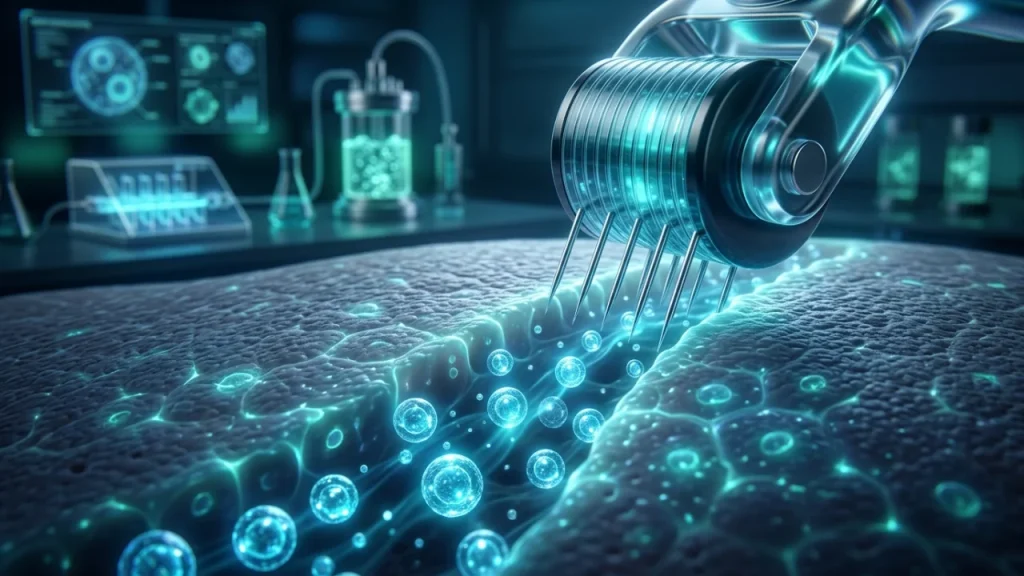
Microneedling uses very fine needles. These needles create microscopic channels in the top layer of skin. This is not like getting a shot. The channels are incredibly small. They do not cause major pain or bleeding. Instead, they trigger your skin’s natural healing process.
Now, combine these two ideas. This is the core of exosomes with microneedling. The microneedling channels act like precise delivery routes. They allow the exosome messengers to reach deeper skin layers. Without these channels, exosomes sit on the surface. Their powerful instructions cannot get through.
The synergy is powerful. Microneedling prepares the skin. It creates a temporary pathway. Then, applied exosomes travel down these micro-channels. They reach living cells that need guidance. The exosomes deliver signals for collagen production and tissue renewal. This dual action amplifies the results.
Why should you care? This approach works with your biology. It uses your body’s own communication system. The goal is smarter rejuvenation. It supports your skin’s innate ability to heal and refresh itself. This method marks a shift from simply wounding the skin to strategically instructing it.
The next step is to see how this process unfolds at the cellular level.
How Exosomes with Microneedling Deliver Better Results
The combination of exosomes with microneedling creates a powerful one-two punch. Each method solves a key problem the other faces alone. Microneedling creates controlled micro-injuries. This effectively tells your skin to start repairing itself. But it relies solely on your body’s current healing signals. These signals can weaken with age or sun damage.
Exosomes provide a direct solution. They carry a concentrated set of youthful instructions. Alone, however, these messengers struggle to penetrate the skin’s tough outer barrier. They need a clear path to reach their target cells. This is where microneedling’s precision becomes critical.
The micro-channels act like express lanes. They bypass the dense surface layer known as the stratum corneum. This allows the exosomes to reach the dermis quickly. The dermis is the living layer where collagen and elastin are made. Direct delivery means less product is wasted on the surface.
Think of it as upgrading a construction site. Microneedling clears the old site and calls in the workers. Applying exosomes then delivers the perfect blueprints and new tools to those workers. The result is a more efficient and higher-quality rebuild.
The benefits of this combined approach are clear: – Deeper Delivery: Exosomes reach cells that matter most for long-term change. – Amplified Signaling: The skin’s repair mode is already active. Exosome messages are heard more clearly. – Targeted Action: Signals go exactly where they are needed for structural repair. – Reduced Waste: More of the applied exosomes enter the skin to work.
This process leads to better results than either method separately. Studies show improved outcomes in skin texture, firmness, and tone. The reason is cellular communication. The skin receives a stronger, more direct command to renew itself.
Ultimately, this synergy offers a smarter strategy. It moves beyond simple physical stimulation. It combines stimulation with precise biological instruction. The next logical question is what this means for your skin’s appearance over time.
The Science Behind Exosomes with Microneedling for Skin Repair
The skin is a dynamic organ that constantly repairs itself. Microneedling creates controlled, minor injuries. This action jump-starts the skin’s natural healing cascade. Cells release growth factors and cytokines. These are chemical signals that call for repair.
Introducing exosomes with microneedling supercharges this process. The exosomes deliver precise instructions directly to the skin’s fibroblast cells. Fibroblasts are the factories that produce collagen and elastin. These proteins give skin its structure and bounce.
Exosomes carry specific types of information. This includes messenger RNA (mRNA) and microRNA. Think of these as coded blueprints. They do not alter your DNA. Instead, they provide temporary instructions. They tell your fibroblast cells to increase production.
The communication leads to several key actions: – Collagen synthesis is significantly upregulated. More new collagen is built. – The quality of the collagen network improves. It becomes more organized. – Cellular turnover increases. Old, damaged cells are replaced more efficiently. – Inflammation from the microneedling is modulated. This supports cleaner healing.
This biological dialogue addresses aging at its source. Aging skin often has sluggish fibroblasts. The cells become less responsive to natural signals. The combined treatment effectively re-educates these cells. It reminds them of their youthful functions.
The result is not just superficial plumping. It is a genuine restoration of the skin’s foundation. The new collagen and elastin integrate into your existing matrix. This leads to progressive improvement over weeks and months. The skin’s architecture becomes stronger and more resilient.
The science shows this synergy is more than additive. It is transformative for cellular function. The next consideration is how these internal changes translate to visible outcomes you can see and feel.
Key Benefits of Using Exosomes with Microneedling
The combination of exosomes with microneedling delivers distinct advantages over microneedling alone. These benefits stem from the enhanced cellular communication you just learned about. The results are both visible and functional.
One major benefit is accelerated healing and reduced downtime. Microneedling creates controlled micro-injuries. This process naturally causes temporary redness and swelling. Exosomes help modulate the skin’s inflammatory response. They signal for a more organized repair process. Your skin calms down faster. You may return to normal activities sooner.
The treatment also significantly improves skin texture and tone. Exosomes promote uniform collagen remodeling. This helps smooth fine lines and wrinkles from within. They can also carry signals that target pigment-producing cells. This action encourages a more even, radiant complexion. Dullness is often replaced with a natural glow.
Another key advantage is enhanced skin strength and elasticity. New, high-quality collagen and elastin integrate into your skin’s foundation. This provides better structural support. Your skin becomes more resilient. It can better resist sagging and environmental stress. The improvement feels like firmer, tighter skin.
The effects also tend to be more profound and longer-lasting. Traditional microneedling relies solely on your body’s natural healing capacity. Adding exosomes gives your cells a powerful blueprint. This guidance leads to a more robust rebuilding phase. The results are not just superficial. They are built on a stronger foundation, which can extend the treatment’s benefits.
Finally, this approach offers a high degree of safety and biocompatibility. Exosomes are naturally occurring signaling vehicles. They are not live cells. This means there is minimal risk of rejection or adverse reaction. The process works with your biology, not against it.
In summary, using exosomes with microneedling transforms a good procedure into a superior one. It optimizes every stage from healing to final outcome. The next logical step is understanding what to expect during a typical treatment session.
How Exosomes Work in Skin Rejuvenation
What Are Exosomes and Where Do They Come From?
Exosomes are tiny messengers produced by your own cells. Think of them as microscopic delivery trucks. They carry important instructions from one cell to another.
Almost every cell in your body can make and release exosomes. This includes skin cells like fibroblasts. These cells create exosomes by forming little bubbles inside themselves. The bubbles move to the cell’s outer wall and are released.
What’s inside these vesicles is key. Exosomes carry a precise cargo. This cargo includes: – Proteins that give cells instructions. – Growth factors that signal for repair. – Genetic material like RNA.
This cargo is not random. It reflects the health and state of the cell that sent it. A healthy, rejuvenating cell sends helpful signals. This natural process is constant in your body.
For skin rejuvenation, we use exosomes derived from specific human cells. These donor cells are grown in controlled laboratory settings. They are nurtured to be in an optimal state. The cells release exosomes into their growth solution.
Scientists then carefully collect and purify these exosomes. The goal is to isolate a concentrated dose of these natural messengers. This preparation contains no live cells. It contains only the signaling vesicles and their powerful cargo.
When applied to skin, these exosomes deliver a clear, constructive message. They tell your skin cells to activate repair pathways. They encourage collagen production and calm inflammation. This is why combining exosomes with microneedling is so effective. The channels created by microneedling allow direct delivery of these instructions to your living skin layers.
In essence, exosomes are a biological communication system. We are simply harnessing and redirecting this innate language of healing. Understanding their origin builds trust in their role as a natural catalyst for skin renewal.
The Role of Exosomes in Cell Communication
Think of your skin as a vast, living city. Its cells are the citizens. They must talk to each other to keep everything working. Exosomes are the city’s courier service. They carry urgent messages from one neighborhood to another.
A skin cell in distress sends out a specific signal. Nearby healthy cells receive this signal. They respond by releasing exosomes loaded with help. These vesicles travel through the fluid between your cells.
The exosome does not just bump into any cell. It delivers its package with purpose. It finds a target cell that needs its specific instructions. The vesicle can fuse with the target cell’s outer membrane. It then empties its cargo directly inside.
This cargo is the message. The proteins and growth factors act like a repair manual. The RNA can provide new blueprints. The receiving cell reads these instructions and gets to work.
The process activates several key actions in skin rejuvenation: – It tells fibroblast cells to produce more collagen and elastin. – It signals for new, healthy blood vessels to form. – It instructs damaged cells to clear out and renew themselves. – It calms overactive immune responses that cause redness.
This is why pairing exosomes with microneedling is so strategic. The micro-channels place these expert couriers deep into the dermis. They arrive right where the repair crews live. This direct delivery bypasses surface barriers.
The communication is rapid and efficient. A single exosome can alter the behavior of its target cell. That cell may then release its own exosomes. This creates a positive chain reaction of healing signals.
The result is not a foreign change. You are amplifying your skin’s own natural language. The messages are biological, not chemical. Your cells understand them perfectly. This cellular dialogue is the core mechanism that turns a treatment into true rejuvenation, setting the stage for visible renewal.
Growth Factors and Proteins in Exosomes
The cargo inside an exosome is a precise toolkit. It contains specific growth factors and proteins. These are the primary instructions for skin repair. Think of growth factors as master switches. They turn on key processes in your skin cells.
One major group is TGF-beta. This factor directly commands fibroblast cells. Fibroblasts are your skin’s collagen factories. TGF-beta tells them to ramp up production. It also helps regulate inflammation. This creates an ideal environment for healing.
Another critical factor is VEGF. This means Vascular Endothelial Growth Factor. Its job is building new blood vessels. This process is called angiogenesis. New capillaries bring more oxygen and nutrients to the area. This fuels the entire rejuvenation process.
Exosomes also carry direct building blocks. They contain structural proteins like fibronectin. This protein acts as a scaffold for new tissue. Cells use this scaffold to migrate and organize themselves. It is essential for forming strong, healthy skin.
The combination of these signals is powerful. It is more effective than a single growth factor alone. Exosomes deliver a coordinated set of instructions. This synergy is key to their impact.
Here is what these substances do during treatment with exosomes with microneedling: – TGF-beta boosts collagen and elastin synthesis. – VEGF builds a new micro-blood supply for lasting results. – Fibronectin provides a matrix for new cells to attach and grow. – Other proteins calm inflammation and protect cells from stress.
This cargo does not work in isolation. Each component supports the others. Better blood flow delivers more nutrients for collagen building. The protein scaffold gives new collagen a place to anchor. The process becomes a self-reinforcing cycle of repair.
The result is fundamental skin improvement. The skin gains strength and elasticity from within. This cellular instruction set is why the effects are often described as natural and rejuvenating. The next step is understanding how the skin uses these tools to create visible change.
How Exosomes Boost Collagen Production
Collagen is the main structural protein in your skin. It provides firmness and support. Think of it as the scaffolding that holds skin up. As we age, collagen breaks down. Production also slows. This leads to wrinkles and sagging.
Exosomes directly address this problem. They carry specific instructions to your skin’s fibroblasts. Fibroblasts are the cells that make collagen. The exosomes tell these cells to become more active. They switch the cells into a productive state.
The process starts when exosomes fuse with a fibroblast. They deliver their cargo inside the cell. Key signals include growth factors like TGF-beta. This molecule binds to receptors on the fibroblast. It is like a key turning a lock.
This binding starts a chain reaction inside the cell. It activates specific pathways. One major pathway is called the SMAD pathway. Think of it as a cellular messaging system. The signal travels to the cell’s nucleus. The nucleus is the command center.
Here, the signal reaches the DNA. It turns on genes responsible for collagen production. The cell reads these genes like a blueprint. Then it begins building new collagen proteins. This is not a minor boost. It is a fundamental reset of the cell’s function.
The treatment with exosomes with microneedling creates ideal conditions for this. The micro-channels guide exosomes to the living dermis. This is where fibroblasts reside. Direct delivery means no signals get lost. Each exosome can reach its target.
The result is a sustained increase in collagen synthesis. The skin does not just get a temporary plump. It rebuilds its own foundation. New collagen fibers are organized and strong. They integrate into the skin’s existing network.
This process takes time. Collagen production peaks in the weeks following treatment. The skin continues remodelling for months. New collagen slowly replaces old and damaged fibers. This leads to gradual but tangible improvements.
- Skin texture becomes smoother.
- Fine lines soften as the underlying support improves.
- Firmness increases from deeper layers outward.
The beauty of this method is its natural logic. Exosomes do not inject foreign material. They use the skin’s own language and machinery. They simply instruct your cells to perform their best work. This cellular directive ensures results that are integrated and lasting. The next logical question is how this internal renewal translates to the surface you see and feel.
The Microneedling Process Explained
What Is Microneedling and How Does It Work?
Microneedling is a controlled skin treatment. It uses very fine, sterile needles. These needles create tiny channels in the skin’s surface. This process is often called collagen induction therapy. The goal is to trigger the skin’s natural healing system.
The device used can be a manual roller or an electric pen. The pen allows for precise control. It adjusts for needle depth and speed. Needle depth is a critical factor. It ranges from superficial to deeper penetration.
Superficial depths target the epidermis. This is the outer skin layer. Deeper settings reach the dermis. The dermis is where collagen and elastin live. The needles do not remove or burn any tissue. They simply create micro-channels.
These micro-injuries are key. The body sees them as a signal to repair. A complex healing cascade begins immediately. Blood flow increases to the area. This delivers oxygen and nutrients.
Special cells called fibroblasts become active. They are the collagen factories of your skin. The micro-injury tells them to start new production. They build fresh collagen and elastin fibers. This is how skin remodels itself from within.
The micro-channels themselves are temporary. They typically close within hours. But the healing signal continues for weeks. The process is gradual. New collagen slowly forms and organizes.
This leads to several visible improvements over time. Skin texture becomes smoother. Fine lines can appear softer. Pore appearance may refine. The skin often looks more radiant.
The procedure has minimal downtime. There might be redness for a day or two. It feels like a mild sunburn. The skin may feel tight or dry as it heals.
Microneedling prepares the skin for enhanced treatments. This is where synergy begins. The micro-channels act as direct pathways. They allow topical agents to bypass the outer barrier. This is the perfect setup for advanced solutions like exosomes with microneedling. The channels guide powerful biological signals straight to where they are needed most.
Creating Micro-Channels for Better Absorption
The skin’s outermost layer, the stratum corneum, is a remarkable barrier. It is designed to keep things out. This includes pollutants, germs, and also many skincare ingredients. Most topical creams and serums cannot penetrate deeply. Their active ingredients sit on the surface or work only in the upper layers.
Microneedling creates a temporary solution to this problem. The fine needles make precise, vertical channels. These are not large wounds. They are microscopic openings. Think of them as tiny, direct tunnels through the barrier.
These micro-channels serve one primary function immediately after creation. They allow substances to bypass the tough outer shield. This process is called transdermal delivery. The channels provide a clear path for active ingredients.
The timing of this is critical. The channels are fully open for a short window. This window typically lasts from a few minutes up to several hours post-treatment. During this time, the skin’s absorption capacity is significantly higher.
This principle is key for advanced treatments like exosomes with microneedling. The biological signals in exosome formulations need to reach living skin cells. Those cells reside in the dermis, below the barrier. The micro-channels act as guided pathways for these signals.
The depth of the channels can be controlled. Practitioners adjust needle length based on the treatment goal. Shallow depths target product delivery to the upper dermis. Deeper settings can target nutrients further down.
This method is far more efficient than surface application alone. Studies show it can increase absorption of certain compounds many times over. The ingredients are not wasted on the surface. They go directly to the area where they can trigger a cellular response.
The process is logical and physical. – First, the device creates clean micro-channels. – Next, a topical serum or solution is applied. – Then, the product flows into these open pathways. – Finally, it reaches deeper tissue layers where cells can use it.
The channels themselves begin to close quickly. The skin starts its natural repair process almost at once. This seals the pathways within a day. But the delivered ingredients are already at work inside. This sets the stage for a powerful, two-part renewal: immediate delivery followed by long-term healing signaling.
The Healing Response Triggered by Microneedling
The microneedling process does more than create channels. It deliberately triggers the skin’s built-in repair system. This is a controlled, minor injury. The body responds immediately to heal it.
This healing response is a complex chain of events. It unfolds in clear phases. First, the body releases growth factors and signaling proteins. These are natural chemicals that tell cells what to do.
They perform several key tasks. – They attract repair cells to the treatment area. – They increase blood flow and nutrient delivery. – They stimulate cells to produce new collagen and elastin.
Collagen is the main structural protein in skin. Elastin gives skin its snap-back ability. The process of making new collagen is called neocollagenesis. This is a primary goal of treatment.
The micro-channels close within about 24 hours. But the healing signaling continues for weeks. Think of microneedling as sending a strong message to your skin. The message says: “Rebuild here. Make fresh, strong support structures.”
This long-term rebuilding phase is crucial. It is where real rejuvenation happens. The skin becomes thicker, firmer, and more resilient over time. Fine lines can soften. Texture often improves.
This natural process sets the perfect stage for combining with exosomes. The skin is already in active repair mode. It is more receptive to additional regenerative signals. This synergy is why exosomes with microneedling is so powerful.
The microneedling primes the skin. It creates a biological environment ready for change. Then, delivered agents can guide that repair in specific, beneficial ways. The initial trigger leads to sustained renewal. This makes the technique a cornerstone of modern, science-led skincare.
Safety and Precision in Modern Microneedling
Modern microneedling devices are engineered for control and safety. They are not simple rollers. A key feature is adjustable needle depth. The practitioner can set the exact penetration. This is measured in fractions of a millimeter. Depth settings typically range from 0.25 mm to 2.5 mm. This precision is vital. It allows treatment to be tailored for different skin concerns and areas.
For example, a very shallow setting might be used for delicate skin around the eyes. A deeper setting could be chosen for thicker skin on the cheeks. This targeting helps achieve specific goals safely. The needles themselves are also designed differently. Many devices use sterile, single-use needle cartridges. These are disposed of after each treatment. This practice eliminates any risk of cross-contamination.
The needle motion is another important factor. Advanced devices use a vertical stamping action. The needles move straight in and out of the skin. Older roller tools drag needles across the surface. The stamping technique creates cleaner micro-channels. It causes less unnecessary trauma to the skin’s surface. This leads to more predictable healing. It also reduces potential for irritation.
Safety protocols extend beyond the device. A proper treatment begins with thoroughly cleansed skin. A topical numbing cream is often applied beforehand. This greatly increases comfort during the procedure. The treatment itself is relatively quick. A full-face session may take only 20 to 30 minutes. Afterward, the skin is typically soothed with calming serums or gels.
These engineered safeguards create a reliable foundation. They ensure the biological process described earlier can begin optimally. The skin receives a precise, controlled stimulus. It is not a random injury. This controlled environment is what makes the combination with advanced agents like exosomes so effective and consistent. The precision of the delivery system matches the precision of the biological signal, which is central to the power of exosomes with microneedling. With safety and control established, the focus can shift fully to the next regenerative component introduced into this primed environment.
Combining Exosomes with Microneedling for Maximum Effect
Why Exosomes with Microneedling Is a Powerful Pair
Microneedling creates a unique opportunity in the skin. It does more than make tiny channels. The process sends a deliberate signal to your skin cells. It tells them that a controlled, minor repair event is needed. This puts local cells into a state of high alert and readiness. They become primed to receive instructions and begin rebuilding.
Exosomes are natural messengers filled with instructions. They carry precise orders for cellular activities. These orders can tell a cell to make more collagen. They can instruct it to calm inflammation or to create new, healthy blood vessels. Alone, topically applied exosomes struggle to penetrate the skin’s strong outer barrier. They cannot deliver their messages effectively.
This is where the combination shows its power. The micro-channels from microneedling act as direct pathways. They bypass the skin’s protective shield. Exosomes applied after the procedure can travel deep into the dermis. They reach the living cells that actually perform repair work. The cells are already listening for signals because of the microneedling. Then, the exosomes arrive with a clear set of blueprints.
Think of it like this. Microneedling opens the mail slot to the skin’s command center. Exosomes are the critical delivery of new plans and tools. The pairing is efficient and targeted. This direct delivery means a much higher percentage of the applied exosomes go to work. They are not wasted on the surface.
The synergy of exosomes with microneedling produces a stronger regenerative response than either could alone. The effect is not just added together. It is multiplied. The procedure enables access. The exosomes provide intelligent direction. This partnership guides healing toward a specific, rejuvenated outcome. It transforms a simple wound response into a sophisticated rebuilding project. The next step is understanding what this guided repair looks like as it unfolds over time.
Enhanced Delivery of Exosomes Through Microneedling
The skin’s outermost layer, the stratum corneum, is a formidable shield. It is made of tightly packed, dead skin cells. This layer excels at keeping things out, including beneficial exosomes. Topical creams mostly sit on this surface. Their active ingredients cannot reach the living cells below.
Microneedling physically changes this situation. It creates temporary micro-channels. These are tiny pathways through that tough outer barrier. The channels reach into the dermis. This is the skin’s living, functional layer.
The process for exosomes with microneedling is direct. Exosomes in a serum or gel are applied immediately after needling. The micro-channels are still open. The exosomes can flow down these pathways. They bypass the main barrier entirely.
Think of it like irrigation channels in a garden. Microneedling cuts the channels. The exosome solution is the water carrying nutrients directly to the roots. Without the channels, the water would simply pool on hard soil and evaporate.
This delivery method offers clear advantages. – It places exosomes precisely where they are needed most. – It prevents waste on the skin’s inactive surface. – It uses a much higher percentage of the applied product.
The depth of delivery matters greatly. Superficial placement has minimal effect. Dermal placement reaches fibroblasts. These are the cells that make collagen and elastin. Delivering exosomes to fibroblasts is the primary goal for rejuvenation.
The micro-channels also create a favorable environment. They trigger a mild, controlled wound-healing signal. Cells in the area become more receptive to instructions. They are actively looking for repair signals. The arriving exosomes provide those precise signals.
This combination ensures a functional transfer. The exosomes are not just physically present in the dermis. They are present in a context where cells are ready to listen and act. This turns a simple delivery step into a powerful cellular conversation. The next logical question is what specific messages these exosomes carry to guide repair.
Synergistic Effects on Skin Regeneration
The combination of exosomes with microneedling does more than just deliver signals. It creates a powerful synergy. This synergy actively speeds up skin healing. It also improves the quality of the renewal.
Think of microneedling as sending out a local alert. It tells skin cells that a minor repair event is happening. Cells like fibroblasts become active. They prepare to rebuild. This is helpful on its own. But adding exosomes at this moment changes everything. It is like giving a construction team a detailed blueprint right as they start work.
The exosomes carry specific instructions. These instructions guide the repair process in several key ways. – They tell fibroblasts to produce more collagen and elastin. This builds strong, springy skin. – They calm excessive inflammation. This helps healing proceed smoothly. – They encourage the formation of new, healthy blood vessels. This improves skin nourishment. – They support the skin’s own stem cells. This aids in generating fresh, new cells.
Alone, microneedling prompts a general repair response. Alone, topical exosomes struggle to reach deep cells. Together, they create a perfect sequence. The channels open the door and alert the cells. The exosomes then walk through that door with a clear plan.
The result is not just faster healing from the microneedling itself. The real result is smarter healing. The skin does not just return to its old state. It rebuilds in a better, more youthful way. The process targets fine lines and texture. It also improves skin tone and resilience.
This synergistic effect makes treatments more efficient. The skin’s response is more predictable and targeted. The goal shifts from simple wound closure to active tissue remodeling. This is the core of true non-surgical rejuvenation. Next, we must consider how to ensure these potent signals are both safe and stable for clinical use.
Clinical Evidence Supporting Exosomes with Microneedling
Research now provides solid proof for combining exosomes with microneedling. Clinical studies show this duo delivers better results than microneedling alone. The evidence focuses on measurable changes in skin structure and appearance.
One key study tracked patients over several months. The group receiving exosomes with microneedling showed greater improvement. Their skin elasticity increased by a significant margin. Collagen density measurements were also higher. This confirms the exosomes’ role in guiding better tissue rebuilding.
Another area of evidence involves skin hydration and barrier function. Microneedling can temporarily disrupt the skin’s protective layer. Research indicates exosomes help restore this barrier faster. Patients report less downtime and dryness. Objective tools measure improved hydration levels in the skin.
Visual improvements are also well-documented. Studies use high-resolution imaging and physician assessments. They note superior reductions in fine lines and wrinkles. Skin texture and roughness show marked improvement. Pigmentation and overall tone become more even and radiant.
The timing of results is another critical finding. The regenerative process appears to be accelerated. Benefits often emerge quicker and continue to develop longer. This suggests exosomes do not just add to the effect. They fundamentally optimize the skin’s entire healing timeline.
Safety data is equally important. Clinical reports note excellent tolerance for this combination. The use of purified exosome signals minimizes risk. Adverse events are rare and typically mild. This profile supports its use for consistent, effective rejuvenation.
In summary, clinical evidence moves the concept from theory to practice. It confirms that exosomes with microneedling create a smarter, more effective treatment pathway. The data validates enhanced collagen production, improved skin quality, and sustained results. This scientific backing is crucial for understanding its growing role in modern skincare. Next, we will explore what a typical treatment session involves from start to finish.
Targeting Specific Skin Concerns with Exosomes and Microneedling
Reducing Fine Lines and Wrinkles
Fine lines and wrinkles form as our skin’s support structure weakens. This structure is mostly collagen and elastin. Think of them as a mattress’s springs and padding. Over time, they break down and are not replaced fast enough. Skin becomes thinner and sags. This creates folds and creases.
The combination of exosomes with microneedling directly addresses this breakdown. Microneedling creates controlled micro-injuries. This triggers the skin’s natural repair mode. But aging skin often sends weak or confused repair signals. Healing is slow and incomplete.
This is where exosomes change the game. They are packed with precise instructions. These instructions are delivered deep into the skin through the microneedling channels. The exosomes tell your skin cells to do three key things: – Boost collagen production significantly. – Improve the quality and organization of new collagen fibers. – Increase elastin synthesis to restore skin snap.
The process is like upgrading a construction crew’s blueprint. Microneedling tells the crew to start building. Exosomes provide the best tools and exact architectural plans. The result is not just more building material. It is better, stronger material laid down in a perfect pattern.
This leads to a visible smoothing effect from within. The skin’s foundation becomes thicker and more robust. It can better support itself. Shallow lines may be erased completely as new collagen fills them in. Deeper wrinkles become softer and less noticeable.
The treatment’s precision is vital. General topical products sit on the surface. They cannot send such detailed repair commands to the deeper layers where wrinkles start. The microneedling channels ensure exosomes reach the exact cells that need the instructions.
Consistent treatments can train your skin over time. Each session reinforces the message to produce strong support fibers. This can lead to lasting improvements in skin firmness and smoothness. The approach tackles wrinkles at their source, offering a restorative solution beyond surface-level plumping. Next, we will examine how this same combination effectively targets uneven skin tone and pigmentation issues.
Improving Acne Scars and Texture
Acne scars are more than surface marks. They represent areas where the skin’s foundational structure was damaged during inflammation. The body’s natural healing process often falls short. It may deposit collagen in a haphazard, weak pattern. This creates textured pits or raised, fibrous bumps.
The combination of exosomes with microneedling directly addresses this flawed repair. Microneedling creates controlled micro-injuries in and around the scar tissue. This action signals the body to initiate a fresh healing cycle. It breaks up some of the old, disorganized collagen fibers.
Exosomes then enter through these precise channels. They deliver specific instructions to the local skin cells, called fibroblasts. The commands guide the healing process toward a more normal, healthy outcome. The goal is to remodel the scar from the inside out.
Key actions promoted by exosomes in scarred tissue include: – Encouraging fibroblasts to produce new, high-quality Type I and Type III collagen. – Directing this new collagen to be laid down in a neat, cross-linked network, similar to undamaged skin. – Regulating the growth of new blood vessels to support healthy tissue regeneration. – Calming ongoing low-level inflammation that can worsen scar appearance.
For pitted or atrophic scars, this means gradually filling in the depression with strong, supportive tissue. For raised or hypertrophic scars, it helps soften and flatten the area by reorganizing the excess collagen. The skin’s surface becomes smoother and more even.
Texture improves because the treatment works at a cellular level. It does not just shave down the top layer. It rebuilds the deeper architecture. Multiple sessions are typically needed for significant change. Each treatment continues the remodeling process, training the skin to heal better.
This approach offers a fundamental correction. It is distinct from methods that merely exfoliate the surface. The synergy of exosomes with microneedling provides both the signal to heal and the intelligent blueprint for optimal repair. Next, we can explore how this powerful combination also influences skin hydration and barrier strength.
Fading Hyperpigmentation and Dark Spots
Hyperpigmentation occurs when skin cells produce too much melanin. Melanin is your skin’s natural pigment. Microneedling creates temporary channels in the skin. These channels allow topical exosome solutions to reach deeper layers. The exosomes deliver precise messages to the cells there.
The key targets are melanocytes. These are the cells that make melanin. Exosomes carry specific instructions to these cells. The goal is to normalize melanin production. This is not a bleaching action. It is a recalibrating signal.
The process involves several coordinated steps: – Exosomes help calm inflammatory signals that often trigger excess pigment. – They promote healthy skin cell turnover. This helps shed existing pigmented cells from the surface. – They support the repair of a healthy skin barrier. A strong barrier protects against UV damage, a major cause of dark spots.
The synergy of exosomes with microneedling is crucial for this effect. Microneedling ensures the signals arrive exactly where they are needed. Without it, most topical agents cannot penetrate deeply enough. The exosomes then work at the source.
Results develop over time. The skin’s color evens out gradually. Multiple sessions are often needed for stubborn discoloration. Each treatment continues the process of cellular retraining. This approach supports the skin’s own ability to achieve a balanced tone. It builds a foundation for lasting clarity, complementing the structural improvements seen in scar remodeling.
Boosting Skin Elasticity and Firmness
Skin loses its bounce as we age. This happens because key support structures break down. Two proteins are most important: collagen and elastin. Think of collagen as the skin’s sturdy scaffolding. Elastin gives skin its snap-back quality. The production of these proteins slows down over time. Existing fibers also get damaged.
This is where the combination of exosomes with microneedling creates a powerful response. Microneedling does more than just create delivery channels. The micro-injuries themselves trigger the skin’s natural repair alarm. This alarm calls fibroblasts to action. Fibroblasts are the skin cells that build collagen and elastin.
Exosomes supercharge this repair process. They deliver precise instructions directly to these fibroblasts. The messages tell the cells to become more active. The goal is to shift cells from a dormant state to a building state.
The exosome signals focus on several key actions: – They upregulate the genes responsible for producing new Type I collagen. This is the most abundant and structural form. – They encourage the synthesis of healthy elastin fibers. This improves skin’s recoil. – They help regulate enzymes that break down old, damaged collagen. This clears the way for new, strong fibers.
The result is a dual approach. Microneedling initiates the repair cycle and ensures deep delivery. Exosomes then guide that cycle toward optimal production of support proteins. The process does not add foreign material. It instructs your own skin to rebuild its foundation.
Improvements in firmness develop gradually. New collagen takes time to form and organize. Patients often report a feeling of tighter, thicker skin within weeks. Visible lifting and improved contour follow. The skin’s texture becomes more supple and resilient.
This method addresses laxity at its source. It is a fundamental restoration of skin architecture. The synergy provides the signal and the pathway for true structural renewal. This sets the stage for addressing fine lines and wrinkles, which are often a direct result of lost elasticity.
What to Expect During and After Treatment
The Step-by-Step Treatment Process
A typical treatment session integrates microneedling with exosomes in a single visit. The entire process usually takes about 60 to 90 minutes. It begins with a consultation and a thorough cleansing of the skin.
Your provider will first apply a topical numbing cream. This cream sits on the skin for 20 to 30 minutes. It ensures you feel only minimal sensation during the procedure. The skin is then cleansed again to remove the cream.
The microneedling device is the next tool. It uses fine, sterile needles to create micro-channels. These channels are incredibly tiny. They are not large holes but precise vertical pathways. Their depth is carefully chosen for your specific skin concerns.
This step is quick. The device passes over the treatment area several times. You may feel a mild vibration or pressure. The micro-channels are invisible to the naked eye. They do not cause significant bleeding.
The immediate creation of these pathways is crucial. It allows for optimal absorption of the exosome solution. The exosomes are then applied directly to the skin. They are gently massaged into the treated areas.
The micro-channels act like direct highways into the dermis. They bypass the tough outer layer of skin. This ensures the exosome signals reach the target fibroblasts efficiently. The combination of exosomes with microneedling maximizes this delivery.
After application, the exosome solution is left to absorb. A soothing serum or mask may be applied to calm the skin. There is no bandaging or wrapping required. You can leave the clinic shortly after.
Your skin will appear pink and feel warm after treatment. This is a normal inflammatory response. It shows the repair process has begun. The redness typically fades within 24 to 48 hours.
You can resume most daily activities immediately. Sun protection becomes non-negotiable. Your skin is in a prime state for healing and renewal. The real work happens beneath the surface in the coming weeks as the cellular instructions take effect. This seamless clinical process sets clear expectations for the recovery journey ahead.
Immediate Aftercare and Recovery Tips
Your skin is now in an active state of repair. Proper care in the first few days is critical. It protects your investment and supports the biological work you have started.
Keep the treated area completely clean for at least six hours. Do not apply any makeup, lotions, or serums that were not approved by your clinician. Your skin’s micro-channels need time to close. Introducing other products can cause irritation or infection.
Gentle cleansing is key after that initial period. Use only a mild, non-exfoliating cleanser with lukewarm water. Pat your skin dry with a clean towel. Do not rub or scrub. Your skin may feel tight or sensitive. This is normal.
Hydration supports the healing process from the inside out. Drink plenty of water in the days following your treatment. This helps your cells function at their best.
Sun exposure is your biggest threat during recovery. New skin is highly vulnerable to UV damage. You must apply a broad-spectrum mineral sunscreen every single day. Reapply it every two hours if you are outdoors. Wear a wide-brimmed hat for added protection. This step is non-negotiable for success.
Avoid certain activities for 48 to 72 hours: – Strenuous exercise and heavy sweating – Swimming in pools or the ocean – Saunas, steam rooms, and very hot showers – Direct heat on the face, like from a hair dryer
These activities can cause inflammation. They can also introduce bacteria to the treated skin.
You may notice tiny dry flakes or mild peeling after a few days. This is part of the skin’s renewal cycle. Do not pick or peel the skin yourself. Let it shed naturally. Continue with gentle moisturizer to ease this phase.
The synergy of exosomes with microneedling continues working beneath the surface. Your aftercare protects this process. Think of it as creating the perfect environment for cellular communication and collagen production to thrive.
Following these tips minimizes side effects. It sets the stage for optimal results in the weeks ahead. Your disciplined care now directly influences your visible outcome later.
Timeline for Seeing Results from Exosomes with Microneedling
Patience is key after your session. The exosomes with microneedling process works in distinct phases beneath your skin. You will not see final results immediately. Your body needs time to respond and rebuild.
The first changes happen within days. Initial redness and swelling fade quickly. You may notice a healthy glow by the end of the first week. This early brightness comes from better hydration and initial cellular signaling. The exosomes are delivering their instructions to your skin cells.
More significant improvements begin in two to four weeks. This is when new collagen production starts. You might see early changes in skin texture. Fine lines can begin to soften. Your skin may feel firmer and smoother to the touch. This phase relies on your cells acting on the messages they received.
The most visible results typically appear after one to three months. Collagen remodeling is fully underway. You can expect clearer improvements in: – Skin elasticity and tightness – The depth of wrinkles and folds – Overall tone and brightness – Pore appearance
Your final results solidify over three to six months. The collagen network continues to mature and strengthen. This long process ensures lasting changes. The treatment’s full effect on skin quality and structure becomes fully evident now.
Several factors influence your personal timeline. Your age, skin condition, and lifestyle all play a role. Consistent sun protection and a healthy routine support faster, better outcomes. Think of the treatment as starting a long race. Your body finishes it at its own best pace.
Understanding this timeline helps you set realistic goals. The synergy of exosomes and microneedling offers progressive, natural-looking renewal. Your visible journey reflects the steady biological repair happening inside your skin.
How Many Sessions Are Needed for Best Results
Most people need a series of treatments for the best outcome. A single session of exosomes with microneedling starts a process. However, skin rejuvenation is a multi-step biological project. Think of it like building strength. You would not expect one gym visit to transform your body. Your skin needs repeated, guided stimulation for full renewal.
A common protocol involves three initial sessions. These are usually spaced four to six weeks apart. This schedule is not random. It aligns with your skin’s natural repair cycles. The first treatment sends strong signals to your cells. The second session reinforces those messages. It builds upon the new collagen that has just started forming. The third treatment further guides and solidifies this rebuilding phase. This series creates a powerful cumulative effect.
Some people may see good improvement after just one or two sessions. This depends on your starting point and goals. Others, aiming for more significant change, might benefit from additional treatments. Your provider will assess your progress. They will tailor a plan just for you.
Why is a series more effective than one treatment? – It provides sustained signaling. Exosomes deliver instructions, but cells need reminders to maintain high activity. – It addresses skin aging in layers. Each session can target different depths and concerns. – It supports long-term collagen remodeling. Consistent stimulation helps build a stronger, denser network.
Maintenance is also a key part of the plan. After your initial series, your results will last. Yet, natural aging continues. A single annual maintenance session can help preserve your new skin quality. This session acts as a booster. It keeps cellular communication active and collagen production steady.
The synergy of exosomes with microneedling works best over multiple appointments. This approach ensures deep, structural change. It transforms your skin from the inside out over time. Your treatment plan is a personalized roadmap to lasting rejuvenation.
Safety, Side Effects, and Who Is a Good Candidate
Common Side Effects and How to Manage Them
Most people experience mild, temporary reactions after a session combining exosomes with microneedling. These effects are signs your skin is responding and starting its repair work. They typically fade within a few days.
The most common reaction is redness. Your skin may look like you have a mild sunburn. This redness comes from increased blood flow to the micro-channels. It is a normal part of the healing process. It usually calms down within 24 to 48 hours. Gentle cooling with a clean cloth can provide comfort.
Some swelling or slight puffiness is also common. This happens as fluids rush to the treatment area. This swelling helps deliver nutrients for repair. It often subsides within one to three days. Sleeping with your head slightly elevated can help reduce morning puffiness.
You might feel minor tenderness or sensitivity. The skin’s surface has been lightly perforated. It may feel tight or rough for a day or two. Use only the gentle cleanser and moisturizer recommended by your provider. Avoid any active skincare products during this initial healing phase.
Dryness and flaking are frequent in the days following treatment. As old skin cells shed, new ones form underneath. This is a positive sign of skin renewal. Keep the area well-moisturized with a simple, fragrance-free product.
A few tiny pinpoint scabs may appear. Do not pick or scratch them. Let them fall off naturally to prevent scarring or infection. Your skin may also feel warm to the touch for a short period.
Serious side effects are rare when performed by a trained professional. Signs of infection are unusual but important to watch for. These include increasing pain, yellow pus, or spreading redness. Contact your provider immediately if you notice these symptoms.
Managing side effects is straightforward. Follow your provider’s aftercare instructions closely. – Use a physical sunscreen daily. Your skin will be more sun-sensitive. – Avoid strenuous exercise and excessive heat for 24-48 hours. – Drink plenty of water to support hydration and healing. – Do not use exfoliants or retinols until your skin is fully healed.
These manageable reactions are a small trade-off for the regenerative benefits. Proper care ensures your skin heals smoothly and sets the stage for optimal results from your treatment series.
Who Should Avoid Exosomes with Microneedling
While exosomes with microneedling is a safe procedure for many, it is not for everyone. Certain health conditions and skin states can increase risks. A qualified provider will review your full medical history before treatment.
Active skin infections are a clear reason to postpone care. This includes bacterial acne flare-ups, cold sores, or fungal issues. The micro-channels could spread the infection. The skin barrier must be healthy before starting.
People with a history of keloid scarring should avoid this treatment. Keloids are raised scars that grow beyond the original wound. Microneedling could trigger this abnormal healing response.
Those with uncontrolled autoimmune diseases may not be ideal candidates. Conditions like lupus or severe psoriasis can affect how skin heals. The body’s immune response might react unpredictably to the treatment.
Anyone with a known allergy to components used in the procedure must avoid it. This includes allergies to topical numbing creams or certain growth factors. Always disclose all allergies to your provider.
Pregnant or breastfeeding individuals should wait. There is not enough safety data on exosome use during these sensitive periods. It is best to err on the side of caution.
Recent use of certain medications is a concern. Blood thinners can increase bruising and bleeding. Oral retinoids like Accutane require a long waiting period as they thin the skin.
- Active skin cancer or a history of radiation therapy in the treatment area.
- Significant eczema or dermatitis in the area to be treated.
- A compromised immune system from illness or medication.
The goal is to achieve benefits without unnecessary harm. An honest consultation protects your health. This careful screening ensures that only suitable candidates proceed safely toward rejuvenation.
Ensuring Safe and Sterile Procedures
A sterile environment is the first non-negotiable rule for safety. The procedure creates microscopic openings in your skin. These channels must not be exposed to germs. A reputable treatment room will resemble a surgical suite. All surfaces and equipment are thoroughly disinfected.
The practitioner should use only single-use, sterile microneedling tips. These tips are sealed in individual packages. They are opened in front of you. The device itself should be a medical-grade, FDA-cleared system. Ask to see the device and the unopened tip packaging.
Proper handling of exosomes is critical. Exosomes are biological agents. They must be kept cold until the moment of use. The vial should be thawed according to strict protocols. Your provider should explain how they ensure product integrity and purity.
A key safety step is effective topical numbing. A strong topical anesthetic cream is applied before the procedure. This minimizes discomfort. It should be left on for at least 30 minutes. The skin is then completely cleansed to remove the cream and any surface bacteria.
The procedure itself follows a precise order. – First, the sterile microneedling device creates the micro-channels. – Next, the exosome solution is immediately applied to the skin. – The solution is gently massaged into the treated area.
This timing is crucial for exosomes with microneedling. The channels are fresh and open. This allows for optimal absorption of the exosomes into the skin’s deeper layers. The synergy depends on this precise sequence.
Aftercare is part of the sterile protocol. Your provider will apply a soothing, sterile serum or mask. They will give you clear instructions for the next few days. You must use only recommended, gentle products. Avoid sun exposure and strenuous exercise for 24 to 48 hours.
Common side effects are mild and temporary. Expect redness similar to a sunburn. Some slight swelling or pinpoint bleeding is normal. These effects typically fade within one to three days. Your skin may feel tight or dry as it heals.
Serious side effects are rare with proper technique. They usually stem from poor sterility or aftercare neglect. Signs of infection include increasing pain, yellow pus, or spreading redness. Allergic reactions to the topical products are also possible. Contact your provider immediately if you see these signs.
Choosing a qualified provider is your best safety measure. Look for a licensed medical professional. They should have specific training in advanced microneedling techniques. Do not hesitate to ask about their safety protocols and experience with exosomes with microneedling. A confident expert will welcome these questions.
This careful approach minimizes risks. It ensures you gain the full regenerative benefits of the treatment. Your skin can then heal effectively and safely toward visible rejuvenation.
Consulting with a Professional Before Treatment
A professional consultation is not just a formality. It is a critical medical assessment. This meeting determines if the procedure is right for you. It also tailors the treatment to your unique skin biology.
Your provider will review your complete medical history. They need to know about any active skin infections. Conditions like cold sores or acne can flare up after microneedling. They will ask about allergies, especially to topical numbing creams. Your current medications and supplements are important too. Blood thinners or certain anti-inflammatory drugs can increase bleeding risk.
A key part is discussing your skin goals and concerns. Are you targeting fine lines, acne scars, or overall texture? Be specific about what you hope to achieve. The provider will then examine your skin closely. They assess its thickness, oiliness, and current level of sun damage. This exam helps predict your healing response.
Not everyone is an ideal candidate for exosomes with microneedling. Good candidates generally have realistic expectations. They are in good general health with no uncontrolled skin diseases. People with very sensitive skin or certain autoimmune conditions may need extra caution. The provider will also check for a history of poor wound healing or keloid scars.
This is your time to ask detailed questions. You should understand the science behind the treatment. Ask how the exosomes are sourced and processed for safety. Inquire about the provider’s own experience and success rates. A trustworthy professional will explain the mechanism clearly. They will describe how microneedling creates pathways and how exosomes then signal for repair.
The consultation establishes a shared plan. It sets the stage for a safe procedure with optimal results. This collaborative step ensures your skin’s journey is guided by expertise from the very start.
Comparing Exosomes with Microneedling to Other Treatments
How It Stacks Up Against Traditional Microneedling
Traditional microneedling works on a simple principle. It creates controlled micro-injuries in the skin. This process triggers the body’s natural wound healing response. Your skin makes new collagen and elastin to repair itself. The results are real but rely entirely on your body’s internal resources and speed.
Adding exosomes with microneedling changes this equation fundamentally. The microneedling channels are no longer just a trigger for injury. They become precise delivery pathways for powerful external signaling. Think of traditional needling as sending a general alarm to your skin cells. The combined approach delivers a detailed instruction manual along with that alarm.
The differences show in several key areas: – Signal Quality: Your body’s natural healing signals are broad. Exosomes deliver targeted, research-backed instructions for repair and regeneration. – Cellular Communication: Alone, microneedling stimulates cells to talk locally. Exosomes amplify this into a coordinated conversation, directing fibroblasts to build collagen more efficiently. – Inflammatory Response: Traditional treatment involves calculated inflammation to start healing. Exosomes can help modulate this response, potentially reducing downtime and directing energy toward rebuilding rather than reacting. – Result Consistency: Outcomes from standard microneedling can vary based on your age, health, and cellular vitality. Exosomes provide a consistent, potent stimulus that can help overcome these individual limitations.
In essence, one method asks your skin to do more work with its existing tools. The other provides advanced tools and blueprints to achieve a better, more predictable result. This is not just an additive effect. It is a synergistic upgrade that redefines the treatment’s potential from the cellular level upward. The next logical consideration is how this advanced approach compares to other popular rejuvenation techniques.
Exosomes with Microneedling vs. Laser Treatments
Laser treatments and exosomes with microneedling work on skin through fundamentally different principles. Lasers use concentrated light energy. This energy is absorbed by specific targets in the skin, like water or pigment. The result is controlled thermal injury. Think of it as using precise heat to remodel or remove tissue. This approach is excellent for addressing specific issues like broken blood vessels, sun spots, or resurfacing damaged outer layers.
In contrast, the exosome and microneedling combination is a biological signaling strategy. The microneedles create temporary channels. These channels allow direct delivery of exosomes into the skin’s deeper layers. There is no heat-based injury. Instead, the process introduces sophisticated cellular instructions to guide the skin’s own repair systems. The goal is not to remove or remodel with heat but to educate and enhance the skin’s innate regenerative capacity.
This core difference leads to practical distinctions in treatment experience and recovery. Laser procedures often require more downtime. Redness, swelling, and peeling are common as the skin heals from the thermal wound. The recovery timeline depends on the laser’s aggressiveness. The exosome-enhanced microneedling approach typically aims for a different path. It seeks to modulate the inflammatory response, not create a significant thermal one. This can mean less visible downtime and a focus on healing that builds new collagen from the start.
The outcomes also tend to have different strengths. Lasers are powerful tools for correcting discrete problems. They can vaporize sunspots or tighten skin through heat-induced collagen contraction. The biological approach of exosome delivery excels at overall quality improvement. It works to improve skin texture, hydration, and thickness by optimizing cellular function across a broader area. It is more about global rejuvenation than targeted destruction.
Consider these key points: – Energy Type: Lasers deliver thermal (heat) energy. Exosome microneedling delivers biochemical signals. – Primary Action: Lasers often work by causing controlled damage to stimulate a healing response. The combined method works by enhancing and guiding the natural healing response without relying on significant new damage. – Target Focus: Lasers can be extremely precise for specific lesions. Exosome therapy aims for a more widespread, cellular-level effect on skin health.
Choosing between them is not always an either-or decision. For some patients, they are complementary. A laser might address specific pigment or vascular issues. A series of exosomes with microneedling sessions could then be used to improve overall skin health and resilience afterward. The best choice depends entirely on your individual skin goals, condition, and tolerance for recovery. Understanding this mechanistic divide is the first step in making an informed decision alongside your provider.
Cost and Value Considerations
The price for a session of exosomes with microneedling is typically higher than for a standard microneedling treatment. This difference is not arbitrary. It reflects the advanced biological material and precise protocol involved. You are paying for both the sophisticated preparation of the exosomes and their targeted delivery.
Several key factors determine the final cost. First is the source and processing of the exosomes themselves. Isolating and purifying these signaling vesicles from cell cultures is a complex, sterile process. This ensures safety and potency. Second is the treatment protocol. The depth of microneedling channels and the amount of exosome solution used are calibrated for optimal results. Third, practitioner expertise adds value. Proper application requires training to maximize the biological synergy of the combination.
When evaluating value, look beyond the price per session. Consider the nature of the results. This approach aims for foundational change in skin health, not just surface-level improvement. The goal is to improve your skin’s own cellular function. This can lead to longer-lasting benefits compared to treatments that only address superficial damage.
Think of it as an investment in your skin’s biological infrastructure, not a cosmetic cover-up. – Other treatments may require more frequent sessions to maintain results. – The rejuvenation from exosome signaling can continue working for months after treatment. – Potential benefits include improved barrier strength, better hydration, and sustained collagen production.
The upfront cost is often balanced by longer intervals between needed touch-ups. For those seeking cumulative improvement in skin quality and resilience, this can offer significant value. The best way to assess this is through a detailed consultation. A qualified provider can help you weigh the investment against your specific skin goals and timeline. This financial perspective completes the practical picture of how this advanced therapy fits into the modern landscape of skin rejuvenation.
Long-Term Benefits and Maintenance
The results from exosomes with microneedling are not a one-time event. They start a process. Your skin cells receive new instructions. These instructions tell them to repair and renew. This cellular activity continues for months after your treatment session.
Think about other common treatments. Many fillers add volume. They give a quick fix. But they do not change your skin’s function. Chemical peels remove old layers. They reveal newer skin underneath. Yet they do not send regenerative signals to your deeper cells. Laser treatments can stimulate collagen. However, their effect often plateaus after healing.
The key difference is signaling. Exosomes deliver messages directly to your skin’s fibroblasts. These are your collagen-making cells. The messages keep working. This leads to progressive improvement. You may see the best results three to six months later. Your skin builds new structure slowly and steadily.
What does maintenance look like? It is not about frequent repeat sessions. The goal is to support the new cellular activity. A typical plan might involve a follow-up treatment in six to twelve months. This reinforces the signaling process. It helps maintain the higher level of function you have achieved.
Your daily skincare is also important. Use products that protect and nourish your new skin. – Always apply a broad-spectrum sunscreen every morning. – Use gentle cleansers that support your skin barrier. – Consider moisturizers with ceramides or peptides.
This approach shifts the paradigm from constant correction to sustained support. The initial series builds a strong foundation. Occasional touch-ups then keep your skin’s regenerative engine running optimally. This long-term timeline offers a different kind of freedom from constant clinic visits, anchoring the value in lasting skin health.
The Future of Exosomes with Microneedling in Skin Care
Emerging Research and New Discoveries
Scientists are now engineering exosomes to carry specific instructions. Think of them as custom messengers. Researchers can load exosomes with extra growth factors or even RNA molecules. These are the blueprints for making proteins. This targeted approach could address very specific skin concerns with greater precision.
The source of exosomes is also a major area of study. Exosomes from different cell types have unique properties. For instance, exosomes from skin fibroblasts may send different signals than those from stem cells. Future treatments might use specialized exosome cocktails. These blends would be designed for individual patient needs.
Delivery methods are advancing alongside the exosomes themselves. Combining exosomes with microneedling is just the start. New devices are being tested. Some create even smaller micro-channels. Others allow for deeper or more controlled delivery. The goal is to maximize how many exosomes reach the living cells that need them.
Research is exploring entirely new applications beyond rejuvenation. Early studies look at exosomes for conditions like: – Alopecia, to potentially reactivate dormant hair follicles. – Scar remodeling, to improve the texture and color of old scars. – Inflammatory conditions, such as eczema or psoriasis, by modulating the immune response.
The timeline for these advances is becoming clearer. Many are in preclinical or early clinical trials. This means rigorous testing is underway to confirm safety and measure true effectiveness. The next five to ten years will likely bring these refined tools into clinical practice.
This ongoing research ensures that the synergy of exosomes with microneedling is not a static technology. It is a platform that will evolve with new scientific discoveries, offering increasingly personalized and effective strategies for skin health.
How Technology Is Improving Treatment Precision
The precision of delivering exosomes with microneedling is reaching new levels. This is due to smarter devices and better formulations. The goal is no longer just to create channels. It is to control exactly what goes into them and how deep.
Modern microneedling pens now offer adjustable needle depths with digital accuracy. A practitioner can set the exact depth for a specific skin concern. For example, fine lines on the cheeks may need a shallower setting. Scar tissue might require a deeper one. This control ensures exosomes are placed in the ideal skin layer for uptake.
New needle designs are also important. Some devices use nano-needles. These are much finer than traditional microneedles. They create narrower channels. This causes less surface skin damage. It also may help keep more exosome solution in the skin instead of on it.
The timing of application is another key area. Early methods applied exosomes after creating the micro-channels. Now, some systems integrate the two steps. They can coat the microneedles with a dried exosome formulation. The exosomes are released directly into the skin as the needles penetrate. This method can reduce waste and improve dose consistency.
Imaging technology is starting to guide treatments. High-resolution ultrasound can map skin layers before a procedure. This shows the exact thickness of the epidermis and dermis. The practitioner can then customize the microneedling depth in real time. Future tools might use optical sensors to confirm exosome delivery during the treatment itself.
These technological leaps make the synergy between exosomes with microneedling more powerful. They move from a general approach to a targeted strategy. Each advancement aims to maximize the biological signal where it is needed most. This sets the stage for the next logical step: tailoring these precise treatments to individual genetic profiles and skin goals.
Personalized Approaches to Skin Rejuvenation
The ultimate goal of any skin treatment is to match the solution to the person’s unique problem. Future applications of exosomes with microneedling will likely use personal data to guide the therapy. This moves beyond a one-formula-fits-all model.
Imagine a pre-treatment skin analysis. This would not just look at surface concerns. It could measure specific biomarkers from a small skin sample or even a blood test. These biomarkers might show your skin’s current state of inflammation, collagen production, or pigment activity. The results would create a biological profile.
A practitioner could then select or even create a targeted exosome formulation. Different exosome profiles exist. Some exosomes may carry signals that strongly calm inflammation. Others might carry building blocks for new collagen. Your personal formula would address your specific imbalances.
The microneedling device itself would be programmed for your skin’s architecture. It would use the depth and pattern settings ideal for your condition. For example, treating widespread sun damage may use a different pattern than treating a concentrated acne scar.
This personalized approach considers several key factors: – Genetic predispositions for collagen breakdown or hyperpigmentation. – Chronological age versus biological age of the skin cells. – The individual’s immune response and healing capacity. – Specific lifestyle factors that have left a molecular signature on the skin.
The combination creates a powerful feedback loop. Precise delivery ensures the personalized formula reaches its target. The tailored formula ensures the delivered signal is the right one for that individual’s biology. This synergy aims to make treatments more effective and potentially longer-lasting.
Personalization turns a general rejuvenation tool into a targeted repair system. It acknowledges that aging and damage manifest differently in every person. The future of exosomes with microneedling lies in this bespoke approach, where science meets individuality for optimal results.
Integrating Exosomes with Microneedling into Routine Care
The ultimate goal of personalized exosomes with microneedling is to move beyond occasional treatments. The aim is to create a sustained, proactive regimen for skin health. Think of it not as a single repair job but as ongoing maintenance for your skin’s cellular machinery.
This integration into routine care would likely follow a phased approach. An initial intensive series would address existing damage. This could involve three to four sessions spaced a month apart. After that, maintenance sessions would be scheduled less frequently. These might occur once or twice a year. This schedule helps counteract new environmental damage and natural aging signals.
The treatment would become a core part of a broader skincare strategy. It would work alongside daily topical products. For instance, the micro-channels created during a session can increase the absorption of your regular serums for a few days. Your at-home products would then support and extend the cellular signals initiated by the exosome treatment.
A practical care calendar might look like this: – Quarterly or biannual professional exosomes with microneedling sessions for deep renewal. – Daily use of supportive topical antioxidants like vitamin C. – Consistent sun protection with high-SPF sunscreen every single day. – Periodic professional skin analysis to adjust the exosome formula as needed.
This model shifts skincare from reactive to predictive. Instead of waiting for wrinkles to deepen, the routine works to prevent their formation at a cellular level. It maintains optimal communication between your skin cells. The focus becomes long-term resilience rather than short-term correction.
Cost and accessibility are important considerations for any routine. As technology advances, these personalized treatments may become more available. The value lies in their targeted efficiency, potentially reducing the need for numerous other procedures.
Integrating this approach makes advanced rejuvenation part of a consistent health practice. It acknowledges that skin is a living organ that benefits from regular, intelligent support. This seamless fusion of in-office science and at-home care represents the next logical step for lasting results.
Making an Informed Decision About Your Skin Health
Key Takeaways on Exosomes with Microneedling
Exosomes are natural messengers. Your own cells make them. They carry instructions and materials to other cells. Microneedling creates temporary pathways into the skin. These pathways are incredibly small. They are often called micro-channels.
The combination of exosomes with microneedling uses these pathways. It delivers the exosome messages directly to living skin layers. This is far more effective than applying them to the surface. Topical creams cannot reach this deep on their own.
Think of it as a targeted delivery system. The microneedling device opens precise entry points. The exosome solution is then applied. It travels through these micro-channels. It reaches the fibroblasts and other key cells.
The process works on a cellular level. It is not just filling wrinkles. It encourages your skin to repair itself. The exosomes signal cells to produce more collagen and elastin. These are the building blocks of firm, youthful skin.
Key takeaways to remember: – The treatment is collaborative. Microneedling enables access. Exosomes provide the instructions. – Results are regenerative. The goal is to improve your skin’s own function, not just mask issues. – The approach is precise. Micro-channels allow for direct, localized delivery where it is needed most. – Effects are cumulative. Multiple sessions are typically advised. They build upon cellular changes over time.
Safety is a primary advantage. Exosomes are not living cells. They cannot replicate or turn into something else. They simply deliver their cargo and are processed by your body. The microneedling used is typically very shallow. It minimizes downtime and risk.
This method addresses aging at its source. Fine lines often start with slowed collagen production. Dullness comes from poor cell turnover and communication. Exosomes with microneedling target these root causes directly.
Understanding this helps set realistic expectations. You are investing in a process, not a one-time fix. Your skin needs time to respond to the new signals. The most significant improvements develop in the weeks following a treatment.
This foundational knowledge empowers you to discuss options with a provider. You can ask informed questions about protocol and expected biological responses. It shifts the conversation from marketing terms to the science of skin health.
The synergy between these two technologies represents a logical step forward in non-surgical care. It combines a proven mechanical technique with advanced biological signaling. This partnership offers a powerful tool for lasting rejuvenation, grounded in cellular science.
Questions to Ask Your Provider
Choosing to proceed with a treatment is a significant decision. Your consultation is the key step. Prepare for it with clear, science-based questions. This ensures the protocol aligns with your skin’s biology and your personal goals.
Start by inquiring about the exosome solution itself. Ask about its source and preparation. You should understand what type of signals it carries. A provider should explain how it is processed for safety and purity. This is fundamental.
Next, discuss the microneedling procedure in detail. Ask about the needle depth used. Depths between 0.2 and 0.5 millimeters are common for this type of delivery. Inquire about the device type. The technique creates the essential channels for exosomes with microneedling to work.
Your treatment plan deserves specific questions. Ask how many sessions are typically advised for your concerns. The interval between sessions is also important. Four to six weeks is a standard cellular turnover cycle. This timing allows your skin to respond fully.
- What is the expected biological response after each session?
- How do you tailor the protocol for different areas, like the face versus neck?
- What specific aftercare supports the exosome activity and healing?
Safety and experience are critical topics. Ask about the clinician’s training with this combined approach. Request to see before-and-after photos from previous patients. Discuss any potential side effects and how they are managed. Realistic expectations are built on transparent information.
Finally, clarify the long-term strategy. Ask how results are maintained over time. Understand if periodic follow-up sessions are suggested. This shows you view skin health as an ongoing process. A thorough consultation builds trust and sets the stage for optimal outcomes, connecting your decision directly to the science of renewal.
Setting Realistic Expectations for Results
Setting realistic expectations starts with understanding your skin’s biology. Skin cells do not change overnight. They need time to respond to new signals. The process of exosomes with microneedling works with your body’s natural rhythms. It is not an instant filler or a toxin that paralyzes muscles. Think of it as cellular communication for repair.
You will likely see changes in phases. The initial response is often improved hydration and a healthy glow. This can happen within days. It comes from increased skin cell activity. Deeper changes take longer. Collagen and elastin production is a slow process. You may start to notice firmer, smoother skin after several weeks.
Most people need a series of sessions for optimal results. A single treatment provides a signal. Multiple sessions reinforce that signal. This builds a cumulative effect. Typical plans involve three to four sessions. They are spaced about a month apart. This timing matches your skin’s renewal cycle.
Results are progressive and natural-looking. Do not expect a dramatic, sudden transformation. Expect gradual improvement in several key areas. – Skin texture often becomes more refined and smooth. – Tone can appear more even and radiant. – Fine lines may soften as skin structure improves. – Hydration and resilience typically increase.
Your individual results depend on several factors. Your age and genetic background play a role. Your skin’s starting condition is important. Your lifestyle habits, like sun protection and diet, are critical. The treatment gives your cells powerful tools. But your body does the actual work.
Long-term maintenance is part of the strategy. Results are not always permanent. Your skin continues to age and face environmental stress. A yearly follow-up session can help maintain benefits. This approach supports ongoing skin health.
The goal is sustainable improvement, not a one-time fix. This method builds your skin from within. Patience leads to lasting rewards. Your informed decision now supports your skin’s future vitality.
Taking the Next Steps Toward Revitalized Skin
You have learned how this process works. Now you may consider if it is right for you. The first step is a professional consultation. This is not a generic skincare appointment. It is a detailed assessment of your skin’s needs.
Schedule a visit with a qualified provider. Look for a licensed medical professional. This could be a dermatologist or a trained aesthetic doctor. They have the knowledge to evaluate your skin properly. They will examine your skin under good light. They will discuss your health history and your specific goals.
Be prepared to ask clear questions during this talk. Your provider should explain the procedure in detail. They should outline realistic outcomes for you personally. Key questions to consider include: – What is your experience with exosomes with microneedling? – What specific type of exosomes do you use in your practice? – What safety and screening protocols do you follow? – What is the total plan and cost for the recommended series? – What are the potential side effects or downtime I should expect?
An honest consultation sets proper expectations. It ensures your skin condition is suitable for this advanced approach. Not every person is an ideal candidate. Your provider might suggest alternative treatments if needed. This decision is a partnership between you and your expert.
After the consultation, take time to review the information. Do not feel pressured to decide immediately. Compare the proposed plan with your budget and schedule. Ensure you understand the commitment required for aftercare. Good skincare relies on consistent daily protection, especially from the sun.
Proceeding with treatment is an active choice for your skin’s health. It invests in your cellular framework. The next phase involves preparing for your first session. Your provider will give you precise instructions to follow beforehand. This careful approach leads to the best possible experience and results. Your journey toward revitalized skin begins with informed, confident steps.