
What Are Exosomes and Why Should You Care?
Understanding Tiny Cellular Messengers
Imagine your body’s cells are like a vast city. They don’t work alone. They must communicate constantly to coordinate everything from healing a cut to fighting a cold. But how do they talk? They send messages. Exosomes are some of the most important messengers.
These are not simple notes. Exosomes are tiny bubbles. They are called extracellular vesicles. Think of them as sophisticated biological packages. Your own cells create and release them naturally. Almost every cell type in your body can do this.
The process is precise. A cell forms a small bubble inside itself. It fills this bubble with a cargo of vital signaling molecules. This cargo is the actual message. It can include: – Proteins that give instructions. – Lipids that help with structure. – Genetic material like RNA, which acts as a blueprint.
The cell then releases this loaded exosome into the space around it. It enters the bodily fluids. From there, it travels. It can journey to a distant cell in need.
The real magic happens upon delivery. The exosome finds a target cell. It docks onto that cell’s surface. It can then transfer its cargo directly inside. It’s like a courier delivering a secure, life-changing package right into the recipient’s hands.
This system is fundamental to health. Your cells use it every day for normal function. It helps control inflammation. It guides tissue repair. It supports your immune system’s responses. This natural messaging network keeps your biological systems in harmony.
Why should you care about these tiny messengers? Because their function is directly linked to vitality and aging. As we get older or face stress, this communication can break down. Cells might send fewer exosomes. The messages they send can become confused or weak.
This breakdown is a root cause of slower healing. It contributes to lingering inflammation. It can lead to weaker skin structure. The city’s communication lines go quiet or send static.
Modern science has learned to harness this system. Researchers can collect these potent messengers from healthy, young donor cells. They can isolate and concentrate them. This creates a powerful therapeutic tool.
This leads us to the concept of an exosomes injection. In therapy, this concentrated preparation is introduced into a specific area. The goal is clear. It aims to restore and supercharge that natural cellular dialogue.
It’s not about adding foreign chemicals. It’s about delivering a high volume of precise biological instructions. These instructions tell your existing cells to act differently. They signal them to rejuvenate, repair, and regenerate more effectively.
Think of it as rebooting a critical network. You are providing the clearest possible signal to your body’s own repair crews. You are telling them exactly where to go and what to do.
Understanding this changes how we view treatment. It moves us from just fixing surface symptoms to influencing the foundational language of cells themselves. This sets the stage for a truly regenerative approach in medicine. The next step is seeing how this conversation translates into visible, tangible results for skin and tissue health.
How Exosomes Differ from Stem Cells
Stem cells and exosomes are often mentioned together. They are closely linked. Yet they are fundamentally different things. Think of a stem cell as a central command center. It is a living, breathing cell. An exosome is a tiny instruction packet this center sends out. The command center stays in place. Its messages travel far to deliver orders.
A stem cell is a master cell. It has the potential to become many other cell types. It can divide and renew itself for long periods. In regenerative medicine, the traditional idea was to transplant these master cells. The goal was for them to integrate into tissue. They would then become new, healthy cells themselves.
Exosomes take a completely different approach. They are not alive. They cannot divide or turn into a skin cell or a muscle cell. Instead, they are sophisticated biological mail. They carry proteins, lipids, and genetic material like RNA. This cargo is the set of instructions.
The critical difference lies in the mechanism of action. Stem cell therapy relies on the donor cell’s direct activity in your body. An exosomes injection bypasses this need. It delivers only the powerful instructions, not the entire cell factory. This is a major shift in strategy.
Why does this distinction matter? It addresses several key limitations of traditional cell-based approaches. First, safety. Living cells can sometimes act in unpredictable ways after transplantation. They might multiply too much or in the wrong way. Exosomes, as non-living particles, do not replicate. They deliver their signal and are naturally cleared by the body.
Second, precision. A transplanted stem cell’s effects can be broad and somewhat unknown. Exosome cargo is more targeted. It contains specific commands for specific problems. For example, exosomes from skin cells may carry instructions mainly for skin repair.
Third, logistics. Living stem cells require strict handling and storage conditions to keep them alive. Exosome preparations are more stable. They are easier to standardize for consistent therapeutic use.
Here is a simple analogy from daily life. Imagine you need to fix a complex piece of machinery. – The stem cell approach is like shipping an entire new factory to the site. You hope it starts producing the right parts. – The exosome approach is like sending a brilliant engineer with a perfect repair manual. The engineer instructs your existing factory crews on exactly what to do.
The exosome strategy works with your body’s own cells. It empowers them. The instructions tell your local cells to reduce inflammation. They signal them to create more collagen and elastin. They encourage new, healthy blood vessels to form. Your cells do the work, guided by these precise messages.
This is why the science is so compelling. We are moving from cell replacement to cell instruction. The focus is on the information, not the container it comes in. This allows for a more controlled and potentially safer form of regenerative therapy.
Understanding this difference clears up confusion. It shows why an exosomes injection represents a next-generation tool. It harnesses the healing power of cellular communication without the complexities of transplanting living cells. The next logical question is how these instructions lead to visible changes in your skin’s structure and youthfulness.
The Role of Exosomes in Your Body
Your body is a vast network of trillions of cells. For you to stay healthy, these cells must work together. They need to coordinate their actions. How do they do this? One crucial way is by sending tiny messages to each other. These messages are called exosomes.
Think of your body as a giant city. Cells are the individual citizens and buildings. Exosomes are like the city’s postal service and courier network. They carry vital instructions and packages from one place to another. Every single cell in your body can send and receive these parcels.
Exosomes are not random bubbles. They are carefully created inside a cell. The cell packs them with specific cargo. This cargo includes proteins, lipids, and genetic instructions like RNA. Then the cell releases the exosome into the space around it. The exosome travels until it finds another cell. It delivers its cargo and changes what that cell does.
This process happens in you every second. It is essential for life. Here are key jobs exosomes perform in your body:
- They regulate your immune system. When you get a cut, immune cells send exosomes. These messages alert other cells to the problem. They help start the healing process and control inflammation.
- They help your nerves talk. Neurons in your brain and spine release exosomes. These vesicles carry signals for brain plasticity. This is how your brain learns and forms memories.
- They remove waste. Cells can use exosomes to get rid of damaged components. This keeps cells clean and functioning well.
- They aid in tissue repair. After an injury, stem cells release exosomes. These exosomes tell local cells to start rebuilding. They signal for new blood vessels and collagen.
Even normal daily maintenance relies on exosomes. Your skin cells constantly communicate to stay healthy. They send signals for repair and renewal. This natural system slows down as we age. Cells send fewer messages. The messages they do send can become less clear.
Sometimes, this system can go wrong. Diseased cells send harmful exosomes. For example, cancer cells use exosomes to spread. They send messages that help tumors grow and hide from your immune system. This shows the power of the system itself. It is a tool for health, but it can be hijacked.
Understanding this changes how you see an exosomes injection. In therapy, we are not introducing a foreign substance. We are supplementing your body’s own natural communication network. We are delivering a high volume of precise, beneficial messages.
These messages come from healthy, young donor cells. The exosomes carry instructions for rejuvenation and repair. When injected, they act like a system-wide software update for your cells. They tell your local cells to behave in a younger, more vital way.
This is why you should care about exosomes. They are not just a cosmetic ingredient or a simple drug. They represent a fundamental language of biology. By learning to use this language, we can support the body’s innate ability to heal and renew itself from within.
The next step is to see how this internal conversation translates to visible results on your skin’s surface and structure.
Why Exosomes Matter for Skin Health
Your skin is a living organ that constantly rebuilds itself. This process depends on clear instructions. Think of a construction site. Workers need precise blueprints and timely updates. Your skin cells work the same way. They need constant communication to coordinate repairs and renewal. Exosomes carry these essential blueprints.
As we age, this communication network becomes less reliable. The volume of messages drops. The clarity of the instructions can fade. This leads to visible changes in your skin’s structure and appearance. The construction site gets slow and disorganized.
An exosomes injection aims to restore this clarity. It delivers a concentrated dose of precise biological instructions. These instructions come from healthy, actively communicating cells. They are not synthetic chemicals. They are natural signaling packages.
These signals trigger several key actions in your skin. First, they directly target fibroblast cells. Fibroblasts are your skin’s collagen factories. Collagen provides firmness and structure. Exosome messages tell fibroblasts to become more active. They instruct these cells to produce new, high-quality collagen and elastin fibers.
Second, exosomes promote angiogenesis. This is the formation of new, tiny blood vessels. Better blood flow is crucial for skin health. It delivers more oxygen and nutrients to your cells. It also helps remove waste products more efficiently. This improved circulation creates a healthier environment for all skin functions.
Third, these biological messengers help modulate inflammation. Acute inflammation is a normal part of healing. Chronic, low-level inflammation is damaging. It breaks down collagen and accelerates aging. Exosomes can send signals that help calm this unnecessary inflammation. They support a balanced immune response in the skin.
The combined effect is a fundamental improvement in your skin’s microenvironment. It is not just about plumping up wrinkles from the outside. It is about fixing the internal system that maintains skin youthfulness.
Consider the process of wound healing. Your body uses exosomes naturally to coordinate this complex task. Cells send signals to stop bleeding, fight infection, and rebuild tissue. Therapeutic exosomes harness this same innate intelligence. They apply it to the daily, minor damage from sun exposure and environmental stress.
This approach differs from traditional treatments. Many procedures work by causing controlled injury. The body then heals this injury, which can stimulate collagen. Exosome therapy skips the injury step. It provides the instructions for rejuvenation directly. This can mean less downtime and a more natural healing trajectory.
The goal is cellular rejuvenation from within. The results manifest on the surface as improved texture, tone, and resilience. Your skin begins to behave like a younger version of itself. It repairs damage more effectively. It maintains its structure better.
The science shows that better cell communication leads directly to better skin function. When fibroblasts get clear signals, they build more support. When blood vessels get the right cues, they improve nutrient delivery. When inflammation is properly managed, the skin can focus on renewal, not defense.
This foundational support is why exosomes matter for long-term skin health. They address the root cause of aging changes, not just the symptoms visible in the mirror. The next logical question is how these biological messages are prepared and delivered safely for clinical use.
How Exosomes Injection Works for Skin Renewal
The Science Behind Exosome Delivery
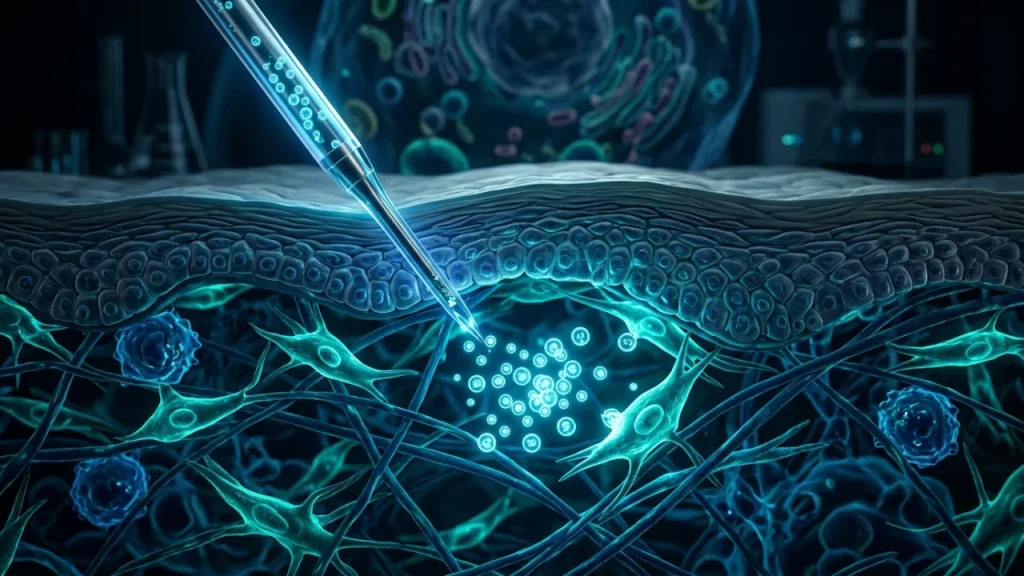
An exosomes injection delivers its payload directly into the dermis, the skin’s foundational layer. This is a critical step. The dermis houses the cells responsible for skin structure and youth. These cells are fibroblasts. Fibroblasts produce collagen, elastin, and hyaluronic acid. They are the architects of firm, smooth, and hydrated skin.
The procedure uses very fine needles or microcannulas. These tools allow for precise placement. The goal is to position the exosomes exactly where living cells can receive their messages. This is not a surface treatment. It is a targeted delivery to the cellular workshop.
Think of it like sending a priority mail package. The envelope is the injection fluid. The important letters inside are the exosomes. The delivery address is the dermal tissue. This direct method ensures the signals are not lost or diluted on the way.
Once delivered, exosomes begin their work immediately. They do not act as a filler or a foreign substance. They function as biological instructors. Their membrane fuses with the membranes of target cells, like a handshake. Or they are absorbed whole by the cell.
Inside, they release their molecular cargo. This cargo includes: – Growth factors that tell fibroblasts to become more active. – MicroRNAs that can switch certain aging-related genes on or off. – Proteins that help organize new collagen fibers.
This process jump-starts cellular communication. It is akin to rebooting a network with a clear, strong signal. Dormant or sluggish fibroblasts get a direct order to resume production. They start synthesizing new structural proteins.
The environment around these cells also changes. Exosomes carry instructions for building better support structures. They encourage the formation of new, tiny blood vessels. This improved vascular network brings more oxygen and nutrients to the area. Waste products are removed more efficiently.
A key effect is the modulation of inflammation. Chronic, low-level inflammation accelerates skin aging. Exosomes can calm this process. They send signals that help restore balance. This allows the skin to shift from a defensive state to a regenerative state.
The entire sequence happens at a microscopic level. You will not see it with the naked eye. The visible results develop over subsequent weeks. This is because building new collagen is a biological project, not an instant plumping effect.
The precision of an exosomes injection offers distinct advantages. Since the messengers go straight to their target, a relatively small quantity can produce a significant effect. The treatment works with your body’s own repair systems. It guides them toward a specific goal: comprehensive skin renewal.
Safety is inherent in this approach for several reasons. Exosomes are not live cells, so they cannot replicate or form tumors. They are naturally occurring particles that degrade after delivering their instructions. The risk of allergic reaction is very low because they carry no foreign genetic material.
The technique requires skill and anatomical knowledge from the practitioner. Correct depth and placement are essential for optimal outcomes. A superficial injection misses the key cellular targets. An injection that is too deep may reduce efficacy for skin goals.
This direct delivery method explains why clinical protocols often involve multiple sessions. Cellular rejuvenation is a process, not a single event. Initial treatments establish a strong signal and reset cellular behavior. Follow-up sessions can reinforce this new, healthier pattern of activity.
The science shows that effective delivery creates a local cascade of renewal signals. This cascade then influences surrounding tissue, promoting wider improvements in texture and resilience. The skin’s own repair mechanisms become more efficient and sustained over time.
Understanding this delivery science clarifies the treatment’s foundational role. It is not a temporary cover-up. It is an investment in the skin’s functional capacity. The next consideration is how these potent messengers are sourced and prepared for clinical use in a safe, standardized way.
What Happens After an Exosomes Injection
The moment after an exosome injection, a precise biological conversation begins. The delivered exosomes start to interact with your skin’s resident cells. They do not force cells to act. Instead, they provide clear instructions and necessary tools.
Think of a tired factory that has forgotten how to make its best product. The exosomes arrive with updated blueprints and fresh parts. They signal the factory to restart its optimal production lines. In your skin, the “factory” cells are fibroblasts, which make collagen and elastin.
The key process is signal activation. Exosomes release growth factors and RNA messages. These molecules bind to receptors on target cells. This binding is like a key fitting into a lock. It unlocks the cell’s internal renewal programs.
Several critical events are triggered in sequence: – First, cells increase their energy production. They become more metabolically active to support repair work. – Next, the genetic machinery for producing structural proteins is switched on. Collagen and elastin synthesis rises significantly. – Cellular cleanup processes also activate. Damaged proteins and debris are removed more efficiently. – Finally, communication with neighboring cells improves. A coordinated healing response spreads.
This activity is not superficial. It occurs in the dermis, the skin’s foundational layer. New collagen fibers begin to form within weeks. These fibers are organized in a strong, supportive network. This network is crucial for firmness and elasticity.
The renewal process follows a natural timeline. Initial signals peak within the first few days post-treatment. Cellular activity then remains elevated for several weeks. Visible changes often start with improved hydration and texture. Deeper structural improvements continue maturing over two to three months.
An exosome injection essentially resets the local cellular environment. It shifts cells from a passive, maintenance state to an active, regenerative state. The effects are cumulative and self-reinforcing. As cells behave more youthfully, they also release beneficial signals of their own.
This creates a positive feedback loop for skin health. Treated tissue helps improve nearby untreated areas through natural signaling. The goal is lasting change, not temporary filling. The skin’s own functional capacity is fundamentally enhanced.
Multiple sessions are beneficial because they sustain this new biological pattern. Each treatment reinforces the regenerative instructions. Cells are encouraged to maintain their renewed activity long-term. This approach leads to progressive and durable improvements.
The result is skin that not only looks better but also functions better. It can respond more effectively to daily environmental stress. Its barrier function and repair mechanisms become more resilient. This foundational rejuvenation is the core promise of the science.
Understanding this cascade clarifies why results develop over time. True cellular change cannot be rushed. The process mirrors how skin naturally heals, but with amplified precision and efficiency. The next logical question explores how these powerful messengers are sourced and quality-controlled for safe clinical use.
Key Components in Exosome Cargo
An exosome injection delivers a sophisticated molecular toolkit directly to your skin cells. This toolkit is the cargo packed inside each tiny vesicle. The cargo contains precise instructions for cellular renewal.
Think of an exosome as a secure delivery truck. The truck itself is the protective lipid bubble. The precious cargo inside is what changes cell behavior. This cargo is not random. It is carefully selected and loaded by the parent cell.
The key components can be grouped into two main types. These are proteins and genetic material. Each type has a distinct and vital role.
Proteins act as direct commands and building blocks. They include growth factors and signaling molecules. Growth factors are like urgent messages telling a cell to wake up and divide. They promote collagen and elastin production. Signaling molecules can reduce inflammation. They help calm irritated or stressed skin cells.
Other proteins are enzymes. Enzymes speed up essential chemical reactions inside the cell. These reactions are needed for energy, repair, and detoxification. Some proteins form structural elements. They provide a scaffold that supports new tissue growth.
The second major component is genetic material. This is mainly microRNA. MicroRNA are not blueprints for building proteins. Instead, they are master regulators of gene activity.
Imagine your cell’s DNA is a vast library of instruction manuals. MicroRNA acts as a librarian. It decides which manuals are pulled off the shelf and used. It can silence genes that cause aging or inflammation. It can activate genes that support youth and repair.
This regulatory power is profound. It allows exosomes to reprogram a cell’s core functions without ever touching its DNA. The cell’s own machinery is guided to a healthier state.
The cargo also includes lipids and metabolites. These molecules provide fuel and raw materials. They help maintain the cell’s membrane health. A healthy membrane is crucial for communication and nutrient absorption.
The combination of these elements creates a powerful symphony. Proteins deliver immediate, actionable commands. Genetic material orchestrates long-term changes in cell identity. Together, they shift the cell from survival mode to revival mode.
For example, a fibroblast cell in aged skin may be sluggish. It produces low amounts of collagen. An exosome arrives at its surface. The exosome releases its cargo of growth factors and specific microRNAs.
The growth factors bind to receptors on the fibroblast. This sends a direct signal: “Start synthesizing collagen now.” The microRNAs enter the cell’s cytoplasm. They seek out and block the messages for cellular senescence, or aging dormancy.
The fibroblast gets a dual signal. It is pushed to act and simultaneously freed from inhibitory signals. The result is a reactivated, productive cell.
The beauty of this system lies in its natural precision. The body already uses exosomes for cellular talk. An exosome injection amplifies this innate language. It provides a concentrated dose of the right messages at the right time.
Quality and source matter immensely here. The therapeutic power depends entirely on the cargo’s composition. Cargo from young, healthy progenitor cells carries different instructions than cargo from aged cells.
The specific mix determines the clinical outcome. A rich blend of certain growth factors and microRNAs will strongly promote tissue regeneration. A different profile might focus more on immune modulation or reducing scar tissue.
This explains why the sourcing process is critical. The goal is to harvest exosomes with an optimal, youth-promoting cargo profile. This ensures the instructions given to your skin are clear, beneficial, and effective.
Understanding this cargo transforms how we view the treatment. We see it is not just a substance added to skin. It is a transfer of biological intelligence. The next step examines how this intelligent cargo is carefully prepared and standardized for safe, consistent use in clinical practice.
Targeting Specific Skin Concerns with Precision
An exosomes injection does not work as a one-size-fits-all solution. Its power comes from targeted action. Different skin issues have different biological causes. Exosomes address these root causes with precision.
Think of common wrinkles and fine lines. They often result from sun damage and a natural slowdown in collagen production. Fibroblast cells become less active. They produce less of the structural proteins that keep skin firm.
An exosome treatment delivers specific instructions to these dormant cells. The cargo tells fibroblasts to restart their collagen and elastin factories. This is not just surface plumping. It is a foundational rebuilding of the skin’s support matrix.
The process improves skin texture and elasticity from within. Results appear gradually as new proteins form. This leads to a natural-looking reduction in wrinkle depth.
Acne scars present a different challenge. They involve flawed healing and irregular collagen deposition. There are two main types: atrophic (indented) and hypertrophic (raised).
For indented scars, the goal is to stimulate organized tissue regeneration. Exosomes can guide this process. They promote the growth of healthy new skin cells and blood vessels. They also help remodel the disorganized collagen in the scar base.
This can soften sharp scar edges and improve the skin’s surface contour. The aim is to make scars less visible, blending them with surrounding skin.
Hyperpigmentation, like dark spots, involves overactive melanin production. Melanin is the pigment that gives skin its color. Sun exposure or inflammation can trigger melanocytes to produce too much.
Exosomes carry regulatory messages for these pigment cells. They can help normalize melanin production. The cargo signals for a more balanced, even distribution of pigment.
This approach targets the spot’s origin. It supports a more uniform skin tone over time.
The treatment’s precision extends to overall skin quality. Many patients seek a refreshed, radiant complexion. Dull skin can stem from poor cell turnover and environmental stress.
Exosomes enhance cellular communication for renewal. They encourage the natural shedding of old surface cells. They also support the health of new cells coming up from deeper layers.
This revitalizes the skin’s natural glow. It improves hydration and luminosity from a cellular level.
Here is how an exosomes injection can be directed:
- For wrinkles and laxity: The cargo focuses on fibroblast reactivation and new collagen synthesis.
- For textured or indented scars: Messages prioritize structured tissue remodeling and angiogenesis.
- For uneven tone: Signals aim to modulate melanocyte activity and reduce excessive pigment.
- For general rejuvenation: Cargo supports overall cell vitality, turnover, and barrier function.
The same injection works on multiple fronts because skin aging is multifaceted. However, the biological instructions are not random. They are a coordinated set of commands from healthy progenitor cells.
This explains why outcomes are holistic yet precise. The therapy does not just fill a line or bleach a spot. It tells your skin’s cells how to repair the specific issues present.
The body uses this information to guide its own healing processes. This leads to results that look natural because they are generated by your own biology.
The next consideration is how this targeted approach integrates into a complete treatment plan for lasting benefits.
Benefits of Choosing Exosomes Injection
Natural Collagen Boost Without Surgery
Collagen is your skin’s support framework. It is a strong, fibrous protein. Our bodies make less of it as we age. Existing collagen also becomes damaged. This leads to thin skin and wrinkles. Traditional fillers simply push skin outward. They do not create new collagen. An exosomes injection takes a different path. It addresses the root cause.
The process starts with a key cell type called a fibroblast. Fibroblasts live in your skin’s deeper layer. They are your body’s collagen factories. As we age, these factories slow down. They also produce poorer quality material. Exosomes carry direct orders to these cells. The orders come from young, active progenitor cells.
Think of an exosome as a delivery truck. Its cargo includes blueprints and tools. The blueprints are genetic instructions for making collagen. The tools are the proteins needed to start the process. This cargo is delivered right to the fibroblast. The cell then reads the instructions.
The result is not just more collagen. It is better, more organized collagen. This is called neocollagenesis. The new fibers integrate with your existing skin structure. They form a dense, supportive network. This network provides true lift and firmness.
The effect is gradual and biological. You are not adding a foreign substance. You are restarting your own natural production line. This leads to several distinct advantages over surgical or filler-based approaches.
First, there is no risk of implant rejection or migration. Your body makes the material itself. It recognizes the new collagen as its own. Second, the results develop naturally over weeks. This avoids an abrupt, “done” look. The skin improves in texture and tightness together.
Third, the stimulation is long-lasting. Fibroblasts that receive these signals can stay active for months. They continue their renewed work cycle. This differs from fillers that the body eventually breaks down.
Consider the types of collagen involved. Type I collagen is the most abundant in skin. It gives strength. Type III collagen supports elasticity and early healing. A balanced exosomes injection promotes both types. This creates a resilient and youthful matrix.
The process also involves cross-linking. Healthy collagen fibers link together. This forms a stable mesh. Exosome signals can improve this cross-linking pattern. It leads to a more durable support system.
What does this mean for your appearance? Fine lines soften because the skin beneath them thickens. Deeper folds improve as underlying structure rebuilds. Skin laxity reduces as the network tightens. The contour of your face can become more defined.
This is a foundational change. It works from the inside out. The goal is not to mask sagging skin but to make it firmer. The therapy supports your natural anatomy.
The benefits extend beyond just collagen. The same signaling rejuvenates the elastin network. Elastin allows skin to snap back after stretching. Hydration often improves too. A stronger dermis holds moisture better.
This holistic effect is key. You achieve a natural collagen boost without surgery or downtime. Your skin’s biology does the restorative work. The outcome is inherently integrated and authentic.
The next logical step is understanding how to maintain and protect this newly stimulated cellular activity for enduring results
Reducing Inflammation and Redness
Inflammation is your skin’s alarm system. It often shows as redness or irritation. Chronic, low-level inflammation silently damages skin over time. It can break down collagen and elastin. An exosomes injection directly addresses this root cause.
Exosomes carry precise instructions to immune cells. They tell these cells to calm down. This reduces the production of inflammatory signals. Think of it as turning down the volume on your skin’s overactive alarms.
The process involves key proteins and RNA. Exosomes deliver molecules like interleukin-10. This is a powerful anti-inflammatory signal. They also carry microRNAs that switch off genes for inflammation. This dual action quiets the cellular environment.
What does this mean for common concerns? – Rosacea flare-ups may become less frequent and severe. – Post-procedure redness from lasers or microneedling can fade faster. – General skin sensitivity often improves. – The persistent redness from chronic irritation may diminish.
This calming effect is not superficial. It happens at a foundational level. Skin cells reset their communication. They stop sending constant distress signals. The tissue shifts from a state of reaction to a state of repair.
Consider sun damage as an example. UV exposure triggers inflammatory pathways. This leads to redness and long-term weakness. Exosome signals can help reset these pathways after the damage occurs. They promote healing instead of ongoing stress.
The benefits are both immediate and long-term. Short-term, visible redness can decrease. Long-term, stopping inflammatory damage protects your new collagen. It preserves the rejuvenated matrix you are building.
Hydration links closely with calm skin. Inflammation can compromise the skin’s barrier. A weak barrier loses moisture. By reducing inflammation, exosomes help the barrier repair itself. Better barrier function means better hydration and less reactivity.
This creates a positive cycle. Calmer skin strengthens its barrier. A stronger barrier keeps out irritants. Fewer irritants lead to less inflammation. The skin finds a healthier, more balanced state.
The approach is fundamentally different from masking redness. Cosmetics or topical steroids might cover or suppress symptoms. Exosome therapy aims to correct the cellular miscommunication causing those symptoms.
Safety is inherent in this process. You are using the body’s own signaling system. The instructions are natural and precise. The goal is restoration of normal function, not an artificial override.
Patients often notice a more even skin tone. Redness and ruddiness fade. The complexion appears clearer and more translucent. This results from settled inflammation and improved microcirculation.
The science supports this effect. Studies show exosomes can modulate immune responses in skin cells. They help restore balance without suppressing the immune system entirely. The skin’s protective abilities remain intact.
Combining this with structural rejuvenation is powerful. You rebuild the skin’s foundation while calming its reactivity. This addresses both the framework and the environment of your skin.
For lasting aesthetic results, managing inflammation is crucial. It protects your investment in collagen stimulation. Calm skin ages more slowly and responds better to treatments.
Your skin’s health depends on this balance. The next step is ensuring these rejuvenated, calm cells function at their peak for as long as possible.
Accelerating Healing and Tissue Repair
Your skin is constantly repairing itself. Sunlight, pollution, and daily life cause small injuries. Normally, healing is a slow, multi-step process. An exosomes injection provides a clear set of instructions to speed this up.
Think of a minor sunburn. Your skin cells are damaged. They send out distress signals. Neighboring healthy cells must receive these signals. Then they must start the repair work. This communication can be slow or inefficient.
Exosomes change this dynamic. They are pre-packed with the exact signals needed for repair. An exosomes injection delivers these signals directly to the site. It bypasses the slow call for help. The healing process begins immediately.
The science is precise. Exosomes carry specific molecules like growth factors and microRNAs. These molecules tell your skin cells to do several things quickly.
- Increase cell proliferation. This means creating new, healthy cells to replace damaged ones.
- Form new blood vessels. This brings more oxygen and nutrients to the injured area.
- Produce collagen and elastin. These are the structural proteins that rebuild skin’s strength.
This is not just superficial healing. It is foundational tissue repair. The goal is to restore the skin to how it was before the damage occurred.
Consider sun damage over years. It breaks down collagen and weakens skin structure. Traditional treatments might address one symptom, like a dark spot. Exosome therapy aims to fix the underlying damage that caused the spot.
The acceleration is measurable. Studies on wound healing models show clear results. Cells treated with exosomes move into the wounded area faster. They lay down new matrix more efficiently. The entire timeline of recovery is compressed.
For aesthetic procedures, this benefit is powerful. Many treatments, like laser therapy, work by creating controlled damage. The body then heals this damage, improving skin. The recovery period can involve redness and downtime.
An exosomes injection used alongside such treatments can change this. It gives the body a superior toolkit for repair. Healing happens faster and more completely. Potential side effects like prolonged redness may lessen.
The quality of repair also matters. Rapid healing is good. Perfect healing is better. Exosomes promote organized collagen deposition. This means the new collagen forms in a strong, woven pattern. It does not form in a haphazard scar-like pattern.
This leads to better aesthetic outcomes. Skin recovers with improved texture and resilience. The result after any procedure can be more refined.
The mechanism is natural amplification. You are not introducing a foreign chemical. You are providing more of your body’s own repair instructions. The cells know exactly what to do with this information.
This approach treats the cause of slow recovery. Aging or damaged skin has fewer signaling exosomes. Cell communication falters. An exosomes injection replenishes this depleted messaging system.
The benefit extends beyond a single event. It enhances the skin’s inherent ability to handle future stress. A skin that heals well is more robust. It maintains its appearance better over time.
Accelerated healing protects your investment in your skin’s health. It allows you to return to normal life quicker after treatment. More importantly, it ensures the treatment results are optimal and lasting.
Your skin’s repair system just received an upgrade. The next logical step is ensuring these renewed cells have the energy and vitality to sustain their function long-term.
Improving Skin Texture and Radiance
Healthy skin cells are constantly talking. They send tiny signals to each other. These signals tell cells how to behave. One key signal is about renewal. Old or damaged skin cells should be replaced. Fresh, new cells should come to the surface. This process creates smooth and radiant skin.
Aging disrupts this vital conversation. Cells produce fewer communication signals. Messages get lost or ignored. The renewal process slows down. Old cells linger on the skin’s surface longer. New cells are produced less often. This leads to a dull and rough texture.
An exosomes injection changes this dynamic. It delivers a high concentration of these natural signals. Think of it as turning up the volume on a clear instruction. The instruction tells skin cells to revitalize their core functions. This is not a surface-level polish. It is a foundational reboot of cellular activity.
The effects build from within over weeks. Improved cell function leads to several visible changes.
- First, cellular turnover increases. This is the rate at which new skin cells are generated. Faster turnover means fresher cells reach the surface more quickly.
- Second, collagen and elastin production is supported. These are the skin’s support fibers. More organized fibers create a firmer, smoother base layer.
- Third, antioxidant defenses are enhanced. Cells are better protected from daily environmental stress.
The combined result is a transformation in texture and light reflection. Skin texture becomes more even. Fine lines often appear softened because the skin is plumper. The surface reflects light more uniformly. This creates a natural glow that comes from health, not just moisture.
This radiance is fundamentally different from a temporary shine. A cream might add surface moisture for a few hours. The glow from improved cell function lasts much longer. It comes from your own living cells performing better. Your skin is not just coated. It is truly revitalized.
The process relies on your body’s own intelligence. The exosomes carry precise blueprints. These blueprints guide cells to optimize their own behavior. A skin cell becomes more efficient at its job. A fibroblast produces better quality collagen. The outcome is cumulative and sustained.
Consider the difference between painting a wall and repairing its foundation. Painting covers flaws temporarily. Fixing the foundation makes the whole structure sound and lasting. Exosome therapy aims for the second approach. Better texture and radiance are signs of a structurally healthier skin environment.
This improvement in quality often extends beyond the face. The same principles apply to skin on the neck, chest, and hands. Areas exposed to sun and aging can show renewed vitality.
The journey does not end with achieving a glow. The next step is ensuring this renewed skin maintains its strength and defense against future challenges.
What to Expect from an Exosomes Injection Treatment
The Typical Procedure Step by Step
An exosomes injection is a precise clinical procedure. It focuses on delivering key signals directly to your skin’s foundation. The goal is not simply to add volume. The goal is to instruct your native cells.
The process begins with a detailed consultation. A qualified provider reviews your skin health and goals. They examine your skin under good light. They discuss your medical history. This step ensures the treatment is right for you. It also sets clear expectations for the outcome.
Next, the treatment area is prepared. Your skin is thoroughly cleansed. A topical numbing cream is often applied. This cream sits on the skin for about 20 to 30 minutes. It makes the treatment more comfortable. You will feel minimal discomfort during the injections.
While the numbing cream works, the provider prepares the exosomes solution. The exosomes are derived from human stem cells grown in a lab. They are supplied in a small vial as a clear liquid. The provider may mix this solution with a sterile saline. This creates the precise formula for your injection.
The actual injection technique is critical. Providers use very fine micro-needles. Two main methods are commonly used:
- Micro-droplet injections. Tiny amounts of the solution are placed at specific depths in the skin. This creates a grid-like pattern across the treatment area.
- Nano-injections. These are even more superficial. They target the upper layers of the dermis with ultra-fine precision.
The provider chooses the technique based on your skin’s needs. They might combine methods. The injections feel like quick, light pinpricks. Most patients find it very tolerable.
The entire injection process usually takes 15 to 30 minutes for a full face. Smaller areas like the neck or hands take less time. The provider works methodically. They ensure even coverage across the targeted zones.
After the injections, you may see small raised bumps or mild redness. This is normal. It happens because the liquid is temporarily sitting under the skin. These bumps typically settle within a few hours. Sometimes they fade by the next morning.
Immediate aftercare is simple but important. You should avoid touching or rubbing the treated area for several hours. Do not apply makeup until the next day. Stay out of direct sun and heat for 48 hours. This means no strenuous exercise, saunas, or hot showers immediately after. Gentle cleansing and moisturizing are encouraged.
You can resume most normal activities right away. There is no real downtime. Some people experience minor swelling or bruising. This is less common with these fine needles than with traditional fillers. Any bruising usually resolves within a week.
The biological work begins immediately after the exosomes injection. The exosomes start communicating with your skin cells. You will not see instant visual changes from the exosomes themselves. The initial plumpness is from the fluid carrier. The true cellular activity happens unseen over the following weeks.
A single session is often sufficient for noticeable improvement. However, some providers suggest a series of treatments for optimal results. These might be spaced four to six weeks apart. This series helps build a stronger cellular response. It reinforces the regenerative signals.
The effects develop gradually over two to three months. Collagen and elastin production increases steadily. Skin texture improves day by day. This slow reveal is a sign of foundational change. It contrasts with fillers that show results immediately.
This careful procedure ensures the exosomes are delivered where they are needed most. It sets the stage for the cellular renewal described earlier. Understanding this process demystifies the treatment and highlights its scientific precision.
The logical next question concerns how to protect this new cellular activity and make its results last as long as possible
Safety and Side Effects of Exosomes Injection
The primary safety advantage of an exosomes injection lies in its biological nature. Your body already produces and uses these vesicles. They are not a foreign synthetic chemical. This high biocompatibility means severe adverse reactions are extremely rare. The most common experiences are related to the injection process itself, not the exosomes.
You might see minor swelling at the injection sites. Some temporary redness is also common. These effects are similar to a mild skin treatment reaction. They typically fade within a few hours. A small bruise can sometimes appear if a tiny surface capillary is nicked. This bruising is usually minimal. It resolves fully within three to seven days.
These local reactions are generally mild. They are often less pronounced than with traditional dermal fillers. The fine needles used for superficial delivery cause minimal trauma. Any discomfort is usually brief. It is comparable to a light pinching sensation. The skin calms down quickly after the procedure.
The carrier solution is another factor. Exosomes are suspended in a sterile, balanced fluid. This fluid is often a form of saline or a simple electrolyte mix. It is designed to be gentle on tissues. Your body easily absorbs this fluid over the first day. This contributes to the initial plumping effect mentioned earlier.
True allergic reactions to the exosomes themselves are not expected. An allergy typically requires a foreign protein to trigger it. Since exosomes are derived from human cells, the risk is exceptionally low. However, individuals with specific autoimmune conditions should discuss this with their doctor beforehand. A thorough medical history review is essential.
The most significant safety factor is not the substance but its source and handling. Exosomes used in treatments must be processed under strict laboratory conditions. These conditions are called Good Manufacturing Practices or GMP. This ensures purity, sterility, and consistency. Reputable clinics will use exosomes from certified labs that follow these protocols.
You should always ask your provider about the origin of the exosomes. They should come from a regulated laboratory source. The provider should be able to explain their quality controls. This due diligence is your primary tool for risk management. It ensures you receive a viable and pure product.
The skill of your injector is equally crucial. A trained professional understands facial anatomy in detail. They know how to place the exosomes precisely in the targeted skin layers. Proper technique minimizes tissue trauma. It also ensures the exosomes are deposited where they can be most effective. An experienced hand leads to better results and fewer side effects.
Aftercare plays a direct role in minimizing side effects and supporting the process. Simple steps can make a big difference. Avoid touching or rubbing the treated areas for several hours. Skip strenuous exercise for about twenty-four hours. This prevents increased blood flow from worsening swelling.
Keep your skin clean but avoid harsh cleansers for a day. Do not apply active skincare ingredients like retinoids or strong acids immediately after. Protect your skin from the sun diligently. Use a broad-spectrum sunscreen every day. Sun exposure can cause inflammation that may interfere with the regenerative signals.
- Do not use saunas or steam rooms for 48 hours.
- Avoid swimming in chlorinated pools for two days.
- Stay well-hydrated by drinking plenty of water.
- Maintain a gentle skincare routine initially.
Long-term safety data for aesthetic exosome use is still being collected. Current evidence from clinical use and related medical fields is very encouraging. No major systemic safety issues have been linked to properly administered treatments. The localized action of exosomes further supports their safety profile. They work where they are placed and do not circulate widely.
It is important to have realistic expectations about results and safety. An exosomes injection is a sophisticated biological treatment. It is not a magic potion. Outstanding outcomes depend on high-quality materials, expert application, and your body’s own response. The goal is to support your skin’s natural functions safely.
If you experience anything beyond mild and expected reactions, contact your provider promptly. Significant pain, spreading redness, warmth, or signs of infection are not normal. These require immediate professional evaluation. A responsible clinic will provide clear post-treatment instructions and contact information.
Choosing a qualified provider in a reputable clinical setting is your strongest safeguard. This careful approach ensures you can confidently pursue treatment. You can focus on the potential benefits while knowing the risks are well-managed. This foundation of safety allows the cellular rejuvenation process to proceed optimally, leading to healthier and more resilient skin over time.
Recovery Time and Aftercare Tips
Recovery from an exosomes injection is typically straightforward. Most people resume normal activities immediately. The process is known for minimal downtime. This is a key advantage over more invasive procedures. Your skin may show mild reactions. These are normal signs of the biological activity starting.
You might notice slight redness at the injection sites. Some temporary swelling or tiny bumps can occur. These effects usually fade within a few hours. Sometimes they last up to forty-eight hours. A sensation of warmth or tightness is also common. These are not causes for alarm. They indicate the exosomes are engaging with your skin cells.
Proper aftercare maximizes your treatment benefits. It supports the cellular communication process. Follow these simple guidelines for the first few days.
- Cleanse your face gently. Use a mild, non-exfoliating cleanser. Pat your skin dry with a soft towel. Do not rub or scrub the treated area.
- Apply a simple moisturizer. Look for products with soothing ingredients. Avoid active ingredients like retinols or strong acids for one week. Let the exosomes work without interference.
- Sun protection is non-negotiable. Use a broad-spectrum sunscreen every single day. Reapply it every two hours if you are outside. Sun exposure can inflame healing skin and hinder results.
- Avoid intense heat for about seventy-two hours. Skip hot showers, saunas, and strenuous exercise. Heat can increase swelling temporarily.
- Do not pick or massage the treated areas. Let the exosomes settle and act on their own.
Your skin’s internal renewal works on a schedule. The initial cellular signals happen fast. Visible improvements follow more slowly. You may not see dramatic changes in the first week. This is perfectly normal. The exosomes injection instructs your cells to perform better.
Think of it as upgrading your skin’s software. The update installs quickly, but the new programs need time to run. Collagen and elastin production takes weeks to increase. Hydration and texture often improve first. You might notice a better glow within two to four weeks.
Fuller results develop over two to three months. This timeline matches your skin’s natural regeneration cycle. Be patient with your biology. The goal is gradual, authentic rejuvenation.
Schedule any follow-up sessions as your provider advises. Some protocols involve multiple treatments for cumulative effects. Your provider can assess your progress at these visits. They can tailor future care based on your unique response.
Listen to your skin during recovery. It will tell you what it needs. Extra hydration is often beneficial. Drinking water supports overall cellular function. A healthy diet rich in antioxidants also helps your skin from within.
The simplicity of this aftercare reflects the elegance of the treatment itself. You are not managing a complex wound. You are nurturing a precise biological process. Your actions create the ideal environment for cellular success.
This careful approach protects your investment and optimizes outcomes. It allows the foundational rejuvenation to proceed without interruption. Your consistent aftercare partners with the science of exosomes for lasting skin health
How Long Results Last After Treatment
The longevity of your results begins with the cellular instructions delivered by the treatment. An exosomes injection does not simply add volume or filler to your skin. It sends a powerful signal to your own cells. This signal tells your cells to function more youthfully. The effects are not temporary by design.
Think of it like teaching your skin a new skill. Once learned, the skill remains. Your cells use the guidance to boost collagen production. They improve their own repair processes. They enhance local communication. These changes create a new baseline for your skin’s health. This is foundational rejuvenation.
Results typically unfold in distinct phases. The initial glow and improved hydration appear within weeks. The more structural changes follow over two to three months. This is when new collagen matures and strengthens your skin’s framework. The peak results are usually visible around the three-month mark.
So, how long do these peak results last? The answer is tied to your biology. The upgraded cellular activity continues for many months. Most people enjoy significant benefits for six to twelve months after a single treatment. Several key factors influence this timeline.
- Your age and cellular health play a role. Younger cells may hold instructions longer.
- Your lifestyle choices are critical. Sun exposure and smoking accelerate natural aging.
- Your skin care routine can support or undermine the process.
- Your genetic aging blueprint is a background factor.
The goal is not permanent change from one session. Your body continues to age naturally. The treatment effectively turns back the clock for a period. It resets your skin to a more youthful functional state. That state then ages from a better starting point.
To extend the benefits, a maintenance plan is often suggested. This is not because the initial treatment fails. It is because biological signaling naturally fades over time. A follow-up session can re-deliver the instructions. This helps sustain the improved cellular activity.
Think of maintenance like a software update for your phone. The first update makes it run faster and better. Over time, new demands and normal wear slow it down again. A new update refreshes the performance. Maintenance treatments work on the same principle for your skin.
Many providers recommend a follow-up session around nine to twelve months later. This timing helps maintain the high level of results. It supports the skin’s new collagen network before it begins to naturally decline again. Some people choose to wait longer between sessions.
Your own observations are important. You will notice when your skin’s vibrancy starts to gradually lessen. This is your cue to consult with your provider. They can assess your skin and recommend the best timing for you. A personalized plan always works best.
The lasting power comes from changed behavior, not just a temporary substance. This is a key difference from traditional treatments. Fillers add volume that the body eventually breaks down. Botox relaxes muscles for a set number of months. Exosomes work by altering cellular output itself.
This approach aims for cumulative improvement over time. Each session builds upon the last. The foundation becomes stronger. With consistent care and sensible maintenance, you can support a sustained rejuvenation effect for years. This long-term view is central to the therapy’s philosophy.
Ultimately, an exosomes injection provides a lasting upgrade to your skin’s natural processes, with duration shaped by your personal biology and lifestyle support.
Making an Informed Decision About Exosomes Injection
Who Is a Good Candidate for This Treatment
An exosomes injection is not a one-size-fits-all solution. It works best for people whose skin concerns stem from cellular fatigue or depleted regenerative capacity. Think of your skin cells as factories. Over time, they can become slow and inefficient. This treatment aims to retrain and re-energize those cellular factories.
Good candidates typically share common goals. They are often looking for improvement in specific areas. These areas include fine lines and early wrinkles. They also include overall skin texture and tone. Many seek improved elasticity and firmness. Some want to address dullness or a tired complexion. The treatment targets these issues at their source.
The ideal candidate has realistic expectations. This is not a magic eraser for deep, static wrinkles. It does not surgically remove excess skin. Instead, it promotes natural rejuvenation from within. The results are progressive and restorative. They enhance your skin’s own quality and behavior.
Skin type is an important consideration. Exosome therapy is generally suitable for all skin tones. This is because it works below the pigment-producing layer of the skin. It does not typically cause hyperpigmentation. This makes it a compelling option for many who are cautious about other procedures.
Certain conditions respond particularly well. These include early signs of aging where collagen loss is just beginning. Sun-damaged skin with fine lines and uneven texture can benefit. Skin that appears thin or crepey may see improvement in density. The therapy can also support healing after other cosmetic procedures like laser treatments.
There are also key factors that might make someone a less suitable candidate. Anyone with an active skin infection or open wounds should wait. Individuals with certain autoimmune conditions may need special evaluation. A history of severe allergic reactions requires a thorough discussion with the provider. Pregnant or breastfeeding women are typically advised to postpone treatment.
A consultation is essential for determining candidacy. A qualified provider will examine your skin closely. They will discuss your complete medical history. They will understand your specific aesthetic goals. This conversation ensures the treatment aligns with your needs.
Your overall health and lifestyle play a supporting role. Candidates who benefit most often support the treatment with good habits. Staying hydrated is important. Protecting skin from sun damage is critical. A balanced diet rich in antioxidants helps maintain results. Smoking can severely limit the therapy’s effectiveness.
Age is less a barrier than your skin’s biological state. A younger person with significant sun damage might be an excellent candidate. An older person with well-preserved cellular function may also see great benefits. The biological age of your skin cells matters more than your chronological age.
This treatment appeals to those seeking a natural, preventative approach. It is for people who want to invest in their skin’s long-term health. They prefer enhancing their own biology over repeatedly adding foreign substances. The goal is sustained improvement, not just a temporary fix.
To summarize, the best candidate has clear, realistic goals for rejuvenation. They understand the science behind cellular communication. They are committed to a holistic approach to skin health. They have patience for results that develop and deepen over time.
If this profile aligns with you, the next step is a detailed professional consultation to create a personalized plan.
Comparing Exosomes Injection to Other Options
When you apply a cream, its ingredients must penetrate the skin’s outer barrier. This barrier is designed to keep things out. Most molecules in cosmetics are too large to pass deeply. They work on the very surface layers of skin. Their effects are often temporary. They must be applied constantly to maintain any benefit.
Laser treatments use focused light energy. This energy creates controlled damage in the skin. The skin then heals from this damage. This process can stimulate collagen. It can improve texture and tone. However, it is a process of injury and repair. Recovery time is often needed. Results depend on the skin’s healing response.
An exosomes injection works on a completely different principle. It is not about adding a blocking substance or causing damage. Instead, it delivers precise biological instructions directly to your cells. Think of it as updating the software of your skin, not just polishing the hardware.
The key difference lies in the target. Creams and lasers primarily target existing structural proteins like collagen. They try to preserve or rebuild what is already there. Exosomes target the fibroblast cells that *make* collagen. They change the cellular activity at the source.
Here is a simple comparison of their core actions:
- Topical creams: Moisturize, protect, and deliver limited ingredients to the surface.
- Laser therapies: Remove, resurface, and remodel tissue through controlled injury.
- Exosomes injection: Educate, signal, and optimize cellular function for sustained renewal.
Consider the timeline of results. A cream may provide hydration that lasts hours. A laser treatment shows results after healing, often over weeks. The effects from an exosomes injection unfold differently. The initial cellular signaling happens quickly. Yet the tangible rejuvenation builds gradually over weeks and months as cells follow new instructions.
The scope of effect also varies greatly. A cream typically addresses only the area where it is applied. A laser treats the precise zone where the light is focused. Exosomes communicate systemically within the treated area. They can influence a broader network of cells through signaling cascades.
This does not mean one approach is universally better. They serve different purposes. For daily maintenance and protection, creams are essential. For correcting specific surface issues like sun spots, lasers are powerful tools. For addressing the root cause of aging—diminished cellular communication—exosomes offer a strategic option.
The investment differs too. Creams are a recurring cost with cumulative effects. Lasers are often a series of treatments for a specific result. An exosomes injection is a foundational treatment aimed at long-term cellular function. Its value is in shifting the skin’s biological trajectory.
Understanding these distinctions helps set realistic expectations. You would not use exosomes to remove a brown spot. You would use a laser. You would not rely on a laser to fundamentally improve your skin’s hydration mechanics from within. That is where cellular signaling plays a role.
Choosing between them depends on your primary goal. Is it surface correction or foundational rejuvenation? Many informed patients now combine these modalities strategically. They might use lasers for specific corrections. They then use exosome therapy to optimize healing and improve overall skin health afterward.
This comparison highlights the unique position of exosome therapy in aesthetic science. It is less about an immediate visible change tomorrow and more about supporting how your skin functions for months to come. The next logical step is to examine what the actual treatment process entails from consultation to aftercare.
Questions to Ask Before Getting an Exosomes Injection
An exosomes injection represents a significant commitment to your skin’s biological health. Making an informed choice requires a detailed conversation with your provider. Prepare for this talk by knowing which questions to ask. These queries will help you understand the treatment’s suitability for you. They also ensure you receive care from a qualified professional.
First, clarify the source and nature of the exosomes themselves. This is the most critical area of inquiry. – What is the original source of the exosomes? Are they derived from human mesenchymal stem cells? – How are the exosomes processed and purified? What methods ensure safety and potency? – What specific growth factors and signaling molecules are identified in the formulation? Can you see the analysis report? – How is the concentration or particle count measured? What is it in this specific preparation?
The answers establish a foundation of trust. Reputable providers will have transparent information about their sourcing and laboratory standards. They should explain how they verify that the vesicles are indeed exosomes carrying beneficial signals. Avoid clinics that are vague or dismissive about these details.
Next, focus on the treatment protocol and your provider’s expertise. The skill of the practitioner is paramount for a good outcome. – What is your specific training and experience with exosome therapy? How many treatments have you performed? – What is the proposed injection technique? Will it be micro-needling, superficial injections, or a combination? – What is the expected treatment plan? Is one session typically sufficient, or is a series recommended based on your goals? – How do you tailor the treatment depth and method to my specific skin concerns?
A qualified provider will have dedicated training in cellular-based therapies. They should explain why their chosen application method fits your needs. For instance, micro-needling might target overall texture. Precise injections could focus on deeper structural support. Their experience should guide a personalized plan.
Finally, discuss realistic outcomes, safety, and aftercare. Set clear expectations for the process. – Based on my skin assessment, what specific improvements can I realistically expect? Over what timeframe? – What are the potential risks or side effects I should be aware of? – What does the aftercare protocol involve? Are there activities or products I must avoid post-treatment? – Do you have before-and-after photographs from previous patients with similar concerns?
Remember, exosomes work by modulating cellular activity. Visible changes often develop over weeks and months. The provider should not promise instant, dramatic results like a filler would. They should outline a sensible aftercare plan to protect your skin and support the biological process. This conversation turns a novel concept into a tangible, understandable procedure. It empowers you to choose a path aligned with both your aesthetic goals and your standards for safety. With this knowledge, you can confidently evaluate if this advanced therapy is right for you.
The Future of Regenerative Aesthetics
The science of exosomes is advancing faster than any cosmetic procedure before it. Current treatments use these natural messengers to signal your skin cells. Future approaches aim to engineer exosomes for even more precise commands. This is the core of regenerative aesthetics. The goal shifts from general rejuvenation to targeted cellular reprogramming.
One key area is source optimization. Not all exosomes are identical. Researchers are mapping how exosomes from different cell types carry unique instructions. Future therapies might select specific exosome sources for specific problems. – Exosomes from skin cells could carry perfect instructions for collagen repair. – Exosomes from immune cells might be tuned to calm severe inflammation. – Exosomes from stem cells may offer the broadest regenerative signal.
This selection makes the exosomes injection process more intelligent. The content of the therapeutic cocktail becomes highly specific.
Another frontier is bioengineering. Scientists are learning to load exosomes with custom cargo. Think of a natural exosome as a delivery truck. Researchers can potentially pack it with special goods for the skin. These goods could include: – Specific growth factors in optimal amounts. – RNA molecules that turn on youth-associated genes. – Enzymes that help break down damaged proteins.
This engineered approach turns exosomes into guided biological systems. They would deliver exactly what is needed to a precise location.
Personalization will reach a new level. Your own cells might be used to create your therapeutic exosomes. A small skin sample could be taken. Your fibroblasts would be cultured in a lab. Their exosomes would then be harvested and prepared for your personal exosomes injection. This autologous method could maximize compatibility. It may also enhance the relevance of the biological signals for your unique skin biology.
Combination strategies will become more sophisticated. Exosomes will not work alone. They will be part of sequenced protocols. For example, a treatment might first use energy-based devices to create a mild, controlled injury. This sets the stage for cellular repair. An injection of tailored exosomes would then follow. The exosomes would guide the healing process toward an ideal outcome. This synergy makes the body’s natural response more effective.
Diagnostic tools will evolve alongside treatments. We may see simple skin tests that analyze your cellular environment. These tests could identify which signals your skin lacks. The results would directly inform the type of exosome therapy you receive. Treatment becomes a direct answer to a measured biological deficit.
The timeline for these changes is already unfolding. Some concepts are in laboratory research. Others are entering early clinical trials. The transition from general to targeted exosome use is the clear path forward. This evolution promises treatments that are more effective, longer-lasting, and fundamentally restorative. It moves beyond surface-level change to truly recalibrating skin health. The future of aesthetics lies in understanding and directing cellular language. Exosomes are the vocabulary of that new dialogue.