
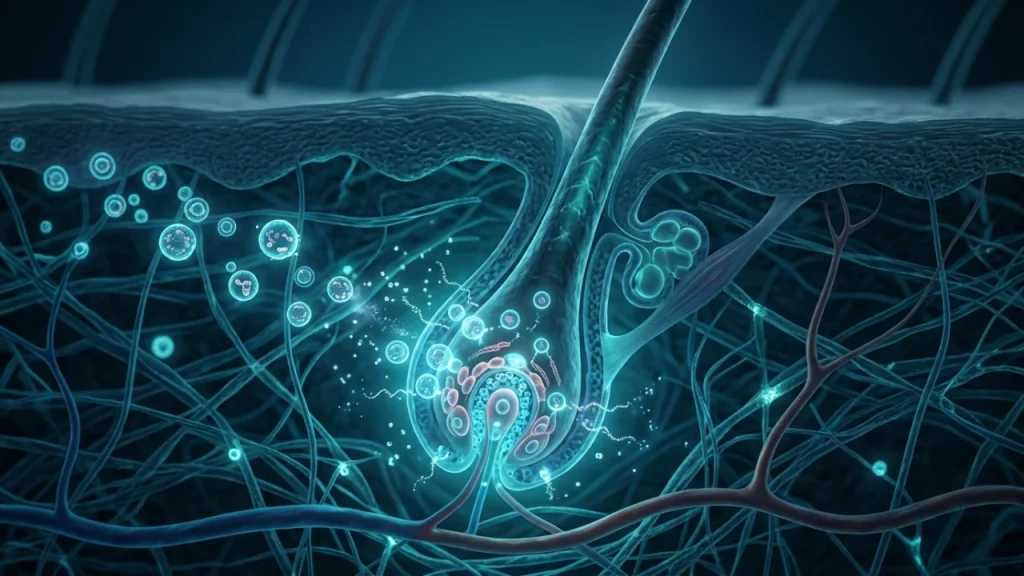
What Are Exosomes and Why They Matter for Hair Growth
Understanding Exosomes as Nature’s Delivery System
Imagine your body’s cells as a vast network of cities. They need to communicate constantly. They send vital instructions and supplies. They do not use phones or emails. They use exosomes.
Exosomes are tiny bubbles released by cells. They are incredibly small. Billions could fit on a pinhead. Do not let their size fool you. These bubbles are powerful messengers.
Each exosome is like a sealed envelope or a mini supply truck. It carries a precise cargo from its parent cell. This cargo is meant for another cell. The cargo can include many things. – Proteins that act as instructions or tools. – Lipids that are building blocks for membranes. – Genetic material like RNA. This RNA can change how the receiving cell behaves.
The process is elegant and natural. A cell creates an exosome inside itself. It packs the exosome with specific molecules. Then, the cell releases the exosome into the fluid surrounding it. The exosome travels until it finds a target cell. It docks on that cell’s surface. It delivers its cargo.
This system allows for precise communication. A skin cell can send a message to an immune cell. A stem cell can send repair signals to a damaged cell. The message depends entirely on the cargo. Healthy cells send healthy messages. Stressed cells may send different signals.
Why does this matter for hair? Your hair follicles are complex mini-organs. They rely on perfect coordination between many cell types. Dermal papilla cells send growth signals to keratinocytes. Stem cells in the bulge region need activation cues.
When communication breaks down, hair growth suffers. Follicles may become dormant. They may produce thinner, weaker hairs. The natural signaling can weaken with age or stress.
This is where the science of exosomes hair research becomes crucial. Researchers study the specific exosomes that support follicle health. They look at exosomes from young, active cells. These exosomes carry a pro-growth cargo.
Think of it as restoring a failing communication network. By introducing healthy exosomes, scientists aim to deliver lost instructions. They want to reactivate the natural growth cycle. The goal is not to force growth with harsh chemicals. It is to provide the precise biological signals that follicles need to thrive on their own.
The beauty lies in the specificity and safety of this natural system. Exosomes are not foreign drugs. They are versions of our own body’s tools. They carry targeted instructions, not broad commands.
Understanding this delivery system is the first step. It shows how a precise biological approach might work. The next logical question is about the source of these helpful messengers. That leads us to the role of stem cells in creating potent exosomes for renewal.
Why Exosomes Could Transform Hair Loss Treatment
Traditional hair loss treatments often work in a blunt way. They flood the scalp with a single chemical signal. This is like using a megaphone to shout one command at a complex factory. It can work for some. But it misses the nuanced conversation needed for true follicle health.
Minoxidil, for example, is a vasodilator. It widens blood vessels. This may improve nutrient flow. Yet it does not directly repair the faulty cellular signals inside the follicle itself. Finasteride blocks a hormone. It can slow loss related to male pattern baldness. But it does not instruct cells to regenerate or rebuild.
These approaches manage symptoms. They do not address the root cause of failed communication. This is a key limitation.
Exosomes propose a different path. They aim to restore the root biological dialogue. Think of them as a team of skilled couriers. Each carries a specific set of blueprints and tools directly to the cells that need them.
Why could this transform treatment? The answer lies in their natural design and multi-target action.
First, exosomes are inherently targeted. Cells have surface markers. These act like addresses. Exosomes from certain cells, like stem cells, are more likely to be taken up by distressed hair follicle cells. This creates a natural targeting system. The therapy goes where it is needed most.
Second, their cargo is complex and synergistic. A single exosome carries hundreds of different molecules. – Growth factors like VEGF tell blood vessels to form. – miRNAs can turn specific genes on or off. – Proteins can kick-start cellular repair machinery.
This is not one signal. It is a coordinated program. It tells the dermal papilla to wake up. It tells stem cells in the bulge to divide. It tells keratinocytes to build a strong hair shaft.
Third, they modulate the environment. Hair loss often involves inflammation and scarring. Some exosomes hair studies show these vesicles can calm immune overreactions. They can reduce fibrosis, or scarring, around the follicle. This clears the way for growth.
Fourth, the safety profile is promising. Because exosomes are natural biological vehicles, the risk of toxic chemical buildup is low. They are not synthetic drugs. The body knows how to process them after they deliver their message.
Compare the two strategies side by side. Traditional drugs: One main action. Systemic side effects possible. Does not regenerate; often just maintains. Exosome approach: Multiple coordinated actions. Localized targeting potential. Aims to regenerate and restart the follicle’s own cycle.
The potential is not just in stopping loss. It is in moving toward actual restoration. The goal shifts from management to repair.
This does not mean exosomes are a magic cure. Science is still mapping their exact effects. But the theory is strong. It moves beyond supporting the follicle from the outside with chemicals. Instead, it equips the follicle’s own cells to function properly again.
The transformation would be in the treatment philosophy itself. Hair loss therapy could become regenerative medicine. It would work with biology, not just against a single symptom.
This leads to a critical point. Not all exosomes are equal. Their power depends entirely on their source and how they are prepared. The next logical step is to explore what makes a therapeutic exosome potent and reliable for clinical use.
The Basic Science Behind Cellular Communication
Every cell in your body is a tiny factory. It does not work alone. Cells must talk to each other constantly. They send signals to coordinate growth, repair, and function. This is called cellular communication.
Think of it like a city. Each building is a cell. The people inside need to send packages and instructions to other buildings. They cannot walk over every time. They need a delivery system.
Cells have solved this problem with vesicles. Vesicles are small, bubble-like carriers. They are made from the cell’s own membrane. They can carry cargo from inside the cell and travel outside.
Exosomes are one major type of these delivery vesicles. They are incredibly small. You could line up thousands of them across the width of a single human hair.
Their creation is a precise process. Inside a cell, tiny compartments called endosomes form. These endosomes collect specific molecular cargo. This cargo includes proteins and genetic instructions like RNA.
The endosome then pinches off tiny vesicles inside itself. These internal vesicles are the future exosomes. The endosome becomes what scientists call a multivesicular body.
This body travels to the cell’s outer membrane. It fuses with it. The exosomes are then released into the space around the cell. They are now free to travel.
Their cargo is the message. Different cells pack different messages. A healthy skin cell sends different instructions than an inflamed immune cell. The exosome delivers this payload to a target cell.
How does it find the right target? Exosomes have address labels on their surface. These are proteins that stick out. They match receptors on certain recipient cells.
It is like a key finding a lock. When the exosome docks, several things can happen. It can fuse with the target cell and empty its cargo inside. It can be swallowed whole by the target cell. Its surface proteins can also trigger a signal directly.
The result is a change in the recipient cell’s behavior. The delivered RNA can tell it to make new proteins. The delivered proteins can kickstart new processes. This is how cells influence their neighbors remotely.
This system is vital for tissue health and repair. Stem cells use exosomes to help heal damaged areas. Immune cells use them to regulate responses. Skin cells use them to maintain their structure.
Now, apply this to the scalp. Your hair follicle is not one cell. It is a complex, mini-organ made of many cell types. These include dermal papilla cells, keratinocytes, and stem cells in the bulge.
For a follicle to function and grow hair, these cells must talk perfectly. Signals must tell stem cells to activate. Instructions must guide keratinocytes to build the hair shaft. Blood supply needs support.
When communication breaks down, the follicle suffers. Signals can become inflammatory. Growth cycles can shorten. The follicle may miniaturize and go dormant.
This is where therapeutic exosomes hair science enters. The idea is to introduce exosomes loaded with specific, pro-growth messages. These exogenous vesicles can supplement failing local communication.
They can deliver precise instructions directly to dormant follicular cells. The goal is to restart the native biological conversation that sustains healthy growth.
Understanding this basic science is crucial. It shows why exosomes are more than just another ingredient. They are a sophisticated information technology borrowed from our own biology.
This foundational knowledge allows us to next explore what makes an exosome particularly effective for targeting and revitalizing the complex environment of the hair follicle itself.
How Exosomes Work Inside Hair Follicles
Exosomes Hair Follicle Activation Process
The activation of a dormant hair follicle is a precise chain reaction. Exosomes help start this chain. They do not force cells to act. Instead, they deliver instructions that make cells restart their own natural programs.
Think of a dormant follicle as a factory on standby. The power is off. The machines are idle. The workers are present but have no orders. An exosome arrives like a master switch and a new set of blueprints. It flips the power back on. It also delivers updated plans for production.
The process begins with targeting and entry. Exosomes from mesenchymal stem cells have surface markers. These markers act like addresses. They guide the vesicles to specific cells in the follicle, like dermal papilla cells or bulge stem cells. The exosome fuses with the target cell’s membrane. It releases its molecular cargo directly into the cell’s interior.
This cargo is the critical instruction set. It contains hundreds of active components. – MicroRNAs: These small molecules do not code for proteins. Instead, they regulate gene expression. They can silence genes that promote dormancy. They can also activate genes that support growth. – Growth Factors: Proteins like VEGF (Vascular Endothelial Growth Factor) and FGF (Fibroblast Growth Factor) give direct commands. They bind to receptors on the cell surface. – Cytokines: These are signaling proteins that can shift the local environment from inflammatory to regenerative.
Once inside, the cargo gets to work. MicroRNAs find their target messenger RNAs. They block them. This is like deleting outdated memos that told the cell to stay asleep. The blocking of these “sleep signals” allows pro-growth genes to become active.
Simultaneously, delivered growth factors bind to their receptors. This binding triggers a cascade inside the cell. It is a relay race of signals from the membrane to the nucleus. This cascade activates transcription factors. These factors enter the cell nucleus. They bind to DNA at specific sites.
This binding turns on entire sets of genes. The genes are for cellular proliferation, migration, and differentiation. The dermal papilla cell receives orders to divide and secrete its own growth signals. Stem cells in the bulge get the command to leave their resting state. They begin to divide and journey down to form a new hair bulb.
A key result is increased blood vessel formation. Exosome cargo boosts VEGF signaling. This tells endothelial cells to create new capillaries around the follicle. Better blood flow delivers more oxygen and nutrients. It also removes waste products more efficiently. The follicle’s energy supply is restored.
The exosome’s effect also changes the immune environment. It can reduce local levels of inflammatory signals like TGF-beta. It can increase anti-inflammatory cytokines. This calms any immune attack on the follicle. It removes a major barrier to growth.
All these actions converge on the cell cycle. Dormant cells are often stuck in a phase called G0. It is a state of pause outside the regular growth cycle. Exosome signals push these cells back into the G1 phase. This is the first step of active preparation for division. The factory machinery starts humming again.
The process is not instantaneous. It mirrors natural biology. Cells may need several days to fully respond to the new instructions. They begin producing their own supportive signals. This creates a positive feedback loop within the follicle.
The ultimate goal is to restart the anagen phase. This is the active growth stage of the hair cycle. Exosomes help reset the clock. They provide the necessary cues to transition from telogen (resting) or catagen (regression) back into anagen.
This molecular revival addresses the root cause of dormancy. It is not just stimulating a tired follicle. It is reprogramming its cellular community to function correctly again. The exosomes hair regeneration approach relies on this multi-step activation process.
The success of this process depends heavily on the quality and source of the exosomes. Not all vesicles carry the same restorative cargo. The next logical question examines what properties make an exosome preparation truly effective for this complex task.
The Molecular Cargo That Makes Change Possible
Exosomes are not empty bubbles. They are packed with a precise molecular toolkit. This cargo is what instructs hair follicle cells to change their behavior. Think of them as tiny delivery trucks. Their cargo is the actual repair package.
The contents are diverse and work as a team. Key groups include growth factors, signaling proteins, and genetic instructions. These molecules target different parts of the cell’s machinery.
Growth factors are one major category. They are proteins that tell cells to grow, divide, or specialize. – VEGF (Vascular Endothelial Growth Factor) is a prime example. It orders the creation of new blood vessels. Better blood flow brings more oxygen and nutrients to the follicle. – FGF (Fibroblast Growth Factor) supports the health of key cells in the follicle’s structure. It helps them proliferate and produce collagen. – KGF (Keratinocyte Growth Factor) directly targets keratinocytes. These are the building-block cells of the hair shaft itself.
Another critical group is anti-inflammatory cytokines. These are signaling proteins that calm the immune system. They can lower levels of damaging signals like TGF-beta. They also raise levels of soothing signals like IL-10. This shifts the local environment from attack mode to repair mode.
Perhaps the most powerful cargo is genetic. Exosomes carry microRNAs (miRNAs). These are short strands of genetic code. They do not carry instructions to make proteins. Instead, they regulate which genes a cell turns on or off.
A single miRNA can control hundreds of genes. It acts like a master switch for entire cellular programs. In hair loss, certain miRNAs are often under-expressed. Exosomes can deliver these missing miRNAs back to the follicle.
For instance, some miRNAs promote the anagen (growth) phase. They silence genes that push the follicle into the resting telogen phase. Others block cell death signals. This protects fragile cells during the regeneration process.
The cargo also includes enzymes and other functional proteins. Some help break down scar tissue around follicles. Others improve the cell’s energy production in its mitochondria. This gives dormant cells the power to restart.
All this cargo is protected during delivery. The exosome’s lipid membrane shields it from degradation. This ensures the molecules arrive intact at the target cell. The fusion is precise. The recipient cell gets a complete set of working instructions.
The effect is synergistic. Growth factors provide immediate activation signals. Anti-inflammatory molecules remove roadblocks. MicroRNAs reprogram long-term gene activity. This multi-pronged attack is why exosomes hair therapies aim for holistic revival.
Not all exosome cargo is identical. The molecules inside reflect the state of their parent cell. Exosomes from young, healthy mesenchymal stem cells are rich in restorative factors. Their cargo is optimized for repair.
This precise molecular payload explains the biological logic behind the therapy. It is not a blunt stimulus. It is targeted information transfer. The next consideration is how this cargo is sourced and prepared for clinical use, ensuring its potency and safety.
Signaling Pathways That Control Hair Cycles
Hair follicles do not grow randomly. They follow a strict internal clock. This clock is controlled by biological signaling pathways. Think of these pathways as a series of switches. Exosomes from stem cells can flip these switches back to “grow.”
One key pathway is called Wnt/β-catenin. This is a fundamental growth signal. In a healthy growing follicle, this pathway is active. It tells stem cells in the bulge to divide and become hair shaft cells. In aging or dormant follicles, this signal fades. Exosomes hair research shows they can restart it.
Exosomes deliver molecules that activate the Wnt pathway. They carry proteins like Wnt itself. They also carry miRNAs that remove natural blockers of this pathway. This double action turns the signal on strongly. The result is clear. Follicle stem cells get the direct command to wake up and multiply.
Another critical system is the BMP pathway. BMP signals normally tell follicles to rest. They are like a brake on growth. In conditions like pattern hair loss, this brake is pressed too hard and too early. Exosomes work to release this brake.
They do this with specific inhibitors. For example, they deliver Noggin protein. Noggin binds to BMP molecules and stops them from working. This lifts the suppression on the follicle. With the brake released, growth signals can take over again.
The PI3K/Akt pathway is equally important. This pathway controls cell survival and metabolism. It decides if a follicle cell has enough energy to grow. When this pathway is weak, cells become fragile and may die. Exosomes strengthen it.
The cargo includes growth factors that activate PI3K/Akt. This acts like a survival boost for stressed cells. It improves their energy production. It also makes them more responsive to other growth commands.
These pathways do not work in isolation. They form a network. Exosomes are master coordinators of this network. They adjust multiple signals at once. – They turn up pro-growth pathways (Wnt). – They turn down anti-growth pathways (BMP). – They boost cell survival pathways (PI3K/Akt).
This coordinated shift changes the entire environment inside the follicle. The balance tips from resting back to active growth.
The timing of these signals is also crucial. Hair growth happens in phases. Exosomes appear to help reset the phase clock. They provide the right combination of molecules to trigger the anagen phase transition. This is not just about starting growth. It is about starting the full, healthy cycle again.
Research points to exosomes affecting dermal papilla cells especially. These cells are the command center of the follicle. They send most of the signals that control the cycle. Exosomes rejuvenate these key cells.
By restoring dermal papilla function, the effects ripple out. A healthy command center sends proper instructions to stem cells and keratinocytes. The entire follicle unit begins to work in sync again.
Understanding these pathways explains the precision of the approach. It is not a general stimulant causing chaotic growth. It is a retuning of the follicle’s own biological instruments. The goal is to restore the original, healthy program for hair production.
The next logical question involves delivery and evidence. How do these activated exosomes reach their target in a clinical setting, and what proof exists that this complex signaling actually results in new hair?
How Exosomes Modify the Scalp Environment
Exosomes do more than talk to cells inside the follicle. They also change the neighborhood where the follicle lives. This scalp environment is critical for healthy hair growth. Think of a plant. It needs good soil, water, and sunlight. A hair follicle needs a healthy scalp.
One major problem in hair loss is inflammation. Chronic, low-grade inflammation can damage follicles. It can push them into a resting phase too early. Exosomes carry powerful anti-inflammatory messages.
They deliver molecules that calm overactive immune cells. This reduces inflammatory signals in the tissue. The result is a more peaceful scalp environment. Follicles are not under constant stress. They can focus their energy on growth instead of defense.
Blood flow is another key factor. Follicles need oxygen and nutrients to build hair. They get these from tiny blood vessels called capillaries. Poor circulation can starve a follicle.
Exosomes promote angiogenesis. This is the formation of new blood vessels. They encourage endothelial cells, which line blood vessels, to multiply and form new networks. Better blood supply means more fuel for the hair growth engine.
The structure around the follicle matters too. This includes the extracellular matrix. It is a scaffold of proteins that supports cells. A stiff, scar-like matrix can choke a follicle.
Exosomes help remodel this matrix. They carry enzymes that break down damaged collagen fibers. They also signal fibroblasts to produce fresh, healthy collagen and elastin. This improves tissue flexibility and health.
Here is a summary of how exosomes modify the scalp environment: – They reduce damaging inflammation. – They stimulate new blood vessel growth. – They remodel and renew the supportive tissue scaffold.
These changes work together. A follicle sitting in a calm, well-fed, and flexible environment has a much better chance to thrive. The exosome treatment prepares the ground. This makes the internal signaling inside the follicle more effective.
The impact on stem cell niches is particularly important. Stem cells are the reservoir for new hair growth. They exist in specific areas near the follicle. A bad environment can put these stem cells to sleep permanently.
Exosomes help wake up these niches. They improve the local signals that tell stem cells to activate. They also help maintain the niche structure itself. This protects the body’s own regenerative potential.
Evidence for this environmental shift comes from clinical observations. Patients often report reduced scalp redness and itching after treatment. This aligns with the anti-inflammatory effects. Studies also show increased skin thickness and improved capillary density in treated areas.
The modification of the scalp environment is a systemic approach. It does not target just one thing. It fixes multiple problems at once. This creates a lasting foundation for recovery.
Healthy soil grows healthy plants. A healthy scalp environment grows healthy hair. Exosomes work to restore both the plant and the soil it grows in. The next step is to see how this translates into visible, measurable results on the scalp over time.
Exosomes Versus Traditional Hair Loss Treatments
Comparing Exosomes to Medication Approaches
Medications for hair loss typically target one specific biological pathway. They work by blocking a hormone or stimulating a single type of cellular activity. This is a targeted approach. It can be effective for many people. However, it does not address the complex, multi-factored environment of a failing hair follicle.
The most common oral medication works by inhibiting a hormone. This hormone shrinks sensitive follicles. Blocking it can help maintain hair. It may even promote some regrowth. Yet its action is singular. It does not directly improve blood flow. It does not calm inflammation broadly. It does not send repair signals to stem cell niches. Its effect lasts only as long as you take the pill.
Topical treatments follow a similar principle. They aim to stimulate hair growth directly at the site. They work by increasing blood flow to the follicle. This can deliver more nutrients. It can encourage hair to enter the growth phase. Results are often visible. But again, the action is primarily on one front: vascular dilation.
Exosome therapy operates on a different level entirely. It is not a single molecule with one job. It is a communication network. Exosomes carry hundreds of different signaling molecules. These include proteins, lipids, and genetic instructions.
Think of it like this: – A drug is a specific command: “Block this receptor.” – An exosome treatment is a toolkit and a manual: “Reduce inflammation here, build blood vessels there, and wake up stem cells over here.”
This difference shapes the potential outcomes. Drug results are often dose-dependent and reversible. If you stop, the benefits usually fade. The drug’s effect on the system stops.
Exosomes aim to change the local tissue environment. This was detailed in the previous section. The goal is to make lasting changes. The signals from exosomes help reset cellular behavior. They can shift the follicle from a stressed state to a healthy one. This new state may sustain itself for a longer time.
Safety profiles also differ. Systemic drugs can have side effects elsewhere in the body. Topical treatments can cause local irritation. Exosomes are derived from natural cell secretions. They are applied locally. Their action is primarily paracrine. This means they work on nearby cells. They are not designed to have systemic hormonal effects.
The time frame for results offers another contrast. Drugs may show initial results in a few months. Optimal results might take a year or more. Exosome responses can vary. Some changes begin quickly at the cellular level. Visible improvements in hair density often take several months. This mirrors the natural hair growth cycle.
It is not about one being simply “better” than the other. It is about mechanism. Medications are a precise key for a specific lock. Exosome therapy provides a master key set for the entire suite. It supports the follicle’s own repair systems.
For individuals, this means a different therapeutic logic. Drugs manage an ongoing process. Exosome treatments attempt to modify the underlying condition. They aim to create a healthier foundation for growth. This approach aligns with regenerative medicine’s core goal: to restore function.
Understanding this distinction is crucial. It sets realistic expectations. It highlights why combining approaches is sometimes considered. A drug might maintain a situation. Exosomes work to fundamentally improve it. This cellular communication offers a broader strategy against hair loss.
The next logical question concerns practical application. How are these exosome preparations delivered to precisely where they are needed on the scalp?
Why Non-Invasive Methods Appeal to Patients
Many people seek solutions that avoid surgery. Non-invasive methods meet this need. They do not require scalpels or stitches. There is no cutting of the skin. This eliminates surgical risks. Risks like infections or scarring are minimized. The recovery time is often zero. Patients can return to daily life immediately. This is a major practical benefit.
The appeal also lies in avoiding systemic drugs. Oral medications travel through the entire body. They can cause side effects elsewhere. For example, some drugs may affect mood or sexual function. Topical drugs can cause skin irritation. Exosome hair treatments work differently. They are applied directly to the scalp. Their action is highly localized. This targeted approach reduces whole-body exposure. It focuses the therapy where it is needed most.
Comfort and convenience are key factors. A typical session is similar to a deep conditioning treatment. The preparation is applied to the scalp. A microneedling device or gentle massage might be used. This helps the exosomes reach the target cells. The process usually takes under an hour. There is no general anesthesia required. Discomfort is typically minimal. Most people describe only a slight tingling sensation.
Let’s look at the physiological reasons for this appeal. The scalp skin is a barrier. Traditional topicals only penetrate so far. Advanced delivery methods change this. Microneedling creates tiny, temporary channels. These channels are microscopic. They do not cause significant injury. They allow exosomes to bypass the surface barrier. The exosomes reach the dermal layer where follicles live. This method is effective and gentle.
The treatment logic aligns with natural healing. It uses the body’s own communication system. Exosomes carry instructions to dormant follicles. They signal for repair and growth activation. This process supports the follicle’s natural cycle. It does not force it with strong chemicals. The goal is to restore normal function. This is a fundamental appeal of regenerative techniques.
Consider the typical treatment journey. – First, a consultation assesses the scalp. – Then, a series of sessions is planned. These might be spaced several weeks apart. – Each session involves application and perhaps a delivery technique. – Aftercare is simple: avoid washing the scalp for a short time. – Normal activities can resume right away.
This contrasts sharply with surgical recovery. Surgery may require days of rest. It often involves bandages and post-operative pain. Non-invasive methods fit busy modern lifestyles. They do not require significant downtime.
Financial and emotional costs are also lower. Surgical procedures are major investments. They carry higher upfront costs and anxiety. While exosome therapy is an investment, its non-invasive nature reduces ancillary burdens. There are no costs for surgical facilities or anesthesia. The emotional weight of undergoing surgery is absent.
The cumulative effect of these benefits is powerful. Patients gain a sense of control. They are actively treating their condition without major disruption. They avoid systemic side effects. They engage in a process that works with their biology. This makes non-invasive regenerative options deeply appealing.
However, realistic expectations remain vital. These treatments are not instant fixes. They support cellular processes that take time. Hair growth cycles last months. Results build gradually over several sessions. Patience is part of the protocol.
This leads to a critical consideration for anyone interested: how to identify a credible provider and a high-quality preparation, ensuring safety and potential efficacy from the start
Addressing Different Types of Hair Loss
Hair loss has many different causes. Not every cause responds to the same treatment. Exosomes work by sending repair signals to your cells. This makes them most effective for certain types of hair loss.
The primary target is androgenetic alopecia. This is common male and female pattern baldness. It involves hair follicles shrinking over time. These follicles get a shorter growth phase. They produce thinner, weaker hairs. Eventually, they may stop producing hair altogether.
Exosomes address the core problem here. They carry instructions to reactivate dormant follicular stem cells. They can help shift follicles back into a growth phase. They also send signals to improve the local scalp environment. This can reduce inflammation around the follicle. A healthier follicle can produce a stronger hair shaft.
Another key area is alopecia areata. This is an autoimmune condition. The body’s immune system attacks its own hair follicles. This leads to sudden, patchy hair loss.
Exosomes show promise here due to their immunomodulatory effects. They can help calm the overactive immune response. They send messages to regulate immune cells in the scalp. This may help stop the attack on the follicle. It can allow hair to regrow in the affected patches.
Telogen effluvium is a third candidate. This is often temporary hair shedding. It is typically triggered by a major stress event. Common triggers include severe illness, surgery, or childbirth. It can also come from rapid weight loss or emotional trauma.
This condition pushes many hair follicles into a resting state at once. Exosome therapy can help reverse this signal. It provides cues to push those resting follicles back into active growth. The approach supports a faster recovery of the natural cycle.
However, exosomes are not magic for every case. They are less likely to regenerate hair in fully scarred areas. This is called cicatricial alopecia. Here, the follicle stem cell niche is permanently destroyed. Scar tissue replaces it. No biological signal can rebuild a follicle from scar.
They also cannot fix hair loss from direct physical trauma. This includes traction alopecia from tight hairstyles over years. The constant pulling destroys the follicle. Stopping the pulling is the first and most critical step.
So, how do you know if exosomes for hair might help your situation? A proper diagnosis is essential. You must understand your type of hair loss first.
- Androgenetic alopecia often shows a clear pattern. In men, it starts at the temples or crown. In women, it typically shows as widening of the part.
- Alopecia areata appears as smooth, round bald patches.
- Telogen effluvium causes general thinning all over the scalp, not in patches.
A dermatologist can make this diagnosis. They might examine your scalp with a tool called a dermoscope. Sometimes a blood test is needed to rule out other causes like thyroid issues or nutrient deficiencies.
The potential of exosome hair therapy lies in its targeted action. It does not just block a hormone or suppress the immune system everywhere in the body. It works locally at the scalp level. It delivers specific instructions to change cellular behavior.
This precision is its great advantage for the right conditions. For pattern hair loss, it aims to rejuvenate miniaturized follicles. For autoimmune types, it seeks to restore immune balance locally. For stress-induced shedding, it tries to reset the growth cycle timer.
The next logical step is understanding what makes a high-quality exosome preparation. Not all sources or processing methods are equal. The therapeutic potential depends heavily on these factors.
Current Research and Clinical Evidence
What Laboratory Studies Tell Us About Exosomes Hair
Laboratory research provides the first solid clues about how exosomes might work for hair. Scientists study cells in dishes and use animal models. These controlled experiments show what is biologically possible.
One key finding involves dermal papilla cells. These cells sit at the base of the hair follicle. They act as a command center for hair growth. In pattern hair loss, these cells become less active. They send weaker growth signals.
Researchers have taken exosomes from stem cells and added them to these sluggish dermal papilla cells in a lab dish. The results are consistent. The treated cells perk up. They start dividing more quickly. They also produce more proteins essential for hair growth. These proteins include VEGF for blood flow and FGF for cell survival.
Think of it as a direct software update for the follicle’s command center. The exosomes deliver new instructions. This reactivates the growth program.
Animal studies take this a step further. They test the concept on a living system. A common model uses mice with hair removed or with induced hair loss. Scientists apply exosome preparations directly to the skin.
The observed outcomes are promising. Treated areas often show faster hair regrowth compared to untreated spots. The new hair also tends to be thicker. More importantly, researchers see changes at the cellular level.
- The anagen, or growth phase, of the hair cycle is extended.
- More follicles are actively engaged in producing hair.
- Blood vessel formation around follicles increases, improving nutrient delivery.
This is crucial for understanding exosomes hair therapy potential. It shows the effect is not just superficial. It changes the underlying biology of the follicle’s environment.
Another critical line of research focuses on inflammation. Conditions like alopecia areata involve an immune attack on the follicle. Lab studies show certain exosomes can modulate immune cells.
They can calm overactive T-cells. They can shift macrophages from a pro-inflammatory state to a healing state. This creates a local environment where the follicle is no longer under attack. It can then resume its normal job of growing hair.
The source of the exosomes matters greatly in research. Exosomes from different stem cell types have different properties. For example, those from mesenchymal stem cells often show strong anti-inflammatory effects. Those from dermal papilla cells may send more specific hair-growth signals.
Processing methods in the lab also affect potency. The way scientists isolate and concentrate exosomes changes their final cargo. High-quality preparations retain delicate signaling molecules and RNAs.
It is important to remember what these studies are and are not. They are preclinical. They prove a biological principle works in a controlled setting. They tell us the mechanism is sound. The exosomes hair research foundation is strong.
These lab results directly inform how human treatments are designed. They tell clinicians which signaling pathways to target. They suggest optimal ways to deliver the exosomes.
The jump from lab dishes and animal models to human scalps is the next frontier. Clinical evidence in people must now answer the big questions about consistency and long-term results.
Early Human Trials and Patient Outcomes
Early human trials for hair restoration are now underway. These studies are small and carefully controlled. Their main goal is to check safety first. Researchers watch for any bad reactions on the scalp or inside the body. So far, these initial safety reports are promising. Most studies show treatments are well-tolerated.
Patients typically report only mild, temporary redness. This is similar to other cosmetic procedures. Serious side effects have not been common in these early tests. This positive safety profile is crucial. It allows larger studies to proceed.
The second goal is to see early signs of effectiveness. Researchers use precise tools to measure change. They track two main things: hair density and shaft thickness. Density counts the number of hairs in a fixed area. Thickness measures the caliber of each individual strand.
Early results show a consistent trend. Many participants see improvements in both metrics. The increase in density often ranges from 10 to 20 percent in tested areas after several months. Hair shafts also get thicker. This transforms fine, vellus hairs into more robust terminal hairs.
The mechanism aligns with lab findings. The exosomes hair research suggests they work by rejuvenating the follicle’s environment. In patients, this seems to translate to a prolonged growth phase. Follicles spend more time actively producing hair. They also spend less time in the resting or shedding phases.
Delivery methods in trials are important. Most studies use micro-needling as the application technique. The tiny needles create micro-channels in the scalp. This allows the exosome solution to reach deeper skin layers. It targets the dermal papilla cells directly.
Treatment protocols vary between studies. A common schedule involves multiple sessions. – Patients might receive three initial treatments. – These are spaced about one month apart. – Follow-up assessments happen at three, six, and twelve months. – This staged approach helps scientists track progress over time.
Patient-reported outcomes are also collected. People note changes in hair volume and scalp coverage. They report slower daily shedding and easier styling. This subjective data supports the objective measurements from digital imaging.
It is vital to understand the limits of this evidence. These are Phase I or early Phase II trials. They involve dozens of patients, not thousands. They often lack a control group treated with a placebo. This makes it hard to rule out a strong placebo effect entirely.
Furthermore, results are not universal. Not every participant responds equally well. Scientists are studying why this variation happens. Factors may include the patient’s age, the specific cause of their hair loss, and the biological activity of the exosome preparation used.
These early human trials are a critical first step. They confirm that the biological activity seen in labs can translate to a real clinical setting. They provide the first real-world data on dosing and safety protocols.
The evidence remains preliminary but encouraging. It builds a bridge from solid mechanistic science to potential future therapies. The next phase requires larger, randomized, and double-blinded studies. These will definitively prove efficacy and optimize treatment for broader use.
How Researchers Measure Hair Regrowth Success
Scientists need hard numbers to prove that a treatment works. They cannot rely on feelings or vague impressions. For hair regrowth studies, they use a set of precise tools. These tools measure three key things: hair count, hair thickness, and the health of the growth cycle.
The most basic and important measure is the hair count. Researchers do not just look at the scalp. They use a method called macrophotography. A high-resolution camera takes extreme close-up pictures of a marked area on the scalp. This area is typically one square centimeter in size. The photos are taken at each clinic visit. Specialized computer software then analyzes each image. It counts every single hair in that defined spot. An increase in the number of hairs per square centimeter is a primary sign of success.
But more hairs are not the only goal. Thicker, stronger hairs are also vital for a full look. This is where measuring hair diameter comes in. The same sophisticated imaging software can assess the width of each individual strand. It can tell the difference between thin, vellus hairs and thick, terminal hairs. A successful treatment should shift the ratio. It should convert fine, barely visible hairs into robust, pigmented ones. Scientists track the average diameter increase across the studied area.
Hair grows in cycles. The anagen phase is the active growth period. The telogen phase is the resting and shedding period. A healthy scalp has most hairs in the anagen phase. Certain conditions, like pattern hair loss, shorten the growth phase. This leads to more shedding and shorter hairs. Researchers use a tool called a trichoscope to view this cycle. A trichoscope is a handheld device that magnifies the scalp. It allows scientists to see the roots of hairs clearly.
- Anagen hairs have long, dark roots that are sheathed.
- Telogen hairs have small, bulb-like roots without sheaths.
By counting these under magnification, scientists calculate the anagen-to-telogen ratio. An improving treatment will push more follicles back into the growth phase. This increases the ratio and leads to longer, more stable hair.
Another critical metric is growth rate. How fast does the hair actually grow? Researchers use a simple but clever method for this. They trim hairs in a small test area to a uniform length at the start of a study period. At the next visit, they measure how much those marked hairs have grown in millimeters per day. This gives a direct readout of follicular activity and health.
All this objective data is combined with patient feedback. People report on their perceived hair density and daily shedding. They note changes in their styling routine. This subjective information supports the numbers from the machines. Together, they build a complete picture.
The goal of using all these methods is to remove guesswork. Digital imaging, trichoscopy, and growth measurements provide clear, repeatable evidence. They show whether an intervention, like one using exosomes for hair, is truly reactivating dormant follicles. This multi-angle approach is the gold standard in modern trichology research. It turns visual improvement into reliable, scientific data that can guide future therapies for everyone.
The Future of Exosome-Based Hair Therapy
Personalized Approaches to Hair Restoration
The future of hair restoration lies in treatments designed for you alone. Current approaches often use the same formula for everyone. Exosome science is changing this. It opens the door to truly personalized care.
Personalization starts with understanding the cause of your hair loss. The reasons differ greatly from person to person. For one person, it might be chronic inflammation around the follicles. For another, it could be a lack of specific growth signals. A third might have issues with poor blood supply to the scalp. Effective treatment must address the root cause.
This is where exosomes for hair regeneration show great promise. Exosomes are not just one substance. They are tiny messengers carrying specific instructions. The instructions depend on which cell sent them. Scientists can now collect exosomes from different cell types. Each type carries a unique cargo.
Think of it like receiving a targeted repair kit instead of a general toolbox. The potential sources for these kits are diverse. – Exosomes from stem cells found in fat tissue might be best for reducing inflammation. – Exosomes from hair follicle stem cells could carry precise signals to restart the growth cycle. – Exosomes from endothelial cells, which line blood vessels, may improve scalp circulation.
A personalized approach would first diagnose your specific scalp environment. Advanced trichoscopy can show inflammation levels. Blood flow can be measured. Hair root analysis reveals the phase of your follicles. This data creates a biological profile.
Your profile would then guide the exosome selection. A patient with high inflammation might receive exosomes known to calm immune responses. A patient with poor growth signaling might get exosomes packed with growth factors. This matching makes the therapy more direct and potentially more effective.
Dosage and delivery are also key for personalization. Not everyone needs the same strength or frequency of treatment. Some may benefit from a high initial dose. Others might see better results with smaller, more frequent sessions. The method of delivery can be tailored too. Micro-needling depth can be adjusted based on your scalp’s thickness and condition.
The goal is a treatment protocol as unique as your fingerprint. It considers your age, genetics, hair loss pattern, and biological data. This moves medicine from reactive to proactive. It shifts from treating symptoms to correcting the underlying environment.
This precision also improves safety. A tailored treatment uses only what your scalp needs. It avoids unnecessary components. Monitoring becomes more meaningful because changes can be linked to specific actions.
Of course, this vision requires more research and advanced technology. Isolating specific exosome populations is complex. Creating standardized yet customizable protocols is a challenge. However, the scientific foundation is being built now. The tools for precise measurement, discussed earlier, are what make this tailoring possible.
Personalized exosome therapy represents the next logical step. It uses detailed diagnostics to inform precise biological interventions. This approach promises not just hair growth, but healthier, more resilient follicles designed to last. The era of one-size-fits-all solutions is fading, making way for treatments that respect individual biology
Combining Exosomes with Other Regenerative Methods
Exosomes rarely work in isolation in the body. Their future in clinical therapy will likely involve strategic partnerships with other methods. Combining treatments can create a more powerful regenerative response. This approach targets hair loss from multiple angles simultaneously.
Think of exosome therapy as a precise communication system. It delivers instructions to your scalp cells. Other technologies can prepare the environment or execute different tasks. Together, they form a comprehensive repair team.
One key partner is growth factor therapy. Growth factors are natural signaling proteins. They tell cells to grow, divide, and heal. Exosomes and growth factors work through different but complementary pathways. – Exosomes carry complex genetic instructions. They can reprogram cell behavior over time. – Growth factors provide immediate, direct signals for action.
Using both may yield a faster and more sustained result. Growth factors could create an urgent repair signal. Exosomes could then provide the long-term blueprint for maintaining healthy follicles.
Advanced delivery methods will also be crucial. Microneedling is a common example. It creates micro-channels in the scalp. This improves the absorption of topical treatments. But future devices could go much deeper.
Imagine a device that maps your scalp’s condition in real time. It could then inject exosomes at precise depths. It could target specific follicular regions that need the most help. This combines diagnostic imaging with immediate treatment.
Another promising combination is with low-level laser therapy (LLLT). LLLT uses specific light wavelengths to stimulate cellular activity. It is thought to boost energy production in follicle cells. Exosomes could enhance this effect.
The sequence matters here. Laser treatment might first “prime” the cells. It makes them more active and receptive. Following with exosome therapy could then be more effective. The cells are ready to use the new instructions.
Platelet-rich plasma (PRP) is a well-known regenerative treatment. It uses a concentration of your own platelets. These platelets release their own growth factors and vesicles. Research is exploring how exosomes might complement or enhance PRP’s effects.
The combination could address a weakness of PRP. PRP’s potency can vary between individuals and over time. Adding standardized exosomes might provide a more consistent regenerative signal. This creates a more reliable treatment profile.
Nutraceuticals and topical compounds will play a supporting role. Specific vitamins and peptides can support follicle health. They create a better internal environment for the exosomes to work. This is like fertilizing soil before planting seeds.
Future regimens may involve a phased approach. – Phase one prepares the scalp with lasers or microneedling. – Phase two delivers a cocktail of exosomes and growth factors. – Phase three uses sustained-release topicals to support the process.
The ultimate goal is a seamless regenerative ecosystem. Each component triggers a specific part of the healing cycle. Exosomes act as the master coordinators of this process. They ensure the repair is intelligent and long-lasting.
Safety monitoring becomes even more important with combinations. Clinicians need to understand how each element interacts. The order of treatments must be based on solid biology. This avoids overwhelming the scalp or causing unintended effects.
Research is now focusing on these synergistic effects. Scientists are testing sequences and timing in models. They want to find the most effective protocols. The “exosomes hair” regeneration protocol of tomorrow will likely be a combination, not a single product.
This integrated approach mirrors the body’s own complexity. Healing is never the result of just one signal. It is a symphony of coordinated biological events. The future of therapy aims to conduct that symphony with precision.
The next frontier will be ensuring these combinations are accessible and logical. They must be built on evidence, not just theory. This leads to a final, critical consideration for the future: rigorous clinical validation and realistic expectations for patients.
From Laboratory to Clinic: The Translation Pathway
Moving a promising lab discovery into your doctor’s office is a long journey. It requires more than just good science. The path must be safe, clear, and proven to work. For exosomes hair therapies, this translation pathway has several critical stages.
First, scientists must identify the right source cells. Not all exosomes are the same. Exosomes from stem cells involved in skin and hair growth are the most studied. Researchers grow these cells in controlled lab environments. They then collect and purify the tiny exosome vesicles they release. This step ensures consistency. A therapy cannot work if each batch is different.
Next comes rigorous laboratory testing. Scientists apply these exosomes to hair follicle cells in dishes. They also use precise 3D models of human skin. The goal is to see if the exosomes truly reactivate dormant follicles. They measure changes in growth cycles and key protein production. Successful results here allow research to advance.
Animal studies provide the next level of evidence. Scientists use models with conditions similar to human hair loss. They test different doses and methods of delivery. They monitor for safety and track actual hair regrowth over time. These studies help refine the formula. They also help plan the initial human trials.
The first human studies are small. They focus primarily on safety. A limited number of volunteers receive the treatment. Doctors watch closely for any adverse reactions. They also note early signs of effectiveness. Positive outcomes here justify larger trials.
The final and most important stage is the controlled clinical trial. This is the gold standard for proof. A large group of patients is divided randomly. One group gets the exosome treatment. Another gets a placebo or a standard treatment. Neither the patients nor the doctors know who gets which. This eliminates bias.
These trials measure clear outcomes. Experts count hairs in specific scalp areas. They measure hair thickness using standardized tools. They also use patient questionnaires about satisfaction. The data is then analyzed statistically. The treatment must show a significant benefit over the control.
But trials are just one hurdle. Manufacturing poses its own challenges. Producing clinical-grade exosomes is complex. The process must be sterile and scalable. Every batch must meet strict purity and potency standards. Regulatory agencies inspect these manufacturing facilities. They ensure quality is maintained from vial to vial.
Finally, doctors need proper training. Using exosomes hair treatments correctly is key. They must understand which patients are good candidates. They need to know the best techniques for delivery into the scalp. Clear protocols prevent misuse and manage expectations.
This entire pathway builds the essential evidence base. It transforms exciting biology into a reliable medical option. The goal is a treatment that is both effective and predictable for every patient who needs it.
Safety Considerations and Long-Term Effects
Safety is the top priority for any new medical treatment. The science behind exosomes hair therapy is promising. But its long-term story is still being written. Researchers are actively studying several key areas.
First, they look at source safety. Exosomes come from different cell types. Mesenchymal stem cells are a common source. Scientists must ensure these parent cells are healthy. They screen for viruses and other contaminants. The goal is to get pure exosomes with no hidden risks.
Next is the question of dosage. How many exosomes are needed for the best effect? What is too much? Finding the right amount is crucial. A perfect dose helps hair follicles without causing other issues. This is called the therapeutic window. Doctors are still mapping this window for scalp treatments.
The body’s immune response is another focus. Exosomes are natural messengers. They should not cause major inflammation. Early studies show good tolerance. Yet everyone’s immune system is unique. Researchers monitor for any signs of rejection or allergic reaction over time.
Long-term effects mean watching for years. A single treatment may show great results at six months. But what about after two years? Or five? Scientists need to know if results last. They also need to see if repeated treatments remain safe. This requires ongoing patient registries and follow-up studies.
One theoretical concern is unintended growth. Exosomes carry signals for cell growth and healing. Their job is to wake up dormant hair follicles. Scientists must be certain these signals act only in the scalp. They ensure exosomes do not accidentally affect other cells in ways they shouldn’t.
Manufacturing consistency ties directly to safety. As discussed, production must be flawless. Even small changes in process could alter the exosomes. Patients need every vial to be identical in safety and strength. Regular quality checks prevent drift over time.
- Purity: No leftover cell debris.
- Potency: Consistent regenerative signals.
- Sterility: No bacterial or fungal contamination.
Post-treatment care also matters. Patients must follow simple guidelines after a procedure. They should avoid harsh chemicals on the scalp for a few days. They need to protect the area from sun exposure. Good aftercare supports safety and improves outcomes.
Reporting systems catch rare events. Even careful trials can miss very rare side effects. Once treatments are widely used, doctors report any problems. This global network helps spot patterns quickly. It makes the therapy safer for everyone.
The future involves personalized safety profiles. One day, a simple test might predict how a person will respond. This could check their immune markers or scalp biology. Personalized plans would maximize safety and effectiveness from the start.
In conclusion, current evidence points to a high safety profile for exosome therapies. The known biology supports this view. However, the medical community remains cautiously optimistic. They continue to collect long-term data from treated patients. This diligent, ongoing work ensures that as the science moves forward, patient safety leads the way. The next chapter will explore how this evolving science might integrate with other approaches for even better results.
What This Means for People With Hair Loss
Realistic Expectations for Exosomes Hair Therapy
Exosome therapy is not a quick fix for baldness. It is a regenerative process. Your hair follicles must react to new signals. This takes biological time. Think of it as restarting a dormant engine, not installing a new one.
The primary goal is to improve hair quality and density. The treatment aims to make existing thin hairs thicker and stronger. It also seeks to wake up inactive follicles. These are follicles that have stopped producing visible hair. Complete regrowth in fully bald, slick areas is less common. The skin in these areas often lacks the necessary follicle structures to reactivate.
Results follow a clear timeline. You will not see changes overnight. The process is gradual.
- Month 1-2: This is the signaling phase. Exosomes deliver instructions to your scalp cells. You likely see no visible change yet.
- Month 3-4: The anagen, or growth, phase begins for many follicles. You may notice less hair shedding. Some new, fine hairs might appear.
- Month 5-8: This is often when results become more visible. Hair density improves. Existing hairs may feel thicker. Growth becomes more noticeable.
- Month 9-12: Full effects are typically assessed at this point. Maintenance treatments might then be considered.
Several key factors influence your personal outcome. Your starting point matters greatly. People with recent thinning often respond better than those with long-term baldness. The underlying cause of your hair loss is critical. Exosomes for hair loss from aging or genetics may work differently than for loss from scarring or autoimmune issues. Your overall health plays a role. Good nutrition and blood flow support the regenerative process.
This therapy works best as part of a system. Exosomes provide the regenerative signals. But they do not block hormones like DHT that cause genetic hair loss. For sustained results, doctors often recommend combining exosomes with proven maintenance treatments. This could include topical solutions or oral medications. The combination approach tackles hair loss from multiple angles.
Setting a realistic budget is important. Exosome treatments are typically not covered by insurance. They require an investment. Since results are not permanent, you should plan for possible follow-up sessions. These might be needed every 12 to 18 months to maintain density gains.
Managing expectations is crucial for satisfaction. This is not a one-time cure. It is a sophisticated treatment with variable outcomes. Success might mean needing less concealer like fibers or sprays. It could mean your hair feels fuller and healthier. For some, it means visible new growth in thinning areas.
A good clinic will provide a clear assessment before you start. They should examine your scalp closely. They might use a trichoscope to see miniaturized hairs you cannot see. They should discuss your specific diagnosis and probable response rate. They will explain what the therapy can and likely cannot do for your particular pattern of loss.
The future of personalized treatment is promising. Research aims to match exosome profiles to individual patient biology. This could improve prediction of results. For now, realistic hope is based on your unique scalp landscape and commitment to a comprehensive plan. The next logical step is to understand how this therapy compares to other options available today.
How to Evaluate Emerging Treatment Options
New hair loss treatments appear frequently. It can be hard to know what is trustworthy. You need a clear way to judge them. This process relies on evidence, not just hope or marketing. Let’s break down how to evaluate any emerging option, like exosomes for hair.
First, look for published human studies. Lab research on cells or mice is only a starting point. It shows potential, but it is not proof for people. Reliable evidence comes from clinical trials with human volunteers. These studies should be peer-reviewed. This means other independent scientists have checked the work.
Ask specific questions about these studies. How many people were involved? A study with 20 people is less powerful than one with 200. Was there a control group? A control group might use a placebo or a standard treatment for comparison. This shows if the new therapy truly works. What exactly was measured? Good studies use precise tools.
They might count hairs in a defined area. They might measure hair shaft thickness. They track changes over many months, not just weeks.
Second, understand the proposed mechanism. How is the treatment supposed to work? A credible therapy will have a logical biological explanation. For example, we know dormant hair follicles exist in a bald scalp. The goal is to reactivate them.
A treatment might aim to reduce inflammation. It might try to improve blood flow to the follicle. It could deliver growth signals. Exosomes for hair function by carrying these precise instructions to target cells. The mechanism should connect directly to the known causes of hair loss.
If the explanation sounds too simple or magical, be cautious. Hair biology is complex.
Third, consider the safety profile and delivery method. How is the treatment given? Is it topical, oral, or an injection? Each method has pros and cons. Injections must be done by a skilled professional to avoid infection. Topical solutions need to penetrate the skin to reach the follicle.
Review the reported side effects. Are they common or rare? Are they mild or severe? A new treatment should have a documented safety record. Long-term safety data is very valuable but often scarce for very new approaches.
Fourth, examine the source of the information. Who is telling you about this treatment? Is it a clinic’s website making bold claims? Or is it a research institution reporting data? Look for information from neutral parties.
Medical conferences and journals are good sources. Dermatology associations often publish reviews. Be wary of stories using only patient testimonials or before-and-after photos. These can be misleading without controlled data.
Fifth, assess the practicality and sustainability. Is the treatment accessible and repeatable? Some advanced therapies might only be available in a few major cities. Consider the total cost, including any needed follow-up sessions.
Think about the commitment required. Does it fit your life? A treatment requiring daily home care must be easy to use consistently. Results that fade without ongoing sessions are part of the long-term plan.
Here is a simple checklist to use when you see a new treatment: – Published human data? Look for clinical trial numbers. – Clear biological mechanism? It should make scientific sense. – Transparent safety reporting? Side effects should be listed openly. – Realistic before-and-after examples? Be skeptical of perfect results. – Endorsement by medical professionals? Not just paid celebrities.
This evaluation framework protects you. It helps you spend time and money wisely. It shifts the focus from hype to science. For any therapy, including those using exosomes for hair, evidence is the true foundation for hope. The next step is to see how this science fits into the larger picture of hair restoration options available now and in the future.
The Evolving Landscape of Hair Regeneration
Hair loss treatments have historically focused on two main strategies. The first strategy slows down the process. The second tries to reactivate what is already there. Think of minoxidil and finasteride. They work by blocking hormones or improving blood flow. They help keep existing hair. They are less effective at creating truly new growth from dormant follicles. Hair transplant surgery is a different approach. It redistributes hair from one part of the scalp to another. It does not increase your total hair follicle count.
The new frontier is true regeneration. The goal is to wake up dormant follicles and guide them to produce new, healthy hair. This requires precise instructions. The instructions must tell stem cells in the follicle what to do. They must tell cells how to build the complex hair structure again. This is where the science of signaling becomes critical. Cells constantly talk to each other. They send molecular messages to coordinate repair and growth.
Exosomes for hair research is central to this new approach. Exosomes are natural messengers. Your own cells make them. They carry packets of information like proteins and RNA. In the scalp, the health of the dermal papilla cells is vital. These cells sit at the base of the follicle. They direct the hair growth cycle. Aging and damage can weaken these cells. Their signals become faint or incorrect.
Therapeutic exosomes aim to change this conversation. They can deliver a concentrated set of instructions. These instructions can tell dermal papilla cells to become active again. They can reduce local inflammation that chokes follicles. They can promote new blood vessel formation for better nutrient delivery. This is a multi-target strategy. It addresses several root causes at once.
The landscape is evolving from simple stimulation to intelligent communication. Future solutions will likely combine approaches for better results. Imagine a layered strategy.
- First, a treatment might clear the cellular environment of damage.
- Second, it could deliver specific signals to activate stem cells.
- Third, it might provide a scaffold to guide new hair growth.
Exosome therapy fits primarily into the second step. It is a potential signaling engine. Its success depends on the quality of the messages it carries. Research is ongoing to find the perfect “cargo” for hair growth.
This science also points toward personalized treatments. Not all hair loss is identical. The signals needed by one person may differ from another. Future diagnostics might analyze your scalp’s specific cellular environment. A treatment could then be tailored with exosomes carrying a precise set of instructions for you.
This is a significant shift. It moves away from a one-size-fits-all model. The focus becomes restoring the original biological function of the follicle. The follicle is treated as a complete, living organ.
The path from research to reliable treatment still requires careful steps. Scientists must identify the most effective exosome sources and contents. Delivery methods must ensure signals reach the right cells. Large clinical trials must confirm safety and repeatable outcomes. This rigorous process ensures that promise becomes practice.
The evolving landscape is therefore one of increasing precision. We are learning the language our hair follicles use. Exosome research is helping us translate that language into potential therapies. It represents a move from treating symptoms to engaging in cellular dialogue for regeneration. The ultimate goal is not just more hair, but healthier, self-sustaining hair growth cycles restored through intelligent biological communication.