
What Are Exosomes and Why Should You Care?
Understanding Cellular Messengers in Your Skin
Your skin is not a passive covering. It is a living, talking organ. Billions of skin cells constantly send signals to each other. They need to coordinate for healing, renewal, and defense. Exosomes are how they have this conversation.
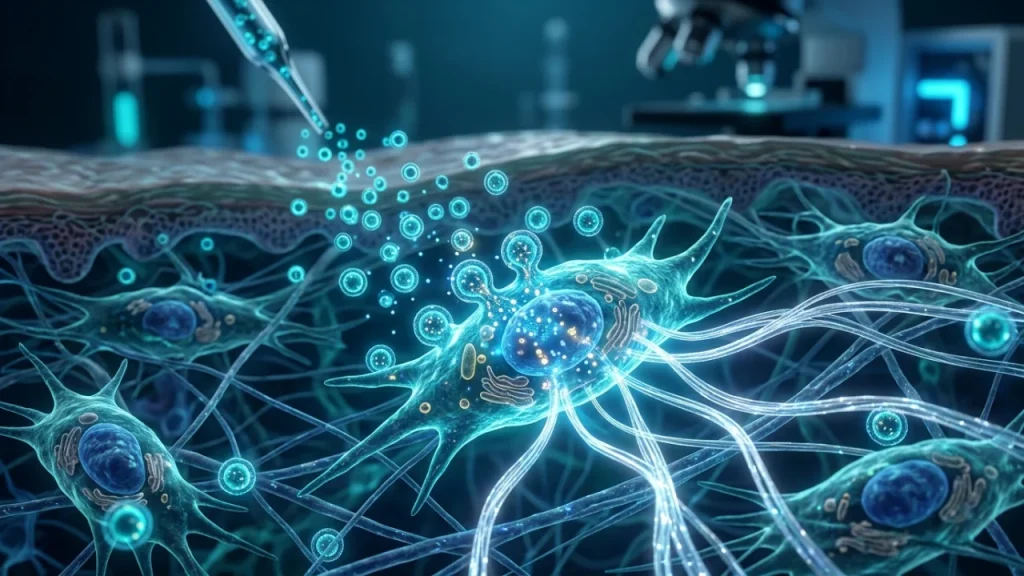
Think of an exosome as a tiny biological text message. It is a microscopic bubble, or vesicle, released by a cell. This bubble carries a precise cargo. The cargo includes proteins, lipids, and genetic instructions. A sending cell packs this cargo carefully. Then it dispatches the exosome into the space between cells.
A neighboring cell receives this message. It absorbs the exosome and reads its contents. The instructions tell the receiving cell what to do. The message might say “make more collagen.” It could command “reduce inflammation.” It might even signal “it’s time to multiply.” This system is fast and efficient. It is your body’s own built-in communication network.
Healthy skin depends on clear cellular signals. As we age, this communication breaks down. Cells send fewer messages. The messages they do send can get scrambled. This leads to visible signs of aging. Skin repair slows. Collagen production drops. Vitality fades.
An exosomes facial treatment aims to support this system. It delivers a high concentration of these natural messengers. The goal is to restore clear communication. It is like giving your skin cells a new set of precise instructions.
What makes exosomes powerful is their cargo. They are not simple chemicals. They are complex information packets. – They can carry growth factors. These are proteins that stimulate cell growth. – They deliver microRNAs. These are small molecules that can turn genes on or off. – They provide enzymes. These help rebuild damaged structures in the skin.
This cargo works in harmony. It does not force cells to act unnaturally. Instead, it encourages them to perform their normal, healthy functions. But it does so with renewed clarity and purpose.
The process is elegant. Exosomes from healthy donor cells are collected and purified. When applied to skin, they merge with your local cells. They deliver their restorative instructions directly where needed. Your own cells then execute the plan. They use their innate machinery to rejuvenate the tissue.
This is different from many traditional approaches. Some treatments add a single synthetic compound. They tell the skin to do just one thing. Exosomes offer a coordinated set of native commands. They support multiple aspects of skin health at once.
Understanding this changes how we view skin care. The focus shifts from just adding substances to fixing communication. The goal is to help your skin help itself. By leveraging these cellular messengers, we tap into the body’s own intelligence for repair and renewal. This foundational knowledge sets the stage for seeing how such treatments are applied in practice.
How Exosomes Differ from Stem Cells in Aesthetics
Many people hear about stem cells in beauty treatments. Exosomes are different. They are not cells at all. Think of stem cells as whole factories. They are living units that can divide and become different cell types. An exosome is more like a smart message sent from that factory. It carries instructions but cannot grow or replicate by itself.
This difference matters for safety and results. Live stem cells are complex. They must stay alive and integrate into your tissue. Their behavior can sometimes be unpredictable. Exosomes avoid these challenges. They deliver a precise set of commands and then are gone. Your own cells follow the instructions.
Consider how each one works in the skin. – A stem cell treatment aims to add new, working cells to an area. – An exosomes facial treatment focuses on reprogramming the cells you already have.
The exosome approach is about communication. It tells your existing skin cells to act younger and healthier. The cells then make more collagen. They improve their own repair processes. They become more resilient.
Mechanically, the products are not the same. A stem cell preparation contains fragile, living organisms. It requires careful handling and storage. Exosome preparations contain stable vesicles. Their cargo is protected inside a lipid bubble. This makes them easier to store and use.
The effect timeline also differs. Stem cells may need time to settle and start working. They might not survive long. Exosomes act quickly. They merge with target cells and deliver their signals within hours. The rejuvenating process starts almost immediately. The results come from your cells’ renewed activity.
There is another key point about sourcing. Stem cells for aesthetics often come from your own body or donors. This involves a more involved process. Exosomes can be collected from millions of healthy donor cells in a lab. A large amount of potent signaling material can be purified from these cultures. This creates a consistent, powerful product.
Why should you care about this distinction? Understanding leads to better choices. Some treatments promise stem cell miracles but use inactive materials. A true exosome treatment has a specific, science-backed mechanism. It leverages signaling, not cell replacement.
This signaling is powerful because it is natural. Your body uses exosomes every day for cell talk. A treatment simply amplifies this normal process. It gives your skin a clear set of instructions it already knows how to read.
The goal is not to add foreign life but to clarify internal communication. Your skin’s cells become better listeners and more active participants in their own renewal. This is a subtle but profound shift in aesthetic science.
We move from the idea of adding parts to upgrading the system’s software. The hardware—your cells—remains yours. They just operate with better information and energy.
This explains the growing interest in exosome technology. It offers a targeted, efficient, and logical path to skin rejuvenation. The next logical question is about the experience itself. How is this technology applied in a clinical setting?
The Science Behind Extracellular Vesicles
Imagine your body’s cells are like a vast city. They don’t use phones or email. Instead, they send tiny, sealed packages to one another. These packages are called extracellular vesicles. Exosomes are one specific, highly sophisticated type of these vesicles.
Think of a cell as a factory. Inside, it creates these small bubbles. They form inside a compartment called the endosome. This compartment matures and creates many tiny vesicles inside itself. Scientists call this a multivesicular body. It’s like a shipping container full of individual parcels.
The cell then sends this container to its outer membrane. The container fuses with the cell’s wall. All the tiny parcels are released into the space around the cell. Now they are free to travel. They carry a precise cargo from the sender cell.
What’s inside these parcels? The cargo is not random. It is carefully selected. The contents include: – Signaling proteins that act as instructions. – Lipids that can influence recipient cell membranes. – Nucleic acids like RNA and microRNA. These are genetic messages.
This cargo is protected by a lipid bilayer membrane. This membrane is similar to your own cell membranes. It shields the contents during travel. It also ensures the package is delivered to the right address.
The “address” comes from molecules on the exosome’s surface. These molecules can bind to specific receptors on a target cell. It’s like a key finding a lock. Once attached, the exosome can deliver its cargo in a few ways.
It might fuse directly with the target cell’s membrane. The contents empty directly into that cell. Alternatively, the target cell might swallow the entire exosome whole. This process is called endocytosis. The messages are then unpacked inside.
This system is constant and natural. Every healthy cell in your body participates in this exchange. It’s how a skin cell knows to make collagen. It’s how a healing response gets coordinated after a minor injury.
The power for an exosomes facial treatment lies in harnessing this exact system. The treatment provides a concentrated dose of these pre-programmed signals. It’s not adding new cells. It’s delivering a massive volume of clear, corrective instructions to your skin’s existing cells.
Different donor cells send different messages. Exosomes from mesenchymal stem cells often carry signals for repair and regeneration. These are the signals commonly used in aesthetic applications. They tell skin cells to calm inflammation, produce new collagen, and accelerate turnover.
The science is precise because the mechanism is specific. This isn’t a vague stimulation. It is the targeted delivery of nature’s own communication tools. Understanding this turns a complex concept into a simple, logical idea.
Your skin’s cells are always listening for signals. An exosome treatment simply turns up the volume on the most helpful messages. The next step is to see how this science translates into a real clinical procedure.
Why Exosomes Matter for Anti-Aging
Aging skin is not just a surface issue. It begins deep within your cells. Over time, your skin cells receive muddled signals. They also send out weaker messages. This breakdown in communication leads to visible changes. Exosomes matter because they can reset this cellular conversation.
Think of a young, healthy skin cell. It is a good listener and a clear talker. It promptly responds to signals for making collagen and elastin. These are the proteins that keep skin firm and springy. The cell also efficiently repairs daily damage from the sun and the environment. As cells age, this efficiency drops. They produce less collagen. Repair mechanisms slow down. Chronic, low-level inflammation often sets in. This quiet inflammation is a key driver of aging.
An exosomes facial treatment intervenes at this precise point. It delivers a high concentration of youthful instructions. These messages directly counter the core processes of skin aging.
The signals carried by exosomes target several key areas. They instruct older cells to behave in more youthful ways. This is not science fiction. It is cellular reprogramming using the body’s own language.
First, exosomes can boost collagen and elastin production. Aged skin cells often ignore the normal signals to make these proteins. Exosomes from stem cells carry potent reminders. They tell fibroblast cells to become active builders again. This leads to a stronger dermal structure.
Second, these vesicles help regulate inflammation. Aging skin often exists in a state of constant, low-grade alert. This harms tissue and impairs renewal. Exosomes carry molecules that calm this response. They help restore a balanced, healthy cellular environment.
Third, they enhance the skin’s natural repair and turnover cycles. Old, damaged cells persist longer on aged skin. New cell production slows. Exosome signals encourage faster renewal. They support the creation of fresh, healthy cells.
Fourth, exosomes promote better blood vessel formation and health. Improved microcirculation delivers more oxygen and nutrients to skin cells. This results in a healthier glow and better function.
The power lies in the coordinated attack. A single topical cream might address one of these issues. Exosomes work on multiple fronts at once because that is how natural cellular communication works. The messages are integrated and logical.
Consider sun damage as an example. UV exposure damages cellular DNA and creates harmful molecules called free radicals. An aging cell struggles to fix this damage fully. Exosomes can deliver a toolkit of instructions. These signals enhance DNA repair pathways. They also upregulate the cell’s own antioxidant defenses. The cell becomes more resilient.
The outcome is skin that functions better at a fundamental level. Results are not just about adding a temporary plumping effect. The goal is to improve the actual quality and health of your skin tissue. This leads to visible improvements in texture, tone, and firmness.
Why should you care about this mechanism? Most anti-aging approaches are external or disruptive. They add foreign substances or cause controlled injury to trigger a response. Exosome therapy is different. It works by enhancing your skin’s innate intelligence. It supplies the missing memos in a language your cells already understand.
This makes it a compelling option for proactive aging prevention. It is also powerful for restoring fatigued, damaged skin. The next logical question is about safety and how these natural messengers are prepared for clinical use.
How Exosomes Facial Treatment Works Step by Step
Preparing Your Skin with Micro-Needling
Micro-needling creates the necessary pathways for exosomes to reach their target cells. Think of your skin’s outer layer, the stratum corneum, as a tough, protective barrier. This barrier is excellent at keeping things out, including helpful biological signals. A topical serum alone cannot deliver exosomes deeply enough. They would remain on the surface where their message is lost.
This is where controlled, microscopic channels become essential. A professional uses a sterile device tipped with fine needles. These needles are incredibly small. Their length can be precisely adjusted. Typical depths for this procedure range from 0.2 to 0.5 millimeters. This depth is carefully chosen. It is deep enough to bypass the superficial barrier. Yet it remains shallow enough to avoid significant pain or damage.
The process is not about injury. Its goal is access. Each tiny needle creates a micro-channel through the outer skin layers. These channels are temporary pathways. They close within a day as the skin naturally heals. But during the crucial window immediately after treatment, these channels are open. This allows direct passage into the dermis. The dermis is the skin’s living, functional layer.
Here is what happens in that living layer during and after micro-needling: – The precise physical stimulation triggers a mild, beneficial alarm signal in the skin. – This signal increases blood flow to the area. Cells become more active and receptive. – Healing factors and growth signals are naturally released at the site. – The skin enters a state of heightened communication and repair readiness.
This prepared state is ideal for an exosomes facial treatment. The exosome solution is applied topically right after micro-needling. The micro-channels act like direct mail slots into the neighborhood of skin cells. The exosomes can now travel down these temporary passages. They bypass the clogged postal system of the surface barrier. This ensures a high percentage of the vesicles reach the dermal cells.
Without this step, most exosomes would not get through. Their sophisticated messages would go unheard. Micro-needling solves the delivery problem elegantly. It uses the skin’s own structure to facilitate the process. The method is synergistic. The micro-needling primes the cellular environment. It makes cells alert and ready to listen.
Then the exosomes arrive with their precise instructions. The combination is powerful. One technique enables delivery. The other provides the intelligent cargo. This two-part approach mimics a natural biological sequence. A signal for attention is sent first through micro-neeedling. Then the detailed information follows via exosomes.
The entire procedure is typically quick. Discomfort is minimal, often described as a light scratching sensation. Redness afterward is normal and fades quickly. The focus remains on function over drama. The goal is simply to open lines of communication that nature designed to be closed to outsiders. This preparation turns a theoretical concept into a practical reality. It allows your skin to finally receive the memos it has been missing.
The next step examines what happens once the exosomes successfully enter this prepared environment and begin their work at the cellular level.
Applying the Exosome Solution Effectively
The prepared skin presents a unique temporary landscape. Countless microscopic channels are now open. These channels are not wounds. They are transient access points. They begin to close within minutes as the skin’s repair systems activate. This creates a narrow but critical window for application.
The exosome solution is applied directly after micro-needling. Timing is everything. The solution is typically a clear liquid. It is housed in a sterile vial. A clinician will dispense a specific volume onto the treatment area. This is not a generic amount. The volume is calculated based on the size of the area being treated. Consistency is key for even results.
The application method itself is gentle yet deliberate. The goal is full coverage without waste. Clinicians often use a sterile gloved finger or a sterile brush. They spread the solution in a thin, uniform layer. A light, circular massage motion is common. This motion helps guide the liquid into the micro-channels.
Think of it like watering a garden. The soil has just been aerated. You pour water slowly and evenly. The water soaks deep into the prepared earth. It does not simply run off the hard surface. The exosome solution acts similarly. It flows into the channels created by the micro-needles.
The solution does not just sit on top. Capillary action pulls it downward. This is a natural physical process. Fluids move into narrow spaces without external force. The exosomes are carried along in this flow. They move from the surface into the deeper dermal layers.
This direct delivery is what makes an exosomes facial treatment so efficient. The vesicles bypass the dense outer layer of skin. They avoid the usual barriers. They reach living, active cells quickly. Their biological messages are delivered while the cellular environment is most receptive.
Several factors ensure effective application: – Skin remains slightly damp from any prior cleansing. This helps the solution spread evenly. – The patient lies still to prevent pooling or uneven distribution. – Ambient temperature is controlled. Extreme heat or cold could affect the solution or skin.
The entire application process is swift. It usually takes just a few minutes. There is no downtime required after this step. The skin absorbs the solution rapidly. A faint tacky feeling may remain briefly. This feeling soon disappears.
The exosomes are now on their intended journey. They are inside the pathways created for them. Their environment is optimal. The cells below are alert from the micro-needling process. Communication lines are open.
This phase transforms preparation into active treatment. The theoretical becomes biological reality. The sophisticated cargo is now en route to its cellular targets, ready to issue precise instructions for renewal and repair. The next events occur at a scale invisible to the eye, where cellular machinery receives and acts upon these new signals.
The Delivery Process into Skin Cells
The exosomes now contact the target cells. They do not force their way inside. Cells actively invite them in. This process is called uptake. It is a normal cellular function. Cells constantly sample their environment with this method.
Think of a cell’s membrane as a highly guarded border. Specific “checkpoints” exist on this border. Exosomes carry the right molecular identification. They present this ID to the cell’s surface receptors. These receptors recognize the signals. The cell then decides to allow entry.
Several uptake pathways exist. The primary method for exosomes in skin is likely endocytosis. The cell membrane gently folds inward around the vesicle. It forms a small pocket. This pocket pinches off inside the cell. The exosome is now enclosed in a protective bubble called an endosome.
This internal bubble travels deeper into the cell’s cytoplasm. The environment inside the endosome becomes acidic. This change in acidity acts as a trigger. It causes the membrane of the endosome and the exosome to merge. This critical step is called fusion.
Fusion releases the exosome’s cargo directly into the cell’s interior. The cargo includes various active molecules. – Signaling proteins instruct the cell to change its behavior. – Growth factors can prompt cellular repair and multiplication. – Nucleic acids like mRNA can provide new blueprints for protein production.
The released molecules interact with the cell’s own machinery. They bind to specific targets. A signaling protein might activate a pathway for collagen synthesis. A piece of mRNA could be read by ribosomes to create a beneficial protein. The effect is precise and natural. The cell follows these new instructions using its own energy and systems.
This direct delivery explains the potency of an exosomes facial treatment. The vesicles act as sophisticated couriers. They ensure their biological messages arrive intact. They ensure these messages are delivered to the correct cellular department. No signal is lost or diluted along the way.
The entire process from adhesion to cargo release is efficient. It can happen within hours after application. Multiple exosomes enter many target cells simultaneously. This creates a coordinated response across the tissue.
Skin cells like fibroblasts and keratinocytes are common targets. Fibroblasts respond by producing more structural proteins. This action strengthens the skin’s foundation. Keratinocytes may improve their turnover and barrier function. The result is a unified push toward rejuvenation.
The cells treat the exosomal cargo as their own biological mail. They do not reject it as foreign. This makes the therapy both powerful and biocompatible. The process uses the cell’s inherent language and logistics.
No external force drives this change. The exosomes simply provide updated instructions. The cell’s own complex machinery executes them. This leads to sustained, natural-looking results. The changes emerge from within the living cellular network.
After releasing their cargo, the empty exosome membranes are recycled. Their components are broken down by the cell. They are used as raw materials for other processes. Nothing goes to waste in this efficient system.
The delivery process is now complete. Cellular activity shifts into a new phase of production and repair. The initial instructions have been received. The next stage involves visible tissue renewal over the following weeks.
Activating Cellular Renewal Pathways
The delivered exosomal instructions now reach their final destination: the cell’s command center. This is the nucleus. The nucleus holds our DNA. Think of DNA as a massive library of genetic blueprints. Most of these blueprints are stored away. They are not actively being read. The exosomal cargo contains specific transcription factors and microRNAs. These molecules act like precise search commands. They find the exact genetic blueprints the cell needs for repair.
These blueprints are for skin renewal. They include codes for collagen and elastin. They also hold plans for hyaluronic acid and other vital components. The exosomal signals unlock these files. This process is called gene activation. It is the first critical step. The cell shifts from a normal state to a focused renewal state. This is the core of an exosomes facial treatment. The therapy turns on the skin’s innate repair programs.
The activation happens quickly. Key pathways like TGF-β and Wnt are often involved. These are fundamental cellular communication routes. They govern growth and structure. Exosomes gently modulate these pathways. They do not force them. The cell simply follows its updated instructions. The result is a coordinated shift in cellular behavior across the treated area.
Once a gene is activated, its blueprint is copied. This copy is called messenger RNA, or mRNA. The mRNA carries the instructions out of the nucleus. It travels to the cell’s protein factories. These are called ribosomes. The ribosomes read the mRNA sequence. They then assemble amino acids in the correct order. This builds new proteins molecule by molecule.
This production phase is systematic and sustained. – Collagen type I and III are primary targets. These proteins form a strong, supportive network in the dermis. – Elastin production is also stimulated. This protein gives skin its snap-back elasticity. – Enzymes that degrade old damaged proteins may be downregulated. This protects the new framework. – Growth factors support new blood vessel formation. This improves nutrient delivery.
The entire cell becomes a dedicated renewal hub. Its energy and resources focus on this new task. Metabolism increases to fuel the building process. This is not a superficial change. It is a deep, functional shift in the skin’s biology. The effects are cumulative over weeks.
Fibroblasts become highly active. They are not just making more collagen. They are making better quality, more organized collagen fibers. This improves tensile strength and texture. Keratinocytes also receive signals for healthier turnover. A stronger skin barrier begins to form from within.
The process mirrors how skin heals after a minor wound. But there is no wound here. There is only a precise biological signal. The exosomes facial treatment provides that signal efficiently. It tells mature adult cells to act with youthful vigor once more.
This activation phase sets everything in motion for visible change. Cellular renewal pathways are now fully engaged. The next stage involves remodeling the tissue’s structure with these newly made components, leading to the tangible improvements patients see and feel in the mirror.
—
Key Benefits of Exosomes for Skin Health
Stimulating Natural Collagen Production
Collagen is the most abundant protein in your skin. It forms a strong, supportive scaffold. This scaffold keeps skin firm, smooth, and youthful. As we age, our cells produce less collagen. The existing collagen also becomes damaged. This leads to wrinkles, thinning skin, and loss of structure. An exosomes facial treatment directly addresses this core issue. It sends clear instructions to your skin’s fibroblasts.
Fibroblasts are the cells that make collagen. Think of them as construction factories. Exosomes deliver the blueprints and tools to these factories. The messages inside exosomes tell the fibroblast to switch into high-production mode. The cell’s machinery for making proteins gets busy. It starts producing more collagen strands.
This is not random production. The process is organized and precise. The main type of collagen made is Type I. This type provides the main structural strength for skin. Type III collagen is also made. It forms a more flexible network alongside Type I. Together, they create a dense, supportive mesh.
The building of a collagen protein is a complex chain. It starts with genetic instructions in the cell’s nucleus. Exosome signals can turn these instructions on. The cell then assembles amino acids into long chains called procollagen. These chains are shipped outside the cell. Enzymes then trim these chains. Finally, they join together to form strong, mature collagen fibers.
This entire process needs raw materials and energy. Exosome signaling helps here too. It can boost the cell’s metabolism. This provides more energy for the building work. It also improves nutrient uptake. The fibroblast gets the supplies it needs to operate at peak efficiency.
The result is a net increase in new, healthy collagen. This is crucial. Many treatments only break down old collagen. They do not effectively stimulate new growth. Exosomes focus on creation. They help your skin rebuild its foundation from within.
The new collagen fibers integrate into the existing dermis. They reinforce the weakened structure. This integration happens gradually over weeks and months. The skin’s tensile strength improves. Think of it like adding new steel cables to a bridge. The bridge becomes stronger and more stable.
Increased collagen directly translates to visible benefits. – Fine lines begin to soften. The new plump support fills them from below. – Skin thickness improves. Thinning skin gains density and resilience. – The skin’s contour becomes smoother. A stronger scaffold prevents sagging. – Overall firmness returns. Skin feels more taut and lifted.
This collagen production is a natural process guided by biological signals. There is no foreign material implanted. Your own cells make the collagen using their innate systems. The treatment simply provides the precise catalyst to restart this vital function at a youthful level.
The benefits are cumulative with each treatment session. More signals lead to sustained cellular activity. This builds a lasting reserve of collagen in the skin. Maintaining this renewed production is key for long-term results.
Stimulating collagen is perhaps the most significant effect of exosome therapy for aging skin. It tackles a fundamental cause of aging, not just its symptoms. Once this robust production is underway, the skin gains the capacity for better hydration and a healthier overall appearance, setting the stage for comprehensive rejuvenation.
Boosting Elastin for Better Firmness
Collagen provides strength, but elastin gives skin its bounce. Think of your skin’s support system like a mattress. Collagen is the sturdy springs. Elastin is the resilient foam layer on top. It allows the skin to stretch and then snap back into place. Without enough elastin, skin loses its tightness. It begins to permanently sag.
Elastin fibers form a network throughout the dermis. They are highly flexible proteins. Your skin uses them every time you smile or frown. Young skin is rich in elastin. This keeps it firm and smooth. Aging and sun exposure break down these vital fibers. The body also slows its production of new elastin. The network weakens. Skin loses its ability to recoil fully.
This is where an exosome facial treatment offers a targeted solution. Exosomes carry specific instructions to skin cells called fibroblasts. These cells make both collagen and elastin. The signals within exosomes can tell fibroblasts to focus on elastin production. They activate the genes responsible for building new, healthy elastin fibers.
The process is precise and natural. Fibroblasts receive the biological message. They then begin synthesizing more tropoelastin. This is the basic building block of elastin. These molecules are cross-linked into durable fibers. New fibers integrate into the existing, weakened network. They patch and reinforce the elastic lattice.
The result is a measurable improvement in skin firmness. – Skin gains improved resistance to gravity’s pull. – It rebounds faster after being stretched. – The overall appearance becomes more taut and lifted. – Fine lines caused by loose skin may appear reduced.
This boost in elastin works together with new collagen. Collagen gives the skin a strong foundation. Elastin provides the flexible tension on top of it. You need both for optimal firmness. A mattress with only springs would be hard and unforgiving. One with only foam would sink and sag. Skin health requires this balanced support system.
The timeline for seeing improved firmness is gradual. Elastin is a complex protein. The body takes time to produce and organize it properly. Initial changes in cellular activity start quickly. Visible tightening often becomes clear over several weeks. The effect continues to develop for months as the new network matures.
Maintaining elastin is key for long-term results. One treatment can jump-start production. A series of treatments helps sustain this higher level of activity. This builds a lasting reserve of elastic fibers in the skin. Protecting new elastin from sun damage is also critical. UV rays are a primary cause of elastin breakdown.
Combining elastin stimulation with collagen renewal addresses aging comprehensively. It treats both major components of the skin’s structural matrix. This dual approach leads to more natural, holistic rejuvenation. The skin does not just look fuller from collagen. It also looks and feels tighter from renewed elastin.
Ultimately, boosting elastin restores a fundamental property of youthful skin. That property is elastic recoil. This internal tightening supports external contours. It helps define the jawline and cheekbones. It smooths the texture of the neck. Firmness is a cornerstone of a youthful appearance, making elastin production a vital goal for modern aesthetic science.
Enhancing Skin Texture and Luminosity
Skin texture and luminosity depend on healthy, active cells. Exosomes deliver messages that directly improve how these cells function. This leads to visible changes in how skin looks and feels.
Think of your skin’s surface like a freshly paved road. Over time, weather and wear create cracks and roughness. Aging skin acts similarly. Cell turnover slows down. Old, damaged cells linger on the surface longer. New, healthy cells are slower to emerge. This results in a rough, dull complexion. An exosomes facial treatment aims to reverse this process at the cellular level.
Exosomes carry specific instructions to skin cells. One key instruction is to renew themselves faster. They signal basal cells in the deepest layer to divide more efficiently. This pushes a fresher batch of cells upward. The process is called cellular turnover. Faster turnover means old, rough cells shed more quickly. Younger, plumper cells take their place. This directly refines the skin’s texture.
Smooth skin also needs strong hydration. Exosomes help with this too. They carry messages that boost hyaluronic acid production. Hyaluronic acid is a powerful humectant. It binds water within the skin’s layers. Well-hydrated skin cells plump up. This plumping effect fills in tiny crevices and fine lines. The surface becomes noticeably smoother to the touch.
Luminosity refers to the skin’s inner glow. Dull skin often has poor microcirculation and tired cells. Exosomes address this by optimizing cell energy. They deliver signals that improve mitochondrial function. Mitochondria are the power plants inside each cell. Better function means more energy for cellular repair and renewal. A well-functioning cell reflects light more evenly.
Pigmentation irregularities also cause dullness. Sun spots and melasma create uneven patches. Exosomes can help normalize this process. They carry regulatory signals to melanocytes. These are the cells that produce pigment. The messages encourage a more balanced, uniform melanin output. This does not bleach the skin. It promotes a clearer, more even tone over time.
The combined effects create a radiant complexion. – Faster cell renewal reveals fresher skin. – Improved hydration creates a plump, dewy base. – Balanced cell energy enhances natural glow. – Regulated pigment leads to uniform tone.
These benefits are interconnected. You cannot have true luminosity without a smooth texture. You cannot maintain smooth texture without well-hydrated, energetic cells. Exosome signaling works on all these fronts at once. It coordinates the repair process holistically.
The result is not an artificial shine or glitter. It is the natural radiance of healthy skin function restored from within. This improvement in quality often serves as the first visible sign that treatments are working. Patients notice their skin feels softer and looks brighter even before major tightening occurs.
This sets the stage for understanding how these cellular messages also calm inflammation and strengthen the skin’s daily defenses against environmental stress.
Promoting Deep Structural Rejuvenation
True skin rejuvenation starts where you cannot see it. The most important changes happen deep within the dermis. This is the skin’s structural layer. Think of it as the foundation of a house. If the foundation weakens, the walls and paint suffer. Exosome treatments aim to repair this foundation.
The dermis is mostly a network of proteins. Collagen provides strength and firmness. Elastin gives skin its snap-back quality. Hyaluronic acid holds water for volume. Over time, our cells produce less of these materials. The existing network also gets damaged. This leads to thinning skin, fine lines, and loss of shape.
Exosomes address this structural decline directly. They deliver precise instructions to the fibroblasts. These are the cells that build collagen and elastin. The signals tell fibroblasts to become more active and youthful. It is like restarting a stalled construction crew with new blueprints.
The process is not just about making more collagen. It is about making better, more organized collagen. Healthy young skin has a tight, woven collagen matrix. Aged skin has loose and fragmented fibers. Exosome messaging helps restore a healthier pattern. This improves the skin’s tensile strength from within.
An exosomes facial treatment supports this entire environment. The benefits are cumulative and foundational. Consider the key structural improvements.
- Increased collagen production: Fibroblasts receive signals to ramp up synthesis. This rebuilds the dense support layer.
- Enhanced elastin quality: Messages help improve the elastic fiber network. Skin gains better resilience and recoil.
- Matrix protection: Exosomes can carry instructions that protect existing collagen from breakdown enzymes.
- Support for blood vessels: Signals promote a healthier microcirculation. This delivers more oxygen and nutrients to rebuilding cells.
This work takes time to become visible. You will not see new collagen the next day. The process unfolds over weeks and months. Cells must receive the signals, activate, and then produce new proteins. These proteins must then integrate into the existing matrix. The first sign is often improved skin texture and thickness.
The result is not just filling lines from the outside. It is rebuilding the tissue that prevents lines from forming. This is a fundamental difference from many traditional approaches. Structural rejuvenation creates natural, lasting support.
Think of it as training your skin to behave like a younger version of itself. The effects are sustainable because you are improving cellular function. The goal is a self-sufficient system.
This deep-layer renewal also makes surface improvements more durable. Better dermal structure supports epidermal health. A strong foundation allows for better hydration and a lasting glow. The radiance discussed earlier becomes rooted in solid tissue.
Ultimately, promoting deep structural rejuvenation sets the stage for long-term resilience. It prepares the skin to better handle daily stress and environmental exposure. This leads us to the next critical benefit: calming inflammation and fortifying the skin’s defensive barriers.
What to Expect During and After Treatment
The Typical Treatment Session Timeline
A typical exosomes facial treatment session is a concise, in-office procedure. It often takes between thirty to sixty minutes from start to finish. The goal is to prepare your skin and then deliver the exosome solution effectively. This is not a surgical process. You can return to most normal activities immediately afterward.
The session follows a clear sequence. First, your skin undergoes a gentle cleansing. This removes any surface oils, makeup, or impurities. A clean canvas is essential for the next step. The practitioner then creates micro-channels in your skin. This is a critical part of the process.
These tiny openings are made using a specialized device. Microneedling is a common method. Fine needles create controlled, microscopic punctures. They reach into the upper dermis. This does not cause significant damage. Instead, it signals a minor repair response. The channels also serve as direct pathways.
The exosome solution is then applied topically. It is carefully spread over the treatment area. The liquid contains billions of purified exosomes suspended in a carrier solution. These vesicles are now able to enter through the micro-channels. They travel directly into the skin’s living layers.
Some protocols may use other delivery methods. Ultrasonic or radiofrequency devices can also aid application. The principle remains identical: facilitate access to the dermal environment. The actual application of the exosomes themselves is very quick. It usually takes just a few minutes.
You will feel sensations during the procedure. The cleansing step is naturally comfortable. The microneedling phase often involves a topical numbing cream applied beforehand. This minimizes discomfort significantly. Most patients describe a feeling of pressure or mild vibration. It is generally well-tolerated.
After the exosomes are applied, there is a brief waiting period. The solution needs a few minutes to absorb and begin its work. The practitioner may apply a final soothing serum or gel. There are no bandages or stitches required. The session concludes with simple aftercare instructions.
Immediate post-treatment appearance is straightforward. Your skin will look flushed and feel warm. This is a normal inflammatory response to the micro-channel creation. It resembles a mild sunburn. This redness typically subsides within several hours. Some minor swelling can occur but fades quickly.
You can expect some tightness or dryness in the following days. This is part of the skin’s initial healing phase. The microscopic channels close within about twenty-four hours. Your skin barrier remains intact. You can use gentle, non-irritating moisturizers as recommended.
The entire timeline is designed for minimal disruption. The in-office time is brief. The immediate recovery is measured in hours, not days. This contrasts with more invasive procedures that require downtime. You leave the clinic with an active biological process already underway beneath the surface.
Remember that the visible work happens later. The session itself is just the starting event. It places the precise cellular instructions into the correct location. The signaling and protein production described earlier begin quietly after you leave. The treatment session sets the stage for the deep, structural renewal that unfolds over the subsequent weeks.
This efficient process leads directly to a common and important question: how long until you see tangible results from this brief intervention?
Minimal Downtime and Recovery Tips
The recovery phase after an exosomes facial treatment is notably straightforward. Your daily routine can resume almost immediately. This is a key advantage of the procedure. The process relies on biological signaling, not physical trauma.
You might experience some temporary skin sensations. These are normal signs of activation. Common feelings include tingling or mild itching. This sensation often occurs within the first forty-eight hours. It signals that cellular communication has started. Do not scratch your skin if this happens. A cool compress can provide gentle relief.
Your post-treatment skincare is simple but important. It supports the natural healing process. Follow these basic steps for the first week.
- Cleanse your face gently each evening. Use a mild, fragrance-free cleanser. Pat your skin dry with a soft towel. Avoid any rubbing or scrubbing motions.
- Apply a basic moisturizer twice daily. This helps maintain the skin barrier. Look for formulas with ceramides or hyaluronic acid. These ingredients support hydration without irritation.
- Use a mineral-based sunscreen every morning. This is non-negotiable. Your skin is in a state of renewal. Sun protection prevents UV damage from interrupting the new cellular signals. Reapply sunscreen if you are outdoors for long periods.
Avoid certain activities and products for about five to seven days. This gives the exosomes a stable environment to work. Do not use exfoliating acids like glycolic or salicylic acid. Skip retinols and strong vitamin C serums for now. Postpone facials, chemical peels, or laser treatments. Avoid swimming in chlorinated pools or the ocean.
Makeup application is usually fine by the next day. Use clean brushes and non-comedogenic products. Remove makeup gently in the evening.
The timeline for visible changes is gradual. Do not expect dramatic changes overnight. The initial phase is about cellular activity you cannot see. Many people notice improved hydration first. Their skin may feel smoother within several days.
Subtle brightening often appears by the end of the first week. Deeper improvements take more time. Collagen remodeling is a slow process. You may see better skin texture and firmness after three to four weeks. Full results typically develop over one to two months.
Your skin continues its renewal cycle during this period. The exosomes have delivered their instructions. Your cells now execute those plans at their own biological pace.
Monitor your skin’s response. Contact your provider if you see signs of severe rash or infection. These reactions are extremely rare with proper technique.
The ease of recovery aligns with the treatment’s modern approach. It offers a sophisticated intervention without traditional downtime hassles. You invest a small amount of time in the clinic for a long-term gain in skin health.
This leads to a natural consideration of how to maintain and extend these positive results over time.
Seeing Results: Short-Term and Long-Term
You have completed the initial recovery period. Your skin cells are now actively working. The exosomes have delivered their precise instructions. This cellular activity follows a natural biological schedule. Results appear in distinct phases.
The first changes are often subtle. You may notice them within several days. Your skin could feel more hydrated. It might develop a smoother texture. This early phase involves increased cellular communication. Skin barrier function often improves first.
Many people observe a healthy glow by the end of week one. This brightening effect comes from renewed cell activity. Dull surface cells are replaced more efficiently. This is a short-term benefit of the treatment.
Deeper transformations take more time. Your fibroblasts are the key players here. These cells produce collagen and elastin. Exosome signals encourage more active fibroblast behavior. New collagen formation is not an instant process. It requires weeks to begin and months to mature.
You can expect more visible improvements around the three to four week mark. Skin texture often becomes more refined. Fine lines may appear softened. Firmness can improve gradually. These changes result from new structural proteins building up.
The peak results for an exosome facial treatment typically emerge after one full cycle. This is about one to two months post-procedure. Your skin completes a natural renewal cycle in this time. The newly instructed cells have had time to execute their tasks.
Long-term benefits are a crucial aspect. The goal is not just a temporary fix. Exosomes aim to shift your skin into a healthier state. This state can last for many months. The duration depends on several personal factors.
Your age and skin condition influence longevity. Your lifestyle choices also play a major role. Sun exposure is the primary threat to sustained results. Consistent sun protection is non-negotiable. A good skincare routine provides essential support.
Consider these key factors that affect how long your results last: – Sun protection habits and daily SPF use – Overall skin health and baseline collagen levels – Environmental stressors like pollution or smoking – The natural aging process, which continues
The effects are not permanent, but they are enduring. Most people enjoy their best skin for several months. Many providers suggest a follow-up treatment for maintenance. This can help extend the positive outcomes.
Think of it as resetting your skin’s communication network. The cells operate better for a significant period. They eventually return to their older patterns. A maintenance session can deliver fresh instructions.
Your skin continues to age after the procedure. The treatment does not stop time. It temporarily turns back the clock on certain processes. It gives your skin a robust biological advantage.
The final outcome is healthier, more resilient skin. You invest in improving your skin’s intrinsic function. This approach offers a sophisticated alternative to traditional methods. The results unfold with your body’s natural rhythm.
Understanding this timeline sets realistic expectations. It also highlights the importance of proper aftercare for lasting effects. This leads to practical strategies for protecting your investment over time.
Safety and Side Effects Overview
An exosomes facial treatment is a precise clinical procedure. It is not a casual spa service. Understanding the process helps set proper expectations. The experience is generally straightforward for the patient.
The treatment begins with careful skin preparation. Your provider will thoroughly cleanse your skin. This step removes surface oils and debris. It creates a clean canvas for the exosome solution.
Next, providers use a method to create micro-channels. This is often done with a microneedling device or a fractional laser. The goal is not to injure the skin deeply. The goal is to create tiny, temporary pathways.
These micro-channels are incredibly small. They are not visible to the naked eye. They allow the exosome solution to reach the ideal depth. The solution enters the dermal layer where your living cells operate.
The application of the exosome solution comes next. The liquid is gently applied across your skin. It soaks into the micro-channels you just created. The entire active part of the procedure is typically quick.
Most people report minimal discomfort. A topical numbing cream is applied before treatment begins. You might feel a mild sensation of pressure or vibration. Significant pain is very uncommon.
Now let’s discuss safety and typical side effects. Your body recognizes exosomes as natural biological signals. They are not foreign chemicals. This is a key reason for the high safety profile.
Immediate reactions are usually mild and brief. They resemble a mild sunburn. Your skin may appear pink or red. It can feel warm and slightly tight.
These effects are normal signs of an activated healing response. They typically fade within a few hours. For some, redness may persist for up to forty-eight hours. This variation is normal.
Other temporary side effects can occur. Minor swelling is possible. You might experience very light, pinpoint scabbing. Dryness or flaking can follow as the skin renews itself.
Serious adverse events are extremely rare with proper protocol. Infection risk is minimal when sterile techniques are used. Allergic reactions are unlikely because exosomes are not synthetic compounds. Choosing a qualified, experienced provider is your greatest safety measure.
Aftercare is simple but important for optimal results. Avoid sun exposure aggressively for the first few days. Do not use harsh active skincare products for about one week. Keep the skin clean and moisturized with gentle products.
Your skin may feel different within the first week. Many notice improved hydration first. The texture often begins to feel smoother. The visual improvements develop gradually over the following weeks.
The treatment works with your body’s innate systems. It does not force an unnatural change. This biological harmony underpins both its efficacy and its safety. The side effects are simply signs of the process starting.
Listen to your skin during recovery. It will guide you on what it needs. Extra hydration is often beneficial. Total avoidance of direct sunlight is critical.
Report any concerning symptoms to your provider immediately. Persistent severe redness, unusual pain, or signs of infection need professional review. This is standard advice for any aesthetic procedure.
The overall experience is designed for minimal downtime. Most people resume normal activities the next day. You can apply makeup once the initial redness subsides. The focus is on supporting your skin’s natural renewal.
This straightforward approach and safety profile make it a compelling option. Knowing what to expect demystifies the process. It allows you to approach treatment with confidence and realistic optimism. This knowledge prepares you for the final practical step: selecting the right professional for your care.
Why This Approach Represents a Paradigm Shift
Moving Beyond Superficial Skin Correction
Traditional skin treatments often work on the surface. They polish away dead cells. They fill lines from the outside. They relax muscles temporarily. These methods correct what already exists. They do not change how your skin cells behave. An exosomes facial treatment operates on a different principle entirely. It targets the cellular source of skin quality.
Think of your skin as a living community. Surface treatments are like repainting a building’s exterior. The structure underneath remains the same. Exosome therapy is like upgrading the building’s internal communication system. It sends new instructions to the repair crews and material suppliers. This changes how the building maintains itself from within.
The shift is from correction to communication. Exosomes carry specific biological commands. These commands are delivered directly to your skin’s cells. The signals tell your cells to act in a more youthful, resilient way. The process focuses on key regenerative functions.
- It instructs fibroblasts to produce more collagen and elastin. This rebuilds the foundational support grid.
- It enhances the skin’s natural repair mechanisms. Damaged cells are addressed more efficiently.
- It promotes better blood vessel formation. This improves nutrient delivery and overall skin vitality.
- It helps modulate inflammation. This creates a better environment for healthy renewal.
The results are not a mask placed over skin. They are new skin generated by your own activated cells. The improvement comes from within the tissue architecture. This is why changes develop over weeks. Your skin is literally remodelling itself based on new biological information.
Surface treatments provide immediate but often temporary visual change. The effect lasts until the product metabolizes or new wrinkles form. An approach based on cellular signaling aims for lasting functional change. The goal is for your skin to sustain its improved quality for a longer period. It works to improve the skin’s inherent capacity.
This paradigm shift moves aesthetics closer to regenerative medicine. The focus is on restoring function, not just appearance. By leveraging the body’s innate communication systems, the treatment aligns with your biology. It does not fight against natural processes. It seeks to optimize them.
This fundamental difference explains the unique recovery and results profile. It also underscores the importance of practitioner skill and product quality. The next logical consideration is how to ensure you receive a genuine, potent treatment that delivers on this scientific promise.
Empowering the Skin’s Own Repair Processes
Traditional skin treatments often work from the outside in. They can supply materials or force a reaction. An exosomes facial treatment works differently. It provides instructions. Think of a damaged skin cell as a confused worker. It has stopped doing its job well. It might not make enough collagen. It might send out inflammatory signals. An outside cream can give it some raw materials. But it does not tell the cell how to fix its core problem.
Exosomes carry precise messages. They are like a fleet of tiny courier drones. Each drone carries a specific set of instructions. These instructions are meant for your skin’s own cells. The messages are not foreign. They are the same types of signals your young, healthy cells use to talk to each other. The treatment simply restores a conversation that has slowed down with age or damage.
The process starts with delivery. In a professional setting, exosomes are applied after creating micro-channels in the skin. This allows them to reach the living dermal layer directly. They do not need to penetrate a thick barrier. Once inside, they travel to target cells. Your skin cells have docking stations for these vesicles. The exosome merges with the cell and delivers its cargo.
This cargo contains different types of instructions. – MicroRNAs can tell the cell’s nucleus which genes to turn on or off. They might switch on collagen production. – Proteins can activate specific pathways inside the cell. They might trigger cellular renewal. – Growth factors can signal for new blood vessel formation. This improves local blood flow.
The key is specificity and coordination. A single ingredient in a serum usually does one thing. A population of exosomes delivers a coordinated program. It addresses multiple parts of the repair cycle at once. One signal might calm inflammation. Another tells fibroblasts to build new support structures. A third encourages old, damaged cells to clear out.
This support is temporary but catalytic. The exosomes themselves are not permanent residents. They deliver their messages and are broken down within days. The change they create, however, persists. You have effectively rebooted the cellular software. The skin cells now follow a healthier, more youthful set of instructions. They begin to function better on their own.
The result is autonomous repair. Your skin is not being propped up by an external substance. It is being guided back to its own optimal state of operation. The cells become more resilient. They communicate better with their neighbors. They respond to daily stress more effectively. This is the essence of empowerment. You are giving your skin the tools and blueprints to fix itself.
This mechanistic view clarifies why results develop over time. Immediate hydration might be visible. True structural change takes weeks. Your fibroblasts need time to manufacture new collagen and elastin strands. New micro-capillaries need time to form and mature. The skin is rebuilding its foundation from within.
Understanding this shift from passive supplementation to active cellular instruction is crucial. It sets realistic expectations for the treatment journey. It also highlights why practitioner technique and exosome quality are non-negotiable factors for success. The next step is examining what defines that critical quality in an exosome preparation and how to identify it.
Sustainable Skin Health for Lasting Radiance
Traditional facials often focus on surface-level improvement. They add moisture or plump skin temporarily. Their effects fade as the product is absorbed or washed away. An exosomes facial treatment works on a completely different principle. It targets the skin’s operational code.
Think of your skin cells as tiny factories. Over time, their machinery wears down. Their instruction manuals become faded. Traditional approaches deliver a temporary supply of goods to the front door. An exosome treatment sends in skilled engineers. These engineers repair the machinery and provide fresh, clear blueprints. The factory then runs efficiently on its own for a long time.
This leads to sustainable change. The goal is not a fleeting glow. The goal is resilient, self-sufficient skin. Results accumulate because cellular behavior is altered. Key processes improve and maintain themselves.
Consider collagen production as an example. After a good treatment, fibroblasts receive clear signals. They are instructed to produce high-quality collagen consistently. This is not a one-time spike. It is a return to a healthier, more youthful production rhythm. The new collagen integrates into your skin’s framework. It provides support for months.
The same applies to other vital functions. – Barrier repair becomes more robust and responsive. – Antioxidant defense systems stay more alert. – Cellular cleanup and renewal cycles operate more regularly.
This creates a compounding effect. Healthier cells create a healthier environment. That environment supports further cellular health. It is a positive feedback loop initiated by the exosome signals.
The longevity of results depends on several factors. The initial health of your skin plays a role. Your age and lifestyle are also factors. The quality of the exosomes used is critical. Proper application technique ensures cells get the message. When these elements align, the shift is profound.
You are not chasing a symptom with a quick fix. You are addressing the root cause of aging signs at the cellular level. The skin’s own repair and maintenance systems are upgraded. This provides lasting radiance from within.
The outcome is skin that better withstands daily challenges. It handles sun exposure better. It copes with pollution more effectively. It retains hydration more efficiently. The skin behaves like a younger version of itself.
This paradigm shift redefines the treatment timeline. You observe gradual improvement over weeks and months. The most significant changes often appear after the initial phase. The skin continues building its new structure.
Patients notice this sustainability. They see reduced downtime between treatments. Their skin maintains its quality longer. It feels fundamentally different—more alive and reactive.
This approach aligns with modern preventive medicine. It is about enhancing intrinsic function to prevent decline. It builds capacity rather than just repairing damage.
The next logical question concerns the source of these powerful signals. Not all exosome preparations are equal. Their biological activity determines their ability to create lasting change. Understanding these differences is essential for anyone considering this path.
The Future of Non-Invasive Aesthetic Medicine
The future of non-invasive aesthetic medicine is moving beyond filling and freezing. It is shifting toward true cellular communication. This field will increasingly focus on sending precise biological instructions. Exosomes are the key messengers in this new approach.
Think of traditional methods as providing external scaffolding or temporarily paralyzing muscles. These methods work from the outside in. The new paradigm works from the inside out. It uses exosomes to deliver a software update to your skin’s cells.
This changes the fundamental goal of a treatment. The goal is no longer just to look good for an event next month. The new goal is to improve how your skin functions for the long term. Healthier skin cells naturally create a better appearance. This is a move from cosmetic correction to functional enhancement.
An exosomes facial treatment exemplifies this shift perfectly. It is not a single procedure with one result. It is a process that recalibrates your skin’s biology. The treatment provides the signals your cells need to perform better on their own.
What does this future look like in practical terms? Treatments will become more personalized. Your own cellular profile could guide the exact exosome preparation used. The focus will be on prevention much more than reversal.
Clinics might offer regular “skin maintenance” sessions. These sessions would use exosomes to keep cellular communication optimal. This would help skin resist environmental damage before visible signs appear. It is like regular tune-ups for your complexion.
The tools in the clinic will evolve alongside the science. Delivery methods will become more sophisticated. Techniques will ensure exosomes reach their ideal targets within the skin. Efficiency and precision will keep improving.
This future also demands more knowledge from patients. People will need to understand their skin’s health at a deeper level. They will evaluate treatments based on biological activity, not just brand names. Informed consent will involve discussions about cellular pathways.
The role of the practitioner transforms as well. They become less of a technician and more of a guide. They help navigate this new biological terrain. Their expertise lies in selecting the right signals for each individual’s needs.
This shift makes aesthetic medicine more aligned with overall wellness. Skin health is a visible indicator of systemic cellular health. Treatments that support skin function may have broader benefits. The line between aesthetics and regenerative medicine will blur.
Potential future applications are vast. They could include targeted protocols for specific concerns like scarring or pigmentation. Each protocol would use exosomes carrying unique sets of instructions. The treatments would address the root cause of these issues.
This approach is inherently more sustainable. It uses the body’s own language and repair systems. It reduces the need for repeated invasive procedures over a lifetime. The results are built to last because they are built by your own cells.
Adopting this model requires patience from everyone involved. The results are cumulative and foundational. The most dramatic changes happen beneath the surface first. Visible improvements follow as a natural consequence.
The industry is already moving in this direction. Research continues to uncover new potentials for exosomal signaling. Each discovery adds another tool to this new toolkit for skin health.
This paradigm shift represents the maturation of aesthetic medicine. It transitions from a reactive field to a proactive one. It exchanges temporary solutions for lasting foundations. The core principle is empowering the body’s innate intelligence.
Ultimately, this future is about optimizing what you already have. It is not about adding foreign substances or fighting natural expressions. It is about supporting your skin to function at its best possible level for your age.
This leads to a critical consideration for anyone interested today. Understanding the source and quality of exosomes becomes paramount. Not all preparations can deliver on this future promise. The next step is learning how to identify the signals that truly work.
Taking the Next Step Towards Youthful Skin
Evaluating If Exosomes Facial Treatment Is Right for You
Deciding on an exosomes facial treatment is a personal choice. It depends on your skin’s needs and your goals. Not every skin concern is right for this approach. Understanding the key factors helps you make an informed decision.
First, consider your primary skin concern. Exosome therapies excel at targeting cellular communication. They are not simple fillers or quick surface fixes. They work best for issues rooted in skin function and repair.
Think about these common goals: – Improving skin texture that feels rough or uneven. – Reducing the appearance of fine lines from sun damage or aging. – Enhancing overall skin tone and dullness. – Supporting recovery after other cosmetic procedures.
If your main goal is immediate volume loss, other options may be more suitable. Exosomes help your skin build its own support. They do not add instant volume like traditional fillers.
Your biological age and skin health matter too. Younger skin with early signs of aging may respond remarkably well. The cellular machinery is still active and ready for guidance. More mature or significantly damaged skin can also benefit. The process may simply require more time and possibly more sessions. A consultation with a qualified provider is essential here.
Realistic expectations are crucial. This is not a one-time miracle treatment. You will not leave the office looking dramatically different the next day. The process is gradual and works from within. Initial changes are often subtle. You might notice better hydration first. Then improved texture and clarity often follow.
Consider your commitment to a skincare journey. An exosomes facial treatment is a powerful catalyst. It is not a standalone solution. For best results, you must support the process. A consistent home care routine with quality products is vital. Sun protection becomes non-negotiable. Healthy lifestyle choices support cellular health from the inside.
Finally, think about your comfort with the science. This treatment relies on your body’s innate biological processes. It is a sophisticated form of signaling, not a synthetic implant. Some people prefer this natural principle. Others may be hesitant about newer biological technologies. Understanding the basic science can ease those concerns.
Ask yourself these questions: – Am I seeking a restorative, long-term result over a quick fix? – Am I patient enough to allow for gradual, foundational improvement? – Am I willing to invest in both the treatment and supportive aftercare? – Do I have access to a trusted, knowledgeable medical provider?
If you answer yes to most points, this path could be a great fit for you. The next logical step is finding a practitioner who prioritizes science and safety. Their expertise will ensure the treatment aligns perfectly with your personal profile.
Finding Reliable Information and Providers
Your decision to explore an exosomes facial treatment is a smart one. Now you need good information. The science behind exosomes is complex. Reliable sources make it clear. Start your search with medical and academic institutions. Look for websites ending in .edu or .gov. These sites explain basic biology well. They avoid commercial hype.
Be careful with clinic websites. Many provide excellent educational content. Others may overpromise. Look for clinics that explain the science simply. They should not guarantee specific results. They should discuss realistic timelines. A good provider focuses on cellular communication. They talk about signaling and skin health. They do not present exosomes as a magic solution.
Search for published research. Use terms like “exosome dermatology” or “extracellular vesicles skin.” You do not need to understand every detail. Look for review articles or clinical studies. Their existence shows active scientific investigation. This confirms the treatment’s basis in research. A complete lack of studies is a warning sign.
Verify provider credentials thoroughly. The person administering your treatment should be a licensed medical professional. This includes doctors, nurse practitioners, or physician assistants. Ask about their specific training with exosome products. How did they learn the protocols? Attend seminars or workshops from scientific organizations? This training is crucial for safety and proper technique.
Consultation is your most important tool. Prepare questions before you go. Ask where the exosomes are sourced from. Ethical providers use approved, laboratory-grown cells. Ask about safety testing. Each batch should be screened for pathogens. Inquire about storage and handling. Exosomes are fragile biological signals. They require careful cold storage until use.
Listen carefully to the answers. A trustworthy expert welcomes these questions. They explain processes without hesitation. They set realistic expectations about your journey. They will emphasize supportive skincare again. They might discourage the treatment if it is not right for you.
Beware of common red flags. Be cautious of claims calling exosomes a “stem cell” treatment. They are different things. Avoid providers who pressure you to book immediately. Steer clear of clinics that cannot explain the source of their products. Pricing that seems too low can also be problematic. High-quality biological products have significant costs.
Your own research builds a foundation of knowledge. It helps you judge conversations with potential providers. You become an informed participant in your care. This leads to better decisions and safer experiences. The goal is a partnership with a skilled professional. Together, you can harness this sophisticated science for your skin’s health.
Your next action is clear. Schedule consultations with two or three providers you have vetted. Compare their knowledge, approach, and comfort with your questions. This direct comparison will reveal your best partner for treatment.
Integrating Exosomes into Your Skin Care Routine
An exosomes facial treatment is not a replacement for your daily skincare. Think of it as a powerful reset button for your skin’s cellular environment. This treatment provides a concentrated set of instructions to your cells. Your daily routine then supports and maintains that new, healthier state.
The signals from exosomes work deep within your skin. They encourage cells to perform their natural functions better. These functions include collagen production and tissue repair. Your daily products work on the skin’s surface and upper layers. They protect and nourish this newly optimized environment. This creates a powerful partnership between advanced treatment and consistent care.
Timing is important for integration. Your skin needs a brief period of recovery after treatment. Your provider will give you specific post-care instructions. These often include using gentle cleansers and avoiding active ingredients for a few days. Sun protection becomes non-negotiable. This careful start protects the cellular communication process.
After this initial phase, you can reintroduce your core products. Your routine should focus on three key goals. These goals are protection, nourishment, and support.
- Protection means daily use of a high-quality, broad-spectrum sunscreen. UV radiation is a primary cause of skin aging. It can disrupt the positive signals from your treatment.
- Nourishment involves hydrating serums and moisturizers. Ingredients like hyaluronic acid and ceramides help maintain a healthy skin barrier. A strong barrier keeps cells functioning well.
- Support comes from targeted active ingredients. Vitamin C antioxidants can defend newly vibrant cells. Gentle retinoids may later support continued cell renewal. Always introduce these slowly.
The true synergy lies in the division of labor. Your exosome treatment addressed fundamental cellular communication. Your daily skincare defends and nurtures the results. One provides a deep biological directive. The other creates the ideal conditions for those directives to be carried out long-term.
Consistency in your routine is now more valuable than ever. Each application of sunscreen or moisturizer supports the treatment’s investment. Think of your daily regimen as essential maintenance for a high-performance system. This integrated approach leads to more sustained and visible outcomes.
Your skin’s needs will continue to evolve. Discuss your ongoing routine with your provider during follow-up visits. They can recommend adjustments based on your progress. This ensures your daily products align with your skin’s new biological activity. The journey to youthful skin is a combination of breakthrough science and dedicated, smart daily care.
Embracing a Holistic Approach to Skin Vitality
Your skin is a living organ, not just a surface. Its health reflects your body’s overall state. An exosome facial treatment can reset cellular communication. But lasting results need support from within. Think of it as building a strong foundation for a house. The treatment provides excellent building materials. Your lifestyle determines how well the house stands over time.
Several key lifestyle pillars directly influence your skin’s biology. These factors work alongside advanced treatments. They help create an environment where your cells can thrive.
- Nutrition provides the raw materials for cell repair and renewal. Foods rich in antioxidants combat daily damage. Omega-3 fatty acids help maintain your skin’s lipid barrier. Simple hydration is crucial. Water supports every cellular process, including the release and uptake of beneficial vesicles.
- Sleep is when your skin does most of its repair work. During deep sleep, blood flow to the skin increases. This delivers nutrients and removes toxins. Growth hormone release peaks, aiding cell regeneration. Consistent, quality sleep allows the signals from treatments to be implemented effectively.
- Stress management is critical. Chronic stress elevates cortisol. This hormone can break down collagen and slow skin healing. It can also disrupt the delicate signaling between cells. Practices like mindful breathing or walking can mitigate this.
- Physical activity boosts circulation. Improved blood flow delivers more oxygen to skin cells. It also helps carry away cellular waste products. This process nourishes the skin from the inside.
Environmental protection goes beyond sunscreen. Pollution particles can generate free radicals on your skin. These unstable molecules damage cellular structures. Consider cleansing your skin thoroughly each evening. This removes pollutants that could interfere with healthy cell function.
Your internal health shows on your face. Conditions like chronic inflammation or hormonal imbalances can affect skin quality. Addressing these with a healthcare provider supports aesthetic goals. It creates a stable internal environment for your skin cells.
This holistic view connects everything. What you eat, how you sleep, and how you manage stress all send biological signals. These signals either support or undermine your skin’s vitality. Advanced treatments like an exosome facial treatment are powerful tools. Their results become more durable when combined with smart daily choices.
The next step is integrating these principles into a sustainable routine. Lasting change comes from small, consistent actions, not drastic overhauls. Consider one area where you can make a positive shift this week. This builds momentum for long-term skin health and enhances the value of any professional treatment you choose.