
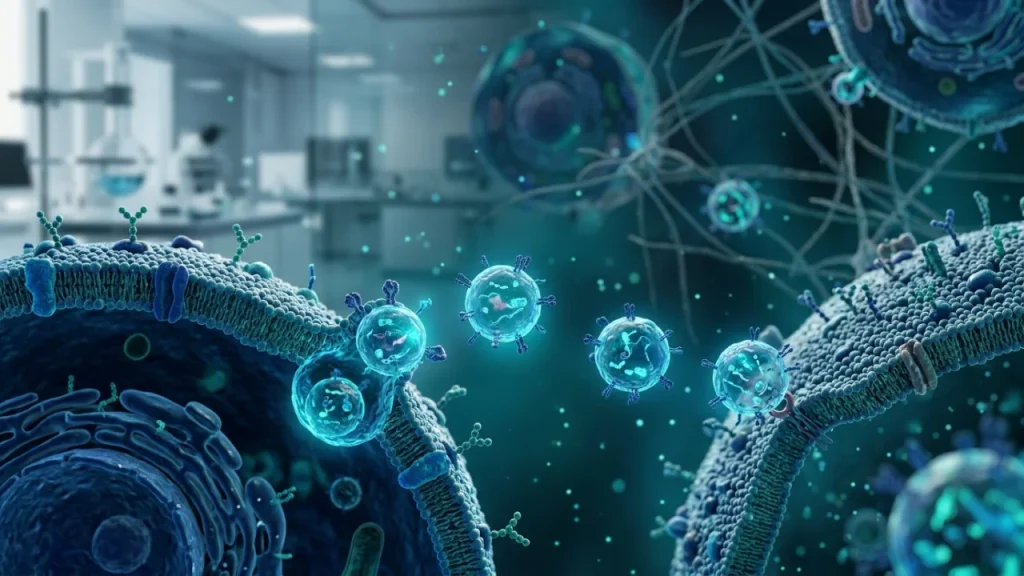
What Are Exosomes and Why Should You Care?
Exosomes Definition Biology: The Basics Explained
Exosomes are tiny messengers. Your cells create and release them constantly. Think of them as biological letters in microscopic envelopes. These envelopes travel between cells to deliver information.
Their size is key. Exosomes measure between 30 and 150 nanometers. You could line up thousands of them across the width of a single human hair. They are far smaller than most cells.
Almost every cell type in your body makes exosomes. This includes your skin cells, nerve cells, and heart cells. They form inside special compartments within a cell. These compartments are called multivesicular bodies.
The cell loads each exosome with a specific cargo. This cargo acts as the message. It tells another cell what to do.
What’s inside an exosome? The cargo is a precise mix of molecules. – Proteins that can change a cell’s behavior. – Lipids that help the exosome fuse with a target cell. – Nucleic acids like RNA. This RNA can turn genes on or off in the receiving cell.
This brings us to a core exosomes definition biology concept. Exosomes are extracellular vesicles. They carry functional signals from one cell to another. This is a major form of cellular communication.
Why should you care about these tiny bubbles? They are fundamental to health and disease. Exosomes help your body coordinate complex tasks. Your immune system uses them to activate defenses. Your brain cells may use them to maintain connections.
They also play a role in sickness. Cancer cells send out many exosomes. These vesicles can prepare other parts of the body for cancer spread. They carry signals that help tumors grow.
Researchers can find exosomes in easy-to-get body fluids. Blood and urine contain many exosomes. This makes them very useful for medicine. Doctors could one day use a simple blood test to detect early disease signs. The test would analyze the exosome messages.
Studying exosomes changed science. For decades, scientists thought cells only communicated through direct contact or hormones. Exosomes revealed a third major pathway. Cells can package complex instructions and ship them afar.
This shipping system is highly selective. A cell doesn’t just dump random material into exosomes. It carefully chooses the cargo. The contents match what the sending cell wants to say. A stressed cell sends a different message than a healthy one.
The discovery of exosomes solved an old puzzle. Scientists knew cells released RNA but didn’t know how it stayed intact outside the cell. Exosomes are the answer. They protect their fragile RNA cargo during transit through the harsh body environment.
Understanding this basic biology opens new doors. If we can read the exosome messages, we can understand what our cells are saying. If we can design our own exosomes, we could send healing instructions to damaged tissue.
This foundational knowledge shows why exosomes matter. They are not cellular waste. They are essential communication tools. Their study bridges gaps between cell biology, medicine, and technology. Next, we will explore how these remarkable vesicles are made and released from cells.
How Small Are Exosomes Compared to Cells?
Exosomes are incredibly small. Their size is key to their function. To understand their scale, we need to compare them to things we know.
First, consider a single human cell. A typical cell is about 10 to 30 micrometers wide. One micrometer is one-millionth of a meter. An exosome is measured in nanometers. One nanometer is one-thousand times smaller than a micrometer. This means you could line up anywhere from one hundred to one thousand exosomes across the width of just one single cell.
Visualize a basketball. This represents a human cell. Now, think of a single grain of fine sand or a tiny marble. That grain represents an exosome. Thousands of these tiny vesicles could fit on the surface of that basketball-sized cell. They are not just smaller. They exist on an entirely different scale of magnitude.
This minute size has major advantages. Their tiny scale allows exosomes to travel freely through body fluids. They navigate the bloodstream with ease. They can slip through tiny spaces between cells. They can even cross some biological barriers that larger particles cannot penetrate. Their small package is perfect for discreet, long-distance cellular messaging.
Think about your own body. A single drop of blood holds billions of exosomes. They come from many different cell types. Platelets, white blood cells, and even cancer cells release them. Each exosome carries its unique molecular cargo in this vast, invisible postal system.
We can use more everyday comparisons. The period at the end of this sentence is massive compared to an exosome. That dot is about 500 micrometers wide. You could fit over three thousand exosomes in a line across that tiny dot. A single human hair is about 80,000 nanometers thick. An exosome is only 30 to 150 nanometers wide. Hundreds of exosomes could be stacked on top of each other to match the thickness of one strand of hair.
This scale makes them impossible to see with normal microscopes. Standard light microscopes cannot resolve objects this small. Scientists needed advanced tools to discover them. Electron microscopes finally revealed these vesicles in the 1980s. These powerful devices use beams of electrons instead of light. They can visualize the tiny spherical shapes of exosomes.
Their size also defines their exosomes definition biology. In biological terms, they are nano-scale extracellular vesicles. “Nano-scale” simply means they are between 1 and 1000 nanometers. “Extracellular” means they exist outside of cells. “Vesicle” means a small fluid-filled sac. This precise definition hinges on their physical dimensions.
Why should you care about such a small thing? Their size is directly linked to their huge potential. Because they are so small and natural, they are ideal candidates for next-generation medicine. Imagine designing therapeutic exosomes to act like smart delivery trucks. Their natural tiny size lets them target specific tissues. They could deliver drugs directly to diseased cells with minimal side effects.
Their small scale also makes them perfect for diagnostics. A simple blood test can capture them. Lab machines can sort them and analyze their cargo. The messages inside these nano-packages can warn us about disease long before symptoms appear. Early cancer signals or brain changes could be detected through these tiny messengers.
In summary, the nano-scale of exosomes is not just a curious fact. It is the foundation of their entire biological role. Their tiny size enables their travel, protects their cargo, and unlocks their medical potential. Understanding this scale helps us see why such a small particle can have such a large impact on health and science. Next, we will look inside these vesicles to see exactly what cargo they carry on their journeys.
Where Do Exosomes Come From in Your Body?
Your body is a bustling city of cells. These cells constantly talk to each other. They do not use phones or emails. Instead, they send tiny packages. These packages are called exosomes. Virtually every cell type in your body can make and release them.
Think of a cell as a factory. Inside this factory, special compartments called endosomes sort cellular material. Some of these endosomes form smaller vesicles inside themselves. These internal vesicles are like boxes being packed for shipment. The endosome, now full of these vesicles, moves to the cell’s outer wall. It fuses with the cell membrane. Then it releases its cargo of exosomes into the space outside the cell. This process happens all the time.
You can find exosomes in every bodily fluid you can think of. This is a key part of their exosomes definition biology. They are not just in one place. Scientists find them in blood, which is like the body’s main highway. They are also in urine, saliva, and breast milk. They exist in spinal fluid and even in the fluid between your joints.
Different cells send different messages. Your immune cells release exosomes to alert others about an infection. Stem cells dispatch them to help repair damaged tissue. Nerve cells in your brain use them to maintain healthy connections. Fat cells send out exosomes that can influence your metabolism. Each exosome’s cargo reflects the state and function of its parent cell.
Some cells become especially chatty under certain conditions. For example, a cancerous tumor sends out far more exosomes than healthy tissue does. These tumor-derived exosomes can carry signals that help the cancer grow and spread. They can even trick your immune system. This is why researchers study them so closely for early detection.
The journey of an exosome starts at its source cell. From there, it travels through bodily fluids. Its final destination depends on the address tags on its surface. These tags guide it to a specific target cell. The target cell then absorbs the exosome and reads its molecular message.
Here are some major sources of exosomes in your body: – Blood cells: Platelets and white blood cells release many exosomes into your bloodstream. – Epithelial cells: These lining cells in your gut, lungs, and skin are major producers. – Neurons: Brain cells use exosomes for communication and waste removal. – Mesenchymal stem cells: These repair cells send out exosomes with healing signals.
This constant production is vital for health. It allows organs to coordinate their activities. It lets your immune system patrol your entire body. It enables distant tissues to respond to changes elsewhere. Without this flow of exosomal messages, your body’s systems could not work together so smoothly.
In essence, exosomes come from everywhere inside you. They are a fundamental part of how your body operates at a cellular level. Their origin story explains their presence in simple blood tests. It also hints at their medical promise. Since they come from our own cells, they are natural carriers. Next, we will unpack these carriers to see what precise messages they deliver.
Why Exosomes Are Called Cellular Messengers
Think of your body’s cells as a vast network of offices. They don’t have email or phones. Instead, they send physical packages. An exosome is one of these packages. It is a tiny bubble filled with molecular instructions. This is the core of the exosomes definition biology. These vesicles are not random garbage bags. They are carefully packed mail.
The sending cell loads each exosome with specific cargo. This cargo acts as the message. Different cargo creates different instructions for the receiving cell. What goes inside? The contents are precise and varied. – Genetic blueprints like RNA. These can tell the target cell to make new proteins. – Proteins that can activate or shut down processes. – Signaling molecules that change the cell’s behavior immediately.
The surface of the exosome is just as important as its contents. It is covered in address tags. These tags are proteins and sugars. They match receptors on certain target cells. It is like a zip code system. A liver cell exosome will have tags that guide it to another liver cell. A nerve cell exosome has different tags for the brain.
Delivery is a key step. The exosome doesn’t just bump into a cell. It docks. The address tags lock onto the target cell’s surface. Then, one of two things happens. The exosome can fuse with the cell’s outer membrane. It spills its cargo directly inside. Alternatively, the whole vesicle can be swallowed by the cell. The cell then opens the package internally.
The message gets read immediately. If the cargo is a signaling protein, it might trigger a chain reaction. If it is RNA, the cell’s machinery uses it to build new tools. The effect can be profound. A simple exosome can tell a cell to grow, to move, or even to die. It can order a cell to calm inflammation. It can instruct a cell to repair damaged tissue.
This system is incredibly fast and local. It is more targeted than hormones floating in the blood. It is more complex than direct contact between two cells. Exosomes allow one cell to influence many others at a distance. They also let cells send out signals without exposing themselves.
Consider a real example. Your skin gets a cut. Damaged skin cells and immune cells release exosomes. These vesicles rush to the area. They carry messages that say “inflame” and “repair.” They tell blood vessels to leak fluid to clean the wound. They instruct collagen-producing cells to start building new tissue. All this coordination happens via exosomal packages.
The same process goes wrong in disease. A cancerous tumor sends out exosomes with dangerous commands. These messages can tell blood vessels to grow toward the tumor. This feeds it more oxygen and nutrients. Other exosomes might tell immune cells to stand down. They create a shield of silence around the growing mass.
This messaging system is constant and essential. Every fluid in your body contains these vesicles. Your blood, saliva, and even urine are full of cellular messages in transit. Scientists can now intercept these packages. They can read their contents to check for disease signals. They can also try to design new exosomes with healing commands.
Understanding this turns exosomes from abstract bubbles into vital couriers. Their power lies in their dual nature: targeted address and programmable cargo. This makes them natural messengers for medicine’s future. Next, we must explore what these messages reveal about our health in real time.
The Main Jobs of Exosomes in Healthy Bodies
Exosomes keep your body in constant conversation. They are not just for emergencies like cuts. They manage daily health. Think of them as a microscopic postal service. Every cell can send and receive packages.
One main job is waste removal. Cells constantly renew their machinery. Old or broken proteins get tagged for disposal. The cell packages this molecular trash into exosomes. It then ships these vesicles out into the extracellular space. Neighboring cells or the immune system can then break them down. This keeps the cellular environment clean and functional.
Exosomes also deliver essential supplies. Their cargo includes more than just messages. They carry active molecules directly to other cells. A healthy cell might send out exosomes loaded with genetic blueprints. These are called microRNAs.
- These microRNAs can silence harmful genes in a recipient cell.
- They can boost the production of helpful proteins.
- This process fine-tunes cell behavior without altering its core DNA.
This is a fundamental part of normal development and tissue maintenance.
Immune system coordination relies heavily on exosomes. Your immune cells use these vesicles to talk to each other. For instance, a dendritic cell encounters a potential threat. It can package pieces of that threat into an exosome. It then sends this “sample” to a T-cell. This educates the T-cell about what to hunt. This process primes your defenses efficiently. It avoids the need for direct and risky cell-to-cell contact.
Another critical role is tissue repair and renewal. Even without injury, tissues wear out. Exosomes help manage this turnover. Stem cells release exosomes that instruct mature cells. They tell them when to divide or when to rest. In your bones, exosomes help balance the work of cells that build new bone and cells that break old bone down. This maintains strong skeletal structure throughout your life.
The nervous system uses exosomes for upkeep too. Neurons in your brain and spinal cord release them. These exosomes can transfer protective molecules between neurons. They help clear misfolded proteins linked to brain health. This constant shuttle service supports cognitive function and nerve health over decades.
Metabolism is also regulated by exosomal traffic. Fat cells, or adipocytes, release exosomes that influence how other tissues use sugar. After you eat, these signals help ensure muscles take up glucose properly. This maintains your body’s energy balance and supports metabolic health.
Understanding these jobs gives a clear exosomes definition biology. They are essential extracellular vesicles for routine cellular management. Their functions are targeted and specific. This makes them different from simple chemical signals floating in your blood.
Their importance becomes even clearer when things go wrong. Many diseases start when this communication system breaks down or gets hijacked. The next logical step is to see how scientists read these messages. They use them as real-time health reports written in biological code.
How Exosomes Form and Travel Inside You
Step-by-Step: How Cells Create Exosomes
Cells create exosomes through a precise, multi-step assembly line. This process happens inside the cell, not on its surface. It begins with a specific region of the cell’s membrane. This membrane folds inward. It forms a small pouch called an early endosome.
The early endosome is like a sorting station. It collects various cellular materials. These materials include proteins, lipids, and genetic instructions like RNA. The endosome’s membrane continues to invaginate. It creates tiny vesicles inside itself. This structure is now a multi-vesicular body, or MVB.
Think of an MVB as a microscopic shipping container. The small vesicles inside it are the individual packages. Each tiny vesicle will become one exosome. The contents of these vesicles are carefully selected. Cells do not pack their cargo randomly. Specific signals guide molecules into the forming exosomes.
This sorting process is crucial. It determines the message the exosome will carry. The cell can pack growth factors for repair. It can pack regulatory RNA to silence genes in a target cell. It can pack waste products for removal. The MVB then has two possible fates.
Most MVBs fuse with cellular recycling centers called lysosomes. Their contents are broken down for parts. But some MVBs receive a different chemical tag. This tag directs them to the cell’s outer membrane. The MVB moves through the cell’s interior. It travels along tracks made of protein.
Upon reaching the cell surface, the MVB membrane fuses with the cell’s own membrane. This fusion is like two soap bubbles merging. It releases the internal vesicles into the extracellular space. These released vesicles are now exosomes.
The entire process is highly regulated. A cell can produce thousands of exosomes at once. Different cell types make exosomes with different cargo. A stem cell’s exosomes differ from a nerve cell’s exosomes. This specificity is key to their role in communication.
Several cellular machines control this biogenesis. Proteins called ESCRTs help pinch the vesicles into the MVB. Other proteins, like Rab GTPases, guide the MVB’s journey to the membrane. Disruption in any step alters exosome production and content.
The formation steps can be summarized simply: – The cell membrane folds in to create an endosome. – The endosome matures and packs cargo into internal vesicles, forming an MVB. – The MVB travels to and fuses with the cell membrane. – Internal vesicles are released outside as exosomes.
This manufacturing pathway ensures messages are packaged securely. The lipid bilayer membrane protects the cargo during transit. It is this detailed biological process that defines a true exosome. Understanding this exosomes definition biology highlights their intentional design. They are not cellular debris or random bubbles.
Their formation is a continuous, dynamic activity. Healthy cells maintain a steady production rate. Stressed or diseased cells often dramatically increase output. They may also change the cargo they pack. This altered production provides vital clues for scientists studying health and disease.
Now we know how cells make these messengers. The next question is about their journey. How do they navigate the complex environment of the body to find the right recipient?
What’s Inside an Exosome: Cargo Breakdown
The cargo inside an exosome determines its message. Think of it like a postal package. The vesicle itself is the envelope. The molecules inside are the letter and the instructions. This cargo is not random junk. Cells carefully select and pack it.
The contents fall into three main groups. These are proteins, nucleic acids, and lipids. Each group has a specific job in cellular communication.
Proteins are the workhorses. An average exosome carries hundreds of different protein types. Some proteins sit on the exosome’s outer surface. These act like address labels. They help the exosome find and bind to the right target cell. Other proteins are packed inside. These can include enzymes. Enzymes can change the metabolism of the receiving cell. They can also include growth factors. Growth factors tell a cell to grow or divide.
Nucleic acids are the genetic instructions. This is a key part of the exosomes definition biology. They carry RNA molecules. Messenger RNA (mRNA) can be used by the recipient cell to make new proteins. MicroRNA (miRNA) does a different job. It does not make protein. Instead, it controls which genes are active. It can silence genes in the target cell. This is a powerful form of long-distance control.
Lipids are the building blocks of the exosome’s membrane. But they are more than just structure. Certain lipids can act as signals themselves. They can also protect the inner cargo from degradation during its journey through bodily fluids.
The exact mix of cargo is unique. It depends entirely on the cell that made it. A stem cell’s exosomes might carry proteins that promote healing and repair. An immune cell’s exosomes might carry signals to activate other immune cells. A cancer cell’s exosomes are different. They often carry cargo that helps tumors grow. They might send signals that tell blood vessels to feed the tumor.
Scientists can analyze this cargo to understand disease. They look for specific signatures. For example, certain microRNAs are much more common in exosomes from pancreatic cancer cells. Finding these in a person’s blood could be an early clue.
The packaging process is selective. Cells do not just dump everything into exosomes. Special sorting mechanisms exist. These mechanisms choose which molecules go into the forming vesicle. This ensures the message is precise.
Here is a simple breakdown of common cargo types:
- Surface Proteins: CD63, CD81 (identification markers), Tetraspanins.
- Internal Proteins: Heat shock proteins (stress signals), Cytoskeletal proteins.
- Nucleic Acids: microRNAs (gene regulators), mRNAs (protein blueprints), non-coding RNAs.
- Lipids: Cholesterol, Sphingomyelin, Phosphatidylserine.
This complex cargo allows for sophisticated dialogue. A single exosome delivers a coordinated set of instructions. It is not just one signal. It is a full program.
Understanding this cargo breakdown solves a puzzle. It explains how a tiny vesicle can have such a big effect on another cell. The next step is delivery. How does this loaded package navigate to its destination?
How Exosomes Move Through Blood and Fluids
Once an exosome is loaded with its molecular cargo, it must deliver its message. This journey happens inside your body’s vast network of fluids. Exosomes travel through your bloodstream, lymph, and other bodily fluids. They move like tiny biological packages in a complex postal system.
The trip starts when the exosome leaves its parent cell. The vesicle fuses with the cell’s outer membrane. Then it is released into the space surrounding the cell. This space is filled with interstitial fluid. This fluid bathes all your cells. From here, exosomes enter larger highways.
Your circulatory system is the main superhighway. Exosomes get into your blood vessels. They circulate throughout your entire body. A single exosome released in your finger can travel to your heart. It can reach your liver or your brain. This is possible because they are so small and stable.
Their stability is key for long trips. The exosome’s lipid bilayer membrane protects its cargo. It shields delicate RNA from enzymes that would destroy it. Think of it like a sturdy envelope protecting a paper letter from rain. This allows signals to survive for hours or even days in circulation.
But how do they know where to go? Exosomes are not random missiles. They use targeting signals. These signals are often proteins on their outer surface. Different surface proteins act like zip codes or homing beacons.
Here is a simplified view of how targeting works:
- A receptor on the target cell recognizes a protein on the exosome.
- This binding is specific, like a lock and key.
- It triggers the exosome to be taken inside the target cell.
- Once inside, the exosome releases its instructional cargo.
The journey is not always direct. Some exosomes are captured along the way. Immune cells in your spleen and liver constantly filter your blood. They remove old cells and debris. They also take up many exosomes. This can clear signals or possibly pass them to immune cells.
Other factors influence the trip. Blood flow speed matters. In fast-moving arteries, exosomes zoom along. In slower capillaries, they have more chance to interact with vessel walls. The density of target cells in an area also plays a role.
Scientists study this travel using tracking methods. They label exosomes with fluorescent dyes or tiny gold particles. Then they watch their movement in real time using special microscopes. These studies show paths we once could not see.
This delivery system is incredibly efficient. Billions of these vesicles move inside you right now. They form a constant, dynamic communication network. It operates silently beneath your awareness.
Understanding this travel solves another big puzzle. It explains how a cell in one organ can affect a distant organ. A stressed heart cell can send exosomes that reach the kidneys. A tumor in the lung can send vesicles that prepare the liver for cancer spread.
The final step is the delivery itself. After navigating the bloodstream, the exosome must enter its target cell. The next part of the story explains that critical handoff.
How Exosomes Deliver Their Messages to Cells
Exosomes do not simply bump into a cell to deliver their package. They use precise biological methods for entry. Think of a locked door. The exosome must find the right key. That key is a specific protein on its surface.
These surface proteins act like address labels. They match receptors on the target cell. This match is highly selective. A liver cell has different receptors than a brain cell. An exosome meant for the liver will find and bind to a liver cell receptor. This binding is the first critical step.
Once attached, the exosome has several ways to deliver its cargo. Scientists have identified three main methods.
The first method is direct fusion. The exosome’s outer membrane merges with the cell’s outer membrane. It is like two soap bubbles becoming one. When they fuse, the exosome’s interior space opens directly into the cell’s cytoplasm. All its cargo spills inside. This is a fast and complete transfer.
The second method is endocytosis. The cell membrane folds inward around the attached exosome. It forms a little pouch that pinches off inside the cell. Now the exosome is trapped in a bubble called an endosome. The endosome can then break down this inner bubble. This releases the cargo into the cell’s interior.
The third method involves signaling without full entry. The exosome binds to the cell’s receptor. This binding alone can trigger a change inside the cell. It is like ringing a doorbell. The signal travels inward, changing the cell’s behavior. The exosome might not even enter. Its job is done at the surface.
The chosen method depends on the cell types involved. Immune cells often use phagocytosis, a form of endocytosis. Nerve cells may prefer direct fusion for speed. The cargo type also influences this choice. Large molecular machines might need full release into the cytoplasm.
After entry, the cargo gets to work. Messenger RNA molecules are translated by the cell’s ribosomes. This makes new proteins according to the exosome’s instructions. MicroRNAs typically block or regulate existing messages in the target cell. They can silence genes. Proteins may join cellular pathways or repair damage.
This delivery changes the recipient cell’s function. For example, a stem cell exosome can deliver growth factors and instructions to a damaged skin cell. The skin cell then starts producing more collagen. It repairs itself faster. The instruction came from outside.
In disease, this system is hijacked. Cancer cells send exosomes that prepare distant organs for metastasis. These vesicles can make the organ’s environment more welcoming for cancer cells to grow later. They deliver signals that suppress local immune responses.
Understanding these delivery methods is key for medicine. If we know how exosomes enter cells, we might block bad ones. We could also design therapeutic exosomes to use the most efficient entry path for treatment.
The entire process shows brilliant biological efficiency. Cells have evolved a mailing system with multiple delivery options. They ensure the message gets through, no matter what stands in its way.
This precise delivery completes the communication loop, from formation to final effect inside a target cell, truly defining their role in biology
Why Some Exosomes Go to Specific Cells
Exosomes do not travel blindly. They carry specific addressing labels on their surface. These labels are proteins and sugars. They act like tiny zip codes. A target cell has matching receptors. Think of a lock and key. When the exosome’s label fits the cell’s receptor, binding occurs. This starts the delivery process.
This targeting is highly selective. A liver cell exosome will likely find another liver cell. A nerve cell exosome targets other nerve cells. This specificity comes from the parent cell. The mother cell places its own unique markers onto the exosome during its formation. The vesicle inherits a piece of the cell’s identity. This ensures messages go to the right neighborhood.
Scientists call this “homing.” Several key molecules guide this homing. Integrins are one major group. These are adhesion proteins. They help exosomes stick to certain tissues. Tetraspanins are another group. They form networks on the exosome surface. These networks can present other targeting signals.
The journey itself is dynamic. Exosomes move through bodily fluids. They travel in blood, lymph, and spinal fluid. Along the way, they may encounter many cell types. Only cells with the correct receptor will capture them. Others are ignored. This filtering makes the system efficient.
Targeting can change in disease. Cancer cell exosomes often carry different integrins. These altered integrins guide exosomes to organs like the liver or lungs. This prepares those sites for cancer spread. It is a deadly form of precise mailing. The exosome definition in biology includes this dual role: healer and harvester.
The body also uses targeting for routine maintenance. Immune cells send exosomes to coordinate attacks. Mesenchymal stem cells dispatch vesicles to injury sites. These exosomes find inflamed or damaged tissue. They then promote repair and reduce swelling.
How can something so small be so accurate? The answer lies in statistics and chemistry. Billions of exosomes are released. Each has multiple copies of targeting labels. This increases the chance of a successful match. The binding is based on molecular affinity. Strong attraction leads to capture.
Researchers study this to create therapies. They want to engineer synthetic exosomes. The goal is to load them with drugs and program their surface. Programmed exosomes would seek only diseased cells. This would make treatments powerful and safe. Healthy cells would be left alone.
Targeting is not always perfect. Some exosomes are captured by generic cells like macrophages. These are immune system cleaners. They can remove exosomes from circulation. This is one reason natural exosome communication has limits.
The environment affects targeting too. pH levels and enzymes can alter surface labels. An inflamed area has different chemistry. This can change which exosomes bind there. It adds another layer of control to the system.
In summary, exosome targeting is a masterclass in biological precision. It uses inherited addresses and molecular locks. This ensures cellular messages reach their intended destination. Understanding this code is the next frontier for medicine. It turns these natural carriers into guided therapeutic missiles. This precise homing truly completes their definition as communication vehicles
Exosomes in Health and Disease
How Exosomes Help Your Immune System Fight Germs
Your immune system is a constant patrol. It looks for germs and damaged cells. Exosomes are vital messengers in this fight. They carry urgent news and direct the body’s defenses.
Immune cells release many exosomes. Dendritic cells and macrophages are key senders. These cells are like scouts and frontline soldiers. Their exosomes contain specific instructions. These instructions can activate other parts of the immune system. This creates a fast and coordinated response.
Exosomes help in two main ways. They send alerts. They also directly attack threats.
First, they send alerts. When a cell detects a virus, it can send exosomes. These vesicles carry pieces of the virus on their surface. This is like showing a wanted poster to the immune army. The exosome travels to a lymph node. There, it presents the viral fragment to T-cells. This wakes up the T-cells. They then multiply and hunt for the virus.
Second, some exosomes attack directly. Natural Killer cells are immune assassins. They release exosomes loaded with toxic proteins. These exosomes can bind to a cancer cell or infected cell. They then deliver their deadly cargo. This kills the bad cell without harming the healthy neighbor.
Exosomes also help calm the immune system. This prevents damage from overreaction. After an infection is cleared, regulatory T-cells send exosomes. These vesicles carry signals that say “stand down.” They tell inflammatory cells to stop attacking. This reduces swelling and helps tissues heal.
Germs try to fight back. Some viruses and bacteria hijack the exosome system. They use it to spread or hide from immunity.
For example, the HIV virus hides inside exosomes. The exosome membrane covers the virus like a cloak. This disguise helps HIV enter new cells unseen. Some parasites release exosomes that confuse immune cells. Their vesicles carry misleading signals. This slows down the body’s response.
The battle is constant. Your body’s exosomes work to protect you. Invaders try to use the same system against you.
Researchers see great promise here. Understanding this natural messaging could lead to new vaccines. Imagine a vaccine made from engineered exosomes. These exosomes could teach your immune system about a germ without using the real germ. This would be safe and effective.
Exosome biology definition includes this dual role. They are communicators for both defense and peacekeeping.
In summary, exosomes are central to immune function. They alert, attack, and resolve inflammation. This makes them powerful tools for health. When this system fails, disease can take hold. The next section will explore what happens when exosome communication goes wrong in chronic illness and cancer.
Exosomes and Healing: Repairing Tissues After Injury
When you cut your skin or strain a muscle, your body starts a complex repair job. Exosomes are key messengers in this process. They help coordinate healing from the moment an injury occurs.
Imagine a construction site after an accident. First, debris must be cleared. Then new materials arrive. Finally, workers rebuild the structure. Your body follows a similar plan. Exosomes deliver the instructions for each step.
Right after injury, damaged cells release exosomes. These vesicles carry urgent signals. They attract stem cells to the site. Stem cells are the body’s master repair cells. They can become many different cell types.
Exosomes tell stem cells where to go and what to do. For example, exosomes from injured skin cells can guide stem cells to become new skin cells. This is faster than waiting for local cells to slowly multiply.
These tiny vesicles also carry building materials. Their cargo includes proteins and genetic instructions called microRNAs. These molecules switch on repair programs in target cells. They might tell a cell to start dividing. They might order it to produce more collagen, a crucial structural protein.
The healing process involves several clear stages. – First comes inflammation. This cleans the wound. – Next, new tissue forms. Cells multiply and move in. – Finally, remodeling occurs. The new tissue gets stronger.
Exosomes are active in all three phases. They help transition from one stage to the next. Without their signals, healing can stall or become messy.
Consider a deep cut. Fibroblasts are cells that build new connective tissue. Exosomes instruct fibroblasts to produce more collagen fibers. These fibers act like scaffolding for new skin. Exosomes also carry signals that promote the growth of new blood vessels. This process is called angiogenesis. New vessels bring oxygen and nutrients to the healing area.
Research shows exosomes from certain stem cells are especially powerful. In studies, these exosomes alone can speed up wound healing. They reduce scar formation too. The exosomes do this without using the actual stem cells. This is a major point for future therapies.
Bone repair also relies on exosome signals. After a fracture, exosomes help call bone-building cells (osteoblasts) to the site. They carry microRNAs that turn on bone-making genes. This leads to faster and stronger mending.
The exosomes definition biology includes this repair function. They are not just simple bubbles. They are smart delivery systems with targeted instructions.
Heart muscle can also benefit. After a heart attack, muscle cells die from lack of oxygen. Exosomes from stem cells can protect surviving heart cells. They encourage new blood vessel growth in the damaged area. This improves heart function during recovery.
The liver has a remarkable ability to regenerate. Exosomes play a role here too. They help activate liver cells to divide and replace lost tissue. This is vital after injury from toxins or infection.
Why is this exosome system so effective? It is precise and localized. The vesicles go directly to the cells that need the message. Their lipid membrane protects the cargo during transit. This ensures the instructions arrive intact.
Healing is not just about building new tissue. It is also about organizing it properly. Exosomes help control this organization. They prevent overgrowth and guide proper tissue architecture.
As we age, our healing capacity often slows down. Some studies suggest exosome signals may change with age. Their cargo might become less effective. This could explain why wounds heal slower in older adults.
Scientists are now exploring how to use this knowledge. Lab-made exosomes could one day be applied to chronic wounds. Diabetic ulcers are a serious problem that often resist healing. Therapeutic exosomes could jump-start the stalled repair process.
The potential extends beyond skin. Think of spinal cord injuries or damaged cartilage in joints. Exosome-based treatments aim to provide the right signals to regenerate these complex tissues.
In essence, exosomes are the body’s natural repair toolkit at the nanoscale. They turn on genes, recruit cells, and supply materials exactly where needed. When their communication is clear, healing is efficient and clean.
This seamless process contrasts sharply with what happens when exosome signals go wrong. In diseases like cancer, cells hijack these same repair mechanisms for harmful growth.
How Cancer Cells Use Exosomes to Spread
Cancer cells are not just growing out of control. They are master manipulators of the body’s own communication system. Tumors release up to ten times more exosomes than normal, healthy tissues. This flood of vesicles creates a powerful stream of misinformation.
These tumor-derived exosomes carry unique cargo. They contain specific proteins, RNA fragments, and signals that normal exosomes do not. Their mission is to prepare the body for the cancer’s benefit. Think of them as advance scouts and saboteurs rolled into one.
Their first job is to remodel the local environment. This area around a tumor is called the microenvironment. Exosomes from the cancer travel to nearby cells. They instruct these cells to break down the natural scaffolding that holds tissues together. This process clears a path for the cancer to expand and invade.
Exosomes also help tumors build their own supply lines. A growing mass needs nutrients and oxygen. Cancer exosomes send signals to nearby blood vessels. They command these vessels to grow new branches directly toward the tumor. This is called angiogenesis. It gives the cancer a private food source.
Perhaps their most dangerous role is in preparing distant sites for spread. This spread is called metastasis. Long before a cancer cell itself breaks away, it sends exosomes ahead. These vesicles travel through the bloodstream to far-off organs like the liver, lungs, or bones.
The exosomes land in these organs. They begin altering the local tissue there. Scientists call this creating a “pre-metastatic niche.” The exosomes make the environment welcoming for future cancer cells. They reduce local defenses and set up support structures.
- They suppress local immune cells, putting them to sleep.
- They make the tissue more inflamed and sticky.
- They start breaking down structures to make room.
When a circulating cancer cell finally arrives at this prepared site, it finds a perfect new home. It can latch on and start a secondary colony much more easily. The exosomes did the hard work of preparation.
These vesicles also directly protect the tumor from our immune system. Our bodies have natural killer cells and T-cells designed to find and destroy cancer. Tumor exosomes can disarm these defenders. They do this by carrying surface molecules that act as decoys. They exhaust the immune cells or even trigger them to self-destruct.
Furthermore, exosomes help cancer cells resist treatment. They can carry molecules that pump chemotherapy drugs out of tumor cells. They can also transfer genetic instructions for drug resistance between cancer cells. This makes the entire tumor harder to kill.
The biology of exosomes shows its dual nature. In health, they are precise messengers for repair. In disease, they become weapons of corruption and invasion. The same properties that make them effective healers—targeted delivery, protected cargo, strong influence—make them potent tools for cancer.
Understanding this hijacked process is now a major focus of research. Scientists are looking for ways to block these harmful exosomes. They are also exploring how to identify their unique signatures in blood tests. This could lead to powerful new tools for early cancer detection and monitoring.
The story of exosomes is a clear reminder: in biology, communication is power. When commands are corrupted, the results can be devastating.
Exosomes in Brain Health and Nerve Communication
The brain is a universe of connections. Its health depends on constant, precise talk between nerve cells. Exosomes are key messengers in this vast network.
Think of your brain’s 86 billion neurons. They do not touch. A tiny gap called a synapse separates them. To send a signal, a neuron releases chemicals. These chemicals cross the synapse. Exosomes offer a deeper layer of communication. They carry complex instructions in protected packages.
Cells in the brain and spinal cord release these vesicles constantly. This includes neurons and their support cells, called glia. Their cargo is vital for brain function.
Exosomes carry building blocks for nerve health. They deliver proteins and lipids that help neurons grow and maintain their long branches. They also shuttle genetic material like miRNA. This material can turn genes on or off in the receiving cell. This fine-tunes its activity without changing its core DNA.
One critical job is clearing waste. The brain has its own cleanup system. Exosomes help move out damaged proteins. Problems in this process are linked to diseases like Alzheimer’s. In a healthy brain, exosomes help prevent dangerous clumps from forming.
They also manage inflammation. Support cells called microglia patrol the brain. When they detect trouble, they can release exosomes. These vesicles can calm the immune response or call for help. This keeps inflammation in check, protecting delicate neurons.
Exosomes are crucial after injury, too. Following a stroke or trauma, cells release a flood of vesicles. These exosomes have specific goals. – They carry signals to grow new blood vessels. – They promote the survival of stressed neurons. – They guide the repair of damaged neural pathways.
This makes them natural healers for the nervous system.
The exosomes definition biology centers on these roles: targeted delivery and cellular influence. In the brain, targeting is everything. Exosomes have address labels on their surface. A vesicle from one cell type will seek out another specific cell type. This ensures messages get to the right place in the crowded brain environment.
Scientists are intensely studying this postal system. They see potential for new treatments. The idea is simple: use nature’s own delivery vehicle. Lab-made exosomes could carry healing drugs directly into the brain. They could cross the protective blood-brain barrier, which blocks most medicines.
This research explores repairing damage from Parkinson’s or multiple sclerosis. It looks at slowing cognitive decline. The goal is to harness this innate communication for therapy.
The nervous system relies on speed and precision. Electrical impulses provide the speed. Chemical signals provide direct control. Exosomes provide strategic, long-term regulation. They are the managers ensuring the network runs smoothly for decades.
Their role highlights a fundamental truth about our biology. The same system used for healing can be hijacked for harm, as seen with cancer. Yet in its natural state, it is a pillar of health. The brain’s complexity depends on these tiny messengers working without pause. Their continuous traffic is a silent conversation essential for every thought and memory we hold.
Exosomes as Early Warning Signs for Diseases
Exosomes act as early warning signals for many diseases. Their contents change when a cell becomes sick. A tumor cell, for example, might send out ten times more exosomes than a normal cell. These vesicles carry molecular clues about their source. Scientists can find these clues in easy-to-access body fluids like blood or urine.
This turns exosomes into tiny liquid biopsies. A traditional biopsy requires cutting tissue. An exosome biopsy requires only a blood draw. The vesicles offer a real-time snapshot of health deep inside the body. They can report from organs that are hard to monitor directly.
The exosomes definition biology includes this key function: they are information carriers. In disease, the information becomes a distress call or a sign of malfunction. Researchers look for specific patterns in the exosome cargo. These patterns can appear long before standard symptoms.
For cancer, exosomes may carry mutant proteins from tumors. They can also contain fragments of abnormal DNA. These materials travel from the tumor site into the bloodstream. Doctors could one day detect a cancer’s genetic signature from a simple blood test. This could happen months or years earlier than current methods allow.
Neurodegenerative diseases like Alzheimer’s also leave traces. Brain cells release exosomes that cross into the blood. These vesicles may contain toxic proteins linked to the disease. Finding these proteins in blood exosomes could provide an early warning. It could show the disease is starting before memory loss becomes obvious.
The process for using these signals involves several steps. First, exosomes must be isolated from a blood sample. Then, scientists analyze their cargo. They look for known danger markers among proteins and RNA strands. Advanced machines can scan thousands of molecules quickly. A specific fingerprint of molecules points to a specific disease state.
This approach has major advantages over traditional testing. – It is minimally invasive and can be repeated often. – It may detect disease when it is most treatable. – It can monitor how well a treatment is working in real time.
For example, after cancer therapy, exosome levels from tumor cells should drop. If they do not, the treatment may not be working. This gives doctors critical data without another surgical biopsy.
The heart also releases informative exosomes. After mild heart stress, cardiac cells send out distinct vesicles. These exosomes appear in blood before standard enzyme tests become abnormal. This could allow faster intervention after a minor heart attack. It could prevent more severe damage later.
The field is moving rapidly from research to clinical tools. Several diagnostic tests based on exosomes are in development. The goal is a routine annual blood screen. This screen would check for the earliest signs of multiple conditions at once.
Challenges remain. Isolating pure exosomes consistently is technically difficult. Researchers must also confirm which signals are reliable for each disease. Large studies are underway to validate these biomarkers.
Ultimately, exosomes offer a new window into our health. They provide a continuous stream of data from every organ. Tapping into this biological communication system could transform medicine. The focus shifts from treating late-stage illness to preventing it entirely. Early warning leads to early action, which is the cornerstone of effective healthcare. This proactive approach relies on listening to the messages our cells are already sending.
Medical Uses and Future of Exosome Research
Using Exosomes for Drug Delivery: How It Works
Exosomes are natural delivery vehicles. Our own cells create them to carry cargo. Scientists can now load that cargo with medicine.
This turns a biological process into a medical tool. The goal is precise treatment. Exosomes can take drugs directly to sick cells. This method reduces side effects. It also makes treatments more powerful.
Here is how it works in four main steps.
First, scientists collect exosomes. These vesicles can come from many cell types. Some cells are grown in labs for this purpose. The exosomes they release are harvested.
Second, the medicine is loaded inside. Researchers have developed several techniques. One method mixes exosomes with a drug solution. The vesicles naturally absorb the molecules. Another technique uses electrical pulses. These pulses create tiny openings in the exosome’s membrane. The drug slips inside, and the membrane seals shut.
The third step is targeting. An exosome’s surface holds address proteins. These proteins act like shipping labels. They tell the exosome which cell to find.
Scientists can sometimes use exosomes from specific cells. These vesicles already have the right “address” for similar cells. For example, exosomes from nerve cells tend to find other nerve cells.
Researchers can also engineer the labels. They can add special proteins to the exosome’s surface. These proteins bind only to receptors on the target cell.
Finally, the loaded exosome is delivered to the patient. It travels through the bloodstream. It finds the target cell and delivers its cargo.
The exosome fuses with the cell’s membrane. It empties the medicine directly into the cell. This is very efficient. Most of the drug goes exactly where it is needed.
Consider cancer treatment. Traditional chemotherapy affects the whole body. It kills fast-growing cells everywhere. This causes hair loss and stomach problems.
Exosome delivery changes this. Drugs can be packed into exosomes that target only tumor cells. The medicine attacks the cancer directly. Healthy tissues see less damage. Patients may feel fewer side effects.
This approach also works for genetic diseases. Some conditions result from a missing protein. Cells cannot make this protein on their own.
Exosomes offer a solution. Scientists can load the missing protein into vesicles. They can design exosomes to find the correct cells. The exosome delivers the functional protein inside. This could treat conditions at their source.
The nervous system is another key target. The brain has a protective barrier. This barrier blocks many medicines. It keeps most large molecules out.
Exosomes have a special advantage. Some can cross this barrier naturally. They deliver messages between brain cells. This makes them perfect for brain disease treatment.
Loaded exosomes could carry drugs for Alzheimer’s or Parkinson’s disease. They would cross into the brain and find the damaged neurons.
Research in this area is active. Early lab studies show great promise. Tests in animals have been successful for certain cancers and brain injuries.
Challenges still exist for human use. Manufacturing enough exosomes is difficult. Loading them with medicine must be consistent and efficient. Scientists must also ensure they are completely safe.
The future is bright, however. Exosome drug delivery merges biology with engineering. It uses the body’s own system for a new purpose.
This represents a major shift in therapy. Medicine moves from broad effects to precise strikes. The exosome definition biology provides this blueprint—a natural nanoparticle designed for communication, repurposed for healing.
The next frontier combines diagnosis and treatment into one cycle, creating truly intelligent medicine
Exosome Tests: Liquid Biopsies for Cancer Detection
Cancer cells are chatty. They release many more exosomes than healthy cells do. These tumor-derived exosomes travel through bodily fluids. They carry unique molecular signatures from their parent cell. This makes them perfect targets for a “liquid biopsy.”
A liquid biopsy is a simple blood test. Traditional biopsies require surgery to remove tissue. Liquid biopsies are far less invasive. Doctors draw a small blood sample. They then isolate and analyze the exosomes within it. These tiny vesicles act as molecular messengers from the tumor itself.
Exosome tests look for specific cancer clues. Scientists can examine the cargo inside these vesicles. They also study proteins on the exosome surface. Key markers include: – DNA fragments with cancer-causing mutations. – Specific microRNA molecules that regulate tumor growth. – Protein fingerprints unique to certain cancer types.
This approach offers major practical benefits. Patients avoid painful surgical procedures. Doctors can test more often to monitor treatment. Early detection becomes more feasible. A routine blood draw could screen for hard-to-find cancers.
Pancreatic cancer is a prime example. Tumors are often hidden deep inside the body. They usually cause symptoms only at late stages. By then, surgery is rarely an option. Exosomes from pancreatic tumors enter the bloodstream early. A sensitive test could detect these vesicles long before a scan shows a mass.
The process works in several steps. First, exosomes are separated from other blood components. Advanced machines can sort billions of these nanoparticles. Next, their cargo is extracted and analyzed. Genomic tools read the DNA and RNA sequences. Finally, algorithms compare the findings to known cancer profiles.
Research is advancing rapidly. Some tests already exist for lung and prostate cancers. They help determine if a therapy is working. A drop in certain exosome markers can signal that a tumor is shrinking. This gives doctors crucial information weeks before a CT scan would show changes.
Challenges remain for widespread use. Scientists must ensure tests are extremely accurate. They need to distinguish between aggressive cancers and benign growths. Cost and access are also important factors for clinical adoption.
The future of this field is integration. Exosome tests will not replace all traditional methods immediately. They will work alongside imaging and tissue biopsies. Together, they create a clearer picture of a patient’s disease.
This technology transforms exosomes from messengers into informants. It leverages their natural biology for early warning systems. The exosome definition biology—as a secreted nanovesicle—is the foundation for this revolution in diagnostics.
Liquid biopsies represent a shift toward proactive medicine. Catching cancer early dramatically improves survival odds. Monitoring it closely allows for personalized treatment adjustments. Exosomes make this continuous, gentle surveillance possible.
The next logical step combines detection with delivery. The same exosomes used for diagnosis could one day be engineered to carry therapy. This creates a closed-loop system for truly precision medicine, guided by the body’s own communication network.
Exosomes in Regenerative Medicine: Healing Power
Exosomes carry powerful instructions for repair. They are not just messengers. They are delivery trucks packed with tools for healing. This makes them ideal for regenerative medicine. This field aims to fix damaged tissues. It helps the body heal itself.
Think about a serious wound or arthritic joint. Healing can be slow or incomplete. Traditional treatments often manage symptoms. They do not always restore original function. Exosomes offer a different approach. They work at the cellular level.
The healing power comes from their cargo. Exosomes contain growth factors and signaling proteins. These molecules tell local cells to start repairing. They reduce harmful inflammation. They encourage new blood vessels to form. This process brings oxygen and nutrients to the area.
Mesenchymal stem cells are a key source of these therapeutic exosomes. Stem cells naturally help with regeneration. Scientists found that much of their benefit comes from the exosomes they release. Isolating these exosomes is a major advance. It provides a cell-free therapy.
This cell-free approach has big advantages. Using exosomes alone avoids risks linked to whole cell transplants. There is no risk of cells dividing uncontrollably. Exosomes are easier to store and standardize than living cells. They can be engineered for specific tasks.
Research shows promise in several areas: – Heart repair after a heart attack. Exosomes can protect heart muscle cells from dying. They promote the growth of new, healthy blood vessels to improve blood flow. – Healing chronic wounds, like diabetic ulcers. They can speed up skin regeneration and fight infection by modulating the immune response. – Repairing damaged nerves. Exosomes may help regenerate nerve fibers, offering hope for spinal cord injuries. – Osteoarthritis treatment. Injected exosomes can reduce cartilage breakdown and ease pain in joints.
The exosome definition biology is central here. Their natural role as communicators is why they work. They are not foreign substances. The body recognizes them. This makes them safe and effective carriers of regenerative signals.
Clinical trials are exploring these uses. Early results are encouraging. For example, studies on lung injury show exosomes can reduce scarring. They help rebuild healthy tissue architecture.
The future involves engineering exosomes for enhanced healing. Scientists can load them with extra therapeutic molecules. They can also coat exosomes to target them to specific tissues, like damaged kidney or liver cells.
This turns exosomes into precision-guided repair kits. The vision is clear. A doctor could use exosomes from a patient’s own cells to treat a tendon tear or burn. This personalized approach minimizes rejection risks.
Regenerative medicine with exosomes is still evolving. Challenges include manufacturing large, pure quantities and determining exact doses for each condition. The scientific foundation, however, is solid.
Exosomes represent a shift from simply managing disease to actively promoting restoration. They harness the body’s innate intelligence for repair. This moves us toward true healing, not just treatment.
The next frontier combines their diagnostic and therapeutic roles in one system, creating intelligent healing agents that first assess damage and then fix it.
Personalized Medicine: Tailoring Treatments with Exosomes
Personalized medicine aims to treat you as a unique individual. It uses your specific biology to guide care. Exosomes are perfect tools for this approach. Your own cells produce them. This makes them natural candidates for custom therapies.
The process could start with a simple blood draw. Doctors would isolate your exosomes from this sample. These vesicles carry a molecular snapshot of your health. They contain data about your immune state, stress levels, and organ function. Analyzing this data is the first step.
This analysis reveals your personal disease profile. For instance, your exosomes might show high levels of a specific inflammatory signal. Another person’s exosomes with the same disease might show a different pattern. A standard drug might help only one of you. A tailored exosome treatment could help both.
Scientists envision several ways to customize these vesicles. They could harvest exosomes from your own stem cells. These would be naturally compatible with your body. The cells would be grown and stimulated in a lab. They would then release exosomes meant for repair.
These native exosomes could be used directly. They carry your body’s own healing instructions. Alternatively, they could be engineered for a stronger effect. Your own exosomes could be loaded with extra therapeutic molecules you need. Think of it as boosting a natural message.
Another method involves direct editing. Researchers could modify the surface of your exosomes. This modification would steer them to a precise location. A damaged knee joint could be the target. Or a scarred section of heart tissue after an attack. The exosome definition biology is key here—their innate role as carriers makes this possible.
The potential applications are vast and specific. – For a patient with Alzheimer’s, exosomes could be engineered to cross the blood-brain barrier. They could deliver drugs that reduce toxic protein clumps. – For a diabetic with a chronic foot ulcer, exosomes from their fat cells could be applied topically. These would accelerate skin closure and fight infection. – For someone with an autoimmune disease like lupus, their exosomes might be modified to carry calming signals. This could teach their immune system to stop attacking healthy tissue.
This approach minimizes side effects. Treatments designed for you are less likely to harm you. Your immune system sees the exosome as “self.” It does not launch an attack against the therapy. This reduces risks and improves outcomes.
Manufacturing such personal treatments presents hurdles. Creating one batch for one patient is complex and costly today. The timeline from sample to treatment must be short for acute conditions. Researchers are working to streamline these processes.
The future likely involves biobanking. Your healthy stem cells could be stored when you are young. Your own exosomes could then be produced decades later if needed. This ensures access to perfectly matched therapeutic vesicles.
Data integration is another frontier. Your exosome profile could merge with your genetic data and health records. An algorithm would then design your optimal treatment formula. This creates a truly holistic healing strategy.
Personalized exosome medicine turns patients into active participants. Your biology guides your therapy. This moves beyond one-size-fits-all medicine. It begins an era of treatments built uniquely for you, leveraging your body’s exquisite communication system for precise repair.
Current Challenges in Exosome Therapy Development
Turning exosomes into reliable medicine is not simple. Scientists face several tough challenges. These hurdles must be cleared for safe and effective treatments. The first major challenge is isolation and purity. Exosomes are incredibly small. They exist in a mix with other particles in body fluids. These similar-sized particles include proteins and other vesicles. Separating pure exosomes is difficult and costly. Current methods can be slow or inefficient. Some methods might damage the delicate exosomes. Others may not remove all contaminants. Impure samples could cause unwanted immune reactions. They also make study results hard to interpret. Consistent purity is a foundational need.
Another critical hurdle is characterization. We must know exactly what an exosome contains. This is its cargo. Cargo includes proteins, RNA, and lipids. But analyzing this tiny cargo is technically demanding. Two batches of exosomes from the same cell type can differ. Their cargo changes based on the cell’s health and environment. This variability is a big problem for manufacturing. Doctors need guaranteed and consistent contents in every dose. Without this, treatment effects cannot be predicted reliably.
Scaling up production presents its own set of issues. Growing enough cells to harvest exosomes is one step. Collecting and purifying the vesicles in large amounts is another. All steps must be done under strict sterile conditions. The process must be reproducible every single time. For personalized therapy, this system must also be fast and affordable. Right now, producing one patient’s dose is complex. Making thousands of doses is even more complex. Engineers are working on new bioreactor designs. These devices aim to automate exosome production.
Delivery and targeting within the body are also active research areas. Injected exosomes often go to the liver and spleen. Getting them to a specific injured organ is hard. Scientists are experimenting with surface modifications. They can add tiny targeting molecules to the exosome’s membrane. These molecules act like homing signals. This could direct exosomes to heart tissue or a tumor site. But designing these signals is a precise science. The modification must not disrupt the exosome’s natural function.
Finally, there is the challenge of regulation and standardization. Governments have no clear rules for exosome therapies yet. What defines a pure exosome medicine? How should its strength be measured? The field needs universal quality tests. All labs must measure size, count, and key markers the same way. This shared language is called standardization. It allows different researchers to compare their work. It also builds trust for future clinical trials.
These challenges are significant but not insurmountable. Each problem has dedicated research teams finding solutions. Improved isolation tools are emerging. New sensors better characterize cargo. Engineers refine production scales. Solving these issues will pave the way for the next phase: rigorous clinical testing to prove efficacy for specific diseases.
The exosome definition biology provides the starting point—a natural vesicle for communication. The real work is transforming that definition into a standardized pharmaceutical product. Progress on these fronts will determine how soon these cellular messengers become common tools in the clinic.
Practical Takeaways and What’s Next for Exosomes
Key Facts About Exosomes Everyone Should Know
Exosomes are tiny messengers made by your cells. They are about one thousand times smaller than a single strand of hair. Almost every cell type in your body can make and release them.
Think of your body as a vast, complex city. Cells are the individual citizens. They need to talk to each other constantly. They send signals to coordinate actions, sound alarms, and deliver supplies. Exosomes are like miniature mail trucks for this cellular city.
These vesicles carry important cargo. This cargo includes proteins, lipids, and genetic instructions called RNA. The cargo is not random trash. It is carefully selected and packed by the parent cell. The exosome delivers this package to another cell. This changes the recipient cell’s behavior.
The exosome definition biology centers on this role: natural nanoscale carriers for intercellular communication. Their job is to send functional messages.
Their small size is a key feature. It allows them to travel easily through bodily fluids. You can find exosomes in blood, saliva, urine, and spinal fluid. This makes them accessible for potential tests and treatments.
Not all exosome messages are good. Diseased cells send out exosomes too. For example, cancer cells are prolific exosome producers. Their exosomes can carry signals that help tumors grow and spread. They can suppress the immune system or prepare new sites in the body for cancer to move into.
Healthy cells use exosomes for maintenance and repair. Stem cells, for instance, release exosomes that can reduce inflammation and promote healing in damaged tissue. This is a major focus of therapeutic research.
Here are key facts everyone should know: – Exosomes are natural, not synthetic. Your body produces billions daily. – They have a protective lipid membrane. This shield keeps their delicate cargo safe during transit. – They target specific cells. Proteins on their surface act like address labels for certain cell types. – Their effect depends entirely on their cargo and source cell. An exosome from a healthy cell has a different effect than one from a sick cell.
Scientists can collect exosomes from cell cultures or bodily fluids. They then study the cargo inside. This cargo acts as a snapshot of the cell that sent it. By analyzing exosomes from a patient’s blood, doctors might one day detect early disease signs. This is often called a “liquid biopsy.”
The potential future uses are broad. Researchers are exploring exosomes as next-generation drug delivery vehicles. Because they are natural, the body may not attack them as foreign invaders. They could be engineered to carry medicine directly to diseased cells, like a smart missile.
They are also being studied as therapies themselves. Exosomes from certain cells might help heal injured hearts, repair damaged nerves, or calm overactive immune responses in diseases like arthritis.
Understanding exosomes changes how we see the body. It reveals a hidden layer of constant communication happening all around us at a microscopic scale. This knowledge opens doors to new ways of diagnosing illness and healing injuries by harnessing the body’s own sophisticated postal system.
How Exosome Research Could Change Medicine Soon
Imagine a world where a simple blood test could find cancer years before a tumor forms. This future is being built today with exosome research. The key is their cargo. Cancer cells send out many more exosomes than healthy ones. These vesicles carry molecular clues from the tumor. Scientists are now creating tests to find these clues in blood samples. This method is a type of liquid biopsy. It could replace many painful tissue biopsies. Early detection saves lives, and exosomes may provide the earliest warning system we have ever had.
Beyond detection, exosomes could revolutionize how we treat disease. Think of them as nature’s perfect delivery trucks. Their natural lipid membrane helps them avoid the immune system. This means medicine can get to its target with fewer side effects. Researchers are actively loading exosomes with different therapeutic cargo.
- They can pack them with specific RNA molecules to turn off faulty genes in diseased cells.
- They can fill them with anti-inflammatory proteins to soothe an arthritic joint.
- They can engineer them to carry chemotherapy drugs straight to a tumor, sparing healthy tissue.
This targeted approach is the opposite of traditional, systemic drugs that affect the whole body.
In regenerative medicine, progress is accelerating. Exosomes from stem cells are showing great promise. These exosomes carry instructions for healing. They don’t turn into new cells themselves. Instead, they tell the body’s own cells how to repair damage. This could lead to powerful new treatments without needing to inject whole stem cells. For example, exosomes from mesenchymal stem cells are being tested for heart attack recovery. They may help reduce scar tissue and encourage the growth of new, healthy blood vessels in the damaged heart muscle.
Neurological diseases are another major frontier. The brain has a protective barrier that blocks most drugs. Some exosomes can cross this barrier. This opens a door previously locked shut. Scientists are exploring exosomes as vehicles to deliver drugs for Alzheimer’s or Parkinson’s disease directly into the brain. Furthermore, exosomes from healthy neural cells might one day help repair nerve damage or calm inflammation in multiple sclerosis.
Personalized medicine will also be transformed by this technology. Your own cells could be used to create custom exosome therapies. A doctor might take a sample of your skin cells. These cells would be reprogrammed in a lab to produce exosomes loaded with exactly what your body needs to fight a specific illness. This personalized approach minimizes the risk of rejection or adverse reactions.
The timeline for these advances is shorter than you might think. Diagnostic tests based on exosome analysis are already in clinical trials. Several exosome-based therapeutic candidates are moving through the pipeline toward human studies. The first approved exosome therapy for a specific condition could arrive within the next five to ten years. The pace is fast because we are harnessing a system the body already uses.
Of course, challenges remain. Manufacturing pure exosomes at a large scale is difficult. Scientists must ensure each batch is consistent and safe. Regulatory agencies are working to create clear guidelines for these novel biologic agents. The cost of such advanced treatments is also a consideration for healthcare systems worldwide.
The ultimate goal is to move from broad treatments to precise interventions. Exosome research provides the tools for this shift. It allows us to intercept disease signals earlier and deliver healing instructions with pinpoint accuracy. This is not just a new drug; it is a new framework for medicine itself. By decoding and directing the body’s own communication network, we are entering an era of truly intelligent, targeted healthcare. The next step is watching these laboratory breakthroughs become routine tools in your doctor’s office, turning today’s extraordinary science into tomorrow’s standard of care.
Simple Ways to Support Healthy Exosome Function
Your body constantly produces exosomes. Their quality and function are not fixed. Daily habits can influence this cellular activity. Think of it as maintaining the postal service of your cells. You want clear addresses, healthy delivery vehicles, and accurate messages. Certain lifestyle choices support this system.
Regular exercise is a powerful signal for exosome release. Physical activity stresses muscles and tissues in a good way. Cells respond by sending out more exosomes. These vesicles carry signals for repair and adaptation. Aim for a mix of activities. Cardiovascular exercise, strength training, and even brisk walking are beneficial. Consistency matters more than extreme intensity.
Your diet provides the raw materials for exosome membranes and cargo. Focus on anti-inflammatory foods. Chronic inflammation can disrupt normal exosome signaling.
- Include omega-3 fatty acids from sources like fatty fish or walnuts. These fats help build flexible vesicle membranes.
- Eat a variety of colorful fruits and vegetables. They provide antioxidants that protect cells from damage.
- Consider polyphenol-rich foods like berries, green tea, and dark chocolate. Some research suggests polyphenols may influence exosome release.
Avoid processed foods high in sugar and unhealthy fats. They can promote oxidative stress. This stress may alter the messages cells send.
Quality sleep is non-negotiable for cellular housekeeping. During deep sleep, your brain’s glymphatic system clears waste. Similar cleanup processes happen throughout the body. This nightly reset helps ensure cells are healthy. Healthy cells are more likely to produce functional exosomes. Aim for seven to nine hours of uninterrupted sleep per night.
Chronic stress has the opposite effect. It floods your system with hormones like cortisol. This can disrupt normal cellular communication. Stressed cells might send distorted signals via exosomes. Stress management is therefore a key part of the equation.
- Practice mindfulness or meditation for even ten minutes a day.
- Engage in hobbies that bring you joy and relaxation.
- Deep breathing can directly signal your nervous system to calm down.
Avoid toxins that burden your system. Smoking introduces thousands of harmful chemicals. These chemicals can damage cells and their vesicles. Excessive alcohol consumption also imposes a metabolic strain. Minimizing these exposures supports overall cellular health.
Hydration is fundamental. Water is essential for every biochemical process in your body. This includes the formation and release of extracellular vesicles. Dehydrated cells cannot function optimally. Drink water consistently throughout the day.
It is crucial to understand these are supportive measures. They promote general cellular health, which is the foundation for healthy exosome biology. You cannot directly “take” an exosome supplement from food. Instead, you create an internal environment where your cells can communicate effectively.
Research in this area is still evolving. Scientists are studying how specific nutrients and activities change exosome cargo. The core principle is already clear. A healthy lifestyle supports healthy cell behavior. This includes the natural production and function of these tiny messengers.
The journey from lab science to daily life starts with these simple steps. They align with what we know about human biology. By caring for your cells, you indirectly care for the sophisticated communication network they use. This proactive approach puts you in partnership with your body’s innate intelligence. The future of medicine may harness exosomes directly, but you can support the system today through fundamental, healthy choices
Where to Find Reliable Information on Exosome Science
Finding clear facts about exosomes can be challenging. The science is new and exciting. This attracts both rigorous researchers and commercial hype. You need reliable sources to separate solid evidence from speculation. Knowing where to look empowers your understanding.
Start with the basic exosomes definition biology. A proper definition sets a foundation. In biology, exosomes are tiny vesicles released by cells. They carry messages between cells. This simple definition helps you spot misinformation. Some sources may call any nanoparticle an exosome. True exosomes have a specific size and origin.
Your most trustworthy sources are major research institutions. Think of universities and medical schools. Their websites often have news sections written for the public. These articles explain new discoveries without technical jargon. They are reviewed by scientists for accuracy. Another excellent source is government health agencies. The National Institutes of Health (NIH) is a prime example. Its website offers reliable patient information.
Peer-reviewed journals are the gold standard for science. However, their primary articles are complex. You do not need to read them directly. Instead, use them as a filter. If a news article mentions a study, check the journal name. Reputable journals include *Nature*, *Science*, and *Cell*. This confirms the research passed expert review.
Be cautious with information from companies selling exosome products. These sites often mix facts with marketing claims. They may overstate the current science. Remember, most exosome applications are still in early research. Be wary of language promising cures or quick fixes. Look for citations to published studies. If none are provided, view the information with skepticism.
Science news websites can be very helpful. Choose outlets known for careful science reporting. They employ journalists who translate complex studies. Good reporters interview multiple independent experts. This provides balance. Avoid sites filled with dramatic headlines or ads for supplements.
Use these key questions to evaluate any source: – Who is the author? Are they a researcher or a journalist with a science background? – What is the primary goal? Is it to educate or to sell a product? – Is the information current? Exosome science moves fast. Look for dates within the last few years. – Does it cite specific studies? Can you trace the claim back to a journal? – Is the tone measured? Good science communication acknowledges limits and unknowns.
Podcasts and video lectures offer another learning path. Many universities post free talks online. Search for topics like “extracellular vesicle biology.” Listen to scientists explain their work directly. This gives you a feel for the field’s genuine excitement and challenges.
Building this literacy takes practice. Start with one trusted institution’s website. Read a single article about a recent finding. Note the key terms and researchers mentioned. Then you can search for more on that specific topic. This step-by-step method prevents overwhelm.
Your journey does not end here. Reliable information is your tool for navigating future discoveries. The field of exosome science will continue to evolve rapidly. New studies will emerge each year. With a foundation in knowing where to look, you can follow this progress confidently. You become an informed participant in understanding your own biology. This knowledge turns complex science into personal insight, preparing you for the next wave of medical understanding
The Big Picture: Exosomes in Your Daily Health
Exosomes are not just for labs. They are active in your body right now. Your cells release them constantly. This activity shapes your daily health in clear ways.
Think about your immune system. When a virus enters your body, your cells react. Special immune cells can send out exosomes. These tiny vesicles carry messages. They alert other cells to the threat. They can even carry pieces of the virus itself. This helps train your body’s defenses. It is like a cellular alert system spreading news fast.
Your lifestyle directly affects your exosomes. Exercise is a powerful example. When you work out, your muscle cells undergo stress. They release more exosomes into your bloodstream. These exosomes carry signals to other organs. They tell your liver and fat cells to get ready for energy use. They may help with tissue repair after a workout. This is one reason regular exercise improves overall body function.
Aging also changes exosome activity. Older cells often send different messages than young ones. The number and content of exosomes can shift. Some research suggests this change affects tissue repair. It might slow down the healing process. Understanding this gives a new view on aging. It is not just about worn-out cells. It is also about changed communication between them.
What does this mean for you? You cannot see these vesicles, but you can support the system that uses them. – Maintain a balanced diet. Nutrients provide the building blocks for healthy cells and their exosomes. – Engage in regular, moderate exercise. This stimulates beneficial cellular communication. – Prioritize good sleep. Sleep is when many repair processes, guided by signals like exosomes, are most active. – Manage chronic stress. High stress can disrupt normal cell signaling pathways.
This brings us to the exosomes definition biology. In simple terms, biology defines exosomes as the body’s natural messaging network. They are how cells talk to each other. This definition moves from a textbook fact to a living process inside you.
Future health tracking may one day include your exosomes. Doctors might take a small blood sample. They could analyze the exosomes in it. This would give a snapshot of what your cells are saying. It could reveal early signs of imbalance long before symptoms appear. This idea is still emerging in medicine, but it shows the field’s direction.
The big picture is connection. Your cells are in constant conversation. Exosomes are their language. Your choices influence that dialogue. Supporting your overall health supports this precise communication system. This knowledge turns abstract science into a personal story about your body’s inner workings.
The next step is looking forward to where this science is headed and its realistic promise for future medicine