
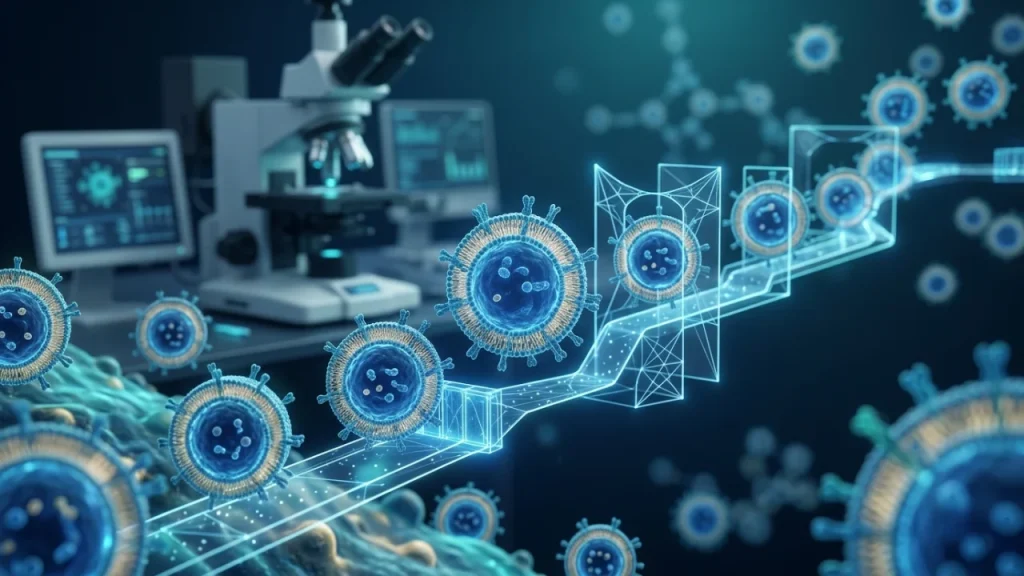
What Are Exosomes and Why Is the FDA Watching Them Now?
How Tiny Bubbles Help Cells Talk to Each Other
Your body contains trillions of tiny bubbles called exosomes that act like a private mail service. For a long time, scientists thought these bubbles were just trash bags. They believed cells used them to throw away waste. Today, we know that is not true. These bubbles are actually high-tech delivery pods. They allow cells to talk to each other across long distances. Every cell in your body needs to send and receive messages to stay healthy. They do not use words or phones to do this. Instead, they pack information into these tiny fat-coated spheres and release them.
Inside each exosome, the cell places a specific set of tools. These tools can include proteins, fats, and genetic code called RNA. Think of an exosome like a shipping box with a set of instructions inside. When a cell is in trouble, it might send out an exosome to ask for help. When a cell wants its neighbor to grow, it sends a different message. This system is how your body coordinates complex tasks.
- They help the immune system find and fight germs.
- They tell skin cells to start repairing after you get a cut.
- They help muscles get stronger after you exercise.
- They even help brain cells share data to keep your memory sharp.
These bubbles are so small that you could fit thousands of them on the tip of a needle. Scientists call them extracellular vesicles. This name just means they are “bubbles found outside of cells.” Because they are made of the same material as a cell’s outer skin, they can travel safely through your blood. They have a special coating that protects the cargo inside. Without this protection, the messages would break apart before they reached their goal.
How does an exosome know where to go? The surface of the bubble has special markers. These markers act like an address on an envelope. A specific target cell will have a “lock” that matches the exosome’s “key.” When the two meet, the exosome merges with the new cell. It dumps its cargo inside, and the receiving cell changes its behavior based on the new instructions.
This natural power is why doctors are so interested in using them for medicine. However, if a message is wrong or dirty, it can cause problems. This risk is why we see more exosomes fda news in the headlines today. The government wants to make sure that any exosome used in a clinic has a clear and safe message. If we can master this “cell talk,” we might find new ways to treat many diseases. Understanding how these bubbles move is the first step in seeing why their safety is so important.
The Growing Interest in Exosome Treatments for Healing
A single human cell can release thousands of exosomes every day. These tiny bubbles act like a biological delivery service. Doctors are excited about them because they offer a new way to heal the body without using invasive surgery. For many years, scientists focused on using whole cells to fix damaged tissue. This is often called stem cell therapy. However, using whole cells can be tricky. Cells are large, and they need a lot of care to stay alive. Exosomes are much smaller and simpler. They are not living things, so they do not need oxygen or food to work. This makes them a
Why the FDA Needs to Check These New Therapies
The FDA classifies exosome products as drugs or biologics because they are intended to treat or prevent diseases in humans. When a company wants to sell a new medicine, they must prove it is safe before it reaches the public. This is why the FDA watches this field so closely. They want to make sure these tiny bubbles do not cause big health problems for patients. Without these rules, anyone could sell a bottle of liquid and claim it has healing powers.
Safety is the main reason for these strict rules. In recent years, exosomes fda news has highlighted cases where people got very sick from unapproved shots. Some patients developed serious infections because the products contained bacteria. Others had bad immune reactions because their bodies fought against the foreign material. If a product is not clean, it can do more harm than good. The FDA sets high standards to keep these dangerous products off the market.
To protect the public, the FDA requires a process called a clinical trial. This process follows several important steps to ensure quality: – Scientists test the product in a lab to see how it affects living cells. – They check if the exosomes are pure and free from harmful germs. – They test the product on a small group of people to look for side effects. – They study a larger group to see if the treatment actually works for a specific illness. – They inspect the factory to make sure every batch is made the same way.
Manufacturing these tiny bubbles is a very difficult task. One batch of exosomes might be different from the next batch if the process changes even a little. If the dose is too high, it might cause the body to overreact in a bad way. If the dose is too low, the patient gets no benefit but still takes a risk. The FDA checks the machines and the methods used to make these products. They want to ensure that what is listed on the label is actually inside the bottle.
Some clinics claim exosomes can cure everything from hair loss to lung disease. These are very bold claims that often lack proof. The FDA steps in when a company makes promises they cannot back up with data. If a treatment has not been through the right tests, it is called an unapproved product. Using these products can be scary because nobody knows the long-term effects on the human body.
Doctors also need to know exactly how these products work inside a person. Exosomes carry proteins and genetic material that act like instructions for cells. If this material is not handled correctly, it could tell your cells to do the wrong thing. For example, it could tell cells to grow too fast or stop working entirely. The FDA makes sure scientists understand these signals before the product is ever used in a hospital.
The goal of this oversight is not to stop new science from moving forward. Instead, it is to make sure science helps people without hurting them. By following the rules, researchers can find real cures that are proven to last. This careful approach builds trust between doctors and patients as we look at how these tiny bubbles are actually made.
The Latest Exosomes FDA News on Public Safety Alerts
Why the FDA Issued Recent Public Safety Warnings
The FDA found that some patients suffered from very bad infections after receiving exosome shots. These patients had to go to the hospital because they were very sick. Some of them had high fevers and chills that would not go away. This happened because the products they received were not clean. They contained germs that should never be put into a human body. This is a key part of the latest exosomes fda news that everyone should know.
The agency issued these safety warnings because they saw a pattern of harm. Many clinics tell patients that these tiny bubbles can fix almost anything. They claim these products can treat lung problems or even brain issues. But the FDA has not found any proof that these claims are true. When a company makes a big promise without proof, the FDA must step in. They want to make sure patients do not waste money on treatments that do not work. More importantly, they want to keep patients from getting hurt.
The problems often start in the lab where the products are made. Making exosomes is a very delicate process. It requires a very clean room and special machines. If the room is not perfectly clean, bacteria can get into the product. The FDA found that some labs did not follow these strict rules. This led to dirty batches being sent to doctors’ offices. When a doctor injects a dirty product into a person, it can cause a blood infection. This type of infection is very dangerous and can even lead to death if not treated fast.
The FDA also wants to stop companies from tricking people. Some clinics use the word “stem cells” to describe exosomes. This is not correct. Exosomes come from cells, but they are not the cells themselves. This confusion makes it hard for patients to understand the risks. The FDA issued these warnings to clear up the confusion. They want people to ask their doctors more questions before they try a new treatment.
Here are the main reasons for the recent safety alerts: – Many patients got sick with dangerous germs after their shots. – Companies were selling products that were never tested in people. – Labs did not use the right methods to keep the products pure. – Clinics made false promises about curing serious diseases. – There was no proof that the products were safe for long-term use.
This exosomes fda news shows that the agency is taking these risks seriously. They are sending letters to companies that break the rules. These letters tell the companies to stop making false claims. The FDA also works with doctors to help them spot bad products. They want to make sure that only safe and tested treatments reach the public. This helps build a future where science is both fast and safe for everyone. Patients must stay informed to avoid these unproven and risky products.
Reports of Bad Reactions to Unapproved Exosome Injections
Patients have reported serious health problems after getting exosome shots that the FDA did not approve. These reports show that many people suffered from life-threatening conditions. One major issue is the risk of germs. Some people went to the hospital with blood infections. This happens when the liquid in the shot is not clean. The latest exosomes fda news highlights these dangers. When germs enter the blood, the body goes into shock. This can damage the heart and lungs. Doctors call this sepsis. It is a medical emergency that requires fast treatment in a hospital.
Another problem is how the body reacts to foreign particles. Exosomes are tiny bubbles from cells. If they come from a different person, your body might think they are enemies. Your immune system will try to fight them. This can cause a high fever and very bad pain. Some patients felt like they had a severe flu for many days. Others had large, red bumps where the needle went in. These bumps can stay for weeks and may require surgery to remove.
The FDA has seen reports of people losing their sight or having trouble breathing. These are not small side effects. They are life-changing events. Because these products are unapproved, there is no rule book for how to make them. One lab might make them one way, and another lab does it differently. This lack of a standard makes every shot a gamble. Patients often do not know what is inside the vial. It could be pure, or it could be full of harmful waste.
Here are some of the most common bad reactions reported by patients: – High fevers that do not go away with medicine. – Severe swelling and redness at the site of the injection. – Shaking chills and a fast heartbeat. – Feeling very tired or confused after the treatment. – Pain in the joints that makes it hard to move.
These reactions happen because the products were not tested in humans first. In a normal clinical trial, scientists watch a small group of people very closely. They check for safety before they give the shot to more people. Many exosome clinics skipped this step. They sold the shots before they knew if they were safe. This is why the exosomes fda news is so important for everyone to read. It warns people that natural does not always mean safe.
Some patients also had long-term issues. Their bodies did not heal the way the clinics promised. Instead, they got new problems. For example, some people had strange growths in their bodies. This is because exosomes tell cells what to do. If they give the wrong instructions, cells might grow in ways they should not. This can lead to tumors or other serious health issues later in life. We still do not know all the risks because these products are so new.
Doctors are now being told to report every bad reaction they see. This helps the government track which products are causing the most harm. It also helps them warn other patients before more people get hurt. Staying safe means waiting for science to prove that a treatment works. This careful approach is the only way to avoid the dangers of unproven medicine. Understanding these risks is the first step in choosing a safe path for your health.
How the FDA Tracks Problems with New Medicines
The FDA uses a massive database called MedWatch to collect reports about bad reactions to medicine. This system acts like a giant ear that listens to doctors and patients across the country. When someone gets a fever or a strange growth after a treatment, their doctor sends a report to this system. These reports are the main source of the exosomes fda news that warns the public about hidden dangers. Without this data, the government would not know which products are hurting people in secret clinics.
Tracking problems with exosomes is harder than tracking normal pills. Pills are made in big factories that the government checks every year. Exosomes are often made in small labs that do not follow the rules. This means the FDA must rely on post-market surveillance. This is a fancy term for watching what happens after a product is already being sold. They look for patterns in the reports to see if one specific clinic is causing many infections.
The process of tracking safety follows several clear steps: – Doctors notice a patient has a reaction that is not normal. – The doctor or the patient fills out a form on the MedWatch website. – FDA scientists review the details to see if the medicine caused the harm. – The agency looks for other similar cases in different states. – If they find a trend, they issue a public safety alert to warn everyone.
Sometimes, the FDA sends undercover inspectors to visit the places where these shots are made. They look for dirt, bacteria, or poor record-keeping. If the lab is messy, the FDA sends a formal Warning Letter. These letters are public. They tell the company to stop selling the product until it is proven safe. This is a key part of how the government stops bad medicine before it reaches more people.
Data collection is not just about counting sick people. It is about understanding the science of why things went wrong. For example, if ten people get a joint infection from the same batch of exosomes, the FDA tests the liquid. They might find that the filters used to clean the exosomes were broken. This information helps create new rules for all labs to follow in the future. It turns a bad event into a lesson that makes medicine safer for the next person.
Many people do not realize that they can report problems themselves. You do not need a medical degree to tell the government that a treatment made you feel sick. The FDA encourages patients to be active in this process. When more people speak up, the exosomes fda news becomes more accurate and helpful. This teamwork between the public and the government is the best way to catch dangerous products early.
The ultimate goal of this tracking is to build a safety profile for new types of therapy. Since exosomes are so new, we do not have decades of data yet. Every report filed today helps build the rulebook for tomorrow. Scientists use this information to decide which treatments are ready for real clinical trials and which ones are too risky. Staying informed about these reports helps you make better choices for your own health care journey. Understanding how the government watches over these products shows why waiting for official approval is so important.
Understanding the Difference Between Approved and Unapproved Products
What Makes a Treatment FDA Approved
FDA approval usually takes about 12 years from the lab to the pharmacy shelf. This long path ensures that a new medicine does not hurt the people it tries to help. For exosomes, this process is even more vital because these tiny bubbles are complex. They carry proteins and genetic messages that can change how your cells act. The government treats these products as drugs or biological products. This means they cannot just go on sale because a scientist thinks they work. They must go through a series of tests that prove they are safe for everyone.
The journey starts in a laboratory. Scientists spend years testing the treatment on cells in a dish. They also test it on animals to see how the body reacts. This stage is called pre-clinical research. If the results look good, the scientists send a giant pile of data to the FDA. They ask for permission to start testing on humans. This request is called an Investigational New Drug application. Without this green light, no one can legally give the treatment to a patient in a study.
Once the FDA says yes, clinical trials begin. These trials happen in three main steps or phases. Each phase has a specific goal to keep people safe.
- Phase 1 focuses on safety and uses a small group of healthy people.
- Phase 2 looks at how well the drug works for a specific sickness.
- Phase 3 involves thousands of people to find rare side effects.
- Researchers compare the new drug to older treatments to see if it is better.
After the trials end, the FDA reviews all the findings. This review is not just about the medicine itself. It also includes the factory where the medicine is made. The agency sends experts to check the machines and the air filters. They want to make sure every bottle of the drug is exactly the same. If the factory is dirty or the data is weak, the product fails. This high bar is why you often see exosomes fda news about warnings or delays. The government does not want to take risks with your health.
An approved product also comes with an official label. This label tells doctors exactly who should use the drug and how much to give. It lists every known side effect, even the rare ones. Unapproved products do not have this verified information. When a treatment is FDA approved, it means the benefits are greater than the risks. It gives doctors and patients a level of trust that cannot be bought with fancy ads. This trust is the foundation of modern medicine.
Knowing these steps helps you spot a real medical breakthrough. If a clinic says their treatment is “just as good” as an approved drug but has no trial data, be careful. Real approval requires proof that is open for other scientists to see. It is a slow process, but it is the only way to ensure that “new” does not mean “dangerous.” Understanding this process makes it easier to navigate the world of modern biotech.
The Risks of Using Unapproved Exosome Products
Unapproved exosome products can contain bacteria, viruses, or harmful proteins that the buyer never sees. When a product is not approved, it has not gone through the strict safety tests required by law. This lack of testing creates many risks for patients who use these treatments. One major risk is contamination. In a legal lab, scientists filter the air and wear special suits. They make sure no germs get into the medicine. Unapproved labs might not follow these rules. If a germ gets into an exosome liquid, it can cause a serious infection in your body. This is a common topic in exosomes fda news reports. The agency often warns about clinics using products that were made in dirty conditions.
Another risk is that you do not know what is inside the bottle. Exosomes are tiny bubbles filled with chemicals and genetic data. In a legal drug, every bubble is measured. In an unapproved product, the amount of active ingredients can change from one day to the next. One bottle might be strong. The next bottle might be weak or have nothing in it at all. This makes it impossible for a doctor to know the right dose. If the dose is wrong, the treatment will not work. Even worse, a high dose of the wrong protein could cause your immune system to overreact. Your body might think it is under attack. This can lead to swelling, pain, or long-term health problems.
There are many specific dangers when using products that skip the federal review process: – The product may contain DNA from a donor that causes a bad reaction. – Harmful bacteria can grow if the product is not stored at the right temperature. – The exosomes might come from unhealthy cells that spread disease. – The liquid might contain chemicals used in the lab that are toxic to humans.
Purity is a big concern for scientists. To make pure exosomes, you must separate them from other cell waste. This is a hard and expensive task. Some unapproved products are just cell soup. This means they contain bits of dead cells and random proteins. These extra pieces can cause blood clots or allergic reactions. Without the government checking the work, there is no proof that the product is actually pure.
Finally, unapproved products often come with false hope. Some clinics claim their exosomes can cure everything from hair loss to lung disease. These claims are not backed by science. When a patient chooses an unapproved product, they might miss out on a real treatment that works. They spend a lot of money on a gamble. Safety is not just about avoiding germs. It is also about making sure the medicine does what it says it will do. Without proof, the risk is always too high. Understanding these dangers helps you make better choices for your health and safety.
How to Spot False Claims About Miracle Cures
Clinics across the country currently claim that one single exosome shot can treat over thirty different health conditions. They say these tiny bubbles can fix your hair, your knees, and even your brain all at the same time. This is a major warning sign for any patient. Real medicine usually targets one specific part of the body or one specific disease. Scientists are still in the early stages of learning how these particles work. They do not have a magic key that opens every door to health yet. If a website lists many different uses for one product, be very careful. This is often the mark of a miracle cure scam.
You might see the phrase “FDA registered” on a clinic’s website or in an ad. This sounds official, but it is often a trick to gain your trust. Being registered simply means the company told the government they exist and provided their contact info. It does not mean the government tested the product for safety. It does not mean the product actually works for any disease. Recent exosomes fda news shows the agency is very worried about this confusing language. The FDA only “approves” a drug after years of strict testing and proof. Registration is just a piece of paper. Approval is a badge of safety and scientific success.
Real science relies on hard numbers and controlled tests. Clinics that make false claims often use personal stories instead of data. They show “before and after” photos of happy patients or videos of people feeling better. These photos are easy to change with a computer. They do not prove the exosomes caused the person to get well. A real medical claim should have a clinical trial number, often called an NCT number. You can look this number up on a government website to see if the study is real. If a clinic cannot give you a study link or a trial number, their claims are just guesses.
You can spot a false claim by looking for these specific red flags: – The clinic says the product has zero side effects or risks. – The product is sold as a “supplement” but is injected into your body. – There are no links to peer-reviewed science papers on the website. – The price is very high and the clinic only takes cash or credit cards. – The doctor cannot explain the exact lab process used to clean the exosomes.
Scammers also use high-pressure sales tactics to make you pay quickly. They might say the price is low for a limited time only. They might tell you they only have a few doses left in the office. Real doctors do not act like car salesmen. They give you plenty of time to think and talk to your family. They answer your questions with facts, not with feelings or stories. If you feel like a salesperson is talking to you instead of a medical expert, you should walk away.
Another common trick is using the word “natural” to make the product seem safe. Poison ivy is natural, but you would never want it in your bloodstream. Just because exosomes come from human cells does not mean they are safe for everyone. The way labs handle these cells changes them. If a lab is not clean, the natural product becomes a dangerous source of infection. Always ask to see the safety records of the lab that made the product. Knowing how to spot these tricks is the best way to protect your health and your money. This knowledge helps you understand why official oversight is so important for new therapies.
How the FDA Defines Exosomes as Biological Products
Why Exosomes Are Not Just Simple Supplements
The FDA classifies exosomes as biological products because they change how your body works. They are not like a vitamin C pill you take with breakfast. A vitamin is a supplement meant to add to your diet. Exosomes are different because they carry active messages between your cells. These messages can tell a cell to grow, heal, or change its behavior. This power means they fall under the same strict rules as complex drugs. The law says that any product used to treat a disease or change a body function is a drug. Since exosomes do both, they must go through a long testing process.
You might see many ads for these treatments online. This is why keeping up with exosomes fda news is so important for your safety. The government has not approved any exosome product for general use yet. Some clinics call them supplements to avoid the rules. However, the law is very clear about what a supplement can be. A supplement must be something you eat or drink. It must be a vitamin, a mineral, or a herb. Exosomes are usually injected into the skin or the blood. Once a product is injected, it can no longer be called a supplement.
The FDA uses a specific set of rules to keep you safe. These rules make sure that every batch of a drug is the same. They also make sure the product is clean and free from germs. When a clinic sells exosomes as a supplement, they are skipping these safety steps. This puts patients at risk for bad reactions or infections. Here are the main reasons why the law treats exosomes like drugs:
- They are made from living cells rather than simple chemicals.
- They are designed to fix or heal specific medical problems.
- They are put into the body through needles or IV drips.
- They have a strong effect on the way your immune system acts.
- They require special lab tools to stay stable and safe.
The latest exosomes fda news shows that the agency is sending letters to clinics that break these rules. The FDA wants to make sure that “natural” does not mean “untested.” Even though exosomes come from human cells, they are highly processed in a lab. This processing makes them a manufactured drug in the eyes of the law. A real drug must prove it works in a clinical trial before it can be sold.
If a product has not gone through these trials, the FDA considers it unapproved and unsafe. This classification protects you from paying for treatments that might not work. It also ensures that scientists have studied the long-term effects on human health. Understanding these legal definitions is the first step toward making a smart medical choice. This legal framework leads directly to how the government monitors the labs that create these tiny messengers.
The Role of Section 351 of the Public Health Service Act
Section 351 of the Public Health Service Act is the specific law that turns a lab discovery into a legal medical treatment. This law covers biological products. Biological products are different from regular drugs like aspirin or ibuprofen. Regular drugs are made by mixing chemicals together in a factory. Biological products come from living sources. These sources include human cells, animal tissues, or even tiny germs. Because they come from life, they are much more complex than a simple pill. The FDA uses Section 351 to make sure these complex items are safe for your body. This law helps the government watch over every single step of the making process.
Under this law, a company must get a special license to sell a biologic. This license is called a Biologics License Application, or BLA. To get a BLA, a company must prove three main things to the government. First, the product must be safe for humans to use. Second, the product must be pure and free from any outside germs. Third, the product must be potent. Potency means that the medicine actually does what the company says it will do. The latest exosomes fda news confirms that most exosome products do not have this license yet. Without a BLA, a clinic cannot say their exosomes can cure a specific disease. This rule keeps patients from using products that might have hidden germs or weak ingredients.
Section 351 looks at more than just the final liquid in the vial. It looks at the whole factory and the tools inside. Here are the main parts of the law that apply to exosomes:
- The lab must show exactly how they grow the cells that make the exosomes.
- The scientists must prove they can make the same exact product every single time.
- The company must test the product on humans in large groups called clinical trials.
- The FDA must inspect the physical building where the medicine is made.
- The label on the bottle must tell the truth about what the product can and cannot do.
Why does the government use such a strict law for exosomes? It is because biological products can change very easily. A small change in temperature can ruin the whole batch. A tiny bit of dust in the air can make the product dangerous. If a batch is ruined, it could cause a fever or a bad immune reaction. Section 351 forces companies to spend years testing their products before they reach a doctor. This long process ensures that the tiny messengers inside the exosomes are working correctly. It prevents companies from taking shortcuts that could hurt people.
Some clinics try to use a different, easier rule called Section 361. This easier rule is for simple things like moving skin from one part of the body to another. It does not require years of testing. However, exosomes are not simple tissue. Scientists must use big machines and chemicals to pull them out of cells. This extra work changes the product into something new. Because the product is changed, it must follow the harder rules of Section 351. This choice by the FDA makes it clear that exosomes are powerful medicines. They are not just simple cell parts.
Following Section 351 is a very expensive and slow process for any lab. It can take over ten years to finish all the required tests. However, this is the only way to prove a treatment is truly helpful. When you read about exosomes fda news, you are seeing the government enforce these high standards. They want to make sure that every injection is as safe as possible. This strict legal path leads to a very important question about how these products are tested. The next step in the process is looking at how the FDA checks the safety of the cells themselves.
Why Lab-Made Exosomes Need Strict Oversight
Lab technicians use high-speed machines and chemicals to pull exosomes out of living cells. This process is what the FDA calls more than minimal manipulation. When you change how a cell part works, it becomes a new kind of medicine. It is no longer a simple part of the body. It is now a biological product that needs careful watching. This change is why the government requires such strict testing for these products.
Exosomes are tiny bubbles that carry messages between cells. In a healthy body, they move naturally to help organs talk to each other. In a lab, scientists grow millions of cells in large tanks. These cells release exosomes into a liquid. The scientists must then separate the tiny bubbles from that liquid. This step is hard to do perfectly. If the liquid has even a tiny bit of bacteria, the whole batch is ruined. This is why people look for exosomes fda news to see which labs follow the rules.
Making these products in a lab introduces many risks that do not exist in the human body. – The cells in the tank might grow too fast and change their genetic code. – The chemicals used to clean the exosomes might stay in the final product and cause harm. – The exosomes might carry the wrong signals that tell the body to grow a tumor. – Foreign proteins from the growth liquid could cause a dangerous immune reaction. The FDA monitors these risks because even a small mistake can hurt a patient.
Many people think that because exosomes come from cells, they are natural and safe. However, once they are put in a bottle, they are no longer in their natural home. They are concentrated. This means one small shot might have billions more exosomes than your body usually sees. This high dose can confuse your immune system. The FDA treats these concentrated doses as biological products. This means they must be tested just like a new heart medicine or a vaccine.
Every batch of medicine must be exactly the same to be safe. If one bottle is strong and the next is weak, doctors cannot help patients. Labs must prove they can make the same exosome product every single time. They use special tests to check the size and shape of every tiny bubble. They also check the
The Legal Process for Clinical Research on Exosomes
What Is an Investigational New Drug Application
A lab cannot legally give a new exosome treatment to a person without a special permit. This permit is called an Investigational New Drug application, or IND. It is a large file of papers sent to the government. This file tells the FDA everything about the new product. It shows how the exosomes were made. It also shows if they worked in lab tests. Without an IND, a study on humans is against the law. This is a big part of the exosomes fda news that doctors watch closely.
The IND acts as a safety shield for patients. Scientists must prove that their product is not a poison. They first test the exosomes on cells in a dish. Then, they often test them on animals like mice or rabbits. They look for bad side effects. If the animals stay healthy, the scientists write a detailed report. This report is the first part of the IND. It proves the product is ready for the next step.
The application also includes a detailed plan for the human study. This plan is called a protocol. It lists exactly who will get the treatment. It says how much of the medicine they will receive. It also lists the tests doctors will use to check the patients. The FDA reads this plan to make sure it is fair and safe. They want to know that the risks are low for the people in the study.
An IND application must answer four main questions for the FDA: – What is the exact chemical makeup of the exosome product? – How did the product perform during tests on animals? – Who are the doctors that will lead the clinical study? – What steps will the lab take to keep every batch the same?
Once the FDA receives the IND, a clock starts ticking. The agency has exactly 30 days to read the whole file. During this time, the scientists cannot start their study. They must wait for the FDA to finish the review. Sometimes, the FDA finds a problem. They might think the dose is too high. They might think the cleaning process is not good enough. If this happens, they put a clinical hold on the study. This means the work must stop until the lab fixes the issues.
If the 30 days pass and the FDA does not say stop, the study can begin. This is a major milestone for any biotech lab. It means the government trusts the lab enough to let them try the medicine on people. Most IND files are thousands of pages long. They contain every tiny detail about the exosomes. This deep level of detail helps prevent dangerous mistakes.
Research moves in stages called phases. Phase 1 is the first time humans get the exosomes. This stage usually has only 20 to 80 people. The goal is not to cure a disease yet. The goal is to see if the medicine is safe. Doctors look for fevers, rashes, or other bad signs. If Phase 1 goes well, the lab can move to Phase 2. This stage uses more people to see if the medicine actually works.
Following these rules is the only way to get a product approved. Some labs try to skip the IND process. They might say their exosomes are just natural supplements. The FDA does not agree with this. If a product claims to treat a disease, it needs an IND. Staying updated on exosomes fda news helps patients know which treatments are real and which are not. This legal path ensures that science helps people without causing new problems. This rigorous process leads directly to the next step: the clinical trial phases.
Why Scientists Must Prove Safety Before Human Tests
Scientists spend years testing exosomes in labs before a single person receives a dose. This early work is called pre-clinical research. It acts as a safety net for the public. No doctor can legally give a patient an experimental exosome treatment without this data. The process starts with simple cells in a plastic dish. This is called in vitro testing. Researchers add exosomes to these cells to see what happens. They watch to see if the cells die or if they grow too fast. If the cells stay healthy, the scientists move to the next step.
The next step involves testing on living animals. Usually, researchers use mice or rats for these tests. This is a vital part of the process because a whole body is complex. A dish of cells cannot show how the liver or heart will react. Scientists look for signs of toxicity. Toxicity means the treatment acts like a poison. They check if the animals lose weight or stop eating. They also perform blood tests to see if the exosomes cause inflammation. If an animal gets a fever or a rash, it is a bad sign.
Scientists must also find the right dose during these tests. They give different amounts of exosomes to different groups of animals. One group might get a tiny amount. Another group might get a very large amount. This helps doctors learn the safe limit for humans. If a dose is too high, it might hurt the kidneys. If it is too low, it might not do anything at all. Finding this balance takes many months of careful work.
The FDA reviews all this animal data very closely. People who follow exosomes fda news know that safety is the top priority for the government. The FDA wants to see that the exosomes are pure. They check to see if the lab can make the same product every single time. If one batch is strong and the next is weak, the product is not safe. This consistency is just as important as the animal tests.
During this stage, researchers look at how the body handles the particles: – They track where the exosomes go after an injection. – They check if the exosomes stay in the liver or lungs. – They measure how many hours the exosomes remain in the blood. – They look for any changes in the animal’s behavior or mood. – They test if the immune system attacks the new particles.
Scientists must also prove that the exosomes are clean. They use special filters to remove bacteria and viruses. If a batch of exosomes is dirty, it could cause a dangerous infection. The FDA looks at the machines used to clean the exosomes. They want to know that the lab is as clean as a surgery room. Every step of the cleaning process must be written down in a logbook. This record shows the FDA that the lab follows strict rules every day. If the lab changes even one small step, they must explain why. This level of detail keeps the medicine predictable.
When a doctor gives a dose to a patient, they need to know exactly what is inside the vial. Pre-clinical tests provide this certainty. All of this information goes into a massive report. This report proves that the scientists did their homework. It shows that they are not just guessing about safety. Without these tests, a new medicine could cause a disaster. By the time a human trial starts, the team already knows how the body will likely react. This careful planning protects every patient who joins a study. It ensures that the hope for a cure does not lead to a new illness. This foundation of safety allows the research to move into the next phase of human testing.
The Three Main Steps of a Legitimate Clinical Trial
Clinical trials for exosomes follow a strict path that takes many years to complete. This path ensures that the medicine is safe for the public. Every new treatment must go through three main steps before the FDA
Protecting Patients from Deceptive Marketing Practices
Common Red Flags in Exosome Clinic Advertisements
Illegal clinics often charge patients over five thousand dollars for a single shot of unproven exosomes. These businesses use flashy websites to hide a lack of scientific proof. They often make big promises that sound too good to be true. A common trick is to claim that one treatment can fix many different parts of the body. They might say their exosomes can fix a bad knee, grow new hair, and stop memory loss all at the same time. Real medicine does not work this way. Scientists design treatments to target one specific problem or disease. If a clinic says their product is a cure-all, they are likely lying to you.
Many of these businesses use the phrase “FDA registered” to sound safe. This is a major red flag for patients. Being registered is not the same as being approved. A company can register its facility just by filling out a simple online form. It does not mean the FDA checked their product for safety or quality. You should search for exosomes fda news to see the latest alerts about these deceptive claims. The FDA has not approved any exosome product for general use in patients yet. If a doctor says their treatment is “FDA cleared” for a disease, ask them for the official trial number. Without this number, the claim is false.
Dishonest clinics also talk about “secret formulas” or “proprietary blends.” They might say other doctors do not have access to their special technology. Science does not happen in secret. Legitimate researchers publish their results in medical journals. They share their data so other experts can test it. If a clinic cannot show you a peer-reviewed study about their specific product, stay away. They are using “junk science” to take your money.
Safety is another area where these clinics mislead people. They often claim their exosomes have “zero side effects” because they are “natural.” This is a dangerous lie. Any treatment that changes how your body works can have side effects. Your immune system might react poorly to the proteins in the shot. A real doctor will always explain the risks before a procedure. They will have a plan to help you if you feel sick after the treatment.
Watch out for these specific red flags in any advertisement: – The clinic promises to cure incurable diseases like Alzheimer’s or ALS. – They require you to pay thousands of dollars in cash before the treatment. – The website uses many photos of celebrities instead of showing medical data. – They claim the treatment is “natural” and therefore does not need FDA rules. – The staff cannot tell you exactly how they cleaned and tested the exosomes.
These clinics often target people who are in pain or have no other options. They use hope as a tool to sell unproven products. Some even target parents of children with autism. This is especially cruel because children are more vulnerable to dirty or poorly made medicine. Always remember that a legitimate clinical trial will never charge you a large fee to participate. If the price is high and the proof is low, the clinic is likely breaking the law. This knowledge helps you separate real medical progress from dangerous marketing schemes.
Why Natural Does Not Always Mean Safe in Biotech
Bacteria and viruses can hide inside natural products if they are not cleaned in a professional lab. Many people believe that because exosomes come from living cells, they are always safe for the body. This is a dangerous myth that many clinics use to sell unproven treatments. In the world of science, “natural” does not mean a product is free from risk. Poison ivy is natural, but you would not want it in your bloodstream. When a clinic uses the word “natural” to avoid safety rules, they are putting your health at risk. Every biological product needs deep testing to make sure it does not carry hidden diseases or toxins.
When doctors collect exosomes, they usually get them from human tissue, blood, or bone marrow. This process is very complex and requires a perfectly sterile environment. If the lab is not clean, tiny germs can enter the liquid during the cleaning process. These germs can include mold, dangerous bacteria, or even viruses like hepatitis. If these contaminated exosomes are injected into your body, you could get a very serious infection. Your body might react to these germs by giving you a high fever or making you feel very weak. This is why the latest exosomes fda news emphasizes the need for high-quality manufacturing standards. Without these standards, there is no way to know if the “natural” product is actually clean.
There are several specific ways that these products can cause harm if they are not regulated: – Harmful bacteria from a donor can be passed directly into your blood or joints. – The chemicals used to separate the exosomes might stay in the final liquid and cause a toxic reaction. – Your immune system might see the donor’s proteins as an enemy and start attacking your own healthy tissue. – The dose of exosomes might be way too high, which can cause your cells to grow in ways they should not. – If the product is not stored at the right temperature, it can rot and become a source of poison.
Safety in biotech is built on a process called validation. This means a company must prove that every single vial of medicine is exactly the same as the one before it. Unregulated clinics often skip this expensive and difficult step. They might give one patient a weak dose that does nothing. Then, they might give the next patient a dose that is strong enough to cause a massive immune response. Without a government agency checking their work, these clinics are just guessing. Real medicine goes through years of trials to find these problems before the product ever reaches a patient.
Another big risk is how your immune system reacts to foreign proteins. Even though exosomes are tiny, they are covered in markers from the person who donated them. If these markers do not match your own body, your immune system will go on high alert. This can lead to painful swelling, redness, or even long-term organ damage. A “natural” label does not protect you from a bad allergic reaction. In fact, biological products are often more likely to cause reactions than simple chemical pills. This is because biology is very complex and every person reacts differently.
Doctors must use special high-tech filters to remove everything except the helpful exosomes. They must also test for “endotoxins,” which are poisons that bacteria leave behind even after the bacteria are dead. If a clinic cannot show you a formal lab report for the specific batch they are using, they are taking a gamble with your life. The goal of safety rules is to make sure that “natural” therapies actually help you heal instead of causing a new illness. Understanding these biological risks is the best way to protect yourself from fast-talking salespeople. This focus on safety is what separates a real medical breakthrough from a dangerous experiment.
How to Verify if a Study Is Registered with the Government
The United States government keeps a public list of every legal clinical trial. This list is found on a website called ClinicalTrials.gov. It is the best place to find the latest exosomes fda news and see if a study is real. Many clinics claim they are doing research to make themselves look more professional. However, a real study must follow strict rules and report its progress to the government. If a clinic cannot prove they are on this list, they may be skipping important safety steps.
To check a study, you only need to know a few simple steps. Start by asking the clinic for their NCT number. This is a special ID number that starts with the letters “NCT” followed by eight digits. Every official study has one. Once you have this number, you can type it into the search bar on the government website. If the number does not exist, the study is not officially registered.
When you look at a study page, you should check for specific details. A legitimate trial will list exactly what they are testing and who can join. – Look for the “Status” of the trial to see if it is currently recruiting patients. – Check the “Sponsor” section to see which university or hospital is leading the work. – Read the “Locations” list to see if the clinic you are visiting is actually an approved site. – Look for a contact person with a real phone number and email address. – See if the study has a clear plan for how they will measure success.
Be careful if a clinic asks you to pay a lot of money to be in a study. Most real clinical trials give the treatment for free because the patient is volunteering to help science. If a clinic charges thousands of dollars for “research,” they might just be selling an unapproved product. The FDA does not usually allow companies to profit from experimental treatments during a trial.
You should also check the “Last Update Posted” date on the website. Science moves fast, but real trials take time. If a study has not been updated in several years, it may have been stopped for safety reasons. A study that is “Terminated” or “Withdrawn” is a major red flag. This means the researchers found a problem or could not prove the treatment worked.
Using these official tools helps you see past fancy websites and sales pitches. A real medical breakthrough will always have a paper trail that leads back to the government. Checking the registry is the only way to know if a clinic is following the law. This step is the best way to ensure your health is protected by real science instead of empty promises. Moving from marketing claims to verified data is how you stay safe in the world of new medicine.
The Science Behind Exosome Manufacturing and Quality Control
Why Making Pure Exosomes Is Very Difficult
Exosomes are smaller than a single speck of dust. You could fit about 1,000 of these tiny bubbles across the width of one human hair. Because they are so small, scientists find it very hard to catch and clean them. This is the first reason why making pure exosomes is a huge challenge for doctors and labs. If a lab cannot separate the good bubbles from the bad waste, the treatment might not be safe.
Cells grow in a liquid called a culture medium. This liquid is like a thick soup. It contains food for the cells, chemical signals, and waste products. When cells release exosomes, they drop them directly into this soup. A lab must then pull the exosomes out without taking any of the trash with them. If the lab leaves even a little bit of waste behind, the final product could cause a bad reaction in a patient. This is a major focus of exosomes fda news. The government wants to make sure these products are clean before they reach any clinic.
Labs use special machines to separate these tiny bubbles from the liquid soup. One common tool is a centrifuge. This machine spins the liquid at very high speeds. The heavy parts sink to the bottom, and the light parts stay at the top. However, exosomes are very fragile. If the machine spins too fast, the exosomes can pop like tiny balloons. If they pop, they lose the medicine or signals they were carrying. A broken exosome is useless for healing and can even be harmful.
Another way to clean exosomes is through tiny filters. These filters have holes that are only a few nanometers wide. Think of a kitchen strainer, but much smaller. The problem is that these filters often get clogged. Other proteins in the liquid are often the same size as exosomes. The filter cannot always tell the difference between a helpful exosome and a piece of protein waste. This makes it very hard to get a bottle of pure exosomes.
There are many steps where the process can go wrong: – The source cells must stay perfectly healthy and clean. – The liquid soup must stay at the exact right temperature. – The machines must not crush the delicate bubbles during spinning. – Every batch must look and act exactly like the batch before it. – The lab must prove that no viruses or bacteria got into the mixture.
Even if a lab makes one good batch, they might fail the next time. This is called batch-to-batch variation. One day, the cells might be healthy and make great exosomes. The next day, those same cells might be stressed. Stressed cells make exosomes that can cause swelling or pain. This lack of consistency is why the FDA is so strict. They want to see that a company can make the same safe product every single time. This is why we see so much exosomes fda news about warnings and safety checks for new labs.
Scientists also have to check what is inside each exosome. Each bubble carries proteins and genetic code. If the code is wrong, the treatment will not work. Measuring the contents of a bubble that is 100 nanometers wide is very expensive. It requires lasers and high-tech cameras. Most small clinics do not have this equipment. They might be selling products that are actually just salty water or cell debris.
Making these treatments is more like rocket science than mixing a drink. Every step has a high risk of failure. If the process is not perfect, the patient could have a dangerous immune response. This is why pure manufacturing is the biggest hurdle in the field today. Understanding these technical struggles helps you see why real medical progress takes many years of careful work. This high level of difficulty is the main reason why the road from the lab to the patient is so long.
The Danger of Germs and Contamination in Labs
Exosomes are so small that millions of them can fit on the head of a pin. This tiny size makes it very hard to keep them pure and safe. Germs like bacteria and viruses are often the same size as exosomes. This means common filters cannot always tell the difference between a helpful bubble and a harmful germ. If a lab is not perfectly clean, these germs will grow fast. The liquids used to grow cells are like a feast for bacteria. A single germ can double every twenty minutes. In just a few hours, a clean batch of medicine becomes a jar of poison.
When people talk about exosomes fda news, they often talk about safety alerts. The FDA issues these alerts when they find germs in products sold at clinics. These germs can cause serious infections in the blood or joints. Some patients have ended up in the hospital with high fevers because of dirty products. This happens because the lab did not follow the right rules.
There are three main ways that germs get into these treatments: – The donor cells were not tested for hidden viruses like hepatitis or HIV. – The air in the lab was not filtered well enough to stop dust and mold. – The tools used to move the liquid were not cleaned with high heat between uses.
Another big danger is something called endotoxins. These are not living germs. Instead, they are pieces of dead bacteria. Even if the lab kills the bacteria, these pieces stay in the liquid. When these pieces enter a person’s body, the immune system goes into a panic. This panic can cause the body to attack its own organs. Real labs use very expensive tests to look for these tiny pieces of bacteria. Small clinics often skip these tests because they cost too much money. They might tell patients the product is safe, but they do not have the proof.
This is why the exosomes fda news often focuses on the need for strict trials. A trial proves that the lab can make a clean product every single time. Without these rules, patients are taking a huge risk with their health. Keeping a lab sterile is a full-time job. It requires special suits, air locks, and constant testing. If a lab looks like a regular doctor’s office, it is likely not clean enough for this work. Understanding these risks helps you see why the FDA is so careful about new treatments. Safety must always come before speed in modern medicine.
How the FDA Checks Manufacturing Facilities
FDA inspectors have the legal power to walk into any drug factory at any hour of the day. They do not need to call ahead or make an appointment. This surprise visit is the best way to see how a lab really works. If a lab knows the FDA is coming, they might clean up just for that day. A surprise visit shows the inspectors the truth about how the exosomes are made.
When an inspector arrives, they start by looking at the “rule book” of the lab. Every lab must have a set of written steps for every single task. These are called Standard Operating Procedures. If a worker needs to wash their hands, there is a written rule for how to do it. If a worker needs to move a liquid, there is a rule for that too. The inspector reads these rules to make sure they follow the law. Then, they watch the workers to see if they actually follow those rules.
The inspectors also look closely at the building itself. They check the air filters to see if they are changed on time. They look for cracks in the floor where bacteria could hide and grow. In a real exosome factory, the air must be cleaner than the air in a hospital operating room. Inspectors use special tools to count the tiny bits of dust in the air. If there is too much dust, the lab must stop working immediately.
The paper trail is another major part of the visit. Every bottle of exosomes must have a history that can be traced back to the start. – Inspectors check the logs for the freezers to see if the temperature ever got too warm. – They look at the training files to see if the scientists have the right education. – They check the cleaning logs to see if the rooms were scrubbed every night. – They look at the tests done on the donor cells to ensure no viruses were present. – They check the labels on the bottles to make sure the information is 100% true.
This level of detail is why the exosomes fda news often mentions “Form 483.” This is a list of mistakes the inspector found during their visit. If a lab gets a Form 483, they must fix the problems fast. If they do not fix them, the FDA can shut the lab down forever. This keeps the public safe from companies that try to take shortcuts.
The FDA also checks the machines used to grow the cells. These machines must be “validated.” This means the lab has proven the machine works the same way every time. If a machine gets too hot or too cold, it could ruin the exosomes. The inspector looks for proof that the lab tested the machine many times before using it for patients.
Safety is not just about having a clean room. It is about having a system that catches mistakes before they reach a patient. The FDA looks for a “Quality Control” team that is separate from the people making the product. This team acts like a referee in a game. They have the power to throw away a batch of medicine if it is not perfect. By checking these systems, the FDA ensures that science stays safe for everyone. This rigorous process is what turns a simple lab into a trusted medical facility.
How Exosomes Travel Through the Human Body
The Way Exosomes Reach Their Target Organs
Exosomes are 1,000 times smaller than a single human hair. Because they are so tiny, they can move through the body with great ease. Their journey begins the moment they enter the bloodstream. The heart acts like a pump that pushes these tiny bubbles through a vast network of tubes. These tubes are your blood vessels. This liquid highway carries the exosomes to every organ, from your brain down to your toes. They do not have engines to move on their own. Instead, they float in the blood like tiny boats on a fast-moving river.
As they travel, exosomes must find a specific destination. They do not just stop at any cell they see. Each exosome has special proteins on its outer shell. You can think of these proteins as a mailing address or a digital “key.” Every cell in your body has “locks” on its surface. When an exosome bumps into a cell, it tries its key. If the key does not fit, the exosome bounces off and keeps floating. It only stops when it finds a cell with the matching lock. This ensures that a message meant for a damaged muscle does not accidentally go to a healthy kidney.
This targeting process is a major focus in recent exosomes fda news. The FDA wants to know exactly how these keys and locks work. They ask scientists to prove that the exosomes will reach the right spot. If the bubbles go to the wrong organ, they might cause problems. For example, an exosome meant for the skin should not end up in the liver. Regulators look at “biodistribution” reports to track this movement. These reports are like maps that show the path the bubbles take after they enter the body.
The journey is not always easy. The body has a cleaning crew made of the liver and the spleen. These organs act like filters. They try to catch and remove anything that looks like waste or a stranger. Many exosomes get caught in these filters before they reach their target. Scientists are working on ways to help exosomes hide from this cleaning crew. They might change the surface of the bubble to make it look like a natural part of the body.
Once an exosome finds its target cell and the key fits the lock, it delivers its cargo. This happens in a few different ways: – The exosome melts into the cell wall and pours its cargo inside. – The target cell reaches out and swallows the entire exosome. – The exosome stays on the outside and sends a signal through the cell wall. – The bubble releases its contents near the cell to trigger a reaction.
The cargo inside the exosome is very important. It can contain instructions that tell a cell to start healing. It can also carry proteins that help a cell fight off a disease. The FDA checks to see if this cargo stays safe during the trip. If the exosome breaks open too early, the medicine inside is destroyed by the blood. This is why the structure of the bubble must be very strong. Every step of this journey must be perfect for the treatment to work. Understanding how these tiny bubbles travel helps us see why the FDA is so careful about how they are made. This movement through the body is what allows simple cells to send powerful healing messages exactly where they are needed most.
How the Body Cleans Out Used Vesicles
The liver and kidneys process millions of tiny bubbles every hour to keep the blood clean. Once an exosome finishes its job, the body must get rid of it. If these bubbles stay in the blood too long, they can cause problems. The body treats used exosomes like trash that needs to be recycled. This process is a major part of exosomes fda news because scientists must prove the body can clear the treatment safely.
The liver is the main organ for this cleaning job. It acts like a giant sponge for the blood. Inside the liver, there are special cells that work as security guards. These guards stay on the lookout for any bubbles that look old or strange. They grab exosomes as they float by in the bloodstream. Once they catch a bubble, they break the exosome wall apart. Then, they turn the pieces into basic building blocks like fats and proteins. The body can use these parts to build new things later. This recycling helps the body save energy and keep the blood fresh.
The kidneys also play a big role in removing waste. While the liver handles larger pieces, the kidneys filter out the smallest particles. They act like a very fine screen or a coffee filter. If an exosome is small enough, it passes through this screen. From there, it moves into the bladder and leaves the body through urine. This is a very fast way to clear out used medicine. Doctors often check urine to see how fast a treatment is leaving a patient’s body.
The spleen is another important stop on this journey. It works like a security checkpoint for the blood. It checks the shape and health of every cell and bubble. If an exosome looks old or damaged, the spleen pulls it out of the flow of blood. This keeps the blood flowing smoothly and prevents clogs. Without the spleen, the blood might become too thick with old waste.
The body uses several steps to clean out these vesicles: – The blood carries the exosomes to the liver, kidneys, and spleen. – Guard cells in the liver identify which bubbles are no longer needed. – Special chemicals break down the exosome walls into smaller bits of fat. – The kidneys filter the smallest waste products into the urine. – The liver sends some waste into the digestive system to be removed.
The FDA watches this process very closely. They want to make sure that exosome treatments do not get stuck in the liver. If too many bubbles pile up in one spot, it could hurt the organ. This is why researchers must track where every exosome goes. They use special dyes to see how long the bubbles stay in the body. These dyes glow under special lights so doctors can watch the liver work.
Most exosomes stay in the blood for only a few minutes or hours. This short life helps prevent side effects. If a treatment stays in the body too long, it might start talking to the wrong cells. The fast cleaning action of the liver and kidneys keeps the treatment focused on its goal. This balance between healing and cleaning is what makes these therapies work well. Understanding how the body says goodbye to these bubbles is just as important as knowing how they start their journey. It ensures the medicine does its job and then leaves without causing a mess. This careful balance is a key reason why the FDA monitors how these products are made and tested.
The Role of Healthcare Providers in Exosome Safety
Why Doctors Must Check FDA Status Before Treating
Doctors must verify that every exosome product has an official license from the government before they give it to a patient. This step is the most important part of keeping people safe from bad medicine. The government has strict rules about how these tiny bubbles are made. If a doctor ignores these rules, they might put a patient in danger. Responsible doctors only use products that have gone through many years of testing. They know that a product without a license has not been proven to work.
When doctors look for exosomes fda news, they often find warnings about clinics using unapproved products. These clinics might promise that the treatment can fix many different health problems. However, the law says that these products must be tested in a lab first. A doctor should always ask for an Investigational New Drug application. This is a special paper that shows the government is watching the study. Without this paper, the doctor cannot be sure what is inside the bottle. They might be giving the patient something that contains harmful germs or the wrong proteins.
Unapproved exosomes can cause the immune system to overreact. If the bubbles are not pure, the body might see them as an enemy. This can lead to a high fever or a painful rash. In some cases, the patient might have a hard time breathing. Doctors must check the factory where the product was made. A clean lab ensures that no bacteria or viruses get inside the vesicles. If a doctor uses a product from a dirty lab, those germs can travel deep into the patient’s body.
Responsible doctors follow a simple list to stay safe: – They ask for the official registration number of the product. – They check if the treatment is part of a real clinical trial. – They read the latest reports from government health agencies. – They talk to other experts about the safety of the lab. – They explain the risks clearly to every patient.
Following these steps helps the doctor protect the patient’s liver and kidneys. As we learned, the body must work hard to clean out these tiny bubbles. If a product is not pure, the liver might get overwhelmed by too much waste. Doctors must also think about their own jobs. Using products that are not allowed can lead to losing their medical license. It is better to wait for a safe product than to use a dangerous one. A doctor’s main job is to help people without causing new problems.
Many people see ads for new cures on the internet. These ads often make big promises that sound exciting. However, a doctor must look past the ads and find the facts. They look for data from tests on many different people. This data tells them if the treatment works the same way every time. The government makes sure that every bottle of medicine is the same as the last one. This is why doctors must always check the legal status of a treatment. By following the law, doctors help make sure that new therapies stay safe for everyone. This careful checking is the only way to move from experimental ideas to real healing.
Reporting Side Effects to the FDA MedWatch Program
The FDA uses a special system called MedWatch to keep patients safe from bad treatments. This program acts like a giant safety net for the whole country. When a person gets sick from a new therapy, they can tell the government exactly what happened. This is very important for people following exosomes fda news today. Many exosome products are still very new. Most of them have not been fully tested by the government yet. If a treatment causes a rash, a high fever, or a bad infection, the FDA needs to hear about it right away. Reporting these problems helps the government find dangerous products before they hurt more people.
Doctors play a big part in this reporting process. They see the side effects first in their clinics. A doctor might notice that three patients got the same headache after a shot. This is a pattern that the FDA wants to study. The agency looks for trends across different states and cities. Sometimes, one bad batch of medicine can cause problems in many places at once. By reporting the issue, a doctor helps the FDA stop that specific batch from being used again. This keeps the entire medical community informed and alert.
A good report should include specific details to be helpful to the government. The FDA looks for these facts in every report: – The name of the treatment or product used during the visit. – The date the patient received the treatment. – A clear description of the health problem that happened. – The name of the clinic or office where the treatment took place. – Any other medicines the patient was taking at the same time.
Patients do not need a lawyer or a doctor to file a report. Anyone can go to the FDA website and fill out a simple form online. This form is easy to read and does not take a long time to finish. Some people worry that reporting will get their doctor in trouble. However, the main goal is to find out if the product itself is dangerous or dirty. The FDA uses this data to update their safety alerts for the public. When you read the latest exosomes fda news, you are often seeing the results of these reports. These alerts tell other doctors to be careful with certain types of shots or skin creams. This helps stop bad reactions before they happen to someone else.
Exosomes are tiny bubbles that carry messages between cells. Because they are so small, they can travel to many parts of the body easily. If these bubbles contain the wrong chemicals or bacteria, they can cause a lot of damage. A patient might feel fine at first but get sick a week later. This delay is why reporting is so vital for the community. The FDA keeps a detailed record of these events to see if the bubbles are causing long-term harm. They look at how the liver and lungs react to these tiny particles over time. Without these reports, the government would not know which labs are making safe products. Every report adds a piece to the puzzle of how these new treatments work in the real world.
Safety is a team effort between the patient, the doctor, and the government. Reporting a side effect is not just about one person. It is about protecting every person who might get that treatment in the future. It helps the FDA decide which products need more testing. This information makes the path to new cures much safer for everyone. When everyone shares what they know, medicine gets better and more reliable. This reporting system is the best way to turn bad experiences into helpful lessons for the future of medicine.
The Future Path for Safe and Regulated Exosome Medicine
How Better Rules Lead to Real Medical Breakthroughs
Scientists must prove that exosomes can target a specific disease without hurting other parts of the body. This process takes many years of hard work and careful study. The FDA provides a roadmap for this journey to ensure every new discovery is real. This roadmap is called a regulatory pathway. It tells scientists what kind of data they need to collect before they can give a treatment to the public. For example, they must show how long the exosomes stay in the blood. They must also show how the body gets rid of them once their job is done. If a lab skips these steps, they might miss a big problem. A treatment might look good for one day but cause trouble a month later.
Following the rules is the only way to reach a true medical breakthrough. When a treatment goes through official testing, it must pass three main stages. These stages are called clinical trials.
- Phase one tests the treatment on a small group to check for safety.
- Phase two checks if the treatment actually helps the specific sickness.
- Phase three tests the medicine on thousands of people to find the right dose.
These steps help doctors understand exactly how the medicine works. Without these rules, we would just be guessing. Guessing is dangerous when it comes to human health.
The latest exosomes fda news often highlights how new rules help labs make better products. Making these tiny bubbles is like baking a very complex cake. If the oven temperature is off by just one degree, the cake will fail. In a lab, the “oven” is the machine that grows the cells. The FDA sets rules for how clean the air must be in these rooms. They also check the tools that scientists use to count the bubbles. These rules make sure that every batch of medicine is the same as the last one. This consistency is vital for a breakthrough. If every bottle of medicine is different, a doctor cannot predict how a patient will react.
Good rules also bring more money and talent to the field of medicine. When the rules are clear, big groups are more likely to pay for expensive research. They know that a successful test will lead to a product they can trust. This speeds up the search for cures for hard diseases. It turns a wild idea into a reliable tool for doctors. Regulated medicine builds a bridge of trust between the lab and the hospital. This trust is what allows new treatments to move from a scientist’s mind to a patient’s life. Focusing on the rules today ensures that the cures of tomorrow are both powerful and safe.
What Patients Should Ask Their Doctors Today
Doctors must provide a written plan before they give you any new type of medicine. This plan is often called a protocol. It explains what the medicine is and how it might help you. It also lists the things that could go wrong. Patients often feel excited when they hear about new science. However, you should not let excitement hide the need for safety. You have the right to know exactly what a doctor is putting into your body.
Before you agree to a treatment, you should ask your doctor these specific questions:
- Is this treatment approved by the FDA for my specific health problem?
- Can you show me the IND number for this clinical study?
- Where does the lab get the cells to make these exosomes?
- How does the lab test each batch for germs or dangerous chemicals?
- What are the side effects other patients have reported?
The most important thing to look for is an IND number. IND stands for Investigational New Drug. This number is like a permission slip from the government. It means the FDA has reviewed the plan for the study. They have checked the safety data from the lab. If a doctor cannot give you this number, the study might not be official. This is a major part of the latest exosomes fda news. The agency wants to stop clinics from selling shots that have not been tested. Without an IND, there is no outside group watching over your safety.
You also need to know about the source of the medicine. Exosomes come from living cells. These cells can come from a person’s own fat or bone marrow. They can also come from birth tissues or other donors. You should ask which source the lab uses. The lab must test these donor cells for many different viruses. If the cells are not clean, the tiny bubbles they make will not be clean either. This can cause a bad reaction or a new infection. A safe lab will have papers that prove their cells are healthy and pure.
Ask about the facility where the medicine is made. High-quality labs follow rules called Good Manufacturing Practices. These rules make sure the air is clean and the tools are sterile. Scientists in these labs wear special suits to keep skin and hair away from the medicine. If a doctor is making the treatment in a small office, it might not be safe. Professional labs use expensive machines to count every bubble. They make sure every bottle has the same amount of medicine.
Finally, you should ask about the cost of the treatment. Many real clinical trials do not charge patients for the medicine itself. The company that wants to prove the medicine works usually pays for the research. If a clinic asks for many thousands of dollars upfront, be very careful. You should ask why you are paying for a product that is still being tested. Legitimate science focuses on finding the truth, not just making a sale. Asking these hard questions helps you stay safe while the world waits for new cures. Being an informed patient is the best way to support real medical progress.
Why We Should Stay Hopeful but Cautious About Biotech
Exosomes can carry up to three times more medicine than some older delivery tools. This makes them a powerful tool for the future of health. Scientists call them “smart” because they can target specific parts of the body. For example, a bubble could travel straight to a lung tumor without touching healthy skin or hair. This precision is why many experts feel hopeful about new treatments. We are moving toward a world where medicine fixes the cause of a disease instead of just the symptoms.
Recent exosomes fda news highlights the need for a clear path forward. The government wants to help scientists turn these tiny bubbles into real cures. However, they also want to stop people from getting hurt by untested products. The FDA monitors new studies to see if they meet high standards. They check if the medicine is pure and if it actually does what the makers say it will do. This oversight is the only way to make sure that a “miracle cure” is not just a dangerous mistake.
The road to safe biotech medicine follows a specific set of steps: – Scientists first test the bubbles in petri dishes to see how they act. – They then use computer models to predict how the human body will react. – Small groups of volunteers join safety trials to check for side effects. – Large groups of people take part in final tests to prove the treatment works.
Each step provides data that helps the FDA make a choice. If a company skips these steps, they put patients at risk. We should stay hopeful because hundreds of these studies are happening right now. Some focus on healing the brain after a stroke. Others look at ways to stop the body from attacking itself in diseases like arthritis. These studies are the foundation of real medical progress.
Being cautious does not mean you should lose hope. It means you should value your health enough to wait for the truth. Science is a slow process, but it is a reliable one. When the FDA finally approves an exosome product, we will know it is both safe and effective. Until then, the best way to stay safe is to follow the news and ask for facts. Real progress happens when science and safety work together. This balance will lead us to the next generation of life-saving medicine.