
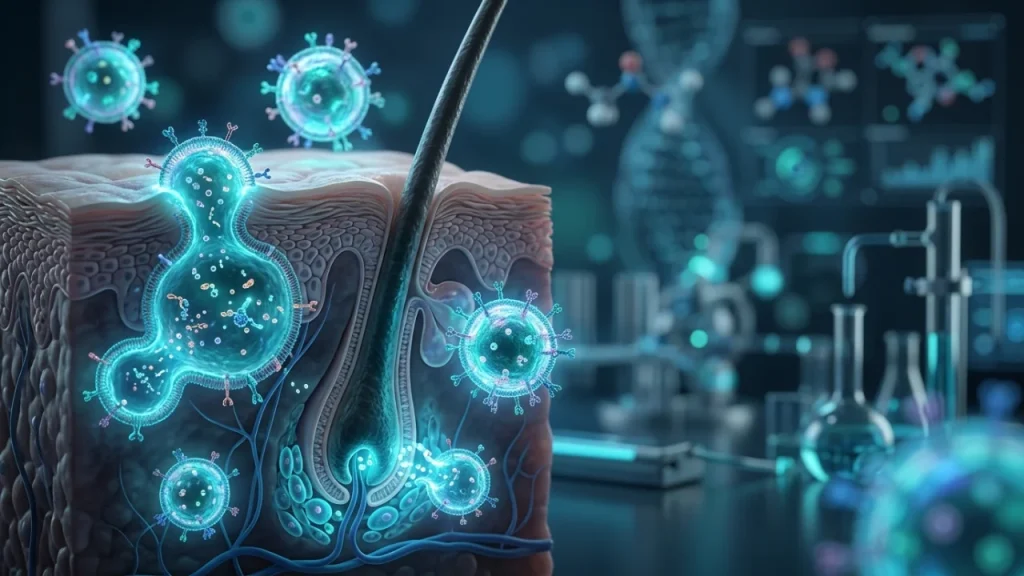
What Are Exosomes and Why Should You Care?
Tiny Messengers Inside Your Body
Imagine your body’s cells as a vast, bustling city. They don’t use phones or emails. Instead, they send tiny packages. These packages are called exosomes. They are incredibly small vesicles. Think of them as microscopic bubbles. Cells release them into the spaces between each other.
What’s inside these bubbles? They carry crucial cargo. This cargo includes proteins, lipids, and genetic instructions. Specifically, they carry RNA. This RNA acts like a message or a blueprint. One cell packages this material into an exosome. Another cell nearby receives it. The receiving cell opens the package. It then reads the instructions.
This process changes what the receiving cell does. It is a form of precise communication. This system coordinates repair. It manages inflammation. It also controls growth. Almost every cell type can send and receive these signals. Your blood, saliva, and other fluids are full of them.
Scientists once thought these vesicles were just cellular trash bags. They believed cells used them to remove waste. Now we know they are vital messengers. They are key to how tissues talk to each other. A skin cell can send a signal to a hair follicle cell. A muscle cell can communicate with a nerve cell.
The exosomes benefits for health start with this natural role. They help maintain balance in the body. This balance is called homeostasis. When you get a cut, exosomes help organize the healing cells. They tell cells to grow new tissue. They also tell cells when to stop growing.
Their size is perfect for this job. Exosomes are typically between 30 and 150 nanometers in diameter. You could line up thousands of them across the width of a single human hair. Their small size lets them travel easily. They move through tissue fluids and bloodstream.
Their membrane is like a protective envelope. It shields the precious cargo inside. This membrane ensures the message arrives intact. It also has address labels on its surface. These labels help the exosome find the right target cell. It is a targeted delivery system.
Why should you care about these tiny messengers? Because they represent the body’s own repair network. Understanding them unlocks new ways to support health. By harnessing this natural system, we can potentially guide healing. We can encourage rejuvenation from within.
This foundational communication is why researchers are so excited. The next sections will explore how this science applies directly to skin and hair vitality. The core principle remains: exosomes are nature’s way of sending precise biological messages.
How Exosomes Talk to Cells
Exosomes do not simply bump into cells randomly. They deliver their instructions through a precise, multi-step process. Think of it like a secure package delivery. The exosome is the package. The target cell is the specific house.
First, the exosome must find the right address. Proteins on the exosome’s outer membrane act like GPS coordinates. These proteins match with receptors on the target cell’s surface. This ensures a skin cell exosome talks to another skin cell, not a liver cell.
Docking is the next critical step. The exosome attaches firmly to the cell membrane. This connection is highly specific. It locks the message carrier into place. The two membranes are now in direct contact.
Delivery of the cargo happens in three main ways. The method depends on the message and the cell’s needs.
One method is direct fusion. The exosome’s membrane merges with the cell’s membrane. It is like two soap bubbles becoming one. This releases the exosome’s contents directly into the cell’s interior. The instructions are now inside.
Another common method is endocytosis. The cell’s membrane folds inward. It wraps around the exosome and swallows it whole. This forms a little bubble inside the cell called an endosome. The exosome’s membrane then breaks down inside this bubble. Its cargo is released safely.
Sometimes, the exosome’s surface proteins themselves are the signal. They can bind to the cell’s receptors. This binding triggers a change inside the cell without any cargo release. It is like ringing a doorbell to deliver a message verbally.
The exosomes benefits come from this efficient delivery. Their cargo can reprogram a cell’s activity. This cargo includes proteins, lipids, and most importantly, RNA.
RNA molecules are genetic instructions. They are not DNA, which is the permanent blueprint. RNA is more like a temporary work order. An exosome can deliver microRNA to a target cell.
This microRNA can silence specific genes in the recipient cell. It can tell a damaged skin cell to reduce inflammation. It can tell a sluggish hair follicle cell to activate growth genes. The cell’s machinery reads these new orders and obeys.
The entire process is fast and efficient. It avoids the risks of injecting large foreign substances. The body recognizes its own vesicles. This makes communication natural and targeted.
For example, consider a sun-damaged skin cell. It is under oxidative stress. Nearby healthy cells can send exosomes loaded with antioxidant instructions. These exosomes dock onto the stressed cell.
They deliver RNA that tells the cell to produce more protective enzymes. The damaged cell’s behavior changes. It becomes more resilient. Repair mechanisms switch on.
This is how exosomes help cells work better. They provide targeted, actionable intelligence. They upgrade cellular software without altering the core hardware.
The result is coordinated tissue response. Individual cells act on clear, delivered commands. This leads to organized healing or rejuvenation across an entire area.
Understanding this dialogue is key to harnessing its power for vitality. Next, we will see what specific messages promote skin and hair health
Why Exosomes Matter for Health
Exosomes are not just cellular chatter. They are essential signals for maintenance and repair. Think of a city after a storm. Crews need instructions to clear debris and fix power lines. Your body works the same way after injury or daily stress. Exosomes carry the work orders.
They matter because they coordinate complex healing. This process involves many cell types. Fibroblasts must make collagen. Immune cells must manage inflammation. New blood vessels must form. Exosomes synchronize these actions. Without this coordination, repair is slow and messy.
Consider a simple paper cut. The damage is minor. Yet it triggers a precise sequence. First, platelets clot the blood. Then, immune cells clean the area. Finally, skin cells multiply to seal the wound. Research shows exosomes guide each phase. They help switch from inflammation to growth.
Chronic issues highlight their role even more. In a condition like persistent skin inflammation, normal signals get confused. Cells send chaotic messages. Healing stalls. Therapeutic exosomes can reset this dialogue. They deliver clear instructions to reduce inflammatory signals and start repair.
The exosomes benefits for health are rooted in this restorative capacity. Their natural origin is a major advantage. Synthetic drugs often force one action on the entire body. Exosomes work differently. They use the body’s own language for targeted, multi-step commands.
Their impact is broad and vital: – They modulate the immune system, calming it when overactive or boosting it when weak. – They promote angiogenesis, which is the formation of new, tiny blood vessels for better nutrient delivery. – They directly stimulate cells like fibroblasts to produce structural proteins such as collagen and elastin. – They enhance cellular metabolism, helping older cells clear waste and produce energy more efficiently. – They carry antioxidants directly into stressed cells, protecting vital machinery from damage.
Aging slowly disrupts cell-to-cell communication. Messages become faint or garbled. Tissue renewal falters. Skin thins. Hair follicles become inactive. Introducing fresh exosomes can rejuvenate this network. It is like updating a fading radio signal to a clear digital broadcast.
This matters for proactive health, not just fixing problems. Our cells constantly face stress from sunlight, pollution, and internal metabolic processes. Exosomes provide ongoing maintenance. They help cells adapt and survive in challenging environments.
The ultimate benefit is system-wide resilience. By optimizing fundamental communication, exosomes support the body’s innate ability to heal and renew itself. This foundational role makes them a pivotal focus for enhancing vitality. Next, we will explore how these general mechanisms translate into specific advantages for skin and hair.
The Science Behind Exosome Discovery
Scientists first observed exosomes in the 1980s. They were seen during studies on how red blood cells mature. Researchers noticed small vesicles being released. These tiny bubbles were initially considered cellular trash bags. The thought was that cells used them to dump unwanted material.
The term “exosome” was officially coined in 1987. It comes from Greek roots meaning “outside body.” For years, their true purpose remained a mystery. Many in the scientific community ignored them. They were seen as unimportant byproducts of cellular life.
A major shift happened in 1996. A research team made a crucial discovery. They found that immune cells called B lymphocytes released exosomes. These vesicles carried special molecules on their surface. The molecules were important for immune response. This was the first proof exosomes had a biological function. They were not just garbage.
The early 2000s brought another breakthrough. Scientists realized almost all cell types release exosomes. This includes skin cells and hair follicle cells. They also discovered exosomes carry more than surface markers. Their cargo includes: – Proteins that give instructions. – Lipids for building cell membranes. – Genetic material like RNA for coding new proteins.
This cargo is protected during transit. The lipid bilayer membrane acts like a secure envelope. It shields the contents from enzymes that could destroy them. This allows messages to travel safely through harsh bodily fluids.
Technology had to catch up to the science. Isolating and studying these nanoscale vesicles was hard. They are about 1000 times smaller than a single human hair is wide. Advances in ultracentrifugation and later, nanoparticle tracking, were key. These tools let scientists separate exosomes from other particles. They could then analyze their contents with precision.
The discovery process revealed a universal language. Exosomes are a fundamental communication system shared by complex life. Their evolution conserved this efficient method for billions of years. Understanding this history underscores their foundational role in biology.
This historical journey sets the stage for grasping their modern applications. Knowing they are a natural, evolved system is critical. It frames the exosomes benefits we see today not as a new invention, but as harnessing an ancient, innate wisdom of the body for renewal and repair.
Exosomes vs. Other Cell Parts
Cells are busy places. They constantly make and release different tiny packages. Not all these packages are the same. Scientists group them by size, origin, and cargo. Exosomes are one specific group. They have a very precise definition.
Think of a cell as a factory. It has a sorting and recycling department called the endosome. Inside this department, small compartments form. They trap specific proteins and genetic material inside. These compartments then merge with the cell’s outer wall. They release their contents outside. These released bubbles are exosomes. Their formation is a controlled, deliberate process.
Other vesicles come from different places. Microvesicles, for instance, bud directly off the cell’s surface. It is like the cell membrane pinching off a piece of itself. This process is more direct. Apoptotic bodies are much larger. They come from cells that are dying in an orderly way. They contain random fragments of the dying cell.
Size is a major difference. Exosomes are typically the smallest. Their size range is quite narrow, from about 30 to 150 nanometers. You could line up thousands across a single grain of sand. Microvesicles are larger and more variable. They can range from 100 to 1000 nanometers. Apoptotic bodies are the largest, often over 1000 nanometers.
Their cargo also tells them apart. Because of their unique origin, exosomes carry a selective load. They are enriched with certain molecules. These molecules reflect their mother cell’s state and intentions. Microvesicles carry a more random sample of the cell’s contents. Their cargo is less filtered.
Why does this distinction matter for you? Precision matters in science and application. The specific exosomes benefits for skin and hair rely on their defined nature. Their protective lipid bilayer and targeted cargo make them ideal messengers. Using a mix of different vesicles would be less predictable. It would be like sending a vague memo instead of a detailed instruction manual.
Understanding this difference is crucial. It separates proven science from vague claims. When researchers study true exosome effects, they isolate these specific vesicles. They do not study a general mix of cell debris. This rigor leads to reliable results.
The takeaway is clear. Exosomes are not just generic “cell secretions.” They are refined communication packets with a documented life cycle. Their journey from the endosome defines their purity and potential. This specificity is what makes them so powerful for signaling renewal.
Now we know what exosomes are and where they come from. Next, we can explore exactly how they deliver their messages to target cells.
How Exosomes Benefit Your Skin
Exosomes Boost Collagen Production
Collagen is the main support protein in your skin. It acts like a scaffold. This scaffold gives skin its firmness and smooth appearance. As we age, our cells produce less collagen. The existing collagen also breaks down. This leads to wrinkles and sagging. Exosomes can directly address this problem.
They do this by sending precise signals to your skin cells. Specifically, they target fibroblasts. Fibroblasts are the cells in your skin that make collagen. Think of a fibroblast as a factory. The exosome delivers a blueprint and instructions to this factory. The blueprint tells the factory to ramp up production.
The cargo inside exosomes contains these instructions. Key molecules include microRNAs and proteins. These are not random. They are carefully selected by the parent cell. For example, certain microRNAs can silence genes that promote inflammation. Others can activate genes for collagen synthesis. This is one of the fundamental exosomes benefits for skin health.
The process follows clear steps. – First, the exosome fuses with the target fibroblast. – Next, it releases its molecular cargo into the cell. – This cargo then interacts with the cell’s machinery. – Finally, the machinery gets the message to produce more collagen.
This is not a vague stimulation. It is targeted genetic signaling. The result is more new collagen fibers. These fibers integrate into your skin’s matrix. The matrix becomes denser and stronger. Skin regains structural support from within.
Research shows this effect is measurable. Studies on human skin cells in labs prove it. After exposure to certain exosomes, fibroblasts show increased activity. They produce more collagen type I. This is the most abundant and important type for skin strength. The effect is often greater than with traditional growth factors alone.
Why does this method work so well? Exosomes protect their cargo. Their lipid bilayer shield ensures the messages arrive intact. The messages are also complex. A single exosome can deliver many coordinating signals at once. This creates a powerful and natural call to action for your skin cells.
The benefit is not just more collagen. It is better quality collagen organization. Healthy new collagen forms in a structured network. Old, damaged collagen gets replaced. This improves skin elasticity visibly. Fine lines may appear softened because the support underneath is renewed.
This process mirrors how young skin naturally functions. In youth, cell communication is optimal. Exosome signaling helps restore that optimal state. It encourages your own cells to perform at a better level. The goal is not to add a foreign substance. The goal is to remind your skin how to sustain itself.
Understanding this mechanism separates hope from hype. It shows a direct biological pathway from application to result. The skin’s firmness improves because a key structural protein increases. This is a core reason why exosome science holds such promise for anti-aging. Next, we will see how this same signaling power tackles another issue: calming inflammation and repair.
Faster Healing with Exosome Signals
Skin damage triggers a complex repair sequence. Your cells must communicate quickly and clearly. Exosomes are central to this emergency response. They carry the precise instructions needed for each healing phase.
Consider a minor cut. The body’s first priority is to stop bleeding and prevent infection. Platelets and immune cells release exosomes immediately. These vesicles signal nearby cells to spring into action. They help form a temporary matrix to close the wound. This initial response sets the stage for proper healing.
The exosomes benefits for skin are clear in the next stage: rebuilding. Fibroblasts move into the wounded area. They need instructions to build new tissue. Exosomes from surrounding healthy skin cells deliver these orders. The messages tell fibroblasts to proliferate. They also guide them to produce new collagen and elastin fibers. This rebuilds the skin’s architecture from the inside.
Chronic inflammation can slow healing dramatically. It creates a chaotic environment. Exosomes help resolve this inflammation. They carry anti-inflammatory signals. These signals calm overactive immune cells. This allows the repair process to proceed in an orderly way. Reducing this background noise lets the skin focus on reconstruction.
Sunburn is another common form of damage. UV radiation stresses skin cells. It can damage their DNA. In response, healthier cells release protective exosomes. These vesicles carry molecules that help repair DNA. They also boost antioxidant defenses in neighboring cells. This limits further collateral damage and speeds recovery.
The process for faster healing involves several coordinated steps: – Immediate signal dispatch from the site of injury. – Recruitment of repair cells to the correct location. – Delivery of blueprints for new structural proteins. – Active resolution of lingering inflammation. – Reinforcement of cellular defenses against further stress.
Exosome signals make this entire process more efficient. They ensure every cell knows its role. This coordination prevents mistakes and delays. The result is a faster return to healthy, intact skin.
Healing is not just about speed. It is also about quality. Poor communication can lead to weak scar tissue or discoloration. Exosome signaling promotes organized collagen deposition. This leads to stronger repair with less noticeable scarring. The new tissue better blends with the surrounding skin.
This capability has significant implications. It applies to post-procedure recovery, like after laser treatments. It applies to everyday abrasions and burns. By supporting the body’s innate messaging system, we can potentially optimize these outcomes.
The core principle remains empowering your own biology. Exosomes do not heal for you. They enhance your skin’s inherent ability to heal itself. They provide the clarity and direction your cells need during stress.
This leads us to consider another vital aspect of skin health: its barrier function and hydration. Effective repair restores this barrier, which is essential for locking in moisture and keeping irritants out.
Reducing Inflammation Naturally
Inflammation is your skin’s alarm system. It signals that something is wrong. This response is vital for fighting germs. However, this alarm can sometimes get stuck in the “on” position. Chronic redness and swelling result from this faulty signal. Exosomes help reset this system.
They do not simply block all inflammatory messages. That could be harmful. Instead, they deliver precise instructions to immune cells. Think of it as a diplomatic envoy arriving at a heated debate. The envoy calms the most aggressive voices. It also encourages the voices of peace and repair.
The key players are specific molecules inside exosomes. These include proteins and tiny RNA strands. They target cells like macrophages. Macrophages are central immune managers in your skin. They can have different modes. One mode promotes inflammation. Another mode resolves it and starts cleanup.
Exosome signals encourage macrophages to switch to this resolving mode. This shift changes the chemical environment. Pro-inflammatory signals are dialed down. Anti-inflammatory signals are increased. This process is a natural biological feedback loop. Exosomes simply enhance its efficiency.
Consider a common issue like rosacea or persistent redness after a procedure. These often involve an overreactive inflammatory pathway. The skin’s normal “off” switches are not working well. External exosome applications aim to support these switches. They provide the missing cues to conclude the inflammatory phase properly.
The benefits of exosomes for skin include this targeted modulation. It is different from simply suppressing symptoms with a cream. The goal is to correct the cellular conversation causing the symptoms. This leads to a more fundamental and lasting calm in the skin.
The process follows a logical sequence. – First, exosomes are taken up by local skin and immune cells. – Next, their molecular cargo is released inside these target cells. – Then, this cargo alters gene expression and protein production. – Finally, the cells change their behavior, reducing inflammatory output.
This natural mechanism has clear advantages. It works with your body’s own logic. It avoids the pitfalls of harsh suppression which can thin skin or cause rebound effects. The skin’s barrier becomes more resilient when inflammation is properly managed.
Reducing inflammation also directly supports anti-aging and vitality. Chronic low-grade inflammation breaks down collagen and elastin. It weakens the skin’s foundation. By calming this fire, exosomes help preserve these crucial structural proteins. This maintains firmness and prevents premature aging.
The outcome is skin that looks and feels soothed. Visible redness diminishes. Uncomfortable swelling and heat subside. The skin enters a state where normal repair and renewal can proceed without constant interruption. This creates the ideal environment for long-term health.
Ultimately, this capability shows the broader exosomes benefits for complex skin conditions. It highlights their role as master communicators in biological harmony. Calming inflammation naturally sets the stage for the next critical function: rejuvenation and renewal from within.
Exosomes for Youthful Skin Texture
Skin texture improves when its building blocks are strong and plentiful. Exosomes directly instruct skin cells to produce more of these essential proteins. They send specific signals for collagen and elastin synthesis. This is a core part of the exosomes benefits for a youthful appearance.
Collagen provides the skin’s structural framework. Think of it as the support beams in a building. Elastin gives skin its snap-back quality. With age, production of these proteins slows. Existing fibers also become damaged. This leads to roughness and fine lines.
Exosomes reverse this decline through precise communication. Their cargo includes growth factors and genetic instructions. These materials are delivered directly to fibroblasts. Fibroblasts are the skin cells that make collagen.
The process is efficient and targeted. – Messenger RNA inside exosomes tells the fibroblast to “switch on” collagen production. – MicroRNAs carefully regulate the process, preventing overproduction. – Enzymes that break down collagen are simultaneously suppressed.
The result is a net increase in fresh, healthy collagen. This new collagen integrates into the skin’s existing network. It does not just sit on the surface. The reinforcement happens deep within the dermis. This fundamentally changes the skin’s quality.
Smooth texture also depends on consistent cell renewal. The top layer of skin, the epidermis, constantly sheds old cells. New cells should rise to take their place. This cycle often becomes sluggish with age.
Exosomes help optimize this turnover. They promote healthier keratinocyte function. Keratinocytes are the primary cells of the epidermis. Exosome signals encourage proper maturation and timely shedding of these cells.
This leads to several visible changes. – The surface layer becomes more even and uniform. – Dead cell buildup is reduced, minimizing a dull, flaky appearance. – Light reflects more evenly off the smoother surface, enhancing radiance.
Pore appearance is also tied to texture. Pores are not holes but the openings of hair follicles. They can appear larger when surrounded by weakened collagen or clogged with debris. By strengthening the surrounding skin structure and aiding clear cell turnover, exosomes can help pores look less noticeable.
The improvement in texture is gradual and biological. It is not a temporary plumping effect. It is the result of restored cellular activity. Skin feels softer to the touch. It looks more refined under close inspection.
This restoration of smoothness works hand-in-hand with reduced inflammation. A calm cellular environment allows for optimal repair and building. Together, these actions create skin that is not just calm but also structurally robust. The next logical step is understanding how this renewed foundation supports the skin’s ultimate barrier: its protective hydrating layer.
Protecting Skin from Stress
Your skin faces constant challenges. Sunlight, pollution, and daily stress take a toll. These factors do not just cause surface damage. They create harmful molecules deep within your skin’s layers. These molecules are called free radicals. They disrupt healthy cell function. They attack precious collagen and elastin fibers.
Exosomes offer a key line of defense. They help coordinate the skin’s natural antioxidant network. Antioxidants neutralize free radicals. Think of them as a protective shield. Cells under stress send out signals. Exosomes carry these signals to neighboring cells. They deliver instructions and tools to boost cellular defenses.
This process prepares your skin for daily life. It is like reinforcing a building before a storm. The exosomes benefits include this preparatory protection. Skin cells become more resilient. They are better equipped to handle ultraviolet radiation from the sun. They can also manage particles from air pollution. This reduces the cumulative damage we experience over time.
Exosomes also help manage the body’s stress response within skin cells. A major internal stressor is inflammation. We touched on calming existing inflammation earlier. The protective role is about prevention. Exosomes can help modulate the cellular pathways that trigger excessive inflammation in the first place. This stops problems before they fully start.
Consider the daily assault of blue light from screens. Studies show it can penetrate skin and generate free radicals. It may contribute to signs of aging. Exosome signaling helps optimize how cells use their energy. Healthy energy production means less waste and fewer internal free radicals created by the cells themselves. This improves overall cellular stamina.
The protective mechanisms are multi-layered. – Enhancing natural antioxidant enzyme production. – Supporting better repair of damaged cellular DNA. – Promoting healthier function of mitochondria, the cell’s energy powerhouses. – Aiding in the removal of damaged proteins and cellular debris.
This biological shielding has visible effects. It helps prevent the breakdown of firm skin proteins. It supports a more even skin tone by protecting pigment-producing cells from going into overdrive. The goal is maintaining stability. Protected skin ages at a slower, healthier rate. It recovers more quickly from minor daily insults.
Protection is not a single action. It is an ongoing state of readiness maintained by cellular communication. The exosomes benefits for skin stem from restoring this innate intelligence. When cells communicate effectively, they can mount a coordinated defense. This keeps the skin’s foundation solid against external pressures.
Ultimately, protecting skin from stress preserves your investment in its health. Smooth, calm skin is vulnerable without a strong defense. Exosomes contribute to a sustainable cycle of repair and protection. This fortified resilience allows the skin to focus its energy on lasting vitality, not constant damage control. A well-defended system is then primed for optimal nourishment and hydration from within, creating a truly holistic benefit for skin’s appearance and strength.
Exosomes and Hair Growth Explained
Waking Up Dormant Hair Follicles
Hair follicles are not always actively growing. They naturally cycle through phases. A growth phase is called anagen. A resting phase is called telogen. Sometimes, follicles get stuck. They remain dormant in telogen for too long. They do not re-enter the growth cycle. This leads to thinning hair and visible scalp.
Exosomes carry specific instructions to address this stall. Their cargo includes microRNAs and proteins. These molecules target the precise cellular environment of the dormant follicle. Think of a sleeping follicle as a factory on standby. The lights are off. The machines are quiet. Exosomes deliver the blueprint to restart production.
The reactivation process involves several key steps. – First, exosomes signal to stem cells in the hair follicle bulge. This niche holds the regenerative potential. – These signals “wake up” these stem cells. They encourage them to divide and multiply. – Next, exosomes promote the formation of new blood vessels around the follicle. This improved blood flow delivers more oxygen and nutrients. – They also modulate local inflammation. Chronic, low-level inflammation can keep a follicle dormant. – Finally, they help extend the growth phase itself. This means hair can grow longer and thicker before it naturally sheds.
The core instruction set within exosomes reduces cellular stress in the follicle. This is similar to their protective role in skin. A stressed follicle will prematurely enter the resting phase. By delivering antioxidants and pro-survival signals, exosomes create a healthier microenvironment. The follicle feels secure enough to commit to the energy-intensive process of making hair.
Dormancy is often a communication breakdown. Papilla cells at the base of the follicle talk to stem cells higher up. This conversation can falter. Exosomes act as universal translators. They restore clear dialogue between these critical cell types. Clear instructions get through again. The coordinated program of hair growth can restart.
The visible result is not just new hair. It is stronger, more resilient hair from reactivated follicles. The hair shaft produced may have a healthier diameter. It might be better anchored. This contributes to overall scalp coverage and density.
One of the profound exosomes benefits for hair lies in this targeted awakening. It is a biological nudge rather than a blunt force stimulus. The approach works with the body’s own regenerative logic. The goal is to restore the natural cycle, not override it artificially.
This follicular reactivation showcases exosomes as master regulators of cellular activity. They do not force cells to act. They provide the missing information cells need to make their own healthy decisions. For a dormant follicle, that decision is to wake up and grow.
Successfully waking follicles strengthens the entire scalp ecosystem. It moves the focus from mere coverage to foundational health. A reactivated follicle is also better prepared for sustained growth cycles in the future, setting the stage for long-term vitality.
Improving Scalp Health with Messengers
A healthy scalp is the essential soil from which strong hair grows. It is a dynamic, living ecosystem. This environment must support delicate follicles. Exosomes provide critical maintenance for this system. They do not just wake up dormant follicles. They help keep the entire area functional and balanced.
Think of your scalp as a busy community. Hair follicles are the residents. Blood vessels supply food and oxygen. Immune cells patrol for trouble. Nerves sense touch and temperature. All these parts must communicate constantly. Signals can get lost or confused over time. Inflammation might flare up quietly. Blood flow can become less efficient. The supportive tissue may stiffen.
Exosomes act as a universal repair and update service for this community. They carry specific instructions to different cell types. These instructions help resolve local problems. One key exosomes benefit is modulating the immune response. Overactive immune cells can create damaging inflammation around follicles. This inflammation can choke growth.
Exosomes calm this excessive reaction. They deliver messages that tell immune cells to stand down. This reduces inflammatory signals. The follicle is no longer under stress. It can focus its energy on producing hair instead of defending itself.
Another vital function is supporting the microcirculation. Tiny blood vessels around each follicle bring nutrients. They also remove waste products. With age or damage, this network can weaken. Exosomes carry growth factors that encourage blood vessel health. They promote angiogenesis, which is the formation of new capillaries.
Better blood flow means more oxygen and building blocks for the hair bulb. It also means more efficient waste removal. A clean, well-fed follicle performs better.
Exosomes also directly nourish the dermal papilla cells. These cells are the command center inside the follicle. They need to stay robust and active. Vesicles deliver proteins and genetic material that boost papilla cell function. Healthy papilla cells send stronger growth signals to the rest of the follicle structure.
The extracellular matrix is the supportive scaffold between cells. It is like the mortar between bricks. This matrix can become degraded or rigid. Fibroblasts are the cells that build and repair this scaffold. Exosomes stimulate fibroblast activity.
They encourage these cells to produce fresh collagen and elastin. This renews the supportive tissue around follicles. A more pliable, youthful matrix allows for better follicle anchoring and nutrient diffusion.
The collective impact of these actions is a resilient scalp environment. – Inflammation is kept in check. – Blood supply remains robust. – Supportive tissue stays healthy. – Follicle command cells function optimally.
This creates a stable foundation. A reactivated follicle, as discussed earlier, needs this stable setting to succeed long-term. Waking a follicle in an unhealthy scalp is like planting a seed in poor soil. The initial sprout may struggle without ongoing support.
Improving overall scalp health addresses the root causes of thinning hair. It is a preventative and supportive strategy. The goal is to fix the underlying conditions that led to dormancy in the first place. This makes any regrowth more likely to last.
Exosomes offer a holistic approach to hair vitality. They provide targeted communication for systemic care. Their messages work on multiple fronts simultaneously. This coordinated effort restores balance to the entire scalp ecosystem. Healthy soil ultimately yields a stronger, more sustainable harvest of hair.
The next logical step is to examine how these cellular messengers influence the actual quality and strength of the hair strand itself, building upon this foundation of scalp health.
Stronger Hair Through Cellular Support
Exosomes do more than just wake up dormant follicles. They also instruct cells to build a thicker, more resilient hair strand. This process starts inside the follicle bulb. The bulb houses keratinocytes. These are the primary building cells for hair.
Keratinocytes use proteins to create the hair shaft. The most important protein is keratin. Think of keratin as the brick in a strong wall. Exosomes carry specific instructions to these builder cells. The messages tell keratinocytes to ramp up their production. They synthesize more structural proteins.
This includes not just keratin, but others like trichohyalin. These proteins form dense bundles inside the growing hair. More and tighter bundles mean a thicker individual strand. The hair fiber gains a larger diameter from the very start of its growth cycle. This is a fundamental change in quality.
The exosomes benefits for hair extend to the cuticle as well. The cuticle is the outer protective layer of the hair shaft. It is made of overlapping scales, like shingles on a roof. A smooth, intact cuticle reflects light and resists damage.
Exosomal signals promote proper cuticle formation. They support the even alignment of these scale-like cells. A well-formed cuticle seals the inner cortex tightly. This prevents moisture loss and stops external aggressors from entering. The result is a strand that is inherently stronger and more lustrous.
Cellular support also means better pigment production. Melanocytes in the follicle give hair its color. Exosomes help maintain healthy melanocyte function. This can support richer, more vibrant color in new hair growth. It addresses aspects of hair quality beyond mere thickness.
The strengthening process involves several key actions: – Boosting production of core structural proteins like keratin. – Enhancing the formation of a smooth, protective outer cuticle. – Supporting the pigment cells for maintained color. – Improving the fiber’s internal density and cohesion.
This cellular guidance happens during the anagen, or growth, phase. A follicle receiving these signals generates a superior hair product. The new strand that emerges is fundamentally different from a thin, miniaturized one. It has a larger cross-section. It is more resistant to daily wear and tear.
You can think of it as upgrading the construction materials and blueprint at the source. The follicle does not just produce more hair. It produces better hair. Each new growth cycle has the potential to yield a stronger fiber than the last.
This direct impact on the hair shaft complements the improved scalp environment. A healthy follicle in a nourished scalp can focus its energy on quality. It is not struggling merely to survive. The combined effect leads to visibly fuller, denser hair over time.
The thickness comes from within each strand, not just from having more strands. This is a crucial distinction for understanding lasting results. Therefore, the exosomes benefits manifest as both increased numbers and improved integrity of individual hairs. The final outcome is a head of hair that not only looks fuller but feels substantively stronger to the touch.
This cellular support ensures that regrowth is not just temporary or fragile. The next consideration is how these robust new hairs are maintained through continued healthy cycles, securing long-term vitality.
Exosomes for Hair Loss Prevention
Hair loss often begins long before a follicle stops working entirely. The first stage is a process called miniaturization. A healthy follicle slowly becomes smaller and weaker. It then produces thinner, shorter hairs with each new growth cycle. Exosomes can address this root cause. They carry specific instructions to help prevent this decline.
Think of a hair follicle as a small, independent organ. It needs constant communication to function well. As we age or face stress, this communication can break down. Damaged cells send out confusing or harmful signals. The follicle’s growth phase becomes shorter. Its rest phase becomes longer. This is the core of progressive thinning.
Exosomes intervene directly in this cellular conversation. They deliver a toolkit of functional molecules to the scalp’s environment. These molecules can counteract the signals that trigger miniaturization. Their action helps preserve the follicle’s optimal size and its growth timeline.
The primary exosomes benefits for prevention come from their regulatory power. They help maintain a balanced state within and around the follicle. This is crucial for long-term hair retention. Their influence focuses on several key areas.
- They can modulate local immune activity. This reduces inflammation that often damages follicles and speeds up their resting phase.
- They promote a robust blood supply. This ensures the follicle gets consistent oxygen and nutrients for sustained operation.
- They support the health of dermal papilla cells. These are the command center cells that control the hair growth cycle.
- They help protect follicle stem cells from premature exhaustion or damage. This preserves the follicle’s long-term regenerative potential.
This multi-point support helps a follicle resist the forces that push it toward miniaturization. The goal is not just to grow new hair. The goal is to keep existing follicles productive and healthy for as long as possible. This shifts the outcome from mere replacement to genuine preservation.
The result is a slowed thinning process. Follicles stay in their active growth phase for a more typical duration. They continue producing terminal hairs—the thick, pigmented type—instead of reverting to vellus hairs, which are fine and colorless like peach fuzz. This preservation of hair caliber and color is a major victory in preventing visible loss.
Therefore, the application of exosomes is not only restorative but also protective. It supports the scalp’s intrinsic ability to maintain its own follicular integrity. By reinforcing the cellular mechanisms that govern cycle length and follicle size, exosomes offer a strategy to delay the progression of hair thinning significantly. This preventative approach complements their role in fostering new, high-quality growth, creating a comprehensive strategy for hair vitality that addresses both the present and the future state of each follicle. The next logical step is understanding how these effects translate into tangible, visible results over a realistic timeline for the individual.
Natural Hair Cycle Regulation
The natural hair growth cycle has three main phases. These phases are anagen, catagen, and telogen. Anagen is the active growth period. Catagen is a brief transitional phase. Telogen is the resting phase before the hair sheds. A healthy scalp needs these phases to be balanced. Each phase must last for the correct amount of time. Problems arise when this timing gets disrupted.
Many factors can disrupt this precise timing. Internal stress signals and local inflammation are common culprits. These factors can shorten the growth phase. They can also push more follicles into the resting phase too early. The result is that hair spends less time growing thick and strong. It spends more time resting or falling out. This imbalance makes hair look thin and sparse over time.
Exosomes help restore the natural rhythm. They do this by communicating directly with follicle cells. Their cargo contains specific instructions. These instructions are like reset signals for the cellular clock.
Think of a follicle as a factory with a production schedule. Exosomes deliver updated blueprints and maintenance orders. They tell the factory to extend its productive shift. They also ensure the shutdown for rest is brief and efficient. This optimizes the entire output cycle.
The key is in the messages exosomes carry. They deliver microRNAs and proteins that influence gene expression inside the follicle cell. This genetic regulation targets the pathways that control phase transitions.
For example, exosomes can promote signals that extend the anagen growth phase. They help block signals that would prematurely start the catagen transition. This allows the hair to grow longer and thicker during each cycle. Simultaneously, they support a healthy, rapid transition through catagen and telogen. This ensures a timely start to the next growth phase.
The exosomes benefits for hair include this regulatory function. It is a core part of their action. They do not just stimulate growth blindly. They work to normalize the cycle itself.
Consider what happens without proper regulation. A follicle might try to grow a new hair too quickly after shedding. The foundation is not ready. The resulting hair can be weak. Alternatively, a follicle might stay dormant too long. The scalp then shows empty pores.
Exosomes address both issues. They help prepare the follicle environment during telogen. This creates a strong launchpad for new growth. They then support sustained activity during anagen. The outcome is a synchronized, productive cycle across many follicles.
This leads to visible improvements on the scalp. – More follicles are actively growing hair at any given time. – Each growing hair has a longer period to achieve its maximum thickness. – Shedding becomes more regulated and less noticeable. – The overall density of hair improves because cycles are coordinated.
The regulation of the hair cycle is a dynamic process. It requires constant cellular communication. Exosomes provide exactly this type of precise, natural messaging. They leverage the body’s own language to correct timing errors.
Therefore, their impact is both corrective and stabilizing. By optimizing phase length and transitions, exosomes increase the functional output of each follicle over time. This creates a foundation for lasting density. The next consideration is how these regulated cycles translate into measurable changes in hair quality and strength.
The Process of Exosome Therapy
How Exosomes Are Collected Safely
The journey of therapeutic exosomes begins not in a bottle, but inside living cells. Specialized donor cells, often derived from human tissues, are chosen for their health and stability. These cells are placed into a clean, controlled environment called a bioreactor. This vessel provides ideal conditions for growth. Cells are fed a nutrient-rich solution. They thrive and multiply over several days.
During this growth phase, the cells perform their natural functions. A key function is communication. They constantly produce and release exosomes into the surrounding liquid medium. Think of this medium as a cellular soup. It becomes enriched with billions of tiny vesicles over time. This is the first critical harvest. The cell culture medium now holds the raw exosome material.
The next task is separation. The liquid medium must be purified to remove everything that is not an exosome. Cells and large debris are removed first through simple filtration. What remains is a complex mixture. It contains proteins, lipids, and the exosomes. Isolating the exosomes requires advanced techniques.
One common method is ultracentrifugation. Here, the liquid is spun at extremely high speeds in a specialized machine. These forces can reach hundreds of thousands times gravity. Denser particles, like exosomes, are pushed to the bottom of the tube. Lighter elements stay suspended. The pellet at the bottom is collected. It contains a concentrated exosome sample.
Another precise method uses size exclusion chromatography. The mixture is passed through a column filled with porous beads. Smaller particles get trapped in the pores and move slowly. Larger particles flow around the beads quickly. Exosomes, having a very specific size range, elute at a predictable time. This gives a very clean separation based on physical size.
After isolation, the exosome preparation undergoes rigorous testing. Scientists must confirm what they have collected. They use instruments to analyze particle size. This ensures vesicles match the known exosome diameter of 30 to 150 nanometers. They also check for standard protein markers on the vesicle surface. These markers are like identification cards proving they are true exosomes.
Safety validation is a non-negotiable step. The entire process occurs in sterile conditions to prevent microbial contamination. The final product is tested for pathogens like bacteria, viruses, and fungi. Only batches that pass all purity and safety checks proceed. This stringent protocol ensures that what is collected is both active and safe for potential therapeutic use.
The entire collection process highlights why exosomes are considered sophisticated messengers. They are not synthetically created. They are naturally produced by living cells and then carefully harvested. This preserves their complex biological instructions. These inherent instructions are the source of their potential exosomes benefits. The final, purified exosomes are then stabilized in a solution ready for research or clinical application. With a pure and potent product secured, the focus shifts to how these messengers are prepared for delivery to skin or scalp tissues.
Preparing Exosomes for Use
Once isolated and tested, exosomes must be carefully prepared. This step is crucial. It ensures they remain potent and functional until the moment they are used. Think of them like a delicate biological instruction manual. That manual must be kept perfectly readable.
The first task is concentration. After ultracentrifugation or filtration, exosomes are suspended in a large volume of liquid. Scientists concentrate this suspension. They use filters with extremely tiny pores. These pores allow water and salts to pass through. The larger exosomes are retained and become more concentrated. This creates a potent solution.
Next comes stabilization. Pure exosomes in a simple salt solution are fragile. They can clump together or degrade. To prevent this, they are mixed into a special stabilizing buffer. This buffer often contains protective agents. These agents mimic a cell’s natural environment.
Key components of a stabilizer include: – Sugars like trehalose. These form a protective glassy layer around the vesicle. – Proteins like human serum albumin. They prevent exosomes from sticking to surfaces. – pH buffers. They maintain a stable, slightly acidic environment.
This buffer is vital for preserving the exosomes benefits. It protects the surface proteins and the cargo inside.
The prepared exosome solution is then aliquoted. This means it is divided into small, single-use volumes. Aliquoting prevents repeated freezing and thawing of the main stock. Each freeze-thaw cycle can damage vesicles and reduce activity.
Storage is the next critical phase. For long-term preservation, aliquots are rapidly frozen at very low temperatures. Snap-freezing in liquid nitrogen is a common method. It forms tiny ice crystals. This minimizes physical damage to the exosome membrane. The frozen aliquots are then stored at or below -70°C. At this deep freeze, biological activity pauses effectively.
Before any clinical or research use, a final quality check is performed. Scientists thaw a sample aliquot. They test it to confirm activity has been preserved. Common tests include: – Measuring particle concentration again to ensure no clumping occurred. – Checking the integrity of marker proteins via flow cytometry. – Running functional assays on recipient cells in culture.
This validates that the preparation process worked. The exosomes are still active messengers.
The entire preparation protocol serves one goal. It bridges the gap between pure exosomes in a lab and a reliable therapeutic agent. Proper stabilization and storage lock in their biological potential. This ensures that when finally applied, they can deliver their signals effectively to skin or hair follicle cells. With exosomes prepared and validated, the focus turns to the methods of delivering these powerful messengers to their target tissues in the body.
Delivery Methods for Skin and Hair
Exosomes need to reach living cells to work. They cannot simply be rubbed on the skin’s surface. The outer layer of skin, the stratum corneum, acts as a strong barrier. It blocks most large molecules and particles. Special delivery methods overcome this shield. They create pathways for exosomes to enter the deeper, living layers.
Micro-needling is a common technique for skin treatments. A device with many tiny needles creates microscopic channels in the skin. These channels are incredibly small. They do not cause significant pain or bleeding. The process temporarily bypasses the outer barrier. Exosomes in a serum or gel are then applied topically. They travel down these micro-channels. This delivers them directly to the dermis. Here, fibroblasts and other cells can receive their signals.
For the scalp and hair, similar principles apply. Micro-needling can be used on the scalp to enhance absorption. A more direct method is intradermal injection. A practitioner uses a very fine needle to inject exosome solution into the target area. For hair vitality, injections are made into the scalp around hair follicles. This places the vesicles precisely in the follicular microenvironment. The exosome benefits for hair include signaling to dormant follicles. They can encourage follicles to re-enter the active growth phase.
Another advanced method uses fractional laser technology. A laser creates controlled micro-injuries in the skin. This stimulates the body’s natural healing response. It also opens temporary pathways for absorption. Applying exosomes after this procedure allows deep penetration. The healing environment may also make cells more receptive to exosomal messages.
The choice of delivery method depends on the treatment goal. Broad skin rejuvenation often uses micro-needling. Targeting specific wrinkles or scars may use injection. Hair restoration typically relies on intradermal injections for direct follicle contact. The procedure is usually quick. Most methods take under an hour to complete.
Patients might feel slight pressure or a tingling sensation. Significant pain is rare because topical numbing cream is often applied first. There is minimal downtime after most exosome deliveries. Skin may appear red for a short period, similar to a mild sunburn. This fades quickly as the micro-channels heal within hours.
The delivery method is a final, crucial step. It completes the journey from lab to living tissue. Proper delivery ensures cells can actually use the exosomes’ instructions. This direct application unlocks their full potential for renewal and repair. Next, we will explore what happens inside cells after exosomes arrive and deliver their cargo.
What Happens During a Session
A typical exosome therapy session is a precise, multi-step appointment. It focuses on preparing your skin to receive these cellular messages. The goal is to create optimal conditions for the exosomes to work. The entire process usually takes between thirty minutes to an hour. Your visit will follow a clear sequence from consultation to application.
Your session begins with a consultation, even if you had one before. The practitioner will review your goals. They will examine the treatment area. This confirms the plan is right for you that day. You will discuss the chosen delivery method again. Common methods are micro-needling or direct injection. The practitioner answers any last-minute questions you have.
Next comes the crucial skin preparation phase. The treatment area must be thoroughly cleansed. Medical-grade cleansers remove oil, dirt, and bacteria. This step minimizes any risk of infection. It also ensures nothing blocks the exosomes from entering. For most facial treatments, your skin will then be numbed.
A topical numbing cream is applied to your skin. You will wait for about twenty to thirty minutes. This allows the anesthetic to take full effect. The cream greatly reduces sensation during the procedure. Most patients feel only pressure or vibration after this. Significant pain is uncommon.
The practitioner then performs the chosen delivery technique. For micro-needling, a sterile device creates tiny channels. For injection, a very fine needle delivers the solution precisely. This part of the session is often the fastest. The actual application typically takes only ten to fifteen minutes.
During application, you will be aware of the process. With micro-needling, you may hear a faint humming sound. You will feel a gentle vibration across your skin. The sensation is like a light sandpaper moving over the area. With injections, you might feel slight pinpricks or a cool sensation as the liquid spreads.
The exosome solution itself is applied immediately after creating micro-channels or during injection. The substance is clear and fluid-like. It is spread evenly over the treated skin for micro-needling. For injections, it is placed in the specific targeted areas. The practitioner uses careful, measured techniques.
After the exosomes are applied, there is a brief waiting period. You will rest for a few minutes. This allows initial absorption to begin. The practitioner may apply a soothing serum or gel next. This calming product helps reduce immediate redness. It also supports the initial healing response.
You will then receive clear aftercare instructions verbally and in writing. These rules are vital for good results. Key instructions are simple but important. – Avoid touching or washing the area for several hours. – Use only recommended gentle moisturizers. – Stay out of direct sunlight and avoid intense heat. – Do not use active skincare products like retinols for a few days. – Skip strenuous exercise for about twenty-four hours.
The immediate post-treatment appearance is mild. Skin usually looks flushed and feels warm. This resembles a mild sunburn. Some slight swelling can occur. These effects are normal signs of the controlled healing process starting. They typically fade within a few hours to a day.
You can resume most normal activities right away. There is no real downtime. You can drive yourself home and return to work. The main limits involve sun exposure and heavy sweating. Protecting your skin is the priority after treatment.
The session concludes with a follow-up plan. The practitioner may schedule a check-in call or visit. They will monitor your progress over the coming weeks. The true cellular activity happens silently inside your skin after you leave. The session sets the stage for this internal renewal process to begin, unlocking the full range of exosome benefits in the weeks ahead.
The immediate experience is structured and straightforward. The profound biological changes come later as your cells act on the new instructions they have received
Safety and Purity Standards
The profound exosome benefits for skin and hair rely on one non-negotiable factor: purity. Exosome products are not simple chemical compounds. They are complex biological materials. Their safety and effectiveness depend entirely on their source and preparation. Rigorous standards exist to ensure you receive a clean, potent, and consistent product.
Think of exosome purification like filtering water from a mountain stream. The goal is to remove everything except the pure, beneficial vesicles. Scientists start with a source material. This is often conditioned cell culture media. Cells grown in a lab release exosomes into this liquid nutrient bath. The first critical step is removing the original cells and large debris. This is done through filtration and centrifugation, which is a spinning process.
The exosomes themselves must then be isolated from other tiny particles. Several advanced methods achieve this. – Ultracentrifugation spins samples at extremely high speeds. This separates components by size and weight. – Size-exclusion chromatography passes the mixture through a column with tiny pores. Smaller particles get trapped, allowing exosomes to pass through separately. – Precipitation techniques use special solutions to gently pull exosomes out of suspension.
Each method has strengths. Reputable labs often use a combination for the cleanest result. The final product should contain a high concentration of uniform exosomes. It should be largely free of other proteins, genetic fragments, or cell fragments that could cause unwanted reactions.
Source material integrity is equally vital. The cells that produce the exosomes must be healthy and thoroughly screened. Donor cells are tested for viruses, bacteria, and mycoplasma. Their genetic stability is verified. This ensures the exosomes carry helpful, not harmful, signals. The growth environment for these cells is also controlled. It uses sterile, defined nutrients without animal-derived components that could carry risk.
Verification testing happens after purification. Scientists don’t just assume the process worked. They use multiple tests to confirm the product’s identity and safety. – Nanoparticle tracking analysis counts the particles and measures their size distribution. – Electron microscopy takes actual pictures of the exosomes to check their classic cup-shaped structure. – Protein marker analysis confirms the presence of specific proteins found on exosome surfaces. – Endotoxin testing checks for bacterial contaminants that could cause inflammation. – Sterility testing ensures no live microbes are present.
These tests create a fingerprint for each batch. This proves the exosomes are present, intact, and clean. It also ensures consistency from one batch to the next. Reproducibility is a cornerstone of good science and safe therapy.
Regulatory oversight provides another layer of safety. In many regions, exosome preparations fall under strict regulations for human cell and tissue products. This means manufacturing facilities must follow Good Manufacturing Practices (GMP). GMP guidelines cover every detail: cleanroom air quality, equipment calibration, staff training, and detailed record-keeping. These protocols minimize contamination and human error.
For you, this translates to a product with predictable activity. High-purity exosomes are designed to communicate with your skin cells effectively. They carry a clear message without extra noise from contaminants. Impurities could trigger inflammation or an immune response. This would work against the goal of healing and renewal. Pure exosomes allow for a focused, controlled treatment.
Understanding these standards helps you ask informed questions. You can inquire about a provider’s sourcing, testing certificates, and manufacturing protocols. This due diligence is part of your safety. The journey from lab to clinic is built on this meticulous science of purification and verification. It ensures the cellular messages delivered to your skin are precisely what they claim to be, setting the stage for optimal biological outcomes.
Evidence and Research on Exosomes
Studies on Skin Rejuvenation
Scientific studies show exosomes can directly influence the skin’s aging processes. They do this by delivering specific signals to our cells. Think of them as a precise instruction manual for skin repair.
Research reveals several key actions. Exosomes from stem cells tell older skin cells to behave more youthfully. They encourage cells to produce more collagen and elastin. These are the essential proteins that keep skin firm and springy. Aging skin makes less of these proteins. Exosomes help reverse that trend.
One study tracked changes in skin texture and tone. Participants used a topical preparation containing exosomes. After several weeks, measurements showed clear improvement. Skin elasticity increased by a noticeable percentage. The depth of fine lines was reduced. This is a direct result of renewed collagen production.
The exosomes benefits also include wound healing and barrier repair. Exosomes carry instructions that calm inflammation. They speed up the turnover of skin cells. This helps damaged skin recover faster. A stronger skin barrier means better hydration and protection from environmental stress.
The mechanism is precise. Exosomes do not force cells to act. Instead, they restore natural communication that slows with age. They deliver molecules called microRNAs. These are like master switches for gene activity inside the cell.
- They can turn down genes that cause inflammation.
- They can turn up genes that make structural proteins.
- They help coordinate the repair process across many cells at once.
Clinical evidence supports these lab findings. Multiple independent studies report similar outcomes. Improvements in skin hydration, elasticity, and smoothness are common results. Researchers use high-tech tools to confirm these changes. They use lasers to measure collagen density in the living skin. They use imaging to analyze the skin’s surface topography.
This research is important for setting realistic expectations. The effects are biological and gradual. They work from within the cellular environment. This differs from surface-level treatments that simply plump the skin temporarily. Exosomes support the skin’s own regenerative machinery.
Safety data from these studies is also reassuring. When derived from proper sources and purified correctly, exosomes show excellent tolerance. The goal is a natural rejuvenation signal, not a foreign substance that triggers alarm.
In summary, the science is moving from theory to documented results. Studies on skin rejuvenation provide a compelling picture. Exosomes offer a sophisticated way to address aging at its source. They remind skin cells of their youthful functions. This solid evidence bridges our understanding from quality control to real-world biological outcomes, paving the way to discuss their specific applications for hair and scalp health next.
Research on Hair Regrowth Results
The same communication power that renews skin also targets the hair follicle. This tiny organ operates on a precise cycle. It has growth phases, rest phases, and shedding phases. Exosomes deliver instructions that can shift this cycle. They encourage follicles to enter and stay in the active growth phase longer.
Early lab studies showed a direct effect. Researchers isolated human dermal papilla cells. These cells control follicle activity and health. Scientists then treated these cells with exosomes. The results were clear. Treated cells showed increased proliferation. They also produced more key growth signals.
These signals have specific names. They are called VEGF and FGF-7. These proteins are vital for hair growth. VEGF improves blood supply to the follicle. Better blood flow brings more nutrients and oxygen. FGF-7 directly stimulates the keratinocytes. These are the cells that build the hair shaft.
The exosomes benefits for hair extend beyond just growth signals. They also modulate inflammation. A common cause of hair thinning is follicular inflammation. This condition is called folliculitis. Exosomes can calm this inflamed cellular environment. They help create a healthier space for the follicle to function.
Several pilot clinical studies have measured these effects in people. One method involves precise scalp imaging. Researchers use tools like trichoscopes. These tools take magnified digital photos of the scalp. They track changes over months.
Key metrics are counted in these images: – Hair density per square centimeter. – The thickness of individual hair strands. – The percentage of follicles in the active growth phase.
A 2021 study followed participants for six months. The group receiving exosome treatments showed measurable gains. Average hair density increased by a significant margin. Hair shaft diameter also improved. Thicker hairs provide better scalp coverage and volume.
Another study focused on androgenetic alopecia. This is common pattern hair loss. The trial used a standardized protocol. Researchers applied exosome preparations to the scalp twice monthly. They compared results to a control solution.
After four months, the exosome group had superior outcomes. The increase in total hair count was statistically significant. Participant self-assessment scores also improved. People reported feeling more satisfied with their hair fullness.
The mechanism here is deeply regenerative. Exosomes do not just stimulate one part of the cycle. They help reset the entire follicular unit’s health. They carry microRNAs into recipient cells. These microRNAs can alter gene expression patterns.
This genetic influence is powerful. It can shift a follicle from a miniaturized state back toward a robust state. Miniaturization is the process where follicles shrink and produce thinner hairs. Exosome signaling can help reverse this trend.
Safety findings in hair studies mirror those in skin research. The topical application for hair is minimally invasive. No systemic side effects were noted in these trials. Local tolerance was consistently high.
The evidence points to a multi-pathway approach. Exosomes support hair regrowth through several coordinated actions: – They boost cellular activity in the dermal papilla. – They upregulate essential growth factors. – They improve perifollicular vascularization. – They reduce inflammatory stress around the follicle.
This combined impact makes the treatment compelling. It addresses several root causes of poor hair health at once. The results are not an illusion of fullness from topical coatings. They represent a true biological improvement in follicle function.
Research continues to refine delivery methods and dosing schedules. The goal is optimal consistency and long-term maintenance of results. Current data firmly establishes exosomes as a promising biological tool for hair restoration. This science bridges cellular communication with visible, tangible improvements in hair density and quality, offering a new logic for treating hair loss at its source.
How Exosomes Compare to Other Treatments
Exosomes work differently from most common skin and hair treatments. Many standard options address only one visible symptom. For example, a topical coating might temporarily plump skin. A growth stimulant might target just one cellular pathway. Exosomes take a broader, more fundamental approach. They deliver a complex set of instructions to many cell types at once.
Consider typical anti-aging creams. They often rely on ingredients like retinoids or antioxidants. These molecules work on the surface layers or through limited chemical reactions. They can improve skin appearance. However, their effect is often confined to the cells they directly contact. The exosomes benefits stem from their role as messengers. They trigger the skin’s own cells to regenerate and repair themselves sustainably. This is a key difference between applying an active ingredient and enabling the skin’s innate restorative communication.
Hair loss treatments show a similar contrast. Minoxidil is a common topical treatment. It primarily works by increasing blood flow to follicles. Finasteride is an oral medication. It blocks a hormone that shrinks hair follicles. Both are effective for many people. Yet each focuses on a single part of a complex problem. Exosomes communicate with the dermal papilla cells, stem cells, and immune cells around the follicle simultaneously. They can influence growth factors, reduce inflammation, and improve vascular health in one coordinated effort.
The comparison extends to procedural treatments as well. Microneedling creates tiny injuries to stimulate healing. Laser therapy uses light energy to energize cells. These methods are effective because they provoke the body’s natural response. Exosomes complement this logic perfectly. They provide the precise molecular signals that guide and enhance that healing response. Think of microneedling as opening a door for communication. Exosomes are the messages that then walk through it.
Safety profiles also differ significantly. Pharmacological treatments can have systemic side effects. Some people experience irritation or other reactions with topical products. Procedural treatments carry risks of infection or discomfort. Exosome therapies, based on current research, use the body’s own signaling molecules. Topical and localized applications show high tolerance in studies. The risk of systemic reaction appears very low because they act as local biological coordinators.
The duration of effect is another point of comparison. Many treatments require continuous, lifelong use to maintain results. Stopping a medication like minoxidil often leads to a reversal of gains. The goal with exosome therapy is to reset cellular behavior. A series of treatments may establish a healthier, more resilient cellular environment. This could lead to longer-lasting improvements that do not demand daily chemical intervention.
Cost and accessibility are practical factors. Conventional treatments are widely available and often covered by insurance for hair loss. Exosome therapies are currently considered advanced biologic treatments. They are typically more expensive and not covered by insurance. This reflects their novel status and complex production process. The value proposition lies in their comprehensive, mechanism-based action for those seeking a different approach.
In summary, exosomes are not merely another ingredient or tool. They represent a shift in strategy from managing symptoms to reprogramming cellular dialogue. This foundational difference underpins their unique potential in regenerative aesthetics. The next logical question is how these theoretical advantages translate into real-world clinical outcomes and what the ongoing research reveals about their long-term role.
Ongoing Clinical Trials
The scientific journey for any new therapy moves from the lab to the clinic. For exosomes, this shift is now happening at a rapid pace. Researchers are designing studies to test their effects in real people. These studies aim to move beyond early observations. They seek solid proof of how well exosomes work.
Ongoing clinical trials are exploring many key questions. They are not just asking “does it work?” They are asking “how does it work best?” Trial designs have become more sophisticated. Scientists want precise answers. This research is crucial for unlocking the full range of exosomes benefits.
Current investigations focus on several important areas:
- Optimal dosage and concentration. How many exosomes are needed for a clear effect? Is there a perfect amount for skin versus hair follicles?
- The best methods for delivery. Studies compare topical serums to micro-needling techniques. They also look at direct injections into the scalp or skin.
- Treatment frequency and intervals. Is one session enough? Or do patients need a series of treatments spaced weeks apart?
- Long-term safety and persistence. Researchers track patients for months or years after treatment. They monitor for any delayed reactions. They also see how long the improvements last.
Many trials now use advanced imaging tools. These tools provide objective data. For skin, researchers use high-resolution cameras to measure wrinkle depth. They use special devices to gauge hydration and elasticity. For hair, they employ tools that count individual hairs in a defined area. They also measure hair shaft thickness. This removes guesswork from the evaluation process.
Another major trend is the focus on specific biological markers. Scientists take small skin samples before and after treatment. They analyze these biopsies for changes in collagen production. They look for signs of reduced inflammation. They check if certain growth factors have increased. This molecular evidence supports the visible improvements patients see.
The scope of conditions being studied is also widening. Early research often looked at general skin rejuvenation. Now, trials target defined concerns. Some studies examine exosomes for acne scarring. Others focus on wound healing after procedures. Research explores their use for specific hair loss types, like androgenetic alopecia. There is also interest in their role for conditions like melasma or stubborn hyperpigmentation.
It is important to understand the phases of clinical research. Early phase trials primarily check for safety in a small group. Later phase trials involve more participants. These later studies compare the new therapy to a standard treatment or a placebo. Several exosome trials are now in these later phases. This progression signals growing confidence in the approach.
The results from these ongoing studies will shape future medical practice. They will help create standardized protocols. This research will clarify which applications offer the most reliable outcomes. It will also better define realistic expectations for patients seeking these advanced treatments. The next wave of data will translate exciting cellular science into dependable clinical evidence, guiding both practitioners and the public toward informed decisions.
Limitations and Future Directions
Current research faces a clear challenge: isolating pure exosomes is difficult. These vesicles are incredibly small. They exist in a mix with other particles in cell culture fluid. Standard separation methods cannot always filter them perfectly. Some studies may therefore use mixtures. This can make it hard to pinpoint which exact effects come from exosomes alone.
Another key limitation is the lack of long-term data. Many published studies track patients for only a few months. The durability of results beyond one year is less documented. Do the benefits for skin and hair last? Do they require repeated treatments? These are critical questions for anyone considering the therapy. Long-term safety monitoring over several years is also ongoing.
The field also needs better standardization. Not all exosome preparations are the same. Their contents can vary based on the source cells. The processing methods differ between labs. There is no universal “dose” measured in vesicles. This variability makes comparing studies complex. It also complicates the creation of consistent treatment protocols for doctors.
Future research must tackle these issues directly. Scientists are developing more precise isolation technologies. These new tools will yield purer exosome samples. This purity will strengthen the evidence for their direct role.
Upcoming studies will extend follow-up periods. These multi-year trials will answer questions about longevity. They will provide a clearer picture of the treatment’s lasting power. Safety profiles will become more robust over time.
A major future direction is personalized approaches. Researchers are exploring exosomes from different cell sources. Each source may offer unique exosomes benefits for specific concerns. For instance, exosomes from skin cells might best support collagen. Those from hair follicle cells could be optimal for growth. Future therapy may involve matching the exosome source to the patient’s individual need.
- Improved purification techniques for consistent quality.
- Large-scale clinical trials with diverse participant groups.
- Detailed mapping of exosome cargo for specific functions.
- Direct comparisons with other established treatment modalities.
- Exploration of combination therapies for enhanced effects.
Cost and manufacturing scale present another hurdle. Producing clinical-grade exosomes is a complex process. It requires strict laboratory controls. This currently makes it an expensive technology. Future work will aim to streamline production. More efficient processes could improve accessibility over time.
The regulatory landscape is still evolving. Guidelines for exosome use in aesthetics are being defined. Future research will directly inform these important regulations. Clear rules will help ensure patient safety and product quality everywhere.
In conclusion, recognizing these limitations is not a setback. It is a normal part of advancing medical science. Each challenge defines a clear target for the next phase of work. The exosomes benefits observed so far provide strong motivation to solve these puzzles. The future path involves refining the science for greater reliability, personalization, and understanding, turning early promise into enduring clinical practice.
Putting Exosome Knowledge into Practice
Choosing the Right Approach for You
Deciding if exosome therapy is right for you starts with your specific goals. Are you aiming to improve skin texture or reduce fine lines? Do you want to address thinning hair? Your primary concern helps guide the conversation. A qualified provider will discuss these targets during a consultation. They will explain how exosomes might support your aims.
Consider your overall health and skin condition. Exosomes are messengers that support your body’s natural repair. They are not a quick cosmetic cover-up. Your current health influences how your cells respond. Providers often assess factors like skin integrity and medical history. This ensures the approach is suitable for your biology.
Think about your past treatments. Have you tried other procedures like microlaser or needling? Exosomes can sometimes be combined with these methods. They may help improve recovery and results. Knowing your history helps create a smart plan. It can avoid redundancy and maximize potential exosomes benefits.
Evaluate your comfort with emerging treatments. Exosome applications in aesthetics are relatively new. Robust long-term data is still being gathered. Some people prefer well-established options first. Others are interested in cutting-edge science. Your personal comfort level matters greatly in this choice.
Research providers carefully. Look for licensed medical professionals experienced in regenerative techniques. Ask about the source of the exosomes they use. Inquire about their safety protocols and realistic outcome expectations. A trustworthy provider will welcome these questions. They will offer clear, evidence-based answers without making unrealistic guarantees.
Understand the commitment involved. This is not typically a one-time treatment. Several sessions might be suggested for optimal effect. There is also a natural time lag for your cells to respond. Visible changes take weeks or months, not days. Patience is required as your biology integrates the signals.
Reflect on your investment. This includes both cost and time. Exosome therapies are currently premium procedures. Weigh this against your personal priorities for skin and hair vitality. Compare it to the long-term cost of other treatments you might regularly use.
Your decision should balance informed optimism with practical caution. The science behind exosomes is compelling and points to real physiological benefits. Yet individual results can vary based on many factors. A thoughtful approach combines your personal goals with professional medical advice. This careful pairing is the best path to determining if this innovative therapy aligns with your journey toward vitality.
The next step, should you proceed, involves preparing for a treatment session and knowing what to expect during the process itself.
Questions to Ask Providers
Choosing to explore exosome therapy means becoming an active participant in your care. Your conversation with a potential provider is crucial. Prepare a list of clear questions before your consultation. This preparation turns a general discussion into a targeted evaluation.
Start with the source of the exosomes. Ask where they originate. Ethical providers use exosomes derived from human mesenchymal stem cells grown under strict conditions. They should explain their sourcing and quality controls. You need to know if the exosomes are from a regulated laboratory. Inquire about third-party testing for purity and potency. Reputable suppliers provide certificates of analysis.
Next, focus on safety and handling. Exosomes are delicate biological signals. They require specific storage and preparation. Ask how the exosomes are shipped and stored to preserve their function. Question the clinic about their process for preparing the treatment just before your session. Proper handling is non-negotiable for activity.
Discuss the clinical procedure in detail. What is the exact method of application? For skin, this often involves micro-needling or specialized injection techniques. For scalp treatments, ask about the delivery protocol. The provider should explain each step of the in-office process. They must outline what you will feel during and after the procedure.
Address the provider’s direct experience. Ask how many similar treatments they have performed. Request to see before-and-after photographs from their own practice, not stock images. Inquire about their specific training in regenerative medicine. Experience translates to better technique and judgment.
Clarify the expected timeline for results. Remember, exosomes work by signaling your own cells. This process takes time. Ask when most patients typically begin to notice changes. Understand that multiple sessions are usually part of a plan. The provider should give you a realistic schedule, not promise instant transformation.
Review the total investment required. Ask for the complete cost per session and the estimated total for a suggested course. Determine what is included in that fee. Are follow-up consultations part of the package? Financial transparency is a sign of a professional practice.
Finally, talk about safety data and potential side effects. A responsible provider will openly discuss contraindications. They will explain what makes someone a poor candidate for treatment. Ask about their protocols for managing any adverse reactions. Your safety should be their primary concern.
These questions help you assess both the science and the service. They shift the dynamic from a sales pitch to a professional consultation. The answers you receive will clearly separate evidence-based clinics from less credible ones. This due diligence is your strongest tool for accessing the true exosomes benefits. It ensures your journey into this innovative field is built on a foundation of knowledge and trust, leading to informed decisions about your personal care pathway.
Realistic Expectations for Results
Exosome treatments are not a quick fix. They start a biological conversation within your skin and scalp. This conversation takes time. Think of it as cellular signaling, not a superficial coating. Your body must receive the messages and then act on them.
The initial phase involves absorption and signaling. Applied exosomes merge with your local cells. They deliver their molecular instructions. This process can influence cell behavior almost immediately at a microscopic level. However, you cannot see these changes yet. Visible results require your own cells to respond fully.
Typical timelines for initial changes vary by treatment area and individual biology. Most people do not see dramatic shifts in the first few days. The earliest signs often appear after several weeks. Your cells need this time to adjust their own production of collagen or other vital proteins.
For skin rejuvenation, notice these gradual improvements first: – Enhanced hydration and a subtle glow – A softening of fine, superficial lines – Improved texture and smoother feel
More significant structural changes develop later. Increased collagen remodeling becomes visible after the first month. Full effects for a single treatment often peak around two to three months post-procedure. This delayed timeline reflects your skin’s natural renewal cycle.
Hair and scalp treatments follow a different biological rhythm. Exosomes target the hair follicle environment. They can help reduce inflammation and support follicle health. An initial decrease in daily shedding may be an early sign. New hair growth operates on a much longer cycle.
You might see new, finer hairs beginning after eight to twelve weeks. These hairs then mature over subsequent months. A full evaluation of density improvements usually requires at least six months. Patience is essential here, as hair grows slowly by nature.
Several factors influence your personal results. Your age and cellular health play a role. Your lifestyle choices matter greatly. Sun exposure, sleep, nutrition, and stress levels all impact how your cells respond to signals. A healthy body provides a better environment for exosome activity.
The concept of treatment sessions exists for a reason. One session can provide a noticeable benefit. Yet multiple sessions often yield more cumulative and sustained effects. They provide repeated signaling to guide cellular behavior over a longer period. Your provider should explain this rationale.
Managing expectations is key to satisfaction. Exosome therapies aim for natural-looking enhancement, not drastic alteration. The goal is healthier, more resilient skin and hair that functions better. You are supporting your body’s innate repair systems.
These realistic timelines underscore the true exosomes benefits. The benefits are founded on activating your body’s own lasting regenerative potential. This process cannot be rushed effectively. Understanding this science helps you appreciate the gradual, quality changes you will observe.
This knowledge prepares you for the next step: maintaining and optimizing your results through daily choices and care.
Integrating Exosomes with Wellness
Think of your daily habits as the environment for your cells. Exosomes deliver messages, but your lifestyle writes the backdrop for the story. A healthy body provides a better foundation for cellular communication. It makes the exosomes benefits more effective and lasting.
Your skin and hair cells need specific raw materials to respond well. Key nutrients act as building blocks and signals themselves.
- Vitamin C is crucial for collagen production. It helps cells use the pro-collagen instructions exosomes can carry.
- Omega-3 fatty acids support cell membrane health. Flexible membranes are better at receiving and sending vesicles.
- Zinc and selenium are vital for tissue repair. They enable the enzymatic reactions that follow exosome signaling.
- High-quality protein provides amino acids. These are the literal bricks for building new skin and hair structures.
Hydration is not just about drinking water. It is about intracellular fluid balance. Well-hydrated cells have better turgor pressure. This optimal state allows for more efficient vesicle exchange between cells. Dehydrated tissues are sluggish communicators.
Sleep is a non-negotiable period of repair. During deep sleep, your brain’s glymphatic system clears cellular debris. This nightly cleanup allows exosome signals to be heard more clearly upon waking. Growth hormone release during sleep also synergizes with regenerative messaging.
Manageable stress protects your cellular resources. Chronic stress elevates cortisol. This hormone can disrupt normal cell signaling pathways. It can make target cells less receptive to beneficial messages. Practices like mindful breathing or walking help modulate this response.
Topical skincare should support, not overwhelm. After exosome treatments, avoid harsh exfoliants for a period. Use gentle, barrier-supporting products instead. A strong skin barrier protects the newly activated cellular activity underneath. Think of it as shielding a delicate conversation.
Sun protection is absolutely critical. UV radiation creates massive inflammatory signals. These signals can drown out the precise regenerative instructions from exosomes. A broad-spectrum sunscreen daily prevents this noise pollution at the cellular level.
Consistent, moderate movement boosts circulation. Enhanced blood flow delivers nutrients and oxygen to tissues. It also helps remove metabolic waste. This process creates a cleaner, more energized environment for cells to work.
Avoiding toxin overload is another key step. Excessive alcohol and smoking introduce oxidative stress. Your cells must then divert energy to combat this damage. That is energy taken away from regeneration and repair processes.
Integration means layering these habits over time. You do not need perfection. Consistent good choices create a cumulative effect. They build a resilient biological terrain where exosome signaling can thrive.
This holistic approach maximizes your investment. It turns a treatment into a sustained upgrade of your skin and hair health. The science shows that cellular messages are heard best in a supportive body.
Your next consideration is how to track these subtle, quality changes over time.
The Future of Personalized Beauty
The future of beauty is not one-size-fits-all. It is built for you alone. Exosome science is paving the way for this shift. The key lies in their role as natural messengers. Your own cells send out specific signals. These signals change based on your age, health, and environment.
Imagine a future where your treatment begins with a simple analysis. A small skin or blood sample could be taken. Scientists would isolate your personal exosomes. They would read their unique cargo. This cargo includes proteins, lipids, and RNA fragments. This data becomes a biological blueprint.
This blueprint reveals your cellular needs. It might show a high need for collagen support. It could indicate a deficit in antioxidant signals. Another person’s blueprint might highlight different priorities. Their focus could be on calming inflammation or improving hydration retention.
Personalized exosome profiles could guide several areas.
- Targeted ingredient selection in daily skincare. Your routine would use compounds proven to support your weak signals.
- Custom-blended topical exosome formulations. These would fill your precise signaling gaps.
- Lifestyle and nutrition plans designed from your cellular data. Diet changes would directly support your biology.
- Timing for professional treatments aligned with your cellular activity cycles.
This approach moves beyond treating surface symptoms. It addresses the root communication issues within your skin and hair follicles. The core exosomes benefits come from this precision. Correct messages get delivered to the right cells at the optimal time. Resources are not wasted.
Research is already exploring these concepts. Studies look at exosomes from young, healthy donors versus older individuals. The differences in their regenerative power are clear. Future steps may involve creating detailed libraries of exosome types. Each type would have a known function for repair or renewal.
Technology will play a big role. Advanced tools can now analyze thousands of exosome molecules at once. Machine learning can find patterns in this complex data. These patterns connect a specific exosome signature to a specific skin outcome.
Ethical and scientific hurdles remain. Sourcing and safety are paramount. But the direction is set. The goal is hyper-personalized regenerative care.
This leads to a beauty standard defined by resilience and personal vitality, not just appearance. Your skin’s health would reflect its unique biological narrative. The ultimate exosomes benefits may be unlocking a version of aging that is healthier and more graceful for each individual. This personalized path represents the next logical phase in harnessing cellular communication for lasting well-being.
Conclusion
In essence, exosome therapy represents a paradigm shift from merely treating cosmetic symptoms to intelligently reprogramming the foundational biology of skin and hair. By leveraging the body’s innate communication network, these extracellular vesicles deliver precise instructions that enhance collagen production, accelerate repair, and calm inflammation. This results in a more authentic, resilient vitality that emanates from optimized cellular function.
The future of this field lies in radical personalization, where treatments are tailored to an individual’s unique biological narrative. Advances in profiling and data analysis will enable protocols designed around specific cellular needs and activity cycles. The ultimate promise extends beyond aesthetics, aiming for a healthier, more graceful aging process defined by sustained tissue health and function.
For those considering this frontier, the next step is informed consultation. Seek practitioners who prioritize rigorous sourcing, scientific evidence, and a holistic view of your biological profile. The most effective application of this technology will be grounded in a partnership that aligns advanced science with your personal wellness journey.