
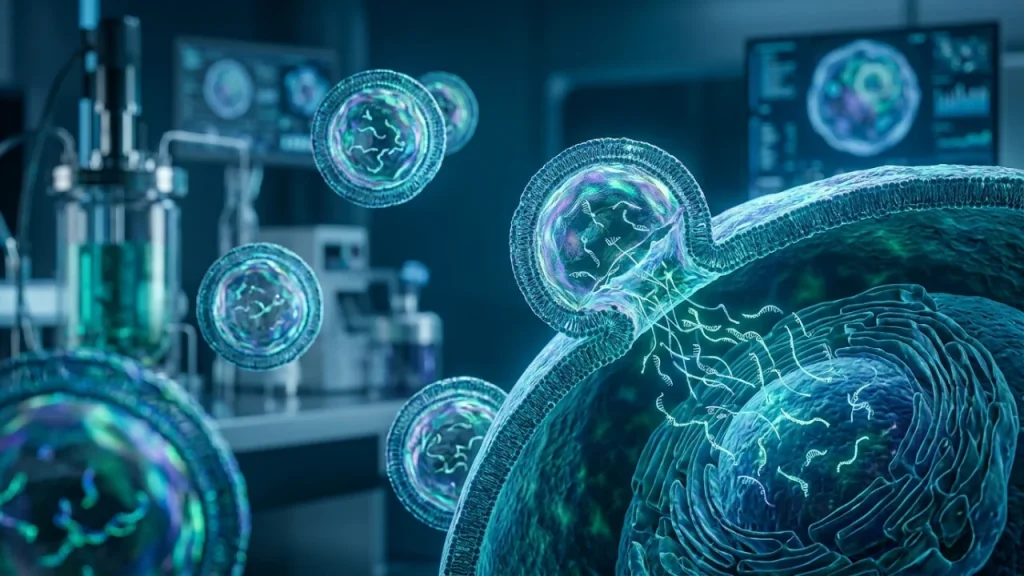
Why Exosomes News Matters for Your Skin Health
What are exosomes and how do they work?
Why Exosomes News Matters for Your Skin Health
### What are exosomes and how do they work?
Your body contains trillions of cells that talk to each other every single second. They do not use words, phones, or the internet to communicate. Instead, they use tiny bubbles called exosomes. These bubbles are so small that you could fit millions of them on the head of a tiny pin. Scientists often call them extracellular vesicles. This name just means they are small bags that live outside of your cells.
Think of an exosome like a tiny mail truck. Each truck carries a specific package to a specific address. Inside these packages are important tools like proteins, fats, and genetic codes. When a cell needs help or wants to share information, it sends out these trucks. Recent exosomes news shows that these bubbles are the primary key to how our bodies fix themselves. They are not just trash bags for cells; they are smart delivery systems.
The process of how they work is simple but very smart. First, a cell builds a bubble inside its own walls. It fills the bubble with special instructions. These instructions might tell a neighbor cell to grow, to stop an infection, or to create more energy. Then, the cell pushes the bubble out into the fluid around it. The exosome floats through the body until it finds the right neighbor. Once it arrives, the neighbor cell catches the bubble and pulls it inside. It reads the instructions and starts to work immediately.
Exosomes carry several types of cargo to help your body stay healthy: – Proteins that act like building blocks for new tissue. – Growth factors that tell cells to divide and multiply. – Lipids that help protect the outer layer of the cell. – RNA molecules that act like a recipe book for making new parts.
In the world of skin health, this communication is vital. As we get older, our cells get tired and do not talk as much. They send fewer mail trucks, and the trucks they do send might be empty. This lack of communication leads to wrinkles, dry skin, and slow healing. The latest exosomes news highlights how scientists are now finding ways to use these bubbles to “wake up” old skin cells. By giving skin cells the right instructions, we can help them act like young cells again. This is why these tiny bubbles are changing everything we know about staying healthy and looking good.
The difference between exosomes and regular skin creams
Most skin creams fail because they cannot pass the skin’s tough outer layer. This layer acts like a waterproof shield. It keeps water inside your body and keeps germs out. However, it also blocks most helpful ingredients like collagen or large vitamins. These large molecules stay on the surface of your face. They might make your skin feel soft for an hour or two. They do not change how your skin works deep down. They are like a fresh coat of paint on a house with rotten wood. The paint looks nice, but the house is still weak underneath.
Exosomes change this game because they are tiny. They are about 1,000 times smaller than a human hair. Because they are so small, they can slip between skin cells easily. They do not just sit on top of the skin. They travel deep into the layers where new skin is actually made. This is why the latest exosomes news is so exciting for skin experts. It shows that we can finally reach the parts of the skin that need the most help.
Think of your skin cell as a locked house. A regular cream is like someone knocking on the front door. The cell hears the noise but does not open up. An exosome is different because it has a key to the door. Exosomes are made of lipids, which are the same fats that make up your cell walls. The cell recognizes the exosome as a friend and pulls it inside. Once the exosome is inside, it releases its cargo of proteins and instructions. It gives the cell the tools it needs to repair itself from the inside out.
There are several reasons why this method is better than basic lotions: – Creams stay on the surface while exosomes travel deep into the tissue. – Creams provide temporary moisture while exosomes provide long-term repair. – Creams mask signs of aging while exosomes help fix the cause of wrinkles. – Creams use heavy oils while exosomes use natural signals your body already knows.
When a cream contains a vitamin, the cell has to work hard to use it. When an exosome enters a cell, it brings a direct blueprint. It might carry mRNA, which tells the cell exactly how to build new collagen. The cell does not have to guess what to do. The exosome gives it a clear plan. This is a huge shift in how we treat aging skin. We are no longer just adding moisture to the surface. We are sending a repair crew to the building site.
In the past, these tiny bubbles were very fragile. They would break apart before they could help anyone. Now, new technology allows them to stay active in special serums and gels. This means you can get the same benefits as a medical treatment at home. This shift is a major part of recent exosomes news. It makes high-tech healing available to more people than ever before.
Traditional lotions are still helpful for daily comfort. They stop your skin from feeling dry in the wind or cold. But if you want to change the health of your skin, you need a way to talk to your cells. Exosomes are the language that cells speak. They bridge the gap between simple beauty products and real medicine. By using these tiny messengers, we can tell our skin to act young and stay strong. This new way of thinking is changing the future of how we care for our bodies.
Why cell-to-cell talk is the secret to young skin
Young skin stays firm because its cells talk to each other every second of the day. This conversation happens through tiny bubbles called vesicles. These bubbles travel between cells to share vital information. In a young body, this network is fast and efficient. When one cell senses damage from the sun, it sends out a signal. Other cells receive that signal and start the repair process immediately. This is why children heal from cuts so quickly. Their cells are always listening and talking to keep the skin healthy.
As we age, this communication network begins to fail. The cells do not send as many messages as they used to. The messages they do send often get lost or broken. This breakdown is a primary reason why skin loses its glow and strength. It is like a construction site where the workers have stopped talking to the architect. Without a clear plan, the building starts to fall apart. This is where the latest exosomes news becomes so important for our health. We now have the tools to restart that conversation.
Exosomes act as the ultimate delivery system for cellular talk. They are not just random bits of material. Each one is a carefully packed container. Inside, they carry a specific cargo that helps the skin stay young: – Specialized proteins that give the skin its structure. – Signal molecules that tell the skin to stop being inflamed. – Instructions that help the skin produce its own natural oils. – Blueprints for building new blood vessels to bring in more nutrients.
When these vesicles reach a target cell, they do not just bounce off. They fuse with the cell membrane. This is like a key fitting into a lock. Once the door is open, the exosome dumps its cargo directly into the cell. This bypasses the usual noise on the surface of the skin. The cell gets the message loud and clear. It immediately starts to follow the instructions. If the message says “make more collagen,” the cell begins production right away.
This process is much more powerful than just applying a lotion. Most lotions stay on the surface. They cannot join the conversation happening deep inside the tissue. Exosomes can move through the spaces between cells. They find the exact spots that need help. By restoring this cell-to-cell talk, we are giving the skin the ability to fix itself from the inside out. This is the secret to lasting skin health. Clear signals lead to a stronger, younger body.
How exosomes act like tiny mail carriers for your body
A single human cell can release thousands of exosomes in just one hour. This constant stream of messages is how your body stays organized. Think of your body as a giant and busy city. In this city, every cell is a house or a business. For the city to work, everyone needs to talk to each other. They do not use phones or the internet. Instead, they use a physical mail system. Exosomes are the envelopes that carry these vital letters.
Each exosome has a protective outer shell made of lipids. This shell is like a sturdy cardboard box. It keeps the delicate instructions inside safe from the harsh environment outside the cell. Without this box, the proteins and signals would break down quickly. They would never reach their destination. Because of this protection, exosomes can travel long distances through your blood or between your tissues.
The most amazing part of this system is the address label. On the surface of every exosome, there are specific proteins. These proteins act like a digital barcode or a ZIP code. They tell the exosome exactly where to go. A message meant for a muscle cell will not accidentally end up in a brain cell. The latest exosomes news shows how scientists are learning to read these labels. By understanding these codes, we can see how the body heals itself.
The delivery process follows a very specific path: – The sender cell packs the cargo into a small bubble. – The bubble moves to the edge of the cell and pops out into the open. – The exosome enters the space between cells or the bloodstream. – It floats until it finds a cell with a matching lock for its key. – The exosome attaches to the new cell and releases its contents inside.
When the exosome finds its target, it does not just drop the package at the door. It actually merges with the target cell. It is like two soap bubbles touching and becoming one large bubble. This allows the cargo to enter the cell instantly. There is no waiting at the gate. The instructions go straight to the work area of the cell.
This precision is why exosomes are better than many medicines. Most drugs are like a giant rainstorm. They hit everything at once, even the parts that do not need help. Exosomes are like a single and guided arrow. They only hit the target. This makes the treatment very efficient. It also reduces the chance of side effects.
Scientists are now looking at how to use this mail system for better skin care. They want to send letters that tell skin cells to repair damage from the sun. They want to send packages that help the skin hold more water. By using the body’s own mail carriers, we can deliver help exactly where it is needed. This is the future of how we take care of our bodies. Understanding this delivery system helps us see why these tiny bubbles are so powerful. This precision leads us to the next step: how we can catch these bubbles to use them in medicine.
Getting the Cleanest Exosomes for Better Results
High-purity isolation techniques explained simply
A single drop of human blood holds billions of tiny particles. Most of these particles are not the exosomes we want. They are bits of fat, broken cell parts, and random proteins. To use exosomes for medicine, we must separate the gold from the dust. This process is called isolation. If the exosomes are not clean, they might not work well. They could even cause a bad reaction in the body. Scientists must use special tools to get the purest sample possible.
One common way to get exosomes is by spinning them. Scientists use a machine called an ultracentrifuge. This machine spins tubes of liquid at super high speeds. It can spin over 100,000 times in one minute. This speed creates a strong force. Heavy parts of the liquid sink to the bottom first. They form a hard clump called a pellet. The tiny exosomes stay floating in the liquid above the clump. Scientists then move that liquid to a new tube and spin it even faster. Each time they spin it, the liquid gets cleaner. This is like a fast merry-go-round that sorts items by their weight and size.
Another way to find pure exosomes is by using a maze. Imagine a tall glass tube filled with thousands of tiny, wet beads. These beads have tiny holes and paths inside them. Scientists pour the liquid over these beads. This method is called size exclusion chromatography. The small exosomes get stuck inside the tiny paths of the beads. They have to travel through a long, winding maze. Larger pieces of trash cannot fit in the holes. They just slide right past the beads and leave the tube first. Because the exosomes take the long way, they come out last. This allows scientists to catch them all at once without any of the larger trash particles.
Sometimes, scientists want a specific type of exosome. They use special sticky hooks that only grab certain bubbles. These hooks are often made of proteins called antibodies. It works like a magnet picking up only iron nails from a pile of sand. This method is precise. It ensures that the final product is exactly what the doctor ordered. High-purity isolation is the most important part of the latest exosomes news. If the sample is dirty, the medicine might not reach the right cell. New tools are making this process faster and cheaper every day. In the past, it took days to clean a small batch. Now, new filters can do it in just a few hours.
Getting clean exosomes is like cleaning a diamond. The more you scrub away the dirt, the better it shines. Once we have these pure bubbles, we can start to load them with medicine. This leads to the next big challenge in the lab. We must learn how to put the right cargo inside these tiny carriers.
Why clean exosomes work better than mixed ones
Pure exosomes travel faster and hit their targets more accurately than dirty ones. When scientists collect these tiny bubbles from cells, they often find a lot of extra “trash” in the mix. This trash includes broken pieces of cell walls, stray proteins, and bits of DNA. If a doctor injects this mixed liquid into a patient, the body might react badly. The immune system is like a group of guards for your body. These guards look for anything that does not belong. When they see stray proteins or cell trash, they start an alarm. This alarm causes inflammation, which can make a patient feel sick or give them a fever.
High-purity isolation ensures that only the healing bubbles enter the body. This is a major focus in recent exosomes news because safety is the first rule of medicine. A clean sample means the guards in your body stay quiet. They let the exosomes pass through because they do not see any dangerous trash. This allows the medicine to reach the sick cells without being attacked. If the sample is messy, the guards might destroy the exosomes before they can do their job.
Using clean exosomes also makes the treatment much stronger. Imagine a tiny mail truck trying to deliver a package to a specific house. If the truck is covered in sticky mud and heavy rocks, it will move slowly. It might even get stuck in the street. Dirty exosomes are like those muddy trucks. The extra junk on their surface makes them heavy and clumsy. They cannot find the right “lock” on the surface of a cell.
Clean exosomes work better for several specific reasons: – They fit perfectly into the receptors on the surface of target cells. – They do not get trapped in the liver or spleen by mistake. – They carry a clear message that the receiving cell can understand easily. – They allow doctors to use smaller doses to get the same healing result.
Precision is the most important part of this process. If a doctor knows the sample is 95% pure, they can calculate the exact dose for the patient. In a dirty mix, it is hard to tell how many exosomes are actually there. One bottle might have a lot of medicine, while another bottle has mostly trash. This makes it hard to predict if the treatment will work. By removing the junk, scientists ensure that every drop of the liquid is filled with active, working carriers.
When the bubbles are pure, they can cross deep into parts of the body that other medicines cannot reach. For example, they can travel into the brain or deep into a tumor. They act like tiny, clean keys that open the right doors. This level of cleanliness is what makes this new technology so different from old medicines. Now that we understand why we need pure bubbles, we can look at how we fill them with the right cargo. The next step is making sure these carriers have the best tools inside to help the body heal.
The tools used to separate tiny vesicles from cells
A machine called an ultracentrifuge can spin a sample at speeds over 100,000 rotations per minute. This speed creates a force that is 100,000 times stronger than the gravity on Earth. Scientists use this massive power to pull tiny bubbles away from larger cells and heavy proteins. When the machine spins, the heaviest parts of the liquid sink to the bottom of the tube. This creates a solid clump called a pellet. The lighter exosomes stay floating in the liquid above the clump. By spinning the liquid several times at different speeds, researchers can slowly remove the junk. This process is the most common way to get clean samples. Many reports in exosomes news highlight how this classic tool remains the gold standard for many labs.
However, spinning things very fast can sometimes damage the delicate surface of the bubbles. To solve this, scientists use a second tool called Size Exclusion Chromatography. You can imagine this tool as a tall glass tube filled with millions of tiny, porous beads. These beads act like a complex maze. When the liquid travels through the tube, the smallest pieces of waste get lost inside the holes of the beads. The exosomes are slightly larger, so they cannot fit into the tiny holes. Instead, they flow quickly around the outside of the beads. They reach the bottom of the tube first. This method is very gentle. It does not use high pressure or heat. It keeps the “keys” on the outside of the exosome safe so they can still talk to other cells.
A third tool is called Tangential Flow Filtration, or TFF. This tool works like a smart kitchen sieve. In a normal sieve, you pour liquid straight down, and the holes often get clogged with gunk. In TFF, the liquid flows across the surface of a special filter membrane. The pressure pushes the tiny waste particles through the holes, but the exosomes stay in the main stream. This constant flow prevents the filter from getting stuck. TFF is great for cleaning large amounts of liquid very quickly. It is often used when doctors need to make enough medicine for many patients at once.
Each of these tools has a specific job: – The ultracentrifuge uses speed to separate things by weight. – The bead maze uses size to let the bubbles race ahead of the waste. – The flow filter uses a side-to-side motion to keep the process clean and fast.
Sometimes, scientists combine all three tools to get the best results. They might spin the liquid first, then run it through the maze, and finish with the flow filter. This triple-cleaning process ensures that the final product is almost 100% pure. When the bubbles are this clean, they are ready for the next big step. Scientists must now learn how to open these tiny bubbles and put medicine inside them. This is how a simple bubble becomes a powerful tool for healing the body.
How labs make sure every exosome is ready to work
Scientists use special lasers to count bubbles that are 1,000 times smaller than a human hair. This is the first step in a process called quality control. It is not enough to just find the exosomes. Labs must prove that the bubbles are healthy and ready to work. If the bubbles are the wrong size, they cannot sink into the skin. If they are broken, they will not carry the right messages to your cells. This part of the science is where exosomes news often focuses because new ways to check quality come out every year.
One important tool is a laser tracking system. The lab puts a drop of liquid into a machine. A laser beam hits the tiny bubbles. This makes the bubbles glow like tiny stars. A camera watches how these stars move. Small bubbles zip around very fast. Larger bubbles move more slowly. The machine counts every single bubble. It tells the scientist exactly how many exosomes are in the liquid. A good batch for skin care needs billions of these tiny bubbles to be effective.
Next, scientists look at the shape of the bubbles using an electron microscope. This is a giant machine that can see things much smaller than a regular microscope can. Healthy exosomes have a very specific look. They often look like tiny cups or round donuts. If the scientist sees jagged edges or clumps of dust, the batch is failed. Only the smoothest and roundest bubbles are allowed to move to the next step. This ensures that the product you put on your skin is of the highest quality.
Labs also check the “ID cards” on the surface of the bubbles. Every real exosome has special proteins that act like a name tag. – They look for a protein called CD63. This proves the bubble came from inside a cell. – They check for CD81. This protein helps the bubble talk to other cells. – They search for CD9. This helps the bubble stay stable and strong. – They test for “junk” proteins. If they find too much waste, they must clean the batch again.
Safety is the final big test. The lab checks for things called endotoxins. These are tiny pieces of bad bacteria. If these get into a skin cream, they could cause a red rash or a bump. A perfect batch of exosomes must be 100% clean of these toxins. They also check to make sure no chemicals from the cleaning tools are left behind. This careful checking is why these bubbles are so powerful. When the bubbles are finally ready, they can be used to help the skin heal itself. This leads to the next challenge: how to keep these delicate bubbles alive until they reach your skin.
The Way Exosomes Travel Deep Into Your Skin
How targeted delivery systems find damaged cells
Exosomes travel through the body like smart mail with a specific address. Most medicines spread out everywhere and hope to find a target by chance. Exosomes are different because they have a built-in GPS system. This system allows
Why exosomes can go where other treatments cannot
The Way Exosomes Travel Deep Into Your Skin
### Why exosomes can go where other treatments cannot
Exosomes are about 30 to 150 nanometers wide. To understand how small that is, imagine a single human hair. You could fit about 1,000 exosomes across the width of that one hair. This tiny size is their greatest strength. Most skin creams and medicines contain large molecules. These molecules are like trying to push a basketball through a wedding ring. They simply cannot get deep into the body. Exosomes are different because they are more like tiny drops of water that can slip through the smallest cracks.
Your skin acts as a strong shield for your body. Its main job is to keep things out. The very top layer of your skin is called the stratum corneum. Scientists often call this the “bricks and mortar” layer. In this map of your skin, the cells are the hard bricks. The fats and oils between them are the mortar. This wall is very good at stopping germs, dirt, and most skincare products. However, recent exosomes news shows that these tiny bubbles do not just sit on top of the wall. They are small enough to find paths through the mortar.
There are three main ways these tiny messengers move deep into your tissue:
- They slip between the skin cells by moving through the oily mortar.
- They travel down hair follicles and sweat glands, which act like secret tunnels.
- They can be taken up by a cell on the surface and pushed out the other side to go deeper.
Most treatments stay on the surface because they are too bulky. They might hydrate the very top layer, but they do not reach the roots of the problem. Exosomes travel much further down. They can reach the dermis. This is the deep layer where your body makes collagen. Collagen is the protein that keeps your skin firm and young. When an exosome reaches this deep layer, it delivers its cargo directly to the cells that need it most. It is not just about being small. It is about being the right material.
The outer shell of an exosome is made of lipids. Lipids are fats. Your own cell walls are also made of these same fats. Because they are made of the same stuff, the skin does not see the exosome as an enemy. It sees the exosome as a friend. This allows the exosome to blend into the skin layers. While a normal chemical might get stuck or washed away, the exosome melts into the tissue. It moves through the oily barriers of the skin because it is oily itself.
This ability to go deep is a game changer for medicine. In the past, doctors had to use needles to get large molecules past the skin barrier. Now, the small size of these vesicles does the work naturally. They carry proteins and signals to the “engine room” of your skin cells. This deep travel ensures that the healing starts from the inside out, rather than just sitting on the surface. By reaching the deep layers, exosomes can help the body repair itself in ways that surface creams never could. This deep access is why scientists are so excited about using them for new types of healing.
The journey of a vesicle from the lab to your skin
Scientists must use high-speed machines to pull exosomes out of a liquid. These machines spin at thousands of turns per minute. This process is called ultracentrifugation. It is the only way to separate the tiny vesicles from larger waste and salt. If the lab does not do this well, the exosomes will not work correctly. High purity is the most important goal for any scientist. In recent exosomes news, experts found that cleaner batches lead to much faster healing for the skin. Once the vesicles are pure, they are ready to begin their journey into your body.
When you apply these vesicles to your skin, they do not just sit on the top. They are tiny bubbles of information. They immediately start to sink through the small gaps between your skin cells. Imagine a very crowded room. The exosome is like a small child who can weave through the legs of the crowd. It moves past the dead cells on the surface. It heads toward the living cells deep below. This movement is fast and purposeful.
The skin has several different layers. The top layer is the epidermis. It acts like a tough wall. Most skin creams stop at this wall. But the exosome has a special trick. It uses its oily shell to slide past the natural oils in your skin. It does not get blocked by the skin’s defense system. It keeps moving until it reaches the basement membrane. This is the border between the top and the deep parts of your skin. This is where the real repair work happens.
Once the exosome finds a target cell, it must deliver its cargo. It does not just dump the package outside. It fuses with the cell wall. Think of two soap bubbles touching each other. When they touch, they become one big bubble. The exosome opens up and lets its proteins and RNA enter the cell. This is the exact moment the real work begins. The cell receives a new set of instructions.
The repair process follows a specific order: – First, the cell reads the genetic signals from the exosome. – Second, the cell starts to make more collagen and elastin. – Third, the cell turns off signals that cause redness or swelling. – Fourth, the cell shares these new signals with all of its neighbors. – Fifth, the whole area of skin begins to look smoother and younger.
This journey happens millions of times in a single drop of liquid. It is a very precise delivery system. Scientists are finding new ways to make these vesicles even more effective. They can now load them with specific vitamins or medicines. This makes the exosome a tiny mailman for the body. Every time you see exosomes news, it often talks about how we can control this journey better. By guiding the vesicle, we can fix skin problems at the source. This process turns your skin into a factory for its own repair. This is how the body heals itself from the inside out.
How exosomes stay safe while moving through the body
The outer shell of an exosome is a double layer of special fats called lipids. This shell is only a few nanometers thick, but it acts like a suit of armor. In the world of biology, this structure is known as a lipid bilayer. It is the same material that protects the cells in your body. However, the exosome shell is much tougher than a normal cell wall. It has to be strong because the journey through the body is dangerous for a tiny vesicle.
Inside the exosome sits a fragile cargo of proteins and genetic signals. If these signals touched the blood or skin fluids directly, they would break apart. The body contains many enzymes that act like tiny scissors. These enzymes are designed to cut up loose floating pieces of RNA or protein. The lipid shell keeps these “scissors” away from the cargo. This protection ensures the message reaches the target cell in one piece.
The shell of the exosome contains a high amount of cholesterol and sphingomyelin. These specific fats make the shell stiff and stable. While a normal cell is soft and squishy, the exosome is more like a tiny, firm ball. This firmness helps it survive changes in temperature and acidity. Whether the exosome is in the blood or deep in the skin layers, the shell stays solid. This stability is a major reason why exosomes news often highlights their potential for delivering medicine.
The exosome shell does more than just block physical damage. It also helps the vesicle hide from the immune system. The surface of the shell is covered in special proteins that act like an ID badge. These proteins tell the body that the exosome is a friend, not an enemy. Without this ID badge, the immune system would see the exosome as a germ and destroy it.
The protective shell performs several key jobs: – It blocks enzymes from eating the delicate RNA inside. – It keeps the cargo safe from changes in the body’s pH levels. – It provides a firm structure that prevents the vesicle from popping. – It holds surface proteins that help the exosome navigate to the right spot.
Scientists are now looking at these shells to learn how to build better delivery tools. They want to know why some shells are stronger than others. By studying the fat molecules in the wall, we can understand how exosomes stay active for so long. This strength is what allows the exosome to wait until it finds the perfect cell to help. Once the shell finally touches a target cell, it does not break. Instead, it melts into the cell wall to release its cargo safely. This clever design makes the exosome one of the most reliable couriers in the human body. As we learn more about this shield, we find better ways to protect the skin from aging and damage. This protective layer is the secret to why exosome therapy works so well. It keeps the healing power safe until the very last second.
Making More Collagen with Molecular Signals
How exosomes trigger deep-tissue remodeling
Exosomes deliver specific sets of instructions to the cells responsible for skin structure. These cells are called fibroblasts. They live in the dermis, which is the thick layer of skin under the surface. Fibroblasts act like tiny factories that produce collagen and elastin. As we age
The science of building new collagen at a molecular level
Exosomes act as the primary communication system for your skin cells. They are like tiny envelopes filled with data. Inside these envelopes, you find molecular signals that tell cells exactly what to do. The most important signal they carry is a set of instructions for making collagen. Scientists often call these instructions messenger RNA or mRNA. You can think of mRNA as a recipe card for a specific protein. When a fibroblast cell receives this recipe, it knows it is time to get to work. This is a major reason why exosomes news is so popular in the world of health today. People are excited because we can finally talk to our cells in their own language.
When we are young, our cells send these messages all the time. As we get older, the messages become rare. The cells do not break; they simply stop receiving the orders to build. Exosomes change this by delivering fresh orders directly into the cell. Once an exosome reaches a fibroblast, it does not just sit on the outside. It merges with the cell wall and pours its contents inside. This is a very precise delivery system. It ensures that the recipe cards reach the part of the cell that builds proteins.
The process of building new collagen follows a specific path once the signal arrives:
- The cell reads the mRNA recipe delivered by the exosome.
- The cell gathers amino acids, which are the building blocks of protein.
- The cell chains these amino acids together to form a long strand.
- These strands twist together to create a strong collagen fiber.
- The cell pushes the new collagen out into the space between cells.
This new collagen acts like the wooden beams in a house. It provides the strength and shape that keeps skin from sagging. Without these molecular signals, the house starts to fall apart over time. Many people try to fix this by putting collagen creams on their face. This rarely works because collagen molecules are too big to enter the skin. They are like trying to push a whole brick through a closed window. Exosomes are different because they are tiny and carry the instructions, not the finished product. They teach the cell how to make its own “bricks” from the inside.
This molecular approach is much more effective than old methods. It focuses on the root cause of aging instead of just covering up the surface. By sending the right signals, we can help the skin maintain itself naturally. The skin becomes thicker and more elastic because it has the structural support it needs. This shift from adding ingredients to sending instructions is a huge step forward in science. It shows that our cells still have the power to repair themselves if they just have the right information. This discovery is changing how we think about long-term skin health and repair. Each signal sent by an exosome helps rebuild the foundation of the skin one molecule at a time. This deep repair is what makes the skin look and feel healthy again.
Why mRNA in exosomes is like a blueprint for repair
Exosomes carry a special molecule called messenger RNA, or mRNA for short. This molecule acts as a set of building plans for your body. When you are young, your cells have many of these plans. They know exactly how to build strong collagen to keep your skin firm. As you get older, these plans start to fade or get lost. The cell becomes confused and stops working as hard as it used to. This is where exosomes come into the picture. They act like a delivery truck bringing a brand-new set of blueprints to an old construction site. This allows the cell to start building again with fresh and clear information.
Once an exosome finds a cell, it merges with the cell wall. It drops off its cargo of mRNA right inside the cell. This is a fast and clean process. Recent exosomes news shows how scientists are finding better ways to
Boosting elastin for firmer and more bouncy skin
Elastin is the protein that allows your skin to snap back into place after you smile, laugh, or frown. While collagen provides the strength and structure, elastin provides the stretch. Think of collagen like the frame of a house and elastin like the springs in a mattress. Without these springs, the skin begins to sag and loses its ability to hold its shape. Most people focus only on wrinkles, but the loss of bounce is what really changes how we look as we get older.
When we are young, our bodies make a lot of elastin. This is why a child can pinch their cheek and the skin returns to normal instantly. As we age, the cells that make these stretchy fibers start to slow down. Sunlight, pollution, and time also damage the elastin we already have. Once these fibers break, the body has a hard time fixing them on its own. This is a major topic in recent exosomes news because these tiny bubbles offer a way to restart the building process.
Exosomes do more than just carry blueprints for general repair. They carry specific molecular signals that tell your cells to produce more elastin. These signals act like a wake-up call for a specific type of cell called a fibroblast. Fibroblasts live in the deep layers of your skin and act as the main construction workers for your skin’s support system. When an exosome reaches a fibroblast, it delivers the exact instructions needed to weave new, flexible fibers.
The process of boosting elastin involves several clear steps inside the cell: – The exosome attaches to the outside of the fibroblast cell. – It releases its cargo of signaling molecules into the cell. – The cell reads these signals as a command to start a new project. – The cell gathers amino acids to build long, stretchy protein chains. – These new elastin fibers are pushed out of the cell to join the skin’s network.
This internal work creates a visible change in how skin feels to the touch. It is not just about filling in a line or a crease. It is about making the skin behave like it did many years ago. When you pull on your skin, it should move back quickly. If it moves back slowly, it means the elastin levels are low. Exosomes help restore that “snap” by giving the fibroblasts the energy and the right information they need to work hard again.
Many people try to fix this by using creams that contain elastin. However, elastin molecules are usually much too big to sink into the skin. They simply sit on top of the surface and get washed away. Exosomes are different because they are small enough to travel deep into the tissue where the fibroblasts live. They do not just sit on the surface; they go inside the cells to fix the problem from the inside out. This is a big shift in how scientists think about skin health.
Researchers are now looking at how different types of exosomes affect skin bounce. Some come from plants, while others come from human cells. Each type carries a slightly different set of instructions. The goal is to find the most powerful signals to make the skin as flexible as possible. This research is moving very fast, and new discoveries appear in exosomes news almost every week. They are finding that a mix of collagen and elastin signals works best for total skin repair.
Having firm, bouncy skin is about more than just looking good. It is about having a healthy barrier that protects your body. Elastin helps the skin stay strong even when it is stretched or pulled. If your skin can stretch without tearing, it stays healthier and resists damage better. This is why the molecular signals inside exosomes are so important. They turn a slow and tired healing process into an active and fast one. By focusing on elastin, we can help the skin stay resilient against the effects of gravity and time.
Now that we know how these signals work to build better skin, we need to understand how they reach their target. It is not enough to just have a good signal; the exosome must know exactly where to go. In the next section, we will explore how scientists guide these tiny bubbles to the right spot.
Recent Exosomes News and Future Breakthroughs
New ways exosomes help heal scars and sun damage
Scars form when the body rushes to fix a deep wound as fast as possible. This hurry causes the skin to lay down collagen fibers in a messy, straight line. Normal skin has a neat “basket-weave” pattern, but scar tissue looks and feels different because it lacks this order. Scientists are now using exosomes to change how the body handles these repairs. These tiny bubbles act like site managers at a construction zone. They tell the cells to stop building messy walls and start following the original blueprint. This is a major highlight in recent exosomes news. Researchers have found that exosomes can reduce the appearance of thick, raised scars by changing the signals sent to skin cells.
When an injury happens, exosomes from healthy cells travel to the wound. They carry specific instructions that tell the body to produce less “emergency” collagen. Instead, they encourage the growth of flexible tissue. This process helps the skin heal without leaving a permanent mark. Here are a few ways these tiny messengers help the healing process:
- They stop the cells that create thick, hard scar tissue from working too much.
- They send signals that bring more oxygen and blood to the damaged area.
- They reduce the “angry” signals from the immune system that cause swelling.
- They help the new skin cells line up in a healthy, natural pattern.
Sun damage is another area where these bubbles show great promise. UV rays from the sun are like tiny bullets that hit your skin cells. They can break the DNA code inside the cell, which leads to dark spots and deep wrinkles. Most creams only stay on the surface and cannot reach the broken DNA. Exosomes are small enough to enter the cell and deliver repair tools directly to the source of the problem. They carry special proteins and RNA that help the cell find and fix the damage caused by the sun.
The latest exosomes news suggests that we can now use “designer” exosomes to target specific types of sun damage. By loading these bubbles with extra repair signals, scientists can help the skin recover faster from a burn. This helps the skin stay strong and prevents the long-term damage that leads to aging. In the future, this technology could help people with old sun spots or thin, damaged skin. By sending the right instructions, we can help the skin remember how to be healthy again. This shift from covering up damage to actually fixing the cellular code is the next big step in skin care. Once we understand how to fix the damage, the next challenge is making sure the exosomes we use are as pure and safe as possible.
Why exosome therapy is safer than stem cell therapy
A single stem cell can release thousands of tiny bubbles into the body every day. These bubbles carry the healing power of the cell without the risks of the cell itself. Scientists are finding that using these bubbles is a major upgrade for modern medicine. This shift is one of the most important parts of recent exosomes news. It shows that we do not always need to transplant living tissue to get a healing result. Instead, we can just use the messages that the tissue sends out.
The biggest benefit is that exosomes are not alive. A stem cell is a living thing that needs food, oxygen, and a very specific home to survive. If you put a living stem cell into a person, it might not behave the way you want. It might grow in the wrong place or turn into the wrong type of tissue. Because exosomes are just packages of protein and fat, they cannot grow or divide. They deliver their healing message and then the body breaks them down naturally. This makes them much easier to control than a living cell.
Another key factor is how the immune system reacts. Your body has a “security team” that looks for foreign invaders. Stem cells have large markers on their surface that the immune system can see easily. If the body does not recognize the cell, it will attack it. This is why people often need matching donors for transplants. Exosomes are different because they are much smaller and have fewer markers. They can travel through the body like tiny ghosts. The immune system usually ignores them, which means there is a much lower risk of a bad reaction.
The physical size of these bubbles also makes them safer for the heart and lungs. Stem cells are quite large compared to the tiny tubes in our blood system. Sometimes, these large cells can get stuck in the small blood vessels of the lungs. This can cause a blockage that is dangerous for the patient. Exosomes are about one thousand times smaller than a single cell. They flow through even the smallest vessels with no trouble at all.
There are several other reasons why doctors prefer these bubbles over whole cells:
- Exosomes do not have a nucleus, so they cannot carry or spread cancer.
- They can be frozen and stored for a long time without losing their strength.
- Doctors can measure the exact dose of medicine inside each batch of bubbles.
- They can travel across the blood-brain barrier to help heal the mind.
- They do not require a perfect match between the donor and the patient.
Using these bubbles instead of cells also makes the treatment more consistent. When you use live cells, every batch is a little bit different because cells change based on their environment. Exosomes can be cleaned and purified in a lab until every bubble is the same. This means the doctor knows exactly what the patient is getting every time. It removes the guesswork from the healing process.
This new way of thinking is changing how we treat many different health problems. We no longer have to worry about the dangers of “rogue” cells growing where they should not. We can focus on the specific signals that tell the body to fix itself. This move toward “cell-free” therapy is the safest path forward for the future of medicine. By using the message instead of the messenger, we make healing faster and more reliable for everyone. This level of safety is why many experts believe these bubbles will soon replace traditional cell transplants entirely. Once we have a safe way to deliver the message, we can start to look at how to make those messages even more powerful.
How exosomes might change the way we treat aging
Your skin cells lose about one percent of their collagen every year after you turn twenty. This slow loss is what causes skin to become thin, dry, and wrinkled over time. For many years, people tried to fix this by putting creams on their faces. However, most creams cannot get deep enough into the skin to make a real change. This is where the latest exosomes news becomes very exciting for doctors. These tiny bubbles are small enough to travel deep into the skin layers. They do not just sit on the surface like a lotion. Instead, they enter the old cells and deliver a fresh set of instructions.
Think of an old cell like a tired factory that has forgotten how to work. The exosomes act like a new manager who arrives with a better plan. They carry proteins and genetic bits that tell the tired cell to start building collagen again. When the cell receives these signals, it begins to act like a much younger cell. This process is much more natural than using chemicals or surgery. It uses the body’s own communication system to fix itself from the inside out.
The way these bubbles work can be broken down into a few simple steps: – They find the cells that are damaged or tired from sun exposure. – They attach to the outside of the cell and dump their cargo inside. – The cell reads the new instructions and starts to produce more moisture. – The skin becomes thicker and more elastic over the next few weeks. – Redness and swelling from old scars or sun damage begin to fade away.
This new technology is also changing how we think about hair loss. Some recent exosomes news shows that these bubbles can wake up “sleepy” hair follicles. As people age, the cells that grow hair often stop working. They are not dead, but they are resting. Exosomes can send a “wake-up call” to these cells. This tells the scalp to start growing hair again. This could be a much easier way to treat thinning hair than traditional surgery. It is faster, safer, and does not require any cuts or stitches.
Many people prefer this method because it looks very natural. When you use surgery to look younger, the results can sometimes look tight or strange. Since exosomes just help your own cells work better, the change happens slowly and looks real. You do not wake up looking like a different person. You simply look like a well-rested version of yourself. This is why many experts believe that cell signals will soon be the most popular way to stay healthy. We are learning that we do not always need to add something new to the body. Often, we just need to remind the body how to take care of itself. This shift toward “reprogramming” our cells is the next big step in human health. It opens the door to a future where aging is something we can manage with simple, smart signals.
The role of growth factors in the latest exosome liquid
Scientists now mix growth factors directly into exosome liquids to create a more powerful healing tool. These growth factors are natural proteins that tell your body to grow new tissue. When you combine them with exosomes, the results happen much faster. Think of an exosome as a mailman delivering a very important letter. The growth factors are the tools inside the envelope that the cell needs to do its job. Together, they form a “super-serum” for the skin and hair.
This combination is a major part of recent exosomes news because it makes treatments more reliable. In the past, some treatments used only exosomes. While exosomes are great at sending signals, they do not always provide the raw power needed for deep repair. Adding growth factors changes that. It gives the cells the exact instructions and the energy they need to start fixing damage immediately. This is why new skin treatments are showing such fast results in clinics today.
The process works like a construction site for your skin. The exosomes arrive at the site first. They tell the local cells that it is time to start building. Then, the growth factors arrive to act as the master builders. They organize the production of collagen and elastin. These are the two things that make skin look smooth and bouncy. Without enough growth factors, the cells might get the message to work but not have the strength to finish the task.
There are several ways this new liquid helps the body:
- Growth factors help the skin make more collagen to fill in deep wrinkles.
- They tell the body to build new blood vessels for a healthy, glowing look.
- They speed up how fast a wound closes after a scrape or a medical treatment.
- They help the skin stay hydrated by building a stronger protective layer.
- They encourage cells to replace old, damaged parts with fresh, healthy ones.
This new liquid is not just for looking younger. It is a breakthrough in how we fix the human body after an injury. When a person gets a cut, their body naturally releases growth factors to fix the hole. However, as we get older, our bodies make fewer of these proteins. This is why children heal very quickly, but older people take a long time to get better. By putting growth factors back into the exosome liquid, we can give an older person the healing speed of a much younger person.
Scientists use very high-tech machines to make this liquid. First, they clean the exosomes until they are very pure. Then, they carefully measure the right amount of growth factors to add to the mix. It is a very precise recipe that must be followed exactly. If there are too many growth factors, the cells might get confused and stop working. If there are too few, the treatment will not show any change. The latest research shows that a specific mix of five different proteins works best for most people.
People are excited about this because it is a “living” medicine. It does not just cover up a problem like a thick cream or makeup. It actually fixes the skin from the inside out. When you apply this liquid, your own cells start to divide and grow. This creates fresh skin that was not there before. It is like giving your body a second chance to be at its best. This move toward using smart signals and growth tools is the future of how we stay healthy and strong.
What You Should Know Before Trying Exosome Treatments
How to tell if an exosome product is high quality
High-quality exosome products must contain billions of tiny bubbles to actually work on your cells. If a product does not have enough of these bubbles, your body will not receive the signals it needs to heal. You cannot see these particles with your eyes because they are too small. This means you must trust the data provided by the maker. When you look at the latest exosomes news, you will see that scientists focus on three main things: count, purity, and source.
The first thing to check is the particle count. A strong treatment usually has between 10 billion and 50 billion exosomes in a single dose. Some cheap products only have a few million. A few million sounds like a lot, but it is not enough to change how your skin or joints behave. You should ask for a document called a Certificate of Analysis. This paper is a report card for the liquid. It shows exactly how many particles the lab found in that specific batch. If a seller cannot show you this paper, you should be careful.
Purity is the second major factor. When scientists take exosomes out of a cell, they also get a lot of “trash” proteins. This trash can cause redness or swelling if it stays in the liquid. High-quality products go through a process called chromatography. This process acts like a very fine sieve. It lets the healthy exosomes pass through but catches the unwanted junk. A pure product should be clear or slightly cloudy, not thick or dark.
The source of the exosomes also matters for your results. Most experts prefer exosomes that come from human mesenchymal stem cells. These are often called “master builder” cells. They are very good at telling other cells to grow and fix damage. Some products use exosomes from plants or milk. While these are interesting, they do not always speak the same “language” as human cells. If you want to fix human skin, using human-derived signals is usually the best choice.
Finally, you must ask about how the product was stored. Exosomes are very fragile. They are like tiny balloons filled with delicate instructions. If they get too warm, they can pop or fall apart. Most high-quality exosomes must be kept in a special freezer until the moment they are used. If you see a product sitting on a warm shelf in a store, it might not be active anymore.
To stay safe, keep these questions in mind: – How many billion particles are in each vial? – Can I see the lab report for this specific batch? – Were these exosomes cleaned to remove extra proteins? – Did these come from human stem cells or another source? – Was this product kept cold from the lab to the clinic?
Checking these facts helps you get the best results for your money. It also keeps you safe from products that make big promises but lack the science to back them up. Knowing what is inside the bottle is the first step toward a successful treatment. This focus on quality is what separates real medicine from simple beauty trends.
Why bio-active signals are the future of beauty
Your skin cells talk to each other every second of the day. They do not use words or sounds to communicate. Instead, they send tiny bubbles called exosomes to deliver vital messages. This is the exosomes news that scientists are most excited about today. In the past, beauty products only tried to cover up problems. They put oil or wax on the surface of the skin to trap moisture. Exosomes are different because they are bio-active signals. They do not just sit on top of the skin like a heavy blanket. They carry instructions deep inside the cells to start the natural healing process.
Think about a dry plant with yellow leaves. You can paint the leaves green to make the plant look better for a day. That is what old makeup and simple creams do. Or you can give the plant the right water and food so it grows new green leaves on its own. Exosomes are like that water and food. They tell your body to make more collagen and elastin. Collagen is the protein that keeps your skin firm and smooth. As we get older, our bodies make less of it. Exosomes find the cells that make collagen and tell them to work harder. This is why bio-active signals are the future of beauty. They fix the root of the problem instead of hiding it.
Our bodies are very picky about who they listen to. If a stranger gives you advice on the street, you might ignore it. But if a close friend tells you something important, you listen and take action. Exosomes are like that close friend to your cells. Because they come from living cells, your body recognizes the signal. They speak the same biological language as your own tissues. This is a huge step forward in science. We are moving away from harsh chemicals that can irritate the skin. Instead, we are using the body’s own tools to stay healthy and young.
When these signals reach their target, many positive things happen at once. These tiny messengers help the skin in several ways: – They help skin heal faster after a small injury or a sunburn. – They reduce redness by calming down cells that are stressed. – They help fade dark spots caused by spending too much time in the sun. – They make the skin feel thicker and much more resilient. – They help cells get rid of waste products more quickly.
Precision is the key to this new technology. Traditional creams are like a loud shout that everyone hears but no one follows. Exosomes are like a private text message sent to exactly the right person. Scientists can now isolate these messages with high-purity tools. This means the signals are clear and strong when they reach your skin. When you use a high-quality exosome product, you are giving your skin a clear map to follow. You are not just guessing or hoping for a result. You are using a targeted delivery system that knows exactly where to go.
We are just beginning to see what these tiny messengers can do for us. Every day, new research shows how they can help us look and feel better. This shift to bio-active signals is a true revolution in health. It changes how we think about the aging process. Aging is no longer just something that happens to us without a choice. It is a process we can talk to and influence. By using exosomes, we can tell our skin to stay active and strong. This is not a simple trend that will go away next year. It is a new way of doing medicine and beauty that will only get better as we learn more. Understanding this language is the key to unlocking the best version of your skin.
The safety of using cell-free technology on your face
Exosomes contain zero live cells and cannot grow into new tissue on their own. This is the most important fact about cell-free technology. When people hear about stem cells, they often worry about risks. Live cells can sometimes behave in ways we do not expect. They might grow too much or cause an immune reaction. Exosomes are different because they are just the cargo. They are tiny bubbles filled with proteins and signals. Because they have no nucleus, they cannot divide. They cannot turn into a tumor or cause a dangerous growth. This makes them much safer for use in skin treatments.
Scientists use special tools to separate these bubbles from everything else. This process is called high-purity isolation. It removes all the cell parts your body might reject. You are left with a clean product that only contains the helpful messages. This is a big reason why many doctors prefer exosomes over live cell therapy. You get the benefits of the message without the risks of the messenger. The body recognizes these signals as natural. It does not see them as a foreign threat. This is why most people do not have bad reactions to them.
Recent exosomes news shows that these treatments are becoming the standard for safety in beauty. Researchers are finding better ways to filter these tiny particles every day. They want to make sure no unwanted proteins remain in the mix. When the product is pure, the skin accepts it easily. You do not have to worry about your immune system attacking the treatment. This is a major step forward from older methods. In the past, some treatments used harsh chemicals or foreign materials. Now, we use the same signals your body already knows.
Using cell-free technology on your face is a smart choice for sensitive skin. The face is a delicate area with many blood vessels. You want a treatment that stays focused on its job.
- Exosomes do not trigger a strong immune response.
- They do not contain DNA that could change your own cells.
- They are filtered to remove bacteria and other impurities.
- They work with your skin instead of forcing a change.
These points help explain why so many people feel safe using them. You are essentially giving your skin a boost of information. It is like a software update for your cells.
The way labs make these products is strict. They follow rules that ensure every batch is the same. They check for purity at every step. This means the risk of infection is minimal. Since there are no live cells, the product is more stable. It does not need the same complex care that live cells require. This stability also helps keep the product safe from the lab to the clinic. You can trust that the signals are still active when they touch your skin.
Safety is the foundation of any good beauty treatment. When you remove the risks of live cells, you open the door to better results. You can focus on the glow and the health of your skin. Knowing that the technology is cell-free gives you peace of mind. This peace of mind allows you to enjoy the benefits of the biotech revolution. It is a clean, modern way to care for yourself. This safety makes it easier to understand how these particles move through your skin.
How exosomes help with hair growth and scalp health
Hair follicles are tiny organs in your skin that work hard to grow hair every single day. These follicles act like small factories. Sometimes, these factories slow down or stop working. This can happen because of age, stress, or poor health. When the factories stop, your hair gets thin or starts to fall out. Exosomes offer a new way to wake up these sleeping hair follicles. They do not just cover up the problem. They give the cells the tools they need to start building hair again.
Many people look for the latest exosomes news to see how science is changing hair care. The news shows that these tiny bubbles are effective at fixing the scalp environment. Think of your scalp as soil in a garden. If the soil is dry and lacks food, the plants will not grow. Exosomes act like a high-tech fertilizer. They carry proteins and growth factors directly to the root of the hair. This helps the hair stay in the growing phase for a much longer time.
Why do these tiny particles work so well for hair? It is because they are small enough to reach deep into the skin. They can enter the hair bulb where the actual growth happens. Once they are inside, they tell the cells to divide and create new hair strands. This process is natural and does not use harsh chemicals. It is a clean way to help your body do what it already knows how to do.
Here are some ways that exosomes help your hair:
- They wake up follicles that have stopped growing hair.
- They increase the size of the hair bulb to make strands thicker.
- They help the hair stay attached to the scalp for longer.
- They reduce redness and irritation on the skin of the head.
- They improve blood flow so the hair gets more oxygen.
Using this technology for hair is a big step in modern science. In the past, people used heavy oils or pills that had many side effects. Exosomes are different because they are a pure signal. They do not leave a greasy mess on your head. They just give your cells a clear set of instructions. When the scalp receives these signals, it starts to repair itself. This repair leads to a fuller and healthier head of hair.
Searching for exosomes news will show you many stories about how people are regaining their confidence. This is because the technology focuses on the root cause of hair loss. By using high-purity signals, we can help the body heal itself. This makes the treatment a long-term solution rather than a quick fix. A healthy scalp is the foundation for thick hair. When you fix the scalp, the hair follows naturally. This safety and power make it easier to see how these particles move through your skin to create a real change.
The Practical Future of Exosome Skin Care
How exosome science will change your daily routine
Skin cells lose their ability to talk to each other as we get older. When this communication breaks down, the skin stops repairing itself quickly. This leads to wrinkles, dry patches, and a loss of glow. Most old-fashioned creams only sit on the surface of the skin. They act like a thick coat of paint on a house with a broken foundation. They might look good for an hour, but they do not fix the underlying problem. Exosomes are the first technology that addresses the foundation of the skin. They do not just cover up issues; they send new instructions to the cells.
Your daily routine will likely become much shorter because of this science. Right now, many people use a ten-step process with many different serums and oils. They use one product for moisture and another for dark spots. Exosome science will change this by providing one smart product that does everything. These particles are about 30 to 150 nanometers wide. This is much smaller than the pores in your skin. Because they are so small, they can sink deep into the layers where new skin is made. Most traditional creams have molecules that are too big to go deep. They stay on the top layer and eventually wash off.
Here are some ways that exosomes will simplify your skin care:
- They replace heavy oils by telling the skin to make its own moisture.
- They reduce the need for harsh acids by speeding up natural cell turnover.
- They act as a shield against pollution by strengthening the skin barrier.
- They fix the look of tired skin by boosting natural energy in the cells.
- They work with your body to fade sun spots without using bleach.
If you follow the latest exosomes news, you will see that this is not just a dream. Scientists are already finding ways to keep these particles stable in a bottle. In the past, they had to be kept in a freezer. Now, high-purity isolation techniques allow them to stay active at room temperature. This means you can keep them on your shelf next to your toothbrush.
This purity is a major part of the revolution. In the old days, skin products used many filler ingredients. These fillers often caused rashes or clogged pores. Exosome products are different because they focus on the signal, not the filler. When the signal is pure, the skin responds faster and with less irritation. This makes the treatment a better choice for people with sensitive skin.
In the future, your skin care might even be made for your specific needs. A computer could look at your skin and see which signals are missing. Then, you would get a bottle of exosomes designed to fix those exact gaps. This is the end of the one-size-fits-all approach to beauty. Every person has a different skin story, and exosomes provide a way to write a better ending. This shift from simple moisture to active cell signaling is the biggest change in skin care in fifty years. It moves us away from temporary fixes and toward true cellular health. This transition to smarter products is the next step in the journey of biotechnology.
What to look for in the next generation of skin repair
Scientists are testing skin patches that use tiny needles to deliver exosomes directly into the deep layers of the skin. These needles are so small that you cannot feel them. They are called microneedles. This method is much better than just rubbing a cream on your skin. A cream often stays on the top layer. A patch pushes the active signals down to where the cells live. This is why experts are excited about the next generation of skin repair.
If you follow the latest exosomes news, you will see that these particles are now being used to treat serious wounds. In the past, deep burns took a long time to heal. They often left thick scars. Now, doctors use exosome gels to speed up the process. The exosomes tell the body to build smooth tissue instead of a scar. This helps the skin look and feel natural after an injury. This technology is moving from hospitals to beauty clinics very quickly.
You should also look for timed-release technology in new treatments. This means the exosomes do not all enter your skin at once. Instead, they come out slowly over many hours. This gives your cells time to listen to each signal. If too many signals arrive at the same time, the cells might get overwhelmed. Think of it like a teacher talking to a student. If the teacher speaks too fast, the student learns nothing. If the teacher speaks slowly, the student understands everything. Timed release makes the treatment work much better.
When choosing a future treatment, you must check the source of the exosomes. Different sources do different jobs: – Plant exosomes are great for fixing redness and protecting skin from the sun. – Human-derived exosomes are best for building collagen and fixing deep wrinkles. – Synthetic exosomes can be made to carry specific vitamins or medicines to a target.
Another big change is how doctors use lasers with exosomes. A doctor might use a laser to make tiny, invisible holes in your skin. Then, they put the exosome liquid on top. The holes act like tunnels. They let the exosomes reach the deep layers instantly. This is called laser-assisted delivery. It makes the treatment much stronger. It also helps the skin heal faster after the laser work is done.
The number of exosomes in a product is also very important. This is called the concentration. New tools allow scientists to pack billions of exosomes into one small vial. You need a high number to get a real result. If a product only has a few million, it might not be enough to wake up your cells. Always look for products that list the total count of active particles.
Finally, watch for how these products are stored. While some are stable at room temperature, the strongest clinical versions might still need to stay cold. This keeps the delicate proteins inside the exosomes from breaking. If the proteins break, the message is lost. The future of skin care is about making sure the message stays clear from the lab to your skin. This focus on delivery and purity is what makes the new era of biotechnology so powerful.
Why the exosome revolution is just beginning
Scientists are now testing exosomes that can find damaged skin cells on their own like a tiny GPS. This is a major step up from the treatments we have today. Right now, doctors put exosomes on the skin and wait for them to work. In the future, these tiny bubbles will have special sensors on their surface. These sensors act like keys that only fit into certain locks. They will help the exosomes stick only to the cells that are dry, old, or hurt. If a cell is already healthy, the exosome will simply keep moving. This makes the treatment much more efficient. It also means we can use smaller amounts of the product to get much better results.
If you follow the latest exosomes news, you will see that new studies are coming out every month. Researchers are finding ways to use these particles to stop skin from getting old before it even starts. They are not just looking at how to fix a wrinkle that is already there. They are looking at how to stop the “quiet” damage that happens deep under the surface. This damage is often caused by stress or pollution. By stopping this early, we might be able to keep skin looking young for many decades. It is like having a tiny repair crew that lives inside your skin cream.
Another exciting part of the future is custom skin care. One day, a clinic might take a small sample of your own blood or skin cells. They will grow these cells in a clean lab to make your own personal exosomes. This means the “message” inside the bubble is written in your own body’s language. Your skin will recognize these messages instantly. There is no risk of your body rejecting the treatment because the medicine comes from you. This level of personal care was almost impossible to imagine just ten years ago.
The next five years will bring many new tools to our homes: – Smart bubbles that only target the dark spots or red areas on your face. – Custom serums made from your own cells for the best possible results. – Home tools that use gentle light to help exosomes sink deeper into the skin. – Daily creams that release tiny doses of exosomes throughout the whole day. – New tests that tell you exactly which types of exosomes your skin needs most.
Computers and artificial intelligence are also helping us move faster. These smart programs can look at millions of exosome types at once. They can pick the best recipes for fixing sun damage or scars. This helps scientists skip years of slow testing in the lab. We are moving from “guessing” what works to “knowing” exactly what will help. This speed is why many experts believe the biggest breakthroughs are coming very soon. We are just at the start of a very long and exciting journey.
The future is not just about looking better in photos. It is about having healthier skin from the inside out. We now know that skin health is a sign of how the whole body feels. By using exosomes, we can give the skin the tools it needs to protect itself from the sun and wind. This means we will rely less on heavy makeup and more on our natural glow. The journey from the high-tech lab to your bathroom mirror is getting shorter every day. This revolution is changing how we think about aging forever.