
What Are Exosomes and Stem Cells in Skincare?
Why Understanding Exosomes vs Stem Cells Matters for Your Skin
Understanding the difference between exosomes and stem cells is crucial. This knowledge helps you evaluate skincare claims. It guides you toward treatments that match your skin’s true needs.
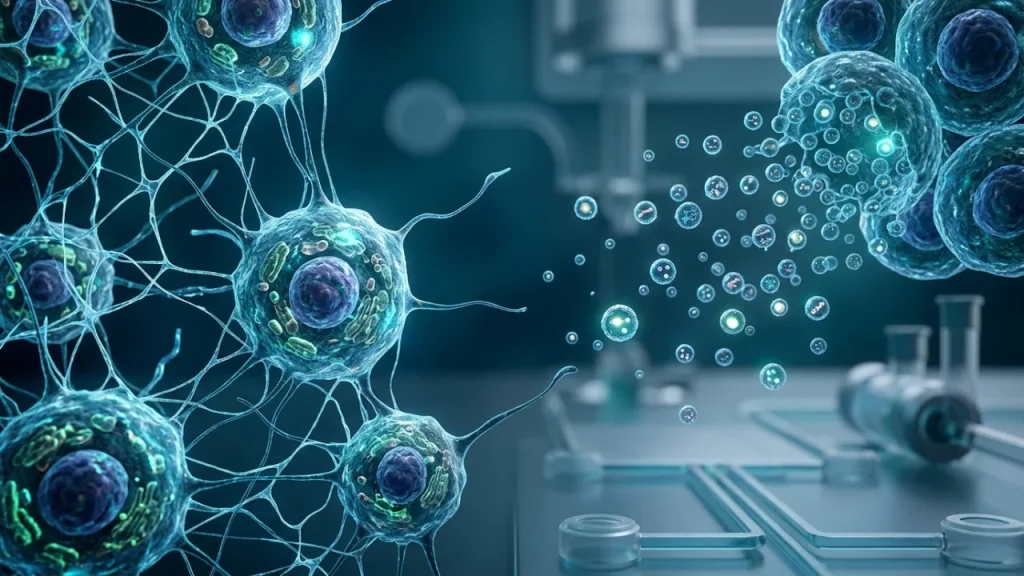
Think of a stem cell as a factory. It can become different types of skin cells. It also produces and ships out tiny packages. These packages are called exosomes. The exosome is the delivery truck from the factory. It carries important cargo but cannot build a new factory itself.
This is the core of exosomes vs stem cells. Stem cells have potential. Exosomes carry instructions. Modern regenerative skincare focuses more on the instructions.
Why does this shift matter for your skin? Direct stem cell use in topical creams faces big hurdles. Live stem cells cannot survive in a jar. They cannot integrate into your skin from a cream. The valuable part is what they release.
Exosomes deliver precise signals. They tell your aging skin cells to act younger. They encourage collagen production. They reduce inflammation. They promote healing. These vesicles carry tools like proteins and RNA.
The source of exosomes is key. They are harvested from stem cells grown in labs. The conditioned medium is collected. Exosomes are then purified from this liquid. This process ensures a concentrated, stable product.
Consider these practical points for skincare:
- Stability: Exosomes are more stable than live cells. They can be formulated into serums without losing function.
- Precision: They deliver targeted messages. Think of them as a text message instead of a whole phone.
- Safety: Using purified exosomes reduces risks. There is no chance of unwanted cell growth.
Your skin has its own resident stem cells. These cells become less active with age and sun damage. They stop communicating well. Applying exogenous exosomes can restart this conversation.
The signals tell your skin’s own cells to repair themselves. This is a natural process. You are boosting your skin’s innate ability to heal.
Misunderstanding the difference can lead to wasted money. A product claiming “stem cells” might only contain lysed cell fragments. These fragments have limited signaling power. An exosome formula targets the communication network directly.
Clinical results highlight the distinction. Studies show exosome treatments improve hydration. They reduce fine lines. They enhance skin texture and tone. The effects come from cellular messaging.
The goal is not to add foreign cells. The goal is to educate your existing cells. Your skin’s biology does the real work. Exosomes simply provide the updated manual.
This approach is more sophisticated than early stem cell hype. It leverages cell biology without its complexities. You get the benefit without the logistical challenges.
Choosing a treatment requires informed questions. Ask about the source of active ingredients. Inquire about the mechanism of action. Understand whether a product aims to deliver cells or signals.
Regenerative skincare is evolving. The focus is now on smart communication. Exosomes represent this new chapter. They offer a precise tool for skin rejuvenation.
Your skin’s health depends on clear cellular commands. Exosomes specialize in delivering those commands effectively. This knowledge empowers your decisions for better skin outcomes.
The next step is examining how these messengers actually work on a cellular level.
The Basic Role of Stem Cells in Skin Repair
Stem cells are master cells found within your skin. They have a unique job. They can divide to create new, ordinary skin cells. They can also repair damaged tissue. Think of them as a built-in repair crew and a factory combined.
These cells live in specific skin layers. The deepest layer of the epidermis holds many stem cells. So does the area around hair follicles. These are strategic locations. From there, they can respond to injury or daily wear.
Their primary function is renewal. Every day, you lose thousands of skin cells. Stem cells replace them. They divide to produce daughter cells. These daughters then mature and move to the skin’s surface. This process maintains your skin’s barrier.
Stem cells also activate during healing. After a cut or sunburn, they receive chemical signals. These signals tell them to shift into high gear. They start producing more new cells to close the gap. They help rebuild the damaged structure.
But they do not work alone. Stem cells communicate with their neighbors. They release a cocktail of growth factors and proteins. These substances are instructions for other cells. The instructions might say “divide now” or “make more collagen.”
This is where a key distinction emerges in regenerative skincare. The power of stem cells lies in their outputs, not just the cells themselves. Their signaling molecules are crucial for coordinated repair.
The direct use of living stem cells in topical products is a challenge. The cells are fragile. They often cannot survive in a cream or serum. This is a major logistical hurdle. Even if they survive, they may not function correctly on foreign skin.
This reality shifted scientific focus. Researchers asked a vital question. What if we could use the signals without needing the live cell factory? This inquiry leads directly to the concept of exosomes vs stem cells.
Exosomes are one of the most important tools stem cells use. They are tiny packages loaded with those instructions. Stem cells create and release exosomes to send messages far and wide.
So, stem cells are the producers. Exosomes are their distribution network. One creates the healing material. The other delivers it precisely.
The basic roles break down simply: – Stem cells act as factories and reservoirs for renewal. – They manufacture new skin cells to replace old ones. – They produce vital signaling molecules and pack them into exosomes. – Their health determines your skin’s regenerative capacity.
Without healthy stem cells, skin renewal slows down. Their function declines with age and sun exposure. This slowdown leads to thinner skin and poor healing. The factory’s output diminishes.
Modern skincare science aims to support these native cells. The goal is not usually to add new foreign stem cells. The goal is to protect your existing ones and boost their signaling efficiency.
Understanding this role is the first step. It clarifies why early stem cell hype faced obstacles. It also shows why harnessing their communication system is smarter. You support the factory by optimizing its delivery service.
In summary, stem cells are the foundational source of skin regeneration. They are the origin point for both new cells and the commands that organize repair. Their natural decline is a core reason skin ages. The next scientific leap was finding a way to capture and redirect their most powerful messages without the complexities of the cell itself. This brings us to the messengers: exosomes.
How Exosomes Work as Messengers from Cells
Exosomes are tiny delivery vehicles. They are not cells. They are small bubbles made from the same material as a cell’s outer membrane. Think of them as microscopic mail pouches. Cells create them to send precise instructions to other cells.
Their job is communication. A skin cell under stress can send an exosome. A stem cell in the hair follicle can send one too. The message inside tells the receiving cell what to do. It might say “calm down,” “make more collagen,” or “repair this damage now.”
The process starts inside the cell. A small compartment forms within the cell. This compartment is called an endosome. It gathers specific molecules to be shipped out. These molecules are the cargo.
This cargo is carefully chosen. It can include: – Proteins that act as instructions. – Lipids for building new cell membranes. – Growth factors to stimulate repair. – RNA, which is a genetic recipe book.
The endosome then creates smaller bubbles inside itself. These inner bubbles are the future exosomes. The cell’s machinery packs the chosen cargo into them. It is a precise loading process.
Next, this loaded endosome moves to the cell’s outer wall. It fuses with the cell’s membrane. The tiny exosome bubbles are released into the space outside the cell. They are now in the extracellular matrix, the skin’s support network.
The exosome must now find its target. It does not travel at random. Its outer surface has address labels. These are proteins and sugars that stick out. They match receptors on certain recipient cells.
It is like a key finding a lock. When the exosome finds the right cell, it docks. It can deliver its message in two main ways. First, it can fuse with the target cell’s membrane. This empties the cargo directly into that cell.
Second, the whole exosome can be swallowed by the target cell. The cell engulfs it. Once inside, the exosome opens up. Its instructional cargo is released and put to work.
This system is incredibly efficient. One stem cell can send out thousands of exosomes. Each one carries a concentrated set of commands. The effect is powerful and direct.
The key difference between exosomes vs stem cells is clear here. A stem cell is a living, complex entity. It needs to stay alive and integrate into tissue to work. An exosome is a non-living messenger. It delivers a pre-packaged signal and then is gone.
Exosomes avoid many problems of using whole cells. They cannot multiply uncontrollably. They do not trigger strong immune reactions in most cases. Their action is temporary and focused solely on signaling.
Their messages are context-dependent. An exosome from a healthy, young cell carries helpful instructions. An exosome from a stressed or old cell might carry damaging signals. The quality of the sender matters greatly.
In skincare science, the goal is to use exosomes from optimal sources. These exosomes can be applied topically or in procedures. They deliver a burst of coordinated instructions to aging or damaged skin cells.
The instructions tell resident skin cells to act younger. They encourage fibroblasts to make fresh collagen and elastin. They tell inflamed cells to calm down. They support the skin’s own repair systems.
This makes exosome signaling a form of resetting cellular software. It does not add new hardware like foreign cells. It simply updates the operating instructions your existing cells follow.
The result is a targeted regenerative response. Skin texture can improve because cells build better support structures. Healing may accelerate because repair pathways are activated. Redness may fade due to anti-inflammatory signals.
Understanding this messenger role is crucial. It shows why modern regenerative skincare looks beyond just adding stem cells themselves. Harnessing their communication system offers a smarter, more precise tool for guiding skin’s natural behavior toward renewal and repair.
Key Differences Between Exosomes and Stem Cells
The core difference lies in their primary function. Stem cells are builders. Exosomes are messengers.
Think of a construction site for new skin tissue. Stem cells are like the workers and the raw materials. They can divide to create more workers. They can also transform into specific cell types, like fibroblasts that produce collagen. Their job is active construction and renewal.
Exosomes are different. They are like the project manager’s detailed instructions. They do not build anything themselves. They carry blueprints and orders to the existing crew. These orders tell the skin’s resident cells how to behave. They might instruct a fibroblast to ramp up collagen production. They could tell an inflamed cell to calm its activity.
This leads to a key practical distinction: integration versus communication.
Stem cells are meant to integrate into tissue. They become a physical part of your skin’s structure. This direct integration poses challenges. The living stem cell must survive in its new environment. It needs to avoid attack by the host’s immune system. Its long-term behavior must be carefully controlled to prevent overgrowth.
Exosomes avoid these issues. They deliver their signals and are then cleared by the body. They do not stay or integrate. They do not replicate. Their effect comes from the temporary instructions they provide, not from becoming permanent residents.
The source of these agents is another major point of separation.
Stem cells used in therapies are typically derived from specific tissues. Common sources include bone marrow or fat. These are living, intact cells that must be carefully harvested and processed. Their viability is critical for their function.
Exosomes are harvested from the liquid medium where stem cells are grown. Scientists collect the messages the cells have released. The exosomes are then separated and purified. The original stem cells are not applied to the skin; only their communication packets are used.
This difference defines their mechanism of action in skincare.
A stem cell-based approach aims to add new, functional units to the skin. The goal is for these new cells to engraft and contribute directly to tissue structure. It is a strategy of cellular replacement or direct addition.
An exosome-based strategy is about modulation and guidance. It seeks to optimize the performance of the skin cells you already have. The exosomes vs stem cells debate in skincare often centers on this: messaging versus rebuilding.
Consider the timeline of their effects.
Stem cells, if they successfully engraft, may offer a long-term source of renewal. Their effects could build over a longer period as they integrate and multiply. However, seeing results depends entirely on this successful integration.
Exosome effects can be more rapid but may require repeated application. The signals prompt an immediate change in cell behavior. Since exosomes are transient, sustaining those new instructions often needs consistent signaling over time.
Safety profiles differ due to their biological nature.
Living stem cells carry more inherent biological risk. There is a small potential for immune reaction if the donor cells are not a perfect match. There is also a theoretical risk of uncontrolled growth, though this is heavily managed in practice.
Exosomes are generally considered to have a lower risk profile. They lack a full cellular machinery for replication. They are less likely to provoke a significant immune response because they carry fewer identifying markers than a whole cell.
In summary, choosing between these tools depends on the desired outcome.
- Stem cells are a strategy for potential structural replacement.
- Exosomes are a strategy for precise cellular reprogramming.
The modern shift in regenerative skincare leans toward the exosome model. It leverages the powerful communication of stem cells without the complexities of using the cells themselves. This offers a targeted way to reset skin function, guiding your own biology toward repair with a clear set of instructions. The next question is how these messages are safely collected and prepared for use.
Why Exosome Therapies Avoid Stem Cell Risks
Exosomes cannot replicate or turn into the wrong cell type. This is a core safety advantage. Living stem cells contain a full nucleus with DNA. This DNA holds instructions for growth and specialization. Exosomes lack this nuclear material entirely. They are simply packets of signaling molecules. They deliver a message and are then broken down by the body. There is no risk they will start dividing uncontrollably.
Their reduced immune risk comes from their structure. A whole cell displays many surface proteins. These proteins act like flags telling the immune system “self” or “foreign.” Mismatched flags can trigger a defense response. Exosomes carry far fewer of these identifying proteins. Think of it as sending a sealed letter instead of sending the entire person. The letter carries information without presenting a full biological profile that could cause alarm.
The manufacturing process itself adds a layer of safety. Exosome preparations are rigorously filtered. This filtration removes whole cells and cellular debris. The final product is a purified concentrate of the communication vesicles alone. This creates a clean, cell-free solution. The solution is also tested for pathogens and purity before use.
Let’s break down the key risks avoided: – No risk of teratoma formation. This is a type of tumor that can form if pluripotent stem cells grow unchecked. Exosomes are not cells and cannot form tumors. – Minimal risk of immunogenicity. The body is less likely to see them as a threat, making reactions rare. – No risk of improper cell integration. Stem cells must migrate to the right place and function correctly. Exosomes simply signal to existing cells, guiding their natural behavior.
The transient nature of exosomes is also a safety feature. Their signals are powerful but temporary. They do not permanently alter a cell’s genetic code. They influence protein production and behavior for a period. This means their activity is naturally limited by the body’s own metabolic processes. The effects are controlled and self-limiting.
This contrasts with some permanent cell therapies. Long-term survival of donor cells can sometimes lead to complications. These complications are not a concern with exosome treatments. The focus shifts from implanting foreign living units to directing native biology.
Consider the analogy of a construction site. Introducing stem cells is like bringing in new workers with their own blueprints. You must ensure they follow the plan and work safely with the existing crew. Introducing exosomes is like giving the current foreman a precise, updated set of instructions. The original crew does the work using their own tools, following familiar protocols but with better guidance.
The exosomes vs stem cells debate in safety often centers on this fundamental difference: potential versus precision. Stem cell potential comes with more biological variables to manage. Exosome precision offers a more targeted, contained intervention.
Research supports this safety profile. Studies note a strong record of tolerability in clinical applications. Adverse events, when reported, are typically mild and local, like temporary redness. Serious systemic reactions are exceedingly uncommon with purified exosome products.
This inherent safety allows for different application strategies. Treatments can be repeated more readily without escalating risk. They can be combined with other procedures without complicating the biological picture. The lower risk profile makes them a viable option for a broader range of patients.
In essence, exosome therapies separate the therapeutic message from the complexities of the messenger cell. This elegant separation is why they avoid many stem cell risks. The next logical step is understanding how these messages are decoded by skin cells to produce visible results.
How Exosomes Communicate with Skin Cells
The Journey of Exosomes from Source to Target
Exosomes begin their journey inside a donor cell. This cell could be a stem cell, but it is not the only source. Skin cells themselves can release exosomes. The process starts in a cellular compartment called the endosome. Here, tiny vesicles form. They actively gather specific molecular cargo from the cell’s cytoplasm.
This cargo is not random. It is a carefully selected package. It includes signaling proteins, growth factors, and nucleic acids like RNA. These molecules are the “instructions” for the target cell. The loaded vesicle then moves to the cell’s outer membrane. It fuses with this membrane and is released into the extracellular space. Now it is a free exosome.
The exosome enters the fluid between cells. This space is called the interstitial matrix. It is a dense network of structural proteins and sugars. The exosome must navigate this complex terrain to find its target. It does not travel blindly. Its outer membrane contains addressing molecules. These are like shipping labels or homing signals.
These labels allow for targeted delivery. They guide the exosome to a specific type of skin cell. For instance, an exosome might seek out a fibroblast. A fibroblast is the cell that makes collagen and elastin. Another exosome might target a keratinocyte in the epidermis. The “label” on the exosome matches a “receptor” on the target cell’s surface.
This targeting is a key advantage in the exosomes vs stem cells comparison. Stem cells are whole, living units. Their communication is less directed and more contextual. Exosomes are precise messengers with a defined destination. They carry out a pre-programmed mission.
Upon reaching the target cell, the exosome must deliver its package. It does this through one of several methods. The most common method is direct fusion. The exosome’s membrane merges with the target cell’s membrane. This releases the cargo directly into the cell’s interior.
Another method is endocytosis. The target cell recognizes the exosome’s labels. It then engulfs the entire vesicle, pulling it inside. Once inside, the exosome’s container breaks down. This releases its instructional molecules into the cell’s environment.
The final step is decoding the message. The delivered proteins can immediately alter cell behavior. The delivered RNA molecules provide new blueprints. They instruct the cell to produce specific beneficial proteins. The skin cell does not become a stem cell. Instead, it becomes a more active, healthier version of itself.
Think of it like receiving a priority mail package with new software and a manual. The cell installs the software (the proteins). It reads the manual (the RNA) to upgrade its own functions. The core identity of the cell remains unchanged. Its performance, however, is enhanced.
This entire journey happens on a microscopic scale. Billions of exosomes may be involved in a single treatment. Their collective action coordinates a repair response across different skin cell types. Fibroblasts get signals to boost collagen production. Keratinocytes receive commands to improve barrier function and renewal.
The efficiency of this journey depends on several factors: – The health and type of the donor cell. – The purity and concentration of the exosome preparation. – The state of the recipient skin’s extracellular matrix.
A clear, healthy matrix facilitates easier travel for exosomes. This is why combining exosomes with treatments that improve skin structure can be synergistic. Each supports the other’s goal.
In summary, exosomes are nature’s sophisticated courier system. They are produced, loaded with precise instructions, labeled for delivery, and received by target cells. This journey explains their precision and safety. It separates the signal from the complexities of a living donor cell. Understanding this path leads us to the next question: what specific instructions do they carry, and what visible changes do they command?
What Exosomes Carry Inside Their Tiny Packages
Exosomes carry a precise mix of molecules. This cargo is their instruction set. Each tiny vesicle holds hundreds of different items. The exact mix depends on the donor cell’s type and state. Healthy, youthful cells pack different instructions than stressed or aged cells.
Think of the cargo in three main categories. Each category has a distinct job.
First are proteins. These are the tools and building blocks. Enzymes are a key type of protein cargo. Enzymes speed up chemical reactions inside the target cell. For example, exosomes can carry enzymes that help break down damaged collagen. This clears the way for new, healthy collagen to form.
Other proteins act as signals themselves. They latch onto receptors on a skin cell’s surface. This docking triggers a chain reaction inside the cell. It is like turning a key to start an engine. The cell then knows to begin a specific task, like dividing or moving.
Second is RNA, specifically microRNA (miRNA). This is the software code. RNA molecules do not act as tools. They are information. They enter the target cell’s nucleus and influence gene activity.
MicroRNA can “silence” certain genes. It tells the cell to produce less of a problematic protein. For instance, miRNA from exosomes can reduce the production of proteins that cause inflammation. This calms irritated skin. Other miRNAs can boost genes for repair.
The third major category is growth factors. These are powerful signaling proteins. They command cells to grow, multiply, and specialize. A growth factor like TGF-β tells fibroblasts to become more active. The fibroblast then makes more collagen and elastin fibers.
Vascular Endothelial Growth Factor (VEGF) is another common cargo. It instructs the body to form new, tiny blood vessels. This improves blood flow and nutrient delivery to the skin. The result is a healthier glow.
The cargo works as a coordinated team. Proteins execute immediate tasks. Growth factors issue broad commands for activity. RNA provides long-term programming by adjusting gene expression. This multi-level approach is why exosomes can have such deep effects.
Compare this to stem cells themselves. In the debate of exosomes vs stem cells, cargo is a key difference. A living stem cell is a complete, complex system. It consumes resources and responds to its environment in unpredictable ways. An exosome is a controlled snapshot of that cell’s communicative function.
Exosomes deliver only the messages, not the entire messenger. This makes their action more precise and safer. There is no risk of the exosome itself dividing or growing like a stem cell might.
The power of this cargo is visible in skin transformation. The instructions lead to clear changes: – Increased collagen and elastin production firms and plumps skin. – Enhanced fibroblast activity improves skin texture and resilience. – Reduced inflammation soothes redness and sensitivity. – Better barrier function helps skin retain moisture. – Accelerated cell turnover promotes a fresher, brighter complexion.
These changes happen because skin cells are following orders. The orders come from the molecules inside exosomes.
Research shows that exosome cargo can even reset cellular clocks. It can reduce signs of cellular aging called senescence. An old, tired fibroblast receives new instructions. It begins to behave like a younger, more vigorous cell.
The next logical question is about results. How do these microscopic instructions translate to visible improvements in skin tone, wrinkles, and health?
How Skin Cells Receive Exosome Messages
Skin cells do not passively wait for signals. They actively collect instructions. The process is a precise form of cellular communication.
Think of an exosome as a tiny envelope. It is floating near a skin cell, like a fibroblast or keratinocyte. This envelope is covered with addresses. These addresses are proteins and sugars on the exosome’s surface.
The skin cell has receivers. These receivers are called receptors. They stick out from the cell’s membrane. The exosome’s address locks onto a specific receiver. This is the first critical step. It is like a key fitting into a lock.
This lock-and-key fit triggers the cell to act. The cell membrane begins to fold inward. It wraps around the exosome. The membrane then pinches off inside the cell. This forms a protective bubble called a vesicle.
Now the exosome is inside the cell. But it is still inside its own little bubble. The cell must open this package to read the instructions.
The vesicle carrying the exosome moves deeper into the cell. It meets with another cellular structure. This structure is a lysosome. A lysosome is a cleanup unit. It contains powerful enzymes.
In most cases, the lysosome fuses with the vesicle. Its enzymes break down the exosome’s membrane. This releases the cargo into the cell’s interior. The molecular instructions are now free.
The cargo molecules get to work immediately. They interact with the cell’s machinery. – Messenger RNA (mRNA) molecules find ribosomes. Ribosomes are protein builders. The mRNA provides a new blueprint. The ribosome then builds a new protein, like fresh collagen. – MicroRNA molecules act as managers. They can silence genes. They tell the cell to stop producing proteins that cause inflammation. – Growth factors latch onto specific targets inside the nucleus. The nucleus is the cell’s command center. These growth factors turn on genes for repair and renewal.
This entire process happens quickly and efficiently. One skin cell can take in many exosomes at once. Each exosome delivers a coordinated set of instructions.
The beauty of this system is its specificity. An exosome from a mesenchymal stem cell carries addresses for repair. It seeks out skin cells that need help. It does not randomly talk to just any cell.
This targeted delivery is a major point in the discussion of exosomes vs stem cells. A living stem cell might release many types of signals. Some signals are helpful. Others might be less relevant. An exosome’s cargo is pre-packaged for a clear purpose.
The process also avoids genetic change. The exosome’s RNA does not alter the cell’s own DNA. It simply provides temporary instructions. The cell uses these instructions to change its behavior.
Scientists can watch this process under powerful microscopes. They see fluorescently tagged exosomes approach cells. They see the cells engulf them. Hours later, they measure new protein production.
This direct delivery explains the speed of some results. Topical applications rely on this absorption. Exosomes must reach living cells in the deeper dermal layer to function.
The final outcome depends on the cargo’s quality. A potent exosome with rich cargo sends strong, clear orders. A weak exosome sends faint signals. The next step for science is standardizing this cargo for reliable effects.
Understanding this mechanic solves a puzzle. It shows how an external agent can safely instruct our skin from within. The cell itself does the repair work, guided by precise messages it willingly accepts.
Why Exosome Signaling Is More Precise Than Stem Cells
Think of a stem cell as a radio station. It broadcasts many signals in all directions. Nearby cells might pick up these general signals. An exosome is more like a sealed letter delivered by a courier. It has a specific address.
This address system is key to precision. Exosome membranes are studded with proteins. These proteins act like unique codes. Skin cells have their own set of receptor proteins. They act like locks. For a message to be delivered, the code must fit the lock.
Only cells with the matching lock will accept that exosome. This is called ligand-receptor binding. It ensures that exosomes from repair-focused cells find other repair-focused cells. They do not waste time on cells that cannot use their instructions.
This targeting is a core advantage in exosomes vs stem cells. A living stem cell’s signals are less direct. They diffuse out. Their effect depends on proximity and chance. An exosome’s journey is deliberate.
The precision operates on two levels. First is the spatial level. Exosomes go to the exact cell type that needs them. Second is the temporal level. They often arrive when that cell is most receptive.
Cells in distress send out chemical “SOS” signals. They may change the types of locks on their surface. Exosomes from stem cells are programmed to recognize these changed locks. They home in on trouble spots.
Consider a sun-damaged skin cell. It produces stressed signals. Exosomes carrying antioxidant instructions have proteins that bind to these stress signals. They dock there. A healthy cell nearby, without the stress signal, is ignored.
The cargo inside is also matched to the need. An exosome targeting a fibroblast will pack collagen instructions. One targeting an inflamed cell will pack calming messages. The address and the internal cargo are a coordinated set.
This reduces unintended effects. Stem cell therapies can sometimes cause excessive growth or inflammation. This is due to a mix of signals. The exosome approach isolates only the desired signal package. It sends it only to the intended recipients.
The process is highly efficient. Studies show targeted exosomes can be over ten times more effective at changing cell behavior than general stem cell secretions. The reason is lack of waste.
Let’s list the steps of this precise communication: – A parent cell packages specific instructions into a vesicle. – It places address proteins on the vesicle’s outer membrane. – The exosome travels through tissue fluid. – It scans cells until it finds one with a matching receptor lock. – The exosome docks and merges with the target cell. – The target cell opens the package and follows the new instructions.
This is not a one-way street. The receiving cell can send exosomes back. This creates a dialogue. The conversation stays focused on the immediate biological task.
Whole stem cells are powerful but less predictable tools. Their activity depends on their local environment. They can respond to many cues. This makes their output variable.
Exosome signaling cuts through this noise. Scientists can harvest exosomes after conditioning stem cells under ideal circumstances. They capture the cells’ best performance in a bottle.
The result is a targeted treatment strategy. It uses the body’s own communication system but optimizes it. The message is clear. The recipient is chosen. The outcome is focused.
This precision fundamentally changes the therapeutic approach. It moves from area-wide stimulation to cellular-level instruction. The next challenge is mapping all the address codes for every skin concern.
Examples of Exosome Messages for Collagen Production
Exosomes carry direct orders for collagen creation. They do not just create a favorable environment. They deliver blueprints and tools. Skin cells use these to build structural proteins.
Collagen is the main support fiber in skin. Its production slows with age. Damaged cells also make poor quality collagen. Exosomes can reverse both issues. They send specific types of information.
One key message is encoded in microRNA. These are tiny strands of genetic material. They do not carry full genes. Instead, they work like switches. They can turn cell processes on or off.
For example, an exosome might deliver microRNA-29a. This molecule targets aged skin cells. It binds to specific messenger RNA inside the cell. This binding blocks a signal. The blocked signal normally tells the cell to slow collagen production. By blocking it, the microRNA lifts the brake. Collagen synthesis resumes.
Another common instruction involves growth factors. These are protein signals. TGF-β is a major one for collagen. Exosomes carry active TGF-β directly to fibroblasts. Fibroblasts are the skin’s collagen factories. The growth factor docks on the fibroblast’s surface. This triggers a chain reaction inside the cell.
The cell’s nucleus gets the message. It then activates collagen genes. The machinery for protein building starts. The fibroblast begins producing new Type I and Type III collagen strands. These are the most abundant types in healthy skin.
Exosomes also send supplies for construction. They can carry vital enzymes. Prolyl hydroxylase is one such enzyme. It is essential for collagen stability. This enzyme helps twist collagen molecules into their strong triple-helix shape. Without it, collagen is weak and useless.
Think of it like a construction site. The microRNA is the foreman giving orders. The growth factor is the architect’s revised plan. The enzymes are the high-quality tools delivered right to the workers’ hands.
The effect is multi-layered. Communication happens at different stages: – Gene activation: Turning on collagen production instructions. – Signal enhancement: Boosting the cell’s responsiveness. – Quality control: Ensuring the collagen is properly assembled. – Protection: Shielding cells from stress that breaks collagen down.
This targeted approach is a key difference in exosomes vs stem cells. A whole stem cell might secrete a mix of factors. Some help collagen, others might not. An exosome preparation can be enriched for specific, pro-collagen messages. This makes the outcome more predictable.
The results are measurable. Studies show treated skin cells can increase collagen output significantly. They also increase elastin and hyaluronic acid. These are other crucial skin components.
The timeline is important too. The exosome’s instructions do not last forever. They initiate a program of renewal. The cell may continue this activity for weeks after the initial signal. This creates a lasting effect from a brief communication.
Not all exosome messages are the same. Their cargo depends on the parent cell’s state. Scientists can program parent cells to pack exosomes with specific collagen-building signals. This is a form of biological engineering.
The final outcome is restored skin infrastructure. New collagen networks form. They improve firmness and reduce wrinkles from within. This is cellular-level repair guided by precise communication.
Understanding these messages allows for smarter skincare strategies that work with the skin’s own language
Benefits of Exosome-Based Skincare Treatments
How Exosomes Reduce Skin Inflammation and Redness
Inflammation is your skin’s alarm system. It activates when your skin feels threatened. This threat could be sun exposure, pollution, or harsh products. Immune cells rush to the area. They release signaling chemicals. These chemicals cause redness, heat, and swelling. This is a normal short-term defense. Problems start when this alarm does not turn off. Chronic, low-level inflammation constantly stresses skin cells. This stress breaks down collagen and elastin. It can worsen conditions like rosacea. It also makes skin look irritated and tired.
Exosomes help resolve this issue. They carry direct instructions for immune cells. Think of them as a “stand down” order. The exosomes are released by healthy, stable parent cells. Their cargo includes specific microRNAs and proteins. These molecules talk directly to the overactive immune cells. They do not simply suppress the entire immune system. Instead, they modulate it. Modulation means adjusting the response to a proper level. This is a key difference in exosomes vs stem cells. Whole stem cells might have complex, unpredictable effects on inflammation. Exosome signals can be more targeted.
The process involves several precise steps. – Exosomes bind to the surface of immune cells called macrophages. – They deliver their molecular instructions into the cell. – These instructions change which genes the immune cell activates. – The cell shifts from a pro-inflammatory state to a pro-healing state. – It then starts releasing calming signals itself.
This change reduces the flood of inflammatory chemicals. Molecules like TNF-alpha and IL-6 decrease. These are major drivers of redness and sensitivity. With fewer alarm signals, blood vessels in the skin constrict back to normal size. Redness visibly diminishes. The feeling of heat and discomfort fades.
The benefits go beyond just calming. By quieting inflammation, exosomes protect the skin’s infrastructure. Collagen and elastin fibers are no longer under constant attack. Fibroblasts, the cells that build these fibers, can work better. They are not distracted by inflammatory signals. This creates a better environment for repair. The skin’s barrier function also improves. A calm skin barrier retains moisture more effectively. It also keeps out irritants more efficiently.
Results from studies show clear patterns. Treated skin models show a significant drop in inflammatory markers. This can happen within hours of exosome application. Clinical observations note reduced redness and irritation. The effect is often described as “soothing” at a deep, cellular level. The skin does not just look less red. It becomes more resilient to future triggers.
This makes exosome-based approaches valuable for many people. It helps those with sensitive skin prone to reactions. It aids those with conditions driven by inflammation. It also benefits any skin recovering from procedures like lasers. The exosomes help manage the necessary inflammatory healing phase. They can promote a smoother, less red recovery.
The mechanism is temporary but impactful. The exosomes deliver their modulating messages. The immune cells adjust their behavior. This new, calmer behavior can last for a considerable time after the initial signal. It breaks the cycle of chronic irritation. This allows the skin to focus its energy on renewal and strengthening.
Ultimately, reducing inflammation is about creating peace. Exosomes act as skilled diplomats in cellular conflicts. They negotiate a ceasefire so reconstruction can begin. This complements their direct role in collagen production perfectly. One rebuilds the structure; the other protects the construction site from ongoing damage. Together, they address two fundamental pillars of aged or stressed skin: loss of support and constant irritation. The next logical step is to see how these actions translate to visible improvements in skin texture and tone.
Stimulating Your Body’s Own Collagen with Exosomes
Collagen is the main support structure of your skin. Think of it as the steel framework inside a building. As we age, our cells make less collagen. The existing framework also weakens. This leads to wrinkles and sagging skin. Many skincare ingredients try to tackle this problem from the outside. Exosomes work from the inside. They deliver instructions that tell your skin cells to restart their collagen factories.
The process starts with a simple signal. Fibroblasts are the cells in your skin that make collagen. When they are young and active, they produce a lot of it. Over time, they slow down. They also receive confusing signals from their damaged environment. Exosomes cut through this noise. They carry specific commands to these fibroblast cells. The commands are in the form of microRNAs and proteins.
These commands do two important things. First, they switch on the genes responsible for collagen production. It is like flipping a master power switch back to the “on” position. Second, they provide the cell with resources. They deliver enzymes and energy molecules needed for the building process. This helps the cell work efficiently.
The result is new, natural collagen made by your own body. This is a key difference from some other approaches. Exosomes do not add foreign collagen to your skin. Instead, they stimulate your skin to make its own. This endogenous collagen integrates perfectly into your existing skin layers. It strengthens the support network from within.
The effect is not instant but it is foundational. You will not see new collagen form overnight. The process takes time, often several weeks. Cells need to receive the signals, activate their machinery, and then synthesize the protein. However, this newly made collagen is long-lasting. It becomes a permanent part of your skin’s architecture.
This makes exosome signaling a powerful tool for firming skin. Increased collagen directly improves skin elasticity and tightness. Fine lines caused by a thin support layer can soften. The skin’s surface becomes more plump and resilient. This addresses a core sign of aging that topical creams often cannot reach.
Comparing exosomes vs stem cells highlights this shift in strategy. Stem cell science originally hoped that applied cells would integrate and work directly. The modern view is different. We now know much of their benefit comes from the exosomes they release. These vesicles are the messengers. Using exosomes directly is a more precise method. It focuses on delivering the message without the complexity of the whole cell.
The benefits for collagen synthesis are clear: – Direct genetic instruction to fibroblast cells. – Provision of building tools and energy. – Production of native, well-integrated collagen. – A focus on long-term structural repair.
This process works hand-in-hand with reducing inflammation. Inflammation releases enzymes that actively break down collagen. By calming inflammation, exosomes protect the existing collagen framework. By stimulating synthesis, they build new framework. They perform both demolition control and new construction simultaneously.
Ultimately, this leads to stronger, thicker, more youthful-looking skin. The approach is fundamentally restorative. It relies on guiding your skin’s innate repair systems. The goal is to help your skin behave as it did when it was younger and more resilient. The next step is to see how this improved foundation changes what we see on the surface: texture, tone, and overall radiance.
Improving Skin Texture and Resilience Through Exosomes
Exosomes directly instruct skin cells to smooth their surface. They do this by optimizing the skin’s natural renewal cycle. This cycle is how your skin sheds old cells and makes new ones. A slow or messy cycle leads to a rough texture. Exosomes carry specific signals to speed up and organize this process.
Think of your skin’s outer layer as a brick wall. The bricks are skin cells called corneocytes. The mortar is made of lipids. For smooth skin, the bricks must be flat and fit together well. The mortar must be intact. Exosomes help with both parts.
They send messages to the keratinocytes deep in your skin. These are the cells that become the surface bricks. The messages tell them to mature in an orderly way. This results in flat, strong bricks. Exosomes also tell cells to produce more of the right lipids for the mortar. This improves the barrier.
A strong barrier is key for resilience. It keeps moisture in and irritants out. When your barrier is weak, skin feels dry and sensitive. It can react easily. Exosome signals reinforce this protective layer from within.
The result is skin that feels consistently smooth. It is not a temporary filling of cracks. It is a fundamental improvement in how your skin builds itself. This process reduces the look of large pores. Pores can appear large when they are stretched by dead cells or lack firmness around them.
Exosomes also improve resilience by strengthening the dermal-epidermal junction. This is a critical layer. It glues the surface skin to the supportive layer below. A weak junction leads to fragile skin that tears easily. Exosome messages boost proteins like collagen and laminin here.
This creates a firmer anchor. Your skin becomes more resistant to damage from daily life. It can better handle stress from the environment. This resilience shows as a bounce-back quality after being pressed.
The benefits for texture are clear and multi-layered: – They promote even shedding of dead surface cells. – They support the production of strong, flat new cells. – They enhance the lipid barrier for better hydration. – They fortify the anchoring structures beneath the surface.
This approach differs from harsh physical exfoliation. Scrubs or acids simply remove the top layer of cells. They do not guide how new cells are made. Exosomes work at the source. They ensure new cells are of higher quality from the start.
The comparison between exosomes vs stem cells is relevant here too. Using whole stem cells for texture improvement would be indirect. You would rely on those cells to release the right messengers. Using purified exosomes delivers those precise instructions immediately.
The effect is a more refined skin canvas. Fine lines often appear softer because the skin around them is plumper and smoother. This is not just about adding volume. It is about improving the quality and arrangement of skin’s own structures.
Ultimately, this leads to a tactile change you can feel. Skin feels softer and more uniform to the touch. It looks more polished under light. This improved foundation sets the stage for the next visible sign of aging: tone and clarity issues that exosomes also address through targeted cellular communication.
Why Exosome Therapies Offer Targeted Rejuvenation
Exosomes deliver specific instructions to specific skin cells. They do not affect every cell they encounter. This is the core of targeted rejuvenation. Think of it like sending a text message to one person. You are not making a loud announcement to a whole crowd.
Whole stem cells work differently. They release many types of signals at once. This is a general broadcast. The effect is less focused. The key difference in exosomes vs stem cells is this precision. Using purified exosomes is like delivering a pre-written set of repair commands directly to the cells that need them.
Skin issues often start with a small group of misbehaving cells. Hyperpigmentation is a good example. It begins when a melanocyte cell gets overactive. It starts producing too much melanin pigment. A traditional treatment might affect all the surrounding skin. It tries to calm the one problem cell by affecting everything.
Exosome therapy takes a direct path. Certain exosome signals can tell that overactive melanocyte to slow down. They can tell neighboring cells to return to a normal state. The goal is to reset the local communication network. This addresses the root cause without unnecessary disruption.
The same logic applies to inflammation. Redness and sensitivity are often caused by a localized immune response. Skin cells send out distress signals. This calls in immune cells and creates visible irritation. Broad anti-inflammatory ingredients try to dampen this entire process.
Targeted exosomes can intervene earlier. They may carry instructions that help skin cells manage stress better. They can promote a more balanced communication from the start. This helps prevent the inflammatory cascade before it becomes visible. The result is calmer skin with less widespread reaction.
How does this targeting work? Exosomes have addressing labels on their surface. These labels are like tiny zip codes. They allow the exosome vesicle to find and bind to a compatible recipient cell. Once bound, it delivers its molecular cargo inside. This cargo then changes the cell’s behavior.
This system is naturally precise. Scientists can select exosomes from cells known to produce certain beneficial signals. This enhances the natural targeting effect. It ensures a treatment is rich in messages for, say, collagen production or barrier repair.
The benefits of this approach are clear. – It reduces the risk of unintended effects on healthy skin. – It allows for more effective use of active ingredients. – It supports the skin’s own repair mechanisms exactly where needed. – It can lead to faster, more visible results for specific concerns.
This contrasts with treatments that rely on general irritation or damage. Some procedures work by creating controlled injury. They hope the healing response will be beneficial. This is a scattergun approach. Exosome therapy provides the precise instructions for optimal healing from within.
The outcome is rejuvenation that looks natural. Skin improves in the areas that need it most. The overall architecture becomes more balanced. This targeted communication is why exosome science represents such a significant shift. It moves skincare from blanket treatments to intelligent cellular dialogue.
This precision naturally leads us to consider long-term health. How does guiding cells with clear instructions today impact their behavior tomorrow? The next logical question is about sustaining these benefits and promoting lasting resilience in the skin’s foundation.
Comparing Safety Profiles: Exosomes vs Stem Cells
Safety is a primary concern in any advanced skincare treatment. When comparing exosomes vs stem cells, the key difference lies in what is actually applied to the skin. Stem cell therapies historically relied on using living, replicating cells. Exosome treatments use only the communication signals those cells produce. This distinction creates a vastly different risk profile.
Living stem cells are complex biological entities. They have the innate ability to divide and multiply. When introduced into a new environment, their behavior can be unpredictable. Scientists must carefully control their growth. There is a theoretical risk of uncontrolled cell division. This is a major safety hurdle for topical or injected stem cell formulations.
Exosomes bypass this fundamental risk. They are not alive. An exosome cannot replicate or divide. It is a tiny delivery vehicle. Its job is to deliver a molecular message and then be recycled by the body. This eliminates the concern of unwanted cell growth at the application site. The focus shifts entirely to the cargo’s effect.
Another critical point involves the source material. Stem cells for skincare were often derived from plant, animal, or human tissues. Using foreign biological material carries inherent risks. These include potential immune reactions or transmitting unknown pathogens. The body may recognize non-human cells as invaders. This can trigger inflammation or rejection, counteracting any cosmetic benefit.
Exosome production can be tightly controlled in laboratory settings. Scientists grow specific human cell types in sterile cultures. These cells are nurtured to release exosomes with a desired cargo. The exosomes are then collected and thoroughly purified. The original cells are never applied to the patient. Only their beneficial communication packages are used. This process removes cellular debris, growth factors that might cause overgrowth, and other potential contaminants.
The purification step is vital for safety. Advanced filtration techniques isolate exosomes by their size and surface markers. This ensures a consistent product. It removes impurities that could cause adverse reactions. The final formulation contains a concentrated dose of signaling molecules without the risks of the whole cell.
Consider the analogy of receiving a letter. A stem cell treatment is like inviting the entire post office into your home. An exosome treatment is like receiving only the carefully written letter you need. You get the instruction without the logistical complexity and potential chaos of the entire system.
Let’s look at specific risk comparisons: – Immune response: Whole cells have many surface proteins that can alert the immune system. Purified exosomes have a lower chance of triggering a significant immune reaction. – Tumor risk: The theoretical risk associated with applying actively dividing cells is absent with non-living exosomes. – Consistency: A batch of living cells can vary. A batch of purified exosomes from the same cell line is more consistent and predictable.
This does not mean exosome treatments are without any consideration. Their safety depends heavily on the quality of production. Reputable science focuses on exosomes derived from well-understood human cell types. The processes must ensure purity and sterility. The goal is to provide the skin with clear instructions for self-repair, not to introduce foreign living components.
The shift from cells to their signals represents a maturation of regenerative science. It moves from manipulating biology with entire entities to guiding it with precise information. This approach aligns with the body’s own methods for healing and maintenance. Cells naturally use exosomes to talk to each other every day. Leveraging this existing system is inherently less invasive than introducing new, living actors onto the stage.
Therefore, the safety advantage of exosome-based skincare is structural. It stems from using refined communication tools instead of complex living units. This offers a more targeted and predictable path to skin rejuvenation. It minimizes unknown variables while maximizing beneficial signals. The next logical consideration is how this precise communication translates into tangible, visible results for different skin concerns over time.
The Science Behind Exosome Mechanisms
How Exosomes Modulate Cellular Communication Pathways
Exosomes carry precise molecular instructions. They are not simple nutrient packets. Their cargo is a complex mix of signaling molecules designed to change cell behavior.
Think of a skin cell as a factory. It has machinery for making collagen. It has systems for reducing inflammation. Sometimes, this factory operates slowly or makes mistakes. An exosome delivers a direct update to the factory’s software. It tells the machinery to ramp up production. It instructs the systems to calm down.
The key cargo inside exosomes includes: – MicroRNAs: These are small pieces of genetic code. They do not create new cells. Instead, they regulate genes already present in the target cell. They can turn a helpful gene “on” or a problematic one “off.” – Growth Factors: These are protein signals. They bind to specific receptors on a target cell’s surface. This binding starts a chain reaction inside the cell, prompting actions like migration or collagen synthesis. – Cytokines: These are another class of signaling proteins. They help manage immune responses and inflammation in the skin’s environment.
The process starts with targeting. Exosomes have surface proteins that act like addresses. These addresses guide exosomes to specific cell types. A fibroblast exosome will likely seek out other fibroblasts or damaged skin structures.
Delivery is the next step. The exosome fuses with the target cell’s membrane. It releases its cargo directly into the cell’s interior. This is far more efficient than signals that merely float around outside.
Once inside, the cargo gets to work. MicroRNAs find their matching messenger RNA strands. They block them from being read. This silences specific genetic commands. For example, they might block a message that tells a cell to produce an inflammatory protein.
Growth factors trigger pathways like MAPK or PI3K/Akt. These are standard cellular communication routes. Activating them tells the cell it’s time to divide, move, or produce structural proteins. The cell responds as if it received a natural, healthy signal from a neighbor.
This is the core difference in exosomes vs stem cells. You are not adding a new CEO (a stem cell) to manage the factory. You are delivering optimized software updates (exosome cargo) to the existing workforce. The current cells then perform their jobs better.
The modulation is temporary and self-limiting. The signals do not force permanent change. They encourage a shift in activity for a period of time. This aligns with the body’s natural rhythms. It reduces the risk of overstimulation.
For skin rejuvenation, this pathway modulation has clear effects. – In photoaged skin, exosome cargo can downregulate genes for collagen-destroying enzymes (MMPs). Simultaneously, it upregulates genes for collagen and elastin production. – In inflamed conditions, anti-inflammatory cytokines can calm overactive immune cells in the skin. This reduces redness and sensitivity. – For wound healing, growth factors can accelerate fibroblast migration and new blood vessel formation.
The outcome is coordinated tissue response. Many cells receive similar instructions at once. They act in harmony. This leads to a uniform improvement rather than spotty changes.
Therefore, exosome mechanisms represent targeted information therapy. They use the skin’s own biological language to guide repair. The next question is how this precise communication translates into visible improvements for common concerns like wrinkles, hydration, and tone.
The Role of Exosomes in Wound Healing and Repair
The skin’s repair process is a precise, multi-stage operation. Exosomes act as critical coordinators for each phase. They deliver exact instructions to the right cells at the perfect time.
Healing begins instantly with hemostasis. Platelets are among the first cells to arrive at a wound. They release their own exosomes packed with clotting factors. These exosomes help form a stable scab. This scab is a temporary protective barrier.
The next phase is inflammation. Immune cells rush to the site to clear bacteria and debris. This inflammation is necessary but must be controlled. Excessive inflammation causes collateral damage and slows healing. Exosomes from stem cells carry anti-inflammatory signals. These signals calm overactive immune responses. They help transition the wound from a state of inflammation to the repair stage.
Proliferation is the core rebuilding phase. This is where exosome activity becomes most visible. Fibroblasts are the skin’s construction cells. They build new collagen and elastin. Exosomes deliver direct orders to these fibroblasts.
- They instruct fibroblasts to multiply and migrate into the wound bed.
- They provide blueprints for producing high-quality, organized collagen.
- They stimulate the growth of new blood vessels, a process called angiogenesis. This new network delivers oxygen and nutrients essential for repair.
This coordinated activity fills the wound with new granulation tissue. The tissue is fresh, pink, and rich in capillaries.
The final phase is remodeling. New collagen is initially laid down in a haphazard, weak pattern. Over weeks and months, it must be reorganized into strong, cross-linked fibers. Exosomes guide this lengthy process. They help balance collagen production with the careful breakdown of disorganized fibers. The result is a stronger scar with better tensile strength.
Chronic wounds fail to progress through these normal stages. They often get stuck in persistent inflammation. Research shows exosome therapy can restart stalled healing. It provides the missing signals to push the process forward. This makes exosome science promising for diabetic ulcers and other non-healing wounds.
For cosmetic purposes, this same repair logic applies to micro-wounds. Procedures like laser treatments or microneedling create controlled, microscopic injuries. The goal is to trigger an optimal healing response. Exosomes applied after such procedures can modulate this response. They aim to reduce downtime and improve rebuilding quality. The focus shifts from simple repair to enhanced regeneration.
The mechanism avoids permanent alteration of the cellular genome. It uses temporary signal modulation, a key advantage in the comparison of exosomes vs stem cells. The messages encourage the skin’s innate intelligence rather than attempting to override it.
Ultimately, exosomes function as a universal repair language. They speak directly to fibroblasts, immune cells, and endothelial cells. This dialogue synchronizes their efforts. The outcome is faster closure, reduced scarring, and more robust tissue restoration. This precise communication now sets the stage for addressing specific aesthetic goals like wrinkles and pigmentation.
Why Exosomes Are Considered Cell-Free Therapies
Exosomes are not cells. They are tiny packages released by cells. Think of them as letters, not the people who write them. This is the core idea behind “cell-free” therapy. It means using only the messages, not the entire messaging system.
A living stem cell is complex. It has a nucleus with DNA. It has machinery for growth and division. Introducing a whole cell into skin is a major biological event. The cell must survive, integrate, and function correctly. Its actions can be unpredictable.
Exosome therapy removes this complexity. Scientists harvest the exosomes from stem cells grown in labs. They then separate the exosomes from the cells themselves. What remains is a concentrated solution of vesicles. These vesicles carry instructions but cannot replicate or divide.
This offers clear safety advantages. There is no risk of the exosomes growing where they shouldn’t. They cannot form tumors or multiply out of control. Their effect is temporary and signal-based. This is a key point in the exosomes vs stem cells discussion. One uses permanent cellular actors; the other uses temporary molecular signals.
The mechanism is purely communicative. An exosome lands on a target skin cell. It fuses with the cell’s membrane or is absorbed inside. It delivers its cargo of proteins, lipids, and RNA. This cargo changes what the target cell does. The exosome itself is then broken down. Its job is complete.
This process mirrors how our bodies communicate naturally. Your cells release exosomes constantly. They travel through fluids to distant tissues. A liver cell can send an exosome to influence a muscle cell. The skin uses this same native system for local repair.
Using purified exosomes skips several steps. Instead of implanting a “factory” (a stem cell) and hoping it makes the right product, you deliver the product directly. The product is the exosome and its healing instructions. This makes the treatment more precise and controllable.
Consider these practical benefits of a cell-free approach: – Standardization: A batch of exosomes can be precisely measured. Each vial contains a known amount of signal molecules. – Storage and Stability: Exosomes are often more stable than live cells. They can be frozen and shipped more easily. – Reduced Immune Response: Without whole cells, there is less material for the immune system to potentially react against.
The therapeutic focus shifts entirely to information transfer. Scientists can even “engineer” exosomes. They can load them with specific beneficial molecules. This creates targeted treatments for specific skin concerns.
The temporary nature of the signals is important. They nudge skin cells into a regenerative state. The cells then do their own work, producing collagen and elastin. The skin’s innate biology remains in charge. Exosomes simply provide a clear, urgent set of instructions.
In summary, calling exosomes “cell-free” highlights their role as sophisticated nanocarriers. They harness the healing power of cellular communication without the complexities and risks of using live cells. This defines the modern paradigm in regenerative skincare: treating with messages, not messengers. This precise delivery system now allows us to target specific aging pathways with remarkable accuracy.
How Exosomes Support Skin Barrier Function
Your skin’s outer layer is your barrier. This shield keeps moisture in and irritants out. A weak barrier leads to dryness, redness, and sensitivity. Exosomes provide direct instructions to fortify this vital structure.
Skin barrier cells are called keratinocytes. They must tightly link together. Think of them like bricks in a wall. The “mortar” holding them is made of lipids. These are special fats. Exosomes carry orders to produce these crucial lipids.
The messages inside exosomes are often microRNAs. These are tiny pieces of genetic code. They do not change your DNA. Instead, they act like master switches. They turn on genes for barrier repair.
One key target is the gene for filaggrin. Filaggrin is a fundamental protein. It is essential for a strong skin surface. Many people with eczema have faulty filaggrin genes. Exosome signals can boost healthy filaggrin production. This helps build a more resilient outer layer.
Exosomes also calm inflammation. A damaged barrier often sends alarm signals. This causes redness and irritation. Exosomes carry anti-inflammatory molecules. They tell immune cells in the skin to stand down. This breaks the cycle of damage and reaction.
The process follows a logical sequence: – Exosomes from healthy cells are applied to the skin. – Skin cells absorb these nanovesicles. – The exosome cargo is released inside the recipient cell. – MicroRNAs latch onto the cell’s machinery. – This prompts increased production of barrier proteins and lipids. – Cells organize these components into a stronger, tighter layer.
This is a core advantage of exosomes vs stem cells. The entire effect is focused on communication. You are not trying to graft new cells onto the skin. You are using precise signals to improve the performance of your existing cells. The skin’s own keratinocytes become more efficient at their primary job: protection.
Hydration improves as a direct result. A strong lipid mortar prevents water loss. Clinical studies measure this as TEWL, or transepidermal water loss. Effective exosome treatments show a measurable drop in TEWL numbers. The skin holds onto its natural moisture better.
The effect also supports the skin’s microbiome. This is the community of good bacteria on your skin. A leaky, inflamed barrier disrupts this balance. By sealing cracks and reducing inflammation, exosomes create a stable environment. Beneficial microbes can thrive.
Repair happens at the cellular level. Exosome signals encourage faster turnover of old or damaged barrier cells. New, healthy cells move to the surface more efficiently. This results in a smoother, more uniform texture.
The timeline for these changes is not instant. Cellular renewal takes time. Initial calming may be seen within days. Structural strengthening of the barrier develops over weeks. The instructions lead to lasting change because they activate the skin’s own sustained repair programs.
Ultimately, exosomes treat the root cause of barrier weakness: faulty cellular communication. They deliver a clear set of blueprints for reconstruction. This moves skincare beyond simply layering moisturizers on top of a damaged barrier. It actively teaches the skin to rebuild itself from within. This foundational repair sets the stage for addressing other concerns, like collagen loss and pigmentation, on a more stable platform.
Evidence from Studies on Exosome Efficacy
Research provides clear data on what exosomes can do for skin. Laboratory studies on human skin cells form the foundation. Scientists expose these cells to purified exosomes. They then measure specific changes. A common finding is a sharp increase in collagen production. Collagen is the main structural protein in skin. One study noted a jump of over 30% in collagen creation within just 48 hours. This is a direct cellular response to the signals exosomes carry.
Exosomes also show powerful anti-inflammatory effects. Inflammation drives many skin issues, from redness to acne. In experiments, exosomes reduce key inflammatory markers. One such marker is called TNF-alpha. Exosome treatment can lower its levels significantly. This calms irritated skin at a molecular level. The effect helps explain why conditions like rosacea may improve.
Clinical trials on human volunteers offer stronger proof. These are controlled studies measuring real-world results. Parameters are tracked with instruments, not just opinion. A frequent measurement is skin hydration. Many trials report a 15-25% increase in hydration scores after a few weeks of use. This supports the barrier repair theory. Another key measurement is elasticity. Devices that assess skin bounce-back often show improvement. Elasticity gains of 10-15% are documented in several studies.
The visual results are also quantified. High-resolution imaging reveals changes invisible to the naked eye. These images show denser collagen networks and smoother skin surfaces. Reduction in wrinkle depth is another measurable outcome. Some trials report an average decrease in wrinkle depth of around 10-20%. This happens over a consistent treatment period.
The comparison between exosomes vs stem cells is crucial in research. Early skincare science focused on stem cell extracts. These were often fragmented cells or their growth medium. Exosomes represent a more refined step forward. They are the precise communication system those cells use. Studies directly comparing the two approaches find advantages for exosomes.
- Exosomes are more stable. They are less likely to degrade in a formulation.
- They have a lower risk of immune reaction. Their structure is designed for safe delivery.
- Their mechanism is more targeted. They carry specific instructions, not a broad mix of signals.
Safety data from studies is encouraging. Exosome therapies in skincare show an excellent tolerance profile. Most reported side effects are mild and temporary. This includes slight redness or tingling upon application. Serious adverse events are extremely rare in the published literature on topical use. The safety stems from their natural role in the body.
Long-term studies are still developing. However, existing evidence points to sustained benefits. The reason lies in the mechanism discussed earlier. Exosomes do not just temporarily plump skin. They instruct cells to behave in healthier ways. This leads to a lasting improvement in skin function. The repair processes they trigger continue for weeks after treatment ends.
The collective evidence paints a compelling picture. Exosome efficacy is not just marketing hype. It is supported by cell studies, clinical measurements, and comparative analysis. The science moves beyond promise into documented results. This foundational proof allows us to realistically consider their practical application for various skin concerns.
Practical Insights for Choosing Skincare Options
When to Consider Exosome Treatments Over Stem Cells
Choosing between different advanced skincare options can feel complex. Your specific skin goals and concerns should guide your decision. This is where understanding the key differences between exosomes and stem cells becomes practical.
Think of your skin as a busy city. Stem cell ingredients are like sending in new, young workers. These workers might help, but they need training and may not know exactly what to do. Exosomes are different. They are like precise instruction manuals delivered directly to the existing, experienced workers. They tell your skin’s own cells how to repair, renew, and communicate better.
So, when should you consider exosome treatments over stem cell products? The choice often comes down to precision and safety.
Consider exosome-based products if your primary concern is targeted repair. This includes damage from environmental stress like sun exposure or pollution. Exosomes can send specific signals to calm inflammation and boost collagen production right where it’s needed. They are also a strong option for addressing fine lines and improving skin texture. Their instructions help normalize cell behavior for a more even tone.
Another key situation is sensitive or reactive skin. Traditional stem cell extracts can sometimes contain thousands of unknown signaling molecules. This broad mix may occasionally irritate. Exosomes offer a more refined approach. Their membrane is designed for safe, immune-tolerated delivery. This makes them suitable for skin that is easily upset.
Your age and skin’s condition also matter. Younger skin may still have robust populations of functional cells. It might benefit more from the precise guidance of exosomes to optimize what’s already there. More mature or significantly damaged skin might need a comprehensive approach. Even then, exosomes can be a core part of that strategy.
Let’s look at common goals:
- For post-procedure recovery: After treatments like lasers, microneedling requires controlled healing. Exosomes can directly instruct cells to reduce redness and accelerate repair without overstimulation.
- For persistent redness and sensitivity: The anti-inflammatory messages in exosomes can help calm angry skin at a cellular level.
- For early signs of aging: Targeting specific communication breakdowns with exosomes can help restore a more youthful function.
The stability of the formula is another practical point. Exosomes are inherently more stable than many live stem cell components. This means they are more likely to remain active in a serum or cream you keep on your shelf. You get a product that delivers its promised signals each time you use it.
The debate around exosomes vs stem cells isn’t about one being universally better. It is about matching the tool to the task. Stem cell science paved the way. Now, exosome technology offers a next-generation option. It focuses on smarter communication rather than just adding potential new cells.
If your goal is a targeted, efficient, and well-tolerated intervention, exosome treatments deserve strong consideration. They work with your biology to guide skin toward lasting health. This makes them a compelling choice for modern, evidence-driven skincare routines. The next step is understanding how these treatments are integrated into actual skincare formulations for daily use.
Understanding Treatment Expectations with Exosomes
Exosomes work by sending instructions to your skin cells. They do not add new cells. Think of them as updating the software, not replacing the hardware. This distinction shapes all realistic expectations. Results come from your own cells performing better.
You will not see overnight transformation. Skin renewal operates on a cellular schedule. The first changes are often subtle and occur beneath the surface. Initial benefits may include improved hydration and a calmer appearance. This is because exosome signals can quickly help optimize barrier function and reduce inflammatory chatter.
A typical timeline for visible improvements spans several weeks to months. Here is a general framework:
- Weeks 2–4: Skin may look more balanced and feel smoother. Redness and reactivity can diminish. The complexion often appears more radiant.
- Month 1–2: Improvements in texture and fine lines may become noticeable. Skin’s own collagen and elastin production receives supportive signals.
- Month 3 and beyond: Cumulative benefits like enhanced firmness, clearer tone, and better resilience can solidify.
Consistency is crucial. Unlike a procedure that creates immediate trauma and repair, exosome skincare relies on repeated, gentle guidance. Daily application reinforces the corrective messages. Skipping applications disrupts this communication cycle.
These products are not magic erasers. They will not deeply etched wrinkles or significant sun damage disappear. Their strength lies in optimization and prevention. They help your skin function at its best possible level given your age, genetics, and history. For major structural loss, professional procedures are still needed.
The debate around exosomes vs stem cells is also about expectations. Stem cell hype often promised radical change. Exosome science suggests a more sustainable path. It is about improving skin health incrementally and intelligently.
Setting a goal is important. Are you aiming for resilience, a brighter tone, or faster recovery from irritation? Exosomes excel at these functional goals. Wanting to look ten years younger with a cream alone is not realistic.
Your skin’s starting point matters greatly. Healthier skin may show subtle, refined improvements. Stressed or sensitized skin often shows more dramatic changes in comfort and calm. The product works with your biology’s current state.
Patience is rooted in biology. Skin cells turn over every 30 days or more. It takes time for new, healthier cells to reach the surface. Lasting change requires this full cycle, often multiple cycles. Do not judge results in just one week.
Pairing exosomes with other treatments can be strategic. They are excellent preparers and maintainers. Using them before a procedure can prime skin for better healing. Using them after helps consolidate results and extend benefits.
Understand the mechanism of gradual improvement. Each application delivers billions of signaling vesicles. These messages slowly shift cellular behavior toward repair and homeostasis. It is a cumulative process of persuasion, not a single command.
Temporary reactions are possible but not common. Some skin might undergo a brief period of adjustment as cellular activity shifts. This is not a typical “purge.” It is a recalibration. Persistent irritation is unusual and should be assessed.
The final outcome should be skin that behaves better. It may handle stress more effectively. It might bounce back faster from minor insults like wind or dryness. This functional improvement is a core success metric.
Results will plateau. Once your skin reaches a new state of optimized function, further dramatic gains are unlikely. The focus then shifts to maintenance, preserving that healthy baseline against daily environmental challenges.
Exosomes are a long-term strategy, not a quick fix. Integrating them into your routine is an investment in skin health. The expectation is sustained performance and prevention, not periodic dramatic overhauls.
This understanding leads logically to the next question: how do you identify a quality formulation to ensure these expectations can be met?
How to Evaluate Exosome Skincare Products
Choosing an exosome product requires looking beyond marketing claims. The source of the exosomes is the first critical factor. Not all exosomes are the same. They carry different signals based on their parent cells. Exosomes derived from stem cells are common. However, the specific type of stem cell matters. Sources like mesenchymal stem cells are studied for skin repair. The product information should state the cell origin clearly. A vague claim like “stem cell exosomes” is insufficient.
The next factor is concentration and purity. A product should quantify its exosome content. Look for a measurement like exosome particles per milliliter. This number is often in the billions. Higher concentration is not always better. But a disclosed number shows transparency. Purity is equally vital. The formula should contain isolated exosomes, not just whole cell culture liquid. Whole liquid includes many other signaling molecules. This can create unpredictable effects. Isolated exosomes offer a more targeted approach.
Third, examine the formulation’s stability and delivery. Exosomes are delicate vesicles. They can degrade quickly if not stabilized properly. The product should use a validated method to keep them active. Look for technologies like cryopreservation or specific lipid protection. Delivery into the skin is another hurdle. Exosome molecules are relatively large. An effective carrier system is essential. It helps the exosomes penetrate the skin’s barrier to reach living cells. Without this, their benefit may be limited.
You must also consider the supporting ingredients. Exosomes rarely work alone in a serum or cream. The base formula should be supportive. It should avoid harsh preservatives or alcohols that could damage vesicles or skin. Look for complementary actives like peptides or antioxidants. These can create a synergistic environment. They support the cellular communication process without interfering.
The concept of exosomes vs stem cells is key here in product evaluation. Traditional stem cell skincare used plant stem cells or human cell lysates. These worked through different mechanisms. Modern exosome products use the purified communication packets from human cells. Understanding this difference helps you assess claims. A product claiming “stem cell technology” might not contain actual exosomes. You are specifically seeking exosome-based formulations for targeted signaling.
Always review third-party verification. Reliable companies test their products independently. They check for exosome count, size, and marker presence. These tests confirm the vesicles are truly exosomes. They also check for safety, ensuring no harmful pathogens remain. Certificates of Analysis (CoA) from labs should be available upon request. This documentation is a sign of rigorous quality control.
Finally, manage your expectations with realistic science. Be wary of dramatic before-and-after images or cure-all promises. As discussed earlier, exosomes work gradually by changing cell behavior. The product’s description should align with this science-focused mechanism. It should talk about supporting skin resilience and repair over time.
By investigating these factors—source, concentration, stability, delivery, and verification—you move from a passive consumer to an informed evaluator. This groundwork prepares you to navigate the specific application guidelines for optimal results.
The Future of Exosome Research in Dermatology
The future of skin science is moving beyond simple repair. Researchers are now designing exosomes for specific commands. Think of them as customizable messengers. This field is called engineered exosomes. Scientists can load these tiny vesicles with extra healing signals. They can also add targeting instructions. This makes treatments far more precise.
One major focus is wound healing. Chronic wounds, like diabetic ulcers, are a huge challenge. Standard treatments often fail. Research shows certain exosomes can dramatically speed up closure. They do this by coordinating many cell types at once. Fibroblasts make new collagen. New blood vessels form to feed the area. Immune cells calm damaging inflammation. Engineered exosomes could enhance all these steps.
Another exciting area is hair regeneration. The goal is to wake up dormant hair follicles. Early studies use exosomes derived from specific cell types. These exosomes carry signals that promote the hair growth cycle. They may help thicken existing hair strands. They also seem to extend the active growth phase. This research is still in early stages but shows real promise.
The concept of exosomes vs stem cells becomes even clearer here. Using pure exosomes avoids risks linked to whole cells. Whole cells can sometimes divide uncontrollably. Exosomes cannot replicate. They deliver their message and are then cleared by the body. This makes them a safer tool for precise engineering.
Personalized skincare is also on the horizon. Your skin’s needs are unique. Future approaches may analyze your skin’s condition first. A profile of its signals could be created. Then, a blend of exosomes could be matched to your profile. This moves us from one-size-fits-all to truly tailored solutions.
Delivery methods will get smarter too. Current creams rely on absorption. Future systems may use microneedles or other devices. These tools could place exosomes exactly where they are needed in the skin. This ensures a higher percentage of the messengers reach their target cells.
Research is also unlocking how exosomes fight aging at a deeper level. A key mechanism involves cellular senescence. Senescent cells are old, damaged cells that refuse to die. They release harmful signals that age nearby tissue. Some exosomes appear to help remove these zombie cells. They also boost mitochondrial function. Mitochondria are the power plants inside cells. Healthier mitochondria mean more energy for skin repair.
The fight against hyperpigmentation is getting a new tool. Dark spots result from overactive pigment cells. Specific exosome signals can help restore balance. They tell pigment cells to produce melanin at a normal, even rate. This offers a biological approach to fading spots without harsh ingredients.
Scarring is another target for advanced research. Hypertrophic and keloid scars are made of too much collagen in a disorderly pattern. Scientists are testing exosomes that instruct fibroblasts to lay down collagen in a neat, organized way. This could soften existing raised scars and prevent severe scarring after surgery or injury.
The final frontier may be immune education for the skin. Conditions like eczema or psoriasis involve an overreactive immune response in the skin. Exosomes from regulatory cells could teach local immune cells to be less aggressive. This would address the root cause of inflammation, not just its symptoms.
All this research depends on rigorous clinical trials. The next five years will see more human studies on these applications. Safety and consistent results are the top priorities. The path from lab to clinic is slow but deliberate.
This progress points to a new era of functional skincare. Products will be defined by their specific communicative action, not just their ingredients list. Understanding these coming advances helps you separate lasting science from temporary trends, grounding your choices in the real trajectory of dermatology’s future
Making Informed Decisions on Regenerative Skincare
Understanding the science is the first step to making a smart choice. The field of regenerative skincare is complex. You now know that cellular communication is key. This knowledge helps you look beyond marketing hype. It lets you focus on what truly matters for your skin.
One critical distinction is between exosomes vs stem cells. This is a fundamental difference. Stem cells are living units. They can divide and become different cell types. Exosomes are non-living messengers. They carry instructions from one cell to another. Many products historically used stem cell extracts. These contained a mix of signals. Modern science aims to use purified exosomes. These deliver a more precise set of instructions. When evaluating a product or treatment, ask which approach it uses. Is it based on whole cells or specific communication vesicles?
Look for evidence of specific action. A product should target a clear skin concern. For example, does it aim to calm inflammation? Does it seek to improve collagen organization? The mechanism should be stated in simple terms. Vague claims like “rejuvenation” or “renewal” are less meaningful. Look for language tied to biological processes. Terms like “modulate collagen production” or “support barrier repair” are more concrete.
Safety and purity are non-negotiable. Exosomes for skincare should come from controlled, ethical sources. They must be processed to remove any potential contaminants. Reputable science will prioritize this. Always research the company’s background. Look for their commitment to clinical testing and manufacturing standards. Be cautious of products that seem too good to be true.
Consider these practical questions when researching options: – What is the proposed mechanism? How exactly is this meant to work in my skin? – What is the source material? Are we talking about stem cell extracts or purified exosomes? – Is there any published research or clinical data on this specific application? – How is the product stabilized to ensure the signals remain active?
The regulatory landscape is still evolving. This means consumer awareness is your best tool. Products making drug-like claims should raise a flag. Truly regenerative effects often belong in a medical setting. Effective cosmetic products will support skin health. They may improve function and communication. They are unlikely to cause drastic, overnight changes.
Integration into your routine matters. Think of these advanced ingredients as partners to proven actives. They are not a replacement for sunscreen or retinoids. Instead, they may enhance your skin’s response to them. A balanced regimen addresses multiple pathways. It includes protection, correction, and now, communication.
Cost often reflects research and production complexity. Purified, stable exosome technology is not cheap. Extremely low prices may indicate a lack of potency or purity. View this as an investment in specific, science-backed technology. Not as a general moisturizer.
Your decision ultimately rests on alignment. Does the product’s claimed action align with your skin’s needs? Does the brand’s transparency align with the science you now understand? This informed perspective is powerful. It moves you from passive consumer to active participant in your skin health.
The future of skincare is functional and precise. Your choices can reflect that shift. Prioritize clarity, evidence, and biological logic over vague promises. This approach ensures your regimen is built on a solid foundation, ready for the next genuine advance.
Conclusion
The journey through modern web architecture reveals a core principle: resilience is not a single feature but a system-wide philosophy. From stateless microservices and immutable infrastructure to intelligent traffic management, each component builds upon the other to create applications that withstand failure and scale seamlessly. This approach shifts the focus from preventing outages entirely to ensuring they have minimal, often imperceptible, impact on the end-user experience.
Ultimately, building for the modern internet means accepting complexity and designing for its inherent uncertainties. The strategies discussed—prioritizing observability, automating recovery, and decoupling services—provide a robust framework. They empower engineering teams to move quickly without sacrificing stability, turning potential points of failure into managed, routine events.
Your next step is to conduct a focused resilience audit of your own critical user pathways. Map one key transaction flow—from user request to backend service and database—and identify its single points of failure. Then, implement just one of the patterns discussed, such as a circuit breaker on a downstream API call or defining a simple auto-scaling rule. Start small, measure the improvement in your error budgets or latency percentiles, and iterate from there. True resilience is built incrementally, through consistent, practical application.