
What Are Exosomes and Why Should You Care About Under-Eye Treatment?
Understanding the Science Behind Exosome Therapy
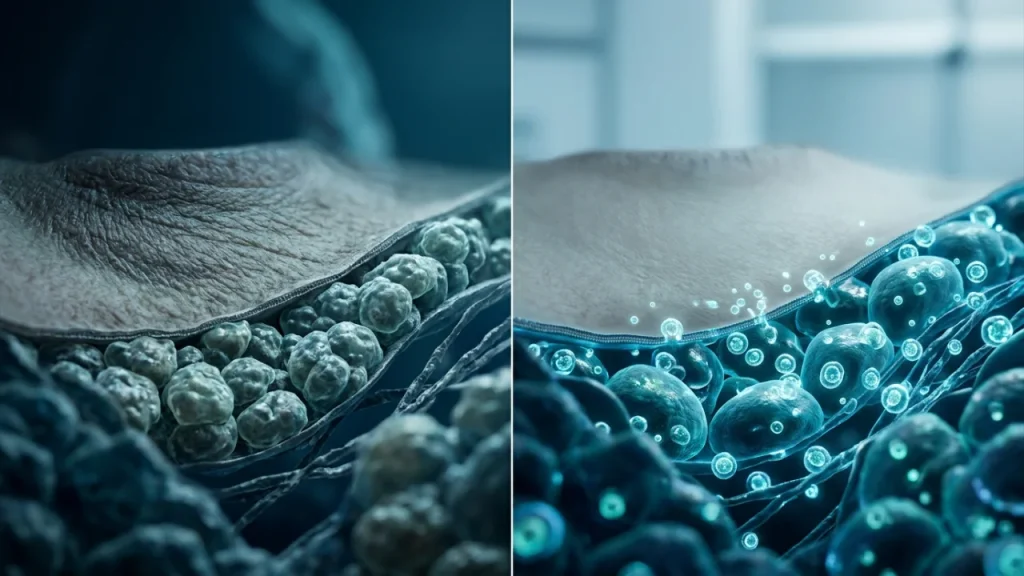
Your body is a network of trillions of cells. They must talk to each other constantly. Exosomes are their essential messengers. Think of them as tiny biological packages. Cells create and release these vesicles. Each exosome carries a precise molecular cargo. This cargo includes proteins, lipids, and genetic instructions.
The contents are not random waste. They are carefully selected signals. A skin cell in distress can send out a specific call for help. A healthy neighboring cell receives the exosome. It opens the package and reads the instructions. The message might say “repair collagen” or “reduce inflammation.” The receiving cell then acts on these orders.
This natural signaling system is crucial for tissue health. Young, vibrant skin has robust exosome communication. As we age, this communication slows down. Cells become less responsive. Damage accumulates faster than repair. The delicate under-eye area shows this decline early. Thin skin and constant muscle movement make it vulnerable.
Exosome therapy harnesses this innate system. It provides a concentrated boost of these natural messengers. The goal is to restart and enhance cellular dialogue. Clinicians source exosomes from specialized donor cells. These donor cells are grown in controlled laboratory settings. They are prompted to release vast numbers of exosomes.
The collected exosomes are purified. They form a clear, potent solution. This solution is applied carefully to the under-eye area. The technique is typically non-invasive. Micro-channels or specialized delivery methods are often used. This helps the exosomes reach the target skin cells directly.
Once delivered, the exogenous exosomes merge with local cells. They deliver their rejuvenating payload. This process instructs fibroblast cells to produce new collagen and elastin. It guides cells to improve local blood vessel health. It also signals for a reduction in damaging inflammation.
The before and after results of exosomes under eyes stem from this cellular reprogramming. The therapy does not add foreign material. Instead, it educates your own cells to function better. It shifts the tissue environment from a state of slow decline to active repair.
Key signals within exosomes include: – Growth factors that stimulate collagen production. – microRNA molecules that regulate gene expression. – Enzymes that break down damaged proteins. – Antioxidants that neutralize free radicals.
The entire process relies on biological information transfer. It is fundamentally different from filling volume or paralyzing muscles. Results develop over weeks as cells execute new instructions. This scientific foundation explains why the approach is considered regenerative. It works with your body’s own language to encourage visible renewal. Understanding this mechanism clarifies the potential for lasting, natural-looking improvement in the delicate under-eye zone.
Why Under-Eye Areas Need Special Attention
The skin under your eyes is the thinnest on your entire body. It measures about 0.5 millimeters thick. Skin on your cheeks can be up to sixteen times thicker. This delicate structure makes everything underneath more visible.
This thin skin lacks robust oil glands. Other facial areas produce more protective sebum. Without this natural moisturizing barrier, the under-eye area dries out faster. Dry skin is more prone to fine lines and creping. It also loses its plump, smooth appearance more quickly.
A dense network of blood vessels lies just beneath this thin surface. These vessels can dilate or leak. This leads to common issues like dark circles. Pigmentation from genetics or sun exposure also shows through more clearly here.
Constant motion accelerates aging in this zone. You squint, smile, and blink thousands of times daily. These repetitive movements create dynamic lines. Over time, these lines can become permanent creases. The skin’s elastic fibers slowly wear out from the stress.
The under-eye area has minimal subcutaneous fat. This fat provides cushioning and volume in other facial regions. Its absence here means hollows and shadows form more easily. Natural bone loss with age further accentuates this hollowing.
Support structures weaken over time. The orbital septum is a delicate membrane that holds back eye fat. As it weakens, fat pads can bulge forward. This creates bags under the eyes. Fluid drainage can also become less efficient overnight, leading to morning puffiness.
External factors hit this zone hardest. Sun damage is a primary culprit. UV rays break down collagen and elastin fibers swiftly where skin is thin. Rubbing your eyes or harsh cosmetic treatments cause micro-trauma. This cumulative damage speeds up the visible aging process.
Traditional solutions often fall short for these reasons. Thick creams cannot penetrate deeply but may cause milia. Harsh lasers or peels risk scarring or discoloration on thin skin. Fillers must be placed with extreme precision to avoid a puffy, unnatural look.
The need is for an approach that respects the area’s biology. It must work without causing inflammation or trauma. It should strengthen the skin’s foundation from within. This is where regenerative science offers a compelling path forward.
Seeing exosomes under eyes before and after results highlights this principle. Effective change comes from supporting cellular health, not just masking problems. The goal is to improve skin quality, thickness, and resilience at a fundamental level.
This complex set of challenges demands a sophisticated answer. A treatment must address multiple issues at once: thin skin, poor circulation, collagen loss, and fragile support. A single-ingredient topical serum often cannot achieve this multidimensional repair.
The ideal intervention communicates with local cells. It instructs them to rebuild their own support network. It calms inflammation instead of provoking it. It promotes natural hydration and robust collagen synthesis where it is needed most.
Understanding these unique vulnerabilities frames the promise of advanced therapies. The next logical step is examining how a biological agent can meet these precise demands. This leads directly to the mechanism of action for regenerative treatments tailored to this delicate zone.
How Exosomes Differ From Traditional Fillers and Surgery
Traditional fillers and surgery work by adding physical material or removing tissue. A filler is like placing a cushion under a rug to smooth a bump. Surgery might tighten or remove excess skin. These methods change the structure directly from the outside. They are mechanical solutions.
Exosome therapy works in a completely different way. It is a biological communication strategy. Think of it as sending instructions rather than adding bulk. Exosomes carry messages into your skin cells. These messages tell your cells to repair themselves.
The core difference lies in the target. Fillers target the symptom: volume loss. They plump the area with hyaluronic acid or similar substances. The result is immediate but static. It does not improve the health of your skin. The filler material just sits there until your body breaks it down.
Exosomes target the cause: aging or damaged cells. They signal fibroblasts to produce new collagen and elastin. They tell blood vessels to improve local circulation. They encourage cells to heal and renew. The goal is to restore your skin’s own ability to look healthy.
Let’s look at longevity and results. Filler results are temporary. They last months to a couple of years. Then you need another injection. Surgical results last longer but are fixed in time. Your skin continues to age around the treated area.
Exosome therapy aims for lasting improvement in skin quality. It does not stop the aging process. Nothing can do that. But it helps your skin function better for a longer period. The improvements build over weeks as your cells respond. This is why exosomes under eyes before and after photos show a natural evolution, not an instant change.
Safety profiles also differ sharply. Fillers carry risks of swelling, lumps, or vascular issues if injected incorrectly. Surgery has risks of infection, scarring, and anesthesia complications. These are invasive procedures.
Exosome treatments are minimally invasive. They typically involve micro-injections or topical application after a light skin treatment. There is no foreign material left behind to reject. The risk profile is much lower because you are using natural signaling molecules.
Consider the outcome nature. Fillers can look overdone or unnatural if not expertly placed. They add volume that can shift or become visible when you smile. Surgery can leave a pulled, tight appearance if too much skin is removed.
Exosome outcomes tend to look natural and subtle. The skin becomes thicker, brighter, and more resilient. Dark circles may lighten because skin quality improves. The change comes from within your own tissue. You look refreshed, not altered.
Here is a simple comparison: – Fillers/Surgery: Add or subtract physical material. External change. – Exosomes: Deliver biological instructions. Internal cellular change.
One replaces what is lost. The other teaches your body to rebuild it. This biological approach aligns with the delicate needs of the under-eye area discussed earlier. It supports the fragile skin instead of imposing a foreign structure upon it.
Therefore, the choice is between a temporary architectural fix and a long-term investment in cellular health. The next logical question is how these tiny messengers actually perform their work at the molecular level.
The Source of Exosomes: Stem Cell Communication
Exosomes begin with stem cells. These are not ordinary cells. Stem cells have a unique job in the body. They repair damaged tissues. They also help maintain healthy ones. To do this work, they need to communicate with older, damaged cells nearby. They send out instructions.
Exosomes are how these instructions get delivered. Think of a stem cell as a central command center. It produces tiny packets filled with vital cargo. These packets are exosomes. Each exosome is a lipid bubble, much smaller than a cell. It carries a precise mix of molecules.
The cargo inside is the key. It includes growth factors, signaling proteins, and genetic material like RNA. This is not random debris. It is a carefully selected toolkit. The stem cell loads this toolkit to address a specific need. For under-eye skin, the need might be more collagen or better blood flow.
The process is a natural form of biological messaging. A stem cell releases thousands of these exosomes into the space around it. Neighboring skin cells then absorb them. The cargo is unpacked inside the receiving cell. The instructions are read.
This changes the cell’s behavior. A tired fibroblast cell in your under-eye area might get a signal to ramp up collagen production. A blood vessel cell might be told to strengthen its walls. The result is improved skin structure and color from within.
Why does this source matter for your eyes? The under-eye area has fragile, thin skin. Introducing harsh synthetic compounds can cause problems. Exosomes offer a different approach. They use the same natural signaling language your body already understands.
The origin ensures safety and relevance. Because exosomes carry native biological codes, your cells recognize them. There is no foreign blueprint to reject. The messages are meant for human tissue. This makes them uniquely suited for delicate zones.
Consider the alternative: isolated growth factors or single-ingredient serums. These can be helpful. Yet they lack the coordinated complexity of an exosome’s natural cargo. It is the difference between hearing one note and an entire symphony.
The stem cell source also implies potency. Research shows that exosomes from certain stem cells are especially active. They carry concentrated regenerative signals. This potency is why treatments aim to collect and apply these messengers topically.
Seeing exosomes under eyes before and after results hinges on this communication. The ‘before’ skin lacks clear cellular directives for repair. The ‘after’ skin has received a potent dose of natural instructions. The change happens because resident cells start working better.
In summary, exosomes are not invented in a lab. They are harvested from the sophisticated communication system of stem cells. Their origin as natural messengers is what makes them a precise, intelligent tool for rejuvenation. This leads us to ask: how are these powerful messengers prepared for use in a clinical treatment?
Safety Profile of Biological Signaling Molecules
Safety begins with compatibility. Your immune system is designed to defend against foreign invaders. Synthetic compounds or animal-derived materials can sometimes trigger this defense. They are seen as “other.” Exosomes from human stem cells are not seen this way. They carry familiar biological markers. Your cells recognize these markers as friendly signals. This fundamental recognition reduces the risk of adverse reactions.
Think of it like a security system. A synthetic molecule might be an uninvited guest. It sets off alarms. A native exosome has the right credentials. It passes through without causing a disturbance. This is crucial for the delicate under-eye area. This tissue is thin and sensitive. Introducing foreign material can lead to inflammation or uneven results. The goal is calm, precise communication, not an immune response.
The contents of the exosome matter too. They are not random chemicals. They are curated packages of nucleic acids and proteins. Your own cells make these same molecules every day. The exosome simply delivers a concentrated, organized set of instructions. It is a targeted message, not a disruptive force.
Consider these key safety aspects: – No live cells are used. The treatment uses the messengers, not the stem cells themselves. This avoids any chance of uncontrolled cell growth. – The signaling is temporary and natural. Exosomes instruct your existing cells. They do not permanently alter your genetic code. – The process is local and topical. When applied under the eyes, the effects are focused on that specific area.
Clinical observations support this profile. Treatments using these biological messengers typically show minimal downtime. Common side effects are often mild and brief. They can include temporary redness or slight swelling. These effects are usually due to the micro-injections, not the exosomes themselves. Serious complications are extremely rare when protocols are followed.
This contrasts with some synthetic fillers or drugs. Those can sometimes cause granulomas or long-term inflammation. The body may wall off a foreign substance it cannot break down. Exosomes are biodegradable and natural. Your body knows how to process them after they deliver their message.
Seeing positive exosomes under eyes before and after results relies on this safety. The “after” picture should show rejuvenation without signs of distress or rejection. The skin looks healthier because it was guided, not forced. The low-risk profile makes it a compelling option for those cautious about more invasive procedures.
Research into exosome therapy continues to expand. Early studies consistently note the favorable safety findings. This is a direct benefit of using the body’s own communication system. Scientists call this “biocompatibility.” In simple terms, it means the material belongs in the biological environment.
Therefore, the safety of exosomes is not an added feature. It is a core property stemming from their origin. Their native language allows them to work with your biology, not against it. This reliable safety profile establishes a strong foundation for their use. The next logical question is how these messengers are collected and prepared for a treatment session.
How Exosome Therapy Works for Under-Eye Rejuvenation
The Journey of Exosomes From Preparation to Application
The journey of exosomes from preparation to application is a controlled scientific process. It begins with a source of healthy, young human cells. These cells are not taken from the patient. They are carefully selected donor cells grown in a laboratory setting. The cells are placed in a special nutrient solution. This environment is called a growth medium. The cells thrive and multiply in this medium. More importantly, they communicate. They release billions of exosomes as part of their natural activity.
Over time, the exosomes accumulate in the liquid surrounding the cells. This cell-conditioned medium becomes a rich soup of signaling vesicles. The next critical step is isolation. Scientists must separate the tiny exosomes from everything else in the liquid. This includes leftover cell fragments, proteins, and other debris. Ultracentrifugation is a common method used for this task. The solution is spun at extremely high speeds. These speeds can exceed 100,000 times the force of gravity. The exosomes, due to their specific size and density, gather together. They form a pellet at the bottom of the tube.
The isolated exosomes are then purified and concentrated. They undergo rigorous testing for safety and potency. This ensures they are free from contaminants like bacteria or viruses. The final product is a clear liquid suspension. It contains a high concentration of purified exosome vesicles. This preparation is then frozen for storage and transport. It remains stable until the moment of use in a clinical setting.
On the day of your treatment, the vial is carefully thawed. A healthcare provider prepares the under-eye area. The skin is cleansed thoroughly. A topical numbing cream is often applied for comfort. The provider then uses very fine micro-needles to create a series of tiny channels in the skin. This is not like traditional needle injections. It is a gentle, controlled process.
The exosome solution is applied topically to this micro-channeled skin. The vesicles now have a direct pathway into the deeper layers. They do not need to be forcefully injected with large needles. This minimally invasive technique is key to the low downtime. It also aligns with the natural mechanism of exosomes. They are messengers entering a communication network, not a filler being placed.
The entire application process typically takes under an hour. The exosomes under eyes before and after transformation starts here. Once applied, the exosomes begin their biological work immediately. They fuse with local skin cells like fibroblasts and keratinocytes. They deliver their cargo of growth factors and instructions.
This direct delivery triggers a cellular response. Dormant repair processes are activated. New collagen and elastin production is stimulated from within. Blood vessel support improves. The process leverages your skin’s own innate ability to heal and renew. The external application simply provides the precise signal to begin.
Therefore, the journey from lab to face is designed to preserve the natural integrity of the exosomes. Each step maintains their biological activity and safety profile. The application method works with their size and function. This synergy between pure preparation and gentle delivery sets the stage for visible renewal. The final outcome depends on how your individual cells respond to these sophisticated instructions over the following weeks.
Activating Your Skin’s Own Repair Mechanisms
The exosomes’ cargo reaches the nucleus of your skin cells. This cargo contains specific instructions. These are not chemical commands. They are biological blueprints for repair. Think of them as a software update for your cellular machinery. The update tells dormant genes to switch on.
A key gene target is the one for collagen type I. This is the main structural protein in skin. It provides firmness and support. Fibroblasts, the cells that make collagen, often slow down with age. They become less active. Exosome signaling directly addresses this. The delivered microRNAs and proteins re-educate these fibroblasts.
The process reactivates the fibroblast’s production line. It does this naturally from within the cell. The result is new, native collagen. Your body makes it itself. This is a fundamental difference from fillers. Fillers add volume from the outside. Exosome therapy stimulates your skin to create its own support structure from the inside.
The same signal boosts elastin fibers. Elastin gives skin its snap-back quality. Improved elastin means less crepey texture under the eyes. The area looks smoother and more resilient. This internal renewal also strengthens the skin’s micro-capillaries. Better blood flow reduces dark, bluish tones caused by visible vessels.
The timeline for this activity is precise. Cellular signaling begins within hours. New protein synthesis starts within days. However, building new collagen matrix takes time. The full structural results develop over weeks. This explains the typical progression seen in exosomes under eyes before and after galleries. Early improvements in hydration and texture appear first. Decreased hollowing and increased firmness follow later.
The therapy leverages three core repair pathways simultaneously: – Enhanced collagen and elastin production for structure. – Increased hyaluronic acid synthesis for hydration and volume. – Improved angiogenesis for better blood flow and nutrient delivery.
This multi-target approach ensures comprehensive rejuvenation. The under-eye area needs more than just volume. It needs better skin quality, tone, and strength. Exosome therapy addresses all these factors at their source.
The newly produced collagen is your own. It integrates seamlessly into the existing dermal network. This integration leads to natural, long-lasting results. There is no risk of the body rejecting it or breaking it down quickly. The effects are sustained because your cells have been reprogrammed to a more youthful state of function.
Therefore, the visual transformation is a direct reflection of this biological activity. Reduced dark circles come from better vascular support and thicker skin. Diminished fine lines stem from a plumper collagen matrix. The overall effect is one of refreshed vitality, not an artificial look.
This intrinsic repair sets the foundation for lasting change. The next consideration is how individual factors influence this biological process and the ultimate outcome.
Targeting Dark Circles With Cellular Signals
Dark circles under the eyes are not a single problem. They result from two main issues working together. The first is increased pigmentation. The second is skin that has become too thin. Exosome therapy addresses both issues at a cellular level. It sends precise repair instructions.
Let’s start with pigmentation. Melanin is the pigment that gives skin its color. Sometimes, cells called melanocytes can produce too much melanin in the under-eye area. This leads to a brownish or bluish tint. Sun exposure and inflammation can trigger this overproduction.
Exosomes carry specific microRNAs and proteins. These molecules can directly communicate with melanocytes. The signals tell these pigment cells to normalize their activity. They help reduce unnecessary melanin production. This process lightens unwanted discoloration over time. It is a biological correction, not a surface bleach.
The second cause is more structural. The skin under your eyes is naturally thin. As we age, it becomes even thinner. The underlying blood vessels and muscle become more visible. This creates a dark, hollow appearance. Simply adding filler does not solve this thinning.
Exosomes target the fibroblasts in your skin. These are the cells that make collagen and elastin. As shown in exosomes under eyes before and after results, a key change is improved skin density. The exosome signals strongly boost fibroblast activity. New collagen fibers are woven into the dermis.
This newly formed collagen thickens the skin’s foundation. It acts like a veil over the underlying structures. The blood vessels are less visible through this thicker canvas. The result is a reduction in that shadowy, bluish tone. The effect is natural and integrated.
The therapy also improves vascular health. Fragile capillaries can leak small amounts of blood cells. This breakdown product can stain the surrounding tissue. Exosomes promote better blood vessel integrity, or angiogenesis. Stronger capillaries are less likely to leak. This further reduces discoloration.
The process follows a logical sequence: – First, exosome signals reach local skin cells and melanocytes. – Cellular activity shifts toward repair and normalization. – Pigment production calms down as new collagen synthesis ramps up. – The skin layer gradually thickens and gains better vascular support.
These changes do not happen overnight. They follow your body’s natural healing timeline. Early improvements in brightness may appear within weeks. Continued thickening and strengthening can unfold over several months. The final outcome is a more even tone and a resilient under-eye area.
This targeted approach solves the root causes. It moves beyond temporary concealers or superficial treatments. By resetting cellular behavior, exosomes offer a fundamental solution. The next logical step is understanding who is an ideal candidate for this type of cellular rejuvenation and who might see the most dramatic change.
Reducing Fine Lines Through Regenerative Messaging
Fine lines around the eyes form because the skin loses its supportive framework. This framework is made of collagen and elastin. Think of collagen as the building’s steel beams. Elastin acts like springs. Over time, production of these proteins slows. Existing fibers can also become damaged. The skin then becomes thinner and less springy. It starts to crease with repeated movements like smiling or squinting.
Exosome therapy addresses this at a foundational level. It does not just plump the skin temporarily. It sends precise instructions to the local cells. The key players here are fibroblasts. Fibroblasts are the skin’s construction crews. They manufacture new collagen and elastin. But they can become slow or inactive with age or sun damage.
The exosomes carry regenerative messages directly to these fibroblasts. The messages are delivered through bioactive molecules. These include growth factors and tiny RNA strands. This is not a general signal. It is a targeted instruction set for protein synthesis. The signal tells the fibroblast to become active again. It prompts the cell to start its production machinery.
The process initiates a multi-stage repair cycle. First, fibroblasts increase their metabolic activity. They start gathering the raw amino acids needed for construction. Then, they begin weaving new collagen strands. This is type I collagen, the main structural kind in skin. Simultaneously, they synthesize fresh elastin fibers.
This new elastin is crucial for smoothing lines. Elastin gives skin its snap-back quality. It allows skin to stretch and then return to its original shape. With more functional elastin, skin becomes more resilient. It resists forming permanent creases after facial expressions.
The new collagen integrates into the existing dermal matrix. It does not sit on top. It weaves into the current network. This adds density and thickness to the thin under-eye skin. Thicker skin naturally shows fine lines less. The surface becomes smoother and more uniform.
You can see this effect in exosomes under eyes before and after comparisons. Early changes often involve improved hydration and texture. This happens because signaling also boosts hyaluronic acid production. Hyaluronic acid holds water like a sponge. Better hydration makes minor lines appear softer.
The more significant change comes later. New collagen takes time to mature and organize. This remodeling phase can last for months. During this time, the new supportive structure solidifies. The result is a genuine reduction in line depth. The skin’s own biology creates this smoothing effect.
The regenerative messaging has another benefit. It helps repair existing damaged proteins. Enzymes called matrix metalloproteinases can break down collagen. Exosome signals can help regulate these enzymes. This protects the healthy structure you already have.
The entire process relies on cellular communication: – Exosomes deliver instructions to dormant fibroblasts. – Fibroblasts activate and produce new collagen and elastin. – New proteins integrate, thickening and strengthening the dermal layer. – Enhanced hydration provides immediate visual softening. – Long-term remodeling leads to sustained smoothness.
This approach treats lines as a symptom of slowed regeneration. By restarting the skin’s own building processes, the improvement is integrated and natural. The skin does not look filled or stretched. It looks refreshed and resilient. The next consideration is how this cellular activity translates into visible results over a realistic timeline, setting expectations for the rejuvenation journey.
Improving Skin Texture and Hydration Levels
The under-eye area often feels dry and looks dull. This is not just about a lack of water on the surface. The skin’s ability to hold moisture internally has weakened. Exosome therapy directly addresses this core issue. It enhances the skin’s natural hydration systems from within.
Recall that fibroblasts receive new instructions from exosomes. A key directive is to produce more hyaluronic acid. Think of hyaluronic acid as a microscopic water magnet. Each molecule can hold up to one thousand times its weight in water. Younger skin has abundant hyaluronic acid. This gives it a plump, dewy quality. As we age, production slows down. The skin’s reservoir shrinks.
Exosome signaling helps refill this reservoir. Activated fibroblasts synthesize new hyaluronic acid molecules. These molecules integrate into the extracellular matrix. They bind water drawn from the body’s own tissues. This creates a sustained source of hydration. The effect is not a surface layer that evaporates. It is a deep, integrated moisture network.
This internal shift changes how light reflects off the skin. Well-hydrated skin has a smoother surface. It scatters light evenly, reducing shadows. This can diminish the appearance of dark circles caused by thin, dehydrated skin. The area looks brighter and more radiant. This improvement in luminosity is often one of the first noticeable changes.
Texture improves through a parallel process. The skin’s outermost layer, the stratum corneum, is made of dead cells. Healthy skin sheds these cells evenly. Sluggish cell turnover leads to a rough, uneven surface. Exosomes carry messages for keratinocytes, the primary cells in the epidermis. These signals can help normalize the cell renewal cycle.
New cells migrate to the surface more efficiently. The result is a finer, more uniform skin texture. Pores may appear less noticeable. The skin feels softer to the touch. This refinement complements the plumping effect of new hydration. The combination tackles crepiness effectively.
Clinical observations of exosomes under eyes before and after treatment frequently highlight this dual improvement. Patients report their skin feels supple and looks fresher even before major collagen remodeling is complete. The timeline for these benefits is relatively swift.
Key changes in texture and hydration often unfold within weeks: – Enhanced hyaluronic acid production begins within days. – Improved water retention makes skin feel plumper in one to two weeks. – Smoother light reflection brightens the area visibly. – Better cell turnover refines surface texture over a month. – The cumulative effect is a healthy, resilient glow.
This restoration of skin quality is fundamental. It proves that rejuvenation is not just about filling volume. It is about restoring optimal cellular function. Hydrated, smooth skin is more resilient to daily stress. It also provides a better foundation for long-term structural gains. The next step is understanding how these biological processes translate into a realistic treatment journey and lasting outcomes.
Real Exosomes Under Eyes Before and After Results
Documenting Visible Changes in Dark Circles
Dark under-eye circles often have more than one cause. Exosomes address several of these causes at a cellular level. This leads to a gradual lightening of the area. The results for exosomes under eyes before and after treatment show this change clearly.
One primary target is hyperpigmentation. The thin skin under the eyes can show accumulated melanin. This creates a brownish or tan discoloration. Exosomes carry specific instructions to skin cells called melanocytes. These cells produce pigment. The signals can help normalize melanin production. They encourage a more even distribution of pigment. Over time, this reduces the concentrated color that forms circles.
Another key factor is poor circulation. Blood vessels here are very small. They can become leaky or congested. This leads to a bluish or purplish tint under the skin. Exosomes promote vascular health. They send repair signals to the endothelial cells lining these tiny vessels. This helps strengthen capillary walls. Improved integrity means less blood leakage into surrounding tissue. The bluish cast diminishes as a result.
The third component is skin thickness. As we age, skin under the eyes gets thinner. This makes underlying structures more visible. Exosomes support the dermal matrix. They stimulate fibroblasts to produce new collagen and elastin. Thicker skin provides better coverage. It acts like a curtain over the vascular network beneath. This reduces the shadowy appearance.
Clinical documentation shows a typical progression of improvement: – The first few weeks may show reduced puffiness and improved hydration. – A subtle brightening effect often becomes noticeable by week four to six. – Significant lightening of pigment-related darkness usually appears after two months. – Continued improvement in skin thickness can evolve for three to six months.
It is important to manage expectations. Exosome therapy is a regenerative process, not a bleach. It works with your body’s biology to restore balance. The goal is not to erase all color from the area. The goal is to return it to a healthier, more even tone that matches the rest of your facial skin.
Photographic evidence is crucial. High-quality before and after photos taken in consistent lighting reveal true changes. Patients sometimes see daily improvements in the mirror. Comparing photos from month to month provides objective proof of progress. The reduction in darkness is often gradual but steady.
This approach treats the root causes, not just the surface symptom. It offers a sustainable solution for many individuals. The next logical step is to examine how these visual changes correlate with structural improvements in skin laxity and fine lines.
Measuring Improvements in Wrinkle Depth
Fine lines around the eyes are a direct sign of a weakened dermal scaffold. The skin’s supportive structure becomes thin and disorganized. This creates permanent creases. Exosome therapy addresses this foundational problem. It does not simply plump the skin from the outside. The treatment works from within.
The process starts with cellular communication. Exosomes deliver precise instructions to aging skin cells. A key target is the fibroblast. This cell type produces collagen and elastin fibers. These fibers are the skin’s support cables. Over time, their production slows. Existing fibers also break down. Exosomes reverse this trend. They signal fibroblasts to become active again. New, healthy collagen is synthesized. This fresh matrix fills in from below.
Think of a deep wrinkle as a valley. The goal is to fill the valley’s base. New collagen acts like sediment building up at the bottom. This gradually raises the entire valley floor. The crease becomes shallower. It may not vanish completely in every case. Yet its depth and visibility are reduced significantly. The skin’s surface texture becomes smoother.
Clinical assessments often use high-resolution imaging to track this change. These tools measure wrinkle depth in microns. They provide objective data beyond simple observation. Patients typically notice a change in how their makeup sits. Foundation or concealer may stop settling into lines. This is an early practical sign of improvement.
The timeline for wrinkle softening differs from brightening. Structural rebuilding takes time. Initial skin texture improvements can appear within a month. This is often due to better hydration and initial cell activity. True collagen remodeling, however, is a slower process. Visible softening of static lines often becomes clear around the two to three-month mark. Progress continues for up to six months as new tissue matures.
Several factors influence these exosomes under eyes before and after outcomes: – The initial severity of the lines matters. Fine, dynamic lines respond better and faster. – Skin laxity plays a role. Exosomes improve skin quality and thickness, but they are not a surgical lift. – The patient’s overall skin health and lifestyle support the regeneration.
It is crucial to understand the mechanism. The therapy does not paralyze muscles like neuromodulators. It does not add filler volume like hyaluronic acid injections. Instead, it restores the skin’s natural architecture. This results in a more authentic rejuvenation. The skin looks healthier and more resilient, not just temporarily smoothed.
Photographic evidence under consistent lighting and expression is vital for tracking this progress. Side-by-side comparisons can reveal subtle lifting of the skin surface. The shadow within a fine line becomes less pronounced over time. This objective record complements what patients feel when they touch their skin.
The outcome is a stronger dermal layer. This improved foundation not only softens existing lines but also helps resist the formation of new ones. The skin is better equipped to handle repeated movements and environmental stress. This creates a lasting benefit that evolves well after the treatment session.
This structural renewal naturally enhances overall skin firmness and elasticity, setting the stage for discussing comprehensive facial contour effects beyond the eye area alone.
Assessing Skin Tightness and Firmness Gains
One clear sign of successful treatment is a subtle lift along the upper cheek and lower eyelid. This is not a dramatic surgical change. Instead, it is a gentle tightening of the skin’s canvas. The area appears smoother and more supported. This effect stems directly from the restored dermal architecture. New collagen and elastin fibers provide better structural support. Think of it as reinforcing the foundation of a building. The walls become straighter and firmer.
Patients often report this change feels different from filler. Volume adds projection. Firmness improves resistance. When you gently press the skin, it springs back with more vigor. This improved resilience is a key metric of true rejuvenation. It indicates active cellular repair, not just a passive plumping effect.
Assessing these exosomes under eyes before and after results requires attention to specific details. Standardized photographs are essential for an objective view. Professionals and patients look for several visual clues: – A reduction in the slight shadow cast by a soft, early festoon or bag. – A smoother transition from the lower eyelid to the cheek. – A more defined lower eyelid contour, with less blurred blending into the cheek.
The timeline for noticing firmness gains is distinct. Initial hydration and glow may appear within weeks. True tightening, however, unfolds over months. This delay matches the natural biology of collagen remodeling. Cells need time to produce new proteins and integrate them into the skin matrix. Patience is required to see the full effect.
The mechanism behind this tightening is multifaceted. Exosomes deliver signals that do several things at once. They encourage fibroblasts to become more active and productive. They also help regulate the balance of enzymes that break down old collagen. This dual action promotes a healthier, denser dermal network. The skin becomes thicker and more cohesive.
This improvement in skin quality has a protective benefit. Tighter skin with better elasticity is less prone to further sagging. It can withstand daily gravitational pull more effectively. This can slow the visible aging process in the treated area. The gains are not merely cosmetic; they are functional.
Different skin types may show variations in these results. Thinner, mature skin with significant laxity will show a different degree of change than younger, thicker skin. The goal is always improvement from the individual’s starting point. The therapy optimizes the skin’s inherent potential.
Clinical assessments often use specific scales to grade firmness. These scales measure skin viscoelasticity. Devices can quantify how much the skin deforms under suction and how quickly it returns to shape. In practice, patients notice this when their makeup applies more evenly or when fine lines seem to hold less product.
The final outcome is a complexion that looks naturally supported and lifted from within. This sets the stage for discussing how these localized improvements integrate with the overall facial aesthetic, influencing light reflection and contour harmony beyond the immediate eye region.
Patient Experiences and Satisfaction Reports
Patient feedback provides a crucial perspective on any cosmetic procedure. For under-eye rejuvenation, reports highlight specific, observable changes. Many individuals describe a reduction in the appearance of hollows or dark circles. This is often attributed to improved skin thickness and vascular support. The skin’s surface texture becomes smoother. Fine lines may appear less pronounced.
These visual changes are frequently captured in clinical documentation. The phrase exosomes under eyes before and after often refers to this comparative analysis. It is important to understand what these images show. They typically demonstrate improvements in skin tone and contour. They do not represent a surgical lift. The results stem from enhanced cellular activity, as previously explained.
Patient satisfaction surveys reveal common themes in their experiences. The non-surgical nature of the treatment is a frequent highlight. There is no significant downtime required. Most people resume normal activities within a day or two. Mild swelling or redness may occur initially. These effects are temporary and resolve quickly.
The gradual nature of the results is another key point. Patients do not see an immediate, dramatic change. The process is not like getting filler injections. Improvements unfold over several weeks as cells respond to signals. This leads to a natural-looking outcome. The face does not look artificially altered.
Reported benefits often extend beyond just the under-eye area. Patients note an improved overall glow to their complexion. Makeup may apply more evenly across the treated skin. Some report that their eyes look more rested and alert. These subjective feelings are as important as physical measurements.
The duration of results is a common topic in patient reports. Effects are not permanent, as skin continues its natural aging process. However, many patients observe benefits lasting for many months. The treatment seems to reset the local cellular environment for a period. Follow-up treatments can be considered to maintain the effect.
Clinical studies sometimes use standardized questionnaires to measure satisfaction. These tools ask patients to rate their perceived improvement. They might score changes in skin tightness, smoothness, and overall appearance. High satisfaction rates are commonly reported in such research. This data adds weight to anecdotal stories.
It is useful to consider the typical patient journey from consultation to result. Realistic expectations are set during the initial meeting. The provider explains the science and the likely outcome timeline. Post-treatment, patients monitor their progress through photos and self-assessment. This structured approach contributes to positive feedback.
Patient experiences confirm the biological processes described earlier. Enhanced collagen production leads to tangible firmness. Better microcirculation can improve color. These mechanistic changes translate directly into personal satisfaction. The therapy meets a demand for subtle, science-driven rejuvenation.
This collection of real-world reports bridges our understanding of cellular mechanisms with tangible human benefit, setting the stage for a final discussion on integrating this treatment into a holistic skincare philosophy.
Timeline for Seeing Noticeable Differences
The first physical changes after treatment are often subtle and appear within the initial weeks. You may not see a dramatic transformation immediately. Instead, look for early signs that cellular activity is increasing. These initial signs are linked to improved hydration and microcirculation.
Many patients report a healthier glow or improved skin texture first. This can happen within the first two to four weeks. The treated area may look more refreshed. This early phase is about cellular communication and environment reset.
The more structural improvements take longer to become visible. This delay has a direct biological cause. Exosomes signal your skin’s fibroblasts to produce new collagen and elastin. Manufacturing these sturdy support proteins is not an instant process.
Think of it like a construction project. The exosomes deliver the new blueprints and work orders. Your cells then need time to gather materials and build. This biosynthetic process unfolds over weeks and months.
A realistic timeline for noticeable differences often follows this pattern: – Weeks 1–4: Enhanced hydration and radiance. Skin may feel smoother. – Months 1–3: Early structural changes begin. Fine lines may soften. Skin firmness starts to improve. – Months 3–6: Peak effects often become apparent. Collagen remodeling is active. Results like tighter skin and reduced hollowing are most noticeable.
This progression explains why exosomes under eyes before and after photos are typically taken months apart. The most compelling comparisons capture this cellular journey. Early photos show baseline skin quality. Later photos reveal the completed cellular work.
Individual factors will influence your personal timeline. Your age and skin health matter. Your genetic collagen production rate plays a role. Your lifestyle choices, like sun exposure and sleep, also affect speed.
The treatment area itself influences how quickly you see change. The under-eye skin is very thin. It can show improvements in texture and color relatively fast. However, building substantial volume to address hollows requires more time.
Do not expect a single “result day.” Improvement is a continuum. Changes accumulate gradually each week. This makes the transformation appear natural. There is no sudden shift.
Patience is key because biology sets the schedule. Your skin cells operate on their own circadian rhythms and renewal cycles. The exosome therapy works within these natural limits. It guides your skin’s innate processes.
Consistent follow-up photos are the best way to track progress. Comparing monthly pictures reveals subtle shifts. These shifts might be missed in a daily mirror check. Documentation provides objective evidence of change.
The longevity of results is tied to this timeline as well. Effects that take months to build tend to be more durable. They are not just surface-level swelling. They represent genuine tissue remodeling.
Understanding this schedule prevents disappointment. It aligns expectations with scientific reality. The wait for visible outcomes is an investment in natural, cell-driven rejuvenation. This leads logically to considering how to maintain these results over the long term.
The Practical Guide to Exosome Treatment Procedure
Step-by-Step Protocol From Consultation to Follow-Up
The exosome treatment process is a defined medical protocol. It begins with a detailed consultation. This is not a simple sales conversation. It is a health and skin assessment. Your provider will examine your under-eye area. They will discuss your goals and medical history. This step ensures you are a suitable candidate for the procedure. Clear expectations are set here. The provider should explain the science in simple terms. They will outline the realistic timeline for change. This directly relates to seeing your own exosomes under eyes before and after transformation.
Next comes the preparation phase on treatment day. Your skin must be thoroughly cleansed. A topical numbing cream is then applied to the under-eye area. This cream sits for about 20 to 30 minutes. It ensures maximum comfort during the injection process. You will feel little to no sharp pain. Meanwhile, the clinical team prepares the exosome solution. The exosomes are carefully thawed if frozen. They are drawn into a very fine syringe.
The injection procedure itself is precise and quick. Your provider uses a microcannula or ultrafine needle. A microcannula is a blunt-tipped tube. It slides gently beneath the skin. It minimizes bruising and risk. The provider makes a few small entry points. They then fan the product into the targeted tissue layer. The goal is to place the exosomes exactly where your native cells need them. The entire injection process for both eyes often takes less than fifteen minutes.
Immediately after the injections, you can expect some common reactions. The treated area may look slightly raised or swollen. You might see minor redness at the entry points. These effects are normal and temporary. They typically fade within a few hours to a day. An ice pack can be applied gently to reduce swelling. Your provider will give you clear aftercare instructions before you leave.
Post-treatment care is simple but important for optimal results. – Avoid touching or rubbing the treated area for 24 hours. – Skip strenuous exercise and excessive heat for 48 hours. – Use only gentle cleansers and moisturizers as directed. – Apply sunscreen diligently every day.
The first follow-up appointment usually happens two to four weeks later. This visit allows your provider to assess initial progress. They will check your skin’s response and healing. This is a good time to ask questions about the changes you are seeing.
Subsequent follow-ups may be scheduled around the three-month mark. This is when more significant collagen remodeling becomes visible. Your provider might take photos to compare with your baseline images. These documented comparisons are crucial for objectively viewing progress.
The entire protocol is designed for safety and biological efficacy. Each step supports the next. The consultation informs the injection plan. The precise delivery maximizes exosome uptake. Proper aftercare protects the treatment area while signaling begins.
This structured approach transforms a complex cellular therapy into a manageable clinical experience, paving the way for understanding how to maintain and protect your new results long-term.
What to Expect During the Application Session
The application session for under-eye exosomes is a precise, in-office procedure. It typically takes between thirty and forty-five minutes from start to finish. This includes final preparation and a brief rest period afterward. You will be seated comfortably in a treatment chair. The room will be clean and clinical, similar to a dermatologist’s office.
First, your provider will cleanse the skin around your eyes thoroughly. This removes any oils, makeup, or debris. A topical numbing cream is then applied. This cream is crucial for comfort. You will wait for about fifteen to twenty minutes while it takes effect. This numbing step ensures the procedure feels like mild pressure, not sharp pain.
The provider uses a very fine microcannula or a series of tiny needles for delivery. These tools are designed for delicate under-eye tissue. The goal is precise placement in the superficial dermis. This is where your fibroblast cells reside. The exosome solution is gently infused in small droplets across the treatment area.
You may feel a slight pushing sensation during the injections. Some patients report a faint coolness from the solution. There is no severe pain when effective numbing is used. A few tiny pinpricks or a sense of fullness is common. The entire injection process for both eyes often takes less than ten minutes.
Mild redness and swelling are normal immediate responses. These are signs of initial biological signaling starting. The swelling is usually minimal under the eyes. It resembles the look of having cried a bit. Small bumps or welts at injection sites may appear. They settle down remarkably fast, often within an hour.
You will remain seated for a few minutes after the procedure. Your provider will check the treated area. They may apply a soothing serum or a cold compress. This immediate aftercare helps calm the skin. You are then free to go home and resume calm activities.
The session is efficient by design. Prolonged procedures are not necessary for cellular communication. The exosomes begin their work as soon as they are in contact with your cells. The brief duration also minimizes any potential discomfort or anxiety for the patient.
Realistic expectations are key during this phase. You will not walk out with dramatically transformed under-eyes. The initial changes are subtle. The true rejuvenation happens invisibly over the following weeks as collagen production increases. This cellular process cannot be rushed.
Documentation is often part of this session. Your provider may take immediate “after” photos following the application. These photos are for their medical records. They establish a new baseline for tracking progress from day zero. Comparing these to your “before” photos months later reveals the true change.
Understanding this straightforward process removes uncertainty. It allows you to focus on the science, not the suspense. The session is a controlled, clinical event that sets your body’s natural repair mechanisms into motion. This leads logically to considering the visual timeline of results, where “exosomes under eyes before and after” comparisons become meaningful evidence of efficacy over time.
Recovery Time and Immediate Aftercare Tips
The treatment area may appear slightly pink or feel warm immediately after your session. This is a normal, temporary response. It typically fades within a few hours. Your skin has just received a concentrated biological signal. A mild reaction shows your cells are engaging with the new instructions.
Your provider will give you specific aftercare guidelines. Adhering to them is simple but important. These tips protect the treated area and support the exosomes’ work. They create the ideal environment for cellular renewal to proceed without interruption.
Follow these key steps for the first 24 to 48 hours: – Avoid touching, rubbing, or scratching the under-eye area. – Use only the gentle, recommended cleanser provided or suggested by your clinic. – Do not apply makeup, especially heavy concealer or foundation, to the treated skin. – Skip strenuous exercise and activities that cause excessive sweating. – Stay away from saunas, steam rooms, and very hot showers.
Hydration is crucial during this time. Drink plenty of water throughout the day. Proper hydration supports all cellular processes. This includes the new collagen production that exosomes help stimulate. Moisturize the area as directed by your provider. A simple, fragrance-free moisturizer is often best.
Sun protection becomes non-negotiable. Newly treated skin is more vulnerable to UV damage. Sun exposure can cause inflammation. Inflammation can disrupt the delicate repair signals. Use a high-SPF, mineral-based sunscreen daily. Wear a wide-brimmed hat when outdoors for extended periods.
You can expect to resume most normal activities right away. Office work, light errands, and social engagements are fine. The goal is to avoid physical stress or contamination to the area. Listen to your skin. If it feels sensitive, choose calm over activity.
The timeline for visible changes is gradual. You will not see dramatic improvement in the first few days. The initial “after” state is about calm skin, not transformation. The real work happens beneath the surface. Collagen and elastin production ramps up over weeks.
Patience is part of the protocol. Your body needs time to act on the cellular instructions it received. Comparing “exosomes under eyes before and after” photos too soon can be misleading. Trust the biological process you have initiated.
Some patients report a subtle glow or improved texture within the first week. Others notice changes later. Biological variability is normal. Your unique cellular response dictates the pace.
Contact your provider if you experience unusual swelling, significant redness, or pain. These are not typical reactions. Professional guidance ensures any concern is managed promptly and correctly.
This careful aftercare period sets the stage for optimal outcomes. It allows the science to work unimpeded. The following weeks will reveal the cumulative effects of enhanced cellular communication and tissue repair.
How Many Sessions Are Typically Needed
The number of exosome sessions you need depends on your starting point. Your provider creates a plan based on your skin’s current condition and your goals. Think of it like a conversation with your cells. A single session sends a powerful message. Some skin needs more reinforcement to sustain the new instructions.
Most people begin with an initial series of treatments. A common plan involves two to three sessions. These are spaced about four to six weeks apart. This spacing is deliberate. It allows your body’s natural response cycle to complete. The first session primes the cellular environment. Subsequent sessions build upon that new foundation.
Consider these typical scenarios. For early signs of aging, one to two sessions may be sufficient. The goal here is prevention and subtle rejuvenation. For more established concerns, like deep troughs or significant thinning, two to three sessions are standard. This provides a stronger, cumulative signal for tissue remodeling. Maintenance is another factor. Some choose a single annual session to support results.
Your unique biology is the key variable. Cellular responsiveness differs from person to person. Your age and skin health play a role. Your lifestyle factors like sun exposure and sleep matter too. A detailed consultation assesses all this. Providers often analyze “exosomes under eyes before and after” photos from similar cases. This helps set realistic expectations for your journey.
The treatment approach is often layered. The first session focuses on fundamental cellular renewal. It targets overall skin quality and hydration. The second session can address more specific structural issues. It encourages collagen density in weaker areas. A potential third session perfects the outcome. It ensures results are even and lasting.
Results are progressive, not instant. You should not expect a complete change after one visit. The first session starts the process. The second session amplifies it. Visual improvements become more noticeable after the second session. Patience remains essential throughout the protocol.
Here is what a sample two-session plan might look like: – Session 1: Initial treatment focusing on global rejuvenation and skin barrier support. – A waiting period of 4-6 weeks for cellular activity to peak. – Session 2: Follow-up treatment targeting specific contour and texture refinement. – Final results becoming stable around 3 months after the last session.
Some clinics offer packages for multiple sessions. This acknowledges the science of cumulative benefit. It also makes planning easier for you. Always discuss the full proposed plan before starting. Understand the rationale for each recommended session.
The optimal number maximizes efficiency and value. Too few sessions might not deliver the desired change. Too many may be unnecessary for your specific needs. A trusted provider will recommend a plan that fits your biology and goals. This personalized strategy ensures you invest wisely in your skin’s future health and appearance. The right protocol builds lasting improvement step by step, guiding your cells toward a refreshed outcome.
Maintaining Results With Lifestyle and Skincare
Your exosome treatment is an investment. Protecting that investment starts when you leave the clinic. The therapy guides your cells to rejuvenate. Your daily habits determine how well they sustain that work. Think of it as building a strong foundation for a house. The treatment provides excellent materials. Your lifestyle is the solid ground they rest upon.
Sun protection is your most critical habit. Ultraviolet rays are a primary cause of skin aging. They break down collagen and elastin. This directly counteracts what exosome therapy aims to build. Use a broad-spectrum sunscreen every single day. Choose SPF 30 or higher. Reapply it every two hours if you are outdoors. This simple step shields the new, healthy cells and their fresh collagen matrix.
What you eat fuels your cells. Your skin needs specific nutrients to maintain its structure. A diet rich in antioxidants helps combat daily environmental damage. These molecules neutralize free radicals that stress skin cells.
Focus on including these foods: – Colorful fruits and vegetables like berries, spinach, and bell peppers. – Healthy fats from avocados, nuts, and olive oil. – Lean proteins which provide amino acids for collagen repair.
Stay well-hydrated. Water is essential for all cellular processes. It helps maintain skin plumpness and supports nutrient transport. Aim to drink water consistently throughout your day.
Your skincare routine should support, not attack, your skin barrier. After treatment, your skin is in a active but delicate state of renewal. Avoid harsh products for several weeks. Do not use strong retinoids or acid peels unless your provider approves.
Instead, focus on gentle, restorative care: – Use a mild, fragrance-free cleanser. – Apply a moisturizer with ceramides or hyaluronic acid. – Consider topical antioxidants like vitamin C serums in the morning.
These products complement the biological signals from your exosome treatment.
Quality sleep is non-negotiable. This is when your body enters repair mode. Cellular renewal and collagen synthesis peak during deep sleep. Aim for seven to nine hours per night. Establish a consistent sleep schedule. This gives your body the regular rhythm it needs for optimal regeneration.
Manage your stress levels. Chronic stress elevates cortisol. This hormone can break down collagen and slow healing. Find practices that work for you. This could be walking, meditation, or deep breathing exercises. Consistent stress management protects your results at a biochemical level.
Avoid smoking and limit alcohol consumption. Smoking severely restricts blood flow to the skin. It starves cells of oxygen and nutrients. Alcohol dehydrates the body and can cause inflammation. Both habits actively work against the rejuvenation process.
Be patient with your skin’s timeline. The “exosomes under eyes before and after” pictures you see represent a finished process. Your own results are living biology. They will fluctuate slightly with daily life. A night of poor sleep or a week of travel might cause temporary puffiness or dryness. This is normal. Trust the foundational improvement you have built.
Schedule follow-up consultations as advised. Your provider can assess your long-term progress. They might recommend supportive touch-up treatments much later. This is part of a long-term strategy for maintenance.
Your commitment to these habits solidifies the cellular renewal. It turns a temporary boost into a sustained trajectory toward healthier skin. The right daily choices empower your cells to maintain their refreshed function for months to come. This holistic approach ensures your outcome remains vibrant long after your final treatment session, blending advanced science with timeless self-care principles
Comparing Exosomes to Other Under-Eye Solutions
Exosomes Versus Hyaluronic Acid Fillers
Hyaluronic acid fillers are a mechanical solution to under-eye hollows. They work by adding volume beneath the skin. A gel-like substance is injected to physically lift and smooth the area. This addresses shadowing and loss of youthful plumpness. The result is often immediate and visually dramatic. The effect depends entirely on the presence of that foreign material.
Exosomes, however, represent a biological solution. They do not add any lasting physical volume. Instead, they deliver instructions to your own tissues. These signals encourage your skin cells to produce more of their own supportive materials. Think of fillers as adding a cushion to a sofa. Exosomes are like teaching your sofa to rebuild its own padding from within.
The core distinction lies in mechanism versus messaging. Fillers act through space-occupying mechanics. They push skin upward to mask hollowing. Their success is measured in syringe volume and placement technique. Exosomes act through cellular communication. They change local cell behavior to improve skin quality and structure. Their success is measured in collagen production and tissue resilience.
The longevity of results highlights another major difference. Hyaluronic acid is naturally broken down by the body over time. Filler results typically last six to eighteen months. Gradual dissolution means the hollows slowly return. Repeat treatments are needed to maintain the visual effect. This cycle focuses on managing an external substance.
Exosome therapy aims for a lasting internal shift. The goal is not a temporary prop but renewed cellular function. The signaling prompts changes that can persist for many months. This is why “exosomes under eyes before and after” photos show improvement in skin texture and tone, not just volume. The results evolve as your cells regenerate.
Consider the nature of the outcome. A filler’s effect is largely static after swelling subsides. It does not improve skin health or function on its own. Exosome outcomes are dynamic and living. They can enhance skin thickness, elasticity, and hydration from within. The area may look more naturally revitalized, not just filled.
Potential limitations also differ. Fillers carry risks related to product placement. These include lumps, visibility under thin skin, or vascular issues. Exosome safety concerns center on the biological activity of the signals. The aim is precise cellular communication without overstimulation.
Choosing between them depends on your primary goal. Fillers are excellent for correcting a specific volume deficit quickly. Exosomes are suited for comprehensive rejuvenation where skin quality is the main concern. They target fine lines, poor texture, and weak collagen alongside mild hollowing.
Some protocols combine both approaches strategically. A small amount of filler might address immediate volume loss. Exosomes can then be used to improve the overlying skin and support longevity. This leverages both immediate correction and long-term regeneration.
Ultimately, it’s a choice between an external fix and an internal upgrade. Fillers modify the landscape directly. Exosomes work by upgrading the landscape’s natural infrastructure. The latter approach seeks to change the underlying biology of aging skin for a more durable result.
This regenerative principle also applies when comparing exosomes to other popular treatments, such as lasers and peels.
How Exosomes Differ From Laser Treatments
Laser treatments work by creating controlled damage. They use focused light energy to create microscopic injuries in the skin. This process is called thermal remodeling. The body then repairs this damage. This repair process makes new collagen. The result is tighter, smoother skin over time.
Exosomes take a completely different path. They do not cause any injury. Instead, they deliver instructions directly to your skin cells. Think of it as a software update versus a hardware reboot. Lasers reboot the system to force a rebuild. Exosomes send new code to improve how the system operates.
The core mechanism is heat versus communication. Lasers rely on heat energy to stimulate change. This heat can sometimes cause swelling or redness. Recovery time is needed. Exosomes rely on biological signals. These signals tell cells to act younger and function better. There is no thermal injury involved.
Targets and results also show clear contrasts. Laser treatments are superb for specific issues. They can reduce visible capillaries or sunspots. They can smooth out coarse texture from sun damage. The effects are often dramatic for these concerns. Exosomes target cellular function more broadly. They aim to improve hydration, elasticity, and overall skin fitness.
Consider the under-eye area specifically. This skin is very thin and delicate. It has few oil glands. Laser treatments here require extreme care. Settings must be very gentle to avoid scarring or pigment changes. The goal is often subtle improvement over several sessions.
Exosome therapy for the under-eyes focuses on rejuvenating this fragile zone from within. The goal is to thicken the dermis subtly and improve skin quality. Patients looking for exosomes under eyes before and after photos often see changes in brightness and texture, not just line reduction. The outcome is a more fortified version of your natural skin.
The treatment experience differs greatly. – A laser session involves a device touching the skin. You may feel heat or a snapping sensation. Cooling gels or air are often used for comfort. – An exosome treatment typically involves a series of micro-injections or topical application after micro-needling. The sensation is usually minimal pressure or slight prickling.
Downtime is another key factor. After a fractional laser, you can expect several days of redness. Swelling and a sandpaper-like texture are common. The skin then peels or sheds as it heals. Full results emerge after the healing cycle finishes, which can take months.
Exosome procedures have minimal downtime. Since there is no thermal injury, redness is mild and fades quickly, often within hours. There might be slight swelling from the injection process itself. You can usually return to normal activities immediately or the next day.
Results timelines tell an important story. Laser results are delayed. You must wait for the wound healing response to complete. The most significant collagen buildup happens over three to six months post-treatment.
Exosome results can appear in two phases. Initial hydration and glow may be seen within weeks as cellular activity increases. The more structural improvements, like better elasticity, develop steadily over two to four months as cells produce more collagen and elastin.
Choosing between them depends on your primary target. Lasers are a powerful tool for resurfacing and correcting specific damage from the sun or aging. Exosomes are a regenerative treatment designed to improve overall skin health and resilience.
For comprehensive rejuvenation, they can be complementary. A laser might first address surface texture and pigment. An exosome treatment could follow to optimize healing and enhance the quality of the newly regenerated skin. This combines structural remodeling with improved cellular function.
Ultimately, lasers change skin by injuring it to provoke a response. Exosomes change skin by educating cells to enhance their natural performance. One is a corrective strategy, while the other is an enhancement strategy for your skin’s biology.
This leads us to consider how exosomes compare to another common approach: chemical peels and topical skincare regimens.
Biological Signaling Against Chemical Peels
Chemical peels work from the outside in. They apply an acid solution to the skin. This solution causes controlled damage. The top layers of skin cells peel away. This process is called exfoliation. It removes dull, damaged surface cells. It can improve skin texture and some discoloration. The body then generates new skin to replace what was lost. This is a reactive process. The skin heals because it was injured.
Exosome therapy works from the inside out. It uses natural signaling vesicles. These vesicles carry instructions to your living skin cells. They do not cause a wound or remove layers. Instead, they communicate with your dermal fibroblasts. Fibroblasts are the cells that make collagen and elastin. The exosomes tell these cells to become more active and youthful. This is a proactive, regenerative process. The skin improves because its cellular function is enhanced.
The core difference is simple. One strategy removes old material. The other strategy teaches cells to create new, better material.
For the delicate under-eye area, this distinction is critical. The skin here is very thin. It has few oil glands. It is more sensitive. Aggressive chemical peels can be risky here. They may cause irritation, scarring, or pigment changes. Even mild peels mainly affect the surface. They do not deeply address thinning skin or loss of support.
Exosomes target the foundational issues. They aim to improve skin thickness and elasticity from within. Clinical observations of exosomes under eyes before and after treatment often show this shift. Results are not about shedding but about rebuilding.
Consider the treatment experience and downtime. – A chemical peel involves a burning or stinging sensation. The skin will be red and visibly peel for days. You must avoid sun exposure strictly. – An exosome treatment is typically gentle. It feels like a series of small pinpricks during injection. Redness is usually minor and fades quickly. There is no peeling phase because no skin was chemically burned off.
The results also follow different paths. – Peel results are often most visible once peeling stops and new skin emerges. This new surface can be smoother. However, the effect on deep wrinkles or hollows is limited. – Exosome results develop quietly over weeks and months. Cells gradually produce more collagen. This can lead to measurable changes in skin density and firmness.
Think of it like renovating a house. – A chemical peel is like sanding and repainting the old siding. It looks fresher, but the underlying wood may still be weak. – Exosome therapy is like reinforcing the wooden frame and foundation. The structure itself becomes stronger.
This biological signaling approach offers a different promise. It is not a superficial fix. It is an attempt to improve the actual health and performance of your skin’s cells. For someone seeking under-eye rejuvenation without wounding the surface, this is a key advantage.
This leads to a final common question: how does this advanced therapy compare to simply using high-quality topical skincare creams and serums?
Cost Considerations and Value Over Time
The price for a single under-eye exosome treatment session is often comparable to several months’ supply of premium skincare serums. This upfront cost is a significant factor. However, evaluating value requires looking beyond the initial price tag. You must consider what you are actually paying for and how long the benefits last.
Topical creams work on the skin’s very surface. Their active ingredients must penetrate a protective barrier. Only a small fraction reaches the deeper layers where collagen is made. Results depend on consistent, daily application. If you stop using the product, the benefits typically fade within weeks. The financial model is a recurring subscription.
Exosome therapy operates on a different principle and timeline. You are paying for a direct biological signal. The exosomes deliver instructions to your skin’s own cells. This process is not continuous from a bottle. It is a one-time cellular trigger that unfolds over months.
Think of the cost in terms of cellular labor. – With topicals, you are paying for materials that your cells may or may not use effectively every day. – With exosomes, you are investing in skilled cellular contractors to upgrade the foundation.
The results from a single exosome session are not immediate. They develop gradually as your cells produce new collagen and elastin. This biological activity can continue for six months or more after the treatment. The value is in this sustained, internal change. You are not just maintaining a surface effect. You are funding a rebuilding project.
Durability is a key differentiator. Surface improvements from creams are temporary. The structural improvements from successful exosome therapy can last for years. This is because new, healthier collagen has been integrated into your skin. Maintenance might be needed, but not on a daily basis. This shifts the cost from a constant expense to a periodic investment.
Reviewing exosomes under eyes before and after photos can show this progression. Early photos might show minor changes. Later photos, taken months apart, often reveal more significant improvement in skin texture and firmness. This visual evidence supports the idea of lasting value. The result matures and then endures.
Consider the total cost over two years. – High-end skincare might include a serum costing hundreds of dollars every few months. This adds up to a considerable sum. – An exosome treatment has one major upfront cost. Its effects span the entire period without further purchase.
The choice depends on your goal. If you seek daily maintenance and surface hydration, topicals have their place. If your goal is to change the underlying structure of your under-eye area, then the value proposition shifts. The higher initial investment targets the root cause of thinning skin and hollows. It aims for a longer-lasting solution that does not require daily ritual.
Ultimately, value is measured in results per dollar spent over time. Exosome therapy represents a concentrated investment in cellular repair. Its value becomes clearer when viewed through the lens of durability and biological change, not just initial cost. This financial perspective completes the comparison, guiding you toward an informed decision based on your budget and long-term vision for your skin.
Choosing the Right Option for Your Concerns
Choosing the right treatment starts with a precise diagnosis of your under-eye issue. Different problems stem from distinct biological causes. A one-size-fits-all approach often leads to disappointment. You must target the root cause for optimal results.
Consider these common concerns and how solutions address them.
- Dark Circles from Thin Skin and Visible Vessels: This is a structural issue. The skin under your eyes is naturally thin. Underlying blood vessels can show through, creating a bluish tint. Topical creams may brighten slightly. They cannot thicken this delicate skin layer. Fillers are not designed for this. Exosome therapy communicates with your skin cells. It can encourage natural collagen production. This thickens the dermal layer. Thicker skin masks the vessels beneath. This reduces the appearance of those dark shadows.
- Hollows and Volume Loss: This is a loss of structural fat and tissue. It creates shadows and an aged look. Hyaluronic acid fillers are the direct option here. They physically plump the area by adding volume immediately. Exosomes work differently. They signal to your body’s own regenerative processes. The goal is to improve skin quality and potentially support the health of remaining tissue. For significant volume replacement, fillers are the primary tool. For improving the skin over a hollow area, exosomes may help.
- Fine Lines and Wrinkles (Dynamic and Static): These are often due to collagen breakdown and repeated muscle movement. Neurotoxins relax the muscles that cause crow’s feet. They do not improve skin texture. Peptide creams can provide temporary surface smoothing. Exosomes target the fibroblast cells deep in your skin. These cells make collagen and elastin. By revitalizing these cells, exosome therapy aims to rebuild the skin’s foundation. This can soften fine lines from the inside out.
- Puffiness and Fluid Retention: This is frequently a lymphatic drainage issue. It can be made worse by allergies or salt intake. No injectable or cellular therapy directly addresses this. The best solutions are often lifestyle changes. Consider sleep position, allergy management, and gentle massage. Cool compresses can also provide relief. Topical caffeine creams may offer temporary tightening.
Skin laxity and poor texture represent another major category. As we age, skin loses its firmness and smoothness. Laser treatments resurface the skin by creating controlled micro-injuries. This triggers healing and new collagen formation. It is an effective approach for texture. Exosome therapy seeks to achieve a similar collagen boost without the injury phase. It uses cellular signals to promote renewal gently.
Your choice depends on your primary goal. Do you need immediate volume? A filler might be right. Is your main issue thin, crepey skin with a bluish tint? A regenerative approach could be better.
Looking at exosomes under eyes before and after galleries can be instructive here. Focus on cases that match your concern. Look for improvements in skin thickness and luminosity, not just volume. This visual research helps set realistic expectations for each technology.
Often, a combined strategy yields the best outcome. A provider might use a small amount of filler for volume restoration. They could combine it with exosome therapy to improve overall skin health and longevity of the result. This layered approach treats multiple components of aging simultaneously.
The final step is a professional consultation. A skilled practitioner can assess your anatomy. They will listen to your goals and explain the mechanisms of each option clearly. They should match the treatment to your specific biology, not just offer a popular procedure.
Understanding these distinctions empowers you to ask better questions and evaluate recommendations critically, leading to a more satisfying and effective outcome for your unique face
Making an Informed Decision About Under-Eye Rejuvenation
Key Benefits of Choosing Exosome Therapy
Exosome therapy works with your body’s own repair systems. It does not introduce foreign materials. Instead, it delivers precise instructions to your skin cells. These instructions tell cells to behave in a more youthful way.
The core benefit is a natural process. Your cells already make and use exosomes every day. The treatment simply adds a concentrated dose of these natural messengers. This signals for increased collagen and elastin production. It also boosts hyaluronic acid. The result is skin that is thicker and more resilient from within.
Another major advantage is minimal downtime. There is no cutting or deep injury. The procedure involves precise injections, similar to microneedling. You might see minor redness or slight swelling. These effects typically fade within hours, or at most, a day or two. You can return to most normal activities almost immediately.
This contrasts sharply with surgical options. Surgery requires significant recovery time. It also carries higher risks. Exosome therapy offers a gentler alternative for gradual improvement.
The effects develop over weeks and months. This is because you are guiding a biological process. Collagen takes time to form and organize. The improvement appears gradually and looks very natural. There is no sudden, dramatic change that can look artificial.
Looking at exosomes under eyes before and after photos shows this pattern. Early photos might show subtle brightening and improved hydration. Later photos, taken months apart, often reveal better skin texture and reduced discoloration. The change is progressive and integrated.
Key benefits of this approach include:
- A biological mechanism. It uses your cells’ own language for communication.
- Very low risk of allergy or rejection. The exosomes are not synthetic.
- No permanent filler material is placed under the skin.
- It addresses the root cause of thin skin: lack of supportive proteins.
- The treatment can be repeated safely over time for cumulative effects.
The therapy also improves overall skin health. It is not just a cosmetic fix. The signals can reduce chronic inflammation under the eyes. They enhance micro-circulation. This helps with that tired, dark appearance. Healthier skin functions better as a barrier and looks more luminous.
For many, this holistic result is the greatest value. You are not just filling a hollow. You are upgrading the quality of the skin itself. This can make any volume you have look better. It can also extend the life of other treatments if used in combination.
Choosing exosome therapy is an investment in cellular renewal. It requires patience but offers a sustainable path. The goal is lasting improvement from your body’s own renewed activity, not just a temporary prop.
This understanding leads to the final, practical consideration: what to expect from a treatment session and how to ensure its success with proper aftercare.
Important Factors to Consider Before Treatment
Choosing any medical procedure requires careful thought. Exosome therapy for the under-eye area is no different. Your personal health history is the first place to start. Certain conditions may affect your treatment plan or its timing. Be prepared to discuss these with your provider.
A detailed consultation is mandatory. This is not a quick cosmetic procedure. The consultation should review your complete medical background. Key topics include autoimmune disorders, active skin infections, and cancer history. Current medications and supplements matter too. Blood-thinning agents like aspirin can increase bruising. Your provider needs a full picture.
Your skin’s current condition is another major factor. The treatment works best on skin with living, responsive cells. Severe sun damage or extensive scar tissue may limit results. Active inflammation, like a rash or eczema flare-up, should be resolved first. The goal is to treat stable, healthy skin that is ready to renew itself.
Realistic expectations are crucial for satisfaction. This therapy is not a single-session miracle. It is a process of cellular communication and repair. The results unfold over weeks and months. You will not leave the office with instantly filled hollows. Think of it as reprogramming your skin’s software, not installing a hardware plug-in.
This is where reviewing exosomes under eyes before and after photos from your clinic helps. Look for consistency in lighting and angles. Pay attention to improvements in skin quality, not just volume. Ask about the typical timeline for changes. Most people see initial effects in a few weeks. Optimal results often appear after two to three months.
Your lifestyle choices directly influence outcomes. Factors you control can support or hinder the biological process. Consider these points before booking your session:
- Smoking severely reduces micro-circulation. It deprives skin cells of oxygen and nutrients.
- Consistent sun protection is non-negotiable. UV radiation breaks down collagen and elastin.
- High stress and poor sleep elevate cortisol. This hormone can disrupt skin repair signals.
- A diet poor in protein and vitamins provides few building blocks for new collagen.
Financial planning is a practical step. Exosome therapy is an investment. Costs vary based on the dose needed and the provider’s expertise. It is often not covered by insurance. Ask about the total price upfront. Understand what is included in follow-up visits.
The provider’s skill and experience are paramount. You are selecting both a treatment and a practitioner. Inquire about their training with exosome applications. Ask how they source their exosomes and ensure their purity and vitality. A reputable expert will welcome these questions.
Finally, clarify the aftercare protocol before you begin. Knowing what to do post-treatment ensures you don’t accidentally undermine your investment. You will need to avoid certain activities for a short period. This includes intense exercise, excessive heat, and specific skincare products.
Taking time to evaluate these factors leads to a better experience. It aligns your goals with biological reality. It sets the stage for a successful partnership with your provider for true rejuvenation.
Finding a Qualified Provider for Exosome Applications
Your choice of provider is the most important factor for a safe and effective outcome. This is not a standard cosmetic procedure. You are introducing biological signaling molecules into your skin. The practitioner’s skill determines everything. They control the preparation, the injection technique, and the aftercare plan.
Exosomes themselves are not a drug. They are a tool. The result depends entirely on how they are used. Think of it like a master painter and a set of paints. The quality of the paint matters. But the artist’s technique matters more. A qualified provider is that artist for your skin.
Start your search with medical credentials. Look for a licensed doctor with advanced training in aesthetic or regenerative medicine. Common backgrounds include dermatology, plastic surgery, or ophthalmology. These specialists understand the delicate anatomy around the eyes. They know how to avoid blood vessels and nerves.
Do not hesitate to ask about their specific experience with exosomes. Ask these questions during a consultation: – How many exosome treatments for the under-eye area have you performed? – What ongoing training have you completed on exosome science? – What results do you typically see, and what is a realistic timeline?
A transparent provider will discuss this openly. They should show you clinical photos from their own practice. When reviewing exosomes under eyes before and after galleries, ensure they are the provider’s own work. Ask about the variability of results. Everyone’s biology is different.
The source and handling of the exosomes are vital. The provider must use exosomes from a reputable laboratory. They should explain how the exosomes are processed and tested. Ask about third-party verification for purity and concentration. Exosomes are fragile. They must be stored and handled correctly to stay active.
Injection technique is an art form for the under-eye area. The goal is to place the exosomes in the precise tissue layer. This requires a deep knowledge of facial anatomy. The wrong depth can lead to poor results or swelling. The provider should describe their method. They might use micro-droplet injections or a specific cannula.
Safety protocols are non-negotiable. The treatment should happen in a clean, medical office. The provider must follow strict sterile procedures. They should screen you for any conditions that might make the treatment unsuitable. A good provider will say no if you are not a good candidate.
Finally, trust your instincts. The consultation should feel like an educational conversation. You should leave with a clear understanding of the process. You should feel confident in the provider’s knowledge and approach. This partnership is essential for your journey to rejuvenation.
Choosing wisely sets the foundation for achieving your desired outcome safely and effectively
Future Developments in Regenerative Aesthetics
The field of regenerative aesthetics is moving fast. It is moving beyond simple injections. The future is about personalization and precision. Scientists are working on the next generation of treatments. These treatments will be smarter and more targeted.
One key area is engineered exosomes. Think of them as custom delivery vehicles. Today’s exosomes carry a natural mix of signals. Tomorrow’s could be designed for specific tasks. Researchers can load them with extra amounts of a needed growth factor. They could even pack them with specific RNA instructions. These instructions tell a skin cell to make more collagen. This approach is called “exosome engineering.” It turns natural vesicles into targeted therapeutic tools.
Another development is combination therapies. Exosomes will not work alone. They will be part of a multi-step regimen. Imagine a treatment plan tailored just for you. – First, a diagnostic device scans your under-eye skin. It maps thin areas and pigment issues. – Next, a gentle laser creates micro-channels in the skin. This prepares the area. – Then, personalized exosomes are applied. They enter through the channels. – Finally, a special LED light device is used. This light may activate the exosomes for better results.
This sequenced approach could improve outcomes dramatically. It addresses multiple parts of aging at once.
Diagnostics will also become more advanced. Your treatment will not be based on age alone. It will be based on your unique cellular profile. A simple skin swab or tiny biopsy could reveal your biological age. It could show your levels of collagen production and inflammation. This data would guide the exact exosome formula for you. Your exosomes under eyes before and after results would be more predictable. The guesswork would be removed from the process.
Source science is evolving too. Researchers are exploring new sources for exosomes. Plant-derived exosomes are one example. They come from fruits like grapes or oranges. Early studies show they also carry beneficial compounds. They may offer a different profile of antioxidants. Another source is your own body. Your own fibroblasts could be cultured in a lab. They would produce exosomes specifically for you. This is called an autologous approach. It eliminates any chance of immune reaction.
The goal is long-term skin health, not just a temporary fix. Future treatments may focus on “cell training.” The idea is to educate your existing skin cells. Exosomes would send signals that change cell behavior for months or years. The cells would act younger. They would maintain their own collagen network better. This shifts the model from repeated fixes to a single regenerative reset.
Delivery methods will get smarter too. Topical creams with exosomes are being studied now. The challenge is getting them deep enough into the skin. New encapsulation technologies might solve this. Tiny protective spheres could carry exosomes through the skin barrier. Microneedle patches are another possibility. These patches dissolve in the skin. They release their exosome payload slowly over time.
The ethical and regulatory landscape will develop alongside the science. As treatments become more complex, clear guidelines will be essential. Safety testing will need to be rigorous for engineered vesicles. This ensures that innovation always matches safety.
These advances promise a new era in care. The focus is shifting from volume replacement to cellular communication and repair. This path leads toward truly restorative outcomes that last. The next step is understanding how to maintain these results as part of a holistic lifestyle approach
Taking the Next Steps Toward Brighter Eyes
Choosing to explore exosome therapy starts with a professional consultation. This meeting is your opportunity to ask detailed questions. You should come prepared. Your provider will examine your under-eye area. They will discuss your specific concerns and goals. They will explain their exact protocol.
Not all exosome preparations are the same. You need to understand the source and processing. Ask where the exosomes come from. Are they derived from stem cells? What type of stem cells? How are they purified and stored? A reputable provider will have clear answers. They should explain the science without using vague marketing terms.
The treatment process itself is typically straightforward. It often involves microneedling or very superficial injections. The procedure is usually quick. There is minimal downtime. You might experience slight redness or swelling. This normally fades within a day or two. Your skin will begin its regenerative process immediately.
Managing expectations is critical for satisfaction. Exosomes are not a filler. They do not add volume physically. Instead, they work by signaling your skin to repair itself. This means results appear gradually. You may start to see changes in a few weeks. The full effect often develops over two to three months. The timeline depends on your skin’s biology.
Looking at exosomes under eyes before and after photos can be helpful. Use them as a general guide, not a guarantee. Look for consistent improvements in texture, tone, and brightness. Notice the reduction in fine lines and dark circles. Remember that every person’s “after” is unique. Your results will be your own.
Consider these key points before proceeding: – Verify the provider’s training and experience with biologic therapies. – Discuss the total cost, as multiple sessions might be suggested. – Review the clinical evidence supporting the specific product they use. – Understand the plan for maintenance treatments, if any.
Your safety is paramount. Ensure the clinic follows strict sterile techniques. The exosome solution should be handled properly. It should be used immediately after preparation. A professional setting is non-negotiable for any injectable or skin-treatment procedure.
Aftercare supports the best outcome. Follow your provider’s instructions closely. This often includes using gentle skincare and strict sun protection. Avoid harsh chemicals on the treated area for several days. Your skin cells are busy communicating and rebuilding. Give them the right environment to work.
This informed approach turns hope into a practical plan. You move from curiosity to confident action. The next logical phase involves integrating this treatment into a broader vision of skin health and daily care habits.
Conclusion
In summary, exosome therapy represents a significant shift in aesthetic medicine, moving from invasive correction to biological communication. It leverages the body’s innate intelligence, using signaling vesicles to prompt a natural regenerative response. The documented outcomes—improved texture, diminished dark circles, and a revitalized under-eye area—underscore its potential as a sophisticated, non-surgical intervention. This approach fundamentally differs from traditional fillers or lasers by working with cellular processes rather than imposing a mechanical or ablative change.
Choosing this path requires an informed and discerning mindset. Success hinges on the provider’s expertise, the quality of the biologic product, and realistic expectations regarding the gradual, cumulative nature of results. It is not an instant fix but a calculated investment in skin health. The treatment integrates into a holistic care philosophy where proper aftercare and sun protection are not mere suggestions but essential components for sustaining the cellular activity initiated during the procedure.
Your practical next step is to transition from research to consultation. Seek a qualified medical professional who can evaluate your specific concerns, review relevant clinical evidence, and discuss a personalized protocol. This conversation should transparently address the process, timeline, and investment required. With this clarity, you can make a definitive decision aligned with your goals for rejuvenation and long-term skin vitality.