
What Are Exosomes and Why Should You Care About Skin Rejuvenation?
Understanding Exosomes as Biological Messengers
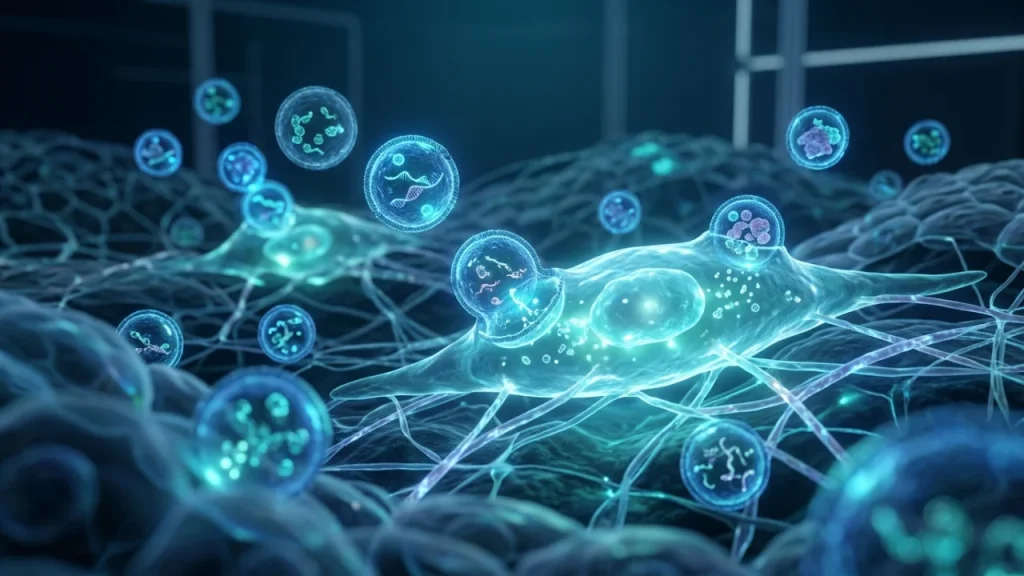
Imagine your body’s cells are like a vast city. They need to talk to each other constantly. They send urgent messages and important packages. Exosomes are the main delivery system for this cellular mail. These are tiny bubbles released by cells. They are incredibly small. Billions could fit on the head of a pin.
Exosomes are not simple waste bags. They are sophisticated messengers. Each exosome carries a precise cargo from its parent cell. This cargo includes proteins, lipids, and genetic instructions like RNA. Think of RNA as a set of blueprints or commands. An exosome travels through the body’s fluids. It eventually finds and fuses with a target cell. It delivers its cargo directly into that cell.
This delivery can change the target cell’s behavior. It can turn genes on or off. It can tell a cell to repair itself. It can order a cell to make more collagen. It can even calm inflammation. This is how healthy cells coordinate activities across your entire body. Skin cells use this system all the time. Young, vibrant skin relies on clear, constant communication between its cells.
The process breaks down as we age. Older or stressed cells send fewer exosomes. The messages they do send can be confusing or damaging. This poor communication leads to visible skin issues. Collagen production slows. Repair mechanisms falter. Inflammation may persist. The skin’s natural renewal cycle weakens.
Here is what makes exosome therapy so promising for skin rejuvenation in Manhattan and beyond. Scientists can harvest exosomes from young, healthy, and potent donor cells. These donor cells are often stem cells. Stem cells are experts at regeneration. Their exosomes are packed with optimal signals.
The therapy involves applying these potent exosomes to your skin. The goal is to restore clear communication. It is like rebooting your skin’s cellular network with a strong, clear signal. The exosomes deliver specific instructions to your aging skin cells.
These instructions can tell your cells to: – Ramp up collagen and elastin production. – Accelerate cellular repair and turnover. – Enhance the skin’s natural hydration. – Modulate inflammation for a calmer complexion.
This is not about adding a temporary filler or peeling a surface layer. It is about teaching your own skin to function better. You are using the body’s innate language to encourage a more youthful state. The focus shifts from external covering to internal reprogramming.
Understanding this messenger role is key. It explains why results can be so natural and holistic. The therapy works with your biology, not against it. The effects emerge as your own cells respond to the new instructions. They begin to act younger and more efficiently.
This foundational science turns a complex concept into a clear idea. Exosomes are the body’s own communication network. Harnessing this network offers a new path to revitalized skin. The next step is to see how this science translates into a real treatment experience.
How Exosome Therapy Differs From Traditional Skin Treatments
Traditional skin treatments often work from the outside in. They focus on the surface you can see and touch. Exosome therapy works from the inside out. It targets the cellular activity you cannot see. This difference changes everything.
Consider a common procedure like a chemical peel. It removes damaged outer layers of skin. This forces the skin to regenerate a new surface. The results are visible and can be impressive. However, the effect is primarily on the epidermis, the top skin layer. The deeper dermis, where collagen lives, gets only a secondary signal from the injury. The process is one of controlled damage and repair.
Injectable fillers offer another example. They add volume beneath wrinkles or folds. They physically plump the skin from below. The result is immediate but static. The filler material sits in place. It does not instruct your cells to make new collagen. It does not improve overall skin quality. It is a mechanical solution to a biological problem.
Laser treatments use focused light energy. The light creates precise micro-injuries in the skin. This thermal damage stimulates the body’s wound-healing response. Again, the trigger is injury. The skin works to repair the laser’s impact. The outcome depends heavily on this repair process, which can vary between people.
Exosome therapy takes a different path entirely. It does not rely on creating damage or adding foreign material. There is no peeling, no burning, and no injecting of synthetic gels. Instead, it introduces sophisticated biological messengers. These exosomes deliver instructions directly to your skin’s cells.
The goal is not to fix a single problem like a line or a fold. The goal is to improve how your skin cells behave overall. Think of it as upgrading your skin’s operating system. Traditional methods are like closing individual apps or rebooting the device. Exosome therapy provides a software update that makes everything run smoother.
This approach leads to distinct results. Surface treatments often have a “worked-on” look during recovery. There can be redness, peeling, or obvious swelling. Exosome treatments typically involve minimal downtime. The process is gentle because it is communicative, not destructive.
The effects also build differently. A filler gives an instant change that slowly fades. A peel shows new skin after old layers shed. Exosome results emerge gradually over weeks as your cells respond. They begin producing more support structures like collagen and hyaluronic acid. The improvement comes from your own tissue becoming more robust.
This is why seeking expert guidance for exosomes skin Manhattan clinics is crucial. You want a provider who understands this deep biological shift. They should explain how this therapy complements or differs from other options you may know.
In essence, traditional methods are often subtractive or additive. They remove something or put something in. Exosome therapy is regenerative and instructive. It uses the body’s own language to encourage better function. This fundamental shift moves aesthetics from cosmetic correction to true cellular rejuvenation. The next logical question is what this unique process feels like for a patient from start to finish.
The Science Behind Cellular Communication in Skin Health
Your skin is a living community. Billions of cells work together there. They must coordinate constantly to stay healthy. This coordination relies on communication. Cells do not use phones or emails. They send molecular messages.
Exosomes are key messengers. Think of them as tiny biological packages. Each exosome is a small bubble or vesicle. It forms inside a cell. The cell fills this vesicle with specific instructions. These instructions are proteins, lipids, and genetic material like RNA.
The cell then releases this package into the space around it. Other cells nearby can catch these exosomes. They absorb the package and read its instructions. The receiving cell then changes its behavior based on the message. This is how cells tell each other what to do.
Young, healthy skin is excellent at this talk. Fibroblasts signal for new collagen. Cells tell each other to repair damage. They coordinate hydration and inflammation responses perfectly. This keeps skin looking firm, smooth, and resilient.
Aging and damage disrupt this chat. Cells become poor communicators. They send fewer messages. The messages they do send can be confusing or harmful. Fibroblasts get quiet and produce less collagen. Repair signals slow down. The skin’s community becomes disorganized.
This leads to visible signs we know well. Skin loses firmness and develops lines. Its texture becomes uneven. Healing from sun or stress takes longer. The problem is not just a lack of parts like collagen. It is a breakdown in the system that tells cells to make collagen.
Here is where regenerative science enters. The goal is to restore clear communication. Introducing fresh, healthy exosomes can help achieve this. These exosomes come from robust, young donor cells grown in labs.
They deliver a clear, corrective signal to your skin’s cells. It is like giving a tired team a perfect playbook. The messages instruct your cells to restart vital functions.
- Boost collagen and elastin production for firmness.
- Enhance the skin’s natural hydration networks.
- Calm unnecessary inflammation that causes redness.
- Accelerate the repair of daily environmental damage.
This is why understanding cellular communication matters for rejuvenation. You are not just adding a substance. You are upgrading the information network that manages skin health. This approach targets the root cause of aging skin: failed cellular talk.
For residents seeking this advanced care, consulting with knowledgeable professionals for exosomes skin Manhattan treatments is a logical step. You want a clinic that understands this science deeply. They should explain how these biological messengers will specifically guide your skin’s renewal.
The process is fundamentally different from passive fillers or destructive lasers. It is an active retraining of your skin’s biology. Your own cells do the work of rejuvenation once they get the right instructions. This sets the stage for knowing what to expect during an actual treatment session.
Why Manhattan Clinics Lead in Exosome Skin Innovation
Manhattan is a global epicenter for medical research and specialty care. This concentration creates a unique environment for advanced treatments like exosome therapy. The island attracts top dermatologists and regenerative medicine specialists. These experts often work near major research institutions. They have early access to the latest scientific findings. This close link between lab and clinic speeds up medical innovation.
Patients in Manhattan also drive demand for the newest, most effective procedures. They are informed and seek treatments that offer natural, biological results. This demand encourages clinics to invest in sophisticated technologies. It pushes practitioners to master complex biological therapies. The focus shifts from simple procedures to holistic skin health. For those seeking the most advanced care, exploring exosomes skin Manhattan providers offers distinct advantages.
Several key factors place Manhattan at the forefront. – Access to leading cellular biology and dermatology research. – A high density of board-certified specialists practicing aesthetic medicine. – Clinics equipped with the latest diagnostic and application tools. – A competitive environment that rewards excellence and proven results.
This ecosystem ensures that treatments are based on solid science. Clinics must understand exosome sourcing and handling protocols deeply. They need to know how to combine exosome therapy with other modalities for best effect. The urban environment itself presents common skin concerns. Pollution, stress, and high-visibility lifestyles create a need for robust rejuvenation. Exosome therapy addresses these issues at a cellular level.
The clinical approach in such a setting is typically meticulous. Consultations involve detailed skin analysis. Treatment plans are highly personalized. Practitioners can draw from a vast network of knowledge and peer experience. This collaborative atmosphere improves safety and outcome standards. It is not about a single brand or product. It is about applied scientific knowledge.
Therefore, the leadership in this field stems from a powerful combination. World-class science meets top clinical talent and discerning patients. This triad fosters an environment where regenerative aesthetics can thrive and evolve rapidly. Choosing a clinic here often means accessing a depth of experience that is hard to find elsewhere. The next logical question is how to identify the right clinic within this advanced landscape for your specific needs.
Real Benefits of Targeting Skin at the Cellular Level
Your skin is a living organ, not just a surface. Its health and appearance depend on constant communication between your cells. As we age or face stress, this communication breaks down. Cells become less active. They send fewer repair signals. This leads to visible changes like wrinkles, dullness, and slow healing. Traditional treatments often work on the surface layer. Exosome therapy targets the source of the problem.
Think of exosomes as tiny message carriers. They are natural nanoparticles released by your cells. Healthy cells release exosomes filled with helpful instructions. These instructions include growth factors, proteins, and RNA. The exosomes travel to other cells. They deliver their cargo. This tells the receiving cell to act younger. It is like a software update for your skin’s biology.
Targeting this cellular level offers real benefits you can see and feel. The effects are fundamental, not superficial. Here are the key advantages.
- Enhanced Collagen and Elastin Production. Collagen gives skin its structure. Elastin allows it to snap back. Aging cells produce less of these proteins. Exosome signals directly instruct fibroblast cells to make more collagen and elastin. This rebuilds skin from within. The result is firmer, tighter skin with improved texture.
- Powerful Anti-Inflammatory Action. Many skin concerns involve hidden inflammation. Redness, sensitivity, and conditions like rosacea are examples. Exosomes carry molecules that calm this inflammatory response. They help restore balance to irritated skin. This creates a healthier environment for rejuvenation.
- Accelerated Healing and Repair. Your skin repairs itself daily from sun exposure and minor damage. This process slows with age. Exosome therapy boosts the skin’s innate repair mechanisms. Cells regenerate faster. Barriers strengthen. This leads to quicker recovery from procedures and better overall resilience.
- Improved Hydration and Vitality. Hydrated skin looks plump and radiant. Exosomes help optimize the function of cells that manage hydration. They support the skin’s natural moisture networks. This leads to a lasting glow that comes from cellular health, not just topical creams.
- Long-Lasting Results from Cellular Change. Surface treatments wear off as skin cells shed. Influencing cell behavior creates more durable outcomes. Treated cells continue to function better for months. This provides sustained improvement without constant intervention.
For individuals seeking exosomes skin Manhattan clinics provide access to this technology, the appeal is clear. The urban environment challenges skin constantly. Cellular-level therapy offers a robust defense. It works with your biology, not against it.
The benefits are interconnected. Reduced inflammation allows for better repair. Better repair supports collagen growth. This creates a positive cycle of rejuvenation. The goal is not just a temporary fix. It is a restoration of your skin’s natural ability to maintain itself.
This scientific approach explains why leading clinical centers focus on cellular health. Understanding these mechanisms helps you see past marketing claims. You can appreciate the real value of treatments that work at this fundamental level. The next step is understanding what a treatment protocol involves and what you can realistically expect from a session
How Exosomes Work to Transform Your Skin from Within
The Journey of Exosomes From Source to Skin Cells
Exosomes begin their journey inside specialized donor cells. These cells create tiny vesicles inside themselves. Think of these vesicles as small packages. The cell fills each package with powerful signaling molecules. This cargo includes growth factors, proteins, and genetic instructions. The cell then releases these packages into the surrounding fluid. This release is a natural form of cellular communication.
For aesthetic treatments, these exosomes come from a controlled laboratory source. Scientists harvest them from cultured cells under strict conditions. This ensures purity and consistency. The collected exosomes are then prepared in a sterile solution. This solution is ready for clinical use. In Manhattan skin clinics, this preparation is key for safety and effect.
Once introduced into the skin, the exosomes navigate to target cells. They do not move randomly. They travel through the extracellular matrix. This is the supportive network between your skin cells. Exosomes carry specific surface markers. These markers act like address labels. They help exosomes find the right cells to communicate with.
The real transformation happens at the cellular doorstep. A target skin cell, like a fibroblast, recognizes the exosome. The cell then engulfs the tiny vesicle. It brings the package inside its own structure. This process is called uptake. It is a gentle, natural fusion. The cell opens the exosome and accesses its cargo.
The delivered instructions now go to work. They can influence the cell’s nucleus. This is the cell’s command center. The signals encourage healthier behavior. They might tell the fibroblast to produce more collagen. They could instruct a damaged cell to begin repair processes. The exosome’s cargo provides both the message and the tools.
This targeted delivery system is highly efficient. It explains why such small amounts can create visible changes. The therapy uses the body’s own language. It bypasses surface barriers that stop creams and serums. The journey from source to skin cell is a direct route to cellular renewal.
For those exploring exosomes skin Manhattan treatments, understanding this journey is vital. It shows why proper application technique matters deeply. Clinicians must ensure exosomes reach the living cellular layer. Superficial placement will not yield major results. The goal is successful delivery to the dermis where active cells reside.
The entire process mirrors a sophisticated postal service. The laboratory is the sorting facility. The injection or device provides transportation. The extracellular matrix is the highway system. The surface markers are the precise addresses. Finally, cellular uptake is the signed delivery receipt.
This journey from source to skin cell is complete in a short time. Yet the biological instructions keep working for months. Treated cells continue their improved functions. They replicate and create new, healthier daughter cells. This creates a lasting impact from a single, precise voyage.
Understanding this path clarifies the treatment’s logic. It is not a topical coating or a temporary plumping. It is a deliberate delivery of regenerative information. The next logical question concerns what happens after delivery. We must examine the specific signals sent and the concrete changes they trigger in skin tissue.
Exosomes Deliver Precise Signals for Collagen Production
Collagen is your skin’s main support protein. Its production slows with age. Exosomes carry direct orders to restart this process.
Think of a skin cell called a fibroblast. It makes collagen. As we age, it receives fewer “make collagen” signals. It becomes sluggish. An exosome delivers a precise package to this cell. This package contains microRNAs and proteins. These are not materials. They are instructions.
The instructions do one key thing. They turn on specific genes inside the cell’s nucleus. Genes are like blueprints. The exosome’s cargo unlocks the collagen blueprint. It tells the fibroblast to read the plan again. The cell then gets to work.
This signal is powerful for several reasons. – It is natural. The body uses these same molecules for internal repair. – It is targeted. The signal focuses on collagen and elastin production. – It is efficient. One exosome can trigger a lasting change in cell behavior.
For someone seeking exosomes skin Manhattan treatments, this is the core benefit. The therapy does not add foreign collagen. It tells your own cells to make more of their own. This leads to authentic, natural-looking skin renewal.
The process has clear steps after the exosome arrives. First, the cell absorbs the exosome. Next, the exosome releases its molecular instructions. These instructions find their way to the cell’s command center. They bind to precise locations on the DNA or related machinery. This binding switches the collagen gene from “off” or “low” to “on.” The cell then builds the machinery to produce new collagen strands.
New collagen integrates into your skin’s existing network. This strengthens the dermis. The dermis is the deep, structural layer of skin. Stronger dermis means smoother surface skin. Fine lines soften because the foundation below is reinforced.
The effect is not instant like a filler. It is a biological process. Cells need time to read the instructions and manufacture protein. Results build over weeks and months. The new collagen your cells make is your own. It behaves like youthful collagen.
This explains why treatments aim for deep delivery. Fibroblasts live in the dermis. Superficial application cannot reach them effectively. Proper technique ensures signals reach the right cells.
Other signals arrive in the same exosome package. They tell cells to make more elastin. Elastin gives skin its snap-back quality. Further instructions reduce inflammation. They also encourage new blood vessel formation. Improved blood flow brings more nutrients to these active cells.
The focus on collagen is primary because it makes up most of the skin’s structure. Restoring its production addresses fundamental aging. It improves firmness, texture, and resilience. This internal shift creates an external glow.
The transformation starts with a single, clear command: produce. With that command received, cells shift from a dormant state to an active, regenerative one. This sets the stage for the next phase of renewal, where inflammation is quieted and protection is enhanced.
Calming Inflammation Through Targeted Cellular Messages
Inflammation is your skin’s alarm system. It is a necessary short-term response to injury or attack. But in aging or stressed skin, this alarm can get stuck in the “on” position. This creates chronic, low-grade inflammation. You may see this as persistent redness, sensitivity, or rosacea. This quiet fire beneath the surface breaks down collagen and elastin. It hampers your skin’s natural repair.
Exosomes carry precise commands to calm this reaction. They do not simply mask redness. They instruct your immune cells to change their behavior. Think of a noisy room where everyone is shouting. Exosomes deliver a message that tells most people to speak quietly. The underlying conversation continues, but the damaging noise stops.
The science involves specific cellular messages. Exosomes contain molecules called microRNAs. These are small pieces of genetic code. They can turn genes on or off inside a target cell. In the context of inflammation, they target genes that produce inflammatory signals.
For instance, one key signal is TNF-alpha. This is a major protein that drives inflammation. Exosomes can deliver microRNAs that tell a cell to make less TNF-alpha. Another target is NF-kB. This is a master switch inside cells that activates inflammatory genes. Exosomal signals can help turn this switch off.
The process is targeted and efficient. Your own resident skin cells, like fibroblasts, release these exosomes under ideal conditions. Therapeutic exosomes mimic this natural process. They provide a concentrated dose of the right instructions. This helps reset the skin’s inflammatory state to a balanced, calm baseline.
The benefits of calming this internal fire are direct: – Reduced visible redness and flushing. – Decreased skin sensitivity and reactivity. – Less swelling and puffiness. – A more even, comfortable skin tone.
This is crucial for results in places like Manhattan. Urban environments expose skin to daily stressors. Pollution particles, temperature shifts, and daily grind can trigger inflammatory pathways. A treatment that addresses deep inflammation offers more than cosmetic improvement. It offers resilience. Seeking expert exosomes skin Manhattan care means targeting this fundamental biology.
Calming inflammation also protects your new collagen. Remember the rebuilding process described earlier. Inflammatory chemicals are like corrosive agents around new construction. They can degrade fresh collagen and elastin fibers before they integrate. By quieting inflammation, exosomes protect the new structural proteins your cells are building. This makes the regenerative results more durable.
The outcome is skin that not only looks smoother but also feels stronger and less reactive. It is skin better equipped to handle daily life without flaring up. This creates a foundation of health that supports all other aesthetic improvements. The journey moves from rebuilding structure to ensuring a peaceful, protected environment where that new structure can thrive.
This protective effect seamlessly leads to the next critical action: strengthening the skin’s own defense systems against future damage.
Improving Skin Texture Through Natural Regeneration
Skin texture improves when your cells rebuild their own support structure. Think of your skin’s deeper layers as a construction site. The previous section discussed calming the site. Now, the rebuilding begins. Exosomes deliver precise instructions to your skin’s worker cells. These instructions tell cells to produce more collagen and elastin.
Collagen is the main structural protein in skin. It acts like steel beams in a building. Elastin gives skin its snap-back quality. It is like springs within the structure. Aging and sun damage break down these proteins. The result is rough, uneven texture. Exosomes reverse this process.
They do not simply add volume from the outside. They command your fibroblasts to make new, high-quality proteins. Fibroblasts are the construction crews of your skin. Exosomes signal these crews to work harder and smarter. The new collagen forms a dense, organized network. This network fills in fine lines and smoothes rough patches from within.
The process is natural and gradual. Your skin integrates these new proteins seamlessly. This leads to several visible changes in texture: – Fine lines, especially around the eyes and mouth, become less noticeable. – Large pores often appear smaller as the surrounding skin tightens. – That crepey, crinkled look on cheeks or neck smooths out. – The overall surface feels softer and more uniform to the touch.
This is not a temporary plumping effect. It is genuine structural renewal. The improvement happens because your skin is fundamentally younger in its function. Seeking advanced exosomes skin Manhattan treatments taps into this biological renewal. Urban life in Manhattan constantly tests skin’s structure with pollution and stress. A treatment that rebuilds from within offers lasting change.
The regeneration also improves skin’s hydration capacity. A strong collagen network acts like a sponge. It holds water molecules more effectively. Better hydration directly translates to smoother, plumper texture. Dry skin often looks flaky and rough. Exosome-induced regeneration helps correct this.
The timeline for seeing textural change is typically weeks to months. Cells need time to receive signals, produce proteins, and assemble them. The results are cumulative and durable. This contrasts with surface-level exfoliants or fillers. Those approaches work on or above the existing structure. Exosomes change the structure itself.
Imagine repairing a weathered brick wall. Surface paint hides flaws for a short time. Repointing the mortar and replacing damaged bricks fixes it for years. Exosomes are like repointing the mortar of your skin. They restore the foundational integrity.
This internal renewal creates a resilient canvas. Skin can better withstand environmental challenges without losing its smoothness. The outcome is a complexion that looks refined and feels solid. It is health that you can see and feel every day.
This foundational rebuilding naturally sets the stage for another key benefit: enhancing the skin’s natural glow and radiance from a cellular level.
Building Skin Resilience Against Environmental Damage
Your skin’s outer layer is its shield. This barrier faces constant attack in city life. Exosome therapy in Manhattan helps reinforce this vital defense system. The treatment does more than just repair past damage. It prepares your skin for future challenges.
Environmental damage often starts with tiny particles. Pollution, smoke, and dust generate free radicals. These unstable molecules attack healthy skin cells. They break down collagen and elastin over time. This process is called oxidative stress. It weakens your skin’s natural defenses.
A strong skin barrier acts like a wall. This wall keeps moisture in and irritants out. When the barrier is compromised, problems begin. You might notice more redness, sensitivity, or dryness. Skin can feel tight and react easily to products.
Exosomes address this at the source. They deliver specific instructions to your skin cells. These instructions tell cells to produce more protective proteins. Key proteins include filaggrin and ceramides. Filaggrin is essential for creating a tight, cohesive surface layer. Ceramides are lipids that fill the spaces between skin cells. Think of them as the mortar between bricks.
The result is a denser, more competent outer layer. This fortified barrier performs several critical functions better. – It reduces trans-epidermal water loss. This means your skin retains its natural hydration longer. – It blocks penetration of larger pollution particles and allergens. – It improves the skin’s overall tolerance to external stressors.
Scientific studies show this effect clearly. Skin treated with exosomes shows increased expression of barrier genes. The stratum corneum, the outermost layer, becomes more organized. Its structure looks more like a well-built brick wall under a microscope.
This resilience is crucial for urban living. Daily life exposes skin to many aggressors. These include UV rays, exhaust fumes, and extreme temperature shifts from indoors to outdoors. Each of these can degrade a weak barrier. A resilient barrier bounces back more effectively.
The process is cellular and gradual. You are not applying a temporary protective film. You are instructing your skin to build a better, permanent shield. This is a fundamental difference from topical barrier creams. Creams sit on top of the skin and wash off. Exosome-induced resilience comes from within your own cells.
Consider the long-term benefit for skin health. Continual barrier breakdown leads to chronic inflammation. This state accelerates aging and can cause persistent issues like rosacea. By strengthening the barrier foundationally, you help prevent this cycle.
Patients seeking exosomes skin Manhattan solutions often report this benefit clearly. Their skin feels less reactive over time. They can tolerate a wider range of skincare products. Their complexion remains calm even during high-pollution days or seasonal changes.
This built-in resilience complements the structural renewal discussed earlier. Strong collagen provides the support beams. A robust barrier provides the weatherproof exterior. Together, they create skin that is not only smoother but also tougher.
The final outcome is skin that maintains its health actively. It does not just look good in a controlled environment. It looks good because it can handle the real world. This leads us to a visible hallmark of truly healthy skin: a consistent, natural luminosity that shines from a protected and well-functioning foundation.
Who Is the Ideal Candidate for Exosome Therapy in Manhattan?
Age-Related Skin Concerns That Respond Well to Exosomes
Exosome therapy offers a powerful tool for addressing specific signs of aging. It works by restoring your skin’s natural communication network. This approach is not a one-size-fits-all solution. It delivers the best results for particular concerns.
Fine lines and early wrinkles respond exceptionally well. These lines often form from a slowdown in collagen production. Skin cells become less active with age. They send fewer repair signals. Exosomes carry direct instructions to reboot this process. They tell fibroblast cells to make new collagen and elastin again. This rebuilds the skin’s foundation from within. The lines begin to soften and fill out from the bottom up.
Loss of firmness and skin laxity is another key target. Gravity and decreased elastic tissue cause sagging. Topical creams cannot reach the structural layer where this happens. Exosome signals can. They enhance the quality and organization of the skin’s support matrix. The skin gains better architectural integrity. Patients notice a firmer, more lifted contour over time.
Dull, uneven skin tone is a common age-related complaint. It stems from poor cell turnover and accumulated sun damage. Exosomes help normalize this cycle. They encourage healthier renewal of epidermal cells. This can gradually fade the appearance of sun spots. It also improves overall clarity and radiance. The skin looks brighter because it functions better.
The therapy shows great promise for improving skin texture. Roughness and enlarged pores can make skin look older. Exosomes promote better hydration and smoother surface cell alignment. The skin’s texture becomes more refined and even.
- Fine lines and early wrinkles
- Loss of firmness and skin laxity
- Dullness and uneven tone
- Rough or crepey texture
These concerns share a root cause: declining cellular activity. Exosomes directly address that decline. For individuals in Manhattan seeking exosomes skin revitalization, these are the primary indicators that treatment may be highly effective. The ideal candidate often experiences these changes but still has a baseline of skin health. The goal is enhancement and restoration, not damage control for severely compromised skin.
The process requires patience. Results are cumulative as cells gradually change their behavior. It is not an instant filler or a laser peel. The outcome is rejuvenated skin that acts younger. This makes it a compelling option for proactive aging care. The next consideration is how this treatment integrates with an overall skincare strategy in a dynamic urban environment like Manhattan.
Skin Conditions That Benefit From Cellular Communication
Exosomes work by restoring clear signals between your skin cells. Think of aging or damaged skin as a city with poor communication. Messages get lost or confused. Exosomes deliver precise instructions to fix this. They tell cells how to behave in a healthier, younger way.
Several common skin issues stem directly from this cellular miscommunication. Exosome therapy can help correct them.
First, consider persistent redness and sensitivity. This often involves confused inflammatory signals. Skin cells overreact to minor triggers. Exosomes can help modulate this response. They carry instructions that calm unnecessary inflammation. This helps strengthen the skin’s natural barrier. The result is a more resilient, less reactive complexion.
Next, let’s discuss poor wound healing and scarring. After procedures like laser treatments, skin needs to repair itself efficiently. Slow healing can lead to uneven texture or discoloration. Exosomes are packed with growth factors and proteins. These directly instruct cells to rebuild tissue properly. They encourage organized collagen production and faster cell migration to close wounds neatly.
Another key area is excessive pigmentation, like melasma. This condition is more than surface stains. It involves melanocytes, the pigment-producing cells, receiving too many “produce pigment” signals. Exosomes can help normalize this dialogue. They do not bleach the skin. Instead, they promote a healthier environment where pigment cells act in a more controlled manner.
The benefits for skin laxity are also profound. Loss of firmness happens when fibroblasts, the cells that make collagen, become sluggish and unresponsive. Exosomes re-engage these cells. They deliver the specific blueprints for producing fresh, robust structural proteins. This improves elasticity from within.
For those in Manhattan seeking exosomes skin revitalization, urban stressors add another layer. Pollution particles and daily grind can disrupt cellular function. Exosomes provide a reset. They help cells cope with and recover from these environmental insults more effectively.
Here is a summary of conditions linked to poor cellular talk that exosomes address: – Reactive skin and weakened barrier function – Slow recovery after cosmetic procedures – Stubborn pigmentation disorders – Early jowling and loss of facial contour – Dullness from sluggish cell turnover
The core principle is simple. Each condition represents a cellular conversation gone wrong. Exosomes supply the correct script. They do not force cells to act. They enable cells to remember their optimal, youthful functions.
This makes the therapy uniquely targeted. It supports the skin’s own biology rather than imposing an external change. For the ideal candidate in Manhattan, this means addressing the root cause of multiple concerns with one coherent biological strategy. The next logical step is understanding what the actual treatment session involves in a clinical setting.
Health Factors That Make Someone a Good Candidate
Exosome therapy works best on a foundation of good cellular health. Think of your cells as factories. Exosomes deliver new instructions and tools to these factories. A factory in good working order can use these tools immediately. It can ramp up production of collagen and elastin efficiently. A compromised factory struggles to start, even with perfect blueprints. Therefore, the ideal candidate is someone whose skin biology is fundamentally sound but needs better coordination and a renewed signal to perform.
General wellness is the first pillar. This includes stable hormone levels and managed stress. Chronic stress releases cortisol. This hormone can disrupt cellular communication pathways. Exosomes must navigate these pathways to deliver their messages. A body under constant stress is a noisy environment for biological signals. Candidates with balanced lifestyles and healthy stress responses often see more pronounced and consistent results from exosomes skin treatments in Manhattan.
Skin integrity and barrier function are critical. Exosomes are typically applied after a controlled micro-injury to the skin, like microneedling. This creates temporary channels for delivery. A robust, non-inflamed skin barrier heals these micro-channels predictably. It also provides a calm environment for exosome signaling. Candidates with active eczema, psoriasis, or severe inflammatory acne may need to address those conditions first. The goal is to avoid overwhelming an already reactive system.
Realistic expectations are a key health factor. Exosome therapy is a regenerative process, not a filler. It does not create immediate volume or erase lines in one day. The ideal candidate understands this biological timeline. They seek gradual improvement in skin quality, resilience, and tone over weeks and months. They want their own skin to function better, not look like they are wearing a different one. This patient values subtle, natural-looking rejuvenation that accumulates from within.
Consider these specific health markers that support optimal outcomes: – Absence of active systemic infections or uncontrolled autoimmune conditions. – A history of normal wound healing without excessive scarring. – No current use of immunosuppressive medications. – Skin that is not currently sunburned or severely damaged.
Age and skin condition are practical factors. The therapy is excellent for proactive aging in the late twenties and thirties. It helps maintain peak function. It is also powerful for revitalization in forties, fifties, and beyond, when cellular communication clearly slows. The best results often appear in skin showing early signs of aging fatigue. This includes dullness, mild laxity, or slow recovery from minor insults. The cells still have the capacity to respond vigorously when given the correct instructions.
Nutritional status plays a subtle but real role. Cells need raw materials to build new proteins. A body deficient in essential vitamins and minerals is like a factory low on steel and plastic. It cannot build much, even with great plans. Candidates with a balanced diet rich in protein, vitamins C and E, and zinc provide their cells with the building blocks exosomes call for. This synergy between external signaling and internal resources creates the strongest effect.
Finally, a commitment to basic skincare and sun protection aligns with exosome therapy’s goals. The treatment enhances the skin’s innate abilities. Continual sun damage directly attacks those same abilities. The ideal candidate in Manhattan uses broad-spectrum sunscreen daily. They protect their biological investment. They view exosomes as a powerful reset that they then maintain with intelligent care. This integrated approach ensures lasting benefits from the cellular renewal process. Ultimately, the ideal candidate is not defined by a single issue but by a overall profile of biological readiness and aligned goals for natural rejuvenation.
Realistic Expectations for Exosome Skin Results
Exosome therapy is not a quick cosmetic fix. It is a cellular communication process. This process requires time. Your skin cells need to listen to the new signals. Then they must act on them. Realistic expectations are key to satisfaction with your results in Manhattan.
Think of it as resetting your skin’s software. The exosomes deliver updated instructions. Your cells then execute these instructions at their own pace. This is not like filling a line with filler. It is about improving your skin’s own quality and function.
You will not leave your first appointment with dramatically different skin. The initial changes are subtle and build over weeks. Most people notice improvements beginning two to four weeks after treatment. The most significant results often appear after six to eight weeks. This timeline allows for complete cellular renewal cycles.
What are the most common and realistic improvements? The results are cumulative and natural-looking.
- Enhanced glow and radiance. This comes from better hydration and surface cell turnover.
- Improved skin texture. Fine lines may soften as collagen production increases.
- Better tone and reduced dullness. Healthier cells reflect light more evenly.
- Strengthened skin barrier. This can mean less sensitivity and better hydration.
- Faster recovery from environmental stress like sun or wind.
Do not expect exosomes to erase deep wrinkles or lift sagging skin dramatically. That is not their primary function. They restore cellular efficiency. This can lead to a refreshed, more youthful appearance. Your skin will look more like its healthier, younger version.
The number of treatments matters. A single session can provide a noticeable refresh. For more significant rejuvenation, a series is often recommended. Many providers suggest two to three initial sessions. These are spaced about a month apart. This strategy builds a stronger biological signal. It leads to more robust and lasting outcomes.
Your lifestyle directly impacts these results. The therapy gives your cells a powerful push. You must support that push. Consistent sun protection is non-negotiable. Daily sunscreen in Manhattan protects the new collagen you are building. Good nutrition and hydration provide the raw materials. Without this support, results will be less pronounced.
The longevity of results also varies. Typical effects can last from six months to over a year. This depends on your age, skin condition, and maintenance. Your skin continues to age after treatment. The exosome therapy effectively turns back the clock for a period. A yearly maintenance session can help sustain the benefits.
Setting realistic goals for exosomes skin Manhattan treatments leads to greater patient happiness. The goal is regeneration, not transformation. You are investing in your skin’s long-term health and resilience. This approach yields a natural vibrancy that no single laser or peel can replicate.
Ultimately, success is measured by improved skin function and a refreshed appearance. This cellular renewal process offers a sophisticated path to aesthetic enhancement. It works in harmony with your body’s own biology for sustainable results.
Timeline for Seeing Improvements After Treatment
You will not see changes in your skin immediately after an exosome treatment. The renewal process begins beneath the surface. Your cells must first receive and act on the new instructions.
The initial days are for cellular communication. The applied exosomes deliver their signals to your skin’s fibroblasts and stem cells. This triggers a shift in cellular activity. Think of it as a software update for your skin. The system is rebooting. No visible changes occur yet.
Most people notice the first subtle improvements within two to three weeks. This early phase often shows as improved hydration and a subtle glow. Your skin may feel smoother and look more radiant. This is because exosomes help optimize basic cell functions quickly. The skin’s barrier begins to strengthen.
Significant collagen production takes more time. New collagen needs to be manufactured and then organized. This is not a fast process. Most patients see more defined results around the four to six-week mark. Fine lines may appear softened. Skin texture becomes more even. The overall firmness and elasticity improve. This timeline is common for exosomes skin Manhattan treatments focused on rejuvenation.
The most dramatic improvements typically appear after two to three months. Your skin’s regenerative cycle has had time to complete full phases. You will likely observe: – A clearer, more toned complexion – Reduced appearance of pores – Improved resilience against redness or irritation – A sustained youthful plumpness from new collagen
This is the peak effect for a single treatment session.
Your personal timeline depends on several factors. Your biological age and initial skin condition are key. Younger skin with less sun damage may respond faster. Its cellular machinery is more responsive. More mature or photodamaged skin has more repair work to do. Results will be gradual but significant.
Your treatment goals also set the pace. Goals for simple rejuvenation and glow show up quickly. Goals for addressing deeper wrinkles or scars require more cycles of repair. Patience is essential for these deeper structural changes.
Consistency matters greatly if you undergo a series. Each session builds upon the last. The biological signal is reinforced. After a second treatment at the one-month mark, results become cumulative. Improvements arrive faster after subsequent sessions. They are also more pronounced and longer-lasting.
Do not judge results too early. Comparing your skin at week one to week eight is misleading. The cellular work is ongoing. Take monthly photos to track the subtle progression. This is the most accurate way to see your own change.
The journey from treatment to visible outcome is a steady climb, not a sudden jump. Trusting this biological timeline is part of the process. Your skin is rebuilding itself from within. This foundational approach ensures the improvements you see are genuine and enduring, not just superficial masking.
Understanding this schedule helps set proper expectations for your aesthetic journey in Manhattan. Next, we can explore how to prepare your skin to be an ideal partner in this regenerative process.
The Exosome Treatment Process at Advanced Manhattan Clinics
Initial Consultation and Skin Assessment Steps
Your first visit is a detailed conversation and analysis. It is not a day for treatment. This session is about creating a plan tailored just for you. The goal is to understand your skin’s unique biology and history. This ensures the therapy targets your specific concerns effectively.
The consultation begins with a discussion of your goals. Be prepared to describe what you want to change. Do you seek better texture, fewer fine lines, or faded discoloration? Your provider will ask about your medical and skin history. This includes past procedures, current products, and any skin conditions. Full transparency here is crucial for safety and optimal results.
Next comes a thorough visual skin assessment. Your clinician will examine your skin under bright, magnified light. They look for signs of sun damage, elasticity, pore size, and hydration levels. They note the depth of wrinkles and the presence of any scarring. This exam maps the areas needing the most regenerative support.
Many advanced clinics in Manhattan use specialized imaging technology. This tool goes deeper than the naked eye. It can reveal underlying pigmentation, vascular issues, and collagen density. These subsurface conditions affect your treatment plan. Seeing this hidden data helps customize your exosome protocol for deeper structural repair.
Your skin type and sensitivity are also evaluated. The clinician needs to know how your skin typically reacts. This determines the most gentle yet effective delivery method. The approach for delicate skin differs from that for more resilient skin types.
Based on this collected information, your provider designs a roadmap. They will explain how many sessions you might need. They will outline the expected timeline for improvements specific to your goals. This plan is your guide, setting clear and realistic expectations from the start.
You will receive precise pre-treatment instructions. These steps prepare your skin to be a receptive partner. Common instructions may include: – Discontinuing certain active skincare products a week before. – Avoiding sun exposure and tanning. – Staying well-hydrated and maintaining a healthy diet. – Informing the clinic of any new medications.
This comprehensive assessment is the foundation of successful treatment. It transforms exosome therapy from a generic application into a precise biological intervention. The focus on exosomes skin Manhattan clinics is this high level of personalization. It ensures your cellular rejuvenation journey is built on solid, individualized data.
A good consultation answers all your questions. You should leave feeling informed and confident about the process. This collaborative partnership between you and your provider is the first critical step toward activating your skin’s innate healing potential. The subsequent treatment then builds directly upon this detailed blueprint for renewal.
Preparation Protocols Before Exosome Application
Proper preparation primes your skin for optimal results. It creates the ideal environment for exosomes to work. Think of it as preparing soil before planting seeds. The goal is to reduce inflammation and maximize cellular receptivity. This protocol is a key part of the advanced approach at leading exosomes skin Manhattan centers.
Your clinic will give you specific guidelines for the final day. Follow these instructions closely. They are designed for your safety and treatment success. A common and critical step is avoiding blood thinners. This includes certain medications and supplements.
You may need to stop these for a brief period: – Aspirin and non-steroidal anti-inflammatory drugs like ibuprofen. – Certain herbal supplements such as ginkgo biloba or high-dose vitamin E. – Prescription blood thinners, but only with your doctor’s direct approval.
This reduces the risk of bruising at the treatment site. Less bruising means less background inflammation for your body to manage. The exosomes can then focus on regeneration, not damage control.
Skin cleansing is another vital step. Arrive for your appointment with a completely clean face. Do not apply any makeup, sunscreen, or moisturizer. The clinic will perform a medical-grade cleanse, but starting with a clean slate is essential. This removes barriers that could block exosome absorption.
Some clinics may use a gentle exfoliation or priming solution. This is not a harsh scrub. It is a light chemical preparation to remove dead surface cells. This can improve contact between the exosome solution and your living skin layers. Your provider will explain if this is part of your plan.
Hydration is important from the inside out. Drink plenty of water in the days before your session. Well-hydrated skin cells function better. They are more metabolically active and potentially more receptive to regenerative signals. Avoid alcohol for at least 24 hours prior, as it dehydrates you.
Plan your schedule wisely on treatment day. Your skin may be slightly red or sensitive immediately after. Have a relaxed schedule afterward. Avoid strenuous exercise for the first 24 hours. Increased blood flow and sweat can irritate the freshly treated skin.
Wear comfortable, loose-fitting clothing. A top that buttons or zips is often best. This prevents pulling a tight shirt over your face after the procedure. Bring a wide-brimmed hat for your trip home if you are concerned about sun exposure.
The final preparatory step is mental. Arrive relaxed and positive. Stress hormones like cortisol can influence skin inflammation. A calm state supports the healing process. Trust the detailed plan you created with your provider during the consultation.
This meticulous preparation transforms the treatment from a simple application into a coordinated biological event. It minimizes variables that could interfere with your cellular response. Each step aligns to support your skin’s innate intelligence, setting the stage for the exosomes to deliver their precise instructions. This disciplined approach ensures you begin your treatment journey from the strongest possible starting point, ready for renewal.
The Minimally Invasive Application Procedure Explained
The actual application of exosomes is a precise and gentle process. It begins with preparing the skin’s surface. Your provider will thoroughly cleanse your face. This removes any oils, makeup, or environmental debris. A clean canvas is essential for optimal results.
Next, the skin barrier is carefully opened. This is done using a minimally invasive method. The goal is to create tiny, controlled channels in the outermost layer of skin. These channels allow the exosome solution to reach deeper target cells. Two primary methods are commonly used for this in advanced exosomes skin Manhattan clinics.
- Micro-needling uses a sterile device with fine needles. These needles create microscopic punctures in the skin. The process is quick and well-tolerated. It stimulates the skin’s natural wound-healing response. This response perfectly sets the stage for exosome signaling.
- A fractional laser may also be used. This laser creates a grid of microscopic treatment zones. It leaves surrounding tissue intact for rapid healing. The laser energy also generates a beneficial thermal effect in the dermis.
Your provider will select the best method for your skin type and goals. Topical numbing cream is applied beforehand. This ensures you feel only mild pressure or vibration during the procedure. Discomfort is minimal for most patients.
Once the skin is prepared, the exosome solution is applied. The liquid is rich with billions of purified signaling vesicles. It is gently massaged or sprayed onto the treated area. The exosomes immediately begin migrating into the micro-channels.
They travel to reach living cells in the dermis. This is where your skin’s structural proteins live. Collagen and elastin fibers are found here. Fibroblasts, the cells that make these proteins, are key targets for the exosomes.
The application session itself is relatively short. The entire process often takes under an hour. There is no significant downtime afterward. You might experience mild redness or a sunburn-like sensation. This typically fades within a few hours to a day.
The clinical environment ensures safety and sterility. All equipment is either single-use or meticulously sterilized. The exosome solution itself is handled with precision. It is stored at correct temperatures until the moment of use. This preserves the biological activity of the vesicles.
After application, the exosomes get to work at a cellular level. They do not sit passively on the skin. They fuse with your recipient cells. They deliver their cargo of growth factors and genetic instructions.
This signals your cells to shift into a regenerative state. Think of it as updating your skin’s cellular software. The instructions are for repair, renewal, and rejuvenation. Your own cells then execute these new commands.
The procedure is complete once the solution has absorbed. Your provider may apply a soothing serum or barrier cream. You will receive clear aftercare instructions before you leave. These steps protect the treated skin and support continued absorption.
This precise application bridges advanced science with clinical practice. It transforms a powerful biological concept into a tangible treatment. The method ensures the therapeutic messengers reach their intended destination safely and effectively, initiating a profound internal renewal process from within.
Post-Treatment Care for Optimal Skin Recovery
Proper care after your session is crucial. It supports the work the exosomes have begun. Think of it as creating the ideal environment for cellular renewal. Your skin cells are now actively receiving new instructions. Your job is to protect them while they execute this new program.
The first 24 to 48 hours are the most important. Your skin’s barrier is temporarily more permeable. This aids in absorption but also increases sensitivity. You must avoid anything that could cause irritation or inflammation. Inflammation can disrupt the delicate signaling processes.
Follow these essential steps in the first two days: – Use only the gentle, recommended cleanser provided by your clinic. Do not use any exfoliating scrubs or acidic washes. – Apply the supplied post-treatment serum or barrier cream as directed. This often contains hyaline acid and peptides. It soothes the skin and locks in moisture. – Avoid direct sun exposure completely. Even brief exposure can be harmful during this window. – Do not apply makeup, retinoids, or vitamin C serums. Let your skin focus on internal repair. – Skip strenuous exercise. Sweating and increased blood flow can cause irritation.
Mild redness is normal. It usually fades within hours. A slight warmth or tight sensation may also occur. This is typically not a cause for concern. It simply signals increased cellular activity beneath the surface.
You can resume most normal activities after the first day. Continue to be gentle with your skin for at least one week. Use a physical sunscreen every single morning. Zinc oxide or titanium dioxide formulas are ideal. They provide broad-spectrum protection without chemical filters.
Hydration is key for optimal recovery. Drink plenty of water throughout the day. This helps your cells function at their best. You can also use a simple, fragrance-free moisturizer. It will maintain a supportive environment for healing.
Avoid other facial treatments for a minimum of two weeks. This includes chemical peels, laser therapy, and microneedling. Your skin needs this time to complete its initial regenerative phase without additional stress.
The timeline for visible results is gradual. You may notice improved hydration and texture within the first week. Brighter, more even tone often appears after two to three weeks. Collagen remodeling takes longer. Firmer, smoother skin typically emerges over one to three months.
Your cells are building new structures. This process cannot be rushed. Consistency in your simple skincare routine yields the best outcome. The advanced science does the foundational work. Your care protects and amplifies that investment.
Some patients seek exosomes skin Manhattan treatments for their cumulative benefits. A single session can produce excellent results. However, many clinics recommend a series for transformative change. Your provider will discuss a personalized plan during your follow-up.
Listen to your skin’s needs during recovery. If you experience unexpected swelling or prolonged redness, contact your clinic immediately. Reputable centers provide clear channels for post-treatment support.
This attentive aftercare protocol ensures your results are not left to chance. It bridges the clinical procedure with long-term skin health. You become an active partner in the regenerative journey, safeguarding the sophisticated cellular renewal now underway in your skin.
Follow-Up Visits and Long-Term Maintenance Plans
Your first follow-up visit is typically scheduled two to four weeks after your exosomes skin Manhattan treatment. This timing is deliberate. Your provider needs to assess your skin’s initial response. They check for proper healing and early signs of cellular activity. This appointment is a two-way conversation. You can share your observations. Your clinician evaluates progress with a trained eye.
These visits are not merely check-ins. They are strategic assessments. Your provider looks for specific changes. Improved hydration and luminosity are early positive signs. They also monitor for even collagen stimulation. The goal is to ensure the exosomes are working as intended within your unique biology.
Based on this evaluation, a long-term maintenance plan is created. This plan is not one-size-fits-all. It is tailored to your skin’s goals and its reaction to the first treatment. A common plan involves a series of sessions. These are spaced several months apart. This schedule supports the natural lifecycle of your skin cells.
Why is a series often recommended? Exosome therapy signals your cells to regenerate. This process has a natural duration. A single session provides a powerful stimulus. However, cellular communication can be optimized with periodic reinforcement. Follow-up treatments can build upon the new foundation. They guide your skin toward sustained improvement.
Your maintenance plan will include professional treatments and home care. The clinical strategy may involve different techniques. Some clinics suggest gentle booster treatments. Others might combine exosomes with other modalities at a later date. Your provider will explain the rationale for each step.
At-home care remains crucial for long-term results. Your provider will likely upgrade your skincare recommendations. They may suggest specific ingredients that support cellular health. These products work in harmony with the exosome therapy. They protect your investment and extend the benefits.
Consider these key elements of a strong maintenance plan: – Scheduled professional evaluations every 6 to 12 months. – A personalized skincare regimen with growth-factor supporting ingredients. – Guidance on lifestyle factors that impact skin longevity, like sun protection and diet. – A clear timeline for any potential booster treatments if desired.
Long-term maintenance is about proactive care, not reactive fixes. It shifts the focus from correcting past damage to preserving future skin health. This approach leverages the initial treatment’s regenerative momentum. Your skin continues to improve even between visits.
The science behind this is clear. Skin is a dynamic organ. It constantly responds to internal and external signals. A maintenance plan keeps beneficial biological signals active. It helps counteract daily environmental stress that can slow regeneration.
Choosing a clinic that offers structured follow-up is important. It shows a commitment to your results beyond the initial procedure. This comprehensive care model is a hallmark of advanced practices in Manhattan and elsewhere. It ensures the sophisticated science of exosomes translates into lasting, visible beauty for you.
Ultimately, this ongoing partnership maximizes your treatment’s value. It transforms a single procedure into a true journey toward resilient, healthier skin. The next phase of your care focuses on integrating these benefits seamlessly into your life, ensuring the regenerative work continues every day.
Comparing Exosome Therapy With Other Regenerative Options
Exosomes Versus Traditional Collagen Stimulation Methods
Traditional methods for boosting collagen work by creating controlled injury. Lasers, chemical peels, and microne needling cause microscopic damage. Your skin then repairs this damage. The repair process includes making new collagen. This is an indirect path to results. You must injure the skin first to trigger a healing response.
Exosome therapy takes a completely different path. It does not rely on injury. Instead, it delivers precise instructions directly to your skin cells. Think of it as sending a software update rather than damaging hardware to force a fix. Exosomes carry messages that tell your cells to ramp up their natural functions. This includes collagen production, but also much more.
The key difference lies in the mechanism: stimulation versus signaling. Traditional methods stimulate collagen as part of a general wound response. Exosomes provide targeted signals for regeneration without the wound. This leads to several practical contrasts for patients.
First, consider downtime and discomfort. Traditional collagen treatments often involve inflammation, redness, and peeling. Recovery can take days or weeks. Exosome treatments typically have minimal downtime. There is no intentional injury to recover from. Patients in Manhattan seeking exosomes skin revitalization often appreciate this efficiency.
Second, look at the scope of results. Collagen is just one protein in healthy skin. Traditional methods primarily target it. Exosomes support a wider range of regenerative activities. Their signals can improve cellular energy, reduce inflammation, and enhance elastin and hyaluronic acid production. The goal is overall skin health, not just one structural component.
Third, the consistency of results can vary. The outcome from injury-based methods depends heavily on your body’s unique healing response. This response can slow with age or certain health conditions. Exosome therapy provides the instructions your cells need to perform optimally. It can help overcome age-related slowdowns in regeneration.
Here is a simple comparison of the core actions: – Traditional methods: Cause injury -> Trigger inflammation -> Skin heals -> New collagen forms. – Exosome therapy: Apply exosomes -> Cells receive signals -> Cells activate regenerative programs -> Collagen, elastin, and other factors increase.
The older approach relies on your body’s ability to heal a wound effectively. The newer approach leverages cell-to-cell communication to guide and enhance normal function. For individuals whose skin may not heal as vigorously, or for those avoiding extended recovery, this distinction is crucial.
Ultimately, exosomes represent a shift from brute-force stimulation to intelligent communication. They work with your skin’s biology at a foundational level. This does not mean traditional methods are obsolete. They are still powerful tools. But exosome therapy offers a novel strategy focused on cellular messaging rather than damage.
This leads naturally to comparing exosomes with other popular biologic treatments, like platelet-rich plasma (PRP). Understanding these differences helps clarify the unique position of exosome science in modern aesthetics.
How Exosome Mechanisms Differ From Growth Factor Therapy
Growth factor therapy has been a key part of regenerative aesthetics for years. It delivers concentrated signaling proteins directly to the skin. These proteins tell cells to grow, divide, and produce collagen. This approach is powerful. But exosome therapy operates on a different, more sophisticated level.
Think of it this way. Growth factors are like raw materials or simple commands. They shout “make collagen!” or “divide now!” to nearby cells. Exosomes are like complete instruction manuals or smart messengers. They contain growth factors too. But they also carry a full library of genetic information and other regulatory molecules.
This difference is fundamental. A growth factor cocktail provides a set of signals. Exosomes provide those signals plus the precise instructions for how the cell should respond. They can change the cell’s long-term behavior.
The mechanism hinges on content and delivery. Isolated growth factors act on the surface of a target cell. They bind to receptors and trigger a chain reaction inside. Exosomes are absorbed whole by the cell. They deliver their cargo directly into the cell’s internal environment.
This cargo is diverse and potent: – Many types of growth factors and proteins. – MicroRNAs, which are tiny genetic regulators. – Messenger RNAs that can be used to make new proteins. – Enzymes and other bioactive molecules.
Once inside, the microRNAs from exosomes can silence certain genes in the recipient cell. The messenger RNAs can be translated into new, beneficial proteins. This is reprogramming. The cell doesn’t just get a signal to act. It gets the tools and blueprints to change how it functions.
For skin rejuvenation, this has clear implications. Growth factor therapy primarily stimulates existing processes. It pushes cells that are already capable. Exosome therapy can potentially restore and educate aging or sluggish cells. It can help them remember their youthful functions.
Consider consistency and longevity. A topically applied growth factor serum faces degradation on the skin’s surface. Its effects may be limited by the skin’s barrier. Exosomes, especially when delivered via professional methods like those sought for exosomes skin Manhattan treatments, are designed for cellular uptake. Their lipid membrane protects the precious cargo until it is inside the target.
The goal of each therapy differs slightly. Growth factor therapy aims to boost and accelerate. Exosome therapy aims to reset and guide. One adds fuel to a fire. The other also repairs the engine to make it more efficient.
This does not make one right and the other wrong. They are different tools. For some patients, a combination may be ideal. Growth factors can create an immediate stimulating environment. Exosomes can then provide the detailed instructions for sustained renewal.
Understanding this mechanistic leap is key. It explains why exosome research is so exciting in dermatology. The science moves beyond simple stimulation to intelligent cellular communication. This foundational difference sets the stage for the next logical question: how do these treatments feel and what should a patient expect during a procedure?
Safety Profile Compared to More Invasive Procedures
When considering facial rejuvenation, safety is as important as results. Surgical procedures like facelifts work by physically cutting and tightening tissue. This approach carries inherent risks common to any surgery. Exosome therapy offers a fundamentally different path. It uses biological signaling, not surgical incision.
Surgical options require anesthesia. This can be general anesthesia or intravenous sedation. Both carry their own set of potential complications. Patients may experience adverse reactions to anesthetic drugs. Exosome treatments, particularly the professional delivery methods used in advanced exosomes skin Manhattan clinics, are typically performed with topical numbing only. There is no need for systemic sedation.
The immediate risks differ greatly. Invasive procedures involve a direct risk of bleeding and infection. They can damage nerves, leading to temporary or permanent numbness. Swelling and bruising after surgery are often significant. Recovery can take weeks. Exosome therapy sidesteps these traumatic events. Since the skin’s surface is only minimally disrupted, risks of serious infection or nerve injury are extremely low.
Consider the healing process itself. Surgery forces the body to repair major physical wounds. This process can sometimes lead to visible, raised scars. The body’s healing response can also be unpredictable. Exosome therapy aims to guide and enhance natural healing at a cellular level. It does not create a large wound that requires scar tissue to form.
Long-term safety profiles also contrast. Surgical results can sometimes look unnatural or “pulled.” Tissues may shift over time in unexpected ways. Implants or permanent sutures can cause issues years later. Exosome therapy relies on your body’s own biological tools. The goal is to improve skin quality and function from within. There are no permanent foreign materials left behind.
Let’s list common surgical risks that exosomes avoid: – Hematoma, which is a collection of blood under the skin – Adverse reactions to general anesthesia – Poor wound healing and obvious scarring – Permanent changes in skin sensation – Asymmetry resulting from surgical technique
Exosome treatments are not without their own considerations. The field is still evolving. This underscores the need for a highly trained provider who understands cellular biology. The safety largely depends on the source of the exosomes and the skill of the practitioner. A reputable clinic will prioritize sterile preparation and precise application.
For many patients, this safety profile is decisive. They seek noticeable improvements without going under the knife. They want to avoid long recovery periods and surgical risks. Exosome therapy aligns with this modern preference for minimal downtime. Patients can often resume normal activities almost immediately after their session.
This does not mean exosomes replace surgery for everyone. They address different concerns. A facelift removes excess sagging skin. Exosomes improve skin texture, tone, and elasticity. For some, combining a minor procedure with exosome therapy could optimize healing and outcomes. The key is understanding that you have options across a spectrum of invasiveness.
Choosing a regenerative approach like exosomes is a choice for a lower-risk pathway. It leverages the body’s intelligence rather than opposing it with a scalpel. This biological alignment is core to its safety advantage. It offers a compelling alternative for those prioritizing a natural look and a gentle process. This leads us to consider what realistic results this approach can deliver over time.
Cost Considerations for Different Rejuvenation Approaches
Cost is a key factor when choosing a skin rejuvenation treatment. Exosome therapy represents a significant investment. A single session can cost several thousand dollars. The exact price depends on the clinic and the treatment area. For example, seeking exosomes skin Manhattan clinics often reflects a premium for expertise and location. This cost is typically higher than many other non-surgical options.
Let’s compare it to other popular regenerative approaches. Platelet-rich plasma (PRP) is a common alternative. PRP uses growth factors from your own blood. A PRP session usually costs a fraction of an exosome treatment. However, PRP results can be more variable. They depend heavily on your individual biology and age.
Laser and energy-based treatments form another category. These include fractional lasers and radiofrequency devices. Their costs vary widely. A single laser session might cost less than exosomes. But most laser plans require a series of sessions for best results. The total package price can then become comparable to exosome therapy.
Why is exosome therapy priced at a premium? The reasons are scientific and logistical. Sourcing and preparing pure exosomes is a complex process. It requires advanced lab technology. The exosomes themselves are potent biological signals. A small amount can trigger widespread cellular activity. This can lead to more pronounced results from fewer treatments.
Consider the long-term value, not just the upfront price. Exosomes work by improving your skin’s own function. The goal is lasting change, not a temporary fix. Results may develop over months and can be long-lasting. Other treatments might need frequent touch-ups. These ongoing sessions add to their total lifetime cost.
Here is a simple cost and value comparison: – Exosome Therapy: Higher initial cost. Potential for durable results with fewer sessions. – PRP: Lower per-session cost. May require multiple sessions. Results depend on individual factors. – Laser Treatments: Moderate per-session cost. Often requires a series of sessions. Maintains results with periodic touch-ups.
Your choice should align with your goals and budget. Exosomes may be cost-effective for someone seeking a powerful, one-time regenerative boost. For others, a series of laser treatments might fit better financially. It is crucial to have a detailed consultation. A good provider will explain all costs clearly. They will help you understand what you are paying for.
Remember that the provider’s skill is part of the value. An expert ensures proper application and dosage. This maximizes your return on investment. Choosing based on price alone can be risky. The goal is to pay for an outcome, not just a procedure.
Ultimately, exosome therapy sits at the higher end of the regenerative spectrum. Its cost reflects its advanced science and potential impact. It is an investment in cellular-level change. The next step is to visualize what this investment can realistically achieve over time.
Choosing the Right Treatment for Your Skin Goals
Your skin’s goals are unique. The best treatment matches your specific concerns. Think about what you want to fix. Also consider your skin’s current state. Your timeline for results matters too. These factors point you toward the right option.
Exosome therapy excels at cellular communication and repair. It is not just a single action. It sends detailed instructions to your skin cells. These instructions tell cells to make more collagen. They also reduce inflammation. They can improve overall skin function. This makes exosomes a powerful choice for comprehensive rejuvenation.
Let’s compare core mechanisms side-by-side. – Exosomes: Deliver regenerative signals. They instruct your own cells to repair and renew. – PRP: Provides concentrated growth factors. These factors stimulate healing from platelets in your blood. – Laser Treatments: Use controlled light energy. This energy removes damaged layers to trigger rebuilding.
Your primary concern is a key guide. Are you targeting deep wrinkles? Do you want improved skin texture and tone? Is sagging or loss of volume your main issue? Different technologies address these in different ways.
For fine lines and early aging, many options exist. Lasers can polish the surface beautifully. PRP can give a healthy glow. Exosomes work beneath the surface. They support the skin’s foundation over time. A consultation in Manhattan can clarify these paths. Seeking expert advice on exosomes skin Manhattan treatments provides personalized insight.
For more significant volume loss or scarring, the approach changes. Surface treatments may not be enough. You need deeper structural change. This is where regenerative power becomes critical. Exosome signals can guide the rebuilding of supportive tissue.
Your skin’s sensitivity is another factor. Some lasers require downtime for healing. Exosome treatments are typically gentle. They involve no heat or energy-based trauma. Recovery is often quick and simple.
Consider your commitment level. Some plans need a strict series of sessions. Others offer a more standalone approach. Exosome therapy may involve one or two focused sessions. The results then develop naturally from within.
Ask yourself these questions before deciding: – What is my most important skin goal? – How much recovery time can I manage? – Do I want gradual improvement or a more dramatic shift? – Am I treating a specific area or my full face?
A skilled provider will review your history. They will examine your skin closely. They should explain why one treatment fits your biology better than another. The right choice aligns science with your personal vision.
There is no single best treatment for everyone. The best treatment is the one that fits you. It matches your goals, your skin, and your life. Exosomes represent a fundamental shift from correction to instruction. Other methods remain excellent tools for specific tasks.
Your decision combines science with self-knowledge. Understanding the mechanisms allows for an informed choice. Clarity about your own expectations ensures realistic satisfaction. The next logical step is to see what this personalized journey looks like from start to finish.
Your Action Plan for Exploring Exosome Skin Therapy in Manhattan
Finding Qualified Providers for Exosome Treatments
Finding a qualified provider is your most important step. This choice directly impacts your safety and results. Not all clinics offer the same level of expertise. You must become an informed consumer.
Start with the practitioner’s core credentials. Look for a licensed medical doctor or a doctor of osteopathy. These professionals have deep training in human biology. They understand skin anatomy at a fundamental level. A nurse practitioner or physician assistant can also be excellent. They must work under a supervising physician’s protocol. Avoid providers without advanced medical degrees.
Specialization matters next. Seek a provider focused on dermatology or cosmetic medicine. A doctor who performs many procedures will have refined skill. They understand how skin reacts and heals. Ask how long they have used exosomes in practice. Experience builds practical knowledge.
The clinic’s consultation process reveals their standards. A quality consultation is thorough and educational. It is not a sales pitch. The provider should examine your skin carefully. They should discuss your full medical history. They must explain how exosomes work in simple terms. They should outline realistic outcomes for you.
Ask specific questions about the exosome product itself. Reputable providers are transparent. They should know the source of the exosomes. They should explain how the vesicles are processed and tested. Ask about storage and handling procedures. The material should arrive frozen and stay cold until use.
Safety protocols are non-negotiable. The treatment should occur in a clean, medical setting. All equipment must be sterile. The provider should detail their method for applying the exosomes. Common techniques include micro-needling or specialized facials. They should explain each step clearly.
Beware of red flags. Be cautious of clinics that promise miracle cures. Exosomes are powerful but not magical. Avoid pressure to buy packages immediately. Steer clear of providers who cannot answer basic science questions. Prices that seem too low can indicate inferior products.
Research is your tool. Use professional medical boards to verify licenses. Read patient reviews with a critical eye. Look for consistent comments about professionalism and results. A personal referral from another doctor is valuable.
Your search for exosomes skin Manhattan services requires diligence. Focus on medical expertise, not spa-like marketing. The right clinic prioritizes science over hype.
The final part of your plan involves preparing for the visit itself. Knowing what to expect makes the process smooth and effective.
Questions to Ask During Your Consultation Visit
Your consultation is a two-way conversation. Come prepared with written questions. This shows you are informed and serious. Your provider’s answers will reveal their expertise and approach. Focus on questions about your specific skin and the treatment plan.
Start with your personal goals. Do not just say you want younger skin. Be precise. Are you targeting deep wrinkles on your forehead? Do you want to improve acne scars or redness? Is your goal overall brightness and texture? Clear goals help tailor the therapy. Ask how exosomes might address each of your concerns specifically. Request to see before-and-after photos of patients with similar issues. Remember, results vary per person.
Next, delve into the treatment protocol. The “how” is as important as the “what.” You must understand the procedure fully. – Will you use micro-needling or another delivery method? – What is the depth of needle penetration for my skin type? – How many exosomes are in a single treatment dose? – Is the entire dose used in one session? – What is the source of the exosomes used here?
A reputable clinic in Manhattan will answer these points easily. They should explain the source, like human mesenchymal stem cells from certified labs. They should describe the purification process. Ask about safety testing for pathogens. The best providers treat this as a standard medical discussion.
Discuss the realistic timeline for results. Exosomes work by signaling your cells. This is not an instant filler effect. Ask when you might notice initial changes. Typically, collagen production takes weeks to begin. Most patients see improvements after several weeks. Full results may take three months or more. Ask how many sessions they recommend for lasting effects. A single treatment can be beneficial. Some plans involve a series for optimal impact.
Clarify the aftercare instructions completely. Your actions post-treatment affect outcomes. – What skincare products should I avoid? – When can I resume exercise or sun exposure? – Are there any signs of a typical reaction versus a problem?
You should receive clear, printed aftercare guidelines. Finally, talk about costs and follow-up. Understand the full price of the proposed plan. Ask if the fee includes any follow-up appointments. Know their policy for touch-up treatments. A trustworthy clinic focuses on education, not sales pressure.
Your search for exosomes skin Manhattan care leads to this crucial talk. The right provider will welcome your questions. They will answer with clarity and patience. This dialogue builds the trust required for advanced care. Your prepared questions ensure you choose a science-first partner for your skin health journey.
Understanding Treatment Costs and Value Propositions
Exosome therapy is an investment in your skin’s biological machinery. The price you see reflects a complex process from lab to clinic. It is not a simple product fee. Understanding this breakdown helps you assess value fairly.
Costs typically cover several key components. First, there is the source material itself. High-quality exosomes come from rigorous laboratory processes. These processes are expensive to run and validate. Second, clinical application has its own cost. This includes the provider’s skill and time. It also covers the sterile procedure environment. Third, follow-up care and support are often part of the value. Some clinics include check-in appointments in their fee.
You will encounter different pricing models in your search. A common model is a per-treatment cost. This is a single fee for one session. Another model is a package price for multiple sessions. Packages may offer a better value over time. Some clinics price by the area of skin being treated. For example, the face alone may cost less than face and neck combined.
When evaluating exosomes skin Manhattan providers, compare what is included. Ask if the quoted price is all-inclusive. Some fees cover only the exosomes. Others include the application procedure. The most transparent plans include follow-up consultations. Always request a detailed cost sheet in writing.
The value proposition extends beyond the bottle. The provider’s expertise is a major part of what you pay for. Their knowledge guides proper application and dosing. Their experience manages your expectations realistically. The clinic’s standards for safety and sourcing are critical. These standards protect your health and your results.
Consider the long-term value against other treatments. Exosome therapy aims for natural cellular regeneration. This differs from fillers that add volume temporarily. It also differs from lasers that remove damaged surface skin. The goal of exosomes is to improve skin quality from within. Results develop over months and can be long-lasting. This duration contributes to the overall value.
Your financial planning should account for potential touch-ups. Not every patient needs them, but some do. Ask about the cost of a maintenance session in the future. Knowing this helps you plan your annual skincare budget. A reputable clinic will discuss this openly.
Insurance does not cover aesthetic exosome treatments. This is considered an elective procedure. You are responsible for the full cost. Some clinics offer payment plans or financing options. These can make the investment more manageable over time.
The final value is personal. It hinges on your skin goals and priorities. For some, cutting-edge science backed by visible results is worth the investment. For others, the cost may not align with their current budget. Your informed decision comes from weighing all these factors.
Your action plan should include a clear cost comparison. Use the questions from your consultation to gather data. Look at the total value offered, not just the lowest price. The right choice balances science, safety, service, and cost effectively for you. This financial clarity completes your preparation for treatment.
Integrating Exosome Therapy Into Your Skin Care Routine
Exosome therapy works beneath your daily skincare products. Think of it as upgrading your skin’s internal repair team. Your creams and serums work on the surface. Exosomes signal your cells to improve the layers below. This creates a stronger foundation for your entire routine.
Your action plan starts with timing. Schedule your exosome treatment when you can give your skin simple care afterward. Avoid strong acids or abrasive scrubs for about one week. Use gentle cleansers and rich moisturizers during this time. Your clinic will give you specific aftercare instructions. Following them helps the exosomes work without interference.
Sun protection becomes non-negotiable. Ultraviolet rays cause significant cellular damage. They can disrupt the regenerative signals you just paid for. Use a broad-spectrum SPF 30 or higher every single day. Reapply it every two hours if you are outside. This protects your investment and supports long-term results.
Your existing products might need a review. Some active ingredients are fine after the initial healing phase. Others may be too harsh. Discuss your current routine with your provider at the consultation. They can advise you on what to pause and when to restart. A common plan looks like this: – Week 1: Use only the provided post-treatment cream or a basic moisturizer. – Week 2: Reintroduce a gentle vitamin C serum or hyaluronic acid. – Week 3-4: Slowly add back retinoids or stronger actives if your skin tolerates it.
Patience is key for seeing changes. You will not wake up with new skin the next day. The process is gradual and cellular. Initial hydration and glow may appear within weeks. Fuller improvements in firmness and texture often take two to three months. Your daily routine supports this slow, steady progress.
Consider exosome therapy as a periodic reset, not a daily step. Most patients see benefits for a year or more. You can think about a potential touch-up session annually. This depends on your individual aging process and goals. Your provider will help you decide on a sensible schedule.
For those exploring exosomes skin Manhattan clinics, ask about routine guidance. A good provider will map out a clear before-and-after product plan. This integration is part of their service. It ensures you get the full value from the treatment.
The synergy between exosomes and skincare is powerful. Daily products maintain and protect the surface. The therapy works on the cellular quality underneath. Together, they can produce better results than either could alone. Your skin care routine becomes more effective after cellular renewal begins.
Finally, listen to your skin’s new needs. After therapy, your complexion may feel different. It could become less oily or more hydrated. You might find you need less aggressive products over time. Adapt your routine based on what you see and feel. This personalized approach sustains the therapy’s benefits, leading naturally to considerations of long-term skin health strategy.
Next Steps Toward a More Youthful, Revitalized Complexion
Your journey toward cellular rejuvenation starts with knowledge. A clear plan turns interest into informed action. This path has distinct steps. Each one builds your confidence and prepares your skin.
Begin with self-assessment. Look at your skin’s current state. Note specific concerns like dullness or fine lines. Think about your long-term goals for texture and firmness. This personal audit provides a baseline. It helps you communicate clearly with any provider later.
Research is your next critical phase. Focus on the science, not just marketing terms. Seek information from trusted medical sources. Look for explanations of how exosomes signal repair. Understand they are not stem cells but cellular messengers. This knowledge protects you from misinformation. It prepares you for expert consultations.
When searching for exosomes skin Manhattan experts, prioritize clinics with a medical focus. Look for dermatologists or licensed practitioners. Their consultations should feel educational, not sales-driven. A qualified provider will explain the source of their exosomes. They will detail the laboratory protocols used for safety and potency.
Prepare a list of questions for your consultation. This ensures you cover all key points. Do not hesitate to ask for clarity on any detail.
- What specific skin concerns can this treatment address for me?
- How do you ensure the exosomes are pure and active?
- What is the exact application process during the session?
- What is the expected timeline for my initial results?
- What are the potential risks or side effects I should know?
A trustworthy expert will answer these patiently. They will provide evidence for their claims.
Consider your schedule and budget realistically. Exosome therapy is an investment in cellular health. Plan for the procedure day and any suggested downtime. Factor in the cost of supporting skincare products discussed earlier. A holistic financial view prevents stress later.
Schedule consultations with two or three top clinics you identify. This allows you to compare approaches and build rapport. Pay attention to how each provider listens to your goals. The right clinical fit is as important as the science itself.
After choosing a provider, follow their pre-care instructions precisely. These often include avoiding sun exposure and certain skincare actives. This preparation optimizes your skin’s readiness to receive the cellular signals.
Finally, manage your expectations with a patient mindset. Remember this therapy works from within your cells. Commit to the process and the supportive daily routine. Your action plan culminates in a deliberate choice to invest in your skin’s foundational biology, setting the stage for a revitalized complexion that reflects deeper health.
Conclusion
The journey through modern data architecture reveals a clear trajectory: from monolithic silos to agile, intelligent ecosystems. The core principles of scalability, real-time processing, and democratized access are no longer optional but fundamental to competitive resilience. By integrating modular components like data lakes, stream processors, and robust governance layers, organizations transform raw information into a strategic asset.
This evolution is ultimately about enabling smarter decisions. A well-architected foundation supports advanced analytics, machine learning, and actionable business intelligence. It turns historical analysis into predictive foresight and operational reactivity into proactive strategy. The technology serves a singular purpose: to create clarity from complexity and deliver insight at the speed of demand.
Your next step is to conduct a focused audit of your current data pipeline. Identify one critical bottleneck—be it ingestion latency, storage rigidity, or access limitations—and design a targeted prototype to address it. Begin with a small, high-impact use case. Measure the outcome, iterate on the solution, and scale the lessons learned. The path forward is built through continuous, deliberate evolution, not a single disruptive overhaul. Start building that next layer today.