
What Are Exosomes and Why Should You Care About Skin Health?
How Tiny Messengers Called Exosomes Work in Your Body
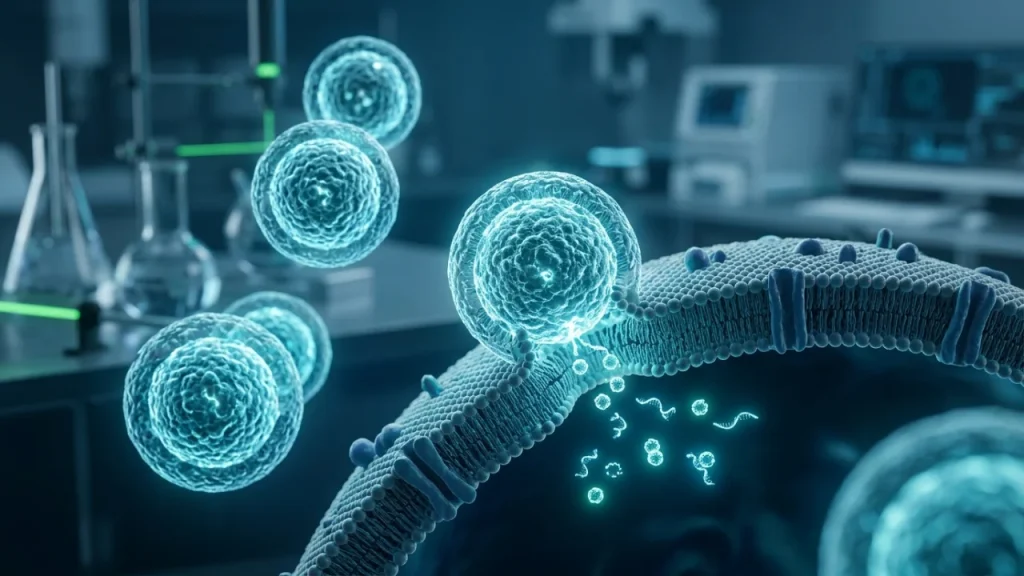
Your body is a vast network of cells. These cells must talk to each other. They do not use phones or text messages. They use tiny biological packages called exosomes. Think of them as microscopic mail carriers. Each exosome is a small bubble, or vesicle. It forms inside a cell.
A cell loads each exosome with a specific cargo. This cargo acts as a set of instructions. It can include proteins, lipids, and genetic material like RNA. The cell then sends the exosome out into the space between cells. This space is called the extracellular matrix. The exosome travels until it finds another cell.
The target cell has special docking stations on its surface. The exosome binds to these stations. It then delivers its instructional cargo into the receiving cell. This process changes what the receiving cell does. It is a precise form of communication. One cell sends a command. Another cell obeys it.
This system controls many vital functions. It helps coordinate your immune response. It aids in tissue repair after a cut. It also manages routine cellular maintenance. Healthy skin depends on this constant, clear chatter between cells. Fibroblasts, which make collagen, need signals to work. Keratinocytes, which form your skin’s barrier, need instructions too.
The cargo inside an exosome is not random. It is carefully selected by the sending cell. The contents reflect the cell’s state and needs. A stressed skin cell might send SOS signals. A healthy, youthful cell might send rejuvenating messages. This is why scientists are so interested in these particles.
Here is a simple breakdown of the journey: – Cargo Loading: A parent cell assembles and packs molecules into a tiny vesicle. – Release: The vesicle is pushed out of the cell membrane into the surrounding fluid. – Travel: The exosome navigates through the fluid between cells. – Docking: It finds and locks onto a target cell using surface markers. – Delivery: The exosome merges with the target cell or is taken inside, releasing its cargo.
When skin ages or faces damage, this communication can break down. Cells may send fewer exosomes. The messages they do send can become garbled or weak. The result is slower healing, thinner skin, and less collagen. The goal of advanced skincare science is to support this natural system.
An exosomes regenerative complex aims to do just that. It provides a high concentration of these signaling vesicles from healthy sources. Introducing them to skin adds many new “messengers” to the environment. They can deliver clear, beneficial instructions directly to aging or sluggish skin cells.
This is not about adding a single ingredient like retinol or vitamin C. It is about giving your skin’s cells the tools to communicate better on their own. It helps restore the language your skin uses for self-repair. The effect can be more comprehensive than targeting just one pathway.
The science shows these messengers can tell fibroblasts to boost collagen production. They can instruct cells to ramp up their antioxidant defenses. They can also calm inflammation. This multi-target approach mirrors how your body naturally works when it is healthy and young.
Understanding this process changes how you see skin care. It moves from simply applying moisturizers to fundamentally supporting cellular biology. Your skin has an innate intelligence. Exosome-based science seeks to amplify that intelligence by enhancing the conversation between your cells. This sets the stage for exploring their specific role in rejuvenation.
Why Skin Needs Cellular Communication to Stay Healthy
Your skin is not a static wall. It is a living, talking community. Trillions of cells work together every second. They must coordinate to stay healthy. This coordination happens through constant communication. Think of it as a biological social network. Cells send and receive millions of molecular messages daily.
These messages carry critical instructions. One cell tells another to divide and replace damaged neighbors. A signal orders the production of fresh collagen proteins. Another message calls for antioxidants to neutralize a UV ray’s attack. Without this chatter, your skin could not repair a paper cut. It could not defend against daily pollution.
The primary language of this network is carried by signaling molecules. These are tiny biological packages of information. Cells release them into the spaces between each other. Neighboring cells have special antennas called receptors. They catch these molecules and decode the instruction. This system is fast and local.
But distance is a problem for simple signaling molecules. They can degrade quickly. They might not reach the right cell. This is where advanced messengers come in. Exosomes are like secure, addressed mail trucks in this network. A cell packages instructions into these tiny vesicles. It then sends them out into the extracellular fluid.
Exosomes protect their precious cargo during transit. They travel through tissue fluid until they find a target cell. They dock directly onto its membrane. Then they deliver their package of proteins, lipids, and genetic material. This is a direct, error-resistant form of communication.
Skin youth relies entirely on this process being robust and clear. Young skin cells are prolific communicators. They send strong, accurate signals for repair and renewal. Fibroblasts get constant reminders to spin new collagen and elastin. This keeps skin thick, firm, and springy.
Barrier cells receive orders to produce fresh lipids. This maintains the protective shield. Immune cells in the skin get updates to patrol calmly. They only react to real threats, not minor irritants. This balanced conversation creates resilient, glowing skin.
Several key processes depend on flawless cellular talk. – Daily Repair: Sun exposure creates thousands of DNA lesions in skin cells each day. Signals must identify damaged cells and trigger precise repair mechanisms. – Inflammation Control: After an injury, pro-inflammatory signals must switch on to clean the area. Then, anti-inflammatory signals must switch off the response to prevent chronic damage. – Matrix Renewal: Fibroblasts need periodic prompts to break down old collagen strands and build new ones. Without these prompts, old collagen accumulates in a disorganized way. – Barrier Fortification: Cells in the outermost layer sense moisture loss. They signal deeper layers to ramp up lipid production to seal in water.
When communication weakens, skin health declines. Aging cells become lazy broadcasters. They send fewer exosomes and other signals. The messages they do send can be faint or distorted. It is like a weak radio signal full of static.
The receiving cells become deaf over time too. Their receptor antennas can become less sensitive. They might ignore important instructions. The entire community falls out of sync. Repair slows down dramatically. Collagen production drops steeply.
The result is what we see as aged skin: thinning, wrinkles, dullness, and slow healing. This is not just a lack of ingredients. It is a breakdown in the system’s fundamental intelligence. Restoring the clarity and volume of cellular conversation is therefore a key goal.
This is the core promise of an exosomes regenerative complex. It does not just add another static ingredient to the mix. It replenishes the network’s most sophisticated messengers. By introducing a high concentration of functional exosomes, it aims to boost signal strength.
It helps override the noise of poor cellular communication. Clear instructions can reach target cells again. This can help reset more natural, youthful functions. The approach supports the skin’s own innate systems rather than imposing a single external action.
Understanding this changes everything about skincare choices. It shifts the focus from passive coverage to active biological support. The goal becomes facilitating better conversations within your skin’s ecosystem. When cells communicate well, they maintain health from the inside out.
This foundational need for communication sets the stage for the next logical question: what specific signs occur when this vital conversation breaks down? The visible changes in our skin tell a clear story of lost connections
The Problem with Surface-Only Skincare Products Today
Most skincare products work on the very top layers of your skin. They create a temporary surface film. This film can hydrate and protect. It can smooth the very outermost cells. However, it rarely changes what is happening deeper down. The real work of skin health occurs far below this surface level.
Think of your skin as having three key zones. The outermost zone is the stratum corneum. It is made of dead, flattened cells. This is a protective barrier. The middle zone is the living epidermis. Cells here are busy dividing and making pigments. The deepest zone is the dermis. This is the skin’s true foundation.
The dermis holds the vital machinery. It contains fibroblast cells. These cells produce collagen and elastin. These proteins give skin its firmness and bounce. The dermis also houses blood vessels, nerves, and immune cells. All communication for repair and renewal happens here.
Surface creams face a major problem. They must cross the formidable stratum corneum barrier. This barrier is designed to keep things out. Only very small molecules can passively slip through. Most active ingredients in creams are too large. They sit on top of the skin until they are washed off.
Some ingredients claim to penetrate deeper. Certain chemical forms of vitamins can achieve this. However, their concentration drops sharply as they go down. By the time a signal might reach a fibroblast in the dermis, it is extremely weak. It is like a faint whisper in a noisy room.
The cellular machinery deep in the dermis may not even “listen” to these outside signals effectively. Cells are programmed to respond to specific biological messengers from their own environment. A synthetic or isolated vitamin molecule is a simple instruction. It is not part of the rich, complex conversation your skin cells naturally use.
This leads to several clear limitations for surface-only skincare:
- It mainly addresses superficial dryness and flaking.
- Any plumping effect is often from surface hydration, which evaporates.
- It cannot effectively instruct dermal fibroblasts to produce more collagen.
- It does not reset cellular communication networks that have slowed down.
- Results tend to plateau quickly once surface condition is managed.
Imagine trying to fix a faulty computer network by only polishing the monitor screen. The screen might look cleaner. Yet the internal data errors and slow processing speeds remain completely untouched. This is analogous to using only surface-level skincare for aging driven by deep cellular miscommunication.
The aging signs discussed earlier—thinning, deep wrinkles, slow healing—originate in the dermis. To impact them, you must deliver effective instructions to that layer. You need messengers that can navigate there naturally. You also need signals that your cells are built to recognize and obey.
This is where the science of extracellular vesicles becomes crucial. These are tiny carriers made by cells themselves. They move through biological fluids easily. An exosomes regenerative complex leverages this natural delivery system. It does not fight the skin’s barrier. It uses the skin’s own logistical network.
Exosomes are like trusted couriers from within the body itself. They can carry complex instructions through the skin’s layers. They are designed for cellular uptake. A fibroblast is more likely to accept and act on a signal delivered this way.
The core problem with many modern creams is not their ingredients. It is their delivery mechanism and their simplistic language. They shout simple commands at a fortified wall. The vital intelligence center inside hears nothing. For real change, you must send sophisticated messages through the front gate.
This creates a clear divide in skincare philosophy. One approach focuses on temporary surface modification. The other aims for deep biological dialogue. To truly alter skin health long-term, supporting the latter method is key. The next step is understanding how these biological messengers are prepared and applied for skin benefit.
The Science Behind Exosomes Regenerative Complex Explained Simply
What Makes Exosomes Different from Stem Cells or Growth Factors
To understand exosomes, it is helpful to compare them to other biological tools. People often hear about stem cells or growth factors in skincare science. These are not the same as an exosomes regenerative complex. They work in different ways.
Think of a single growth factor as one specific instruction. It is like a note that says “make more collagen.” This is a direct command. But skin aging is a complex problem. It involves many processes at once. One note is often not enough.
Stem cells are different. They are complete, living cells. Their original purpose is to turn into other cell types. In theory, they could replace damaged skin cells. But using live stem cells directly on skin is complex and debated. The cells themselves do not always integrate into tissue. Instead, scientists found that much of their benefit comes from what they release. They release exosomes.
This is the key difference. Exosomes are not living cells. They are tiny packages released by cells, including stem cells. These packages are filled with many types of instructions all at once.
An exosome’s cargo is diverse and powerful. It does not carry just one growth factor. It carries hundreds or even thousands of active molecules. This cargo includes: – Many different growth factors. – Signaling proteins. – Lipids for cellular health. – Genetic instructions like RNA.
This mix matters. A single growth factor shouts one order. An exosome delivers a complete, coordinated program. It provides a full conversation, not a shout.
The analogy of a courier fits here. A single growth factor is a text message with one word. An exosome is a secure diplomatic pouch. It contains detailed documents, blueprints, and resources for a full mission.
Exosomes also communicate differently than whole stem cells. A living stem cell needs to survive. It reacts to its new environment. Its behavior can be unpredictable. An exosome has a simpler job. It is made, loaded, sent, and received. Its cargo is pre-packaged for a specific task.
This makes an exosome regenerative complex a precise tool. Scientists can harvest exosomes from certain cell types. They can then apply these messengers directly. The skin’s fibroblasts absorb the exosomes. The cells then unpack the full set of instructions inside.
The result is a coordinated response. The cell does not just do one thing. It might be told to boost collagen, calm inflammation, and increase energy production simultaneously. This multi-target approach matches the complexity of skin repair.
Consider wound healing as a natural example. When you cut your skin, many cell types spring into action. They release a flood of signals to coordinate repair. Exosomes are a major part of this natural signal flood. They help ensure every cell knows its job.
Using isolated growth factors tries to copy one part of this process. Using an exosomes regenerative complex tries to copy the entire communication system itself. It leverages the body’s own method for organizing complex tasks.
Safety profiles differ too. Live stem cells can multiply or trigger immune responses. Exosomes, as non-living vesicles, have different safety considerations. They cannot replicate on their own. Their activity comes from their cargo, not from their own life.
In summary, exosomes represent a shift in strategy. Science moved from studying the whole cell to harnessing its most sophisticated communication device. This is not about replacing the cell like a mechanic replaces a part. It is about reprogramming existing cells with a full software update.
The next logical question is how these potent messengers are collected and prepared for use in skincare without losing their natural power and integrity.
How Exosomes Deliver Bioactive Cargo to Target Skin Cells
Exosomes are not just signals floating freely. They are secure biological packages. Each exosome has a protective outer membrane. This membrane is like a tiny envelope. It keeps the precious cargo safe during transit.
This cargo is a mix of active molecules. Think of it as a toolkit for skin cells. The toolkit contains different items.
- Growth factors are one item. They tell a cell to grow or divide.
- Proteins are another. They can become building blocks for new skin.
- RNA is a crucial third item. This is the set of instructions we discussed earlier.
All these parts work together. They do not work in isolation. This combination is what makes an exosomes regenerative complex so powerful. It delivers a complete set of tools and instructions.
Delivery requires a precise lock-and-key system. A skin cell does not accept packages from just anywhere. Its surface has specific receptors. These receptors act like unique locks.
An exosome has matching proteins on its surface. These proteins act like keys. When the right key meets the right lock, the process begins. The exosome docks onto the target cell.
There are two main ways the cell then gets the cargo. The first way is direct fusion. The exosome’s membrane merges with the cell’s own membrane. It is like two soap bubbles becoming one. The cargo spills directly into the cell’s interior.
The second way is called endocytosis. The cell’s membrane folds inward. It wraps around the exosome and swallows it whole. Now the exosome is inside a small bubble within the cell.
The cell then opens this inner bubble. It unpacks the exosome’s cargo. The growth factors and proteins get to work immediately. The RNA instructions head to the cell’s command center.
This targeting is not random. Exosomes from skin cells often seek out other skin cells. Their surface keys match the locks on those specific cells. This natural homing ability makes them efficient messengers.
The entire process is fast and efficient. It happens on a microscopic scale billions of times in nature. Scientists aim to copy this exact process for skin health. They prepare a concentrated mix of these natural messengers.
The stability of the package is key. The lipid membrane protects its contents from degradation. Without this protection, RNA would break down quickly in the space between cells. The exosome ensures the message arrives intact.
Think about sending a letter versus shouting across a crowded room. Shouting is like releasing a single growth factor alone. The message gets distorted or lost. The letter in an envelope is like the exosome. It ensures private, secure delivery to the right address.
This system explains why exosomes can have such profound effects. They do not just brush against the surface of a cell. They enter its operational space. They deliver their toolkit directly to the workshop.
The result is a clear set of commands for the cell. A fibroblast cell in your dermis might receive an exosome. That package could tell it to ramp up collagen production. It might also tell it to produce more elastin fibers.
Another cell might get a different package. This one could focus on calming inflammation. It might deliver molecules that switch off stress signals. This helps reduce redness and irritation.
All this happens because of targeted delivery. The exosomes regenerative complex provides many types of these packages. It supports various skin cells at once. Each cell gets what it specifically needs to function better.
The next step in understanding this science is looking at the source. Where do these potent packages come from? How are they gathered without harming their natural structure?
The Role of Extracellular Vesicles in Natural Repair Processes
Your body is a vast network of living cells. These cells must talk to each other constantly. They need to coordinate for every function, from healing a cut to renewing your skin. They do not use phones or emails. They use tiny biological containers.
These containers are called extracellular vesicles. “Extracellular” means outside the cell. “Vesicle” means a small sac or bubble. Think of them as microscopic cargo ships. They are released by cells into the fluid around them. Their job is to transport materials from one cell to another.
This is not a rare event. It happens all the time in your body. Healthy cells release these vesicles. So do stressed cells. Even damaged and dying cells send them out. The cargo inside tells the receiving cell what is happening nearby. It is a fundamental biological messaging system.
The process is crucial for natural repair. Imagine you get a small paper cut on your finger. Cells at the injury site become activated instantly. They start releasing specific vesicles loaded with instructions. These instructions are for neighboring cells.
The vesicles travel through the tissue fluid. They might dock on a cell that makes collagen. The cargo tells that cell to start building new structural fibers. Another vesicle might find an immune cell. It tells that cell to come to the area and fight germs.
Another might signal blood vessel cells. It tells them to grow new capillaries for better blood flow. All these actions happen at once because of vesicle communication. It orchestrates the entire healing symphony without a central conductor.
Scientists categorize these vesicles by their size and origin. Exosomes are one important type. They are among the smallest vesicles. Cells create them inside special compartments. Then they release them into the extracellular space.
Microvesicles are another type. They are often a bit larger. They form by budding directly off the cell’s outer membrane. It is like a cell pinching off a small part of itself to send away. Both types carry vital molecular cargo.
This cargo can include many different things. – Proteins: These can be enzymes or signals. – Lipids: These are fat molecules used for energy or building membranes. – Nucleic Acids: This includes RNA, which carries genetic instructions.
The RNA is particularly powerful. It can change what proteins a cell makes. A vesicle from a healthy skin cell might deliver RNA to an older cell. This RNA could instruct the older cell to behave more youthfully. It is like giving a cell a new software update.
The exosomes regenerative complex concept builds on this natural principle. It harnesses these sophisticated messengers. The goal is to provide a concentrated signal of repair instructions. This supports the skin’s own innate processes.
Without this vesicle system, our bodies could not function. Cells would be isolated. Local coordination for repair would fail. Long-distance communication would be impossible. This biological shipping network keeps every tissue in tune.
Research shows this system is dynamic. A single cell can release thousands of vesicles over its lifetime. The cargo changes based on the cell’s condition. A stressed cell sends different signals than a calm, healthy one.
This is why scientists study vesicles so closely. They are a real-time reflection of cellular health. By understanding their natural role, we can better understand how to support it. The aim is to work with the body’s own brilliant design.
The next logical question is about application. How do we translate this natural process into a consistent, beneficial formula for skin health? The answer lies in careful sourcing and advanced biotechnology.
How Exosomes Regenerative Complex Transforms Skin from Within
Stimulating Collagen Synthesis for Firmer, Tighter Skin
Collagen is the most abundant protein in your skin. Think of it as the steel framework of a building. This framework gives skin its strength, support, and smooth appearance. As we age, our cells produce less collagen. The existing collagen also breaks down. This leads to thinner, looser skin with wrinkles.
The exosomes regenerative complex approach targets this problem at its source. It uses nature’s own messaging system. Remember, exosomes carry instructions. These instructions can tell a skin cell called a fibroblast to become more active. A fibroblast is the cell that makes collagen.
Here is how the process works step by step. Applied exosomes reach the deeper layers of skin. They are absorbed by target cells like fibroblasts. The exosome cargo is unloaded inside the fibroblast. This cargo includes specific types of RNA and proteins.
These molecules act as precise signals. They do not force the cell to do something unnatural. Instead, they remind the cell of its youthful function. It is like showing a seasoned builder a perfect blueprint again. The fibroblast gets a clear instruction: synthesize more collagen.
This instruction triggers a cascade of events inside the cell. The cell’s protein-making machinery ramps up. It gathers more amino acids, the building blocks of collagen. It then assembles these blocks into long, strong collagen fibers. These new fibers are integrated into the skin’s existing network.
The result is a reinforced support structure. Skin does not just look plumped on the surface. It actually becomes denser and more resilient from within. This process addresses laxity and fine lines directly. Increased collagen provides a firmer foundation.
The benefits are cumulative and structural. More collagen means better skin integrity. This improved integrity leads to several visible changes. Skin feels tighter to the touch. It shows fewer fine lines. It has a more lifted appearance.
This is different from topical treatments that simply hydrate the surface. Hydration plumps skin temporarily by swelling cells with water. The exosome method aims for lasting change. It supports the skin’s own regenerative capacity to rebuild its architecture.
Key factors influence this collagen production signal. The health of the source cells matters greatly. Exosomes from young, vibrant fibroblasts carry more potent instructions. The processing method must keep these signals intact. This ensures the message delivered is clear and strong.
The timing of this biological process is also important. Cells do not produce new collagen instantly. They need time to receive the signal and act on it. Skin renewal operates on a cycle of several weeks. Consistent support leads to better long-term results.
Think of your skin as a living tissue that constantly remodels itself. Every day, old collagen is broken down by enzymes. New collagen must be made to replace it. The goal is to tip this balance toward creation, not loss.
An exosomes regenerative complex provides the tools for this shift. It helps ensure fibroblasts win the daily remodeling battle. Over time, this leads to a net gain in collagen density. The skin’s internal framework becomes stronger.
This scientific approach aligns with the body’s innate intelligence. It does not introduce foreign or synthetic chemicals. It uses biological messages the body already understands perfectly. The strategy is one of collaboration with natural processes.
The outcome is skin that behaves like younger skin. It maintains its structure more effectively. It recovers from daily stress with greater ease. The transformation is fundamental because it changes how skin cells behave.
Other elements in skin care can support this process. Antioxidants protect fibroblasts from damage. Good nutrition provides the raw materials for protein synthesis. Sun protection prevents UV light from destroying new collagen. A holistic approach is always best.
Ultimately, stimulating collagen synthesis is about restoring a key metric of youthful skin. Firmness and tightness are direct results of a healthy collagen network. By leveraging cellular communication, science offers a path to rebuild this network intelligently.
The next logical step is to examine another critical protein for skin youthfulness: elastin. This protein gives skin its snap-back ability and resilience against sagging
Dampening Inflammatory Pathways to Reduce Redness and Irritation
Inflammation is a natural part of your skin’s defense system. It is a short-term response to injury or attack. Think of a minor cut or a bug bite. The area becomes red, warm, and maybe swollen. This is acute inflammation. Immune cells rush to the site. They clear out debris and fight potential invaders. Then, the process shuts down. Healing begins.
Problems start when inflammation does not fully turn off. This creates a state of chronic, low-grade irritation. You may not see dramatic redness. But beneath the surface, a slow burn continues. This persistent fire is a primary driver of skin aging. It is often called “inflammaging.”
Several everyday factors can trigger this lingering inflammatory state. – Ultraviolet radiation from the sun is a major cause. – Environmental pollutants and toxins are another common trigger. – Psychological stress releases hormones that promote inflammation. – Even certain ingredients in skin care products can cause subtle, long-term irritation.
This constant alert mode harms skin structure. Inflammatory signals tell cells to produce enzymes called matrix metalloproteinases, or MMPs. These enzymes act like molecular scissors. They actively cut down the supportive proteins in your skin. They degrade collagen fibers. They slice through elastin networks. This destruction happens silently, every day.
Furthermore, chronic inflammation disrupts the skin’s barrier function. A healthy barrier is like a well-built brick wall. Skin cells are the bricks. Lipids are the mortar holding them together. Inflammatory signals can weaken this mortar. The barrier becomes leaky. Moisture escapes more easily. Irritants and allergens can enter more freely. This creates a vicious cycle. More irritants lead to more inflammation.
The goal is not to eliminate all inflammation. That is impossible and unhealthy. The goal is to restore balance. Skin needs to resolve inflammation efficiently after the threat passes. This resolution phase is an active biological process. It requires precise cellular communication.
This is where an exosomes regenerative complex demonstrates its profound utility. Exosomes carry specific instructions to immune and skin cells. These biological messages can help calm the overactive inflammatory response. They promote a return to baseline stability.
The messages work through several key actions. – They can signal immune cells to reduce the production of pro-inflammatory molecules. – They encourage the release of anti-inflammatory, resolving factors. – They support the repair of the damaged skin barrier by improving lipid synthesis. – They help protect fibroblasts from the damaging effects of inflammatory chemicals.
By dampening these inflammatory pathways, the skin environment changes dramatically. Resources are redirected from constant defense to active repair and renewal. Fibroblasts face less oxidative stress and enzymatic attack. They can focus on their main job: building new collagen and elastin.
The visual results are clear and meaningful. Persistent redness and rosacea-like tendencies can diminish. Skin reactivity to common products or environmental changes often decreases. The overall complexion appears more even-toned and calm. Sensitivity is reduced because the barrier becomes stronger and more resilient.
This calming effect also accelerates healing. When the inflammatory phase is shorter and more controlled, the regenerative phase can begin sooner. Post-procedure recovery, like after microneedling or laser treatments, may be faster with less downtime. Everyday micro-injuries from shaving or abrasion heal more quickly.
It is a foundational shift in skin health. Addressing inflammation at a cellular level removes a major obstacle to youthfulness. It protects the structural proteins you have. It creates a peaceful environment where new proteins can be built effectively.
Combining this anti-inflammatory action with direct collagen stimulation creates a powerful synergy. One process stops unnecessary demolition. The other process oversees intelligent construction. Together, they comprehensively address both sides of the aging equation.
The final piece of this internal transformation involves cellular renewal itself—how old, tired cells are replaced by fresh, vibrant ones
Reactivating the Skin’s Inherent Regenerative Capacity Over Time
Skin is not a static wall. It is a living, dynamic organ. It holds a built-in ability to repair and renew itself. This capacity often slows down with age. The signals that tell skin cells to refresh become weaker. The exosomes regenerative complex works by delivering a new set of precise instructions. Think of it as updating the software that runs your skin’s renewal program.
This process targets specific cells. Fibroblasts are the key architects in your skin. They produce collagen, elastin, and hyaluronic acid. Over time, fibroblasts can become sluggish. They may not divide as often. They might produce less quality structural protein. Exosomes carry bioactive molecules directly to these cells. The cargo includes growth factors and microRNAs. These molecules act like a wake-up call.
The effect is a reactivation of the skin’s inherent regenerative capacity over time. This is not a temporary plumping effect. It is a fundamental retraining of your skin’s own biology. The goal is to help your skin help itself. The delivered signals encourage several key actions.
First, they can promote cellular proliferation. This means encouraging older fibroblasts to divide. They create new, younger daughter cells. These fresh cells are more metabolically active. They are better at their synthetic jobs.
Second, the signals enhance cellular differentiation. This ensures the new cells mature correctly. They become fully functional fibroblasts, not just inactive cells. A steady supply of fresh, capable workers is crucial for long-term skin health.
Third, exosomes support stem cell activity. Your skin houses adult stem cells in specific niches. These are master cells with vast potential. Exosome signals can help mobilize and guide these stem cells. They can encourage them to migrate to areas that need renewal and develop into needed skin cell types.
The timeline for this transformation is gradual and sustained. You are not simply adding a substance that washes away. You are changing the conversation between cells. Initial changes might involve reduced inflammation and improved hydration, as discussed earlier. The deeper regenerative shift happens over weeks and months as cells receive ongoing prompts.
New fibroblasts build new collagen networks. This new collagen is often more organized and resilient than old, damaged fibers. Elastin production can be supported, improving skin snapback. The skin’s foundation becomes denser and stronger from within.
This internal renewal manifests in visible ways over time. Skin texture becomes smoother because the subsurface architecture is improving. Fine lines may appear softened as the support underneath them is reinforced. The overall complexion can gain a healthier vitality because the cells themselves are more active.
The approach mirrors principles of regenerative medicine used elsewhere in the body. The focus is on enabling the body’s own repair systems. For skin, this means providing the right messages at the right time to the right cells. The exosomes regenerative complex serves as that critical messenger.
It is important to manage expectations. This is not an instant fix but a gradual restoration. The pace depends on individual biology and skin condition. However, the change is rooted in actual cellular activity. The skin begins to operate more like it did at a younger age.
The ultimate result is skin that is more self-sufficient. It may become better at handling daily stressors. Its recovery processes might be more efficient because the cellular workforce is revitalized. This creates a virtuous cycle of health.
In essence, this technology aims to reset a biological clock for key skin functions. It does not just fill gaps; it teaches skin to rebuild its own structure. This represents a shift from merely treating symptoms to actively influencing long-term skin behavior.
The final consideration is how these renewed cells protect their own future, safeguarding the newly generated youthfulness from internal decline.
Visible Benefits of Using Exosomes for Skin Rejuvenation
Improving Skin Texture Through Enhanced Cellular Dialogue
Smooth skin starts with a well-organized foundation. Think of your skin’s lower layers as a bustling construction site. Young skin has clear, constant communication between cells. This keeps the site orderly. Collagen and elastin fibers are laid down in a tight, neat mesh. This mesh is your skin’s support structure. With age, this communication breaks down. Instructions get lost or muddled. The cellular workforce becomes disorganized. New fibers are produced less often. They may be laid down in a haphazard, weak pattern. The result is rough or uneven skin texture you can feel.
Exosomes restore the clarity of cellular dialogue. They are not construction materials themselves. They are like project managers delivering updated blueprints. An exosomes regenerative complex carries specific instructions to dermal cells called fibroblasts. Fibroblasts are the cells that build collagen and elastin. The messages tell them to resume a more youthful, organized production schedule. This is not a vague signal to “work harder.” It is a precise set of biological commands.
The process enhances texture in several direct ways. First, it increases the rate of new collagen synthesis. More new fibers are woven into the existing network. Second, it improves the alignment of these fibers. They form a tighter, more resilient lattice. Third, it supports the enzymes that remove damaged, old collagen fragments. This clears the way for new, strong structures. These three actions work together.
- New collagen adds volume and plumpness beneath the surface.
- Better alignment creates a smoother, firmer scaffolding.
- Removing debris allows for efficient rebuilding.
Imagine patching a bumpy, worn-out road. Simply adding asphalt on top creates a temporary fix. The base remains weak. A true repair involves removing the broken old pavement. Then you lay a new, level gravel foundation. Finally, you apply a fresh, smooth top layer. Exosomes guide your skin through this complete repair process. They address the foundation, not just the surface.
This cellular conversation also regulates hydration. Healthy texture requires well-hydrated cells. Exosomes carry messages for cells that manage the skin’s moisture barrier. They can encourage the production of natural moisturizing factors and ceramides. Plumper, more hydrated cells have a smoother appearance. They reflect light more evenly. This reduces the look of fine, dry lines that contribute to roughness. Hydration works from within each cell, not just from creams on top.
The change in texture is often one of the first noticeable benefits. You may feel a difference before seeing a major visual shift. Skin becomes softer to the touch. Its surface feels more uniform. Makeup may apply more evenly because it sits on a smoother canvas. This tangible feedback is a direct sign of renewed cellular activity underground. The exosomes regenerative complex has successfully initiated its dialogue.
This improvement is self-reinforcing. A smoother skin surface with a stronger barrier is better protected. It faces less daily damage from pollution and friction. This means the cellular workforce spends less energy on constant defense. It can focus more energy on sustained renewal and maintenance. The cycle of health gains momentum.
Ultimately, refining texture through enhanced communication is a foundational step. It rebuilds the literal substrate of youthful skin. Once this substrate is restored and organized, other benefits can build upon it more effectively. A strong, smooth foundation sets the stage for lasting radiance and resilience, demonstrating how strategic cellular guidance creates visible, tactile change.
Boosting Firmness and Elasticity with Long-Term Tissue Homeostasis
Firm, springy skin relies on a strong support network beneath the surface. This network is made of proteins. Collagen provides strength. Elastin gives snap-back elasticity. Think of them as the scaffolding and rubber bands of your skin. Over time, this network weakens. Production slows. Existing fibers break down. Skin begins to sag and lose its shape.
The exosomes regenerative complex addresses this decline directly. It sends precise instructions to the cells that build skin. These cells are called fibroblasts. Fibroblasts live in the dermis, the skin’s deeper layer. Messages from the exosomes tell fibroblasts to become more active. They are encouraged to do their main job better. That job is making new collagen and elastin fibers.
This is not a temporary plumping effect. It is a genuine rebuilding process. New collagen strands are woven into the existing framework. Fresh elastin proteins help restore bounce. The process takes time because building strong tissue takes time. You are not just filling gaps. You are reinforcing the entire structure from the ground up.
The concept of homeostasis is key here. Homeostasis means balance. It is the body’s goal to keep a stable, healthy state. Skin with good homeostasis can maintain itself. It repairs daily damage efficiently. It keeps its structure without constant struggle. The exosomes regenerative complex promotes this balanced state.
How does it achieve long-term tissue homeostasis? It works through several connected actions. – It upregulates the production of new structural proteins. – It helps regulate enzymes that naturally break down old collagen. – It supports the surrounding matrix that holds everything together. – It improves communication so cells work in a coordinated way.
This leads to a net gain in firmness. More collagen is built than is lost. The skin’s foundation becomes denser and more robust. You can see and feel this change. Skin appears more lifted and toned. It resists gravity’s pull more effectively. When you press it, it bounces back quicker.
Elasticity improves alongside firmness. Elasticity is your skin’s ability to stretch and return. Think of a healthy rubber band versus a old, dry one. The exosomes regenerative complex helps restore that intrinsic snap. This reduces the appearance of creasing and slow recovery after expressions.
The benefits build on each other in a cycle. A stronger structure supports better barrier function from the previous section. A better barrier protects the new collagen and elastin. This creates a self-reinforcing loop of skin health. The skin’s own maintenance systems become more effective.
Long-term results depend on this sustainable balance. The goal is not a single, dramatic change that fades. The goal is resetting the skin’s internal rules for maintenance. With improved homeostasis, your skin manages itself better day after day. It becomes more resilient to internal and external stress.
This sets a solid foundation for addressing other visible signs of aging. A firm, elastic canvas allows for smoother appearance overall. It also prepares the skin to better reveal clarity and radiance, which we will explore next.
Addressing Both Intrinsic Aging and Extrinsic Environmental Damage
Skin aging comes from two distinct sources. Your body’s internal clock causes intrinsic aging. External factors like sunlight cause extrinsic damage. A truly effective approach must address both. The exosomes regenerative complex is designed for this dual task.
Intrinsic aging is a natural, gradual process. Your cells slowly produce less collagen over time. Their communication networks become less efficient. Repair cycles grow longer and less precise. This leads to thinner skin and fine lines. These changes are largely programmed by your genes.
Extrinsic aging comes from your environment. The sun’s UV rays are the primary cause. Pollution and toxins also play a major role. These factors create free radicals. Free radicals are unstable molecules that damage skin cells. This damage accelerates the aging process far beyond your natural timeline.
Think of intrinsic aging as the background program. Extrinsic damage is like a virus speeding up that program. The exosomes regenerative complex helps rewrite parts of the code. It also boosts your skin’s anti-virus defenses.
Exosomes carry specific instructions for different problems. For intrinsic aging, they signal for better cellular housekeeping. They encourage older cells to function more like younger ones. This improves natural collagen production from within. It helps restore the skin’s own renewal rhythms.
For extrinsic damage, exosomes deliver a different set of commands. They can promote the skin’s antioxidant defenses. Antioxidants neutralize harmful free radicals. This helps stop new damage from occurring at the molecular level.
Exosomes also support repair of existing damage. They can instruct cells to clear out damaged proteins. They help rebuild healthier structures in their place. This is crucial for fixing past harm from sun exposure.
Sun damage breaks down collagen and elastin fibers. It creates abnormal, weakened structures known as solar elastosis. The exosome signals help dismantle this poor-quality material. They then guide the construction of new, healthy networks.
Pollution particles are tiny but harmful. They penetrate the skin and cause inflammation. Chronic inflammation silently degrades skin quality over years. Exosomes can carry anti-inflammatory messages. This calms the skin and prevents long-term breakdown.
The beauty of this approach is its simultaneity. The same application works on both fronts at once. You are not just preventing future sun damage. You are also reversing some past damage while improving natural aging.
Consider these visible signs and how exosomes address them:
- Fine lines from natural thinning: Exosomes support dermal density.
- Deep wrinkles from sun squinting: They aid in restructuring the matrix.
- Dullness from slowed cell turnover: They encourage fresher cells to surface.
- Uneven tone from UV spots: They help normalize melanocyte activity.
- Loss of resilience from cumulative stress: They enhance overall cellular fitness.
The process is not a superficial cover-up. It is a cellular retraining program. Your skin learns to better manage both internal limits and external threats. This leads to more comprehensive and lasting results.
Long-term skin health requires this balanced defense. Focusing only on external protection is not enough. Your skin will still age from within. Ignoring environmental factors undermines internal repairs. The two are deeply connected.
The exosomes regenerative complex acts as a master coordinator. It aligns your skin’s intrinsic capabilities with the demands of your environment. This brings your skin back into a state of better balance. That balance is the key to sustainable rejuvenation.
By tackling both causes, you achieve more than just correction. You build a stronger, smarter organ that can maintain itself. This integrated solution sets the stage for the final visual outcomes: clarity and a radiant glow.
The Paradigm Shift in Dermatology with Exosome Technology
Moving Beyond Surface-Level Care to Deep Cellular Rejuvenation
For decades, dermatology focused primarily on the surface. Treatments aimed to exfoliate, plump, or paralyze. These methods often provided temporary change. They did not address the root causes of aging deep within your skin’s structure.
Real, lasting transformation starts at a microscopic level. It begins with your cells and their communication. Your skin’s health depends on constant cellular chatter. Billions of signals are exchanged every day. These signals tell cells when to repair collagen, when to renew themselves, and how to respond to stress.
As we age, this communication network breaks down. Messages get lost or become faint. Cells become less responsive. They produce less vital support structures like collagen and elastin. The result is thin, dull, and wrinkled skin. Surface treatments cannot fix this broken dialogue.
This is where exosome science creates a paradigm shift. Exosomes are natural biological messengers. Your own cells make them constantly. Think of them as tiny information packets. They carry precise instructions from one cell to another.
An exosomes regenerative complex harnesses this natural system. It delivers a concentrated burst of these signaling molecules to your skin. This is not adding foreign chemicals. It is replenishing your skin’s own language. The goal is to restore clear, youthful communication.
The process enables deep cellular rejuvenation. It moves far beyond surface-level care. Let’s break down what happens after these messengers arrive.
First, they are recognized by your skin’s cells. Receptor proteins on cell surfaces accept the exosomes. It is like a locked door opening for a specific key. The cell welcomes the information.
Next, the exosomes release their molecular cargo inside the target cell. This cargo includes proteins, lipids, and RNA. These are not nutrients. They are blueprints and commands. They instruct the cell to change its behavior.
The cell then activates specific genes. It switches on pathways for repair and renewal that had slowed down. This leads to several key actions.
- Fibroblasts in the dermis get a clear signal to ramp up collagen production.
- Old, damaged proteins are cleared out more efficiently.
- The process of cellular turnover in the epidermis is optimized.
- Inflammatory signals that cause chronic redness are calmed.
This is a fundamental retraining of your skin’s biology. The effects are systemic within the treated area. Improvements build from the deepest layers upward. This creates change that is both visible and durable.
The contrast with traditional approaches is stark. Creams mostly work on the very top layer of dead cells. Injectables fill space but do not teach cells new skills. Lasers remove damage but do not always guide optimal rebuilding.
Exosome technology works with your skin’s innate intelligence. It does not force a single outcome. Instead, it provides the information your skin needs to heal itself intelligently. The results are therefore more natural and holistic.
Consider the timeline of results. Surface treatments often show immediate effects that fade quickly. Cellular rejuvenation has a different pattern. Changes may start subtly from within.
Week one might bring improved hydration and calmness. Month one often shows enhanced texture and clarity. Month three typically reveals firmer skin and reduced wrinkles. The improvement continues as cells maintain their renewed activity.
This method also offers a unique safety profile. Because the signals are natural and the process is guided by your own cells, risks of rejection or unnatural outcomes are low. The skin simply behaves as it once did when it was younger and healthier.
The shift is profound. Dermatology is moving from a mechanical model to an informational one. We are learning to edit the software of our skin, not just polish the hardware. This represents the future of truly regenerative aesthetics.
Sustainable skin health depends on this cellular foundation. When cells function optimally, they can better handle daily challenges from sun and stress. They maintain their structure and communication over time.
This deep-layer restoration sets the stage for the ultimate visual goal: radiant, resilient skin that glows from within. The final appearance is merely the outward reflection of a healthier, smarter cellular community working in harmony.
How Topical Serums and Clinical Treatments Work Together
Think of your skin’s health as a two-part system. Daily care maintains the foundation. Professional treatments provide a major upgrade. The new science connects them seamlessly.
Your daily serum works on the surface layers. It delivers moisture and antioxidants. These are vital for protection. Yet their signals often stop at the skin’s outer barrier.
Clinical procedures like microneedling or laser treatments create controlled micro-injuries. This process does more than remove damage. It sends a powerful distress signal deep into your dermis.
Your cells react to this signal immediately. They launch a complex repair program. This natural response is where true change begins. The challenge has always been guiding this repair with precision.
This is the role of advanced biological messengers. A topically applied exosomes regenerative complex enters through these micro-channels. It does not force cells to act. Instead, it provides them with a rich library of instructions.
These instructions help optimize the healing process. They can encourage targeted collagen production. They can support the formation of strong, elastic fibers. They can calm excessive inflammation that leads to scarring.
The combination is powerful. The procedure opens a temporary door to the deeper skin layers. The regenerative complex walks through that door with a clear blueprint for recovery.
Consider the practical timeline for combined care. A professional treatment might occur once every three to six months. This event resets the cellular environment and kicks off a major renewal cycle.
Your daily skincare routine then supports this new activity. It defends the fresh, healthy cells from daily stress. It provides ongoing nutritional support. It extends the benefits of the single procedure.
Without daily care, results can diminish faster. Environmental attackers like pollution and sun can overwhelm new cells. Without the professional treatment, daily products lack deep access for transformative change.
Together, they create a continuous cycle of improvement. This synergy operates on several key levels. – Access: Professional treatments create temporary pathways to living cell layers. – Communication: Biological messengers deliver specific instructions to guide repair. – Sustenance: Daily care protects and nourishes the newly regenerated tissue. – Duration: The combined effect makes visual results last significantly longer.
The goal shifts from a single treatment outcome to sustained cellular performance. Your skin is not just repaired once. It is taught to maintain its own healthier state.
The mechanism relies on information transfer. The exosomes regenerative complex from your serum after a treatment continues to send subtle signals. These signals remind cells of their optimal functions.
This prevents them from slipping back into old, sluggish patterns. Think of it as ongoing cellular coaching. The initial treatment is the intensive workshop. Daily care is the follow-up coaching session.
This approach is fundamentally different from layering harsh products. There is no conflict between an acid serum and a retinol cream. Instead, one process enables and amplifies the other.
The skin experiences this as a unified journey. There is no jarring shift between treatment mode and maintenance mode. The cellular environment remains in a consistent state of supported activity.
Safety is enhanced in this model. The body’s own repair systems are fully engaged and properly guided. Risks associated with over-aggressive procedures or incompatible products drop sharply.
Patients see more natural progress. Results do not appear overnight and then vanish. Improvements accumulate steadily over weeks and months. The skin looks healthier because it truly is healthier at a cellular level.
This synergy represents the future of aesthetic science. It moves beyond isolated interventions. It builds a coherent, intelligent system for long-term skin vitality.
The next step is understanding how to select supporting products that align with this biological partnership, ensuring every part of your routine works toward the same smart goal.
Why Exosomes Represent Next-Generation Skincare Science
Traditional skincare often works from the outside in. It tries to force change. Ingredients must penetrate barriers. They then hope to influence cell behavior. This is a blunt approach. It can cause irritation. Results are often temporary.
Exosome science flips this model entirely. It works from the inside out. The exosomes regenerative complex is not a foreign chemical. It is a biological instruction set. Your cells already use these vesicles to talk to each other every day.
Think of a healthy, young skin cell. It is a good neighbor. It constantly sends out tiny messages. These messages are exosomes. They carry specific orders and supplies.
An exosome might tell a tired fibroblast to make more collagen. Another might deliver antioxidants directly to a stressed cell. A third could signal for calm in an inflamed area. This is how your body manages itself naturally.
The problem is that aging and damage slow this communication. Cells send fewer messages. The messages they do send become garbled. The network breaks down. Skin loses its ability to self-repair effectively.
Next-generation science addresses this core problem. It does not just add another chemical signal. It restores the body’s own communication language. Researchers harvest these vesicles from healthy, active cells. The vesicles are then purified and concentrated.
This creates a powerful exosomes regenerative complex. Applying it is like giving your skin a direct line to its own best blueprint. You are not introducing a foreign command. You are amplifying the native language of repair.
The mechanism is precise and multi-faceted. Exosomes can transfer several key components directly into target cells. – They deliver functional proteins that kickstart cellular machinery. – They carry growth factors that gently prompt activity. – They provide microRNA, which are master switches for gene expression.
This last point is critical. MicroRNA does not alter your DNA. Instead, it helps regulate how genes are read. It can turn down the activity of genes linked to inflammation. It can turn up genes for collagen production. This is epigenetic signaling. It is a natural and reversible form of cellular guidance.
The result is targeted cellular education. A fibroblast does not just get a generic “work harder” signal. It receives a specific set of instructions and tools to do its job better. This leads to several key advantages over conventional actives.
First, the action is inherently biocompatible. The body recognizes these vesicles as its own. This drastically reduces the risk of rejection or adverse reaction.
Second, the effects are holistic. A single exosome can carry dozens of different bioactive molecules. It can address multiple pathways at once. This mirrors how the body actually solves problems.
Third, the results are self-regulating. Cells have built-in feedback loops. Exosome signaling respects these limits. It encourages optimal function, not uncontrolled overdrive.
This represents a fundamental shift in dermatology. The goal moves from symptom management to system restoration. We are no longer just calming surface redness or plumping lines with fillers. We are rebooting the skin’s intrinsic capacity for health.
The technology leverages what biology already perfected over millennia. It uses nature’s own delivery system and messaging protocol. This is why it represents such a powerful departure from past methods.
The evidence for this approach grows every year. Studies show exosomes from stem cells can improve wound healing rates significantly. Other research demonstrates their power to modulate immune responses in damaged tissue.
This science moves us beyond treating skin as a passive canvas. We now engage with it as a living, communicative organ. The future lies in supporting its innate intelligence, not overriding it with force.
Understanding this core science allows us to make smarter choices about all supporting products, creating a true ecosystem for skin vitality that works in harmony with this biological partnership.
Practical Insights into Using Exosomes for Your Skin Routine
What to Look for in Exosome-Based Skincare Formulations
Choosing an exosome-based skincare product requires careful attention. Not all formulations are equal. The power of an exosome regenerative complex depends entirely on its integrity and delivery. You must look for products that protect these delicate biological messengers.
First, consider the source of the exosomes. They should come from non-controversial, ethical origins. Human mesenchymal stem cells are a common standard. These cells are known for their healing signals. The growth medium must be rigorously tested. It should be free of animal components and pathogens. This ensures purity and safety.
The isolation method is critical. High-pressure processing or harsh chemicals can damage exosomes. They can tear their fragile membranes. Look for gentle, size-based filtration techniques. These methods preserve the exosome’s natural structure. Intact exosomes carry their full cargo of proteins and RNA.
Next, examine the formulation’s stability. Exosomes are living biological nanoparticles. They are not like stable vitamin C or retinol. They can degrade quickly if not handled correctly. The product must use a proven stabilizing agent. Common ones include trehalose or certain peptides. These substances form a protective shield around each vesicle.
The product’s carrier base is equally important. A simple cream or gel might not be sufficient. The formula needs to create a compatible environment. It should mimic the natural extracellular fluid. This helps keep exosomes functional until they reach your skin. Avoid bases with high concentrations of harsh preservatives or alcohols. These can rupture the vesicles on contact.
Concentration is a key factor, but it is not straightforward. More exosomes are not always better. Effective communication relies on signal quality, not just volume. Reputable products will often quantify their content. They might list a specific number of vesicles per milliliter. Look for this data on technical information sheets. Be wary of products that only use “exosomes” as a marketing buzzword without details.
Packaging is a practical but vital clue. Exosomes are sensitive to light, air, and temperature changes. Opaque, airtight containers are essential. Airless pump systems are ideal. They prevent contamination and limit exposure to oxygen. Clear jars or bottles that let in light are a poor choice for this technology.
Finally, look for evidence of penetration. Exosomes must reach living skin cells to work. Their natural size helps, but some formulations include penetration enhancers. These are safe, temporary agents that help cargo cross the skin’s barrier. They should be mild and well-researched, like certain forms of hyaluronic acid.
- Source ethics and purity
- Gentle isolation methods
- Advanced stabilization
- Compatible carrier base
- Quantified vesicle content
- Protective, opaque packaging
- Supported delivery into skin
Understanding these points helps you find a true exosome regenerative complex. You avoid products where the active component is degraded or inactive before application. This science is advanced, so its application must be equally sophisticated.
The real-world results depend on this careful engineering. A properly formulated product supports the skin’s own repair systems quietly and deeply. It does not typically cause immediate tingling or peeling like some acids do.
Instead, its effects accumulate over weeks as cellular communication improves. You may notice more resilient skin that recovers faster from irritation. Hydration may feel more profound and lasting because barrier function is optimized.
This careful approach to formulation ensures your skin routine actually harnesses this pioneering science. It moves the potential from the lab bottle directly to your living skin cells.
With these selection criteria in mind, the next logical step is understanding what to realistically expect from such a product in your daily routine and over time, setting practical goals for this new category of skincare
How to Integrate Exosomes into a Daily Skincare Regimen
Adding an exosome regenerative complex to your routine is simple. Think of it as a potent communicator, not a harsh scrubber. Its job is to send messages. Your job is to apply it correctly so those messages get delivered.
Start with clean, dry skin. This is important. Any residue from a strong cleanser could interfere. Use a gentle, pH-balanced face wash. Pat your skin dry. Do not rub it.
Next, apply your exosome product. This is typically a serum or a light gel. Use the amount suggested. This is often just a few drops. Gently press it onto your skin. Focus on your face and neck. Do not vigorously rub it in. Pressing and patting helps with absorption.
Timing matters in your routine. The exosome complex should go on right after cleansing. Apply it before any thicker creams or oils. These heavier products can create a barrier. You want the vesicles to reach the skin directly.
Here is a sample morning routine order: – Cleanse your face. – Apply the exosome regenerative complex serum. – Follow with a vitamin C serum if you use one. – Apply a moisturizer. – Finish with sunscreen.
Here is a sample evening routine order: – Cleanse your face. – Apply the exosome regenerative complex serum. – Follow with any treatment product, like a retinoid. – Apply your night moisturizer.
Notice its place. It is almost always first after washing. This gives it the best chance to work.
Frequency is straightforward. Most products are designed for daily use. You might use it once or twice a day. Always follow the specific product instructions. Consistency is key with this science. The effects build over time.
What should you not mix it with? Be cautious with very strong acids or peels on the same night. Using a gentle exosome product in the morning and a strong acid at night might be fine. But applying them at the exact same time could be counterproductive. The goal is calm communication, not irritation.
Do you need to wait after applying? A short pause is helpful. Let the product absorb for sixty seconds. Then continue with your next step. This gives the formulation time to start interacting with your skin.
Storage is part of the routine too. Keep the bottle in a cool, dark place. Do not leave it in direct sunlight or a hot bathroom. The stable formulation needs protection to stay active.
What about results? Do not expect overnight transformation. This is not a quick peel-off mask. Watch for subtle changes over weeks.
You may see better hydration first. Your moisturizer might seem more effective. Your skin could look more even and calm. It may recover faster from minor redness or shaving.
This happens because the exosomes support your skin’s own repair work. They help optimize cell function. The process is gradual and biological.
You can think of your routine in two parts now. You have active products that do things to your skin, like exfoliate. Then you have supportive products like this complex that help skin do its own job better. They work well together when sequenced correctly.
Patience leads to the best outcome with this advanced science. A proper routine lets the exosome regenerative complex perform its role without interruption. It becomes a reliable foundation for skin health, enabling other products to work more effectively too.
The final piece is knowing how to track your progress and adjust as your skin’s needs evolve over seasons and time
Understanding the Timeline for Visible Results and Sustained Effects
Visible changes from an exosome regenerative complex follow your skin’s natural renewal cycle. Your skin does not rebuild itself overnight. It works on a schedule set by your biology. This process takes weeks, not days.
Think about how a wound heals. First, the area becomes inflamed. Then new skin cells slowly fill the gap. Finally, the tissue remodels itself. Exosomes support this same type of repair process. But they do it for daily, minor stress you cannot even see.
Your skin’s outermost layer replaces itself every four to six weeks. Deeper layers take even longer to renew. An exosome complex sends signals to these layers. The goal is to optimize how cells behave during this renewal. You are essentially upgrading the quality of new skin as it forms.
What does this mean for your mirror? You will not see a drastic difference after one week. The initial effects are subtle and often felt before they are seen. Many people notice improved hydration first. Their skin may drink up moisturizer more easily. It can feel smoother to the touch.
By the end of the first month, other changes may become visible. Your complexion might look more even. Persistent redness from minor irritation could fade. Your skin may appear calmer and more resilient. These are signs that cellular communication is improving.
The two to three month mark is often a key period. This spans multiple skin cell cycles. Now, the supportive work of the exosomes has had more time to take hold. Benefits tend to become more sustained and noticeable at this stage.
- Skin texture can refine, appearing softer.
- The glow of healthy skin may become more consistent.
- Recovery from environmental stress, like sun or wind, might be faster.
These effects accumulate because the complex encourages your skin’s own functions. It is not a surface layer that washes off. It is a biological tool that helps cells perform better over time.
Why does it work this way? Exosomes carry instructions, not instant fixes. They deliver messages that tell cells to make more collagen or to calm inflammation. Your cells must then act on these messages. This cellular activity takes time to produce visible results.
Think of it like training for a marathon. You do not run 26 miles on the first day. You build endurance slowly with consistent practice. Your skin builds health the same way. The exosome regenerative complex provides the training signals.
For sustained effects, continued use is important. If you stop using the complex, the supportive signaling stops. Your skin will gradually return to its previous state. This is true for most skincare that targets cellular function. The goal is long-term support.
Your age and skin condition also affect the timeline. Mature skin or skin with significant damage may show changes more slowly. The biological machinery has more work to do. Be patient and consistent with your routine.
Do not compare your progress to someone else’s. Genetics and lifestyle play huge roles. Focus on how your own skin improves from its starting point. Take monthly photos in consistent lighting to track subtle shifts.
This timeline underscores a key point. This approach is about long-term skin health, not a temporary cosmetic change. You are investing in the foundation of your skin’s biology. The payoff is resilience and function that lasts.
The next logical step is understanding how to pair this complex with other ingredients in your routine for synergistic benefits without overwhelming your skin’s new balance.
The Future of Skin Health with Exosomes Regenerative Complex
Unlocking Pathways to Truly Revitalized and Resilient Skin
The skin is not a static covering. It is a living, breathing organ. It constantly communicates with itself to stay healthy. This communication happens at a cellular level. Traditional skincare often interrupts this conversation. It shouts over the natural signals with strong, single-ingredient commands. The future lies in listening and supporting these natural dialogues.
This is the promise of an exosomes regenerative complex. It uses the body’s own biological mail system. Cells package instructions into tiny vesicles called exosomes. They send these parcels to other cells. The messages inside are complex and precise. Think of them as detailed repair manuals, not simple sticky notes.
This approach unlocks true revitalization. It works with your skin’s innate intelligence. The complex does not force cells to act. Instead, it provides them with better information. Your cells then make smarter decisions for themselves. This leads to more resilient and balanced skin function.
The pathways to resilience are specific. Exosomes can trigger several key processes in aging or damaged skin.
- They can turn on genes responsible for making collagen and elastin. This rebuilds the skin’s support structure from within.
- They carry signals that calm chronic, low-level inflammation. This invisible fire accelerates aging.
- They help coordinate the skin’s natural repair crew. This improves the healing of minor damage from daily life.
- They support the health of skin stem cells. These are the master cells that generate new, fresh skin.
This method is fundamentally different from just smoothing the surface. It addresses the root causes of skin fatigue. The goal shifts from looking temporarily better to actually being healthier. Resilient skin bounces back faster from stress. It stays balanced in changing weather. It maintains a clearer, more even tone with less effort.
The future of skin health is predictive and supportive. Imagine skincare that adapts to your skin’s daily needs. The science of exosomes points toward this possibility. By understanding these biological messages, we can provide targeted support. This is not science fiction. Research is actively exploring these avenues.
For example, exosomes from young, healthy cells carry different information than those from older cells. Scientists study these differences. They learn what messages promote vitality. This knowledge guides the creation of supportive complexes. The aim is to replenish helpful signals that diminish with age or sun exposure.
This does not mean abandoning other good ingredients. Antioxidants like vitamin C remain crucial guards against daily damage. Peptides are effective building blocks. The future routine will likely layer these with biological messengers. The exosomes regenerative complex would provide the strategic instructions. Other ingredients would create the optimal environment for cells to follow them.
This synergy is key for long-term results. It creates a cycle of improvement. Better cellular function leads to a stronger skin barrier. A stronger barrier protects against environmental insults. Less damage means cells can focus on maintenance and renewal, not constant defense.
The ultimate vision is skin that functions at its best biological potential. This is not about chasing a single miracle. It is about consistent, intelligent support for the systems you already have. Your skin has an incredible ability to care for itself. The most advanced skincare will simply give it the right tools and the best information.
This leads us to a practical question. How do we integrate this sophisticated biological support into a daily routine without causing confusion or overload for the skin?
The Importance of Enhanced Intercellular Dialogue for Long-Term Benefits
Think of your skin not as a static sheet, but as a living, talking community. Trillions of cells constantly send signals to each other. They discuss repair needs, threat alerts, and resource management. This conversation is called intercellular dialogue. Its quality directly determines your skin’s health and resilience.
Aging and environmental stress create static in this dialogue. Important messages get lost or distorted. Cells become less coordinated. This leads to visible problems like slow healing, uneven tone, and loss of firmness. The goal of advanced skincare is to clear this static. It aims to restore clear communication channels.
An exosomes regenerative complex acts as a strategic messenger service. It delivers precise instructions to skin cells. These instructions are not random. They are blueprints for healthy function copied from robust cells. This enhances the entire network’s dialogue.
Better communication creates tangible long-term benefits. The first benefit is synchronized repair. After damage, cells need to act in unison. Clear signals tell fibroblasts when to produce collagen. They direct keratinocytes to turn over efficiently. This leads to smoother texture and fewer lingering marks.
The second benefit is improved resource management. Cells waste less energy on confusion or unnecessary inflammation. They can focus energy on maintenance and renewal. This improves the skin’s metabolic efficiency. You might notice a more radiant, less fatigued appearance.
The third benefit is adaptive resilience. A well-informed skin community can respond better to daily challenges. It can mount a more effective defense against UV exposure or pollution. This proactive defense prevents cumulative damage. It protects your skin’s long-term potential.
Consider the collagen matrix as an example. Fibroblasts are the cells that build it. Alone, a fibroblast does not know how much collagen to make. It listens to signals from neighbors and the surrounding environment. With age, these signals weaken. Production slows.
An exosomes regenerative complex can carry the specific message to activate collagen synthesis. It tells the fibroblast to resume its youthful job. But crucially, it also helps coordinate many fibroblasts at once. This results in a unified, structured repair of the support network.
The effects are cumulative and self-reinforcing. This is the core of the long-term benefit. As communication improves, skin function improves. As function improves, the skin generates healthier signals on its own. A positive feedback loop is established.
It moves skin care from a model of temporary correction to one of sustained support. You are not just buffing the surface. You are upgrading the operating system of your skin’s community.
This process requires consistency and patience. Biological change happens at a cellular pace, not overnight. Benefits accrue gradually over weeks and months. The reward is change that is built to last because it is built from within.
The enhanced dialogue also optimizes other products in your routine. Think of your antioxidant serum or moisturizer as supplies for the community. A well-coordinated community uses these supplies more effectively. Nothing goes to waste.
- Clear signals mean antioxidants are deployed where oxidative stress is highest.
- Hydration is better retained by a coordinated barrier.
- Peptides are received by cells that are ready to act on their building instructions.
This synergy maximizes your entire skincare investment. The complex does not work in isolation. It elevates the performance of everything else you use.
Ultimately, investing in intercellular dialogue is an investment in skin autonomy. The aim is to empower your skin to manage itself optimally day after day. This reduces its constant reliance on external rescue. The goal is resilient, self-sufficient skin.
The conversation between your cells is the foundation of all skin health. Strengthening this dialogue is the most strategic step you can take for long-term results. It addresses the root cause of decline, not just the symptoms.
This leads us to consider the practical framework for delivering these benefits. How do we ensure these sophisticated messengers reach the right addresses within the skin’s community?
Why Exosome Technology Is a Cornerstone of Modern Skincare
Exosome technology is moving from lab curiosity to clinical necessity. Its rise mirrors other major shifts in medicine. Think of antibiotics or vaccines. These tools changed everything by addressing root causes. Exosome science does this for skin at a cellular level. This makes it a cornerstone of modern skincare.
Why is it becoming essential? Modern skin challenges are complex. They often involve multiple systems failing at once. Barrier function weakens. Cellular communication slows. Repair signals get lost. A single ingredient cannot fix this network problem. You need a system that can coordinate the entire network.
An exosomes regenerative complex acts as that system. It provides a full set of instructions. These are not random signals. They are precise biological messages. Our own cells send these same messages when they are healthy and young. The technology restores a lost language.
Consider the alternative. Most skincare ingredients talk to one type of cell receptor. They shout one command over and over. This can be helpful but it is limited. It ignores the community. Exosomes deliver a coordinated conversation. They speak to different cell types at the same time.
This multi-target approach is key for modern results. People want comprehensive solutions. They seek resilience and long-term function. They do not want just a temporary surface change. The cornerstone provides a foundation for real biological restoration.
The science supports this shift strongly. Thousands of peer-reviewed studies now exist. Research covers wound healing, collagen production, and inflammation control. The data shows exosomes are master regulators. They do not just add one new piece. They help the skin’s system optimize itself.
This is why the technology integrates with other advances. It works with retinoids, growth factors, and antioxidants. The complex makes these ingredients more effective. It prepares the skin to receive their benefits fully. This synergy is another reason for its cornerstone status.
Future innovations will build upon this base. Imagine personalized skincare based on your cellular profile. Exosome technology could make this possible. It is a platform for precise biological intervention. This potential secures its essential role moving forward.
The shift is also driven by consumer awareness. People understand more about cellular health now. They know that surface-level care has limits. They seek out science that works with their biology. Exosome-based solutions meet this demand directly.
Here are three reasons this science is now foundational:
- It addresses skin aging at the source: cellular communication.
- It works synergistically with the skin’s own repair systems.
- Its mechanism is validated by extensive clinical research.
Other technologies come and go as trends fade. Cornerstone technologies earn their place through fundamental action. They solve core problems that other methods cannot reach easily.
The practical benefits are clear in consistent results. Users report improved texture and tone over time. They see better hydration and faster recovery from damage. These outcomes stem from restored internal function, not external masking.
Dermatologists and researchers are taking note seriously. Many now view exosome science as a pivotal tool. It bridges the gap between cosmetic care and regenerative medicine. This bridge defines the future of the entire skincare field.
Adopting this cornerstone approach requires a mindset change. You move from simply applying products to supporting a biological process. You become a steward of your skin’s cellular environment. The technology provides the necessary tools for this stewardship.
Investment in this area is growing rapidly across the industry. New research focuses on making these complexes even more targeted and stable. This investment confirms the long-term importance of the platform.
Resistance to change is normal in science and skincare alike. Yet history shows that the most powerful tools often seem complex at first glance. Then they become standard and indispensable over time.
Exosome technology follows this exact path today. It represents a more intelligent way to care for skin. This intelligence ensures its place as a modern cornerstone. The next step is understanding how to recognize quality within this innovative field, separating lasting science from fleeting claims
Conclusion
The journey through modern web architecture reveals a core principle: resilience is not a single feature but a system-wide philosophy. From stateless microservices and immutable infrastructure to intelligent traffic management, each component builds upon the other to create applications that withstand failure and scale seamlessly. This approach shifts the focus from preventing outages entirely to ensuring they have minimal, often imperceptible, impact on the end-user experience.
Ultimately, building for the cloud-native era means embracing dynamism and uncertainty. The tools and patterns discussed—containers, service meshes, declarative configuration—provide the control plane for this complex environment. They allow engineering teams to move with greater speed and confidence, knowing their systems are designed to adapt, not just to operate.
Your next step is to conduct a focused resilience audit of one critical service. Map its dependencies, identify single points of failure, and simulate the failure of one non-critical component. The goal is not a major redesign, but to practice observing system behavior under stress and implementing one simple improvement, such as adding a circuit breaker or adjusting a health check. Start small, learn iteratively, and build robustness into your development cycle.