
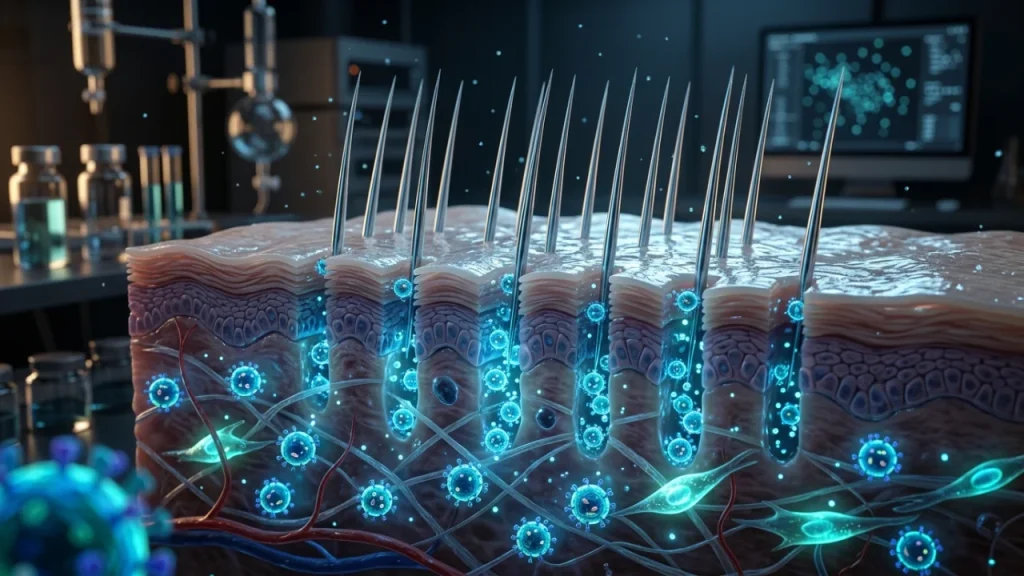
What Are Exosomes and Microneedling and Why Should You Care?
Understanding the Basics of Exosomes and Microneedling
Exosomes are tiny messengers. Your own cells create them naturally. These small vesicles carry important signals. They deliver proteins and genetic instructions to other cells. This process helps coordinate repair and renewal. Think of them as biological text messages. They tell skin cells to calm inflammation or produce collagen.
Microneedling is a different technique. It uses fine needles to create micro-channels in the skin’s surface. This is a controlled, minor injury. The body responds by starting its natural healing process. This triggers new collagen and elastin production. These are the building blocks of firm, youthful skin. The treatment enhances product absorption too.
Why combine exosomes and microneedling? The micro-channels act as direct delivery pathways. They allow exosomes to reach deeper skin layers efficiently. Without this, exosomes might not penetrate effectively. The microneedling process also primes the skin. It creates an ideal environment for the exosome signals. The two methods work in a powerful sequence.
The core goal is to guide the skin’s behavior. Microneedling asks the skin to repair itself. The exosomes then provide precise instructions on how to do it better. This partnership can improve results for various concerns. It addresses fine lines, texture, and overall skin vitality. The approach leverages the body’s innate systems.
This combination represents a shift in aesthetic science. It moves beyond simple damage or filler. Instead, it focuses on cellular communication and support. Understanding this basic framework is key. It explains why the synergy of exosomes and microneedling is so compelling for advanced skin rejuvenation.
The Science Behind Cellular Communication with Exosomes
Exosomes are tiny packages sent from one cell to another. They are not cells themselves. Think of them as biological mail trucks. These trucks carry a vital cargo of signaling molecules. This cargo includes proteins, lipids, and genetic instructions like RNA.
Cells constantly release these vesicles. They travel through the body’s fluids. A receiving cell accepts the exosome. It then opens it and reads the instructions inside. This process is a fundamental form of cellular talk. It happens trillions of times each day in your body.
The messages can command different actions. One key instruction is for tissue repair. An exosome can tell a target cell to: – Reduce inflammation in an area. – Increase collagen production for structure. – Form new, healthy blood vessels. – Accelerate the overall healing timeline.
This system is natural and precise. In skin rejuvenation, the goal is to add more of these specific messengers. We provide a concentrated signal to guide cellular behavior. The science of exosomes and microneedling leverages this innate chat network.
Research shows exosomes from certain cell types are especially potent. They can influence skin cell activity directly. For example, they may turn on genes for elastin synthesis. They can also calm overactive immune responses that cause redness.
This is why the communication aspect matters so much. It is not about adding a foreign substance. It is about enhancing the body’s own sophisticated language. The microneedling channels simply ensure these messages are delivered to the right address.
Understanding this cellular dialogue explains the treatment’s potential. It moves beyond surface-level changes to foundational renewal. The next step is seeing how microneedling optimizes this entire delivery system for visible results.
How Microneedling Creates Pathways for Better Absorption
The top layer of your skin, the stratum corneum, is a superb shield. It keeps germs out and moisture in. It also blocks most topical creams and serums from going deep. These products often sit on the surface. Their active ingredients cannot reach the living cells below. This is a major limit for skin rejuvenation.
Microneedling solves this problem with a simple, physical method. A sterile device with fine needles creates hundreds of microscopic channels. These are not large holes. Each channel is thinner than a human hair. They pass through the tough outer shield. They reach into the dermis, the skin’s living layer. The process is precise and controlled.
These micro-channels serve two critical functions. First, they create direct pathways. Applied exosome solutions can now flow down these tiny openings. The exosomes bypass the surface barrier entirely. They reach the deeper tissue where repair cells live.
Second, the micro-injuries trigger a natural wound response. This is a key point. Your body detects these tiny channels as minor damage. It immediately starts a focused healing process in that area. Blood flow increases. Repair cells rush to the site.
This creates a perfect environment for exosomes and microneedling synergy. The exosomes arrive via the new pathways. They enter a zone already primed for regeneration. Cells there are actively listening for repair signals. The delivered exosome messages are received clearly and acted upon quickly.
Think of it like sending an important letter. Applying exosomes to intact skin is like leaving that letter in a crowded mailbox at the gate. The microneedling channels are like creating a dedicated mail chute straight to the manager’s desk inside the factory. Delivery is guaranteed and immediate.
The channels are temporary. They close within a day as the skin heals itself. This minimizes any risk of irritation. The exosomes have already completed their journey inside. Their work continues at the cellular level for weeks after. This efficient delivery system ensures no valuable signal is wasted on the surface. Every message reaches its intended target deep within your skin’s structure.
Why Combining These Two Methods Creates Powerful Results
The combination of exosomes and microneedling is powerful because it multiplies your skin’s natural repair signals. Think of microneedling as turning up the volume on your skin’s internal radio. It makes cells listen more carefully. Exosomes are the precise instructions broadcast on that channel. Together, they create a clear, loud message for regeneration.
Microneedling alone stimulates collagen production. This is a good start. But it relies only on your body’s existing resources and signals. Adding exosomes introduces a concentrated dose of new instructions. These are not single commands. They are complex sets of data from healthy, young cells.
The results are more complete and faster. Here is what happens:
- The wound response from microneedling attracts repair cells to the area.
- Exosomes deliver direct blueprints for proteins like collagen and elastin.
- They also send anti-inflammatory messages. This calms the treatment area.
- Finally, they promote new blood vessel formation. This improves nutrient delivery.
Separately, each method has limits. Topical exosomes struggle to penetrate deeply. Microneedling can only guide what your body already knows to do. Their synergy solves both problems. The micro-channels solve the delivery issue. The exosome cargo solves the instruction deficit.
You get a targeted, intelligent repair process. The skin does not just fill tiny channels with collagen. It remodels the entire treated area based on superior biological information. The effect is like updating old software with a new, efficient program. The hardware—your skin—works much better.
This leads to more noticeable and lasting improvements in texture, tone, and firmness. The next logical question is about safety and what to expect from this advanced approach.
How Exosomes Work in Your Skin
What Exosomes Carry: Growth Factors and Proteins
Exosomes carry a precise toolkit for cellular communication. Think of them as tiny biological delivery trucks. Their cargo is not random. It is carefully selected and packaged by the parent cell. This cargo directly instructs skin cells on how to behave.
The most important tools are growth factors. These are signaling proteins. They act like master switches. Growth factors bind to receptors on target cells. This binding triggers specific actions inside those cells.
Key growth factors in exosomes include: – VEGF (Vascular Endothelial Growth Factor). This factor tells the body to build new blood vessels. Better blood flow brings more oxygen and nutrients to the skin. – TGF-β (Transforming Growth Factor Beta). This is crucial for making collagen and elastin. These proteins provide skin structure and elasticity. – FGF (Fibroblast Growth Factor). This helps fibroblasts thrive. Fibroblasts are the skin cells that produce new collagen.
Exosomes also carry direct building blocks. They contain structural proteins like collagen and elastin themselves. They deliver enzymes that help build and organize these proteins in the correct way. This ensures strong, functional tissue forms.
Another critical part of the cargo is genetic material. Exosomes contain microRNAs. These are small pieces of genetic code. They do not carry full genes. Instead, they fine-tune gene expression in the recipient cell. They can turn certain repair processes up or down with high precision.
This combination is powerful. Growth factors send the “start working” signal. Proteins provide the raw materials. Genetic regulators make sure the work is done correctly. Together, they orchestrate a complete regenerative program.
The process of exosomes and microneedling works so well because of this rich cargo. Microneedling creates the need and opens the pathways. Exosomes supply the full set of tools and instructions to meet that need optimally. The skin receives everything required for high-quality repair in one targeted delivery.
Understanding this cargo explains why results can be superior. The skin is not just stimulated. It is fully resupplied and reprogrammed for renewal. Next, we examine how this translates into visible improvements for different skin concerns.
The Role of Exosomes in Natural Healing Processes
Your body already uses exosomes for healing. This is not a new invention. Your cells constantly produce these tiny messengers. They release them into the spaces between cells. This is how cells talk to each other.
Think about a small cut on your skin. The healing process starts immediately. Damaged cells send out signals. Many of these signals are packaged inside exosomes. Nearby healthy cells receive these exosomal messages. The messages tell them to start dividing, moving, and rebuilding.
Exosomes act as precise delivery trucks in this natural process. They carry orders directly to the cells that need them. This system is fast and efficient. It minimizes wider inflammation. It targets help exactly where it is required.
The natural healing process involves several key steps that exosomes manage. – They alert stem cells and other repair cells to the site of damage. – They deliver blueprints for making new collagen and elastin fibers. – They help coordinate the cleanup of damaged tissue debris. – They signal when to stop the repair process, preventing overgrowth.
This is your body’s built-in regenerative system. It works every day on small repairs you never notice. However, this natural supply of exosomes is limited. It can become overwhelmed by significant damage or aging. The skin’s own production of these vital messengers also slows down over time.
The advanced treatment combining exosomes and microneedling directly supports this innate system. It does not introduce a foreign substance. Instead, it provides a concentrated boost of these same natural messengers. You are supplementing your body’s own repair language with a clear, strong directive.
Microneedling creates a controlled, minor injury. This mimics a natural call for help. Applying therapeutic exosomes at that moment answers that call powerfully. It supercharges the existing biological pathway. Your skin follows its normal healing instructions, but with superior resources.
The result is not an artificial change. It is an optimized version of your skin’s own renewal program. The therapy works with your biology, not against it. This fundamental alignment with natural processes explains its notable efficiency and safety profile. Next, we will see how this translates into specific, visible improvements for common skin concerns.
How Exosomes Signal Cells to Produce More Collagen
Collagen is the main structural protein that keeps your skin firm and smooth. Your skin cells called fibroblasts are responsible for making it. However, fibroblasts need clear instructions to produce new collagen. They do not work in a vacuum. This is where exosomes deliver a direct and powerful message.
Think of a fibroblast as a factory. The exosome is a special delivery truck. It arrives at the factory dock. It does not contain the final product. Instead, it carries precise blueprints and tools. These tools are signaling molecules and genetic instructions like microRNAs.
The exosome releases its cargo inside or near the fibroblast. This cargo acts like a series of switches. It flips the “on” position for collagen production. The signals tell the fibroblast two important things. First, they command it to start its manufacturing machinery. Second, they provide the specific code for high-quality Type I collagen. This is the most abundant and supportive type in young skin.
The process involves several coordinated steps. – Exosomes bind to the surface of the fibroblast. – They transfer growth factors that activate the cell’s internal pathways. – They deliver microRNAs that silence genes for collagen breakdown. – They promote the assembly of collagen fibers from amino acid building blocks.
This signaling is highly efficient. It bypasses unclear or weak biological signals that happen with age. The combined treatment of exosomes and microneedling ensures this message reaches many fibroblasts at once. The micro-channels created by microneedling guide the exosomes directly to the living layer where these factories operate.
The result is a focused production boost. Fibroblasts receive a strong, unified directive. They respond by synthesizing more new collagen and organizing it properly. This is not a temporary plumping effect. It is the foundational stimulation of your skin’s own support network. The skin gains density and resilience from within its natural framework. This targeted cellular communication explains how visible firmness and texture improvement begin at a microscopic level.
Why Exosomes Are Better Than Traditional Growth Factors
Traditional serums use isolated growth factors. These are single proteins. They send one type of signal to skin cells. Exosomes are fundamentally different. They are natural delivery vehicles. Each exosome carries a complete toolkit for cellular communication.
Think of a growth factor serum as a single instruction. It might shout “make collagen!” to a fibroblast. An exosome delivers a full program. It provides the same growth factor instruction. It also delivers the precise timing codes and support molecules. This ensures the cell understands the full context.
The cargo inside exosomes is protected. Growth factors in a simple serum are fragile. They can break down on the skin’s surface or during storage. The lipid bilayer of an exosome acts like a protective capsule. It shields its contents until it reaches the target cell. This ensures more active signals arrive where they are needed.
Exosomes also have superior targeting ability. Isolated proteins can bind to many cell types randomly. Exosomes have surface markers. These markers help them find and fuse with specific cells, like fibroblasts. This leads to more efficient delivery and less wasted product.
The combination of exosomes and microneedling leverages these advantages perfectly. Microneedling creates temporary channels. These channels allow the intact exosomes to bypass the skin’s barrier. They reach the living tissue directly. This method protects the exosomes’ delicate structure. It places them exactly where their complex cargo can work.
Here is a direct comparison of key differences: – Signal Complexity: Single protein vs. multi-molecule program. – Stability: Easily degraded vs. membrane-protected. – Delivery: Broad diffusion vs. targeted cellular homing. – Result: A simple on/off signal vs. a coordinated regenerative message.
Traditional methods can still offer benefits. Yet exosome therapy represents a significant evolution. It works with the skin’s own sophisticated language. This leads to more comprehensive and sustained results. The next natural question is how this translates into visible changes over time.
The Microneedling Process Explained
What Happens During a Microneedling Session
A microneedling session is a precise, controlled clinical procedure. It typically lasts between 30 to 60 minutes. The goal is to create microscopic channels in the skin. These channels are temporary and stimulate the skin’s natural repair process.
The process begins with a thorough cleansing of the treatment area. A topical numbing cream is then applied. This cream sits on the skin for about 20 to 30 minutes. It ensures patient comfort throughout the treatment. The clinician will then remove the cream completely.
The core of the treatment uses a sterile, pen-like device. This device holds a tip with fine, medical-grade needles. The needle length is carefully selected. It is chosen based on your skin type and treatment goals. Common lengths range from 0.25 to 1.5 millimeters. Shorter lengths treat surface texture. Deeper lengths target scars or wrinkles.
The clinician glides the device over your skin in systematic patterns. The needles create hundreds of tiny, invisible punctures. These are not large holes. They are micro-channels that bypass the tough outer layer of skin. This process is called collagen induction therapy. It triggers your body’s own healing response.
For treatments combining exosomes and microneedling, this step is crucial. The exosome solution is often applied during or immediately after needling. The fresh micro-channels allow these powerful signaling particles to enter directly into the dermis. This is where living cells like fibroblasts can receive their regenerative messages.
You may feel a mild vibrating sensation or pressure. Significant pain is rare due to the numbing cream. Afterward, your skin will appear flushed and feel warm. This is a normal, expected reaction. It resembles a moderate sunburn.
A final soothing serum or mask is applied to calm the skin. The clinician will give you clear aftercare instructions. These instructions are vital for optimal results and safety. You must avoid sun exposure and use gentle skincare products for several days.
The skin begins its repair process immediately. New collagen and elastin production starts in the weeks that follow. This detailed, careful process makes microneedling a cornerstone of advanced aesthetic science. It sets the stage for enhanced treatments that deliver active ingredients far more effectively than traditional methods.
How Microneedling Prepares Skin for Exosome Absorption
Microneedling does more than just create tiny channels. It fundamentally changes the skin’s state. This temporary change is what allows exosome therapy to work so deeply. Think of your skin’s outer layer, the stratum corneum, as a tight brick wall. It is designed to keep things out. Topical creams mostly sit on top of this wall. Their active ingredients cannot reach the living cells below.
The microneedles create controlled micro-injuries. This is a key signal. Your body detects these precise punctures and starts a natural repair cycle. Blood flow increases to the area. The skin becomes slightly inflamed and more permeable. This is a brief window of opportunity. The skin is now primed and ready to accept regenerative signals.
The micro-channels act as direct pathways. They bypass the protective brick wall entirely. An exosome solution applied now has a clear route. It goes straight into the dermis. This is where fibroblasts live. Fibroblasts are the cells that make collagen and elastin. Delivering exosomes here is like sending instructions directly to a factory’s control room.
The combination of exosomes and microneedling is powerful for three main reasons. – First, it ensures deep delivery. Exosomes are not blocked by the skin’s barrier. – Second, the skin is in an active healing state. Cells are “listening” for signals to repair and rebuild. – Third, exosomes provide those precise instructions. They tell your cells how to heal better, faster, and with higher quality.
Without microneedling, exosomes on intact skin struggle to penetrate. Their message may be lost. With microneedling, the skin is prepared to absorb and use every bit of their potential. This preparation turns a simple procedure into a targeted cellular treatment. The stage is perfectly set for your body’s own regenerative systems to be guided and enhanced.
The Different Types of Microneedling Devices
Microneedling devices vary in how they create pathways into the skin. The main difference lies in their needle action. Understanding this helps explain treatment depth and comfort.
The first common type is the manual derma roller. This is a handheld tool with small needles mounted on a cylinder. You roll it across the skin. It is simple and accessible. However, its angle of entry changes with each roll. This can create uneven micro-channels. The rolling motion may also cause minor tearing.
The second major type is the automated pen device. This uses a reciprocating motor. The fine needles move straight up and down in a precise piston motion. This allows for consistent vertical penetration. Depth settings are often adjustable. This precision is key for treatments combining exosomes and microneedling. It ensures uniform channels for optimal delivery.
A third category is radiofrequency (RF) microneedling. These devices add another step. Insulated needles pierce the skin first. Then they emit controlled radiofrequency energy deep into the tissue. This thermal energy stimulates additional collagen tightening. It is a two-part process: mechanical injury followed by thermal energy.
Needle length is a critical factor. It determines how deep the treatment goes. Shorter needles, under 0.5 millimeters, work mainly on the surface. They enhance product absorption. Longer needles, from 0.5 to 2.5 millimeters, reach the deeper dermis. They directly stimulate fibroblasts for collagen production. The choice depends on the skin concern being treated.
Device selection influences the treatment’s foundation. A uniform, controlled injury pattern creates an ideal canvas. This prepares the skin to best receive and utilize regenerative signals from an exosome solution. The right tool sets the stage for enhanced cellular communication and repair in the layers that matter most.
Safety Measures During Microneedling Procedures
Safety begins before the device ever touches the skin. A thorough consultation is mandatory. The practitioner must review your full medical history. This includes current medications and skin conditions. Certain prescriptions, like blood thinners, can increase bleeding. Active acne or infections are clear reasons to postpone treatment. This screening prevents complications.
Next comes meticulous skin preparation. The treatment area is cleansed with a medical-grade antiseptic. This removes surface oils, dirt, and bacteria. Sterility is non-negotiable. A topical numbing cream is then applied. It typically contains lidocaine. The cream sits for 20 to 30 minutes. This minimizes discomfort during the procedure. The cream is completely removed before starting. Residual cream could block the micro-channels.
During the procedure, safety relies on technique and environment. Practitioners use single-use, sterile needle cartridges. These are opened from sealed packaging in front of the patient. Gloves are always worn. The device itself is wiped with a hospital-grade disinfectant. The practitioner’s movement pattern is systematic. They apply light, even pressure. They avoid overlapping passes on sensitive areas. This prevents over-treatment and excessive trauma.
Post-procedure care is equally critical for safety and results. Your skin is an open system immediately after treatment. A soothing serum or gel is applied. It often contains hyaluronic acid or growth factors. For combined treatments like exosomes and microneedling, this is the optimal delivery moment. The practitioner then gives strict aftercare instructions. You must follow them closely.
Key aftercare rules include: – Avoid sun exposure completely for at least 48 hours. – Use only gentle, prescribed cleansers and moisturizers. – Do not use active ingredients like retinols or acids for one week. – Keep the skin hydrated to support the healing process. – Never pick or scratch the treated area.
These steps ensure proper healing without infection or scarring. They protect your investment in the treatment. Choosing a qualified professional who follows these protocols is vital. Their expertise turns precise mechanical injury into safe, effective regeneration. This careful foundation maximizes the potential of any advanced regenerative solution applied to the skin.
Benefits of Combining Exosomes and Microneedling
Reducing Fine Lines and Wrinkles with Exosomes and Microneedling
Fine lines and wrinkles form as skin loses its supportive structure. This happens over time. Collagen and elastin fibers break down. Skin cell renewal also slows. Microneedling alone prompts a repair response. However, combining it with exosomes directs and supercharges this natural process.
Exosomes deliver precise instructions to your skin cells. Think of them as cellular messengers. They carry signals for repair and regeneration. After microneedling creates micro-channels, these exosomes reach deeper skin layers directly. They do not just sit on the surface. This direct delivery is key for tackling wrinkles.
The synergy of exosomes and microneedling works through several clear actions. The treatment tells your fibroblasts, which are collagen-producing cells, to become more active. It provides them with the biological blueprints they need.
- Exosomes can instruct cells to ramp up collagen production. Collagen is the main structural protein in skin.
- They also signal for more elastin synthesis. Elastin gives skin its snap-back quality.
- The messages promote better hydration by supporting hyaluronic acid.
- They encourage faster turnover of old, damaged skin cells.
This leads to a plumping effect from within. Improved collagen thickens the dermis, which is the skin’s middle layer. This gently pushes up on surface lines. Deeper wrinkles become softer and less visible. The skin’s texture becomes smoother. Results develop over weeks as your body builds new proteins.
The approach addresses aging at a cellular level. It is not just a temporary filler. The goal is to restore your skin’s own healthy function. This foundation of renewed support helps maintain a smoother appearance longer. The next benefit builds on this renewed foundation: improving skin tone and elasticity.
Improving Skin Texture and Firmness Through Cellular Renewal
The renewal process begins at the cellular level. Your skin constantly sheds old cells. Over time, this natural cycle slows down. Dead cells can accumulate on the surface. This leads to a rough, dull texture. The synergy of exosomes and microneedling directly addresses this slowdown.
Exosomes deliver specific instructions to your basal keratinocytes. These are the foundational skin cells in the deepest epidermal layer. The signals tell these cells to rejuvenate. Their renewal activity increases. This promotes a faster, healthier turnover of skin cells.
- Fresh, new cells move to the surface more efficiently.
- This natural exfoliation process sheds uneven, damaged cells.
- The result is a visibly smoother and more refined skin texture.
Improved firmness comes from a strengthened support network. Think of your dermis as a mattress. Collagen and elastin fibers are the springs. Over time, these springs weaken and break. Microneedling creates a controlled injury. Exosomes then guide the repair.
Fibroblasts receive clear commands. They do not just make more collagen. They also produce better-organized collagen fibers. These new fibers form a denser, more supportive lattice. This lattice provides improved structural integrity to the skin.
Skin’s firmness relies on this reinforced dermal matrix. The new collagen network resists sagging. Enhanced elastin allows skin to better recoil after movement. Together, they restore a firmer, more lifted appearance. This is not surface-level tightening. It is a true restoration of underlying architecture.
The treatment also optimizes the skin’s barrier function. A healthy barrier is crucial for firm, resilient skin. Exosomes support lipid production in the stratum corneum. This is the skin’s outermost protective layer.
A stronger barrier locks in essential moisture. It also better defends against daily environmental stressors. Well-hydrated skin appears plumper and feels smoother. This hydration boost complements the structural improvements from within.
Cellular renewal is a continuous process after treatment. The benefits develop over several weeks. Your skin uses the biological instructions to rebuild itself. The outcome is a dual improvement in both texture and firmness. This creates a visibly rejuvenated and more youthful complexion.
Fading Dark Spots and Hyperpigmentation Naturally
Hyperpigmentation occurs when skin cells produce too much melanin. Melanin is your skin’s natural pigment. It often clusters in spots after sun exposure or inflammation. Surface creams can only do so much. They struggle to reach the deeper layers where this process starts.
The combination of exosomes and microneedling addresses the root cause. Microneedling creates precise micro-channels. These channels allow exosomes to reach the basal layer of the epidermis. This is where melanocyte cells live. Melanocytes manufacture melanin.
Exosomes deliver specific instructions to these cells. They help normalize melanin production. The signals tell melanocytes to slow down excessive pigment creation. This is a natural regulatory process. It does not bleach or damage the skin.
The treatment also targets existing dark spots. Exosomes promote healthy skin cell turnover. This helps shed pigmented surface cells more efficiently. Newer, clearer skin cells rise to replace them. The result is a gradual fading of discoloration.
- Exosomes calm inflammatory pathways that can trigger pigmentation.
- They support the repair of sun-damaged skin cells.
- They encourage an organized, even distribution of melanin.
This approach is holistic. It does not just remove pigment from the surface. It retrains your skin’s biology to function more evenly. The goal is a unified complexion. Your skin tone becomes more consistent across your face.
The process requires patience. Improvements develop over several weeks as cellular activity shifts. Multiple sessions may be needed for stubborn sun damage. The outcome is a natural-looking clarity. This synergy offers a sophisticated path to brighter skin, seamlessly building on the structural renewal already underway.
Healing Acne Scars with Minimal Downtime
Acne scars are a common textural concern. They form when inflammation damages the skin’s supportive collagen framework. Traditional treatments can be harsh. They often require significant recovery. The combination of exosomes and microneedling offers a gentler, smarter path.
Microneedling creates controlled micro-injuries in scarred tissue. This process alone stimulates some new collagen. However, exosomes dramatically amplify this signal. They deliver precise instructions directly to skin cells.
These instructions guide the repair process in three key ways. – Exosomes tell fibroblasts, which are collagen-producing cells, to become more active. – They promote the formation of strong, organized Type I collagen. This is the main structural protein in healthy skin. – They help regulate inflammation. This prevents further irregular healing during the recovery phase.
The result is targeted remodeling of scarred areas. Depressed scars begin to soften and rise. The skin’s surface becomes smoother. This approach treats both rolling scars and boxcar scars effectively.
A major advantage is minimal downtime. The micro-channels from microneedling close very quickly, often within hours. Since exosomes are natural signaling particles, they do not typically cause irritation. Most people experience only temporary redness. They can resume normal activities the next day.
Visible improvements unfold over weeks as new collagen builds. This process is gradual and natural-looking. Multiple sessions create cumulative improvement. Each treatment builds upon the last.
This method provides a compelling alternative to more aggressive procedures. It leverages the skin’s own biological language for healing. The synergy between exosomes and microneedling repairs scar tissue efficiently. It does so with remarkable comfort and convenience for the patient. This makes consistent treatment and lasting results more achievable than ever before.
What to Expect During Treatment
The Step-by-Step Treatment Process for Exosomes and Microneedling
A typical session for exosomes and microneedling takes about 60 to 90 minutes. Your provider begins with a thorough consultation. They examine your skin and discuss your specific goals. This ensures the treatment plan is right for you.
The first step is cleansing the skin. A medical-grade cleanser removes all oil and debris. This prepares the skin’s surface. Next, a topical numbing cream is applied. This cream sits on the skin for about 20 to 30 minutes. It makes the procedure very comfortable for most people.
After the numbing period, the provider removes the cream. They then select the appropriate microneedling device. This device has a sterile tip covered in fine needles. The needle length is chosen based on your skin’s needs. Shallow depths work for texture. Slightly deeper settings target scars.
The microneedling process begins. The device glides across your skin. It creates hundreds of microscopic channels. These channels are not visible to the eye. They do not cause bleeding. You may feel a mild vibration or pressure. It is not painful.
Immediately after creating these micro-channels, the provider applies the exosome solution. This timing is crucial. The fresh channels allow direct access to the deeper skin layers. The liquid solution is gently massaged into the skin. Your skin absorbs it quickly.
The exosomes now enter the created pathways. They travel to where your skin cells need instruction. The entire active treatment phase often takes under 30 minutes.
Finally, a soothing serum or cream is applied. This calms the skin instantly. You receive clear aftercare instructions before leaving. Your skin will appear pink or red, similar to a sunburn. This redness usually fades within a day.
The process is straightforward and efficient. Each step has a clear biological purpose. This synergy delivers the treatment’s benefits directly and effectively. Understanding this process helps set realistic expectations for your visit and recovery.
How Long Each Treatment Session Takes
A complete session for exosomes and microneedling typically takes 60 to 90 minutes. This total includes more than just the active treatment time. Your appointment is divided into several key phases. Each phase has a specific purpose.
The first phase is preparation and consultation. This happens when you arrive. It often takes 10 to 15 minutes. You may review your goals with the provider. Your skin is cleansed thoroughly. A topical numbing cream is then applied. This cream needs time to work effectively.
The numbing period is the longest single segment. It usually requires 30 to 45 minutes. This ensures you are completely comfortable. The provider will leave the room during this time. You can simply relax. Proper numbing is essential for a painless experience.
The active treatment phase is surprisingly quick. The actual microneedling process takes about 10 to 15 minutes. The device moves across your skin efficiently. The exosome solution is applied immediately after. The entire hands-on procedure is brief and focused.
The final phase involves calming the skin and aftercare instructions. This takes another 5 to 10 minutes. A soothing product is applied. Your provider will explain how to care for your skin at home. You will receive clear written guidelines.
Consider these factors that can influence timing: – Treatment area size: A full face takes longer than a small zone. – Skin concerns: Addressing deep scars may require slightly more time. – Individual protocol: Your provider’s exact methods affect the schedule.
You should plan for the full 90-minute window for your first visit. This allows for a relaxed pace without rushing. Subsequent sessions may be slightly shorter. The synergy of exosomes and microneedling delivers significant biological signals in a compact, efficient office visit. Understanding this timeline helps you schedule your day with confidence and sets the stage for discussing the recovery period that follows.
What Sensations You Might Feel During Microneedling
You will feel sensations during the microneedling portion of your treatment. The experience is not painful due to the topical numbing cream. Most people describe it as a mild vibration combined with pressure. It feels similar to a light electric toothbrush moving across your skin. You may hear a faint humming sound from the device.
The sensation can vary in different areas of your face. The forehead and cheeks often feel minimal. Areas with thinner skin or more bone underneath may feel more pronounced. These areas include the temples, jawline, and upper lip. The feeling is quick and passes instantly as the device moves.
Some specific sensations are common: – A scratching or prickling feeling, like light sandpaper. – Intermittent warmth or a tingling sensation. – Pressure as the device glides firmly over the skin.
The depth of the microneedling affects the feeling. A very superficial treatment feels like light tapping. A deeper treatment for scars feels more like consistent pressure. Your provider controls this setting. They will check in with you about your comfort level. Communication is key during this phase.
The synergy of exosomes and microneedling does not change the immediate physical sensation. The microneedling creates temporary micro-channels. The exosome solution is applied afterward. You might feel a cool, soothing liquid being spread. This part involves no device and no discomfort.
Any sharp or stinging pain is not normal. You should tell your provider immediately if you feel this. They can adjust pressure or apply more numbing agent. The goal is managed sensation, not distress. The entire active phase lasts only minutes. Most patients find it very tolerable.
Understanding these sensations removes uncertainty. You can focus on the treatment’s benefits rather than worry about discomfort. This knowledge prepares you for a calm experience. It also sets the stage for a smooth recovery period at home.
Immediate Aftercare Following Your Session
Your skin will be sensitive immediately after your session. It is normal to see redness. This redness looks like a mild sunburn. It is a direct result of the microneedling process. Your skin may also feel warm and tight. These effects are temporary. They typically fade within 24 to 48 hours. The micro-channels created by the needles close quickly. This usually happens within a few hours. This rapid closure helps protect your skin.
Your provider will apply a soothing serum or cream. This product calms the skin. It also helps maintain a moist environment. Do not touch or rub your face after leaving the clinic. Your hands can introduce bacteria. Let the applied products absorb naturally.
Follow these specific steps for the first 24 hours: – Use only gentle, lukewarm water to rinse your skin. Avoid any cleansers. – Gently pat your face dry with a clean paper towel. Do not use a cloth towel. – Apply the recommended moisturizer as directed by your provider. Keep the skin hydrated. – Absolutely avoid sun exposure. Do not apply sunscreen on day one. Instead, wear a wide-brimmed hat.
The synergy of exosomes and microneedling relies on this careful aftercare. The exosomes are now in your skin. They are beginning their work. They send signals to your cells. These signals guide repair and renewal. Creating an ideal healing environment supports this biological process. Avoid strenuous exercise for the first day. Sweating can irritate the treated skin.
You might notice slight dryness or flaking after a few days. This is part of the skin’s renewal cycle. Do not pick or scratch at any flaking skin. Use a gentle moisturizer frequently. You can resume a very gentle cleanser after 48 hours. Always use your fingertips, not a washcloth or sponge.
Strict sun protection becomes essential after the initial 24 hours. Use a mineral-based sunscreen daily. Reapply it every two hours if you are outdoors. Sun exposure can hinder recovery. It may also affect your results.
This immediate aftercare protocol is simple but critical. It protects your skin during its most vulnerable phase. It also ensures the exosomes can function effectively. Proper care now sets the foundation for visible improvements in the coming weeks. Your skin’s response will guide the next steps in your recovery journey at home.
Recovery and Results Timeline
The First 24 Hours After Exosomes and Microneedling
Your skin will react immediately after a treatment combining exosomes and microneedling. This is a normal and expected part of the process. The microneedling creates controlled micro-channels. These channels allow the exosome solution to reach deeper skin layers.
You will likely see mild to moderate redness. This redness looks similar to a sunburn. It is a direct sign of increased blood flow. Your body is sending healing resources to the treatment area. This redness is temporary. It typically fades significantly within 12 to 24 hours for most people.
Your skin may also feel warm and tight. The warmth comes from increased circulation. The tight sensation is often due to temporary swelling or edema. The skin is retaining fluid as part of its initial inflammatory healing phase. This swelling is usually minimal. It helps create a supportive environment for the exosomes.
Some minor pinpoint bleeding or bruising can occur. This depends on your skin’s sensitivity and the treatment depth. Any bleeding stops quickly. Bruising, if it appears, will be light. It often resembles faint pink or yellow spots.
The treated area might feel slightly tender to the touch. This tenderness is similar to a mild windburn sensation. It should not be a sharp or severe pain. The exosomes themselves are not irritating. Any discomfort comes from the microneedling process.
Your skin will not look “perfect” right away. That is by design. The visible response confirms the treatment reached the living layers of your skin. The exosomes are now interacting with your cells in this active environment.
Key sensations in the first day include: – A sunburn-like flush across the skin. – A feeling of warmth and tightness. – Possible mild tenderness. – Minimal swelling or tiny bruises.
These effects peak within a few hours post-treatment. They then begin to subside. By the 24-hour mark, significant visible redness usually diminishes. Your skin starts transitioning from an initial reactive state into a focused recovery phase. This shift is where the exosomes’ regenerative signaling takes a more prominent role in your skin’s renewal journey.
What to Expect in the First Week of Healing
The initial flush and tightness fade significantly within two to three days. Your skin enters a crucial rebuilding period. The micro-channels created during treatment are now closed. This forms a protected pathway for cellular communication.
The synergy of exosomes and microneedling becomes most active now. Your skin cells absorb the therapeutic signals. These signals instruct fibroblasts to produce fresh collagen and elastin. This process is not yet visible. But it is foundational for long-term improvement.
You may notice a new texture around days three to five. The skin can feel slightly dry or begin to flake lightly. This is a positive sign. It means your skin is shedding old, damaged surface cells. This makes room for newer, healthier cells emerging from below. Do not pick or scrub this flaking skin. Gentle cleansing and moisturizing are essential.
Key milestones in your first week include: – Days 1–3: Visible redness subsides. Any swelling resolves completely. – Days 3–5: Possible light flaking or dryness. The skin may feel smoother to the touch. – Days 5–7: Flaking typically ends. A more even skin tone and subtle glow often appear.
This phase relies on your body’s natural healing, powerfully guided by exosomes. The combined treatment accelerates the skin’s own renewal cycle. You are moving from recovery to results. The focus now shifts to sustaining this progress and protecting the new skin. Consistent sun protection is non-negotiable during this vulnerable period. The following weeks will consolidate these early gains.
When You’ll Start Seeing Visible Improvements
Visible improvements typically begin two to three weeks after your combined treatment. This is when new collagen production becomes significant. The synergy of exosomes and microneedling works beneath the surface first. You will not see dramatic changes overnight.
The initial signs are often subtle. You might notice a healthier glow. Your skin could feel smoother and more supple. Fine lines may appear softened. These early results come from enhanced hydration and initial cellular renewal. The deeper structural repair is still ongoing.
More defined changes usually emerge around the four to six week mark. This is a key period for visible improvement. Collagen and elastin fibers have had time to organize and strengthen. You may see improved skin firmness. Pore appearance can become more refined. Post-inflammatory marks from past acne might start to fade.
The most noticeable results often appear after two to three months. Your skin’s texture and tone show clearer enhancement. The cumulative effect of renewed cellular activity becomes evident. This process relies on your body’s natural cycle. Skin cells take time to turn over and mature.
Individual timelines vary based on several factors: – Your specific skin concerns and goals. – Your age and natural collagen production rate. – Your overall skin health and care routine after treatment.
Multiple sessions can build upon these results. A series of treatments is common for addressing significant concerns. Each session further stimulates the skin’s regenerative pathways. Maintenance treatments can then help preserve the improvements long-term.
Protecting your skin remains crucial throughout this period. Daily sunscreen use safeguards new collagen from sun damage. This prevents the breakdown of fresh, supportive fibers. A simple skincare routine supports the healing environment.
The journey from microneedling channels to refreshed skin is a gradual biological process. Patience allows the full benefits of cellular signaling to unfold. Your skin continues to improve for months following the procedure. This sustained progress defines truly advanced aesthetic science.
How Long Results Last and Maintenance Tips
The longevity of your skin rejuvenation results depends on your daily habits and biological processes. Exosomes and microneedling create a powerful starting signal. This signal tells your skin cells to renew themselves. However, this cellular activity naturally slows over time. Results typically last for several months to over a year. Your skin’s age and condition influence this duration.
Think of maintenance as supporting your skin’s new healthy state. You are protecting the fresh collagen and elastin fibers you built. Sun exposure is the primary cause of result breakdown. Ultraviolet rays degrade collagen very quickly. Daily broad-spectrum sunscreen is non-negotiable for preservation.
A consistent skincare routine reinforces the treatment’s benefits. Use gentle cleansers and effective moisturizers. Antioxidant serums can help shield new skin cells from environmental stress. Avoid harsh physical scrubs or strong acids for at least one week after any session. Your clinician will give you personalized guidance.
Consider periodic maintenance treatments to sustain optimal results. A single follow-up session can reactivate the skin’s regenerative pathways. This is often suggested every six to twelve months. The schedule varies for each person. It depends on your individual skin goals and response.
Your lifestyle choices directly impact how long improvements last. Key factors include: – Quality sleep allows for cellular repair. – A nutrient-rich diet provides building blocks for skin. – Adequate hydration maintains skin plumpness. – Managing stress reduces inflammatory hormones.
The synergy of exosomes and microneedling offers a lasting foundation. You can extend this foundation with mindful care. This approach combines advanced science with simple, consistent habits. Your skin’s long-term appearance reflects this sustained partnership between treatment and daily practice.
Safety and Side Effects
Common Side Effects of Exosomes and Microneedling
Most people experience some skin redness immediately after a treatment with exosomes and microneedling. This is a normal sign of increased blood flow. Your skin is beginning its repair process. Mild swelling or puffiness often accompanies the redness. This is your body’s natural inflammatory response. It sends healing cells to the treatment area. These effects typically fade within 24 to 48 hours.
You may feel a sensation similar to a mild sunburn. The skin can feel warm and tender to the touch. This discomfort is temporary. It usually subsides within a few hours post-treatment. Some pinpoint bleeding might occur during the microneedling itself. This is minimal and stops quickly. Tiny scabs can form at each micro-channel site. Do not pick at these scabs. They will flake off naturally within days.
Other common temporary reactions include: – Dryness and slight peeling as the outer skin layer renews. – Minor itching as the healing process advances. – Temporary tightness as the skin retains moisture beneath the surface.
These side effects show the treatment is working. The microneedling creates controlled micro-injuries. This triggers your skin’s innate healing cascade. The applied exosomes then guide this cellular activity. They support efficient repair and reduce uncontrolled inflammation. The synergy aims for a strong regenerative signal with minimal downtime. Severe pain, excessive swelling, or signs of infection are not typical. You should report these to your clinician promptly.
Understanding these common reactions helps you feel confident post-treatment. Knowing what to expect makes the recovery period straightforward. This knowledge turns normal side effects into signs of progress rather than concern. Proper aftercare manages these effects effectively for a smooth recovery journey.
How to Minimize Risks During Treatment
A sterile treatment environment is the first defense against infection. Clinicians prepare the skin with medical-grade antiseptic solutions. They use single-use, disposable microneedling cartridges. This eliminates any risk of cross-contamination between patients. The exosome solution itself is handled as a biologic agent. It is thawed and prepared under strict, aseptic conditions right before your procedure.
Your medical history review is a critical safety step. You must disclose all medications and supplements. Certain substances increase bleeding risk. These include aspirin, ibuprofen, and some herbal supplements like ginkgo biloba. Your clinician will advise you to pause these ahead of time. You should also share any history of cold sores. Microneedling can potentially trigger a recurrence. Prophylactic antiviral medication can prevent this.
The practitioner’s technique directly influences safety and results. The depth of needle penetration is carefully chosen. It matches your specific skin concerns and areas being treated. Shallow depths are used for delicate zones like around the eyes. Deeper settings might be selected for thicker skin or scar tissue. The device should not be passed over the same area excessively. This avoids over-traumatizing the skin. Proper technique ensures the micro-channels are optimal for exosome delivery.
Patient compliance before and after the session is equally important. Follow all pre-care instructions exactly. Arrive with clean, makeup-free skin. Do not apply any topical products that were not approved. After your combined exosomes and microneedling treatment, adhere strictly to the aftercare protocol. This includes using gentle cleansers and recommended moisturizers. You must avoid sun exposure and strenuous exercise for the initial healing period.
These layered protocols work together. They create a safe framework for the powerful synergy of exosomes and microneedling to act. This systematic approach minimizes risks. It allows your skin to focus its energy on regeneration and repair. Your active partnership with your clinician is the final, essential component for a secure and successful outcome.
Who Should Avoid This Treatment
Certain health conditions and skin states make the combined approach of exosomes and microneedling inadvisable. The procedure creates controlled inflammation to trigger healing. Some pre-existing conditions can disrupt this process. They may lead to poor outcomes or pose significant health risks.
Active skin infections are a primary reason to postpone treatment. This includes bacterial, fungal, or viral outbreaks. Cold sores (herpes simplex) are a key example. Microneedling can spread the virus across the skin. This causes a more severe infection. The skin barrier must be fully intact and healthy before proceeding.
Individuals with a history of keloid or hypertrophic scarring should exercise extreme caution. These scars result from an overactive healing response. The controlled injury from microneedling could potentially stimulate similar excessive scar tissue formation. A detailed consultation with a specialist is essential to assess this risk.
The treatment is not suitable for people with certain systemic autoimmune diseases. Conditions like lupus or uncontrolled rheumatoid arthritis involve widespread inflammation. Introducing an additional inflammatory stimulus via microneedling could theoretically trigger a flare-up. The body’s communication network, which exosomes influence, is already dysregulated in these diseases.
Anyone with an active cancer diagnosis or undergoing cancer treatment must avoid this procedure. The scientific role of exosomes in cell communication is complex. While the exosomes used clinically are sourced and purified for safety, experts universally advise against any elective regenerative treatment during active cancer therapy. Patient safety is the absolute priority.
Other key contraindications include: – Pregnancy or breastfeeding, due to the lack of clinical safety data for the developing child or infant. – Recent use of isotretinoin (Accutane) within the past six months to one year. This medication fundamentally alters skin healing and increases scarring risk. – Uncontrolled diabetes, which can severely impair wound healing and increase infection risk. – Active inflammatory skin conditions like psoriasis or eczema in the treatment area. The procedure could worsen these conditions.
Open wounds, sunburns, or severe rosacea in the targeted area also require resolution first. A thorough medical history review by your clinician is non-negotiable. This honest discussion ensures your safety and aligns the powerful synergy of exosomes and microneedling only with suitable candidates for optimal results. Identifying these exclusion criteria is a fundamental step in responsible aesthetic medicine.
What Makes This Approach Safer Than Alternatives
The combination of exosomes and microneedling is inherently low-risk. This is due to its minimally invasive nature and targeted biological action. Unlike surgical facelifts, it requires no general anesthesia. This eliminates major risks associated with going under. There are also no large incisions. This means no significant scarring or long recovery periods.
The procedure uses your body’s natural communication system. Exosomes are signaling vesicles, not live cells. They carry instructions but cannot replicate themselves. This is a key safety point. They guide your own skin cells to repair and renew. The process works with your biology, not against it.
Microneedling creates temporary micro-channels. These are not deep wounds. They heal rapidly, often within 24 hours. This precision limits damage and reduces infection risk compared to deeper lasers or surgery. The exosomes are applied topically after needling. They are delivered directly where needed.
Consider the safety profile compared to alternatives: – No foreign material is implanted. Some fillers or threads can cause reactions or migration. – No controlled thermal injury. Ablative lasers destroy tissue to stimulate rebuilding, which carries higher infection and scarring potential. – Minimal downtime means less chance for post-procedure complications from improper care.
The synergy itself enhances safety. Microneedling creates an ideal environment for exosomes to work. This means a lower concentration of exosomes can be effective. The approach relies on precise signaling rather than forceful trauma. Your skin’s response is coordinated and natural.
Potential side effects are typically mild and short-lived. Temporary redness or slight swelling may occur. These effects usually resolve within a day or two. Serious adverse events are extremely rare when performed correctly on suitable candidates.
This method offers a powerful result with a gentle approach. It provides a compelling option for those seeking noticeable improvement without high surgical risk. The next consideration is how to prepare for a treatment to ensure its success and safety.
Comparing Treatment Options
Exosomes and Microneedling Versus Traditional Facials
Traditional facials primarily work on your skin’s surface. They cleanse, hydrate, and exfoliate the top layers. This provides a temporary glow and improved texture. The results are often short-lived because they don’t communicate with your skin’s deeper repair systems.
The combination of exosomes and microneedling works differently. It sends precise biological instructions directly to your living skin cells. Think of a traditional facial as cleaning and polishing a car’s exterior. The synergy of exosomes and microneedling is like tuning the engine itself.
The core differences are clear in their goals and methods. A standard facial aims for immediate cleansing and relaxation. The advanced treatment targets long-term cellular function and collagen production.
Let’s break down the key contrasts: – Depth of action: Facials treat the stratum corneum, the outer dead layer. Microneedling reaches the vital dermis where collagen lives. – Active ingredients: Serums in facials may not penetrate deeply. Exosomes are delivered directly into the optimal skin layer. – Primary mechanism: Facials offer manual or chemical exfoliation. This therapy triggers targeted cellular communication and renewal. – Result duration: Facial results typically last days to a week. This treatment promotes changes that can continue for months.
The aftercare also highlights the difference. Post-facial, you might avoid makeup for a few hours. After this procedure, your skin is in an active state of receiving signals and rebuilding. The focus shifts to supporting a biological process, not just protecting a surface.
This comparison shows it’s not merely a “better facial.” It is a fundamental shift from external maintenance to internal signaling. Your next consideration is understanding the realistic timeline for seeing these deeper-level results.
How This Combination Compares to Laser Treatments
Laser treatments work by creating controlled thermal injury. They use focused light energy to heat and damage specific skin layers. This damage then stimulates the skin’s natural wound-healing response. The goal is to remodel collagen and improve texture. It is a proven method for many concerns.
The combination of exosomes and microneedling follows a different principle. It avoids deliberate thermal damage. Instead, microneedling creates precise micro-channels. These channels act as direct pathways into the dermis. Exosomes are delivered through these pathways. They provide instructional signals to your skin cells. This process is about communication, not controlled injury.
This core difference leads to several practical advantages for patients. First, consider downtime and recovery. Laser procedures often require significant recovery time. Redness, swelling, and peeling can last for days or even weeks. The skin barrier is compromised while it heals from the heat. The exosome and microneedling approach typically involves much less downtime. Most people experience mild redness for only 12 to 48 hours. The focus is on supporting cellular activity, not managing a pronounced wound.
Second, the risk profile differs. Lasers carry a higher risk of side effects like post-inflammatory hyperpigmentation. This is especially true for individuals with darker skin tones. The heat can sometimes trigger unwanted pigment production. Microneedling with exosomes is generally considered color-blind. It does not pose the same pigmentary risks because it does not rely on targeted light absorption.
Finally, the nature of the results can vary. Laser results are powerful but are primarily structural. They tighten skin by remodeling collagen fibers. The synergy of exosomes and microneedling aims for both structural and functional improvement. It may enhance overall skin quality, hydration, and tone by optimizing cell behavior. Think of it as updating the skin’s software versus upgrading its hardware.
Both approaches have valid clinical applications. The choice depends on your specific goals and skin condition. For those seeking significant resurfacing with accepted downtime, lasers are excellent. For individuals prioritizing minimal disruption and cellular-level rejuvenation, this combination offers a compelling alternative. Understanding these mechanisms allows for a more informed decision alongside your provider. Next, we will explore what you can realistically expect during a treatment session.
Why Exosomes Work Better Than Serum-Only Approaches
Topical serums face a significant biological barrier: your skin’s outermost layer. This stratum corneum acts like a protective wall. Most serum molecules are too large to pass through it effectively. They sit on the surface. Their ingredients then work indirectly or not at all. This limits their potential impact.
Exosomes paired with microneedling solve this delivery problem. The microneedles create temporary micro-channels. These tiny pathways bypass that tough outer barrier. They allow direct access to the living layers of your skin. The exosomes are no longer blocked. They reach the cells that need them most.
The difference continues at the cellular level. Many serums supply raw materials or single growth factors. Cells must then use these supplies to hopefully function better. It is like giving a factory new parts without instructions.
Exosomes provide both materials and precise instructions. They carry hundreds of bioactive signals. These signals include proteins, lipids, and RNA fragments. They communicate directly with your skin cells.
This communication tells your cells to: – Increase collagen and elastin production. – Reduce inflammatory signals. – Improve the skin’s natural repair processes. – Enhance overall cellular energy and health.
Think of it as a software update versus adding more hardware. A serum might add a new component. Exosomes with microneedling reprogram how the existing components work together. They optimize your skin’s own biological functions for better, longer-lasting results.
The synergy of exosomes and microneedling creates a targeted treatment. It ensures delivery and provides intelligent signaling. This combination supports your skin’s health from within. It moves beyond surface-level hydration or temporary plumping. The goal is genuine cellular rejuvenation that builds over time. This fundamental difference explains why the results can be more profound than serum use alone. Next, we will detail what happens during an actual treatment session.
Cost Comparison with Other Rejuvenation Methods
Understanding cost is key when considering any aesthetic treatment. The price of combining exosomes and microneedling often falls between standard cosmetic procedures and more intensive medical interventions. This reflects its advanced biological technology and the practitioner’s expertise required for safe, effective delivery.
Let’s compare it to common alternatives. Regular professional microneedling sessions are generally more affordable. However, they primarily stimulate mechanical repair. Adding exosomes introduces a powerful biological catalyst, which increases the cost per session but aims for more significant, lasting results. On the higher end, surgical facelifts involve much greater expense, anesthesia, and extended downtime. The synergy of exosomes and microneedling offers a non-surgical path to rejuvenation, with costs a fraction of major surgery.
Consider the long-term value perspective. Many traditional treatments require ongoing sessions to maintain effects. Think of monthly facials or frequent laser appointments. The intelligent cellular communication from exosome therapy can lead to results that build and persist. This may reduce the need for constant touch-up treatments. Your investment supports a fundamental improvement in your skin’s function.
Here is a simplified cost comparison framework: – Topical Luxury Serums: Recurring monthly expense, cumulative cost adds up. – Laser Resurfacing: Higher per-session cost, often requires a series. – Surgical Lift: Highest upfront cost, associated with facility and surgeon fees.
Exosome-enhanced microneedling fits as a mid-to-high-range non-surgical option. Its value comes from targeting skin health at a foundational level. You are paying for precise biological signaling, not just a device or technique. When evaluating cost, factor in the practitioner’s skill, the quality of the exosomes, and the intended outcome. This treatment represents an investment in your skin’s cellular future, bridging the gap between superficial fixes and invasive surgery. Next, we can explore what to expect during a typical treatment journey.
The Future of Skin Rejuvenation
New Research on Exosomes and Skin Health
Scientists are now mapping the specific “cargo” inside exosomes. This cargo includes growth factors, proteins, and genetic instructions. Different cells send out exosomes with different cargo. Researchers want to learn which cargo combinations work best for specific skin concerns. This could lead to highly targeted treatments in the future.
Current studies explore several exciting paths. One path is wound healing. Exosomes from certain cells can signal skin to repair itself faster. They reduce scarring and improve the quality of new tissue. Another path is fighting inflammation. Some exosomes carry molecules that calm overactive immune responses in skin conditions. A third path is anti-aging. Research looks at how exosomes can protect and rejuvenate the skin’s support structures.
The combination of exosomes and microneedling is a key focus. Studies aim to optimize how these two technologies work together. Scientists are testing: – The ideal depth for microneedling to deliver different exosome types. – How often treatments should be repeated for lasting effects. – Which skin conditions respond most powerfully to this synergy.
Future treatments may use “designer” exosomes. These could be engineered to carry very precise instructions. For example, they might tell a fibroblast cell exactly how much collagen to produce. This level of control is the next goal. It moves beyond general rejuvenation to true cellular programming.
Personalized medicine is also on the horizon. A doctor might analyze your skin’s unique needs. Then, they could select or create an exosome formula just for you. This approach treats your individual biology, not just a general diagnosis. It makes therapy more efficient and potentially more powerful.
The field is advancing quickly. Each new study helps us understand these natural messengers better. This knowledge directly translates to safer and more effective clinical options. The future of skin rejuvenation lies in harnessing the body’s own intelligent communication system with ever-greater precision. Next, we will guide you through what to expect if you decide to pursue this innovative treatment path.
How Technology Is Improving Microneedling Devices
Modern microneedling devices are becoming far more sophisticated. Early tools were often simple rollers. Today’s systems offer precise electronic control. This technological leap is crucial for pairing with advanced treatments like exosomes and microneedling.
A major innovation is adjustable needle depth. A clinician can now set the exact penetration depth with a digital readout. This ensures needles reach the ideal layer of skin. For example, a shallow setting might target pigment issues. A deeper setting better reaches collagen-producing fibroblasts. This precision prevents waste and improves safety.
Needle design has also evolved. Many devices now use sterile, single-use needle cartridges. This eliminates infection risk. Some needles are coated with specific materials to enhance glide. Others are engineered to create micro-channels of a particular shape. These channels may hold therapeutic solutions like exosomes longer.
The treatment experience is more consistent. Automated, motorized pens create uniform needle speed and pressure. Manual rolling could vary in force. This variability is now gone. Every micro-channel is nearly identical. This consistency allows for reliable study results and predictable patient outcomes.
Real-time feedback is entering the field. Some prototypes include sensors in the tip. These sensors can measure skin resistance or hydration during the procedure. The device might then automatically adjust its settings. This creates a truly adaptive treatment tailored moment-to-moment.
- Key improvements include:
- Digital depth control for targeted delivery.
- Sterile, engineered needle tips for safety and efficacy.
- Automated pens for perfect consistency.
- Emerging sensor technology for adaptive treatments.
These technological strides make microneedling a more reliable platform. They provide the controlled, precise environment that delicate biological agents require. This synergy between advanced devices and advanced science defines the next era of aesthetic treatment.
Potential New Uses for Exosome Therapy
Exosomes are not just for skin. These natural messengers show promise for healing deeper tissues and treating complex diseases. Their ability to carry precise instructions to cells is key. This opens many new doors for medicine.
One major area is orthopedic repair. Exosomes could help heal damaged tendons and cartilage. They might reduce joint inflammation. This offers a potential alternative to major surgeries. The goal is to help the body regenerate its own tissues. Early studies on animals are encouraging.
Hair loss is another frontier. Research explores exosomes for stimulating dormant hair follicles. The process would involve precise delivery to the scalp. This approach aims to treat the root biological cause of thinning hair. It represents a shift from traditional topical treatments.
The science of exosomes and microneedling could also address chronic wounds. Diabetic ulcers are a serious problem. They often heal very slowly. Exosome therapy might accelerate this healing. It could do this by reducing inflammation and promoting new blood vessel growth. This application is currently in clinical trials.
Looking further, scientists study exosomes for neurological conditions. The brain is a protected environment. Delivering drugs there is difficult. Exosomes can naturally cross the blood-brain barrier. They might one day carry therapeutic cargo to treat brain injuries or diseases.
- Other potential uses include:
- Scar remodeling beyond aesthetic skin.
- Supporting recovery after sports injuries.
- Modulating the immune system in autoimmune disorders.
Each application relies on targeted delivery. Advanced devices will be crucial for this. The future involves pairing specific exosome types with precise delivery methods. This combination defines personalized regenerative medicine.
The journey from skin rejuvenation to broader healing is logical. It is based on a universal cellular principle. Exosomes provide a universal language for cell repair. This foundational science has vast potential. The next decade of research will likely reveal even more uses for this powerful biological tool.
Why This Approach Represents the Next Step in Skincare
Skincare has historically worked from the outside in. Creams and serums act on the skin’s surface. They face a significant barrier: the stratum corneum. This is the skin’s protective top layer. Microneedling created a pivotal shift. It uses fine needles to create micro-channels. These channels allow better absorption of topical products. Yet the approach still relied on externally applied compounds.
The combination of exosomes and microneedling represents the next logical phase. It changes the fundamental strategy. Instead of adding foreign active ingredients, it delivers native cellular instructions. Think of older methods as giving skin a set of tools. Exosome therapy provides a detailed repair manual. Your own cells wrote this manual. The microneedling device simply delivers it to the correct address.
This synergy targets aging at a cellular level. Key skin cells like fibroblasts slow down with age. Their communication networks become noisy and inefficient. Exosomes restore clear signals. They carry direct orders for collagen production and tissue renewal. This process mirrors the body’s own natural healing response. It simply makes that response more efficient and focused.
The evolution of aesthetic science follows a clear path: – First generation: Topical applications (creams, acids). – Second generation: Injury-based stimulation (lasers, traditional microneedling). – Third generation: Targeted biological signaling (exosomes and microneedling).
This new approach is minimally invasive yet maximally intelligent. It leverages the body’s innate wisdom. The treatment does not force a reaction. It persuades and guides your skin’s biology. Precision delivery ensures signals reach living cells that can act on them. This minimizes waste and increases potential efficacy.
Future progress will likely refine these signals further. Scientists may tailor exosome cargo for specific concerns like hyperpigmentation or fragility. The principle remains constant: enable precise cellular dialogue. This marks a move toward truly regenerative aesthetics, where treatments support the skin’s long-term health and function, not just its temporary appearance. The goal shifts from correction to optimization, guided by the sophisticated language of cells themselves.
Taking the Next Steps Toward Better Skin
How to Find a Qualified Professional for Exosomes and Microneedling
Choosing the right professional is critical for safety and results. This advanced treatment combines two precise techniques. You need a provider skilled in both. Look for a licensed medical doctor or a nurse under direct supervision. Their core training should be in dermatology or plastic surgery. This ensures deep knowledge of skin biology and healing.
Ask specific questions during your consultation. First, inquire about their experience with exosomes and microneedling. How many treatments have they performed? Request to see before-and-after photos from actual patients. Second, ask about the exosome source. A qualified professional will explain their supplier’s quality standards. They should discuss how exosomes are processed and tested for purity.
The clinic environment matters greatly. The procedure requires strict sterile conditions. Exosomes are biological signals, not simple serums. They must be handled and stored correctly. The microneedling device should be medical-grade, not a cosmetic tool. Observe the clinic’s cleanliness and professionalism.
- Verify the provider’s medical license online.
- Ensure they use FDA-cleared microneedling devices.
- Confirm they follow a detailed aftercare protocol.
- Avoid providers who promise unrealistic or permanent results.
- Be wary of prices that seem too low compared to the market.
This treatment is an investment in your skin’s health. The provider’s expertise directly influences your outcome. A true expert focuses on your specific concerns and skin type. They will not offer a one-size-fits-all approach. They explain the realistic timeline for seeing improvements, which often involves multiple sessions.
Your safety is the most important factor. A qualified professional prioritizes this above all else. They conduct a thorough skin assessment first. They will discuss potential risks and how they manage them. This conversation builds trust and sets clear expectations. Taking these steps helps you move forward with confidence toward better skin.
Questions to Ask During Your Consultation
A consultation is your chance to become an active partner in your skin care. Come prepared with clear questions. This ensures you understand the procedure fully. Your questions should cover safety, science, and realistic results. Start by asking about the exosomes themselves.
- What is the source of the exosomes used here?
- How are they processed and tested for purity and activity?
- How many exosome particles are in a typical treatment dose?
Next, focus on the procedure details. Ask how the provider plans to combine exosomes and microneedling. The synergy between these two technologies is key. You might ask, “Can you explain how the microneedling helps the exosomes work?” A good answer will describe creating micro-channels. These channels allow for deeper, more effective delivery. This is the core of the exosomes and microneedling approach.
Discuss the treatment plan tailored for you. One size does not fit all.
- How many sessions do you recommend for my specific skin goals?
- What is the exact time between each session?
- What should I expect to see and feel after each treatment?
Inquire about the device. Ask if it is a medical-grade microneedling system. Confirm it is FDA-cleared for dermatologic use. Finally, talk about safety and aftercare. Ask to see the detailed protocol you will follow at home. Understand what is normal after treatment. Know what signs might require a call to the clinic. A trustworthy provider welcomes these questions. They provide clear, confident answers based on science. This conversation turns a complex treatment into a clear path forward for your skin health.
Preparing Your Skin for Optimal Results
Proper skin preparation creates the ideal environment for treatment. Think of it as preparing a garden bed before planting. Healthy, calm skin allows the exosomes and microneedling synergy to work best. Your goal is to support your skin’s natural healing. This makes the procedure more effective. It also helps you get the best possible results.
Start by reviewing your current skincare routine. You should stop using certain products one week before your appointment. This step is non-negotiable for safety. – Halt any retinoid creams or prescription retinoids. – Discontinue acid-based products like glycolic or salicylic acid. – Avoid mechanical exfoliation with scrubs or brushes. – Do not use any topical vitamin C serums.
These products can irritate the skin. They increase sensitivity. Your skin needs a stable, neutral baseline before treatment begins.
Next, focus on hydration and barrier support. Drink plenty of water in the days leading up to your session. Use a simple, gentle moisturizer. Look for ingredients like ceramides or hyaluronic acid. They strengthen your skin’s protective outer layer. Do not try new products right now. Stick with formulas your skin already knows and tolerates.
Sun protection becomes even more critical. You must avoid sunburn and tanning. Use a broad-spectrum sunscreen every single day. Reapply it often if you are outdoors. Wear a wide-brimmed hat when possible. Sun damage creates inflammation. Inflammation can interfere with the healing signals from the exosomes.
Communicate with your provider about any medications. Tell them about all supplements you take. Some, like high-dose fish oil or ginkgo biloba, can thin the blood slightly. Your provider might advise you to pause them temporarily. Always follow their specific instructions.
Finally, plan for a calm day before your treatment. Good sleep helps regulate your body’s repair systems. Avoid heavy alcohol consumption. Eat nutritious foods rich in antioxidants. This comprehensive approach readies your skin at a cellular level. It sets the stage for the advanced science of exosomes and microneedling to perform optimally. When you arrive with well-prepared skin, you are actively partnering in your own results.
Creating a Long-Term Skincare Plan with Professional Guidance
A single treatment session is a powerful start. It is not a permanent finish. Your skin’s health is an ongoing process. Think of exosomes and microneedling as a reset button. They send strong repair signals. Your daily routine maintains those signals over time.
Your provider should give you a personalized plan. This plan protects your investment. It helps your results last longer. Do not leave your follow-up appointment without clear instructions. Ask specific questions.
A long-term plan often includes these key parts. – Consistent sun protection. Use SPF 30 or higher every morning. This is the most important step. It prevents new damage from undoing your progress. – Targeted active ingredients. Your provider may suggest specific serums. These products support collagen production and cell renewal. They often contain gentle forms of vitamin A or vitamin C. – Scheduled maintenance sessions. Most people benefit from a follow-up treatment. This might be in 6 to 12 months. It refreshes the regenerative process. – Regular professional assessments. See your provider every few months. They can track your skin’s changes. They adjust your plan as needed.
Your daily habits directly support your skin’s biology. For example, sleep is when skin repairs itself. Aim for seven to eight hours nightly. Stress management is also crucial. High stress can increase cortisol. This hormone may break down collagen.
Nutrition provides the building blocks for new skin cells. Eat a diet rich in colorful vegetables and lean proteins. Stay well-hydrated with water throughout the day. Avoid excessive sugar and processed foods. They can promote inflammation.
Do not chase every new product trend. A simple, effective routine is best. Too many products can overwhelm your skin barrier. Stick with the core regimen recommended by your expert.
This professional guidance turns a one-time treatment into a lasting journey. It builds a foundation for resilient, healthy skin for years to come. The next step is understanding how to evaluate your progress and realistic outcomes over time.