
What Are Exosomes and How Do They Help Your Skin?
Tiny Messengers That Talk to Your Cells
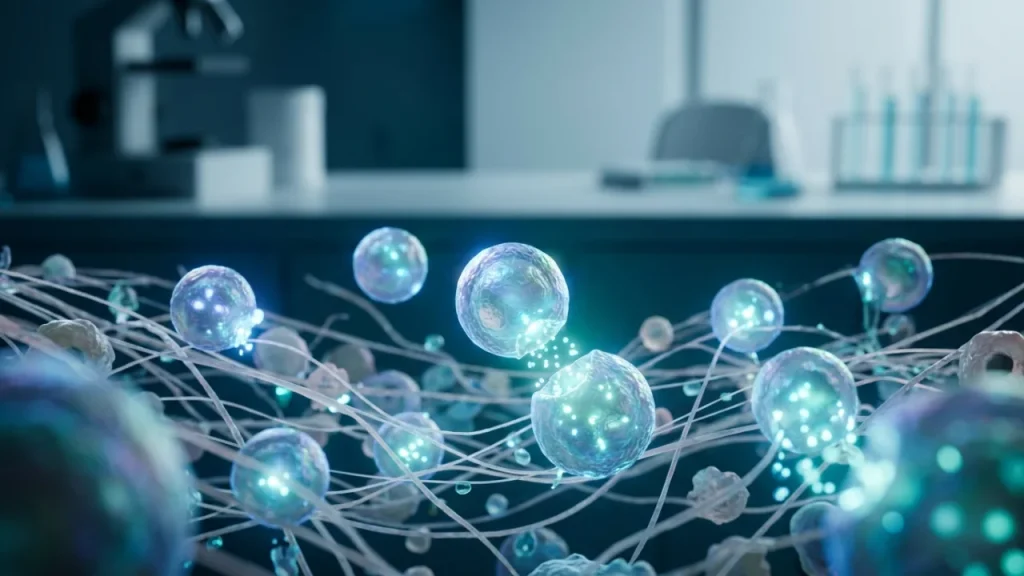
A single human cell can release thousands of tiny bubbles called exosomes every day. These bubbles are so small that you could fit millions of them on the head of a pin. Scientists once believed these tiny pods were just trash bags that cells used to throw away waste. Today, we know that is not true at all. These vesicles are actually the most advanced communication system in the human body. They act like high-speed mail carriers that deliver special packages from one cell to another.
The name exosome comes from two Greek words. Exo means outside, and soma means body. This describes exactly what they are: small bodies sent outside the cell. When a cell needs to send a message, it packs a bubble with proteins, fats, and genetic code. This bubble then floats through the space between cells until it finds a target. This precise way of sending signals is why exosomes are the future of aesthetic medicine. Instead of just adding moisture or chemicals to the skin, these messengers tell the skin how to fix itself from the inside.
Each exosome has a protective shell made of fats. This shell is very important because it keeps the message safe. The body is a busy place with many enzymes that like to break things down. The fatty shell acts like a tough envelope that protects the cargo until it reaches its destination. Once the exosome finds the right cell, it sticks to the surface. It then merges with the cell and releases its contents. This process is like a key fitting into a lock. Only the right cell gets the message, which makes the process very accurate.
Inside these tiny pods, you will find a variety of tools that help the skin:
- Growth factors that tell the skin to build more collagen.
- Proteins that help repair damaged cell walls.
- Genetic signals that turn on the healing process.
- Lipids that help the skin stay strong and hydrated.
Think of your skin as a large construction site. The cells are the workers who build and repair the structure. Over time, these workers can get tired or lose their instructions. When this happens, the skin starts to show signs of age or damage. Exosomes act like the site manager. They arrive at the site with brand new blueprints and fresh supplies. They give the workers the exact information they need to start building again. This is why they are so powerful for skin health. They do not just hide a problem. They give the cells the power to solve the problem. This natural communication helps the skin look younger and stay healthier for a longer time.
How Exosomes Carry Important Instructions
Exosomes carry millions of tiny molecules that act like software updates for your skin cells. These vesicles hold specific types of data known as RNA and proteins. When a cell receives an exosome, it is not just getting a package. It is getting a set of instructions that can change how the cell works. This ability to reprogram cells is why exosomes are the future of aesthetic medicine. They do more than just sit on top of the skin. They go inside to fix the source of the problem.
One of the most important pieces of data inside is called messenger RNA. Scientists call this mRNA for short. You can think of mRNA as a recipe book for the cell. In a young cell, the body has many recipes for things like collagen and elastin. Collagen makes your skin firm and strong. Elastin helps your skin bounce back when you move your face. As we get older, our cells lose these recipes or forget how to read them. Exosomes bring fresh copies of these recipes directly to the cell factory. Once the cell has the new mRNA, it starts making collagen again. It is like giving a chef a new cookbook so they can make a better meal for the skin.
Another key part of the cargo is micro RNA. We call this miRNA for short. These molecules act like volume knobs on a radio. Some genes in our skin cause inflammation or redness. Other genes cause the skin to break down over time. The miRNA inside an exosome can turn down the volume on these bad genes. At the same time, it can turn up the volume on genes that help the skin heal. This balance is what makes the skin look healthy and clear. It helps the skin stay calm and strong against the sun and pollution.
Exosomes also carry ready-to-use proteins. These are the actual tools and building blocks the cell needs right away. Some of these proteins are growth factors. They signal the cell to divide and create new, healthy cells. This replaces old, worn-out cells with fresh ones. Other proteins help repair the walls of the cell. If a cell wall is weak, the cell cannot hold onto water. This makes the skin look dry and dull. The proteins in exosomes fix these walls so the skin stays hydrated and glowing. This direct repair is much faster than waiting for the body to do it alone.
This process shows that skin care is moving away from simple creams. Instead, we are using the body’s own language to heal itself. By sending the right data, we can make old cells act like they did years ago. This is not just a temporary fix. It is a way to teach the skin to be better. This deep level of change is exactly why exosomes are the future of aesthetic medicine. They provide the instructions that our skin has forgotten over time. This natural communication helps the skin look younger and stay healthier for a longer time. In the next section, we will look at how these tiny messengers find exactly where they need to go.
The Difference Between Live Cells and Exosomes
Exosomes are about 1,000 times smaller than a single human cell. This massive difference in size is the first clue to how they work in the body. You can think of a cell as a large, busy factory that makes many different products. This factory is alive, it breathes, and it needs constant energy to stay active. An exosome is not alive. It is a tiny, round bubble that the factory sends out into the world. If the cell is a person, the exosome is a short text message sent by that person. The message tells someone else what to do, but the message itself does not need to eat or sleep.
In the past, many scientists tried to use live cells to fix damaged skin. This was a very difficult task because live cells are fragile. They can die quickly if the temperature changes even a little bit. They also have their own “ID cards” on their surface, which are called antigens. If you put someone else’s live cells into your skin, your body might see them as dangerous strangers. Your immune system might attack those cells. This often causes redness, swelling, or other health problems. Exosomes do not have this problem. Because they are not whole cells, they do not carry those same “ID cards.” Your body accepts them more easily and does not try to fight them off.
There are several key reasons why exosomes are different from live cells: – Cells are large and complex, while exosomes are tiny and simple. – Cells must stay alive to work, but exosomes are stable packages of information. – Cells can grow and change in ways that are hard to control, but exosomes only follow a set script. – Cells are very hard to store, while exosomes can be kept in a freezer for a long time without breaking.
This stability and safety is a major reason why exosomes are the future of aesthetic medicine. Doctors can use them to target specific skin problems without the risks that come with live cell therapy. When you use exosomes, you are not adding new “workers” to your skin. Instead, you are giving your own cells better instructions. It is like giving a worker a new manual that shows them how to do their job faster and better.
A single cell can release thousands of these tiny bubbles at once. Each one is packed with the specific tools we talked about, like proteins and genetic codes. When these bubbles reach a target, they merge with the wall of that cell. They dump their cargo directly inside where it is needed most. This is much more efficient than trying to force a whole new cell into a tissue. The exosome acts as a small delivery truck that knows exactly where to drop off the goods. It does not stay around to take up space or cause a mess. It delivers the help and then it is gone. This makes the whole process clean and very effective for skin repair.
Because they are so small, exosomes can travel through spaces that cells cannot fit into. They move through the fluid between your cells with great ease. This allows them to reach the deep layers of the skin very quickly. Once they arrive, they start the work of fixing damage from the sun, smoke, or age. They are the perfect messengers for a complex system. They bridge the gap between a signal and an action. This is how they help your skin stay young and strong. Now that we know what they are, we can look at how they find their way to the right spot.
The Molecular Science of How Exosomes Work
How Exosomes Travel Through the Body
Exosomes are smaller than a single speck of dust. Most of these vesicles are only 30 to 150 nanometers wide. This tiny size is their greatest superpower. It allows them to drift through the skin like a small fish in a vast ocean. They do not just sit still after they are released. They move through the spaces between your skin cells. This area is called the extracellular matrix. You can think of this space as a thick forest of fibers. These fibers are made of collagen and elastin. A large cell would get stuck in this forest. But an exosome is small enough to slip through the gaps.
These vesicles move using a process called diffusion. This means they travel from areas where there are many exosomes to areas where there are fewer. They also move with the flow of natural fluids in your body. This fluid is like a slow-moving river that carries the exosomes to their destination. They do not need a motor to move. They follow the natural rhythm of your body. This efficient movement is one reason why exosomes are the future of aesthetic medicine. They can reach deep layers of the skin that heavy creams cannot touch.
The journey of an exosome follows a specific path: – The vesicle leaves the parent cell and enters the fluid. – It drifts through the mesh of collagen and elastin fibers. – It detects chemical signals sent by damaged or tired cells. – It moves toward these signals to deliver its healing cargo. – It attaches to the target cell to start the repair process.
The skin is a crowded place. It is full of proteins, sugars, and water. If an exosome was large, it would bump into these things and stop. Because it is so small, it can bounce around these obstacles. This allows it to travel a long distance in a short time. This speed is key for healing. If you have a scratch or a sun spot, you want the repair signals to arrive fast. Exosomes provide that speed.
They also have a special outer shell. This shell is made of fats called lipids. This oily coat protects the cargo inside. It acts like a protective envelope for a letter. Without this coat, the proteins inside would break down in the fluid. The shell also helps the exosome slide past other cells. It reduces friction during the trip. This makes the travel even easier. They are built perfectly for long-distance travel.
As they move deeper, they pass through the epidermis and into the dermis. The dermis is where the most important work happens. This is where your skin makes new collagen to stay firm. By traveling to this deep layer, exosomes can change how your skin looks from the inside out. They do not just stay on the surface. They go where the real problems are. This deep travel makes them much more powerful than most traditional products. They are active travelers with a specific goal. They do not stop until they find the right cell to talk to. Once they find that cell, the real magic begins.
Why Exosomal mRNA Crosses Cell Boundaries
The cell membrane acts like a high-security wall for every cell in your body. This wall is designed to keep the cell safe by blocking strangers from entering. Most skin care ingredients are seen as strangers and cannot get past this barrier. Exosomes are different because they carry a special molecular key. This key is their outer shell, which is made of a double layer of fats called lipids. Because your own cells have shells made of the same lipids, they recognize the exosome as a friend. This recognition is the main reason why exosomes are the future of aesthetic medicine.
Inside this fatty shell sits a very delicate cargo called mRNA. You can think of mRNA as a set of blue prints or a recipe. It tells the cell exactly how to build new proteins like collagen and elastin. These proteins are what make skin look smooth and firm. However, mRNA is very fragile and would break apart if it touched the fluids outside the cell. The exosome shell acts like a protective armored car. it keeps the mRNA safe from enzymes that want to destroy it. This protection ensures the message reaches the cell factory in one piece.
When an exosome reaches a skin cell, it does not just knock on the door. It performs a process called membrane fusion. This happens in several clear steps:
- The exosome uses surface proteins to find a matching docking site on the cell.
- The fatty shell of the exosome touches the fatty wall of the cell.
- The two surfaces begin to melt together because they are made of the same material.
- A small opening forms where the two shells have joined.
- The exosome releases the mRNA directly into the interior of the cell.
This process is very efficient because it does not require the cell to use any extra energy. It is like two small bubbles of oil in a bowl of water. When the bubbles touch, they instantly become one larger bubble. This allows the mRNA to cross the boundary without ever being exposed to the dangerous environment outside. The cell receives the instructions perfectly. This is a much better delivery system than anything humans have made in a lab.
Once the mRNA is inside the cell, it goes to a place called the ribosome. The ribosome is the cell’s construction site. It reads the code on the mRNA and starts building the proteins the skin needs. If the code says to build collagen, the cell starts making collagen immediately. This is how exosomes program old or tired cells to act like young cells again. They do not just cover up problems on the surface. They change the instructions the cell is following.
The cell wall is usually very picky about what it lets in. It has guards that check every molecule. If a molecule is the wrong size or shape, the guards turn it away. But exosomes look like they belong there. They use the same language as the cell. This allows them to deliver their cargo to the deep layers of the dermis where it can do the most good. This deep delivery is what makes them so powerful for skin repair.
This molecular science shows that exosomes are more than just a trend. They are a natural way to talk to our cells. By protecting the mRNA and fusing with the cell wall, they ensure the repair message is heard. The cell can then start to fix damage from the sun, pollution, or aging. This ability to cross the cell boundary safely is the secret to their success in modern science. This process sets the stage for how the cell uses these new instructions to rebuild the skin.
How Your Cells Receive New Instructions
A single skin cell can receive thousands of exosomes in just one hour. These tiny bubbles do not just sit there once they enter the cell. They spill their contents into the liquid part of the cell called the cytoplasm. This is where the real work begins. The cell treats the new mRNA like a fresh set of blueprints. It is like a construction crew getting a new plan to fix a broken house. The cell does not have to guess what to do anymore. It simply follows the instructions it just received.
The cell starts to read the code immediately. This code tells the cell to make specific tools. These tools are often enzymes or proteins. In skin, the most important proteins are collagen and elastin. Collagen keeps the skin strong and firm. Elastin helps the skin snap back into place after you smile or frown. When we get older, our cells often forget how to make these proteins quickly. Exosomes remind them how to do their job again.
This inner rebuilding is why exosomes are the future of aesthetic medicine. Most traditional treatments try to fix skin from the outside. They might use heat or chemicals to cause tiny injuries. The body then tries to heal itself. Exosomes are different because they provide the actual instructions for healing. They do not need to cause damage to start the repair process. They work with the cell to build health from the inside out.
Inside the cell, the ribosome acts like a 3D printer. It takes the message from the exosome and builds a protein chain. This chain folds into a specific shape. If the shape is right, the protein can start its work. If the exosome carries growth factors, the cell might even start to divide. This creates new, healthy skin cells to replace old or damaged ones.
The process follows a very specific order: – The exosome releases its cargo into the cell cytoplasm. – The cell identifies the mRNA as a helpful message rather than a threat. – Ribosomes read the genetic code to build new, strong proteins. – The cell sends these proteins to the areas where the skin is weak. – The entire skin structure becomes stronger and smoother over time.
This process is surprisingly fast. Scientific studies show that cells can start making new proteins within minutes of receiving an exosome. However, you will not see the results on your face that quickly. You cannot see a single protein with your eyes. You only see the result when millions of cells work together. This teamwork is what changes the look and feel of the skin over several weeks.
The exosome also carries something called microRNA. This is different from mRNA. While mRNA tells the cell to start a project, microRNA often tells the cell to stop a bad process. It can tell a cell to stop creating inflammation. Inflammation is what makes skin look red, puffy, or irritated. By stopping these “bad” signals, the exosome helps the skin stay calm and clear while it rebuilds.
Think of the cell as a busy factory that has become messy over the years. The machines have slowed down and the workers are tired. Exosomes arrive like a team of expert consultants. They do not just give the factory more raw materials. They give the workers better tools and a cleaner workspace. This shift in how the cell operates is the key to long-term skin health. It turns an old, slow factory back into a high-speed production line.
Scientists are still learning about all the different messages exosomes can carry. We know they carry over a thousand different types of proteins and lipids. Each piece of information has a specific job to do. Some fix the cell wall while others help the cell manage its energy. This complex mix is what makes them so effective for repair. It is a complete repair kit in a tiny package. This deep cellular change prepares the skin for the final stage of visible renewal.
The Way Exosomes Find Damaged Skin Areas
Stressed skin cells release specific chemical signals that act like a loud siren for repair. These signals are not just random noise. They are precise codes that tell the body exactly where help is needed. When skin is damaged by the sun, pollution, or aging, it creates an environment of inflammation. This environment acts as a primary target for exosomes. They do not just float around the skin without a plan. Instead, they move with a clear purpose toward the areas that show the most wear and tear. This natural ability to find trouble spots is one of the main reasons why exosomes are the future of aesthetic medicine.
Exosomes use a biological navigation system to find their way through the skin. On the outside of every exosome, there are special proteins called receptors. You can think of these as tiny sensors or even eyes for the vesicle. These sensors look for matching proteins on the surface of damaged cells. They act like a key looking for a specific lock. This system ensures that the exosome only stops when it finds a cell that truly needs help. This makes the process efficient because the repair tools are not wasted on healthy tissue.
The process of finding the target happens in several clear steps: – Damaged cells release help chemicals into the fluid between cells. – Exosomes enter this fluid and begin to sense the chemical trail. – The sensors on the exosome surface lock onto the signals from the stressed cell. – The exosome moves through the skin layers toward the highest concentration of these signals. – Once it arrives, the exosome attaches itself firmly to the wall of the damaged cell.
This movement is known as homing. It is similar to how a bee can find a flower by following its scent in the wind. In the skin, this scent is made of proteins and lipids that only appear when a cell is in trouble. Because exosomes are so small, they can navigate through tight spaces that larger cells cannot reach. They slip through the gaps in the skin structure to reach the deepest layers. This is where the most important repair work often needs to happen.
Scientists have found that exosomes are especially attracted to areas with high inflammation. Inflammation is like a red flag in the body. While too much inflammation can make skin look bad, it serves as a perfect map for the exosome. It tells the exosome exactly where to drop off its cargo of healing proteins and genetic data. This targeted delivery means the skin gets the right help in the right spot at the right time. It is a much smarter way to treat skin than simply applying general nutrients to the surface.
This smart targeting system changes how we think about modern skin care. Instead of covering the whole face in a general product, we use messengers that know where to go. The exosomes act like a smart delivery service that has the exact address of the problem. They do not get lost and they do not deliver the package to the wrong house. This level of accuracy is what allows for fast and visible changes in skin texture. By focusing on the most damaged areas first, they speed up the healing process for the entire face. This focused repair prepares the ground for the next step: how these messengers actually enter the cell to start the work.
Why Exosomes Are the Future of Aesthetic Medicine for Natural Repair
Moving Away from Surface Level Treatments
Most skin products stay on the top layer of your skin. This layer is called the stratum corneum. It acts like a sturdy brick wall. This wall is great for keeping germs and dirt out of your body. However, it also keeps helpful ingredients out. Most creams have molecules that are too big
Programming Cells to Fix Themselves from Within
One single exosome is about one thousand times smaller than a human hair. Because they are so small, they can slip through the gaps in your skin that block larger molecules. These tiny bubbles act like high-tech messengers. They do not just sit on top of the skin like a heavy cream. Instead, they travel deep into the tissue to deliver a specific set of instructions to your cells. This ability to deliver messages is why exosomes are the future of aesthetic medicine. They allow us to talk directly to the skin cells and tell them how to behave.
Think of your skin cells like a busy factory. When you are young, the factory runs perfectly. It produces plenty of collagen to keep skin firm. It makes elastin to keep skin bouncy. As you get older, the factory workers get tired and lose their instruction manuals. They start to slow down or make mistakes. This is when you see wrinkles, sagging, and dullness. Exosomes act like a fresh manager arriving at the factory with a brand-new set of blueprints. They provide the “code” the cells need to start working hard again.
Inside each exosome is a powerful mix of biological tools. These tools help the cell repair itself from the inside out. This process is a form of bio-hacking. You are not using harsh chemicals to force a change. You are giving the body the exact signals it uses naturally to stay healthy. The cargo inside an exosome includes several key ingredients:
- Messenger RNA (mRNA) which provides the code to build new proteins.
- Growth factors that signal the cell to grow and divide.
- Proteins that help strengthen the structure of the cell.
- Lipids that protect the message until it reaches the right spot.
When a tired skin cell receives an exosome, it absorbs the bubble and reads the information inside. This is a major shift in how we treat aging. Traditional treatments often rely on causing a tiny injury to the skin. For example, lasers or needles create small wounds. The body then rushes to fix those wounds. Exosomes are different because they provide the healing signal without the need for an injury. They tell the skin to start the repair process immediately. This makes the treatment much more efficient and less stressful for your body.
The use of these messengers is a primary reason why exosomes are the future of aesthetic medicine. We are moving away from simply “filling” wrinkles or “peeling” the surface. Instead, we are programming the skin to fix itself. This leads to results that look more natural because the repair is done by your own biology. The skin becomes thicker and stronger because it is actually producing more of its own natural proteins.
Scientists have found that this cellular communication can help with many different skin concerns. It can help fade dark spots by telling pigment cells to calm down. It can help with redness by sending signals that lower inflammation. Most importantly, it helps the skin maintain a youthful glow by keeping the “factory” running at its best. By focusing on the science of the cell, we can achieve health that starts deep below the surface. This internal repair creates a strong foundation for the next steps in your skincare journey.
How Exosomes Trigger Long Term Collagen Synthesis
Fibroblasts are the tiny factories in your skin that create collagen and elastin. These two proteins act like the frame of a house. They keep your skin firm, bouncy, and smooth. As you get older, these factories start to slow down. They produce less collagen, and the collagen they do make is often weaker. This is why skin begins to thin and sag over time. Exosomes change this process by sending a direct signal to these tired factories. They do not just provide a quick fix. They give the cells the tools they need to start working like young cells again.
When an exosome reaches a fibroblast, it delivers a package of growth factors and genetic instructions. These instructions tell the cell to increase its output of Type I and Type III collagen. Type III collagen is often called baby collagen because it is abundant in young skin. It provides a soft and smooth texture. Type I collagen is stronger and provides the structural support. By increasing both types, exosomes help rebuild the skin from the inside out. This deep repair is a major reason why exosomes are the future of aesthetic medicine. We are no longer just covering up signs of aging. We are restarting the natural growth cycle of the skin.
The process of building new collagen does not happen overnight. It is a slow and steady transformation that follows a specific timeline:
- The first few days involve the cells receiving and reading the new instructions.
- After two to four weeks, the fibroblasts begin to produce new protein fibers.
- By the second month, these fibers form a dense network under the surface.
- At three months and beyond, the skin becomes visibly thicker and more resilient.
This timeline shows that exosomes create a long-term change in your biology. Traditional fillers might show a result immediately, but they eventually disappear. Exosomes work differently because they program your own body to do the work. The new collagen stays in your skin because your own cells created it. This makes the results look very natural. There is no risk of looking overfilled or frozen. Instead, your face simply looks like a younger version of itself.
Scientists call this process regenerative signaling. It means the skin is learning how to stay healthy on its own. This shift toward self-repair is why exosomes are the future of aesthetic medicine for patients who want lasting health. The skin becomes better at holding moisture and resisting damage from the sun. Every time a cell receives an exosome, it gains the ability to function at a higher level. This internal strength creates a smooth surface that lasts for many months. By focusing on the health of the fibroblast, we ensure that the skin stays strong long after the initial treatment is over. This foundation of healthy collagen is the key to true age reversal.
Improving the Strength of Your Skin Structure
Skin thickness drops by about one percent every single year after you turn twenty. This thinning makes the skin look like tissue paper over time. It loses the ability to bounce back when you touch it. Exosomes change this path by sending signals to the deep layers of your skin. These signals tell the cells to build a thicker foundation. When the foundation is thick, the surface looks smooth and firm. This structural change is a big reason why exosomes are the future of aesthetic medicine. They do not just hide the signs of aging. They fix the physical structure of the skin from the inside out.
Think of your skin like a house with a wooden frame. In your skin, this frame is called the extracellular matrix. It is made of collagen, elastin, and special sugars. As we get older, the frame of the house starts to rot or break. Exosomes act like a repair crew that brings new wood and nails. They deliver the exact instructions needed to fix the broken parts of the frame. This process makes the entire skin wall much denser. A dense skin wall can hold its shape much better than a thin one.
Gravity pulls on your skin every second of the day. If your skin is thin and weak, gravity wins. This leads to sagging, jowls, and deep lines around the mouth. Exosomes help the skin fight back against this constant downward pull. They increase the production of elastin. Elastin acts like a tiny rubber band inside your tissue. These bands pull the skin back into place after you smile or move your face. When your skin has enough elastin, it stays tight against the bone and muscle. This creates a lifted look that is natural because your own body provides the tension.
A stronger skin structure offers several key benefits:
- Thicker skin keeps water inside more effectively so it stays hydrated.
- Stronger fibers prevent the skin from folding into permanent wrinkles.
- Increased density makes the skin less transparent and hides blue veins.
- Healthy cells produce more natural oils to protect the surface from wind.
Building a strong skin structure takes time, but the results are durable. Unlike a gel that sits under the skin, new collagen fibers are part of your living tissue. These fibers cross-link with each other to form a tight web. This web acts as a shield against the environment. It protects the deeper layers from heat and pollution. When the skin is structurally sound, it does not get irritated as easily. This is another reason why exosomes are the future of aesthetic medicine. They create a resilient barrier that keeps the skin looking healthy for a long time.
The most important part of this change is how the cells behave. Old cells often act tired and stop building new structures. Exosomes give these tired cells a fresh burst of energy and information. They turn back the clock on how the cell functions. Instead of just surviving, the cells start thriving and building again. This shift from resting to building is what creates lasting thickness. The skin becomes more than just a covering for the body. It becomes a strong, active organ that can repair itself. This deep repair is the secret to why the skin looks so much better months after the treatment. This new strength sets the stage for how the skin handles light and color.
Comparing Exosomes and Traditional Stem Cell Therapies
Why Exosomes Are an Ethically Clear Alternative
Exosomes do not contain a nucleus or any DNA, which means they are not living things. This fact is the most important part of why they are different from stem cells. Traditional stem cell therapy often uses whole, living cells taken from human tissue. Some of those cells come from sources that people find controversial. For many years, the use of embryos in medicine caused many debates. People had concerns about where the cells came from and how they were used. Exosomes remove these concerns because they are just the messages that cells send out. They are like the mail, not the person who sent the letter.
Scientists grow healthy cells in a clean laboratory environment to get these vesicles. These cells live in a special liquid that helps them grow. As they grow, they release tiny bubbles filled with helpful proteins and growth factors. These bubbles are the exosomes. Experts collect the liquid and filter it many times. They remove all the living cells and leave only the healing signals behind. Because the final product contains no cells, there is no need to use embryos or other sensitive sources. This makes the process much cleaner and easier for everyone to accept. This clarity is a big reason why exosomes are the future of aesthetic medicine.
Safety is another reason why this cell-free path is better. When you put a living cell into a body, that cell might act in ways you do not expect. It might grow too much or move to the wrong place. Exosomes cannot do this because they cannot divide or reproduce. They are simply tools that tell your own skin cells to work harder. Your body does not see them as a foreign threat. It sees them as a set of instructions. This reduces the risk of the body rejecting the treatment. It also makes the treatment much more predictable for the doctor and the patient.
- Exosomes do not require the use of human embryos for their production.
- They are harvested from cells grown in strictly controlled laboratory settings.
- The final liquid contains no living genetic material or whole cells.
- Patients do not have to worry about the moral history of the source.
- The process focuses on the healing signal instead of the cell itself.
Many people avoid advanced medicine because of their personal or religious beliefs. They do not want to use products that feel ethically wrong. Exosomes offer a way to get the benefits of stem cell science without any of the guilt. This technology allows doctors to help patients using a method that is both powerful and kind. It creates a bridge between high-tech science and ethical peace of mind. When the source is clear and the method is safe, patients feel more comfortable. This trust allows more people to try new ways to fix their skin. This shift toward cell-free tools is changing how we look at healing. It moves the focus from the source of the cell to the power of the message. This change ensures that the skin gets the best care possible without any difficult choices.
The Safety Benefits of Using Vesicles Instead of Live Cells
Live stem cells are powerful because they can grow and change into many types of tissue. However, this power comes with a serious risk called a teratoma. A teratoma is a type of tumor that grows when stem cells divide in an uncontrolled way. These tumors can contain different types of tissue, like hair, bone, or muscle, growing in the wrong place. Because exosomes are not alive, they cannot divide or grow into tumors. They do not have a nucleus or the DNA needed to reproduce themselves. This is one of the main reasons why exosomes are the future of aesthetic medicine. They provide the healing signals of stem cells without the danger of unwanted growth.
When a doctor uses live stem cells, those cells must survive in a new environment. These cells need oxygen and nutrients to stay healthy. If the cells do not get what they need, they can die or behave in ways the doctor did not plan. Exosomes do not have these needs. They are tiny bubbles, or vesicles, that carry a specific cargo of proteins. They do not need to “live” in your skin to work. They simply deliver their cargo and then dissolve. This makes the treatment much more stable.
The immune system also reacts differently to exosomes than it does to live cells. Your immune system acts like a guard for your body. It looks for foreign cells and attacks them to keep you safe. Live stem cells have markers on their surface that the immune system can easily see. If the body thinks a new cell is an intruder, it will cause inflammation and swelling. This can lead to the body rejecting the treatment entirely. Exosomes are much smaller than cells and often lack these “red flag” markers. Because they are cell-free, the body is less likely to see them as a threat.
- Exosomes cannot turn into cancer cells or tumors.
- They do not require a blood supply to stay active.
- They do not migrate to other parts of the body to grow.
- They deliver a fixed dose of instructions that does not change.
- They are cleared from the body naturally once their job is done.
Precision is another major safety benefit. It is very hard to know exactly what a live cell will do once it enters the skin. It might react to local signals in a way that causes too much inflammation. With exosomes, scientists can measure exactly what is inside every tiny bubble. This allows for a very controlled and predictable result. You get the benefits of cellular communication without the unpredictability of a living organism. This move toward using the message instead of the messenger is changing how we treat aging skin. It ensures that the skin gets the exact help it needs to repair itself safely. This high level of control is what makes these vesicles a superior choice for modern skin care.
Why Exosomes Do Not Cause Immune Rejection
Every human cell carries a unique biological barcode on its outer layer. This barcode tells your immune system if a cell belongs in your body or if it is a stranger. When a doctor uses traditional stem cell therapy, they put whole, living cells into your skin. These cells have their own barcodes. If these markers do not match your own body exactly, your immune system will notice. It sees the new cells as invaders. This can lead to an immune reaction where your body attacks the treatment. This attack often causes swelling, redness, and heat in the skin. In some cases, the body rejects the treatment entirely.
Exosomes solve this problem because they are much simpler than whole cells. They are tiny bubbles that do not carry these barcode proteins on their surface. Scientists call these ID markers the Major Histocompatibility Complex, or MHC for short. Most exosomes are considered MHC-null. This means they have no ID markers at all. Because they lack these flags, they can travel through the skin without being noticed by your immune guards. This invisibility is a big reason why exosomes are the future of aesthetic medicine. They provide the benefits of cellular repair without the risk of an allergic reaction.
Think of a whole stem cell like a person trying to enter a private club. The guard at the door will check their face and their ID card. If the guard does not recognize them, he will turn them away. An exosome is more like a small, sealed letter slipped under the door. The guard does not stop the letter because it does not have a face or an ID card to check. The letter still carries the important message inside. This message tells your skin cells how to fix themselves and make more collagen.
The structure of an exosome also helps it stay safe. The outer shell is made of a lipid bilayer. This is just a fancy name for a double layer of healthy fats. These fats are almost exactly like the fats that make up your own cell walls. When an exosome touches one of your skin cells, the two fatty layers can melt together. This allows the exosome to deliver its cargo of proteins directly into the cell. This process happens quietly and naturally. It does not trigger the alarms that a whole foreign cell would.
Since exosomes are not alive, they do not have a nucleus. They do not contain the genetic material that can cause a mismatch between a donor and a patient. They are simply fatty shells filled with helpful growth factors. Your body sees these shells as natural building blocks rather than foreign threats. This makes the treatment very predictable and safe for almost everyone. Doctors can use the same high-quality exosomes for many different people because the risk of rejection is so low. This high level of safety allows the skin to start the repair process immediately. There is no biological war between your immune system and the treatment. This peaceful interaction is what makes this technology a superior choice for modern skin health.
How Exosomes Offer More Precise Results Than Stem Cells
Stem cells are living units that can change their behavior based on their environment. Think of a stem cell as a construction worker who arrives at a job site. If the site is messy or hot, the worker might get confused or tired. They might start painting a wall when they should be fixing a leak. You cannot always tell what a living cell will do once it enters your body. This lack of control is one reason why doctors are moving toward a more precise method. Exosomes are the specific tools that the worker uses to get the job done right. They are not alive, so they do not get confused or change their mind.
Using the whole stem cell is like bringing an entire factory to your house to fix one small window. It is too much equipment for a simple task. The factory makes many things you do not need. In the same way, stem cells release thousands of different signals. Some of these signals help the skin, but others might cause unwanted swelling or redness. This is often called biological noise. When there is too much noise, your skin cells cannot hear the helpful instructions. This is why exosomes are the future of aesthetic medicine because they remove the noise. They provide a clear and loud signal that tells your skin exactly how to repair itself.
Scientists can now pick the best messages from the best cells in a lab. They separate the helpful exosomes from the rest of the cell parts. This process creates a very pure treatment. When a doctor uses these purified messengers, they know exactly what will happen. The results are much more predictable than using whole cells. You get the same high-quality repair every single time.
There are several reasons why this precision is better for your skin: – Exosomes do not grow or divide, so they cannot form unwanted tissue. – They carry a specific set of proteins that focus only on skin repair. – They stay stable and do not change their message based on your body chemistry. – They work immediately because they do not need to stay alive to be effective. – Doctors can measure the exact number of messengers in every dose.
In a lab, experts can count exactly how many vesicles are in a tiny drop of liquid. They can check the specific proteins inside each one to ensure they are perfect. This level of detail is not possible with living stem cells because living cells change every second. Exosomes are like a finished product that is ready to use. They act like a software update for your skin cells. Once they arrive, they deliver the code for making new collagen and elastin. This direct approach makes the treatment faster and more effective. By using only the message, we remove the risks of the messenger. This leads to smoother skin and a more youthful look without the guesswork of older therapies.
How Exosomes Change the Way We Fight Aging
Reversing the Signs of Sun Damage with Cell Signals
UV rays from the sun cause up to 80 percent of the visible signs of aging on your face. These rays act like tiny, invisible bullets. They punch through your skin and hit the DNA inside your cells. When DNA is damaged, the cell cannot do its job well. It stops making collagen. It loses the ability to stay firm. Over time, this damage shows up as dark spots, deep lines, and thin skin. Scientists used to think this damage was permanent. Now, we know that we can send help directly to these hurt cells. Exosomes are the tools we use to send that help.
Exosomes work because they can get inside a cell. Most skin creams just sit on top of the skin. They cannot reach the DNA. Exosomes are different because they are tiny bubbles made of the same material as your cell walls. This allows them to melt into the cell. Once they are inside, they release a cargo of repair tools. These tools include proteins and small bits of genetic code. These bits of code act like a new instruction manual for the cell. They tell the cell how to find the broken parts of its DNA and fix them.
This deep level of healing is a big reason why exosomes are the future of aesthetic medicine. We are no longer just hiding the damage. We are helping the body fix the root cause of the problem. When a sun-damaged cell receives an exosome, it starts to act young again. It begins to produce fresh collagen. It clears out the waste that makes skin look dull. This is a complete reset for the skin at a molecular level.
There are several ways these messengers fix sun damage: – They turn off the signals that create dark brown spots on the skin. – They give the cell the energy it needs to repair its outer shield. – They stop the production of enzymes that eat away at your natural collagen. – They help the skin grow new, healthy blood vessels for a better glow. – They reduce the heat and redness that stays in the skin after sun exposure.
Sun damage also creates “zombie cells.” These are cells that are too damaged to work but do not die. They sit in your skin and send out bad signals to healthy cells nearby. This makes the aging process happen even faster. Exosomes can help these zombie cells either start working again or clear out of the way. This stops the spread of aging signals. By fixing the DNA and removing these bad signals, the skin becomes thicker and smoother. This process takes time, but the results look very natural because your own cells are doing the work. This shift toward cellular repair shows us a new way to keep skin healthy for a long time.
Reducing Fine Lines by Boosting Elastin Production
Elastin fibers act like millions of tiny rubber bands hidden deep inside your skin. These bands allow your skin to stretch when you smile, laugh, or talk. Once you stop moving your face, these bands pull the skin back to its original flat shape. This “snap-back” quality is what keeps your face looking firm and smooth. As we get older, our bodies almost completely stop making these important fibers. This loss is a major cause of fine lines and saggy skin that does not go away.
Exosomes provide the specific instructions needed to restart this building process. Most skin treatments focus only on collagen, but collagen is mainly for strength. Elastin is what prevents the skin from staying wrinkled after a movement. This focus on deep structural repair is why exosomes are the future of aesthetic medicine. They do not just fill a gap in the skin. Instead, they tell the skin to grow its own support system again. This leads to a much more natural look because it is your own body doing the work.
Inside every exosome are tiny packets of information called messenger RNA. When an exosome enters a skin cell, it releases this information. The cell reads these instructions like a recipe for a cake. The recipe tells the cell to find the raw materials it needs to build new elastin. This is a very precise process that happens deep in the dermis layer. Without these instructions, the skin cells stay “sleepy” and do not produce enough protein. Exosomes wake these cells up and give them the energy to work hard again.
There are several ways exosomes improve the bounce in your skin: – They signal cells to build new protein chains that form elastin. – They protect existing elastin from being broken down by age. – They improve the organization of fibers so they work better together. – They help the skin hold onto moisture, which makes fibers more flexible. – They increase the number of active factory cells in the skin.
Fine lines often appear first around the eyes and mouth because these areas move the most. When elastin is weak, the skin folds and stays folded. This creates a permanent line that looks like a small crack. Exosomes help by thickening the network of fibers in these high-movement areas. This makes the skin more resilient. You can think of it like replacing old, dried-out rubber bands with brand new ones. The skin becomes harder to wrinkle and easier to smooth out.
Many people think that once elastin is gone, it can never come back. For a long time, many scientists believed this was true. However, new research shows that cells can be “re-programmed” to act like they are young again. Exosomes are the tools that handle this programming. They cross the cell membrane easily and deliver their cargo exactly where it is needed. This is much more effective than just putting a cream on the surface of the skin.
This change in how we treat aging is very exciting for everyone. We are moving away from temporary fixes and toward real biological changes. By boosting elastin, we help the skin maintain its bounce for much longer. This results in a look that is not just younger, but also much healthier. This process creates a strong foundation that helps the skin stay glowing and hydrated.
Helping Skin Heal Faster After Medical Procedures
Exosomes can reduce the time skin stays red after a laser treatment by more than 50 percent. This speed is a major reason why exosomes are the future of aesthetic medicine. Most professional skin treatments like microneedling or lasers work by creating controlled damage. These small injuries tell the body to wake up and start fixing itself. However, this natural process often causes swelling, heat, and discomfort for several days. Exosomes change this by sending clear instructions to the cells immediately. They act like a fast-track delivery service for healing signals.
When a laser hits the skin, it creates heat and tiny holes in the surface. The body reacts by sending blood and immune cells to the area. This is why your face looks red and feels hot after a procedure. Normally, the body takes its time to decide how to fix the damage. Exosomes skip this waiting period. They carry specific proteins and genetic bits that tell the skin to stop the emergency phase. They help the skin move quickly into the building phase.
There are several ways exosomes help the skin heal after a medical procedure: – They lower the level of inflammatory chemicals that cause pain and heat. – They tell the skin cells to close up the tiny holes made by needles much faster. – They help the small blood vessels return to their normal size to reduce redness. – They signal the cells to start making new tissue instead of just forming a scab.
This rapid response is not just about looking better sooner. It is also about the quality of the repair. When skin heals too slowly, it can sometimes create scar tissue or dark spots. Exosomes prevent these problems by organizing the repair process. They make sure the new skin cells grow in an orderly way. This leads to a smoother surface and a more even skin tone. It is the difference between a messy patch job and a professional renovation.
Doctors often apply exosomes right after a treatment while the skin is still open. Because the skin has tiny channels from the laser or needles, the exosomes can travel deep inside. Once they are inside, they find the cells that are under stress. They merge with these cells and release their cargo of growth factors. This is much more powerful than any lotion you can buy at a store. A lotion stays on the surface, but exosomes work from the inside out.
This technology is a game-changer for people with busy lives. In the past, a deep skin treatment meant staying home for a week to hide the peeling and redness. Now, the recovery window is much smaller. The skin feels cooler and looks calmer in just a few hours. This is why exosomes are the future of aesthetic medicine for anyone who wants results without the long wait. They turn a stressful event for the skin into a productive one. The body does not just heal; it thrives. This makes the entire experience of skin care more effective and much more comfortable. By speeding up the repair, we allow the skin to focus its energy on looking its best. This efficiency leads us to the next important step: how these messengers protect our skin from future damage.
Why Exosomes Make Skin Look Younger Naturally
Exosomes carry over 1,000 different proteins that tell your skin cells how to act young again. These tiny messengers act like a software update for your body. As we get older, our skin cells become slow and tired. They stop making the proteins that keep our skin firm and bright. Exosomes fix this by delivering a fresh set of instructions directly into the cells. They do not just sit on the surface of the skin like a cream. Instead, they enter the cell and release their cargo of growth factors and genetic signals. This process changes the cell from the inside out. It forces the cell to start working like it did years ago.
The result of this process is often called the exosome glow. This glow is different from the shine you get from a moisturizer or a face oil. It comes from the health of the skin itself. When skin cells are healthy, they create a very smooth surface. A smooth surface reflects light much better than a rough or dry one. This is why healthy skin looks like it is lit from within. It is a biological change, not a cosmetic trick. This is a major reason why exosomes are the future of aesthetic medicine for people who want real results. They help the skin look better by actually making it better.
Traditional treatments often use fillers to hide the signs of aging. Fillers are gels that a doctor puts under the skin to add volume. They work well to fill a deep line or a hollow cheek. However, fillers do not change the health of the skin cells. The skin on top of the filler is still aging and losing its strength. Exosomes take a different path. They focus on the building blocks of the skin, such as collagen and elastin.
- Collagen acts like the glue that holds the skin together.
- Elastin allows the skin to snap back into place after you smile or frown.
- Healthy cells produce these proteins 24 hours a day.
- Exosomes give the cells the energy and the plan to build more of these proteins.
When your cells make more collagen, your skin becomes thicker and more resilient. You do not need artificial materials to fill the gaps because your own body is doing the work. This leads to a look that is much more natural. You still look like yourself, but you look like a rested and refreshed version of yourself. The skin feels firmer to the touch and looks more vibrant in the mirror. This shift from “filling” to “building” is a huge step forward in science. It moves us away from temporary fixes and toward true cellular health. By teaching the skin to repair itself, we create a beauty that lasts much longer. This natural strength also makes the skin much better at resisting new damage from the sun or the environment.
The Role of Exosomes in Modern Skin Health
Keeping Your Skin Hydrated at a Deep Level
Dry skin happens when the protective wall of your skin develops tiny holes. This wall is the outer layer of your skin. Scientists call it the skin barrier. Its main job is to keep water inside your body. When this barrier is weak, water escapes into the air. This makes your skin feel tight, itchy, and rough. Most people try to fix this by putting oil or cream on their face. These products sit on the surface. They act like a temporary band-aid. They stop water from leaving for a few hours. However, they do not fix the holes in the wall.
Exosomes work in a very different way. They do not just sit on top of the skin. They travel deep into the layers where new skin is made. Inside these layers, they act like a repair crew. They carry specific instructions to the cells that build the skin barrier. These instructions tell the cells to produce more natural fats. These fats are called lipids. You can think of lipids as the mortar between the bricks of a house. If the mortar is strong, the house stays warm and dry. If the mortar is missing, the house becomes drafty.
Exosomes help your skin make three main types of lipids: – Ceramides, which act like a waterproof seal. – Cholesterol, which helps the skin stay flexible. – Fatty acids, which keep the skin surface healthy. – Natural proteins that bind water molecules.
When your cells receive these signals, they start to rebuild the barrier from the inside out. This is a big reason why exosomes are the future of aesthetic medicine. Instead of giving the skin a fake layer of moisture, they help the skin create its own. This process is called endogenous hydration. It means the moisture comes from within your own body. It is much more effective than any store-bought cream.
A strong barrier does more than just keep water in. It also keeps bad things out. Dirt, pollution, and bacteria have a harder time getting into healthy skin. This reduces redness and irritation. When your skin is hydrated at a deep level, it looks plump. Fine lines seem to disappear because the cells are full of water. The skin feels soft to the touch and has a natural glow. You do not need to rely on heavy makeup to hide dry patches. Your skin becomes a self-sustaining system that stays moist on its own. This deep repair creates a healthy foundation that lasts much longer than any traditional lotion. By fixing the barrier, exosomes also help the skin stay calm and stop reacting to the wind or the sun. This shift toward internal health prepares the skin to handle the next big challenge: fighting inflammation.
How Exosomes Protect Cells from Daily Stress
Every day, your skin cells face thousands of tiny attacks from invisible particles in the air. These particles come from car exhaust, smoke, and industrial chemicals. Scientists call this particulate matter. These bits of pollution are much smaller than a human hair. Because they are so small, they can sink deep into your pores and enter your cells. Once inside, they create a form of biological chaos called oxidative stress. This stress acts like tiny sparks that burn the structures inside your cells. It breaks down collagen and damages your DNA. This is a major cause of early aging and skin dullness.
Exosomes act as the primary defense system against these daily threats. When a cell is under attack, it sends out these tiny vesicles to warn other cells. Think of an exosome as a high-tech messenger bag. It carries specific proteins and antioxidants that can stop the damage before it spreads. This proactive defense is a big reason why exosomes are the future of aesthetic medicine. Instead of just covering up damage, they teach the skin how to stay strong against the modern world. They provide the tools your cells need to fight back against toxins.
Exosomes protect your skin cells through several specific actions: – They deliver enzymes that neutralize free radicals caused by pollution. – They carry genetic instructions that tell cells to build more protective proteins. – They help repair the cell membrane after it has been touched by toxins. – They signal the cell to increase its own natural production of antioxidants. – They help move waste products out of the cell to keep the internal environment clean.
This cleaning process is vital for cell survival. When toxins build up, a cell becomes sluggish and cannot repair itself. Exosomes support a process called autophagy. This is the way cells “clean house” by recycling old or damaged parts. By helping with this cleanup, exosomes ensure that your skin stays vibrant even if you live in a crowded city. They also protect the mitochondria, which are the power plants of your cells. When these power plants are healthy, your skin has the energy to glow and stay firm.
Traditional skincare often sits on top of the skin. It acts like a physical umbrella. Exosomes are different because they work from the inside. They give your cells an internal shield that does not wash off. This creates a resilient system that can handle heat, wind, and smog. By keeping the internal parts of the cell safe, exosomes prevent the redness and “tired” look that comes from a busy lifestyle. This deep protection ensures that your skin remains calm and stable. Once the cells are safe from outside stress, they can focus on their next major task: controlling the fires of inflammation.
The Science of Reducing Redness and Inflammation
Inflammation is the body’s natural alarm system, but a broken alarm causes constant skin damage. When your skin stays red or irritated for a long time, it is in a state of chronic inflammation. This process breaks down the healthy proteins that keep your skin firm. Exosomes act as tiny peacekeepers that travel through your skin to turn off these false alarms. They do not just cover up the redness on the surface. Instead, they change the behavior of the cells that cause the trouble in the first place.
Exosomes are small bubbles that act like mail carriers. They carry special messages made of proteins and genetic code. These messages tell the immune system to relax and stop attacking healthy tissue. When your skin is stressed, your immune cells become overactive. They release chemicals that cause heat, swelling, and pain. Exosomes deliver a “stop” signal directly to these overactive cells. This deep biological action is a major reason why exosomes are the future of aesthetic medicine. They fix the root cause of irritation rather than just treating the symptoms.
Inside your skin, there are specialized cells called macrophages. You can think of these as the skin’s security guards. These guards have two main modes: “attack” and “fix.” In a state of constant redness, these guards stay stuck in attack mode. They accidentally destroy healthy collagen while trying to protect you. Exosomes carry tiny pieces of code called microRNA. This code flips the switch on the security guards. It turns them back into “fixers” who start to repair the skin instead of hurting it.
This calming process involves several specific steps: – They block the chemical signals that trigger swelling and heat. – They increase the production of natural proteins that soothe the skin. – They help the skin barrier close up to keep out dust and germs. – They reduce the activity of enzymes that eat away at your skin’s structure. – They speed up the time it takes for a red spot or a blemish to fade away.
At a molecular level, exosomes contain a protein called TGF-beta. This protein is a powerful signal for growth and peace. When an exosome enters an inflamed cell, it releases this protein like a calming medicine. The cell then stops producing the “fire” chemicals that cause a flushed look. This process happens much faster than using a standard cream. Most creams stay on top of the skin and cannot reach the immune cells. Exosomes are small enough to go deep into the layers where the real work happens.
When inflammation goes down, your skin can finally focus on healing. Chronic redness often leads to long-term problems like dark spots or permanent lines. By stopping the inflammation early, exosomes prevent these issues from ever starting. They keep your skin tone even and your texture smooth. This is not just about looking good; it is about keeping your skin biology healthy. A calm cell is a productive cell. Once the “fire” of inflammation is out, the skin is ready for the next big task. It can now start the hard work of building new structures to stay firm and young.
Why Healthy Cell Communication Prevents Skin Sagging
Skin cells talk to each other thousands of times every second to keep your face firm and lifted. This constant conversation is the secret to why young skin does not sag. When cells are young, they send clear, strong messages. These messages tell the skin to build a solid foundation. As we get older, these messages become quiet or blurry. This silence is a major reason why skin starts to lose its shape and hang loosely.
Inside your skin, there are special cells called fibroblasts. Think of these cells as construction workers. Their main job is to make collagen and elastin. Collagen acts like a glue that holds your skin together. Elastin is like a rubber band that lets your skin snap back into place after you smile or frown. To do their work, these builders need instructions. They do not work alone. They wait for signals from other cells to tell them when to start building new fibers.
Exosomes are the mail trucks that carry these important instructions. They travel between cells to deliver specific packages of information. These packages contain genetic codes and proteins. When a builder cell receives an exosome, it reads the message inside. The message might say, “We need more collagen in the cheek area right now.” Without these clear signals, the construction workers stop working. This is a big part of why exosomes are the future of aesthetic medicine. They give the skin the exact data it needs to stay strong and tight.
When communication is healthy, the skin maintains a thick network of fibers. This network acts like a mattress. A new mattress is firm because the springs are strong. Over time, if the springs break, the mattress sags in the middle. In your skin, the “springs” are the collagen fibers. Exosomes help fix these springs by telling the cells to repair the damage. They do not just cover up the problem. They fix the biological roots of the sagging.
The process of communication follows these steps: – Healthy cells release exosomes filled with growth signals. – These vesicles travel through the fluid between your skin layers. – They attach to the surface of a fibroblast cell. – The fibroblast cell swallows the exosome and reads the instructions. – The cell starts making new proteins to tighten the skin structure.
Aging is often just a breakdown in this delivery system. Old cells send fewer exosomes. The exosomes they do send might have mistakes in the message. This leads to weak collagen and thin skin. When skin becomes thin, gravity pulls it down more easily. This is how jowls and loose skin on the neck start to form. By improving the way cells talk, we can help the skin behave like it is much younger.
Traditional treatments often try to trick the skin into healing by causing tiny injuries. Exosomes take a different path. They use the body’s own language to trigger repair. This makes the process efficient. Instead of forcing the skin to react to damage, they guide it to perform better naturally. This shift in how we treat skin is why exosomes are the future of aesthetic medicine. It is a move from simply “fixing” a problem to “programming” the skin for better health.
A firm face is the result of millions of successful conversations. When cells share the right data, the skin stays resilient. This internal dialogue keeps the skin barrier thick and the structure solid. If we can keep the communication lines open, we can help prevent sagging before it even starts. This leads us to the next important part of skin health: how cells use energy to stay active and keep the conversation going.
What to Expect from the Future of Exosome Technology
New Ways to Deliver Exosomes to the Skin
Scientists are now designing tiny tools to push exosomes deeper into the skin without using large needles. The outer layer of your skin is a very strong shield. It keeps water in and germs out. However, this shield also blocks many helpful skin treatments. To fix this, researchers are creating new delivery systems that act like a key for a lock. These systems ensure the exosome messages reach the deep layers where they can do the most good.
One of the most promising new tools is the microneedle patch. These look like small, clear bandages. On one side, they have hundreds of microscopic points. These points are often made of dried exosomes mixed with a substance that dissolves. When you press the patch onto your skin, the points enter the top layer. They do not go deep enough to hit nerves. This means you do not feel any pain. Within minutes, the points melt and release the exosomes directly into the tissue.
This new method offers several benefits for skin health: – It provides a steady flow of signals to the cells over a long time. – It protects the delicate exosomes from breaking down too quickly. – It allows for very precise treatment of small areas like fine lines. – It removes the need for expensive equipment or clinical visits. – It creates a clean path for the exosomes to reach the fibroblasts.
Another major step forward involves advanced topical serums. In the past, putting exosomes in a cream did not work well. The exosomes would often get stuck on the surface or lose their power. Now, scientists use a process called encapsulation. They wrap the exosomes in a thin layer of protective fats. This layer mimics the natural oils of your skin. This trick allows the exosomes to glide through the skin’s defenses. This ease of use is why exosomes are the future of aesthetic medicine. It allows high-level science to fit into a daily routine.
Precision is the next goal for exosome technology. Future treatments might use smart vesicles that only talk to specific types of cells. For example, a serum could contain exosomes that only trigger pigment-producing cells to slow down. This would treat dark spots without affecting the rest of the skin. This level of control was impossible ten years ago. We are now learning how to direct the body’s repair crew with perfect accuracy.
These delivery systems also solve the problem of storage. Exosomes are fragile and usually need to stay in a deep freezer. New dry-tech methods allow scientists to turn them into a stable powder. This powder can be mixed into a gel or patch right before use. This means the treatment stays fresh and powerful until the moment it touches your skin. As these delivery methods become common, the focus will shift from how we send the message to how the cell finds the power to act on it. This leads to the role of cellular energy in the repair process.
How Science Will Make Exosome Treatments Even Better
Scientists are now learning how to open the tiny doors of an exosome to put specific nutrients inside. Think of a natural exosome as a plain envelope. It carries a basic message from one cell to another. Now, researchers want to turn that envelope into a care package. They are finding ways to fill these tiny bubbles with high-powered vitamins and minerals. This process is called loading. It changes how we use these vesicles for skin health.
One big goal is to pack exosomes with Vitamin C. Your skin needs Vitamin C to stay firm and bright. However, Vitamin C is very fragile. It breaks down when it touches air or light. This is why many skin creams turn brown over time. If we put the vitamin inside an exosome, it stays safe. The exosome acts like a tiny, airtight box. It protects the vitamin until it reaches the deep layers of your skin. This protection ensures the skin gets the full power of the treatment.
This custom loading is a major reason why exosomes are the future of aesthetic medicine. We are no longer limited to what a cell naturally produces. We can now design the perfect “fuel” for skin repair. Scientists use a few different ways to get these nutrients inside the vesicles:
- They use gentle sound waves to create tiny, temporary holes in the exosome wall.
- They use mild electric pulses to push vitamins through the outer layer.
- They soak the exosomes in a rich liquid until the nutrients naturally seep inside.
- They use special chemicals to glue helpful proteins to the outside of the bubble.
Once the exosome is full, it becomes a smart delivery tool. It does not just float on the surface of your face. It travels down to the cells that need help. When the exosome finds a target cell, it merges with it. It dumps the vitamins and minerals directly into the center of the cell. This is much more effective than just rubbing a serum on your skin. Most regular products never reach the parts of the cell that build new collagen. Loaded exosomes change the rules of skin care.
Researchers are also testing how to pack exosomes with minerals like zinc and copper. These minerals help the skin heal from sun damage and redness. By using exosomes, we can send these helpers exactly where the damage is. We use a smaller amount of the ingredient but get a much better result. It is a smarter and cleaner way to treat the skin.
This technology also allows for custom recipes. A single exosome could carry a mix of vitamins, healthy fats, and proteins. This mix works like a specific plan for your skin type. If your skin is dry, the exosome carries more oils. If your skin is dull, it carries more brighteners. We are moving away from products that try to help everyone in the same way. Instead, we are building tiny tools that know exactly what your cells need. This shift will change the way we look at aging and health. These smart vesicles give cells the raw materials they need to create their own energy.
Why the World of Beauty is Moving Toward Biotechnology
Biotechnology allows us to reprogram skin behavior rather than just covering up flaws. For many years, beauty products only worked on the surface. Creams and lotions would sit on top of the skin to trap moisture. They could make the skin feel soft for a few hours, but they did not change how the cells worked. Today, the world of beauty is moving away from these simple fixes. We are entering an era where we use biology to talk directly to our cells. This shift is the main reason why exosomes are the future of aesthetic medicine. Instead of a temporary mask, we are giving the skin a new set of biological instructions.
Our skin cells have a natural communication system. When we are young, our cells talk to each other all the time. They send out signals to build strong collagen and repair daily damage. As we get older, these signals become weak and slow. Biotechnology helps us turn the volume back up on these cellular conversations. Exosomes act like a high-speed internet for your skin. They carry complex messages that tell old or tired cells to act like young cells again. This process is called cell signaling. It is much more powerful than any traditional makeup or serum.
Scientists are focusing on three main ways biotechnology improves the skin: – It speeds up the time it takes for skin to heal from sun damage or scars. – It helps the cells produce their own natural moisture from deep inside. – It strengthens the cell walls to protect against pollution and stress.
These are not just small improvements. They are permanent changes to how the skin lives and breathes. In the near future, we may stop buying generic anti-aging products entirely. Instead, we will use biological tools that match our specific needs. This is often called personalized care. We can see this trend growing every day in clinics around the world. Doctors are moving away from harsh chemicals that peel the skin. They want to use the same smart tools the human body already uses. This is why the world of beauty is moving toward biotechnology. It is a safer path because the body recognizes these biological messengers as its own.
Think about a house that needs repair. A coat of paint makes the house look better for a little while. But if the wood underneath is rotting, the paint will soon crack. Traditional beauty products are like that coat of paint. Biotechnology is like replacing the old wood with new, strong materials. It makes the whole structure healthy again. When the cells are strong, the skin looks great without needing extra help. This is the ultimate goal of modern science. We want the skin to be healthy at the molecular level.
Research shows that skin cells can produce up to 600 percent more collagen when they receive the right biological signals. This is a massive change compared to old methods. We are also learning how to filter out bad signals. Some messages in the body can cause redness and swelling. Biotechnology allows us to pick only the helpful messages. We can choose the signals that promote growth and calm the skin. This precision is what makes the new technology so exciting for everyone. We are no longer guessing what the skin needs. We are using data and biology to get real, lasting results. This path leads to a world where skin stays strong and bright for many decades. The next step is understanding how these treatments feel and look when you visit a specialist.