
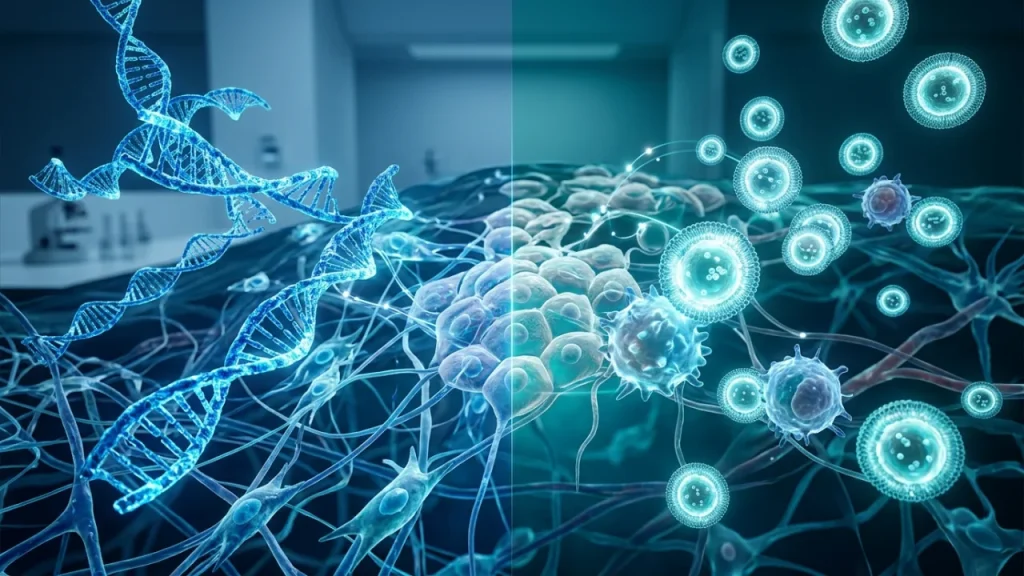
What Are PDRN and Exosomes and Why Should You Care?
Understanding the Basics of Regenerative Medicine
Your body can heal a cut on your skin. Regenerative medicine aims to boost that natural repair process. It goes beyond simple healing. This field seeks to restore damaged tissue to its original, healthy state. Think of it as helping your body’s own repair systems work better and faster.
The key targets are often cells and the signals they use. Our tissues function because cells communicate constantly. They send chemical instructions to each other. These signals tell cells when to grow, when to rest, and when to repair damage. As we age or face stress, these signals can become weaker or confused. The repair process slows down or works poorly.
Regenerative therapies for skin focus on several clear goals. They aim to reduce visible signs of aging. They also work to improve wound healing and reduce scarring. Another goal is to strengthen the skin’s fundamental structure. This approach tries to fix the root cause of issues, not just hide them.
The core idea is intervention with biological materials. Scientists look for specific molecules or cell components that can safely restart repair programs. These materials deliver precise instructions to your skin’s cells. The instructions tell dormant cells to become active again. They encourage the production of fresh collagen and elastin fibers.
Collagen is the main structural protein in your skin. It acts like a scaffold, providing firmness and support. Elastin allows skin to snap back after being stretched. Production of these proteins naturally declines over time. Regenerative strategies directly address this loss.
Two powerful approaches in this field are PDRN and exosomes. The comparison of pdrn vs exosomes centers on their different biological origins and mechanisms. Both are considered signal carriers, but they work in distinct ways. Understanding these basics helps clarify why they are used.
Effective regenerative medicine relies on specific, controlled signaling. It is not about overwhelming the tissue. It is about providing the right message at the right time. This precision helps avoid unwanted side effects. The goal is a natural-looking, healthy result driven by your body’s own capacity.
This foundational knowledge sets the stage for a deeper look at each therapy’s unique action. We will now explore what these agents are and how they communicate with your cells to promote renewal.
How PDRN vs Exosomes Differ in Their Origins
PDRN is a purified fragment of DNA. It comes from the sperm cells of salmon or trout. This source is chosen for its high biological compatibility with humans. The DNA is processed into small, specific chains. These chains are called polydeoxyribonucleotides.
Exosomes are natural nanoparticles. Your own cells make them constantly. Almost every cell type in your body releases exosomes. They are tiny vesicles, or bubbles, formed inside cells. Cells load them with a cargo of signaling molecules. Then they release them into the surrounding tissue.
Think of their origins like two different postal systems. PDRN is like a standardized, manufactured message. It is produced in a lab from a specific, external biological source. Exosomes are like personalized letters sent between your body’s own cells. They are native, complex messengers produced within your own tissues.
The origin of a substance defines its composition and action. PDRN is a single type of molecule. It is a defined chain of DNA building blocks. Its structure is consistent and predictable. This allows for precise dosing in treatments. Its primary known function is to activate a specific cellular receptor. This receptor is called the adenosine A2A receptor.
Exosomes have a far more complex composition. They are not one molecule but a package. Their membrane is a lipid bilayer, similar to a cell’s own membrane. Inside, they carry a diverse mix of cargo that varies by their source cell. – They contain growth factors. – They carry different types of RNA, which are instructions for protein production. – They include enzymes and other proteins.
This complexity means exosomes can deliver many signals at once. Their effect depends heavily on which cells produced them. For instance, exosomes from stem cells often carry different instructions than exosomes from skin cells.
Why should you care about these origins? The source dictates how the therapy interacts with your biology. PDRN offers a targeted, single-pathway approach. It provides a clear signal to start repair processes. Its external origin means it is a uniform product.
Exosomes offer a multi-faceted, naturalistic approach. They mimic your body’s own communication systems. Their natural origin may promote broader healing responses. However, their complex nature makes standardization a scientific challenge.
The comparison of pdrn vs exosomes starts with this fundamental difference. One is a defined molecular signal from an external animal source. The other is a natural nanoparticle package from human cells. This core distinction in origins leads directly to their different mechanisms in skin regeneration, which we will explore next.
Key Benefits of Using Biological Agents for Skin Repair
Your skin recognizes and uses natural biological signals more efficiently than synthetic ones. This is the primary advantage of agents like PDRN and exosomes. Their components already exist in your body’s own repair toolkit. This leads to higher biocompatibility and fewer unwanted reactions.
Think of it like a key and lock. A biological agent is a precise key that fits your skin’s cellular locks perfectly. A synthetic compound might be a bulky master key. It can work, but it may jam the mechanism or open the wrong doors. Biological agents are the original keys.
These natural tools offer targeted, intelligent action. They work with your body’s existing systems rather than forcing a single effect.
PDRN provides a clear example of targeted action. It delivers nucleosides, which are the building blocks for DNA. Damaged or aging cells struggle to produce enough of these blocks for repair. PDRN supplies them directly. This fuels cellular regeneration precisely where it is needed most. It is like delivering bricks to a construction site.
Exosomes take this intelligence further. They are communication packages. Their cargo can change based on the environment they enter. In an area of inflammation, exosomes can release anti-inflammatory signals. In an area with weak collagen, they can deliver instructions to build more. This responsive, multi-faceted approach is difficult to replicate with a single synthetic drug.
The benefits of this biological intelligence are clear in several areas: – Reduced irritation. Natural signals are less likely to trigger defensive inflammatory responses. – Synergistic effects. Multiple components can work together for a stronger outcome. – Longer-lasting results. By instructing your own cells, the repair process becomes self-sustaining.
Consider wound healing as a powerful example. Studies show biological agents can accelerate closure and improve scar quality. They do this by coordinating many cell types at once. Fibroblasts, immune cells, and keratinocytes all receive appropriate signals. A single synthetic compound rarely achieves this level of coordinated communication.
The debate of pdrn vs exosomes highlights two paths to intelligent repair. Both leverage natural biological language for superior results. PDRN offers a focused nutrient signal. Exosomes provide a broad instructional program. Your skin’s innate systems understand both languages fluently.
This fundamental benefit explains their growing use in regenerative aesthetics. They support the skin from within its own biological framework. The next logical question is how these different mechanisms translate into specific, visible outcomes for rejuvenation.
Why Compare PDRN and Exosomes for Treatment Choices
Choosing between PDRN and exosomes is not about finding the “best” therapy. It is about matching the right biological tool to your specific skin challenge. Think of it like home repair. You would use a specific filler for a small crack in drywall. You would need a full blueprint and new materials for a damaged foundation. Your skin presents different types of damage. The optimal treatment depends on the problem’s nature and depth.
PDRN acts as a precise nutrient signal and building block. Its mechanism is focused. It primarily tells cells to grow and repair by activating a specific pathway called the A2A receptor. This makes it an excellent choice for targeted scenarios where cells are struggling or need a clear directive to rebuild. Consider these common uses: – Healing stubborn wounds or post-procedure recovery, where the goal is faster tissue generation. – Improving thin, crepey skin by directly supporting fibroblast activity and collagen production. – Providing foundational support in areas with poor cellular turnover.
Exosomes deliver a broad instructional program. They carry hundreds of different signaling molecules. This creates a wide network of communication. They do not just tell a cell to “grow.” They can tell it *how* to behave, modulate inflammation, and coordinate with neighboring cells. This systemic approach suits more complex, multi-faceted issues. Exosomes excel in situations requiring intelligent coordination: – Addressing chronic inflammation or redness linked to conditions like rosacea. – Reversing photodamage, which involves repairing DNA, degrading bad collagen, and synthesizing new, healthy matrix. – Overall skin rejuvenation where texture, tone, and barrier function all need simultaneous improvement.
The core of the pdrn vs exosomes decision lies in this signal scope. Do you need a targeted bulletin or a comprehensive manual? For instance, a fine line from dehydration might respond beautifully to PDRN’s direct building blocks. Deeper wrinkles from decades of sun damage likely need the orchestrated repair that exosomes guide.
Your skin’s current condition dictates the logical choice. A clinician might even sequence them for layered benefits. PDRN could first prepare the cellular environment. Exosomes could then follow with complex instructions for long-term remodeling. This strategic combination leverages the strength of each mechanism.
Understanding this distinction empowers you to have informed conversations about your treatment plan. It moves beyond marketing terms to a biological rationale. The next step is to see how these different approaches translate into actual results for aging skin.
How PDRN Works as a Direct Growth Signal
The Structure of Polydeoxyribonucleotide Molecules
Polydeoxyribonucleotide, or PDRN, is a chain of DNA building blocks. It is not a random fragment. This chain comes from a specific source: the sperm cells of salmon or trout. Scientists purify it for medical use. The “poly” means many. “Deoxyribo” refers to the sugar in its backbone. “Nucleotide” is the basic unit.
Think of it like a short sentence cut from a very long book. The book is the full DNA of the fish. The sentence is the PDRN. This sentence is meaningful. It can be read and understood by our own cells. The structure is key to its function.
A PDRN molecule is a double helix. This is the classic twisted ladder shape of DNA. Its length is carefully controlled. It typically contains between 50 and 2,000 nucleotide pairs. This size range is important. It is long enough to carry a biological message. It is also short enough to be managed and used by our repair systems.
The ladder’s sides are made of sugar and phosphate molecules. The rungs are made of four chemical bases. These bases are adenine, thymine, guanine, and cytosine. We abbreviate them as A, T, G, and C. Their specific order forms a code. In PDRN, this code often includes sequences that cells recognize as “damage signals” or “growth signals.”
This molecular structure gives PDRN two primary modes of action. First, it acts as a physical building block. Cells can take apart the PDRN chain. They use its nucleotides to repair their own damaged DNA or to make new DNA for cell division. Second, it acts as a signaling key. The entire molecule can bind to specific receptors on cell surfaces. One major receptor is called the adenosine A2A receptor.
Binding to this receptor is like turning a key in a lock. It starts a cascade of events inside the cell. This cascade promotes tissue repair and reduces inflammation. So, the structure allows PDRN to deliver both material and instructions.
The source of PDRN matters. Fish DNA is highly purified and biocompatible. It avoids ethical concerns linked to other sources. The purification process removes all proteins and other cellular material. What remains is the pure nucleic acid polymer. This purity makes it safe and effective for clinical use.
In summary, PDRN is not a mysterious compound. It is a short, defined strand of DNA with a specific physical form. Its double-helix structure carries both chemical building blocks and a recognizable biological code. This dual capability stems directly from its architecture. Understanding this foundation makes the pdrn vs exosomes comparison clearer. Exosomes are complex lipid bags filled with hundreds of signals. PDRN is a single, precise nucleic acid polymer designed for direct communication. Next, we will see exactly how this structured molecule interacts with human skin cells to trigger repair.
Mechanisms of PDRN Binding to Cell Receptors
PDRN does not float around aimlessly. It seeks a specific lock on a cell’s surface. This lock is the adenosine A2A receptor. Think of this receptor as a specialized docking station. Its normal key is a small molecule called adenosine. Adenosine is released by cells during stress or injury. PDRN, however, is a master key. Its entire double-helix structure can fit into this docking station.
The binding event is physical and precise. The PDRN molecule attaches to the A2A receptor. This attachment changes the shape of the receptor. The change happens on the inside part of the cell membrane. This shape change is the first domino in a long chain. It activates proteins called G-proteins inside the cell. These G-proteins are like internal messengers. They switch on the next signal.
This leads to a rapid rise in a crucial molecule. The molecule is cyclic AMP, or cAMP. cAMP acts as a powerful alarm bell inside the cell. It tells the nucleus to start reading specific genes. The cell shifts its priorities immediately. The main new priorities are growth and repair.
The activated pathway does several key things at once: – It increases blood flow to the area by helping blood vessels relax and grow. – It reduces the production of inflammatory signals that cause pain and swelling. – It boosts cellular energy production, giving cells fuel for repair work. – It stimulates fibroblasts, the skin’s builder cells, to make more collagen.
This process is fast and direct. PDRN does not need to be unpacked by the cell first. Its signaling function works immediately upon binding. This is a key point in the pdrn vs exosomes dynamic. PDRN delivers one strong, focused instruction through one main door. The effect is like flipping a master switch for regeneration.
The entire sequence relies on that initial binding event. Without it, PDRN would just be a source of raw materials. The dual function is what makes it special. It provides building blocks and also shouts the order to start building. This direct signaling explains its clinical effects. Reduced inflammation and faster wound healing are direct results of the cAMP pathway activation.
Understanding this mechanism shows why purity is critical. Other molecules could block the receptor or bind incorrectly. Pure PDRN ensures every molecule can deliver its clear signal. This precision leads to predictable and safe outcomes in tissue repair. Next, we will contrast this with how exosomes manage cell communication through a completely different strategy.
PDRN Activation of Tissue Growth Pathways
PDRN binds to a specific receptor on the cell surface called the adenosine A2A receptor. Think of this as a locked door. PDRN is the exact key that fits it. This binding is the first critical step. It triggers a change inside the cell.
The receptor activates an enzyme called adenylate cyclase. This enzyme has one main job. It produces a vital signaling molecule named cyclic AMP, or cAMP. cAMP acts as a powerful internal messenger. It carries the “repair now” order from the cell membrane deep into the cell’s command center.
The surge in cAMP starts a cascade. It is like tipping over the first domino in a line. This cascade activates a key protein called Protein Kinase A (PKA). PKA is the workhorse. It moves to the cell’s nucleus, which holds all the genetic blueprints.
Inside the nucleus, PKA turns on specific genes. These genes are the instructions for growth and repair. Their activation leads to several concrete outcomes.
- Fibroblast cells get a direct command to produce more collagen and elastin. These are the structural proteins that give skin strength and elasticity.
- Cells that form blood vessels, called endothelial cells, are stimulated to multiply and migrate. This process builds new capillaries, improving blood supply.
- The production of inflammatory cytokines is dialed down. This reduces local swelling and pain.
- Cellular metabolism increases. Mitochondria, the cell’s power plants, generate more energy to fuel all this repair work.
This pathway is remarkably efficient. The signal does not get diluted or lost. Each step amplifies the previous one. A single PDRN binding event can lead to thousands of cAMP molecules being made. This creates a strong, clear directive for the entire tissue area.
The entire process relies on precision. The A2A receptor is like a dedicated phone line for repair signals. PDRN uses this line to send its message without static or cross-talk from other signals. This specificity is a major advantage. It means the body’s response is targeted and predictable.
The effects are both rapid and sustained. The initial signaling happens within minutes. The changes in gene expression then support healing for days. This combination addresses both immediate inflammation and long-term tissue rebuilding.
Understanding this pathway highlights why PDRN is considered a direct growth signal. It does not merely provide nutrients. It directly engages the cell’s own master control system for regeneration. The cell follows its own natural programming, but PDRN gives the decisive start command.
This direct mechanism offers a clear contrast in the pdrn vs exosomes discussion. PDRN’s action is like sending a single, urgent memo through a dedicated channel. The next section will explore how exosomes operate differently. They send a complete library of instructions instead of just one memo.
Direct Effects of PDRN on Collagen Production
PDRN’s direct signal tells skin cells to build more collagen. Collagen is the main structural protein in your skin. It acts like a scaffold, providing firmness and support. Without enough collagen, skin becomes thin and saggy.
The A2A receptor signal starts a chain reaction inside the cell. This reaction reaches the cell’s nucleus. The nucleus is the control center holding DNA. Specific genes for collagen production are activated there.
Think of a collagen gene as a recipe book closed on a shelf. The PDRN signal is an instruction to take that book down and open it. The cell then reads the recipe and starts making collagen molecules.
This process focuses on Type I collagen. Type I collagen is the most abundant type in human skin. It forms strong, thick fibers that give skin its strength. PDRN specifically boosts the production of this crucial type.
The effect is two-fold. PDRN increases the raw production of new collagen. It also helps organize these new fibers properly. Properly aligned fibers create a denser, more resilient network in the skin.
This is different from just plumping skin with moisture. Moisture can fade in hours. Building new collagen is a structural change. This change can last for months because collagen fibers are durable.
The timeline is important. The initial signal to make collagen happens quickly. However, the cells need time to manufacture and assemble the protein. Visible improvements in firmness develop over weeks.
Several key steps occur in the cell after the signal: – The cell’s machinery copies the collagen gene instructions into a messenger template. – This template moves to the protein-building parts of the cell. – Amino acids are linked together in a long chain following the template. – The chain is modified and folded into a final triple-helix collagen molecule. – The cell then exports these molecules into the surrounding tissue.
PDRN supports every part of this complex pipeline. It ensures cells have the energy and resources needed for such intensive work. This is why its role is called a direct growth signal.
The result is not just more collagen, but better-quality collagen. A young skin matrix has tightly woven collagen bundles. Aging and sun damage fray and fragment these bundles. New collagen from PDRN-stimulated cells helps repair this damaged framework.
This direct action on collagen production is a core advantage in the pdrn vs exosomes comparison. PDRN gives a clear, single-order to skin cells: produce structural support. The outcome is measurable and targeted specifically at firmness and elasticity.
Other ingredients might only protect existing collagen from breakdown. PDRN goes a step further. It actively commands the creation of new foundational material. This addresses the root cause of skin laxity, not just its symptoms.
The increase in collagen also has a secondary benefit. A robust collagen network improves skin hydration. It acts like a reservoir that holds water molecules more effectively. Firmness and hydration are thus deeply connected.
Understanding this direct effect clarifies PDRN’s clinical value. Its mechanism is traceable from receptor to gene to final protein. This predictability is key for consistent results in regenerative therapy. The next step is to see how cells use this new collagen to remodel and strengthen the entire tissue area.
PDRN Role in Accelerating Wound Closure
A deep cut or surgical incision triggers a complex healing race. The body must quickly close the gap to prevent infection. PDRN acts as a direct accelerator for this critical process. It provides the raw material and clear instructions cells need to move faster.
Healing follows strict phases. First comes inflammation, then new tissue growth, and finally remodeling. PDRN is most active in the growth phase. This is when cells build granulation tissue, a temporary scaffold that fills the wound.
PDRN fuels this construction in several key ways. It directly stimulates cells called fibroblasts to multiply and move into the wound bed. More fibroblasts mean more workers on site. These cells then urgently produce the collagen and other proteins needed for the new matrix.
PDRN also promotes angiogenesis. This is the formation of new, tiny blood vessels. A fresh blood supply is crucial. It delivers oxygen and nutrients to the healing tissue. Without it, repair stalls. PDRN signals endothelial cells to form these vessels rapidly.
Think of a construction site. You need materials, workers, and power. PDRN helps provide all three. – It supplies nucleosides as building blocks for new DNA in dividing cells. – It signals for more worker cells (fibroblasts) to arrive. – It ensures the site gets plumbed with new blood vessels for energy.
This coordinated action dramatically shortens the proliferation phase. The wound builds its foundational tissue quicker. Clinical studies show this leads to faster wound contraction. The edges of the skin pull together more efficiently.
The quality of this early repair is also better. The new granulation tissue is stronger and more vascularized. This sets the stage for better long-term outcomes. It reduces the risk of the wound reopening or forming weak scar tissue.
In the context of pdrn vs exosomes, this shows a targeted approach. PDRN’s defined molecular signal is ideal for directing this kind of structured, urgent repair process. The mechanism is like following a direct blueprint under a tight deadline.
The result is not just faster closure on the surface. The underlying tissue layers regain integrity sooner. This reduces patient discomfort and lowers complication risks. The healing process becomes more predictable and robust.
Ultimately, PDRN’s role in wound closure showcases its power as a master regulator of regeneration. It takes the body’s innate healing program and optimizes its speed and execution. This turns a passive recovery into an actively managed construction project. The next logical question is how this precise signaling influences another critical aspect: controlling inflammation to create a better environment for repair.
How Exosomes Function as Cellular Messengers
What Exosomes Carry Inside Their Tiny Packages
Exosomes are not empty bubbles. They carry a rich cargo of molecular instructions. This cargo is carefully selected and packed by the parent cell. Think of an exosome as a tiny shipping container. Its contents tell the recipient cell what to do.
The cargo includes three main types of molecules. Each type plays a distinct role in changing cell behavior.
First, exosomes carry proteins. These can be enzymes, growth factors, or signal receptors. Enzymes can jumpstart chemical reactions inside the target cell. Growth factors can directly instruct a cell to grow or divide. Signal proteins can sit on the cell’s surface and change how it communicates with its environment.
Second, they transport lipids. These are fat molecules that form the exosome’s own membrane. But they are also active messengers. When an exosome fuses with a target cell, these lipids can integrate into the cell’s membrane. This can change the membrane’s fluidity and function. It can also activate internal signaling pathways.
Third, and perhaps most powerful, is the nucleic acid cargo. This includes: – MicroRNAs (miRNAs). These are short strands of genetic material. They do not code for proteins. Instead, they regulate gene expression. One miRNA can silence hundreds of genes in a target cell. – Messenger RNAs (mRNAs). These are blueprints for making proteins. If a target cell takes in an mRNA from an exosome, it can start producing a new protein. This is like receiving a new set of assembly instructions. – Other regulatory RNAs. These have various roles in controlling cell activity.
The combination is key. An exosome might deliver a growth factor protein and the miRNA that regulates its receptor. This creates a coordinated signal. The effect is far more nuanced than a single molecule.
This complex payload explains their broad potential in regenerative processes. In the context of pdrn vs exosomes, this cargo diversity is the core difference. PDRN delivers one precise instruction. Exosomes deliver an entire conversation kit.
Their cargo is also dynamic. A stem cell under stress packs different exosomes than a resting cell. An immune cell fighting infection sends different signals than one promoting repair. The contents reflect the parent cell’s state and intent.
This allows exosomes to orchestrate many processes at once. One batch of exosomes might simultaneously reduce inflammation, promote blood vessel growth, and stimulate collagen production. They do this by delivering dozens of different signals to various cells in the area.
Understanding this cargo is crucial. It shows why exosomes are seen as information systems, not simple drugs. Their power lies in this natural, multifaceted communication. The next step is seeing how this delivery happens and how target cells accept these tiny packages.
How Exosomes Travel Between Cells to Deliver Signals
Exosomes begin their journey inside a cell. The cell creates them in a compartment called an endosome. This endosome forms smaller vesicles inside itself. These internal vesicles are the future exosomes. The endosome, now packed with these vesicles, is called a multivesicular body. It moves to the cell’s outer membrane. The multivesicular body fuses with this membrane. It releases its cargo of exosomes into the space outside the cell. This process is called secretion.
Once outside, exosomes must travel to their target. They move through bodily fluids. These fluids include blood, lymph, and the fluid between cells. Their small size helps them travel far. They can enter circulation and reach distant parts of the body. Their journey is not random. Exosomes carry address molecules on their surface. These molecules act like postal codes or docking instructions. They help the exosome find the right cell type.
The delivery process has three main steps. First, the exosome recognizes its target cell. Surface proteins on the exosome bind to receptors on the target cell. This is like a key fitting into a lock. Second, the exosome delivers its signal. This can happen in different ways. – It can fuse directly with the target cell’s membrane. This merger releases the exosome’s cargo directly into the cell’s interior. – The target cell can swallow the entire exosome. This process is called endocytosis. The cell membrane wraps around the exosome and brings it inside. – Surface signals from the exosome can activate receptors on the target cell. This sends a signal without the exosome ever entering.
The method changes the result. Direct fusion delivers everything inside quickly. Endocytosis allows for controlled unpacking of the cargo. Surface signaling offers a fast, temporary effect. The chosen path depends on the cell types and the message.
The travel distance matters too. Some exosomes act locally. They influence cells in their immediate neighborhood. Others enter blood vessels for systemic travel. They can coordinate activities between far-apart organs. For example, fat tissue can send exosomes that affect liver metabolism.
This delivery system is protected. The exosome’s lipid membrane shields its cargo. Messenger RNA and microRNA are fragile alone. Inside an exosome, they survive enzymes and immune cells in the blood. The package arrives intact.
The efficiency is remarkable. Studies show target cells can absorb hundreds of exosomes in an hour. This allows a strong signal from a small source. A few signaling cells can influence a large area through this amplified messenger system.
Understanding this journey is key in the pdrn vs exosomes comparison. PDRN is injected directly into a target area. It does not have a natural delivery system. Exosomes are designed by nature for targeted, systemic communication. They are built to travel and seek. Their entire structure supports this mission from release to uptake.
This natural logistics network explains their therapeutic potential. We can harvest exosomes from certain cells. When introduced into a patient, they use these same pathways. They navigate to tissues that need repair. The next logical question is what happens after delivery—how do these signals actually change cell behavior?
Exosome Influence on Multiple Regenerative Pathways
Exosomes do not send just one command. They deliver a coordinated set of instructions. This activates several repair pathways at once. Think of it as a full software update, not a single bug fix.
The cargo inside an exosome is diverse. It includes proteins, lipids, and different types of genetic material. Each component can trigger a specific cellular response. The combined effect is powerful and multi-directional.
One major pathway is cell growth and multiplication. Exosomes carry growth factors and the mRNA to make them. Target cells use these blueprints. They start producing their own proteins for repair. This leads to: – Increased proliferation of fibroblasts for collagen. – Growth of new blood vessels (angiogenesis). – Faster turnover of skin and tissue cells.
Another pathway is anti-inflammatory signaling. Chronic inflammation blocks healing. Exosomes contain molecules that calm the immune system. They can switch aggressive immune cells to a repair mode. This reduces swelling and pain. It also stops inflammation from damaging healthy tissue.
Exosomes also directly influence the extracellular matrix. This is the scaffold that holds cells together. They send signals to rebuild collagen and elastin fibers. This improves skin structure and joint tissue integrity.
A key function is regulating cell survival. Exosomes can deliver anti-apoptotic signals. This means they tell damaged or stressed cells not to die. Instead, cells are encouraged to repair themselves. This preserves tissue function during recovery.
The timing of these signals is also important. Exosomes can influence the different phases of wound healing in order. First, they help with clotting and inflammation control. Next, they boost the growth phase. Finally, they guide tissue remodeling. This natural sequence is more effective than a single stimulus.
This multi-pathway approach is a core difference in the pdrn vs exosomes debate. A single molecule like PDRN primarily targets one receptor to reduce inflammation and promote growth. Exosomes offer a broader toolkit. They engage multiple receptors and mechanisms simultaneously.
Their effect is also adaptive. The same exosome can have different impacts based on the target cell’s state. A stressed cell might receive survival signals. A dormant stem cell might receive activation commands. The message changes based on the recipient’s need.
Research shows this leads to more complete tissue regeneration. Studies in models find better architectural restoration with exosome signals. The new tissue more closely resembles the original in strength and function.
This broad influence explains their use in complex conditions. It is not just about one symptom or one type of damage. It is about resetting the entire healing process in an area. The next step is to see how this translates into real-world applications for specific health issues.
Exosome Effects on Skin Inflammation and Healing
Exosomes directly calm overactive immune cells in the skin. This is a key first step in healing. Skin damage triggers inflammation. This process is necessary but must be controlled. If inflammation continues too long, it causes more harm. It can break down healthy tissue and delay repair.
Exosomes carry specific instructions to immune cells like macrophages. These cells are major players in inflammation. The exosome signals tell macrophages to change their behavior. They switch from a pro-inflammatory state to a pro-healing state. This shift reduces the release of molecules that cause redness, swelling, and pain. The local environment becomes more peaceful for regeneration.
The messengers also protect important skin cells from this inflammatory storm. Fibroblasts are the cells that make collagen and elastin. These proteins give skin its structure and bounce. Inflamed tissue can damage or even kill fibroblasts.
Exosomes deliver survival signals to these stressed cells. They help shield fibroblasts from harmful molecules. This ensures the workforce needed for repair remains intact and functional. Without this protection, healing is slow and incomplete.
Next, exosomes kickstart the rebuilding phase. They do this by delivering growth factors and blueprints for new proteins directly to skin cells. The effects are clear and coordinated:
- They tell fibroblasts to move into the wounded area and start multiplying.
- They instruct these cells to ramp up production of new collagen fibers.
- They guide the alignment of this new collagen. Proper alignment is crucial for strength and texture.
- They support the formation of new blood vessels. This brings oxygen and nutrients to the healing site.
This process is not a single command. It is a sustained conversation. The exosome signals continue over time. They ensure the growth phase proceeds in an orderly way. This prevents messy, weak scar tissue from forming too quickly.
Finally, exosomes help with remodeling. This is the long-term phase of healing. After new tissue forms, it needs refinement. Exosomes carry enzymes that help reshape and organize the new collagen network. They also signal for the removal of excess material. The result is tissue that is more flexible and closer to normal skin.
This detailed sequence shows why exosomes are powerful in skin recovery. They manage the entire timeline. They calm the initial chaos, protect vital cells, direct construction, and then fine-tune the final result. This holistic approach addresses both the symptom (inflammation) and the underlying need (structural repair). It highlights a practical advantage in the pdrn vs exosomes comparison for complex healing scenarios where multiple cell types need coordinated instructions. Their messenger function thus translates into visible, high-quality tissue restoration.
Why Exosomes Are Considered Sophisticated Messengers
Exosomes are not simple delivery trucks. They are smart messengers. Their sophistication comes from their design. They carry a complex cargo. This cargo includes proteins, lipids, and different types of genetic material. Each component has a specific role. Together, they allow exosomes to perform precise, multi-step communication.
One key feature is targeting. Exosomes do not broadcast signals randomly. Their outer membrane contains address molecules. Think of these as zip codes. These zip codes guide exosomes to specific cell types. A vesicle meant for a fibroblast will find a fibroblast. One meant for an immune cell will seek it out. This targeting ensures messages reach the right inbox.
Their cargo is also protected. Genetic instructions like miRNA travel inside the exosome’s lipid bubble. This bubble shields them from degradation. Enzymes in the bloodstream cannot easily break them down. This protection allows messages to travel longer distances in the body. They arrive intact and ready for use.
The message itself is nuanced. An exosome can carry dozens of different signaling molecules at once. It can deliver a coordinated set of instructions. For example, one miRNA might tell a cell to slow down inflammation. Another might tell the same cell to start making collagen. This is a bundled software update, not a single on-off switch.
Their release is also regulated. Cells package and send exosomes in response to their environment. A stressed cell will send different exosomes than a healthy cell. The content changes based on need. This makes the system dynamic and responsive.
Consider the pdrn vs exosomes comparison here. It highlights a core difference in communication style. A single compound like PDRN delivers one main signal. It is like a memo. Exosomes deliver a full dossier of context-specific commands. They adapt their message to the situation.
Their sophistication extends to timing. Exosomes can create feedback loops. A receiving cell can process the message and then release its own exosomes. This continues the conversation. It allows a coordinated response across many cells over time.
- They target specific cells.
- They protect fragile genetic cargo.
- They deliver multi-part instructions.
- They adjust their message based on cellular need.
- They enable extended cell-to-cell dialogues.
This intelligent design is why researchers see high potential in exosomes for complex repair. They work with the body’s own language and logic. They provide detailed guidance that simple compounds cannot match. Their messenger function mirrors the intricacy of biological systems themselves. This inherent complexity is both a challenge and their greatest strength in regenerative medicine.
Comparing PDRN vs Exosomes for Skin Rejuvenation
Efficacy of PDRN vs Exosomes in Collagen Boost
Collagen is the main structural protein that keeps skin firm and elastic. Both PDRN and exosomes aim to boost its production. They just do it in very different ways. Their methods lead to different results.
PDRN works by activating a specific receptor. This receptor is called the A2A adenosine receptor. Think of it as a single button on a cell’s control panel. Pressing this button starts one main process. It tells fibroblasts, the skin’s collagen-making cells, to become more active. This is a direct and single-command approach. The effect is reliable but limited to that one pathway. It is like turning on a factory machine that only makes one product.
Exosomes take a broader approach. They do not just push one button. They deliver a full set of instructions to the fibroblast. This includes multiple growth factors and genetic messages. These instructions can do several things at once. – They can turn on collagen production genes. – They can also turn down genes for collagen-destroying enzymes. – They can improve the cell’s own energy and health. – They can guide the proper alignment of new collagen fibers.
This multi-point guidance leads to a more organized collagen network. The result is not just more collagen, but better-quality collagen. The fibers are stronger and arranged in a supportive mesh. This improves true skin elasticity.
The timing of the effect also differs. The PDRN signal is immediate but may be short-lived. The cell responds while the compound is present. Exosomes can create longer-lasting changes. They can alter the cell’s behavior for a longer period. The messages they carry can lead to sustained activity in the fibroblast.
Consider the pdrn vs exosomes comparison for repair depth. Sun damage or aging often involves more than just low collagen. There is inflammation, poor cell communication, and damaged support structures. A single signal helps but cannot address all these issues together. Exosome therapy aims for a coordinated repair. By guiding many processes at once, they support comprehensive tissue remodeling.
Clinical observations show this difference. Studies on PDRN show good improvements in skin hydration and mild firmness. Research on exosome applications points to more significant improvements in skin density and elasticity scores. The reason lies in the complexity of the instructions. One method gives a simple order. The other provides a detailed blueprint for rebuilding.
The choice between them depends on the goal. For a general maintenance boost, a single-pathway approach has value. For addressing significant photoaging or seeking robust structural improvement, the multi-faceted exosome approach may offer a superior collagen boost. This sets the stage for understanding how these therapies interact with inflammation, another key factor in skin aging.
Speed of Results: PDRN vs Exosomes in Treatment
The time it takes to see results is a major difference between these therapies. PDRN often leads to faster initial changes. Patients may notice improved skin hydration and a subtle glow within days or a couple of weeks. This quick response happens because the compound immediately signals fibroblasts to produce more hyaluronic acid and some collagen. The cells get a direct, simple command. They begin this specific task right away.
Exosome treatments typically work on a different schedule. Visible changes usually take several weeks to become clear. The most significant improvements often appear after one to three months. This slower visible start has a logical biological reason. Exosomes do not just tell a cell to make one thing. They first deliver instructions to help rebalance and optimize the cell’s own functions. The cell must interpret these complex signals. Then it begins a coordinated repair process. This foundational work takes time before its effects become visible on the skin’s surface.
Think of it like repairing a house. PDRN is like quickly painting a faded wall. The improvement is immediate and refreshing. Exosome therapy is like first fixing the cracked foundation and updating the wiring. This deeper work takes longer before you see the final, beautiful result. But the result is often more substantial and longer-lasting.
The biological pathways explain this timing gap. PDRN activates one primary receptor, the A2A receptor. This triggers a known cascade for matrix production. The process is linear and fast. Exosomes engage dozens of pathways at once. They modulate inflammation, improve cell survival, and enhance communication. This multi-step cellular “reprogramming” must occur before new, high-quality collagen fully matures and organizes within the skin. Collagen remodeling itself is a slow biological process.
Here is a simplified comparison of the typical timelines:
- PDRN Timeline:
- Early effects (1-4 weeks): Better hydration, subtle plumping, enhanced radiance.
- Peak effects: Often seen around 4-8 weeks as new collagen starts to form.
- Maintenance: Requires repeated sessions to sustain results, as the signal fades.
- Exosome Timeline:
- Initial phase (0-4 weeks): Cellular renewal and repair happen beneath the surface. Visible changes are minimal.
- Visible onset (4-12 weeks): Gradual improvement in skin texture, firmness, and clarity becomes noticeable.
- Continued improvement: Benefits often progress for up to six months as tissue remodeling continues.
Choosing based on speed depends on your goals. If you want a quick refresh before an important event, PDRN offers a faster initial boost. If your priority is achieving major structural improvement in skin density, patience with exosomes is key. Their slower, more comprehensive action targets the root causes of aging. This fundamental approach leads to results that not only appear later but also tend to persist much longer after treatment. The waiting period reflects the depth of the biological renovation underway. This leads us to consider another vital factor: how each therapy interacts with the skin’s immune response and inflammation, a core driver of aging signs.
Safety Profiles of PDRN and Exosome Therapies
Safety is a top concern when choosing any skin treatment. Both PDRN and exosome therapies are generally considered safe when administered properly. However, their safety profiles differ due to their distinct biological origins.
PDRN is a purified DNA fragment. It is derived from salmon sperm or trout milt. The manufacturing process removes all proteins and other cellular material. This leaves only the DNA building blocks. Your immune system does not recognize these fragments as foreign. This makes PDRN very biocompatible.
Common reactions to PDRN injections are mild and local. They are similar to other injectable treatments. These reactions typically resolve within a few days. – Temporary redness at the injection site. – Minor swelling or bruising. – Occasional itching or tenderness.
Serious allergic reactions are extremely rare. The substance has a long clinical history in wound healing. Its mechanism is straightforward. It provides a building block and a signal. This predictable action contributes to its consistent safety record.
Exosome safety is more nuanced. Exosomes are not a single chemical substance. They are complex biological messengers. Their safety depends heavily on their source and preparation. Exosomes used in skin care come from human stem cells grown in labs. The “parent” cells must be thoroughly screened for diseases. The growth medium must be clean and controlled.
Potential concerns with exosomes include: – Immune reaction risk, though it is typically low with human-derived products. – The theoretical risk of unwanted cellular changes if exosome signals are not precise. – Variability between different production batches.
The key to exosome safety lies in rigorous manufacturing. Reputable labs follow strict protocols. They test for purity, potency, and sterility. They ensure exosomes contain the intended regenerative signals without contaminants. When this standard is met, exosomes are very well-tolerated. Most patients report only slight redness that fades quickly.
Comparing pdrn vs exosomes on safety shows a clear trade-off. PDRN offers simplicity and a well-mapped risk profile. Its side effects are predictable and short-lived. Exosome therapies offer a high tolerance but with a safety profile that depends entirely on advanced science and meticulous lab practices. Your comfort with each approach may vary.
Ultimately, choosing between them involves weighing this safety context against your desired results. A qualified provider should detail their specific sourcing and protocols. This conversation ensures your treatment path is both effective and aligned with the highest safety standards. This leads to a final, practical consideration: the overall treatment experience and what to expect during a session.
Cost Considerations for PDRN vs Exosomes
The price for a single treatment session can vary widely. This difference is rooted in the science and production behind each therapy. Understanding these factors helps you see the value behind the cost.
PDRN is a purified and standardized molecule. Its manufacturing process is complex but well-established. This allows for consistent, large-scale production. The main cost drivers for PDRN are the purity of the source material and the pharmaceutical-grade purification steps. You are paying for a highly refined, predictable active ingredient. The treatment itself is often similar in technique to classic mesotherapy. This familiarity can keep clinical application costs lower.
Exosome therapies operate on a different scale of complexity and cost. The production is far more involved. It starts with culturing specific donor cells under strict conditions. These cells must be carefully screened. They are grown in a clean, controlled environment over time. The exosomes they release must then be collected, isolated, and purified. This requires advanced lab equipment and significant expertise. Each batch is tested for potency, safety, and purity. This rigorous, multi-step process is a primary reason for the higher price point. You are investing in a living product, not just a single molecule.
Several key factors influence the final price for both options: – Source and Purity: Pharmaceutical-grade PDRN from regulated sources costs more. For exosomes, the type of donor cells used impacts price. – Concentration and Dose: Treatments with higher concentrations or larger volumes cost more. Exosome doses are measured by particle count or protein content. – Treatment Protocol: A single session costs less than a full course. Most regenerative plans require multiple sessions for best results. – Provider Expertise: Clinics with specialized training in advanced regenerative techniques may charge more for their skill. – Geographic Location: Prices differ between cities and countries due to market demand and operational costs.
Generally, a single exosome treatment session is more expensive than a single PDRN session. However, comparing pdrn vs exosomes on cost requires looking at the entire treatment plan. Sometimes, a protocol might require fewer exosome sessions to achieve a target result. The initial investment may align with a different timeline and outcome profile.
Think of it like this: PDRN offers a precise tool for specific repair jobs. Exosomes provide a broad communications network to guide your skin’s own renewal. The technology behind harvesting that network is inherently more resource-intensive. Your choice may come down to prioritizing upfront cost versus investing in a different mechanism of action. The next step is to consider how these scientific and practical differences translate into real-world results for specific skin concerns.
Which Therapy Suits Different Skin Types Better
Your skin type and main concern are key to choosing between PDRN and exosomes. Think of your skin as having a specific communication problem. The right therapy sends the most effective message for repair.
PDRN works best for skin that needs targeted instructions for rebuilding. Its DNA fragments act like precise repair manuals. This makes it ideal for specific, damage-focused issues.
- Damaged or Scarred Skin: PDRN directly promotes tissue growth. It is excellent for improving the texture of acne scars or fine surgical scars.
- Thin, Mature Skin with Poor Elasticity: PDRN stimulates collagen and elastin production. It helps thicken and strengthen weakened skin structure.
- Chronic Redness or Sensitive Skin: PDRN has anti-inflammatory effects. It can help calm persistent redness and strengthen fragile capillaries.
- After Professional Treatments: Use PDRN after microneedling or laser procedures. It accelerates healing and boosts the final results.
Exosomes are better for skin that needs system-wide renewal. They deliver a broad set of commands to your cells. This approach suits complex, aging, or dull skin.
- Overall Dullness and Loss of Radiance: Exosomes recharge tired skin cells. They improve energy production for a healthier glow.
- Deep Wrinkles and Significant Volume Loss: Exosomes target the foundational aging processes. They encourage multiple youth pathways at once.
- Stubborn Hyperpigmentation: Exosomes help regulate melanin production. They address uneven tone by correcting cell signaling errors.
- Compromised or Slow-Healing Skin: Exosomes enhance overall cell communication. They are optimal for revitalizing skin that looks tired and lacks vitality.
For combination concerns, a strategic approach may work best. Some protocols use PDRN and exosomes in sequence. For example, PDRN could first repair specific damage. Exosomes could then follow for overall rejuvenation. This layered method tackles both precise and broad goals.
The choice in the pdrn vs exosomes debate often comes down to focus versus breadth. PDRN offers focused repair for defined problems. Exosomes provide a holistic refresh for system-wide aging. Your skin’s primary need guides this decision more than any other factor. Understanding this match ensures your investment aligns with your biological reality. Next, we will examine the expected timeline for results from each therapy, setting realistic expectations for your rejuvenation journey.
Practical Applications in Aesthetic and Wound Care
Using PDRN for Scar Reduction and Smoothing
Scars form when the skin’s healing process goes into overdrive. The body makes too much of a tough protein called collagen. It also does not make enough healthy skin cells. This creates a raised, dense, or discolored mark. PDRN works directly on this flawed process. It helps guide the body toward a more perfect repair.
The therapy focuses on two main scar types. The first is hypertrophic scars. These are thick, raised scars that stay within the original wound area. The second is atrophic scars. These are sunken or pitted, like those from acne. PDRN can improve the appearance of both. It does this by reprogramming the local cellular environment.
The mechanism is a fine-tuned correction. PDRN provides specific building blocks and signals. Here is how it works step by step.
- First, it reduces excessive inflammation. Chronic inflammation tells fibroblasts, the cells that make collagen, to work too hard. PDRN calms this signal.
- Next, it encourages normal collagen production. It helps balance collagen types. Scars have too much rigid Type III collagen. PDRN supports the production of more flexible, organized Type I collagen. This softens the scar’s texture.
- Then, it promotes angiogenesis. This means it helps form new, tiny blood vessels. Better blood flow brings oxygen and nutrients to the area. This supports healthier tissue regeneration.
- Finally, it stimulates the growth of normal skin cells. This helps fill in pitted scars and smooths the surface.
A typical treatment protocol involves multiple sessions. A provider injects PDRN directly into or around the scar tissue. This delivers the material precisely where it is needed most. The process is often done in a series. Four to six sessions spaced a few weeks apart are common. Results accumulate gradually with each visit.
The changes are structural and visual. The scar tissue itself becomes softer and more pliable. Its color often improves, fading from red or purple to a tone closer to the surrounding skin. Sunken areas can show noticeable filling. The goal is not always total elimination. The goal is significant improvement and smoother integration with healthy skin.
This targeted approach highlights a core advantage in the pdrn vs exosomes consideration. While exosomes broadly instruct many cell types, PDRN acts like a specialized foreman at a construction site. It directs a specific crew—fibroblasts and endothelial cells—to fix a localized structural flaw. For a single, defined scar, this focused strategy is often ideal.
Combining PDRN with other techniques can enhance outcomes. For example, microneedling creates micro-channels before PDRN application. This can improve absorption and trigger additional healing. The principle remains the same: use PDRN’s precise instructions to rewrite the scar’s faulty code.
Patient expectations should be realistic. Older, mature scars may require more sessions than newer ones. Consistent treatment is key for the best results. The body needs repeated cues to remodel tissue that has been stable for years.
In wound care, this same principle applies to preventing poor scarring from the start. Early use of PDRN in a healing wound can guide the process toward neater, stronger tissue. This proactive use showcases its role as a director of quality repair. Ultimately, PDRN transforms the narrative of a scar from one of permanent damage to one of manageable, improved healing. This sets the stage for understanding how timing influences results from both types of therapies.
Exosome Treatments for Anti-Aging and Vitality
Exosomes take a different approach to skin renewal. They work as a broad system-wide communication network. While PDRN gives direct orders to specific cells, exosomes deliver a general update to the entire cellular environment. This makes them powerful for addressing overall skin aging.
Skin ages for several key reasons. Cell communication slows down. Collagen production drops. Existing collagen fibers break apart. Environmental damage accumulates over time. Exosomes aim to tackle these issues at their root by resetting cellular behavior.
Think of aging skin as a large, tired factory. The workers are sluggish. The production lines for vital proteins are slow. Exosomes act like a team of expert consultants visiting every department. They deliver new blueprints and motivational messages. This encourages the entire factory to work better and more efficiently.
The primary goal of exosome treatments is not filling a single line. It is improving overall skin health and function. This leads to several visible changes: – Improved skin texture and smoothness – Enhanced hydration and resilience – A more even skin tone and brightness – Reduction in the appearance of fine lines
The process relies on the natural cargo inside exosomes. They carry signaling proteins and genetic instructions. When applied to skin, resident cells like fibroblasts and keratinocytes take up these signals. This uptake tells the cells to become more active and youthful in their function.
A critical mechanism is the upregulation of collagen and elastin production. Exosomes can turn on the genes responsible for these structural proteins. They also help regulate the enzymes that break down old collagen. This dual action supports the skin’s foundational matrix.
Another key area is cellular energy and repair. Exosomes can improve mitochondrial function in aged skin cells. Better energy production allows cells to perform maintenance and repair more effectively. This helps skin better defend against daily stress.
Treatments are typically delivered via professional methods. These methods ensure the vesicles reach the living layers of the skin. Common application techniques include microneedling, ultrasound, or after laser procedures. The channels created enhance absorption and create a synergistic healing signal.
Results develop over weeks and months. Unlike instant fillers, this is a regenerative process. Cells need time to respond to new instructions and rebuild tissue. The effects are often described as a gradual “glow” and tightening, not a sudden change.
Multiple sessions are usually recommended for a cumulative effect. Maintenance treatments help sustain the improved cellular activity over time. This aligns with the nature of aging as an ongoing process.
In the pdrn vs exosomes debate, this highlights a clear distinction. Exosome therapy is ideal for those seeking overall rejuvenation. It addresses widespread signs of aging rather than one specific flaw. It is a strategy for revitalization, not just repair.
Patient selection is important. The best candidates have early to moderate signs of aging. They seek improved quality and health of their skin. Realistic expectations are crucial for satisfaction with this subtle yet impactful technology.
The science continues to evolve rapidly. Research explores specific exosome cargo profiles for targeted benefits. This could lead to even more refined applications in aesthetic medicine. The future points toward personalized regenerative protocols.
Ultimately, exosome treatments represent a shift toward supporting the skin’s innate intelligence. They provide the information cells need to function optimally. This approach treats aging as a reversible condition at the cellular level, not just a surface flaw to be masked. This foundational renewal creates a platform for lasting aesthetic health, connecting logically to how treatment timing affects outcomes for both modalities.
Clinical Protocols for PDRN Administration
PDRN therapy requires precise delivery to target tissues for optimal effect. Clinicians use several established methods for administration. The choice depends on the treatment goal and area. Each protocol aims to place the PDRN molecules where they are most needed.
The most common method is microinjection. A clinician uses a very fine needle to create multiple shallow injections. This technique places PDRN directly into the dermal layer of the skin. It is often used for facial rejuvenation and scar treatment. The process creates a controlled micro-injury. This injury synergizes with PDRN’s healing signal.
Another key approach is mesotherapy. This involves a series of superficial injections over a wider area. The injections form a meshed or patterned grid. Mesotherapy is ideal for treating larger zones like the neck or décolletage. It improves overall skin texture and hydration broadly.
For wound care, infiltration is the standard method. The PDRN solution is injected slowly directly into the wound bed. It can also be injected around the edges of a chronic ulcer. This saturates the damaged tissue with the healing nucleotide. The goal is to restart the stalled healing cycle locally.
Some protocols combine PDRN with other modalities. A popular combination is with microneedling. The microneedling device creates micro-channels first. Then, PDRN serum is applied topically to penetrate these channels. This method is less invasive than injections. It is effective for overall skin quality improvement.
Treatment sessions follow a specific cadence. An initial series of treatments is typically spaced close together. A common protocol involves weekly sessions for about one month. This builds a strong regenerative signal. After this, maintenance sessions may occur every few months. The frequency adjusts based on individual response.
Dosage is calculated carefully. It is based on the concentration of PDRN and the treatment area size. Practitioners follow established guidelines to ensure safety and efficacy. Using the correct dose is critical for activating the adenosine A2A receptor pathway properly.
Patient comfort is a consideration in these protocols. Topical numbing cream is often applied before injection procedures. This minimizes discomfort during the treatment session. Most people tolerate the procedures very well with this simple step.
The results from PDRN are not immediate. The therapy works by modulating inflammation and promoting new blood vessel growth. Visible improvements in skin quality or wound closure emerge over weeks. This timeline reflects the natural pace of cellular repair processes.
Understanding these clinical protocols completes the practical picture in the pdrn vs exosomes comparison. While exosome therapy often relies on broader diffusion, PDRN application is typically more targeted and injection-based. This fundamental difference in delivery mirrors their distinct mechanisms of action at the cellular level, guiding appropriate clinical selection for different patient needs.
How Exosomes Are Prepared and Delivered in Clinics
Exosomes used in clinics come from a controlled laboratory process. They are not taken directly from a patient. Instead, they are harvested from stem cells grown in culture. These stem cells naturally release exosomes into their nutrient fluid.
The collection process has several key steps: – Scientists grow mesenchymal stem cells in special containers. – The cells are given clean nutrients and kept at a stable temperature. – Over time, the cells release exosomes into this liquid medium. – The fluid is then collected for purification.
Purification is a critical phase. The goal is to isolate only the exosomes. The raw fluid contains many other particles and proteins. Advanced filtration techniques separate the tiny exosomes from this mixture. Ultracentrifugation spins the solution at very high speeds. This forces the exosomes to gather together for extraction.
The final product is tested rigorously. Labs confirm the concentration of exosomes. They check for purity and safety. The exosomes are then frozen for storage and transport. They are kept at very low temperatures to remain stable and potent.
Clinical delivery methods differ from PDRN injections. Exosome therapy often aims for a wider area of effect. Topical application after skin treatments is one common method. A provider might perform microneedling or a laser procedure first. This creates tiny channels in the skin’s surface. The exosome solution is then applied directly to this area. The exosomes use these micro-channels to enter deeper skin layers.
Direct injection is another delivery option. In this case, exosomes are injected into specific problem areas. This can be used for deeper tissue repair or joint issues. The injection technique is usually less concentrated than PDRN protocols. It focuses on dispersing the signal over a broader zone.
A typical treatment session follows a clear sequence. First, the skin is cleaned thoroughly. Any primary procedure, like microneedling, is completed. The frozen exosome solution is thawed carefully right before use. It is then applied or injected according to the planned method. The session often concludes with a soothing serum or mask.
Patients usually experience minimal downtime. Some redness from the priming procedure is normal. This typically fades within a day. The exosomes themselves do not cause significant inflammation. They work by signaling the patient’s own cells to begin repair.
Results develop through cellular communication. The delivered exosomes fuse with local skin cells. They release their cargo of growth factors and instructions. This signals fibroblasts to produce new collagen and elastin. It tells blood vessels to improve local circulation. This process underscores a key point in the pdrn vs exosomes debate: exosomes act as a multifaceted messaging system, while PDRN provides a specific molecular signal.
Treatment frequency often involves an initial series. Two to three sessions spaced a month apart are common. This builds a strong regenerative foundation. Maintenance might involve a single treatment every six to twelve months. The exact plan depends on individual patient goals and response.
Understanding this preparation and delivery framework shows why exosome therapy is versatile. It is not a single-action drug but a complex biological instruction set. This fundamental nature guides its practical use in modern regenerative aesthetics and wound care, setting the stage for comparing its real-world outcomes with other agents.
Combining PDRN and Exosomes for Enhanced Effects
Combining PDRN and exosomes is an emerging strategy in regenerative medicine. It aims to harness the strengths of both agents. Think of it as a coordinated repair team. One member brings specific building materials. The other delivers detailed instructions to the entire crew.
PDRN acts as a precise molecular signal. It primarily targets the adenosine A2A receptor. This jump-starts a cellular repair pathway. It tells cells to reduce inflammation and increase blood flow. This creates a favorable local environment. It is like preparing a construction site by clearing debris and delivering supplies.
Exosomes function as a broad communication network. They carry hundreds of different signaling molecules. These include proteins, lipids, and RNA fragments. They deliver these directly to recipient cells. This provides complex instructions for many processes. These processes include collagen production, cell renewal, and tissue organization.
Using them together can create a synergistic effect. The pdrn vs exosomes debate often frames them as alternatives. In combination, they are partners. PDRN can prime the tissue by reducing initial inflammation and improving oxygenation. This prepares the cells to better receive and act on the sophisticated signals from the exosomes.
The sequence of application matters in clinical practice. A common logical approach involves two steps. – First, apply or inject PDRN. This initial step calms the tissue and enhances microcirculation. – Second, deliver the exosome preparation. The now-optimized environment allows for more efficient cellular uptake and response to the exosome cargo.
This combination may be particularly useful for complex cases. Examples include mature skin with significant photodamage or stubborn, slow-healing wounds. Here, a single approach might not be sufficient. The dual strategy addresses multiple aspects of the repair cycle simultaneously.
Potential benefits of a combined protocol could include: – Faster onset of visible improvements due to PDRN’s rapid anti-inflammatory action. – More comprehensive tissue remodeling driven by the multifaceted exosome signals. – Possibly longer-lasting results from sustained cellular reprogramming.
It is crucial to understand that this is not simply doubling the dose of regeneration. It is about creating a more complete biological conversation with the tissue. PDRN delivers an urgent, specific message. Exosomes follow with an extensive library of detailed manuals for long-term restoration.
Clinical evidence for optimal protocols is still developing. Early observations suggest the combination is well-tolerated. The safety profile of each component supports their joint use. However, timing, ratios, and delivery methods are key variables under research.
Ultimately, the choice between using PDRN alone, exosomes alone, or both depends on the clinical goal. For targeted repair of a specific issue, a single agent may suffice. For holistic rejuvenation or complex wound healing, the combined approach offers a powerful toolkit. This strategic layering represents the next evolution in precision regenerative therapy, moving beyond monotherapies toward integrated solutions.
Scientific Evidence and Future Directions
Current Research on PDRN vs Exosomes in Studies
Direct comparisons between PDRN and exosomes in clinical studies are still rare. Most research examines each therapy separately. However, the growing body of evidence paints a clearer picture of their distinct strengths. This helps us understand the potential of a combined approach.
PDRN has strong data for specific conditions. Multiple human trials show its effectiveness. It works well for diabetic foot ulcers and tendon injuries. The evidence is robust for reducing inflammation and jump-starting healing. Studies often measure clear outcomes. These include wound closure rates and pain reduction scores. The mechanism is well-documented. PDRN provides building blocks and signals through the adenosine A2A receptor. This triggers a cascade of repair events.
Exosome research is broader but often earlier in stage. Many studies are preclinical. This means they use cells or animal models. Human clinical data is expanding quickly. Research highlights their role in cell communication. Exosomes carry orders for change. They can tell cells to make more collagen. They can reduce destructive inflammation. They can improve blood vessel growth. The effects seem wider than PDRN’s focused signal. Exosomes influence many pathways at once.
Key differences emerge from study designs. PDRN studies often use a standardized, purified molecule. Exosome studies face a challenge. The contents of exosomes can vary. They change based on their source cells. This makes comparing studies harder. Scientists are working to standardize exosome preparations. This is critical for consistent results.
Future research directions are exciting. Scientists are not just testing each therapy alone. They are designing studies to test them together. This is the next frontier. The goal is to find the best sequence and combination. Researchers ask important questions. Does PDRN first create a better environment for exosomes? Do exosomes prolong the effects of PDRN? Answers will come from rigorous trials.
Another major focus is personalization. Future medicine may match the therapy to the patient’s biology. Some conditions may need PDRN’s direct DNA repair. Others may need exosomes’ broad instructional package. Biomarkers could help decide the best choice. This moves beyond a simple “pdrn vs exosomes” debate. It leads to smarter, more precise treatment plans.
Delivery methods are also advancing in labs. New systems aim to protect these biological agents. They ensure more molecules reach the target cells. This could improve results for both options.
In summary, current science shows PDRN is a proven tool for targeted repair. Exosomes represent a powerful, multifaceted regenerative technology with immense potential. The converging research paths suggest their future lies not in competition, but in intelligent integration based on solid evidence.
Gaps in Knowledge About Long-Term Outcomes
A key question remains for both PDRN and exosome therapies: how long do their effects truly last? Current clinical studies often measure results over weeks or months. This is good for seeing initial changes. However, we lack data spanning multiple years. Does a single treatment provide lasting repair? Or are repeated sessions needed to maintain benefits? The answer is vital for understanding practical treatment plans.
The long-term safety profile is another major gap. Scientists track patients closely in trials for immediate side effects. These are often minimal. Yet, the long-term biological activity of these molecules is less clear. Consider the mechanisms. PDRN signals for growth and repair. Exosomes deliver powerful instructions to cells. What happens after this activity subsides? Does the body’s natural balance return to normal? We need decade-long studies to be certain.
Specifically for exosomes, their complex nature creates unique unknowns. An exosome is a tiny package of many different signals. We know what they do in the short term. Their long-term influence on cell behavior needs more research. – Could they subtly alter how a cell responds to future signals? – Do all the molecules inside break down at the same rate? – What is the final fate of the exosome’s membrane inside the recipient cell?
These are active areas of lab investigation.
The issue of timing is also unclear. Is there an ideal age or disease stage for these treatments? A joint injury treated early might respond differently than one treated years later. Chronic conditions may need a different approach than acute damage. The “window of opportunity” for the best long-term outcome is not yet mapped for most conditions.
Furthermore, we do not fully understand potential interactions with future health events. Imagine a patient receives an exosome therapy today. What happens if they develop a new, unrelated condition in five years? How will their treated tissue respond? Could the therapy influence future responses to medicines or vaccines? These are theoretical questions without current answers. Responsible science must ask them.
The debate around pdrn vs exosomes often focuses on immediate power. The long-term view reveals a shared challenge. Both are advanced biological interventions. Their durability and safety over a lifetime are still being charted. This is not a cause for alarm. It is a normal phase in medical science. Every new treatment goes through this period of discovery.
Filling these knowledge gaps requires patience and rigorous science. It means following patients for many years. It involves detailed registries and careful monitoring. The goal is to ensure these promising tools are not only effective but also predictable and safe for decades. This work forms the essential foundation for truly mature regenerative medicine. The next directions in research must include this long-view perspective to complete the picture.
Emerging Trends in Regenerative Therapy Science
The science of healing skin and tissue is moving beyond simple injections. Researchers are now engineering the next wave of regenerative tools. These new directions aim to make treatments smarter, longer-lasting, and more personal. The core comparison of pdrn vs exosomes is just the starting point. The future lies in enhancing and combining their strengths.
One major trend is targeting. Current therapies release signals generally into an area. Future methods will direct these signals to specific cell types. Scientists are designing “address labels” for exosomes. These labels could guide vesicles directly to aging fibroblasts or inflamed immune cells. PDRN fragments could be packaged into carriers that only open upon reaching damaged DNA. This precision reduces waste. It also increases safety by limiting effects on healthy tissue.
Another focus is controlling the duration of the signal. Natural exosomes and PDRN are eventually cleared by the body. New research explores sustained-release systems. Imagine a biodegradable gel that slowly secretes exosomes over weeks. Or a scaffold that provides PDRN in tune with the body’s own repair cycle. This creates a stable healing environment. It could prevent the need for repeated injections in chronic conditions.
Combination strategies are also key. Using PDRN and exosomes together is one idea. A more advanced approach layers them with other technologies. – First, a laser creates microscopic channels in the skin. – Next, a gel containing growth factors primes the cells. – Finally, engineered exosomes with targeting labels enter through the channels. This sequential method mimics the natural stages of wound healing.
Personalization is the ultimate goal. Your own cells might provide the blueprint. Doctors could take a small skin sample. They would then culture your fibroblasts to produce personalized exosomes. These vesicles would carry your unique biological signals. Alternatively, your genetic profile could guide the optimal dose and frequency for PDRN therapy. This moves medicine from a one-size-fits-all model to a tailored treatment plan.
The tools of research themselves are advancing. Scientists now use organs-on-chips. These are tiny devices that mimic human skin or liver tissue. They allow for rapid testing of new regenerative compounds. Artificial intelligence helps analyze vast amounts of patient data. AI can find patterns that predict who will respond best to which therapy.
These emerging trends share a common thread. They seek to work with the body’s complexity, not override it. The future is not about choosing one molecule over another. It is about creating intelligent systems that deliver the right signal, to the right place, at the right time. This integrated approach will define the next chapter in regenerative science, turning today’s promising tools into tomorrow’s reliable cures.
How to Evaluate Claims About PDRN and Exosomes
When you read about a new treatment, look for the type of study behind it. Lab studies on cells in a dish are a first step. They show basic biological activity. Animal studies come next. They test safety and effect in a living system. Human clinical trials are the gold standard. They provide the strongest evidence for use in people.
Be wary of claims based only on testimonials or lab studies. These are early signals, not proof. A strong body of evidence will include multiple types of research. It builds from cells to animals to people.
For any therapy, ask specific questions about the evidence. What was the exact source of the material? For exosomes, were they from stem cells? What type? For PDRN, what was its origin? How was it purified? These details matter greatly.
Look at the study group size. A trial with ten people is a pilot. A trial with hundreds is more robust. Check if the study had a control group. This group gets a placebo or standard treatment. Comparing results to a control is essential. It shows the real effect.
Also note who funded the research. Was it an independent university? Or was it a company selling the product? Both can do good science. Transparency is key.
Understanding the pdrn vs exosomes debate requires this scrutiny. Each has different evidence pathways. PDRN is a defined molecule. Its effects are often measured by specific growth factor levels or tissue repair markers. Exosomes are complex cargo carriers. Their evidence may focus on modulating inflammation or promoting cellular communication.
Examine the proposed mechanism. It should be clear and logical. For instance, a claim might say “exosomes reduce wrinkles.” The supporting evidence should explain how. Perhaps they increase collagen production in fibroblasts. The link from action to result should be direct.
Be cautious of vague language. Terms like “detoxify,” “energize cells,” or “boost the immune system” are broad. Legitimate science will describe specific, measurable actions.
Here is a simple checklist for evaluating claims: – Identify the study type: lab, animal, or human trial. – Check for a control group and sufficient participant numbers. – Verify the source and purity of the therapeutic agent. – Look for a clear, plausible biological mechanism. – Consider the funding source and potential for bias.
Finally, consult multiple sources. Read published scientific papers if you can. Look for consensus among experts. Reputable medical institutions often publish review articles that summarize evidence. This process takes effort. It empowers you to separate realistic hope from hype. Informed patients make better decisions about their own care journey. This critical skill is vital as regenerative medicine continues to evolve rapidly.
Making Informed Choices for Your Skin Health
Key Takeaways on PDRN vs Exosomes for Decision-Making
Choosing between PDRN and exosomes starts with understanding their core nature. PDRN is a single, defined ingredient. Think of it as a precise tool. Its primary job is to activate a specific receptor on cells. This action signals tissue repair. It tells your body to build more collagen and improve local blood flow. Exosomes are entirely different. They are tiny messaging bubbles. They carry hundreds of different signals inside them.
Your skin concern often points to the best choice. Consider your main goal.
- For targeted repair of sun damage or fine lines, PDRN offers a direct approach. It provides the raw building blocks for DNA. It directly supports fibroblast function. This can improve skin texture and elasticity.
- For broader rejuvenation or calming inflammation, exosomes may be better. They carry instructions to modulate the immune response. They can help reset cellular communication that has gone awry.
The evidence behind each therapy varies. PDRN research includes numerous human clinical trials. Scientists have measured its effects on wound healing and skin quality. The data is often specific and quantitative. Exosome science is incredibly promising but younger in dermatology. Many robust studies exist in animal models. Early human data is emerging. The mechanism is more about system-wide influence than a single pathway.
Treatment consistency is another key factor. A vial of PDRN has a known concentration of the active molecule. Each treatment delivers a consistent dose. Exosome preparations can vary more. Their potency depends on the source cells and manufacturing process. This makes provider selection critical.
Think about your body’s likely response. PDRN works by giving your cells a specific resource they need to heal themselves. Exosomes work by instructing your cells on how to behave differently. One is like supplying bricks for a house. The other is like providing the architect’s blueprint.
Cost and accessibility are practical concerns. Currently, PDRN therapies are often more widely available and may have a lower cost per treatment. Exosome treatments are typically positioned at a premium price point. This reflects their complex production and novel status.
Your personal health philosophy matters too. Some patients prefer the “pure signal” of a defined molecule like PDRN. Others are drawn to the holistic, cell-guided intelligence of exosome communication. There is no universally correct answer.
Always discuss these options with a qualified provider. Ask them about their experience with each therapy. Request to see the specific evidence they rely on for your condition. A good practitioner will explain why one approach might suit you better than the other.
In summary, the pdrn vs exosomes decision hinges on precision versus complexity. PDRN provides a focused repair signal with substantial human trial backing. Exosomes offer a sophisticated network of cellular instructions with groundbreaking potential. Align your choice with your primary skin goal, comfort with the evidence, and clinical guidance for a informed path forward in regenerative skin health.
Steps to Consult Professionals About These Therapies
Choosing between advanced therapies requires a trusted guide. Your consultation with a professional is the most important step. Prepare for this talk to get clear, useful answers. This turns a general discussion into a personal plan.
Start by researching providers carefully. Look for licensed medical doctors with specific training in regenerative medicine. Dermatologists and plastic surgeons often offer these treatments. Check their professional websites for mentions of pdrn vs exosomes experience. Do they discuss the science behind these options? A good sign is educational content, not just marketing.
Prepare a list of questions before your appointment. Writing them down ensures you cover everything. Focus on your specific skin concern first. Then ask how each therapy addresses that issue.
- What is your direct experience with both PDRN and exosome treatments?
- For my goal, which one do you use more often and why?
- Can you show me before-and-after photos of patients with similar concerns?
- What does the typical treatment protocol involve? How many sessions?
Ask about the product’s source and safety. This is crucial for exosome therapies.
- What is the origin of the exosomes you use? Are they derived from human cells?
- What tests do you perform to ensure they are free of contaminants?
- For PDRN, what is the concentration and purity of the solution?
Discuss the evidence. Ask the provider to explain the science supporting their recommendation for your case. Request to see published studies or clinical data. A trustworthy expert welcomes these questions. They should explain things in terms you can understand.
Listen to their proposed treatment plan. They should explain the expected process clearly. How will the product be delivered? Will it be injected or applied topically? How many treatments will you likely need? What is the total estimated cost? What are the potential side effects or downtime?
Take notes during the conversation. It is easy to forget details later. If something is unclear, ask for a simpler explanation. Do not feel rushed. This is your health and your investment.
After the consultation, reflect on the discussion. Did the provider listen to your concerns? Were their answers confident and evidence-based? Did you feel pressured towards one option? Your comfort and trust in the professional are vital.
Finally, remember that consultation is a two-way process. You are evaluating the provider as much as they are evaluating you. The right expert will help you navigate the pdrn vs exosomes choice with confidence. They will base their advice on your unique skin biology and desired outcome. This collaborative approach leads to the safest and most effective regenerative journey.
Future Outlook for Regenerative Options in Skin Care
The field of skin regeneration is moving fast. Both PDRN and exosome therapies are set to become more precise and powerful. The future is not about one winning the pdrn vs exosomes debate. Instead, it is about smarter use of each tool.
Scientists are working to make exosome treatments more consistent. A key goal is better characterization. This means identifying exactly what is inside each vesicle. Future treatments may use exosomes engineered for specific tasks. For example, some vesicles could be loaded with extra collagen instructions. Others might carry signals to calm inflammation. This targeted approach could reduce side effects and improve results.
Research into PDRN is also advancing. New studies aim to find the optimal chain length of the DNA fragments. Shorter chains might work better for certain goals. Longer chains could be better for others. Scientists are also exploring sustained-release methods. These methods would keep PDRN active in the skin longer after one injection.
A major future trend is combination therapy. Doctors might use PDRN and exosomes together in a single treatment plan. They could use PDRN first to prepare the tissue. It creates a healthier environment by reducing inflammation and improving blood flow. Then, they could apply exosomes. The exosomes would deliver their regenerative signals to this primed environment. This sequence could lead to stronger, more synergistic effects.
Personalization will become standard. Your treatment plan will rely more on your unique biology. A simple skin analysis might guide the choice. For instance, a test could show high levels of chronic inflammation in your skin. In that case, a provider might choose a specific exosome profile known for its anti-inflammatory power. Another person with poor wound healing might get a different formula.
Delivery methods will improve too. Microneedling devices may become more advanced. They could control the exact depth of exosome or PDRN delivery. New topical creams with better penetration technology are also in development. These creams could allow for effective at-home maintenance between professional treatments.
Safety standards will rise across the board. Regulatory bodies are paying closer attention. Future clinics will likely need stricter proof of purity and activity for their products. This is good news for patients. It means more reliable and safer treatments for everyone.
The cost of these therapies is expected to decrease over time. As production methods become more efficient and widespread, prices should become more accessible. This will open doors for more people to benefit from regenerative skin care.
In summary, the next five years will bring clearer definitions for these therapies. Treatments will become more tailored, predictable, and safe. Your future consultation may involve a detailed analysis of your skin’s molecular profile. This data will directly inform whether a PDRN protocol, an exosome serum, or a combined approach is your best path forward. The ultimate goal is turning cutting-edge science into routine, effective care for skin health and rejuvenation.