
What This Guide Covers and Why It Matters for Your Skin
Understanding Modern Microneedling Beyond Basic Treatments
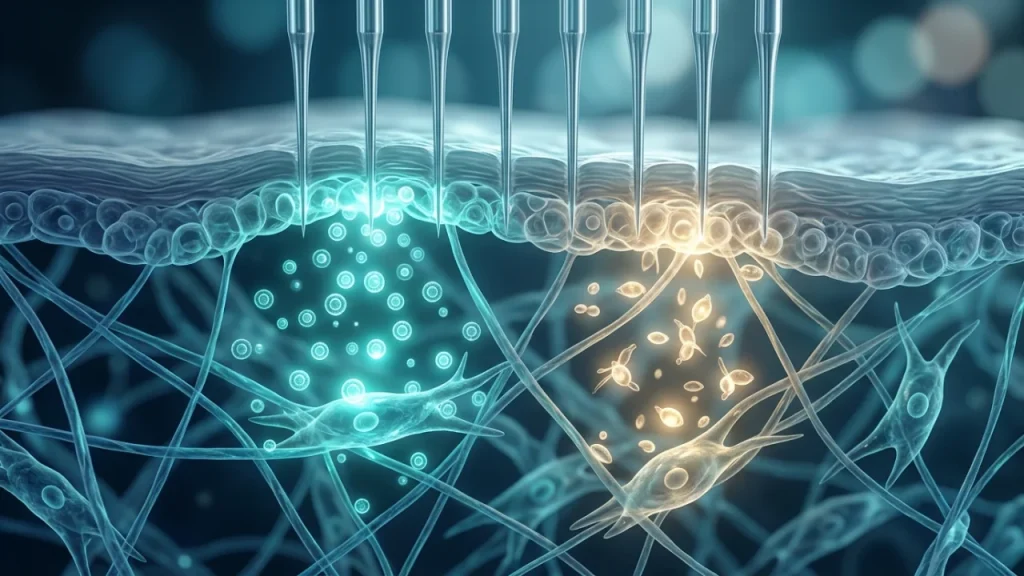
Microneedling once had a simple goal. It created tiny channels in the skin. This triggered the body’s natural healing process. That process made new collagen. The results were good but often modest. The approach was mechanical. Today, the strategy is biological. The needles are not just tools for injury. They have become precision delivery systems. They carry powerful healing agents deep into the skin. This is a fundamental shift in cosmetic science.
Think of your skin as complex soil. Traditional microneedling tilled the ground. It prepared it for growth. But it relied on existing seeds in the earth. Modern treatments add the best possible seeds and nutrients directly. They do this during the tilling process. The two most powerful “nutrients” are platelet-rich plasma (PRP) and exosomes. This leads many to compare microneedling with exosomes vs PRP. Both aim to supercharge healing. Yet their mechanisms differ greatly.
PRP comes from your own blood. A clinician draws a small sample. They spin it in a centrifuge to concentrate the platelets. Platelets are known for clotting. They also release growth factors. These proteins signal repair and regeneration. Microneedling with PRP floods the fresh micro-channels with these signals. It tells your skin to rebuild more aggressively than it would alone.
Exosomes represent a newer frontier. They are not cells or growth factors. Exosomes are tiny messengers. Your own cells release them naturally. They carry instructions and building materials between cells. In treatments, these exosomes come from specialized sources. When delivered via microneedling, they provide a direct blueprint for rejuvenation.
- They instruct older skin cells to behave more youthfully.
- They reduce inflammation quickly.
- They enhance collagen production with high precision.
The choice between these biologics is key. PRP uses your body’s own signals, amplified. Exosomes provide external, expert instructions to your skin’s cells. The evolution is clear. We moved from simply stimulating the skin to strategically directing its repair. This partnership between device and biologic creates transformative results. It addresses aging at a cellular level. The next step is understanding how these agents work in detail. We will explore their unique science next.
How PRP and Exosomes Transform Skin Rejuvenation
Skin rejuvenation is not just about adding material. It is about changing cellular conversations. Microneedling creates temporary pathways into the dermis. This is the skin’s living layer. PRP and exosomes use these pathways to deliver distinct messages. Their core missions define the choice between microneedling with exosomes vs PRP.
Think of PRP as a powerful emergency broadcast. Platelets are first responders to injury. Their primary job is to stop bleeding. They also send urgent repair signals. These signals are called growth factors. Proteins like VEGF, TGF-β, and PDGF are examples. They shout “Injury here! Send help! Build collagen! Make new blood vessels!” This broadcast creates a strong but generalized healing frenzy. The skin responds with robust but somewhat untargeted regeneration. It is like revitalizing a neighborhood by announcing a major construction project. Everyone gets to work, but the plans are broad.
Exosomes operate differently. They are not emergency alerts. Exosomes are detailed instruction manuals delivered door-to-door. Each tiny vesicle carries a precise cargo. This cargo includes proteins, lipids, and nucleic acids like RNA. This RNA can rewrite small parts of a cell’s behavior code. An exosome does not just tell a cell to “work harder.” It can instruct a fibroblast to prioritize type I collagen production. It can tell an inflamed cell to calm its response. It can guide a stem cell toward becoming a new skin cell.
The source of these agents matters greatly. PRP is autologous. This means it comes from you. Its quality depends on your age, health, and biology. Its signal strength can vary. Exosomes used in treatments are typically allogeneic. They come from specialized, young, healthy donor cells grown in controlled conditions. These cells are chosen for their potent regenerative messages. The exosomes they produce are then purified and concentrated. This provides a consistent, high-potency product independent of your personal biology.
Consider their action timeline after microneedling. PRP’s growth factors act quickly. They bind to receptors on skin cell surfaces within hours. This triggers immediate internal signaling cascades. The most active repair phase from PRP lasts several days. Exosomes have a more sophisticated entry strategy. They fuse directly with target cell membranes. They deliver their cargo into the cell’s interior. Their instructions can alter gene expression over days or weeks. This leads to a more sustained and refined transformation.
The practical differences become clear in treatment goals. – PRP excels at overall texture improvement and moderate collagen rebuilding. It is fantastic for general rejuvenation and healing support. – Exosomes target specific aging pathways with precision. They are potent for reducing stubborn inflammation, repairing barrier function, and addressing hyperpigmentation.
Choosing between them is not always an either-or decision. Some protocols use them sequentially for synergistic effects. The microneedling device is the delivery truck. PRP provides the loud motivational speech to the workforce. Exosomes provide the exact blueprints and tools for a superior rebuild. Understanding this cellular dialogue empowers you to select the right biologic partner for your skin’s unique narrative. Next, we will examine the clinical evidence behind these transformative effects.
Key Differences Between PRP and Exosome Therapies
The fundamental difference lies in what each biologic *is*. PRP is a concentrate of your own platelets. These platelets release a broad spectrum of growth factors. Exosomes are not cells. They are nano-scale messengers released by stem cells. They carry precise instructions.
Think of their cargo. PRP delivers a powerful but general growth factor cocktail. It shouts “HEAL NOW!” to your skin. Exosomes deliver specific proteins, lipids, and RNA molecules. They provide detailed blueprints. These blueprints can tell a cell to calm inflammation or to produce more youthful collagen.
Their origins differ completely. PRP is autologous. This means it comes from your own blood drawn during the visit. Its potency can vary with your age, health, and diet. Exosome preparations are typically allogeneic. They come from cultured, donated stem cells. This offers a standardized, potent product every time.
The treatment experience has subtle contrasts. For microneedling with exosomes vs prp, the preparation step is key. PRP requires a blood draw and a centrifuge spin. This adds about fifteen minutes to your appointment. The exosome solution is usually ready to use immediately. It comes in a small vial.
Their interaction with microneedling channels is similar but distinct. Both fluids flow into the micro-channels created by the needles. PRP growth factors quickly saturate the area. They start binding to cell surfaces. Exosomes use those same channels to reach deeper skin layers. Their goal is cellular entry, not just surface contact.
Consider the target cells. PRP’s growth factors primarily activate fibroblasts and endothelial cells. Fibroblasts make collagen. Endothelial cells support blood vessels. Exosomes can communicate with a wider range of cell types. This includes keratinocytes in the epidermis and immune cells involved in chronic redness.
The timeline of effects shows another clear divergence. PRP often creates noticeable plumping within weeks. This is from rapid hydration and initial collagen surge. Exosome results may take a bit longer to become visible. Their work happens at a genetic level first. The changes are often more gradual but more comprehensive.
Side effect profiles are generally mild for both. PRP carries a near-zero risk of allergic reaction. It is your own blood. Exosome products are rigorously screened for safety. Potential immune reactions are extremely rare with reputable sources.
Cost structures are different. PRP is often less expensive per treatment. The main cost is for the blood processing kit and the clinician’s time. Exosome therapies command a higher price point. This reflects the complex technology behind their production and purification.
Clinical applications highlight their best uses. – PRP shines for overall skin quality improvement. It is excellent for diffuse texture issues, mild laxity, and as a healing booster after procedures. – Exosomes target specific, stubborn concerns with high precision. They are chosen for problematic hyperpigmentation, compromised skin barriers, and persistent inflammatory conditions like rosacea.
The decision for microneedling with exosomes vs prp is not about which is universally better. It is about which is more appropriate for your skin’s current chapter. PRP is like revitalizing an entire garden with rich fertilizer. Exosomes are like sending in a specialist to carefully edit the genes of specific plants for resilience and beauty. Understanding these key differences equips you for a more informed conversation with your provider about your rejuvenation goals. Next, we will explore how to prepare for a treatment to maximize your results
Who Should Consider These Advanced Microneedling Treatments
Advanced microneedling is not a one-size-fits-all solution. Your skin’s specific condition determines the best biologic partner. The choice between microneedling with exosomes vs prp hinges on your unique biological needs and goals.
Consider PRP microneedling if your primary concerns are general aging signs. This treatment is ideal for broad revitalization. It suits individuals seeking overall improvement without a single dominant issue. Your skin may feel lackluster or tired. It might show early fine lines. You may notice mild texture changes.
Good PRP candidates often have these traits. – They experience slow healing after minor cuts or sun exposure. – Their skin lacks a healthy glow or appears slightly thin. – They want a natural, holistic boost from their own biology. – They are not dealing with significant pigmentation disorders. – Their skin sensitivity is typical, not highly reactive.
PRP works from the inside out. It floods the micro-channels with your concentrated growth factors. This signals a global repair response. Think of it as a system-wide update for your skin’s software.
Now, consider exosome-enhanced microneedling. This approach is for targeted, complex challenges. Exosomes deliver precise instructions to skin cells. They are messengers, not just fertilizers.
You might be a strong candidate for exosome therapy if you have stubborn conditions. These issues often resist standard treatments. Persistent redness and inflammation are key signs. This includes conditions like rosacea or general sensitivity. Exosomes can help calm the confused immune signals in your skin.
Problematic hyperpigmentation is another indicator. This refers to dark spots that linger long after a pimple or sun exposure fades. Melasma is a common example. Exosomes can help reprogram overactive pigment cells. They encourage a more balanced behavior.
A compromised skin barrier makes someone an excellent candidate. This skin often feels tight, reactive, or dehydrated. It may sting with ordinary products. Exosomes provide the exact blueprints for barrier repair. They help rebuild the critical lipid layer that holds moisture in and keeps irritants out.
Those seeking accelerated results may also look to exosomes. The signaling molecules can prompt faster cellular turnover and collagen production. This is valuable before a special event or for busy lifestyles.
Your age is less important than your skin’s biological state. A younger person with significant barrier damage may benefit more from exosomes. An older individual with simply dull, aging skin may find PRP perfect.
A consultation with a qualified provider is essential. They will assess your skin’s history and current chapter. They can identify if your needs call for the broad support of PRP or the precise editing of exosomes. Understanding your candidate profile empowers you to ask the right questions and set realistic expectations for your skin’s transformation journey.
Setting Realistic Expectations for Skin Improvement
Understanding what each treatment does at a cellular level sets clear expectations. Microneedling creates controlled micro-injuries. This triggers your skin’s natural repair process. Think of it as sending an alert to your cells. The real difference lies in the reinforcements you send with the needles.
Microneedling with PRP uses your own concentrated growth factors. These are powerful signals from your blood platelets. They amplify your body’s natural healing call. The result is a strong boost in collagen and elastin production. This is your skin’s support structure.
Expect a focus on structural improvement with PRP. Results are gradual and build over time. You are enhancing your skin’s own building process.
Typical outcomes from microneedling with PRP include: – Improved skin texture and firmness over several weeks. – A gradual reduction in the depth of fine lines. – Enhanced overall glow and skin vitality. – Thickening of the dermal layer for a plumper appearance.
The process relies on your body’s response. This means results usually become noticeable after a few weeks. Optimal outcomes often require a series of treatments. Maintenance sessions help sustain the new collagen growth.
Microneedling with exosomes takes a different approach. Exosomes are not signals from your body. They are precise instructions delivered to your cells. They provide the blueprint for optimal function. This can guide cells to repair, calm, or rejuvenate more efficiently.
Expect a focus on cellular communication and regulation with exosomes. The goal is to help correct specific dysfunctional patterns. This can lead to more targeted improvements.
Potential outcomes from microneedling with exosomes may involve: – A more rapid reduction in inflammatory redness or reactivity. – More efficient repair of a damaged moisture barrier. – Better management of uneven pigmentation. – Support for faster healing and less downtime post-procedure.
The effects can sometimes be seen quicker in terms of calming and barrier repair. Structural collagen building still follows a biological timeline. The exosomes aim to optimize the entire environment for better results.
Comparing microneedling with exosomes vs PRP clarifies their roles. PRP is like adding more skilled workers to a construction site. It increases the workforce for building. Exosomes are like giving the foreman a better blueprint and new tools. It improves the plan and efficiency of the work.
Your skin’s starting point determines what you notice most. Someone with strong inflammation may see calming effects first with exosomes. Someone seeking volume may see firming sooner with PRP’s direct growth factors.
No treatment offers instant transformation. Skin cell turnover takes roughly 30 days. New collagen formation takes months to mature. Realistic expectations understand this biological clock.
A typical treatment plan involves multiple sessions. This allows for cumulative benefits. Most providers recommend three to four initial treatments. These are spaced about a month apart.
You should see initial improvements after the first or second session. These often include better hydration, smoother texture, and a healthier glow. The more significant structural changes develop over three to six months.
Maintenance is key for long-term results. Your skin continues to age and face environmental stress. A yearly follow-up treatment can help maintain the achieved improvements.
Setting realistic goals prevents disappointment. These treatments are powerful tools for rejuvenation. They are not magic erasers for deep scars or severe laxity. They improve skin quality, health, and appearance significantly.
Combination approaches are also common. Some providers use PRP and exosomes together for a synergistic effect. This leverages both amplified healing and precise instruction.
Your provider should outline a clear projected timeline for you. They will base it on your specific concerns and chosen treatment. Ask to see clinical before-and-after photos of similar cases.
Patience and proper skincare after treatment are essential. Using sunscreen daily is non-negotiable. This protects your new, healing skin and safeguards your results.
The next step is understanding what happens during and after a treatment session. Knowing the process helps you prepare and recover properly for the best outcome
The Science Behind Microneedling with PRP
What PRP Is and How It Is Made from Your Blood
Platelet-rich plasma, or PRP, is not a manufactured drug. It is a concentrated dose of your body’s own healing signals. The process begins with a simple blood draw, similar to a routine lab test. A small amount of blood is taken from your arm.
This blood is then placed into a special tube. The tube goes into a centrifuge machine. A centrifuge spins at very high speeds. This spinning separates the blood into distinct layers based on weight.
The separation creates three clear layers. The heaviest red blood cells sink to the bottom. The lightest platelet-poor plasma rises to the top. The middle layer is the target. This is the platelet-rich plasma.
This PRP layer is rich in platelets and growth factors. Platelets are tiny cell fragments in your blood. Their main job is to clot wounds and start repair. Growth factors are powerful protein messages. They tell cells to grow, multiply, and heal.
The centrifuge process concentrates these platelets. Your normal blood has about 200,000 platelets per microliter. PRP can have five to ten times that concentration. This creates a powerful “healing soup” from your own body.
The preparation method is crucial for quality. Not all PRP is the same. The speed and time of centrifugation matter. Different protocols yield different concentrations. Some methods also concentrate white blood cells. Your provider chooses a protocol based on your skin’s needs.
After spinning, the provider extracts the PRP layer carefully. They use a syringe to draw it from the tube. This liquid is now ready for use. It is typically activated just before application.
Activation is a key final step. A small amount of calcium chloride or thrombin is often added. This activation makes the platelets release their growth factors. The growth factors become bioavailable to your skin cells.
The entire process happens in-office. It takes about fifteen to twenty minutes. The result is a perfectly matched biologic serum. Since it comes from you, the risk of allergic reaction is nearly zero.
This autologous nature is a major advantage. Your body recognizes its own proteins immediately. There is no foreign substance to reject. The healing instructions are innate and natural.
Understanding this process clarifies its role in microneedling with exosomes vs PRP. PRP provides a broad boost of general healing signals. It tells your skin “repair and rebuild here.” The microneedles create precise channels for this serum to enter.
The treatment harnesses your innate biology. It amplifies what your body already does well. This sets the stage for enhanced collagen production and tissue renewal. The next step is seeing how this concentrated healing power is delivered through the micro-injuries created by the needles.
How Growth Factors in PRP Stimulate Healing
Platelets are not just clotting cells. They are messengers. When activated during microneedling with PRP, they release a powerful cocktail of growth factors. These proteins are instructions for your skin.
Think of a construction site after minor damage. Growth factors are the foremen. They arrive and direct the crew. They tell cells what to build and when to start.
Key growth factors in PRP include PDGF, TGF-β, VEGF, and EGF. Each has a specific job.
- PDGF, or Platelet-Derived Growth Factor, is a first responder. It attracts repair cells to the site. It also tells these cells to multiply.
- TGF-β, Transforming Growth Factor beta, is the architect for collagen. It directs fibroblasts to produce this structural protein. This rebuilds the skin’s foundation.
- VEGF, Vascular Endothelial Growth Factor, builds supply lines. It encourages new, tiny blood vessels to form. This improves nutrient delivery and creates a healthy glow.
- EGF, Epidermal Growth Factor, focuses on the surface. It speeds up skin cell turnover and migration. This helps heal the micro-channels quickly.
The microneedles create controlled micro-injuries. This is crucial. Your body sees these channels as a signal to start healing. The PRP serum pours into these fresh channels.
The growth factors bind to receptors on target cells. A receptor is like a lock on a cell’s surface. The growth factor is the key. When they connect, a message is sent inside the cell.
This message changes the cell’s behavior. A dormant fibroblast wakes up. It starts producing collagen and elastin fibers. These fibers are the scaffolding of youthful skin.
New collagen takes time to mature. The process continues for weeks after treatment. This is why results improve over months. The skin remodels itself from within.
Healing is a coordinated cascade. One growth factor’s action prompts the release of others. A chain reaction occurs. Cellular repair shifts into high gear.
Inflammation is a normal part of healing. PRP actually helps modulate this phase. It guides the process toward productive repair, not excessive redness or swelling.
Comparing microneedling with exosomes vs PRP highlights a key difference. PRP provides a broad library of your body’s own instructions. It stimulates many pathways at once.
The result is robust tissue regeneration. Skin texture smooths because new collagen fills wrinkles from below. Tone evens as blood flow and cell renewal optimize.
This process harnesses innate biology for a clear purpose. The growth factors are natural, targeted, and temporary. They complete their mission and fade away, leaving stronger skin behind.
Understanding this mechanism shows why timing matters. Applying PRP right after needling uses the body’s acute healing signal. The two actions work in perfect synergy.
The science confirms a simple truth. PRP does not add foreign material. It amplifies your skin’s inherent language of renewal. This sets a strong foundation for comparing it with newer biologic options like exosomes, which operate on a different, cellular-communication level.
The Role of Platelets in Collagen Production
Platelets are far more than simple clotting cells. They act as first responders and project managers for skin repair. When activated by microneedling, they release a precise mix of growth factors. These factors are chemical signals with specific jobs.
One key signal is called Platelet-Derived Growth Factor (PDGF). PDGF is a powerful recruiting agent. It calls your skin’s fibroblast cells to the site of new micro-channels. Think of it as sending a direct alert to the construction crew.
Another crucial factor is Transforming Growth Factor Beta (TGF-β). This signal instructs the recruited fibroblasts to start their main task. That task is producing new collagen and elastin fibers. TGF-β essentially gives the order to begin manufacturing the skin’s support structure.
The process is highly efficient. Fibroblasts receive these clear instructions right where they are needed. They do not have to search for signals. This direct line of communication speeds up the entire rebuilding project.
Collagen production itself is a multi-step assembly line. Fibroblasts take in amino acids, which are protein building blocks. They then weave these blocks into long, strong strands of type I and type III collagen. These strands are secreted into the surrounding space.
The new collagen initially forms a loose, disorganized mesh. This is normal early scaffolding. Over the following weeks, the body meticulously organizes this network. It cross-links and bundles the fibers for maximum strength and support.
This activity directly counters skin laxity. More collagen means a denser, firmer dermal layer. The skin’s foundation becomes robust. This improves firmness and reduces the appearance of sagging.
Elastin production gets a similar boost. Elastin fibers provide snap-back resilience. Together, new collagen and elastin restore a more youthful mechanical quality to the skin. It feels tighter and more supple.
The platelet signals also promote angiogenesis. This is the formation of new, tiny blood vessels. Improved blood flow delivers more oxygen and nutrients to the busy fibroblasts. This fuels sustained collagen production for months.
Why does this matter for comparing microneedling with exosomes vs PRP? PRP’s approach is instructional and stimulatory. It uses the body’s own familiar signals to ramp up native cell activity. The fibroblasts themselves do all the manufacturing work.
The effects are profound but follow a natural timeline. You do not see instant collagen filling. Instead, fibroblasts are activated to produce at their peak capacity. The results accumulate steadily as new proteins integrate into the skin.
Consider this simple sequence of platelet action after microneedling: – Activation at the injury site. – Release of PDGF to recruit fibroblasts. – Release of TGF-β to command collagen synthesis. – Support via other factors for blood vessel growth. – Sustained cellular activity leading to matured collagen.
This biologic cascade is why timing is non-negotiable. Applying PRP during the initial inflammatory phase is critical. The platelets release their signals exactly when fibroblasts are most receptive to commands.
The outcome is not just added material. It is smarter, guided tissue regeneration. The skin rebuilds itself with improved architecture. This foundational understanding helps us see why exosomes represent a different strategic layer in cellular communication.
Why PRP Uses Your Body’s Natural Resources
Platelet-rich plasma is made from your own blood. This simple fact is its greatest safety feature. Your body does not recognize these platelets as foreign. It sees them as a concentrated reinforcement of its natural healing team.
The process begins with a standard blood draw. A small vial of blood is taken from your arm. This sample is then placed in a centrifuge. The centrifuge spins at high speed. This spinning separates the blood into distinct layers based on density.
The resulting layers are clear and predictable: – The top layer is platelet-poor plasma. This is mostly liquid. – The middle layer is the platelet-rich plasma. This is our target. – The bottom layer contains red blood cells and white blood cells.
The PRP layer is carefully extracted. It is now a golden-yellow liquid. This liquid is packed with your own platelets and growth factors. It is ready for application after microneedling creates those micro-channels.
Because PRP is autologous, risks are minimal. Autologous means derived from the same individual. There is virtually no risk of allergic reaction. Your immune system will not attack its own components. The risk of transmitting infectious diseases from a donor is eliminated.
Contrast this with synthetic fillers or donor materials. Those introduce substances your body must learn to accept. PRP requires no such learning curve. It uses a biological language your skin already understands perfectly.
The concentration matters. Typical PRP preparation increases platelet concentration significantly. Baseline blood has about 150,000 to 350,000 platelets per microliter. PRP can boost this to 1,000,000 or more per microliter. This creates a powerful dose of your native healing signals.
Think of it as giving your skin a decisive head start. The microneedling creates a controlled injury. Your body would respond anyway. PRP ensures the response is immediate, robust, and perfectly coordinated.
This use of personal biological resources also means consistency. The growth factors in your PRP are unique to you. Their profile reflects your age, health, and biology. The treatment works with your body’s current state. It does not impose an artificial or standardized set of commands.
The safety profile extends beyond the treatment day. Since no foreign material remains, long-term compatibility issues are absent. The platelets perform their signaling duty. Then they are naturally cleared by the body’s systems. Only the improved collagen framework they helped build remains.
This fundamental safety allows for repeated treatments. Patients can undergo microneedling with exosomes vs PRP sessions as needed. The body tolerates its own enriched plasma consistently over time. This makes it a versatile tool for long-term skin rejuvenation strategies.
Consider the alternative of using donor growth factors or other biologics. Even if safe, they lack this personal signature. Your platelets release a precise cocktail tailored to your cellular receptors. This optimizes communication and reduces wasted signals.
The takeaway is one of biological harmony. PRP does not force or hijack the skin’s processes. It amplifies and guides them using the body’s own existing blueprint. This respect for innate systems is why complications are rare and mild when they occur.
It sets a clear benchmark for safety in regenerative aesthetics. Any new biologic agent, like exosomes, must be evaluated against this high standard of autologous use. The next strategic layer must justify moving beyond this deeply personal resource.
Scientific Studies Supporting PRP Efficacy
Scientific research provides strong support for PRP’s role in skin rejuvenation. Clinical studies measure real changes in the skin. They look at collagen density, skin texture, and patient satisfaction. The results are consistently positive.
One key area of study is collagen production. Collagen is the main structural protein in skin. Researchers use biopsies to examine collagen levels before and after treatment. A 2014 study in the Journal of Cosmetic and Laser Therapy did this. Patients received microneedling with PRP sessions. The biopsies showed a significant increase in collagen fibers in the treated skin. This was not just a temporary plumping effect. It represented new, lasting structural support built by the body.
Another critical measure is epidermal thickness. The epidermis is the skin’s outermost layer. It often thins with age and sun damage. Thinner skin looks more fragile and translucent. It also wrinkles more easily. Multiple studies have tracked epidermal thickening after PRP treatments. This thickening indicates healthier, more robust skin regeneration. The needles create micro-injuries. The platelet growth factors then guide the repair process. This leads to a denser, stronger epidermal layer.
Research also examines specific growth factors released by platelets. Scientists can measure their concentration in the prepared PRP. They can also track their activity in the skin after treatment. Key players include: – Platelet-Derived Growth Factor (PDGF). This factor attracts repair cells to the injury site. – Transforming Growth Factor-beta (TGF-β). This factor directly stimulates cells to produce new collagen. – Vascular Endothelial Growth Factor (VEGF). This factor promotes new blood vessel formation. Better blood flow brings more oxygen and nutrients to the skin.
The synergy of these factors is crucial. A single growth factor might have a limited effect. The natural cocktail in PRP creates a coordinated healing response. This multi-signal approach is why studies find comprehensive improvements.
Patient-reported outcomes are equally important. Science values how patients feel about their results. Standardized questionnaires assess satisfaction after treatment. Patients commonly report improvements in several areas: – Skin smoothness and softness – Reduction in fine lines – Improved skin tone and glow – Enhanced hydration and less dryness
These subjective reports match the objective biopsy data. People see and feel the difference that science can measure.
The evidence extends to comparing PRP with microneedling alone. Several split-face studies have been conducted. On one side of the face, patients get microneedling with a standard solution. On the other side, they get microneedling with exosomes vs PRP as the active biologic. The PRP side consistently shows better results in blinded evaluations. It leads to faster healing, reduced redness, and more pronounced collagen improvement. This direct comparison proves the additive value of the platelet growth factors.
Long-term studies are now emerging as well. They show that the benefits of a treatment series can last for many months. The induced collagen continues to mature and remodel. This provides lasting support beneath the skin’s surface.
This body of research confirms PRP is not just a theoretical concept. It is a clinically validated method for skin renewal. The science shows it safely harnesses the body’s innate repair system with measurable precision. This established efficacy sets a high bar for any new biologic agent entering the field, including exosome-based therapies.
The Science Behind Microneedling with Exosomes
What Exosomes Are and Where They Come From
To understand the power of exosome therapy, you must first know what they are. Exosomes are tiny messengers. Your body’s own cells create and release them constantly. Think of them as microscopic delivery trucks. They carry important cargo from one cell to another.
These particles are incredibly small. Billions could fit on the head of a pin. They are not cells themselves. Instead, they are vesicles. This means they are small sacs or bubbles made from the same material as the cell membrane.
Their journey starts inside a cell. Cells have a complex internal sorting system. They package specific materials into these small sacs. The cargo inside is carefully selected. It can include: – Growth factors and signaling proteins – Lipids and fats – Genetic instructions like RNA – Enzymes for various functions
Once packaged, the cell releases the exosome into the space around it. This release is a natural process. It is part of how cells talk to each other. The exosome then travels through bodily fluids. It eventually finds and fuses with a target cell.
The target cell opens the exosomal “package.” It accepts the delivered cargo. This cargo can change the target cell’s behavior. It can tell it to repair itself, multiply, or produce new collagen. This is a fundamental form of biological communication.
Exosomes come from many sources. In your body, almost every cell type can release them. Stem cells are particularly active producers. Stem cells have powerful regenerative abilities. Their exosomes carry a rich mix of these restorative signals.
For clinical use in treatments like microneedling with exosomes vs PRP, scientists source exosomes from specific cell cultures. These cells are grown under controlled laboratory conditions. The cells are encouraged to release exosomes into their nutrient solution.
The exosomes are then collected and purified. This process removes the original cells and other debris. What remains is a concentrated solution of pure exosomal messengers. They retain the therapeutic instructions of their parent cells but are not cells themselves.
This distinction is crucial. Unlike PRP, which uses your own platelets, exosome products are derived from external cell lines. They offer a standardized, potent dose of regenerative signals. The science focuses on harnessing this precise communication system.
The natural purpose of exosomes is maintenance and repair. They help coordinate tissue healing after injury. They manage inflammation and guide new cell formation. By applying them directly to the skin via microneedling, we aim to amplify these native signals for enhanced rejuvenation. This cellular messaging system represents the next frontier in biologic skincare, building upon the foundation laid by growth factor therapies like PRP.
How Exosomes Carry Messages Between Cells
Exosomes are tiny biological packages. They carry molecular instructions from one cell to another. Think of them as sealed envelopes. Inside these envelopes are vital messages.
The contents of these envelopes are diverse and powerful. They include proteins, lipids, and nucleic acids. A key component is microRNA. MicroRNA are small strands of genetic code. They do not carry blueprints for building proteins. Instead, they act as master switches. They can turn specific genes in a target cell on or off.
This cargo is carefully loaded. The parent cell selects which molecules to pack. This selection is not random. It is a deliberate response to the cell’s environment and needs. A stressed cell will pack different signals than a healthy one. This ensures the message is relevant.
Delivery is the next critical step. Exosomes do not broadcast signals randomly. They seek specific target cells. They achieve this through surface proteins. These proteins act like address labels or docking ports.
The process follows a clear sequence: – The exosome travels through the extracellular fluid. – Its surface proteins recognize matching receptors on a target cell. – The exosome fuses with the target cell’s membrane. – It delivers its cargo directly into the cell’s interior.
This direct delivery is efficient. It protects the fragile molecular messages from degradation. Enzymes in the tissue environment cannot easily break them down. The message arrives intact and potent.
Once inside, the cargo gets to work. The microRNA molecules find their target gene sequences. They bind to them and silence their expression. This can change the cell’s entire behavior. It can shift a cell from a state of inflammation to one of repair.
For example, an exosome from a stem cell might deliver microRNA that tells a skin cell to produce more collagen. Another might carry instructions to calm oxidative stress. This is precise cellular programming.
The comparison in microneedling with exosomes vs PRP highlights this difference. PRP provides a broad cocktail of growth factors from your platelets. It shouts general repair commands to the area. Exosomes offer targeted instructions. They provide a sophisticated conversation.
This messaging system is constant in your body. Billions of exosomes shuttle information every second. They maintain tissue balance, called homeostasis. They coordinate immune responses and manage healing.
In skin rejuvenation, microneedling creates controlled micro-injuries. This process mimics a natural call for help. Applying exosomes at this moment hijacks the system. It floods the area with optimized repair signals.
The needles create temporary channels. These channels allow the exosomes to bypass the skin’s tough outer barrier. They reach the deeper dermal layers where living cells reside. The cells then uptake these potent messengers.
The result is a directed healing response. The skin cells are guided to perform specific regenerative tasks. This can lead to improved texture, tone, and firmness. The science leverages nature’s own communication network for enhanced results.
Understanding this cargo-and-delivery mechanism is key. It explains why exosomes are considered a next-generation biologic. They are not just another nutrient or growth factor. They are information technology at a cellular scale, offering a new level of precision in aesthetic medicine.
The Signaling Molecules Inside Exosomes
Exosomes carry a sophisticated toolkit of signaling molecules. These molecules are the actual instructions for skin cells. They are packed inside the protective lipid bubble of the exosome. This cargo remains safe during delivery.
Think of an exosome as a secure USB drive. The vesicle itself is the durable casing. The molecules inside are the loaded software files. Microneedling plugs this drive directly into your skin’s cellular network.
The primary instructional molecules are proteins and nucleic acids. These are biological workhorses. They tell a cell what to do and when to do it.
Growth factors are key protein signals. They are not unique to exosomes. PRP is also rich in them. But exosomal growth factors are presented differently. Their effect can be more targeted.
- TGF-β directs collagen and elastin production. It is crucial for building firm, supple skin.
- VEGF promotes new blood vessel formation. This improves nutrient delivery and creates a healthy glow.
- FGF aids in fibroblast proliferation and wound healing. Fibroblasts are the skin’s collagen factories.
The true distinction in microneedling with exosomes vs PRP often lies in the genetic material. Exosomes contain functional nucleic acids. This includes microRNAs (miRNAs). These are short strands of genetic code.
MiRNAs do not carry blueprints for proteins. Instead, they act as master switches for gene expression. They can turn specific cellular functions up or down. One miRNA can regulate hundreds of genes at once.
This is a powerful form of programming. An exosome can deliver miRNAs that silence genes for inflammation. It can activate genes for antioxidant defense. This shifts the entire behavior of a recipient cell.
Exosomes also carry messenger RNAs (mRNAs). These can provide templates for building new proteins locally. They essentially give a cell new recipes to follow. The cell’s machinery then produces the beneficial protein itself.
Lipids on the exosome surface are also active signals. They help with targeting and fusion to the recipient cell. They ensure the cargo is delivered efficiently. This makes the process highly effective.
Enzymes within the cargo can remodel the extracellular matrix. This is the scaffold between skin cells. Clever enzymes can clear damaged debris. They prepare the site for new construction.
The combined effect is a coordinated regenerative campaign. Growth factors start construction projects. miRNAs manage the workforce by controlling gene activity. Enzymes clear the old site. It is a multi-pronged approach.
Each exosome carries a specific cocktail of these molecules. Its cargo depends on its source cell. Healthy, young cells produce exosomes with optimal signals. This is the core scientific premise.
The molecules work in synergy. They create a cascade of events inside the dermis. One signal amplifies another. The result is a potent and natural instruction set for repair.
This molecular precision reduces unintended effects. The signaling is designed for biological harmony. It guides rather than overwhelms the skin’s own processes.
Understanding this cargo explains the clinical potential. The goal is not just to add raw materials. It is to upgrade the skin’s own communication software for smarter healing.
This leads to the next logical question: how are these potent exosomes sourced and prepared for safe clinical use?
Why Exosomes May Offer Precise Cellular Instructions
Exosomes are not generic messengers. They can deliver specific instructions to specific skin cells. This targeting ability is key. It allows for a focused treatment approach.
Think of microneedling as creating a delivery network. The tiny channels act like roads into the skin. Exosomes are the smart vehicles on these roads. They carry navigation signals.
These signals come from proteins and lipids on the exosome’s surface. They act like addresses or zip codes. A vesicle from a fibroblast cell, for instance, will likely seek out other fibroblasts or their environment. It knows where to go.
This process is called homing. It means exosomes tend to travel to cells similar to their source. They also go to areas of damage or inflammation. The skin’s need guides the delivery.
Why does this precision matter for rejuvenation? Different skin concerns involve different cell types. Fine lines and weak collagen involve fibroblasts. Dull tone and slow turnover involve keratinocytes. Redness and barrier issues involve immune cells.
Exosome preparations can be sourced to target these issues. The source cell type dictates the cargo and the target. This offers a potential advantage over broader approaches.
Consider the comparison central to modern treatments: microneedling with exosomes vs PRP. Both use microneedling for delivery. Their core difference lies in the message they carry.
PRP delivers a concentrated set of growth factors. This is a powerful general signal for repair. It tells the skin, “Start healing now!” The body then directs this signal as it sees fit.
Exosomes deliver a more complex set of instructions. They carry growth factors too. But they also include the genetic software to modulate the response. They can say, “Heal here, calm inflammation there, and produce this type of collagen.”
The potential result is more nuanced. The instructions are inherently smarter because they mimic cell-to-cell talk.
For example, exosomes from mesenchymal stem cells are well-studied. They carry strong anti-inflammatory signals. In skin, this can mean calming conditions like rosacea or post-procedure redness. They tell immune cells to reduce their reactive state.
Other exosomes might carry high levels of TGF-beta. This is a growth factor crucial for collagen production. They would specifically instruct fibroblasts to build new structural proteins.
The microneedling procedure enhances this targeting. It places these smart vehicles directly into the area where they are needed most. It bypasses the skin’s tough outer barrier.
This creates a direct line of communication to the dermis. The exosomes do not have to travel far from the surface. They begin their homing process from a deep, strategic position.
The clinical goal is therefore selective rejuvenation. Practitioners can select exosome sources aimed at primary concerns. The mechanism is built on biological precision.
This leads to a critical point about safety and harmony. Precise instructions are less likely to cause chaotic growth. The risk of overstimulation or uneven response may be lower.
The body recognizes these vesicles as natural elements. Their signaling is part of our own biology. This promotes integration rather than rejection.
Of course, the source of the exosomes is vital. Their quality defines their instructional capacity. This precision hinges on obtaining vesicles from healthy, well-characterized cells.
The next logical step is examining how this theoretical precision translates into tangible skin outcomes across various concerns.
Current Research on Exosome Therapy for Skin
Research shows exosomes can accelerate wound healing. A key study found a 30% faster closure rate in skin wounds treated with certain exosomes. This is not just about speed. It is about the quality of the new tissue.
The new skin showed better collagen organization. It had stronger networks of elastin fibers. This leads to less noticeable scarring. The process mirrors the body’s own repair system but enhances it.
Scientists test exosomes in models of aged skin. These studies often use cells called fibroblasts from older donors. The fibroblasts are slow and less productive. Exosome treatment can change their behavior.
Treated cells show a boost in critical proteins. Collagen type I production often increases significantly. Hyaluronic acid synthesis also rises. These are the building blocks of firm, hydrated skin.
Exosomes also fight oxidative stress. They carry antioxidant enzymes inside their tiny vesicles. They deliver these directly to stressed skin cells. This helps protect cells from daily environmental damage.
Another area of research involves hair growth. Studies using human cells are promising. Dermal papilla cells control the hair cycle. Exosomes can activate these cells.
This activation extends the growth phase of hair follicles. It can also increase the density of new hairs in models. The mechanism is again about sending clear instructions.
Research into pigmentation is equally active. Melanocytes are the cells that produce skin color. Sometimes they produce too much in one spot. This causes dark patches.
Certain exosomes can help regulate this activity. They carry messages that may calm overactive melanocytes. The goal is a more even, balanced skin tone without harsh interventions.
Clinical trials on human volunteers are growing. Early results from these trials support lab findings. Participants often see improvements in several key areas.
- Skin hydration measurements increase.
- Elasticity scores show notable improvement.
- Fine lines and texture become less visible.
The effects appear to be more than superficial. Biopsies before and after treatment provide physical proof. Researchers see a denser, healthier dermal structure under the microscope.
Safety data from these studies is crucial. So far, reports indicate a strong safety profile for topical exosome use after microneedling. The risk of adverse reaction is low. This aligns with their natural biological role.
It is important to understand what research has not yet proven. Long-term effects over many years are still being studied. Optimal dosing and frequency are active research questions. Not all exosome preparations are equal in studies.
Comparing microneedling with exosomes vs PRP at a research level reveals different pathways. PRP research focuses on delivering a concentrated burst of growth factors from your own blood. Exosome studies highlight targeted cell-to-cell instruction and communication.
The evidence points to exosomes as sophisticated regulators. They do not just add raw materials. They restore efficient communication between aging cells. This helps the skin remember its youthful functions.
Current science confirms their potential for transformative rejuvenation. The next question is how these findings apply to specific skin concerns people want to address.
Direct Comparison: Microneedling with Exosomes vs PRP
Mechanisms of Action: How Each Treatment Works Differently
PRP and exosomes work through fundamentally different biological principles. Think of PRP as a delivery of construction supplies. Think of exosomes as a delivery of skilled architects and foremen.
Platelet-Rich Plasma, or PRP, comes from your own blood. A small blood sample is spun in a centrifuge. This process concentrates the platelets. Platelets are tiny cells in blood known for clotting. They are also packed with growth factors. These are proteins that signal for repair.
Microneedling creates micro-channels in the skin. PRP is applied topically. The growth factors flood into these tiny wounds. They shout a general repair command to local skin cells. The message is simple: “Heal! Build! Multiply!”
This triggers several actions. – Fibroblasts in the skin get activated. These cells make collagen and elastin. – New blood vessel formation is encouraged. This improves nutrient delivery. – The general inflammatory healing response is accelerated.
The process relies on a burst of raw signaling proteins. It jump-starts your body’s natural wound healing. The results come from this amplified, but essentially native, repair process.
Exosomes operate on a different level. They are not simple signaling proteins. Exosomes are tiny vesicles released by cells. They are like sophisticated communication packets.
Stem cells release these exosomes. Each vesicle carries a complex cargo. This includes proteins, lipids, and genetic instructions like RNA. The RNA is key. It can change how a recipient cell behaves.
When applied after microneedling, exosomes enter the skin. They fuse with target cells, like fibroblasts. They deliver their instructional cargo directly inside.
The effect is not a loud repair shout. It is more like precise software update. Exosomes can reprogram aged or damaged skin cells.
They restore efficient cellular communication that declines with age. They can instruct a fibroblast to produce higher-quality collagen. They may tell cells to reduce destructive inflammation. They help regulate the entire tissue environment.
This comparison of microneedling with exosomes vs PRP highlights a core difference. PRP provides a powerful, but blunt, stimulus for your skin to heal itself. Exosomes provide intelligent instructions to optimize how your skin functions and repairs itself.
The mechanism dictates the potential scope of action. PRP is excellent for building new tissue structure. Exosomes aim to improve the health and communication of the existing cellular network.
One jump-starts construction. The other upgrades the blueprint and manages the crew. Both can yield impressive results, but their pathways inside your skin are distinct.
Understanding this mechanistic difference helps set realistic expectations. It also clarifies why treatment experiences and timelines can vary. The initial inflammatory response from PRP may be more pronounced. The subtle, regulatory action of exosomes may work with less downtime.
Your skin’s specific needs determine which mechanism may be more suitable. The next logical step is to examine those clinical applications directly.
Efficacy for Fine Lines and Wrinkles
Fine lines often signal a breakdown in your skin’s support system. Collagen fibers weaken and fragment. The skin’s repair signals become less efficient. Both microneedling with exosomes vs PRP address this, but their strategies differ fundamentally.
PRP tackles the problem like a construction foreman. It delivers concentrated growth factors directly to the injury sites created by microneedles. These factors are a universal “rebuild now” signal. Fibroblasts get a strong push to produce new collagen and elastin. This process fills in lines from below over time.
The results from PRP are structural and volumetric. Think of it as adding new building material to shore up a foundation. It works well for lines that are due to simple collagen loss. The skin becomes thicker and more supported.
Exosomes take a different, more systemic approach. They act as cellular messengers. Their cargo includes instructions for optimal cell function, not just growth commands.
For fine lines, exosome signaling can have multiple targets. They may instruct fibroblasts to produce not just more collagen, but better-organized, longer-lasting collagen. They can enhance the skin’s own antioxidant defenses. This protects existing collagen from further damage.
Exosomes may also improve the health of the extracellular matrix. This is the gel-like network that supports skin cells. A healthier matrix allows for better nutrient exchange and tissue resilience.
Consider the cellular environment of aging skin. Communication between cells slows down. Repair cycles become less accurate. Exosomes aim to reset this communication network. They help optimize the entire tissue environment for sustained health.
This leads to a key distinction in efficacy. PRP primarily stimulates new growth. Exosomes focus on improving the quality and coordination of skin biology. One adds new bricks. The other improves the mortar and the bricklayer’s skill.
For early, subtle lines caused by environmental stress, exosomes may offer a strategic advantage. They address the functional decline that leads to visible damage. The goal is to restore a more youthful cellular behavior.
For deeper, established wrinkles that need volume, PRP’s direct building approach is powerful. It provides the raw biochemical stimulus to generate substantial new tissue.
Clinical observations support this logic. PRP results for wrinkles often show progressive improvement over months as collagen builds. The initial response can include swelling and redness from the robust inflammatory kickstart.
Exosome results may appear more as a gradual refinement in skin quality. Lines soften as cellular function improves. The downtime is typically minimal because the process is regulatory, not inflammatory.
Your choice depends on the nature of your lines. – Are they primarily due to volume loss and thin skin? PRP’s structural focus is excellent. – Are they fine, with skin showing early fatigue and poor texture? Exosomes’ regenerative signaling may be ideal.
Many practices now combine both biologics for a synergistic effect. The PRP provides the construction crew and materials. The exosomes provide the upgraded blueprints and site management. This two-part strategy can address both immediate volume needs and long-term functional health.
Ultimately, efficacy for wrinkles is not about one being universally better. It is about matching the treatment mechanism to the biological cause of your specific lines. The next consideration is how these mechanisms translate to another common concern: hyperpigmentation and skin tone.
Improving Skin Texture and Tone Results
Skin texture and tone depend heavily on how well your skin cells communicate and renew themselves. This is where the choice between microneedling with exosomes vs PRP leads to different results. Each uses a unique strategy to refine your skin’s surface.
Think of skin texture as the smoothness of a sheet of paper. PRP works by encouraging a strong rebuilding phase. The growth factors in platelet-rich plasma tell your fibroblasts to make new collagen and elastin. This process physically fills in minor pits and rough areas. It is like patching and replastering a wall. The result is a thicker, firmer dermis that feels smoother to the touch.
Exosomes take a more nuanced approach. They carry instructions for optimal cellular behavior. These signals can help normalize the activity of keratinocytes in your epidermis. These are your skin’s surface cells. Better function leads to more orderly cell turnover. This reduces the buildup of dull, dead cells. The skin’s surface becomes more refined and luminous. It is less about adding new plaster and more about perfecting the existing surface.
For issues of tone and hyperpigmentation, the difference is even clearer. Uneven tone often stems from melanocytes. These are the pigment-producing cells. They can become overactive due to sun damage or inflammation.
PRP’s growth factors are general repair signals. They do not specifically target pigment cells. In fact, the initial inflammatory response from PRP can sometimes temporarily stimulate pigment production. This is a risk for those prone to melasma or post-inflammatory hyperpigmentation. Careful protocol design is crucial.
Exosome signaling is inherently smarter. Research shows exosomes can carry messages that help regulate melanin production. They may calm overactive melanocytes. This leads to a more gradual, balanced fading of dark spots. The goal is normalization, not just covering up the problem.
The timeline for results also varies. – PRP texture improvements follow the collagen timeline. You may see initial smoothing in weeks. The best results build over three to six months as new tissue matures. – Exosome texture changes can be perceptible sooner for surface refinement. Better glow and clarity may appear within a few weeks as cellular turnover optimizes. Tone correction is a slower, steady process.
Your skin’s specific needs should guide the choice. – For overall thickening and smoothing of thin, crepey skin, PRP’s structural focus is powerful. – For refining pore appearance, enhancing radiance, and addressing stubborn discoloration, exosomes’ regulatory signals are often the preferred path.
Combining both can offer a comprehensive solution. The PRP builds a robust new foundation. The exosomes then guide the cells to maintain that foundation with better efficiency and harmony. This dual approach can tackle texture from both a structural and functional angle.
In summary, improving skin texture and tone is not one process. PRP remodels from the ground up. Exosomes reprogram from the cells out. Your selection hinges on whether your primary concern is foundational weakness or cellular dysfunction. This mechanistic understanding naturally leads to another practical question: what does this science mean for your experience during and after the treatment?
Recovery Time and Downtime After Treatment
The healing process begins the moment the microneedling device creates its microscopic channels. Your body’s immediate reaction is similar for both procedures. This initial phase involves inflammation and repair. The key difference lies in what happens next, guided by the biologic applied.
With microneedling and PRP, you are applying a concentrated signal for growth. Your own platelets release a powerful burst of healing factors. This instructs your skin to build new collagen and blood vessels. It is a robust call to action. This process is very effective. It can also mean a more pronounced inflammatory response.
Typical downtime after a PRP session can be clearer to define. – Redness often resembles a moderate sunburn. It usually lasts for 24 to 48 hours. – Swelling is common, especially around delicate eye areas. It typically peaks within the first day. – Minor pinpoint bleeding or oozing of serum and PRP can occur immediately after. This stops quickly. – A sandpaper-like texture develops as the microscopic channels heal. This lasts for three to five days. The skin may feel tight and warm during this initial period. Full recovery, where redness fully subsides and makeup applies easily, often takes about five to seven days.
Microneedling with exosomes introduces a different set of instructions. Exosomes carry messages for regulation and optimization. They do not primarily shout “grow.” Instead, they whisper “repair efficiently” and “coordinate.” This can lead to a modulated inflammatory response. The goal is smarter healing, not just vigorous healing.
The practical recovery profile often reflects this. – Redness is frequently milder and may fade faster, sometimes within 12 to 24 hours for some patients. – Swelling is often less pronounced. – The sandpaper texture phase may be shorter or less evident. – The skin often transitions to a feeling of dryness or tightness more quickly. Many people report a sensation of quicker surface recovery. Makeup can often be worn comfortably within two to three days. The visible downtime is frequently reduced.
However, this does not mean the treatment is working less. The biological activity is simply different. The exosomes are working at a cellular level to normalize function. The focus is on reducing chaotic signals that lead to prolonged redness or pigmentation risks. This is a core advantage for those with sensitive skin or melasma tendencies.
Your personal health factors also play a major role. Your natural inflammatory response, skin thickness, and overall health set the baseline. A provider’s technique and needle depth are equally critical. A deeper treatment will naturally require more healing time, regardless of the biologic used.
Choosing between microneedling with exosomes vs prp often involves considering this downtime trade-off. PRP’s stronger inflammatory drive is part of its strength for rebuilding. It can mean a more definite recovery period. Exosomes aim for a gentler, potentially quicker visible recovery while still promoting deep change.
Listen to your skin’s post-treatment needs. Gentle cleansing and rigorous sun protection are mandatory for both. The use of provided moisturizers or healing ointments is crucial. Do not pick at peeling skin. The real healing is happening beneath the surface long after redness fades.
Understanding these timelines sets realistic expectations. It allows you to plan your social calendar after your procedure. More importantly, it highlights how each biologic interacts with your body’s innate healing cascade. This knowledge prepares you for the final, critical consideration: the long-term safety and risk profile of these advanced treatments.
Treatment Protocols and Session Requirements
Treatment plans for microneedling with exosomes versus PRP share a common first step. Your provider must assess your skin goals. This consultation determines the best biologic for your needs. The actual number of sessions needed often differs between the two approaches.
A typical course for microneedling with PRP usually involves three initial sessions. These are spaced about four to six weeks apart. This spacing allows your skin to complete a full inflammatory and healing cycle between visits. The process for a PRP session is specific. First, a small amount of your blood is drawn. This is similar to a routine lab test. The blood is then spun in a centrifuge machine. This spinning separates the platelet-rich plasma from other blood components. The provider then prepares your skin. The microneedling device creates micro-channels. Finally, the prepared PRP is applied topically to the treated area.
Protocols for microneedling with exosomes can be more flexible. Some patients see benefits from just one or two sessions. Others may choose a series of three for cumulative results. The timing between exosome sessions can sometimes be shorter. A three to four week interval is common. The application process is more direct. The exosome solution is typically provided in a vial. It is applied to the skin either during or immediately after the microneedling. The micro-channels help deliver these signals into the skin.
Preparation for both treatments is similar but has key distinctions. Common pre-care instructions apply to all patients. – Avoid sunburn and tanning for two weeks prior. – Stop using topical retinoids or acids several days before. – Inform your provider of any medications or supplements. – Stay well-hydrated before your appointment.
For PRP, preparation starts internally. Providers often recommend increased water intake for one to two days before. This helps with blood draw and platelet yield. Avoiding caffeine and alcohol 24 hours before is also standard advice. These substances can dehydrate you. They might affect your blood’s quality.
Exosome treatments do not require this internal preparation. There is no blood draw involved. The focus is solely on preparing the skin’s surface. The goal is clean, calm skin ready for treatment.
The immediate post-procedure step is crucial for both. This is when the biologic does its primary work. The solution remains on the skin for a set period. It is not washed off immediately. Your provider will give you exact instructions. This allows maximum absorption through the fresh micro-channels.
A standard annual plan might look different for each option. – A PRP plan often includes an initial series of three sessions. A single annual maintenance session might follow. – An exosome plan could be a single intensive treatment. Alternatively, it might be two sessions spaced closely for a specific concern.
The choice between microneedling with exosomes vs prp influences this schedule. PRP’s protocol is tied to your body’s own growth factor production cycle. Exosome protocols capitalize on direct cellular signaling. This can sometimes allow for a more condensed treatment timeline if desired.
Understanding these protocols helps you plan your commitment. You will know the number of visits needed. You will understand the steps involved in each session. This practical knowledge sets the stage for evaluating the long-term value and scientific evidence behind each method
Practical Considerations and Making Your Choice
Cost Analysis: PRP vs Exosome Therapy Investments
The cost of a single treatment session is often the first number patients see. For microneedling with PRP, this price typically includes two procedures. The first is the blood draw and PRP preparation. The second is the microneedling application itself. This dual-process nature is a core part of its cost. Exosome therapy usually involves one primary step. The provider prepares a vial of exosome solution. This is applied during the microneedling session. The technology behind creating that solution is a major cost driver.
You are not just paying for time in the chair. You are investing in the biologic agent itself. PRP’s agent comes from your own body. This means there is no cost for the raw materials. The cost covers the kit to process your blood and the clinician’s skill. Exosome agents are manufactured through complex laboratory processes. Cells are cultured to release exosomes. These are then purified and concentrated. This extensive production pipeline influences the price per vial.
Think about the total investment for your treatment plan. A full PRP series often requires three initial sessions. You must multiply the per-session cost. An exosome protocol might achieve goals in one or two sessions. The higher per-session cost may balance against fewer total visits. Consider these variables for a clear picture. – The number of sessions in your prescribed plan. – Geographic location and clinic overhead. – The experience level of your provider. – The specific concentration or volume of biologic used.
There are also hidden costs to weigh. PRP has no risk of allergic reaction. It uses your own biology. Exosomes are an allogeneic product from donor cells. This requires rigorous screening and testing for safety. That safety protocol is part of the value. Downtime is another factor. Both treatments need some recovery. If one option offered slightly faster healing, it might reduce lost work days. This has indirect financial value.
Insurance does not cover these cosmetic procedures. You pay out-of-pocket. Some clinics offer payment plans or package pricing. Ask about these options during your consultation.
The decision between microneedling with exosomes vs prp is not just about science. It is a practical choice about value. PRP represents a personalized but cyclical approach. Your investment repeats with each session as you stimulate your own resources. Exosome therapy represents a direct technology transfer. You pay for concentrated signaling power that may change the skin’s behavior with fewer applications.
Your skin’s needs will guide the best value. Someone seeking gradual improvement may find PRP costs fit a budget over time. Someone wanting intensive, rapid renewal might see higher efficiency in an exosome plan. Always get a detailed written quote. It should break down the procedure cost and the biologic agent cost separately. This clarity helps you compare offers between clinics.
The financial analysis leads naturally to a final consideration: aligning this investment with your specific skin goals and expected results for true satisfaction
Safety Profiles and Potential Side Effects
Understanding safety is key to a confident choice. Both microneedling with exosomes vs prp are generally safe. They use biological materials from your body or carefully screened donors. However, they are medical procedures. Each carries its own typical reactions and rare risks.
Let’s start with microneedling itself. The device creates tiny channels in your skin. This causes a controlled injury. Your body reacts to heal it. Common side effects are expected and temporary. They usually last two to four days.
You will likely see redness. Your skin may feel warm and tight. Mild swelling is normal. Some pinpoint bleeding can occur. Your skin will feel sensitive, like a sunburn. These are signs the healing process has started.
Potential complications exist but are uncommon. The main risk is infection. This is why sterile technique is vital. Skin irritation can happen from topical numbing cream. Hyperpigmentation is a possibility, especially for darker skin tones. This means areas might get darker. Scarring is very rare with proper technique.
Now, consider the added biologics. PRP comes from your own blood. This greatly reduces allergy risk. Your body recognizes its own platelets. But the process still involves a blood draw and injection.
PRP can sometimes cause more bruising at the injection site. The swelling might be slightly more pronounced. There is a theoretical risk of calcification at the injection site. This means small hard lumps could form. It is not common.
Exosomes add another layer of safety consideration. They are not your own cells. They come from donated stem cells. Donor screening is the first critical step.
Reputable sources test for viruses and diseases. They ensure cell lines are healthy. The exosomes are purified to remove the donor cells. You receive only the signaling vesicles. This minimizes rejection risk.
Your body’s reaction to foreign signaling is usually mild. But the immune response can vary. Some patients report more intense initial redness with exosomes. This may be due to a stronger inflammatory signal kickstarting repair.
Direct comparison highlights nuanced differences. – Allergy risk: Virtually zero with PRP (autologous). Extremely low with exosomes (allogeneic) if properly processed. – Infection risk: Equal for both, tied to the microneedling procedure’s sterility. – Inflammatory response: PRP causes a predictable inflammatory phase. Exosomes may modulate inflammation differently, sometimes reducing it. – Long-term safety data: PRP has a longer track record in cosmetic use. Exosome therapy is newer but builds on extensive cellular research.
You must choose a qualified provider. Their skill dictates your safety. Ask about their training with these biologics. Inquire about their source for exosomes and quality documentation. A good clinic will review your full medical history.
They need to know your medications. Blood thinners can increase bruising. They will ask about your skin history. This includes cold sores, eczema, or psoriasis. These conditions could flare after treatment.
Realistic expectations are part of safety. Not every side effect is a complication. Temporary redness is normal. Persistent redness or unusual pain is not. Contact your provider with any concerns post-treatment.
Your safety hinges on proper protocols and an honest consultation. This knowledge empowers you to proceed with clarity and realistic expectations for your skin’s journey
How to Choose Based on Your Skin Goals
Your skin’s specific concern is the best guide for choosing between these advanced treatments. Think of microneedling as the delivery method. PRP and exosomes are the different cargo it carries. Each cargo has a specialized job.
For repairing sun damage and fine lines, both options show strong results. They work through different primary actions. PRP delivers a concentrated mix of growth factors. This signals your skin to ramp up collagen production. It is excellent for overall texture and firmness. Exosomes go a step further in communication. They instruct your skin’s cells to repair themselves more efficiently. This can lead to improved skin tone and clarity alongside firmness.
Targeting stubborn hyperpigmentation or melasma requires a nuanced approach. Here, the anti-inflammatory properties of exosomes can be a key advantage. Chronic dark spots often involve underlying inflammation. Exosomes can help calm this cellular environment. This may lead to more even pigmentation over time. PRP focuses on rebuilding, which also helps, but may not address inflammation as directly.
If your main goal is rapid recovery or you have sensitive skin, consider the inflammatory response. PRP involves a defined inflammatory phase. This is part of its healing signal. Exosomes often modulate inflammation. They can potentially reduce downtime and redness. For patients who wish to minimize visible recovery, this is a practical point.
Choosing between microneedling with exosomes vs PRP for acne scars depends on scar type. Atrophic scars, like rolling or boxcar scars, need collagen to fill them in. Both biologics are powerful here. PRP provides the raw building materials for this process. Exosomes provide the precise instructions for optimal rebuilding. For deeper scars, a series of treatments with either is typically needed.
Consider your treatment timeline and longevity expectations. PRP results build over months as new collagen forms. The effects are long-lasting but develop gradually. Exosome results may appear subtly but sooner, within weeks. The cellular instructions they provide can lead to effects that also persist.
Your provider’s assessment is crucial. A skilled practitioner will evaluate your skin type, concerns, and medical history. They will recommend the biologic that aligns with your goals. They might even suggest a combined approach in a specific sequence for maximum effect.
Ultimately, your choice balances your primary concern with your skin’s behavior. Seeking general rejuvenation and texture improvement? Both are excellent paths. Focusing on pigment or wanting minimal inflammation? Exosomes may hold an edge. Prioritizing a long-proven method for structural rebuilding? PRP is a reliable choice. This decision is best made in consultation with an expert who understands both the science and your individual skin narrative.
What to Ask Your Provider Before Treatment
A consultation is your chance to become an active partner in your skin treatment. Come prepared with clear questions. This ensures you understand the process and sets realistic expectations. Your provider’s answers will guide your final decision.
Start by asking about their experience with these specific biologics. How many procedures combining microneedling with exosomes vs PRP have they performed? Request to see before-and-after photos of patients with concerns similar to yours. Look for consistency in results. Experience directly impacts technique and outcome predictability.
Discuss the source and preparation of the biologic agents. For PRP, ask about the centrifugation process. How concentrated will the platelet-rich plasma be? For exosome treatments, inquire about the origin. Are the exosomes derived from stem cells? How are they processed and validated for purity? Understanding the source material is fundamental to safety and efficacy.
Clarify the exact treatment protocol they recommend for you. How many microneedling sessions will be needed? What is the recommended interval between sessions? Will they use a specific needle depth for your skin concern? Ask about the application method. Is the PRP or exosome solution applied topically during microneedling? Is it also injected in certain areas? A detailed plan shows a tailored approach.
Address comfort and downtime directly. What level of discomfort should you expect? What topical anesthetic will be used? Get precise details on post-care. How long will redness and swelling typically last? What are the specific aftercare products and instructions? When can you resume wearing makeup or exercising? Knowing this helps you plan your schedule.
Talk about the expected timeline for results. When might you notice initial changes? When are the full results typically visible? How long do the effects usually last for someone with your skin type? This helps manage expectations and assess treatment value.
Inquire about potential risks and side effects. Beyond common redness, what are less common reactions? What should you watch for that would require a call to the office? A trustworthy provider will discuss these openly.
Finally, discuss costs. What is the total investment for the recommended series? Are there package pricing options? Is there a charge for follow-up consultations? Costs for microneedling with exosomes vs PRP can differ significantly. Understanding the financial commitment is a key part of your choice.
Bringing these questions transforms a general discussion into a productive dialogue. It allows you to evaluate the provider’s expertise and the proposed plan’s suitability for your unique goals. Your informed confidence is the final, crucial step before beginning treatment.
Combining Treatments for Enhanced Results
Some patients seek the ultimate regenerative boost by combining both biologics. This approach aims to merge the broad growth factor support of PRP with the precise cellular instructions from exosomes. Think of it as a two-part strategy for skin renewal.
PRP acts first. It delivers a concentrated dose of your own growth factors. These proteins create a strong “repair now” signal. They prepare the tissue and attract your cells to the site. This sets the stage for more complex healing.
Exosomes act second. They are not just more growth factors. They carry detailed orders. These orders can guide the attracted cells to behave in specific ways. The goal is smarter regeneration, not just more of it.
The combination protocol is sequential. First, PRP is applied during or immediately after microneedling. The channels are fresh. The PRP soaks into the micro-wounds. Then, an exosome preparation is applied. It follows the same pathways. This order is logical. The PRP creates an active repair environment. The exosomes then work within that environment.
Why consider this dual approach? The potential is for enhanced and prolonged results. Each biologic works through different but complementary mechanisms.
- PRP provides a powerful initial stimulus. It jump-starts the natural healing cascade.
- Exosomes may help regulate that cascade. They could improve the quality and efficiency of new collagen.
- Together, they might target more aspects of aging. This includes texture, firmness, and overall skin vitality.
It is important to manage expectations. Combining treatments does not simply double the result. Biology is not linear. The synergy aims for a better outcome than either could achieve alone. However, research is still evolving in this combined space.
The decision between microneedling with exosomes vs PRP, or using both, depends on your goals and biology. A combined treatment targets multiple pathways simultaneously. It is often considered for more mature skin or significant photodamage. It can also be a choice for those seeking a comprehensive rejuvenation plan.
Cost and downtime are factors. A combination session is a larger investment than a single biologic treatment. The financial commitment is higher. The procedural steps are slightly longer. However, it is one session, not two separate appointments. The physical downtime is similar to a standard session. The biological activity inside the skin is simply more complex.
Consultation is key. A detailed skin analysis guides this choice. Not every patient needs or will benefit from this combined approach. A skilled provider will assess your skin’s current state and regenerative capacity. They will determine if your goals justify this advanced protocol.
Ultimately, this option represents the cutting edge of regenerative aesthetics. It leverages the body’s complete communication system for healing. The choice moves beyond simple collagen induction. It aims for truly intelligent skin remodeling. This leads to a final consideration: building a long-term strategy for sustained skin health.
Final Recommendations and Future Outlook
Summarizing Key Takeaways for Skin Rejuvenation
Microneedling creates controlled pathways into the skin. Biologics like PRP and exosomes use these pathways. Their jobs are different. PRP is a signal to start your own repair work. Exosomes are the actual instructions for that work.
Think of your skin as a construction site after microneedling. PRP delivers the foreman. The foreman yells for your crew to get to work. This crew is your own cells. Exosomes deliver the blueprints and new tools. They tell the crew exactly what to build and how.
Your choice depends on your skin’s needs. Here is a simple guide.
- Choose PRP for general rejuvenation and healing. It is great for improving texture and tone. It helps with mild to moderate lines. It uses your body’s own powerful signals.
- Choose exosomes for more specific, complex repair. This targets significant sun damage. It helps with stubborn pigmentation issues. It aims for more dramatic rejuvenation. The goal is changing cellular behavior.
- Consider combination therapy for comprehensive results. This approach uses both signals and instructions.
The decision for microneedling with exosomes vs prp is not about one being better. It is about which is more appropriate. Younger skin with good function often responds well to PRP alone. It just needs a strong wake-up call. Older or more damaged skin may lack perfect blueprints. Its cellular communication slows down. Exosomes can provide updated, optimal instructions directly.
Future treatments will become even more precise. Scientists are learning to engineer exosomes for specific tasks. One day, exosomes may carry targeted messages for just collagen or just elasticity. They could be designed to calm inflammation in conditions like acne or rosacea. The future is about personalized biologic therapy.
Your skin’s history matters in this choice. Consider these factors before a treatment.
How old is your skin biologically? Sun exposure ages skin faster. Genetic factors play a role too. What is your primary concern? Is it general dullness or deep wrinkles? Is it uneven color or loss of firmness? What is your recovery goal? Are you seeking maintenance or a major reset?
Treatments with biologics are not permanent fixes. Skin continues its natural aging process. However, these treatments can shift that process to a healthier path. A series of treatments often works better than a single session. Think of it as training your skin cells. Regular sessions reinforce the new, healthier patterns.
The best outcomes come from partnership with an expert provider. They should understand both technologies deeply. They should assess your skin’s biology, not just its appearance. A good provider will explain why one biologic fits your case better than another.
Ultimately, microneedling with biologics moves skincare from surface care to cellular care. It is a powerful shift. The takeaway is clear: understand the mechanism, match it to your need, and manage expectations for realistic, transformative results. This knowledge empowers you to make an informed choice for lasting skin health.
Which Treatment Offers More Targeted Results
Targeting in skin treatment means delivering the right signal to the right cells. Precision leads to more efficient results with less waste. Exosomes and PRP work very differently to achieve this.
Think of your skin as a complex city. PRP delivers a general workforce. This workforce is skilled but not specialized. It shouts general encouragement like “repair” and “renew.” Many cells listen. This creates broad improvement.
Exosomes operate like a targeted messaging service. They carry specific instructions. These instructions can be for collagen-building cells only. They can also target cells that control pigmentation or inflammation. This is why microneedling with exosomes vs prp comparisons highlight precision.
The source material defines the potential for targeting. PRP comes from your own blood. Its growth factor mix is fixed by your biology. It is a general repair cocktail.
Exosomes are harvested from stem cells grown in labs. Scientists can control the stem cell environment. This changes the exosome cargo. Different conditions produce different messages.
For example, exosomes from stem cells stressed by UV light may carry antioxidant signals. Those from cells in a collagen-rich environment may carry stronger building instructions. This allows for potential customization.
What does this mean for your skin concerns? Consider these common goals.
- For overall rejuvenation and improved texture, PRP offers a robust, full-spectrum signal. It is a good generalist.
- For specific concerns like stubborn hyperpigmentation, exosomes might provide more targeted directives to melanin-producing cells.
- For chronic inflammatory conditions, certain exosome profiles may send potent calming messages directly to immune cells in the skin.
- For augmenting procedures like laser treatments, exosomes could be chosen for precise wound-healing signals.
The microneedling device itself is the delivery system. It creates temporary channels. These channels guide both biologics to the same dermal layer. The key difference is what arrives there.
PRP’s growth factors bind to receptors on cell surfaces. This triggers internal activity. The effect is powerful but somewhat broadcast.
Exosomes are ingested whole by recipient cells. Their mRNA instructions then directly influence cell machinery. This is a more direct form of cellular communication.
Future advancements will sharpen this targeting further. Research explores exosomes engineered to seek specific cell types. Imagine a treatment designed only for fibroblasts in wrinkled areas. Another could target only sebaceous glands in acne-prone skin.
This level of precision reduces off-target effects. It maximizes impact per particle. The treatment becomes more efficient.
Your choice depends on your need for specificity. Do you want a comprehensive system reboot? PRP may be ideal. Do you have a distinct, single issue that resists broad treatments? Exosomes might offer the precise tool.
A provider’s skill is crucial in this decision. They must diagnose your skin at a cellular level. They should understand the biologic profiles they use. The best treatment matches the signal to the source of your concern.
Precision translates to potentially faster, more distinct results for focused issues. It also suggests the possibility of longer-lasting effects for that specific concern. The cellular instruction can be more durable than a temporary growth factor surge.
Ultimately, exosome technology represents a move toward true cellular-level targeting. PRP remains a powerful holistic approach. The field is evolving toward combining these strengths for synergistic outcomes. Understanding this targeting principle empowers you to discuss options with greater clarity and realistic expectations for your skin’s transformation.
Durability and Longevity of Treatment Benefits
The longevity of your results depends on what happens inside your skin cells after treatment. It is not just about the initial healing. The signals delivered by PRP or exosomes trigger cellular programs. These programs have different durations.
PRP provides a powerful surge of growth factors. This surge instructs skin cells to divide, migrate, and produce new collagen. Think of it as a strong, direct command. The cells actively follow this command for a period. However, the growth factors from your platelets are eventually used up. They also break down naturally.
The collagen production phase after PRP is most active for about six to eight weeks. The new collagen itself continues to mature and remodel for up to six months. This is why results from microneedling with exosomes vs PRP often show gradual improvement over several months. The final outcome is a significant structural upgrade.
Yet the initial instructional signal fades. Maintenance treatments are typically suggested. A common schedule is every six to twelve months. This refreshes the growth factor supply. It gives your skin another strong directive to sustain its renewed structure.
Exosomes work on a different principle. They deliver active genetic instructions and proteins directly into recipient cells. This can change the cell’s behavior more fundamentally. The cell may not just respond to a temporary signal. It might start acting like a younger, healthier version of itself.
For example, an exosome can tell a fibroblast to become more active in collagen production. Crucially, it can also tell that cell to maintain that higher activity level. The change can be more epigenetic. This means it affects how genes are read, not the genes themselves.
The potential for longer-lasting effects comes from this cellular reprogramming. The treatment does not just give cells fuel for a short sprint. It teaches them to run efficiently for a longer race. Early clinical observations suggest results may persist for twelve months or more from a single series of treatments.
The durability also links to the precision discussed earlier. A focused signal to a specific cell type creates a defined, lasting change in that area. A broad signal might affect more cells but with a shorter-lived instruction set.
Consider these key factors for longevity: – The severity of your initial skin concern. Deep wrinkles or volume loss require more structural rebuilding. – Your age and cellular health. Younger cells may hold new instructions better. – Your skincare and sun protection after treatment. This protects the new collagen. – The quality and biologic activity of the exosomes or PRP used.
No treatment stops biological aging. Your skin will continue to age after either procedure. The goal is to set your skin’s baseline at a more youthful, healthy level. Then the natural aging process continues from that improved starting point.
Future research aims to extend these benefits further. Scientists are studying how to make exosomal instructions even more durable within cells. The next frontier is creating treatments where a single session provides benefits for years. This research is still in early stages.
For now, expect PRP to require periodic renewal of its growth factor signal. View exosome therapy as an investment in longer-term cellular education. Your choice should align with your desired maintenance schedule and goals for lasting change. This understanding helps set realistic expectations for your skin’s rejuvenation timeline.
Emerging Trends in Biologic Skin Therapies
The field of skin rejuvenation is not standing still. New discoveries are building on today’s treatments like microneedling with exosomes vs PRP. The next goal is smarter, longer-lasting, and more personalized procedures. Scientists are working to make biologic therapies more precise and powerful.
One major trend is targeted exosome engineering. Researchers can now potentially load exosomes with specific instructions. Think of it like programming a messenger. Instead of sending a general “repair yourself” signal, these exosomes could carry exact commands. A command could tell a cell to make more of one type of collagen. Another command could focus only on reducing inflammation. This level of control was not possible before.
Another key area is combination signaling. Future therapies may use more than one biologic agent at a time. For example, a treatment could first use PRP to create an urgent repair environment. It could then follow with engineered exosomes to give long-term instructions. This two-step approach mimics the body’s own natural healing process more closely. It aims to get both immediate and sustained results.
Personalization is also becoming a reality. The future may involve analyzing your own cells first. A small skin sample could reveal what your specific fibroblasts need most. Therapies could then be custom-made for your unique biology. Your treatment would be different from someone else’s. This moves away from a one-size-fits-all model.
Delivery methods are advancing too. Microneedling devices are becoming more sophisticated. New designs aim to place biologics at the perfect depth in the skin. Some research explores needle coatings that release agents slowly over time. Other methods use sound waves or gentle electrical pulses to help cells absorb signals better. The aim is maximum efficiency with minimal discomfort.
We are also learning to harness exosomes from different cell sources. Each cell type sends out unique messages. Exosomes from skin stem cells might focus on regeneration. Those from immune cells could better calm redness and irritation. Choosing the right source material will be key for treating different concerns.
Here are three expected benefits of these emerging trends: – Reduced number of treatments needed for significant results. – More predictable outcomes for specific skin issues like scarring or hyperpigmentation. – Treatments that adapt to changing skin needs over a person’s lifetime.
The science of communication between cells is central to all this. Future breakthroughs will come from understanding this language better. Researchers are mapping the thousands of molecules inside each exosome. They are learning how skin cells interpret these complex signals. This knowledge directly fuels the next generation of therapies.
These innovations will likely change how we think about maintenance. Instead of regular sessions every few months, the goal is durable correction. A series of treatments might reset skin health for a much longer period. This approach treats aging as a biological process to be managed, not just surface symptoms to be polished.
The line between medical treatment and advanced skincare will blur. The principles of biologic signaling will influence topical products too. The future points towards integrated systems where in-office treatments work seamlessly with daily care routines. Both will aim to support optimal cellular function.
This progress relies on rigorous clinical validation. New concepts must prove they are safe and effective. The coming years will see more studies comparing these advanced methods to current standards. This evidence will guide professionals and patients toward the best choices.
Ultimately, the trend is toward intelligent skin repair. Therapies will become more responsive to the individual’s cellular environment. They will provide the right signal, at the right time, to the right cell. This is the logical evolution beyond comparing today’s options like microneedling with exosomes vs PRP. The future is about creating a precise dialogue with your skin for lasting health and resilience.
Next Steps for Your Skin Revitalization Journey
Your skin’s needs are unique. The best treatment plan starts with a professional evaluation. A qualified provider will assess your skin type, concerns, and goals. This consultation is the most important step. It moves you from general information to a personal strategy.
Understanding your options is key. You may hear about microneedling with exosomes vs PRP. Think of them as different tools. PRP uses your own growth factors to stimulate healing. It is derived from your blood. Exosomes are external signaling molecules. They instruct your skin cells to perform specific repair tasks. Your provider can explain which biological approach fits your situation.
Consider these factors when planning your journey:
- Primary Goal: Are you targeting deep wrinkles, scarring, or overall tone? Different biologics may excel in different areas.
- Recovery Time: Some protocols require more downtime than others. Your lifestyle matters.
- Treatment Series: Most people need a series of sessions. Ask about the typical number needed for lasting results.
- Budget: Advanced biologics have different costs. Understand the investment for your chosen path.
Do not rush the decision. Research providers carefully. Look for licensed professionals with specific training in these procedures. They should offer a clear consultation. Ask about their experience and see before-and-after photos of actual patients. A good provider welcomes questions.
The science continues to advance. Today’s choice between methods is a starting point. Future innovations will build on these foundations. Your journey is part of a larger story of skin health technology. Starting now puts you on the path to benefit from future refinements.
Commit to supporting your treatments. In-office procedures work best with good daily care. Use sunscreen every single day. This protects your new skin cells and your investment. Follow your provider’s aftercare instructions precisely. They are designed to optimize your results.
Patience is essential. Biological signaling takes time to show full effects. Final results often appear months after your last session. Your skin is rebuilding itself from within. Trust the cellular process you have chosen to start.
Schedule that consultation as your first concrete step. It turns knowledge into action. Bring your questions and your goals. An expert can then map out a realistic timeline for your revitalization journey. This personalized plan is your roadmap to healthier, more resilient skin.
Conclusion
The journey through modern data architecture reveals a fundamental shift. It is no longer about constructing monolithic, rigid systems. The core principle is agility—building flexible, scalable data pipelines that can evolve with business needs. This approach prioritizes the flow and transformation of data as a strategic asset, enabling real-time insights and informed decision-making.
Ultimately, success hinges on integrating the right components—from cloud storage and processing engines to orchestration and observability tools—into a cohesive, automated whole. The goal is to create a resilient data infrastructure that not only supports current analytical demands but also adapts seamlessly to future challenges and opportunities. This is the foundation for a truly data-driven organization.
Your next step is to conduct a focused audit of one existing data pipeline. Map its sources, transformations, and destinations. Identify a single point of friction—be it a manual step, a performance bottleneck, or inconsistent data quality. Designing and implementing a solution for this specific issue will provide immediate value and serve as a practical blueprint for broader architectural evolution.