
What Is Microneedling with Exosomes and Why It Matters
Understanding the Basics of Microneedling
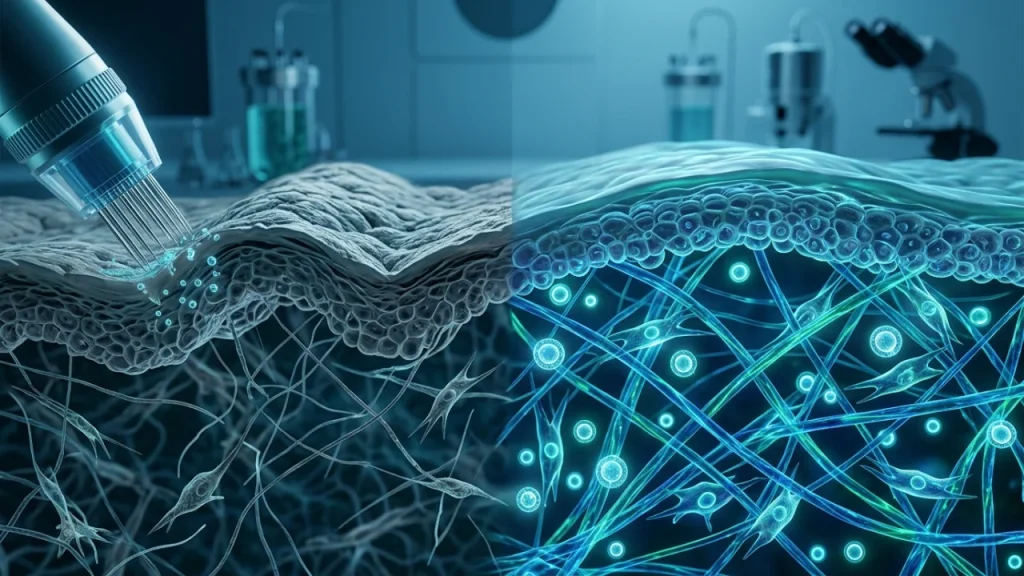
Microneedling creates controlled micro-injuries in the skin. This is its core principle. A device with fine needles makes tiny channels. These channels are incredibly small. They are not deep cuts. Think of them as microscopic pathways.
The skin sees these channels as minor wounds. It immediately starts to heal itself. This healing process is powerful and natural. Your body sends repair signals to the area. Special cells called fibroblasts become active. Fibroblasts are your skin’s collagen factories.
Collagen is a crucial structural protein. It gives skin its firmness and bounce. As we age, collagen production slows down. Existing collagen fibers can also break. This leads to wrinkles and sagging skin. Microneedling directly tackles this issue.
The micro-injuries trick the skin into repair mode. This jump-starts new collagen synthesis. Fibroblasts get to work building fresh collagen and elastin. This happens deep within the dermis. The results are not instant. Skin remodeling takes time.
You typically see improvements over weeks and months. The new collagen gradually fills in lines. It also improves skin texture and tightness. The tiny channels from the needles do another important job. They create temporary openings in the skin’s barrier.
These openings allow for better product absorption. This is a key point for advanced treatments. Serums applied after microneedling can go deeper. They bypass the outer layer of skin. This makes their ingredients more effective.
The procedure itself is minimally invasive. There is little downtime compared to laser treatments. Most people experience mild redness for a day or two. The skin may feel like a mild sunburn. Proper aftercare is essential for good results.
Think of microneedling as a reset button for your skin. It uses your body’s own healing power. The goal is to rebuild support structure from within. This established technique provides the perfect foundation. It prepares the canvas for next-level ingredients.
This leads us to a critical innovation. What if you could enhance this natural repair signal? What if you could guide the healing process more precisely? The answer lies in combining this method with regenerative messengers. This combination defines the new era of precision treatment.
Looking at microneedling exosomes before after comparisons shows this potential. The “before” is often skin needing fundamental rebuilding. The “after” reflects amplified natural regeneration. The micro-channels are the entry point. They set the stage for a transformative change in skincare science.
What Are Exosomes and How They Work
Exosomes are tiny messengers made by your own cells. They are not a synthetic ingredient. Think of them as natural delivery trucks. These trucks are incredibly small. Billions could fit on the head of a pin.
Your cells create exosomes constantly. They release them into the body’s fluids. Each exosome carries a specific cargo. This cargo includes proteins, growth factors, and genetic instructions. It is a precise set of signals.
The primary job of exosomes is communication. They travel from one cell to another. They deliver their cargo directly to a target cell. This tells the receiving cell what to do. The message is often about repair and renewal.
Skin cells use this system all the time. When damage occurs, healthy cells send out exosomes. These messengers signal the need for a healing response. They help coordinate collagen production. They guide new cell formation.
Exosomes for treatments are collected from stem cells. Stem cells are master cells known for healing. Their exosomes carry particularly potent instructions. These instructions can calm inflammation. They can also boost skin cell energy and activity.
The process works in several key steps. – First, exosomes attach to a target skin cell. – Next, they transfer their regenerative cargo inside. – Then, the recipient cell reads the new instructions. – Finally, the cell acts, switching to a repair mode.
This is why pairing them with microneedling is so logical. The micro-channels created by the needles do more than allow absorption. They mimic a natural injury signal. This signal calls skin cells to action.
Adding exosomes at this moment supercharges the call. It provides a clear, high-priority message to those active cells. The message says: rebuild collagen, renew yourself, restore function.
Looking at microneedling exosomes before after results highlights this communication power. The “before” skin lacks clear instructions for optimal repair. The “after” skin has received and acted on a precise regenerative program.
Exosomes matter because they work with your biology. They do not force an unnatural reaction. Instead, they enhance your skin’s innate intelligence. They provide the missing information your cells need to heal better.
This turns microneedling from a simple collagen induction tool into a guided regeneration system. The needles create the opportunity. The exosomes deliver the exact blueprint for renewal. Together, they achieve precision that was not possible before.
Understanding this mechanism is key. It shows why this combination represents a fundamental shift. The focus moves from just causing damage to heal, to expertly managing the entire healing conversation. This sets the stage for exploring the specific benefits this precise conversation delivers.
Why Combine Microneedling with Exosome Therapy
Microneedling creates the perfect entry points for exosomes. Think of your skin’s outer layer as a strong, protective wall. Topical creams mostly sit on top of this barrier. The micro-channels from the needles are like tiny doors opened straight through that wall. These doors allow direct passage to the living layers beneath.
This direct access is crucial for results. Exosomes are delicate biological messengers. They are not designed to force their way through dense, intact skin. The micro-channels provide a safe, controlled pathway. This protects the exosomes’ function during delivery.
The channels do more than just offer a physical path. They also trigger a targeted biological response. The micro-injuries signal local repair cells to become active. These cells are called fibroblasts. They are the skin’s collagen factories.
This activation creates an ideal environment. Fibroblasts are now alert and ready to receive instructions. Applying exosomes at this moment is perfectly timed. The messengers arrive exactly when the cells are most receptive to guidance.
The combination tackles two key limits of traditional care. First, it solves the delivery problem for potent signals. Second, it solves the direction problem for natural healing. Alone, microneedling tells skin to repair itself. With exosomes, it also tells skin *how* to repair itself optimally.
Consider the journey of a single exosome in this process. It is applied to the skin’s surface after microneedling. It enters a micro-channel that is mere fractions of a millimeter wide. It travels down to the dermis, where fibroblasts are active. The exosome then delivers its regenerative instructions directly to a cell’s machinery.
This targeted journey explains the visible outcomes. Reviews of microneedling exosomes before after comparisons often note refined texture and tone. The reason is precision. Resources are not wasted on generic inflammation. They are focused on structured rebuilding.
The depth of needle penetration can be adjusted. This allows practitioners to target specific skin concerns. Shallower depths may help with surface texture and pigment. Deeper reaches work on firmness and wrinkles by accessing more fibroblasts.
The synergy is clear in stages. First, microneedling prepares the landscape by opening access and calling cells to work. Second, exosome therapy provides the detailed plans for that work. Finally, the skin executes these plans with greater efficiency and intelligence.
This partnership matters because it respects skin biology. It uses the body’s own repair cycle. It then enhances that cycle with superior information. The outcome is not just different healing, but smarter healing.
The combined approach leads to a more efficient recovery period. With clear instructions, skin regeneration can be more organized and less chaotic. This can mean reduced redness and downtime for some patients. The process supports the skin’s own pace but improves its decision-making.
Ultimately, microneedling with exosomes is a logistics upgrade for skin renewal. It ensures the right messages get to the right cells at the right time. This logistical precision is why the combination is becoming a standard for advanced regeneration. It sets a new benchmark for how we support the skin’s innate ability to restore itself.
The Science Behind Skin Regeneration
Skin regeneration begins with a signal. Microneedling creates controlled micro-injuries. This is a deliberate call to action for your skin. Your body detects these tiny channels as areas needing repair. It immediately activates its natural healing response. Cells rush to the site. They start producing new collagen and elastin. This is the standard, powerful effect of microneedling alone.
Exosome therapy changes this process fundamentally. It adds crucial information to the response. Think of microneedling as creating a construction site. Exosomes deliver the architectural blueprints and skilled workers. These exosomes are tiny vesicles released by stem cells. They are packed with proteins, lipids, and growth factors. Most importantly, they carry genetic instructions in the form of RNA.
These instructions direct cellular activity. They tell your skin’s fibroblasts to produce more collagen. They guide cells to improve tissue structure. They also help regulate inflammation. This leads to a more organized and efficient repair cycle. The goal is not just to heal the micro-injuries. The goal is to heal them better than before.
The science shows a shift from simple stimulation to intelligent communication. Key regenerative signals include: – Growth factors that promote cell proliferation and migration. – Messenger RNA that provides templates for protein synthesis. – Enzymes that remodel the existing extracellular matrix.
This is why microneedling exosomes before after results can appear distinct. The “after” reflects this enhanced biological dialogue. Outcomes are not just about volume of new tissue. They are about the quality and organization of that tissue. Skin texture improves because cells receive precise commands for remodeling.
The treatment leverages endogenous mechanisms. This means it uses pathways your body already knows. Exosomes are not foreign substances. They are naturally occurring messengers. The procedure simply delivers a high concentration of targeted messages. This matters for safety and biocompatibility. Your body recognizes and uses these signals effectively.
Regeneration follows a phased timeline. Initial response involves inflammation and cell recruitment. The exosome guidance helps modulate this phase. Next comes the proliferation phase where new collagen forms. Exosomes optimize this production for type I collagen, which provides strength. Finally, the remodeling phase can last months. Exosomes continue to influence this maturation process for sustained improvement.
Understanding this science clarifies the treatment’s value. It moves beyond simple wounding to targeted cellular instruction. The result is a regenerative process that is both amplified and refined. This foundational biology sets the stage for discussing realistic outcomes and timelines in clinical practice.
Key Benefits for Your Skin Health
The combination creates visible and structural improvements. These benefits stem from precise cellular communication. Your skin’s health improves in several key ways.
First, skin texture becomes smoother and more refined. Microneedling alone stimulates collagen. Adding exosomes directs that collagen to form in an organized, mesh-like pattern. This is crucial for smoothness. Haphazard collagen does not improve texture much. Guided collagen fills fine lines and softens rough patches. The result is a polished, refined surface. Pores can appear smaller because the surrounding skin gains firm support.
Second, skin tone evens out significantly. Hyperpigmentation and redness often fade. Exosomes carry instructions to melanocytes. These are the cells that produce pigment. The messages help normalize pigment production. This reduces dark spots over time. Exosomes also calm inflammatory pathways. This addresses underlying redness and conditions like rosacea. The microneedling exosomes before after comparison often shows a more uniform complexion.
Third, skin gains strength and elasticity. This is about deeper structural repair. Exosomes promote high-quality type I collagen. This collagen type gives skin its tensile strength. They also boost elastin production. Elastin allows skin to snap back after stretching. Together, they combat sagging and improve firmness. The skin’s foundation becomes more robust.
Fourth, hydration and barrier function improve. The micro-channels allow exosomes to reach living skin layers. There, they signal cells to produce more hyaluronic acid and ceramides. Hyaluronic acid binds water for plumpness. Ceramides are lipids that seal the moisture barrier. A stronger barrier keeps hydration in and irritants out.
Fifth, the healing process itself becomes more efficient. Recovery after treatment is often quicker. Exosomes modulate inflammation. They reduce excessive redness and swelling. They also accelerate tissue repair pathways. This means less downtime for patients.
The benefits are interconnected. A stronger barrier improves hydration. Better hydration supports collagen synthesis. Even tone enhances the appearance of smooth texture. It is a synergistic cycle of improvement.
- Smoother texture from organized collagen.
- More even tone from regulated pigment and calmed inflammation.
- Improved firmness and elasticity from quality collagen and elastin.
- Enhanced hydration and a resilient skin barrier.
- Streamlined recovery with less downtime.
These advantages matter because they address aging comprehensively. The approach does not just fill lines. It upgrades the skin’s biological functions. This leads to natural-looking results that endure. The next consideration is how these benefits unfold over a realistic timeline after treatment.
How the Microneedling Exosomes Procedure Works Step by Step
Preparing Your Skin for Treatment
Proper preparation is the first critical step for a successful microneedling exosomes procedure. Your skin must be in a receptive state. This preparation minimizes risks and maximizes the treatment’s regenerative potential. Think of it as preparing a canvas before painting. The goal is clean, calm, and ready skin.
Your provider will conduct a thorough consultation first. This is not optional. They will review your complete medical history. They need to know about all medications and supplements. Certain substances can increase bleeding or interfere with healing. Blood thinners like aspirin or ibuprofen are typically paused. Always follow your provider’s specific instructions on this.
A detailed skin assessment comes next. Your provider will examine your skin type and concerns. They will check for any active infections, open wounds, or severe inflammation. Conditions like active acne breakouts or cold sores may require postponement. The treatment area must be healthy before creating micro-channels.
Sun avoidance is a non-negotiable rule. You must minimize sun exposure for at least two weeks before your session. Do not use tanning beds. A sunburn is an absolute contraindication for treatment. Tanned or burned skin has a higher risk of complications. These include post-inflammatory hyperpigmentation, where dark spots form after injury.
Your at-home skincare routine will need adjustments. Active ingredients are usually stopped several days prior. This allows the skin barrier to normalize. – Retinoids (retinol, tretinoin) are paused 5–7 days before. – Strong exfoliating acids (glycolic, salicylic) are stopped 3–5 days before. – Topical antibiotics or prescription acne treatments may also be paused.
Continue using gentle cleansers and moisturizers. Hydration is key. Well-hydrated skin responds better to treatment. Drink plenty of water in the days leading up to your appointment. Avoid alcohol for 24–48 hours before as it can dehydrate you and promote inflammation.
Do not shave or wax the treatment area for at least 24 hours before. For procedures targeting hair growth, follow your provider’s specific shaving guide. Arrive with a clean face on the day of your treatment. Do not apply makeup, sunscreen, or moisturizer. The skin must be free of all products for proper cleansing and disinfection at the clinic.
A final pre-treatment step is managing expectations. Review realistic microneedling exosomes before after outcomes with your provider. Understand that results are cumulative and build over weeks. This mental preparation is as important as the physical steps. It sets the stage for a smooth procedure and a focused recovery period, which we will detail next.
The Microneedling Process Explained Simply
The microneedling device creates controlled micro-injuries in your skin. Think of it as a precise, motorized pen. A sterile, disposable tip with fine needles is attached to this pen. Your provider will move this tip across your skin in a systematic pattern. The needles puncture the very top layers. They create thousands of microscopic channels. These channels are incredibly small. You will not see traditional “holes” or significant bleeding.
This process is not about causing damage. It is about triggering a specific biological response. Your body detects these tiny punctures as signals to repair. It immediately starts a natural healing cascade. Blood flow increases to the area. Your skin’s repair cells, called fibroblasts, become active. They begin producing new collagen and elastin. These are the building blocks of firm, youthful skin. The micro-channels also create temporary pathways. These pathways allow for better absorption of topical solutions applied next.
A topical numbing cream is always applied first. This cream sits on your skin for about 20 to 30 minutes. It makes the entire process very manageable. Most people describe the sensation as mild pressure or a light scratching. You might feel a slight vibration from the device. Discomfort is typically minimal. The procedure time varies by treatment area. A full face session often takes 20 to 40 minutes.
The provider adjusts two key settings for your unique needs. – Needle depth: This controls how deep the needles go. Depth is measured in fractions of a millimeter. Shallow depths target surface texture and product absorption. Deeper settings reach the dermis to stimulate more collagen. – Needle speed: This controls how fast the motorized pen moves.
Your provider selects settings based on your skin concerns and thickness. Areas with thicker skin, like the cheeks, can tolerate slightly deeper treatment. More delicate areas, like around the eyes, are treated with shallower depth. The goal is precision, not aggression. Consistent, even coverage is key for uniform results. After the microneedling pass is complete, your skin will be slightly pink. It may feel warm, similar to a mild sunburn. This is a normal and expected reaction. It shows your skin’s repair process has begun.
This sets the perfect stage for the next critical phase: the application of exosomes. The fresh micro-channels are now ready to deliver regenerative signals directly into your skin’s repair zones. Seeing realistic microneedling exosomes before after examples helps visualize this two-part process. First comes the mechanical trigger from the needles. Then comes the biological instruction from the exosomes. The immediate aftermath focuses on calming the skin and beginning the careful recovery journey, which we will outline next.
Applying Exosomes During the Session
The freshly created micro-channels are the direct delivery routes for exosomes. This application happens immediately after the microneedling pass. The skin is still in its initial reactive phase. This timing is deliberate and critical.
Think of the micro-channels as temporary tunnels. They remain open for a very short window. The exosome solution is gently applied to the skin’s surface. It uses these tiny pathways to bypass the skin’s outer barrier. The goal is direct dermal delivery.
The solution is not simply rubbed on. Your provider uses a sterile, gloved hand or a clean brush. They pat and smooth the liquid over the treated area. This ensures even contact. The technique is careful and methodical.
The exosomes do not act as a filler. They are not a physical volume replacement. Instead, they are biological messengers. They carry instructions and resources. These signals are released into the interstitial fluid between your skin cells.
What happens at the cellular level? The exosomes are absorbed through the channels. They merge with your skin’s native cells, like fibroblasts. Fibroblasts are your collagen factories. The exosomes deliver a precise set of commands.
These commands can include: – Instructions to increase collagen and elastin production. – Signals to calm inflammation and reduce reactive redness. – Growth factors that promote new, healthy blood vessel formation. – Resources for cellular repair and energy production.
This process transforms the skin’s response. Microneedling alone creates a controlled injury. The body responds with a general repair protocol. Adding exosomes changes that. It provides a targeted blueprint for smarter regeneration.
The microneedling exosomes before after results you may see depend on this precise synergy. The “before” is the triggered repair mode. The “after” begins with this guided instruction set. The exosomes help steer the healing process toward more efficient and structured tissue rebuilding.
The entire application phase is quick. It typically takes just a few minutes. There is no additional discomfort. Your skin may feel cool from the solution. The provider ensures all product is absorbed.
No active massage or aggressive manipulation is needed. The exosomes are designed to navigate on their own. They move along natural chemical gradients toward cells that need them most. This is called targeted tropism.
After application, the skin is left slightly damp. No immediate rinsing occurs. The exosomes need time to migrate and begin their work. The micro-channels start to close naturally within hours.
This closure seals the exosomes inside your skin’s therapeutic zone. They continue working for days following the procedure. Their effects are not instantaneous but progressive. Cellular communication takes time to translate into visible change.
The session then moves to its final, protective stage. The immediate goal shifts from delivery to safeguarding the newly treated skin and supporting its recovery journey, which hinges on proper aftercare.
What to Expect Right After Treatment
Your skin will feel different immediately after the session. It is normal and expected. The treated area often has a mild sunburn-like sensation. This feeling typically fades within a few hours. Your skin will look flushed and feel warm. This is a direct sign of increased blood flow. The micro-injuries have signaled your body to send resources.
You may notice slight swelling or tightness. This is part of the inflammatory phase of healing. Do not be alarmed. This initial response is necessary. It sets the stage for the repair work to follow. The exosomes are now active in this environment. They begin interacting with your skin cells immediately.
The visible redness is a key part of the microneedling exosomes before after journey. The “after” starts here. Your skin’s appearance will change rapidly in the first day. The initial pinkness shows the process is working. It means your cells are receiving signals.
You should follow specific aftercare rules now. These rules protect your skin and help the exosomes. Your provider will give you clear instructions. They are simple but important.
- Use only a gentle, recommended cleanser for the first 48 hours.
- Apply a provided moisturizer or healing ointment to keep the skin hydrated.
- Strictly avoid sun exposure. Do not apply sunscreen on day one.
- Skip all active skincare products like retinols or acids for at least 5 days.
- Do not scratch, rub, or pick at your skin.
Your skin may feel dry or begin to peel slightly. This is common around day two or three. It is not like a chemical peel. The peeling is very subtle. It happens as the outermost layer of skin naturally turns over. Keep the area moisturized.
Some people see tiny micro-crusts. These are not scars. They are minute scabs at the needle sites. They will flake off on their own in a couple of days. Picking them can cause marks or interrupt healing.
The most important step is hydration and protection. Drink plenty of water. This supports your body’s overall recovery process. Avoid strenuous exercise for 24 hours. Sweat can irritate the freshly treated skin.
You might wonder about results. You will not see dramatic changes yet. The first changes are beneath the surface. Cells are communicating. New collagen production is being instructed. This phase is about setting a strong foundation.
The immediate post-treatment period lasts about 24 to 72 hours. Most redness subsides within a day for many people. The slight sensitivity may linger a bit longer. Your skin barrier is temporarily compromised. This is why gentle care is critical.
Your skin will feel smoother quite quickly often by day two or three. This is due to intense hydration and initial surface renewal. The deeper rebuilding takes weeks. Remember that the exosomes continue working long after the redness fades.
This careful start ensures the best possible environment for regeneration. It leads directly into the next phase where patience becomes key as cellular activity translates to visible improvement over time.
Immediate Care and Follow-Up Tips
Your first 24 hours set the stage for everything that follows. The goal is simple: comfort your skin and avoid interference. Use only the gentle cleanser and moisturizer recommended by your provider. If you must go outside, wear a wide-brimmed hat. Mineral sunscreen is non-negotiable even for brief exposure.
Sleeping on your back is ideal for the first night or two. This prevents pillow friction on your face. You might want to use clean pillowcases. Some people place a clean towel over their pillow for extra assurance.
Day two often brings a turning point. Redness typically diminishes significantly. Your skin may feel tight or look slightly shiny from intensive moisturizing. This is normal. Continue avoiding direct water pressure in the shower. Let water run gently over your face instead.
Here is a simple timeline for the first week: – Days 1-2: Focus on calming. Use gentle products only. Avoid heat, sweat, and sun. – Days 3-4: Skin often feels smoother. You may resume very light, non-abrasive makeup if necessary. Stay vigilant with sunscreen. – Days 5-7: The initial healing cycle completes. Any micro-crusts have flaked away. Your routine can slowly normalize but keep it gentle.
Do not introduce any active skincare products this week. This means no retinols, no vitamin C serums, no acids. These ingredients can disrupt the delicate signaling processes started by the exosomes. Your skin’s priority is regeneration, not exfoliation.
Hydration comes from inside and outside. Drink water consistently throughout the day. This helps your body transport nutrients and clear waste. Pair this with a good moisturizer to support the skin barrier.
What about exercise? Wait a full 48 hours before any activity that makes you sweat. After that, light exercise is usually fine. Listen to your skin. If it feels hot or irritated during activity, stop and cool down.
You might be curious about “microneedling exosomes before after” timelines. The “before” is the procedure day. The “after” is a long journey that starts now. The first visible after effects are subtle hydration and glow. Do not judge results this early.
Avoid environments with lots of dirt or pollution for a few days. If unavoidable, cleanse your skin soon after exposure. Do not swim in chlorinated pools or the ocean during this initial week.
Signs to watch for are increased redness, pain, or yellow crusting. These are not typical. Contact your provider if you see them. Normal healing involves mild pinkness and slight dryness.
Your follow-up appointment is key. It allows your provider to assess your progress. They can adjust your long-term care plan based on how your skin responded. Do not skip this visit.
The cells beneath your skin are busy. They received new instructions from the exosomes. Your job is to protect their workspace. This care ensures the regenerative messages are heard clearly.
Healing is a biological process you can support but not rush. Each day of careful attention builds upon the last. This disciplined approach maximizes the treatment’s potential. It leads seamlessly into the waiting period where collagen renewal becomes visible.
Realistic Microneedling Exosomes Before After Expectations
Typical Timeline for Seeing Results
Patience is your most important tool after a microneedling with exosomes treatment. Your skin does not change overnight. The process is gradual and follows a biological schedule. Think of it in distinct phases.
The first week is for repair. You will see initial redness fade. Any minor swelling goes down. Your skin may feel dry or flaky. This is normal. The channels created by the microneedles are closing. The exosomes have already been delivered to your skin cells. Their work has begun inside.
The first visible changes often appear in weeks two through four. This is the early glow phase. Many people notice better hydration. Their skin may look more radiant and feel smoother. This is not collagen yet. This early improvement comes from enhanced cellular activity. Skin cells are better at repairing themselves and holding moisture.
The real structural changes take months. New collagen production is a slow process. Your body must build it from scratch.
You might start to see subtle textural improvements around the six to eight week mark. Fine lines may appear softer. Skin might look more even. The most significant “after” in a microneedling exosomes before after comparison typically emerges after three months.
Peak results are usually visible between four to six months post-treatment. This is when collagen remodeling matures. Results can include improved skin firmness, reduced appearance of wrinkles, and a more toned look. The effects are cumulative and natural-looking.
Several factors influence your personal timeline. Your age plays a role. Older skin may rebuild collagen more slowly. Your skin goals matter too. Treating fine lines might show results faster than addressing deeper folds or scars.
Your skin’s baseline condition is key. Healthier skin may respond more quickly. Lifestyle choices also affect speed. Sun exposure, smoking, and poor diet can slow progress.
Do not judge your results after one month. A single treatment provides a significant boost. However, most providers recommend a series for optimal outcomes.
A typical plan involves three sessions spaced about a month apart. Each session builds on the last. This series approach helps achieve more dramatic and lasting change.
Think of it as layering benefits. The first treatment wakes up your skin cells. The second treatment pushes regeneration further. The third treatment consolidates the gains.
Your final “after” picture is a combination of biology and time. The exosomes guide the process efficiently. Your body does the work at its own pace.
Documenting your journey can be helpful. Take photos in consistent lighting each month. Do not check daily changes. Monthly comparisons are more revealing.
You will see a steady progression over time. The goal is lasting improvement, not a temporary fix. This understanding leads to the next logical consideration: how to make those beautiful results last for as long as possible.
Common Changes in Skin Texture and Tone
Your skin’s texture and tone often show the first clear signs of improvement after combined microneedling and exosome therapy. Texture refers to how your skin feels to the touch. Tone describes its color and evenness. This treatment targets both areas with precision.
One common change is a smoother skin surface. Microneedling creates micro-channels. Exosomes then enter through these channels. They send signals to your skin cells. The cells are instructed to renew themselves more efficiently. This process reduces rough patches and refines pores. Your skin will feel softer and more uniform.
Fine lines often begin to soften noticeably. These are the small wrinkles around your eyes and mouth. They are primarily caused by a lack of collagen. The treatment directly boosts your collagen production. As new collagen forms, it plumps the skin from beneath. This filling effect makes lines less visible. The change is gradual but significant.
Improvements in skin tone are equally important. Sun spots or general discoloration can fade. Exosomes carry instructions that help regulate melanin production. Melanin gives skin its color. By promoting a more balanced activity in pigment cells, exosomes encourage a clearer, more even complexion. Redness from past breakouts or irritation may also diminish.
The microneedling exosomes before after comparison frequently reveals enhanced radiance. This is often called a “glow.” It results from better hydration and light reflection. Healthier, plumper skin cells reflect light more evenly. Dullness is replaced by a natural luminosity. This glow is a hallmark of revitalized skin.
You may also notice changes in specific concerns. – Acne scars can become shallower. The focused regeneration helps rebuild tissue in these depressed areas. – Skin elasticity often improves. This leads to a firmer, more lifted appearance. – Overall clarity increases as cell turnover is optimized.
These changes do not happen overnight. They unfold over weeks following each session. The improvements are cumulative across a treatment series. One session improves hydration and radiance. Subsequent sessions build more structural collagen for lasting texture change.
Documenting your own microneedling exosomes before after journey helps track these subtle shifts. Pay attention to how your makeup applies. It may sit more smoothly on refined skin. Notice the feeling of your skin after cleansing. It should feel consistently softer over time.
Realistic expectations are key. The goal is not perfection but measurable improvement. Your skin will look healthier, refreshed, and more vibrant. The changes are natural and integrated with your own biology. This foundation of improved texture and tone sets the stage for discussing how to maintain these results long-term.
Factors That Influence Your Outcomes
Your unique biology is the most important factor in your treatment results. No two people will have an identical microneedling exosomes before after story. Your skin’s starting point and internal processes set the pace for change. Understanding this helps set proper goals.
Your age plays a major role. Younger skin typically has more active fibroblast cells. These cells make collagen. They also respond faster to regenerative signals from exosomes. This often means quicker visible improvements in texture and tone. More mature skin still benefits greatly. However, the natural slowdown in cell turnover means results may develop over a longer timeline. The focus shifts to significant rejuvenation rather than rapid correction.
Your specific skin type and concerns dictate the treatment’s focus. – Oily or acne-prone skin may see excellent refinement in pore appearance and scarring. – Dry or dehydrated skin often experiences a dramatic boost in plumpness and radiance. – Sensitive or rosacea-prone skin requires careful assessment. The goal is calm, strengthened resilience.
Your skin’s baseline collagen levels matter. Someone with early sun damage has a different capacity for rebuilding than someone with deeper, older scars. The microneedling creates controlled micro-injuries. This triggers your body’s natural repair cycle. Exosomes then enhance this cycle with precise instructions. A stronger initial repair response can lead to more robust collagen production.
Lifestyle factors are always part of the equation. Sun exposure breaks down collagen. Smoking constricts blood vessels. This reduces nutrient delivery to healing skin. A diet poor in protein and vitamins offers fewer building blocks for new cells. Your daily habits either support or hinder the regenerative work started in the clinic.
The condition being treated affects the outcome timeline. Improving overall skin radiance and hydration can be seen quickly. Filling in a deep acne scar or a pronounced wrinkle requires more time. It needs the structured, layer-by-layer deposition of new collagen and elastin fibers. This is a gradual biological process.
Your treatment history is also relevant. Skin that has never had professional treatments may respond with noticeable enthusiasm. Skin accustomed to certain procedures might integrate the new therapy differently. The practitioner adjusts protocol depth and exosome application based on this history.
Documenting your personal microneedling exosomes before after progress is thus highly individual. Your photos tell your unique story of cellular renewal. Comparing your results directly to another person’s can be misleading. Your biology follows its own schedule.
The next logical step is considering how to prepare your skin for this process. Optimizing your canvas before treatment can significantly influence these biological factors for a better outcome.
How Many Sessions Are Usually Needed
The number of sessions needed is not random. It is based on your skin’s natural renewal cycle. This cycle takes about four to six weeks for a full turnover. A single treatment creates a powerful signal for repair. However, the skin can only build so much new collagen within one cycle.
Most people need a series of treatments for optimal results. A common protocol involves three to six sessions. These are spaced four to six weeks apart. This spacing is crucial. It allows the skin to complete one phase of healing. Then the next treatment can begin a fresh cycle of regeneration. Think of it like building a house. You lay a foundation, then add walls, then a roof. Each session adds another structured layer.
Your starting point determines your likely path. Many practitioners outline these general frameworks.
- For general rejuvenation: Goals include improved texture, tone, and hydration. A series of three sessions is often a solid starting point. This provides cumulative stimulation. It guides skin through multiple rounds of cellular renewal.
- For addressing scars or wrinkles: Deeper imperfections need more work. These issues often require four to six sessions or more. The skin must fill depressed areas with new collagen. This is a gradual process of remodeling.
- For maintenance: After initial goals are met, some choose periodic sessions. A single treatment every six to twelve months can help sustain results. It continues to support the skin’s regenerative environment.
Your microneedling exosomes before after gallery will show progress after each session. But the most dramatic changes appear after the full series. The first session often yields improved hydration and radiance. The second and third sessions typically build on this foundation. They promote more visible collagen remodeling. This is when tighter skin and smoother texture become clearer.
Exosomes enhance this process with each visit. They deliver consistent instructions to your cells. Repeated applications help train your skin’s repair system. They encourage sustained production of quality structural proteins. This can potentially reduce the total number of microneedling sessions needed compared to microneedling alone for similar goals.
Patience is key with biological processes. You cannot rush cellular regeneration. Sticking to the planned schedule is important. Skipping or delaying sessions can interrupt the momentum of healing. Consistency allows each treatment to build upon the last one’s progress.
The final outcome depends on your commitment to the full protocol. One session is a strong start. A complete series is a transformative journey for your skin’s health. Understanding this timeline helps set proper expectations from the beginning. It also highlights why professional guidance is essential for planning your personal path.
Next, we will explore how to prepare your skin to be perfectly ready for that first session. Proper preparation optimizes your response from the very start.
Maintaining Results Over the Long Term
Your skin’s renewal after microneedling with exosomes is a lasting investment. Protecting that investment requires consistent daily care. Think of your post-treatment skin as a garden that has just been expertly seeded. You must now water it, shield it from storms, and feed it properly to enjoy a long harvest.
The core goal is to support your skin’s new biological activity. Exosomes have instructed your cells to produce more collagen and elastin. Your daily routine must protect these proteins from damage. The most critical factor is sun protection. Ultraviolet rays are the primary cause of collagen breakdown. They can quickly undo the progress you have worked to achieve.
Use a broad-spectrum sunscreen every single day. Choose an SPF of 30 or higher. Reapply it every two hours if you are outdoors. This habit is non-negotiable for maintaining results. Sunscreen acts as a shield for your new collagen network.
Your skincare products should focus on reinforcement and maintenance. Look for ingredients that support skin barrier health and continued cell function.
- Antioxidants like vitamin C help neutralize free radicals from pollution and sun exposure. This protects your fresh collagen.
- Gentle retinoids can encourage steady cell turnover. They work synergistically with your treatment’s effects.
- Ceramides and peptides strengthen the skin’s moisture barrier. A strong barrier keeps skin resilient.
Avoid harsh physical scrubs or aggressive chemical peels unless your provider approves them. Your skin’s structure is newly remodeled. Treat it with respect to avoid inflammation that could disrupt the long-term results.
Internal health directly reflects on your skin’s surface. Collagen production needs specific building blocks from your diet.
- Eat adequate protein from lean meats, fish, or legumes.
- Include vitamin C-rich foods like citrus and bell peppers.
- Stay well-hydrated by drinking water throughout the day.
Consistent hydration plumps skin cells from within. It helps maintain the smooth texture you gained from your treatments.
Professional maintenance sessions may be recommended. Think of these as periodic tune-ups for your skin. A single follow-up treatment every six to twelve months can provide a fresh signal to your cells. This helps sustain the regenerative momentum. Your provider can suggest a personalized schedule based on your skin’s response.
Realistic microneedling exosomes before after expectations include understanding that skin continues to age. This treatment turns back the clock, but time moves forward. Your diligent care determines how gracefully you hold onto those gains. Excellent maintenance can extend your results for many months beyond the initial series.
Track your progress with monthly photos in consistent lighting. This visual diary helps you see the lasting change. It also motivates you to stick with your protective habits when daily life gets busy.
The final step is integrating these habits into your permanent lifestyle. This ensures your skin remains healthy, strong, and visibly improved long after your last treatment session.
Safety and Considerations for Microneedling with Exosomes
Who Is a Good Candidate for This Treatment
Microneedling with exosomes is not a one-size-fits-all procedure. Its success depends heavily on matching the treatment to the right person. A good candidate typically has specific skin concerns that stem from a lack of regeneration or damage. Their skin is not getting the right signals to repair itself effectively.
Common concerns for ideal candidates include fine lines and early wrinkles. These are often due to slowing collagen production. Sun damage and uneven skin tone are also key indicators. The treatment can help reset hyperpigmented cells. Loss of firmness and elasticity is another major sign. The skin may feel thin or look crepey.
Scarring is a primary application. This includes acne scars and some surgical scars. The microneedles create controlled channels. Exosomes then use these channels to target the scar tissue directly. They instruct the skin to rebuild with healthier, more organized collagen. This can smooth textured scars over a series of sessions.
General skin rejuvenation is another goal. Many seek a refreshed, glowing complexion. They want to improve overall skin quality without drastic measures. The combination treatment offers a significant boost. It is often called a “bio-stimulating” facial for this reason.
Health status is as important as skin goals. Good candidates are in generally good health. Their immune system functions normally. They have no active skin infections in the treatment area. Conditions like cold sores must be managed beforehand with medication.
Realistic expectations are mandatory. Candidates understand this is a process, not a magic wand. They know multiple sessions are usually needed. They are patient and committed to aftercare. Seeing dramatic microneedling exosomes before after photos can be inspiring. However, smart candidates know their own results will be unique.
Certain conditions may make someone a poor candidate right now. Active inflammatory acne is a temporary restriction. Pregnancy and breastfeeding are also times to wait. Anyone with a history of poor wound healing or keloid scars needs careful evaluation. A history of skin cancer requires full clearance from an oncologist.
A detailed consultation with a qualified provider is the final step. They will review your medical history and skin type. They examine your specific concerns under good light. This discussion determines your true candidacy. It sets the stage for a safe and effective treatment plan tailored just for you.
The next logical consideration is understanding the safety profile of this advanced approach and how to choose a competent provider for your care.
Potential Side Effects and How to Manage Them
Every medical procedure carries some risk of side effects. Microneedling with exosomes is considered very safe. Most reactions are mild and temporary. They are signs your skin is starting its repair process. Knowing what to expect helps you stay calm.
The most common effect is redness. Your skin will look like you have a mild sunburn. This redness comes from increased blood flow to the micro-channels. It is a normal inflammatory response. This reaction typically fades within 24 to 48 hours. Gentle care is key during this time.
You may also experience slight swelling or sensitivity. The treated area can feel warm and tight. Some people compare it to the feeling of a light windburn. This discomfort usually passes within the first day. Cool compresses can offer immediate relief.
Minor pinpoint bleeding can occur. This is not heavy bleeding. It happens if the needles reach slightly deeper blood vessels. Any tiny spots of blood will clot quickly. Your provider will clean your skin after the treatment.
Dryness and flaking are common in the days that follow. As your skin heals, the old surface layer sheds. This is part of the renewal cycle. Do not pick or peel this flaking skin. Let it come off naturally to avoid scars.
Here is a simple list for managing these effects at home: – Use only gentle, recommended cleansers for the first few days. – Apply a bland moisturizer frequently to soothe tight, dry skin. – Use a mineral-based sunscreen every single day. Sun protection is non-negotiable. – Avoid strenuous exercise and excessive heat for 48 hours. – Do not use active skincare products like retinols or acids for one week.
Serious complications are rare when performed by a qualified provider. Infection is a risk if aftercare instructions are not followed. Signs include increasing pain, yellow pus, or spreading redness. Contact your provider immediately if you see these signs.
Allergic reactions to exosome solutions are extremely uncommon. The exosomes are purified and tested. Still, tell your provider about all known allergies beforehand. This allows them to select the most compatible material for you.
The healing timeline is predictable for most people. Day one involves redness and sensitivity. Days two through four may bring dryness and flaking. By day five, your skin often looks refreshed and smoother. The full regenerative work happens unseen over the next weeks.
Realistic microneedling exosomes before after comparisons show this gradual improvement. The best “after” photos are usually taken weeks after the final session. Your skin needs time to build new collagen and elastin. Patience yields the best visual payoff.
Managing side effects well supports your final results. Proper care protects the delicate new cells and signals from the exosomes. Think of aftercare as an active part of your treatment, not just downtime.
Following these steps minimizes risks and maximizes benefits. Your provider will give you personalized instructions based on your skin. Adhering to them is your best strategy for a smooth recovery and optimal regeneration, leading seamlessly into the importance of choosing the right expert for your procedure.
Choosing a Qualified Professional
Your choice of provider is the most important safety step for microneedling with exosomes. This is not a standard cosmetic treatment. It combines a medical device with a sophisticated biological agent. The practitioner’s skill directly impacts your results and safety. They control needle depth, exosome application, and sterile technique.
Look for a licensed medical doctor or nurse practitioner. These professionals have advanced medical training. Their background is essential for understanding skin biology and sterile procedures. Aestheticians often perform microneedling. However, adding exosomes elevates the treatment to a medical level. A supervising physician should always be directly involved.
Ask about their specific experience with exosome protocols. How many of these combined treatments have they performed? Do they have before and after photos from their own clients? Realistic microneedling exosomes before after galleries show their direct skill. Be wary of providers who only use stock photos from product companies.
Inquire about their exosome sourcing and handling. A qualified professional will transparently discuss their supplier’s standards. They should explain how exosomes are stored and prepared for your session. Proper storage preserves exosome function. The solution should be mixed and used according to strict guidelines.
Verify the clinic’s environment. The procedure must happen in a clean, clinical setting. All equipment should be sterile or single-use. Microneedling creates micro-channels in your skin. This demands an absolutely clean environment to prevent infection.
- Check their credentials on official state medical boards.
- Schedule a consultation before booking any treatment.
- Prepare a list of questions about their process and safety record.
- Trust your instincts about the clinic’s professionalism and cleanliness.
A thorough consultation is a key sign of a good provider. They should examine your skin type and discuss your goals. They will explain realistic outcomes for someone with your skin. They should also review your medical history in detail. This includes allergies, medications, and past skin treatments.
The provider must explain all potential risks again during the consultation. They should detail how they minimize these risks. They will also discuss the expected healing process. You should leave the consultation feeling informed, not pressured.
Cost should not be your primary deciding factor. High-quality exosomes and expert application justify a higher price. Extremely low prices can signal diluted products or inexperienced staff. Investing in expertise protects your health and ensures you get the regenerative benefits.
Your provider is your partner in achieving skin regeneration. Their knowledge guides the exosomes to work effectively. Choosing carefully sets the foundation for a successful outcome. This due diligence ensures your treatment is as safe and effective as modern science allows, leading naturally to a consideration of the treatment’s long-term value and maintenance.
Cost and Value of the Procedure
The price for a microneedling with exosomes session typically ranges from several hundred to over a thousand dollars. This wide range depends on three core factors. The first factor is the source and concentration of the exosomes used. High-quality exosomes from reputable labs cost clinics more. This cost is passed on to you. The second factor is the provider’s expertise and location. A board-certified dermatologist in a major city often charges more than a medi-spa technician. The third factor is whether the treatment is a single session or part of a package. Most people need a series for optimal results.
You are not just paying for a procedure. You are investing in a biological process. The exosomes are signaling tools. They instruct your skin cells to repair and regenerate. Superior exosomes send clearer, more effective signals. This can lead to better collagen production and faster healing. The provider’s skill ensures these signals are delivered correctly through the microneedling channels. Think of it like a high-precision delivery system. The vehicle (microneedling) and the message (exosomes) must both be excellent.
Consider what is included in the quoted price. – The medical-grade exosome solution itself. – The provider’s time for the procedure and any follow-up. – The use of sterile, single-use microneedling tips or cartridges. – Any post-treatment skincare products for immediate aftercare.
A lower price might cut corners in these areas. It could mean a diluted exosome solution or less experienced staff. Your results depend on both the quality of the agent and the precision of its delivery. Compromising on either reduces your potential benefits. Realistic before and after photos for microneedling exosomes show progressive improvement, not instant transformation. This progression reflects the natural cellular activity you are funding.
The value becomes clear when you view results over months, not days. A single treatment can provide noticeable refreshment. However, a recommended series of two to three sessions builds a cumulative regenerative effect. Each session adds new instructions for your skin. This layered approach sustains collagen and elastin production longer. Therefore, the value is in the longevity of the outcome, not just the immediate glow.
Comparing this cost to other common procedures offers perspective. It is often more affordable than laser resurfacing but more expensive than basic microneedling alone. The added cost over standard microneedling comes from the potent biological component. This component aims to change your skin’s behavior fundamentally. It is an investment in shifting your skin’s health trajectory.
Ultimately, the procedure’s worth is measured by your goals. If you seek significant improvement in texture, tone, and fine lines, this combination offers a powerful tool. The cost reflects a advanced tier of cosmetic dermatology. It merges a physical collagen-inducing technique with targeted cellular communication. Prioritizing value over the lowest price safeguards your results and safety. This financial consideration leads naturally to understanding the commitment required after the treatment is complete.
Alternatives and Complementary Treatments
Microneedling with exosomes is one path among several for skin renewal. Other procedures work through different biological mechanisms. Understanding these alternatives helps you make an informed choice. Your selection depends on your skin concerns, downtime tolerance, and desired results.
Laser treatments are a major category. They use concentrated light energy. This energy creates controlled micro-injuries in the skin. The heat from lasers targets water in skin cells. This action stimulates a strong wound-healing response. The result is collagen remodeling. Lasers excel at treating specific issues like sun spots or deeper wrinkles. They often require more downtime than microneedling. Recovery can involve significant redness and peeling.
Chemical peels offer another approach. They apply an acid solution to the skin’s surface. This solution causes the top layers to exfoliate and eventually peel off. The process reveals newer, smoother skin underneath. Peels can be superficial, medium, or deep. Deeper peels address more significant damage but need longer recovery. Peels primarily work on the skin’s surface and upper layers. They do not create the deep micro-channels that microneedling does.
Radiofrequency microneedling is a closer relative. It combines standard microneedles with radiofrequency energy. The needles create channels. The radiofrequency delivers heat deep into the dermis. This heat further tightens skin and boosts collagen. It is a powerful option for skin laxity and contouring. However, it does not add a biological signaling component like exosome therapy.
You might also consider standalone treatments. These can be used alone or sometimes combined with your main procedure. – Topical retinoids are a cornerstone. They are vitamin A derivatives available by prescription. Retinoids increase skin cell turnover. They help build collagen and improve texture over months of regular use. – Professional-grade growth factor serums are topical options. They contain proteins that support skin repair. They are less targeted than exosomes but can provide maintenance. – Platelet-rich plasma (PRP) is another biological treatment. It uses growth factors from your own blood. PRP is sometimes injected or applied after microneedling.
The right choice is not always one single treatment. Many approaches work well together. For example, a chemical peel can improve surface texture first. A session of microneedling with exosomes could follow weeks later to target deeper regeneration. A consistent skincare routine with actives like vitamin C supports all in-office procedures.
Reviewing microneedling exosomes before after photos shows specific changes. Compare these to before-and-after galleries for lasers or peels. You will see different patterns of improvement. Laser results often show more dramatic pigment correction. Exosome-focused outcomes may highlight improved plumpness and smoothness over time.
Your dermatologist can map a strategy based on your skin’s needs. Some concerns require the precision of laser light. Others benefit more from the cellular communication of exosomes. Often, a combination approach yields the best overall result. This overview equips you for a more detailed discussion about your personal treatment plan and its practical timeline.
Taking the Next Steps for Your Skin Journey
How to Start Your Consultation Process
Starting your consultation begins with research, not just online searches. Look for board-certified dermatologists or licensed medical aestheticians. These professionals have advanced training in skin biology. They understand how treatments interact at a cellular level. Verify their credentials on official medical board websites. This is a crucial first step for safety and results.
Next, gather your personal skin history. Write down a simple timeline. Note past procedures like lasers or peels. List all current skincare products you use. Include any prescriptions from your doctor. Mention past reactions to treatments or products. This history gives your provider a complete picture. It helps them tailor the procedure specifically for you.
Prepare a list of clear questions for your meeting. Focus on the provider’s direct experience and your realistic goals.
- How many microneedling with exosome procedures do you perform monthly?
- What specific concerns do you treat most often with this combination?
- Can you explain the source and quality testing for the exosomes you use?
- What does the typical treatment protocol look like for my skin type?
- What are the most common side effects you see, and how are they managed?
Asking these questions establishes a dialogue. It shifts the conversation from a sales pitch to a collaborative plan. It also reveals the provider’s expertise and comfort level with the science.
During the consultation, your provider should perform a thorough skin analysis. They may use a magnifying device or imaging system. This assesses pore size, texture, and hydration levels. They will discuss your primary goals. Are you targeting fine lines, overall dullness, or scarring? Be specific about what you hope to achieve. This clarity is essential for setting expectations.
Discussing microneedling exosomes before after photos is a key part of this talk. Ask to see clinical examples from the provider’s own practice. Look for patients with similar skin tones and concerns to yours. Pay attention to the improvement in skin quality, not just a single flaw. Notice the consistency of results across multiple cases. This visual evidence is vital for trust.
You should leave the consultation with a clear, written plan. This document should outline the proposed number of sessions. It will note the expected interval between each appointment, often four to six weeks. The plan will include pre-care instructions, like pausing certain skincare actives. It will also detail the aftercare routine needed to support healing and results.
Understand the investment involved. The provider should explain all costs upfront. This includes the price per session and any packages. Ask if follow-up appointments are included in the fee. Knowing the full financial commitment prevents surprises later. It allows you to make a confident decision.
Your final step is to reflect on the information. Do not feel pressured to book immediately. Compare the proposed plan with your initial goals and questions. Does the provider’s approach feel personalized and thorough? Trust your comfort level with their knowledge and communication style. This thoughtful process ensures you choose a path aligned with science and your personal vision for healthier skin.
Questions to Ask Your Skin Care Provider
Asking the right questions turns a general consultation into a targeted plan. Your questions should focus on safety, science, and realistic outcomes. Start by inquiring about the exosome solution itself. Ask where the exosomes are sourced from. Are they derived from human cells grown in a lab? Understanding the origin is a basic safety step. Next, ask about quality testing. A reputable provider will test each batch for purity and concentration. They should explain how they ensure no harmful contaminants are present.
Dive into the treatment protocol details. How many microneedling passes will be performed during the session? The depth of the needles matters for different concerns. Ask how they decide on the appropriate depth for your skin. Inquire about the timing of exosome application. Are they applied during the microneedling procedure or immediately after? The sequence can influence how well your skin absorbs these signals.
Discuss the evidence behind their methods. Request to see before and after photos from their own practice, specifically for microneedling exosomes before after results. Look for patients with concerns similar to yours. Ask how many treatments those patients received to achieve their results. This sets a realistic timeline for your own journey. Also, inquire about any clinical studies or data that guide their specific technique. They should be able to explain the science simply.
Focus on safety and side effects. Ask about their sanitization process for the microneedling device. Is it a disposable tip or a sterilized cartridge? This prevents cross-contamination. Have them list all possible side effects, not just the common ones. You need to know what to watch for in the days following your session. Ask what you should do if you experience unexpected redness or irritation.
Clarify the post-treatment plan. What specific aftercare products do they recommend? Get a list of ingredients to avoid, like acids or retinoids, and for how long. Ask when you can safely resume your normal skincare routine. Also, inquire about the ideal time between sessions. Most protocols suggest four to six weeks for skin to fully cycle and regenerate.
Finally, address long-term strategy. Ask how this procedure fits into your overall skin health plan. Is it a standalone treatment or part of a series? Understand what maintenance might look like after your initial goals are met. These questions show you are an informed participant. They help build a collaborative relationship with your provider, ensuring your skin journey is based on clarity and shared understanding from the very first conversation.
Setting Realistic Goals for Your Skin
Setting clear goals is the first step in any successful skin journey. Your aims will directly shape your treatment plan. Vague wishes like “better skin” are not helpful. Instead, you need specific targets. Think about what truly bothers you when you look in the mirror. Is it texture, tone, or tightness? Your answers matter.
Goals generally fall into a few key categories. The first category is texture and scarring. This includes smoothing fine lines or softening acne scars. The second is tone and pigmentation. This means fading sun spots or reducing general redness. The third is firmness and elasticity. This targets skin that has lost its youthful bounce.
Your goal determines everything. It decides the tools your provider will use. For example, combining microneedling with exosomes can be powerful for multiple concerns. The microneedling creates pathways. The exosomes deliver regenerative signals. This duo can improve texture, tone, and firmness together.
Researching microneedling exosomes before after photos can be useful. Look for people with concerns similar to yours. Pay close attention to their stated goals in the captions. Did they want scar improvement or overall rejuvenation? This visual research helps set realistic expectations. Remember, your results will be your own.
Now, make your goals measurable. Do not just say “reduce wrinkles.” Say, “I want to see a visible softening of the lines around my eyes.” Do not just say “improve scars.” Say, “I aim to make my acne scars less noticeable in regular lighting.” Measurable goals let you track progress objectively.
Also, set a realistic timeline. Skin regeneration is not instant. It operates on cellular cycles. One treatment starts a process. You may see initial glow quickly. Deeper structural changes take more time. Often, a series of sessions is needed for optimal results. Discuss this timeline with your provider during your consultation.
Consider your skin’s overall health as a goal too. Beyond fixing a single issue, think about long-term resilience. Do you want skin that is stronger and more resistant to damage? Therapies that use exosomes focus on cellular communication. They support the skin’s natural repair mechanisms. This builds health from within.
Write your goals down before your appointment. This clarifies your thoughts. It also helps your provider understand your priorities. You can then have a focused discussion about the best approach for you. Your goals are the map for your entire skin journey. They ensure every step has purpose and direction, leading to outcomes that truly satisfy you.
Integrating Treatment into Your Overall Routine
Your skin is not a separate project. It is a living system. Professional treatments like microneedling with exosomes are powerful events. Your daily routine is the constant support. They must work together for the best outcome. Think of it like fitness. A personal training session is intense. Your daily walks and healthy meals maintain the results. Your skin works the same way.
First, understand the process. Microneedling creates tiny channels. Exosomes deliver regenerative signals to your cells. This starts a repair cycle. Your daily skincare products can now work better. The channels allow for deeper absorption. But you must use the right products. Harsh or irritating ingredients can disrupt healing. They can cause inflammation. This works against the treatment’s goals.
Your provider will give you specific aftercare instructions. Follow them exactly. They are designed to protect your skin and support the exosome activity. Typical post-treatment care includes gentle cleansing and intensive moisturizing. Sun protection is absolutely non-negotiable. New skin cells are very vulnerable to UV damage.
After the initial healing phase, you can integrate active products. The goal is to support, not overwhelm. Here is a simple framework for your routine.
- Cleanse gently every morning and night. Use a formula that does not strip your skin’s natural oils.
- Moisturize consistently. A good moisturizer strengthens your skin barrier. A strong barrier keeps moisture in and irritants out.
- Use antioxidants during the day. Vitamin C serums are a great choice. They help neutralize free radicals from the sun and pollution.
- Use reparative ingredients at night. Peptides and gentle retinoids can complement cellular renewal. Always introduce one new product at a time.
- Apply sunscreen every single day. Use SPF 30 or higher. This is the most important step for lasting results.
The synergy is clear. The treatment jump-starts deep regeneration. Your daily routine protects that progress and enhances it. This combined approach builds skin health over time. You are not just fixing a single issue. You are creating a foundation for resilient skin.
Many people look at microneedling exosomes before after photos to see potential. Those results are achieved through this combined commitment. The “after” picture is built on weeks of careful daily care.
Listen to your skin’s signals. If a product causes redness or stinging, pause its use. Your skin may be more sensitive after treatment. Simplicity is often most effective. Do not use too many products at once.
Your overall lifestyle also plays a role. Drink plenty of water. Eat a balanced diet rich in vitamins. Manage your stress levels. Get enough sleep. These habits support your body’s natural repair systems, including those activated by exosomes.
Integrating treatment into your routine creates a powerful cycle. Each element supports the other. This leads to cumulative benefits that are greater than any single step alone. Your skin journey becomes a sustainable part of your life, leading to visible and lasting improvement
The Future of Skin Regeneration Technology
The science of skin repair is moving faster than ever. Researchers are now looking beyond basic exosome therapy. They are engineering the next generation of regenerative signals. This work aims to make treatments even more precise and personal.
Think of current exosome treatments as a general repair crew. Future versions could be a specialized task force. Scientists are learning to load exosomes with specific instructions. These instructions could target one skin concern at a time.
For example, some exosomes may carry signals only for building collagen. Others might focus solely on calming inflammation or restoring pigment. This level of control is the goal. It means treatments could become more effective with fewer sessions.
Another major focus is timing. Your skin has a natural daily rhythm, called a circadian cycle. It repairs itself best at night. Future approaches may sync exosome application with this internal clock. Applying treatment when your skin is most receptive could improve results.
Delivery methods are also evolving. Microneedling provides a great pathway. New devices may create even tinier, more consistent channels. This would allow exosomes to reach a precise depth every time. Consistency is key for predictable outcomes.
Personalization is the ultimate frontier. Imagine a treatment designed just for your skin’s unique biology. This could start with a simple analysis of your skin cells. The data would guide the creation of a tailored exosome formula.
The potential doesn’t stop at anti-aging. Research is exploring this technology for other goals: – Accelerating wound healing without thick scars. – Supporting skin grafts for burn patients. – Restoring hair growth by reactivating follicles. – Reducing stubborn hyperpigmentation at its source.
These advances rely on a deeper understanding of cell communication. Each exosome carries a complex map of information. Scientists are learning to read this map like a set of commands. The next step is learning how to write new, helpful commands.
Safety and regulation will remain crucial. As techniques advance, strict testing is essential. All new medical technologies must prove they are both safe and effective. This process protects everyone seeking treatment.
Looking at microneedling exosomes before after photos shows today’s potential. The future aims to make those results more dramatic and accessible. The “after” picture could arrive sooner and last longer.
This progress turns skincare from a surface fix into true cellular programming. The goal is not just to fix damage but to instruct your skin to maintain itself better. It is a shift from repair to enhanced resilience.
The journey continues by integrating these future tools with the daily habits you already practice. The foundation of sunscreen and gentle care will always be vital. Advanced technology works best on skin that is well-supported every day. This combination promises a new standard for long-term skin health and vitality.