
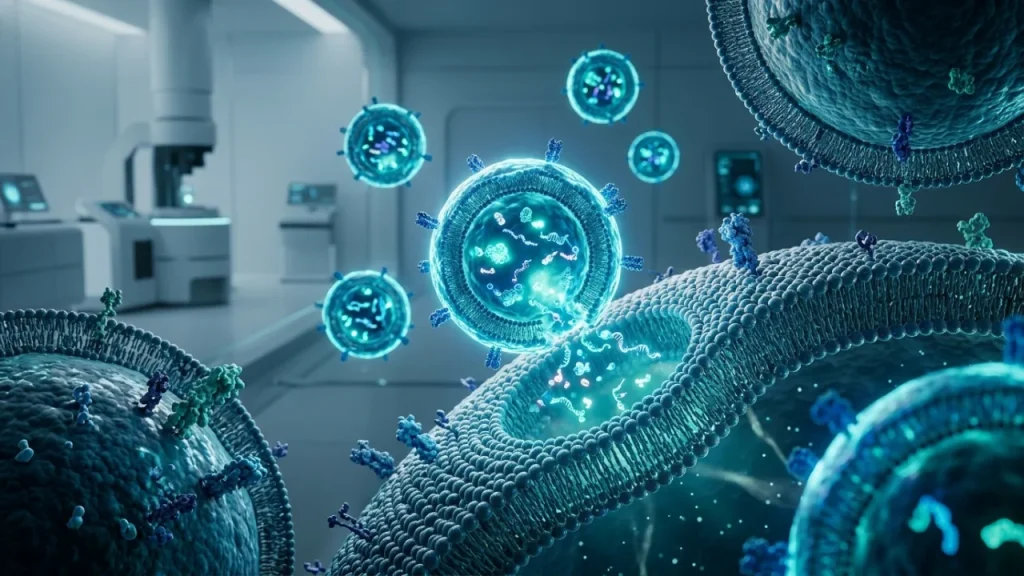
What Are Exosomes and Why Should You Care About Them?
Understanding Tiny Cellular Messengers in Your Body
Your body is a vast network of trillions of cells. They do not work in silence. Cells constantly talk to each other. This communication keeps you healthy. It tells your skin to heal a cut. It guides your immune system to fight a cold. But how do cells send these messages? They use tiny packages called exosomes.
Think of an exosome as a microscopic envelope. It is filled with important instructions. Each exosome is about one thousand times smaller than a grain of sand. You cannot see it without powerful tools. Cells create these vesicles inside themselves. Then they release them into the fluid around them. Other cells nearby can catch these parcels. They open them and read the instructions inside.
This system is a natural part of your biology. Every cell type can send and receive exosomes. They carry different cargo based on their source. This cargo includes proteins and lipids. Most importantly, they carry genetic blueprints called RNA. These molecules can change what a cell does.
For example, a damaged skin cell can send out exosomes. These vesicles carry signals for repair. Neighbor cells get the message. They start working to fix the tissue. This is a key part of how your body maintains itself. The process happens every day without you knowing.
Scientists are fascinated by these tiny messengers. Research shows their role is huge in many processes. Here are a few key jobs exosomes perform in your body.
- They help your immune system coordinate. Immune cells use exosomes to share information about threats.
- They aid in tissue repair. Signals inside exosomes can tell cells to grow or heal.
- They remove waste. Cells can pack unwanted material into exosomes and ship it out.
The number of exosomes matters too. A healthy cell might release thousands. A stressed or diseased cell often sends far more. This flood of messages can sometimes spread problems. But it also gives doctors a potential clue about health.
Understanding this cellular post office is the first step. It shows why these particles matter for medicine. If we learn their language, we might help the body heal better. This science moves from the lab into real-world care. Places focused on this advanced work, like those exploring exosomes in Freehold, build on this basic biology.
The key takeaway is simple. Exosomes are not foreign or synthetic. They are your body’s own messaging system. They are vital for everyday health and recovery from injury. Knowing this foundation helps you see the potential for future applications in regenerative science. The next logical question is how this natural process can be guided and supported for therapeutic benefit.
How Exosomes Freehold Clinics Use This Science
The skin is a dynamic organ that constantly repairs itself. This process slows with age and damage. Environmental stress and time disrupt cellular communication. Healing signals become weaker or lost. This is where applied exosome science offers a potential path.
Think of a tired skin cell. It may not send or receive clear repair messages. A targeted application of exosomes can change this. These vesicles deliver a concentrated set of instructions. They do not act as foreign material. Instead, they work like a system reset for local cellular networks.
Clinics focused on advanced regenerative aesthetics apply this principle. They use exosomes derived from ethical sources. The goal is to supplement the body’s own diminished signaling. This approach aims to support the skin’s innate ability to heal from within. It is not about adding a synthetic drug.
The general procedure is straightforward and minimally invasive. First, a provider prepares the treatment area. This often involves creating micro-channels in the skin’s surface. These tiny openings allow for better delivery. Next, a solution containing exosomes is carefully applied. The exosomes can then interact with local cells.
Their effect is multi-faceted and works on a fundamental level. The key mechanisms are direct and supportive.
- Exosomes can transfer growth factors directly into target cells. These proteins tell skin cells to produce more collagen and elastin.
- They carry genetic instructions like miRNA. This can switch on youth-associated genes in older cells.
- They reduce harmful inflammation. Signals inside exosomes can calm overactive immune responses in damaged tissue.
- They improve cell energy and vitality. Components in exosomes support mitochondrial function, the cell’s power plant.
For patients, this translates to visible changes over time. The aim is improved skin texture and resilience. Fine lines may appear softened because of new collagen. Hydration often improves as barrier function is supported. Tone can become more even due to modulated inflammation. The result is not an artificial filler effect. It is the appearance of healthier, better-functioning skin.
Safety is a primary concern in this field. Reputable practitioners prioritize rigorous sourcing and testing. The exosomes used are purified and screened for safety. They contain no live cells, which simplifies regulation and reduces risk. The treatment is typically well-tolerated with minimal downtime.
This science represents a shift in aesthetic medicine. It moves beyond simply adding volume or paralyzing muscles. The strategy is to improve the cellular environment itself. By enhancing communication, the skin’s own repair systems get a clearer directive. This logic underpins the work at clinics specializing in this area, such as those exploring exosomes Freehold for patient care.
The potential extends beyond cosmetic improvement. The same principles are being studied for wound healing and scar revision. Guiding the body’s messaging system offers a powerful tool. It harnesses biology rather than fighting against it.
Understanding this application closes the loop from lab to practice. We see how a natural cellular process can be guided for therapeutic benefit. The next logical step is to examine what this means for someone considering such a treatment, focusing on realistic outcomes and informed choices.
The Difference Between Traditional and Exosome Treatments
Traditional aesthetic treatments often work by adding something from the outside or temporarily blocking a natural process. Think of dermal fillers. They physically add volume beneath the skin. The effect is direct and mechanical. Botulinum toxin treatments relax muscles to smooth wrinkles. The focus is on altering structure or function. These methods can be effective. Yet their action is typically localized and temporary. They address the symptom, not the underlying cellular environment.
Exosome treatments operate on a completely different principle. They do not add lasting volume or paralyze muscles. Instead, they deliver molecular instructions. These instructions aim to improve how your own cells behave and communicate. The goal is to change the tissue’s biological activity. This is a shift from a mechanical approach to an informational one.
Consider the timeline of results. Traditional methods often show effects immediately or within days. A filler plumps a line right away. An exosome treatment works on a cellular schedule. Changes unfold over weeks as cells receive new signals and adjust their own production of collagen and elastin. The result develops gradually. It mirrors natural biological renewal.
The scope of effect also differs. A filler treats only the precise line or area where it is injected. Its influence does not spread. Exosomes, as signaling entities, can influence a broader area. They encourage a coordinated response from multiple cells in the treated region. This can lead to more generalized improvements in skin quality beyond a single wrinkle.
Let’s look at durability. Traditional treatments wear off as the product metabolizes or muscle action returns. Maintenance sessions are required to keep the look. Exosome therapies aim to create a lasting shift in cellular behavior. The idea is to kickstart a sustained period of healthier function. While not permanent, the benefits may last longer because they support the skin’s own regenerative processes.
Safety profiles stem from these different mechanisms. Fillers and neurotoxins carry risks like asymmetry, nodules, or migration. These are risks of introducing a foreign substance or profoundly altering a nerve signal. Exosome safety hinges on purity and precise signaling. Since they are not live cells, the risk of rejection or overgrowth is low. The primary concern becomes the quality and source of the exosomes themselves.
Here is a simple comparison of core approaches:
- Traditional: Adds material or blocks a process.
- Exosome: Delivers instructions to change cell behavior.
- Traditional: Targets a specific line or fold.
- Exosome: Supports overall skin health in a region.
- Traditional: Results are often immediate.
- Exosome: Results develop over weeks.
- Traditional: Effect diminishes predictably.
- Exosome: Effect may encourage longer-term improvement.
This difference matters for your goals. If you seek quick correction for a specific concern, traditional options have clear value. If your aim is overall rejuvenation, improved texture, and enhancing your skin’s inherent health, then exosome strategies present a novel path. This is why clinics focused on regenerative aesthetics, including those exploring exosomes Freehold, are integrating this science.
The choice is not necessarily one over the other. In some cases, approaches can be complementary. A practitioner might use filler for instant contour correction and exosomes to improve the surrounding skin quality. Understanding the fundamental difference empowers you to discuss options clearly. It moves the conversation from just “what will I look like” to “how do I want my skin to function.” This leads logically to practical considerations for anyone evaluating this new option as a potential treatment for themselves.
Why Cellular Communication Matters for Skin
Your skin is a living community. Millions of cells work together every second. They do not work in silence. Skin cells constantly send and receive molecular messages. These messages are vital instructions. They tell a cell when to repair itself. They signal when to make new collagen. They coordinate the response to a sunburn or a scratch. Clear communication keeps this community organized, healthy, and resilient.
Think of a busy construction site. Workers need clear blueprints and constant updates. If the foreman stops sending instructions, work slows down. If delivery trucks bring the wrong materials, construction falters. Your skin operates in a similar way. As we age and face environmental stress, the communication network can degrade. Signals get weaker. Messages get lost or corrupted. The cellular workforce becomes less coordinated.
This breakdown has direct, visible consequences. Here is what happens when signaling fails.
- Collagen production slows. Fibroblasts are the cells that build collagen. They need strong, clear signals to do their job. Without these “build now” messages, production drops. Skin loses its firm support structure.
- Repair cycles become inefficient. Damaged cells might not get the signal to renew themselves. Old, tired cells linger. Fresh, vibrant cells are not produced as quickly.
- The inflammatory response can misfire. Healthy communication helps manage inflammation. It tells the immune system when to activate and, crucially, when to calm down. Poor signaling can lead to chronic, low-level inflammation. This quietly damages tissue over time.
The result is skin that is thinner, drier, and slower to heal. Wrinkles deepen. Tone becomes uneven. This is not just about cells dying. It is about cells becoming confused and inactive because their instructions are unclear.
Enter exosomes. These tiny vesicles are key messengers in this system. They are like specialized courier packets. Cells release them into the spaces between other cells. Each exosome carries a precise cargo of proteins, lipids, and genetic material. This cargo delivers a specific set of instructions to a recipient cell.
A fibroblast that receives certain exosomes might “wake up” and start synthesizing collagen again. A stem cell might get directions to migrate to an area needing repair. This is the science that clinics focused on advanced regenerative aesthetics harness. The goal is not to add foreign material. It is to restore the clarity and volume of the body’s own communication language.
Why should you care about this cellular chatter? Because the quality of these signals dictates your skin’s functional health. You cannot see the messages themselves. But you see their effects every day in the mirror. Supporting this intrinsic communication network is a foundational approach to rejuvenation.
It shifts the focus from merely filling a line to improving how the local skin cells behave and collaborate. This understanding leads directly to practical questions about how such therapies are sourced and applied, which we will explore next.
Common Myths About Exosome Therapies Debunked
A common myth is that exosome therapies are derived from embryonic stem cells. This is false. Most clinical exosomes come from adult mesenchymal stem cells. These cells are often sourced from donated umbilical cord tissue or a person’s own fat. The process involves no embryos. The donor cells are grown in a lab under strict conditions. They release exosomes into their culture medium. Scientists then collect and purify these exosomes. The original donor cells are not injected into patients. Only the purified signaling vesicles are used.
Another widespread concern involves safety and regulation. Exosomes are not a drug in the traditional sense. They are considered a biologic product. In the United States, they fall under FDA regulation for human cells and tissues. Reputable clinics use exosomes processed in labs registered with the FDA. These labs follow current good manufacturing practices. This ensures product purity, safety, and strength. Not all suppliers meet these standards. This is why patient diligence is crucial. You should always ask about the source and regulatory status of any product used.
Many people think exosomes work like fillers or Botox. They expect immediate, dramatic visual changes within days. This is a misunderstanding of the mechanism. Exosomes are not structural materials. They are communication signals. Their job is to instruct your existing cells to function better. Think of it as software updating your cellular hardware. The process takes time. Initial effects might be subtle improvements in texture or hydration. More significant results like improved firmness often develop over several weeks as collagen production ramps up.
Some believe these therapies are a permanent, one-time fix. This is not accurate either. Your cells continue to age and face environmental stress after treatment. The beneficial instructions from exosomes have a finite lifespan in your tissue. The rejuvenating effects are not permanent. Maintenance treatments are typically suggested to support ongoing cellular communication. The goal is sustained improvement, not a single miracle cure.
A final myth suggests that more exosomes always mean better results. In biology, balance is key. Too many signals can overwhelm a system or cause unintended effects. The correct clinical dose depends on many factors. These include the treatment area and the patient’s individual biology. A skilled provider determines an optimal dose based on scientific protocols and clinical experience. The aim is to restore healthy communication levels, not to flood the zone.
Understanding these facts helps set realistic expectations. It separates genuine science from hype. This knowledge empowers you to ask the right questions when considering such advanced options in places focused on this science, like those exploring exosomes Freehold and similar communities. With myths cleared away, we can next examine what a typical treatment protocol actually looks like from consultation to aftercare.
The Science Behind Exosome Skin Rejuvenation
How Exosomes Carry Repair Instructions Between Cells
Exosomes act as tiny biological mail carriers. They travel between cells with precise instructions. These instructions can tell a skin cell to repair itself.
Think of a damaged skin cell. It might be stressed by sun exposure. It could be aging and producing less collagen. This cell does not always know how to fix itself. Healthy, younger cells release exosomes loaded with helpful molecules. These vesicles deliver their cargo directly to the struggling cell.
The cargo inside an exosome is the key. It is not a single drug. It is a complex toolkit of natural signaling molecules. This toolkit includes several important items.
- Growth factors. These are proteins that act like commands. They tell the target cell to multiply or to make more structural proteins like collagen.
- MicroRNAs. These are small pieces of genetic code. They can regulate gene expression. They can essentially switch certain cellular functions on or off.
- Cytokines. These are signaling proteins that can modulate inflammation. They help calm an overactive immune response in damaged tissue.
- Enzymes and proteins that support basic cell metabolism and repair processes.
The exosome’s membrane protects this precious cargo. It ensures the molecules arrive intact. The exosome finds its target cell through specific surface markers. It docks onto the cell’s membrane. Then, it delivers its instructions in one of two main ways.
The first method is direct fusion. The exosome merges with the target cell’s outer membrane. It empties its contents directly into the cell’s interior. The second method is endocytosis. The target cell envelops the exosome. It pulls the entire vesicle inside in a small pouch.
Once inside, the cargo gets to work. The growth factors bind to receptors. This triggers a cascade of internal signals. The microRNAs enter the cell’s machinery and influence which genes are active. The result is a change in the cell’s behavior.
A fibroblast in the skin might receive these signals. This is the cell responsible for making collagen and elastin. The exosome cargo instructs it to become more active. It tells the fibroblast to produce more of these supportive fibers. The cell essentially reverts to a more youthful, productive state.
This process is called paracrine signaling. Cells communicate with their neighbors over short distances. Exosomes make this communication incredibly efficient and targeted. They are nature’s method for coordinated tissue repair.
The “repair instructions” are not random. They reflect the state of the cells that released them. Exosomes from healthy, vibrant stem cells carry different messages than exosomes from aged or stressed cells. This is why the source matters in clinical applications.
The entire system relies on accurate biological communication. Skin damage often disrupts this natural messaging network. Cells become less responsive. Signals get noisy or lost. Introducing a concentrated dose of potent exosomes can help reset this system.
It provides a clear, strong signal to dormant repair pathways. This is not about adding foreign material. It is about restoring the body’s own optimal language. Clinics focused on advanced regenerative aesthetics, such as those exploring exosomes Freehold, leverage this precise science.
The goal is to enhance the skin’s intrinsic ability to heal itself from within. The effects are not superficial masking. They are a fundamental recalibration of cellular activity. This scientific foundation explains why results develop over weeks as new collagen forms.
Understanding this cargo-and-delivery mechanism separates true regenerative science from simple topical treatments. It shows why exosome therapy operates at a deeper, cellular level. Next, we will explore how these biological principles translate into a real-world treatment experience for patients seeking rejuvenation.
The Role of Growth Factors in Cellular Renewal
Exosomes carry a powerful toolkit for skin repair. This toolkit includes many types of proteins. Among the most important are growth factors. Growth factors are natural signaling proteins. They act like master switches for cellular activity.
Think of a growth factor as a key. It fits into a specific lock on a cell’s surface. This lock is called a receptor. When the key turns the lock, it starts a chain reaction inside the cell. This reaction sends new instructions to the cell’s nucleus. The instructions tell the cell to change its behavior.
For skin rejuvenation, several key growth factors work together. Each one has a specific job. Their combined action drives the entire renewal process.
- Fibroblast Growth Factor (FGF) tells cells to multiply. It signals fibroblasts, the skin’s collagen factories, to become more active and increase in number.
- Vascular Endothelial Growth Factor (VEGF) promotes new blood vessel formation. Better blood flow brings more oxygen and nutrients to the treatment area.
- Transforming Growth Factor-beta (TGF-β) is crucial for making new collagen and elastin. It guides the building of strong, supportive skin structure.
These are not foreign chemicals. Your body produces them naturally every day. But their production slows with age and sun damage. The signal becomes weak. Exosomes deliver a concentrated, clear signal directly to target cells.
The process is precise and orderly. First, exosomes land on the cell membrane. They release their cargo of growth factors into the local environment. These proteins then bind to their matching receptors. This binding activates pathways inside the cell.
One major pathway is called collagen synthesis. The growth factors instruct the fibroblast to ramp up production of new collagen fibers. Collagen is the main structural protein in your skin. It provides firmness and strength. More collagen means fewer wrinkles and tighter skin.
Another pathway increases cellular turnover. This means old, tired skin cells are replaced more quickly. New, healthy cells rise to the surface. The result is a fresher, more radiant complexion.
The effects are not instant because biology takes time. Cells need to receive the signal, activate their machinery, and produce new proteins. This is why improvements in skin texture and tone develop over several weeks. The treatment essentially restarts a stalled natural process.
Growth factors also help modulate inflammation. They can calm overactive immune responses in the skin. This creates a better environment for healing and repair. Reduced background inflammation allows regenerative processes to work more efficiently.
The synergy between different growth factors is critical. One factor might stimulate cell division. Another might guide those new cells to become collagen producers. A third ensures they get enough blood supply. This teamwork leads to comprehensive rejuvenation.
It is a targeted approach. The exosomes deliver these proteins right where they are needed most. This minimizes waste and maximizes the biological impact on the skin’s deeper layers.
Understanding this cargo demystifies how exosome therapy works at a molecular level. It is not magic. It is applied cell biology. The next logical step is to see how this science translates into an actual clinical experience for someone seeking treatment in a local setting focused on advanced care.
Why Exosome Treatments Are Non-Invasive and Safe
Exosome treatments do not require cutting the skin. This is a fundamental difference from surgery. The process uses the body’s own communication system. It simply gives clearer instructions to your cells.
Think of it like updating software rather than replacing hardware. Surgery physically removes or alters tissue. Exosome therapy tells existing cells to repair and renew themselves. The goal is the same: rejuvenation. The method is completely different.
The procedure itself is straightforward. A trained provider applies a topical numbing cream first. This ensures comfort. Then, they use very fine needles or a specialized device to create micro-channels in the skin’s outermost layer. These channels are incredibly tiny. They are not deep cuts or incisions.
The exosome solution is then applied topically. It enters through these microscopic openings. The entire area is treated evenly. There is no removal of tissue. There is no significant bleeding. The micro-channels close naturally within hours.
This approach avoids general anesthesia. You are awake during the brief session. Local numbing is sufficient. Avoiding general anesthesia removes a major category of medical risk. It also means no lengthy recovery from being put to sleep.
The safety profile is rooted in biology. Exosomes are natural nanoparticles. Your body produces trillions of them every day. The therapeutic exosomes are derived from human cells grown under strict laboratory conditions. They are purified to contain only the signaling cargo.
They do not contain living cells. This is a key point for safety. There is no risk of the cells multiplying where they shouldn’t. There is no risk of rejection by your immune system. The vesicles simply deliver their messages and are then cleared by the body.
The risk of infection is very low. The skin barrier is only minimally disrupted. Sterile technique is used throughout. This contrasts with surgical wounds, which are larger and more prone to infection. Proper aftercare involves simple cleansing.
Common side effects are mild and temporary. They are similar to those from other light cosmetic procedures. – Redness at the treatment site. – Mild swelling or sensitivity. – Possible slight bruising in rare cases.
These effects typically fade within 24 to 48 hours. Most people return to normal activities immediately. You might apply makeup the next day. There is no mandatory downtime for healing large wounds.
Long-term safety concerns are minimal because the exosomes are transient. They do not permanently alter your DNA. They do not integrate into your genome. Their effect comes from triggering a temporary, productive state in your cells. Once the signaling proteins are used, the process winds down naturally.
This makes exosome therapy suitable for many people. It may be an option for those who wish to avoid surgery. It can work for individuals with certain health considerations. A thorough consultation always determines candidacy.
The non-invasive nature allows for combination treatments. Exosome therapy can be paired with other procedures safely. – Microneedling to enhance delivery. – Laser treatments to address specific issues. – Professional skincare regimens for surface health.
Combining treatments can often improve overall outcomes. The exosomes support healing and amplify results from other modalities.
Choosing a clinic that prioritizes safety is crucial, such as Exosomes Freehold in our community. Expertise in proper handling and application matters. High-quality sourcing and precise protocols ensure you receive a pure, potent, and safe product.
The entire model is based on minimal intervention for maximum biological effect. It leverages innate cellular intelligence. You provide the cells; the exosomes provide the urgent instructions for repair.
This represents a shift in aesthetic medicine. The focus moves from dramatic alteration to intelligent restoration. The next consideration is what this experience feels like from consultation to final result.
How Exosomes Target Visible Signs of Aging
Wrinkles and texture changes are signs of tired skin cells. These cells are not communicating well. They produce less collagen and elastin. Exosomes deliver a fresh set of instructions to fix this.
Think of an aging skin cell like a factory slowing down. The machinery for making collagen gets rusty. The workers become less efficient. Exosomes arrive as a team of expert supervisors and new blueprints. They do not replace the factory. They restart its optimal operations.
The process targets several key issues at once. It addresses the root causes, not just the surface.
- Fine Lines and Wrinkles: These form from collagen breakdown. Fibroblasts are the cells that make collagen. As we age, fibroblast activity drops. Exosomes carry specific signals to these fibroblasts. The signals tell them to ramp up collagen production. New collagen fibers plump the skin from within. This smooths fine lines.
- Skin Texture and Tone: Uneven texture often comes from poor cell turnover. Dead skin cells linger on the surface. Healing after sun damage or acne is slower. Exosomes promote faster, healthier cell regeneration. They encourage the skin to shed old cells properly. They support the growth of new, uniform cells. This leads to a smoother feel and a more even tone.
- Elasticity Loss: Skin loses its snap when elastin fibers degrade. Elastin is harder for the body to make than collagen. Exosome signals help protect existing elastin. They also support the framework needed for new elastin formation. This can improve skin firmness over time.
- Hydration and Barrier Function: Dry, dull skin has a weak moisture barrier. This barrier is made of lipids and special proteins. Keratinocytes are the main skin cells that build this barrier. Exosomes can carry messages to these cells. The messages tell them to produce more protective lipids. A stronger barrier locks in moisture. Skin appears more hydrated and radiant.
The targeting is precise because exosomes are naturally programmed. Your body’s own healing exosomes would go to damaged areas. The applied exosomes follow similar biological pathways. They are drawn to sites of cellular stress or aging.
This is not a superficial plumping effect. It is a fundamental retraining of your skin’s biology. The cells regain their youthful functions temporarily. They act as they did when they were more vital.
The results develop over weeks and months. Collagen production is a slow, biological process. You might first notice improved hydration and brightness. Texture often refines next. The softening of deeper lines becomes more apparent as new collagen accumulates.
This approach contrasts with methods that forcibly inflate or freeze skin. It works with your body’s innate systems. The goal is restored function, not just a filled line.
For those in Freehold seeking this science, understanding these mechanisms is key. It explains why results look natural. The change comes from within your own skin’s renewed activity.
The next logical question is about the treatment experience itself. How are these powerful messengers prepared and delivered to your skin?
The Evidence Supporting Exosome Clinical Use
Research on exosomes is not just theoretical. It is supported by a growing body of scientific studies. These studies come from labs and clinical settings worldwide. They examine how exosomes work on human skin cells and tissues.
Early evidence came from cell culture experiments. Scientists observed skin cells in petri dishes. They introduced exosomes derived from stem cells into these cultures. The results were clear and measurable. Treated cells showed a significant boost in collagen production. They also produced more elastin and hyaluronic acid. These are the core building blocks of youthful skin.
Animal studies provided the next layer of proof. Researchers used models of wounded or aged skin. They applied topical exosome preparations or used injections. The studies documented accelerated wound closure. They also noted improved regeneration of healthy skin structure. This moved the concept from a dish to a living system.
Human clinical trials offer the most direct evidence for applications in aesthetic medicine. While larger-scale trials are ongoing, existing published reports show promising trends. These studies often measure specific, visible outcomes in volunteer participants.
Common metrics in these trials include: – Skin hydration levels, measured with a device called a corneometer. – Elasticity and firmness, assessed with a cutometer. – Epidermal thickness and collagen density, viewed via ultrasound imaging. – Reduction in wrinkle depth, analyzed through 3D photo software.
For instance, one pilot study followed participants for twelve weeks. They received treatments with exosome-containing solutions. By the end, instrument data showed an average increase in skin hydration of over 30%. Elasticity measurements improved by nearly 25%. Biopsy samples from some studies revealed a denser network of new collagen fibers in the dermis.
The mechanism behind these numbers aligns with the biology discussed earlier. Exosomes carry specific instructions. They deliver growth factors and RNA messages to aging skin cells. This signals the cells to shift from a passive state to an active, reparative one. The evidence confirms they can turn back the molecular clock, at least temporarily.
Safety data is a critical part of the evidence. Exosomes are naturally occurring and non-living. They do not replicate like cells. This reduces risks associated with cell-based therapies. Clinical reports consistently note excellent tolerability. Most patients experience only mild, temporary redness if any reaction at all. This safety profile makes them a compelling option for regenerative approaches.
Critically, the effects appear to be more than surface-level. Unlike topical creams that may only coat the skin, exosomes trigger a cellular response. The evidence points to a true restorative process. This is why results develop over months as new tissue forms.
For anyone in Freehold considering advanced regenerative aesthetics, this science is foundational. The path from lab research to clinical observation is well-established. Understanding this evidence allows for informed decisions about modern skin rejuvenation. It separates hope from hypothesis.
The logical progression now leads to practical application. How is this science translated into a specific treatment protocol? What does the actual process entail from start to finish?
Personalized Treatment Plans at Exosomes Freehold Clinics
How Your Skin Analysis Guides Custom Protocols
Every effective treatment begins with a precise diagnosis. This principle is central at Exosomes Freehold clinics. Your personalized plan does not start with a standard procedure. It starts with a detailed conversation and a high-tech look at your skin. This analysis maps the unique landscape of your complexion. It identifies both visible concerns and hidden needs.
Think of it like a roadmap. You need to know your exact starting point to chart the best course. The skin assessment provides that starting point. It combines advanced imaging with expert clinical observation. This dual approach captures a complete picture.
The process often uses specialized imaging systems. These devices use specific light wavelengths to see beneath the surface. They can reveal aspects invisible to the naked eye. For example, blue light might highlight bacterial activity. Ultraviolet light can show sun damage accumulation. This damage may not yet be visible as dark spots. Cross-polarized light helps assess vascular issues and redness patterns. This imaging provides objective, visual data.
The clinician also performs a hands-on evaluation. They assess skin texture, elasticity, and firmness. They note the depth of wrinkles and folds. They examine pore size and skin tone uniformity. This tactile and visual exam adds crucial context to the digital images.
The goal is to identify your primary treatment targets. These targets are highly individual. One person may have strong concerns about fine lines and laxity. Another may seek to improve overall texture and radiance. A third might need support for scarring or uneven pigment. The analysis clarifies these priorities.
The findings directly guide the custom protocol. They answer several key questions. How many exosome treatments might be optimal for your goals? What is the ideal interval between sessions? Should the treatment focus on specific facial zones or be applied broadly? The analysis provides evidence-based answers.
Consider these common scenarios revealed by analysis. Significant photoaging and collagen depletion often suggests a multi-session plan. This plan builds results progressively over several months. Mild texture concerns may respond beautifully to a single, focused treatment. The protocol is never one-size-fits-all.
The consultation also reviews your health history and lifestyle. Factors like sun exposure, skincare habits, and overall wellness are discussed. These elements influence skin behavior and recovery. This holistic view ensures safety and maximizes potential outcomes.
Your active participation is valuable during this phase. Be prepared to discuss your specific goals openly. Share what you hope to achieve with regenerative aesthetics. Mention any past treatments or products you have used. This dialogue helps tailor the science to your personal vision.
This diagnostic phase transforms abstract science into a concrete plan. It moves from general biological potential to your individual cellular needs. The analysis ensures the powerful messaging of exosomes is delivered with intention and precision.
Ultimately, this careful planning stage is what makes the treatment truly regenerative. It allows clinicians to apply exosomes not as a simple product, but as a targeted cellular signal. Your unique skin analysis provides the instructions for that signal. This meticulous approach is a hallmark of advanced care at Exosomes Freehold clinics.
The next logical step is understanding the treatment procedure itself. How is this custom plan executed during an actual session?
Tailoring Exosome Doses for Individual Needs
The amount of exosomes used in a treatment is not fixed. This amount is called the dose. Just like medicine, the right dose depends on the person and their goal. A one-size-fits-all approach does not work in regenerative science.
Think of exosomes as messengers. Your skin analysis provides the message they need to carry. The dose determines how many messengers are sent to deliver it. A larger dose sends a stronger, more widespread signal. A more focused dose targets a specific area with precision.
Clinicians tailor the dose based on several key factors from your consultation. These factors guide the decision.
- The primary treatment goal is the biggest factor. Addressing fine lines around the eyes requires a different strategy than improving overall skin texture on the cheeks.
- The severity of the concern matters. Sun damage that has built up for decades presents a different cellular environment than early signs of aging.
- Your skin’s individual biology and estimated cellular response capacity are considered. Some systems may respond better to a series of moderate doses.
- Your age and overall skin health provide context. Younger skin might need a different regenerative signal than more mature skin.
A treatment for general rejuvenation often uses a broader application. The goal here is overall improvement in tone, texture, and glow. The exosome dose is calculated to support widespread cellular activity. It encourages renewal across a large area.
A treatment for a specific scar or deep wrinkle uses a targeted approach. The exosome preparation is concentrated. Clinicians may use precise injection techniques to place the vesicles exactly where they are needed most. This focuses the regenerative power.
The concept of dosing also applies over time. Some plans use a single, optimized treatment session. This is often suitable for mild concerns or as a periodic boost. Other plans involve a series of sessions spaced several weeks apart.
A multi-session plan uses a strategic dosing schedule. The initial treatment prepares the cellular environment. Follow-up treatments build on that progress. This cumulative approach can lead to more significant and lasting results for complex goals.
Safety is a fundamental reason for personalized dosing. Using more exosomes than needed does not automatically mean better results. An appropriate dose aligns with your body’s natural capacity to use these signals. This minimizes any potential for overwhelming the system.
The method of delivery also interacts with the dose. Topical application after microneedling allows a certain volume to be absorbed. Direct micro-injections allow a different kind of precision. The chosen technique works in tandem with the calculated dose.
This careful calibration is what makes the treatment truly personal. It moves beyond simply applying a substance. It is about delivering a precise biological instruction at the correct strength. This meticulous planning maximizes potential benefits.
Your active role continues here. Understanding why a certain dose is recommended helps you see the science in action. It transforms the treatment from a procedure into a collaborative cellular project. You are not a passive recipient.
The result is a protocol that feels uniquely yours. It respects your individual biology and ambitions. This tailored approach is a core principle at Exosomes Freehold clinics, where general science meets personal need.
The next step is seeing how this personalized dose is prepared and administered during your actual visit.
Combining Exosomes with Other Skin Care Methods
Exosome treatments do not replace your daily skincare. They work with it. Think of your routine as maintaining a garden. The exosome treatment is like adding rich new soil and seeds. Your daily products are the water and sunlight that help everything grow.
Your skin has a natural barrier. This barrier keeps good things in and bad things out. Many skincare products aim to support this barrier. Exosomes send signals that can help repair and strengthen it. A stronger barrier means your moisturizers and serums work better. They can penetrate more effectively and do their job.
The timing of your routine matters after a treatment. For the first 24 to 48 hours, the goal is simple. You want to let the exosomes do their work without interference. Clinics often recommend a very gentle cleanser and a basic moisturizer. Sun protection is absolutely essential during this time. Harsh active ingredients should be paused.
After this initial period, you can reintroduce your regular products. The exosome signals have already instructed your skin cells. Now, those cells are better prepared to use the nutrients and compounds you apply. For example, cells told to boost collagen production can use vitamin C more efficiently. Hydration from hyaluronic acid serums may be retained better in revitalized skin.
Certain skincare ingredients pair especially well with the goals of exosome therapy. These are often called “supportive” ingredients.
- Hydrators like hyaluronic acid and glycerin. They help maintain the fluid environment cells need to communicate.
- Antioxidants like vitamin C and niacinamide. They protect the newly activated cells from environmental stress.
- Gentle peptides. These can provide additional building blocks for skin proteins.
- Broad-spectrum sunscreen. This is non-negotiable for protecting the skin’s renewal process.
The sequence of application is also key. A general rule is to apply products from thinnest to thickest consistency. Start with a cleanser. Then use a toner if it’s part of your routine. Next, apply any water-based serums, like those with hyaluronic acid or vitamin C. Follow this with an exosome-boosted moisturizer if provided by your clinic. Finish with sunscreen during the day.
Some ingredients are best avoided immediately after treatment. These include strong retinoids, high-concentration alpha hydroxy acids (AHAs), and abrasive physical scrubs. They can cause irritation that disrupts the cellular signaling process. Your clinic will give you a clear timeline for when to resume these potent actives.
The combination approach creates a powerful cycle. Your daily skincare prepares your skin to be receptive. The exosome treatment then delivers a powerful regenerative signal. Your resumed skincare then supports and extends the results of that signal. Each part makes the other more effective.
This integrated plan is a hallmark of care at Exosomes Freehold clinics. The treatment does not end when you leave the office. It continues with the products you use at home. This long-term view is crucial for achieving lasting skin health. Your personalized plan includes guidance on this synergy.
Understanding this partnership empowers you. You become an active participant in maintaining and amplifying your results. The right daily routine protects the investment made during your clinical session. It turns a one-time procedure into an ongoing journey toward better skin.
The final piece is knowing what to expect as your skin begins to change over the following weeks and months.
What to Expect During Your First Consultation
Your first consultation is a discovery session. It is not a treatment appointment. The goal is to build a complete picture of your skin’s biology and your personal goals. This meeting forms the foundation for everything that follows.
The process begins with a detailed conversation. Your clinician will ask many questions. They will want to understand your skin history. They will discuss past treatments and current products. They will ask about your primary concerns, whether they are fine lines, texture, tone, or elasticity. Be prepared to talk about your lifestyle and overall health. Factors like sun exposure, stress, and sleep patterns matter. This dialogue helps map your skin’s unique narrative.
Next comes a thorough visual analysis. The clinician will examine your skin under bright, magnified light. They are looking beyond surface flaws. They assess underlying structure, hydration levels, and signs of cellular fatigue. This exam identifies which areas need the most support. It pinpoints where regenerative signals could be most effective.
Many clinics use advanced imaging technology. This might include a high-resolution camera or a scanner. These tools measure what the naked eye cannot see. They can reveal deep sun damage, pore health, and moisture levels. They provide a scientific baseline. This objective data is crucial for tracking progress later.
Your medical history is reviewed with care. This step ensures safety and suitability for treatment. The clinician needs to know about any medications or supplements you take. They will ask about allergies and autoimmune conditions. Past skin procedures or surgeries are also relevant. Full transparency here allows for a perfectly tailored plan.
The core of the consultation is education. Your clinician will explain exosome science in clear terms. They describe how these natural messengers work. They clarify what the treatment can realistically achieve for you. This is your chance to ask every question you have. A good clinic welcomes all inquiries.
Based on all this information, a preliminary plan is crafted. It is never one-size-fits-all. The clinician will propose a treatment pathway. This includes the recommended number of sessions for optimal results. It details the application method, which could involve micro-needling or specialized infusion.
The plan also covers pre-treatment preparation. You may receive guidance on skincare to pause before your session. You will learn what to expect during the actual procedure itself. The clinician will explain any sensations you might feel.
Finally, you will discuss the investment involved. This includes the cost per session and any package options. The team at Exosomes Freehold clinics believes in clear, upfront communication. There should be no surprises.
You should leave this consultation feeling informed and confident. You will have a clear understanding of your proposed journey. You will know the next steps if you decide to proceed. This collaborative start ensures your treatment is as unique as your skin’s needs.
The consultation transforms hope into a structured strategy. It aligns scientific potential with your personal vision for healthier skin. This careful beginning maximizes the chance for a successful outcome that meets your expectations and supports long-term skin vitality.
Setting Realistic Goals for Natural-Looking Results
Realistic goals start with understanding how skin truly renews itself. Your skin cells have a natural life cycle. They are born, they function, and they are replaced. This process is not instant. It takes time. Exosomes work by supporting this very cycle. They do not force an unnatural change.
Think of it as nurturing a garden rather than painting a fence. A fresh coat of paint gives immediate, surface-level change. Nurturing the soil leads to stronger, healthier plants that emerge over weeks. Exosome therapy aims for the second outcome. The improvements come from within your own skin’s biology.
This means results are often subtle at first. Others may notice you look more rested or refreshed. They might not pinpoint a single change. The goal is enhancement, not transformation. We avoid an overdone or artificial appearance. The best results look naturally like you, but with your skin’s vitality supported.
Several key factors shape these realistic goals. Your age and skin condition are primary guides. A goal for sun-damaged skin differs from a goal for early fine lines. Your skin’s inherent regenerative capacity also plays a role. Furthermore, your commitment to aftercare is crucial for lasting effects.
The timeline for seeing changes is tied to cellular turnover. Here is a general framework for setting expectations: – The initial phase happens in the weeks following treatment. Cellular communication is optimized. You may notice improved hydration and a smoother texture. – More visible changes often appear after several weeks. This can include a brighter tone and a softening of fine lines. – The most significant structural improvements may take months. Collagen remodeling is a slow, steady process. Patience is essential.
Clinics like Exosomes Freehold focus on cumulative benefits. A single session can provide a positive boost. However, a series of treatments typically yields more durable outcomes. This staged approach allows the skin to build on each progress step. It aligns with how your body works.
Setting unrealistic goals leads to disappointment. Promising dramatic wrinkle elimination in days is not scientifically sound. A trustworthy clinic will not make such claims. Instead, they discuss measurable improvements in skin quality, resilience, and overall appearance.
Your lifestyle directly impacts these results. Sun protection becomes non-negotiable. A balanced diet supports cellular health. Managing stress helps your body utilize regenerative signals effectively. The treatment is a powerful catalyst, but your daily habits are the foundation.
The ultimate goal is long-term skin health, not just a temporary fix. Success is measured by sustained improvement over seasons. It is seen in skin that recovers better from daily stress. The aim is to help your skin function at its best possible level for your age and genetics.
This thoughtful approach ensures satisfaction. When goals are clear and achievable, you can appreciate each stage of progress. You celebrate the gradual return of glow and firmness. This builds confidence in the science and in your own skin’s potential.
Natural-looking results are the hallmark of sophisticated regenerative science. They signify that the therapy has worked in harmony with your biology. This creates outcomes that are both beautiful and authentically yours, setting the stage for discussing how treatments are carefully administered.
Addressing Specific Skin Concerns with Exosome Science
How Exosomes Improve Skin Texture and Tone
Skin texture often feels rough or uneven. This can happen for many reasons. Sun damage is a common cause. It breaks down collagen and elastin fibers. These fibers form your skin’s support network. Aging also slows your skin’s natural renewal cycle. Old, dull cells linger on the surface longer. Exosomes address these issues at a cellular level.
Think of your skin cells as a busy factory. Healthy factories communicate well. They repair damage efficiently. They also remove waste on schedule. As we age, this communication slows down. The factory gets noisy and disorganized. Exosomes deliver clear instructions directly to these cells.
These tiny vesicles carry specific signals. They tell your skin cells to make more collagen. Collagen is the main structural protein in your skin. It acts like a supportive mattress pad underneath your sheets. More collagen means firmer, smoother skin.
Exosomes also encourage elastin production. Elastin gives skin its snap-back quality. It helps skin bounce back after being stretched. Together, new collagen and elastin rebuild the foundational layer. This directly improves surface texture.
Skin tone concerns involve color and clarity. Redness, dark spots, and general dullness fall under this category. These issues stem from inflammation and uneven pigment production. Melanocytes are the cells that create pigment. Sometimes they become overactive.
Exosomes help regulate this activity. They carry anti-inflammatory messages. These messages calm irritated skin cells. Reduced inflammation can lessen persistent redness. It also creates a better environment for healing.
For dark spots, exosomes support a balanced process. They do not bleach or erase pigment. Instead, they promote healthier cell turnover. This helps fade existing spots more evenly. New skin cells rise to the surface in a more uniform way.
The result is a clearer, more radiant complexion. The goal is not a single uniform color. Healthy skin has subtle, luminous variations. Exosome science aims to restore that natural vitality.
The process unfolds in distinct phases after treatment. Initial changes are often subtle. You might notice a new glow or softer feel first. This is the cellular communication beginning its work.
- First, cells receive the regenerative signals.
- Then, they ramp up production of key proteins.
- Finally, new tissue forms and migrates to upper layers.
This sequence takes time. Visible refinement in texture and tone typically emerges over weeks. The improvement continues as your skin cycles through its natural renewal process.
Several key mechanisms work together for these results. Exosomes boost hydration by supporting the skin’s moisture barrier function. They enhance microcirculation, bringing more oxygen and nutrients to the area. They also modulate immune responses in the skin to prevent excessive reactions.
This multi-pathway approach is why results appear natural. The treatment does not force one change. It guides many systems toward better function. Your skin’s own biology does the restorative work.
For residents seeking this advanced care, understanding the science behind smooth skin is key. The approach at Exosomes Freehold centers on these fundamental principles. The focus is always on supporting cellular health for lasting improvements.
Texture and tone improvements set a strong foundation. They lead directly to another visible change: enhanced firmness and elasticity.
Reducing Fine Lines and Wrinkles Naturally
Fine lines often start with a slowdown in your skin’s repair systems. Exosomes can help restart these processes. They carry specific instructions to aging cells. These instructions tell cells to make more collagen and elastin again.
Collagen is the main structural protein in your skin. It acts like a supportive scaffold. Elastin gives skin its snap-back quality. Production of both slows with age and sun exposure. This leads to wrinkles and sagging.
Exosomes address this directly. They do not just add temporary volume. They signal your fibroblasts to become active again. Fibroblasts are the cells that build collagen. The messaging is precise and natural.
The approach works on different types of lines. – Dynamic lines form from repeated muscle movements, like smiling. – Static lines are visible even when your face is at rest. – Sleep lines can become permanent over time.
Exosome communication helps soften all these categories. It supports the underlying structure. This reduces the depth of existing lines. It also helps prevent new ones from forming as quickly.
Think of a mattress pad over time. Without good support, it gets permanent creases. Simply smoothing the surface does not fix it. You must repair the padding underneath. Exosomes aim to repair your skin’s natural padding.
The science shows a clear chain of events. First, exosomes bind to target cells in the dermis. They deliver their cargo of RNA and proteins. This cargo reprograms cellular activity.
Key actions then follow. Cells increase production of new, healthy collagen types I and III. They also make more elastin fibers. They release enzymes that clean up damaged, old collagen fragments.
This last point is crucial. Removing damaged proteins makes room for new ones. The skin’s matrix becomes stronger and more organized. The result is a net gain in supportive tissue.
This process takes weeks to months. It follows your skin’s natural renewal cycle. Improvements appear gradually. The skin looks firmer and smoother. Lines become less visible.
The method is fundamentally different from neurotoxins. Neurotoxins freeze muscles to stop motion. Exosomes do not paralyze anything. They improve skin quality so it resists creasing better on its own.
It also differs from filler injections. Fillers add external volume to push skin upward. Exosome signaling encourages your body to create its own support internally. The results can appear more natural because they are.
For individuals in Freehold exploring options, this science offers a compelling path. It uses the body’s own language for renewal. The goal is younger-looking skin that still moves and feels like your own.
Consistent results rely on creating a healthy cellular environment. Good nutrition and sun protection remain vital. They support the regenerative work exosomes initiate. This combination leads to more durable outcomes.
Reducing lines improves facial contours naturally. This restoration of firmness sets the stage for another key sign of youth: a vibrant, even complexion and healthy glow.
Boosting Collagen Production for Firm Skin
Collagen is the main support protein in your skin. Its production naturally slows with age. Exosomes can help restart this vital process. They do not act as a simple collagen ingredient. Instead, they deliver precise instructions.
These instructions come in the form of molecules. Key among them are microRNAs. Think of microRNAs as tiny control switches. They do not carry blueprints for making proteins. They regulate which blueprints the cell uses.
When an exosome enters a skin cell, it releases its microRNAs. These molecules seek out specific genetic messages. Their goal is to silence signals that hinder collagen production. They also promote signals that boost it.
The effect is a shift in the cell’s priorities. The fibroblast, the cell that makes collagen, becomes more active. It starts behaving in a more youthful way. It dedicates more resources to building structural proteins.
This signaling targets collagen types I and III specifically. Type I provides tensile strength. It is the most abundant type in skin. Type III is often found in young, healing skin. It supports a resilient and flexible matrix.
The process involves several clear steps. First, exosomes bind to the target cell. They are accepted because of their natural lipid membrane. Next, they fuse with the cell or are taken inside. Their cargo is then released into the cytoplasm.
Once free, the regulatory molecules get to work. They may increase the activity of collagen genes. They can also stabilize the messenger RNA for collagen. This ensures the blueprint lasts longer and gets read more often.
Furthermore, exosomes provide essential building blocks. They carry enzymes and co-factors needed for collagen synthesis. The molecule proline, for instance, is critical for collagen’s structure. Some exosomes help ensure its proper incorporation.
The entire sequence relies on accurate communication. It is a biological conversation with a clear goal: enhance structural support. For individuals in Freehold exploring advanced skincare, understanding this science is key. The approach at Exosomes Freehold centers on this precise cellular dialogue.
Results are not instantaneous because biology takes time. After receiving exosome signals, a fibroblast needs days to ramp up production. It must transcribe genes, translate the code, and secrete new protein strands.
These strands then undergo modification outside the cell. They are assembled into strong fibrils. Fibrils group into larger fibers. This entire network integrates into the existing skin matrix.
The outcome is a gradual increase in skin density. This improved density directly combats laxity. Skin feels firmer to the touch. It resists sagging and deformation better.
This method contrasts with topical collagen creams. Those proteins are too large to penetrate deeply. Even if they could, they would not instruct cells to make more. Exosome science works on a fundamental instructional level.
Supporting this internal process is wise. Antioxidants protect fibroblasts from oxidative stress. Hydration maintains the fluid environment for transport. Avoiding sugar spikes helps prevent collagen fibers from becoming stiff and damaged.
Consistent collagen production restores a youthful framework. This firm foundation also affects skin’s appearance in another way. It creates a smooth canvas for light reflection, reducing shadowing from lines. A strong matrix supports everything built upon it, including a clear and even complexion.
Healing Sun Damage and Environmental Stress
Sunlight and pollution leave a clear signature on your skin. This damage is more than surface-level. Ultraviolet rays penetrate deeply. They create unstable molecules called free radicals. These radicals attack healthy skin cells. They damage cellular DNA and proteins like collagen.
Exosomes deliver a precise repair toolkit to stressed skin. They do not just signal for new collagen. They also provide instructions and tools for cleanup. Think of them as both construction managers and demolition crews. They help remove damaged components so healthy new ones can take their place.
One key repair mechanism involves antioxidant enzymes. Exosomes can carry these enzymes directly into target cells. Superoxide dismutase is one example. It neutralizes harmful free radicals on site. This stops the chain reaction of damage immediately. It protects the cell’s machinery for repair.
Exosomes also modulate inflammation. Chronic, low-grade inflammation accelerates skin aging. This is often called “inflammaging.” Sun exposure triggers this inflammatory state. Exosome signals can help calm this overactive response. They promote a balanced environment conducive to healing.
The repair process targets specific signs of photodamage: – Hyperpigmentation: Sunspots occur when melanocytes produce too much pigment. Exosomes can carry messages that help normalize this activity. They support a more even distribution of melanin. – Texture: Environmental stress breaks down the skin’s smooth surface. By promoting healthy cell turnover and matrix repair, exosomes help restore a refined texture. – Tone: Dullness results from a buildup of dead cells and poor reflection of light. A repaired dermal matrix and revitalized epidermis improve luminosity.
Pollution particles are another daily aggressor. These tiny particles can embed in skin. They generate oxidative stress long after exposure ends. The exosome-mediated cleanup process is vital here. It helps cells cope with this constant assault, supporting the skin’s natural detoxification pathways.
Healing this damage has a visual payoff. As damaged proteins are cleared and replaced, skin clarity improves. Discolorations can fade gradually. The overall complexion appears more uniform. This is not merely covering up the problem. It is actively resolving the underlying cellular dysfunction.
The approach at Exosomes Freehold leverages this science for comprehensive renewal. It addresses both the past and the future of your skin’s health. The goal is to undo existing harm while fortifying cells against new insults. This creates a resilient foundation.
This restorative work complements structural rebuilding perfectly. First, you remove the damaged framework. Then, you instruct cells to build a new, stronger one. The next logical step is to explore how this combined action affects one of the most common aging concerns: the loss of volume and contour.
Enhancing Skin Hydration and Vitality
Hydrated skin is more than just skin with water in it. It is skin where cells communicate properly. The outermost layer, the epidermis, has a natural barrier. This barrier keeps moisture in. It also keeps irritants out. Healthy cells constantly renew this barrier. Aging and damage weaken this process. Cells send fewer repair signals. The barrier becomes leaky. Moisture escapes easily. This leads to chronic dryness and a tired appearance.
Exosomes carry direct instructions to fix this. They deliver microRNAs and proteins to target cells. These are like software updates for skin cells. One key instruction tells cells to produce more barrier lipids. These lipids are the mortar between skin cells. They seal in hydration. Another instruction boosts natural moisturizing factors. These factors hold water inside the skin itself.
The result is a reinforced moisture barrier. Think of it as repairing a dam. You patch the leaks first. Then you instruct the workers to maintain it better. The skin starts retaining water more effectively. This is not about adding a temporary surface moisturizer. It is about teaching skin to hydrate itself from within.
The dermis below also plays a vital role. This layer contains hyaluronic acid and collagen networks. These structures bind water, giving skin plumpness. Exosome signaling here has a dual effect. – It encourages fibroblasts to produce more hyaluronic acid. This molecule can hold one thousand times its weight in water. – It supports the health of the collagen matrix. This creates a resilient scaffold that holds hydration.
Improved hydration has immediate visual effects. Skin reflects light better, creating a glow. Fine lines caused by dryness may become less noticeable. The complexion looks fuller and more supple. This vitality comes from cellular efficiency, not just surface dampness.
Dehydrated skin often feels tight and sensitive. A compromised barrier lets in more allergens and pollutants. Exosome-mediated repair calms this reactivity. By restoring the barrier, skin becomes more resilient to external stressors. Its natural defenses operate as intended.
The science at Exosomes Freehold applies these principles for lasting change. The goal is to reset the skin’s innate ability to manage hydration. This creates a foundation of enduring vitality. Well-hydrated skin is healthier skin. It functions better and ages more gracefully.
This internal renewal of moisture networks sets the stage for another key concern. With hydration optimized, the focus can shift to enhancing the skin’s overall resilience and youthful appearance over the long term.
Your Path to Lasting Skin Health with Exosome Therapy
Why Education Is Key to Effective Skin Care
Understanding your skin’s biology changes how you care for it. This is a core principle at Exosomes Freehold. Knowledge turns you from a passive recipient into an active participant in your skin health. Effective care is not about following trends. It is about understanding causes and supporting natural processes.
Think of your skin as a complex, living ecosystem. Each cell communicates constantly. Signals tell cells to repair, renew, or defend. When these signals weaken, visible aging occurs. Exosome therapy aims to restore clear cellular communication. Knowing this shifts your perspective. You are not just treating a surface symptom. You are addressing a foundational cellular event.
Education helps you set realistic expectations. Regenerative science works from the inside out. Results are not instant like a cosmetic cover-up. The process is gradual and biological. First, cells receive new instructions. Then they begin their restorative work. This can take weeks. Visible improvements in tone and texture follow. Understanding this timeline prevents disappointment. It allows you to appreciate the true, lasting nature of the change.
Informed patients ask better questions. They can discuss their concerns with clarity. Consider these common goals and the science behind them: – Reducing fine lines: This requires new collagen production, guided by fibroblast activity. – Improving radiance: This depends on efficient cell turnover and surface light reflection. – Strengthening resilience: This relies on a robust skin barrier and calm immune responses. When you understand these links, your dialogue with a specialist becomes more productive. You become a partner in designing your treatment path.
The field of aesthetics is full of options. Some offer temporary fixes. Others promise permanent change without scientific backing. Education provides the tools to navigate this landscape. You learn to identify treatments that work with your biology, not against it. For example, a procedure that causes controlled injury triggers inflammation. Your body then heals it. An exosome approach seeks to directly instruct and enhance healing without that initial damage phase. Knowing the difference is powerful.
Your daily routine also changes with knowledge. You start to see skincare products differently. Ingredients like peptides or antioxidants are not just marketing terms. They are tools that support specific cellular functions. An educated approach aligns your daily regimen with your professional treatments. This creates synergy. The therapy does the deep work. Your home care maintains and extends the benefits.
The team at Exosomes Freehold prioritizes this educational partnership. They believe lasting results are built on a foundation of understanding. When you know how your skin functions, you can make choices that truly support it long-term. This commitment to clarity ensures your journey is based on evidence, not just hope.
Ultimately, skin health is a lifelong journey. Education gives you the map for that journey. You learn to read your skin’s signals and respond with supportive care. This proactive mindset is the key to sustaining vitality and youthfulness over decades. It transforms skincare from a chore into an intelligent investment in your well-being.
With this foundation of knowledge, we can explore what a personalized treatment plan looks like in practice.
How to Maintain Results After Exosome Treatments
Exosome treatments give your skin new instructions for repair. Your daily habits decide how long those instructions stay active. Think of it like planting a seed. The therapy provides the seed. Your routine provides the water and sunlight it needs to grow. Lasting results depend on both.
Your skin’s environment matters most after treatment. Exosomes help your cells function better. But they need support. Certain choices can protect this improved function. Other choices can disrupt it. Your goal is to create a stable, healthy setting for your skin.
Sun protection is your most important habit. UV rays create inflammation and damage DNA. This directly counteracts the regenerative signals from exosome therapy. Use a broad-spectrum sunscreen every single day. Reapply it every two hours if you are outside. A hat and sunglasses offer extra defense.
Your diet directly fuels your skin cells. Focus on anti-inflammatory foods. These help maintain the calm state exosomes promote.
- Eat colorful fruits and vegetables. They are full of antioxidants.
- Include healthy fats like those in avocados and nuts.
- Choose lean proteins for building blocks.
- Drink plenty of water for cellular hydration.
- Limit sugar and processed foods that can cause inflammation.
Skincare products should be simple and supportive. Avoid harsh scrubs or strong acids immediately after treatment. Your skin is in a active healing phase. Use gentle cleansers. Look for products with peptides and growth factors. These ingredients complement exosome signaling. They do not replace it. They work alongside it.
Stress management is often overlooked. Chronic stress raises cortisol levels. This hormone can break down collagen and slow repair. Find a daily practice to lower stress.
- Try ten minutes of meditation.
- Go for a brisk walk.
- Practice deep breathing exercises.
- Ensure you get quality sleep each night.
Sleep is when your body does most of its repair work. Aim for seven to eight hours per night. This gives exosome-guided processes optimal time to work.
Avoid known skin stressors. Smoking severely reduces skin blood flow. It depletes vital nutrients. Pollution can generate free radicals. Cleanse your skin thoroughly each evening to remove these particles. Consider using an antioxidant serum in the morning.
Listen to your skin’s new signals. After exosome therapy, your skin may behave differently. It may feel more hydrated. It might heal faster from minor cuts. Pay attention to these changes. They are signs of improved health. Let these positive signs guide your choices.
Consistency is more valuable than intensity. A perfect routine done once is useless. A simple routine done daily is powerful. Pick two or three key habits to start. Master them before adding more.
Track your progress in a simple way. Take a photo in consistent lighting each month. Note how your skin feels. This objective record shows you what works. It keeps you motivated over the long term.
Professional maintenance treatments can extend results. Think of them as periodic updates for your skin. Your provider can assess your progress. They might suggest a follow-up session to reinforce cellular communication. This is part of a long-term strategy.
Your path to lasting skin health is built on these daily decisions. Each supportive habit protects your investment in exosome therapy. They work together to sustain vitality from within. This integrated approach ensures your results are not just a temporary change, but a lasting improvement in your skin’s fundamental biology, especially when seeking guidance from experts focused on this science like those at Exosomes Freehold.
The journey continues with understanding the timeline for seeing these lasting benefits unfold
Finding Trusted Local Resources for Skin Health
Finding a trusted professional is a critical step in your skin health journey. This choice supports the daily habits you have built. The right clinic acts as a knowledgeable guide. It provides treatments based on solid science. It also offers personalized advice for your long-term plan. Not all practices focus on advanced cellular science. You need to know what sets a true resource apart.
Look first for a focus on education. A reliable clinic teaches you about the processes involved. Practitioners should explain how exosomes work in simple terms. They describe cellular communication without confusing jargon. They discuss the source of the exosomes they use in a general way. They avoid making vague claims about miracle cures. Instead, they talk about supporting your skin’s natural biology. Staff should answer your questions clearly. They should provide scientific resources for you to review.
Evaluate the consultation process thoroughly. A good consultation is comprehensive and personalized. The provider should examine your skin carefully. They should review your full health and skincare history. They will ask about your goals and lifestyle. This information helps them create a tailored plan. A one-size-fits-all approach is not ideal for advanced therapies. The proposed plan should make logical sense to you. It should connect your specific concerns to the proposed treatment’s mechanism.
Consider the clinic’s overall philosophy on skin health. The best resources view treatments as part of a larger strategy. They see procedures like exosome therapy as powerful tools. But these tools work best within a framework of good daily care. These clinics often stress the importance of sunscreen and gentle products. They talk about long-term vitality, not just quick fixes. This philosophy aligns with achieving lasting results from your investment.
Transparency about procedures and expectations is non-negotiable. A trustworthy provider outlines each step of a treatment beforehand. They explain what you will feel during the process. They give clear aftercare instructions to protect your results. Most importantly, they discuss realistic outcomes. They provide a sensible timeline for when you might see changes. They avoid guaranteeing specific results that science cannot promise.
The environment and technology of the clinic also offer clues. The space should be clean and professional. The equipment should appear modern and well-maintained. While brand names are not important, the presence of specialized tools matters. These might include certain imaging devices to analyze skin layers. This shows an investment in precise assessment and delivery.
Seeking a clinic deeply familiar with regenerative science is key for specialized care. In your local area, you might look for centers that highlight this expertise in their practice focus. For instance, a community resource like Exosomes Freehold would exemplify this dedicated approach, prioritizing the science behind cellular messengers.
Finally, trust your own instincts during visits. You should feel heard and respected. Your concerns should be addressed directly. The communication should feel collaborative, not pressured. A lasting partnership with a skincare professional is built on this trust and shared understanding. This partnership becomes your anchor for maintaining skin health year after year, ensuring your daily efforts are perfectly aligned with expert oversight.
Your next step involves integrating this professional guidance with a clear view of the treatment journey ahead, including its natural phases and milestones.
The Future of Regenerative Aesthetics in Your Community
Regenerative aesthetics is no longer a distant future concept. It is becoming a practical part of local healthcare. Communities are now hubs for this advanced science. This shift brings powerful cellular tools closer to home. Your local clinic is part of this exciting change.
Exosomes sit at the heart of this shift. They are natural messengers. Your own cells produce them constantly. These tiny vesicles carry vital instructions. They signal repair. They prompt renewal. This process happens in your body every day. Modern therapy simply harnesses this innate system. It aims to support your skin’s own repair mechanisms.
The science continues to evolve rapidly. Researchers make new discoveries each year. They better understand how exosomes communicate. Studies show they can influence collagen production. They may help modulate inflammation. This research translates into more refined clinical approaches. Protocols become more targeted and effective over time.
Local access is key to this progress. When advanced care is nearby, it integrates into your life. You gain consistent oversight from experts in your community. This fosters a true partnership for long-term skin health. For residents seeking such specialized care, a local destination like Exosomes Freehold represents this very model. It embodies the move of complex science into neighborhood settings.
The benefits of local access are clear. – Convenience supports consistent care and follow-up visits. – Practitioners understand regional environmental factors affecting skin. – Treatment becomes part of your ongoing health routine, not a rare event.
This model focuses on sustained wellness, not quick fixes. The goal is lasting skin function and resilience. Think of it as maintaining a vital organ. Your skin protects you every day. Supporting its cellular health is a proactive strategy. This approach aligns with modern preventive medicine.
Technology also makes this local model possible. Specialized equipment for handling biological materials is more available. Training for practitioners is more widespread. Safety standards are well-established. This allows community clinics to operate at high scientific levels. Patients receive care that was once only found in major research hospitals.
The future points toward personalization. Imagine treatments tailored to your unique cellular profile. Science is moving in this direction. Local clinics will likely use more detailed assessments. These could guide precise exosome applications for individual needs. Your treatment plan may become as unique as your fingerprint.
This progress relies on educated patients and skilled providers. Understanding the science helps you set realistic goals. It allows for informed conversations with your clinician. You become an active participant in your skin health journey. This collaboration drives the best possible outcomes.
Community clinics also contribute to broader medical knowledge. They observe real-world results over time. These observations can inform future research directions. Your local provider is part of a larger network advancing the field.
The journey does not end after a treatment session. Lasting health involves continued support. Your local clinic is there for that ongoing dialogue. They help you adapt your routine as your skin evolves. This long-term relationship is the cornerstone of regenerative aesthetics.
Ultimately, this shift empowers you. Advanced care is not locked away in distant institutions. It is increasingly present where you live and work. This democratizes access to cutting-edge science. It puts powerful tools for rejuvenation and repair within your reach.
Your path to lasting skin health is now supported by a growing local infrastructure dedicated to regenerative science
Taking the First Step Toward Transformative Skin Care
Your journey begins with a single, focused conversation. This first step is not about committing to a procedure. It is about gathering information specific to you. A qualified consultation forms the essential foundation for any potential treatment plan.
Think of this meeting as a discovery session. Your provider needs to understand your skin’s current state. They will also want to know your specific goals. Are you targeting fine lines, sun damage, or overall texture? Clear goals help tailor the science to your needs.
The consultation will involve a detailed discussion of your health history. Be prepared to talk about your skin care routine. Mention any past treatments or procedures. Share any medical conditions or medications. This information is crucial for safety and planning.
Your provider will likely examine your skin closely. They may use specialized lighting or imaging tools. These tools help reveal concerns not visible to the naked eye. This assessment provides a baseline map of your skin’s landscape.
This is your time to ask questions. Do not hesitate to voice any concerns. A trustworthy provider welcomes your curiosity. They should explain complex science in simple terms you can understand. This dialogue builds the trust necessary for effective care.
Here are key topics to discuss during your first visit: – The source and preparation of the exosomes used. – The proposed application method for your skin. – The expected timeline for seeing initial results. – The scientific rationale behind your custom plan. – Any potential sensations or downtime after the procedure.
Understanding the process demystifies the treatment. You will learn how exosomes communicate with your skin cells. They deliver instructions for repair and renewal. This is not a temporary filler or a superficial peel. It is a signal to your body’s own regenerative systems.
After the consultation, you will receive a proposed plan. This plan should feel personalized. It should directly address the goals you discussed together. There is no universal formula that works for everyone. Your biology is unique.
Take time to review this information at home. Do not feel pressured to decide immediately. Reputable clinics encourage informed consent. They know this decision is important for your health and confidence.
Choosing a local clinic like Exosomes Freehold offers distinct advantages. You build a relationship with professionals in your community. Follow-up visits are convenient and consistent. You have direct access for any questions during your recovery period.
Your first step is an act of proactive investment. It moves you from considering possibilities to understanding your personal options. This knowledge empowers you to make a confident choice about your skin health journey.
The path forward becomes clear once you have all the facts. You can then decide if exosome therapy aligns with your vision for rejuvenation. This informed decision is the true beginning of transformative care.