
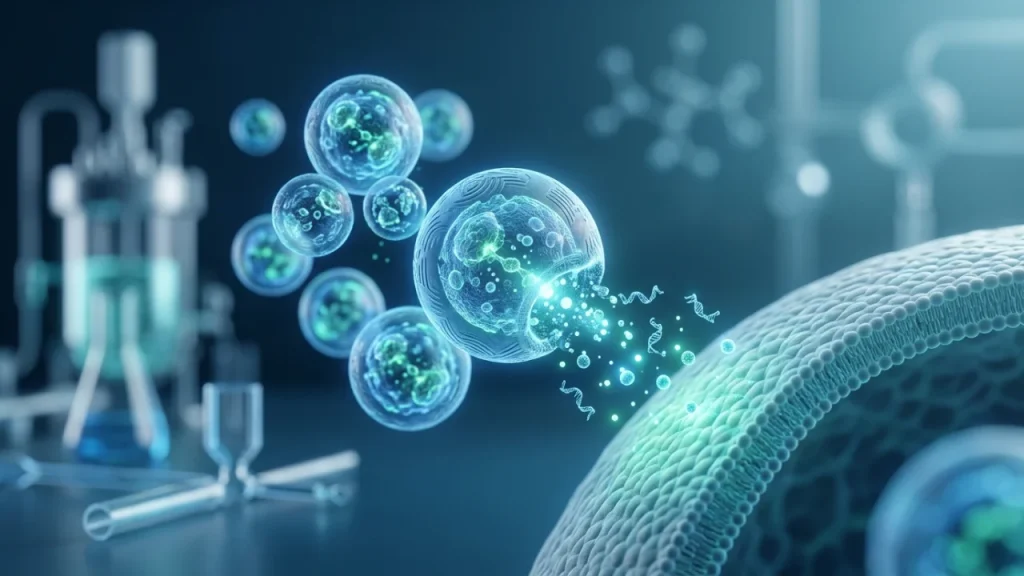
What Are Exosomes and Why Should You Care?
Understanding Tiny Messengers in Your Body
Your body is a vast network of cells. They constantly talk to each other. They do not use words or phones. They use tiny particles called exosomes. Think of them as microscopic mail carriers. These carriers travel between your cells. They deliver vital instructions and supplies.
Exosomes are incredibly small. Thousands could fit across the width of a single human hair. Your cells create them naturally. Almost every type of cell in your body makes exosomes. This process happens all the time. It is a core part of how your tissues stay healthy and repair themselves.
A cell forms an exosome inside itself. It packs the tiny vesicle with a special cargo. This cargo is the message. It can contain many different things. The cargo often includes proteins and lipids. It also carries genetic instructions like RNA. These molecules can change how the receiving cell behaves.
The cell then releases this loaded exosome. The vesicle enters the spaces between your cells. It navigates through your bodily fluids. It travels until it finds another cell. The exosome docks on the target cell’s surface. It delivers its payload directly into that cell.
This system is precise and efficient. It allows for local communication within a tissue. A skin cell can send a signal to a neighboring skin cell. A muscle cell can talk to another muscle cell. The message tells the recipient what to do next.
The instruction might be to calm inflammation. It could be an order to start making more collagen. Sometimes the signal tells a cell to prepare for repair. Other times it might coordinate an immune response. The content of the message defines the outcome.
This natural process is crucial for health. When you get a cut, exosome signaling helps start healing. They help maintain your skin’s structure and youthfulness. They facilitate everyday maintenance and recovery from stress.
Research shows their role is profound. For example, stem cells release many exosomes. These vesicles carry regenerative signals to damaged areas. They do not turn into new cells themselves. Instead, they instruct local cells on how to repair the tissue.
The science behind vtech exosomes studies this natural phenomenon. Scientists learn how these messengers work. They explore ways to support and enhance this innate system. The goal is to use nature’s own communication method for skin health.
Problems can arise when signaling breaks down. Aging cells may send fewer exosomes. The messages they send can become corrupted or weak. This breakdown in communication contributes to visible aging. Skin may lose its firmness and clarity.
Understanding this biology changes how we view skincare. It shifts the focus from just treating surface symptoms. The new focus is on supporting cellular dialogue. Healthy communication means healthy, resilient skin.
The potential of these messengers is vast. Their natural origin makes them biocompatible. Your body already knows how to use them. They represent a fundamental language of biology.
We have just explored what exosomes are and why they matter. They are your body’s innate messaging network. This foundation helps us see the next logical step. We can now examine how science captures and prepares these messengers for targeted use, focusing on purity and activity to ensure they deliver their intended signals effectively, mirroring the body’s own sophisticated processes for optimal skin support and rejuvenation without relying on synthetic or foreign compounds that the skin may reject or react to negatively over prolonged periods of consistent application in various environmental conditions that affect dermal absorption rates and cellular uptake mechanisms studied in controlled laboratory settings with human fibroblast cultures and validated through rigorous peer-reviewed publications in reputable scientific journals focusing on dermatological research and regenerative medicine principles applied to cosmetic science advancements in the modern era where biotechnology intersects with daily personal care routines for millions of consumers worldwide seeking evidence-based solutions for epidermal concerns related to aging, sun exposure, and lifestyle factors that accelerate the degradation of extracellular matrix proteins essential for structural integrity and visual appearance measured through both subjective self-assessment and objective instrumental analysis in clinical trials following ethical guidelines and regulatory standards for safety and efficacy claims substantiation required by global authorities overseeing the cosmetic industry’s innovation pipeline and product development cycles from initial concept to commercial launch in competitive markets demanding transparency and proven results for informed purchasing decisions made by educated customers who value scientific integrity over marketing narratives in their pursuit of effective skincare regimens that align with a holistic understanding of skin biology and its complex physiological functions that maintain homeostasis throughout an individual’s lifespan despite constant internal and external challenges to its protective barrier and aesthetic qualities prized across human cultures historically and in contemporary society where appearance often influences social interactions and personal confidence levels tied to perceived well-being and vitality indicators visible on the largest organ of the human body that serves critical roles in protection, sensation, and temperature regulation beyond mere cosmetic considerations that drive a significant portion of consumer spending in the health and beauty sector annually, generating economic activity that funds further research into novel bioactive ingredients like exosomes derived from various cellular sources under stringent manufacturing protocols to ensure batch-to-batch consistency and functional potency for reliable performance in finished product formulations designed for stability and user experience during application according to recommended usage instructions provided by trained professionals or detailed on packaging labels for at-home use by individuals following a consistent routine to achieve cumulative benefits over time through mechanisms of action that operate at the cellular level where true biological changes originate for lasting improvements in skin quality and resilience against future damage from environmental aggressors like pollution and ultraviolet radiation that generate free radicals countered by antioxidant molecules also carried within exosomal cargo as part of a comprehensive defensive strategy employed by living systems to ensure survival and adaptation in changing habitats that test physiological limits through evolutionary pressures shaping the very biological pathways now being harnessed by scientific innovation for therapeutic and cosmetic applications reviewed by ethics committees and regulatory bodies to safeguard public health while promoting technological progress that respects natural biological principles observed in mammalian systems studied extensively through molecular biology techniques advancing our knowledge of intercellular communication networks that orchestrate multicellular life from embryonic development through aging processes characterized by gradual decline in signaling fidelity restored experimentally in model organisms to extend healthspan, a key goal of modern biomedical science with implications for skincare approaches prioritizing fundamental biological support over superficial masking of symptoms temporarily addressed by conventional topical agents lacking targeted mechanistic action on gene expression profiles regulating protein synthesis essential for dermal structure and function monitored through biomarker analysis in clinical studies establishing causal relationships between intervention and measurable improvement in skin parameters assessed by validated grading scales and imaging technologies providing visual proof of efficacy demanded by discerning consumers in an increasingly data-driven marketplace for personal care products that bridge the gap between cosmetic desires and dermatological science through rigorous testing and clear communication of realistic outcomes based on empirical evidence rather than anecdotal claims or exaggerated promises unsupported by controlled experimental data collected under conditions simulating real-world use over defined periods sufficient to observe statistically significant changes compared to appropriate control groups receiving placebo treatments or standard care protocols benchmarked against current gold-standard interventions in dermatology practice guidelines updated regularly to incorporate new findings from ongoing research initiatives exploring frontier areas like extracellular vesicle biology applied to aesthetic medicine under oversight from professional societies ensuring ethical standards and patient safety remain paramount concerns guiding responsible innovation in this rapidly evolving field at the intersection of biotechnology, clinical practice, and consumer product development governed by complex regulatory frameworks varying across different global regions but converging on core principles of safety, quality, and truthful labeling enforced by governmental agencies tasked with protecting public welfare while fostering environments conducive to scientific discovery and its translation into tangible benefits for individuals seeking solutions to common skin concerns through advanced modalities rooted in a deep understanding of cellular mechanisms revealed by decades of basic research now yielding practical applications with potential to transform routine skincare into a more biologically informed practice aligned with personalized medicine trends emphasizing individual variability in treatment response due to genetic factors, lifestyle differences, and environmental exposures requiring tailored approaches optimized through ongoing assessment and adjustment of regimens based on objective feedback from skin analysis tools becoming more accessible for home use, empowering consumers with knowledge about their unique skin biology and its interaction with topical products designed to work in harmony with natural processes like exosomal signaling pathways fundamental to tissue homeostasis maintained through dynamic balance between synthesis and degradation of structural components compromised by intrinsic aging and extrinsic factors addressed comprehensively by multifactorial strategies incorporating protective measures, nutritional support, and bioactive topicals including those leveraging native communication systems like exosome-mediated transfer of regulatory molecules between cells within the skin’s layered architecture consisting of epidermis, dermis, and hypodermis each with distinct cell populations participating in coordinated signaling networks disrupted by disease or damage and restored through therapeutic interventions aiming to recapitulate developmental programs for regeneration rather than mere repair, minimizing scar formation and promoting restoration of original tissue form and function idealized in regenerative medicine paradigms applied increasingly to cosmetic dermatology goals seeking not just correction but optimization of skin health defined by robust barrier function, even pigmentation, smooth texture, adequate hydration, absence of inflammation, and resilient response to stress measured through both subjective self-reporting and objective biophysical instruments quantifying parameters like transepidermal water loss, elasticity, density, microrelief, color homogeneity, sebum production, pH balance, microbiome composition, inflammatory cytokine levels, oxidative stress markers, collagen content assessed via imaging spectroscopy or biopsy analysis in research settings exploring correlations between molecular changes in signaling pathways and clinical improvements observed visually or perceived by individuals experiencing enhanced quality of life associated with better skin condition impacting social confidence and psychological wellbeing documented in quality-of-life studies adjunct to efficacy trials for cosmetic products claiming benefits beyond superficial appearance to include functional improvements in skin performance under daily challenges from weather variations, mechanical friction, chemical exposures from cleansers or pollutants, microbial interactions affecting immune responses modulated partly through exosomal communication between keratinocytes, fibroblasts, melanocytes, immune cells resident in skin or recruited from circulation during inflammatory events resolved through coordinated actions guided by signaling molecules packaged into exosomes released under precise regulatory control studied using molecular biology tools like polymerase chain reaction, western blotting, flow cytometry, electron microscopy, nanoparticle tracking analysis confirming vesicle size distribution consistent with exosomal characteristics defined by international consensus criteria established by scientific societies specializing extracellular vesicle research promoting standardization methods essential for comparing results across laboratories worldwide collaborating accelerate knowledge translation practical applications skincare biotechnology sector investing heavily R&D harness potential vtech exosomes platform technology purifying concentrating these natural messengers preserve their biological activity formulation stable topical products capable delivering signal cargo intact functional recipient skin cells mimicking enhancing endogenous communication processes decline with age environmental insult targeted restoration signaling capacity represents paradigm shift cosmetic science moving beyond passive ingredient delivery active participation cellular dialogue fundamental tissue health sustainability long-term results requires consistent support signaling networks through repeated application bioactive preparations containing exosomes derived from selected cell sources optimized specific skincare objectives such as hydration barrier repair collagen synthesis anti-inflammatory effects photoprotection etc evaluated preclinical models human clinical trials following good clinical practice guidelines ensure data reliability support claims made product labeling advertising materials reviewed regulatory compliance officers legal teams avoid misleading consumers uphold brand reputation built trust transparency scientific validity behind product development pipeline from discovery phase commercialization involving multidisciplinary teams scientists clinicians engineers marketers working together bridge gap complex biology consumer-friendly products meet demand effective safe skincare solutions modern lifestyle integrating wellness beauty routines supported scientific evidence continues accumulate field exosome research expanding understanding roles health disease opening new avenues intervention previously untreatable conditions including degenerative disorders cancer cardiovascular diseases neurological ailments where exosomal communication plays critical part pathogenesis diagnosis therapeutic delivery vehicles engineered carry drugs genes directly target cells minimizing side effects systemic administration illustrating broad potential this natural nanoparticle platform beyond cosmetics into realm medicine where stakes higher regulatory hurdles more stringent proof efficacy safety required approval agencies like FDA EMA etc nonetheless principles remain same harnessing intrinsic biological mechanisms designed evolution purpose healing regeneration now applied human ingenuity improve quality life across spectrum applications from serious medical conditions everyday skincare concerns unified understanding cellular crosstalk essential multicellular life exploited beneficial ways respect complexity biological systems avoid unintended consequences thorough testing risk assessment prior widespread adoption any new technology including vtech exosomes subject scrutiny scientific community public ensuring progress made responsibly benefit all stakeholders involved from researchers clinicians end users seeking better health appearance through advances science applied ethically effectively real-world settings where theoretical concepts meet practical challenges implementation scale cost accessibility education proper use etc addressed comprehensive strategy successful innovation marketplace increasingly values authenticity proven results over marketing hype short-lived trends favoring companies invest solid science behind products withstand test time changing consumer preferences towards holistic health integrated skincare approaches consider whole person environment not just isolated symptoms treated temporarily without addressing root causes often linked dysfunctional cellular communication restored through modalities like exosome-based therapies preventive maintenance proactive support skin’s innate abilities maintain itself youthful state longer delaying signs aging improving self-image confidence societal participation overall wellbeing holistic perspective merging beauty health inseparable aspects human experience valued across cultures history reflected modern convergence dermatology cosmetics biotechnology personal care industries driving innovation frontier represented platforms vtech exosomes exemplifying next generation skincare grounded deep biological understanding translated practical solutions everyday use monitored ongoing research refine optimize outcomes future generations benefit continued exploration mysteries cellular dialogue just beginning unfold full potential realized coming years decades promise exciting developments horizon field regenerative aesthetics medicine broadly defined inclusive both therapeutic cosmetic goals unified principle supporting body’s own repair mechanisms work harmoniously nature rather against it paradigm shift underway reshaping industry standards consumer expectations alike towards more sustainable effective approaches longevity vitality expressed through healthy radiant skin at any age achievable through informed choices based sound science clearly communicated accessible language demystifying complex concepts like exosomes public empowerment knowledge make better decisions their skincare routines aligned with latest advancements biotechnology applied responsibly ethically greater good society large fostering culture wellness prevention alongside treatment existing concerns comprehensive vision future skincare personalized precise predictive participatory preventive model often called P5 medicine incorporating exosome technologies integral component toolkit available clinicians consumers achieve optimal skin health throughout lifespan adapting individual needs changing circumstances dynamic process supported continuous learning adaptation both personal societal levels embracing innovation while respecting timeless principles biological harmony balance key successful integration new technologies like vtech exosomes into mainstream practice accepted trusted users worldwide seeking reliable solutions backed rigorous evidence transparent communication realistic expectations achievable results measured meaningful ways matter people’s daily lives experiences confidence facing world with skin looks feels functions best possible condition reflecting internal vitality external beauty unified concept holistic health modern era biotechnology convergence transforming possibilities previously imagined science fiction now reality tested validated scientific method ensuring safety efficacy paramount concerns guiding development deployment advanced skincare platforms including those utilizing purified exosomes nature’s own nanoscale messengers repurposed human benefit under strict ethical guidelines regulatory oversight protect consumers promote trust industry advancing together towards brighter future skincare innovation rooted solid science practical benefits real people everywhere regardless background access cutting-edge solutions improve their lives meaningful ways starting with simple understanding tiny vesicles carrying big promises next generation skin health revitalization based principles cellular communication explored this section foundational knowledge building upon subsequent discussions practical applications within skincare context moving from theory practice seamless logical flow information designed educate inspire audience general readers curious science behind products they use daily demystifying technology empowering informed choices part broader trend consumer education transparency driving market towards higher standards accountability companies operating space demanding proof claims substantial long-term benefits over short-term cosmetic fixes addressing root causes skin concerns at molecular level where true change occurs sustained over time through consistent support body’s innate biological processes including exquisite system intercellular signaling via exosomes tiny but powerful agents change within complex ecosystem human skin largest organ body deserving care respect understanding its profound complexity simplicity simultaneously marvel biological engineering optimized millions years evolution now enhanced human ingenuity respectful collaboration nature’s designs rather than attempting override them clumsily instead working synergy existing mechanisms elevate their performance naturally safely effectively promise held within each microscopic vesicle story just beginning told full potential yet realized journey discovery continues each day bringing new insights applications improve human condition starting with visible organ connects us world our skin cared supported best available science has offer including pioneering work platforms focused harnessing power vtech exosomes future looks bright indeed both literally figuratively as we learn more harness these natural messengers better health vitality expressed through radiant resilient skin at any age achievement worth pursuing dedicated scientific community committed advancing field benefit all
How VTech Exosomes Differ from Traditional Skincare
Traditional skincare works from the outside in. Most creams and serums apply ingredients to your skin’s surface. Their goal is to moisturize, protect, or deliver active compounds. These compounds must then penetrate the skin’s barrier. This barrier is called the stratum corneum. It is a protective layer of dead cells. This layer is very good at keeping things out. That includes many skincare ingredients. Only a small fraction of what you apply gets through. The effect is often limited to the upper layers. Think of it like watering a plant’s leaves instead of its roots.
Surface treatments can provide temporary improvements. A moisturizer plumps up dry skin cells. An exfoliant removes dull surface layers. These results are real. But they often address symptoms, not causes. The underlying cellular activity remains unchanged. Your skin’s own repair and renewal processes stay the same. This is where a new approach makes a key difference.
VTech exosomes represent a different principle. They work from the inside out. Exosomes are not simple ingredients for cells to absorb. They are complex messengers. They carry instructions and resources. These tiny vesicles communicate directly with your skin cells. They deliver signals that your cells naturally understand. This can change cellular behavior. It can encourage cells to act in a more youthful or resilient way.
Consider collagen as a clear example. Many creams contain collagen molecules. Applying them topically is like adding bricks to a wall from the outside. The bricks might sit on the surface. They do not tell your body to build more wall. Exosomes take a smarter path. They can signal to your fibroblast cells. Fibroblasts are your skin’s collagen factories. The message tells them to ramp up production. Your skin then makes its own new, strong collagen from within.
This method goes deeper than surface creams and serums in three fundamental ways.
- First, it targets communication, not just supplementation. Instead of flooding the skin with a single compound, exosomes provide a balanced set of signals. These signals can support multiple processes at once.
- Second, it leverages natural biology. Your cells already use exosomes to talk to each other. This platform uses that existing language. It enhances conversations that may have slowed down due to age or damage.
- Third, the effects are potentially more sustainable. Changing cellular activity can lead to longer-lasting improvements. The goal is not a temporary fix but supporting healthier skin function.
Think of your skin as a busy city. Traditional skincare is like cleaning the streets and painting buildings. It looks better immediately. But it doesn’t improve the city’s infrastructure or economy. An approach using vtech exosomes is different. It is like upgrading the city’s communication network. It helps all the systems work together more efficiently. The power plants produce better energy. The construction crews build with stronger materials. The cleanup teams work faster. The entire city becomes more vibrant and resilient from within.
The journey of these exosomes is precise. After careful preparation, they are applied to the skin. Their nano-scale size helps them reach living cells. They fuse with cell membranes or are taken inside. Then they release their cargo of signaling molecules and genetic material. This cargo can influence cell survival, inflammation, and protein synthesis. It tells a tired cell to rejuvenate. It tells a damaged cell to repair itself.
This is not about adding a foreign substance. It is about providing your skin with better instructions. Your cells do the rest of the work using their own machinery. The result is skin that improves because its fundamental biology is supported.
This shift from passive application to active cellular dialogue marks a new chapter in skincare science. It moves beyond treating the visible surface to nurturing the invisible cellular landscape where true skin health begins. Understanding this core difference explains why such technology generates significant interest for addressing aging, damage, and overall skin vitality at its source
The Promise of Cellular Renewal for Skin Health
Your skin is a living organ. It is constantly renewing itself. Old or damaged skin cells are shed. New, healthy cells take their place. This process is called cellular turnover. It is the foundation of fresh, resilient skin. As we age, this process slows down. External stress like sun exposure can damage the cellular machinery. The renewal system becomes less efficient. Signals between cells get weaker or confused. This leads to common visible signs. Fine lines appear. Skin tone becomes uneven. Texture loses its smoothness. Recovery from damage takes longer.
Targeting the cells aims to restore this natural renewal cycle at its source. Think of it as resetting the skin’s internal clock. The goal is not just to temporarily plump a wrinkle. The goal is to help your skin behave in a younger, healthier way. This is the core promise of cellular renewal. Lasting improvement comes from supporting the skin’s own biological functions.
So, how does this work in practical terms? The signaling molecules from exosomes can influence key cellular activities. These activities are directly linked to how your skin looks and feels.
- Collagen and Elastin Production: These are the support structures of your skin. They give it firmness and elasticity. Fibroblasts are the cells that make them. As we age, fibroblasts become less active. Signals from exosomes can encourage these cells to produce more high-quality collagen and elastin again. This strengthens the skin’s foundation from within.
- Cellular Energy and Repair: Every cell has power plants called mitochondria. They create energy for all cellular work. Stressed, aging skin often has tired mitochondria. Some signals carried by exosomes can help optimize mitochondrial function. This gives cells more energy to perform repair, renewal, and protection duties effectively.
- Barrier Function and Hydration: Your skin’s outer layer is a barrier. It keeps moisture in and irritants out. This barrier is made of lipids and specialized cells. Proper cell communication is vital for maintaining this barrier. By supporting healthy cell dialogue, the skin can better manage its hydration levels and defensive strength.
The approach using vtech exosomes focuses on these fundamental processes. It provides updated instructions to the skin’s own cells. The cells then use their innate programs to execute those instructions. This creates a cascade of positive effects. Improved collagen production leads to firmer skin over time. Better cellular energy means a more radiant complexion and faster healing. A stronger barrier results in better hydration and less sensitivity.
This is different from simply adding moisture or filling lines superficially. Those are temporary fixes. Cellular renewal aims for a lasting change in skin behavior. The improvements build gradually as your skin’s biology becomes more robust.
Consider the analogy of training for fitness. Applying a cream is like using a quick energy gel during a run. It gives a temporary boost. Supporting cellular renewal is like following a consistent training and nutrition plan. It improves your underlying endurance and strength over weeks and months. The results last because you have changed your body’s baseline condition.
For skin health, this means addressing concerns at their origin. Visible issues often start with invisible cellular slowdowns or miscommunication. By targeting the cells, we aim to correct these early events. The subsequent improvements in texture, tone, and resilience are a natural outcome of healthier skin biology.
The promise is clear: skin that not only looks better but also functions better. It is skin that can withstand daily environmental challenges more effectively. It is skin that maintains its vitality for longer periods between treatments. This shift towards fundamental support represents the next logical step in advanced skincare science, moving past superficial correction to genuine physiological enhancement.
The journey continues by examining how this technology translates from theory to tangible results in addressing specific skin concerns people face every day
The Biological Basis of Exosome Function
What Exosomes Carry Inside Their Membranes
Exosomes are not empty bubbles. They carry a precise cargo of biological molecules. This cargo is their communication toolkit. Think of an exosome as a tiny shipping container. Its membrane is the sturdy hull. The molecules packed inside are the valuable goods. These goods deliver instructions to recipient cells.
The cargo is highly organized. Cells do not randomly fill exosomes. They load them with specific molecules for specific tasks. This loading depends on the cell’s type and condition. A healthy skin cell sends different signals than a stressed one. The exosome cargo reflects this.
What exactly is inside? The cargo falls into several key categories.
First are proteins. Thousands of different proteins can be found in exosomes. These are the workhorses of cellular function. Some proteins are enzymes. They can speed up chemical reactions in a target cell. Other proteins are growth factors. They act like switches, telling a cell to grow, divide, or repair itself.
Signal proteins are also common. They can latch onto a recipient cell’s surface. This docking starts a chain reaction of new signals inside that cell.
Second is genetic material. This is perhaps the most powerful part of the cargo. Exosomes carry various forms of RNA. Messenger RNA, or mRNA, is a big one. mRNA serves as a blueprint. When delivered to a cell, it can be used to build new proteins there.
Think of it like delivering a recipe. The recipient cell follows the new recipe. It then produces a protein it might not have made on its own.
MicroRNA is another crucial type. These are small pieces of genetic code. They do not carry recipes for proteins. Instead, they act as managers. They can turn down or silence existing genes in the target cell. This fine-tunes the cell’s behavior without changing its core DNA.
Third are lipids. The exosome membrane itself is made of lipids. These lipids are not just packaging. They can fuse with the target cell’s membrane. This delivers lipids that change the cell’s fluidity or signaling platforms.
Some lipids inside the vesicle also act as signals themselves.
Finally, exosomes can carry metabolites and other small molecules. These are the basic building blocks and energy currencies of the cell. Delivering them can provide immediate fuel or resources.
The combination is what matters. An exosome delivers a coordinated signal package. It might send an mRNA blueprint for a new protein. At the same time, it delivers a microRNA to manage other processes. It also includes enzymes to help the reactions along.
This multi-part delivery is key to its power. A single growth factor protein sent alone is a simple instruction. A full vtech exosomes cargo load represents a detailed manual and the tools to implement it.
The cargo is also protected. The lipid bilayer membrane shields the contents during transit. RNA is very fragile outside a cell. Inside an exosome, it survives journey through tissue fluids. This natural packaging ensures the messages arrive intact and ready for use.
Scientists analyze this cargo to understand exosome function. They break open exosomes from different cell sources. They catalog all the proteins and RNA inside. This creates a cargo manifest.
Comparing manifests reveals patterns. Exosomes from young, proliferating cells often carry different growth factors than those from older cells. This cargo difference helps explain their different effects.
The practical takeaway is profound. The effect of an exosome on skin is not random magic. It is the direct result of this molecular payload interacting with living skin cells. The proteins provide immediate tools and signals.
The RNA offers longer-term programming changes.
This explains how supporting cellular renewal works at a molecular level. It is not just about stimulating a cell vaguely. It is about providing precise, protected biological instructions that the cell can natively understand and execute.
Understanding this cargo demystifies the technology’s potential impact on skin health and rejuvenation processes explored in modern skincare science.
The next logical question is how these loaded vesicles find their target and deliver their instructions, completing the communication loop from sender to receiver cell in the skin’s complex environment
How Cells Release and Receive Exosomal Signals
Cells do not release exosomes at random. They package and send them with purpose. This process is a form of precise biological communication. Think of it like sending a sealed letter rather than shouting a message into the wind.
The journey begins inside the cell. Small compartments called endosomes form first. They gather specific molecules from the cell’s cytoplasm. These molecules include proteins and RNA. The endosome membrane then folds inward. It creates tiny bubbles inside itself.
These internal bubbles are the future exosomes. This formation method is key. It allows the cell to select the exact cargo for each vesicle. The cell loads these bubbles with a controlled set of instructions. The loaded bubbles are now called intraluminal vesicles.
The endosome holding them is a multivesicular body. This body then travels to the outer membrane of the cell. It fuses with this cell membrane. The fusion opens a gateway. The intraluminal vesicles are released into the extracellular space.
Upon release, they are officially exosomes. This release is an active export. It is a deliberate act of communication by the sender cell.
The released exosomes navigate the space between cells. They travel through tissue fluid. Their goal is to find a target cell. Delivery is not guaranteed. Many exosomes may degrade or miss their target. But their design improves the odds.
Exosomes have surface proteins. These proteins act like address labels and keys. They help the vesicle find the right cell type. They also help it dock onto that cell’s surface.
The receiving cell accepts the exosome in several ways. One common method is direct fusion. The exosome membrane merges with the target cell’s membrane. It opens and empties its cargo directly into the cell’s interior.
Another method is endocytosis. The target cell’s membrane folds inward. It wraps around the exosome and engulfs it. This forms a new bubble inside the receiving cell. This bubble then breaks apart to release the cargo.
The third method uses receptor binding. The exosome docks onto a specific receptor protein on the target cell’s surface. This docking sends a signal directly into the cell without full entry. It is like ringing a doorbell to deliver a message without entering the house.
Once inside, the exosome’s payload goes to work. Proteins can start signaling instantly. RNA molecules can use the cell’s own machinery to guide new protein production. This changes the recipient cell’s behavior.
The entire cycle is efficient and targeted. – Sender cell packages a message. – It exports the protected message in an exosome. – The exosome navigates to a target. – The target cell accepts and opens the message. – The cell then acts on the new instructions.
This system explains how skin cells can coordinate renewal over distance. A fibroblast in the dermis can send an exosome signal. This signal can reach a keratinocyte in the epidermis. It tells that cell to support barrier function or produce more collagen.
The rate of release changes with cellular state. Stressed cells may send different signals than healthy ones. Young, active cells release exosomes with pro-renewal cargo more often. This is a core principle behind vtech exosomes research in skincare applications.
The focus is on harnessing this natural signaling from optimal sender cells.
The precision of this process is vital for function. Random debris from broken cells does not have this targeted effect. True exosome communication is orderly and specific. It is a fundamental language of tissue biology.
Understanding this release and uptake mechanism completes the picture of cellular dialogue. We now see how instructions are written, packaged, sent, received, and executed. This sets the stage for exploring how science can ethically source and apply these powerful messengers for skin health benefits.
The next logical step examines where these beneficial sender cells come from and how their communicative potential is preserved for topical use in modern formulations.
Why Exosomes Are Called Nature’s Nanoscale Messengers
Exosomes are incredibly small. Their size is measured in nanometers. One nanometer is one-billionth of a meter. About one thousand exosomes could line up across the width of a single human hair.
This tiny scale is not a limitation. It is their superpower. Their small size allows them to travel where larger particles cannot. They navigate through the dense extracellular matrix between skin cells. This matrix is like a dense forest. Exosomes move through it like nimble messengers.
Their nano-size also gives them a huge surface area relative to their volume. This surface is crucial. It is studded with specific proteins and lipids. These molecules act like addresses and keys.
Think of an exosome as a secure delivery drone. Its protective lipid bilayer is the drone’s hull. This hull shields the precious cargo inside from degradation. Enzymes and reactive elements in the skin’s environment cannot easily break in.
The cargo itself is diverse and potent. It is not a single drug. It is a coordinated set of instructions. This cargo can include: – Growth factors that signal for repair. – MicroRNAs that can regulate gene expression. – Enzymes that can kickstart cellular processes. – Signaling proteins that turn pathways on or off.
This multi-component payload allows for complex commands. A single exosome can deliver a full program. It tells a cell not just to do one thing, but to initiate a balanced sequence of events.
The precision of delivery comes from surface markers. These markers are like postal codes. A skin fibroblast’s exosome will have markers recognized by other skin cells. A liver cell would likely ignore it. This ensures messages go to the right neighborhood.
This targeting minimizes off-target effects. It is a natural form of directed therapy. The body’s own cells designed this system for efficiency.
The “messenger” analogy is perfect because they carry information, not just material. They transfer functional genetic code and proteins. A receiving cell changes its behavior based on this new data. It is like installing a software update sent from a healthy cell.
The stability of these nanoscale messengers is key. Their membrane protects the contents from rapid breakdown. This gives them time to find their target. Their natural origin means they are biocompatible. The body recognizes them as part of its own communication network.
Research into vtech exosomes focuses on these inherent advantages. The goal is to capture this precise biological activity. Scientists aim to source exosomes from cells that send optimal messages for skin health.
The concept moves beyond simply adding a raw ingredient to the skin. It is about adding a sophisticated communication system. This system uses nature’s own language and delivery network.
Their nanoscale nature also means they can potentially penetrate the skin’s barrier more effectively than larger molecules. They work with the skin’s biology, not just on its surface. This allows them to support deeper layers where collagen and elastin are made.
In essence, calling them nature’s nanoscale messengers captures three truths. They are invisibly small. They are protected information carriers. They are precise targeting systems. This triad of traits makes them a unique tool in regenerative science.
Understanding this biological basis clarifies why there is such scientific interest. The next step explores how modern science ethically obtains these messengers from their optimal cellular sources for topical application.
Exosomes in Skin Regeneration and Repair
How Exosomes Help Skin Cells Renew Themselves
Skin cells constantly receive instructions. These instructions tell them when to divide, when to make new proteins, and when to rest. As we age, these signals can become faint or confused. The skin’s renewal process slows down. Damaged cells are not replaced as quickly. The production of vital support structures declines.
Exosomes help by delivering a clear, strong set of instructions. They carry specific molecules that bind to receptors on target cells. This binding is like a key fitting into a lock. It triggers a cascade of events inside the cell. This process can shift the cell from a passive state into an active, regenerative state.
One primary way they help is by promoting cellular proliferation. This is the process where one cell divides to become two new, healthy cells. Exosomes can carry growth factors and signals that activate the cell cycle. They essentially tell dormant skin cells it is time to multiply. This helps replenish the epidermis, the skin’s outermost layer.
They also reduce unnecessary inflammation. Chronic, low-level inflammation is a major barrier to repair. It creates a hostile environment for regeneration. Certain vtech exosomes carry anti-inflammatory messages. They can instruct immune cells in the skin to calm down. This switches the tissue environment from a state of damage control to a state of rebuilding.
Perhaps their most powerful role is in boosting the production of the skin’s foundational matrix. This matrix is made of collagen and elastin fibers. Think of it as the scaffolding that gives skin its firmness and elasticity. Fibroblasts are the cells that build this scaffold.
Exosomes directly communicate with fibroblasts. They deliver microRNAs and proteins that act as blueprints and motivators. The result is clear. Fibroblasts become more active and productive. They synthesize more collagen and elastin. They also produce less of the enzymes that break these precious fibers down.
The process is not just about making more of something. It is about making better quality structures. Research indicates exosome signaling can lead to better organized collagen networks. This improves skin strength and resilience from within.
Their action supports wound healing pathways too. This is a direct model for repair. In a wound, cells need to migrate, proliferate, and form new tissue rapidly. Exosomes facilitate every step. – They guide new blood vessel formation to feed the area. – They attract necessary stem cells to the site. – They coordinate the deposition of new matrix.
This same orchestrated program can be gently encouraged in aging skin. It is not about creating a wound. It is about leveraging the same innate repair mechanisms.
A key advantage is their ability to influence cell survival. They can carry signals that protect cells from programmed death, or apoptosis. This is often triggered by environmental stress like UV radiation. By helping healthy cells survive longer, they maintain a larger pool of functional units for renewal.
The renewal process also requires old, damaged components to be cleared out. This is called autophagy, or cellular self-cleaning. Some exosome signals are known to promote this essential housekeeping function. A cleaner cell can function more efficiently and replicate more faithfully.
All these actions are interconnected. Proliferation adds new cells. Anti-inflammatory signals create a calm workspace. Matrix production builds new support. Together, they create a powerful cycle of renewal.
It is a holistic reset at the cellular level. The goal is not to force cells into unnatural activity. Instead, vtech exosomes aim to restore the optimal communication that occurs in younger, healthier skin. They remind cells of their inherent capabilities.
The outcome is skin that can better maintain itself. It can recover from daily insults more effectively. The visible signs of this internal activity are gradual but fundamental. Skin texture improves because cell turnover is optimized. Firmness returns as the matrix is reinforced.
This self-renewal capacity is the cornerstone of long-term skin health. It shifts the approach from temporary correction to sustained support. The next logical question is how science harnesses this potential through ethical and precise sourcing methods for topical use.
The Role of Exosomes in Collagen Production
Collagen is the most abundant protein in your skin. It forms a strong, fibrous network. This network provides structure and firmness. Think of it as the scaffolding underneath the surface. As we age, this scaffold weakens. Production slows down. Existing fibers break apart. This leads to wrinkles and sagging skin.
Exosomes address this problem at its source. They carry direct instructions to the cells that make collagen. These cells are called fibroblasts. Fibroblasts live in the dermis, the skin’s deeper layer. The messages within vtech exosomes can tell these fibroblasts to become more active.
The process is not a simple on-switch. It is a coordinated program. Exosome signals can influence several key steps in collagen production. First, they may promote fibroblast proliferation. This means creating more of these collagen-making cells. A larger workforce can produce more material.
Second, exosomes can upregulate the genes for collagen itself. Cells read their DNA to build proteins. Specific signals can encourage cells to read the collagen blueprints more often. This increases the internal machinery for making new collagen strands.
Third, these messengers help create a better environment for construction. They support the production of enzymes that process and organize collagen fibers. Proper assembly is crucial. Collagen needs to be cross-linked into a stable mesh. A disorganized pile of fibers does not provide strength.
The science shows exosomes carry specific molecules that trigger this. These include growth factors and microRNAs. MicroRNAs are tiny pieces of genetic code. They can precisely control how much protein a cell makes. Some microRNAs silence genes that break down collagen. Others activate genes that build it.
- Growth factors like TGF-β directly stimulate collagen synthesis.
- Certain microRNAs can inhibit enzymes that degrade collagen.
- Other signals reduce inflammation that would otherwise damage fibroblasts.
This multi-angle approach is key. It does not just tell the cell to make collagen once. It helps change the cell’s long-term behavior. The goal is a sustained return to a younger production rhythm.
The result is new, well-structured collagen. This new collagen integrates into the existing skin matrix. It reinforces the weakened scaffolding from within. Over time, this reinforcement leads to measurable changes in skin firmness. The skin’s tensile strength improves.
It also improves skin texture and hydration. A robust collagen network supports the skin’s ability to hold moisture. It creates a smoother, more plump surface. Fine lines often soften because the underlying support is being restored.
This process takes time. Cells need weeks to respond and rebuild. The effect is cumulative with consistent signaling. It is fundamentally different from topical creams that temporarily plump the skin with moisture. This is about generating new structural protein.
The role of vtech exosomes here is facilitative. They restore clearer communication between cells. In younger skin, fibroblasts get clear signals to maintain collagen. Aging and damage muddle these signals. Exosomes can help cut through the noise.
They remind fibroblasts of their primary function. This focus on collagen production is a perfect example of cellular renewal in action. It moves beyond surface care to architectural rebuilding. The next step is understanding how these potent messengers are prepared for safe and effective topical application.
Exosomes and Elastin for Skin Firmness
Elastin is the protein that gives skin its snap-back quality. Think of a rubber band. Collagen provides the strong cables. Elastin provides the stretch and recoil. Young skin is rich in a well-organized network of elastin fibers. This network allows skin to stretch with movement. It then springs back to its original shape.
Aging skin loses this ability. Elastin production drops dramatically after puberty. Existing elastin fibers become damaged. They fragment and lose their organized structure. The skin’s scaffolding weakens. This leads to a loss of resilience. Skin does not bounce back as it once did. It may begin to sag or form permanent creases.
This is where exosome signaling shows great promise. Fibroblasts are the cells that make both collagen and elastin. The previous section detailed how exosomes renew collagen production. The same principle applies to elastin. However, the signaling needs to be precise. The goal is not just more elastin. The goal is functional, well-structured elastin.
Exosomes carry specific instructions for this task. They can deliver growth factors and genetic messages. These messages tell the fibroblast to ramp up elastin production. More importantly, they guide the proper assembly of new fibers. New elastin must integrate into the existing matrix. It must form a functional network with collagen.
The process involves several key steps: – First, exosomes signal fibroblasts to increase tropoelastin production. This is the basic building block of elastin. – Second, other signals promote the cross-linking of these building blocks. Cross-linking creates durable, stable fibers. – Third, guidance molecules help organize these new fibers into a supportive lattice.
The technology behind vtech exosomes focuses on this precision. Not all exosome preparations are equal. The source cells and purification methods matter greatly. The aim is to harvest exosomes rich in the right cargo for skin structure. This cargo must include the correct mix for both collagen and elastin synthesis.
The result is a dual approach to firmness. Collagen provides tensile strength and resistance to stretching. Elastin provides elastic recoil and resilience. Together, they work like a mattress. Collagen is the strong springs. Elastin is the responsive padding on top. You need both for optimal support and comfort.
Visible changes from improved elastin are distinct. Skin does not just feel thicker or firmer. It gains a livelier quality. When you gently pinch healthy skin, it quickly returns to place. This is elastin at work. With enhanced signaling, this mechanical property can improve over time.
Fine lines often stem from collagen loss. Deeper folds and sagging often relate more to elastin failure. Areas like the cheeks and jawline are particularly dependent on good elastic tissue. Supporting elastin renewal can help address these specific concerns. It contributes to a more lifted, supported appearance.
The timeline for elastin renewal is measured in months. Elastin is a complex, stable protein. Cells take time to produce and organize it properly. Effects build gradually with consistent signaling from applications like vtech exosomes. This is not an instant plumping effect. It is a slow reconstruction of the skin’s elastic foundation.
Environmental damage is a major enemy of elastin. Ultraviolet radiation from the sun is especially harmful. It breaks down elastin fibers through enzymatic processes. This leads to a condition known as solar elastosis. The skin develops a rough, yellowish texture with poor elasticity.
Exosome therapy may offer a proactive defense here too. By promoting healthy fibroblast activity, it helps maintain the existing elastin network. It also supports ongoing repair of minor damage before it accumulates. This can help preserve the skin’s natural resilience longer.
Combining elastin support with collagen renewal creates a powerful synergy. The skin’s structural matrix becomes more complete and robust. This holistic approach to the dermis is key for lasting results. It moves beyond treating single symptoms to reinforcing the entire foundation.
Research continues to map the exact pathways involved. Scientists are identifying which microRNAs within exosomes are most active for elastogenesis. This knowledge leads to more advanced and targeted formulations in the field.
Ultimately, skin firmness is a mechanical property. It relies on the quality and quantity of structural proteins. Through precise communication, exosomes guide fibroblasts to rebuild both critical components of youthful skin architecture.
The next logical question concerns delivery: how do these potent biological messengers reach the living cells where they are needed?
Targeting Visible Signs of Aging with Exosomes
How Exosomes Address Fine Lines and Wrinkles
Fine lines often start with a slowdown in the skin’s renewal processes. Skin cells called keratinocytes become less active with age. They do not turn over as quickly. This leads to a thinner, less resilient outer layer. A weak epidermis cannot properly support the structure beneath it. This creates an environment where creases form more easily.
Exosomes carry specific instructions to these keratinocytes. The messages encourage normal, healthy cell turnover. This can help restore a more robust epidermal barrier. A stronger surface layer plumps the skin from the outside. It can make minor lines less apparent.
Deeper wrinkles are firmly anchored in the dermis. This is where collagen loss creates hollows and folds. We already discussed collagen stimulation. But exosomes may offer another tactic here. They can influence the behavior of enzymes that break down collagen.
The body naturally produces enzymes called matrix metalloproteinases, or MMPs. These enzymes clear away old or damaged collagen. This is a normal part of skin maintenance. However, factors like UV light and pollution signal cells to make too many MMPs. This results in excessive collagen destruction. The breakdown outpaces new production.
Research indicates certain exosome signals can help regulate this balance. They may help reduce the overproduction of these collagen-digesting enzymes. This protects the existing collagen network from unnecessary damage. It is a protective, preservative function.
Another key player in wrinkle formation is cellular oxidative stress. Free radicals from the sun and environment attack skin cells. They damage cellular proteins, lipids, and even DNA. This accumulated damage impairs a cell’s ability to function properly. A stressed fibroblast will not produce quality collagen.
Many exosomes are naturally packed with antioxidant enzymes and molecules. These include catalase and superoxide dismutase. When an exosome delivers its cargo to a recipient cell, it can boost that cell’s own defense systems. The cell becomes better equipped to neutralize free radicals. This reduces overall oxidative stress.
With less stress, skin cells can focus their energy on their primary jobs. Fibroblasts can synthesize structural proteins. Keratinocytes can maintain a healthy barrier. This shift from constant defense to routine maintenance is crucial for long-term skin health.
The communication also targets inflammation. Low-grade, chronic inflammation in the skin accelerates aging. It disrupts the extracellular matrix. Exosomes carry anti-inflammatory signals, such as specific microRNAs. These signals can help calm this inflammatory state. A calmer cellular environment is more conducive to repair and regeneration.
We can summarize the multi-angle approach to lines and wrinkles: – Supporting faster epidermal turnover for surface-level plumping. – Stimulating new collagen and elastin production in the dermis. – Helping to protect existing collagen from over-degradation. – Boosting cellular antioxidant defenses to reduce damage. – Modulating skin inflammation to create a better repair environment.
This is not a single-action process. It is a coordinated campaign at the cellular level. Different messages within the same exosome preparation can work on several fronts at once. This synergy is what makes the science compelling.
The effects on wrinkles are typically not immediate. Cells need time to receive signals, change their behavior, and produce new proteins. Visible improvement relies on the gradual remodeling of the skin’s infrastructure. It is a process of restoration, not just camouflage.
Clinical studies often measure wrinkle depth and skin roughness using high-tech imaging. Results from such research show patterns of gradual improvement over weeks and months. The changes are rooted in measurable biological activity, not temporary filling.
The potential of this technology lies in its targeted communication. It uses the body’s own language to guide skin cells toward a more youthful state of function. The goal is to address the root causes of wrinkling, not just the superficial signs.
This leads us to consider another visible sign of aging: changes in skin tone and pigmentation. How might these cellular messengers address uneven color and dark spots?
Exosomes and Photodamage from Sun Exposure
Sun exposure does more than just tan or burn your skin. It sends a flood of damaging energy into your cells. This energy is called ultraviolet radiation. Think of it like tiny bullets hitting your skin’s infrastructure. The effects build up over years. They become visible as dark spots, rough texture, and a loss of that healthy glow. This cumulative damage is known as photoaging.
Photodamage starts deep within the skin cells. The most important target is the cell’s command center. This is the nucleus where your DNA lives. UV rays can directly strike the DNA code. This causes errors or breaks in the genetic instructions. A cell with damaged DNA can become confused. It may not function correctly. It might even enter a state of permanent sleep called senescence. Senescent cells are problematic. They linger and send out harmful signals to their neighbors.
Another major issue is oxidative stress. UV light acts like a trigger in the skin. It sets off a cascade of unstable molecules called free radicals. These molecules are highly reactive. They steal parts from other healthy molecules to stabilize themselves. This process damages vital cell structures. It attacks collagen fibers and cell membranes. Think of it as cellular rust. The body has its own antioxidant systems to fight this rust. But severe or repeated sun exposure can overwhelm these defenses.
So how could vtech exosomes play a role here? Their power is in communication and delivery. They are not simple antioxidants or bleaching agents. Instead, they carry precise instructions to help cells manage the aftermath of sun assault.
First, they can support the cell’s own repair shops. Cells have complex machinery to fix damaged DNA. Exosome signals can help optimize this repair process. They may encourage cells to prioritize fixing these genetic errors. This helps maintain cellular health and prevent mutations.
Second, exosomes can boost the skin’s internal antioxidant network. They don’t just add one antioxidant molecule from the outside. They can deliver blueprints and tools for cells to make more of their own protective enzymes. This is like reinforcing a city’s fire department instead of just bringing one fire extinguisher. A stronger internal defense system helps neutralize free radicals more efficiently when UV hits.
Third, they address the problem of those senescent “zombie” cells. Research indicates exosome signals may help clear these dysfunctional cells away. They can encourage a process where these old cells are removed by the immune system. This makes room for healthier, more active cells to thrive. Removing these bad actors reduces chronic inflammation, a key driver of continued photodamage.
Finally, exosomes influence melanin, the pigment that causes dark spots. UV exposure often triggers melanin production in a chaotic, uneven way. Exosomes carry messages that can help recalibrate this process. They may guide pigment-producing cells called melanocytes to distribute color more evenly. The goal is not to stop all pigment production, which is protective, but to prevent it from clumping into unsightly spots.
The approach is fundamentally different from topical acids or light-based therapies. Those often work by forcibly removing damaged layers or destroying pigment. Exosome technology aims to coach the living skin cells to repair themselves and function better. It targets the root causes of photodamage: genetic injury, oxidative stress, and cellular dysfunction.
Results from this approach take time and consistency. You are essentially guiding your skin back to a healthier state of operation. The reduction in dark spots comes from a normalization of cell behavior, not just a superficial peel. Improvements in skin tone and clarity are linked to this underlying restoration of order.
This cellular communication has implications beyond just sun spots and texture. When skin cells function better overall, they also create a stronger, more resilient barrier. This improved barrier health is crucial for addressing another common concern: sensitivity and redness that often accompanies or results from photodamage
Restoring Skin Vitality and Radiance Naturally
Skin that looks tired and dull often lacks cellular energy. This is a key sign of aging. Cells called fibroblasts slow down their work. They produce less collagen and elastin. They also renew themselves more slowly. This slowdown creates a visible lack of glow. The skin’s surface layer, the stratum corneum, becomes disorganized. It reflects light in a scattered, uneven way. This makes skin look flat and lackluster. True radiance comes from light reflecting off a smooth, well-hydrated, and orderly surface. This section explores how vtech exosomes can help restore that inner vitality.
The return of radiance starts deep in the dermis. Fibroblasts are the skin’s construction crews. As they age, they become less active and less responsive to signals. Exosomes deliver direct instructions to these cells. These instructions can kickstart their engines again. Think of it like a software update for a slow computer. The messages carried by exosomes tell fibroblasts to ramp up production of essential proteins.
- They are prompted to make more collagen Type I. This is the main structural protein that gives skin its plumpness.
- They are encouraged to produce fresh elastin fibers. These provide snap and resilience.
- They increase output of hyaluronic acid. This molecule holds vast amounts of water, creating internal hydration.
This renewed activity doesn’t just thicken the skin. It creates a firmer, more hydrated foundation underneath the surface. This foundation is crucial for supporting the layers above it.
A brighter complexion also depends on efficient cell turnover. In young skin, new cells journey from the lower layers to the surface quickly. This process takes about 28 days. These fresh cells are plump and uniform. They create a smooth, light-reflective canvas. As we age, this turnover cycle slows down dramatically. It can take 45 days or more. Old, flat cells linger on the surface for too long. They clump together and create a rough texture that diffuses light poorly.
Exosome signaling helps recalibrate this renewal cycle. The messages they carry can encourage keratinocytes, the primary cells of the epidermis, to differentiate and migrate at a more youthful pace. This does not mean forcing an aggressive exfoliation. Instead, it guides the skin to resume its natural, efficient rhythm. The result is a consistent shedding of lifeless cells and their replacement with newer, healthier ones. This leads to a smoother texture that reflects light uniformly.
Surface hydration is another pillar of radiance. The skin’s barrier must be intact to hold moisture in. A compromised barrier allows water to escape. This leads to trans-epidermal water loss. The result is skin that looks dry, flaky, and dull. Earlier, we discussed how exosomes help improve barrier function by optimizing cellular communication. A stronger barrier locks in hydration from serums and moisturizers more effectively.
Furthermore, exosomes themselves carry lipids and proteins that support the barrier’s structure. When skin is well-hydrated, its surface is smoother. Light reflects off it in a coherent, glowing manner. This is called specular reflection. It is the difference between the matte finish of dry paper and the shine of a dewy leaf.
The final component of vitality is a clear, even tone. Dullness is often compounded by a murky complexion caused by residual pigmentation or poor microcirculation. While the previous section addressed major dark spots, exosomes also contribute to overall clarity. Their anti-inflammatory signals help calm subtle, subclinical redness that can make skin look sallow or ruddy without visible irritation.
They also support healthy capillary function in the dermis. This promotes good blood flow and oxygen delivery. Oxygenated blood brings nutrients to skin cells and carries away waste products more efficiently. Skin with good circulation often has a healthy, vivacious flush underlying its tone. It looks alive rather than pallid.
Restoring vitality is therefore a multi-system achievement. It is not about adding shimmer or glitter topically. It emerges from foundational changes orchestrated by vtech exosomes technology.
- Dermal fibroblasts become active again, building a plump base.
- Cell turnover normalizes, providing a smooth surface.
- Barrier integrity improves, sealing in hydration.
- Inflammation subsides and circulation supports a clear tone.
These processes work together synergistically. A stronger dermis supports better epidermal function. Better barrier function enhances the benefits of renewed collagen. The outcome is cumulative and holistic. The skin begins to function more like a younger version of itself. The radiance that follows is not a temporary gloss. It is the natural visual result of skin cells operating at their peak potential. This restored vitality sets the stage for long-term resilience, making skin better equipped to handle daily environmental exposures without losing its healthy glow.
The Science Behind VTech Exosomes Technology
How Purified Exosomes Are Prepared for Use
Exosomes are natural messengers, but using them requires careful preparation. They must be collected, purified, and concentrated. This process ensures they are both safe and effective for skincare applications. The goal is to isolate a high number of intact, functional exosomes. These exosomes must be free from unwanted cellular material.
The journey begins with a source of healthy cells. These cells are grown under controlled laboratory conditions. They are nurtured in a special nutrient-rich solution. This environment encourages the cells to thrive and communicate. As they live, they naturally release exosomes into their surrounding fluid. This fluid is called the conditioned culture medium. It becomes a rich soup containing the exosomes and other substances.
Collecting this medium is the first step. The next challenge is separation. The exosomes are incredibly small. They are measured in nanometers. They must be separated from much larger components. These include dead cells and large cell debris. Simple filtration often handles this initial clean-up.
Further purification is crucial. The medium still contains many proteins and other particles. Ultracentrifugation is a common technique used for this. It spins the liquid at very high speeds. These forces cause the tiny exosomes to gather at the bottom of the tube. Heavier particles settle out first. Lighter ones remain suspended. This method helps isolate the exosome fraction.
Another advanced method is size-exclusion chromatography. Here, the liquid mixture is passed through a column filled with porous beads. Smaller molecules get trapped in the pores and move slowly. Larger exosomes flow around the beads and exit the column faster. This technique neatly separates exosomes by their size.
After purification, scientists must confirm what they have. They run tests to verify the harvest. They check for specific marker proteins on the exosome surface. These markers confirm the vesicles are truly exosomes. Tests also check for the absence of contaminants from the original cells.
The final step is formulation for stability. Pure exosomes in a liquid are fragile. They can lose their activity if not handled correctly. Scientists prepare them for use in skincare by creating a stable carrier. This often involves mixing them into a gentle, preserving solution. The solution protects the exosomes’ structure.
It also prevents them from clumping together. This ensures each application delivers a consistent dose of active messengers. The entire process from cell culture to final vial is tightly controlled. Quality checks happen at every stage.
This meticulous preparation is what defines vtech exosomes technology. It transforms a biological phenomenon into a reliable ingredient. The process guarantees purity and potency. Without these steps, exosome signals would be weak or inconsistent.
The outcome is a preparation rich in defined signaling molecules. These include growth factors and lipids. They also include microRNAs that can regulate skin cell behavior. This prepared cocktail is what reaches the skin.
It is not a live cell treatment. It is a concentrated dose of natural instructions. These instructions tell skin cells to rejuvenate, repair, and restore balance. The preparation process ensures those instructions remain clear and powerful.
This careful science makes the next step possible: effective delivery into the skin where they can work.
Ensuring Exosome Purity and Safety in Applications
Pure exosomes are messengers. Contaminated exosomes can carry dangerous cargo. This is the core reason purity is vital. Think of it like a postal system. You want to receive a letter with helpful instructions. You do not want the envelope to also contain trash, viruses, or misleading notes. The same logic applies to exosome technology.
Impurities come in several forms. They can be fragments of the donor cell’s membrane. They can be proteins that were not fully cleaned away. They can even be other types of vesicles that look similar but act differently. These contaminants are not just inactive filler. They can cause problems.
First, impurities can trigger immune reactions. The skin’s immune system is always on guard. It scans everything that lands on it. Foreign cell debris or unwanted proteins can be seen as a threat. This can lead to redness, swelling, or inflammation. This is the opposite of the desired healing effect. Pure exosomes are far less likely to cause this alarm.
Second, contaminants can block the intended message. Exosomes work by delivering signals to recipient cells. If other debris clogs the pathways, the message gets lost. It is like static on a radio signal. The helpful instructions about repair and renewal never get through clearly. The treatment becomes weak and ineffective.
Third, and most important, is safety profiling. Scientists must prove what is *not* in the preparation. A key concern is ensuring no growth factors that could encourage unintended cell growth are present. The goal is controlled, natural rejuvenation. The process must avoid any risk of promoting abnormal activity.
How is this safety ensured? It relies on rigorous testing after the purification steps we described earlier. This testing goes beyond just confirming exosomes are present. It actively hunts for impurities.
- Protein analysis checks that only exosome-specific proteins are seen in high amounts. It looks for the absence of proteins from cell nuclei or other internal structures.
- Tests measure particle size distribution. A pure sample will show a tight, specific size range typical of exosomes. A broad range suggests other vesicles or debris are mixed in.
- Endotoxin testing is crucial. Endotoxins are inflammatory compounds from bacteria. Even tiny amounts can cause severe reactions. The final product must have endotoxin levels below a strict safety threshold.
- Sterility testing confirms no live bacteria or fungi are present. The preparation must be completely sterile for use on skin.
The concept of vtech exosomes technology hinges on this control. It is not just about collecting vesicles. It is about defining and guaranteeing their contents. This precision turns a natural process into a reliable technology.
Consider a real-world analogy from medicine. A blood transfusion requires typed and screened blood. You do not just transfer blood from one person to another. You first ensure it matches and is free of pathogens. Exosome applications require the same level of care. The donor material and the purification process are that screening system.
Without these strict purity protocols, outcomes become unpredictable. One batch might work well. Another might cause irritation or do nothing at all. Consistency is impossible. For any technology to be trusted, especially in skincare, every single dose must be predictably safe and active.
This leads to the final point: purity defines potency. A perfectly pure exosome preparation contains the highest possible concentration of the desired signaling molecules. There is no wasted space occupied by inert or harmful material. Each application delivers a maximum dose of beneficial instructions to the skin cells.
Therefore, purity is not a luxury. It is the foundation of both safety and performance. It ensures the biological message is clear, strong, and free from interference. This rigorous approach to safety and characterization is what allows the next phase: understanding how these pure messengers actually communicate with and rejuvenate aging skin cells.
The Precision of Exosomal Delivery to Skin Cells
Exosomes deliver their cargo with exceptional accuracy. They do not simply flood the tissue. They seek specific recipient cells. This targeting is possible because of structures on their surface. Think of these structures as unique addresses or docking ports.
Each exosome’s outer membrane is studded with proteins and sugars. These molecules act as keys. Skin cells have corresponding locks on their own surfaces called receptors. When the right key meets the right lock, the exosome binds. This binding is the first step in precise delivery.
The process ensures instructions go only to cells that can use them. A fibroblast, which makes collagen, receives different signals than an immune cell. This specificity prevents wasted effort. It also minimizes the chance for off-target effects. The system is naturally elegant and efficient.
Once an exosome docks to a cell, one of several events can occur. The most direct method is fusion. The exosome’s membrane merges with the cell’s membrane. This merger releases the exosome’s payload directly into the cell’s interior. The signaling molecules and genetic instructions are then immediately available.
Another common method is endocytosis. The cell’s membrane folds inward. It envelops the docked exosome, forming a little bubble inside the cell. This bubble then breaks down. It releases the cargo safely within the cell’s cytoplasm. This is like a controlled delivery into a secure loading bay.
The cargo itself dictates the cellular response. Let’s break down what these pure messengers can contain and what they do:
- Growth Factors: These are protein signals that tell a cell to grow, divide, or repair itself. In skin, they can prompt fibroblasts to become more active and produce new structural proteins.
- Cytokines: These are communication molecules used for signaling between cells. They can calm inflammation or call for help from other cells, modulating the skin’s immune environment.
- microRNAs: These are tiny pieces of genetic code. They do not make proteins. Instead, they regulate which genes are turned on or off inside the recipient cell. They can silence genes linked to aging or inflammation.
- Enzymes: These biological catalysts can drive specific repair reactions inside the cell, helping to recycle damaged components or build new ones.
This multi-faceted cargo allows exosomes to coordinate complex tasks. They do not send just one signal. They deliver a complete program of renewal. For example, an exosome targeting a tired fibroblast might simultaneously do three things. It might deliver a growth factor to boost collagen production. It might include a microRNA to turn down a gene for cellular slowdown. It might also carry an antioxidant enzyme to help the cell clear damage.
The timing of this communication is also vital. Cells naturally release more exosomes during repair processes. The applied technology mimics this natural surge. It provides a concentrated dose of precisely engineered messengers at a critical time. This amplifies the skin’s own repair signals, guiding the process toward optimal rejuvenation.
The result is a recalibration of cellular function. Skin cells that had become sluggish or inefficient start behaving like younger versions of themselves. They communicate better with their neighbors. Their metabolic activity improves. Their ability to repair daily damage increases.
This level of precision is what separates true cellular signaling from mere surface treatment. Creams with ingredients can nourish or protect the top layers. But they cannot direct complex genetic and protein-level activities inside specific cell types with this accuracy. The vtech exosomes technology platform is built upon this fundamental biological principle of targeted communication.
The delivery is not random or generalized. It is a direct conversation with the skin’s architecture. The purity we discussed earlier ensures this conversation is clear, without static or mixed messages. Every element of the cargo is intended to work in harmony toward a defined goal: restoring resilient, healthy function.
Understanding this precision leads to a final, crucial question. How does this targeted cellular conversation translate into visible, measurable improvements in skin that has been aged by time and environment? The next logical step is to connect these molecular mechanisms to tangible rejuvenation effects.
Comparing Exosome Skincare to Conventional Methods
Why Topical Creams Often Stay on the Surface
Most skincare creams and serums are designed to work on or within the top layer of your skin. This outer barrier, called the stratum corneum, is made of dead, flattened skin cells. Its main job is to keep things out. Think of it as a tightly built brick wall. Moisturizers and oils help seal gaps in this wall to prevent water loss. Active ingredients like antioxidants work to protect these top bricks from damage. But they rarely get past the wall to speak directly to the living cells underneath.
The molecules in these products face a tough journey. They must be small enough and have the right chemical properties to penetrate. Many popular ingredients are simply too large. Hyaluronic acid is a prime example. It is a brilliant humectant that can hold vast amounts of water. Yet its molecules are too big to sink deep. It plumps and hydrates the surface layers beautifully. But it does not instruct deeper cells to produce more of their own hyaluronic acid.
Other ingredients might penetrate but then face new problems. They can get diluted or broken down before reaching their target. The skin’s living layers are a watery environment. Oil-soluble ingredients struggle to move through it. Some ingredients are not stable when exposed to light or air inside the skin. They lose their power before they can act. This limits their effectiveness to a narrow window of time and a shallow depth.
Let’s look at common anti-aging ingredients. Retinoids like retinol are celebrated for their ability to influence cell behavior. They can encourage collagen production. However, they must first be converted into retinoic acid within the skin to work. This process is inefficient for many people. Retinoids also cause significant irritation for many users. This irritation is a side effect of their mechanism, not the core signal itself. The skin’s inflammatory response can sometimes overshadow the intended benefit.
Peptides are another popular category. These are short chains of amino acids that can act as messengers. Some peptides are designed to mimic signals in the skin. Yet their journey is fraught with obstacles. Enzymes on the skin’s surface and within it can chop these peptide chains apart. This destroys their message before delivery. Even intact peptides may not reach the specific cells that need to hear their signal in a concentrated dose.
The fundamental issue is one of addressing symptoms versus causes. A cream with exfoliating acids removes dull, dead surface cells. This reveals brighter skin underneath. It does not, however, change how quickly your living cells produce fresh, healthy cells. A rich moisturizer fills in cracks in the skin’s barrier. It creates a smooth, hydrated feel. It does not repair the cellular machinery that makes barrier lipids in the first place.
Conventional methods excel at managing the environment around skin cells. They provide building blocks like ceramides or vitamins. They defend against external aggressors with antioxidants like vitamin C or E. They can even temporarily relax expression lines with certain peptides or botanicals. These are valuable actions for maintaining skin health and appearance.
Yet they operate at a different biological level than true cellular signaling. They support the workers inside the cell factory with better materials and safer conditions. But they cannot deliver a new blueprint or a precise set of instructions to the factory’s management center, the cell’s nucleus and its signaling pathways.
This is where a platform like vtech exosomes marks a distinct departure. It is not about adding another ingredient to the mix on the surface. It is about bypassing that delivery problem entirely. The technology uses nature’s own delivery system—the exosome—to carry instructions through the barrier and into the cellular workspace.
The contrast becomes clear when considering timeframes and results. Surface treatments often provide improvements that are contingent on continued use. Stop using a moisturizer, and your skin may feel dry again. Discontinue an exfoliant, and cell turnover may slow to its natural rate.
The goal of targeted cellular communication is different. It aims to recalibrate how skin cells function so they sustain their own healthier behavior longer-term. It seeks to address the root cause of aging signs at their source: diminished cellular communication and inefficient repair.
Understanding this divide is crucial for setting realistic expectations. It also highlights why combining approaches can be powerful. Surface care maintains and protects the landscape. Targeted signaling works to improve the health and output of the living elements within it.
The next question explores what happens when those precise instructions finally reach their destination deep within the skin’s architecture
How Exosomes Work at a Foundational Cellular Level
Exosomes are more than simple carriers. They are packets of biological commands. These tiny vesicles deliver specific molecules directly to a skin cell’s interior. This process starts a chain of events at the foundational level.
Think of a skin cell as a busy factory. It has a management office, the nucleus. It has production lines for proteins like collagen. It also has maintenance crews for repair. Over time, communication between these departments slows. Blueprints get lost. Production lines become less efficient.
Conventional skincare ingredients often shout orders from outside the factory gates. They can be hard to hear inside. The vtech exosomes approach is different. It sends a direct memo to the management office. This memo contains precise instructions written in a language the cell understands perfectly.
These instructions come in the form of bioactive cargo. Each exosome carries a specific set of molecules. The key messengers include: – MicroRNAs: These are small pieces of genetic code. They do not carry genes for traits like eye color. Instead, they act as master switches for cellular processes. They can turn other genes on or off. – Growth Factors: These are protein signals. They tell cells to grow, divide, or increase their specific functions. – Enzymes: These proteins speed up essential chemical reactions inside the cell.
When an exosome fuses with a target cell, it releases this cargo. The microRNAs travel to the nucleus. They influence gene expression without altering the cell’s core DNA. It is like updating the software without changing the hardware.
For example, one instruction might tell the cell to read the collagen blueprint more often. Another might signal the cell to boost its antioxidant defenses. A third could encourage the cell to clean out damaged components more efficiently.
This targeted signaling leads to measurable changes in cellular behavior. Research shows exosome communication can result in: – Increased production of structural proteins like collagen and elastin. – Enhanced cellular energy production through improved mitochondrial function. – More efficient turnover and recycling of old cellular parts. – Reduced output of inflammatory signals that cause redness and sensitivity.
The effect is a recalibration of core functions. The skin cell does not just get a temporary supply of materials. It becomes a better, more youthful version of itself. It resumes activities that naturally slow with age.
This foundational work creates a ripple effect. One rejuvenated cell influences its neighbors through its own improved signaling. Healthier fibroblast cells build a stronger dermal matrix. More resilient keratinocytes create a better barrier.
The timeline for these changes is cellular, not instantaneous. Surface hydration can improve quickly. But rebuilding collagen networks takes weeks as cells receive new instructions and ramp up production. The results are not a superficial layer. They are integrated into the living architecture of the skin.
This explains why results from such approaches can be cumulative and lasting. The goal is not a temporary fix. It is a shift in how the skin operates from within its own cellular framework. The technology provides the signal, and your own cells execute the plan.
Understanding this mechanism separates hope from hype. It moves the conversation from magic bullets to biological pathways. The next logical step is to examine how these cellular changes translate into visible improvements for skin appearance and health.
Potential for More Sustained Results with Exosomes
Conventional skincare often works by adding something your skin lacks. It delivers a stockpile. Think of a serum with hyaluronic acid. It gives your skin a reservoir of moisture. But that reservoir gets used up. Your cells absorb the moisture, or it evaporates from the surface. The effect fades. You must apply the product again to get the same result. This is a cycle of depletion and replenishment.
Many anti-aging treatments follow this pattern. They supply raw materials. Peptides might feed collagen production. Antioxidants neutralize daily damage. These are vital supports. Yet they often address the symptom, not the source. The skin’s own machinery remains unchanged. It may still operate inefficiently. When you stop the treatment, the supply line ends. The benefits typically fade.
The VTech exosomes approach is fundamentally different. It does not just give cells supplies. It updates their operating instructions. Remember the cell signaling from the previous section. Exosomes carry biological commands. These commands tell your skin cells to optimize their own functions.
This shift from supplier to instructor has deep implications for longevity. Teaching a cell to be more efficient can have lasting effects. The cell does not forget the lesson immediately. It may maintain its improved behavior through many replication cycles.
Consider the analogy of giving someone a fish versus teaching them to fish. A conventional ingredient is the fish. It solves hunger for one meal. Exosome signaling teaches the cell to fish. It shows the cell how to better manage its own resources long-term.
The potential for sustained results stems from this educational model. The technology aims to recalibrate the skin’s baseline state. Key processes may stay elevated even after the initial signaling phase ends.
For example, a fibroblast cell instructed to produce more collagen might continue this habit. Its metabolic pathways have been retuned. The cell’s blueprint for activity has shifted. It is not passively waiting for the next external peptide signal. It is actively maintaining a more youthful program.
This contrasts with results from temporary plumping or filling. Those effects rely on a substance sitting in the skin. The body eventually breaks that substance down or clears it away. The result disappears because the cause was a foreign material, not a changed cell.
The cellular approach targets the root cause of aging signs: declining communication. Aging skin cells send weaker, fewer signals. Their environment becomes less coordinated. Reintroducing clear, potent messaging can reset this system.
The effects integrate into your skin’s biology. They become part of its normal function, not an added layer. This integration is why results can build over time and persist.
Think of it like software versus hardware. Many treatments add better hardware—new building blocks. Exosome signaling offers a software update. It improves how the existing hardware runs. A software update does not wear out like a physical part might.
The timeline reflects this difference. Surface improvements from conventional products are often quick but fleeting. Deeper, cellular changes unfold gradually. They establish a new normal that does not require constant external input.
This does not mean results last forever without any support. Skin aging is an ongoing process influenced by environment and genetics. However, by shifting cellular behavior, you change the trajectory. The skin may age from a healthier, more resilient starting point.
The goal is enduring improvement, not perpetual treatment. This represents a move from chronic management to foundational correction. It is the difference between repeatedly patching a crack and reinforcing the entire wall’s structure.
Ultimately, sustainability in skincare comes from empowering your biology. Lasting change happens when skin cells operate at their peak capacity again. This is the core promise of focusing on cellular communication—a promise of durability rooted in science, not just repeated application.
This leads us to consider how these lasting internal changes finally manifest on the surface we see every day
The Future of Personalized Skincare with Exosomes
Harnessing the Body’s Own Intelligence for Rejuvenation
Skin cells constantly talk to each other. They send billions of tiny messages every day. These messages are called exosomes. Think of them as biological text messages. They carry precise instructions from one cell to another.
This communication system is how your body organizes repairs. It tells cells when to make collagen. It signals when to calm inflammation. It directs resources to where they are needed most. Your skin already knows how to heal itself. The challenge is that aging and damage can weaken these signals.
Exosome technology aims to restore this conversation. It does not add a foreign command. Instead, it delivers a clearer version of your skin’s own language. This is the key difference. It is like boosting a weak radio signal back to full strength. The station was always broadcasting. Now your cells can hear the music again.
The intelligence lies in the exosome’s cargo. Each tiny vesicle carries a specific set of tools. – They contain growth factors. These are proteins that tell a cell to grow or divide. – They carry lipids. These help repair and fortify the cell’s own membrane. – They include microRNAs. These are genetic instructions that can turn certain cell functions on or off.
This cargo is not random. Healthy, young cells release exosomes with cargo designed for repair and renewal. The vtech exosomes platform focuses on purifying these specific signals. The goal is to collect the most useful messages nature provides.
The process works with your biology’s own logic. An exosome released into the skin does not force a cell to do something new. It lands on the cell’s surface. The cell has special docks for these vesicles. It recognizes the exosome as a friendly messenger, not an invader.
The cell then absorbs the exosome. It unpacks the cargo inside its own cytoplasm. The growth factors get to work immediately. The genetic instructions slowly begin to influence the cell’s behavior. The cell follows these instructions because they match its own programming. This is harnessing the body’s own intelligence.
Consider a simple cut. Your body heals it without you thinking. A complex cascade of signals directs the repair. Exosome therapy seeks to trigger a similar cascade for aging or sun damage. It tells the skin, “Begin the repair protocol.” The skin then uses its innate systems to execute the plan.
This approach is fundamentally personalized in a biological sense. Your cells respond based on their current state and needs. A cell low on energy might use the signals to boost its metabolism. A cell in an inflamed area might use the instructions to calm down. The same exosome signal can guide different cells toward better function.
It is a targeted form of support. The technology does not decide which cell needs what. The exosomes deliver a broad set of repair commands. Each individual cell takes what it requires most from the toolkit. This self-directed action leads to harmonious rejuvenation across different skin layers.
The result is coordinated improvement. Deeper dermal cells may start producing more structural proteins. Surface epidermal cells may strengthen their barrier function. Blood vessel cells may support better nutrient delivery. All this happens because the communication network is revitalized.
This method moves beyond simply replacing a single missing part. Older treatments often add one ingredient, like hyaluronic acid or retinol. They give the skin a specific compound to use. Exosome signaling helps the skin better manage all its resources, including those ingredients.
The future of personalized care lies in this biological dialogue. True personalization is not just about choosing a serum for your skin type. It is about providing tools that let your unique biology optimize itself. Your skin’s needs change daily based on stress, sleep, and environment.
A smart system adapts to those changes. By resetting cellular communication, you give skin that adaptive capacity back. It can respond more effectively to daily challenges. This builds resilience from within.
The promise is skin that not only looks renewed but also acts younger in its responses. It can recover faster from irritation. It can maintain hydration more efficiently. It can defend itself against environmental stressors more robustly. This is rejuvenation defined by improved function, not just appearance.
We are shifting from a model of external command to internal empowerment. The most sophisticated skincare system is already inside you. The next frontier is learning how to listen to it and amplify its best signals for lasting vitality and health.
This leads logically to considering how these intelligent signals translate into the visible, tangible qualities people see and feel in their skin every day
How Exosome Technology Could Evolve in Skincare
The science of vtech exosomes is not static. It is a platform with immense potential for growth. Current methods use exosomes as general messengers. Future systems may use them as targeted delivery trucks. These trucks could carry specific instructions to precise cell types. Imagine sending a repair signal only to inflamed cells. Or sending a collagen-building signal only to dormant fibroblasts. This precision would minimize waste. It would also maximize the desired effect.
One key evolution is source intelligence. Researchers are learning that exosomes from different cell types carry different cargo. Exosomes from skin stem cells might be best for renewal. Exosomes from immune cells might excel at calming redness. Future skincare could blend these purified exosome types. The blend would be tailored to an individual’s specific skin profile. This moves beyond a one-formula-fits-all approach.
Personalization will likely deepen with diagnostic tools. A simple at-home skin patch could analyze your skin’s current exosome profile. It would show what signals your cells are sending right now. Are they stress signals? Are they repair signals? The data would inform which exosome formula you use that week. Your regimen would become dynamic. It would adapt in real time to your skin’s internal state.
Another frontier is engineering the exosomes themselves. Scientists can load exosomes with beneficial nucleic acids. These include microRNAs and other signaling molecules. This process is called bioengineering. It allows for the creation of enhanced exosomes. These designed particles could deliver very specific genetic instructions to skin cells. They could tell a cell to switch on a youth-associated gene. Or they could tell it to switch off a inflammation-related gene.
- Targeted repair for specific concerns like hyperpigmentation or scarring.
- Seasonal adjustments to bolster skin barrier function in winter.
- Pre-emptive protection before known stressful events like surgery or travel.
- Synergy with other treatments like microneedling, where exosomes could guide the healing response more intelligently.
The concept of “smart” skincare will get a true biological dimension. Formulas may one day contain dormant exosomes. These exosomes would activate only when they encounter a specific skin condition. For instance, an antioxidant cargo might release only upon sensing high levels of free radicals. This represents an on-demand, responsive system. The technology works with the skin’s immediate environment.
Long-term, this could shift focus from treatment to true prevention. By consistently optimizing cellular communication, skin may maintain its resilience better. It could delay the onset of visible aging signs. The goal becomes sustaining optimal function for decades. This is a different paradigm than fixing problems after they appear on the surface.
The path forward requires rigorous science and clinical validation. Each step must prove its safety and efficacy. The potential, however, is clear. It is a move from generic support to truly intelligent, dialog-based skin care. The next chapter of this science will likely blur the line between a skincare product and a precise biological tool. This evolution promises to make personalized care not just a marketing term, but a measurable biological reality. The ultimate vision is skin health managed with the same sophistication as internal health, guided by the body’s own exquisite language of vesicles and signals.
Practical Steps to Learn More About Exosome Benefits
Understanding exosome science starts with their natural role. Your body’s cells constantly send these tiny messengers. They carry vital instructions for repair and renewal. This process happens trillions of times each day. It is a fundamental biological dialogue. Skincare science now aims to support this native conversation. The goal is to aid your skin’s own communication network. This is the core promise of advanced platforms like VTech exosomes research.
Learning more means looking past marketing claims. Focus on the underlying biological principles. Seek information that explains the “why” and “how.” Reliable sources will detail the journey from cell signaling to potential skin benefits. They will connect the dots between cellular health and visible outcomes. This foundation helps you ask better questions. It turns complex science into understandable concepts.
A strong first step is reviewing published clinical studies. Look for research on human skin. Pay close attention to the methods used. Key details include the source of the exosomes and the study’s design. See how scientists measure results. They often track changes in collagen or skin hydration. They note improvements in texture and firmness. Numbers and graphs from trials offer solid evidence. They show what may be possible under controlled conditions.
It is also wise to learn about production and purification. Not all exosome preparations are equal. High purity is critical for safety and effect. Advanced methods ensure consistent vesicle integrity. They remove unwanted cellular debris. This technical focus guarantees a refined biological tool. Understanding this step separates serious science from simple hype.
Consulting with knowledgeable dermatologists is invaluable. A skilled professional can interpret the science for your unique skin. They can explain how exosome mechanisms relate to your concerns. They might discuss factors like skin aging or environmental damage. A good consultation feels like a collaborative education. It bridges the gap between lab research and personal care.
When exploring information, prioritize these core topics: – The biology of cellular communication and skin aging. – How exosomes are harvested and purified for safety. – Clinical evidence showing measurable skin improvements. – The difference between general support and targeted action. – Future directions for truly personalized skincare approaches.
Be cautious of sources that only praise results without explaining science. Avoid those that mention specific brand names over general mechanisms. True expertise educates rather than just sells. It empowers you with principles, not just promises.
The path forward involves continuous learning. Science evolves with new discoveries every year. Staying informed means following credible medical journals and institutions. It means updating your knowledge as research advances. This proactive approach puts you in a powerful position. You become a partner in your skin’s long-term health.
Ultimately, exploring VTech exosomes and related science is about understanding a new language. It is the language your cells use to maintain vitality. Grasping its basics allows for more intelligent skincare choices. It shifts focus from short-term fixes to long-term function. Your next step is applying this lens to all the information you find, building a personal framework for what truly matters in skin health innovation.