
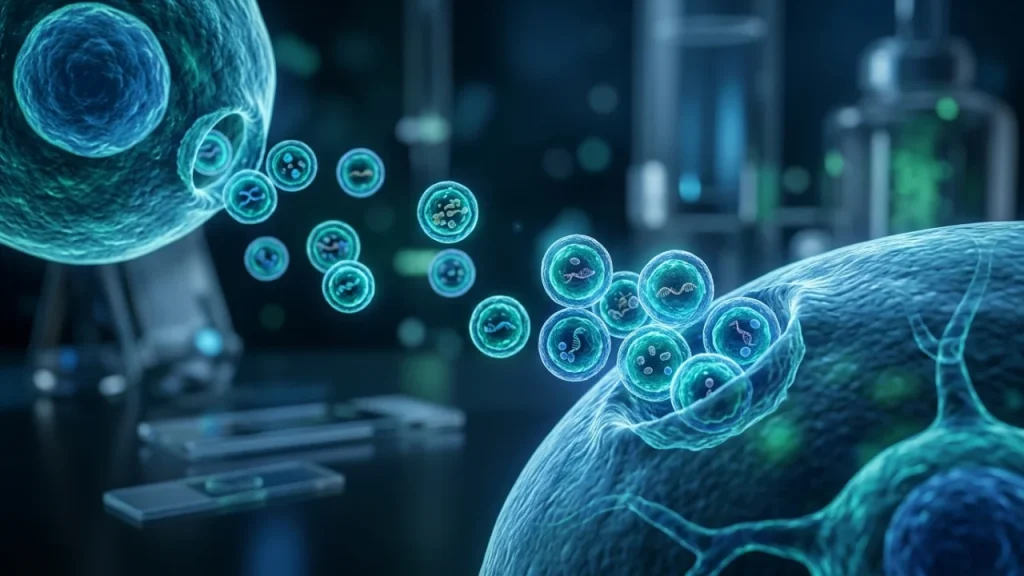
What Are Exosomes and Why Michigan Matters
Understanding Exosomes: Tiny Messengers in Your Body
Your body is a vast network of trillions of cells. These cells must talk to each other to stay healthy. They send constant signals to coordinate healing, fight threats, and maintain order. Exosomes are one of the most important messaging systems in this network.
Think of exosomes as tiny biological packages. They are incredibly small vesicles, much smaller than a single cell. Billions of them travel through your bodily fluids every day. They carry vital cargo from one cell to deliver to another.
Cells create exosomes inside themselves. They pack these small bubbles with specific molecular instructions. This cargo can include proteins, lipids, and genetic material like RNA. The cell then releases the exosome into the space around it. It enters your bloodstream or other fluids.
The exosome travels until it finds another cell. It delivers its molecular package to that target cell. This transfer changes the behavior of the receiving cell. The message can tell a cell to grow, to calm inflammation, or to repair damaged tissue.
This process is a natural form of communication. It happens in everyone’s body all the time. Scientists are now learning to harness this system. They study how these messages work in health and disease.
For example, a stem cell might release exosomes. These vesicles carry instructions for tissue repair. They can signal skin cells to heal a wound faster. They might tell brain cells to protect themselves. The source cell determines the message.
The content of an exosome is key. Its cargo is not random. It is carefully selected by the parent cell. This makes exosomes highly specific messengers. Different cells send different sets of instructions.
Research shows exosomes are involved in many conditions. Cancer cells use exosomes to spread. They send signals that help tumors grow. Immune cells use exosomes to coordinate attacks on viruses. The system is powerful for both good and ill.
Scientists can now collect exosomes from certain cell types. They can study their cargo in detail. They can also potentially engineer them to carry specific therapeutic messages. This is the core idea behind exosome therapy.
It aims to use the body’s own mailing system for medicine. Instead of injecting a drug, doctors might use targeted exosomes. These vesicles could deliver precise repair commands directly to injured cells.
This field requires deep understanding of cellular biology. It also needs advanced technology to isolate and characterize these tiny particles. That is where a strong research environment becomes critical.
Michigan has emerged as a central hub for this science. The state’s dense network of universities and hospitals provides the perfect foundation. Researchers there are mapping the complex language of exosomes.
They are working to decode which messages promote healing. Their work turns basic biological discovery into potential medical advances. This brings us to why exosomes Michigan research is so important for the future.
The state’s ecosystem accelerates progress from lab to patient. Understanding these natural messengers is the first step toward using them wisely. It is the science that makes the next steps possible.
Why Michigan Is a Hub for Exosome Science
Michigan’s strength in this field is no accident. It is built on a powerful combination of resources. These resources create a complete pipeline for discovery. This pipeline moves from basic research to patient care.
First, the state has a deep pool of scientific talent. Major research universities train thousands of biologists and engineers each year. These institutions have strong focus areas in cellular biology and biomedical engineering. This provides a steady stream of bright researchers. They enter labs ready to tackle tough problems with exosomes.
These universities are not isolated. They sit close to large, world-class hospital systems. This physical proximity is a key advantage. A lab discovery can be tested in a clinical setting quickly. Doctors treating patients see real-world problems. They can bring those challenges directly to scientists next door. This tight loop speeds up the entire research process.
The ecosystem also includes specialized tools and facilities. Studying exosomes requires advanced technology. Researchers need powerful microscopes to see them. They need machines to sort and analyze these tiny vesicles. Michigan invests in these shared core facilities. This means a small lab can access million-dollar equipment. They can run complex experiments without huge costs.
Funding is another critical piece. Research grants from national organizations flow into the state. Local foundations also support high-risk, high-reward science. This financial fuel allows teams to pursue long-term projects. They can explore how exosomes work in brain repair or heart healing. This steady support is vital for a new field.
Collaboration is the final ingredient. The network in Michigan is dense and active. Scientists regularly meet across different fields. An engineer might work with a cancer specialist. A nanotechnology expert might partner with a neurologist. These partnerships generate fresh ideas. They lead to new methods for loading drugs into exosomes or targeting them to specific organs.
- Talent: Universities produce skilled scientists.
- Proximity: Labs and hospitals work side-by-side.
- Technology: Shared facilities provide advanced tools.
- Funding: Grants support long-term exploration.
- Collaboration: Diverse experts solve problems together.
This integrated environment creates a powerful magnet effect. It attracts more experts from other states and countries. They come to join this thriving hub. This concentration of brainpower then accelerates progress further. More questions get asked. More experiments are run. More potential therapies move forward.
The focus on exosomes Michigan research matters because it turns theory into practice. The state’s structure removes common barriers. It connects discovery with development seamlessly. This full-cycle approach is rare. It positions Michigan not just as a participant, but as a leader shaping the entire field.
The work here ensures discoveries do not stay in academic journals. They are pushed toward real medical solutions. This practical focus is what makes the hub so productive. The next logical step is to see what this ecosystem is actually creating. The following research highlights show the tangible outcomes of this unique environment.
How Exosomes Michigan Research Helps Patients
Michigan researchers are solving key problems that block exosome therapies from helping patients. Their work makes treatments safer, more effective, and more targeted. This focus turns scientific potential into real-world benefit.
One major challenge is consistency. Not all exosomes are the same. Cells release different types based on their health and environment. Michigan teams have developed precise methods to sort and characterize these tiny vesicles. They ensure that only exosomes with the desired healing properties are collected for therapy. This quality control is vital for reliable results.
Another focus is engineering exosomes to be better delivery vehicles. Natural exosomes carry specific signals. Scientists can modify these signals. Think of it like adding a precise postal code to a package. An exosome can be directed to find and enter only lung cells, heart tissue, or a tumor. This targeting minimizes side effects. It maximizes the treatment dose where it is needed most.
The exosomes Michigan research portfolio addresses diverse conditions. Here are clear examples of how this work helps patients:
- Neurological Damage: After a stroke or spinal cord injury, brain cells die. Inflammation slows healing. Michigan studies use exosomes from stem cells. These vesicles calm the immune response. They also carry instructions that encourage surviving neurons to repair connections. This approach aims to restore function lost to trauma.
- Heart Disease: A heart attack scars muscle tissue. This weakens the heart. Researchers are loading exosomes with molecules that tell heart cells to regenerate. Other experiments use exosomes to promote new blood vessel growth. This improves blood flow to damaged areas, aiding recovery.
- Autoimmune Disorders: In diseases like rheumatoid arthritis, the body attacks its own joints. Exosomes can be designed to deliver specific messages to immune cells. These messages can tell overactive cells to stand down. This reduces inflammation and pain without broadly suppressing the entire immune system.
- Wound Healing: Chronic wounds in diabetes patients often fail to close. They get stuck in a cycle of inflammation. Specially prepared exosomes can break this cycle. They instruct skin cells to multiply and migrate. They also recruit the body’s own repair cells to the wound site, speeding up closure.
The state’s integrated model accelerates this progress from lab to clinic. A university lab might discover a new exosome marker. A nearby medical center can quickly test it using patient tissue samples. This rapid feedback loop refines therapies faster than if these groups worked apart.
Patient safety is a constant priority. Michigan facilities excel at manufacturing exosomes under strict, clean conditions. They develop tests to confirm each batch is pure and free of contaminants. This rigorous process builds the trust required for clinical use.
Ultimately, the goal of all this exosomes Michigan research is personalized medicine. The future may see a patient’s own cells used to generate therapeutic exosomes. Or, doctors might select from a library of engineered exosomes based on a person’s specific disease profile. Michigan’s ecosystem, with its blend of discovery and clinical application, is making this future tangible. The work here ensures that exosome science moves beyond theory into tailored, effective treatments for real people.
The Growth of Exosome Clinics in Michigan
The number of clinics offering exosome-based procedures in Michigan has risen sharply in recent years. This is not a random trend. It is a direct result of the state’s strong foundation in medical research. The close network between universities and hospitals creates a reliable pipeline. New scientific findings move quickly into clinical settings. This gives Michigan clinics a significant advantage. They can offer treatments based on the latest validated science.
Several key factors explain this concentrated growth. First, Michigan has a deep talent pool. Top universities graduate skilled researchers and clinicians. These professionals understand exosome biology. They are trained in the state’s own labs and hospitals. Many choose to build their careers here. This creates a community of experts who can run advanced clinics.
Second, the regulatory environment is clear and engaged. State health authorities work with research institutions. Together, they develop guidelines for safe exosome use. This clarity helps clinic operators. They understand the rules for providing treatments. A stable framework encourages responsible investment in new facilities. Patients also benefit from knowing clinics meet high standards.
Third, patient demand in the region is growing. People read about breakthroughs from local institutes. They seek out these modern therapies for chronic conditions. Common targets include joint injuries and age-related tissue wear. The existing exosomes Michigan research hub builds public awareness and trust. When patients look for options, they find clinics nearby that are connected to the science.
The services at these clinics often follow a similar model. It starts with a detailed consultation. Medical staff review the patient’s history and goals. They determine if exosome therapy is a suitable option. Not every condition or person is a good candidate. This screening is crucial for safety and realistic results.
If treatment proceeds, the process is typically straightforward. – The exosomes come from a certified laboratory source. – They are prepared as a precise injection or infusion. – A clinician administers them to the targeted area, like a knee joint. – The entire procedure may take only a short time.
Clinics focus on conditions where traditional options are limited. For example, a person with persistent tendon pain may have tried physical therapy. They might have tried standard injections without lasting relief. Exosomes offer a different approach. They aim to modify the local cellular environment. The goal is to support the body’s natural repair process.
This clinical growth also fuels more research. Clinics collect data on patient outcomes. This real-world information is incredibly valuable. Researchers can analyze it to see what works best. They learn which types of exosomes are most effective for specific problems. This practical feedback helps scientists improve the next generation of therapies. It creates a positive cycle of discovery and application.
Of course, this rapid expansion requires careful oversight. Reputable clinics prioritize patient education. They explain what exosomes can and cannot do. They set realistic expectations about results and timelines. Healing at a cellular level is not instant. It can take weeks or months to see full benefits.
The growth also highlights an important distinction. Not all exosome products are the same. Their source and preparation method matter greatly. Michigan’s proximity to leading labs helps clinics access high-quality materials. This integration is a key part of the state’s strength in this field.
Looking forward, this clinic network is likely to become more specialized. Some centers may focus on orthopedic applications like sports injuries. Others might concentrate on skin rejuvenation or chronic inflammatory diseases. This specialization allows for deeper expertise and better patient care.
The rise of these clinics makes advanced concepts tangible for patients. It moves exosome science from the journal article into the treatment room. Michigan’s ecosystem supports every step of this journey. This solid foundation ensures that clinical growth is built on research, not just trend. The next step is understanding how these treatments are rigorously tested before they reach any clinic.
Key Benefits of Exosome Therapy Explained Simply
Exosomes work by delivering precise instructions to your cells. Think of them as tiny messengers. They carry proteins, genetic material, and other signals. These signals tell your body’s own cells to start repair processes. This is different from many traditional treatments. Traditional methods often manage symptoms or replace tissue. Exosome therapy aims to help the body heal itself from within.
The key benefits come from this natural signaling ability. Here are the main advantages explained simply.
First, exosomes can reduce inflammation quickly. Inflammation is your body’s normal response to injury. But sometimes it lasts too long. Chronic inflammation can slow healing and cause pain. Exosomes carry molecules that tell immune cells to calm down. This can create a better environment for repair to begin.
Second, they encourage tissue regeneration. Exosomes signal to stem cells and other local cells. They tell these cells to multiply and become new, healthy tissue. This is crucial for repairing damage. For example, in an injured tendon, exosomes can promote the growth of strong, flexible tendon cells instead of weak scar tissue.
Third, the therapy is highly targeted. Exosomes naturally seek out areas of damage or stress in the body. They are drawn to these sites. Once there, they release their cargo directly to the cells that need it most. This makes the treatment efficient. It focuses help where it is needed.
Fourth, exosomes are a cell-free therapy. This means they do not contain a full cell nucleus. They cannot divide or turn into a tumor. Their job is only to communicate and then fade away. This profile offers a strong safety advantage over some other regenerative approaches.
Finally, the effects can be widespread and systemic. While applied locally, the signaling can benefit the whole area. The messages can improve blood flow, support nerve health, and modulate the immune system. This creates a comprehensive healing response.
Why does Michigan matter for harnessing these benefits? The state’s research institutions have deeply studied these mechanisms. Scientists in Michigan have helped map how exosomes communicate. They understand which cargo is best for specific healing tasks. This scientific depth ensures therapies are based on solid evidence. It connects the “why” to the “how.”
For patients, these benefits translate into practical outcomes. The goal is not just a temporary fix. The goal is to support the body’s innate ability to restore function and reduce pain. This approach can be useful for joint injuries, chronic wounds, and degenerative conditions.
The timeline for seeing these benefits varies. Some people notice reduced inflammation within days. Fuller regenerative effects build over subsequent weeks. The process is gradual as the body remodels tissue.
It is important to remember that exosomes are facilitators. They do not act alone. They optimize your body’s own healing environment. Their success depends on many factors. These include the severity of the condition and the patient’s overall health.
Understanding these core benefits helps set realistic expectations. It shows why this field is growing so rapidly in clinical settings. The next logical question is about proof. How do researchers and doctors know these therapies are safe and effective before they are offered? This leads us to the critical role of clinical trials and rigorous testing.
The robust ecosystem for exosomes Michigan has developed allows this science to be applied thoughtfully. It ensures that the remarkable benefits of these natural messengers are delivered with both innovation and care.
How Exosome Therapy Works in Michigan Clinics
The Process of Getting Exosome Treatment in Michigan
The journey begins with a detailed medical consultation. This is not a quick visit. You will meet with a healthcare provider for an extended discussion. They review your full health history. They examine your current condition and your specific goals. This conversation is vital. It determines if you are a good candidate for exosome therapy.
The provider needs to understand the root of your problem. They will ask about past treatments. They will discuss your symptoms in detail. This helps them create a personalized plan. The plan targets your unique biological needs. Not every person or condition is suitable for this therapy. The consultation ensures safety and sets realistic expectations.
If you are a candidate, the next step is often preparation. Your body needs to be ready to receive the signals from the exosomes. The clinic may give you specific instructions. These instructions can include dietary changes. They might suggest avoiding certain anti-inflammatory drugs. The goal is to create an optimal internal environment for healing.
The treatment day itself is typically straightforward. The procedure is usually done in an exam room. It often feels similar to receiving a joint injection or an IV infusion. The method depends entirely on the condition being treated.
For orthopedic issues like a knee injury, the exosomes are injected directly into the problem area. The provider uses imaging guidance sometimes. This ensures precise placement of the therapeutic cargo. For systemic conditions, the exosomes may be delivered intravenously. They enter the bloodstream to travel throughout the body.
The administration process itself usually takes only a short time. Many patients report minimal discomfort during this step. The experience is comparable to other common minor procedures. There is no general anesthesia required. You are typically awake and aware.
After the procedure, you move into the recovery and observation phase. Immediate recovery is brief. You might rest at the clinic for a short period. Staff will monitor you for any immediate reactions. These are uncommon when protocols are followed. You can then usually go home the same day.
Post-treatment care instructions are crucial. Your provider will give you clear guidelines for the next 48 hours. They often advise against strenuous activity. This allows the exosomes to begin their communication work without interference. Proper hydration is commonly emphasized to support cellular processes.
The real work happens inside your body in the following weeks. You will not feel an instant miracle cure. The exosomes are now delivering their regenerative instructions to your cells. Your body starts its natural repair process. This biological activity is silent and gradual.
Follow-up is a key part of the exosomes Michigan clinical pathway. Your clinic will schedule check-in appointments. These might be at two weeks, six weeks, and three months after treatment. During these visits, providers assess your progress objectively and subjectively.
They track changes in your pain levels. They measure improvements in your range of motion. They document your functional recovery. This data helps them understand your individual response.
The entire process is built on a foundation of medical oversight. From screening to follow-up, each step prioritizes patient safety and treatment integrity. This structured approach reflects the advanced yet careful nature of regenerative medicine in the state’s clinics. It turns complex science into a clear, managed patient experience focused on achieving tangible results.
Sources of Exosomes Used in Michigan Therapies
Exosomes used in treatments do not appear by magic. Clinics source them from specific, living biological materials. These materials provide the starting point for all therapies. The source is critical. It determines the exosomes’ potential messages and functions.
The most common source is human mesenchymal stem cells. These are adult stem cells. They are not embryonic. They can become bone, cartilage, or fat cells. More importantly, they are powerful communicators. When grown in a lab, these cells naturally release exosomes into their nutrient solution.
Scientists then carefully collect this solution. They use a multi-step process to isolate the tiny exosomes. The goal is to get a pure concentrate. This concentrate holds the therapeutic signals. These signals can encourage tissue repair and reduce inflammation.
Another important source is human placental tissue. Donated placental tissue after healthy birth is rich in regenerative cells. These cells also release exosomes. Exosomes from this source carry unique growth factors. They are involved in natural wound healing and immune modulation.
A third source comes from human blood, specifically platelets. Platelets are cell fragments that help with clotting. They also release many exosomes. These exosomes carry signals for blood vessel formation and tissue regeneration. They are key for healing injuries.
Each source type gives exosomes a slightly different profile. Think of it like getting instructions from different expert departments. Stem cell exosomes might focus on cellular repair. Placental exosomes might emphasize immune balance. Platelet exosomes often specialize in building new blood supply.
The choice of source depends on the treatment goal. A clinic treating joint arthritis may prefer one type. A clinic focusing on skin rejuvenation might choose another. The scientific rationale guides this decision. All sources must be obtained ethically and screened thoroughly.
Safety screening is a non-negotiable step for any source. The original donor material undergoes rigorous testing. It is checked for viruses, bacteria, and other pathogens. This ensures the starting material is clean and safe. Only then can the exosome collection process begin.
The entire sourcing operation happens in specialized labs. These labs follow strict protocols known as Good Manufacturing Practices. This guarantees consistency and purity in every batch produced. Michigan clinics partner with such labs to obtain their clinical-grade exosomes.
This focus on quality sources is a hallmark of the advanced exosomes Michigan landscape. It grounds cutting-edge therapy in solid biological principles. Patients receive a defined product with a known origin. This traceability builds trust in the treatment protocol.
Understanding these sources demystifies the therapy’s starting point. It shows the deep biological logic behind the method. The next logical question is what these exosomes actually do inside the body once they arrive at their target cells. Their mechanism is where the real science unfolds.
Common Conditions Treated with Exosomes in Michigan
Exosome therapy in Michigan clinics addresses a range of health issues. These conditions often involve inflammation, tissue damage, or poor cellular communication. Exosomes can help modulate these core problems. Their natural signaling cargo provides instructions to recipient cells.
Orthopedic and joint conditions are a primary focus. Osteoarthritis is a common target. This condition involves the breakdown of protective cartilage in joints. It leads to pain, stiffness, and swelling. Exosomes derived from certain cell sources may support a healthier joint environment. They can signal local cells to reduce destructive inflammation. They may also encourage cartilage-producing cells to become more active. This approach aims for tissue modulation rather than just masking pain. Chronic tendon injuries, like tennis elbow or Achilles tendinitis, are also treated. These stubborn injuries often have poor blood flow. Exosomes can deliver growth factors directly to the damaged tendon area.
Sports medicine and recovery represent another major application. Athletes seek to heal muscle strains and ligament sprains faster. The goal is a more complete recovery of tissue strength and function. Exosomes may aid this by coordinating the repair process. They help regulate the complex stages of healing. This includes initial inflammation, new tissue formation, and final remodeling. The therapy is used for both acute injuries and chronic overuse patterns. It supports the body’s innate repair systems.
Aesthetic and skin rejuvenation treatments utilize exosomes as well. The target here is skin aging and texture issues. Fine lines, poor elasticity, and dull complexion are common concerns. Exosomes applied after procedures like microneedling can enhance results. They carry messages that stimulate collagen and elastin production. These are the key structural proteins of youthful skin. The signaling can also improve local skin hydration and overall vitality. This approach aims for a natural rejuvenation effect by improving skin cell behavior.
Neurological and cognitive conditions are an emerging area of research and practice. Clinics may offer support for general age-related cognitive decline. The goal is to promote neuroplasticity, which is the brain’s ability to form new connections. Exosomes may foster a healthier environment for brain cells. They can carry factors that reduce neuroinflammation, a culprit in many brain disorders. They might also support the health of existing neurons. This application is based on the critical role of cellular communication in brain function.
Autoimmune and inflammatory conditions are also addressed by some clinics. Examples include rheumatoid arthritis and lupus. These diseases involve an overactive, misdirected immune response. Certain exosome profiles possess strong immunomodulatory properties. They can signal immune cells to become less aggressive and more regulatory. This may help calm an overreactive system and reduce flare-ups. The therapy aims to support immune balance from within.
The common thread across all these conditions is cellular dysfunction or damage. Exosomes act as a sophisticated communication network to address this core issue. Michigan’s clinical landscape is notable for its rigorous approach to these treatments.
- Orthopedic Degeneration: Osteoarthritis, chronic joint pain.
- Sports & Trauma: Ligament tears, muscle injuries, post-surgical healing.
- Aesthetic Medicine: Skin rejuvenation, scar improvement, hair restoration support.
- Neurological Support: Age-related cognitive decline, general brain health.
- Systemic Inflammation: Autoimmune conditions, chronic inflammatory states.
This wide applicability stems from exosomes’ fundamental biological role. They are not a single drug for a single disease. They are a platform for cellular signaling. The effect depends largely on the source of the exosomes and the target tissue. A clinic will match the exosome profile to the patient’s specific condition. This personalized strategy is key in advanced exosomes Michigan practice.
Patient evaluation is always the first step. A thorough medical history and diagnosis are essential. Not every patient with these conditions is an ideal candidate. Clinicians screen for factors that might affect treatment outcomes.
The goal is typically functional improvement and symptom reduction. It is about enhancing quality of life by improving underlying biology. This reflects a shift towards regenerative approaches in healthcare.
Understanding these common uses shows the therapy’s potential scope. It moves from abstract science to tangible patient benefits. The next logical step is to examine what patients can realistically expect from such treatments in terms of process and outcomes
Safety Measures for Exosome Procedures in Michigan
Patient safety begins long before any exosome preparation is used. Michigan clinics prioritize a rigorous screening process. This is not just a simple form. It is a detailed medical evaluation. Doctors need a complete health picture. They look for conditions that might affect treatment safety or success.
Key factors in screening often include: – Current medications and supplements. Some substances can interfere with cellular processes. – Active infections or recent illnesses. The immune system must be stable. – History of cancer or autoimmune disease. This requires careful, individual review. – Pregnancy or breastfeeding. Treatments are not offered during these times.
This careful vetting matches the patient to the therapy. It is a core safety step. It ensures the treatment plan is appropriate for the individual.
The source of the exosomes is another critical safety layer. Reputable clinics use exosomes derived from controlled laboratory settings. These come from certified cell banks. The cells are thoroughly tested for pathogens. They are never taken from a patient’s own blood or tissues in standard therapy. This controlled origin prevents unknown variables.
The manufacturing process itself follows strict guidelines. Labs work under sterile conditions. They use processes called Good Manufacturing Practices, or GMP. This means every step is documented and controlled. The final product is tested for purity, strength, and safety. It is checked for bacterial or fungal contamination. Clinics should verify these test results, called a Certificate of Analysis, for every batch they receive.
The actual procedure day focuses on sterile technique and precision. The clinic environment must be clean and professional. For most treatments, the exosomes are administered via precise injection. The injection site is cleaned thoroughly to prevent skin bacteria from entering.
Clinicians use imaging guidance for many joint or deep tissue injections. Ultrasound is a common tool. It lets the doctor see the needle in real time. This ensures the exosomes are delivered exactly to the target area, like an arthritic knee joint. Accurate placement improves potential benefits and minimizes risk.
Aftercare is a vital part of the safety protocol. Patients receive clear instructions following their procedure. These guidelines help the body respond optimally and prevent problems.
Typical aftercare advice includes: – Avoiding strenuous exercise for 24 to 48 hours. Let the initial biological signaling occur. – Staying well-hydrated with water. This supports overall cellular function. – Monitoring the injection site for any unusual signs like redness, swelling, or pain. – Reporting any unexpected reactions to the clinic immediately.
Clinics schedule follow-up appointments to track progress and safety. They monitor how the patient responds over weeks and months. This long-term view is important for understanding both outcomes and tolerability.
These layered protocols define a responsible exosomes Michigan clinic. Safety is integrated at every stage: from screening to sourcing, from procedure to follow-up. This systematic approach minimizes risks and builds patient confidence. It turns innovative science into trusted clinical practice. Understanding these measures allows patients to choose providers wisely and engage in their care with realistic assurance.
What to Expect During Exosome Therapy Sessions
A typical exosome therapy session in Michigan focuses on precise, minimally invasive delivery. The entire process often takes under an hour from arrival to departure. Most of that time is dedicated to preparation and not the injection itself.
Your visit begins with a final pre-procedure check. A clinician reviews your health status and confirms the treatment plan. This is a standard safety verification. You will then be guided to a comfortable procedure room.
Patient positioning is key for accuracy. You will be asked to lie or sit in a specific way. This position provides the best access to the treatment area, such as a shoulder or knee. Proper positioning aids the doctor and improves your comfort.
The treatment area is then cleaned thoroughly. A medical antiseptic solution is applied to the skin. This step creates a sterile field and prevents infection. The skin will feel cool as it dries.
Local anesthesia is often used for comfort. A small amount of numbing medication may be injected into the skin or applied as a cream. This minimizes any discomfort from the subsequent needle. The numbing effect takes just a few moments.
The clinician then prepares the exosome solution. The vial is brought to room temperature if needed. It is gently mixed according to protocol. The solution is drawn into a sterile syringe.
Real-time imaging guidance is frequently employed. An ultrasound machine’s probe is placed on your skin. It uses sound waves to create a live picture of the structures beneath. The doctor uses this image to navigate with great precision.
The injection itself is usually quick. Using the ultrasound as a guide, the doctor inserts a thin needle. They advance it carefully toward the exact target, like a tendon or joint space. You may feel slight pressure but typically not sharp pain.
The exosome solution is then slowly administered. The doctor depresses the syringe plunger in a controlled manner. They watch the ultrasound screen to ensure proper dispersion of the fluid. This deliberate pace helps maximize local uptake.
The needle is withdrawn after the dose is delivered. A small bandage is placed over the tiny puncture site. Pressure may be applied briefly to prevent minor bruising. The imaging equipment is then moved away.
You will rest briefly in the room after the procedure. A nurse or assistant monitors you for any immediate reactions. This post-procedure observation period is short but standard. It ensures you feel well before standing up.
The clinician then provides your initial aftercare instructions verbally. They recap key points like avoiding heavy use of the treated area. They confirm you understand the guidelines for hydration and monitoring. You are given a contact number for any urgent questions.
Finally, you are scheduled for a follow-up assessment. This future appointment tracks your progress over time. Data from these follow-ups helps exosomes Michigan clinics refine their approaches and document outcomes.
The entire experience is designed for efficiency and patient comfort. Modern clinics prioritize a calm, professional environment from start to finish. Each step has a clear purpose aimed at optimizing the therapeutic potential of the exosomes delivered that day. This structured yet personalized approach defines the contemporary treatment session, turning complex cellular science into a straightforward clinical visit focused on your care.
Michigan’s Role in Exosome Research and Innovation
Leading Michigan Universities Studying Exosomes
Michigan’s universities form the intellectual core of the state’s exosome ecosystem. Their labs generate the fundamental discoveries that drive the field forward. This research provides the critical knowledge used in clinical settings.
Public research universities here are major contributors. They investigate how exosomes work in the human body. Scientists study these vesicles in many disease models. Their goal is to unlock new therapeutic applications.
One key area is regenerative medicine. Researchers explore how stem cell exosomes can aid tissue repair. They test these vesicles in models of heart injury and joint damage. The vesicles carry signals that may reduce inflammation. They also might encourage cells to rebuild damaged structures. This work is a cornerstone for future treatments.
Another vital focus is cancer biology. Tumors release many exosomes into their environment. These vesicles can help cancer spread and hide from the immune system. Michigan labs are mapping these dangerous communication networks. They aim to block harmful messages or use vesicles for early detection.
The work requires advanced tools and collaboration. University teams often partner with medical centers. This link connects basic science directly to patient care. Shared resources accelerate discovery.
- University core facilities provide essential technology. This includes machines for nanoparticle tracking analysis. These tools measure exosome size and concentration precisely.
- Advanced imaging centers let scientists see exosomes interact with cells. They use powerful electron microscopes and fluorescent tags.
- Bioinformatics teams help analyze vast genetic data from exosomes. They find patterns in RNA and protein cargo.
Funding from national institutes supports much of this work. Grants enable long-term studies that private companies might not pursue. This public investment de-risks early science. It lays the groundwork for future innovation across the exosomes Michigan landscape.
Graduate students and postdoctoral researchers are the engine of this work. They perform daily experiments and analyze results. Their training creates the next generation of scientists and clinicians. Many stay in Michigan, fueling a growing talent pool.
Research here also tackles manufacturing challenges. Academics study how cells produce exosomes under different conditions. They ask how to collect vesicles efficiently while keeping them functional. These process questions are crucial for scaling up any future therapy.
The output from these institutions is immense. It includes published papers, conference presentations, and patent filings. This constant flow of new information shapes global understanding. It positions Michigan as a thought leader.
Michigan’s climate for collaboration is a significant strength. Engineers work with biologists. Computer scientists partner with physicians. This interdisciplinary approach solves complex problems faster. It breaks down traditional barriers between fields.
In summary, leading universities provide the essential fuel for progress. They discover basic mechanisms, train experts, and develop new tools. Their non-commercial research mission ensures exploration of high-risk, high-reward ideas. This solid academic foundation supports the entire state’s innovative drive, turning laboratory insights into tangible future benefits for patients everywhere.
Recent Breakthroughs in Exosomes Michigan Research
Recent studies from Michigan labs reveal how exosomes change in disease. For instance, researchers found that tumor cells release ten times more exosomes than healthy ones. These cancer exosomes carry unique molecular signals. They can prepare distant sites in the body for new tumors. This discovery helps explain how some cancers spread early.
Other work focuses on the brain. Scientists here identified specific exosomes that cross the blood-brain barrier. This natural barrier protects the brain from toxins. It also blocks most medicines. The exosomes that cross it could become new delivery vehicles. They might carry drugs for conditions like Alzheimer’s or Parkinson’s.
Michigan teams also made progress in heart repair. After a heart attack, scar tissue forms. This weakens the heart muscle. Researchers isolated exosomes from stem cells. These vesicles reduced scarring in animal models. They encouraged the growth of new, healthy blood vessels. The effect improved the heart’s pumping ability.
The field of diagnostics sees major advances too. Exosomes in blood or urine hold molecular clues about their cell of origin. Michigan projects created sensitive methods to capture these clues.
- One method uses tiny magnetic particles to pull exosomes from liquid.
- Another employs special chips with microscopic patterns to trap them.
- A third approach reads the genetic material inside thousands of exosomes at once.
These techniques aim to detect diseases like pancreatic cancer much earlier. Early detection often leads to better outcomes.
Inflammation is a common problem in many illnesses. New exosomes Michigan research shows how these vesicles can both start and stop inflammation. Some exosomes from immune cells send “attack” signals. Others from different cells send “calm down” signals. Learning to control this balance is a key goal. It could lead to new treatments for arthritis or bowel disease.
Manufacturing research has yielded practical breakthroughs too. A major hurdle is producing pure, potent exosomes at large scale. Michigan engineers developed a novel filtration method. It separates exosomes from other cell debris more cleanly than older techniques. This results in a more consistent product for research and potential therapy.
Another study tackled storage. Exosomes are fragile. Freezing can damage them. Scientists tested different protective solutions. They found a simple sugar-based formula that helps exosomes survive freezing and thawing. This is vital for any real-world clinical use.
The state’s work also explores tissue regeneration. Dental researchers used exosomes to help regenerate tooth pulp. Orthopedic teams applied them to improve tendon healing in models of rotator cuff injuries. The vesicles seem to instruct local cells to repair themselves more effectively.
These breakthroughs share a common thread. They translate basic science into applied knowledge. Each finding solves a piece of a larger puzzle. Together, they advance the entire field of exosome science.
This constant flow of innovation attracts more talent and funding to the state. It creates a powerful cycle of discovery. The next logical step is seeing how these laboratory advances move toward clinical practice, shaping new standards for safety and efficacy in patient care.
How Michigan Scientists Improve Exosome Delivery
Getting exosomes to the correct part of the body is a major challenge. Think of it like mailing a letter. You need the right address. You also need the letter to survive the trip. Scientists in Michigan are creating smarter “address labels” and sturdier “envelopes” for exosome therapy.
A key problem is the bloodstream. The circulatory system is like a fast river. Injected exosomes can be washed away. They might be filtered out by the liver or spleen before doing their job. Researchers are solving this by changing the exosome’s surface.
They can attach tiny navigation molecules to the exosome’s outer membrane. These molecules act like homing devices. They bind only to specific tissues. For instance, a molecule that seeks out inflamed cartilage could guide exosomes to an arthritic knee. This makes treatment more precise. It also allows for smaller, more effective doses.
Another strategy involves cloaking. The body’s immune system may see foreign exosomes as a threat. Michigan teams are experimenting with natural coatings. These coatings make exosomes invisible to immune patrols. This lets the vesicles travel longer distances without being attacked. It is a stealth approach for systemic delivery.
Physical methods are also in play. Direct injection into a target site is simple but not always possible. Some areas are hard to reach. Scientists are developing new tools for better placement.
- Specialized gels can act as a slow-release reservoir. Exosomes are mixed into a biocompatible gel. The gel is applied during surgery. It then releases exosomes steadily over weeks to heal a wound.
- Inhalable formats are being tested for lung diseases. Exosomes are turned into a fine mist. Patients breathe them in directly.
- Some devices use mild electrical pulses. These pulses temporarily open channels in cell membranes. This may help exosomes enter tissues more easily after local application.
Stability during delivery is just as important as navigation. The journey inside the body can be rough. Acids in the stomach would destroy oral exosomes. Engineers are creating protective capsules. These microcapsules shield exosomes from harsh conditions. They break open only when they reach the desired environment, like the intestine.
Research also looks at timing. The best healing might require multiple small deliveries, not one large dose. This is called pulsed delivery. Michigan labs are designing systems that can provide this controlled release. It mimics the body’s own natural signaling patterns.
All these innovations share a goal. They aim to maximize the therapeutic signal and minimize waste. Better delivery means fewer side effects. It also means lower costs because less material is needed. The work turns powerful lab discoveries into practical treatments.
Michigan’s collaborative environment speeds up this work. Engineers design new particles. Biologists test their targeting. Clinicians imagine how to use them with patients. This loop happens faster when all experts are in the same network.
The focus on delivery is a natural bridge to the next big question. Once exosomes reliably reach their target, how do we prove they work safely in people? This leads directly to the critical arena of clinical trials and regulatory science, where Michigan is also setting benchmarks.
The progress in exosome delivery showcases a deep understanding of both biology and engineering. It moves beyond simply making exosomes to intelligently directing their power. This precision is what will define the next generation of therapies emerging from the state’s vibrant research ecosystem, solidifying Michigan’s role as a leader in this advanced field.
Collaborations Between Michigan Clinics and Labs
The journey of an exosome therapy does not end in a lab dish. Its true test happens in a living system. This critical step requires a tight partnership. Clinics and laboratories must work together. In Michigan, this collaboration is a standard practice, not an exception. It is a key reason the state excels in exosome research.
Doctors in clinics see patients every day. They understand unmet medical needs. They know which conditions lack good treatments. Meanwhile, scientists in labs understand exosome biology at a deep level. They know how to isolate and study these vesicles. When these groups talk regularly, progress speeds up.
A common model involves shared projects. A cardiology clinic might see potential in exosomes for heart repair. They can partner with a university bioengineering lab. The clinic provides precise patient data and tissue samples when appropriate. The lab uses this to design targeted exosomes. Then, the clinic helps plan how to test them safely.
This loop happens quickly in Michigan’s integrated network. Feedback is direct and constant. If a lab design causes an unexpected reaction in a preclinical model, clinicians help interpret why. They connect it to human physiology. If a clinician observes a specific patient need, lab scientists can adjust their approach.
These partnerships often focus on specific diseases. Michigan has strong clusters in several areas. – Neurological conditions like Parkinson’s or stroke recovery. – Orthopedic injuries involving cartilage, tendon, or bone. – Autoimmune and inflammatory disorders. – Cardiovascular damage after a heart attack.
For each area, teams form across institutions. They share funding grants and laboratory resources. They publish studies together. This shared work builds a powerful knowledge base for exosomes Michigan researchers are known for.
The collaboration extends to solving practical problems. Clinics need therapies that are stable and easy to use. Labs might develop a freeze-dried exosome powder. Clinics then test its ease of storage and mixing. Labs develop quality control checks. Clinics ensure these checks are feasible in a real-world setting.
Education also flows both ways. Lab scientists learn about clinical trial rules and patient care logistics. Clinicians learn about molecular biology and nanoparticle characterization. This cross-training creates a new type of expert. These professionals speak both languages of science and medicine.
Infrastructure supports this teamwork. Several Michigan institutions have dedicated translational research centers. These are physical hubs. They contain labs next to clinical trial offices. This proximity is powerful. A researcher can walk down the hall to discuss a result with a trial coordinator.
The outcome is more than just published papers. It is a streamlined path to patients. Partnerships de-risk the development process. Problems get solved earlier. This efficiency attracts more investment and talent to the state’s ecosystem. It creates a virtuous cycle of innovation.
Michigan’s model shows that collaboration is a practical tool. It turns abstract science into concrete solutions. The constant dialogue between bedside and bench ensures that research remains relevant. It also ensures that new treatments are grounded in real human need.
This foundation of trust between clinics and labs is crucial for the next phase. It provides the reliable data and safety evidence required to engage with regulators and move into broader clinical trials, setting the stage for widespread therapeutic impact.
Future Directions for Exosome Studies in Michigan
The next frontier for exosome studies in Michigan involves engineering. Scientists are not just observing natural vesicles. They are learning to design them. This field is called bioengineering. The goal is to create exosomes with enhanced abilities.
One major focus is targeting. Natural exosomes often go to specific organs like the liver. Researchers want to direct them elsewhere. They are testing methods to attach tiny navigation signals to the exosome’s surface. These signals could guide a therapeutic exosome directly to a damaged heart muscle or a brain tumor.
Another key area is cargo loading. Think of an exosome as a delivery truck. Scientists want to control what it carries. They are perfecting ways to pack exosomes with precise amounts of therapeutic molecules. These molecules could be drugs, healing proteins, or even corrective RNA.
- Targeted delivery to specific organs beyond the liver.
- Controlled loading of diverse therapeutic cargo.
- Enhanced stability for longer shelf life and circulation.
This work requires new tools. Michigan teams are developing advanced manufacturing platforms. These systems must produce engineered exosomes consistently. They must also do so at a scale suitable for future clinical use. Standardization is a critical challenge being addressed here.
Another future direction is disease detection. Exosomes carry molecular fingerprints of their parent cells. A tumor cell’s exosome is different from a healthy cell’s exosome. Michigan researchers are creating sensitive blood tests. These tests would analyze exosomes to find early disease signs. This is often called a liquid biopsy.
The potential for early cancer detection is significant. It could mean finding diseases years before symptoms appear. Similar methods are being explored for neurodegenerative conditions like Alzheimer’s. Catching these early could change treatment outcomes completely.
Research into exosomes Michigan labs are pioneering also looks at combination therapies. Exosomes will likely not work alone. They could be paired with existing treatments. For example, an engineered exosome might deliver a drug that makes a tumor more sensitive to radiation. This two-part approach could improve results.
Personalized medicine is another clear path. A patient’s own cells could be used to generate therapeutic exosomes. These personalized vesicles would avoid immune system rejection. Michigan’s clinical infrastructure is ideal for testing this patient-specific model.
Long-term safety studies are also expanding. Scientists must understand how engineered exosomes behave in the body over months and years. They are tracking where the vesicles finally go after their job is done. This research builds vital safety data for regulators.
Funding is increasingly directed toward these applied goals. Grants now often require teams to have a clear path to patient benefit. This focus ensures that future studies remain grounded in real-world impact. It turns basic discovery into practical innovation.
The ultimate aim is moving from generalized to smart therapeutics. The future of exosomes Michigan helps create will be precise and programmable. This evolution mirrors the shift from conventional chemotherapy to targeted cancer drugs. It represents a more sophisticated level of medical intervention.
These future directions rely on the collaborative model already in place. Engineering requires biologists, chemists, and clinicians to work together daily. Detection technology needs engineers and physicians. The state’s integrated ecosystem makes these complex conversations possible every single day.
Michigan is positioning itself not just as a user of exosome science, but as a primary architect of its next generation. The work today builds the foundation for tomorrow’s standard of care across the globe. This proactive approach solidifies the region’s role as a lasting leader in this dynamic field, ensuring its research continues to translate into tangible health solutions for patients everywhere.
Regulations and Standards for Exosomes in Michigan
Current Laws Governing Exosome Use in Michigan
Michigan does not have a single, unique law just for exosome therapies. Instead, these products fall under existing federal and state regulations. The main authority is the U.S. Food and Drug Administration, or FDA. The FDA’s rules depend heavily on how an exosome product is made and what it claims to do.
The FDA treats exosomes as biological products. This is a key legal definition. It means they are subject to strict oversight for safety and effectiveness. Companies cannot simply sell them as finished treatments without approval. The path to approval is long and requires extensive clinical trials.
However, not all exosome uses face the same rules. The FDA’s position changes based on two main factors. First is how much the exosomes are changed from their natural state. Second is their intended use.
- If exosomes are minimally manipulated and used for a function they perform naturally in the body, they may be regulated as a human cell or tissue product.
- If they are more than minimally manipulated—meaning significantly engineered or processed—they are typically classified as a drug or biologic. This triggers much stricter requirements.
- The claims made about the product are critical. If a provider claims an exosome product can treat or cure a specific disease, the FDA views it as a drug. This requires formal approval.
In Michigan, providers must also follow state medical board rules. These rules govern the practice of medicine. A doctor must use exosomes within their professional scope and standard of care. Using an unapproved product as a treatment can lead to serious professional consequences.
This creates a complex landscape for clinics and researchers. Many clinics offer exosome injections for things like joint pain or anti-aging. The FDA often views these as unapproved drugs. The agency has sent warning letters to clinics across the country for such practices. This enforcement action applies to Michigan providers as well.
For patients, this regulatory maze is important. It affects access and safety. An approved therapy has passed rigorous testing for safety and dosage. An unregulated product may not have consistent quality or proven results. Patients should ask key questions about any exosome therapy.
They should ask if the product is FDA-approved for their condition. They should ask about its legal status. Understanding these answers helps patients make informed choices. It separates established research from commercial claims.
The research ecosystem for exosomes Michigan institutions develop operates within this framework. Academic labs often work under Investigational New Drug applications. These allow clinical studies but not general sales. This careful, step-by-step process builds the data needed for future approvals.
The goal of regulation is patient protection. Rules ensure that products are pure, potent, and safe. They verify that manufacturing is consistent from batch to batch. This prevents contamination and unreliable doses.
Navigating these laws is a major part of advancing the field. It shapes how quickly new therapies can reach patients. It also defines the line between experimental research and established medical practice. For Michigan to maintain its leadership, its innovators must master both the science and the regulatory pathway.
This foundation of rules supports the next critical area: the specific safety measures and ethical guidelines that protect everyone involved in this promising field.
Quality Control for Exosomes Michigan Providers Follow
Quality control starts with the source material. Cells produce exosomes. Not all cells are the same. The type of cell matters greatly. Mesenchymal stem cells are a common source. These cells must be carefully screened. They are tested for viruses and other contaminants. Healthy, characterized cells lead to a better product. This is the first critical step for any exosomes Michigan research relies on.
The growth environment for these cells is also controlled. Scientists use a sterile nutrient broth called culture medium. This medium cannot contain animal proteins that might carry disease. Many labs use defined, synthetic formulas. The temperature and gas levels are kept constant. This ensures cells behave in a predictable way. Consistent conditions mean consistent exosomes.
The collection process is next. Cells release exosomes into the liquid medium. Scientists must separate the exosomes from this liquid. They also must remove other cellular debris. This is done through a series of filtration and centrifugation steps. Centrifugation spins the liquid at very high speeds. Heavier particles fall to the bottom. Lighter exosomes can be collected from different layers.
Purification is a key challenge. The goal is to get a sample that contains mostly exosomes. It should have very few impurities. These impurities could include protein aggregates or other vesicles. Several methods are used for final purification. – Ultracentrifugation is a traditional method. It uses extremely high spinning forces. – Size-exclusion chromatography filters molecules by their size. It is like a very precise sieve. – Tangential flow filtration uses membranes to concentrate and purify.
Each method has strengths and weaknesses. Reputable providers often use more than one technique. This multi-step approach increases purity.
After isolation, exosomes must be characterized. This means proving what you have. Scientists check several key features. – They measure particle size. Exosomes are typically between 30 and 150 nanometers. A tool called a nanoparticle analyzer does this. – They identify surface markers. Specific proteins like CD63, CD81, or CD9 should be present. Flow cytometry or western blot tests confirm this. – They check particle concentration. This tells how many exosome particles are in a given volume. – They assess the total protein amount. This ratio helps confirm purity.
Testing does not end with characterization. Exosome preparations must also be checked for safety before use. – Sterility testing looks for bacteria or fungi. – Endotoxin testing checks for toxic molecules from bacteria. Even dead bacteria can leave these behind. – Mycoplasma testing is crucial. Mycoplasma are very small bacteria that can infect cell cultures.
All these tests generate data. This data forms a “fingerprint” for each batch. Reproducibility is the ultimate goal of quality control. Every batch should have the same fingerprint as the last. This means the manufacturing process is under control. Patients and doctors can trust the product’s consistency.
Proper storage and handling are the final links in the chain. Exosomes are fragile. They can break down if not stored correctly. – They are often frozen at very low temperatures. – The freezing process itself must be controlled to avoid damage. – The materials used for storage vials must not interact with the exosomes.
Documentation tracks every single step. This is called a chain of custody. It records the source of the cells, all process steps, test results, and storage conditions. Complete documentation allows any problem to be traced back to its origin.
This rigorous focus on quality control transforms a research concept into a reliable therapeutic agent. It turns raw biological material into a characterized product. These technical standards protect patients directly. They ensure that what is in the vial matches what was studied in the lab. This foundation of quality supports the final, critical evaluation of how these therapies perform in real-world clinical settings and their potential future impacts.
Patient Rights and Protections in Michigan
Patients in Michigan have specific rights when considering any medical treatment, including exosome therapy. These rights are your primary protection. They exist regardless of the clinic you visit or the doctor you see. Understanding them helps you make safe, informed choices.
Your first right is to informed consent. This is a formal process, not just a signature. A healthcare provider must explain the treatment to you in plain language. They must detail the potential benefits. They must also clearly explain all known risks and possible side effects. They should tell you about other treatment options you could try. You have the right to ask questions until you feel you understand. You can say no at any time. A proper consent process is a conversation, not a formality.
You also have the right to verify a provider’s credentials. In Michigan, only licensed healthcare professionals can administer these treatments. You can and should check their license status. This is public information. You can look it up online through the Michigan Department of Licensing and Regulatory Affairs. Confirm their license is active and in good standing. See if they have any public disciplinary actions. This simple check is a powerful safety step.
The right to privacy is protected by law. Your medical information is confidential. This includes your health history and any treatment you receive. Clinics must have secure systems to protect your data. They cannot share your details without your written permission. There are very few exceptions to this rule.
A critical protection involves advertising and claims. Be wary of clinics that guarantee cures or make dramatic promises. Reputable providers will not do this. They will discuss potential outcomes based on science, not certainty. They should present evidence, not anecdotes. If a claim sounds too good to be true, it often is. You have the right to realistic information.
Knowing what to ask is part of your protection. Prepare questions for any consultation. Here are key questions to consider: – What is your specific experience with exosomes Michigan clinics are offering? – Can you show me the third-party test results for the exosome product you use? – What is the exact source of the exosomes (e.g., donated cells, my own cells)? – How do you handle and store the product to keep it potent? – What is your plan for monitoring my progress after the procedure?
A trustworthy provider will welcome these questions. They will answer them directly and without hesitation.
You have the right to a clear financial agreement. The full cost of the procedure should be explained upfront. You should know what is included. Ask if follow-up visits or additional tests cost extra. Get this information in writing before you agree to treatment. This prevents unexpected bills later.
Finally, you have the right to report concerns. If you experience a serious adverse event or suspect malpractice, you can file a report. You can contact the Michigan Department of Health and Human Services. You can also report to the provider’s professional licensing board. These systems exist to investigate problems and protect future patients.
These rights form a shield around you as a patient. They ensure you are an active partner in your care, not a passive recipient. Using these rights helps you identify serious, ethical providers within Michigan’s growing ecosystem for exosome therapy. This knowledge leads directly to the next important consideration: how to evaluate the different types of treatments and clinics available to you.
How Regulations Affect Exosome Access in Michigan
Regulations act like a filter for exosome therapies in Michigan. They determine what is available to patients. This filtering happens at two main levels. Federal rules from the FDA set the broadest boundaries. State rules from Michigan agencies add another layer of control. Together, they shape the entire treatment landscape.
The FDA’s stance is the most powerful factor. The agency regulates products based on their intended use and how they are processed. This creates different paths to market. Some exosome products are classified as drugs. This is a very strict path. It requires full clinical trials to prove safety and effectiveness. This process takes many years. It also costs a great deal of money. Very few exosome products have completed this journey nationally. As a result, these FDA-approved drug products are extremely rare in Michigan clinics.
Most exosome preparations used in clinics fall under different rules. They are often regulated as human cells, tissues, or cellular products. This framework has important limits. The exosomes must be minimally manipulated. Their function in the patient must be similar to their original function in the body. They cannot be combined with another drug or device. Meeting these conditions is challenging for many modern exosome processes.
This regulatory environment directly limits patient access in specific ways. First, it restricts the sources of exosomes. Clinics often use exosomes from donated birth tissues or a patient’s own fat cells. These sources are preferred because they fit within existing regulatory guidelines for human cell use. Second, it controls how the exosomes are processed. Complex purification or engineering steps can push a product into the drug category. This makes it unavailable outside of a formal clinical trial.
Patients seeking exosomes in Michigan will mainly find offerings under the cell and tissue rules. This has concrete implications for what is advertised. Clinics cannot legally claim that these exosomes cure or treat specific diseases. They can only discuss general support for health and wellness. This is a direct result of how the product is classified. Any clinic making strong disease claims is operating outside the established regulatory framework.
The state of Michigan enforces these federal standards. The Michigan Department of Health and Human Services plays a key role. It licenses and inspects facilities that handle human tissue. This includes many clinics that provide exosome therapies. State inspectors ensure basic standards are met for safety and handling. They check for proper donor screening, testing, and storage procedures. This state oversight adds a local layer of accountability.
This system creates a clear gap for patients. There is a difference between what science suggests exosomes could do and what regulations currently allow them to be marketed for. Research shows exciting potential for conditions like arthritis or nerve injuries. Yet, approved treatments for these conditions do not yet exist. Patients may hear about this science but cannot access a corresponding approved product. This gap can lead to confusion and frustration.
The regulatory filter also affects cost and insurance coverage. Because most exosome applications are not FDA-approved drugs, health insurance will not pay for them. Patients must pay the full cost themselves. This makes access dependent on personal finances. The high cost of developing a drug-approved product contributes to this situation. Companies cannot justify the investment without a clear path to insurance reimbursement.
In summary, regulations define the playing field for exosomes Michigan providers can offer. They prioritize safety over speed of access. This results in a market where most available options are for general wellness support, not disease treatment. Patients looking for specific cures will find very few legally available options. Understanding this reality is crucial for setting realistic expectations before consulting with any clinic or provider.
This leads to a practical next question: how do patients navigate this limited landscape to find legitimate care?
Comparing Michigan Exosome Rules to Other States
Michigan does not have unique state laws specifically for exosome therapy. Instead, it follows the federal framework from the FDA. This is a key point. Many states operate the same way. They rely on federal agencies to set the main rules for biologic products. However, the real differences between states emerge in how they enforce these federal rules.
Enforcement is handled by state medical and pharmacy boards. These boards can interpret federal guidance differently. Some states take a very strict view. They actively investigate clinics offering exosome injections for specific diseases. Other states may adopt a more passive approach until a clear problem is reported. This creates a patchwork of local environments across the country.
A few states have become known for having more permissive environments. These are often states with fewer specific rules on stem cell therapies. Exosome treatments are frequently grouped with these cell-based procedures. In these states, clinics may face less immediate scrutiny from local authorities. This can make it seem like certain treatments are more available there.
In contrast, Michigan is considered to have a moderate to strict enforcement climate. Its medical boards align closely with FDA positions. This means providers in Michigan face consistent oversight. They know that making strong claims about curing diseases could prompt quick regulatory action. This environment shapes what services clinics are willing to offer publicly.
The difference affects patient travel. Some people consider traveling to states with more clinics offering disease-targeted exosome injections. This is sometimes called “regulatory tourism.” Patients seek options they cannot find at home. This choice carries significant risks. The oversight in those states may be minimal.
Let’s look at the main factors that differ from state to state: – How medical boards define the “practice of medicine” with exosomes. – The rules for compounding pharmacies preparing exosome products. – The speed and severity of disciplinary actions against providers. – Specific bulletins or guidance issued by the state government.
Michigan has not issued special guidance for exosomes. It treats them as part of existing rules for drugs and biologics. A handful of other states have released official statements. These statements often warn consumers about the unproven nature of such therapies. This public warning is another layer of regulation.
The legal risk for doctors also varies. In all states, a patient can file a malpractice lawsuit. But in states with stricter boards, a doctor might also lose their medical license. This dual risk influences provider behavior in Michigan more than in some other regions.
Insurance coverage patterns are similar nationwide. No state mandates that insurers pay for unapproved exosome therapies. However, some clinics in more permissive states might work with financing companies. These companies offer loans for procedures. This can make treatments seem more accessible even though the cost is still high.
For a patient in Michigan, understanding this map is useful. It explains why online searches might show clinics in Texas, Florida, or California offering more claims. It is not necessarily that the science is different there. The regulatory environment is simply less restrictive at the state level.
This national patchwork creates confusion. A treatment offered openly in one state could be grounds for investigation in another. The core science does not change across borders. Only the interpretation and enforcement of the rules do.
Ultimately, Michigan’s approach prioritizes caution. It seeks to protect patients from potential harm and fraud. Other states may prioritize patient access to emerging options, accepting higher potential risk. Neither system has fully solved the challenge of integrating cutting-edge science into mainstream medicine.
This comparison shows that location matters in exosome therapy access. The next logical step is to examine what a responsible provider looks like within Michigan’s specific rules.
Practical Guide to Exosome Therapy in Michigan
Finding Reputable Exosome Providers in Michigan
Finding a reputable provider for exosome therapy in Michigan requires careful research. The state’s strict rules mean legitimate clinics operate with clear limits. Your first step should always be verifying medical licenses. Check the provider’s credentials with the Michigan Department of Licensing and Regulatory Affairs. This is a public database. Ensure their license is active and in good standing. Look for a doctor who specializes in a relevant field. Examples are orthopedics, sports medicine, or regenerative medicine. Their core practice should align with your health goals.
A trustworthy clinic will be transparent about the regulatory status of exosomes. They should clearly state that these products are not FDA-approved for most uses. They should not make bold claims about curing serious diseases. Be very cautious of any provider promising miracle results. Responsible clinics focus on potential benefits for issues like joint inflammation or tissue recovery. They discuss realistic outcomes based on current science. They will present exosomes as one part of a broader treatment plan.
The consultation process itself is a key indicator. A good provider will spend time understanding your full medical history. They will perform or review diagnostic tests. They should explain the proposed exosome therapy in simple terms. They must detail the source of the exosomes. Ask where the exosomes come from. Are they derived from your own cells or from donated tissue? The clinic should explain their laboratory processing methods. They should also discuss safety testing performed on the final product.
Expect a thorough discussion of risks and potential side effects. Every medical procedure carries some risk. A reputable professional will not minimize this. They will explain common reactions like temporary soreness at the injection site. They should also mention rare but possible risks. These include immune reactions or infection. If a provider says the treatment is completely risk-free, consider it a major red flag.
Cost transparency is another critical factor. Legitimate clinics provide clear, upfront pricing. The fee should be explained as a professional service for administration and medical care. The exosome material itself is not sold as a drug. Be wary of clinics that pressure you into expensive package deals. Financing options may exist, but they should be straightforward. High-pressure sales tactics are a warning sign.
Patient testimonials can be misleading. Focus instead on clinical evidence. Ask if the clinic participates in research or maintains patient outcome data. Do they follow up with patients to track results? A scientific approach is more meaningful than individual stories posted online.
Finally, trust your own instincts during the initial visit. Do you feel heard and respected? Is the environment professional and clean? Does the staff answer your questions patiently? A reputable provider welcomes informed patients. They see education as part of their duty.
Your search for exosomes Michigan providers should prioritize safety and science over hype. The best clinics work within the regulatory framework to offer careful, considered care. They combine medical expertise with honest communication. This careful approach helps ensure you are making a well-informed decision for your health.
The next step is understanding what a typical treatment protocol involves from start to finish.
Costs and Insurance for Exosomes Michigan Treatments
The cost of a single exosome therapy session in Michigan typically ranges from several hundred to a few thousand dollars. This is a direct out-of-pocket expense for nearly all patients. Health insurance plans do not cover these treatments. They are considered experimental or elective procedures. This is a key financial fact you must understand before starting.
The total price depends heavily on the treatment protocol. A provider designs a protocol based on your specific health goals. Two main factors influence the final cost. The first is the number of exosome units or the total volume used. The second is the number of treatment sessions needed.
For example, a single joint injection for knee pain may cost less. A comprehensive intravenous protocol for whole-body wellness will cost more. Some clinics offer package pricing for multiple sessions. This can provide a better overall value. Always ask for a detailed, written cost breakdown before any payment.
A legitimate clinic will give you this breakdown clearly. It should list all separate fees. Here is what you might see on an itemized estimate: – The medical consultation and physical assessment fee. – The cost for the exosome preparation itself. – The clinician’s fee for administering the treatment. – Any costs for follow-up evaluations or support.
Remember, you are paying for a professional medical service. You are not buying a drug off a shelf. The expertise of the provider is a major part of the value. This is why prices can vary between clinics with different levels of experience.
Because insurance does not pay, clinics often offer other payment methods. These are designed to help patients manage the cost. Common options include cash discounts, pre-paid plans, and medical financing. Third-party healthcare credit companies may offer loans or payment plans. Always review the terms and interest rates carefully before committing.
You should ask specific questions about money during your consultation. Do not feel uncomfortable. A reputable provider expects these questions. You can ask: “What is the total cost for the recommended protocol?” Also ask: “Are there any additional fees I should expect?” Finally, ask: “What payment options do you offer?”
Budgeting for this therapy requires planning. Since it is not covered, you must view it as a personal investment in your health. Some patients use savings or health savings accounts (HSAs). Flexible spending accounts (FSAs) might also be an option if your plan allows it. Check with your account administrator for details.
The lack of insurance coverage is tied to regulatory status. Exosome therapy is not yet FDA-approved for most specific diseases. Insurers require approved treatments for coverage. This may change in the future as more clinical data is published. For now, patients carry the financial responsibility.
This reality makes choosing the right provider even more critical. A higher price does not always mean better quality. Conversely, a very low price could be a warning sign. Refer back to the previous section on vetting clinics. The goal is to find a balance of fair cost and high scientific standards.
Your search for exosomes Michigan treatments must include this financial planning. Understanding costs upfront prevents stress later. It allows you to focus on your treatment and recovery goals without financial surprises. A transparent clinic will support you through this process.
The next logical step is to look at what happens during and after a typical treatment session.
Questions to Ask Before Starting Exosome Therapy
Asking the right questions is your most powerful tool when considering exosome therapy. Your health and safety depend on it. This is not a standard medical procedure. You must become an informed participant. The answers you get will reveal a clinic’s expertise and ethics. They will help you avoid costly mistakes.
Start with the source of the exosomes. This is a fundamental question. Where do the exosomes come from? The answer should be clear and specific.
- Are they derived from your own cells (autologous) or from donor cells (allogeneic)?
- If from a donor, what is the source? Common sources include mesenchymal stem cells from bone marrow or fat tissue.
- How is the donor screened for diseases? A reputable lab will follow strict donor testing protocols.
The next set of questions focuses on laboratory processing. This is where science turns cells into a therapeutic product. The methods matter greatly for safety and potency.
How are the exosomes isolated and purified? The gold standard method is called differential ultracentrifugation. Other methods include size-exclusion chromatography or polymer-based precipitation. The clinic should know their method and explain why they use it.
What tests are done on the final product? The exosome preparation must be tested. It should be checked for purity, concentration, and safety.
- Purity tests confirm you are getting exosomes, not other cell debris.
- Concentration tells you how many exosome particles are in each dose.
- Safety tests ensure the product is sterile and free from contaminants.
You must also ask about characterization. This means proving they are truly exosomes. Do they have data showing the classic markers? These markers include CD63, CD81, and CD9. A reputable provider will have this data available for review.
Now, turn your questions to the treatment plan itself. This is about your specific needs. A one-size-fits-all approach is a red flag.
What is the proposed dose for my condition? Doses are measured in particle count or total protein. There is no universal standard dose yet. The clinic should explain their dosing rationale based on clinical experience or published studies.
How will the exosomes be delivered? The administration route is critical. Common methods include intravenous (IV) infusion or localized injections. The choice should match your treatment goals. For joint issues, a direct injection makes sense. For systemic wellness, an IV might be used.
How many treatment sessions are recommended? Some plans involve a single session. Others recommend a series over weeks or months. Ask for the evidence behind their recommended protocol.
Discuss storage and handling. Exosomes are fragile. How are they stored before use? They are typically kept frozen at very low temperatures. How are they thawed and prepared just before your treatment? Proper handling preserves their function.
Finally, inquire about clinical oversight and monitoring. Who will administer the treatment? It should be a licensed healthcare professional in a clean setting. What follow-up plans do they have? They should check on your progress after the therapy.
Your search for exosomes Michigan providers requires this active questioning. Do not accept vague answers. A trustworthy clinic welcomes these questions. They see them as a sign of an engaged patient. They will provide clear, detailed responses based on science.
This process prepares you for the actual treatment experience. Knowing what to expect reduces anxiety. It builds a foundation of trust with your provider. With your questions answered, you can confidently move forward to the next phase: the treatment day itself.
Realistic Expectations for Exosome Therapy Results
Exosome therapy is not an instant fix. Your body needs time to use these biological signals. Think of it as sending precise instructions to your cells. The cells must then receive and act on those instructions. This process takes weeks or even months.
Results depend heavily on your specific condition. A single injured tendon may respond faster than widespread age-related changes. Chronic issues built up over years need more time to address. Acute injuries might see a quicker response.
The mechanism is about communication and repair. Exosomes deliver molecules like proteins and RNA. These molecules can tell your cells to reduce inflammation. They can encourage cells to build new tissue. They help modulate the immune system. This is how healing begins at a cellular level.
You should not expect dramatic changes overnight. The initial phase often involves subtle shifts. Common early signs include reduced swelling or improved sleep quality. Some people report a boost in energy. Others notice less stiffness in the morning. These are positive indicators that the process is working.
A typical timeline for noticeable improvement has several stages: – The first two weeks: This is the initial signaling phase. Your body is absorbing the exosomes and starting its response. – One to three months: Cellular activity increases. This is when many people begin to feel functional changes, like easier movement. – Three to six months: Tissue remodeling occurs. More lasting structural improvements can become apparent during this period.
Setting unrealistic goals leads to disappointment. Exosome therapy aims to restore function and reduce pain. It may not return a 60-year-old joint to its 20-year-old state. The goal is meaningful improvement, not perfection.
For those seeking exosomes Michigan clinics, ask about their typical outcome data. Reputable providers track patient progress. They can share general timelines for conditions similar to yours. They will not promise a guaranteed result, but they should describe a realistic range of outcomes.
Multiple sessions are often necessary. One treatment can start the process. However, sustained improvement frequently requires a series. This builds upon the initial cellular signals. It guides your body through a longer repair cycle.
Your own health habits greatly influence results. Therapy is not a substitute for a healthy lifestyle. Good nutrition supports cellular repair. Adequate sleep allows the body to regenerate. Avoiding toxins like smoking and excessive alcohol is critical. The exosomes work best in a body that is ready to heal.
Patience is your most important tool. Unlike drugs that mask symptoms, this approach seeks to fix underlying issues. That biological repair cannot be rushed. Monitor your progress with a journal. Note small changes in pain levels, mobility, and energy week by week.
Talk to your provider about what to watch for. They should explain both positive signs and potential red flags. Normal, temporary reactions can include mild fatigue or soreness at an injection site. Severe or prolonged symptoms should be reported immediately.
Finally, manage your expectations with science, not stories. Individual results vary widely based on age, health, and condition severity. Focus on your own journey rather than comparing to others. The true measure of success is your improved quality of life and function over time.
This understanding prepares you for the final consideration: how to support and maintain the benefits you gain from treatment in the long term.
Next Steps for Exploring Exosomes Michigan Options
Your interest in exosome therapy marks the start of a research journey. Michigan offers a unique environment for this exploration. The state’s strong medical research history now fuels this new field. You need a clear plan to navigate your options safely.
Begin with your own education. Understand the basic science first. Exosomes are tiny messengers released by your cells. They carry instructions and materials to other cells. In therapy, these messengers aim to reduce inflammation and promote healing. This foundational knowledge is your most important tool. It helps you ask better questions later.
Next, focus on your specific health goal. Exosome applications are broad. Research is active in areas like joint repair, skin rejuvenation, and chronic inflammation. Your target condition will guide your search. Look for providers whose clinical focus matches your need. A clinic specializing in sports injuries may approach therapy differently than one focused on anti-aging.
Now you must find potential providers. Use targeted search terms like exosomes Michigan to find local resources. Look for clinics with clear educational content on their websites. They should explain the science in terms you can understand. Be wary of sites that only make dramatic promises without explaining how it works.
Evaluating a clinic requires careful attention. Look for certain key indicators of a serious practice.
- Medical oversight: A licensed physician should be directly involved in patient care.
- Source information: They should openly discuss where their exosomes come from. Common sources include donated placental tissue or your own fat cells.
- Consultation process: They should require a thorough medical history review before any treatment plan.
- Realistic claims: They will not guarantee cures. They should discuss potential outcomes based on current science.
Prepare a list of questions for your initial consultation. This meeting is for you to interview the provider. Your questions show you are an informed consumer.
Ask about the treatment protocol. How many sessions might you need? What is the exact procedure? Inquire about the support they offer after the treatment. Will they monitor your progress? Ask about the total cost and what it includes. All fees should be transparent from the start.
Discuss safety and regulations openly. Exosome therapy is a biologic treatment regulated by the FDA but not yet fully approved for most uses. A reputable provider will explain this regulatory landscape clearly. They will detail their own safety and quality testing procedures for the exosomes they use.
Listen carefully to how they answer. Experts explain complex ideas simply. They welcome scientific questions. They set realistic expectations, not fairy tales. If you feel rushed or if answers seem vague, consider that a warning sign. Trust is built on clarity and patience.
Finally, take your time. Do not feel pressured to decide immediately after one consultation. Compare the information from different clinics in Michigan. Reflect on which team made you feel most confident and heard. Your comfort with the provider is as important as the science itself.
This careful approach leads you to a qualified partner. You will then be ready to discuss a personalized treatment plan with greater confidence and understanding.