
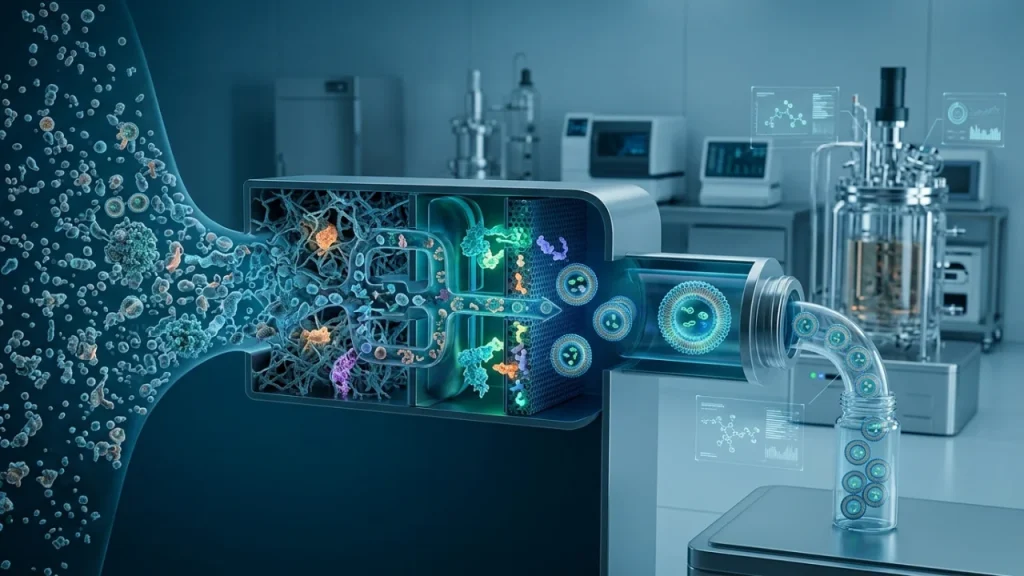
What Are Exosomes and Why Their Production Matters
Understanding Exosomes as Tiny Cellular Messengers
Imagine your body’s cells have a tiny postal system. Exosomes are the main packages. They are incredibly small bubbles released by nearly every cell type. These bubbles carry important cargo. This cargo includes proteins, RNA, and fats. Cells send these packages to communicate with each other. This happens both nearby and to distant parts of the body.
An exosome is a type of extracellular vesicle. Think of it as a nano-sized envelope. It has a protective lipid membrane. This membrane is similar to a cell’s own outer wall. Inside, the exosome holds molecular messages. A single cell can release thousands of these vesicles. Their size is key. They are about 30 to 150 nanometers across. You could line up thousands of them across the width of a single human hair.
Their job is communication and regulation. A healthy cell might send exosomes with repair signals. A stressed cell might send different messages. For example, an immune cell can dispatch exosomes to alert others about an invader. A neuron might use them to support a neighboring cell’s health. The cargo inside determines the message.
What makes exosomes special for medicine? First, they are natural. Your body already makes them. Second, they can cross barriers. They can travel through the bloodstream. Some evidence suggests they may even reach the brain. Third, they are precise messengers. They can deliver their cargo directly to specific target cells.
This natural precision is why scientists are so excited. Researchers believe we could engineer exosomes. The goal is to load them with therapeutic cargo. We could fill them with healing RNA or specific proteins. Then we could direct them to diseased tissues. This approach could treat cancer or repair damaged hearts.
However, their tiny size and complexity create major production hurdles. This leads directly to the core exosomes manufacturing challenges. To use them as medicines, we need to make vast quantities. We also need them to be pure and consistent. We cannot have unwanted molecules mixed in.
The source of exosomes matters greatly. They can come from many cell types. – Mesenchymal stem cells are a common source. They often send helpful, regenerative signals. – Immune cells can produce exosomes that modulate inflammation. – Even plant cells or milk can contain similar vesicles.
But not all exosomes are the same. Their content changes based on the parent cell’s state. A happy, healthy cell makes different exosomes than a sick one. The cell’s environment also changes the packages it sends out. Scientists must carefully control these conditions during production.
Understanding this basic biology is the first step. It shows why producing therapeutic exosomes is not simple copying. It is about reliably capturing a precise natural process. We must replicate nature’s communication system at a large scale. The next sections will explore how scientists tackle these complex tasks. They work to turn tiny cellular messages into powerful, consistent treatments.
Why Exosomes Could Transform Medicine and Diagnostics
Exosomes act as natural delivery trucks for our cells. Their innate ability to carry molecular messages makes them powerful medical tools. They offer two major advantages over many conventional treatments. First, they can target specific tissues. Second, they are biocompatible, meaning our bodies are less likely to reject them.
In therapy, exosomes can be designed as precise drug carriers. Imagine a tiny vesicle filled with a cancer-fighting drug. Scientists can engineer its surface to seek out only tumor cells. This spares healthy tissue from damage. This approach could reduce the severe side effects of chemotherapy.
Exosomes also show great promise for regenerative medicine. Damaged tissues, like in a heart after a heart attack, need signals to heal. Mesenchymal stem cell exosomes carry these regenerative instructions. They can tell heart muscle cells to repair themselves. They can reduce harmful inflammation at the injury site. Similar processes could aid in healing wounds, bones, and nerves.
Beyond delivering drugs, exosomes themselves can be the medicine. Some parent cells pack exosomes with natural therapeutic molecules. These include growth factors and anti-inflammatory signals. For example, exosomes from certain immune cells can calm an overactive immune system. This could help treat autoimmune diseases like rheumatoid arthritis.
The diagnostic potential of exosomes is equally groundbreaking. Every cell in the body releases them into bodily fluids. This includes blood, urine, and saliva. Critically, diseased cells release different exosomes than healthy ones. A tumor exosome will contain unique proteins and genetic fragments from that cancer.
This turns exosomes into liquid biopsies. Doctors could use a simple blood test to detect these tiny messengers. They could find cancer years before a traditional scan sees a tumor. This early detection dramatically increases survival chances. The same principle applies to neurodegenerative diseases like Alzheimer’s. Brain cells may release diagnostic exosomes into the bloodstream long before symptoms appear.
The list of potential applications is vast and specific: – Targeted cancer therapy with fewer side effects. – Repairing heart muscle after a heart attack. – Slowing the progression of neurodegenerative diseases. – Modulating the immune system to treat autoimmune disorders. – Accelerating the healing of chronic wounds in diabetics. – Serving as early-warning biomarkers for numerous cancers.
This immense promise is precisely what drives the intense research into solving exosomes manufacturing challenges. If they were not so potentially transformative, the difficulty of producing them would not matter. The clinical need justifies the engineering effort.
However, this potential hinges entirely on quality and scale. A single diagnostic test requires trillions of identical exosomes to be reliable. A therapeutic dose for one patient may require even more. Inconsistent batches could give false diagnoses or variable treatment results.
Therefore, the path from promise to product is clear. We must master their production. The next step is to examine where these exosomes come from and how scientists choose the best starting material for this crucial task.
The Critical Need for Reliable Exosome Production
Exosomes are not simple chemicals. They are complex biological packages. Their function depends entirely on their contents and structure. Think of them like personalized medical envelopes. The “address” on the outside must be correct. The “message” inside must be intact and pure. If the envelope is damaged or contains the wrong note, the treatment fails. This is the core of all exosome manufacturing challenges.
Making one perfect exosome in a lab is possible. Scientists do it every day. The real problem is scale and repeatability. Medicine needs billions of identical copies. Every single one must work the same way. Inconsistent production creates major risks.
For a diagnostic test, inconsistency means false results. A batch of exosomes might carry mixed signals. Some could come from healthy cells. Others could come from diseased cells. The test would give a confusing readout. A patient might get a false alarm. Worse, they might get a false sense of security. Reliable diagnosis requires every exosome in the test to be a perfect mirror of the patient’s condition.
The stakes are even higher for therapy. Exosomes used as treatments are active drugs. A bad batch can cause direct harm or simply do nothing.
Consider a batch meant to repair heart muscle. The exosomes must carry specific healing signals. If the manufacturing process is unstable, the exosomes might carry different signals. They might even carry inflammatory signals. Instead of healing the heart, they could cause more damage. The patient would not get better. They could get worse.
These risks define the critical need for reliable production. Doctors cannot use a therapy that changes with every batch. Regulatory agencies like the FDA will not approve it. The entire field depends on solving these production puzzles.
The requirements for a clinical-grade exosome product are strict: – Purity: The sample must contain only exosomes. It must have no contaminants like cell debris or proteins. – Identity: The exosomes must have the correct markers on their surface. This proves they are the intended type. – Potency: They must have a proven, measurable biological effect. – Consistency: Every batch must meet the same standards for purity, identity, and potency.
Failure at any point breaks the chain. A therapy that works in a small lab study often fails in larger trials. In many cases, poor production is the reason. Scientists cannot replicate their initial success because they cannot replicate the exosomes.
This turns manufacturing from a technical step into the central challenge. The amazing biology is already proven in concepts. Turning that concept into a real product is an engineering marathon. It requires new technologies and strict controls.
The goal is industrial biotechnology adapted for nature’s tiny messengers. We must move from artisanal lab methods to robust, automated processes. Only then can exosomes fulfill their medical promise. This need directly leads to the question of source. Where do we get these exosomes to begin this difficult production journey?
Key Hurdles in Exosome Manufacturing Today
Why Consistent Exosome Yield Remains Elusive
Producing a consistent number of exosomes is surprisingly hard. Cells are not tiny, perfect factories. They are living entities that change with their environment. A small shift in temperature or nutrients can alter their behavior. This means the same process can give different results on different days.
The source cells themselves create the first big hurdle. Not all cells release exosomes at the same rate. For example, stem cells might release many exosomes when they are young and active. As they age in a culture flask, their output can drop. Mesenchymal stem cells are a common source. Their exosome yield can vary by over 300% between different donors. This is a fundamental biological variable that is hard to control.
The growth conditions for these cells add another layer of complexity. Scientists must provide food and a surface for cells to grow on. This environment is called the culture medium. – If the nutrient mix is slightly wrong, cell health suffers. – If the cells become too crowded, they get stressed. – If the pH level drifts, metabolism changes.
Each of these factors influences exosome release. A stressed cell might release more exosomes as a distress signal. A happy cell might release fewer. The goal is a steady, predictable state, but maintaining it at a large scale is difficult.
The collection method introduces more challenges. Most labs use a process called ultracentrifugation. This spins samples at incredibly high speeds to pull exosomes to the bottom of a tube. It is the traditional gold standard. However, it is not perfectly efficient. Some exosomes are lost at each spin. The amount lost can change based on sample viscosity or rotor temperature. Even slight differences in technician technique can affect the final yield.
Newer methods aim to be more gentle and consistent. These include size-based filters and polymer-based kits. They trap exosomes on a membrane or pull them out of solution. While often easier, these kits can also have variable recovery rates. The materials may bind exosomes differently from batch to batch. This is another point of potential inconsistency.
Finally, scientists face a basic measurement problem. Accurately counting particles as small as exosomes is itself a technical feat. Two common methods are nanoparticle tracking analysis and tunable resistive pulse sensing. They work on different physical principles. They can give different counts for the same sample. Without a perfect counting standard, defining the true yield becomes a debate about tools.
These exosomes manufacturing challenges combine into a perfect storm for variability. Biology, process, and measurement all add their own noise. Solving the yield puzzle means controlling each variable. It requires moving from manual cell culture to tightly monitored bioreactors. It demands standardized, validated collection and counting protocols.
Until each step is locked down, consistent yield will remain elusive. This directly impacts the next critical hurdle: purity. If you cannot reliably collect a set amount, cleaning that amount effectively becomes even harder.
The Purity Problem in Exosome Isolation
The Purity Problem in Exosome Isolation
Collecting enough exosomes is only half the battle. The other half is collecting the right ones. The fluid around cells is a crowded molecular soup. When scientists harvest exosomes, they get everything else mixed in. This creates a major purity problem.
Think of it like trying to catch only one type of fish from a busy pond. Your net will also scoop up weeds, mud, and other fish. In cell culture, the “pond” is called conditioned medium. The “other fish” are contaminants that co-isolate with exosomes.
These contaminants fall into three main groups. First are proteins and protein complexes. Cells constantly shed free proteins and aggregates. These are similar in size to exosomes. They get trapped in the same filters or pellets.
Second are lipoproteins. These are particles like LDL and HDL from blood serum used in cell food. Lipoproteins carry fats and cholesterol. Their size and density often overlap with exosomes. They are a major contaminant.
Third are other extracellular vesicles. Cells release different vesicle types. Some are larger, like microvesicles. Some are smaller. Current methods struggle to separate them cleanly from exosomes.
Why is this separation so hard? The core issue is shared physical properties. Most isolation techniques use size, density, or surface chemistry. Unfortunately, contaminants share these traits.
- Ultracentrifugation spins down particles by density and size. But protein aggregates and some lipoproteins have similar density. They form a pellet together.
- Size-based filters trap anything larger than their pores. Small protein clusters and other vesicles also get caught.
- Polymer kits pull in vesicles based on solubility. They can also pull in non-vesicle material that behaves the same way.
This lack of purity has real consequences. Contaminants can skew research results. If you think an exosome causes an effect, it might be a free-floating protein. For therapies, contaminants are a safety risk. They could cause unwanted immune reactions.
The challenge intensifies with the source material. Exosomes from blood are especially hard to purify. Blood is full of lipoproteins and antibodies. Fat particles can outnumber exosomes by a million to one. Cleaning them away without losing exosomes is a huge task.
Newer technologies are trying to solve this. Some use specific antibodies to latch onto exosome surface markers. This is like using a magnet for only one metal. But it requires knowing the exact marker. It also can be expensive and slow.
Other approaches use microfluidic chips. These devices have tiny channels. They use acoustic waves or filters to sort particles with great care. The goal is high-precision separation.
Yet each advance brings new exosomes manufacturing challenges. Antibody methods may miss exosome subtypes without the marker. Microfluidic systems can handle only small volumes. Scaling them up is difficult.
The purity problem directly links to function and safety. Impure exosome preparations are unreliable for science. They are unacceptable for medicine. Solving yield was about quantity. Solving purity is about quality and identity. It demands methods that can tell exosomes apart from look-alikes with perfect accuracy.
After isolation, the next hurdle is confirming what you actually have. You must characterize the product. This means proving the vesicles are truly exosomes and checking their biological cargo. Without this step, manufacturing remains a black box.
Defining and Measuring Exosome Biological Activity
Isolating pure exosomes does not guarantee they will work. A batch could be perfectly clean but biologically dead. This creates a core exosomes manufacturing challenge. Scientists must define and measure biological activity. This means testing if the vesicles can perform a specific task.
Think of it like testing a key. You can confirm it’s a metal key of the right shape. But the real test is whether it turns a lock. For exosomes, the “lock” is often a target cell. The “turn” is a change in that cell’s behavior.
Activity depends entirely on the exosome’s cargo. This cargo includes proteins, RNA, and lipids. The cargo must be intact and delivered correctly. A manufacturing step might damage this delicate payload. Freezing and thawing can break vesicles. Long storage times can degrade RNA inside. Even the isolation method can strip important surface molecules.
Therefore, a full quality check requires functional assays. These are biological experiments. They go beyond just counting and sizing particles.
One common test measures uptake. Researchers label exosomes with a fluorescent dye. They then add them to cells in a dish. A microscope can show if cells ingest the glowing vesicles. This proves delivery can happen.
But uptake alone is not enough. The next test must show an effect. The chosen effect depends on the intended use. For example: – Immunomodulatory exosomes might be tested on immune cells. The goal is to see if they calm down or activate an immune response. – Regenerative exosomes could be applied to skin cells or neurons. Scientists would look for signs of faster growth or repair. – Drug-loaded exosomes need to show they kill cancer cells without harming healthy ones.
These tests are complex and slow. They can take days or weeks to complete. They are also highly variable. Cells used in assays can behave differently from one lab to another. The conditions of the experiment matter greatly. This makes it hard to compare results or set a universal standard.
Another hurdle is relevance. An exosome might work well in a plastic dish but fail in a living body. The human environment is more complicated. Enzymes can break down exosomes. The immune system might clear them. Blood flow can wash them away from the target.
So, scientists often move to animal models. This adds more time and cost. It also raises ethical questions. Yet it remains a necessary step for clinical development.
Defining “activity” itself is tricky. Is it the change in one protein level? Is it the reduction of a tumor’s size? Is it the speed of wound closure? Researchers and regulators must agree on a measurable endpoint. This endpoint becomes the critical quality attribute for that product.
Without these functional tests, manufacturing is blind. You could be producing vast amounts of inert nanoparticles. They would have the right shape and size but zero therapeutic value.
This step ties all previous challenges together. You need high yield to have enough material for testing. You need high purity to know the effect comes from exosomes, not contaminants. You need solid characterization to link the effect to a specific cargo profile.
Ultimately, proving biological activity closes the loop from process to product. It transforms exosomes from mere particles into defined biological agents. The next phase of manufacturing must then keep this fragile activity stable from the lab to the patient’s bedside.
How Cell Culture Variability Affects Production
Cells are the factories that make exosomes. If these factories are inconsistent, the product will be inconsistent too. This is a core issue in exosome manufacturing. The same type of cell can behave differently from one batch to another. This variability affects every step that comes after it.
Think of cells like plants. Two seeds from the same packet can grow at different rates. They might need different amounts of water. One might get a disease while the other stays healthy. Cells in culture are the same. Their growth changes based on many small factors.
The age of the cell culture matters a lot. Young, rapidly dividing cells often release exosomes at a high rate. As cells get older and more crowded, their metabolism slows. This “senescence” changes their exosome output. The number of vesicles can drop. The cargo inside them can also shift. An old cell might send out different signals than a young one.
The food for the cells is critical. This liquid medium contains nutrients, salts, and growth factors. Small changes in its recipe have big effects. The pH level must stay steady. The temperature cannot waver. Even the way the flask is shaken can alter cell stress. Stressed cells might release more exosomes, but these vesicles could carry harmful signals instead of healing ones.
The surface cells grow on makes a difference too. Some cells prefer plastic. Others need a coating that mimics natural tissue. If the attachment is poor, cell health suffers. Their exosome production reflects this poor health.
Here are key sources of cell culture variability: – Passage number: High-passage cells are genetically different from early ones. – Confluence: The percentage of the surface covered by cells changes secretion. – Donor source: Cells from different people have natural genetic diversity. – Media batch: Slight differences between lots of fetal bovine serum are common.
These factors combine to create noise. One week’s production run yields a strong, potent batch of exosomes. The next week uses cells that are just a few passages older. The yield might be lower. The vesicles might carry a different mix of RNA. This is a major problem for scaling up.
Reliable manufacturing needs a steady starting point. With living cells, this steadiness is hard to achieve. Scientists work to control every variable they can. They use standardized media recipes. They freeze down early-passage cell stocks. They monitor cell health with strict checkpoints.
Yet some inherent variability remains. This biological noise is one of the fundamental exosomes manufacturing challenges. It means that producing identical exosome batches is incredibly difficult. The process is not like mixing chemicals in a vat. It involves guiding living systems.
This variability directly impacts the hurdles discussed earlier. If your cell source shifts, your purification results will shift too. Characterizing the vesicles becomes harder because the target keeps moving. Most importantly, proving biological activity gets unreliable. A treatment that works with one batch may fail with another.
Controlling the cell factory is the first real test in manufacturing. Without this control, all downstream efforts rest on shaky ground. The next step is capturing what these cells produce, which introduces its own set of physical and technical obstacles.
Limitations of Current Exosome Collection Methods
Once cells release exosomes into their liquid environment, the real work of collection begins. This fluid is a complex mixture. It contains exosomes, but also many other things. You will find cell debris, proteins, and larger vesicles. Separating the tiny exosomes from this mix is a major technical hurdle. It represents a core part of exosomes manufacturing challenges.
Think of it like trying to isolate only the finest sand from a bucket of muddy water. The sand is there, but so is silt, leaves, and twigs. Current methods struggle to get just the sand. They often lose some of it. Or they accidentally collect silt along with it.
The most common method is ultracentrifugation. This uses very high spinning speeds. The force pushes heavier particles to the bottom of a tube. Lighter particles like exosomes form a pellet later. This method is a standard tool in labs. But it has big drawbacks for large-scale manufacturing.
First, the process is slow. A single run can take many hours. Scaling this up for clinical needs would require huge, expensive machines. Second, the high forces can damage exosomes. The crushing pressure may break some vesicles open. It can also cause exosomes to clump together. These clumps are then hard to study or use.
Another popular method is size-based filtration. Filters with tiny pores trap larger particles. Smaller exosomes pass through. This sounds simple and gentle. Yet filters clog quickly with other materials in the fluid. This reduces yield and slows everything down. Also, some exosomes stick to the filter material and are lost.
More advanced methods use chemicals or antibodies. They pull exosomes out based on surface markers. These techniques can be very precise. But they are often too costly for big batches. The special chemicals or antibodies are expensive. They can also leave traces that must be removed later.
Each method faces a common trade-off. You can aim for high purity or high yield. It is hard to get both at once.
- Purity means getting only exosomes, with no contaminants.
- Yield means collecting most of the exosomes you started with.
Ultracentrifugation may offer decent yield but lower purity. Filtration might give good purity but poor yield. This trade-off forces difficult choices for manufacturers.
There is another hidden problem. These methods are not perfectly consistent. The same machine might perform slightly differently each day. A filter from one supplier might work better than another. This adds more variability on top of the biological noise from cells.
The limitations of collection have a direct impact. Impure exosome preparations can cause unwanted immune reactions. Low yields make therapies too expensive to produce. Damaged exosomes will not work as intended.
These hurdles show why moving from a lab bench to a factory is so hard. Scientists can study exosomes using these imperfect tools. Doctors cannot treat thousands of patients with them yet. The process needs to be robust, scalable, and kind to the fragile vesicles.
Successfully gathering exosomes is only half the battle. After isolation, we must answer a critical question: what exactly did we collect? This leads to the next major hurdle: defining and measuring quality in a bag of billions of tiny, complex particles.
Upstream Challenges in Exosome Bioprocessing
Optimizing Cell Sources for Exosome Production
The journey of an exosome begins inside a living cell. Not all cells are equal producers. A cancer cell, for instance, can release over ten times more exosomes than a normal, healthy cell. This makes cancer cell lines attractive for research. But their exosomes carry signals that could promote tumor growth. They are not safe for most therapies.
Choosing the right cell source is the first major upstream decision. It sets the stage for everything that follows. This choice directly impacts the three big goals of manufacturing: yield, purity, and function.
Scientists generally pick from three types of cell sources.
- Immortalized cell lines are common. These are cells that can divide forever in a lab dish. They grow easily and make many exosomes. But they are not normal human cells. Their exosomes might have unknown effects.
- Primary cells come directly from human or animal tissue. They are more natural. Their exosomes often behave as expected in the body. Yet these cells are hard to grow in large numbers. They stop dividing after a while. This creates a big scale-up problem.
- Stem cells are a powerful option. Mesenchymal stem cells (MSCs) are a popular choice. They can help repair tissue. Their exosomes often carry these healing signals. But stem cells are sensitive. Their health changes with every passage, or time they are split in culture.
The cell’s environment is just as critical as its type. This environment is called the culture condition. Cells grown in a nutrient-rich soup called fetal bovine serum present a problem. This serum is full of animal exosomes. These foreign vesicles mix with the ones made by the cells. They create a huge contamination issue.
To solve this, companies now use serum-free media. The cells get defined, chemical nutrients instead. This removes animal contaminants. But it also stresses the cells. Stressed cells might change the cargo they pack into exosomes.
The physical and chemical signals cells receive matter too. We call these cues. For example, placing stem cells in a low-oxygen chamber can mimic injury conditions. This “stress” can trigger the cells to release more exosomes. It might also change the exosome contents to be more therapeutic.
However, pushing cells too hard has consequences. It can lead to the release of other vesicles alongside exosomes. It can also cause cells to release damaged or incomplete exosomes. This adds to the purification challenge later.
The goal is to find a balance. Manufacturers need a cell that is a reliable, efficient factory. It must produce high yields of consistent exosomes. Those exosomes must have a proven and safe biological function.
This leads to another layer of complexity: scaling up. A process that works for cells in a small flask often fails in a large bioreactor. In big tanks, cells might not get enough oxygen or nutrients evenly. Waste products can build up. These changes alter exosome production.
Therefore, optimizing cell sources is not a one-time choice. It is an ongoing engineering puzzle. Every change in scale or feed can change the final product.
Successfully managing this upstream stage is vital. It defines the raw material for the entire process. Yet, even with perfect cells, another question remains unanswered right after production. How do we know if these billions of particles are what we want? We must analyze them deeply before moving forward.
Improving Cell Culture Conditions for Better Yield
Cells need the right environment to become efficient exosome factories. This environment is called the culture condition. Scientists must carefully control many factors. These factors directly decide how many exosomes the cells make. They also decide what is inside those exosomes.
Think of it like farming. You cannot just plant seeds in poor soil. You must manage water, sunlight, and nutrients. Cell culture is similar but more precise. Every detail matters for a good harvest of exosomes.
The nutrient soup cells grow in is called the medium. Its recipe is critical. A standard medium might keep cells alive. But a specialized medium can boost exosome production. Key ingredients include: – Growth factors. These are protein signals that tell cells to grow and work. – Specific sugars and amino acids. These are building blocks for the cell and its products. – Controlled levels of serum or serum-free replacements. Serum is a complex animal product. It is inconsistent and risky. Modern exosomes manufacturing challenges often involve creating fully defined, serum-free formulas.
The physical setting is equally important. Temperature must stay at the human body level, 37°C. Slight changes stress cells. The acidity, or pH, of the medium must also be tightly controlled. Cells are sensitive to chemical balance.
Cells also feel physical forces. In our bodies, cells are gently stirred by fluid flow. They are also often attached to surfaces. In a bioreactor, we must mimic this. – Shear stress is force from stirring or bubbling. Too much shear can damage cells. It can tear exosomes apart as they are released. – Too little mixing is also bad. Waste products gather around the cell. Fresh nutrients cannot reach it. – Finding the perfect stirring speed is a key engineering task.
Another major factor is timing. Cells release exosomes at different stages of their life cycle. – During rapid growth phases, cells may focus on dividing. – As growth slows, they might shift energy to making communication vesicles. – Letting cells become too old and crowded leads to stress signals. This changes exosome content.
Harvesting at the right moment is crucial for consistency. It ensures each batch of exosomes is the same.
Oxygen levels present a complex puzzle. Most cells need oxygen to live. But some stem cells act differently in low oxygen. As noted earlier, this can mimic injury and change exosome output. In large tanks, delivering even oxygen to all cells is hard. Cells at the top might get plenty. Cells at the bottom might not get enough. This unevenness creates a mix of exosome types in one batch.
Finally, all these factors talk to each other. Changing the medium might change how cells use oxygen. Adjusting the stir speed affects nutrient delivery and shear force. This interconnectedness is a core exosomes manufacturing challenge. Optimizing one variable in isolation rarely works.
The goal is a stable, controlled process. It must produce the same high yield of functional exosomes every single time. Mastering cell culture conditions turns a living system into a reliable production line. Yet, even with perfect conditions, what comes out of the bioreactor is a complex mixture. The next critical step is separating the precious exosomes from everything else.
Scaling Up Cell Cultures Without Losing Quality
Scaling up cell cultures is a major step. It moves from flasks to large bioreactors. This step is full of hidden problems. A key issue is simple physics. In a small dish, every cell is close to fresh nutrients and oxygen. In a large tank, cells in the center are far from supply sources.
Nutrients and oxygen must travel farther. They move by diffusion. This process can be too slow for dense cell populations. Cells in the middle may starve or suffocate. This stress changes their behavior. Stressed cells often release more exosomes. But these vesicles carry different signals. They may not have the desired therapeutic effect.
Shear stress is another physical force. Bioreactors use impellers to stir the medium. This mixing prevents nutrient pockets. It also keeps cells suspended. However, the spinning creates fluid forces. These forces are called shear stress.
Cells are sensitive to this mechanical push. High shear can damage cell membranes. It can even break cells apart. To protect themselves, cells might alter exosome release. The content of the vesicles can change too. Finding the perfect stir speed is a balance. It must mix without causing harm.
Waste removal becomes harder at large scale. Cells produce metabolic waste like lactic acid. In a small dish, waste is diluted easily. In a big tank, it can build up around cells. Accumulated waste lowers the pH of the environment. Cells live in an increasingly acidic bath.
This acidity stresses the cells. It triggers survival responses. The exosomes they produce in this acidic state reflect stress, not normal function. Consistent quality becomes impossible.
The surface area to volume ratio drops in large tanks. This is a core concept in scaling. In a flask, cells grow on a flat surface with lots of medium access. In a suspension tank, cells are surrounded by other cells. Their access to the medium is limited.
This change affects cell signaling and contact inhibition. Cells behave differently when they are crowded in three dimensions. Their growth patterns shift. Their communication changes. This directly impacts exosome manufacturing challenges.
Monitoring becomes much harder. In a small lab setup, scientists can check cells under a microscope daily. They can sample the medium easily. A large bioreactor is a closed system.
Sensors measure things like oxygen and pH. But they only sample specific spots. They might miss local variations. A harmful condition could develop in one corner before it is detected.
These scaling issues often reduce exosome purity and function: – Physical gradients create zones of healthy and stressed cells. – Stressed cells release a different mix of vesicles. – The final harvest contains exosomes from various cell states. – This mixture is less pure and less predictable than small-scale batches.
The goal of scaling is to increase quantity without losing quality. This requires careful engineering of the bioreactor environment. Every parameter must be controlled with precision. The system must mimic the ideal conditions of a small culture.
Success means producing the same therapeutic exosomes, just in larger amounts. Failure means getting a large volume of inconsistent vesicles. After navigating these upstream hurdles, the raw product is ready for the next stage. The mixture must now be cleaned and purified to isolate the true exosomes from cellular debris and other particles.
Monitoring Cell Health During Production
Healthy cells make the best exosomes. Stressed or dying cells release a messy mix of vesicles. This contamination ruins product consistency. Monitoring cell health during production is therefore non-negotiable. It is a core part of the exosomes manufacturing challenges.
Think of a bioreactor as a black box. You cannot see inside it directly. You must rely on indirect signals. Cells communicate their state through various markers. Scientists track these markers closely.
One key marker is glucose consumption. Cells use glucose for energy. A sudden drop in consumption rate often means cells are stressed. They are not metabolizing properly. Another marker is lactate production. Cells produce lactate when they ferment glucose without enough oxygen. A lactate spike signals oxygen starvation in part of the tank.
pH is also vital. Cell metabolism acidifies their environment. A drifting pH tells you the culture balance is off. These are all chemical signals. They are measured with inline sensors.
But chemical data is not enough. You also need biological data. Scientists regularly take small samples from the bioreactor. They test these samples for specific proteins. The presence of certain stress proteins acts as a red flag. It shows cells are in trouble long before they die.
Cell density is another crucial number. If density stops increasing, growth has stalled. This is called reaching confluence. Harvesting exosomes too early yields a small amount. Waiting too long lets cells starve and die. Dead cells burst, releasing internal debris that pollutes the exosome harvest.
The biggest hurdle is lag time. A sensor might detect a pH shift at noon. That shift actually began hours earlier in a secluded zone of the tank. By the time you correct it, millions of cells have already altered their exosome output. This delay creates product variability.
Advanced systems try to predict problems. They use software models that analyze all incoming data. The model might see a subtle trend in oxygen use combined with a slight lactate rise. It can then alert engineers to a potential issue before it becomes critical.
Here are common cell states that hurt exosome quality: – Nutrient starvation: Cells release vesicles loaded with stress signals. – Oxygen limitation: Cells switch to fermentation, altering exosome membranes. – Overcrowding: Cell contact triggers signals that change exosome cargo. – Apoptosis onset: Dying cells shed apoptotic bodies that co-purify with exosomes.
Each state creates a distinct biological signature in the supernatant. The final exosome prep becomes a blend from all these states. This blend is unpredictable and less potent.
Effective monitoring aims to keep most cells in a “goldilocks” zone. They are not too sparse, not too crowded. They have ample food and oxygen. In this zone, they produce therapeutic exosomes consistently.
Without precise monitoring, manufacturing scales up problems instead of product. You get a large volume of ineffective vesicles. This wastes time and resources. It highlights why real-time cell health assessment is a major engineering frontier. Mastering it leads directly to the next step: efficiently separating these delicate vesicles from the complex broth they are made in.
Downstream Bottlenecks in Exosome Purification
Why Separating Exosomes from Contaminants Is Tough
After cells release exosomes, the real engineering challenge begins. The culture broth is a crowded molecular soup. It contains many things besides the desired therapeutic vesicles. Separating exosomes from this mix is a major bottleneck. This step is full of exosomes manufacturing challenges.
Think of it like finding specific marbles in a bin. But these marbles are incredibly tiny. They also look very similar to other items in the bin. The broth contains many contaminants that are close in size or density to exosomes.
First, there are protein aggregates. These are clumps of proteins that stick together. They form naturally in cell culture. These clumps can be the same size as exosomes. They often co-precipitate during standard isolation steps.
Second, there are lipoproteins. These are particles that carry fats in the blood. Fetal bovine serum, often used in cell culture, is rich in them. Lipoproteins like LDL and HDL have overlapping physical traits with exosomes. Their size and buoyancy are almost identical.
Third, there are other extracellular vesicles. Cells do not only make exosomes. They also shed larger vesicles called microvesicles. They release much larger particles called apoptotic bodies. The goal is to get just the small exosomes, not this entire family of vesicles.
Finally, there is leftover cell debris. This includes fragments of broken membranes. It includes organelles from dead cells. All this junk can end up in the isolate.
Why does this contamination matter? It is not just about purity for its own sake. These contaminants carry their own biological signals. Protein aggregates can trigger immune reactions. Lipoproteins can change cell metabolism. Other vesicles might send the wrong therapeutic message.
If you inject a contaminated preparation, you get unknown effects. The therapy becomes unpredictable and potentially unsafe. Scientists must remove 99% or more of these contaminants. That is very hard to do at a large scale.
The core problem is the lack of a unique “handle”. Exosomes do not have one single feature that only they possess. Everything about them exists on a spectrum shared with other particles.
Their size range is 30 to 150 nanometers. Many contaminants fall within that same range. Their density is also similar to many other particles. Their surface has common proteins found on other cell fragments.
This makes standard filtration tricky. Filters with pores small enough to block contaminants often block exosomes too. They can get stuck or even rupture under pressure.
Centrifugation has limits too. Spinning samples at ultra-high speeds is the traditional method. It pellets exosomes based on their density. But lipoproteins and some protein aggregates pellet right alongside them. This method also takes a long time and can damage delicate vesicles.
Chromatography techniques use columns to separate particles. They rely on subtle differences in charge or surface chemistry. Yet the differences between an exosome and a lipoprotein-coated aggregate can be minuscule.
Each purification method trades off three things: yield, purity, and speed. You can optimize for one, but you often lose another. Getting high purity usually means throwing away many good exosomes, lowering yield. Going fast can sacrifice purity. Scaling any method adds another layer of difficulty.
Therefore, most modern approaches use a combination of techniques. They might use a filtration step to remove large debris first. Then a chromatography step to separate by charge. Finally, a precise centrifugation step to isolate by size.
Even then, the final product is rarely 100% pure exosomes. It is a population enriched for them. The field defines acceptable purity thresholds for different uses. Research might allow more contamination than a clinical injection.
This purification bottleneck directly impacts cost and feasibility. Inefficient methods make therapies expensive. Harsh methods damage the vesicles, making them useless. The entire value of monitoring cell health upstream can be lost here with poor downstream processing.
Mastering this separation is crucial for turning a promising broth into a reliable medicine. The next hurdle is proving what you have actually collected and how potent it is.
Comparing Ultracentrifugation and Other Isolation Techniques
Ultracentrifugation is the oldest and most common lab technique for exosome isolation. It uses extremely high spinning speeds. These speeds can exceed 100,000 times the force of gravity. The process separates particles based on their size and density. Larger and denser particles pellet first. Smaller exosomes pellet only after many hours of this force.
This method has clear strengths. It requires no special kits or columns. It can process large volumes of starting material. Most importantly, scientists know it well. It is a standard tool in thousands of labs. Yet it faces major hurdles for clinical manufacturing.
The challenges are significant. The process is very slow, often taking a full day. The tremendous g-forces can damage exosome membranes. They can also cause exosomes to clump together irreversibly. This clumping alters their biological activity. The final pellet often contains non-exosome contaminants too. These include protein aggregates and other vesicles.
These exosomes manufacturing challenges have spurred the search for better tools. Newer techniques aim to be gentler, faster, and more selective.
Size-based filtration is one popular alternative. Solutions are pushed through filters with tiny pores. These pores are about the size of an exosome. Anything larger gets trapped. The exosomes pass through. This method is much quicker than spinning. It is also gentler on the vesicles. But filters can clog easily. They can also trap some exosomes on their surface, reducing yield.
Polymer-based precipitation is another common approach. A special solution is added to the cell broth. This solution changes how water molecules interact with the exosomes. The exosomes fall out of solution, like snowflakes. They are then collected by a low-speed spin. This method is simple and recovers a high yield. Yet it co-precipitates many other things from the broth. Purity is often quite low.
Chromatography methods offer high purity. They pass the sample through a column packed with beads. Exosomes interact with the beads differently than contaminants do. They exit the column at different times and are collected separately. This process is scalable and gentle. However, the equipment is expensive. Setting up the method requires expert knowledge.
Each method makes a different compromise: – Ultracentrifugation: Good scale, but harsh and slow. – Filtration: Fast and gentle, but prone to clogging. – Precipitation: High yield and simple, but low purity. – Chromatography: High purity and scalable, but complex and costly.
Choosing a method depends entirely on the final goal. Basic research might tolerate lower purity for higher yield. A diagnostic test needs pure exosomes to ensure signals are accurate. A therapeutic injection demands the highest purity and proven vesicle health.
No single method is perfect for every situation. This reality defines the current manufacturing landscape. Many labs now use a combination of two or more techniques in sequence. They might use precipitation for an initial concentration step. Then they use chromatography for a final purification polish.
This hybrid approach balances the weaknesses of one method with the strengths of another. It aims to achieve an acceptable level on all three fronts: yield, purity, and speed. The ultimate goal is a reliable and consistent process. This process must work every time, at a large scale, to create a viable product.
The next critical step is analyzing what these methods actually produce. Scientists must confirm the harvest’s quality before any use can be considered.
The Cost and Time Barriers in Purification
Purifying exosomes at a large scale is not just a scientific puzzle. It is a major economic challenge. The equipment needed for high-quality work is very costly. An industrial-grade chromatography system can cost hundreds of thousands of dollars. An ultracentrifuge powerful enough for a factory setting is also a huge investment. This is just the start.
These machines are not simple to run. They require highly trained operators. A scientist or technician needs deep knowledge to manage the process. This expertise adds significant labor costs to every batch produced. The most advanced methods also need expensive materials. Special filters, chemical kits, and chromatography resins are used once and then thrown away. These are called consumables. Their cost adds up quickly with each production run.
Time is another critical barrier. A single purification cycle can take many hours. Some methods, like careful ultracentrifugation, can take an entire day. This slow speed limits how much material a facility can make in a week. Scaling up does not simply mean using a bigger machine. Often, it means running many machines at the same time. This multiplies the cost and space needed.
Think about the goal of a clinical trial for a new therapy. It might need thousands of identical doses. Each dose requires a vast number of purified exosomes. To meet this demand, a company must run its purification process over and over. This ties up equipment and staff for weeks or months. The long processing time creates a bottleneck. It slows down research and makes therapies more expensive.
These exosomes manufacturing challenges directly impact patients. High costs and slow speeds translate to higher prices for future treatments. They also make it harder for researchers to test new ideas quickly. A lab might have a brilliant concept for using exosomes to heal nerves. But if purifying enough for a single animal study takes six months and their entire budget, progress stalls.
The problem has several layers: – Equipment: High purchase price and maintenance costs. – Personnel: Need for specialized, expensive training. – Materials: Single-use consumables create recurring expenses. – Throughput: Long process times limit total output.
Overcoming these barriers requires innovation beyond just science. Engineers must design faster, more efficient equipment. Chemists must create cheaper, more durable purification materials. Process experts must find ways to link steps together without pauses. The aim is continuous flow, not stop-and-go batches.
This pursuit of efficiency is constant. Every saved minute and every saved dollar makes these powerful tools more accessible. The next step is ensuring that the exosomes coming out of this costly process are actually good enough to use. Scientists must rigorously check their work at every stage.
Ensuring Exosome Integrity During Processing
Purification is a rough journey for something so small. Exosomes are delicate bubbles of biological information. The forces used to separate them can easily cause damage. This damage is often invisible at first. Scientists might end up with a pure sample. But the exosomes inside could be broken.
Think of an exosome like a tiny, fragile cargo ship. Its outer membrane is the hull. Proteins on its surface act like flags and docking ports. Inside, it carries precious molecular cargo like RNA and signaling proteins. The goal of purification is to isolate thousands of these identical ships from a chaotic harbor. But the tools used can sink them or strip their cargo.
One major threat is shear force. This is the tearing stress created by fast-moving liquids. Many purification steps involve spinning samples at high speeds in centrifuges. They also involve pushing fluids through narrow tubes and filters. These actions create powerful, microscopic currents. For a nano-sized vesicle, it feels like being in a hurricane. The shear force can rip the exosome’s membrane apart. It can also shake loose the important proteins attached to its surface.
Temperature changes are another silent hazard. Exosomes exist in the stable environment of the human body. Many lab processes are not that gentle. A sample might sit on a bench at room temperature for too long. It might go through repeated freeze-and-thaw cycles during storage and testing. Each freeze forms sharp ice crystals. These crystals can punch holes in the exosome membrane. This lets the internal cargo leak out into solution. The result is an empty shell.
Even the chemicals used for purification pose risks. Some methods use polymers to force exosomes out of solution. These polymers can stick to the exosome surface. They can block those crucial docking ports that cells use for communication. Other techniques rely on harsh salts or changes in acidity. These can alter the natural shape of proteins. A misshapen protein cannot do its job.
The exosomes manufacturing challenges include protecting these particles from their own purification. Scientists must carefully monitor conditions at every step. They check for signs of damage using several tools.
- Electron microscopy can reveal broken or misshapen vesicles.
- Protein analysis checks if surface markers are still present and intact.
- Tests measure the biological activity of the final product.
This last point is key. An exosome that looks intact under a microscope might still be functionally dead. Its signaling ability might be gone. Its RNA cargo might be degraded. Ensuring integrity means proving they still work, not just that they still exist.
The entire process is a balancing act. Engineers and biologists must find the sweet spot. They need methods that are fast and scalable, but also gentle. A harsh process gives a high yield of useless debris. A gentle process that is too slow is not practical for making medicine. The solution often lies in redesigning the equipment itself. Systems that minimize turbulent flow, control temperature precisely, and avoid harsh chemicals are essential.
Ultimately, integrity defines success. A therapy made from damaged exosomes will likely fail. It could even cause unexpected side effects. Therefore, every minute saved and every dollar reduced in upstream costs means nothing if the final product is compromised. The next phase of development focuses on this critical standard: creating robust, repeatable tests that guarantee exosome quality from batch to batch.
Emerging Solutions for Exosome Manufacturing
Advanced Bioreactor Designs for Scalable Production
Traditional methods for growing exosome-producing cells are limited. Flasks and dishes cannot make enough material for clinical trials. They also give scientists little control over the cell’s environment. This is a major bottleneck. Advanced bioreactors are the answer to these exosomes manufacturing challenges. Think of them not as simple tanks, but as sophisticated cell hotels.
These systems carefully manage every factor that affects cell health and output. The goal is to keep cells happy and productive for a long time. A happy cell releases more high-quality exosomes. The design focuses on three key areas: space, food, and waste.
First, they solve the space problem. Cells need surface area to grow. New bioreactors provide immense internal growth surfaces. Some use hollow fibers or packed beds. These structures give cells a huge area to attach, all within a single compact unit. It is like changing from a single-story house into a towering apartment building for cells.
Second, they precisely control the cell’s environment. This is done through constant monitoring and adjustment.
- Sensors track oxygen levels and pH in real time.
- The system automatically adds nutrients or buffers to keep conditions perfect.
- Gentle stirring ensures fresh media reaches every cell without creating damaging shear forces.
This constant care prevents stress. Stressed cells release different exosomes, or may even die. Consistent conditions mean consistent products.
Third, these systems allow for continuous harvesting. In old methods, scientists had to stop the process to collect exosomes. In advanced bioreactors, the culture media can be slowly and continuously filtered. The exosomes are removed while the cells stay in their ideal home. The cells keep producing without interruption. This leads to a much higher total yield over time.
The materials used in construction also matter. Surfaces are often coated with substances that improve cell attachment. Fluid paths are designed to be smooth. This minimizes areas where exosomes could get stuck or damaged. The entire process becomes more efficient and gentle.
The result is a scalable pipeline. Researchers can start with a small volume in the same type of bioreactor they will use for large batches. This consistency from lab scale to manufacturing scale is vital. It reduces surprises when moving to mass production. The exosomes collected are also more uniform because the cells experienced a stable environment.
These engineering advances turn a research process into a reliable manufacturing one. They address the core conflict between scale and gentleness. The next step is integrating even smarter technology. The future lies in fully automated systems that can adapt to the cells’ needs moment by moment, ensuring every batch meets the high standard required for medicine.
Better Process Controls to Enhance Consistency
Consistency is the biggest goal in manufacturing. For exosomes, it means every batch must be nearly identical. This is hard because living cells are always changing. Their behavior shifts with tiny changes in their environment. Advanced process controls are the answer. These systems watch the cells constantly. They make small adjustments automatically. This keeps the cells happy and productive.
Think of it like a smart home for cells. A regular incubator just keeps one temperature. A smart system does much more. It uses sensors to collect data every minute. It then compares this data to a perfect recipe. If something drifts off course, the system corrects it. This happens without a scientist pressing a button.
What do these systems monitor? They track several key factors.
- Nutrient and waste levels. Cells eat nutrients like glucose and glutamine. They release waste like lactate. Sensors can measure these in real time. If glucose gets low, the system can add more fresh nutrient feed. If lactate gets too high, it can be removed. This keeps cells fed and healthy.
- Oxygen and pH. Cells need the right amount of dissolved oxygen. They also need their medium to stay at a perfect acidity (pH). Both can change as cells grow. Probes in the bioreactor track these numbers. The system can add oxygen or a buffer to keep levels steady.
- Cell density and health. Some systems use probes that estimate how many cells are present. Others take tiny samples for analysis. They might check for signs of stress or death. This data tells operators if the cells are growing as expected.
This constant monitoring solves major problems. In old methods, scientists took samples maybe once a day. They would see a problem hours after it started. By then, the cells could already be stressed. Their exosome output could have changed. Real-time control stops problems before they affect the product.
The data also builds a perfect recipe. Scientists learn the exact conditions their cells love most. They discover the ideal moment to start harvesting exosomes. This knowledge makes scaling up reliable. A process that works in a small one-liter bioreactor will work in a large one-thousand-liter tank.
Automation is the next key part. Human operators can get tired or miss a subtle change. An automated system never sleeps. It follows the recipe exactly. It can make tiny adjustments every few seconds. This removes human error from routine tasks.
The result is remarkable consistency. Each batch of exosomes is produced under identical conditions. The cells experience no shocks or shortages. Their exosomes are therefore more uniform in size, content, and function. This directly addresses the critical exosomes manufacturing challenges of quality control.
These controls are becoming more intelligent. The newest systems use machine learning. They analyze data from thousands of past runs. They can predict how the cells will behave tomorrow. They can even adjust the recipe to improve outcomes over time.
This turns manufacturing from an art into a precise science. The focus shifts from just making exosomes to making the right exosomes, every single time. With the process itself now under tight control, attention turns to the final, crucial step: thoroughly checking the quality of what was made.
Innovative Methods for Exosome Isolation and Purification
Once exosomes are made in a bioreactor, they must be separated from the complex soup they live in. This mixture contains many other things. It has leftover cell food and waste products. It also contains other tiny particles that are not exosomes. Isolating just the exosomes is a major hurdle. Scientists are creating new tools to solve this problem.
Traditional methods have big drawbacks. One common method is ultracentrifugation. It uses very high spinning speeds. This forces exosomes to the bottom of a tube. But the process is slow. It requires expensive machines. The intense forces can also damage delicate exosomes. They can burst or clump together. Another method uses special chemicals. These chemicals pull exosomes out of solution. Yet they often leave chemical residues behind. These residues can interfere with medical uses.
Newer techniques aim for gentler, faster, and more precise results. One innovative approach uses sound waves. This is called acoustic nanofiltration. The mixture flows through a tiny channel. Sound waves push the exosomes toward the center of the stream. Larger particles move to the sides. This method is very gentle on the exosomes. It does not damage them.
Another clever method uses tiny magnetic beads. These beads are coated with special hooks. The hooks grab onto specific proteins found only on the exosome surface. A magnet then pulls the bead-bound exosomes out of the liquid. Everything else gets washed away. This gives extremely pure exosomes. It targets them based on their biological identity.
Size-based sorting is also improving dramatically. A technology called tangential flow filtration is now key. It works like a very precise sieve. The liquid mixture flows across a special membrane with tiny pores. Small molecules and water pass through. Larger items like whole cells are blocked. Exosomes, being just the right size, are collected separately. This process is scalable and fast.
Each method has its own best use. – Acoustic sorting is excellent for delicate, research-grade exosomes. – Magnetic capture is perfect when extreme purity is needed for therapy. – Advanced filtration is ideal for preparing large volumes quickly.
The goal of all these methods is the same. They must produce a clean, concentrated exosome sample. The sample must be free of contaminants. These contaminants could cause side effects in patients. The exosomes themselves must remain intact and functional. Their therapeutic cargo must be protected.
This focus on innovative isolation directly tackles critical exosomes manufacturing challenges. Consistency in manufacturing means little if the harvesting step is unreliable. These new purification tools ensure that the high-quality exosomes made in a controlled bioreactor are successfully captured. The final product is both potent and pure.
After isolation, scientists face one last major task. They must prove their batch of exosomes is what they say it is. They need to check its quality in great detail before it can ever reach a patient.
Sophisticated Analytical Tools for Characterization
After isolation, scientists must confirm exactly what they have collected. They use a suite of sophisticated analytical tools for this characterization. This step is non-negotiable. It ensures every batch meets strict standards.
Think of it like a quality control checklist for a tiny biological product. The tools answer several key questions.
First, are these particles truly exosomes? They must check the size. A technique called nanoparticle tracking analysis is vital here. It works by shining a laser into the liquid sample. Each exosome scatters the laser light as it moves. A camera records these tiny flashes of light. Software then tracks the movement of each flash. It calculates the size of each particle. The result is a precise size distribution profile. True exosomes should show a peak between 30 and 150 nanometers.
Second, what is the concentration? How many exosome particles are in each milliliter of liquid? The same nanoparticle analysis provides this count. This number is crucial for dosing in therapies. A treatment needs a consistent number of exosomes, not just a consistent volume of liquid.
Third, are the exosomes pure? The sample must be checked for common contaminants. These include leftover proteins and other debris. Scientists often use a method called western blotting. It detects specific protein markers known to be on the exosome surface. Finding these markers confirms identity. Not finding other unwanted markers confirms purity.
Fourth, what do the exosomes look like? Scientists need to see them directly. Electron microscopy provides this visual proof. A sample is frozen and coated in a thin metal layer. Then a powerful electron beam scans it. This creates a highly detailed black-and-white image. The exosomes appear as round, cup-shaped vesicles. This confirms their structure is intact.
Finally, what is inside them? The cargo defines an exosome’s function. Tools can analyze the RNA, proteins, or lipids packaged within. For example, sequencing can identify the types of RNA molecules present. This proves the exosomes carry the correct therapeutic instructions.
These tools together form a powerful quality gateway. – Size analysis confirms physical specifications. – Protein tests confirm biological identity. – Imaging confirms structural integrity. – Cargo analysis confirms functional potential.
This rigorous testing directly addresses core exosomes manufacturing challenges. Without it, manufacturing would be blind. Producers could not guarantee batch-to-batch consistency. They could not ensure patient safety or treatment effectiveness.
Implementing these tools adds significant time and cost to the process. But it transforms exosomes from a vague mixture into a defined product. Each batch comes with a certificate of analysis. This document lists all the measured characteristics.
This analytical rigor builds trust. It tells regulators and doctors that the product is understood and controlled. It turns experimental vesicles into reliable clinical agents.
The final hurdle is delivery. Even perfect exosomes must reach their target in the body. The next step explores how they are prepared for this journey into a patient.
The Path Forward for Exosome Therapeutics
Building Robust and Reproducible Manufacturing Platforms
A reliable manufacturing platform starts with the source. The cells that produce exosomes are the foundation. Scientists must choose these cells carefully. Some cells are natural high-yield producers. Others are engineered to release more vesicles. The goal is to have a stable and consistent starting population.
These source cells are then grown in bioreactors. A bioreactor is a controlled environment. It provides optimal conditions for cell growth. Temperature, oxygen levels, and nutrient supply are all carefully managed. This is not a simple flask on a shelf. It is a sophisticated system designed for scale.
The cells are fed a special nutrient broth called culture medium. The composition of this medium is critical. It must support healthy cell growth without causing stress. Stressed cells release different exosomes. This creates unwanted variation. The medium must also be free of animal-derived components. This reduces contamination risks.
After the cells grow, they release exosomes into the medium. The next step is harvesting. The mixture of spent medium and exosomes is collected. The cells themselves are removed. This leaves a liquid containing the target vesicles along with many other molecules.
This is where purification begins. The exosomes must be separated from the soup of proteins and other debris. Multiple techniques are used in sequence. Filtration steps remove large contaminants. Ultracentrifugation uses high speed to pellet the tiny vesicles. Chromatography methods can further refine the pool based on size or surface charge.
Each purification step must be gentle. Harsh methods can damage the delicate exosome structure. They can also cause vesicles to clump together. This aggregation ruins dose consistency. The entire process seeks balance. It must be efficient but also protective of the product’s integrity.
Scalability is a major hurdle. A process that works for a liter of fluid may fail for a hundred liters. Mixing dynamics change. Purification times lengthen. Heat distribution becomes uneven. Engineers must design systems that perform identically at small and large volumes. This is a core part of the exosomes manufacturing challenges.
Reproducibility is the ultimate test. A robust platform delivers the same product every single time. Batch One must match Batch One Hundred in key ways. – Exosome yield per cell should be consistent. – The size profile must stay within a narrow range. – The surface marker signature cannot drift. – The cargo load needs to be stable.
Achieving this requires controlling every single variable. Even the cell passage number matters. Older cells behave differently than young ones. A strict protocol dictates when to use new starter cells. All materials must be sourced from reliable suppliers. Every operator must follow identical procedures.
Process analytics are built into the line. Sensors monitor conditions in real time. Samples are taken at critical points for quick checks. This data confirms the process is running as intended. It allows for adjustments before a batch is lost.
Building such a platform is a massive engineering and biological effort. It turns an art into a science. The reward is a trustworthy pipeline. It can produce the quantity and quality needed for clinical trials and beyond. This robust foundation makes everything else possible. It ensures that the exosomes reaching patients are predictable and potent.
The final step is preparing this purified product for use. It must be formulated for stability and delivery.
Achieving Economic Viability in Exosome Production
The high cost of making exosomes is a major barrier to their use in medicine. These costs come from every step of the process. Expensive nutrients are needed to feed the source cells. Complex purification equipment requires large investments. The entire operation needs highly trained staff. For therapies to reach many patients, these costs must come down significantly.
Achieving economic viability means doing more with less. It requires smarter processes, not just bigger ones. The goal is to lower the cost per dose without lowering quality. This is a core part of solving the long-term exosomes manufacturing challenges. Success here determines if treatments will be rare or common.
A primary target is the cell culture medium. This liquid food for cells is often the single biggest expense. Scientists are developing defined, serum-free formulas. These new formulas are cheaper to produce in large volumes. They also create a cleaner starting material. This simplifies later purification steps, saving more money.
Increasing cell productivity is another key strategy. Researchers select cell lines that naturally release more exosomes. They also tweak cell conditions to boost output. Some methods gently stress the cells. This can signal them to package and release more vesicles. A small increase in yield per cell leads to huge savings when scaled up.
Process intensification changes how batches are run. Instead of many small bioreactors, companies design single, larger, more efficient systems. These systems grow cells at very high densities. They continuously harvest exosomes over weeks. This approach uses less space and less energy per dose produced. It turns a factory into a more powerful engine.
- Use cheaper, defined growth media.
- Select and engineer high-yield cell sources.
- Implement continuous processing systems.
- Automate steps to reduce labor and error.
- Simplify purification to use fewer resources.
Automation plays a crucial role. Robotic systems handle repetitive tasks like feeding cells or sampling. This reduces labor costs and human error. Automated monitoring controls the environment perfectly. It prevents costly batch failures. The initial investment in robots pays off through consistent, reliable output.
Downstream processing offers big opportunities for savings. Traditional purification methods can be slow and waste material. Newer methods aim for faster, integrated steps. The idea is to capture the exosomes gently and efficiently. Each improvement here directly increases the amount of final product.
The ultimate test is the cost per therapeutic dose. Economies of scale begin to work only after processes are locked down. A stable, automated, high-yield process makes scaling financially logical. Building a larger facility then spreads the fixed costs over millions of doses, not thousands.
Regulatory approval supports this path. Agencies require consistent manufacturing anyway. A cost-effective process designed for consistency meets both goals. It ensures safety and enables broad access.
The path forward is clear. Innovation must focus on efficiency at every stage. Reducing waste and boosting output makes financial sense. This work transforms exosomes from a costly wonder into a practical tool. Affordable production is what will finally bring these therapies from the lab to the clinic shelf for everyone who needs them. The next step is ensuring these affordable exosomes remain stable and active until they reach the patient.
Standardizing Exosome Products for Clinical Use
Imagine a factory making medicine. Every single pill must be identical. It must have the exact same amount of the active ingredient. Exosome therapeutics face this same basic requirement. But achieving it is one of the biggest exosomes manufacturing challenges.
Why is uniformity so hard? The source cells themselves can vary. Cells grown in a lab are sensitive. Tiny changes in their food or environment change their behavior. This means they release slightly different exosomes. One batch might carry more healing signals than another.
Scientists must define what a “good” exosome is for a specific therapy. They need clear measurements. These measurements are called critical quality attributes. Think of them as a detailed checklist.
- Size: Exosomes are nano-sized. A batch must contain vesicles within a strict size range, like 30 to 150 nanometers. Too many larger vesicles could mean cellular debris.
- Purity: The sample must be mostly exosomes, not other proteins or contaminants from the cell culture.
- Potency: This is the hardest one. It measures the biological effect. For example, how well do the exosomes reduce inflammation in a test?
- Identity: Specific markers on the exosome surface must be present to prove they are truly exosomes.
Measuring these things requires advanced tools. Scientists use machines like nanoparticle tracking analyzers. These machines count particles and measure their size. Other techniques check for protein markers.
The goal is to create a standard operating procedure. This is a recipe that never changes. It covers every single step from cell culture to final freezing of the product. If every technician follows this exact recipe, the product should be consistent.
Regulatory agencies demand this consistency. They will not approve a medicine that changes with each batch. Doctors need to know the dose they give is reliable. Patients deserve that safety.
Standardization also helps with storage and delivery. Scientists must learn how to freeze exosomes without damaging them. They need to find the right protective solution. A standardized product will react the same way every time it is frozen and thawed.
This work is not glamorous. It involves careful testing and documentation. But it is essential. Without it, exosomes remain an interesting lab phenomenon. With it, they become a trusted medicine.
The path forward requires a dual focus. Teams must work on scalable production and strict quality control at the same time. One cannot succeed without the other. Affordable manufacturing means nothing if the product’s strength varies wildly.
Overcoming these exosomes manufacturing challenges builds trust. It assures doctors and patients that the therapy is reliable. This trust is the final step before widespread clinical use can begin. The next phase involves proving this standardized product works safely in human trials.
Future Directions in Exosome Research and Development
Scientists are now asking new questions. With better production methods, what can exosomes actually do? The future is about making them smarter and more targeted.
One major goal is to load exosomes with specific drugs. Think of an exosome as a tiny delivery truck. Researchers want to pack its cargo bay with medicine. This could be chemotherapy for cancer. It could be healing RNA for a damaged heart. The trick is loading the cargo without breaking the vesicle. New techniques use electrical pulses or gentle mixing. These methods help push therapeutic molecules inside.
Targeting is the next big step. A drug-loaded exosome must find the right cells. Natural exosomes often go to the liver or spleen. For a brain tumor, that is not helpful. Scientists are engineering the exosome’s surface. They can attach small guide molecules. These guides act like GPS addresses. They direct the exosome to liver cells, cancer cells, or neurons. This makes treatment more powerful and reduces side effects.
Exosomes are not just for treatment. They are becoming vital tools for diagnosis. This field is called “liquid biopsy.” Doctors can take a simple blood sample. They then isolate exosomes from that blood. These vesicles carry signals from their parent cells.
- Tumor cells release exosomes with unique proteins.
- Brain diseases may send exosomes with specific RNA fragments.
- Inflamed organs release vesicles with distress signals.
Analyzing this cargo provides a health snapshot. It could detect cancer years before a tumor is visible on a scan. It could monitor Alzheimer’s disease progression without a spinal tap. This is a non-invasive window into the body’s tissues.
Personalized medicine is another key direction. In the future, your own cells could become a factory. Doctors might take your skin cells. They would reprogram them into stem cells. These stem cells would then produce therapeutic exosomes. These vesicles would be loaded with medicine and designed just for you. Your body would be less likely to reject them. This approach could treat complex autoimmune diseases.
Some of the toughest exosomes manufacturing challenges involve scaling up these advanced designs. Making a few smart exosomes in a lab is one thing. Producing billions for thousands of patients is another. Future work must combine engineering with biology. Engineers will design new bioreactors for engineered cells. Biologists will create cells that produce pre-targeted exosomes reliably.
Research is also exploring combination therapies. Exosomes could work with existing drugs. They might deliver a drug to a tumor first. A second drug given later would then be more effective. Exosomes could also carry immune signals. This would help “wake up” the body’s own defenses to attack cancer.
The final direction is long-term delivery. Some conditions need constant treatment. Scientists are developing exosomes that release their cargo slowly. Some can be designed to stick around in the desired tissue for weeks. Others might release their medicine only when they sense a specific signal, like high inflammation.
All these future uses depend on a solid foundation. The standardized manufacturing discussed earlier makes this research possible. Without consistent exosomes, experiments are not reliable. Results from one lab cannot be repeated in another.
The path forward is clear from lab to clinic. First, solve the production puzzle. Then, build smarter exosomes for precise tasks. Finally, prove they work in large human trials. The next decade will shift from making exosomes well to using them wisely for complex diseases.
How Overcoming Manufacturing Hurdles Will Unlock Potential
The Impact of Scalable Production on Medicine
Scalable exosome production changes medicine from a lab idea to a real treatment. It moves science from “we think this could work” to “we can give this to you.” The core problem is simple. A single patient dose might need billions of identical exosomes. Today’s lab methods often make only enough for a petri dish. Solving exosomes manufacturing challenges is the key to crossing this gap.
Better manufacturing means consistent quality. Every batch must be the same. Doctors cannot use a therapy that changes each time it is made. Standardized production ensures each vial has the same healing potential. This reliability is required for regulatory approval. It is also vital for patient safety.
With scale and consistency, new treatment models become possible. Consider chronic diseases like arthritis or heart failure. These conditions need repeated doses over years. Reliable manufacturing allows for long-term treatment plans. Patients could receive regular exosome infusions to calm inflammation or repair tissue. This is not possible with unpredictable, small-scale production.
The cost of therapy will also fall. Efficient, large-scale processes use fewer resources. They automate steps that are now done by hand. This reduces the final price per dose. Affordable treatments can reach millions, not just a few. It transforms exosomes from a rare luxury into a common tool.
Scalable production enables precise clinical trials. Researchers can run large studies with thousands of participants. They can prove if a treatment truly works for a disease. Small, inconsistent batches lead to confusing trial results. Large, uniform batches give clear answers. This speeds up the path to getting new drugs approved.
Let’s look at specific medical impacts: – Emergency Medicine: A major heart attack causes immediate damage. Imagine an off-the-shelf exosome product designed to protect heart muscle. With scalable production, hospitals could stock it like a drug. It could be given in the ambulance or emergency room to limit damage. – Personalized Cancer Care: Doctors could take a sample from a patient’s tumor. They could then load exosomes with drugs targeting that specific cancer. Scaling this process makes it feasible for individual patients, not just one in a research study. – Rare Diseases: Developing treatments for rare disorders is often not profitable. Streamlined exosome manufacturing lowers the barrier. Factories could quickly switch between producing different targeted exosomes for small patient groups.
The ultimate impact is on accessibility. Diseases that lack good treatments today could have options tomorrow. Neurodegenerative diseases like Parkinson’s are an example. Lab studies show exosomes can protect brain cells. Turning that science into a real medicine depends entirely on manufacturing. We must make enough, and make it well.
Overcoming the production hurdle unlocks a future where exosomes are routine. They could be used as vaccines, as wound healers, or as carriers for gene therapy. The science is promising. The clinical need is great. The bridge between them is built by solving manufacturing puzzles. The next step is turning these scalable processes into approved medicines for everyone in need.
Practical Steps for Advancing Exosome Applications
Making exosomes into real medicines requires a clear plan. Scientists and engineers must tackle several key areas. These are the practical steps needed for progress.
First, we need better ways to grow the cells. Cells are the factories that make exosomes. We must keep these factories healthy and productive. This means perfecting the food, or “culture medium,” for the cells. The goal is consistent output. Cells should release the same number of exosomes every time. They should also release exosomes with the same healing properties. This is a core part of solving exosomes manufacturing challenges.
Next, we must improve collection. Exosomes are tiny. They float in the liquid used to grow cells. Separating them is difficult. It is like finding specific grains of sand in a large swimming pool. Current methods can be slow or harsh. Harsh methods can damage the delicate exosomes. New methods must be gentle. They must also be fast and efficient. Speed matters for keeping exosomes active and stable.
Purification is another critical step. The collected liquid contains more than just exosomes. It has leftover cell food and other particles. These impurities must be removed completely. Pure exosomes are safer for patients. They also work more predictably. Engineers are creating new filters and chips for this. These tools sort exosomes by size and surface markers.
After purification, we need strict quality checks. Every batch must be tested. Scientists check for three main things. – Identity: Are these definitely exosomes? – Purity: Are they free of contaminants? – Strength: Do they have the intended biological activity?
This testing ensures every dose is reliable. Without it, treatments would be unpredictable.
Storage and delivery form the final step. Exosomes are fragile. Finding how to freeze them without damage is key. Some may be stored as powders. Others might be kept in stable liquids. Doctors also need easy ways to give them to patients. This could be an injection into a vein. It could be a direct injection into a joint or muscle.
All these steps require teamwork. Biologists work with engineers. Engineers work with doctors. Regulatory experts help design the studies for approval. This collaboration turns a lab process into a medical product.
Funding is essential for this work. Governments and investors must support the research. They should fund studies that move from animals to humans. This support accelerates the timeline.
Training the next generation of scientists is also vital. Universities need courses on advanced therapy manufacturing. This builds a skilled workforce ready for these new jobs.
The path forward is demanding but clear. It moves from controlled labs to regulated factories. Each step builds confidence in exosomes as medicines. Success in these practical areas will finally unlock their full potential for patients everywhere. The science is ready. Now the hard work of implementation begins.
Why Investing in Exosome Manufacturing Matters Now
The clock is ticking for millions of patients with few treatment options. Diseases like pulmonary fibrosis scar the lungs irreversibly. Conditions like severe osteoarthritis degrade joints daily. For these patients, today’s medicines often only manage symptoms. Exosome therapies offer a different path. They aim to repair damaged tissues at a cellular level. This potential is now trapped behind exosomes manufacturing challenges. Solving these is not just a technical task. It is a moral and economic imperative.
Investment in manufacturing solves a core problem. It bridges the “valley of death” in biotech. This term describes the gap between a lab discovery and a real product. Many brilliant scientific findings die here. They fail because scaling up is seen as an engineering afterthought. For exosomes, it must be the central focus from the start. Funding basic biology alone is no longer enough. We must equally fund bioreactor design and purification systems.
The immediate benefits of solving production are clear. Reliable manufacturing leads to three key outcomes: – Consistent clinical trial results. Inconsistent exosome batches create confusing data. This makes it hard to prove a therapy truly works. – Lower costs per dose. Efficient, automated processes will make therapies affordable for healthcare systems. – Faster development cycles. With robust production, scientists can test new ideas for different diseases more quickly.
Current treatment landscapes are stagnant for many conditions. Take heart attack recovery. A patient survives the initial event. But scar tissue weakens the heart muscle forever. This leads to chronic heart failure. Early research shows exosomes could instruct the heart to heal better. This could prevent lifelong disability. The science exists in animal models. The barrier is making enough of the right exosomes for human trials.
Economic logic also demands action. The global market for cell and gene therapies is expanding rapidly. Exosomes are a next-generation platform within this field. Nations that invest first will build expertise and infrastructure. They will capture high-value jobs and export opportunities. They will set the global standards for quality and safety. Waiting means ceding leadership and buying technology from others later at a premium.
The window for strategic investment is narrow. Patent landscapes are still forming. Regulatory pathways are being defined. Companies and academic centers that master scalable production now will own the future. They will control the pipelines that deliver not one, but many exosome-based medicines.
Every month of delay has a human cost. It postpones clinical trials that could offer hope. It slows the collection of safety data that regulators require. Investing heavily in manufacturing today accelerates the entire timeline from bench to bedside. It transforms exosomes from a promising research topic into a practical therapeutic arsenal. The goal is within reach, but it requires decisive action and resources directed at the factory floor, not just the lab bench.