
What Are Exosomes and Why Should You Care About Them for Your Skin?
Understanding Exosomes as Tiny Cellular Messengers
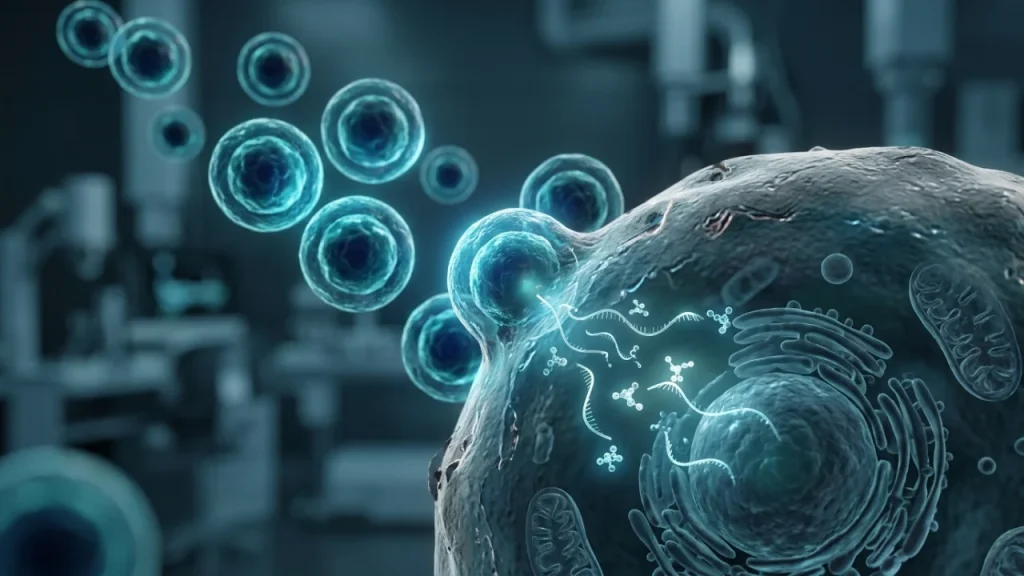
Think of your skin as a vast, busy city. The cells are the citizens. They need to talk to each other constantly. They send messages to coordinate repairs, sound alarms, and share resources. Exosomes are their main communication system.
These are not man-made chemicals. Your body makes them naturally. Almost every cell in your body can release these tiny particles. They are incredibly small. You could line up thousands of them across the width of a single human hair.
Exosomes are like microscopic mail carriers. They carry a precious cargo of signals from one cell to another. This cargo includes proteins, lipids, and genetic instructions. It is packaged inside a protective lipid bubble. This bubble acts like an envelope. It keeps the messages safe during their journey through the body’s fluids.
The process is precise and intentional. A cell creates an exosome inside itself. It carefully loads the vesicle with specific molecules. Then, it releases the exosome into the space between cells. The exosome travels until it finds a target cell. It delivers its instructions directly to that cell.
This changes how the target cell behaves. The message might tell it to calm inflammation. It could order it to make more collagen. It might instruct it to repair damaged DNA. This is natural cellular signaling at work. It is how your body maintains healthy skin from within.
Why does this matter for skin care? Most traditional products work from the outside in. They coat the surface with ingredients. They hope some will penetrate deep enough to help. Exosomes work from the inside out. They use the skin’s own language.
They deliver a direct, biological command. This is a fundamental shift. It is not about adding a foreign substance. It is about enhancing the skin’s native communication network. This approach can be more precise and powerful.
Consider these key points about these cellular messengers: – They are natural extracellular vesicles, not synthetic. – Their cargo is complex and information-rich. – They target specific cells with high accuracy. – Their effects are based on changing cell behavior. – They represent a form of biological signaling therapy.
For example, a fibroblast cell in your dermis can send exosomes. These vesicles might travel to a nearby keratinocyte in the epidermis. The message could tell the keratinocyte to strengthen the skin barrier. This happens every day in healthy, young skin.
As we age, this communication breaks down. Cells send fewer exosomes. The messages become less clear. The delivery system gets sluggish. The result is visible on your skin. You see wrinkles, dullness, and slower healing.
The science of exosomes for skin aims to restore this dialogue. By introducing supportive exosome signals, we can help cells remember their healthy functions. This is not just feeding the skin nutrients. It is giving cells the correct instructions to help themselves.
Research shows these signals can influence many processes. They can turn down chronic inflammation, a key driver of aging. They can boost the production of structural proteins like collagen and elastin. They can enhance the skin’s ability to protect itself from environmental stress.
Understanding this messenger role is crucial. It moves us beyond seeing skincare as a simple topical application. It frames skin health as a dynamic conversation between cells. To improve the conversation, we need to support the messengers.
This foundational knowledge sets the stage for exploring how this science is applied. Next, we will look at the specific benefits this innovative approach can offer for rejuvenation and repair.
How Exosomes Differ from Traditional Skincare Ingredients
Traditional skincare ingredients work from the outside in. They are substances applied to the skin’s surface. Their goal is to be absorbed and then perform a specific job. For instance, a vitamin C serum provides antioxidant molecules. These molecules directly neutralize free radicals they encounter. A hyaluronic acid cream adds hydration by drawing water into the skin. These ingredients are like supplying building materials to a construction site. They are useful, but their action is often direct and temporary.
Exosomes for skin represent a different strategy entirely. They work from the inside out. Exosomes are not simple molecules for cells to use up. They are complex biological signals. Their primary function is communication, not direct action. Think of them as delivering a set of blueprints or a training manual to your skin cells. The exosome does not become collagen itself. Instead, it instructs your fibroblast cells to produce more of their own collagen. This is a critical distinction.
This difference leads to several key contrasts in how they function. Traditional ingredients often have a single, defined mechanism. Retinol tells cells to turn over faster. Peptides might signal for collagen production. Their effect is usually limited to that one pathway they are designed to target. Exosomes carry a diverse cargo of signaling molecules. A single vesicle can contain hundreds of proteins, lipids, and RNA fragments. This allows it to initiate multiple coordinated responses at once.
The longevity of the effect also differs. Many topical ingredients are used up or broken down quickly. Their benefits diminish soon after you stop applying them. The signaling triggered by exosomes can lead to longer-lasting changes. By reprogramming cellular activity, they can help restore a more youthful pattern of behavior. This effect can persist for weeks or months after the initial signal is delivered.
Another major point is how the body receives these inputs. Skin can become resistant or irritated by constant direct stimulation from potent actives. This is why some people experience retinoid irritation. Exosomes, as natural biological messengers, are typically recognized as friendly signals. They work within the existing language of your cells. They aim to restore balance, not force a reaction.
Consider the problem of inflammation. A traditional anti-aging cream might add an anti-inflammatory ingredient like niacinamide. This soothes the skin directly. Exosomes approach this differently. They can deliver instructions that help calm overactive immune signals within the cells themselves. This addresses the root cause of chronic, low-level inflammation.
Here is a simple comparison of the two models:
- Traditional Ingredients: Add external material. Direct action. Often single-target. Effects are usually temporary and dependent on continued use.
- Exosome Signaling: Deliver internal instructions. Indirect, cell-directed action. Multi-target and coordinated. Effects aim to be sustained and self-renewing.
This does not mean traditional skincare is obsolete. Both approaches have value. Think of them as different tools. Traditional ingredients provide excellent support and immediate benefits. Exosome science aims for foundational change by improving cellular communication itself.
Understanding this core difference is vital. It explains why the science of exosomes for skin is considered a paradigm shift. It moves beyond merely treating symptoms on the surface. The goal becomes retraining the skin’s own biology for lasting health and resilience. This sets the stage for looking at what specific improvements this retraining can achieve for aging or damaged skin.
The Basic Science Behind Exosome Communication
Exosomes carry molecular messages from one cell to another. Think of them as tiny biological mail trucks. Their cargo is the package inside. This cargo is not random. It is carefully selected by the parent cell. The contents tell the receiving cell what to do.
The main types of cargo are proteins and RNA. These are fundamental biological molecules. Proteins are the workhorses of the cell. They build structures and speed up reactions. RNA is a set of instructions. It tells the cell how to make specific proteins.
This delivery system is precise. A skin cell under stress might release exosomes with specific signals. These signals travel to a neighboring fibroblast, the cell that makes collagen. The exosome cargo enters the fibroblast. It then triggers a response. The fibroblast might start producing more collagen or slow its breakdown.
Let’s break down the two key cargo types.
Proteins in exosomes can act as direct signals or tools. – Some are enzymes that start a chemical process immediately. – Others are growth factors that bind to the cell’s surface. This binding tells the cell to grow, heal, or repair itself. – They can also be receptors, allowing the receiving cell to sense new signals.
RNA cargo is more like a blueprint or recipe change. – A common type is microRNA. These are small pieces of genetic material. – MicroRNA does not create new proteins itself. Instead, it can silence or regulate existing genes in the target cell. – It can effectively “turn down” a harmful process, like inflammation, or “turn up” a helpful one, like antioxidant defense.
The process has three clear steps. First, the parent cell loads the exosome. It packs specific proteins and RNA based on its current state and needs. Second, the exosome travels through the fluid between cells. It finds its target cell. This targeting is not accidental. Signals on the exosome’s surface act like a mailing address. Third, the exosome delivers its cargo. It can fuse with the target cell’s membrane or be swallowed whole. The proteins and RNA are released inside the receiving cell.
This communication is a natural part of skin biology. Young, healthy skin cells use it to maintain harmony. They send messages for consistent collagen production and rapid repair. As we age or face sun damage, this communication breaks down. Messages get lost or become harmful. The goal of using exosomes for skin health is to reintroduce clear, corrective instructions.
The power lies in coordination. A single exosome can deliver dozens of different signaling molecules at once. This creates a coordinated response in the target cell. It is not a single command but a full program. This explains the potential for multi-faceted improvements in skin quality, from texture to tone to resilience.
Understanding this basic science shows why the approach is different. You are not just adding a collagen molecule to the surface. You are delivering the precise instructions that tell your own cells how to improve their collagen output sustainably. This cellular dialogue is the next frontier in targeted skin rejuvenation.
Why Exosomes Are Gaining Attention in Dermatology
Dermatology is shifting toward treatments that work with your skin’s biology. Exosomes represent this shift perfectly. They are gaining major attention for a clear reason. They offer a targeted, cellular solution to common skin concerns. This is different from simply applying a topical cream or undergoing a harsh procedure.
Traditional approaches often address just one part of a problem. A retinoid cream tells skin cells to renew faster. A hyaluronic acid serum adds temporary hydration. These are single actions. The skin is a complex system. It requires coordinated signals to repair itself properly. This is where exosomes for skin care show their unique strength.
Exosomes deliver a full set of instructions. Think of them as a software update for your cells. They don’t just add one new file. They install an entire program for better function. This multi-signal approach can lead to improvements in several areas at once. Research points to several key actions.
- They can calm inflammation. Certain exosome signals tell immune cells to reduce their reactive state.
- They promote collagen and elastin production. They carry the blueprints that tell fibroblast cells to build these support structures.
- They enhance wound healing. They coordinate the steps needed for faster, cleaner repair.
- They may protect cells from stress. Some cargo helps cells defend against oxidative damage.
This multifaceted effect is a primary reason for the excitement. A single treatment has the potential to improve texture, firmness, and tone simultaneously. It works by fixing the communication errors that happen with age.
Another reason for the attention is precision. Exosomes are natural targeting systems. As explained earlier, they find specific cells. This means the therapeutic instructions go directly to the cells that need them most. The effect is focused where it is needed. This can mean fewer side effects compared to broader treatments.
The source of exosomes also matters for their potential. They are typically collected from stem cells grown in laboratories. Stem cells are master communicators. They naturally release exosomes packed with regenerative signals. Scientists can collect and purify these vesicles. The result is a concentrated biological tool.
It is important to understand what this tool is not. It is not a stem cell transplant. The exosome product does not contain living cells. It contains only the messages those cells made. This addresses many safety and regulatory concerns. The focus is on the signal, not the cell itself.
The appeal for dermatology is clear. Practitioners seek effective, lasting results with minimal downtime. The biological logic of exosomes aligns with this goal. They aim to correct the root cause of aging skin—faulty cellular communication—rather than just masking its symptoms.
Clinical studies are ongoing to confirm these effects in people. Early research is promising. It shows improvements in skin hydration, elasticity, and wrinkle depth after treatment protocols. The science suggests these changes happen because resident skin cells become more active and efficient.
This growing attention marks a new phase in skincare. It moves beyond simply nourishing or exfoliating the surface. The strategy now involves sending intelligent instructions to the skin’s living layers. This promises a more fundamental and sustained rejuvenation. The next logical question is how these theoretical benefits translate into practical use for specific concerns.
How Exosomes Work to Improve Skin Health and Appearance
The Journey of Exosomes from Source to Skin Cells
Exosomes begin their journey inside specialized cells. These cells carefully package molecular instructions into tiny vesicles. Think of a cell as a factory. The exosome is a sealed delivery truck leaving that factory. Its cargo is precious and protected.
The cargo inside each vesicle is diverse and potent. It includes growth factors, signaling proteins, and genetic material like RNA. These are not random molecules. They are a curated set of commands. The commands tell other cells how to behave.
After release, exosomes travel through the extracellular space. They navigate a complex environment. Their destination is specific skin cells like fibroblasts or keratinocytes. Fibroblasts make collagen and elastin. Keratinocytes form the skin’s protective barrier.
How do they find the right address? Exosomes have targeting signals on their surface. These signals act like GPS coordinates. They bind to matching receptors on the target cell’s membrane. This ensures precise delivery.
The delivery method is elegant and efficient. There are two main ways exosomes transfer their cargo to a skin cell. The first is direct fusion. The exosome merges with the target cell’s membrane. It empties its contents directly into the cell’s interior.
The second method is endocytosis. The cell membrane folds inward. It wraps around the exosome and brings it inside whole. It is like the cell swallowing the delivery package. Once inside, the vesicle opens and releases its instructions.
This targeted delivery system is key for skin health. It solves a major problem in topical skincare. Most cosmetic molecules are too large to penetrate deeply. They sit on the surface. Exosomes, however, are designed by nature for this exact job.
Their natural origin gives them a unique advantage. Skin cells recognize them as biological messengers, not foreign chemicals. This recognition fosters acceptance. It minimizes inflammatory reactions that can sometimes hinder repair.
Once the cargo is delivered, it gets to work immediately. The RNA molecules can reprogram the cell’s activity. They can turn on genes that were dormant. They can boost the production of vital structural proteins.
For example, a fibroblast receiving exosome signals becomes more active. It starts producing more collagen and elastin fibers. These proteins are the scaffolding of young skin. More scaffolding means firmer, tighter skin with fewer wrinkles.
Simultaneously, signals can enhance hyaluronic acid synthesis. This molecule acts like a sponge for moisture. Improved hydration plumps the skin from within. It reduces the appearance of fine lines and creates a dewy glow.
The process also supports the skin’s natural renewal cycles. Exosome messages can encourage faster turnover of keratinocytes. This leads to a fresher, more radiant complexion. Dull, tired-looking skin is gradually shed away.
Crucially, this activity targets multiple layers of the skin. The effects are not superficial. They occur in the living dermis where true aging happens. This layered approach supports comprehensive rejuvenation.
The entire journey from source to effect is a cascade of biological communication. – Release from source cells. – Navigation through tissue. – Precise targeting and binding. – Cargo transfer via fusion or uptake. – Intracellular instruction and reprogramming. – Activation of skin cell functions.
This cascade explains why treatments using exosomes for skin aim for lasting change. They are not adding a temporary filler or paralyzing muscles. They are retraining the skin’s own workforce to perform better.
The timeline for visible results aligns with the skin’s natural regeneration cycle. Initial changes in cellular activity happen quickly, within days or weeks. However, building new collagen takes time—often several weeks to months.
This process mirrors how skin naturally heals after a wound, but without the injury. It is a guided boost to the skin’s innate repair mechanisms. The goal is to shift skin into a sustained state of healthier function.
Therefore, the journey concludes not with a one-time fix, but with a reset. The delivered instructions can have prolonged effects on cellular behavior. This provides a scientific basis for the potential of exosomes for skin rejuvenation that endures well beyond the initial treatment period. Understanding this precise journey shows why their mechanism is fundamentally different from conventional approaches, setting the stage for exploring their specific applications against common skin concerns
Key Mechanisms: How Exosomes Signal Skin Repair
Exosomes carry a precise toolkit of molecules. These molecules are instructions for skin cells. They tell cells to start repair and renewal processes.
Think of a skin cell as a factory. It can produce collagen and elastin. These proteins keep skin firm and elastic. But as we age, these factories slow down. They receive fewer signals to work. Exosomes deliver new instructions directly to the factory manager.
The key messengers inside exosomes are growth factors, proteins, and RNA. They do not work alone. They work together to change cell behavior.
One major mechanism is collagen stimulation. Exosomes can turn on the genes in skin cells that make collagen. They do this by delivering specific microRNAs. These are small pieces of genetic code. They signal the cell’s machinery to ramp up production. More collagen means fewer wrinkles and stronger skin.
Another mechanism is reducing inflammation. Damaged or aging skin often has chronic, low-level inflammation. This inflammation breaks down collagen and harms healthy cells. Exosomes carry anti-inflammatory signals. They can calm overactive immune cells in the skin. This creates a better environment for healing.
Exosomes also promote new blood vessel formation. This process is called angiogenesis. Tiny new blood vessels bring more oxygen and nutrients to skin cells. This improves overall skin health and radiance. It aids in repair.
Here are the core pathways activated by exosomes for skin repair: – Fibroblast activation: Fibroblasts are the main collagen-producing cells. Exosomes wake them up and boost their output. – Cellular communication: They improve how skin cells talk to each other. This leads to more coordinated repair. – Protection from stress: They can increase the skin’s own antioxidant defenses. This helps shield cells from UV damage and pollution. – Support for stem cells: They can help regulate local stem cell activity. This aids in regenerating fresh, healthy tissue.
The process is natural because these signals already exist in your body. Young, healthy cells use exosomes to communicate like this all the time. The goal of using exosomes for skin rejuvenation is to restore this youthful level of communication.
It is like updating the software of your skin cells. The hardware—your cells—is still there. But with old software, they run slowly and make errors. Exosomes deliver a software update. This update tells cells to run their best programs again.
These mechanisms explain why effects can be broad. Improving collagen helps with wrinkles and sagging. Reducing inflammation helps with redness and sensitivity. Enhancing overall cell function improves tone and texture.
The beauty of this system is its precision. Exosomes do not force cells to do unnatural things. They remind cells of their optimal, healthy functions. They trigger the skin’s own built-in repair manuals.
This targeted signaling is why results appear natural. The skin does not look overly filled or stretched. Instead, it looks healthier and more vibrant from within. The foundation of the skin is improved.
Understanding these key mechanisms shows the intelligence of the approach. It is not about masking problems. It is about solving them at their source by restarting essential biological conversations. This sets the stage for seeing how these actions translate into fighting specific skin concerns people face every day.
Exosomes and Collagen Production: Building Better Skin Structure
Collagen is the main support protein in your skin. Think of it as the scaffolding underneath the surface. This scaffold gives skin its firmness and smoothness. As we age, our cells produce less collagen. The existing collagen also breaks down. This leads to wrinkles, sagging, and a loss of structure.
Exosomes for skin health directly address this problem. They carry specific instructions to the cells that make collagen. These cells are called fibroblasts. Fibroblasts live in the deeper layer of your skin, known as the dermis. Their main job is to build and maintain the structural network of the skin.
The signals inside exosomes tell fibroblasts to become more active. They switch on the cellular machinery for collagen production. This is not a random boost. It is a precise command to resume a youthful function. The exosomes deliver growth factors and genetic messages.
One key message is for the fibroblast to produce more collagen proteins. The cell reads these instructions and gets to work. It starts assembling the long chains of amino acids that form collagen fibers. This process happens inside the fibroblast.
The cell then releases these new collagen fibers into the surrounding space. The fibers organize into a strong, supportive mesh. This mesh acts like a rejuvenated internal framework. It provides better support for the upper layers of skin.
Exosomes also send a second important command. They tell fibroblasts to slow down the breakdown of existing collagen. Your skin has enzymes that naturally cut up old collagen. This is normal, but the balance can tip toward too much breakdown. Exosomes help restore a healthy balance between building and breaking down.
The result is a net increase in strong, healthy collagen. More collagen means the skin’s foundation becomes denser and more resilient. Imagine a mattress getting new, firm springs inside it. The outer fabric smooths out and regains its shape.
This process explains several visible improvements: – Fine lines and wrinkles become less noticeable because the skin is better supported from below. – Skin gains firmness and elasticity, reducing sagging. – The overall texture appears smoother and more even. – It can improve the appearance of scars, where collagen structure is damaged.
The effect is structural and long-lasting. New collagen integrates into your skin’s natural architecture. It is not a temporary filler. It is your body building its own improved support system. This takes time, as biological processes do.
Studies show this stimulated collagen can last for many months. The duration depends on individual factors like age and lifestyle. The goal is to shift the skin into a sustained state of better self-maintenance.
Using exosomes for skin rejuvenation taps into this fundamental mechanism. It goes beyond surface-level hydration. It actively rebuilds the critical layer that defines youthful skin. The approach is holistic because better structure improves multiple signs of aging at once.
Healthy collagen production also improves skin strength. It can enhance barrier function and healing. This creates a positive cycle. A stronger skin barrier protects against environmental damage that harms collagen.
Ultimately, targeting collagen shows how exosomes work at a foundational level. They provide the missing instructions for cells to rebuild what time has weakened. The next logical step is to see how this repair extends to other vital cells and processes in the skin’s ecosystem.
Reducing Inflammation with Exosomal Messages
Inflammation is your skin’s alarm system. It turns on to fight threats like germs or heal a wound. Sometimes this alarm gets stuck in the “on” position. Chronic, low-level inflammation silently damages skin. It can lead to redness, sensitivity, and accelerated aging.
Exosomes carry precise messages that can calm this overactive response. They do not simply suppress the immune system. Instead, they deliver instructions that help restore balance. Think of them as a reset signal for confused cells.
The process starts with the exosome’s cargo. Key molecules inside these vesicles do the work. They include proteins and tiny RNA strands. These RNAs can turn specific genes on or off in target cells.
Immune cells in the skin receive these exosomal instructions. A common target is the macrophage. Macrophages are major players in inflammation. They can exist in a pro-inflammatory state or an anti-inflammatory, healing state.
Exosomes can shift macrophages toward the healing state. They tell the cell to reduce its production of inflammatory signals. The cell starts making more calming molecules instead. This change cools the local environment.
The results are visible and measurable. Skin redness and swelling decrease. Irritation from conditions like rosacea may lessen. The uncomfortable feeling of sensitive skin can fade.
This anti-inflammatory effect is crucial for repair. Chronic inflammation breaks down collagen and elastin. By calming it, exosomes protect the skin’s supportive structure. This links directly to the collagen-building process described earlier.
A calm environment is better for regeneration. Healing processes work more efficiently. New cells face less oxidative stress from inflammatory byproducts. The skin’s overall resilience improves.
The applications for this are broad. Consider sunburn. It is a clear example of inflammatory damage. Exosomal signals could help modulate the severe immune response. This may speed up recovery and reduce peeling.
Post-procedure care is another key area. Treatments like lasers create controlled injury. They often trigger significant swelling and redness. Using exosomes for skin recovery after such procedures makes scientific sense. They could provide targeted instructions to shorten the downtime.
The mechanism is naturally precise. Different exosomes carry different cargo. Some may be better suited for certain types of inflammation. The source of the exosomes matters greatly. Vesicles from certain stem cells are packed with potent anti-inflammatory signals.
This is not a drug that blocks a single pathway. It is a biological conversation. Exosomes deliver a coordinated set of instructions. They address multiple points in the inflammatory cascade at once.
The benefits extend beyond calming visible redness. Inflammation is a key driver of cellular aging, known as inflammaging. By reducing this background noise, exosomes support long-term skin health. They help create a cellular environment that is better for maintenance and repair.
In summary, exosomes act as sophisticated mediators. They turn down the volume on unnecessary immune alerts. This protects skin structure, soothes sensitivity, and supports healing. The next step is to explore how these same vesicles directly influence the skin’s most abundant cells for renewal and vitality.
Practical Applications of Exosomes in Skin Treatments
Using Exosomes for Anti-Aging and Wrinkle Reduction
Aging skin loses its ability to repair and rebuild itself efficiently. Exosomes for skin rejuvenation aim to restore that fundamental capacity. They do not just fill wrinkles temporarily. They instruct your skin’s own cells to behave more youthfully.
The process starts deep within the dermis. This is the skin’s structural layer. It contains fibroblasts. These cells are crucial. They produce collagen, elastin, and hyaluronic acid. These substances form your skin’s support framework. They give it firmness, bounce, and hydration.
As we age, fibroblasts slow down. They produce less quality collagen. The existing matrix also breaks down. This leads to thin skin, fine lines, and sagging. External factors like sun exposure speed this decline. They create damage that overwhelmed cells cannot fix.
Exosomes intervene at this cellular level. They deliver specific instructions to these tired fibroblasts. Think of them as a detailed blueprint or a software update. The cargo inside exosomes tells the fibroblast to wake up and get back to work.
The signals promote several key activities: – Boost collagen and elastin production. – Improve the organization of these new fibers. – Increase synthesis of hyaluronic acid for moisture. – Enhance the cell’s own energy and repair systems.
This approach is fundamentally different from many traditional treatments. Those often work by causing controlled damage. The body then heals it, making some new collagen. Exosomes skip the damage step. They use natural communication to directly stimulate renewal.
The results are more than surface-level plumping. True anti-aging requires rebuilding the skin’s architecture. Exosomes support this from within. Improved collagen density makes skin thicker and more resilient. Better elastin organization helps skin snap back into place.
Hydration is also a key factor in a youthful look. Hyaluronic acid acts like a sponge, holding water in the skin. By encouraging its production, exosomes help maintain intrinsic moisture. This can reduce the appearance of fine lines caused by dryness.
The timing of these cellular conversations matters. Research suggests exosomes may be most effective when the skin is primed for change. This can be after certain professional treatments. These treatments create a microenvironment that is ready for new instructions.
Consistency is another advantage. Because they work by changing cell behavior, the effects may build over time. A series of treatments could lead to cumulative improvements. The goal is sustained turnover and matrix production.
Safety is inherent in the mechanism. Exosomes themselves do not replicate or stay forever. They deliver their message and are naturally cleared. The changes come from your own cells’ renewed activity.
Combining this with their anti-inflammatory role creates a powerful duo. Reducing inflammation removes a barrier to repair. Stimulating fibroblasts actively builds new structure. This two-part action addresses aging from multiple angles.
Potential applications focus on common signs of aging: – Fine lines around the eyes and mouth. – Loss of firmness along the jawline. – General skin thinning and fragility. – Dullness from slowed cell turnover.
It is important to have realistic expectations. This is a regenerative strategy, not an instant filler. Changes happen at a cellular pace over weeks and months. The outcome is more natural-looking revitalization.
Future directions may involve tailoring exosome cargo. Different vesicle types could be optimized for specific goals. One might be superb for collagen, another for antioxidant protection. This personalized approach could refine results further.
In essence, using exosomes for anti-aging is about reprogramming the skin’s internal dialogue. It shifts the balance from breakdown back to building. The next logical question is how this technology integrates with existing clinical procedures for maximum effect.
Exosomes in Wound Healing: Speeding Up Recovery
A fresh cut or scrape triggers a complex healing sequence. Exosomes can optimize every stage of this process. They act as biological messengers that speed up natural recovery. This is crucial for both surgical wounds and chronic, non-healing ulcers.
The first major hurdle in healing is cell migration. Skin cells must move into the wounded area to cover it. Inflammation and damage often slow this movement. Exosomes for skin repair carry specific instructions. They tell skin cells to move faster and more purposefully.
These vesicles deliver direct orders. They contain proteins and RNA that activate cellular pathways for movement. Think of them as a coach shouting clear directions to runners. Cells respond by reorganizing their internal structure. They extend forward and pull themselves into the gap.
This accelerated migration leads to faster wound closure. A closed wound is protected from infection. It also enters the next repair phase sooner. The result is a significantly reduced recovery timeline. This is vital for preventing complications.
Exosomes also coordinate the different cell types involved. Healing is a team effort involving skin cells, immune cells, and fibroblasts. Exosomes ensure clear communication between all players. They reduce chaotic inflammation that can delay progress. They simultaneously signal for new collagen production.
The benefits are clear in several practical scenarios: – Post-surgical recovery: Faster closure of incision sites. – Diabetic ulcers: Restarting stalled healing in chronic wounds. – Burn care: Promoting re-epithelialization of damaged areas. – Aesthetic procedures: Minimizing downtime after laser treatments or peels.
The mechanism is elegantly targeted. Exosomes do not force cells to act unnaturally. They enhance the body’s own innate repair programs. They remove blockages in cellular communication. They provide depleted signaling molecules to an injured site.
This makes them a powerful tool for compromised healing. Aging, diabetes, and poor circulation can impair the body’s signals. Applying exosomes adds back a concentrated dose of precise instructions. It jump-starts a stalled process using the skin’s own language.
Research shows exosomes can modulate scar formation too. By promoting orderly collagen deposition, they may lead to less noticeable scarring. This combines functional repair with aesthetic improvement. The goal is strong, healthy, and cosmetically acceptable skin.
Safety in this application is paramount. Using exosomes for wound healing leverages a natural process. The vesicles are not foreign substances. They work temporarily and are then cleared by the body. Their instructions simply help the local cells perform better.
The future of this application is promising. Scientists are exploring exosomes from different cell sources. Some may be exceptionally good at triggering blood vessel growth. Others might excel at calming aggressive inflammation. This allows for potential customization of treatment based on wound type.
In summary, exosomes transform wound healing from a passive wait into an active, guided process. They turn down noise and turn up the essential signals for repair. This ensures the skin rebuilds itself efficiently and robustly. The next consideration is how these potent vesicles interact with the skin’s surface barrier in daily care.
Restoring Skin Barrier Function with Exosome Therapy
The skin’s outermost layer is your body’s shield. This shield is called the skin barrier. Think of it like a brick wall. Skin cells are the bricks. Lipids are the mortar holding them together. A strong barrier keeps moisture in and irritants out. A weak one leads to dryness, sensitivity, and inflammation.
Exosomes for skin barrier repair work by teaching old cells new tricks. Aged or damaged skin cells produce poor-quality “mortar.” This weakens the entire wall’s structure. Applied exosomes carry direct messages into these cells. The messages tell cells to make better lipids. They also instruct cells to produce more of the proteins that form a tight scaffold.
The process targets three key areas for restoration. First, it boosts lipid synthesis. Ceramides, cholesterol, and fatty acids are essential lipids. Exosomes signal for increased production of these components. Second, it strengthens cell-to-cell connections. Proteins called claudins and occludins act like zippers between cells. Exosome messages can upregulate their creation. Third, it calms underlying irritation. Barrier damage often involves inflammation. Exosomes can modulate this response, creating a calmer environment for repair.
This is not a superficial coating. It is a fundamental retraining of your skin’s own biology. Lotions and creams can add lipids temporarily. Exosome therapy encourages your skin to manufacture its own supply again. This leads to more durable and self-sustaining improvement. The effect is a resilient barrier that functions properly on its own.
Consider how this helps with common conditions. Conditions like eczema or extreme dryness involve barrier failure. The brick wall is cracked and crumbling. Traditional care focuses on heavy moisturizers to seal cracks. Exosome therapy aims to fix the wall’s structure itself. It helps the skin become less reactive and better hydrated from within.
The approach is precise and temporary. The exosomes do not stay in the skin forever. They deliver their instructional payload and are cleared. The changed behavior of the skin cells continues afterward. This makes the treatment a catalytic event, not a permanent alteration.
Clinical observations support this mechanism. Studies note improved hydration measurements after treatment. They also show reduced trans-epidermal water loss. This is a key metric for barrier strength. Furthermore, skin sensitivity scores often decrease. Patients report their skin feels more robust and less reactive to common triggers.
Potential applications extend beyond treating disease. Preventative care is a logical use. Environmental stress from sun and pollution slowly degrades barrier function over time. Periodic exosome therapy could help reinforce this defense system proactively. It acts as a tune-up for your skin’s most important protective layer.
The integration with daily skincare is crucial. A repaired barrier allows other products to work better. Serums and moisturizers face less resistance when the shield is intact but not hyper-thickened. This creates a synergistic effect where routine care becomes more effective.
In essence, restoring the barrier with exosomes is about restoring competence. It empowers skin cells to perform their primary duty of protection efficiently. This moves skincare from passive management to active cellular communication. The next logical step is examining how this communication influences the most visible signs of aging in the skin’s appearance.
Topical Formulations: How Exosomes Are Applied to Skin
Topical application is the most common method for using exosomes for skin. This approach aims to deliver these vesicles directly where they are needed. The core challenge is keeping them intact and active. Exosomes are delicate biological structures. They are not simple chemical ingredients.
Formulators embed exosomes into carrier bases like serums, creams, and gels. These bases do more than just hold the exosomes. They create a protective environment. This environment shields exosomes from breaking down before skin contact. The goal is to get them through the upper skin layers. They need to reach living cells in the epidermis.
The vehicle itself is carefully designed. It often includes humectants like glycerin. These ingredients maintain a hydrated film on the skin. This film is crucial. It prevents the delicate vesicles from drying out. Some formulations use lipid-based systems. These systems can mimic natural cell membranes. This compatibility may aid in stability and delivery.
Penetration is a key focus. The skin’s outer barrier is designed to keep things out. Intact exosomes are relatively large nanoparticles. Special ingredients called penetration enhancers are sometimes used. These enhancers work temporarily. They gently loosen the compact outer skin cells just enough. This process allows for better vesicle passage without causing damage.
Once applied, the exosomes interact with the skin’s surface. They do not simply soak in like water. Their journey involves adhesion to cells and controlled release. Think of it as a targeted delivery system. The vesicles carry their instructions to specific cellular addresses.
Several factors influence a formulation’s success. The concentration of exosomes per dose is one factor. The purity of the vesicle preparation is another. The presence of supportive actives is also important. These actives can prepare the skin to receive the signal. For example, gentle exfoliation might remove excess dead cells. This removal can clear a path for better contact.
Storage and handling are critical practical details. These products often require refrigeration. They have a limited shelf life once mixed or opened. This is because biological activity diminishes over time at room temperature. Users must follow storage guidelines closely. This ensures they get the full intended benefit.
Application technique also matters. Gentle patting is often recommended over vigorous rubbing. This technique helps press the formulation into the skin. It may improve contact without physically damaging the vesicles. Allowing the product to absorb fully before applying another layer is also advised.
The future of these formulations looks toward smarter systems. Research explores encapsulation within larger, protective spheres. Other work looks at combining them with microneedling patches. These patches create microscopic channels. The channels offer a more direct route for the vesicles to bypass the toughest barrier layers.
In summary, topical delivery turns a biological discovery into a usable product. It combines bioengineering with skincare science. The method focuses on protection, penetration, and precise application. This careful approach allows cellular messages to be sent directly to living skin tissue, setting the stage for their specific actions on aging and structural concerns.
Safety, Efficacy, and Future Directions for Exosome Use
Evaluating the Safety Profile of Exosome Treatments
Exosomes are natural parts of your body’s communication system. Your own cells make and use them every day. This native origin is a key reason for their strong safety profile. They are not foreign chemicals. They are biological packages your body already understands.
Biocompatibility means a substance works in harmony with living tissue. Exosomes score highly here. Their membrane is made from a lipid bilayer. This is the same material that makes up your own cell walls. Your skin recognizes this structure. It does not see exosomes as a threat to attack.
This reduces risks common with synthetic compounds. There is typically no harsh chemical reaction. The risk of allergic response is also very low. The cargo inside is also familiar. It includes proteins and genetic signals found naturally in your body.
Safety also comes from how exosomes are purified. Production involves careful filtration steps. Scientists remove larger cell debris and other particles. The goal is to get a clean preparation of vesicles. This process helps eliminate potential contaminants.
Research into exosomes for skin supports this safety view. Clinical studies monitor for adverse events. These include redness, swelling, or irritation. Most reports show these effects are minimal when present. They are often comparable to using a basic moisturizer.
Long-term safety data is still being collected. The science is relatively new in cosmetics. However, the fundamental biology provides confidence. Your body has mechanisms to process used exosomes. Cells can absorb them, break them down, and recycle their parts.
Compare this to some potent synthetic actives. These can sometimes cause inflammation or barrier damage. Exosomes work differently. They aim to instruct and support rather than forcibly disrupt.
Consider these key safety advantages: – Natural origin from human or plant cells. – No replication risk, as they are not live viruses. – Low immunogenicity, meaning they rarely trigger an immune alarm. – Biodegradable structure that the body can clear.
It is crucial to distinguish source quality. Not all exosome preparations are equal. Safety depends on rigorous manufacturing. This includes sterile conditions and verified sourcing. Reputable science uses cells from safe, ethical origins.
The dose applied topically is another safety factor. Formulations use a defined number of vesicles per application. This amount is designed to be effective yet gentle. It delivers a signal, not an overload.
Think of it like receiving a letter versus a shouting crowd. A letter brings a clear message without chaos. Exosomes function as precise cellular letters. Their natural design limits collateral damage to skin.
Future safety work will focus on standardization. The industry needs clear purity benchmarks. This will ensure every product meets high safety standards. Ongoing studies continue to track long-term user experiences.
In essence, the safety of exosome treatments rests on a simple principle. They leverage the body’s own language of repair and renewal. This foundational compatibility makes them a promising and gentle tool for modern skincare. Their profile supports continued exploration into their efficacy for lasting skin health.
What Research Says About Exosome Efficacy in Skin Care
Research shows exosomes can change skin at a cellular level. They carry specific instructions to target cells. These instructions tell skin cells how to behave. This leads to visible improvements.
One key area is collagen production. Collagen gives skin its firmness and bounce. As we age, collagen breaks down. Studies show exosomes from certain cells can boost collagen creation. They signal fibroblasts, which are the skin’s collagen factories. This signaling turns on collagen-making genes. The result is a stronger support structure under the skin.
Skin texture and tone also improve. Exosomes help regulate melanin. Melanin is the pigment that causes dark spots. Research indicates exosomes can reduce uneven pigment production. They promote a more even skin tone. Exosomes also speed up cell renewal. Old, dull skin cells shed faster. Fresher, brighter cells come to the surface.
Healing and repair is another major benefit. Exosomes are packed with growth factors. These factors help wounds close faster. They reduce inflammation in the area. This is crucial after procedures like microneedling or laser treatments. Clinical observations note calmer redness and quicker recovery times when using exosomes for skin support.
Hydration comes from within the skin. Exosomes can improve the skin’s moisture barrier. They carry lipids and proteins that help skin cells hold water. This leads to better hydration levels. Plump, hydrated skin looks smoother and has fewer fine lines.
Let’s look at some specific study results. A 2021 review analyzed multiple lab and clinical reports. It found consistent evidence for several benefits. These included increased collagen and elastin. Faster wound healing was also documented. Reduced appearance of wrinkles was noted too.
Another study focused on photoaging. This is aging caused by sun exposure. Researchers used exosomes derived from stem cells. They applied them to skin models damaged by UV light. The exosomes helped repair DNA damage in skin cells. They also lowered levels of enzymes that break down collagen.
Human trials are ongoing but promising. Early pilot studies show measurable changes. Participants often report improved skin smoothness. Objective tools measure firmer skin and better hydration. These studies track the efficacy of exosome applications over weeks and months.
The mechanism is like a software update for your skin cells. Exosomes deliver new code. This code tells cells to perform their best functions again. It does not force them. It simply reminds them of their healthy, youthful state.
Different exosome sources may offer different advantages. Some come from mesenchymal stem cells. These are great for repair and anti-inflammation. Others come from skin cells themselves. These might be ideal for direct barrier support. The source dictates the cargo and the message.
It is important to manage expectations. Exosomes are not an instant fix. They work by supporting natural processes over time. Results build gradually as cellular communication improves. Consistency is key for lasting effects.
Future research will refine our understanding of efficacy. Scientists want to know which exosome types work best for each concern. Personalized approaches may become possible. The goal is to match the exact exosome signal to the skin’s specific need.
In summary, science supports the role of exosomes in skin rejuvenation. They act through defined biological pathways to improve structure, tone, and repair. This evidence-based efficacy, combined with their inherent safety profile, positions them as a sophisticated tool in modern dermatology. The next logical step is to examine where this technology is headed and what new horizons it may unlock for long-term skin health.
Regulatory Landscape: How Exosomes Are Monitored
The regulatory path for exosomes is still being mapped. In the United States, the FDA oversees these products. They are not yet approved as standalone drugs. Their current use falls under specific enforcement policies. This creates a complex landscape for manufacturers and clinics.
Exosomes are often regulated as biological products. This means they must meet strict standards. These standards ensure safety, purity, and potency. The source material is critically examined. The manufacturing process is tightly controlled. Every step aims to prevent contamination.
Think of it like a food safety inspection for cells. The “kitchen” where exosomes are made must be spotless. The “ingredients,” the parent cells, must be healthy and documented. The final “dish,” the exosome product, must be tested for consistency. This prevents bad batches from reaching patients.
Key regulatory checkpoints exist from start to finish. – Donor screening ensures starting cells come from healthy sources. – Process validation confirms each production run yields identical vesicles. – Sterility testing guarantees no bacterial or fungal contamination. – Characterization verifies the exosomes carry the intended cargo.
Without these steps, products could vary widely. One vial might work well. Another might do nothing. Strong regulation prevents this inconsistency. It builds trust in the emerging science of exosomes for skin and other applications.
Different countries have different approaches. South Korea has advanced regulations for stem cell derivatives. Europe uses its medical device and drug frameworks. This global patchwork challenges international standards. However, the core goals are universal. Patient safety is always the top priority.
For consumers, regulation means looking for transparency. Reputable providers should be able to explain their sourcing. They should detail their testing protocols. They often use third-party labs for verification. This information is a sign of quality control.
A major focus is on what is inside the exosome vial. Regulators demand proof that it contains exosomes, not just cellular debris. Tests measure specific surface markers. They analyze the size distribution of the particles. They check for unwanted proteins or genetic material.
The future will see clearer guidelines. Regulatory bodies are actively studying exosome therapies. New categories may be created specifically for extracellular vesicles. This will provide a faster pathway for proven products. It will also remove unsafe options from the market.
This oversight is essential for long-term adoption. It turns promising lab science into reliable clinical tools. Patients can feel confident in the products they choose. Doctors have clearer standards to follow. The entire field benefits from structured growth.
The regulatory landscape ensures that innovation moves forward responsibly. It connects scientific potential to real-world safety. This foundation supports all future directions for exosome use in dermatology and beyond. Next, we can explore the practical considerations for anyone considering this technology.
Future Trends: Where Exosome Technology Is Heading
The science of exosomes is moving at a rapid pace. Researchers are not just using generic exosomes anymore. They are now engineering them for specific tasks. This is a key future trend. Scientists can load exosomes with precise instructions. These instructions can tell skin cells to produce more collagen. They can also calm inflammation at a deep level.
One major direction is personalization. Think of it like a tailored treatment. A doctor could take a small sample of your cells. They could then culture these cells to harvest your own exosomes. These personalized vesicles would carry your unique biological signals. Your body would be very unlikely to reject them. This approach could maximize results for individual skin concerns.
Delivery methods are also evolving. Current methods often rely on needling or topical serums. Future systems may be more sophisticated. Researchers are testing new tools.
- Smart microneedle patches that release exosomes only when they reach the right skin layer.
- Ultrasound devices that help push exosomes deeper into the tissue.
- Special gels that protect exosomes and release them slowly over time.
These advanced delivery systems aim to improve efficiency. More exosomes would reach their living target cells.
Another exciting area is combination therapy. Exosomes may work best with other technologies. For example, they could be used after a laser treatment. The exosomes would then support the skin’s natural healing process. They could help reduce downtime. They could also improve the final cosmetic result. This synergistic approach is a strong focus for clinical studies.
The source of exosomes is also expanding. Most current exosomes for skin come from stem cells. Future sources might include plant cells or even synthetic materials. Plant-derived vesicles are an early area of study. These options might offer new benefits or improved stability.
Diagnostics will play a bigger role too. Exosomes are not just for treatment. They can also act as messengers from inside your body. A simple skin swab might one day collect exosomes. Lab analysis could reveal your skin’s current stress levels. It could show its hydration status or its collagen production rate. This data would guide very precise treatment plans.
The ultimate goal is proactive skin health, not just repair. Future exosome technology may focus on prevention. Regularly applied formulations could help maintain cellular function. They could strengthen skin’s barrier before damage occurs. This shifts the model from fixing problems to preventing them entirely.
Clinical evidence will grow stronger. Early studies show great promise for exosome use in skin rejuvenation. Larger and longer trials are now underway. These trials will define optimal doses and treatment frequencies. They will confirm which skin conditions respond best.
The road ahead is paved with rigorous science. The solid regulatory base makes these advances possible. It ensures that each new step is safe and verified. This careful progress will likely bring more effective options to patients and doctors soon.
The future of dermatology will likely integrate these tiny vesicles deeply into care protocols, offering a new level of biological precision for skin health and restoration.
Making Informed Decisions About Exosomes for Your Skin Care
Key Factors to Consider Before Trying Exosome Treatments
Choosing an exosome treatment requires careful thought. These are powerful biological tools. You need to understand key details. Your skin’s health depends on informed choices.
First, consider the source of the exosomes. Not all exosomes are the same. They carry different signals based on their origin. Exosomes from human mesenchymal stem cells are common in dermatology. These cells help with repair and regeneration. The exosomes they release encourage your own skin cells to behave in a healthier way. Some research explores plant-derived vesicles. The source directly influences the potential effect.
The intended use is your next critical factor. Different skin concerns may need different approaches. Exosomes for skin rejuvenation aim to boost collagen and elastin. They improve texture and reduce fine lines. For wound healing or scar revision, the formulation might target inflammation and rapid tissue remodeling. Acne-prone skin may benefit from exosomes that calm immune responses. Match the product’s designed purpose to your specific goal.
Concentration and purity are technical but vital points. Concentration refers to the number of exosome particles in a solution. Higher concentration is not always better. An effective dose must be balanced with safety. Purity means the sample contains mostly exosomes, not other cell debris. Reputable suppliers provide analysis certificates. These documents show particle count and purity markers.
Delivery method is another practical piece. How do the exosomes get into your skin? Topical creams alone face a big challenge. The skin’s barrier is designed to keep things out. Special formulations with penetration enhancers can help. Many professionals use delivery devices like microneedling or fractional lasers first. These create micro-channels. The exosome solution is then applied so it can reach deeper layers. The method affects both results and cost.
You should ask about clinical support for the product. Look for evidence from laboratory studies or clinical trials. Early research is promising for many uses of exosomes for skin. Ask if studies used the exact same source and preparation you are considering. Be cautious of claims that seem too broad or guaranteed.
Finally, consult a qualified professional. A licensed dermatologist or trained practitioner should guide you. They can assess your skin’s condition. They can explain realistic outcomes and any risks. They will also ensure proper storage and handling of the product. Exosomes are often fragile and require cold storage.
Making a smart decision involves connecting these factors. – Source: Where do the exosomes come from? – Purpose: Is it designed for your specific concern? – Specifications: What are the concentration and purity? – Application: How will they be delivered to your skin? – Evidence: Is there scientific data for this exact product? – Professional: Who is administering the treatment?
This due diligence helps you navigate a promising field. It separates science from hype. Your choice should be based on transparent information and expert advice. This foundation leads to safer and more effective experiences with advanced skincare.
Understanding these factors prepares you for a detailed discussion with a provider about what to realistically expect from treatment.
Integrating Exosomes into a Holistic Skin Health Routine
Exosomes work best when your skin is ready to receive their signals. Think of your skin cells as students. Exosomes are like expert teachers delivering new lessons. But if the students are tired or malnourished, they cannot learn well. Your daily routine prepares your skin to be an excellent student. This preparation makes treatments with exosomes for skin more effective.
Start with the foundation: consistent sun protection. Ultraviolet rays cause most visible skin aging. They damage cell DNA and create inflammation. This chaotic environment can disrupt the healing messages exosomes carry. Using a broad-spectrum sunscreen daily is non-negotiable. It preserves your skin’s health. It also protects your investment in advanced treatments.
Gentle cleansing and hydration form the next critical layer. Harsh soaps can strip the skin’s barrier. A compromised barrier means inflammation. Your immune system becomes busy with repair, not renewal. A simple, pH-balanced cleanser maintains balance. Follow it with a good moisturizer. Hydrated skin cells have better communication pathways. This may help exosome signals travel more efficiently.
Nutrition supports your skin from the inside. What you eat provides the raw materials for cell repair. – Antioxidants from colorful fruits and vegetables fight daily damage. – Omega-3 fats from fish or seeds help calm inflammation. – Adequate protein supplies amino acids for building new collagen. A healthy diet optimizes your body’s natural repair systems. Exosomes can then enhance an already well-functioning process.
Do not underestimate quality sleep and stress management. Your skin repairs itself most during deep sleep. Chronic stress raises cortisol levels. High cortisol breaks down collagen and slows healing. It can make your skin less responsive to regenerative signals. Practices like mindfulness or regular walks are not just for mental health. They directly improve your skin’s capacity to benefit from advanced care.
Where do exosomes fit into this routine? They are the precision tool, not the entire workshop. Consider them after you have built a solid base of healthy habits. A professional treatment with exosomes can then address specific concerns like fine lines or uneven tone. The goal is synergy. Your daily habits create a stable, healthy environment. The exosomes deliver targeted instructions for repair and rejuvenation. They work together for a better result.
After a treatment, your maintenance routine is vital. Continue with sun protection and gentle care. Avoid aggressive exfoliants or new active ingredients for a period recommended by your provider. This protects the signaling process. It allows the exosomes to complete their work without interference. Think of the weeks after treatment as a consolidation phase for your skin.
Remember, no single product is a magic solution. Lasting skin health comes from a layered approach. Exosomes represent a leap forward in biological signaling. Yet they depend on the ecosystem you create through daily choices. This holistic view ensures you get the full potential from this sophisticated science. It connects cutting-edge technology with timeless principles of wellness for sustainable results.
Common Myths and Misconceptions About Exosomes Debunked
A common myth is that exosomes are stem cells. This is not true. They are completely different. Stem cells are living units. They can divide and become other cell types. Exosomes are tiny messengers. They are released by cells, including stem cells. Think of a stem cell as a factory. The exosomes are the packages it ships out. The factory stays in place. The packages travel to deliver instructions. Using exosomes does not mean putting live stem cells into your skin.
Another misunderstanding involves their power. Exosomes are not magic bullets with unlimited effects. Their action is precise and temporary. They carry specific signals for a defined purpose. For instance, they might tell a skin cell to make more collagen or to calm inflammation. They do this for a certain time. Then the exosomes are cleared by the body. The results depend on your skin’s health and readiness. This is why your daily routine matters so much. Exosomes give a powerful instruction. Your skin must be able to listen and act.
Some people believe all exosome sources are equal. This is a dangerous misconception. Exosomes from different origins carry different cargo. Their effect changes based on the parent cell. – Exosomes from young, healthy stem cells often carry rejuvenating signals. – Exosomes from stressed or aged cells may carry less helpful information. – Exosomes from cancer cells can even spread disease signals.
The source is critical for safety and results. This is a core part of the science behind exosomes for skin applications.
You might hear that exosomes work instantly. The process is actually gradual. Think of it like sending a letter, not a text message. The exosomes arrive at target cells. The cells read the instructions. Then they start changing their behavior. This takes days to weeks. Visible improvements in skin texture or tone follow this biological timeline. Immediate glow after a treatment often comes from the procedure itself, like microneedling. The true exosome activity happens beneath the surface.
A final major myth is that exosomes are a one-time fix forever. Skin aging is a continuous process. Environmental damage happens daily. Exosomes provide a powerful reset or boost. They do not stop time. The instructions they deliver can lead to lasting collagen production. But new damage will accumulate. This is why maintenance treatments and consistent protection are part of a serious plan. The goal is long-term support, not a single cure.
Understanding these facts helps set realistic expectations. It separates hope from hype. Knowing that exosomes are messengers, not cells, clarifies their safety profile for many. Recognizing their need for a healthy skin environment ties back to your daily habits. This knowledge empowers you to ask better questions. You can discuss source and science with a provider confidently.
Clearing these myths is the final step before evaluating your own path forward with this technology.
The Realistic Benefits and Limitations of Exosome Therapy
Exosome therapy offers distinct advantages for skin rejuvenation. Its primary benefit is communication. Exosomes deliver precise instructions to your skin cells. These instructions can trigger several key processes. Think of it as sending a software update to your cellular machinery.
The realistic benefits often focus on repair and regulation. Exosomes can tell fibroblast cells to produce more collagen and elastin. This improves skin firmness and reduces fine lines. They can modulate inflammation. This helps calm sensitive or reactive skin conditions. Exosomes can enhance the skin’s natural healing response. This is valuable after procedures or for addressing minor damage.
Another benefit is the support of your skin’s own ecosystem. Exosomes do not add foreign living cells. They work with your existing biology. They encourage your cells to function better. This can lead to a healthier skin barrier. A stronger barrier keeps moisture in and irritants out. The result is often improved hydration and resilience.
However, exosome therapy has clear limitations. It is not a substitute for foundational care. Exosomes cannot compensate for poor nutrition, chronic sun exposure, or smoking. Their messages work within the context of your overall health. They are a sophisticated tool, not a magic wand.
The results are also progressive, not instantaneous. You will not see dramatic changes overnight. The biological process takes time. Initial changes occur at a cellular level over weeks. Visible improvements in texture or tone follow later. This requires patience and realistic timing.
Furthermore, exosomes are not a permanent solution. Skin aging is an ongoing process. New environmental assaults happen every day. The instructions from exosomes can have lasting effects on collagen production. But these effects are not eternal. Maintenance is typically needed to sustain optimal results over years.
It is also crucial to understand what exosomes cannot do. They cannot significantly remove deep wrinkles or reshape facial volume lost with age. They cannot treat medical skin diseases like active acne or rosacea as a primary therapy. They cannot lift sagging skin or remove excess fat. These goals require different approaches.
Consider these points when evaluating exosomes for skin care: – They are best for improving skin quality, not altering structure. – They excel at enhancing results from other treatments like microneneeding. – They require a healthy lifestyle for maximum effect. – They involve an investment of time and resources for gradual change.
The true value lies in combination and context. Using exosomes alongside good daily sunscreen use makes sense. Pairing them with a balanced diet supports their work. They integrate into a broader strategy for skin health.
In summary, exosome therapy provides a powerful method for cellular signaling. It can improve firmness, texture, and barrier function through natural mechanisms. Yet it operates within biological limits. It cannot reverse time or replace core health habits. Recognizing this balance is key to making an informed choice about incorporating this technology into your personal care plan. This leads to the practical question of how to find a qualified provider and treatment protocol.