
What Are Exosomes and Why Should You Care About Hair Loss?
Understanding Exosomes: Tiny Messengers from Your Cells
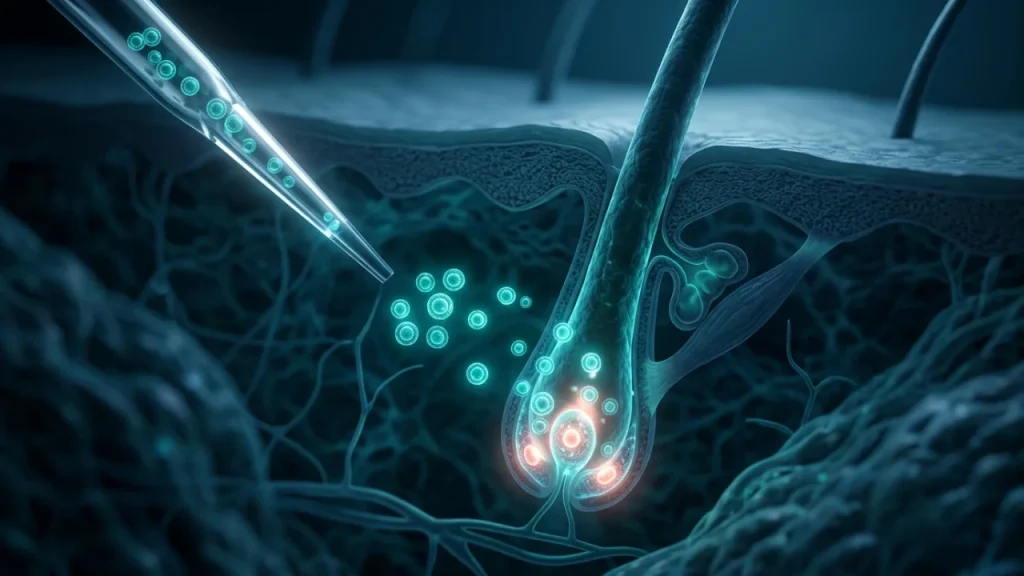
Imagine your body’s cells are like tiny cities. They need to communicate. They don’t use phones or emails. They send microscopic packages. These packages are called exosomes.
Exosomes are incredibly small bubbles. They are released by nearly every cell type in your body. Think of them as biological mail carriers. They travel through your bodily fluids. These fluids include blood and the fluid between cells.
What’s inside these tiny packages? They carry important cargo. This cargo includes proteins and genetic instructions. The instructions are called RNA. They also carry signaling molecules. This cargo is not random. It is carefully selected by the parent cell.
The parent cell packs the exosome with a specific message. Then it sends the exosome on its journey. The exosome travels until it finds a target cell. It docks onto the surface of that cell. It delivers its molecular package.
This process changes the target cell’s behavior. The message might tell a cell to calm inflammation. It could instruct a cell to repair itself. It might even order a cell to grow. This is how cells coordinate their activities naturally.
Why is this important for hair? Your hair follicles are complex mini-organs. They rely on clear signals to function well. Aging and damage can disrupt these signals. The communication network breaks down.
Exosomes offer a potential solution. They could restore lost communication. Scientists ask: do exosomes work for hair growth? The idea is to use exosomes as supplemental messengers. They would carry pro-growth instructions directly to dormant follicles.
The natural role of exosomes is healing. After an injury, cells release more exosomes. These vesicles help coordinate the repair process. They reduce swelling. They encourage new tissue formation. This innate ability is key to their medical promise.
In summary, exosomes are fundamental to your biology. They are not synthetic drugs. They are natural signaling tools made by your own cells. Their core job is cell-to-cell communication. Understanding this basic messenger function is the first step. The next step is seeing how this applies to hair loss specifically. This science moves us from abstract biology to practical hope for restoration.
The Global Problem of Hair Loss and Current Treatments
Hair loss affects millions of people globally. It is not just a cosmetic concern. For many, it impacts self-esteem and emotional well-being. The causes are complex and varied. Genetics often play a major role. Hormonal changes can trigger thinning. Medical conditions and stress are also common factors.
Current treatments try to address these causes. They have different goals. Some aim to slow down hair loss. Others try to regrow hair that is already gone. The results vary greatly from person to person. No single solution works for everyone.
Two medications are most common worldwide. The first is minoxidil. It is a topical liquid or foam. You apply it directly to the scalp. It works by increasing blood flow to hair follicles. This can extend the growth phase of hair. It may thicken existing hairs and promote new growth.
The second common drug is finasteride. This is an oral pill. It works by blocking a hormone called DHT. DHT shrinks sensitive hair follicles over time. By reducing DHT, finasteride can help follicles stay active.
Both drugs have limitations. Minoxidil requires lifelong, twice-daily use. Stopping it reverses any benefits. Finasteride can have side effects for some men. These include sexual dysfunction. Neither medication can fully restore a significantly receded hairline.
Surgical options also exist. Hair transplantation is the most well-known. Surgeons move hair follicles from one part of the scalp to another. This procedure has improved over the years. Results can look very natural.
But surgery has its own challenges. – It is invasive and requires recovery time. – It can be very expensive. – The supply of donor hair is limited. – It does not stop the ongoing process of hair loss elsewhere.
Other approaches include laser therapy devices and special shampoos. Their effectiveness is often debated. Scientific evidence for many over-the-counter products is weak.
This landscape shows a clear need. We need treatments that are more than surface-level. The core problem is often inside the follicle itself. Aging follicles get poor signals and a weak environment.
This brings us back to a critical question: do exosomes work for hair growth? They propose a different approach. Current treatments manage symptoms or relocate hair. Exosomes aim to change the follicle’s health at a cellular level.
They could reset the local communication network. This idea targets the root cause of dysfunction, not just its visible result. The global search for better solutions makes this research urgent and significant.
The limitations of today’s tools highlight the promise of tomorrow’s science. Understanding the problem fully sets the stage for evaluating a new potential solution based on cellular repair.
Why Exosomes Could Be a Game-Changer for Hair
Exosomes are natural messengers. Your body’s cells make them constantly. Think of them as tiny biological packages. They carry important instructions from one cell to another.
These instructions are not simple. They are complex molecular signals. Exosomes contain proteins, lipids, and genetic material like RNA. This cargo can change the behavior of the receiving cell.
For hair loss, this communication system is broken. Aging or stressed hair follicles get the wrong signals. They enter a prolonged resting phase. They also get a poor blood supply and suffer from local inflammation.
Exosomes offer a way to reset these signals. They do not just block a single hormone like some drugs. They deliver a full set of instructions to the scalp. This aims to repair the follicle’s local environment.
The goal is to shift the follicle back to a healthy state. This is called changing the “microenvironment.” A healthy microenvironment supports growth. A bad one leads to thinning and loss.
So, how could this work in practice? The potential mechanisms are specific and exciting.
First, exosomes may boost blood vessel formation. Follicles need oxygen and nutrients to grow. Studies show exosome signals can encourage new capillaries around the follicle. This improves delivery of vital resources.
Second, they can calm inflammation. Inflammation around follicles is a key driver of hair loss. Exosomes carry molecules that can reduce this immune attack. This protects the fragile stem cells inside the follicle.
Third, they directly activate hair follicle stem cells. These stem cells are essential for making new hair. As we age, they become inactive. Exosome signals can wake them up and push them into a growth cycle.
Fourth, they may prolong the growth phase of the hair cycle. Hair grows in cycles: growth, transition, and rest. In pattern hair loss, the growth phase shortens. Exosomes carry factors that could make this phase last longer.
This multi-target approach is the game-changer. Current treatments often focus on one pathway. Exosomes engage several at once. They work with the body’s own repair systems.
This leads back to the core question: do exosomes work for hair growth? The early science is promising. Laboratory studies show clear biological effects. Human hair follicles in culture grow faster when treated with exosomes.
Animal studies also support the idea. Research in models of hair loss has shown increased hair density and faster regrowth after exosome therapy. The treated skin shows healthier follicles.
The logic is strong. If hair loss stems from failed cellular communication, then restoring that communication makes sense. Exosomes are nature’s tool for this exact job.
They represent a shift from managing symptoms to promoting cellular health. This is regenerative medicine’s core promise. It is about repair and restoration, not just suppression or transplantation.
Of course, biological complexity brings challenges. Not all exosomes are the same. Their effect depends on which cells created them. The dose and delivery method are also critical.
The potential is not to create new follicles from nothing. It is to revive and strengthen existing ones that have become dormant or miniaturized. This can lead to thicker, healthier hair from follicles already present.
This approach could complement other treatments. It might make transplanted follicles more resilient. It could improve results from topical medications by creating a better environment for them to work.
The journey from this biological potential to a reliable treatment involves careful steps. The science must move from labs and animals to controlled human trials. Understanding the mechanism is the first, vital step toward answering the question of real-world effectiveness with solid evidence.
How Do Exosomes Work for Hair Growth? The Basic Science
Where Do Exosomes Come From for Hair Therapy?
Exosomes for therapy do not come from a chemical lab. They are harvested from living cells grown in culture. Scientists select specific cell types known for their regenerative properties. These are often mesenchymal stem cells. Stem cells are powerful communicators. Their exosomes carry a rich cargo of healing signals.
The production process is a controlled, multi-step operation. It begins with cell culture. Billions of donor cells are nurtured in special nutrient-filled flasks or bioreactors. These cells thrive and multiply in a sterile environment. They naturally release exosomes into their liquid surroundings as they grow. This liquid is called the conditioned medium. It contains the exosomes along with other cell waste and proteins.
The next critical phase is isolation. Scientists must separate the tiny exosomes from everything else in the soup. This is a technical challenge. Exosomes are extremely small. Several methods exist for this purification.
- Ultracentrifugation is a common technique. The liquid is spun at incredibly high speeds in a machine. This force pushes the heavier exosomes to the bottom of the tube. They form a tiny pellet.
- Size-exclusion chromatography is another method. The liquid is filtered through a column with microscopic pores. Smaller particles get trapped. Larger exosomes pass through at different speeds and are collected.
- Precipitation kits use chemicals to make exosomes clump together. They fall out of solution for easier collection.
After isolation, the exosomes undergo characterization. Researchers confirm they have collected the right particles. They check the size, which should be between 30 and 150 nanometers. They also verify the presence of standard exosome surface markers like CD63 and CD81. This quality control step is essential.
Finally, the purified exosomes are prepared for storage and use. They are often frozen at very low temperatures in small vials. This preserves their biological activity until needed. Before any clinical application, the product undergoes rigorous testing for safety. Scientists check for sterility to ensure no bacterial or fungal contamination exists. They also test for endotoxins, which are harmful substances from bacteria.
The entire process answers a key part of “do exosomes work for hair growth.” Their function is tied directly to their source and purity. Exosomes from young, healthy stem cells carry different instructions than those from older or inflamed cells. The dose delivered to the scalp also matters greatly. A therapy requires a precise number of exosome particles to have an effect.
This manufacturing pipeline is what transforms a natural cellular process into a potential treatment. It ensures consistency and safety from batch to batch. The goal is to create a reliable product that delivers the same regenerative messages every time. Understanding this origin story is crucial for evaluating the science behind hair restoration claims. The next logical question examines how these prepared exosomes are actually delivered to the scalp to target dormant follicles.
Exosomes Deliver Signals to Hair Follicle Cells
Exosomes act as tiny mail carriers for your cells. They deliver molecular messages directly to hair follicle cells. This communication is the core answer to “do exosomes work for hair growth.”
Think of a dormant hair follicle as a factory on standby. The machinery is present but the lights are off. Exosomes arrive at this factory’s door. They carry a set of precise instructions to restart production.
These instructions come in different forms. They are packaged inside the exosome vesicle.
- First, there are proteins. These can act like keys that unlock growth pathways in the follicle cell.
- Second, there are lipids. They help fuse the exosome to the target cell’s membrane.
- Third, and very important, are nucleic acids like miRNA. These are tiny bits of genetic code.
The miRNA molecules are powerful regulators. They do not carry blueprints for new traits. Instead, they function like master control switches. They can turn specific genes on or off.
For example, one miRNA might silence a gene that tells the follicle to stay dormant. Another miRNA could activate a gene that promotes cell division. This changes the follicle’s behavior from the inside.
The process starts with binding. Exosomes have surface markers that match receptors on hair follicle cells. It is like a key finding a lock. This ensures the message goes to the right address.
Next, the exosome delivers its cargo. It can fuse with the cell’s outer membrane and empty its contents inside. Alternatively, the entire exosome might be swallowed by the cell. The messages are then released into the cell’s interior.
The delivered signals trigger a cascade of events. They reduce local inflammation that can choke follicle growth. They increase blood flow to the area by signaling for new capillaries. They shift cellular energy toward repair and regeneration.
Crucially, they target stem cells within the follicle bulge. Every hair follicle contains a reservoir of these stem cells. They are essential for starting a new hair growth cycle.
Exosomes can activate these resident stem cells. The signals encourage the stem cells to divide and produce new progenitor cells. These new cells then build the hair shaft.
This signaling also extends the growth phase of the hair cycle. Hair naturally cycles through growth, transition, and resting phases. Exosome messages can make the growth phase longer. This results in thicker, more visible hair.
The effect is not about creating new follicles from nothing. It is about reactivating existing ones that have miniaturized or gone dormant. The exosomes provide the correct instructions to restart a healthy cycle.
Research shows this process influences several key pathways. The Wnt/β-catenin pathway is a major target. This pathway is a central regulator of hair follicle development and cycling.
Exosome signals can boost this pathway’s activity. Other targeted pathways include Sonic Hedgehog and BMP. These are all natural signaling systems within skin and hair biology.
The outcome is a multi-pronged rejuvenation effort at the cellular level. It addresses inflammation, cellular energy, stem cell activation, and growth timing. This coordinated approach is why exosomes hold significant potential.
The science confirms that external exosomes can effectively deliver these pro-growth signals. They work because they mimic and enhance the body’s own communication systems. The next step is understanding how treatments apply this science in a clinical setting.
Exosomes Help Blood Vessels Grow Around Follicles
A robust blood supply is non-negotiable for active hair follicles. Think of it as the delivery system for a construction site. Without consistent deliveries of materials, work grinds to a halt. For hair, these materials are oxygen, nutrients, hormones, and growth factors. Miniaturized or dormant follicles often suffer from a poor microvascular network. They are essentially starved. This is where exosome therapy delivers another powerful signal.
Exosomes carry specific instructions that promote angiogenesis. Angiogenesis is the process of forming new capillaries from existing vessels. These tiny blood vessels then weave a denser network around the hair follicle bulb. Key molecules inside exosomes drive this process.
- Vascular Endothelial Growth Factor, or VEGF, is a primary cargo. It acts as a direct growth command for endothelial cells. These cells line the interior of blood vessels.
- Other factors include Platelet-Derived Growth Factor (PDGF) and basic Fibroblast Growth Factor (bFGF). These work alongside VEGF to stimulate vessel sprouting and maturation.
The mechanism is precise. Exosomes released into the scalp tissue are taken up by endothelial cells and pericytes. These are the cells that build and support blood vessels. The exosomal cargo reprograms these cells. It switches them from a resting state into an active, building state.
The cells begin to multiply. They migrate toward the source of the signal, which is the hair follicle needing support. They then organize themselves into new, hollow tubular structures. These structures become functional capillaries. This entire process is guided by the exosome’s molecular blueprint.
Improved blood flow has several direct benefits for hair growth. First, it dramatically increases the local concentration of oxygen and nutrients. The metabolically active cells in the growing follicle have high energy demands. A better blood supply meets these demands.
Second, it enhances waste removal. Cellular waste products and carbon dioxide are carried away more efficiently. This keeps the follicular environment clean and functional. Third, it ensures that other systemic growth signals and hormones reach their target effectively.
The new vascular network also provides crucial support for the activated stem cells discussed earlier. Stem cells need a specialized environment called a niche. A well-vascularized niche offers the perfect conditions for stem cell maintenance and function. It provides physical support and chemical signals.
So, do exosomes work for hair growth? Part of their effectiveness stems from this vascular component. They do not just wake up stem cells. They also ensure those awakened cells have the sustained resources they need to build strong hair. This solves a fundamental problem in pattern hair loss.
The process creates a positive feedback loop. Better blood supply supports follicle health. A healthier follicle releases its own beneficial exosomes. These can further support the local tissue environment. The goal is a self-sustaining cycle of improvement.
In summary, exosome signaling for angiogenesis tackles hair loss at a foundational level. It addresses the issue of nutrient deprivation common in thinning areas. By building a better delivery infrastructure, exosomes help ensure that reactivated follicles have the lasting support required for producing thick, terminal hair again. This sets the stage for discussing how these scientific actions translate into tangible clinical results for patients.
Exosomes Reduce Inflammation That Damages Hair
Inflammation is a silent enemy of hair follicles. It is not always visible as redness or itching. This quiet, chronic inflammation slowly damages the tiny organ. It can push follicles into a resting state too early. It can even lead to their permanent miniaturization. Exosomes deliver precise instructions to calm this damaging response.
Think of inflammation as a false alarm. The scalp’s immune cells become overly active. They send out distress signals. These signals attract more immune cells. The process creates a cycle of damage. Follicles get caught in the crossfire. Exosomes act as a reset button for this alarm system.
They carry specific molecules to immune cells. These molecules are like stop commands. One major command reduces a key inflammatory signal called TNF-alpha. High TNF-alpha levels are found in balding scalps. It disrupts the normal hair growth cycle. Exosomes help lower this harmful signal.
Exosomes also increase helpful, anti-inflammatory signals. They promote the release of molecules like IL-10. IL-10 tells immune cells to stand down. It encourages repair over attack. This shift in balance is crucial. It changes the follicular environment from hostile to supportive.
The calming effect happens through several clear actions: – They modulate immune cell behavior, making them less reactive. – They reduce the production of reactive oxygen species, which are destructive molecules. – They promote a state of tolerance, preventing unnecessary immune attacks on follicle cells.
This directly answers a key question for many: do exosomes work for hair growth? Part of their “work” is protective. They shield the follicle from the biological stress that causes it to weaken and produce thinner hair. You cannot build a strong house on a shaky, unstable foundation. Exosomes help stabilize that foundation.
Chronic inflammation also damages the stem cell niche discussed earlier. Inflamed tissues are poor homes for stem cell function. By reducing inflammation, exosomes protect these vital regenerative cells. This allows the stem cells to respond better to growth signals. It ensures their long-term health and activity.
The timeline for this effect is important. Reducing biochemical inflammation is not an instant visual change. It occurs at a cellular level first. This sets the stage for physical improvements in hair growth. Clinically, patients may first notice less scalp sensitivity or itching. Reduced inflammation creates the peaceful conditions needed for robust growth.
This mechanism is especially relevant for common hair loss patterns. Androgenetic alopecia has a strong inflammatory component. So do conditions like alopecia areata. By addressing this root cause, exosome therapy offers a targeted strategy. It goes beyond just stimulation to include essential protection.
In summary, exosomes function as sophisticated communicators for immune regulation. They directly intervene in the inflammatory processes that degrade follicle health and disrupt growth cycles. This protective role is fundamental to their therapeutic potential. By creating a calmer scalp environment, they ensure that other regenerative processes have a lasting chance to succeed, seamlessly connecting cellular defense to visible renewal.
Exosomes May Extend the Hair Growth Phase
The hair growth cycle has distinct phases. Your hair does not grow continuously. Each follicle cycles through periods of growth, transition, and rest. The growth phase is called anagen. This is when your hair gets longer. The length of the anagen phase determines your maximum hair length. For scalp hair, anagen can last years. In hair loss conditions, this phase often shortens. Follicles spend less time growing and more time resting or shedding.
Exosomes appear to send signals that support a longer anagen phase. They do this by communicating directly with cells in the hair follicle bulge. This area houses stem cells and progenitor cells. These cells are essential for making a new hair shaft. Exosomes deliver molecular instructions to these cells. The instructions tell the cells to stay active and proliferate.
Think of it like a factory production schedule. The anagen phase is the active production shift. Normally, a timer signals the shift to end. Exosomes may help delay that timer. They encourage the factory workers—the follicle cells—to keep producing hair longer. This leads to a thicker, longer hair shaft over time.
The key signals involve specific growth factors and proteins. Exosomes are packed with these molecules. Important ones include: – VEGF (Vascular Endothelial Growth Factor). This improves blood supply to the follicle. – FGF (Fibroblast Growth Factor). This stimulates cell growth and proliferation. – Shh (Sonic hedgehog) pathway proteins. This pathway is critical for maintaining the growth phase.
These are not single commands but a coordinated program. They work together to sustain the follicle’s regenerative activity. The goal is to push back the natural transition to the next phase, called catagen.
Catagen is a brief regression phase. The follicle shrinks and detaches from its blood supply. After catagen comes telogen, the resting phase. Finally, the hair sheds in exogen. In a healthy cycle, a new anagen phase then begins. The problem in pattern hair loss is that follicles enter telogen too soon. They also spend more time in this resting state.
So, how do exosomes work for hair growth in this context? They target the biological switches that control phase transitions. Research suggests they can modulate Wnt/β-catenin signaling. This is a fundamental pathway for hair development and cycle regulation. By activating this pathway, exosomes promote anagen entry and maintenance.
They also suppress signals that trigger catagen. For example, they may downregulate certain factors like TGF-β. This factor is known to induce follicle regression. By balancing these pro-growth and pro-regression signals, exosomes help stabilize the follicle in its productive state.
The result is a more robust growth period. Hairs have more time to achieve their full thickness and length potential. This can lead to visible improvements in hair density. It also means fewer hairs are shed at any given time because more are actively growing.
This mechanism complements the anti-inflammatory action discussed earlier. Inflammation can prematurely force follicles into catagen. By reducing inflammation, exosomes remove one pressure to end the growth phase. By actively promoting anagen signals, they add a positive push to extend it. It is a two-part strategy for cycle optimization.
Clinical observations support this science. Patients undergoing exosome therapy often report slower shedding first. They notice fewer hairs on their pillow or in the shower drain. This indicates a shift in cycle dynamics. More hairs are remaining anchored in the growing phase. Later, improvements in overall thickness and coverage become apparent.
It is important to manage expectations. Extending the anagen phase is a gradual process. It happens over multiple hair cycles, which can take months. The effect is cumulative as more follicles synchronize into a productive rhythm.
In essence, exosomes aim to reset the follicle’s internal clock. They encourage it to maximize its natural growth potential. This foundational science directly addresses a core dysfunction in many hair loss disorders. The next logical question is how these signals translate into tangible structural renewal for weakened follicles themselves.
What Does the Research Say About Exosomes for Hair?
Early Lab Studies on Exosomes and Hair Follicles
Early laboratory research provided the first solid clues. Scientists began testing exosomes on hair follicles grown in petri dishes. They also used animal models, like mice. These controlled studies isolated the direct effects of exosomes. They removed other variables present in a living human body.
One pivotal study used exosomes derived from human stem cells. Researchers applied them to isolated human hair follicles kept alive in a culture. The treated follicles showed a clear and measurable response. Their growth phase was significantly extended compared to untreated follicles. This was direct proof of the anagen-prolonging effect. The follicles also demonstrated increased proliferation of their matrix cells. These are the crucial cells at the follicle’s base that build the hair shaft.
Animal studies added another layer of evidence. In one experiment, mice with induced hair loss received exosome treatments. The treated areas showed faster hair regeneration. The new hair cycles initiated more quickly. The density and rate of hair regrowth were notably better. Researchers analyzed the skin tissue afterwards. They found higher levels of key growth factors in the treated areas. Proteins like VEGF for blood supply and FGF for cell growth were elevated.
These lab results answered a critical question: do exosomes work for hair growth in an isolated setting? The experimental evidence pointed to yes. The mechanisms observed included: – Activation of dormant hair follicle stem cells. – Increased blood vessel formation around the follicle. – A strong anti-apoptotic signal, preventing cell death in the bulb. – Downregulation of inflammatory signaling pathways.
The source of the exosomes proved to be important. Not all exosomes are equal. Studies compared vesicles from different cell origins. Exosomes from certain mesenchymal stem cells showed superior activity. They were packed with a more potent cocktail of regenerative molecules. This highlighted that the therapeutic effect is not generic. It depends heavily on the producing cells’ condition and type.
A key technical insight from this phase was about delivery. Lab work tested various methods. Direct micro-injection into the scalp tissue mimicked future clinical procedures. Topical application with special carriers was also explored. The studies confirmed that exosomes need to reach the dermal papilla cells deep in the follicle. This is their main target for orchestrating growth.
These early studies were crucial. They moved exosomes beyond theoretical promise. They provided mechanistic proof under a microscope. The data showed that exosomes could directly alter follicle biology. They could shift cellular behavior towards growth and longevity.
However, lab models have limits. A hair follicle in a dish is not influenced by systemic hormones. A mouse model has different hair cycle dynamics than humans. These experiments set the stage but did not guarantee human results. They defined the precise biological questions for clinical trials to answer next. The foundational science was now established, waiting for real-world validation in patients.
Human Studies: Small Trials and Their Results
The first human trials began to answer a critical question. Could exosomes actually work for hair growth in people? Early studies were small pilot tests. They were designed primarily to check safety. Researchers also looked for early signs of any effect.
These initial trials typically involved a few dozen participants. Most had androgenetic alopecia, or common pattern hair loss. The study designs varied. Some compared exosome injections to a placebo saline injection. Others added exosomes to standard procedures like platelet-rich plasma therapy.
The results from these small studies were generally positive. They showed the treatment was safe and well-tolerated. No major side effects were reported beyond minor swelling or redness at the injection sites. This was an important first step. Safety must be confirmed before any therapy can be widely considered.
On the question of efficacy, the data was promising but limited. Several trials reported measurable improvements. Researchers used standardized methods to track changes. They took close-up photographs of the scalp under consistent lighting. They counted hairs in a fixed target area over time. Some studies used a trichoscan device for digital analysis.
The reported outcomes often included two key metrics. The first was an increase in hair density. This means the number of hairs per square centimeter grew. The second was an increase in hair thickness. Individual strands became larger in diameter. Thicker hairs cover the scalp better visually.
For example, one published pilot study followed 11 participants for 12 weeks. The group receiving exosome injections showed a statistically significant gain in hair count compared to the control group. The average increase was around 30 hairs per square centimeter. Another trial observed improvements in hair thickness as early as one month after treatment.
How did researchers apply the exosomes? The dominant method in these trials was micro-injection. A clinician uses a very fine needle to create multiple tiny injections across the thinning area of the scalp. The exosome solution is delivered directly into the dermis, the skin layer housing hair follicles. This aims to place the vesicles near their target cells.
The treatment protocol usually involved multiple sessions. A common schedule was three sessions spaced about a month apart. Follow-up assessments occurred for up to six months after the final session. Some data suggested effects might continue improving for several months post-treatment.
It is vital to interpret these findings with caution. These were early-stage investigations with clear limitations. – The number of participants was very low. – Observation periods were relatively short. – Most studies lacked long-term follow-up beyond six months. – Blinding was sometimes difficult, potentially influencing subjective assessments.
These factors mean the results are preliminary. They signal biological activity that merits larger, more rigorous study. They do not yet constitute definitive proof.
So, do exosomes work for hair growth based on this human data? The early evidence suggests a potential benefit for certain types of hair loss. The mechanistic science from the lab appears to translate into initial clinical observations. However, the current research landscape is like seeing the first few pieces of a large puzzle. The picture is not yet complete.
Large-scale randomized controlled trials are the necessary next step. These trials need hundreds of participants. They must include diverse patient groups and direct comparisons to other established treatments. They must also track results for one year or longer to understand durability.
The journey from lab bench to clinic is long and methodical. These first human studies represent a cautious but important forward step. They provide a foundation for the more conclusive research that is now urgently needed.
How Exosomes Compare to Minoxidil for Hair Growth
Minoxidil is a well-known topical treatment for hair loss. It was first developed as a blood pressure medication. A side effect was unexpected hair growth. This led to its use for pattern baldness. Its exact mechanism for helping hair is still debated. Scientists believe it works in a few key ways. – It may widen blood vessels around hair follicles. This improves blood flow. – It might shift hairs into the active growth phase sooner. – It could slightly alter hormone effects in the scalp.
Minoxidil is considered a growth stimulant. It changes the local environment of the follicle. It does not directly address the root cellular signals that cause follicles to shrink and weaken over time.
Exosomes work on a fundamentally different level. They are not a single drug. They are complex biological messengers. Their job is cell-to-cell communication. In hair loss, the goal is to change the conversation around the follicle.
Think of a struggling hair follicle as a factory receiving bad instructions. It slows down production. Exosomes act like a delivery of new blueprints and tools. They carry specific instructions to target cells. – They can reduce local inflammation. Inflammation is a key driver of hair follicle damage. – They may improve blood supply by signaling for new vessel formation. – They deliver proteins and genetic material that can rejuvenate cellular activity.
This targets the health of the follicle itself. The aim is to restore more normal function.
The evidence supporting each approach differs greatly. Minoxidil has decades of large clinical trials behind it. Its effects are well-documented for certain conditions. Results are predictable for many users. However, it does not work for everyone. Benefits often reverse if treatment stops.
Early research asks do exosomes work for hair growth in a similar way? Current exosome data is promising but preliminary. The studies are much smaller and shorter. The level of proof is not yet equivalent. Exosome therapy is also administered differently.
A practical comparison highlights key differences. – Application: Minoxidil is a liquid or foam applied daily at home. Exosome therapy involves clinical procedures like micro-needling or injections, performed by a provider in sessions. – Frequency: Minoxidil requires lifelong daily use to maintain results. Exosome therapy is envisioned as periodic treatment sessions, perhaps once or twice a year. – Target: Minoxidil mainly affects hair growth cycle timing. Exosomes target the follicular stem cell health and the inflammatory microenvironment. – Evidence: Minoxidil has Level 1 efficacy evidence from large trials. Exosomes have early pilot-study data suggesting biological activity.
This is not about one being simply better than the other. It is about different strategies. Minoxidil manages the condition with continuous topical stimulation. Exosome therapy explores regenerative correction through periodic biological signaling.
For patients, this distinction is crucial. Minoxidil is an accessible, ongoing maintenance option. Exosome therapy represents an emerging, procedure-based regenerative approach. Its potential advantage lies in addressing causes rather than just symptoms. Its current limitation is the need for more robust clinical validation.
Understanding this comparison frames the right questions. It moves beyond asking if exosomes work. It leads to asking for whom they might work best and how their role complements or differs from existing tools. The future may see these approaches used together for synergistic effects.
How Exosomes Compare to Finasteride for Hair Loss
Finasteride is a pill taken daily for hair loss. Exosome therapy is a clinical procedure done in sessions. This is the most obvious difference. But the real contrast is deeper. It lies in what each one does inside your body.
Finasteride works by changing your hormones. It blocks an enzyme called 5-alpha reductase. This enzyme turns testosterone into DHT. DHT is a hormone that can shrink sensitive hair follicles. By lowering DHT, finasteride helps protect follicles from this damage. It aims to slow or stop hair loss.
Exosomes do not change your hormone levels. They are messengers. They carry instructions and materials to your scalp cells. Their goal is to improve the health of the follicle itself. They target three key areas: – Reducing inflammation around the follicle. – Stimulating hair follicle stem cells. – Improving blood flow and nutrient supply.
So, one method alters a systemic hormone. The other delivers local regenerative signals. This leads to different profiles.
Finasteride has a well-documented effect. It is proven to slow hair loss for many men. Clinical trials are large and long-term. However, its effect is only active while you take the pill. Stopping the medication usually reverses benefits within a year.
The evidence for exosomes is newer. Early studies show they can create a healthier environment for hair growth. Research asks do exosomes work for hair growth in a sustainable way. Scientists are testing if their signals can kickstart a lasting regenerative cycle. The hope is for results that persist after the treatment sessions end.
Side effect profiles are also distinct. Finasteride’s potential side effects are systemic and related to hormonal change. They can include sexual side effects for some users. These are documented in the drug’s labeling.
Exosome therapy, as a local procedure, aims to avoid systemic effects. Potential issues are local, like temporary redness or swelling at the injection site. The long-term safety profile is still being established in clinical studies.
Choosing between these paths depends on goals and comfort. Finasteride is a lifelong daily commitment to manage a hormonal process. Exosome therapy explores periodic interventions to repair and regenerate tissue.
They are not mutually exclusive. Future treatment plans may combine them. A doctor might use finasteride to stabilize loss hormonally. They could add exosome sessions to improve follicle quality and density locally.
Understanding this comparison clarifies the landscape. It shows that hair science is not one-dimensional. Different tools work on different parts of the problem. The next question naturally follows: what does a realistic treatment journey with exosomes look like?
The Safety Profile of Exosome Treatments So Far
Exosomes used in therapy are not synthetic drugs. They are natural biological messengers. Their safety profile hinges on this fact. However, natural does not automatically mean risk-free. The main safety considerations come from three areas. These are the source of the exosomes, the preparation process, and the injection procedure itself.
First, the source material is critical. Exosomes for hair restoration are typically derived from human stem cells. These stem cells must come from rigorously screened and tested donors. This screening is for viruses and other pathogens. The goal is to ensure the starting material is clean and safe. Using a patient’s own cells is theoretically possible. This is called an autologous approach. But it is often impractical for hair loss. It requires a separate surgery to harvest a person’s own stem cells first.
Second, the laboratory process matters greatly. Isolating and purifying exosomes is a complex technical task. A high-quality process removes other cellular debris and growth factors. It concentrates just the exosome vesicles. The final product must also be tested for sterility. This means checking for any bacterial or fungal contamination. The exosome preparation should be free of preservatives or other additives. These additives could cause unwanted reactions.
The third area is the clinical procedure. This is where most reported events occur. Exosomes are delivered via very fine needles into the scalp. This is a minimally invasive process. Common local reactions are similar to other injection therapies. They are usually mild and temporary.
- Redness at the injection sites.
- Minor swelling or edema.
- Temporary tenderness or itching.
- Small scabs or pinpoint bleeding.
These local effects typically resolve within a few hours to a couple of days. Serious adverse events like infection, allergic reaction, or significant inflammation are rare in reported data so far. Their occurrence often relates to a break in sterile technique or an unknown patient sensitivity.
So, what remains unknown? The long-term safety data is still being collected. Clinical studies for hair growth are relatively new. Most follow patients for months, not years. Key unanswered questions exist about long-term behavior.
One question involves the precise signals exosomes send. Could they theoretically stimulate unintended cell types over the long term? Current science suggests exosomes act briefly and then are cleared by the body. Their effects come from triggering a cascade in your own cells. But multi-year studies will provide more certainty.
Another unknown is about repeat treatments. The safety of having multiple exosome therapy sessions over many years needs more tracking. Researchers are watching for any potential for immune system sensitization. This means the body developing a reaction to repeated exposures.
It is also vital to understand what exosome therapy does not do. Based on current evidence, exosomes for hair are not thought to alter systemic hormone levels. They do not circulate widely through the bloodstream when injected locally into the scalp. This differentiates their risk profile from oral medications like finasteride.
When considering “do exosomes work for hair growth,” safety is a parallel concern. Early evidence suggests a favorable short-term safety profile when protocols are strict. The risks appear manageable and localized. The medical community is now focused on gathering long-term data to confirm this initial picture. This ongoing research will help define standard safety protocols for everyone. The next logical step is to look at what patients can realistically expect during and after a treatment session.
Challenges in Standardizing Exosome Preparations
One major reason it’s hard to answer “do exosomes work for hair growth” with a single answer is product inconsistency. Not all exosome preparations are the same. In fact, they can differ dramatically. This lack of standardization is a central challenge in the field.
Think of exosomes as tiny biological packages. What’s inside these packages depends entirely on the cell that made them. The source cells matter a great deal. Exosomes from young, healthy stem cells carry different signals than those from older cells. The growth medium the cells live in also changes the cargo. Even small changes in temperature or nutrients can alter what the exosomes carry.
The process of collecting and purifying exosomes is another complex step. Scientists must separate the exosomes from everything else in the cell culture soup. This includes cell debris, proteins, and other vesicles. Different labs use different methods for this purification.
- Some methods are better at getting a very pure sample.
- Other methods are faster but might leave behind impurities.
- The chosen method directly affects the final product’s strength and contents.
There is no universal agreement on the best purification protocol yet. This means two clinics might use products with different potencies. They might even have different types of vesicles mixed in. This variability makes comparing clinical study results difficult.
Measuring the dose is another hurdle. How do you count a therapeutic dose of particles billions of times smaller than a grain of sand? Clinicians don’t count individual exosomes. Instead, they measure total particle number or total protein amount. But these are rough estimates. A dose with a certain protein count could have very different biological activity from another dose with the same count. The specific mix of healing factors inside is what counts most.
Storage and handling add more variables. Exosomes are fragile. How they are frozen, shipped, and thawed can damage them. If the cold chain breaks, the therapy might lose its effect. A patient could receive a less potent product without anyone knowing.
All these factors create a “black box” problem. A doctor might inject an exosome solution into the scalp. They know the general source and particle count. But the exact mixture of signaling molecules remains unknown. This makes precise dosing and reproducible results tough to achieve.
The scientific community is actively working on these issues. They are developing better characterization tools. They are creating stricter manufacturing guidelines. The goal is to turn exosomes into a standardized, reliable medicine. Until then, variability in preparations remains a key research challenge. This directly impacts both safety studies and consistent outcomes for hair growth. Understanding this complexity helps explain why treatment experiences can differ. The next natural question is how these biological packages are actually administered in a clinical setting.
Who Might Benefit from Exosome Therapy for Hair?
Exosomes for Androgenetic Alopecia (Common Baldness)
Androgenetic alopecia is the most common form of hair loss. It affects both men and women. This condition is often called male or female pattern baldness. Hair follicles slowly shrink over time. This process is called miniaturization. Eventually, follicles stop producing visible hair.
The cause is a combination of genetics and hormones. A key hormone is dihydrotestosterone, or DHT. Sensitive follicles react to DHT. Their growth phase becomes shorter. Their resting phase becomes longer. The result is thinner, shorter hairs. The scalp tissue also changes. Blood flow and nutrient delivery can decrease.
So, how could exosomes help with this? They do not work like a traditional drug. Exosomes are not a single molecule that blocks a hormone. Instead, they deliver a complex set of instructions to the scalp. Their goal is to change the local environment. They aim to shift conditions from a state of decline to a state of repair and growth.
Research points to several key mechanisms. These are seen in lab studies and early clinical reports. – Exosomes can reduce inflammation. Inflammation around follicles can worsen hair loss. – They may improve blood flow. They can signal the body to build new tiny blood vessels. – They deliver growth factors directly to follicle cells. These signals can wake up resting follicles. – They might help extend the active growth phase of the hair cycle.
The central question is: do exosomes work for hair growth in this common condition? Current evidence comes from two main places. First, there are preclinical studies using cells and animal models. These show promising biological activity. Second, there are initial human case series and small trials.
These early human studies often report positive outcomes. Patients may see reduced hair shedding. They might notice improved hair thickness or density. Some see new fine hairs, called vellus hairs, in thinning areas. However, the scientific community views this data cautiously. Larger controlled studies are still needed.
It is important to understand what exosome therapy is not. It is not a one-time cure for genetic baldness. The effects are likely not permanent. The underlying genetic predisposition remains. Think of it more as a regenerative treatment. It gives follicles a powerful boost. This may reverse some miniaturization. Maintenance sessions are probably necessary.
Who might benefit the most from this approach? Ideal candidates are often in the early or middle stages of pattern loss. Their follicles are still present but miniaturized. They are not completely bald and smooth in the target area. Exosomes could help revive these dormant follicles.
Patients with very advanced loss may see less benefit. Follicles that have been inactive for many years may be too far gone. The scar tissue in fully bald areas might not support regeneration. A doctor’s evaluation is crucial to set realistic expectations.
The therapy also shows potential for those who have had other procedures. For example, it is sometimes used after a hair transplant. Exosomes could help heal the scalp faster. They might improve the survival of transplanted grafts. They could also help nurture the existing hair around the transplants.
In summary, exosome therapy represents a novel biological strategy for a common problem. It targets the unhealthy scalp environment that drives follicle miniaturization. Early evidence suggests it can promote thicker, healthier hair for some individuals with pattern loss. The next logical step is to examine how this therapy compares to other established treatments for hair restoration.
Exosomes for Other Hair Loss Conditions
Exosome research is not limited to common baldness. Scientists are actively exploring their use for other challenging hair loss conditions. These conditions often have different root causes. The goal is to see if exosomes can help there too.
One major area of interest is alopecia areata. This is an autoimmune disease. The body’s own immune system mistakenly attacks the hair follicles. This causes sudden, often round, patches of hair loss. The follicles are usually still alive. They are just under inflammatory siege.
So, how could exosomes work for hair growth in this case? Their potential lies in immune modulation. Mesenchymal stem cell exosomes carry signals that can calm an overactive immune response. They may reduce the inflammatory attack on the follicle. Early lab and animal studies show promising results. Exosome treatment decreased immune cell infiltration around follicles. It helped shift the local environment from attack mode to repair mode.
This does not cure the autoimmune tendency. But it might help reset the local scalp condition. This could allow follicles to re-enter the growth phase. For patients with alopecia areata, this represents a novel biological approach. It targets the inflammation directly at the site.
Another complex group is scarring alopecias. These are also called cicatricial alopecias. Conditions like lichen planopilaris or frontal fibrosing alopecia fall here. The process is destructive. Inflammation permanently destroys the hair follicle. It is replaced by scar tissue. Once a follicle scars, it cannot regrow hair.
This makes timing critical. Exosome therapy would aim to intervene early. The goal is to halt the destructive inflammatory process before scarring is complete. The anti-inflammatory properties of exosomes are key here as well. They may help suppress the specific immune cells driving the destruction.
Furthermore, exosomes might help regulate fibrosis. Fibrosis is the medical term for scarring. Some exosomes carry molecules that can slow down excessive collagen production. This could potentially protect the follicle stem cell niche from being engulfed by scar tissue. It is a race against permanent damage.
The approach for scarring alopecia would be fundamentally different from pattern loss. The primary goal is not necessarily regrowth. It is to stop the progression of the disease. Preserving existing hair and halting further loss is a major victory. Any regrowth in early, non-scarred areas would be a secondary benefit.
What about hair loss from chemotherapy or radiation? This is called anagen effluvium. The treatment rapidly kills fast-dividing cells, including hair matrix cells. The follicle is shocked into shedding. Research here is very preliminary but intriguing.
Exosomes might aid recovery through two main mechanisms. – First, they could deliver pro-survival signals to the remaining follicle stem cells. – Second, they could accelerate the repair of the damaged tissue microenvironment. This might help the follicle restart its cycle more quickly after the insult ends.
It is crucial to manage expectations for these conditions. The evidence is far earlier stage than for pattern hair loss. Most data comes from preclinical models or small case series. Robust clinical trials in humans are urgently needed.
The unifying principle across all these conditions is the exosome’s role as a biological messenger. It can carry instructions for repair and for peace. Whether calming an immune attack or mitigating scarring, the core idea is similar. Exosomes provide the local cells with a new set of commands to encourage a healthier state.
This broad potential highlights why researchers ask: do exosomes work for hair growth? The answer may depend on the type of hair loss. The mechanism of benefit likely differs between conditions. For autoimmune issues, it’s about immune modulation. For scarring, it’s about halting destruction. For pattern loss, it’s about rejuvenating a weakened environment.
Understanding these distinctions is vital for patients and doctors. It frames realistic goals for therapy. The next step is to look at how this emerging option fits among current treatments for these challenging conditions.
Factors That Affect Exosome Treatment Success
The success of an exosome treatment for hair is not guaranteed for everyone. Several important factors can influence the final result. Think of it like planting a seed. The seed quality matters. The soil health matters too. The outcome depends on both.
One major factor is the stage and duration of hair loss. Early intervention tends to yield better outcomes. Follicles in the early stages of miniaturization are dormant but often still alive. They are more likely to respond to regenerative signals. Long-term, advanced baldness presents a bigger challenge. The follicle stem cell population may be severely depleted. The surrounding skin tissue, or scalp microenvironment, may have become fibrotic. Exosomes work by instructing and rejuvenating existing cellular machinery. If that machinery is largely gone, the instructions have fewer cells to target.
Patient age is another consideration, though it is linked to the stage of loss. Younger patients often have a more robust biological environment. Their cells may be more responsive to growth signals. However, age alone is not a strict barrier. A younger person with advanced genetic hair loss might see less dramatic results than an older person with recent, early-stage thinning. The biological age of the follicle is more critical than the chronological age of the patient.
The underlying cause of hair loss remains the most critical factor, as noted earlier. This directly shapes what we can expect. For androgenetic alopecia, the goal is often to increase hair density and shaft thickness. Success might mean stronger, more visible coverage in thinning areas. For inflammatory conditions like alopecia areata, the primary goal is to stop the immune attack and allow regrowth from quiescent follicles. Here, success is measured by cessation of shedding and the return of hair in bald patches. For scarring alopecia, the aim is to halt disease progression and potentially recover hair at the inflamed borders. Expectations must be managed carefully for each type.
The source and preparation of the exosomes themselves are vital technical factors. Not all exosome products are equal. Their biological activity depends on what parent cells they came from. It also depends on how they were processed and stored. The concentration of particles in a dose is important. So is the presence of key regenerative molecules inside them. These are details a patient cannot see but a clinic should understand.
Treatment protocol plays a significant role as well. This includes how the exosomes are delivered. – The method of delivery is key. Simple topical application may not penetrate deeply enough to reach the follicle bulb. Micro-needling or injection directly into the scalp delivers the exosomes to the precise target area. – The number and timing of sessions matter. Hair growth cycles are slow. A single treatment may provide only a temporary benefit. Most protocols suggest multiple initial sessions followed by potential maintenance treatments to support long-term results.
Individual biological variability always exists. Two people with similar hair loss patterns may respond differently. Their unique immune systems and genetic backgrounds influence how their cells receive and act on the exosomal signals. This is why consistent, standardized treatment protocols and realistic expectations are so important.
So, do exosomes work for hair growth? The answer is not a simple yes or no. It depends on this combination of factors: the stage of loss, the root cause, the product quality, and the treatment method used together shape the potential outcome. Understanding these variables helps set realistic goals and informs a thoughtful discussion with a medical provider about whether this approach aligns with an individual’s specific situation.
Realistic Expectations from Exosome Therapy
Exosome therapy does not create new hair follicles from nothing. Its primary goal is to improve the health and function of existing follicles. Think of it as revitalizing a struggling garden, not planting seeds in bare concrete. The most realistic expectations come from understanding what the science currently shows exosomes can do.
The best results are often seen in cases of early-stage, active thinning. This is when follicles are still present but are miniaturizing. They are becoming smaller and producing weaker hairs. Exosome signals can potentially reverse this process. The goal here is to increase hair density and shaft thickness. Patients might notice fewer hairs falling out during washing or brushing. They may see a reduction in the visibility of their scalp. New, stronger hairs may begin to grow in thinning areas.
For more advanced hair loss with significant bald areas, expectations must shift. In these zones, follicles may be dormant or severely miniaturized for a long time. Exosome therapy is less likely to regenerate fully bald skin. Its role here is often to support other procedures or stabilize further loss. It can help fortify the hair surrounding a bald area. This can create a fuller frame for the face.
The timeline for seeing changes is measured in months, not weeks. Hair growth cycles are inherently slow. Here is a typical progression based on clinical observations: – Within the first 1 to 2 months, patients may notice decreased shedding. This is often the first positive sign. – By 3 to 4 months, changes in hair quality might become visible. Hair may feel thicker or look more lustrous. – New hair growth, if it occurs, typically becomes noticeable around the 4 to 6 month mark. These new hairs will initially be fine and short. – Full results from a treatment series are usually assessed at 6 to 12 months.
It is crucial to ask “do exosomes work for hair growth” in terms of measurable improvement, not a perfect cure. Clinical studies often measure success in percentages. A good outcome might be a 10-30% increase in hair density in targeted areas after several sessions. Another strong result is a significant increase in the diameter of individual hair strands. These changes, while seemingly modest, can make a visible cosmetic difference for someone with thinning hair.
Maintenance is a key part of the conversation. Hair loss is typically a chronic, ongoing process. The effects of exosome therapy are not always permanent. Just as you maintain a garden with regular care, the scalp may need periodic support. Many treatment plans include follow-up sessions every 6 to 12 months. This helps sustain the benefits achieved during the initial intensive phase.
Individual responses will always vary. Two people with identical patterns of loss may see different degrees of improvement. One might achieve notable density restoration. The other might primarily achieve stabilization of their hair loss. Both are valuable outcomes. Stabilization alone is a major win for progressive conditions like androgenetic alopecia.
Setting realistic expectations means focusing on improvement, not perfection. The therapy aims to shift the trajectory of hair loss toward a healthier state. It is a regenerative strategy, not a simple cosmetic fix. Success is defined by measurable progress in hair count, thickness, and overall scalp coverage compared to baseline. This evidence-based perspective allows for informed decisions and genuine satisfaction with the results science can currently deliver.
The Process of Getting Exosome Treatment for Hair
How Exosome Therapy Is Administered to the Scalp
Exosome therapy for the scalp is a precise clinical procedure. It is not a simple topical lotion you apply at home. The goal is to deliver these signaling vesicles directly to the hair follicle cells that need them. This requires bypassing the skin’s tough outer barrier.
The most common and effective method is through micro-injections. A clinician uses a very fine needle to create multiple tiny punctures in the scalp. This technique is often called mesotherapy or intradermal injection. The exosome preparation is gently infused into the superficial layers of the skin.
The injection process targets areas of active thinning or loss. The clinician maps out the treatment zone carefully. Dozens to hundreds of micro-injections may be administered in a single session. The needle is extremely small. Most patients describe the sensation as a mild pinprick or tingling.
A topical numbing cream is usually applied first. This cream sits on the scalp for about twenty to thirty minutes. It greatly reduces any discomfort from the injections. The entire procedure typically takes under an hour from start to finish.
The depth of injection is scientifically important. Follicles reside in the dermis, the skin’s second layer. Injections must reach this precise depth. Too shallow, and the exosomes cannot interact effectively with the follicle. Too deep, and they miss the target. Trained practitioners ensure optimal placement.
Another method being studied is topical application combined with needling. In this approach, a device creates many micro-channels in the scalp first. This is often done with a derma roller or a pen-like microneedling device. The exosome solution is then massaged into the treated area.
The micro-channels act as temporary pathways. They allow the larger exosome particles to penetrate into the dermis. This method is less invasive than injections. Its effectiveness compared to direct injection is a key focus of ongoing research.
The exosome preparation itself is a clear liquid or gel. It contains a high concentration of purified exosomes suspended in a sterile solution. The solution often includes additional supportive compounds. These compounds help stabilize the exosomes and support cell health.
The procedure is performed in a clean clinical setting. Sterile technique is paramount throughout. This prevents infection and ensures product purity. The scalp is cleansed thoroughly before any injections begin.
Patients can usually resume normal activities immediately after. There is minimal downtime. Some temporary side effects are possible. These can include mild redness, slight swelling, or pinpoint bleeding at injection sites. These effects normally fade within a day or two.
A full treatment protocol usually involves multiple sessions. This is not a one-time event. An initial series might include three to four sessions spaced several weeks apart. This builds a strong regenerative signal. Maintenance sessions may follow later.
The science behind this delivery is straightforward. Direct placement ensures maximum bioavailability. The exosomes do not get diluted or degraded by the digestive system or skin surface oils. They are delivered right to their cellular targets.
People often ask, “do exosomes work for hair growth” based on this delivery? The method is critical for any potential result. Effective delivery systems are a major focus for researchers aiming to improve outcomes.
Combination therapies are also common. Exosome therapy may be paired with other treatments like platelet-rich plasma (PRP) or low-level laser therapy. These combinations aim to create a superior regenerative environment. They address hair loss from multiple angles simultaneously.
Aftercare instructions are simple but important. Patients are advised to avoid washing their hair for several hours post-treatment. They should also avoid heavy sweating, saunas, or harsh chemicals on the scalp for about forty-eight hours. This gives the exosomes time to initiate their signaling work.
The administration process is a blend of medical science and practical technique. Its precision directly influences the therapeutic potential of the exosomes themselves. Understanding this process helps set clear expectations for anyone considering this innovative path to hair restoration. The next logical question examines what happens biologically after these vesicles are delivered to the scalp follicles.
What to Expect During and After Treatment
The treatment session itself is typically brief. It often lasts between thirty to sixty minutes. The process begins with a clean scalp. A topical numbing cream is usually applied first. This cream sits on the scalp for about twenty to thirty minutes. It makes the entire procedure comfortable. Most patients report feeling only slight pressure during the injections.
The injection phase is precise. Using a very fine needle or a microcannula, the provider makes a series of small injections. These are placed across the thinning areas of the scalp. The pattern targets the follicular units. Each injection delivers a tiny volume of the exosome solution. You might hear a faint popping sound. This is normal. It is the sound of the solution being deposited just under the skin.
Discomfort during this phase is usually minimal. The numbing cream is highly effective. Some people feel a mild pinching or tingling sensation. Others feel nothing at all. The provider works methodically to cover the entire treatment zone. Communication is key. You can always let your clinician know if you have any concerns.
Immediately after the injections, the scalp may look slightly red. It might have small raised bumps at each injection site. This is a common local reaction. It shows the solution is in place. This redness and swelling usually fade within a few hours. Sometimes it can last up to a day.
So, what happens next in the days following? The aftercare period is simple but important. You will receive clear instructions from your clinic. Avoid washing your hair for at least several hours. This allows the microscopic exosomes to settle without disturbance. Avoid strenuous exercise, saunas, and steam rooms for about forty-eight hours. Heat and sweat can increase inflammation. This might interfere with the initial signaling phase.
You can expect to resume normal activities almost immediately. There is no required downtime. You can go back to work or social events right after your appointment. Your scalp might be a bit tender. Treat it gently when brushing or styling.
Potential side effects are generally mild and temporary. The most common one is temporary redness. Minor swelling at the injection sites is also common. Some people experience slight soreness, like a mild sunburn. These effects typically resolve within twenty-four to forty-eight hours.
Less common reactions can include minor bruising or pinpoint bleeding. This is due to the needle penetrating small capillaries. Bruising usually fades within a week. Headaches are occasionally reported but are rare. They are likely related to the minor trauma of numerous injections rather than the exosomes themselves.
It is critical to monitor for signs of infection. These signs are extremely uncommon in a sterile clinical setting. Watch for increasing redness, warmth, pus, or severe pain at the injection sites. Fever is another warning sign. Contact your provider immediately if you notice any of these symptoms.
The biological work is invisible during this time. You will not see new hair growth in the first week or two. The exosomes are busy at a cellular level. They are being taken up by your scalp’s cells. They are starting to send their regenerative signals. This process sets the stage for future growth.
Patients often ask, “do exosomes work for hair growth” based on this immediate experience? The treatment process itself is just the first step. The real proof comes in the following months as the follicles respond. The safety profile and minimal disruption of the procedure are significant advantages.
Understanding what to expect can ease any anxiety about the treatment day itself. Knowing the normal reactions helps you distinguish them from rare complications. This practical knowledge completes the picture of exosome therapy as a modern, in-office procedure with a straightforward recovery profile. The subsequent biological journey within your hair follicles is where the true potential unfolds over time
How Long Until You See Results from Exosomes?
The journey from your treatment day to seeing new hair follows a biological clock. You cannot rush it. Exosomes do not work like a topical cosmetic. They are not a paint that covers thinning areas. They are messengers that restart your hair’s own growth engine. This engine needs time to wake up and get running.
So, how long until you see results from exosomes? Most people begin to notice early changes within one to three months. These are not full hairs yet. The first signs are often a reduction in daily hair shedding. You might see fewer hairs on your pillow or in your shower drain. Your existing hair may start to feel thicker and stronger. This is because the exosomes are improving the health of your current follicles.
The critical work happens beneath the skin. Remember, exosomes carry instructions to cells. They target dormant or weak hair follicles on your scalp. Their signals reduce inflammation. They improve blood flow to the area. They shift the follicle’s energy from a resting state into an active growth phase. This entire cellular process is invisible to you. It is the essential foundation for new hair.
Visible new hair growth typically becomes clear between months three and six. This is when you may see fine, short hairs emerging in thinning areas. These new hairs are often called “vellus” or “baby” hairs initially. They are a positive sign. It shows the follicles have been successfully activated. Over the next several months, these baby hairs should mature. They should become thicker, longer, and darker. They will blend with your existing hair.
The full results of a single treatment session are usually assessed at the nine to twelve-month mark. This timeline mirrors the natural, slow cycle of human hair growth. A single hair follicle grows for years before resting. Exosome therapy aims to reset this cycle for many follicles at once. The most dramatic improvements in density and coverage are often seen in this later window.
Several factors influence your personal timeline. Your age and overall health play a role. The pattern and cause of your hair loss matter too. Recent thinning often responds more quickly than long-established bald areas. The quality and concentration of the exosomes used are also key. This is why managing expectations is crucial.
Patients naturally ask, “do exosomes work for hair growth” if they don’t see instant change? The delayed timeline is actually evidence of real biological activity. Quick fixes are usually superficial. They coat the hair shaft or create an illusion of volume. Exosome therapy targets the root cause inside the follicle. Meaningful change at that level cannot happen overnight. The slow, steady progress confirms a genuine regenerative process is underway.
To summarize the typical journey: – Months 1-3: Reduced shedding, improved hair strength. – Months 3-6: Appearance of new baby hairs. – Months 6-12: Maturation of new hairs, improved density and coverage.
This phased timeline underscores that exosome therapy is a treatment, not an instant cure. Patience is required as your body completes its cellular work. The next logical consideration is how to maintain these promising results over the long term.
How Many Sessions Are Needed for Hair Growth?
The number of exosome sessions needed is not one-size-fits-all. It depends on your specific hair loss situation. Most initial treatment plans involve more than one session. This staged approach mirrors the biology of hair growth cycles.
Think of it like planting a garden. You would not just scatter seeds once and expect a full harvest. You prepare the soil, plant, water, and nurture. Exosome therapy follows a similar logic. The first session prepares the cellular environment. Subsequent sessions support and amplify the regenerative process.
A common starting point is a series of two to three treatments. These are spaced several weeks apart. The spacing is deliberate. It allows the scalp to respond to the initial signals. It also lets doctors assess your early progress. This assessment helps guide any needed adjustments for later sessions.
Why might multiple sessions be necessary? The goal is to saturate the target area. A single session delivers a powerful dose of regenerative signals. However, hair follicles are in different phases of their growth cycle at any given time. Not all follicles are receptive at the same moment. Multiple sessions increase the chance of reaching more follicles during their active growth window.
The condition of your scalp also matters. Areas with advanced thinning or miniaturized follicles may need more support. They require a stronger or repeated signal to reactivate. Think of a very weak battery. It might need a longer charge to turn on.
Here is what a typical initial protocol might look like: – Session 1: Initial treatment targeting the entire affected area. – Session 2: A follow-up treatment 4 to 6 weeks later. – Session 3: A possible third session 8 to 12 weeks after the first.
After this initial series, many patients enter a maintenance phase. This is crucial for long-term results. Hair loss is often an ongoing process. Maintenance sessions help counteract this natural progression. They provide ongoing support to the follicles.
Maintenance frequency varies widely. It could be one treatment every 6 months. It might be one treatment per year. Your doctor will determine this based on your response. The speed of your hair loss before treatment is a key factor.
So, do exosomes work for hair growth with just one session? For some with very early thinning, one session might show good results. For most people, a structured plan yields better and more lasting outcomes. The multi-session model is designed for cumulative effect. Each session builds upon the last.
The total number of sessions ties directly to your goals. Are you seeking to stop recent shedding? You might need fewer treatments. Are you aiming to rebuild significant density in a bald area? This will likely require a more extensive plan. Realistic expectations are vital.
Cost is naturally a consideration with multiple sessions. View it as an investment in a phased process. The initial series addresses active regeneration. Maintenance treatments preserve that investment over time. Skipping maintenance might lead to losing some gains.
Your overall health influences session needs too. A healthy body with good circulation may respond more efficiently. Factors like nutrition and stress management can support the therapy’s work. This may influence long-term treatment frequency.
Ultimately, your treating clinician will design your plan. They examine your scalp closely. They review your hair loss history. This information creates a personalized protocol. The plan states the recommended number of sessions and their timing.
This approach ensures the therapy has the best chance to succeed. It respects the biological timeline discussed earlier. Patience applies to the treatment schedule as much as to the results. A deliberate, multi-session strategy aligns with the science of how follicles truly regenerate.
The logical next question is about the procedure itself and what a patient experiences during each visit.
Future Directions and Practical Advice on Exosomes
Ongoing Research and Clinical Trials for Hair
Scientists are actively working to answer a crucial question: do exosomes work for hair growth in the long term? Current clinical trials aim to provide definitive proof. These studies are not just about checking if hair grows. They seek to understand the precise biological mechanisms behind any regrowth.
Research focuses on several key areas. One major goal is identifying the most effective exosome sources. Not all exosomes are the same. Their healing cargo depends heavily on the parent cell they come from. Scientists are comparing exosomes from different cell types to find the best ones for hair follicle stimulation.
Another critical area is delivery method optimization. How do you get these tiny vesicles to the right spot? Researchers are testing various injection techniques and depths. They are also studying special formulations or gels that might help exosomes stay and work longer in the scalp.
Dosing is a fundamental question in ongoing studies. What is the optimal number of exosomes per treatment? Is there a minimum threshold needed to wake dormant follicles? Clinical trials are testing different concentrations to find a dose that is both safe and powerfully effective.
Long-term safety and result durability are top priorities. Many trials now follow patients for one year or more. They track not just hair count, but also hair thickness and growth cycle stability. This data will show if results are temporary or can be sustained over many seasons.
Patient selection criteria are also under investigation. Scientists want to know which individuals respond best. They look at factors like: – The specific type and stage of hair loss. – The patient’s age and overall scalp health. – Genetic markers that might predict treatment success.
This research helps tailor future therapies to the people most likely to benefit.
Combination therapy approaches show great promise in early studies. Researchers are examining if exosomes work better alongside other treatments. For example, using exosomes with microneedling might enhance results. The exosomes could amplify the body’s natural repair response to the tiny needle injuries.
Standardization of exosome products is a major scientific hurdle. Labs use different methods to collect and process exosomes. Future research must establish clear quality benchmarks. This ensures every patient receives a consistently potent and pure preparation.
The ultimate goal is an approved, standardized treatment protocol. Robust clinical trial data is the only path to this goal. This evidence will move exosome therapy from an emerging option to a established procedure. It will give doctors clear guidelines on how to achieve reliable outcomes.
This expanding research base is what patients and doctors should watch closely. Published results from rigorous trials will separate solid evidence from anecdotal claims. The next few years will likely bring much clearer answers about the full potential of exosomes for hair restoration.
How to Evaluate Exosome Therapy Providers
Choosing an exosome provider requires careful research. The field is not yet regulated like approved drugs. This means quality and safety can vary widely between different clinics. You must become an informed consumer. Your health and results depend on it.
Start by asking about the source of the exosomes. Reputable providers should clearly explain where the exosomes come from. Are they derived from human mesenchymal stem cells? The source material matters greatly for safety and function. Avoid clinics that are vague or refuse to answer this basic question.
Next, inquire about third-party testing and characterization. A trustworthy clinic will have documentation. They should test each batch of exosomes to confirm what is inside. Key tests include: – Particle concentration: This counts how many exosomes are in a dose. – Size distribution: It confirms the vesicles are the correct size for exosomes. – Marker profiles: This proves they are indeed exosomes, not other cell debris. – Sterility testing: This ensures the preparation is free from bacteria or fungi.
Ask to see these certificates of analysis. A provider that cannot show this data may not be using a verified product.
The clinical protocol is another critical area. Ask exactly how the treatment is performed. Is it a simple topical application? Is it combined with microneedling? If so, what needle depth and device type do they use? A standardized, documented procedure suggests a serious approach. It is not just about the exosomes themselves. It is also about how they are delivered into your scalp.
Discuss the practitioner’s experience and training. Who will perform the procedure? Is it a licensed physician or a nurse under supervision? Ask how many exosome treatments for hair they have performed. Request to see before-and-after photos from their own practice, not just stock images from a supplier. Be wary of exaggerated claims or guarantees. Hair biology is complex. No ethical provider can promise specific results.
Understanding the total cost is essential. Exosome therapies are typically expensive and not covered by insurance. Ask for a complete price breakdown. Does the quoted fee include everything? Be clear on what you are paying for. Also, ask about their follow-up policy. Will there be check-ins to assess progress? Do they offer touch-up treatments, and at what cost?
Patient safety should be the top priority. Ask about the clinic’s process for tracking outcomes and adverse events. Do they have a system to record your results over time? This shows commitment to improving their practice and contributing to collective knowledge.
Finally, manage your expectations realistically. Current evidence is promising but still evolving. The central question, “do exosomes work for hair growth,” is being answered by ongoing research. The most reliable providers will acknowledge this. They will present exosomes as a potential biological support tool, not a magic cure. They should discuss it as part of a comprehensive hair health strategy.
Your decision should be based on transparency, scientific support, and professional expertise, not just marketing hype. Taking this diligent approach helps you identify serious clinics from those simply capitalizing on a trend. This careful evaluation protects your investment and your well-being as the science continues to mature.
Combining Exosomes with Other Hair Loss Treatments
Exosomes may work better when combined with other treatments. This is a key idea in modern hair restoration. Think of it as teamwork. One therapy opens the door. Another therapy walks through it. Exosomes can be the supportive teammate in this process.
A common partner is microneedling. This procedure uses tiny needles. It creates controlled micro-injuries in the scalp. This does two important things. First, it triggers the body’s natural wound healing response. Second, it improves delivery of any substance applied afterward. When exosomes are applied after microneedling, they can enter the skin more easily. The micro-channels let them reach deeper layers. The healing environment may also make hair follicle cells more receptive to the exosomes’ signals. Research is exploring if this combination boosts results beyond either treatment alone.
Another logical combination is with platelet-rich plasma, or PRP. PRP uses growth factors from your own blood. Exosomes and PRP work in a similar area but in different ways. PRP provides a concentrated dose of signaling proteins. Exosomes deliver a precise set of instructions and tools to cells. Using them together could create a more complete regenerative environment. It is like giving cells both the raw materials and the blueprint at the same time. Early clinical observations suggest this pairing is promising. More studies are needed to confirm the best protocols.
The question “do exosomes work for hair growth” often leads to this combination approach. Scientists think exosomes might help prepare and maintain the scalp. They could make it a better place for hair follicles to function. This sets the stage for other treatments to be more effective.
Exosomes could also support hair transplant surgery. This is a major area of interest. Surgeons transplant hair follicles from one part of the scalp to another. The challenge is keeping every transplanted follicle healthy. Some follicles can go into shock and temporarily stop growing. Applying exosomes during or after surgery might help. The goal is to reduce shock and improve survival rates. Exosomes could speed up healing and reduce scarring too. This application is still very new but holds significant potential.
Combining treatments requires careful planning. It is not about using every possible option at once. A strategic plan considers the stage and cause of hair loss. Here is a simplified view of how combinations might work over time.
- Preparation Phase: Exosome sessions might be used first. The goal is to improve scalp health and awaken dormant follicles.
- Active Treatment Phase: This could combine exosomes with microneedling or PRP in a series of sessions.
- Maintenance Phase: After results are seen, fewer frequent exosome treatments might help sustain the benefits.
Always discuss combinations with a qualified provider. They should explain the rationale for each part of the plan. They should also be clear about costs and timelines. Combining treatments increases complexity and expense. You need to understand the expected value of each component.
The future of hair loss therapy is moving toward personalized, multi-target plans. Exosomes are emerging as a versatile component in these plans. They are not a standalone magic solution for most people. Their real power may lie in making other good treatments work even better. This integrative approach reflects how biology itself works—through many signals and systems acting together.
Next, we will look at what current clinical trials are revealing about long-term outcomes and safety data.
The Cost and Accessibility of Exosome Treatments
The price for a single exosome treatment for hair loss often ranges from several hundred to a few thousand dollars. This wide range reflects several key factors. There is no standard pricing model yet. The cost depends heavily on the clinic and the specific protocol used. A full treatment plan usually requires multiple sessions. This makes the total investment significant for most people.
Several elements directly influence the final price you might see.
- Source and Processing: Exosomes derived from specific cell types may cost more to manufacture. The purification process must be extremely clean and precise. This requires advanced laboratory equipment and strict quality controls. These steps add to the production cost.
- Concentration and Volume: Treatments using a higher concentration of exosomes or a larger volume of solution will typically cost more. Some providers base their pricing on the number of exosome particles in a dose.
- Clinic Overhead and Expertise: The experience of the medical professional administering the treatment affects price. Clinics in major metropolitan areas often have higher operational costs. These costs are reflected in their pricing.
- Combination with Other Procedures: As discussed earlier, exosomes are frequently used with other treatments. When combined with microneedling or PRP, the total fee includes both the exosomes and the procedure itself.
A major question is whether insurance will cover any part of this cost. The current answer is almost certainly no. Health insurance companies classify exosome therapy for hair restoration as an elective cosmetic procedure. They do not consider it medically necessary for health. This means patients must pay entirely out-of-pocket. This financial reality is a primary barrier to access for many interested individuals.
Accessibility is also limited by geography and regulation. Exosome treatments are not available everywhere. They are concentrated in specialized cosmetic and regenerative medicine clinics. These clinics are more common in larger cities and certain regions. The regulatory landscape adds another layer of complexity.
In the United States, exosomes are regulated by the FDA as biological products. Currently, most exosome formulations for hair loss are not FDA-approved for that specific use. They are often offered under specific regulatory pathways that allow for physician-guided use. This affects how they can be marketed and administered. The regulatory status continues to evolve. This evolution impacts which clinics offer the treatments and how they are presented to the public.
For consumers, this creates a “buyer beware” situation. The market is new and not uniformly standardized. It is crucial to research any provider thoroughly. Ask direct questions about the source of their exosomes. Inquire about their processing methods and any available quality testing data. A reputable clinic will be transparent about these details. They should not make unrealistic guarantees about results.
The high cost leads many to ask, “do exosomes work for hair growth” well enough to justify the price? The answer is highly individual. Current evidence suggests they can be effective, particularly in early hair loss or when combined with other therapies. However, results are not guaranteed for everyone. The value proposition depends on your personal goals, stage of hair loss, and budget. For some, the potential benefit is worth the investment. For others, waiting for more data and possible cost reductions may be a wiser choice.
Looking ahead, costs may decrease over time. As manufacturing processes become more efficient and scalable, production expenses could fall. Increased competition among providers and suppliers might also apply downward pressure on prices. Furthermore, if large-scale clinical trials produce very strong positive data, insurance coverage perspectives could slowly change for certain medical applications. This is a long-term possibility, not an immediate one.
When considering this treatment, view it as a serious financial decision alongside a medical one. Request a detailed written plan from any clinic you consult. This plan should outline the total number of sessions recommended. It must state the total expected cost upfront. Be cautious of providers who pressure you into large upfront packages without clear rationale.
The cost and accessibility landscape makes exosome therapy an option primarily for early adopters right now. These individuals must have both the financial means and a tolerance for uncertainty within a developing field. As research advances and the market matures, this picture will likely shift, potentially opening doors for a broader patient population in the future.
Final Thoughts: Is Exosome Therapy Right for You?
Deciding on any new treatment requires clear thinking. You must weigh the science against your own situation. For hair restoration, the core question is: do exosomes work for hair growth? Current evidence suggests they can help, but they are not a magic cure.
Think of your hair follicles as tiny factories. They need good instructions and building materials to work. Exosomes may deliver both. They can calm inflammation around the follicle. They can also send signals that wake up resting follicles. This process can improve hair density and thickness for many people.
However, your results depend on several key factors. Your individual biology plays a huge role. The cause and stage of your hair loss matter greatly. Exosomes might work better for early thinning than for completely bald areas. The skill of the provider is another critical factor.
You should manage your expectations from the start. This is not a one-time fix. Most protocols require multiple sessions. Maintenance treatments are often needed. The goal is usually improvement, not a full head of teenage hair. Significant growth can take months to become visible.
Consider these practical steps before choosing therapy.
- First, consult a qualified dermatologist or doctor. They should diagnose the exact cause of your hair loss.
- Second, ask providers about their exosome source and preparation. Reputable clinics will be transparent.
- Third, request to see before-and-after photos from their actual patients. Ask about typical outcomes.
- Fourth, understand the full treatment plan. Know how many sessions are suggested and the total timeline.
Compare exosomes to other options you may be considering. Traditional treatments like minoxidil or finasteride have longer track records. Their costs are often lower. Hair transplant surgery is more invasive but offers permanent results. Exosome therapy sits in a new middle ground. It is less invasive than surgery but aims for a biological effect.
Your personal health goals are vital here. Are you seeking to slow down loss or regrow hair? How important is a natural, drug-free approach to you? What is your budget for annual maintenance? Answering these questions will guide you.
The field is moving quickly. New studies are published each year. Techniques for isolating and using exosomes are improving. Future methods might be more effective and affordable. Starting now means you are an early participant in this science.
Making a final choice comes down to informed consent. You now know the potential benefits. You also understand the limits and costs. This therapy shows real biological promise for hair restoration. It is a legitimate scientific avenue. Yet it remains an evolving clinical tool.
Take your time with this decision. Gather information from trusted medical sources. Have realistic hopes based on evidence. If you proceed, choose a clinic that prioritizes safety and data. Your path to hair restoration should be built on clear science and careful planning.
The journey toward better hair health is personal. Whether exosomes are your next step depends on your unique blueprint. Armed with facts, you can choose a direction that aligns with both your health and your hopes.
Conclusion
The journey through modern web architecture reveals a core principle: resilience is not a single feature but a system-wide outcome. It emerges from the deliberate layering of robust infrastructure, intelligent data handling, and thoughtful user experience design. Each component, from the edge network to the fallback UI state, plays a critical role in maintaining service continuity.
Ultimately, the goal transcends mere uptime. It is about building digital products that users can trust implicitly, even under unpredictable conditions. This requires a shift in mindset from reactive problem-solving to proactive resilience engineering, where potential failures are anticipated and mitigated before they impact the end-user experience.
Your next step is to conduct a focused resilience audit of your own primary application. Identify one critical user path—such as a checkout flow or data submission. Map its dependencies, simulate a single point of failure, and implement one concrete improvement, be it a smarter loading state, cached fallback data, or a clearer error message. Start small, learn from the process, and iteratively build a more robust system.