
What Is SkinPen with Exosomes and Why It Matters
How SkinPen with Exosomes Works for Better Skin
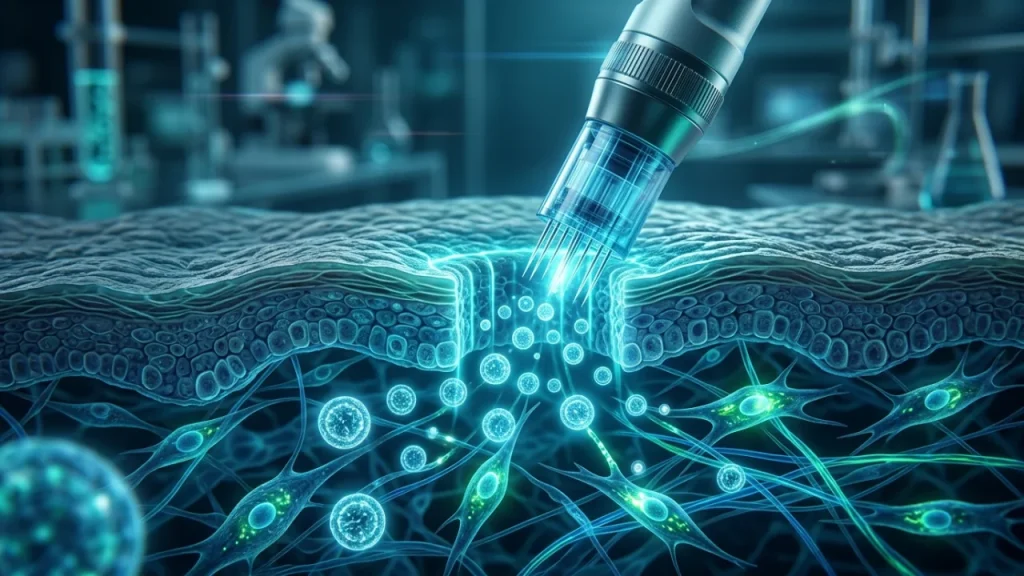
The process starts with precise mechanical action. A device creates microscopic channels in the skin. These channels are incredibly small. They are not large wounds. This controlled injury is a crucial trigger. It jumpstarts the skin’s natural repair system. Blood flow increases to the area. Your body’s own healing cells get to work.
This first step prepares the ground. Think of it like preparing a garden bed for new seeds. The micro-channels create pathways. They also send a clear biological signal. The signal tells the skin it is time to renew itself. This sets the perfect stage for the next phase.
Now comes the biological boost. A solution containing exosomes is applied. These exosomes are tiny messengers. They are derived from stem cells. The freshly created micro-channels allow for direct delivery. The exosomes can reach deeper skin layers effectively. Without the channels, much of this material would sit on the surface.
The exosomes do not work alone. They communicate with your skin’s cells. They transfer key molecules like proteins and RNA. These molecules carry instructions. The instructions tell your cells to ramp up specific activities. This is the core of how SkinPen with exosomes functions as a unified treatment.
The combined effect follows a logical sequence. – First, collagen production gets a major signal. Your fibroblasts are instructed to build new structural proteins. – Second, inflammation from the micro-injuries is calmed. Exosomes help modulate the healing response. – Third, overall skin metabolism improves. Cellular turnover and tissue repair operate more efficiently.
This synergy leads to clearer outcomes. Results often appear more pronounced than with microneedling alone. The skin’s texture improves visibly. Fine lines may soften. Tone and elasticity can show enhancement. The healing process itself might also be smoother and faster.
The entire procedure is relatively brief. The microneedling step takes minutes. The exosome application is immediate. There is no extended downtime for most people. The skin might be pink for a day or two. This makes it a practical option for many.
Why does this combination matter so much? It merges two powerful concepts. Physical stimulation meets targeted biological communication. One method opens the door. The other walks through it with a precise toolkit. This elevates the treatment beyond simple physical remodeling.
It addresses aging at a cellular level. The approach is not just about filling lines temporarily. It aims to improve how your skin cells behave and function. The goal is healthier, more resilient skin over time.
The science supports this logic. Studies show exosomes can influence wound healing pathways. They support tissue regeneration directly where it is needed most. This targeted action is the key advantage of the combined method.
Ultimately, SkinPen with exosomes works by creating an ideal environment for smart repair. The skin gets both a wake-up call and detailed instructions. This dual approach can lead to more satisfying and sustained results for patients seeking genuine skin improvement.
Why Exosomes Are Key to Skin Repair
Exosomes are tiny natural messengers. Your own cells create them. They are not a synthetic ingredient. Think of them as microscopic delivery trucks. They carry important cargo from one cell to another.
This cargo includes proteins, lipids, and genetic instructions. It is vital for communication. Cells constantly release these vesicles. They travel through bodily fluids to reach other cells. The receiving cell accepts the package. It then changes its behavior based on the new instructions.
This process is crucial for skin repair. When skin is injured, cells send signals. They use exosomes to coordinate the healing response. The messages tell cells to multiply. They direct them to build new collagen. They also help calm inflammation.
Exosomes work at a foundational level. They do not just add a temporary substance. They change cellular activity. This leads to genuine tissue renewal. The skin’s own repair systems get activated more efficiently.
Why are they so effective for treatments like SkinPen with exosomes? Microneedling creates controlled micro-injuries. This triggers the skin’s natural repair mode. Adding exosomes supercharges this process. It provides a concentrated dose of precise signals.
The exosomes guide each healing phase. They help ensure the repair is organized and high-quality. Without clear instructions, healing can be messy. Collagen fibers may form in a disorganized way. Exosomes help promote structured, healthy collagen.
Their key functions in skin repair include: – Modulating inflammation: They can signal to reduce excessive swelling and redness. – Promoting fibroblast activity: Fibroblasts are collagen-producing cells. Exosomes tell them to work. – Enhancing angiogenesis: This is the formation of new, tiny blood vessels for better nutrient delivery. – Supporting barrier restoration: They aid in rebuilding the skin’s protective outer layer.
Exosomes are species-specific and patient-derived in advanced research. For clinical applications, they are carefully sourced and purified. Safety and compatibility are paramount. The goal is to use nature’s own communication system.
This biological targeting is what sets the approach apart. It is not a one-size-fits-all stimulus. It is a tailored dialogue with your skin’s biology. The exosomes speak the language your cells understand perfectly.
The result is smarter healing. The skin regenerates with better guidance. This can mean less downtime and improved outcomes. The focus shifts from simple wound closure to optimal tissue remodeling.
Understanding this mechanism clarifies the treatment’s value. It moves beyond surface-level improvement. It engages the skin’s innate intelligence for lasting change. This cellular conversation is the core of next-generation regenerative care, paving the way to explore practical treatment experiences next.
Benefits of Using SkinPen with Exosomes
The combination of SkinPen with exosomes creates a treatment that is more than the sum of its parts. It offers clear advantages over traditional microneedling. The benefits are both visible and functional.
First, this approach can lead to more significant and faster visible improvements. Traditional microneedling relies solely on the skin’s natural, and sometimes variable, healing response. Adding exosomes provides direct biological instructions. This guidance helps ensure the repair process is robust and efficient. You may see improved texture and tone sooner. Results like firmer skin and reduced fine lines can be more pronounced.
The treatment also promotes a higher quality of healing. Think of collagen. Microneedling tells the skin to make more collagen. Exosomes instruct it to make better, more organized collagen. This structural difference is key for long-lasting strength and elasticity. The new tissue resembles healthy, youthful skin more closely. It is not just scar tissue filling holes.
Another major benefit is the potential for reduced downtime and irritation. Exosomes help modulate inflammation. They send signals to calm the immune response. This means post-treatment redness and swelling may be less severe. They may also fade more quickly. Your skin can move from the reactive phase to the productive repair phase faster. This makes the treatment experience more comfortable for many.
The regenerative effects are also more comprehensive. Traditional methods primarily target collagen in the dermis. The exosome-enhanced approach supports healing in multiple layers and cell types. It aids in rebuilding the skin’s protective barrier function. It encourages better nutrient delivery via new capillaries. This holistic support addresses both cosmetic concerns and skin health fundamentals.
Precision is a further advantage. The exosomes deliver a targeted set of commands. These commands are specific to skin regeneration. This reduces random or inefficient cellular activity. Energy and resources are focused on optimal repair pathways. The biological signal is clear and direct.
Consider these key patient benefits in summary: – Enhanced efficacy: Potentially greater improvement in wrinkles, scars, and skin laxity. – Smarter healing: Guidance towards high-quality, well-structured tissue regeneration. – Calmer recovery: Possibly less inflammation and shorter downtime after the procedure. – Holistic improvement: Benefits that extend to barrier health and overall skin function. – Synergistic action: Mechanical channels and biological messages work together perfectly.
This method shifts the goal from simply injuring the skin to heal, to strategically communicating with it to regenerate. The value of SkinPen with exosomes lies in this intelligent dialogue. It leverages the body’s own systems but provides a detailed blueprint for repair. The outcome is not just changed skin, but optimally remodeled skin. This represents a meaningful step forward in aesthetic and regenerative medicine, setting a new standard for what a minimally invasive treatment can achieve.
The Science Behind Exosomes and Skin Healing
What Exosomes Are Made Of
Exosomes are not empty bubbles. They are tiny cargo ships loaded with powerful molecules. These molecules are the actual instructions for skin cells. The contents are carefully selected by the parent cell that made them. This cargo is what makes exosome-enhanced treatments like SkinPen with exosomes so targeted.
Think of an exosome’s membrane as a protective envelope. Inside, it carries a precise mix of ingredients. Each ingredient has a specific job in skin repair. The main components are nucleic acids, proteins, and lipids. Together, they create a coordinated regenerative message.
Nucleic acids like RNA are vital. Messenger RNA (mRNA) is a key player. It carries blueprints for building specific proteins. When an exosome delivers mRNA to a skin cell, the cell uses the blueprint. It then manufactures new proteins itself. These proteins might be collagen or elastin. They are the building blocks of firm, youthful skin.
MicroRNAs are another crucial nucleic acid. They do not carry blueprints. Instead, they act as managers or switches. They can turn certain cell processes on or off. For example, a microRNA might switch off a gene that causes inflammation. Another might switch on a gene for tissue growth. This fine-tuning directs cellular behavior without being disruptive.
Proteins form another major part of the cargo. These include growth factors and enzymes. Growth factors are like urgent signals. They bind to receptors on a skin cell’s surface. This binding tells the cell to divide, move, or make new matrix. Enzymes help speed up essential chemical reactions in the repair process.
Structural proteins are also present. These can become part of the new skin framework. They provide immediate physical support while the cell catches up with its own production.
Lipids are found in the exosome’s membrane and inside it. These fats are not just packaging. Some lipids have signaling roles. They can help reduce oxidative stress in aged skin cells. Others help the exosome fuse perfectly with a target cell’s membrane. This ensures the cargo is delivered directly into the cell’s interior.
The synergy of these components is what matters most. An exosome delivers a complete toolkit, not a single tool. It provides the blueprint (mRNA), the foreman (microRNA), and the materials (proteins and lipids) all at once.
This complex cargo explains the precision noted earlier. A random chemical signal might tell a cell just one thing. An exosome’s cargo delivers a full, nuanced set of instructions. It guides the cell through multiple steps of a healing pathway.
Understanding this cargo demystifies the process. The skin improvement seen after treatment is not magic. It is the result of these biological nanomachines delivering their precise molecular load. They effectively reprogram local skin cells to act younger and repair better.
The next logical question is how these loaded vesicles actually communicate with our skin cells to start this change.
How Exosomes Communicate Between Cells
Exosomes are messengers. They carry information from one cell to another. This is not a random broadcast. It is a targeted delivery.
The process starts with a donor cell. This could be a fibroblast or a stem cell. The cell creates an exosome and loads it with cargo. Then it releases the vesicle into the extracellular space. Think of it as sending a sealed package.
The exosome now travels. It moves through the fluid between skin cells. Its journey ends at a target cell. This is often a neighboring skin cell needing help.
Targeting is key. The exosome does not bump into cells randomly. Its outer membrane has specific address proteins. These proteins act like keys. They look for matching lock proteins on a target cell’s surface.
When the key finds the lock, the exosomes bind. This binding is the first signal. It tells the target cell to prepare for a delivery.
Next, the exosome must deliver its cargo. There are three main ways this happens.
- Fusion. The exosome’s membrane merges with the target cell’s membrane. It opens like a hatch. The entire molecular cargo spills directly into the cell’s interior.
- Endocytosis. The target cell engulfs the exosome. It wraps its membrane around the vesicle to form a pouch. Then it pulls the pouch inside. The exosome is now in a cellular compartment where it can unpack.
- Receptor Activation. Sometimes, the exosome’s surface proteins act as signals themselves. They bind to receptors on the target cell. This binding triggers a chain reaction inside the cell without full vesicle entry.
The most complete transfer happens through fusion or engulfment. The target cell receives the full toolkit: proteins, RNA, and lipids.
Inside the target cell, the cargo gets to work. The messenger RNAs are read by the cell’s machinery. New proteins are made. The microRNAs silence old genes. They shift the cell’s priorities toward repair and renewal.
This communication changes the cell’s behavior. A dormant fibroblast might start producing collagen. A stressed cell might reduce its inflammatory signals. Healing pathways are activated.
The beauty of this system is its efficiency and intelligence. The donor cell sends a complex instruction set. The target cell receives it and executes the program. This is biological networking at its finest.
The SkinPen with exosomes treatment leverages this natural system. Microneedling creates controlled channels in the skin. These channels are access points. They allow a high concentration of exosomes to bypass the skin’s tough outer barrier.
The exosomes are placed near target cells that need instructions for repair. The micro-injuries from the needles also send a mechanical signal. This signal primes cells to be more receptive.
The combination is powerful. The needles create a call for help in the skin. The exosomes arrive with the exact answer. They deliver their regenerative instructions directly to the cells ready to listen.
This direct communication explains the treatment’s precision. General serums work from the surface down. Exosomes work from the inside out. They talk to cells in their own molecular language.
The result is coordinated skin healing. Multiple cells get the same repair instructions at once. They act in unison to rebuild structure and improve function.
Understanding this dialogue completes the picture. We now see the full cycle from cargo loading to signal delivery and cellular change. The final step is observing what this change looks like in real, visible skin improvement.
The Role of Growth Factors in Skin Renewal
Growth factors are powerful signaling proteins. They act like master switches for skin cells. These proteins tell cells to divide, to move, and to produce new structural materials. In natural healing, your body releases them at a wound site. This process is slow and can be inefficient with age.
Exosomes carry a concentrated cocktail of these growth factors. Think of them as a targeted delivery of these vital instructions. The SkinPen with exosomes method ensures this cargo reaches the deep dermal layer. This is where collagen and elastin are made.
Collagen is the main structural protein in your skin. It provides strength and firmness. Elastin gives skin its snap-back quality. Fibroblasts are the cells that manufacture both. As we age, fibroblast activity slows. Existing collagen fibers also break down.
Growth factors directly address this slowdown. They bind to specific receptors on the fibroblast’s surface. This binding is like a key turning a lock. It triggers a cascade of events inside the cell.
The cell’s machinery shifts into gear. It starts reading genetic blueprints for collagen production. Resources are allocated to build new proteins. The fibroblast becomes a factory for new structural support.
Several key growth factors work together in this process: – TGF-beta (Transforming Growth Factor-beta) is crucial. It strongly signals fibroblasts to produce collagen types I and III. These are the most abundant types in healthy skin. – VEGF (Vascular Endothelial Growth Factor) promotes new blood vessel formation. This improves nutrient and oxygen delivery to the working fibroblasts. – FGF (Fibroblast Growth Factor) further stimulates fibroblast growth and activity. It supports ongoing tissue repair.
This is not a vague “boost.” It is a precise biological command chain. The exosome delivers the signalers. The fibroblasts receive the command. The result is increased production of new, healthy collagen and elastin fibers.
The microneedling component is vital here too. The micro-channels create a temporary, localized wound state. This naturally draws fibroblasts to the area. They are already activated and alert. When the exosomal growth factors arrive, these cells are primed to respond immediately.
The new collagen doesn’t just fill space. It organizes into a strong, supportive network. This network reinforces the skin’s foundation from within. It improves tensile strength and reduces the appearance of fine lines.
Elastin production is similarly encouraged. New elastin fibers integrate with the collagen matrix. This helps skin regain some of its natural resilience and elasticity.
The process mirrors youthful healing but is guided and amplified. The body’s natural signals are supported by a concentrated therapeutic signal. This leads to more robust and structured results than microneedling alone.
Ultimately, growth factors translate biological communication into physical change. They are the literal architects of renewal, directing the cellular labor that rebuilds skin’s infrastructure from the inside out.
The Microneedling Process with Exosomes
How Microneedling Creates Micro-Channels
Microneedling uses fine, sterile needles to create controlled micro-injuries in the skin. This is a precise mechanical process. The device moves rapidly across the skin’s surface. The needles penetrate to a specific, pre-set depth.
This depth is key. It is typically set between 0.5 and 2.5 millimeters. The goal is to reach the dermis. The dermis is the skin’s living, structural layer. The epidermis is the outer protective layer. It acts as a formidable barrier.
The needles bypass this top barrier. They create hundreds of microscopic channels per second. These channels are not large wounds. They are tiny, vertical pathways. Think of them as temporary tunnels through a thick wall.
The skin immediately recognizes these micro-channels as minor injuries. This triggers a natural wound healing cascade. Blood flow increases to the area. Signaling molecules called cytokines are released. They attract immune cells and fibroblasts to the site.
This process is vital for two reasons. First, it jump-starts the body’s own repair mechanisms. Second, and crucially, it temporarily alters the skin’s barrier function. Those micro-channels become direct entry points.
Without these channels, most topical substances cannot penetrate deeply. They are stopped by the epidermis. The epidermis is designed to keep things out. Microneedling creates a temporary window of opportunity.
The channels remain open for a short period. This period is often estimated between 24 to 72 hours. During this time, applied substances can bypass surface barriers. They can travel directly into the dermal layer.
This is where the synergy with exosomes becomes powerful. Applying exosomes after microneedling uses these channels. The exosome solution is spread over the treated skin. The tiny vesicles then flow into the micro-channels.
They move down the pathways created by the needles. This delivers them precisely where they are most needed. They reach the dense network of fibroblasts and other cells in the dermis. Surface application alone could never achieve this targeted delivery.
The design of the channels matters. They are vertical and narrow. This architecture helps protect the surrounding tissue. It promotes clean, focused healing. It also allows for a high density of treatment points across the skin.
- The needles create a path through the barrier.
- The body initiates a localized healing response.
- Channels become conduits for deeper delivery.
- Exosomes use these conduits to reach target cells.
The entire process is controlled and minimal. It causes minor redness and swelling. This is part of the intended biological response. The skin is not severely damaged. It is strategically primed for regeneration.
The micro-channels themselves begin to close within hours. The skin’s outer layers start to repair quickly. However, the therapeutic journey inside continues. The delivered agents are now at work in the dermis.
This mechanical step transforms a surface treatment into a deep-reaching procedure. It bridges the gap between external application and internal effect. The SkinPen with exosomes approach leverages this bridge perfectly. The device creates the pathways. The exosomes provide the sophisticated biological cargo that travels down them.
Ultimately, microneedling does more than just stimulate collagen through injury. It physically re-engineers access to the skin’s living matrix. This allows for a level of precision in delivery that was previously impossible with topical treatments alone. The next logical question is how exosomes specifically behave once this direct access is granted to them deep within the skin.
##
Proper preparation is key for optimal results and smooth healing. Your skin needs to be in a receptive state. This begins with a consultation with a qualified provider. This visit is not just a formality. It is a critical planning session.
Your provider will review your complete medical history. They will discuss your specific skin goals. Be ready to talk about any medications or supplements you take. Certain substances can increase bleeding or slow healing. For example, aspirin and some anti-inflammatory drugs are often paused. Your provider will give you a clear list of what to avoid and for how long.
A thorough skin assessment happens during this consultation. The provider will examine your skin type and condition. They will note any active breakouts, sun damage, or areas of sensitivity. This evaluation directly influences the treatment plan. It determines the needle depth settings and the formulation used.
Your at-home skincare routine must be adjusted in the weeks before treatment. The goal is to calm the skin and strengthen its barrier. Harsh products are temporarily discontinued.
- Stop using retinoids and retinols for 5-7 days prior.
- Avoid alpha-hydroxy and beta-hydroxy acids for about one week.
- Do not use any physical or chemical exfoliants.
- Halt any bleaching or depilatory creams.
Gentle cleansing and consistent moisturizing become your focus. Sun protection is absolutely non-negotiable. You must avoid sunburn and significant tanning for at least two weeks before your appointment. Tanned or burned skin cannot be treated. It increases the risk of side effects like pigmentation changes.
On the day of your procedure, arrive with a clean face. Do not apply makeup, moisturizer, or sunscreen. Wear comfortable clothing. The clinical staff will cleanse your skin again in the office. They will then apply a topical numbing cream. This cream sits on the skin for about 20 to 30 minutes. It makes the treatment comfortable for you.
The numbing cream is thoroughly removed before the procedure begins. The skin is then cleansed with a medical-grade antiseptic solution. This step sterilizes the treatment area. It prevents any bacteria from being introduced into the micro-channels. Your provider will wear sterile gloves throughout the process.
You will be given protective eyewear to wear. The treatment itself involves precise, mechanical movements of the device across your skin. The sensation is often described as a light vibration or sandpaper-like feeling. Discomfort is typically minimal due to the numbing cream.
Communication with your provider during the treatment is important. You can let them know if you need a brief pause. The entire process for a full face usually takes about 30 to 45 minutes. The length depends on the areas being treated.
After the microneedling passes are complete, the exosome solution is immediately applied. It is gently massaged into the skin so it can penetrate through the fresh micro-channels. A soothing serum or mask may also be applied to calm the skin instantly. You will then receive clear aftercare instructions to follow at home. This preparation creates the ideal canvas for the regenerative science to perform its work effectively and safely.
What Happens During the Treatment Session
The treatment session begins with the microneedling device. Its fine needles create thousands of microscopic channels in the skin. These are not wounds. They are precise, controlled openings. They bypass the tough outer layer of skin, the stratum corneum. This creates direct pathways into the living dermis below.
This mechanical action triggers the skin’s natural repair system. The body perceives the micro-channels as a signal to heal. It initiates a controlled inflammatory response. Key cells called fibroblasts become activated. They rush to the site. Their job is to produce new structural proteins. These proteins are collagen and elastin. They are the building blocks of firm, youthful skin.
The immediate application of exosomes is the next critical step. The exosome solution is gently massaged onto the skin. It enters through the fresh micro-channels. Think of the channels as delivery tunnels. They allow the exosomes to reach deeper skin layers directly. Without these channels, most exosomes would sit on the surface. Their powerful cargo would be wasted.
The synergy of SkinPen with exosomes is key here. The microneedling prepares the landscape. It creates access and sends a repair signal. The exosomes then deliver a targeted biological instruction set to your skin cells. They are packed with growth factors, proteins, and genetic material. This cargo is released upon entering the dermis.
What do these exosomes do? Their work is complex but elegant. – They communicate with your local fibroblasts. The exosomes tell these cells to increase collagen production. – They help modulate the inflammatory response. This guides healing toward regeneration, not scarring. – They promote new blood vessel formation. This improves nutrient delivery and skin vitality. – They carry antioxidants that protect cells from oxidative stress during repair.
This process transforms a simple mechanical injury into a guided regenerative event. The treatment uses your body’s own language. The exosomes act as cellular messengers. They enhance and direct the natural healing cascade that microneedling started. The result is a more efficient and effective rebuilding process.
The entire in-office session is a coordinated sequence. Mechanical stimulation comes first. Biological enhancement follows immediately. This timing is crucial. The skin is most receptive right after needling. The micro-channels begin to close within hours. Applying the exosomes at this peak moment ensures optimal absorption.
Patients typically feel only mild sensations during this phase. The numbing cream manages any discomfort from the needling. The application of the exosome solution itself is gentle and soothing. There is no additional pain. The skin may feel warm and tight afterward. This is a normal sign of the regenerative process beginning.
The session concludes with a final calming step. A hydrating serum or cooling mask is often applied. This comforts the skin’s surface. It provides immediate hydration. It also helps seal in the beneficial exosomes. You leave the office with an active treatment working beneath the surface. The foundation for new, healthier skin has been laid. The real work now continues at the cellular level over the following weeks.
Targeting Skin Concerns with Exosome Therapy
Reducing Fine Lines and Wrinkles Naturally
Fine lines and wrinkles form because our skin’s natural repair systems slow down. The framework of collagen and elastin weakens. Cellular communication becomes less efficient. This is where the synergy of SkinPen with exosomes makes a profound difference. The treatment does not just plump skin temporarily. It instructs cells to rebuild their own structural support.
The microneedling creates a precise injury. This tells fibroblasts to wake up. Fibroblasts are the cells that make collagen. But aging cells need clear instructions. They often get confused or slow. The applied exosomes deliver those instructions directly. They carry specific growth factors and RNA messages. These signals tell the fibroblasts to produce new, high-quality collagen type I and III. This is the main structural protein in skin.
The process also targets elastin fibers. These give skin its snap-back quality. Exosome signals help repair damaged elastin. They guide the formation of a more organized, resilient network. This dual action on collagen and elastin addresses wrinkles at their root. The skin’s foundation becomes stronger from within.
The results are not instant like a filler. This is a gradual regeneration. You are guiding your skin to heal itself better. The timeline is key. Initial redness fades in days. The deeper cellular work continues for weeks. Patients often notice a subtle tightening first. Then, lines begin to soften from the bottom up.
- Collagen production increases steadily for about six weeks.
- New elastin supports the renewed collagen matrix.
- Skin texture improves as cells turn over more efficiently.
Exosomes also carry enzymes that break down old, damaged collagen. This is crucial. They help clear out the dysfunctional debris. This makes space for new, healthy fibers to take hold. The remodeling process becomes more complete.
Another key mechanism involves hydration at a cellular level. Exosomes can transfer hyaluronic acid synthase genes to cells. This means they teach skin cells to produce more of their own hydrating molecules. Improved intrinsic hydration plumps the skin from the inside. It reduces the appearance of fine lines caused by dryness.
The approach is fundamentally natural. It uses the body’s own communication system. There are no foreign substances left behind. The exosomes deliver their messages and are then cleared. The lasting change comes from your revitalized cells. This makes the smoothing effect durable and authentic.
Treatment for wrinkles typically requires a series of sessions. This builds upon each cycle of regeneration. Maintenance treatments can then support this renewed cellular activity long-term. The goal is to shift skin into a more youthful state of function.
Ultimately, reducing lines this way changes the skin’s biology. It moves beyond surface-level correction. The method with SkinPen with exosomes provides the tools and precise instructions for a true renewal. The next logical concern is often pigmentation, which operates on a different cellular pathway.
Improving Skin Texture and Acne Scars
Acne scars and rough texture stem from flawed healing. The skin’s repair process gets disrupted. This often leaves behind too much collagen or too little. The result is uneven terrain. Pitted scars and raised bumps are common. Traditional methods can struggle to correct this precisely.
The synergy in a treatment like SkinPen with exosomes tackles this problem directly. Microneedling creates controlled micro-injuries in precise patterns. This breaks up old, disorganized scar fibers. It also initiates a fresh healing signal. Then, exosomes arrive with specific instructions. They guide this new healing toward a more normal, even structure.
Exosomes communicate with several key skin cells. They target fibroblasts, which make collagen. They also reach keratinocytes, the primary skin cells. The messages tell these cells to behave in a balanced way. The goal is not just more collagen, but better-organized collagen.
For pitted or atrophic scars, the focus is on building up tissue. Exosomes encourage fibroblasts to produce new, healthy collagen strands. These strands are laid down in a supportive network. This gently fills depressions from below. The process is gradual and natural.
For raised or hypertrophic scars, the approach is different. Here, exosomes help modulate the repair. They can signal for the careful breakdown of excess collagen. They also calm overactive fibroblasts. This helps flatten and soften prominent scars.
The improvement in overall skin texture comes from enhanced cell turnover. Exosomes promote faster shedding of old, dull surface cells. They support the healthy development of new cells. This leads to a smoother, more refined skin surface.
- Pores can appear smaller as surrounding skin tightens.
- Superficial roughness diminishes with regular cell renewal.
- The overall glow improves as light reflects more evenly.
This textural transformation happens over weeks. The initial micro-injuries heal quickly. The biological activity of exosomes continues working beneath the surface. Collagen remodeling is a slow process. Most patients see progressive improvement for several months after a session.
A series of treatments is often ideal for scars. Each session builds on the last. It trains the skin to heal optimally. Maintenance sessions can then preserve the refined texture long-term.
The outcome is skin that feels as good as it looks. It is not just about visual change. It is about tactile smoothness. This approach addresses the root cause of textural issues. It provides the tools for the skin to repair itself correctly.
The same principles that refine texture also support stronger, healthier skin overall. This resilience is key for preventing future damage and maintaining clarity.
Evening Out Skin Tone and Pigmentation
Uneven skin tone often starts deep within the skin’s layers. Melanocytes are the cells that produce pigment. They can become overactive due to sun exposure or inflammation. This leads to dark spots and patches. Traditional treatments often try to strip away the surface. A SkinPen with exosomes approach works differently. It focuses on calming and retraining these pigment cells.
Exosomes carry specific instructions to skin cells. They deliver messages that help normalize melanocyte activity. Think of them as reset signals. They do not bleach or destroy. Instead, they encourage a more balanced, natural pigment production. This process targets the cause, not just the symptom.
The microneedling channels are crucial for delivery. They create temporary pathways through the outer barrier. This allows exosomes to reach the precise depth where melanocytes live. Direct access is key for effective communication. Surface creams cannot achieve this targeted delivery.
The therapy addresses two main types of discoloration. – Post-inflammatory hyperpigmentation often follows acne or injury. Exosomes help reduce the inflammatory signals that trigger excess pigment after a wound. – Sun spots result from years of UV exposure. The treatment supports skin repair and can help fade existing solar lentigines.
The results are gradual and natural-looking. The skin does not lighten uniformly in an artificial way. Problem areas simply fade as pigment production normalizes. The surrounding skin tone becomes more even and clear.
This method is gentle on the skin barrier. Harsh topical agents can sometimes irritate and worsen pigmentation. Exosome therapy promotes healthy barrier function. A strong barrier protects melanocytes from unnecessary triggers.
The process involves several stages after treatment. First, the micro-injuries heal within days. Then, exosomes begin their signaling work. Melanocytes slowly return to a balanced state. Existing dark spots start to break up and rise to the surface. They eventually flake away during normal cell turnover.
Multiple sessions are typically recommended for pigmentation. Consistency helps reinforce the corrective signals. Maintenance treatments can then preserve the even tone achieved. This is especially important in areas with frequent sun exposure.
Combining this approach with daily sunscreen is essential. Sun protection prevents new UV damage from stimulating melanocytes again. It protects the investment in the treatment. Consistent sunscreen use allows the biological correction to take full effect.
The outcome is a harmonious complexion. Skin looks clear and balanced from within. This strategy offers a sophisticated alternative to superficial peeling agents. It uses the skin’s own language to correct discoloration.
This foundational correction of tone also contributes to a healthier skin ecosystem. Balanced cells are more resilient cells. The next logical step is understanding how this cellular support translates into a more youthful overall appearance.
The Healing Response After Treatment
How the Body Reacts to Exosome Delivery
The skin immediately recognizes the micro-channels created during treatment. This is not damage, but a precise call to action. The body’s natural repair systems switch on at once. Immune cells and fibroblasts move toward the tiny pathways. Their job is to start rebuilding. This initial phase is clean and controlled.
Simultaneously, delivered exosomes enter this active environment. Think of them as cellular messengers. They carry specific instructions. These instructions are packaged in lipids and proteins. The exosomes fuse with nearby skin cells. They deliver their cargo directly into the cell’s command center.
This cargo includes growth factors and microRNAs. These molecules do not force cells to act. Instead, they guide and optimize the cells’ own behavior. They enhance the natural healing dialogue already happening. The process of SkinPen with exosomes leverages this dual signal. Mechanical needling sets the stage. Biological exosomes direct the performance.
The body’s reaction unfolds in a coordinated sequence. We can break down the key stages:
- Inflammation Management: The micro-injuries cause a brief, localized inflammatory signal. This is normal and necessary. Exosomes help modulate this response. They encourage a balanced state that promotes repair without excessive redness or swelling.
- Collagen Production: Fibroblasts receive strong cues to produce new collagen and elastin. Exosome signaling makes this production more efficient. Cells build high-quality structural proteins. This work begins within days but continues for months.
- Cellular Renewal: Stem cells and progenitor cells in the area become more active. Exosomes help create a microenvironment that supports their function. This leads to healthier turnover of skin cells. The new cells that emerge are more robust.
The synergy here is critical. Microneedling alone provides a strong physical stimulus. Adding exosomes refines that stimulus with biological intelligence. It tells the skin not just to heal, but to heal in an optimal, regenerative way. The treatment essentially upgrades the body’s own playbook for repair.
You will not see most of this activity. It occurs at a microscopic level beneath the surface. The first visible signs are often improved texture and hydration. The skin may look refreshed and calm after the initial redness subsides. This reflects the early establishment of order.
The entire process relies on cellular communication. Skin cells talk to each other constantly. Exosomes amplify the most beneficial parts of this conversation. They help silence unhelpful noise, like signals for scarring or uneven pigment. This results in a more harmonious healing trajectory.
Healing is not a single event but a sustained program. The effects of exosome signaling can last for weeks post-treatment. Cells continue to follow the regenerative instructions they received. This extended activity is why results improve over time, rather than appearing instantly.
This efficient healing response creates the ideal foundation for cosmetic improvement. When repair is directed and precise, aesthetic benefits follow naturally. The skin’s structure becomes stronger and more resilient from within. This internal strength then manifests as visible youthfulness and clarity externally, setting the stage for lasting rejuvenation.
Timeline for Collagen and Elastin Production
The real structural change begins days after your treatment. The micro-channels created by the procedure are now closed. But beneath the surface, a precise biological sequence is starting. This sequence is directed by the signals from exosomes. It is a carefully timed rebuild of your skin’s support system.
Think of collagen and elastin as your skin’s scaffolding and springs. Collagen provides firmness and structure. Elastin gives skin its snap-back quality. Natural aging slows their production. The SkinPen with exosomes treatment aims to restart and guide this process efficiently.
The initial inflammatory phase is brief and purposeful. It lasts about 24 to 72 hours. This phase is not just about redness. It clears debris and releases the first growth factors. These factors call repair cells to the area. Exosome signaling helps regulate this phase. It prevents excessive inflammation that can lead to poor healing.
New collagen production starts in earnest after this first phase. Here is a simplified timeline for what happens next:
- Week 1 to 3: Fibroblasts, your skin’s builder cells, become highly active. They receive strong pro-collagen signals from the exosomes. They begin synthesizing new Type III collagen. This is a youthful, flexible form of collagen. At this stage, you may not see firmness yet. The skin is laying down new framework.
- Month 1 to 3: The remodeling process intensifies. Enzymes carefully break down old, damaged collagen fibers. New collagen matures and strengthens. Some of the initial Type III collagen converts into stronger Type I collagen. This is the main structural protein in mature skin. Early improvements in skin texture and fine lines often become visible now.
- Month 3 to 6: This is the peak period for visible firming and tightening. The new collagen network becomes dense and organized. Elastin production also hits a significant pace. New elastic fibers integrate with the collagen. This combination improves skin resilience and lift. Results are typically very apparent by the six-month mark.
- Beyond 6 Months: Remodeling continues subtly for up to a year. The collagen matures further, becoming more stable. The supportive matrix becomes robust. This long activity is why results are progressive and lasting.
The presence of exosomes optimizes every stage of this timeline. They ensure fibroblast activity is sustained and focused. Without clear guidance, collagen production can be disorganized or insufficient. The synergy in SkinPen with exosomes promotes a coordinated, high-quality rebuild.
You will not feel this production happening. The first tangible sign is often a smoother skin surface. Then, you may notice your skin feels thicker or more supple to the touch. Finally, visual firmness becomes clear as the underlying structure gains volume and strength.
This process requires specific building blocks. Your body needs amino acids from protein, vitamin C, and other nutrients. Supporting your body with good nutrition and sun protection is crucial. It gives your skin the raw materials to build these new proteins effectively.
The timeline is a cascade of biological events. Each step prepares for the next. The outcome is a reinforced dermal structure that visibly reduces laxity and improves contour. This internal foundation is what makes the rejuvenation both significant and enduring, leading naturally to the next consideration: how to maintain these newly built results over time.
Managing Side Effects and Recovery Tips
Your skin is actively healing after a microneedling procedure. This creates a temporary window of sensitivity. Proper care during this time supports the regenerative process. It also helps manage common side effects effectively.
You can expect some immediate reactions. These are normal signs of the controlled injury that triggers renewal. Redness is typical. It often looks like a moderate sunburn. Mild swelling may also occur. These effects usually fade within 48 hours. Tiny micro-channels are open briefly. Your skin may feel warm or tight.
Pinpoint bleeding is possible. It is minimal and stops quickly. A slight sandpaper-like texture often develops within a day. This is due to temporary dryness and peeling. Do not pick or scratch at your skin. Let it shed naturally.
The first 24 hours are critical. Treat your skin as a sterile wound. Use only the gentle, recommended cleanser provided by your clinician. Avoid tap water on the treated area. Pat your face dry with a clean towel. Do not rub.
Apply any post-procedure serum or ointment as directed. These products are designed to soothe and protect. They create a barrier against bacteria. They also support the initial repair phase.
Sun protection is non-negotiable. Your new skin is highly vulnerable to UV damage. Use a broad-spectrum mineral sunscreen daily. Reapply it every two hours if you are outside. Wear a wide-brimmed hat for extra defense. This practice prevents pigmentation issues.
Keep your skincare routine simple for the first week. Avoid active ingredients like retinoids or alpha hydroxy acids. Do not use scrubs or brushes. Let your skin focus its energy on rebuilding from within.
Hydration is key both inside and out. Drink plenty of water to support cellular functions. Use a basic, fragrance-free moisturizer to combat dryness. This maintains a flexible environment for new cell growth.
Avoid strenuous exercise for 48 hours. Sweat can irritate the treated skin. It may also introduce bacteria. Skip saunas, steam rooms, and swimming pools for at least one week.
Makeup can usually be resumed after 48 hours. Ensure your brushes and products are clean. Apply makeup gently to avoid irritation.
The synergy in SkinPen with exosomes can influence recovery. The biological signaling may help modulate inflammation more efficiently. This can potentially shorten the visible redness phase. The focus remains on creating an optimal environment for the exosomes and your cells to work.
Listen to your skin’s signals. If you experience severe pain, spreading redness, or yellow discharge, contact your provider immediately. These are not normal side effects.
Most visible recovery happens within three to five days. The deeper healing continues unseen for weeks. Your aftercare directly supports the quality of the collagen being built during that time.
Following these steps minimizes risks. It maximizes the long-term benefits of your treatment. Proper recovery sets the stage for the radiant results to emerge seamlessly from the foundational work happening below the surface. This careful management leads naturally to understanding how to integrate this treatment into a long-term skincare strategy.
Comparing Exosome Treatments to Other Options
SkinPen with Exosomes vs. Traditional Microneedling
Traditional microneedling creates controlled micro-injuries. This triggers the skin’s natural wound healing process. The body responds by producing new collagen and elastin. This approach relies entirely on your body’s innate, mechanical response. It is a proven method for improving texture and firmness.
The SkinPen with exosomes approach adds a powerful biological layer. It is not just about creating channels. It is about filling those channels with precise instructions. Exosomes are natural signaling molecules. They carry messages between cells. These messages can direct healing in very specific ways.
Think of traditional microneedling as rebuilding a road. The process clears the old surface and lays new pavement. The SkinPen with exosomes method does that too. But it also adds a team of expert engineers. These engineers guide the construction for a better, longer-lasting result.
The key differences show in several areas. First is the scope of regeneration. Traditional techniques primarily stimulate collagen to improve structure. The exosome-enhanced method also targets cellular communication. This can improve skin function, not just its framework.
Second is the precision of the response. Your body’s general healing inflammation is broad. Exosome signaling is targeted. It can help calm inflammation more efficiently. It may also directly instruct fibroblasts, which are collagen-producing cells, to work better.
Third is the potential for enhanced results. Studies suggest combining microneedling with exosomes can lead to: – Improved collagen density and quality. – Better modulation of pigmentation issues. – Stronger support for the skin’s barrier function. – A more optimized healing timeline with less downtime.
The results may look different over time. With traditional care, improvements build gradually over months. The combined approach often shows more rapid initial improvements in hydration and luminosity. This is due to the immediate biological signaling. The long-term structural gains then build on that superior foundation.
In essence, traditional microneedling asks your skin to repair itself. The advanced method provides your skin with a detailed blueprint and tools for that repair. This fundamental difference in mechanism explains the divergence in outcomes. It moves the treatment from simple stimulation to intelligent regeneration. Understanding this contrast helps set realistic expectations for what each path can achieve for your skin’s future.
Why Exosomes Offer a Minimally Invasive Solution
Surgical procedures require cutting into the skin. This creates significant physical trauma. The body must then devote massive resources to healing those large wounds. Recovery times are often long and uncomfortable. There is also a higher inherent risk of scarring or infection. These approaches physically remove or rearrange tissue. The goal is a structural change from the outside in.
Exosome treatments work from the inside out. The process is fundamentally different. A device like SkinPen with exosomes creates micro-channels. These are incredibly tiny. They are not cuts but controlled pathways. Their width is measured in microns. They are so small they close within hours. This minimal entry causes very little damage to the skin’s surface. There is no removal of tissue. There is no large wound for the body to manage.
The power comes from what is delivered through these micro-channels. Exosomes carry instructions directly to your skin’s cells. They signal for repair and renewal. This happens at a cellular level, beneath the surface. The skin’s structure is improved without being surgically altered. Think of surgery as rebuilding a house by tearing down walls. An exosome treatment is like sending skilled workers inside to reinforce the foundation and framework quietly.
This minimally invasive nature offers clear practical benefits. Downtime is drastically reduced. Most people experience only short-term redness. It resembles a mild sunburn. This typically fades within a day or two. You can usually return to normal activities almost immediately. Compare this to surgical recovery. That can involve weeks of swelling, bruising, and strict activity limits.
The risk profile is also more favorable. Any procedure has potential risks. However, the risks associated with micro-channels are far lower than with surgical incisions. Major concerns like significant scarring, nerve damage, or serious infection are exceedingly rare. The procedure targets the living layers of the skin without harming its overall integrity.
Results evolve differently too. Surgical outcomes are often immediately apparent after swelling subsides. But they are also static until aging continues. Regenerative results from exosome-enhanced treatments build over time. Your skin continues to improve for months as new collagen forms. The effect is a natural rejuvenation, not an abrupt change.
Why choose this path? It is ideal for those seeking meaningful improvement without surgery. It suits people who cannot afford long recovery periods. It helps those who want to enhance their skin’s health and function, not just its appearance. The goal is regeneration, not just alteration.
This approach represents a modern principle in aesthetics. The best results come from working with your biology, not against it. Using SkinPen with exosomes provides a precise stimulus and the exact biological tools for repair. It guides your skin to heal itself in an optimal way. This method offers a powerful alternative for sustainable rejuvenation without the demands of surgery. It bridges the gap between superficial treatments and major procedures, fulfilling a need for significant yet low-impact solutions.
Cost and Value of Advanced Skin Regeneration
Understanding cost is crucial when considering advanced skin care. The initial price for a regenerative procedure may seem higher than a basic treatment. However, true value is measured over years, not just per session. This perspective changes the calculation entirely.
Think of it like building a house. A superficial treatment is like painting the walls. It looks better quickly. But it does not fix a weak foundation. A procedure using SkinPen with exosomes is like reinforcing the structure itself. It addresses the root causes of aging in your skin. The investment supports lasting change.
Basic cosmetic procedures often need frequent repetition. You might need them every few months to keep results. This creates a cycle of ongoing cost and time commitment. The regenerative approach works differently. It aims to create lasting improvement from within. You may only need a session once or twice a year for maintenance. Over five years, the total spent can become comparable or even favorable.
What are you paying for in advanced regeneration? The value comes from several key parts. – The precision technology that creates optimal channels for healing. – The biological activity of the exosomes themselves, which carry specific instructions. – The expertise required to combine these elements effectively for your skin. – The long-term dividends of healthier skin function.
These factors contribute to a higher initial point. Yet they deliver a different category of result. You are investing in your skin’s biological capital. The goal is to improve its inherent ability to repair and sustain itself. This can reduce future spending on corrective products and quick-fix treatments.
Consider the outcomes discussed earlier. Natural rejuvenation that builds over months has enduring value. You are not paying for a change that disappears quickly. You are funding a process that continues to work for you long after the procedure. Your skin produces more collagen and elastin. It improves hydration and barrier strength. These are measurable functional upgrades.
Compare this to buying a series of cheaper, temporary solutions. The cumulative financial and time cost adds up. The regenerative path offers a consolidated strategy. It targets the source, not just the symptoms, of skin aging. This efficiency provides significant value.
The decision ultimately aligns with your goals. If you seek a one-time alteration, other options exist. If you seek to improve your skin’s long-term health and resilience, this represents a strategic investment. It is an investment in sustained quality and reduced future need.
This leads to a final, practical consideration: how to plan for and access this kind of advanced care responsibly.
Future Trends in Aesthetic Science with Exosomes
Innovations in Exosome Research for Skin Health
The science of exosomes is moving fast. Researchers are not just using these natural messengers. They are learning to engineer them for precise tasks. This turns exosomes into targeted delivery systems. Think of them as tiny, smart packages. Scientists can load them with specific instructions for skin cells.
One major trend is personalization. Future approaches may use exosomes derived from your own cells. This is called autologous therapy. It aims to create a perfect biological match. This could maximize results and minimize any reaction. The process is complex but promising.
Another innovation involves cargo loading. Scientists can put special molecules inside exosomes. – They can pack growth factors for collagen. – They can include antioxidants to fight daily stress. – They can even add genetic instructions like RNA to guide cell behavior.
This makes the exosome’s natural work even more powerful. It is like giving a messenger a detailed map and key tools for the journey.
Targeting is also improving. Researchers are finding ways to direct exosomes to specific cell types. They might add a chemical tag to the exosome’s surface. This tag acts like a homing signal. It ensures the exosome reaches, for example, a fibroblast cell and not others. This increases efficiency and reduces waste.
Combination strategies are a key area of study. The synergy of a device like SkinPen with exosomes is just the start. Scientists are testing exosomes with other energy-based technologies. These include gentle lasers and radiofrequency. The goal is to create even better conditions for skin renewal.
The source of exosomes is also being refined. New methods focus on getting the most potent vesicles. Scientists look at cells under specific conditions. Stress or stimulation can cause cells to release exosomes with unique cargo. This allows for harvesting vesicles designed for repair.
Diagnostics represent another frontier. Exosomes in your blood or other fluids carry information. They can reflect the health of your skin from within. Analyzing these exosomes might one day guide treatment plans. A doctor could see what your skin truly needs before suggesting a procedure.
The field is also exploring sustained release. New biomaterials can act as a temporary scaffold. They hold exosomes at the treatment site. The exosomes are then released slowly over days or weeks. This provides a longer signal to your skin cells, promoting continued repair.
Safety and standardization remain central to research. As the field grows, so does the focus on consistent quality. Scientists are developing clear metrics to measure exosome activity and purity. This ensures future treatments are both reliable and effective for everyone.
These innovations point toward a future of smarter regenerative care. Treatments will become more tailored and efficient. The core principle remains: harnessing the body’s own communication system for healing. This scientific progress ensures that advanced options, like combining microneedling with biological signals, will continue to evolve, offering even greater potential for lasting skin health.
How Exosome Therapy Is Evolving Over Time
Exosome therapy is not standing still. It is evolving quickly. The field is moving from a one-size-fits-all approach to precise personalization. Early methods used exosomes from many donor cells. Now, science aims to match the signal to the specific need.
A key trend is source specificity. Researchers now understand that not all exosomes are the same. Exosomes from skin cells carry different instructions than those from stem cells. Future therapies may use exosomes harvested from specific cell types. This targets particular repair pathways more effectively.
The concept of “priming” is also gaining ground. Scientists can precondition the donor cells before collection. They might expose cells to certain nutrients or mild stress. This encourages the cells to pack their exosomes with specific healing factors. It is like training the messengers before they are sent out.
Delivery methods are becoming more sophisticated. Simply applying exosomes to the skin has limits. New systems are designed to protect these delicate vesicles. They ensure exosomes reach the deeper layers where they are needed most. This maximizes their biological impact.
Combination therapies represent a major evolutionary step. Using exosomes with other procedures creates a powerful synergy. For instance, a procedure like SkinPen with exosomes leverages two mechanisms. The microneedling creates controlled micro-channels. This allows for better absorption. It also triggers the skin’s initial wound healing response. The exosomes then deliver precise signals to guide that repair. This partnership can lead to better collagen production and more refined results than either could achieve alone.
Personalization is the ultimate goal. Future clinics might analyze a patient’s own exosomes first. This analysis would reveal unique cellular messages and needs. A treatment could then be tailored based on that biological profile. The therapy adapts to the individual, not the other way around.
We are also seeing progress in manufacturing scale and purity. New technologies allow for more consistent production of therapeutic exosomes. This improves reliability and safety across different treatment batches. Patients can expect a uniform standard of care.
The evolution follows a clear path: – From general to specific exosome sources. – From simple application to advanced delivery systems. – From standalone use to integrated combination approaches. – From standardized formulas to truly personalized biological treatments.
This progress ensures that regenerative treatments become smarter and more effective over time. The core science remains focused on the body’s innate communication system. Each advancement simply finds a better way to listen and deliver the right message. The next frontier involves making these sophisticated protocols accessible and routine in clinical practice, solidifying their role in modern aesthetic science.
Integrating Exosomes into Daily Skin Care Routines
The future of skin care may sit in a bottle on your bathroom shelf. Exosome science is moving beyond the clinic. Researchers are now developing stable formulas for daily use. This brings regenerative signals into everyday routines.
Think of it as maintenance between professional treatments. A clinic procedure like SkinPen with exosomes creates a powerful regenerative event. Home care products could then support and extend those results. They would provide gentle, consistent cellular communication.
The key challenge is stabilization. Exosomes are delicate biological structures. They must remain active in a cream or serum. New encapsulation technologies solve this problem. Tiny protective barriers surround each exosome. This shield protects the cargo until it reaches the skin.
These products would work differently than current actives. They don’t chemically exfoliate or directly boost collagen. Instead, they deliver instructions. Exosomes from healthy skin cells could send “calm” signals to irritated skin. Others might carry messages for better barrier repair.
Several product formats are emerging. – Serums: Lightweight liquids for targeted delivery after cleansing. – Creams: Richer emulsions for hydration and signal release. – Eye treatments: Specialized formulas for the delicate peri-ocular area. – Post-procedure kits: Designed to optimize healing after clinical microneedling.
The mechanism is precise. Topically applied exosomes interact with skin cells. They fuse with cell membranes or are taken inside. Their cargo of proteins and RNA then instructs the cell. This can change the cell’s behavior in a beneficial way.
For example, a product might contain exosomes from fibroblasts. These are the cells that make collagen. Their exosomes could tell aging skin cells to become more active. This is a signaling approach, not a harsh intervention.
Safety and purity are paramount for home use. Formulas must be rigorously tested. They must not cause immune reactions. The exosome sources need to be consistent and well-defined. Consumer education will also be critical.
People will need to understand what these products can and cannot do. They are not magic potions. They are sophisticated biological tools. Their effects will be subtle and restorative over time.
Integration into existing routines is simple. An exosome serum would replace or precede a moisturizer. It would be applied to clean skin once or twice daily. Consistency would be key for sustained signaling.
This shift democratizes regenerative science. It makes cutting-edge biology accessible for daily wellness. The goal is proactive skin health, not just reactive correction.
The bridge between clinic and home becomes seamless. A professional treatment provides a major reset. Daily exosome care then helps maintain that improved state. This continuous support paradigm represents the next logical step in personalized skincare, making the language of cellular repair a part of everyday life.
Making an Informed Decision About Your Skin Care
Who Is a Good Candidate for This Treatment
A combined microneedling and exosome treatment is a specific tool. It is not for every skin concern. Understanding your primary goal is the first step. This approach excels at skin regeneration and repair. It is fundamentally different from treatments designed only for surface-level exfoliation.
Good candidates often share common skin concerns. These are issues rooted in skin function, not just appearance. The treatment targets the deeper layers where collagen lives.
- You might be seeking improved texture from acne scars or large pores.
- You may notice early signs of aging like fine lines and mild laxity.
- Your skin could appear dull or fatigued, lacking its former vitality.
- You might have damage from sun exposure that has altered your skin’s tone and quality.
- Your goal could be to strengthen your skin barrier for better overall health.
Your skin’s current condition matters greatly. This procedure works best on skin that is stable, not inflamed. Active breakouts, rosacea flares, or widespread irritation are reasons to pause. The skin should be calm before starting. A consultation with a professional is essential to assess this. They will check your medical history and current medications.
Realistic expectations are a key part of being a good candidate. This is not a one-time miracle. It is a catalytic process. The microneedling creates a controlled injury. This triggers your body’s natural healing cascade. The applied exosomes then guide that repair work. They provide precise instructions to your cells.
Think of it as upgrading a construction site. The needles prepare the land. The exosomes deliver the advanced blueprints. The results build gradually over weeks as your skin remodels itself. You will see improvements in firmness, smoothness, and clarity. The effect is often described as healthier, more resilient skin.
Your lifestyle and commitment also factor in. Aftercare is simple but non-negotiable. You must protect your skin from the sun diligently. Using gentle, supportive products is crucial. Avoiding other aggressive treatments for a period is required. The best candidates are ready to partner with their provider for this recovery phase.
This treatment paradigm is particularly powerful for proactive care. It can be an excellent choice for someone wanting to improve skin health before significant aging appears. It is also a strong option for revitalizing skin that has endured stress or environmental damage. The synergy of SkinPen with exosomes addresses the cause, not just the symptom.
Ultimately, a good candidate views their skin as a living organ. They seek to support its biological functions for long-term benefits. If your goal aligns with restoration from within, this advanced approach may be a fitting path. The next consideration is understanding what the procedure itself entails step by step.
Questions to Ask Before Choosing SkinPen with Exosomes
Choosing any advanced treatment requires a clear conversation with your provider. Asking the right questions ensures you understand the process. It also confirms you are a good fit. Here are key topics to discuss before choosing SkinPen with exosomes.
Start by asking about your provider’s experience. How many of these combined treatments have they performed? What specific training do they have with exosome science? Experience matters for both safety and results. A skilled professional will explain their background openly.
Next, discuss the source and handling of the exosomes themselves. Where do the exosomes originate? What quality controls are in place? The exosomes should be processed for medical use. They must be stored and handled correctly to stay active. This part is crucial for the treatment’s biological power.
You should understand the procedure plan. How will the microneedling device be set for your skin? What is the intended depth? How are the exosomes applied? Will they be applied during or immediately after needling? The timing affects how your cells receive the signals.
Clarify the expected recovery timeline. How much redness or swelling is typical? How many days before flaking subsides? When can you return to normal skincare? Get specific aftercare instructions. Know what products to use and what to avoid.
Ask about realistic results. What improvements can you expect first? How long until you see full effects? How many sessions are typically recommended for your goals? Results build over weeks as skin remodels. Having clear expectations prevents disappointment.
Discuss safety and any reasons you might not be a candidate. Are there any medical conditions that would rule out this treatment? What about current medications or supplements? A thorough consultation includes your full health history.
Inquire about the total investment. What is the cost per session? Are multiple sessions packaged together? Understand what is included. This avoids unexpected costs later.
Finally, ask to see before-and-after photos of their actual patients. Look for people with similar skin concerns to yours. This gives you visual evidence of their work.
These questions prepare you for a productive discussion. They shift you from a passive recipient to an informed participant. Your provider’s answers will build confidence. They ensure you both agree on the path forward.
This dialogue sets the stage for a successful partnership. It aligns your goals with the professional’s expertise. Once you have these answers, you can feel assured in your decision. The next logical step is preparing for your actual appointment day.
Steps to Take for Lasting Skin Rejuvenation
Your skin’s renewal process continues long after your treatment session ends. Think of it as building a house. The procedure lays a strong foundation. Your daily habits are what build the lasting structure on top. This is key for lasting skin rejuvenation. You must support your skin’s biological machinery. This approach protects your investment.
The immediate aftercare is crucial. But true longevity comes from consistent, smart choices. Your skin cells are always working. They need the right tools to maintain their new, healthier state. Your goal is to create an environment that supports this. Good habits become your daily treatment.
Start with fundamental protection. Sun exposure is the primary cause of skin aging. Ultraviolet rays break down collagen and elastin. They can reverse the benefits of your treatment. Use a broad-spectrum sunscreen every single day. Reapply it every two hours if you are outside. Wear hats and seek shade. This is non-negotiable for lasting results.
Your home skincare routine is your maintenance program. It should be simple and effective. Focus on ingredients that support skin barrier health and cell function.
- Use a gentle cleanser that does not strip your skin.
- Apply a moisturizer to maintain hydration. A strong skin barrier locks in water.
- Consider products with peptides or growth factors. These can support ongoing collagen production.
- Avoid harsh scrubs or high-percentage acids unless your provider approves them.
Nourishment also comes from within. Your diet provides the raw materials for skin repair. Eat foods rich in antioxidants. These combat daily environmental damage. Think colorful fruits and vegetables. Include lean proteins. They supply amino acids for building new collagen fibers. Stay well-hydrated by drinking water throughout the day.
Lifestyle factors have a direct impact. Chronic stress elevates cortisol levels. This hormone can break down skin proteins. Prioritize sleep and stress management techniques. Your skin does its deepest repair while you sleep. Avoid smoking and limit alcohol consumption. Both dehydrate skin and impair healing.
Think about your treatment plan as a series. A single session can produce great results. However, skin aging is an ongoing process. Most people benefit from periodic follow-up sessions. These sessions reinforce the regenerative signal. They help maintain density and tone over years. Discuss a long-term plan with your provider during your consultation.
Monitor your skin’s response over time. Take photos every few months in consistent lighting. This helps you see the sustained progress objectively. Notice how your skin feels and looks. Adjust your routine with the seasons if needed.
This proactive mindset transforms your outcome. It shifts from a one-time fix to a continuous journey of skin health. You become an active partner in your skin’s biology.
Your commitment after the procedure determines the longevity of your results. Consistent care locks in the benefits. It allows the initial regeneration to become your new baseline. This holistic approach ensures your skin remains resilient and vibrant.
The final step is integrating these practices seamlessly into your life. They should become as routine as brushing your teeth. This creates a sustainable cycle of skin health and rejuvenation for the long term.