
What Are Exosomes and Why Should You Care About Them for Your Under Eyes?
Understanding Exosomes: Nature’s Tiny Messengers
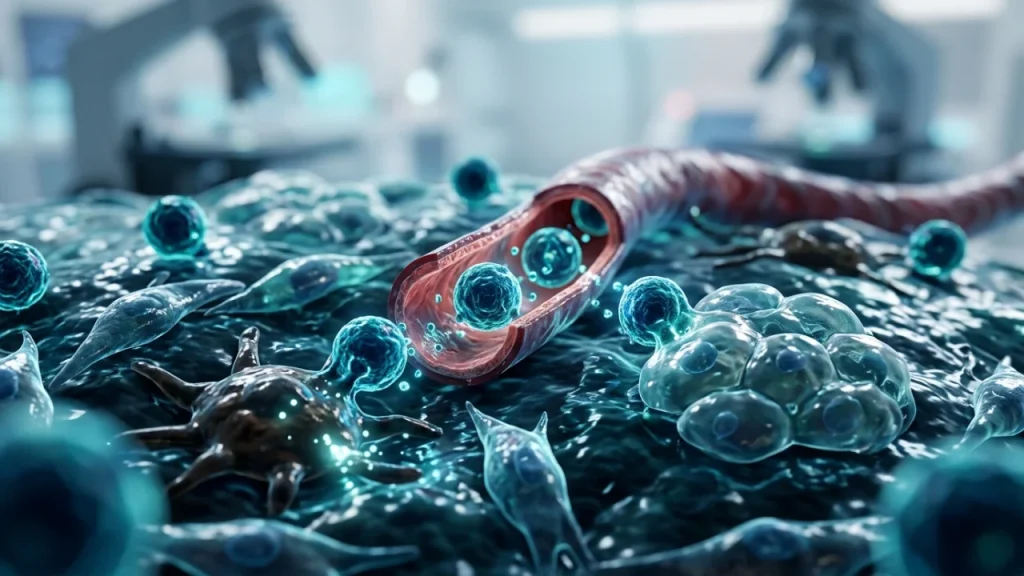
Imagine your body’s cells have a sophisticated communication network. They send tiny messages to each other. These messages are called exosomes. Exosomes are incredibly small bubbles, or vesicles, released by cells. They are about one-thousandth the width of a human hair. You cannot see them without special tools.
These tiny packages are not empty. They carry important cargo from their parent cell. This cargo includes proteins, lipids, and genetic instructions like RNA. Think of them as biological delivery trucks. They travel through bodily fluids to reach other cells. Once they arrive, they transfer their cargo. This process sends signals and instructions.
This messaging system is vital for health. It helps coordinate repair and maintenance. For example, stem cells release exosomes packed with healing signals. These signals can tell older skin cells to behave more youthfully. They encourage cells to make more collagen and elastin. These are the building blocks of firm, smooth skin.
The skin under your eyes is a special challenge. It is very thin and delicate. It shows signs of aging and fatigue first. Dark circles, fine lines, and puffiness appear there. Traditional treatments can be too harsh for this area. This is where exosomes for under eyes offer a new approach.
Instead of adding foreign substances, exosomes work with your biology. They deliver natural instructions to your skin cells. Their message is simple: repair and renew. For the under-eye area, this targeted communication is key. It can address thin skin and poor circulation from within.
The science shows their potential. Research indicates exosome signals can reduce inflammation. They can improve skin texture and hydration. They support the skin’s natural healing processes. This makes them a fascinating tool for aesthetic care.
In short, exosomes are your body’s own messaging service for renewal. Harnessing these messages offers a precise way to care for sensitive skin. This leads us to how they are prepared for safe use in treatments.
Why the Under-Eye Area Needs Special Attention
The skin beneath your eyes is the thinnest on your entire body. It measures about 0.5 millimeters thick. The skin on your cheek can be up to ten times thicker. This thinness makes underlying structures more visible. Blood vessels and muscles show through more easily.
This delicate area also has fewer oil glands. Oil glands help keep skin hydrated and plump. Fewer glands mean the under-eye skin dries out faster. It loses moisture more easily. This leads to a crepey, wrinkled texture over time.
Support structures are minimal here too. There is less fatty tissue for cushioning. There are fewer collagen and elastin fibers. These fibers form the skin’s supportive scaffolding. With less support, the skin sags and forms hollows.
Daily life constantly stresses this zone. You blink thousands of times each day. This repeated motion creates dynamic lines. Squinting and smiling add to this effect. Over decades, these temporary lines can become permanent.
The under-eye area has a high concentration of melanocytes. These are cells that produce pigment. Factors like genetics and sun exposure can over-activate them. This leads to persistent dark circles. Thin skin makes these dark vessels or pigments more apparent.
Poor circulation is another common issue. Fluid and blood can pool in this area overnight. This results in morning puffiness or bags. Slow drainage contributes to a tired, shadowed appearance.
Traditional cosmetic solutions often fall short here. Thick creams cannot penetrate deeply but may cause milia. Harsh lasers or peels risk damaging the fragile skin. Fillers require extreme precision to avoid lumps.
This unique combination of factors demands a special strategy. The goal is not just to cover problems but to improve skin health at a cellular level. This is the core promise of advanced biological approaches like exosomes for under eyes.
These treatments aim to strengthen the skin’s own foundation. They seek to thicken the delicate dermal layer. They work to improve local microcirculation. The focus is on long-term renewal, not just short-term camouflage.
Understanding these challenges makes the science clearer. You cannot treat this area like other skin. It needs intelligent communication, not just passive ingredients. The next step is seeing how modern science prepares these natural messengers for safe, effective use.
How Exosomes for Under Eyes Differ from Traditional Treatments
Traditional under-eye treatments often work from the outside in. They address symptoms you can see. Think of them as temporary fixes. Exosome therapy works from the inside out. It targets the cellular environment you cannot see. This is a fundamental difference.
Consider common approaches. Topical creams sit on the skin’s surface. Their large molecules cannot reach deeper layers. Fillers add physical volume to smooth hollows. They do not improve skin quality. Lasers remove damaged cells to trigger a healing response. This can be harsh for delicate skin.
Exosomes for under eyes operate differently. They are not a physical filler or an abrasive tool. They are biological messengers. Their job is communication. They carry instructions directly to your skin cells.
These instructions tell your cells to act younger and healthier. The process is natural and intelligent. Here is what sets it apart:
- Targeted Action: Exosomes release signals specific to the cells that receive them. A fibroblast gets cues to make more collagen. A blood vessel cell gets signals to improve circulation.
- Cellular Renewal: Instead of just removing old tissue, exosomes encourage your body to generate new, healthy tissue. This builds long-term strength.
- Low Trauma: The treatment does not wound or inflame the skin. It uses the body’s own language to guide repair gently.
The goal shifts from camouflage to restoration. A filler might plump a hollow for a year. Exosome signals can teach your skin to become thicker and more resilient on its own. This addresses the root cause of thinness and shadows.
Results develop over weeks as your cells respond. The effect is not an immediate foreign substance under your skin. It is your own skin gradually improving its function and structure.
This biological approach is precise. It respects the delicate nature of the under-eye area. The therapy supports the skin’s innate repair systems without overwhelming them.
Understanding this distinction is key. It moves beyond temporary fixes toward genuine cellular rejuvenation. The next logical question is how these powerful messengers are prepared for safe and effective clinical use.
The Science Behind Exosomes and Skin Rejuvenation
How Exosomes Carry Regenerative Signals to Skin Cells
Exosomes function as microscopic mail carriers for your cells. Their cargo is a precise set of instructions. This cargo includes growth factors, signaling proteins, and genetic material like RNA. Each component has a specific job.
Think of a skin cell that needs to repair itself. It might be slow or damaged. An exosome arrives at its outer membrane. The vesicle delivers its package directly into the cell’s interior. This process is called endocytosis. The cell then reads the new instructions.
The genetic material inside exosomes is particularly powerful. MicroRNAs can silence old, damaged cellular programs. They can activate fresh, youthful ones. This changes the cell’s behavior from the inside out. It is a software update for your skin’s biology.
For exosomes for under eyes, this targeted delivery is crucial. The skin there is thin and fragile. Harsh treatments can cause damage. Exosomes offer a gentle alternative. They provide the needed signals without force or trauma.
The regenerative signals work through clear steps: – Recognition: The exosome finds and binds to the target skin cell. – Delivery: The vesicle merges with the cell membrane to release its cargo. – Instruction: The cell’s machinery reads the new proteins and RNA. – Action: The cell begins its new tasks, like producing collagen or elastin.
This communication is not a one-time event. A treatment introduces a concentrated dose of exosomes. These vesicles engage many cells across the treatment area. They create a coordinated repair response.
The signals tell fibroblasts to build new structural proteins. They guide keratinocytes to improve the skin’s barrier. They encourage blood vessel formation for better nutrient delivery. This multi-point action addresses several aging factors at once.
The result is not just surface-level change. The cellular instructions lead to genuine tissue remodeling. The skin becomes more robust from within its deepest layers. This strengthens the vulnerable under-eye zone over time.
Understanding this cargo system highlights the treatment’s elegance. It uses the body’s own language for renewal. The next consideration is how these natural messengers are sourced and prepared for safe clinical use in aesthetic practice.
The Role of Stem Cells in Producing Therapeutic Exosomes
Therapeutic exosomes do not appear by chance. They are purposefully created and released by stem cells. Stem cells are the body’s master builders and repair crews. They reside in various tissues, like bone marrow or fat. Their primary job is to maintain health and heal injuries. They achieve this partly by sending out exosomes.
Think of a stem cell as a central command station. It constantly samples its environment. When it detects damage or aging signals, it responds. One key response is producing and releasing exosomes. These vesicles carry precise instructions tailored to the problem. For skin rejuvenation, mesenchymal stem cells are often studied. These cells excel at regulating inflammation and promoting tissue repair.
The exosomes from these stem cells are packed with specific cargo. This cargo mirrors the stem cell’s own regenerative abilities. However, using the exosomes is smarter than using the stem cells directly. The exosomes are the messengers, not the whole cell. This offers major advantages for treatments like exosomes for under eyes.
First, exosomes cannot replicate. A stem cell can divide and multiply. An exosome is just a delivery vehicle. This eliminates any risk of uncontrolled growth. Second, exosomes are tiny and agile. They can navigate through dense tissue more easily than a whole cell. The delicate under-eye area benefits from this precise navigation.
The production process inside the stem cell is organized. It involves creating the vesicle and selectively loading it. The cell chooses which growth factors, proteins, and RNA strands to include. This loading depends on the cell’s current state and needs. Scientists can influence this state. By growing stem cells under specific conditions, they can encourage the production of exosomes with ideal cargo for skin repair.
These conditions might involve: – Simulating a low-oxygen environment, similar to injured tissue. – Exposing cells to certain signaling molecules. – Using three-dimensional scaffolds that mimic natural tissue.
This process is called “priming” or “conditioning.” The goal is to harvest exosomes that are supercharged for regeneration. Once collected, these exosomes are purified and concentrated. The result is a clear solution containing billions of these natural nanovesicles. This solution holds the collective repair intelligence of millions of stem cells.
Therefore, the power of an exosome treatment is rooted in its origin. It harnesses the innate wisdom of stem cell biology. The vesicles deliver a concentrated burst of regenerative signals exactly where skin needs renewal. For the thin under-eye skin, this means receiving instructions from the body’s best healers without direct cell transplantation. The next step is understanding how these harvested exosomes are applied in a clinical setting to achieve visible results.
Key Components Inside Exosomes That Benefit Skin
Exosomes carry a powerful toolkit for skin renewal. This cargo is not random. It is a selected mix of signaling molecules. These molecules act as instructions for your skin cells. The thin under-eye area benefits greatly from this targeted delivery.
Three main types of components do the critical work:
- Growth Factors. These are proteins that act like command signals. They tell cells to grow, multiply, and create new collagen and elastin. For under eyes, this means thicker, firmer skin. It can reduce the appearance of fine lines and hollows.
- Cytokines. These are another class of signaling proteins. They manage inflammation and immune response. In the delicate under-eye zone, they help calm irritation. They reduce puffiness and support healing without harsh reactions.
- MicroRNAs (miRNAs). These are tiny strands of genetic material. They are perhaps the most sophisticated part of the cargo. miRNAs can enter a cell and regulate its genes. They can “turn down” genes linked to aging or inflammation. They can “turn up” genes for repair and protection.
The combined effect is comprehensive. Growth factors stimulate new building blocks. Cytokines ensure the building site is calm and orderly. miRNAs reprogram the cellular machinery for long-term function.
Think of it as a software update for your skin cells. The exosomes deliver new code and commands. The cells then execute these commands using their own energy. This process is why exosomes for under eyes are considered a biological strategy. They work with your body’s natural language.
For example, one specific miRNA might target a gene called COL1A1. This gene is responsible for making Type I collagen. By enhancing this gene’s activity, the exosome helps restore the skin’s foundational support structure. Another growth factor, like VEGF, promotes new blood vessel formation. This improves microcirculation and can lessen dark circles.
The result is rejuvenation from within. The skin receives clear instructions to repair itself. This approach addresses multiple concerns at once: texture, tone, strength, and resilience. The focus shifts from merely filling a line to improving the cellular health of the entire area.
The next logical question is how these components physically interact with aged or damaged skin cells to trigger these visible changes.
How Exosomes Target Under-Eye Dark Circles
What Causes Dark Circles Under the Eyes
Dark circles are rarely caused by just one thing. They are usually a mix of several factors working together. The skin under your eyes is the thinnest on your body. It is only about 0.5 millimeters thick. This makes everything underneath more visible.
One major cause is vascular. Tiny blood vessels called capillaries can leak. They leak a small amount of red blood cells. These cells break down and release their iron-rich pigment, called hemosiderin. This pigment deposits in the thin skin. It creates a bluish or purplish tint. Poor circulation makes this worse. Blood pools in the area and becomes more visible.
Another key factor is volume loss. We lose fat and collagen as we age. This happens in the tear trough. The tear trough is the groove under your eye. When it hollows out, it creates a shadow. This shadow looks like a dark circle. It is a structural issue, not a color issue.
Skin pigmentation itself is a common contributor. This is called hyperpigmentation. The melanin-producing cells can become overactive. Sun exposure is a major trigger here. Rubbing your eyes often can also trigger it. This type creates a brownish discoloration.
Genetics play a huge role. Your bone structure and skin transparency are inherited. If your parents have prominent under-eye circles, you likely will too. Allergies and lack of sleep are classic aggravators. They cause inflammation and fluid retention. This stretches the thin skin and makes vessels more prominent.
The final visual effect is a combination: – Bluish tones from visible vessels and leaked pigment. – Brownish tones from melanin overproduction. – Shadowed areas from volume loss and anatomy.
This complexity is why simple creams often fail. They might target one cause but not others. Effective treatment requires a multi-target approach. This is where biological strategies show promise. Understanding these causes sets the stage for how a precise therapy can intervene. The goal of advanced treatments like exosomes for under eyes is to address these foundational issues at their source.
How Exosomes Reduce Hyperpigmentation in the Under-Eye Area
Exosomes carry precise instructions to skin cells. These instructions can calm overactive pigment cells. This process is a form of biological signaling. It is far more targeted than a general topical cream.
Melanin gives skin its color. It is made by cells called melanocytes. Under the eyes, these cells can become overstimulated. Sun exposure and inflammation are common triggers. The cells then produce too much pigment. This creates a brownish discoloration.
Exosomes address this at the source. They are released by stem cells. These nanovesicles contain microRNAs and proteins. These are biological messages. When applied, exosomes are absorbed by local skin cells, including melanocytes.
The messages inside exosomes can downregulate melanin production. They do this by influencing key pathways. For example, they can affect the enzyme tyrosinase. Tyrosinase is crucial for making melanin. Exosomal signals can reduce its activity.
Think of it as a reset signal for the cell. The exosome does not bleach the skin. It tells the pigment cell to return to a balanced, less active state. This reduces new pigment formation over time.
The process involves several clear steps: – Exosomes are applied to the delicate under-eye area. – They fuse with the membranes of local skin cells. – Their cargo of signaling molecules is released inside the target cell. – These molecules interact with the cell’s machinery. – Genes and enzymes involved in excess pigment production are gently modulated.
This biological approach has distinct advantages. It works with your skin’s natural biology. It avoids harsh chemicals that can irritate thin under-eye skin. The goal is long-term normalization, not just surface masking.
Results are not instant like a concealer. As older, pigmented skin cells naturally shed, they are replaced by new ones. These new cells produce less melanin. The overall area becomes more even in tone.
This makes exosomes for under eyes a compelling option for pigmentation-related dark circles. The therapy targets the cellular miscommunication that causes the problem. It complements other strategies needed for volume or vascular issues.
The next logical step is to examine how these same vesicles support collagen and skin thickness, tackling another root cause of shadows.
Clinical Evidence on Exosomes for Under-Eye Brightening
Research shows exosomes can directly influence the cells responsible for skin color. A key study in a scientific journal examined exosomes derived from stem cells. These exosomes were applied to melanocytes in a lab setting. Melanocytes are the cells that produce melanin pigment. The treated melanocytes showed a significant decrease in tyrosinase activity. This enzyme drives melanin production. The result was less pigment synthesized by the cells.
Further evidence comes from clinical observations on human skin. Several small-scale trials have monitored changes in under-eye skin after exosome therapy. Researchers use standardized tools to measure results. These tools include chromameters that quantify skin lightness and darkness. High-resolution photography also tracks progress. Reported outcomes from these studies often include: – Measurable improvement in under-eye skin brightness after several weeks. – A more even skin tone, reducing the appearance of shadowy patches. – No serious adverse reactions, which supports the treatment’s gentle nature.
The biological cargo within exosomes explains these clinical effects. Remember, exosomes carry specific microRNAs. These are tiny genetic instructions. Certain microRNAs can bind to and silence the messages that tell a cell to make excess pigment. It is a precise form of cellular communication. The exosome delivers the right signal to restore balance. This process is gradual and works from within.
It is important to manage expectations about this evidence. Most existing studies are preliminary. Larger, long-term human trials are still needed. Current data strongly supports the mechanism and shows promising early results. However, it does not yet guarantee identical outcomes for every person. Individual biology always plays a role.
The evidence for pigmentation control is compelling. It provides a scientific foundation for using exosomes for under eyes. This approach moves beyond theory into observed effect. The same vesicles that calm pigment activity also carry signals for structural repair. This dual function makes them a comprehensive tool. Their impact on skin thickness and strength is equally supported by research.
How Exosomes Address Under-Eye Puffiness and Fluid Retention
Common Causes of Under-Eye Puffiness
The delicate skin beneath your eyes is uniquely prone to swelling. This area has some of the body’s thinnest skin. It rests on a fragile network of capillaries and lymphatic vessels. Several specific factors combine to create the perfect environment for puffiness.
A primary cause is natural fluid accumulation. This is often called edema. Tiny blood vessels, or capillaries, can leak fluid into the surrounding tissue space. Your lymphatic system normally drains this fluid away. It acts like a microscopic drainage network. Under-eye tissues have relatively loose connective structure. Fluid can pool there easily overnight. Gravity then pulls the fluid downward when you lie flat. This is why puffiness is often worst in the morning.
Structural aging is another key contributor. The supportive tissue matrix weakens over time. This matrix is made of collagen and elastin fibers. Think of it as a microscopic support net. As this net weakens, it holds fluid less effectively. The fat pads that cushion your eyeball can also shift forward. This creates a more pronounced bulge.
Lifestyle and health factors play a direct role. High dietary salt causes your body to retain water. Allergies trigger histamine release. Histamine makes blood vessels dilate and leak. Lack of sleep disrupts normal circulation and drainage processes. It can also increase cortisol, a stress hormone, which worsens inflammation.
The lymphatic vessels themselves are central to this issue. They are responsible for clearing excess fluid and metabolic waste. Their function can become sluggish with age or due to poor circulation. When they are not working optimally, fluid and proteins stagnate. This creates a visible, swollen appearance.
In summary, under-eye puffiness is rarely due to one single issue. It is typically a combination of fluid dynamics, structural decline, and external triggers. The result is a localized buildup of fluid and metabolic debris. Effective treatment must address these underlying biological processes. This sets the stage for understanding how a biological approach like exosomes for under eyes can intervene. They target the cellular environment itself, aiming to improve drainage and strengthen tissue from within.
How Exosomes Improve Microcirculation to Reduce Swelling
Exosomes carry precise molecular instructions directly to the cells lining your blood vessels. These cells are called endothelial cells. They form the inner tube of every capillary and vein. Exosomes deliver signals that tell these endothelial cells to function better.
Think of a sluggish capillary network under the eye. It may be constricted or leaky. Exosomes help normalize this. Their cargo includes microRNAs and proteins. These molecules promote the production of nitric oxide. Nitric oxide is a key signaling gas in your body. It tells blood vessel walls to relax.
This relaxation is called vasodilation. Wider vessels mean improved blood flow. Better flow delivers more oxygen and nutrients to the area. Critically, it also enables more efficient removal of metabolic waste and excess fluid. This process directly counteracts the stagnation described earlier.
The benefits for microcirculation are multi-faceted: – They enhance vessel tone and elasticity, improving responsiveness. – They support the integrity of vessel walls, reducing unhealthy leakage. – They promote the formation of new, healthy micro-vessels, a process called angiogenesis.
This last point is vital. Aging skin often has a diminished capillary network. Exosomes can encourage the growth of new, functional pathways for blood and fluid movement. This rebuilds the local transport infrastructure from within.
Furthermore, exosomes influence lymphatic function. The lymphatic system is your body’s drainage network. Exosome signals can help activate lymphatic endothelial cells too. This improves their pumping action and waste-removal capacity.
The combined effect is a significant boost in local fluid dynamics. Stagnant fluid and proteins are cleared more effectively. Fresh, nutrient-rich blood circulates more freely. This biological intervention targets the root cause of vascular-related puffiness. It’s not just moving fluid temporarily. It is improving the system that manages fluid.
Therefore, using exosomes for under eyes represents a fundamental upgrade to the skin’s microenvironment. By optimizing microcirculation and drainage, they address the fluid retention component of puffiness at its source. This sets the stage for their parallel role in strengthening the weakened structural support tissue.
Mechanisms of Exosomes in Draining Excess Fluid
Exosomes deliver precise instructions to the cells managing fluid balance. They do not act as a simple pump. Instead, they reprogram the tissue’s own cleanup systems. This process is natural and targeted.
The key lies in exosome cargo. These vesicles carry molecules like microRNAs and proteins. These molecules enter target cells around blood and lymph vessels. Once inside, they change how those cells behave. They turn on specific genes. They turn off others. The result is a coordinated repair and activation effort.
Consider the lymphatic vessels as tiny drains. Their walls are made of endothelial cells. With age or stress, these cells become sluggish. Their pumping action weakens. Exosomes directly address this.
- First, exosome signals can increase the production of proteins that anchor these cells together. This strengthens the vessel wall integrity.
- Second, they encourage the formation of more lymphatic capillaries. This expands the drainage network.
- Third, they improve the rhythmic contractions of these vessels. This enhances active fluid propulsion.
Simultaneously, exosomes work on the interstitial space. This is the gel-like area between skin cells where fluid accumulates. They send signals to fibroblasts, the structural cells. These signals boost the production of healthy collagen and elastin networks. A firm, supportive matrix helps push fluid toward lymphatic vessels. It prevents collapse under pressure.
A crucial mechanism involves reducing inflammation. Inflammatory molecules can clog drainage pathways. They make vessels leaky. Exosomes carry anti-inflammatory instructions. They help calm overactive immune cells in the area. This reduces chemical signals that cause swelling and leakage. Clearer pathways allow for better flow.
The process for using exosomes for under eyes leverages this multi-point strategy. It is not a one-time removal of fluid. It is a restoration of the tissue’s innate ability to manage fluid itself. The exosomes essentially teach the skin to drain itself more efficiently again.
This biological instruction leads to a lasting decrease in puffiness. The improved drainage works continuously alongside the better circulation described earlier. Together, they tackle fluid retention from both supply and removal angles. This sets a stable foundation for the next critical step: rebuilding the solid structural support that prevents shadows and hollows.
The Process of Exosome Therapy for Under Eyes
How Exosomes for Under Eyes Are Prepared and Applied
The clinical use of exosomes for under eyes begins with a highly controlled laboratory process. These nanovesicles are not synthetically created. They are naturally produced and released by specific types of cells grown in culture. Think of these donor cells as biological factories. They are carefully selected for their robust health and signaling capabilities.
These cells are nurtured in a nutrient-rich solution. As they grow, they constantly release exosomes into their surrounding environment. Scientists then harvest this conditioned medium. They use advanced techniques to isolate and purify the exosomes. The goal is to obtain a concentrated solution free of other cellular debris.
This final preparation is a clear liquid. It contains billions of these signaling vesicles suspended in a sterile buffer solution. The exosomes are then cryopreserved. They are frozen at ultra-low temperatures to maintain their biological activity until the moment of use. This ensures potency and stability for clinical application.
The patient’s treatment journey starts with a consultation. A provider assesses the under-eye area. They discuss goals and confirm candidacy for the procedure. On the day of treatment, the frozen exosome preparation is carefully thawed. It is brought to a suitable temperature for application.
Preparation of the skin is a critical step. The delicate under-eye area is gently cleansed. A topical numbing cream is often applied for comfort. This step minimizes any potential discomfort during the procedure itself. The skin must be perfectly clean for optimal results.
The actual application method is precise and minimally invasive. The most common technique involves very superficial micro-injections. – A fine-gauge needle or a specialized micro-needling device is used. – The provider makes a series of tiny, controlled punctures in the skin’s surface. – This creates microscopic channels for direct delivery. – The exosome solution is then infused into the targeted dermal layer.
This direct delivery is crucial. It places the exosomes exactly where they are needed most. They bypass the skin’s outer barrier. They gain immediate access to the living cells responsible for repair and regeneration. The entire process for one area typically takes about thirty minutes.
Some protocols may combine exosome infusion with other supportive modalities. Gentle micro-needling alone can create a beneficial stimulus. Low-level light therapy may be used to support cellular energy post-treatment. The core action, however, comes from the biological cargo of the exosomes themselves.
After the procedure, patients can usually resume normal activities quickly. There is minimal downtime. Some temporary redness or slight swelling may occur. These effects typically subside within hours to a day. The exosomes begin their communicative work immediately upon introduction.
The application process is designed for efficiency and targeted action. It delivers a high concentration of signaling particles directly to the compromised tissue framework. This sets the stage for the cellular response that leads to visible improvements in skin quality and structure over the following weeks.
What to Expect During an Exosome Treatment Session
A treatment session for exosomes for under eyes is a focused, in-office procedure. It begins with a thorough consultation. Your provider will review your goals and medical history. They will examine your under-eye area. This ensures the treatment plan is right for you.
Your skin is then carefully cleansed. A topical numbing cream is applied next. This cream sits on the skin for about twenty to thirty minutes. It makes the entire process very comfortable. Most patients report only a mild sensation of pressure during the treatment itself.
The provider then removes the numbing cream. The skin is cleaned again. The application process begins. A very fine needle or micro-needling device is used. You may feel a light tapping or quick pinprick sensations. Discomfort is typically minimal.
The procedure itself for both under-eye areas is efficient. It often takes less than thirty minutes. The exosome solution is infused into the targeted skin. The atmosphere is clinical but calm. You will be reclining comfortably throughout.
After the application, the provider may apply a soothing serum or gel. A calming treatment like cool air or a LED light mask might be used. This helps reduce any immediate redness. It also supports the initial cellular response.
Here is what you can expect immediately after the session: – The skin may look flushed or slightly pink. – There can be mild swelling, similar to a gentle facial. – These effects are normal and temporary. – They usually fade within a few hours.
You receive clear aftercare instructions before you leave. These are simple and straightforward. They are designed to protect the treated area and optimize results.
Key instructions often include: – Avoid sun exposure for the first 24 to 48 hours. – Use a gentle cleanser and moisturizer. – Skip strenuous exercise for one day. – Do not rub or scratch the area. – Apply a recommended sunscreen daily.
You can return to most normal activities right away. There is no required downtime. Makeup can often be applied the next day if the skin is calm. The real work happens beneath the surface as the exosomes communicate with your skin cells. The treatment session is just the precise beginning of this biological renewal process.
Safety and Sterility in Exosome Formulations
Safety begins with the source. Exosomes are not synthetically created. They are harvested from human cells grown in controlled laboratories. These are typically mesenchymal stem cells. They are known for their healing signals. The donor cells are screened thoroughly. This screening checks for viruses and other pathogens. The process ensures a clean starting point.
The cells are cultured in a nutrient-rich solution. They release exosomes naturally into this solution. Scientists then collect this liquid. The exosomes must be separated from other components. This is done through precise filtration and centrifugation steps. These steps isolate the tiny vesicles. The goal is to obtain a pure concentration of exosomes.
Sterility is paramount throughout. All work occurs in certified cleanrooms. These rooms have strict air filtration systems. Technicians wear full protective gear. This prevents any contamination. The final exosome solution undergoes rigorous testing before release. This testing confirms several key factors.
- It verifies the particle count. This ensures a consistent dose.
- It checks for purity. The solution should be free of unwanted cellular debris.
- It confirms the absence of microbial contamination like bacteria or fungi.
- It validates the biological activity of the vesicles.
These tests are non-negotiable. They are the benchmark for a safe formulation. Reputable providers use only exosomes that pass all these checks. The final product is then stored frozen. This preserves its potency until the moment of use.
For exosomes for under eyes, this purity is especially crucial. The skin in this area is thin and delicate. It is also highly vascularized. Any impurity could cause irritation or an adverse reaction. A sterile, pure formulation minimizes this risk significantly.
The exosome solution itself is typically clear and colorless. It resembles a simple serum. It contains no added fragrances or harsh preservatives. These additives could trigger sensitivity. The carrier solution is usually a gentle saline or similar medium. This compatibility further supports safety.
Clinics receive the exosomes in sealed vials. They thaw them just before your treatment. The provider uses sterile, single-use needles and syringes. This prevents cross-contamination between patients. The entire process from lab to skin follows a closed chain of custody.
Understanding these protocols offers peace of mind. The advanced nature of the treatment is built on a foundation of basic, meticulous safety science. This careful approach protects you and allows the biological process to work as intended. Next, we will explore what these exosomes actually do once they are delivered to your skin cells.
Results and Benefits of Using Exosomes for Under Eyes
Typical Timeline for Seeing Results from Exosome Therapy
The biological activity of exosomes begins immediately upon application. However, visible changes in the delicate under-eye area follow a more gradual, cellular timeline. You will not see an instant transformation. The process is one of cellular communication and repair, not just surface-level filling.
The initial phase involves signaling and cellular activation. The exosomes deliver their cargo of growth factors and instructions to your skin cells. This triggers a shift in cellular behavior. Your fibroblasts, the cells that make collagen and elastin, become more active. They start producing new structural proteins. This foundational work is not yet visible to the eye.
Most people begin to notice the first subtle changes within two to four weeks. These early benefits are often related to hydration and texture. The skin may appear more radiant and feel plumper. Fine lines can start to look softer. This is due to enhanced cellular metabolism and increased hyaluronic acid production. The thin skin becomes better at retaining moisture.
The most significant improvements for exosomes for under eyes typically emerge after the one-month mark. This is when new collagen formation becomes substantial enough to see. Key results between four to eight weeks post-treatment can include:
- A visible reduction in the depth of fine lines and wrinkles.
- Improved skin tone and a more even coloration.
- A firmer, tighter appearance to the skin.
- A subtle decrease in the appearance of dark circles caused by thin skin.
The therapy’s effects continue to develop for up to three months. Collagen remodeling is a slow process. Your body steadily builds and organizes new collagen fibers. This provides lasting structural support. The final result is not a dramatic, artificial change. It is a natural-looking rejuvenation that addresses the root biological causes of aging in that area.
Several factors influence your personal timeline. Your age, skin condition, and lifestyle habits play a role. Sun exposure and smoking can slow progress. A single treatment provides excellent results for many. Some individuals opt for a follow-up session after six months to maintain or enhance outcomes.
Understanding this timeline prevents disappointment. It sets the expectation for a natural, progressive improvement rather than an instant fix. The value lies in activating your skin’s own long-term repair mechanisms. Next, we will examine how these results compare to other common under-eye treatments.
How Exosomes Boost Collagen Production for Firmer Skin
Collagen is the main structural protein in your skin. It acts like a supportive scaffold. This scaffold weakens and breaks down as we age. The thin skin under the eyes shows this loss clearly. It leads to sagging, fine lines, and a crepey texture. Simply adding collagen from the outside does not solve the problem. Your skin cannot use it effectively.
The true solution is to signal your own cells to make new collagen. This is where exosomes for under eyes show their power. They are not ingredients. They are messengers. Think of them as tiny instruction packets. Your body’s own cells create these packets.
Exosomes carry specific orders. They deliver these orders directly to your skin cells. The key orders tell fibroblast cells to become active again. Fibroblasts are your skin’s collagen factories. Aged or tired fibroblasts slow their production. Exosomes wake them up.
The instructions inside exosomes are precise. They include growth factors and strands of genetic code called microRNA. This code acts like a software update for the cell. It reprograms the fibroblast’s behavior. The cell shifts from a dormant state to an active building phase.
This process boosts collagen production in several direct ways. – It increases the cell’s machinery for making Type I collagen. This is the most abundant and strongest type in skin. – It encourages the production of elastin fibers. These give skin its snap-back quality. – It prompts cells to release more hyaluronic acid. This improves hydration and plumps the skin from within.
New collagen does not form instantly. Cells need time to read the instructions and start building. This explains the progressive results timeline. Initial strengthening happens at a microscopic level first. Fresh collagen fibers begin to weave through the existing skin matrix.
These new fibers are organized and strong. They integrate with your natural tissue. This integration provides genuine structural support. The skin’s foundation becomes denser and more resilient. Over weeks, this internal reinforcement becomes visible.
The under-eye area feels firmer to the touch. It looks smoother and tighter. The improvement is not just on the surface. It comes from a renewed support structure deep within the dermis. This biological approach addresses thinning skin at its source.
The benefit is long-lasting because you have grown new collagen. It is your own tissue, not a temporary filler. The therapy effectively turns back the cellular clock for your fibroblasts. They resume a more youthful function.
This mechanism highlights a key advantage of exosome therapy. It works with your biology rather than against it. The next logical step is to see how this biological strategy compares to traditional methods for under-eye rejuvenation.
Long-Term Benefits of Exosomes for Under-Eye Rejuvenation
The true power of exosomes for under eyes lies in their lasting impact. This is not a temporary fix. The therapy aims for durable skin health.
Think of it as a cellular reset. Fibroblast cells receive new instructions. They then maintain a more active state. This activity continues for months after the initial treatment. The cells keep producing fresh collagen and elastin. They also sustain higher hyaluronic acid levels.
This ongoing activity provides several long-term benefits. The skin’s foundation becomes more robust over time. It can better withstand daily stresses.
- Improved skin density reduces the appearance of fine lines. These lines are less likely to deepen.
- Enhanced elasticity helps the skin resist sagging. The under-eye contour remains more defined.
- Consistent hydration from within fights chronic dryness. This prevents the crepey texture from returning quickly.
The results evolve. You may see initial improvements in texture within weeks. The strengthening continues internally for much longer. The full effect often solidifies around the three to six-month mark. This progressive nature is a sign of genuine tissue remodeling.
The under-eye area gains lasting resilience. It is better equipped to handle environmental damage. This includes protection from blue light and pollution. Healthier skin has a more effective natural defense system.
The treatment also promotes a better healing environment. Should you get minor irritation or fatigue, your skin may recover faster. Its intrinsic repair mechanisms are more alert.
This leads to a reduction in maintenance needs. You may find you require fewer supportive treatments over time. The goal is to extend the periods between any cosmetic procedures. Your skin remains in a better baseline condition.
The long-term benefit is a sustained youthful function. Your cells are not just temporarily stimulated. Their communication network is optimized. This helps maintain the improvements you see.
It is a shift from periodic correction to continuous support. Your biology does the ongoing work. The therapy provides the initial catalyst and precise instructions.
Ultimately, this approach builds lasting skin health from the inside out. The results are integrated into your own tissue. This sets it apart from methods that simply add volume or fill space temporarily. The next consideration is how to ensure these benefits are realized safely and effectively.
Comparing Exosomes with Other Under-Eye Treatments
Exosomes vs. Topical Creams for Under Eyes
Topical creams work primarily on the skin’s outermost layers. They cannot reach the living cells where aging truly begins. Their ingredients face a significant biological barrier. This barrier is called the stratum corneum. It is a protective shield of dead skin cells. Most cream molecules are too large to pass through it effectively. Even advanced formulations have limited penetration. They act on the surface or just below it.
Exosomes for under eyes operate on a completely different level. They are not blocked by the skin’s surface barrier. Their nanoscale size allows them to reach the dermis. This is the living layer where collagen and elastin are made. Their action is not chemical but biological. They deliver instructions directly to your skin cells.
The mechanisms of action highlight this core difference. Consider a common cream ingredient like retinol. It works by irritating the skin slightly. This irritation signals cells to renew themselves faster. The effect is indirect and can cause redness or peeling. Peptide creams try to mimic cellular signals. But they are simple fragments compared to a cell’s natural messaging system.
Exosomes carry a full, natural library of instructions. They do not just mimic one signal. They can deliver hundreds of proteins and genetic messages at once. This initiates a coordinated repair program. The cells themselves execute this program from within.
We can list key limitations of topical approaches for lasting change: – Penetration depth: Most ingredients remain in the top layers. – Signal complexity: They offer one or two simple instructions. – Cellular engagement: They do not truly improve how cells communicate with each other. – Duration of effect: Results fade quickly if you stop using the product.
In contrast, exosome therapy aims for a foundational shift. It educates your cells to function better. The goal is not daily management but lasting improvement. You are not adding an external substance for a temporary effect. You are upgrading your skin’s own biological software.
Think of it as the difference between polishing a floor and repairing its foundation. Creams can refine texture and provide hydration. They can smooth the very top layer. Biological therapies address the structural support underneath. They target the hollows, thin skin, and poor elasticity that creams cannot fix.
This does not mean creams are useless. They are excellent for maintenance and surface care. However, they lack the capacity for deep tissue regeneration. For concerns rooted in cellular fatigue or poor communication, a biological strategy is needed. This is where exosomes for under eyes present a distinct advantage.
The choice depends on your goal. Seek superficial hydration or mild smoothing? A quality cream may suffice. Aim to improve skin thickness, resilience, and fundamental health? This requires a therapy that reaches and reprogramms your cells. The next logical step is to compare this approach with more invasive procedural options.
Exosomes vs. Injectable Fillers for Under-Eye Concerns
Injectable fillers are a common choice for under-eye hollows. They work by adding physical volume beneath the skin. A gel-like substance fills the space to lift and smooth the area. Results are often visible immediately after the treatment. This approach tackles a visible sign of aging. It does not, however, change the health of the skin itself.
Exosomes for under eyes follow a different principle entirely. They do not add any lasting physical filler material. Instead, they deliver biological instructions to your native cells. The goal is to improve skin quality from within. Think of fillers as adding a supportive pillow under a thin blanket. The pillow lifts the blanket but the fabric remains thin. Exosome therapy aims to weave a thicker, stronger blanket.
The mechanisms highlight this core difference. Fillers provide structural support. They are a static solution placed in a specific location. Exosomes trigger dynamic cellular processes. They can encourage your own cells to produce more collagen. They may improve local blood flow and strengthen fragile skin. The treatment targets function, not just form.
Consider the concerns each option best addresses. – Fillers are optimal for correcting noticeable volume loss. They can improve deep troughs or hollows. – Exosomes are suited for issues like thin, crepey skin or poor elasticity. They target skin texture and resilience. A person might have both volume loss and poor skin quality. This is a key consideration.
Duration and experience also vary. Filler results are immediate but not permanent. Materials gradually break down over months or years. Repeat treatments are needed to maintain the effect. Exosome therapy results develop over weeks as cells respond. The induced improvements in skin health can last much longer. The effect is cumulative and foundational.
Potential limitations exist for both. Fillers carry risks like swelling, bruising, or uneven placement. In the delicate eye area, precision is critical. Exosome therapy is a biological process. Its results depend on your cells’ response. It is not a direct volume replacement for significant hollowing.
Choosing between them depends on your primary concern. Is it a lack of structural support causing shadows? A filler may be the direct solution. Is it thin, tired-looking skin that lacks bounce? A biological strategy with exosomes could be more fitting. Some clinics suggest a combined approach for comprehensive rejuvenation.
This leads to a broader view of treatment options. Another category includes procedures that use energy or controlled injury.
Why Exosomes Offer a Non-Surgical Alternative
Surgical procedures for the under-eye area involve cutting or removing tissue. Blepharoplasty is a common example. It directly removes excess skin and fat pads. This approach is physically transformative. It also requires anesthesia, incisions, and significant recovery time. Risks include scarring, infection, and changes in eye shape. The results are structural but do not inherently improve skin health.
Exosomes for under eyes work on a cellular level without any cuts. They are applied topically after a gentle micro-needling procedure or similar technique. This creates tiny channels for delivery. There is no surgical removal of tissue. The goal is not to subtract or rearrange but to instruct and regenerate.
The fundamental difference lies in the mechanism of action. Surgery mechanically alters anatomy. Exosome therapy uses biological signaling. The nanovesicles carry instructions to your skin’s cells. These instructions encourage natural processes. Key processes include collagen production and cellular repair. This improves skin thickness and elasticity from within.
This biological strategy offers distinct practical benefits. Consider the typical experience for a patient. – There is no general anesthesia needed. Topical numbing is usually sufficient. – Downtime is minimal. You may have redness for a day or two, not weeks of bruising. – Risks of surgical complications are avoided. These include hematoma or anesthetic reactions. – The recovery is straightforward. Normal activities can often resume within 24-48 hours.
Results also manifest differently. Surgical changes are visible once swelling subsides. Exosome-induced improvements develop gradually over several weeks. Your skin builds new proteins steadily. The outcome is enhanced skin quality, not a new structural arrangement. It looks like healthier, more resilient skin.
Choosing a non-surgical path is about prioritizing safety and natural function. It suits those wary of scalpels and long recoveries. It aligns with a preventative or early-intervention mindset. The focus shifts from fixing a pronounced problem to optimizing skin biology.
This does not mean exosomes replace necessary surgery for severe cases. Significant bagginess or excess skin may still require a surgeon’s skill. For many, however, the signs of aging are more about texture and tone than volume or excess. This is where biological signaling excels.
The appeal is clear: a treatment that works with your body’s own language. It aims to restore function to create form. This foundational approach leads us to consider the treatment journey itself, from consultation to aftercare.
Practical Steps to Consider Before Trying Exosomes for Under Eyes
How to Find a Qualified Provider for Exosome Treatments
Choosing a provider for exosome treatments is a critical step. Your results and safety depend heavily on their skill and knowledge. This process requires careful research. Do not rush your decision.
Start by verifying medical credentials. Only licensed medical professionals should perform these procedures. Look for board-certified dermatologists or plastic surgeons. Doctors have extensive training in facial anatomy and injection techniques. This knowledge is vital for the delicate under-eye area. A nurse under a doctor’s supervision may also be qualified. Always confirm their license is active and in good standing.
Next, investigate their specific experience with exosomes for under eyes. This is a new and specialized field. Ask direct questions during a consultation. – How many exosome treatments have you performed? – What specific training did you complete for this procedure? – Can you show before-and-after photos of actual patients?
A seasoned provider will have clear answers. They should explain the science behind their chosen exosome product without using brand names. They will discuss realistic outcomes, not make unrealistic promises.
The clinic environment itself matters. Treatments should occur in a clean, professional medical office, not a spa or home setting. Sterile technique is non-negotiable. Ask about the source and handling of the exosomes. Reputable providers use exosomes derived from ethical sources, like stem cells from registered labs. They should explain how the exosomes are stored and prepared to ensure they remain active and safe.
Finally, trust your personal comfort. A good provider listens to your concerns. They perform a thorough skin assessment. They explain all potential risks and the aftercare plan clearly. Avoid anyone who pressures you or offers a discount for an immediate decision.
This due diligence protects your investment and your health. It ensures you partner with an expert who understands both the science and the art of facial rejuvenation. Once you have selected a qualified professional, you can confidently prepare for your actual treatment session.
Questions to Ask About Exosome Therapy for Under Eyes
Exosome therapy is a collaborative process between you and your provider. Your questions guide this partnership. Prepare them before your consultation. This ensures you cover all critical points. Start by inquiring about the treatment protocol itself. The method of delivery influences results.
- How will the exosomes be applied? Are they injected with microneedles or a specialized gun?
- What depth will the treatment target? The delicate under-eye skin requires precise placement.
- How many sessions are typically needed to see a noticeable improvement?
Next, focus on the biological action. Ask how the exosomes for under eyes are expected to work in your specific case. A good explanation uses simple terms. It should connect the science to your cosmetic concerns. For instance, do your primary issues involve dark circles from thin skin, puffiness, or fine wrinkles? The provider should explain which processes the exosomes may help. They might discuss collagen stimulation or calming inflammation.
Safety and sourcing are paramount. You must understand what is being introduced into your skin.
- What is the original source of the exosomes? Common ethical sources include mesenchymal stem cells.
- How are the exosomes processed and purified? The provider should mention steps to remove other cellular material.
- What quality control tests are performed? These tests check for purity, concentration, and safety.
Discuss the evidence directly. Ask if there are clinical studies or data supporting the use of their specific exosome preparation for the under-eye area. Request to see before-and-after photos from their own practice. Remember that individual results vary widely. Be cautious of guaranteed outcomes.
Finally, cover the practical details of recovery and cost. Understand the complete investment.
- What is the expected downtime? There may be minor redness or swelling.
- What post-treatment care is required? You might need specific skincare products to avoid.
- What is the total cost per session? Are multiple sessions bundled into a package?
Asking these questions transforms you from a passive recipient into an informed participant. It clarifies the entire journey from the vial to your skin’s response. This knowledge builds realistic expectations and confidence in your decision. Your next logical step is to understand what happens during the treatment session itself.
Cost and Investment in Exosome Treatments
Exosome treatments represent a significant financial investment in your skin’s health. You will not find standardized pricing like you would for many common procedures. The total cost is built from several key components. Understanding these parts helps you see where your money goes.
First, the exosome solution itself is a major cost driver. Sourcing and purifying these biological nanoparticles is a complex technical process. It requires stringent laboratory conditions. This inherent complexity makes the raw material expensive.
Second, the provider’s expertise and method of delivery factor into the price. A highly experienced practitioner may command higher fees. The technique used also matters. Some providers use microneedling to create channels for the exosomes. Others may use specialized devices for targeted delivery. The chosen method can influence the final cost.
A single session for the under-eye area can range broadly. Prices often fall between one and two thousand dollars. Some clinics may charge more. This is typically for a targeted treatment focusing just on the delicate eye region. Full-face treatments will cost significantly more.
Most practitioners recommend a series of sessions for optimal results. The initial effects are often subtle. The biological signaling from exosomes works over weeks and months. A common plan might include two to three sessions spaced a month apart. Therefore, you must consider the total package cost, not just the price per visit.
- The price per session might decrease when purchased as a bundle.
- Ask if the quoted price includes any follow-up appointments or touch-ups.
- Clarify whether post-treatment skincare is part of the package or an extra expense.
View this cost through the lens of long-term value, not just immediate expense. Compared to monthly purchases of high-end creams, this is a concentrated investment. Compared to more invasive surgical options, it offers a biological alternative with minimal downtime. The value lies in targeting skin quality at a cellular level.
Insurance does not cover aesthetic exosome treatments. They are considered elective cosmetic procedures. You should discuss payment options with your provider’s office directly. Some clinics offer financing plans or accept medical credit cards.
The final cost should reflect a transparent process. It should align with the provider’s clear answers about sourcing and evidence. A premium price is justified by premium science, safety, and artistry. Your investment secures both the advanced material and the skill required to use it effectively. This financial understanding completes your preparation, letting you focus on the experience of the treatment day itself.
Future Directions and What’s Next for Exosomes in Aesthetics
Ongoing Research on Exosomes for Skin Health
Research is moving beyond basic rejuvenation. Scientists now engineer exosomes to carry specific instructions. They can load these vesicles with targeted RNA or growth factors. This turns them into precise messengers. Think of it as upgrading from a general announcement to a personalized letter. The goal is to solve specific skin issues with unmatched accuracy.
One major focus is improving exosome production. Labs are exploring new cell sources. They are also refining isolation techniques. The aim is to get purer and more potent vesicles. Another key area is storage and delivery. Scientists want exosomes to remain stable longer. They are also creating better ways for exosomes to penetrate the skin’s barrier.
The potential for exosomes for under eyes is particularly bright. Studies are looking at specialized formulas. These formulas would target thin skin and fragile capillaries. The research aims to strengthen the skin’s support structure. This could reduce dark circles and puffiness at their source. It represents a shift from masking to truly correcting the problem.
Future applications may include: – Targeted repair for sun-damaged skin, potentially delivering DNA repair enzymes. – Customized blends for different aging concerns, like loss of elasticity versus wrinkles. – Combination therapies where exosomes enhance the results of other treatments like lasers.
The ultimate direction is personalization. A provider might one day use a sample of your cells. They could grow your own personalized exosomes. This approach would maximize compatibility and effect. It is a key area of ongoing clinical work.
Research also explores diagnostic uses. The exosomes your skin cells release can carry health signals. Analyzing them might reveal early signs of aging or damage. This could allow for earlier, more preventive interventions.
The field is young and evolving quickly. Each study builds a stronger foundation for safe, effective treatments. This scientific progress promises to make biological skincare more powerful and predictable. The next chapter will examine how to integrate these advances into a complete skincare philosophy, ensuring lasting results.
How Exosome Technology Might Evolve for Under-Eye Care
The under-eye area presents unique biological hurdles. Its skin is exceptionally thin. Blood vessels are very close to the surface. Future exosomes for under eyes will need smart design to address this. Scientists are working on exosomes engineered for precise tasks. Think of them as specialized messengers with a clear mission.
One key goal is improving targeting. Researchers are experimenting with surface modifications. They can attach tiny molecular tags to the exosome’s outer shell. These tags act like homing signals. They guide vesicles directly to tired fibroblasts or weakened capillaries. This makes treatment more efficient. Less material would be needed for a stronger effect.
Another evolution involves cargo control. Labs are learning to pack exosomes with specific ratios of growth factors. The mix for thickening skin differs from the one for calming inflammation. Future formulas may offer this level of customization. A provider could select a blend based on your primary concern. The options could target dark circles, fine lines, or fluid retention.
Delivery methods will also advance. Current approaches often use needling or gentle topical application. Next-generation systems might include: – Biodegradable hydrogel patches. These would release exosomes slowly over hours. – Cryo-mist devices that deliver a fine, cooled aerosol. – Fractional laser channels that create precise micro-openings for entry.
Stability is a major focus for real-world use. Exosomes are delicate. Future tech may encase them in protective lipid spheres until they reach the skin. Other methods could use stable powder forms. A clinician would mix the powder with a solution right before treatment. This ensures maximum potency.
The timeline for results may shorten. Early treatments show effects over weeks. As technology improves, visible improvements might occur in days. This is due to better delivery and smarter exosome design. The biological signals would start working immediately upon arrival.
Combination strategies will become more refined. Exosomes won’t just be paired with lasers. They could be sequenced with other biological agents. For example, they might follow a treatment that lightly stresses skin cells. This primes the cells to better receive the exosomal instructions. It creates a synergistic effect.
Finally, monitoring progress will get more sophisticated. Imagine a simple imaging device used during a consultation. It could analyze skin density and capillary health. This data would help tailor your next exosome application. Treatment becomes a dynamic feedback loop, not a guess.
These advancements hinge on ongoing clinical validation. Each step requires proof of safety and consistent results. The path forward is about engineering biology for precision. This turns a powerful natural process into a reliable tool for rejuvenation.
Integrating Exosomes into Holistic Skincare Routines
The daily care of your skin creates the foundation for any professional treatment. Think of your skincare routine as preparing the soil. Exosomes act like precise instructions for the plants. Healthy, well-maintained skin is better soil. It is more receptive to these biological signals.
This integration works on a cellular schedule. Your skin cells have natural cycles of repair and renewal. These cycles peak at certain times. For example, repair processes are more active at night. Applying supportive products in the evening aligns with this rhythm. Future exosomes for under eyes could be formulated for this timing. A nightly serum might contain stabilizing agents. These agents would work with your skin’s nocturnal renewal phase.
The goal is sustained support, not a single event. Professional treatments provide a powerful initial signal. Daily routines can then extend and amplify that signal. This approach maintains the rejuvenation momentum. It helps prevent a rapid return to baseline conditions.
Key elements of a holistic routine would support exosome function: – Barrier integrity. A strong skin barrier retains moisture and protects from irritants. This stable environment lets exosomes communicate without interference. Use gentle cleansers and ceramide-rich moisturizers. – Antioxidant protection. Free radicals from sun and pollution create cellular noise. Antioxidants like vitamin C reduce this noise. A clearer cellular environment allows exosomal messages to be heard. – Optimal hydration. Plump, hydrated skin cells are more metabolically active. They are better equipped to respond to regenerative signals. Hyaluronic acid and other humectants are essential here.
The concept moves towards smart skincare systems. Imagine a two-part product for home use. Part one is a gentle activator gel. It prepares the skin at a cellular level. Part two contains the stabilized exosome formula. You mix them together before application. This ensures freshness and mimics professional protocols.
Nutrition also plays a crucial role. The building blocks for new collagen and elastin come from your diet. Amino acids, vitamins, and minerals fuel the processes that exosomes stimulate. A diet rich in protein, vitamin C, and zinc supports the skin’s construction phase. Internal health amplifies external treatments.
Sunscreen is non-negotiable in this model. Ultraviolet radiation is a major source of skin damage and aging signals. It can overwhelm the regenerative messages from exosomes. Daily broad-spectrum SPF protects the biological progress. It allows the positive instructions to dominate.
Ultimately, this turns skincare into a continuous conversation with your skin. Professional treatments with exosomes provide the key statements. Your daily routine offers the supportive dialogue. This combination leads to more durable and noticeable results. The future of aesthetics lies in blending breakthrough science with consistent, intelligent care at home.
Making an Informed Decision About Exosomes for Your Under Eyes
Weighing the Pros and Cons of Exosome Therapy
Exosome therapy offers a distinct biological approach. It differs from traditional fillers or lasers. This new path has clear strengths and some important considerations.
The potential benefits are significant. Exosomes work by instructing your own skin cells. They signal cells to repair themselves. This can lead to natural-looking improvement. The results often appear gradual and subtle. They enhance skin quality rather than just adding volume.
- The procedure itself is typically minimally invasive. It often involves micro-injections or topical application after a gentle treatment. Downtime is usually minimal. Many people return to normal activities quickly.
- The mechanism targets multiple aging factors at once. Exosomes can signal for more collagen. They also support better elastin production. They may improve hydration and skin texture.
- The goal is regenerative. It aims to improve the health and function of the skin.
However, this field is still evolving. There are key points to understand. Exosome treatments are not a magic eraser. They may not remove deep wrinkles or severe puffiness completely. Managing expectations is crucial.
The regulatory landscape is also important to know. In many regions, exosomes are regulated as a biologic drug. They are not yet a universally approved cosmetic ingredient. This means treatment availability varies. You should seek a qualified medical professional who understands the science.
Clinical data is growing but still emerging. Long-term studies on aesthetic use are ongoing. Most evidence comes from smaller studies and clinical experience. The science is promising, yet more research will clarify optimal uses.
Cost is another practical factor. These treatments represent advanced biotechnology. They are often more expensive than standard skincare or some injectables. The investment is for a cellular-level strategy.
So, how do you weigh this decision? Consider your primary goals for your under eyes. Are you seeking subtle rejuvenation and skin health? Or do you need immediate structural correction? Exosomes excel at the former. They are part of a long-term strategy for skin vitality.
Consultation with an expert is essential. A good provider will assess your skin’s condition. They will discuss realistic outcomes based on current evidence. They should explain the source and preparation of the exosomes they use.
Understanding both sides allows for a smart choice. This knowledge helps you ask the right questions. It aligns your expectations with what the science can currently deliver for the delicate under-eye area. The next step is finding a qualified practitioner who can guide you through this innovative option.
Realistic Expectations for Exosomes for Under Eyes
Exosomes work by sending signals to your skin’s own cells. They do not add filler or structure directly. This is a crucial distinction. Their primary goal is to improve skin health and function from within.
Think of your under-eye skin as a tired team. Exosomes act like a new coach and playbook. They instruct your existing cells to perform better. The cells become more active and efficient.
You should not expect exosomes to erase deep hollows or severe puffiness. These issues often need structural solutions. Exosomes target skin quality. They aim to improve several key factors.
- Skin thickness and density
- Hydration and barrier strength
- Elasticity and fine line appearance
- Overall tone and brightness
Visible changes happen gradually. This is not an instant fix. The process follows your skin’s natural renewal cycle. Most people notice initial effects within a few weeks. The full benefits typically develop over two to three months.
The results are also subtle and natural-looking. Your skin should look healthier and more refreshed. It may appear smoother and more radiant. The goal is rejuvenation, not a dramatic transformation.
Treatment usually requires a series of sessions. A single procedure often isn’t enough. A common plan involves two to three treatments spaced a month apart. This repeated signaling supports sustained cellular activity.
Maintenance is part of the strategy. Results are not always permanent. Your skin continues aging and faces environmental stress. A follow-up treatment might be suggested in six to twelve months. This helps maintain the improved cellular activity.
Realistic success means setting goals aligned with the science. Exosomes for under eyes excel at revitalizing thin, crepey, or dull skin. They can help reduce the appearance of fine lines linked to dryness. They support a stronger, more resilient skin barrier.
They are less effective for major volume loss or muscle-related puffiness. Managing expectations here prevents disappointment. It allows you to appreciate the real benefits.
The best outcomes combine exosomes with good daily care. Use gentle cleansers and daily sunscreen. Maintain a healthy diet and hydration. The exosomes optimize your skin’s biology, but you must protect that investment.
Success is measured in texture, tone, and health—not just a single erased line. This cellular approach offers a foundation for lasting skin vitality. It prepares your skin to look its best with or without other treatments.
Next Steps to Explore Exosomes for Under-Eye Rejuvenation
Your interest in exosomes for under eyes is a step toward advanced skincare. The next phase involves careful research and professional consultation. This ensures your safety and aligns the treatment with your specific needs.
Begin by researching qualified providers. Look for board-certified dermatologists or cosmetic surgeons. These specialists have deep training in skin biology and injection techniques. They understand the delicate under-eye anatomy. Their expertise is crucial for safe application.
Schedule a consultation as an information-gathering session. Come prepared with a list of questions. This turns a general talk into a productive dialogue. You become an active participant in your care plan.
Ask these key questions during your meeting: – What is the source and preparation method of the exosomes you use? – How many treatment sessions do you recommend for my concerns? – What specific results can I reasonably expect for my under-eye area? – What are the potential risks or side effects I should know? – What is the total cost of the proposed treatment plan?
Listen closely to the provider’s answers. A reputable expert will discuss both benefits and limitations. They will not promise miracle cures. They should explain the science in terms you can understand. They will connect the treatment’s mechanism to your skin’s biology.
Evaluate the clinical environment. The office should be clean and professional. The staff should be willing to answer your administrative questions. Proper storage and handling of biological materials like exosomes are non-negotiable. Do not hesitate to ask about these protocols.
Consider your personal health history. Discuss any allergies or autoimmune conditions with the provider. Share your current medications and supplements. This transparency helps the specialist assess your suitability for treatment. It mitigates potential risks.
Compare the information from different clinics. Do not choose based on price alone. The lowest cost may reflect diluted products or less experience. Value expertise and clarity above all. Your face deserves this careful approach.
Allow yourself time to reflect after consultations. Do not feel pressured to decide immediately. Review your notes and compare the providers’ approaches. Trust builds when a plan feels personalized and thorough.
Your journey with exosomes for under eyes is a partnership between you and science. An informed decision rests on clear communication and verified expertise. This diligent process leads you toward a confident choice for your skin’s future vitality.