
What Is Exosomes IV Treatment and Why It Matters Now
Understanding Exosomes as Nature’s Messengers
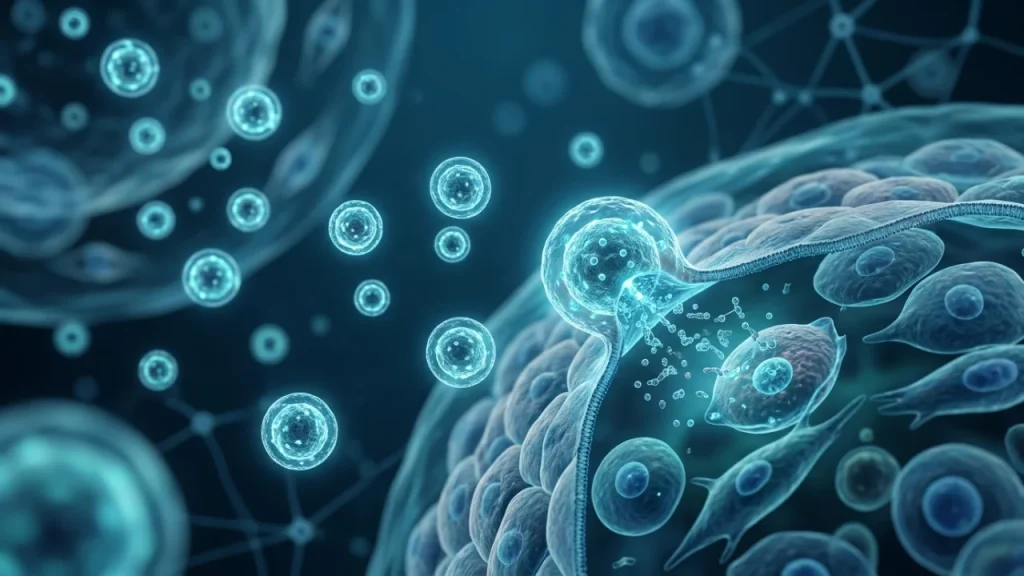
Imagine your body’s cells have a sophisticated mail system. They send tiny packages to each other all the time. These packages are called exosomes. They are incredibly small vesicles. Think of bubbles a thousand times smaller than a single cell. Cells create these bubbles inside themselves. They fill them with important cargo. Then they release them into the bloodstream and other fluids.
This cargo is the message. It can contain many different things. It often includes proteins and lipids. It also carries genetic instructions like RNA. A cell under stress might send out a specific signal. A healthy cell can receive this signal and respond. It might start repairing itself. It could change its behavior to help the whole system. This is how tissues talk to each other. It is a constant, silent conversation happening inside you.
Exosomes are nature’s perfect messengers for several reasons. Their lipid bubble protects the precious cargo during travel. It is like a sturdy envelope for a fragile letter. They can travel far from their origin cell. They also have address labels on their surface. These labels help them find the right target cell. Not every cell will accept the package. Only cells with the right receiver will take it in.
This system is vital for health. It helps coordinate immune responses. It aids in tissue repair after injury. It maintains balance across different organs. Scientists now study these particles closely. They want to understand the exact language cells use. This knowledge is key for new treatments.
The idea behind an exosomes IV treatment is direct and powerful. It takes this natural process and gives it a specific goal. We can collect exosomes from certain cell types. These cells might be experts at healing or renewal. Then we purify these messenger bubbles. Finally, we deliver them into the bloodstream through an intravenous drip.
This method uses the body’s own communication network. It sends a strong, clear signal of repair to tissues everywhere. It matters now because we finally have the technology to do it well. We can produce pure and safe exosomes for clinical use. This was not possible just a decade ago.
Understanding this basic biology is the first step. It shows why this approach is different from traditional methods. It works with your body’s systems instead of just on a single symptom. The next logical question is about the source of these helpful messengers and how they are prepared for use in therapy.
How IV Delivery Makes Exosome Therapy Different
Intravenous delivery changes everything for exosome therapy. It uses the body’s main highway. This is your bloodstream. Local injections work on one area. An IV drip sends signals everywhere at once.
Think of a local injection like fixing a single pothole on your street. An exosomes IV treatment is like upgrading the entire city’s road repair system. The messengers enter the venous system. They travel through the heart. From there, they pump to the lungs for oxygen. Then they return to the heart. Finally, they get pushed into the wide network of arteries.
This journey is key. It allows for widespread distribution. Exosomes can reach organs and tissues far from the injection site. They access the brain, liver, skin, and muscles. This is systemic renewal. The address labels on the exosomes guide them. They find cells that need their specific instructions.
The effects are different from a local shot. A local injection may reduce inflammation in one knee. The IV approach supports that knee too. But it also aids skin health and immune function. It can improve energy at a cellular level. The goal is body-wide communication.
Several factors make IV delivery unique. – It ensures high bioavailability. The exosomes are not broken down in the gut or stuck in one muscle. – It mimics the natural release of exosomes from cells into circulation. – It allows for a coordinated response across multiple organ systems at the same time.
This method matters for chronic conditions. These issues often involve more than one system. Fatigue, slow healing, and persistent inflammation are examples. A localized treatment cannot address all these parts together. A systemic delivery can.
The process is also efficient. Exosomes are tiny. They can pass through the smallest blood vessels called capillaries. This lets them exit the bloodstream and enter the tissue spaces. They then deliver their cargo directly to target cells. The entire body becomes a potential site for repair.
This explains the growing interest in this approach. It is not just a stronger dose of a local therapy. It is a fundamentally different strategy. It aims for total body balance and renewal from within. The next step is to look at where these potent messengers come from and how they are prepared for safe use.
The Shift from Surface Treatments to Systemic Renewal
Traditional aesthetic medicine often focuses on the surface. Treatments may fill a line or tighten skin in one area. This is a local fix. It does not address why the skin aged there in the first place. The root causes are usually deeper. They involve cellular communication breakdowns and systemic inflammation.
Think of your body as a network. A problem in one area often signals issues elsewhere. Dull skin can link to poor gut health. Slow healing might relate to immune system fatigue. A surface treatment is like painting a wall with a hidden water leak. The paint may look good for a while. But the leak remains.
Exosomes IV treatment represents a fundamental shift. It works from the inside out. The goal is systemic renewal. This means refreshing the body’s internal communication systems. The therapy uses billions of natural signaling particles. They travel everywhere via your bloodstream.
Their instructions help cells function better. This leads to improvements you can see and feel. The process supports several areas at once. – Skin cells may produce more collagen and elastin for firmness. – Immune cells can regulate inflammation more effectively. – Cells repairing tissue may work with greater efficiency.
This matters now because our understanding of aging has changed. We now see it as a systemic process. It affects all our cells. Modern life adds stress, pollution, and poor diet. These factors disrupt internal signaling. A local cosmetic procedure cannot reset these signals. A systemic therapy aims to do exactly that.
The approach is proactive, not just reactive. It is about optimizing health at the cellular level. Better cellular function leads to outward radiance. It also supports vitality and resilience. The skin improvement is a visible sign of a deeper change.
Consider chronic fatigue or persistent joint discomfort. These are whole-body issues. A systemic therapy can address them alongside aesthetic goals. This creates a comprehensive result. The value is in the synergy.
The shift is from isolated correction to holistic support. It moves beyond temporary fixes. The aim is lasting function and balance. This is why the method generates significant interest today. It aligns with a modern desire for foundational wellness.
The next logical question concerns safety and sourcing. How are these powerful messengers collected and prepared for clinical use?
The Science Behind Exosomes and Cellular Communication
What Exosomes Carry: Proteins, RNA, and Signals
Exosomes are tiny delivery packages. Their contents act as a set of instructions for other cells. Think of them as a flash drive filled with software updates. The cargo tells a cell to change its behavior.
The main components are proteins and RNA. These are not random molecules. They are carefully selected by the parent cell. This selection defines the message.
Proteins on the exosome’s surface act like keys. They fit into specific locks on target cells. This docking ensures the message gets to the right address. Once attached, the exosome can transfer its core cargo.
Inside, proteins perform many jobs. – Enzymes can kickstart chemical reactions in the receiving cell. – Growth factors signal cells to divide or repair themselves. – Anti-inflammatory proteins can calm an overactive immune response.
The second major cargo is RNA, specifically microRNA. This is genetic instruction. MicroRNA does not carry blueprints for new cells. Instead, it functions like a manager. It tells the cell which of its own genes to use more and which to use less.
For example, an exosome from a healthy skin cell might carry microRNA. This microRNA could travel to an aging skin cell. There, it instructs that cell to boost collagen production. The aging cell follows these new orders.
The signals are precise and powerful. A single exosome can carry hundreds of these protein and RNA molecules. Their combined effect directs cellular activity. This is why an exosomes iv treatment aims for systemic impact. The therapy introduces countless exosomes into the bloodstream. These exosomes then travel throughout the body.
They seek out cells that need guidance. The proteins and RNA they carry provide that guidance. This process can influence many systems at once. Skin health, immune function, and tissue repair can all receive beneficial signals.
The cargo determines the outcome. Exosomes from different source cells carry different instructions. Stem cell-derived exosomes often carry signals for renewal and regulation. This makes them particularly useful in regenerative approaches.
Understanding this cargo is key. It explains how a therapy can go beyond surface-level change. It is not about adding a temporary substance. It is about delivering a lasting instruction set to your body’s own cells. The next step is to see how these messages are safely collected and prepared for clinical use.
How Cells Release and Receive Exosomes
Cells constantly release tiny exosome vesicles. This is a normal part of their function. Think of it like sending out molecular messages. The cell creates these vesicles inside a compartment called an endosome. The endosome forms smaller bubbles inside itself. These bubbles are the exosomes. The cell then sends the endosome to its outer membrane. The endosome fuses with the cell wall. It releases the exosomes into the surrounding space.
This release is not random. Cells control how many exosomes they send. They also control what cargo goes inside. Stress or damage can increase release. A healthy signal can also trigger it. For instance, a stem cell might release more exosomes when it senses tissue needs repair. The exosomes carry the instructions for that repair.
The journey then begins. Exosomes move through bodily fluids. They travel in blood, lymph, and the space between cells. Their outer membrane protects their precious cargo. It ensures the messages arrive intact.
Receiving a message is just as active. A cell does not passively absorb exosomes. Several precise methods exist for uptake. – Direct fusion is one method. The exosome membrane merges with the target cell’s membrane. It empties its cargo directly into the cell’s interior. – Endocytosis is more common. The target cell’s membrane folds inward. It wraps around the exosome and pulls it inside. This forms a new little bubble inside the receiving cell. – Receptor binding is another key way. Proteins on the exosome’s surface act like keys. They bind to specific locks on the target cell’s surface. This binding can trigger a signal without full uptake. It can also guide the exosome for endocytosis.
The target cell is selective. It does not accept every exosome it meets. Surface markers determine compatibility. This ensures messages go to the right addresses. Once inside, the exosome’s cargo is unpacked. Proteins and RNA molecules get to work. They alter the cell’s behavior as directed.
This constant exchange creates a vast communication network. Every organ and tissue participates. An exosomes iv treatment leverages this natural system. It introduces a high volume of specific exosomes into circulation. These therapeutic exosomes join the body’s own messaging traffic.
They use the same delivery pathways. They can fuse with cells or be taken in via endocytosis. Their engineered cargo then directs cellular activity on a large scale. Understanding this two-way process is crucial. It shows why systemic delivery through an IV can be so effective. The body’s own cellular logistics handle the final delivery of these regenerative instructions. Next, we explore how source cells are chosen to create these potent messages.
Why Exosomes Are Key to Repair and Regeneration
Exosomes carry precise instructions for repair. These instructions are not random. They are carefully packed by their parent cells. Think of them as emergency response teams. They arrive at a site of damage or aging. Then they deliver their molecular toolkit.
Their cargo directly influences cell behavior in several powerful ways. This makes them key to healing.
First, they can reduce inflammation. Chronic inflammation slows healing. It creates a hostile environment for repair. Exosomes deliver anti-inflammatory signals. They tell immune cells to calm down. This shifts the tissue from a state of damage to a state of repair.
Second, they stimulate cellular growth and movement. They carry growth factors and proteins that act as green lights. These signals tell local stem cells and other repair cells to wake up. The cells begin to divide more actively. They also start moving toward the area that needs help. This process is called migration.
Third, they promote the creation of new blood vessels. This is called angiogenesis. New blood vessels are vital. They bring oxygen and nutrients to healing tissues. Without this new network, regeneration stalls. Exosomes provide the blueprints for this construction.
Fourth, they encourage cells to produce more structural proteins. Collagen and elastin are the most important ones. These proteins form the supportive scaffold of your skin and other tissues. More and better-organized collagen means firmer, more youthful skin and stronger tendons.
Finally, they help coordinate all these actions. They ensure the repair process is orderly and complete. This systemic coordination is why an exosomes iv treatment can be so effective. It supports renewal throughout the entire body, not just in one spot.
The result is a targeted renewal process. Damaged cells are supported. New, healthy cells are encouraged. The extracellular matrix, which is the glue between cells, is rebuilt. This happens from the inside out.
It is a fundamental shift from simply managing symptoms to encouraging true biological restoration. The body’s innate ability to heal is amplified and guided. Next, we will look at how scientists select the optimal source cells to produce these potent therapeutic messengers.
How Exosomes IV Treatment Targets Aging and Inflammation
The Role of Inflammation in Skin Aging
Inflammation is your body’s natural defense system. It acts like a fire alarm and repair crew. This process is vital for healing cuts and fighting infections. However, a different, silent type of inflammation often persists. This is called chronic, low-grade inflammation. It simmers quietly beneath the skin’s surface. This constant state of alert causes cumulative damage. It is a primary driver of accelerated aging.
Think of it like a small fire that never goes out. This fire constantly produces reactive molecules. They are often called free radicals. These molecules damage nearby structures. In your skin, they attack collagen and elastin fibers. These proteins keep your skin firm and elastic. The damage breaks them down. It also prevents the creation of new, healthy fibers. The result is thin, sagging skin with wrinkles.
This inflammatory state also disrupts the normal life cycle of skin cells. It can slow down the renewal of fresh, young cells. Older, damaged cells may linger longer. This contributes to a dull, uneven complexion. Inflammation can also overstimulate pigment-producing cells. This leads to dark spots and uneven skin tone known as hyperpigmentation.
Key cellular processes are harmed: – Fibroblast function declines. These cells make collagen. – The skin’s barrier weakens. This leads to dryness and sensitivity. – Blood vessel networks can become impaired. This reduces nutrient delivery.
Chronic inflammation is fueled by many modern factors. Stress, poor diet, environmental toxins, and UV exposure are common triggers. Unlike acute inflammation, you often cannot see or feel this low-grade process. You only see its long-term effects on your face and body. This is why targeting inflammation systemically is so important for anti-aging. Simply applying creams to the surface cannot calm this deep-seated fire.
An effective exosomes iv treatment aims to address this root cause. By traveling through the bloodstream, therapeutic exosomes can deliver anti-inflammatory signals systemically. They help recalibrate the immune response. This tells the body to lower its chronic alarm state. Reducing this internal fire allows natural repair processes to function optimally again. It creates an internal environment where regeneration can thrive. This systemic approach is crucial for lasting results that go beyond surface-level changes. Next, we will examine how this translates into specific, visible improvements in skin health and vitality.
How Exosomes Calm Inflammatory Responses
Exosomes carry specific instructions to immune cells. These instructions tell the cells to calm down. Think of exosomes as tiny messengers with a letter inside. The letter says “stop fighting.”
The body’s immune system uses inflammation as a defense. Sometimes this defense does not turn off. This creates chronic, low-grade inflammation. It is like a car alarm that keeps ringing long after any threat is gone. This constant alarm damages healthy tissue over time.
An exosomes iv treatment delivers a different message. The exosomes enter your bloodstream directly. They travel to sites of inflammation throughout the body. Their cargo includes special molecules called microRNAs and proteins.
These molecules work in several key ways: – They can bind directly to overactive immune cells. This binding blocks pro-inflammatory signals. – They deliver anti-inflammatory codes into cell nuclei. This changes which genes the cell activates. – They promote the activity of regulatory T-cells. These are peacekeeper cells that suppress excessive immune responses.
One major target is a protein called NF-kB. This protein acts as a master switch for inflammation. When NF-kB is turned on, it starts a chain reaction. This reaction leads to swelling, redness, and tissue damage. Exosomes can carry molecules that turn this master switch off.
Another target is cellular senescence. Senescent cells are old, damaged cells that refuse to die. They spew out inflammatory signals constantly. This is called the senescence-associated secretory phenotype (SASP). Exosome signaling can help clear these zombie cells. It also tells nearby cells not to become senescent.
The result is a reset of the immune environment. The false alarm finally stops. Swelling and irritation decrease at a fundamental level. Blood vessels become less leaky. Nerve endings receive fewer pain signals. Tissues are no longer under constant attack.
This systemic calm allows repair to begin. With inflammation lowered, stem cells and fibroblasts can do their jobs better. They rebuild collagen and elastin without interference. Nutrient delivery improves as circulation normalizes.
The process is not just about blocking one signal. It is about restoring intelligent communication across your entire system. This makes an exosomes iv approach fundamentally different from taking an anti-inflammatory pill. A pill mutes one part of the orchestra. Exosomes help the conductor restore harmony to the whole piece.
Reducing this internal fire is the first critical step. The next step is active regeneration. Once the inflammatory background noise is quieted, the body’s innate healing systems can clearly hear the new instructions for renewal and growth.
Repairing Cellular Damage with Exosome Signals
Every cell in your body faces daily damage. This damage comes from sunlight, stress, and normal metabolism. Think of it like wear and tear on a machine. Over time, this damage builds up. It is a key reason we age. An exosomes iv treatment delivers precise repair instructions directly to your cells.
One major target is DNA. Your DNA is the instruction manual for every cell. Sometimes the strands of DNA break. Cells have repair kits to fix these breaks. But as we age, these kits work slower. Exosomes carry molecules called microRNAs. These molecules act like urgent memos. They tell the cell to prioritize DNA repair. This helps maintain the genetic blueprint.
Another target is the mitochondria. Mitochondria are the power plants of your cell. They make energy. Damaged mitochondria produce less energy and more waste. Exosome signals can do two things here. First, they help remove the damaged power plants. This process is called mitophagy. Second, they encourage the growth of new, healthy mitochondria.
Exosomes also help clean up inside cells. Cells accumulate junk proteins over time. This junk can clump together and cause problems. Exosome signals boost the cell’s own cleanup crews. These crews are called proteasomes and autophagy pathways. With better cleanup, the cell can function smoothly again.
The process follows a clear logic: – Exosomes enter the bloodstream through an iv treatment. – They travel to tissues needing repair. – Their cargo is delivered to target cells. – Signals activate the cell’s own repair programs. – The cell fixes its internal damage.
This is not about adding foreign parts. It is about upgrading the cell’s own software. The exosomes provide the update. Then your cells execute the repair themselves. The effects are systemic because the exosomes travel everywhere blood flows.
The result is a cell that functions like a younger version of itself. It makes energy better. It reads its DNA instructions correctly. It stays clean inside. This cellular renewal is the foundation for tissue and organ renewal.
Ultimately, repairing this cellular damage improves resilience. Your cells can handle stress better. They maintain their health longer. This sets the stage for visible rejuvenation. Healthier cells build healthier tissues. The next step is to see how this leads to tangible renewal in skin, hair, and overall vitality.
Benefits of Exosomes IV Treatment for Skin Rejuvenation
Improving Skin Elasticity and Firmness
Healthy skin bounces back when you press it. This is called elasticity. Firm skin resists sagging. This is called firmness. Both depend on your skin’s support system. This system is a network of fibers. The main fibers are collagen and elastin. Think of them like a mattress. Collagen is the strong springs. Elastin is the stretchy bands. Over time, these fibers break down. They also get damaged. The cells that make them become less active. An exosomes iv treatment addresses this problem at its source.
Exosomes travel through your blood after the iv treatment. They reach skin cells called fibroblasts. Fibroblasts are the factories that build collagen and elastin. Aging or stressed fibroblasts slow down production. They also make poorer quality fibers. Exosome signals change this.
The exosome cargo enters the fibroblast. It delivers specific instructions. These instructions do several key things. First, they tell the fibroblast to become more active. The cell wakes up and gets back to work. Second, they provide the blueprint for making high-quality collagen. This is mostly Type I and Type III collagen. These types are vital for strength and structure.
Third, the signals boost elastin production. Elastin gives skin its snap-back quality. Fourth, exosomes help regulate enzymes in the skin. Some enzymes, called MMPs, break down collagen too fast. Exosome messages can help balance this process. This protects existing collagen from damage.
The result is a dual effect on your skin’s foundation. – New collagen fibers are made and organized properly. – New elastin fibers are produced and integrated. – The breakdown of good fibers is slowed.
This is not a surface plumping effect. It is a true rebuilding from within. The process takes time because building strong protein fibers is slow. Cells need to turn on genes. They need to assemble proteins. They need to weave them into the existing network.
You will not see this change overnight. But over weeks and months, the skin’s architecture improves. The dermis, which is the deep layer, becomes denser. Thicker dermis means firmer skin with less sagging. Better elastin means skin retracts more easily after smiling or stretching.
Improved elasticity also helps with fine lines. Skin that can snap back shows fewer static wrinkles. Firmness provides a natural lift and contour support. This approach treats the face, neck, décolletage, and hands equally because blood flows everywhere.
The final outcome is skin that feels tighter and looks more toned. It has a stronger underlying framework. This cellular renewal directly creates a more youthful structure. The next logical step is to see how this renewed structure improves the skin’s surface texture and hydration.
Reducing Wrinkles and Fine Lines Naturally
Wrinkles and fine lines are signs of a communication breakdown in your skin. Cells stop sending the right signals for repair. An exosomes IV treatment addresses this problem at its source. It delivers a wide range of messaging directly into your bloodstream. These messages reach skin cells systemically.
The process works on several levels to smooth aging marks. First, it boosts the skin’s natural hydration from within. Exosomes carry instructions for cells to produce more hyaluronic acid. This is a key molecule that holds water. More internal hydration plumps up skin cells. This plumping can make many fine lines less visible.
Second, this treatment supports the epidermis. This is the skin’s outermost layer. A thin or weak epidermis makes every line underneath more obvious. Exosome signals encourage faster and healthier cell turnover in this top layer. New, robust cells rise to the surface more efficiently. This creates a denser, smoother barrier.
The third mechanism is the most powerful for deeper wrinkles. It involves the dermal structure you just read about. Think of a mattress. If the springs underneath are broken or weak, the fabric on top will sag and crease. Your skin works the same way. Collagen and elastin are the supportive springs.
An exosomes IV treatment helps rebuild that supportive layer. – New collagen fills in and smooths the base under wrinkles. – Fresh elastin provides tension to pull skin taut. – The dermis becomes a firmer, flatter foundation.
This means static wrinkles—those always visible at rest—can soften. The skin has better structural support to resist folding. Dynamic lines from smiling or frowning may also improve. Better elasticity allows skin to snap back more completely after movement.
The results are gradual and natural. You are not filling the line with a foreign substance. Instead, you are encouraging your body to repair the area around it. This leads to a subtle effacement, or smoothing, of the line itself. The change integrates seamlessly with your natural tissue.
For optimal effects, the skin needs continued support. Protecting this renewed cellular activity is crucial. The next step is maintaining these gains with proper daily care to shield the new collagen and healthy cells from damage.
Enhancing Skin Hydration and Glow
Healthy skin needs water to look plump and bright. Your cells must hold this water well. A key protein for this is hyaluronic acid. Think of it like a sponge inside your skin. It grabs and holds water molecules. As we age, our cells make less of this sponge. Skin can become dry and dull as a result.
An exosomes IV treatment addresses this internally. The exosomes carry instructions to your skin cells. These instructions tell cells to be more active. One result is more hyaluronic acid production. Your skin’s natural sponge network gets reinforced. This helps your tissues retain vital moisture.
This process is not like applying a topical moisturizer. A cream adds water to the surface temporarily. The exosome signals work on a deeper level. They improve the skin’s own ability to attract and keep water. This leads to intrinsic hydration. The effect comes from inside your living tissue.
The benefits for your appearance are clear. Better hydration makes fine lines less visible. Well-hydrated skin reflects light more evenly. This creates a dewy, fresh look. Your complexion appears smoother and more supple. It is the difference between a raisin and a grape.
Radiance or glow is another direct benefit. It comes from healthy blood flow and efficient cell turnover. Exosomes support the tiny blood vessels that feed your skin. They encourage optimal nutrient delivery. Fresh, new cells also have a smoother surface. They reflect light better than old, tired cells.
Think of a newly paved road versus a worn-out one. The new surface is flat and even. Sunlight bounces off it cleanly. Your skin works in a similar way. A renewed cellular surface catches the light. This gives you a natural luminosity.
The combined effect is transformative. – Skin looks more moist and feels softer. – It has a healthy, lit-from-within glow. – The tone appears more even and vibrant.
This systemic approach means the glow is not just on the surface. It is generated by your skin’s improved health. An exosomes IV treatment supports this whole process. The treatment nourishes the cellular environment that creates radiance.
Protecting this new hydration is important. Sun exposure and harsh products can damage the skin’s barrier. A simple routine helps lock in the benefits. The next logical step is learning how to care for this newly rejuvenated skin every day.
Systemic Health Benefits Beyond Skin Deep
Boosting Overall Tissue Vitality and Function
An exosomes IV treatment does more than improve your skin. It sends vital signals to tissues throughout your entire body. These signals help your cells work better. Think of exosomes as tiny instruction manuals. They are released by healthy, young cells. Their job is to teach older or stressed cells how to function properly.
This process boosts overall tissue vitality. Vitality means energy and strength. Every organ and system is made of tissues. Your muscles, tendons, and even blood vessels are tissues. They all need clear communication to stay healthy. Exosomes deliver the messages that keep this communication flowing.
The core mechanism is called cell signaling. Cells constantly talk to each other. They send chemical notes about repair, growth, and defense. Aging and stress can scramble these messages. Exosomes help restore the original, clear instructions. They tell a tired cell in your knee or your heart to activate its repair programs.
This leads to better tissue function in several key areas. – Joints may feel more cushioned and mobile. – Muscle recovery after exercise can become more efficient. – Blood vessel walls may stay more flexible and strong. – The body’s natural repair cycles often work more smoothly.
For example, consider a tendon. It is a tough band that connects muscle to bone. Over time, it can become stiff and less elastic. Exosomes can signal the tendon cells to produce more collagen. Collagen is a protein that gives tissues structure. More collagen means a stronger, more resilient tendon.
The same principle applies internally. Your circulatory system is a network of tissues. Healthy blood vessels are crucial. They deliver oxygen and nutrients everywhere. Exosomes support the cells that line these vessels. This helps maintain good circulation from the inside out.
Improved tissue function has a cascading effect. Better circulation means more oxygen for your brain and muscles. More efficient repair means less daily wear and tear. The body operates with less background inflammation. This creates a foundation for lasting wellness.
The goal is systemic renewal. Systemic means whole-body. The benefits start at the cellular level but build up. Healthier cells create healthier tissues. Healthier tissues create healthier organs and systems. This is the true scope of regenerative science.
It moves far beyond a single symptom or surface concern. The approach supports the body’s innate intelligence for maintenance. An exosomes IV treatment is a catalyst for this broad process. It provides the resources your tissues need to optimize their own function.
The next step is understanding how this internal vitality translates into tangible, daily life benefits like energy and resilience.
Supporting Immune System Balance
Your immune system is your body’s defense network. It must be balanced to work well. It should be alert but not overactive. An imbalanced immune system can cause problems. It might attack your own healthy tissues. This is called autoimmunity. Or it might fail to stop threats properly. Exosomes help guide this balance.
Immune cells constantly communicate. They send signals to each other. These signals tell cells when to act and when to rest. Exosomes are key messengers in this process. They carry instructions directly to immune cells. Think of them as tiny letters with specific orders.
These orders can calm down an overactive response. For example, some exosomes tell inflammatory cells to stand down. This reduces unnecessary inflammation. Chronic inflammation is linked to many health issues. It can make you feel tired and achy. By helping to control it, exosomes support overall comfort.
Exosomes also help train your immune defenses. They can present pieces of old viruses or other information. This teaches immune cells what to look for. It makes your surveillance system smarter and more efficient. A well-trained immune system reacts faster to real threats.
The benefits of this balance are clear. – You may experience fewer seasonal allergies. An overreaction to pollen causes allergy symptoms. – You might recover faster from common colds. A coordinated immune response tackles the virus effectively. – Your joints may feel less stiff. This is often linked to lower background inflammation.
An exosomes IV treatment delivers these messengers systemically. They travel through your bloodstream. They can reach immune cells everywhere in your body. This is different from a cream or a local injection. The goal is whole-body immune support.
This process is about modulation, not stimulation. The aim is not to boost immunity arbitrarily. The goal is to help it function optimally. It is like tuning a musical instrument. The strings should be neither too loose nor too tight.
Research shows exosomes from certain cells are especially good at this. Mesenchymal stem cell exosomes often have these regulating properties. They carry molecules that promote tolerance and peace. This scientific insight guides modern regenerative approaches.
Supporting your immune system is a core part of systemic health. It protects your renewed tissues from internal stress. This creates a positive cycle. Healthy tissues send better signals. A balanced immune system protects those tissues. Your resilience builds from within.
The next logical step is seeing how this internal balance affects daily energy and mental clarity.
Promoting Holistic Wellness from Within
This section will explain how systemic exosome signaling influences overall wellness, moving from immune balance to broader organ and metabolic function. It logically follows the previous focus on immune modulation by showing the wider health effects. The tone should remain factual and clear, using concrete examples of organ communication.
A balanced immune system frees up resources for other vital tasks. Your body constantly repairs and renews itself. Chronic inflammation can disrupt this maintenance. An exosomes IV treatment helps calm this background noise. This allows your energy to be used for daily renewal.
These tiny messengers do more than regulate immunity. They carry instructions for repair. These instructions can reach many organs at once. Think of them as system-wide software updates. They deliver patches to different parts of the body’s network simultaneously.
One key area is cellular energy production. Mitochondria are the power plants inside your cells. Exosomes can deliver molecules that support mitochondrial health. Healthier mitochondria mean more energy for your daily life. You might notice less afternoon fatigue. Your stamina during exercise could improve.
Exosome signals also support vascular health. They encourage the lining of blood vessels to stay healthy. This improves circulation. Better circulation means more oxygen and nutrients reach your tissues. It also means waste products are removed more efficiently. Your entire body benefits from this.
The gut-brain connection is another pathway. Your digestive system and brain communicate constantly. Exosomes participate in this dialogue. They can carry factors that support a healthy gut lining. A healthy gut contributes to a calm mind and stable mood.
Consider these interconnected wellness benefits: – Improved sleep quality from reduced systemic stress signals. – Enhanced ability to manage everyday physical and mental stress. – Better support for the body’s natural detoxification pathways. – Optimized communication between hormonal systems.
This is not a single-action treatment. It is a reset for internal communication networks. The goal is whole-body coherence. When cells talk effectively, systems work in harmony. This harmony is the foundation of true vitality.
The effects are cumulative and systemic. Benefits build over weeks and months. The process works from the inside out. External beauty becomes a reflection of this internal renewal. You are not just treating a symptom. You are supporting the underlying condition of your entire system.
Research points to exosomes’ role in homeostasis. Homeostasis means keeping a stable internal environment. Your body strives for balance in temperature, pH, and chemistry. Exosome signaling is a key tool for maintaining this balance. Modern therapies aim to use this natural toolset.
Ultimately, promoting holistic wellness means supporting the body’s innate intelligence. It provides the right signals at the right time. This approach aims for whole-body health by enhancing communication. The next logical step is understanding how this internal renewal manifests as visible youthfulness and skin vitality.
—
The Process of Receiving Exosomes IV Treatment
What to Expect During an Exosome IV Session
An exosome IV treatment session is a simple and controlled process. It feels much like receiving a standard intravenous vitamin drip. You will be in a comfortable clinical setting. A healthcare professional will guide you through each step.
The session begins with a standard health check. Your vital signs are recorded. This ensures you are ready for the infusion. A small needle is then placed into a vein in your arm. This is connected to a sterile IV line.
The exosome solution is contained in a small bag. It is clear and looks like saline. The bag hangs on an IV stand. The solution drips slowly into your bloodstream. The entire infusion typically takes 30 to 60 minutes.
You simply sit or recline during the process. Many people read, listen to music, or rest. The room is kept calm and quiet. You might feel a slight coolness as the fluid enters your vein. This is normal and temporary.
Medical staff monitor you throughout. They check for any comfort issues. Serious reactions are very rare with purified exosomes. The environment is designed for safety and relaxation.
Here is what a typical session timeline looks like: – Preparation and intake (10-15 minutes). – The active exosomes iv treatment infusion (30-60 minutes). – A short rest period after the drip is complete (10-15 minutes).
The total time in the clinic is often under 90 minutes. You can then resume most normal activities. Driving yourself home is usually fine. The treatment does not require sedation or complex recovery.
The goal is seamless delivery. The exosomes enter your circulation directly. They bypass the digestive system. This allows for full bioavailability. Your body can immediately use these signaling vesicles.
Think of it as sending an important update to your body’s cellular network. The IV route is the fastest and most direct delivery method. It ensures the message reaches every system efficiently.
After the session, you may not feel anything dramatic right away. The real work happens silently at a cellular level. The exosomes begin their communication tasks immediately. They travel to where they are needed most.
This straightforward process is the gateway to the systemic renewal described earlier. The simple IV drip delivers a powerful signal for internal harmony. Next, we will explore how to prepare for your treatment to ensure optimal results.
How Exosomes Are Prepared and Purified
The exosomes iv treatment you receive starts long before the IV bag is prepared. These signaling vesicles must be carefully collected and cleaned. This process is vital for safety and effectiveness.
First, exosomes come from a source. They are naturally released by cells into their environment. Scientists harvest them from this cell culture fluid. The original cells are screened for health. They are never taken from a patient’s own body for these treatments.
The fluid containing exosomes is just the beginning. It also holds many other particles and proteins. These must be removed. The goal is to isolate only the pure, functional exosomes.
Several purification steps achieve this. Each step filters out specific impurities. – Ultracentrifugation spins the fluid at very high speeds. Heavier particles fall out of solution first. Lighter exosomes are separated later. – Size-exclusion chromatography passes the mixture through a filter with tiny pores. Larger molecules get trapped. Smaller exosomes pass through. – Tangential flow filtration uses a gentle washing process. It concentrates the exosomes and removes leftover contaminants.
After purification, the exosomes undergo strict testing. This ensures they are safe and active. Tests check for several key factors. – Sterility confirms no bacteria or fungi are present. – Purity measures the concentration of exosomes versus other material. – Potency verifies the exosomes can send biological signals. – Identity testing makes sure the particles are truly exosomes.
Only batches passing all tests are approved for use. This creates a consistent and reliable product. You can trust that the infusion contains what it claims to contain.
Finally, the purified exosomes are prepared for infusion. They are mixed into a sterile saline solution. This is the liquid you see in the IV bag. The solution preserves the exosomes’ structure and function.
The entire preparation happens in controlled labs. These labs follow strict manufacturing rules. This level of care is non-negotiable for systemic treatments.
This meticulous process transforms a natural cellular product into a therapeutic agent. It bridges the gap between biological discovery and clinical application. Next, we will look at how your body responds after receiving this purified signal.
Typical Duration and Frequency of Treatments
An exosomes iv treatment session itself is surprisingly brief. The intravenous infusion typically takes between 30 to 45 minutes. You will be seated comfortably during this time. A small needle places an IV line into a vein, usually in your arm. The purified exosome solution then drips steadily into your bloodstream. The process feels similar to receiving fluids or vitamins through an IV. Most people report no discomfort beyond the initial pinprick.
The total clinic visit is longer than the infusion alone. You should plan for about 90 minutes on site. This extra time allows for important steps before and after. – A brief consultation reviews your goals and answers last questions. – Vital signs like blood pressure are checked as a safety measure. – A short rest period follows the infusion before you leave.
Frequency is a key part of the protocol. A single session can trigger a biological response. However, most treatment plans involve a series of sessions. This builds a stronger and more sustained signal to your body’s systems. Think of it as a course of renewal rather than a one-time event.
A common initial protocol involves three to six sessions. These are often spaced about one week apart. This weekly spacing gives your cells time to respond to the signals. It also allows for a cumulative effect. Some plans may suggest two sessions in the first week. This can help establish a stronger initial cellular dialogue.
After the initial series, maintenance treatments may be advised. The goal here is to support the benefits over time. A typical maintenance schedule could involve one session every three to six months. This helps sustain the regenerative processes that were started.
Your specific plan will depend on several individual factors. – Your primary health and aesthetic goals guide the approach. – Your age and cellular health influence how your body responds. – Your personal schedule and commitment are practical considerations.
The treatment is designed for convenience despite its advanced science. The short session time means it fits into a lunch break. The clear schedule allows you to plan your series with confidence. There is no lengthy recovery period needed afterward. You can return to most normal activities immediately following your visit.
Consistency with the recommended schedule provides the best foundation for results. The body’s renewal mechanisms work on a biological timeline. Regular signaling helps guide this process effectively. This phased approach mirrors how natural healing occurs in stages.
The immediate next step after an infusion is the body’s response. Your cells begin to receive and interpret the new instructions.
Safety and Considerations for Exosome Therapy
Understanding the Safety Profile of Exosomes
Exosomes are natural parts of your body’s communication network. Your own cells make and release them every day. This is a key reason why exosomes IV treatment is generally well-tolerated. The therapy uses purified versions of these natural messengers. It is not introducing a foreign synthetic drug.
The safety profile stems from their mechanism. Exosomes work by signaling, not by forcing a chemical reaction. They carry instructions to your cells. Your cells then decide how to respond using their own resources. This is different from many drugs. Drugs often block or override cellular processes directly. Exosome signaling is more like a gentle suggestion.
However, source and purity are critical for safety. Not all exosome preparations are equal. The highest safety standards involve several strict steps. – The exosomes must come from a controlled, certified laboratory source. – They undergo rigorous testing for purity. This ensures no unwanted cells or debris are present. – They are screened for pathogens to confirm they are sterile and safe. – The final product is checked for potency and consistency.
Because they are signaling particles, side effects are typically mild when they occur. Some people may feel temporary fatigue as the body engages its renewal processes. A slight, brief feeling of warmth or chill is possible during the infusion. These effects normally pass quickly. They are often signs of the body’s cellular activity adjusting.
Serious adverse reactions are extremely rare with properly sourced exosomes. The intravenous route requires specific expertise. A trained provider will administer the infusion at a correct, controlled pace. This careful administration further supports a positive experience. Your medical history is reviewed beforehand to ensure suitability.
The overall safety integrates natural biology with modern science. Using the body’s inherent language reduces unknown risks. Stringent lab protocols add a vital layer of security. This combination allows the therapy to support systemic renewal confidently. Understanding this profile helps you approach treatment with informed assurance. The next considerations involve practical steps to ensure your individual treatment journey aligns with this safety framework.
Who Might Benefit Most from This Treatment
Exosome IV treatment offers a unique path for specific health and aging goals. It works from within your body. This makes it ideal for people who want more than a surface fix. They seek deeper, cellular-level renewal.
Who sees the most benefit? Often, it is adults noticing their body’s natural repair slowing down. This slowdown becomes clear in your 40s and beyond. You might feel less energetic. Your skin may lose its youthful bounce. Minor injuries might heal slower than before. These are signs of declining cellular communication. Exosomes can help restore that vital dialogue.
The therapy supports several key areas of wellness. First, it can enhance skin quality from the inside. It prompts cells to produce more collagen and elastin. This improves firmness and reduces fine lines. Second, it aids tissue repair. This is valuable after procedures or for general recovery. Third, it may help modulate inflammation. Balanced inflammation is crucial for long-term health.
Consider this treatment if you have these goals: – You want to address signs of aging at their root cause. – You seek a holistic wellness boost, not just a single symptom fix. – You prefer approaches that work with your body’s biology. – You have tried topical creams or treatments with limited results.
The exosomes iv treatment is systemic. Its effects circulate everywhere. This makes it powerful for whole-body revitalization. It is not a spot treatment for one wrinkle. It is a renewal protocol for your entire system.
This approach also suits those focused on longevity. Healthy cellular function is the foundation of a longer healthspan. By optimizing how your cells talk to each other, you support better organ function. You support more vibrant energy levels. The goal is to feel as vital as possible for as long as possible.
It is important to have realistic expectations. This is not an instant miracle. It is a regenerative process. Benefits often unfold over weeks and months. Your body uses the signals to guide its own repair work. Think of it as giving your cells a clear instruction manual they had lost.
The best candidates are generally in good health but want to optimize it. They understand the value of investing in foundational biology. They see aging not just as appearance but as a function of cellular health. The exosomes iv treatment aligns perfectly with this modern view.
This leads to practical questions about preparing for and receiving the therapy to maximize these potential benefits.
Potential Side Effects and How to Manage Them
Any medical procedure carries a potential for minor side effects. The exosomes iv treatment is generally well-tolerated. Most reported reactions are mild and temporary. They typically resolve on their own within a short period.
The most common experiences relate to the intravenous infusion itself. These are similar to receiving a standard IV drip. – A small bruise or tenderness at the injection site can occur. This is common with any needle puncture. – Some people feel a fleeting sense of chill or warmth during the drip. This sensation passes quickly. – Feeling tired or having a mild headache afterward is possible. Your body is processing new biological signals.
These effects are not caused by the exosomes attacking anything. They are signs of your system engaging. Think of it like muscle soreness after a good workout. The discomfort means the process is initiating a response. Your cells are receiving and acting on the new instructions.
Managing these minor issues is straightforward. Simple steps can make you more comfortable. – Stay well-hydrated before and after your session. Drink plenty of water. – Plan for a restful day following the treatment. Avoid intense physical exertion. – Use a cold pack if you have tenderness at the IV site. – For a headache, over-the-counter pain relief as directed is usually sufficient.
Serious adverse events are extremely rare in clinical settings. This is because exosomes are natural signaling vehicles, not foreign chemicals. They carry messages, not drugs. The purification process for therapy-grade exosomes also removes other cellular material. This minimizes risk.
It is crucial to receive treatment under proper medical supervision. A qualified provider will screen your health history first. They monitor you during the infusion. They give you clear aftercare instructions. This oversight is key for safety.
You should report any persistent or severe symptoms to your provider immediately. This is standard practice for any wellness procedure. Open communication ensures your experience is positive and safe.
Understanding these possibilities helps you approach therapy with realistic calm. Knowing what to expect reduces anxiety. You can focus on the regenerative journey ahead. This knowledge leads to questions about what happens after the treatment day as benefits begin to unfold.
Comparing Exosomes IV Treatment to Other Aesthetic Options
How Exosomes Differ from Traditional Fillers
Traditional fillers and exosomes IV treatment work in completely different ways. Fillers are like adding putty to a wall. They physically fill lines or add volume right where they are injected. The effect is local and immediate. Exosomes work more like sending a text message to your body’s repair crews. They travel through your bloodstream to send signals.
Fillers are made of substances like hyaluronic acid. This gel sits under your skin. It pushes the skin upward to smooth a wrinkle. The material does not become part of your tissue. It simply occupies space. Over months, your body slowly breaks the filler down. Then you need another treatment.
An exosomes IV treatment takes a systemic path. The exosomes enter your bloodstream directly. They circulate throughout your body. Their job is not to fill. It is to communicate. Exosomes carry instructions and tools for cellular repair.
Think of it like this: – A filler addresses one specific line on your face. – An exosome infusion talks to cells everywhere.
This cellular conversation triggers natural processes. Your cells may produce more of their own collagen. They can improve local blood flow. They might repair damaged tissues from within. The results develop over weeks as your cells respond.
The goal of each method is also different. Fillers are for correction. They fix a specific, visible issue now. The exosomes iv treatment approach is for regeneration. It aims to improve the overall health and function of your skin and tissues.
Consider the longevity of results. Filler results are temporary by design. Exosome-driven changes can be more lasting. This is because they help your body restore its own support structures.
Fillers change the landscape of your face. Exosomes change the activity of your cells. One works from the outside in. The other works from the inside out.
This fundamental difference explains why experiences vary. A filler appointment is quick and focused. An exosome session is part of a longer renewal journey. Your body needs time to act on the new instructions.
Understanding this contrast helps set clear expectations. It shows why these therapies are not direct replacements for each other. They operate on separate principles. One adds material. The other adds information.
This leads to a key question about how these cellular signals translate to visible, tangible benefits over time.
Exosomes vs. PRP and Stem Cell Therapies
Platelet-rich plasma (PRP) therapy uses your own blood. A small sample is taken and spun in a centrifuge. This process concentrates the platelets. These platelets contain growth factors. The plasma is then injected back into the target area. The goal is to encourage healing.
PRP delivers a broad mix of signals. Think of it as a general announcement to the area. It tells cells, “Something happened here, please respond.” This can be effective. However, the exact message is not precise. The results depend heavily on your body’s current state. Your age and health change your platelets’ potency.
Stem cell therapies are different. They aim to introduce new, versatile cells into the body. These cells have the potential to become other cell types. The idea is they will integrate and repair tissues. But this process is complex and not fully directed. The new cells need the right local signals to work correctly.
An exosomes iv treatment takes a more direct path. It bypasses these variables. Exosomes are the precise messages themselves. They are purified signaling packages. Your cells do not need to interpret a vague mix of factors. They receive clear instructions.
Compare the mechanisms: – PRP gives a general alert using your own concentrated factors. – Stem cell therapy attempts to add new repair workers. – Exosome therapy delivers specific repair manuals directly to existing cells.
This targeting leads to more consistent outcomes. The potency of PRP varies from person to person and even day to day. The effectiveness of donor stem cells can be unpredictable. Purified exosomes offer a standardized dose of biological information.
Safety profiles are also distinct. Using your own PRP is very safe from an immune standpoint. Donor stem cells carry more regulatory and biological complexity. Exosomes, as non-living particles, have a different safety consideration. They cannot replicate or turn into unwanted cell types.
The exosomes iv treatment approach is about efficiency. It focuses on activating your body’s innate repair systems with high-precision tools. It does not rely on recruiting new cells or hoping your platelets are strong enough. It provides the exact signals your skin and tissues need to renew themselves.
This makes exosomes a next step in regenerative science. They build on the concepts behind PRP and stem cells but refine the delivery of the therapeutic signal. The goal shifts from adding cellular material to orchestrating cellular behavior with unmatched clarity.
Understanding this evolution helps explain why exosome therapy is gaining attention. It offers a targeted strategy for systemic renewal, setting the stage for exploring its specific aesthetic benefits in detail next.
Why IV Delivery Offers Unique Advantages
Intravenous delivery changes the entire game for regenerative aesthetics. Most common treatments work only where they are applied. Injections fill lines or plump lips in one spot. Topical creams sit on the surface of your skin. An exosomes iv treatment takes a completely different path. It uses your bloodstream as a superhighway to reach your entire body.
Think of your circulatory system as a vast delivery network. It touches every organ and tissue. When exosomes enter a vein, they travel everywhere blood flows. This is systemic delivery. It means the renewal signals go to your skin, hair, scalp, and internal tissues all at once. You are not just treating a single wrinkle. You are supporting your body’s overall repair system.
Local injections have clear limits. The benefits stay close to the injection site. IV delivery offers whole-body reach. This systemic approach is key for true rejuvenation. Aging and damage are not just skin-deep. They affect collagen production, immune function, and cellular energy throughout your body. An IV treatment addresses these widespread factors together.
The journey of an exosome after IV infusion is precise. These particles are naturally designed to find specific cells. They carry address labels that match receptors on target cells. Once in the bloodstream, they navigate to tissues that need repair. They can reach deep into the dermis of your skin. They can also support joint tissues and organ function.
This creates advantages that local methods cannot match. – Uniform improvement: Skin quality can improve evenly across the face, neck, and body. – Global support: The therapy may aid sleep quality, energy levels, and post-workout recovery by reducing systemic inflammation. – Efficient dosing: A single IV session delivers signals everywhere, unlike multiple targeted injections.
The science behind this relies on natural biology. Your own cells release exosomes into your blood constantly. They are messengers between distant organs. An IV treatment amplifies this existing communication system. It gives your body a concentrated burst of these precise instructions. The goal is to turn up the volume on your innate repair processes.
Comparing methods shows the IV difference. A filler adds volume in one area. A laser resurfaces a patch of skin. The exosomes iv treatment works from the inside out. It aims to improve the health and function of cells system-wide. Healthier cells build healthier skin and tissues as a natural result.
This whole-body reach is the unique advantage of IV delivery. It moves aesthetics beyond isolated corrections. It supports comprehensive renewal by leveraging your body’s own transport network. This foundational benefit sets the stage for understanding the specific visible results this approach can foster.
The Future of Exosomes in Personalized Medicine
Emerging Research on Exosome Applications
Scientists are now finding exosomes in nearly every bodily fluid. This includes saliva, urine, and even breast milk. Their presence is a clue. It shows they are fundamental to how our bodies communicate. Current exosomes iv treatment explores one powerful delivery route. But research is looking far beyond aesthetics.
One major area is neurological repair. Studies show exosomes can cross the blood-brain barrier. This is a protective shield that keeps most drugs out of the brain. Exosomes from stem cells may carry signals that help neurons survive. They could support recovery after events like strokes. Early lab work suggests they might help rewire damaged neural circuits.
Another frontier is targeted drug delivery. Researchers can load exosomes with specific medicines. Think of them as tiny, smart mail carriers. They can be designed to seek out certain cell types, like cancer cells. This method aims to deliver strong drugs directly to tumors. The goal is to reduce damage to healthy organs nearby.
The field of diagnostics is also advancing rapidly. Tumors release distinct exosomes into the bloodstream. These vesicles carry molecular fingerprints of their source. Scientists are developing blood tests to detect these unique exosomes. Such a test could find cancers very early. It might also monitor how well a treatment is working without invasive biopsies.
Personalized medicine is the ultimate goal. Imagine a treatment made from your own cells. Doctors could collect your cells, nurture them, and harvest the exosomes they release. These vesicles would then be given back to you via IV. This self-to-self approach could minimize immune reactions. It might optimize the repair signals for your unique biology.
- Immune system regulation for autoimmune diseases.
- Accelerated healing of stubborn wounds and ulcers.
- Protection and repair of heart muscle after injury.
Each application relies on the same core principle. Exosomes are natural messengers. The future involves learning their precise language. Scientists want to direct their natural homing abilities with great precision. This turns a biological process into a targeted technology.
Research is still in early stages for many conditions. Clinical trials are ongoing to prove safety and true effect. The science moves from observing natural roles to guiding therapeutic outcomes. This journey from basic biology to advanced treatment marks a new medical era. It shifts focus from managing symptoms to encouraging the body’s innate repair systems. The next step is understanding what this means for someone considering therapy today.
How Exosomes Could Shape Longevity Strategies
Exosomes carry orders for cellular cleanup and repair. This function is key for longevity. Aging is often a breakdown of these natural maintenance signals. An exosomes iv treatment could restore them.
Think of aging cells becoming “zombie” cells. They stop dividing but refuse to die. They release harmful chemicals. These senescent cells speed up tissue aging. Research shows certain exosomes can clear these zombies. They tell the immune system to remove them. This reduces inflammation linked to many age-related diseases.
Mitochondria are the power plants inside cells. They become less efficient with age. Some exosomes deliver fresh genetic instructions and proteins to mitochondria. This can boost energy production. Better mitochondrial function means more active cells in muscles, brain, and heart.
Another target is the epigenome. This is the system that switches genes on and off. Aging scrambles these epigenetic instructions. Exosomes from young, healthy cells might help reset them. This could improve how tissues read their own genetic code.
Longevity is about healthspan, not just lifespan. The goal is more years of good function. Potential benefits of systemic exosome signaling include: – Maintaining muscle mass and strength. – Supporting cognitive function and memory. – Preserving skin elasticity and wound healing. – Promoting vascular flexibility and heart health.
These effects are interconnected. Improving one system often helps another. For example, better blood flow from healthier vessels supports brain and muscle function.
This approach is fundamentally different. It does not target one single disease. Instead, it aims to improve the body’s overall resilience and communication. The strategy is proactive maintenance rather than reactive repair.
The concept of an exosomes iv treatment for longevity would involve periodic sessions. Think of it as a system-wide software update. It would use exosomes from carefully selected young donor cells. These vesicles would carry a broad set of youth-associated signals.
Current research is probing these mechanisms in animals. Scientists are mapping which exosome types best support specific tissues. The future may see combinations tailored to an individual’s aging biomarkers.
This vision turns exosomes from a disease therapy into a wellness technology. It leverages the body’s own language to slow decline. The next questions are about safety and timing for such preventive use in healthy people.
The Next Steps in Regenerative Aesthetics
The next steps in regenerative aesthetics move from general support to precise personalization. This is the core of the future. Think of it as moving from a standard vitamin to a custom-made supplement. Your body’s needs are unique. Your skin’s aging process is unique too.
An exosomes iv treatment could one day be part of this plan. It would provide the foundational systemic signal. Then, targeted local treatments would address specific areas. This combination is powerful. It works from the inside out and the outside in.
Personalization starts with data. Doctors might use several tools to guide treatment. – Advanced imaging of the skin’s layers. – Blood tests for inflammation and collagen markers. – Genetic profiles related to skin repair and sun damage.
This data creates a personal aging blueprint. It shows which pathways are slowing down. For example, one person may have poor collagen production. Another might struggle with chronic low-level inflammation. Their exosome formulas would differ.
The exosomes themselves will become more specialized. Researchers are learning to load them with specific instructions. These are not drugs. They are biological messages. A vesicle could be engineered to carry a high concentration of a certain signal. One type might tell fibroblasts to build new collagen. Another could instruct blood vessels to grow in thinning skin. A third may calm overactive immune cells that cause redness.
This is not science fiction. Labs are already testing “designer” exosomes in models. The goal is a toolkit. A clinician would select from this toolkit based on your blueprint.
The process will likely involve cycles. A systemic IV session could happen once or twice a year. It would refresh cell communication everywhere. Then, localized injections or topical applications could be used more often. They would maintain results in key areas like the face or hands.
Safety remains the first priority. Each step requires careful testing. The aim is to use the body’s language without causing confusion. The signals must be clear and correct.
This future turns aesthetics into true regenerative medicine. It stops chasing single wrinkles. Instead, it aims to restore the underlying health of the tissue. The endpoint is not just a younger look. It is a healthier, more resilient skin system that functions like a younger version of itself. This approach seamlessly connects external appearance to total body wellness.
Taking Action: Is Exosomes IV Treatment Right for You
Assessing Your Goals for Skin and Wellness
Choosing any treatment starts with knowing your own aims. An exosomes IV treatment is a systemic approach. This means it works on your whole body. Your skin is just one part of that. So your goals should match the method.
First, think about your main concern. Is it one specific line or spot? Or is it a general feeling that your skin looks tired? Maybe your complexion lacks its old glow. Perhaps it recovers slowly from sun or stress. Systemic care targets this overall picture.
List your top three priorities for your skin. Be specific. – Improving texture and smoothness over your entire face. – Reducing persistent redness or sensitivity. – Getting a more hydrated, plump look from within.
Now, think bigger than skin. An IV delivery affects your whole system. Do you often feel run down? Does your energy lag? Are you seeking better recovery from exercise? The wellness benefits may be as important as the skin results for you. This treatment is not a quick fix for a single wrinkle. It is a renewal strategy.
Consider your timeline as well. You will not see changes overnight. Biological signaling takes time. Early effects might be subtle. You could notice better sleep or more stable energy first. Skin improvements often follow in the weeks after treatment. Are you looking for a long-term investment? Or do you need immediate results for an event?
Your overall health is key too. The goal of exosome therapy is to support your body’s natural repair. It works best if you already follow healthy habits. Good nutrition, sleep, and sun protection are essential. The treatment amplifies your body’s own work. It does not replace a poor lifestyle.
Ask yourself about commitment. One session is a start. But the best outcomes may come from a planned approach. This could involve an initial exosomes IV treatment followed by supportive care. Are you ready for that journey? Understanding this helps set realistic hopes.
Finally, match your goals to the science. If you want deeper, full-body renewal, this path makes sense. If you only want to plump one line, other options may fit better. Clear goals lead to smart choices. This self-assessment is your first step toward a personalized plan. Next, we will look at how to find a qualified provider to meet those goals.
Consulting with a Qualified Professional
Your personal research is a great start. But a medical decision requires a doctor’s input. Only a qualified professional can determine if exosomes IV treatment is suitable for you. They will review your full health picture.
Schedule a consultation with a provider experienced in regenerative therapies. This is often a licensed physician. They might specialize in aesthetics, sports medicine, or functional wellness. The right expert understands both the science and your needs.
The consultation is not just a sales talk. It is a detailed health review. Expect to discuss your complete medical history. Be ready to share your current medications and supplements. Mention any past or present health conditions. This information is vital for safety.
The doctor will explain the specific therapy protocol they use. Ask where the exosomes are sourced. Inquire about their processing and purification methods. A trustworthy provider will explain this science clearly. They should have rigorous standards for quality and safety.
You should also discuss realistic outcomes. Based on your health, what improvements can you reasonably expect? How might your personal timeline look? A good doctor sets clear expectations. They will not promise miracle cures.
Prepare a list of questions before your visit. This helps you get the most from the conversation. – What are the potential risks or side effects for me? – How many sessions do you recommend for my goals? – What does aftercare look like? – How do you measure progress or results?
Listen carefully to the doctor’s advice. They may suggest this treatment is perfect for you. They might also advise against it based on your health profile. They could recommend a different approach altogether. Their goal is your safety and optimal results.
This professional meeting turns your interest into an informed choice. It ensures any path you take is medically sound. Your next step is evaluating the clinic and its practices for your final decision.
Making an Informed Choice for Your Health
Choosing a medical treatment is a personal decision. It requires balancing facts with your own health goals. An exosomes iv treatment is a significant choice. It is not a casual supplement. You must weigh the science against your individual needs.
Think about your primary reason for considering this therapy. Are you seeking overall wellness renewal? Do you want to address specific age-related changes? Your main goal will guide your decision. It helps you measure if the treatment is right for you.
Compare this therapy to other options. Traditional approaches often target one symptom or one area. They work from the outside in. An intravenous exosome treatment works from the inside out. It aims at systemic communication and repair. This is a fundamental difference in approach.
Consider the evidence that matters to you. Preclinical studies show fascinating mechanisms. They show exosomes signaling cells to reduce inflammation. They demonstrate support for tissue repair. Clinical data in humans is growing but is still emerging. A responsible provider will discuss this balance openly.
Your personal health baseline is crucial. The state of your cellular environment affects outcomes. Factors like chronic inflammation or nutrient levels can influence results. A good consultation should have reviewed this with you. Your body’s readiness is a key part of the equation.
Evaluate the practical aspects carefully. – Financial investment: This is often a premium therapy. – Time commitment: It requires sessions and possibly follow-ups. – Lifestyle alignment: Optimal results may need supportive habits like diet and sleep.
Reflect on your comfort with the process. Do you understand the proposed protocol? Are you confident in the clinic’s expertise and sourcing? Your trust in the medical team is essential. You should feel your questions were fully answered.
Finally, listen to your informed intuition. Combine the doctor’s advice with your own research. Merge that knowledge with your personal health vision. This creates a clear path forward. The right choice is one that feels medically sound and personally right for you. This thoughtful process leads to a confident decision for your long-term well-being.