
What Are Exosomes and Why Should You Care About Hair Loss?
Understanding the Basics of Exosomes for Hair Growth
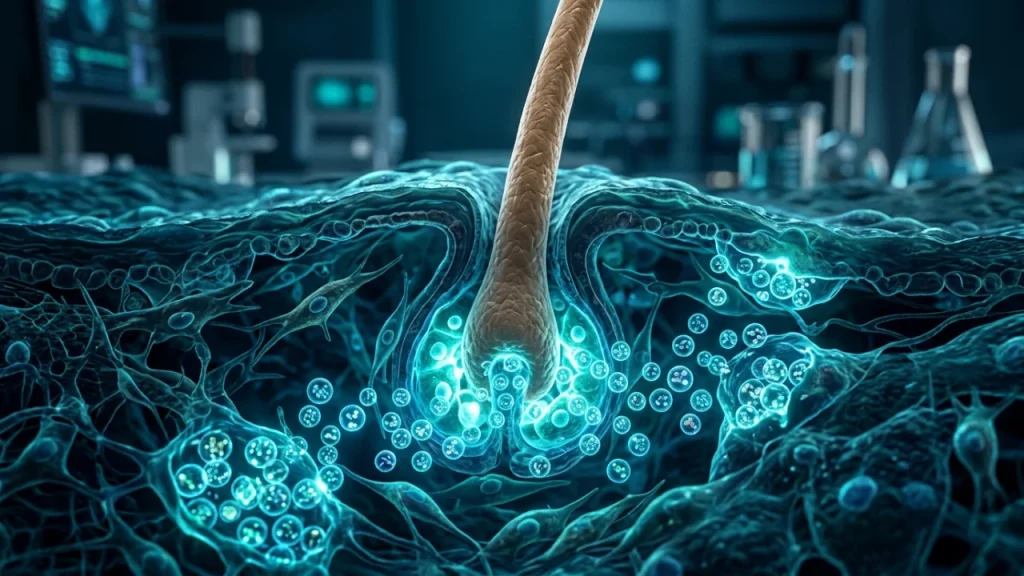
Exosomes are tiny messengers. Your body’s cells create and release them constantly. Think of them as microscopic delivery trucks. They carry important cargo from one cell to another.
This cargo includes proteins and genetic instructions. These instructions can tell a receiving cell how to behave. For hair, this is a game-changer.
Hair loss often involves dormant or damaged follicles. These follicles stop their normal growth cycle. Traditional treatments may address symptoms like inflammation. Yet they often fail to restart the cellular engine.
Exosomes for hair growth take a different path. They aim to repair and retrain the follicle cells themselves. The messengers deliver signals that can wake up dormant cells. They can reduce local inflammation. They may also improve blood flow to the scalp.
Here is how the process works in simple steps: – Stem cells, often from donated sources, are grown in a lab. – These cells release exosomes into their liquid environment. – Scientists collect and purify these exosomes to create a treatment solution. – A provider applies this solution to your scalp using tiny injections.
The exosomes then go to work. They do not become part of your hair cells. Instead, they communicate with them. They provide the materials and signals your follicles need to heal.
A key mechanism is cell signaling. Aging or stressed follicles get the wrong signals. They enter a resting phase too soon. Exosomes can carry the correct signals. They tell the follicle to re-enter the active growth phase.
Another mechanism is nutrient support. Follicles need energy and building blocks to make hair. Exosomes can deliver these critical supplies directly. This revitalizes the cellular machinery.
The goal is a healthier scalp environment. Stronger follicles produce better hair. This approach targets the root cause at a cellular level. It is not a cosmetic cover-up.
Research shows promising pathways. Studies indicate exosomes can increase hair density and thickness. They do this by prolonging the growth phase of the hair cycle. Results are not instant like a haircut. They unfold over months as new cycles begin.
This science moves beyond simple stimulation. It is about cellular communication and repair. The tiny vesicles act as a reset button for your follicles. They provide the instructions your cells may have lost.
Understanding this basics shows the potential. It is a shift from treating the symptom to addressing the system. The next logical question is about the evidence behind these ideas. How do we know this communication actually works for human hair loss? The following section will explore that proof.
The Big Problem with Current Hair Loss Treatments
Most hair loss treatments today do not address the core cellular problem. They manage symptoms instead. This often leads to temporary results or disappointment. The biology of the follicle is complex. Current popular options struggle with this complexity.
Consider the two most common non-surgical approaches. Minoxidil is a topical liquid or foam. It works by widening blood vessels around follicles. This improves nutrient delivery. However, it does not repair aged follicle cells themselves. Its effect is largely supportive. Finasteride is an oral pill. It blocks a hormone that shrinks follicles. Yet it can cause systemic side effects. It also loses its effect if you stop taking it. Both are lifelong commitments, not solutions.
These methods target only one part of a multi-step process. Hair growth requires precise timing and communication. Aging disrupts this cellular dialogue. Simply increasing blood flow or blocking a hormone is often insufficient. It is like adding more fuel to a damaged engine. The underlying machinery remains faulty.
Surgical options like transplants offer a different set of issues. They redistribute hair from one part of the scalp to another. This does not create new follicles. The donor supply is also limited. Transplanted follicles can still weaken over time if the underlying scalp environment is unhealthy. The procedure is invasive. Recovery involves pain and scarring.
A major gap exists in regenerative capability. Existing treatments cannot effectively instruct cells to rejuvenate. They cannot restore lost cellular function. They manage, but they do not regenerate. This is the fundamental shortcoming.
Let’s break down the key biological limitations of conventional approaches:
- They often lack targeted delivery. Medications spread through the bloodstream or scalp surface. Only a tiny fraction reaches the precise follicle cells in need.
- They do not restore critical communication. Follicle stem cells stop receiving proper growth signals. Most treatments cannot replace this lost biological instruction.
- They ignore the scalp’s cellular environment. Aging skin has less collagen and poorer blood vessel health. Topical applications struggle in this degraded terrain.
- Results are frequently maintenance-based. Growth stops when treatment stops. The therapy does not create a lasting change in follicle health.
The search for exosomes for hair loss arises directly from these gaps. Scientists asked a new question. What if we could deliver the actual repair instructions to cells? What if we could restore the original healthy signals? This shifts the goal from management to true restoration.
Patients experience this frustration directly. They see initial growth that later plateaus. They cope with side effects for modest gains. They seek a treatment that works with the body’s biology, not against it. The desire is for a foundational reset, not another temporary cover-up.
The problem with current treatments is their mechanistic simplicity. Hair loss biology is not simple. It involves dozens of signals and cellular energy crises. A single-drug approach is rarely enough for such a complex system. This creates a clear need for a multi-signal, cell-level strategy.
This logical impasse sets the stage for an advanced alternative. The next section must detail how emerging science meets this need. It will explore the evidence that turns this cellular theory into a practical reality for patients.
How Exosomes Act as Natural Messengers in Your Body
Your body’s cells are in constant conversation. They do not shout across empty space. Instead, they send precise molecular packages. These packages are called exosomes. Think of them as tiny biological letters. Each exosome carries specific instructions from its sender cell to a receiver cell.
Exosomes are incredibly small. Billions could fit on the head of a pin. They form inside most cells in little sacs. These sacs travel to the cell’s outer membrane. Then they are released into the fluid between your cells. Once outside, they navigate to target cells. The target cell absorbs the exosome and reads its molecular message.
This message changes what the receiving cell does. The cargo inside an exosome is complex and purposeful. It is not random cellular debris. It contains carefully selected material.
- Signaling proteins tell a cell to activate or calm down.
- Growth factors instruct a cell to divide or repair itself.
- RNA molecules can reprogram a cell’s protein production.
- Lipids help with structure and fusion to the target cell.
This system is vital for health. Your immune system uses exosomes to coordinate attacks. Your brain cells use them for maintenance. Your skin cells use them for repair after a wound. It is a universal language for tissue regulation.
Cancer shows this process gone wrong. Diseased cells send harmful exosomes. These bad messages can tell healthy cells to grow blood vessels for the tumor. They can shut down immune responses. A single cancer cell might release ten times more exosomes than a normal cell. This highlights the power of this messaging system.
Hair follicles rely on this exact type of communication. A dormant follicle is not dead. It is simply asleep because it has lost the correct “wake up” signals. The dermal papilla cells at the follicle’s base are supposed to send these signals. In hair loss, this conversation breaks down.
The messages get weak or corrupted. The follicle stops receiving clear instructions for growth and health. This is where the science of exosomes for hair regeneration intervenes. Researchers harvest exosomes from young, healthy stem cells. These stem cells are master communicators.
The therapeutic exosomes are concentrated. They carry a full set of youthful instructions. When delivered to the scalp, they seek out the dormant follicle cells. They restore the lost biological dialogue.
This is not introducing a foreign drug. It is amplifying a natural process. You are giving your follicles the same tools your body uses for healing elsewhere. The goal is to restart the intrinsic program for hair growth.
The process mirrors how your body heals a cut. Cells release exosomes that signal for new skin cell production. They call for increased blood flow to the area. They modulate inflammation. Applying therapeutic exosomes to the scalp aims to trigger a similar restorative cascade specifically for follicles.
Understanding this natural messenger role is crucial. It separates the approach from conventional treatments. Minoxidil is a generic stimulant. Finasteride blocks a single hormone. Exosome therapy provides a broad portfolio of native instructions.
It works with your biology’s own language. This foundational concept turns an abstract idea into a tangible biological strategy. The next logical question is how this theoretical messaging translates into visible, clinical results on the scalp.
Why Targeting the Scalp Directly Makes Sense
The scalp is not a passive covering. It is a dynamic, living organ. Its health directly dictates follicle performance. Systemic treatments travel through your entire bloodstream. Only a tiny fraction reaches the scalp. This is inefficient. Direct application solves this problem.
Think of a garden with dry, compacted soil. You can water the entire yard. Or you can focus the hose directly on the garden bed. Targeting the scalp is like focusing the hose. You concentrate the therapeutic signal where it is needed most. This localized approach is central to advanced exosomes for hair strategies.
The scalp skin has a unique structure. It contains a high density of blood vessels and nerve endings. It also has numerous stem cell niches. These are reservoirs of cells capable of regenerating the follicle. Dormant follicles reside just millimeters beneath the skin surface. This shallow depth is key for treatment.
Direct delivery places exosomes into this microenvironment. They do not get diluted by circulation to other organs. Their cargo of growth factors and instructions acts locally. The goal is to saturate the area around each follicle. This creates a potent zone of biological activity.
What exactly happens in this zone? The exosomes engage in cross-talk with resident cells. – They signal to dermal papilla cells. These cells are the command center for hair growth. – They communicate with keratinocytes. These are the building blocks of the hair shaft itself. – They modulate immune cells in the skin. This can calm inflammation that chokes follicles.
This multi-point conversation is only possible with local concentration. A systemic dose is too weak to trigger it. The approach leverages basic principles of pharmacokinetics. That is the study of how a substance moves within the body.
Higher local concentration means a stronger biological effect. Researchers measure this by looking at specific proteins. One key protein is VEGF (Vascular Endothelial Growth Factor). It stimulates new blood vessel growth. Follicles need a rich blood supply for nutrients and oxygen.
Studies show exosomes can upregulate VEGF production in scalp cells. More VEGF means better blood flow to follicles. This is like improving irrigation for that garden. Another protein is FGF-7 (Fibroblast Growth Factor-7). It is a known promoter of the hair growth cycle.
Direct application creates a temporary reservoir of these signals in the skin. The cells are bathed in them. This prolonged exposure changes cell behavior. It shifts them from a resting state to an active growth state.
Consider the alternative routes. Oral medications must survive stomach acid and liver metabolism. Injectable drugs spread through the whole body. Both methods expose other tissues to unnecessary activity. A scalp-focused treatment minimizes off-target effects.
The technique itself is typically minimally invasive. It often involves micro-needling or precise injections. These methods create micro-channels in the skin. They allow exosomes to bypass the outer barrier, the stratum corneum.
This delivers them directly to the dermal layer where follicles live. The process uses the body’s own repair response to these tiny channels. It further enhances absorption and cellular uptake.
The logic is clear and sequential. 1. Identify the problem site: the scalp and its follicles. 2. Use a vehicle (exosomes) that speaks the native cellular language. 3. Deliver it directly to that site for maximum impact and efficiency.
This targeted strategy respects the biology of hair loss. Hair loss is a localized condition, even if its causes are systemic. The follicle microenvironment deteriorates. Restoring it requires a local intervention.
Direct application makes practical sense for patients as well. Treatment sessions are focused and brief. Recovery time is typically minimal because the area treated is small.
The scientific premise is strong: go straight to the root of the problem, literally and figuratively. You care about results on your scalp, not theoretical activity elsewhere in your body. This focused method aims to produce those visible results by design. It ensures the powerful biological tools contained within exosomes work exactly where they are needed. The next step is examining what this localized activity translates to in terms of tangible changes in hair growth patterns and quality over time
The Science Behind Exosomes and How They Work on Hair Follicles
Where Do Exosomes for Hair Come From?
Exosomes for hair growth originate from stem cells. This is a fundamental point. They are not synthetic compounds created in a lab. Instead, they are natural biological products.
Think of a stem cell as a master cell. It can turn into different cell types, like a skin cell or a hair follicle cell. But stem cells also have another vital job. They constantly produce and release tiny communication vesicles. These are exosomes.
The process is a form of cellular packaging. Inside the stem cell, small compartments called endosomes form. They gather specific cargo. This cargo includes proteins, lipids, and genetic instructions like RNA.
The endosome then pinches off small bubbles from its membrane. These bubbles are the exosomes. The stem cell releases them into the surrounding space. It is a continuous, natural activity.
Why are stem cell-derived exosomes so valuable? Their cargo reflects the stem cell’s unique qualities. Stem cells are experts at regeneration and sending repair signals. The exosomes they release carry these precise instructions.
- They carry growth factors that stimulate cell activity.
- They deliver microRNAs that can change how a gene is expressed.
- They provide enzymes and proteins that reduce inflammation.
This makes them sophisticated biological messengers. For hair restoration, using exosomes from this source is logical. You are harnessing a natural signaling system designed for tissue repair.
The stem cells used are typically mesenchymal stem cells. These are found in many adult tissues. Common sources include donated umbilical cord tissue or adipose (fat) tissue. These cells are grown under strict laboratory conditions.
The cells are placed in a special nutrient solution. They thrive and multiply in this environment. As they grow, they release exosomes into the solution. Scientists then carefully collect this solution.
The next step is purification. The goal is to isolate only the exosomes. Scientists remove the stem cells and other debris. What remains is a concentrated solution of pure exosomes, ready for therapeutic use.
This entire process ensures the final product is clean and potent. It contains no whole stem cells. This is an important safety distinction. You are receiving the powerful signals from the cells, not the cells themselves.
Using exosomes this way is efficient. One batch of stem cells can produce a significant amount of therapeutic material. This scalability is key for making such advanced treatments available.
The natural origin matters for compatibility. Your body’s cells recognize these vesicles as familiar biological entities. This recognition facilitates uptake and action at the target site, like the hair follicle.
It contrasts with many conventional drugs. Those are often foreign molecules that the body must process differently. Exosomes work within the body’s own communication network.
Understanding this source clarifies their mechanism. They are not a mysterious “miracle cure.” They are a concentrated dose of natural signaling molecules. Their job is to instruct aged or dormant follicular cells to rejuvenate.
The science hinges on this natural provenance. The next logical question is what these specific instructions do once they reach their target. How do they actually change the follicle’s behavior to promote new, healthier hair growth?
What’s Inside an Exosome That Helps Hair?
Think of an exosome as a tiny biological delivery truck. Its value is in the cargo it carries. This cargo is not random. It is a carefully selected package of molecules meant to send specific signals.
For hair growth, the most important cargo falls into several key categories. Each category plays a distinct role in waking up and supporting your hair follicles.
First are growth factors. These are powerful protein signals. They act like direct commands for cellular activity. – VEGF (Vascular Endothelial Growth Factor) tells the body to build new blood vessels. This brings more oxygen and nutrients to the follicle. – FGF (Fibroblast Growth Factor) stimulates the cells that build skin and hair structure. It promotes cell proliferation. – KGF (Keratinocyte Growth Factor) specifically targets keratinocytes. These are the cells that produce keratin, the main protein in hair.
Next are signaling proteins like Wnt proteins. These are crucial for the hair growth cycle. They help shift follicles from the resting phase back into the active growth phase. Think of them as the “start engine” signal.
Exosomes also carry regulatory microRNAs. These are small pieces of genetic material. They do not code for proteins. Instead, they control gene expression. They can turn certain genes on or off within the target cell.
For example, some microRNAs can silence genes that promote inflammation. Others can activate genes for hair shaft formation. This level of control is precise and sophisticated.
The cargo includes enzymes and antioxidants as well. These molecules combat oxidative stress. Oxidative stress damages follicular cells and can shorten the growth phase. By reducing this damage, exosomes create a healthier environment for hair to grow.
All these components work together. They create a multi-pronged therapeutic effect. Growth factors stimulate activity and improve blood supply. Signaling proteins reset the growth cycle. MicroRNAs fine-tune cellular machinery. Antioxidants protect the cells.
This combination addresses several root causes of hair thinning at once. It is not a single-action treatment. It is a coordinated program delivered in a single vesicle.
The natural packaging is vital. The lipid membrane of the exosome protects this delicate cargo. It ensures the molecules survive until they reach the follicle. The membrane also helps the exosome fuse with the target cell.
This fusion allows for direct delivery. The growth factors, proteins, and microRNAs are released inside the follicular cell. Their instructions can then be read and executed immediately.
This direct mechanism is a key advantage for hair restoration. Topical treatments often struggle to penetrate deep into the follicle. Injected synthetic molecules may not be used efficiently by cells.
Exosomes for hair work differently. They use the body’s own delivery system. The cargo is biologically relevant, and the vesicle ensures precise delivery.
Understanding this cargo explains the potential results. You are not just moistening the scalp or blocking a hormone. You are providing the follicle cells with the exact tools they need to repair and regenerate.
The effect is fundamentally restorative. The goal is to return the follicle to a healthier, more youthful state of function. This is how exosomes support thicker, stronger hair growth from within.
The next logical step is to see this process in action. How does this cargo translate into visible changes on your scalp? The journey from cellular instruction to new hair growth involves a clear biological sequence.
How Exosomes Deliver Their Cargo to Dormant Follicles
The journey begins with precise navigation. Exosomes released into the scalp do not wander aimlessly. Their outer membrane carries addressing molecules. These are like tiny postal codes. They guide the vesicles toward specific cell types, including dormant hair follicle cells.
This targeting is not random. Follicle cells in need express matching “receptor” proteins on their surface. The exosome’s address labels bind to these receptors. This binding is the first critical step. It ensures the therapeutic cargo goes exactly where it is needed most.
Once docked, the exosome delivers its instructions. Two primary methods are used. The first is direct fusion. The exosome’s lipid membrane merges with the follicle cell’s membrane. The entire internal cargo spills directly into the cell’s interior.
The second method is endocytosis. The cell membrane folds inward. It wraps around the exosome, forming a little pouch inside the cell. The pouch then opens to release the cargo. Both pathways achieve the same vital goal. They get the growth factors and genetic instructions inside the target.
Inside the cell, the cargo gets to work. Proteins and growth factors activate cellular receptors. They trigger immediate signaling cascades. Think of these as a series of dominoes falling inside the cell. The final domino hits key control centers.
Meanwhile, microRNAs perform a different task. They are small pieces of genetic code. They bind to the cell’s own messenger RNAs. These messengers carry blueprints for making proteins. By binding, microRNAs can silence specific messages.
This silencing is powerful. It can turn off signals for inflammation or cellular stress. It removes blocks that were preventing growth. The combined action is coordinated. Activating signals turn on pro-growth pathways. Silencing signals turn off anti-growth pathways.
The dormant follicle cell responds to these new orders. Its metabolism shifts. Energy production increases. The cell starts synthesizing more structural proteins like keratin. This is the core building material for hair.
Cell division also resumes. Dormant stem cells in the bulge region of the follicle become active. They begin to multiply and differentiate. They form new matrix cells that drive the hair shaft downward.
Blood supply to the follicle improves simultaneously. Exosome signals promote angiogenesis. This means new tiny blood vessels form around the follicle base. Enhanced blood flow delivers more oxygen and nutrients.
This process revitalizes the entire follicular unit. The hair bulb enlarges and strengthens. The growth phase, called anagen, is extended or re-entered. A miniaturized follicle can begin to produce a thicker, more robust hair shaft.
The timeline for this change is biological, not instant. Cells need time to respond and rebuild. Initial signaling happens within hours. Visible changes in follicle structure may take weeks. New hair growth becomes evident over several months.
This mechanism explains why exosomes for hair represent a fundamental shift. They do not just stimulate one action. They reprogram the local cellular environment. They address multiple causes of dormancy at once.
The delivery is efficient and natural because it mimics innate biology. The results are built from within by the follicle’s own reactivated machinery. The next logical question concerns evidence and application in a clinical setting, moving from theory to observed outcomes
The Cellular Reset: Waking Up Sleeping Hair Follicles
A dormant hair follicle is not dead. It is in a deep state of cellular hibernation. Its internal communication networks have gone quiet. The exosomes for hair approach aims to restart these lines of talk. Think of it as a system reboot for your scalp’s biology.
Exosomes deliver a precise set of instructions to these sleeping cells. They carry specific molecules called microRNAs and proteins. These molecules act like master switches. They flip genetic programs back to an active state. This is the core of the cellular reset.
The reset happens in a logical sequence. First, exosomes reduce local inflammation. Inflamed tissue sends constant “stress” signals to follicles. This forces them into the resting phase prematurely. Exosomes calm this immune overreaction. They help create a peaceful environment for growth.
Next, they target the follicle’s stem cell niche. Every follicle has a reservoir of these stem cells. In pattern hair loss, these stem cells become inactive. They do not respond to normal growth prompts. Exosome signals directly reactivate this crucial population.
The reactivation follows clear steps. – Exosomes bind to the surface of stem cells. – They deliver their cargo inside the cell. – This cargo reprograms the cell’s nucleus. – The cell exits its dormant state. – It begins to divide and specialize once more.
This process changes the follicle’s energy metabolism. Dormant follicles have low energy production. Exosomes boost mitochondrial function. Mitochondria are cellular power plants. With more energy, follicles can perform the hard work of building hair.
The reset also remodels the surrounding scaffold. This scaffold is called the extracellular matrix. It is like the support structure around a building. In aging or thinning scalps, this structure can become stiff and scarred. Exosomes encourage the production of fresh collagen and elastin. This makes the environment soft and flexible again. A healthy matrix is essential for a robust follicle.
Blood vessel renewal is part of this same program. New hair growth requires more fuel. The exosome signals that wake stem cells also call for new capillaries. This ensures the newly active follicle has a dedicated supply line. Oxygen and nutrients arrive efficiently.
The timing of these events is synchronized. Inflammation reduction paves the way for stem cell activation. Stem cell activity increases demand for energy and nutrients. This demand triggers blood vessel growth. Each step enables the next. It is a cascade of restoration.
This differs fundamentally from conventional treatments. Most treatments apply a single, constant stimulus. They might increase blood flow or block a hormone. They do not reprogram the follicle’s own software. Exosomes provide the code for a full system update.
The result is a follicle that regains its original potential. It can progress through a complete, healthy growth cycle. It can produce a hair shaft with normal thickness and pigment. The reset aims for durability because it changes the local biology.
Critically, this approach addresses the root causes of dormancy. It does not just override them temporarily. By resetting the inflammatory state, stem cell activity, and local environment, it removes multiple barriers at once. The follicle is not just stimulated. It is fundamentally rejuvenated.
Evidence for this reset comes from histological studies. Researchers examine scalp biopsies before and after treatment. They see measurable changes. The bulge region where stem cells live becomes more populated. The dermal papilla, the follicle’s command center, enlarges. The tiny muscle attached to the follicle regains tone.
This cellular journey explains why results develop over months. A software update does not instantly build a new program. The reboot must complete. Cells need time to execute their new instructions and rebuild structures. The growth of a new hair is the final, visible output of this lengthy internal process.
Understanding this reset empowers realistic expectations for exosomes for hair. The goal is not an instant cosmetic cover. The goal is a biological restoration that yields natural, self-sustaining growth from follicles once thought finished. This leads us to examine how this science translates into a practical clinical procedure, where delivery method becomes paramount for success
Comparing Exosome Therapy to Traditional Hair Loss Solutions
Exosomes vs. Minoxidil: How They Differ in Approach
Minoxidil works by widening blood vessels. This increases blood flow to hair follicles. More blood delivers more oxygen and nutrients. This can help follicles stay in the growth phase longer. It is a topical treatment applied daily. Its primary action is vascular, not directly cellular.
Exosomes for hair work on a different level entirely. They are not a drug that alters blood flow. They are biological messengers. They carry instructions directly to the scalp’s cells. Their goal is to change cell behavior and the local environment.
Think of minoxidil as adding more fertilizer to the soil around a plant. The fertilizer might help the plant grow. But it does not fix a broken root system. It does not repair diseased leaves. It simply provides more general support.
Exosome therapy aims to repair the plant itself. It sends signals to the roots to regenerate. It tells the stem to grow stronger. It addresses the plant’s internal health at a cellular level. The approach is regenerative, not just supportive.
The mechanisms highlight this core difference. Minoxidil is a potassium channel opener. This is a specific biochemical action leading to vasodilation. Its effect on hair was discovered by accident during heart medication trials. Its exact mechanism for promoting hair growth is still not fully understood.
Exosome mechanisms are more direct and multifaceted. They deliver specific proteins and genetic material. – They can quiet inflammation around the follicle. – They can activate dormant stem cells in the hair bulge. – They can improve communication between the dermal papilla and other cells. – They help normalize the hair growth cycle timing.
Results from these approaches look different. Minoxidil requires consistent, lifelong use to maintain its effect. If you stop applying it, the benefits reverse quickly. The gained hair will often shed within months. The treatment manages the symptom but does not change the underlying condition.
Exosome therapy seeks to create a lasting biological change. The goal is to complete a restorative process. After this process, the follicle should maintain itself. It should not need continuous external signaling from a daily drug. The treatment course is finite, not perpetual.
Side effect profiles also differ. Minoxidil can cause scalp irritation for some users. It may lead to unwanted facial hair growth if it spreads. Some people experience dizziness or a rapid heartbeat from systemic absorption.
Exosome side effects are typically minimal because they use natural biological vehicles. The main risks are temporary redness or swelling at the injection sites. There is no known systemic drug-like side effect because they are not pharmaceuticals.
The time frame for results is another key contrast. Minoxidil may show some initial shedding, then possible growth after four to six months of daily use. Progress often plateaus after about a year of continuous application.
Exosome results follow a slower, biological timeline consistent with the hair cycle. Initial changes happen invisibly at the cellular level over weeks. New hair growth may become visible only after three to six months. Full results can take up to a year to manifest as new hairs mature.
In summary, minoxidil is a maintenance drug for ongoing support. Exosome therapy is a regenerative procedure aiming for a durable reset. One alters local blood flow; the other alters cellular communication and function. This fundamental difference in approach defines their distinct roles in hair restoration strategy. Understanding this leads to a critical question about practical application: how are these biological signals delivered to precisely the right cells?
Exosomes vs. Hair Transplants: Surgery vs. Signaling
Hair transplants are a physical relocation of hair follicles. Surgeons move follicles from a donor area to a thinning recipient site. This is a surgical procedure. It requires local anesthesia and creates small wounds. The process treats hair loss by redistributing existing hair. It does not create new follicular units or change the underlying biological environment.
Exosome therapy for hair takes a fundamentally different path. It uses biological signaling, not surgery. The goal is not to move hair but to improve the health of the existing scalp and follicles. Exosomes carry instructions to cells already in place. They aim to change the local cellular conversation. This can create a better environment for hair growth.
The experience for the patient differs greatly. A hair transplant is an operation. It can take several hours to complete. There is a recovery period with specific care instructions. Patients may experience swelling, discomfort, and scabbing. The transplanted hairs often fall out initially before entering a new growth phase months later.
Exosome treatment is a non-surgical clinic procedure. It involves precise injections into the scalp. The session is much shorter, often under an hour. There is no surgical incision or stitching. Recovery is typically quick with minor temporary redness. The biological work happens invisibly beneath the surface.
Results from a transplant are visually immediate in one sense. The relocated follicles are physically present after surgery. However, the final cosmetic result takes time. It can take a full year to see the full density and natural hairline from the transplanted grafts. The outcome is largely permanent for the moved follicles.
Results from exosomes are not immediately visible. There is no sudden change in hair count after the session. The process works at the cellular level over weeks and months. It may improve hair thickness, reduce shedding, and support new growth from dormant follicles. The outcome develops gradually as the biological signals take effect.
Each method addresses a different problem. Transplants are excellent for restoring a hairline or adding density where follicles are completely gone. They replace what is lost. Exosome therapy may be better suited for areas where hair is thinning but still present. It aims to revitalize and strengthen those struggling follicles.
Consider the long-term view as well. A transplant does not stop the progression of genetic hair loss behind the transplanted area. Future thinning around the grafts may require additional surgeries. Exosome therapy targets the biological processes of loss itself. It seeks to improve the scalp’s health to support more stable long-term growth.
Cost structures are also different. A hair transplant is usually a one-time major expense based on the number of grafts. Exosome therapy might be part of a treatment plan with potential follow-up sessions for maintenance of biological benefits.
Here is a simple comparison of core aspects:
- Mechanism: Surgery moves follicles vs. Biological signals instruct cells.
- Invasiveness: Surgical wounds vs. Injection points.
- Result Basis: Relocated permanent hair vs. Improved follicle function.
- Timeline: Long recovery, then growth vs. No recovery, slow biological change.
- Target: Areas of complete baldness vs. Areas of thinning or weakened hair.
Neither approach is universally superior. They address different stages and types of hair loss. Some patients may even benefit from a combined strategy. A transplant could restore a defined area, while exosome therapy could protect and strengthen the surrounding native hair.
The choice between surgery and signaling depends on individual goals, loss pattern, and biological potential. Transplants offer a structural solution; exosomes for hair offer a physiological one. This leads us to consider how these biological signals are prepared and what makes them potent.
Why Exosomes Aim for a More Natural Hair Growth Cycle
Healthy hair does not grow in a straight line. It follows a natural cycle. This cycle has three main phases. First is the growth phase, called anagen. This can last for years. Next is a short transition phase, catagen. Finally comes the resting phase, telogen. After resting, the hair falls out. Then the cycle begins again from the follicle.
In pattern hair loss, this cycle gets disrupted. The growth phase becomes shorter and shorter. The resting phase gets longer. Follicles do not die immediately. Instead, they become miniaturized. They produce thinner, shorter, weaker hairs with each cycle. Eventually, they may stop producing visible hair altogether.
Traditional treatments often focus on one part of this problem. Some block a hormone that shrinks follicles. Others aim to improve blood flow or nutrient supply. These can help, but they may not fix the broken communication inside the scalp. They treat a symptom, not the root biological signal.
Exosomes for hair aim to reset this communication. They carry instructions to the cells in and around the follicle. Think of a miniaturizing follicle as a factory receiving poor management signals. The machinery is still there, but it is running slowly and poorly. Exosomes deliver new blueprints and work orders directly to the factory floor.
Their goal is to restore the normal hair growth cycle. They try to lengthen the growth phase again. They also support the health of the follicle’s ecosystem. This includes dermal papilla cells, stem cells, and blood vessels. Healthy follicles mean stronger, more resilient hair cycles.
The process relies on specific signals inside the exosomes. These are not random chemicals. They are precise biological molecules.
- Growth factors tell cells to multiply and thrive.
- MicroRNAs can turn genes on or off.
- Proteins help build structure and guide repair.
Together, these signals do several key things. They can reduce local inflammation. Inflammation is a major disruptor of the hair cycle. They encourage new blood vessel formation. This brings more oxygen and nutrients to the follicle. They also help regulate the life cycle of the follicle cells themselves.
This approach targets the follicle’s environment and its internal programming. It is not about forcing growth at all costs. It is about creating conditions where natural, sustainable growth can happen again. The ideal result is a follicle that can maintain its own healthy cycle without constant external intervention.
The effects are not instant like a surgical result. They are gradual and biological. First, the scalp environment may improve. Then, the shedding phase might slow down. Existing hairs could become thicker and stronger. Finally, new growth may begin from follicles that were dormant but not dead.
This method works with the body’s own systems. It uses the same types of messages that cells use to talk to each other every day. That is why it is considered a more natural strategy. It does not introduce a foreign drug or create surgical scars. It enhances the body’s inherent repair toolkit.
The success depends on the health of the recipient’s scalp and follicles. Follicles that are completely inactive for many years may not respond as well as those recently miniaturized. This is why early intervention can be crucial for biological therapies.
Ultimately, exosome therapy seeks to change the trajectory of hair loss. It moves the follicle from a state of decline back to a state of productive cycling. This offers a different kind of result than simply relocating hair from one area to another. It is about restoring function where it was lost.
Understanding this goal shifts the perspective from hair counting to biology monitoring. The next logical question is how these potent signals are collected and prepared for clinical use.
The Potential for Fewer Side Effects with Exosome Therapy
Traditional hair loss drugs often work by altering your body’s entire hormone system. This can lead to widespread side effects. For example, finasteride blocks a hormone called DHT. DHT contributes to hair loss. But DHT also has other roles in the male body. Blocking it everywhere can cause sexual side effects. It can also affect mood for some users. Minoxidil is a topical treatment. It must be absorbed into the bloodstream to work. This can cause unwanted hair growth on the face or hands. It may also cause scalp irritation and heart palpitations in rare cases. These effects happen because the treatment is not selective. It affects the whole system, not just the hair follicle.
Exosome therapy takes a different path. Its potential for fewer side effects stems from its targeted nature. Think of it as sending a precise instruction manual instead of broadcasting a general signal. Exosomes deliver their cargo directly to specific cells in the scalp. They are naturally drawn to areas of inflammation or damage. This targeting is called homing. It means the messages go mostly where they are needed. They do not circulate widely through the entire body in an active form.
The contents of exosomes are also key to their safety profile. They are not synthetic drugs. They are natural biological packages. Your own cells produce similar vesicles every day. The signals inside—proteins and RNA—are instructions your cells already understand. The therapy aims to boost a process that is already happening, just at a lower level. This reduces the risk of the body rejecting the treatment or reacting badly to a foreign chemical.
Consider the delivery method itself. A typical exosome treatment for hair involves local injections into the scalp. The procedure is minimally invasive. The exosomes are concentrated in the target area. Their action is largely confined there. Systemic absorption is minimal. This local application further limits the chance of body-wide issues.
Let’s compare common side effect categories:
- Hormonal Effects: Traditional drugs like finasteride directly interfere with hormone pathways. Exosome therapy does not alter systemic hormone levels. It works on how the follicle responds to its environment.
- Skin Irritation: Topical solutions like minoxidil often use alcohol carriers. These can dry and irritate the skin. Exosome preparations are typically in a sterile saline solution, which is gentler.
- Long-term Dependency: With drugs, hair growth stops if you stop treatment. This is not a side effect but a limitation. Exosome therapy seeks to restart a healthier growth cycle. The goal is a lasting change, not perpetual application.
It is important to note that exosome therapy is still evolving. Its long-term safety profile is being established. Current evidence from clinical use shows a strong preference for its tolerability. Most reported side effects are mild and temporary. They relate to the injection process itself, not the exosomes.
These can include: – Minor redness at the injection sites. – Temporary swelling. – Mild tenderness. – These usually resolve within a day or two.
The absence of common drug-related side effects is a significant advantage. It makes exosomes for hair an option for people who cannot tolerate pharmaceutical treatments. It also appeals to those seeking a more natural biological intervention.
This does not mean the therapy is risk-free. The source and preparation of exosomes are critical. They must be processed in sterile labs to ensure purity and safety. This is why choosing a qualified provider is essential. The potential for fewer side effects hinges on using high-quality, properly tested biological material.
The reduced side effect profile complements the biological goal discussed earlier. A therapy that works with the body’s systems should logically disrupt those systems less. This creates a gentler approach to a persistent problem. The next consideration is how this targeted biological strategy translates into real-world treatment sessions and patient experience.
What Research Says About Exosomes for Hair Conditions Like Androgenetic Alopecia
Key Findings from Preclinical Studies on Exosomes and Hair
Early laboratory research provides the crucial ‘why’ behind the interest in exosomes for hair restoration. Scientists first observed their effects in controlled settings. These studies did not involve human patients. Instead, they used cell cultures and animal models. This preclinical work is the essential first step. It shows if an idea is worth pursuing in people.
One core finding is that exosomes can directly wake up dormant hair follicles. Follicles have a natural growth cycle. They shift from a growing phase to a resting phase. In hair loss conditions, follicles can get stuck resting. Lab experiments show that exosomes from certain stem cells can reverse this. They send signals that push follicles back into their active growth state.
The signals inside exosomes do this important work. Think of them as tiny instruction packets. They contain proteins, lipids, and genetic material like miRNA. In lab dishes, researchers apply exosomes to human hair follicle cells. They then measure the response. Key changes are consistently seen.
First, exosomes boost cell proliferation. This means they encourage follicle cells to multiply more quickly. A larger, more active follicle base is needed for robust hair growth. Second, they prolong the growth phase of the cycle. They help follicles stay in their productive stage longer. Third, they inhibit cell death signals around the follicle. This creates a more supportive local environment.
Animal studies add another layer of evidence. Researchers often use mice for this hair research. They might induce a thinning coat or use a genetically prone breed. Then they apply exosome preparations to the skin. The results are visually clear and measurable.
Treated areas typically show faster hair regrowth compared to untreated spots. The new hair also often appears denser and covers more area. Under the microscope, scientists count more follicles in the active growth phase. They also see follicles that are larger and healthier. These are strong indicators of biological activity.
The mechanism is multifaceted. Exosomes don’t just target one problem. They address several at once. For example, they can increase blood supply to the follicle area. They do this by promoting the formation of new micro-vessels. Better blood flow means more oxygen and nutrients delivered to the growing root.
They also modulate inflammation. Scalp inflammation is a known factor in some hair loss. Exosomes can calm this inflammatory response. They help shift the local immune environment to a more regenerative state. This reduces damage to fragile follicles.
Furthermore, exosomes influence key growth pathways. One important pathway involves proteins like Wnt and beta-catenin. These are natural triggers for hair development and cycling. Exosome treatment has been shown to activate these pathways in follicle cells. This is like flipping a master switch for growth.
The cargo inside exosomes is responsible for these coordinated effects. Different miRNAs can silence genes that hinder growth. Other miRNAs can activate genes that promote it. Proteins can bind to receptors on follicle cells and start beneficial chain reactions.
It is important to note that not all exosomes are equal in these studies. Their effect depends heavily on their source cell. Exosomes from mesenchymal stem cells, particularly from adipose tissue or bone marrow, show high potency in research. The health and condition of the parent cell matter greatly.
These preclinical results are promising but not definitive for humans. They prove a biological principle: externally applied exosomes can communicate with follicle cells. They can alter cell behavior in ways that promote hair growth in models.
The transition from a lab dish or a mouse to a human scalp is significant. Yet, this body of work forms the logical foundation for human trials. It answers basic questions about feasibility and mechanism before moving to clinics.
This early science shifts the view from treating symptoms to influencing biology. It shows a path to potentially resetting the follicle’s internal programming. The next step is to see how these laboratory promises translate into clinical data from actual patients seeking treatment for hair loss conditions
Emerging Clinical Data on Safety and Efficacy for Hair Loss
Initial human studies on exosomes for hair loss are now being published. These early trials focus primarily on safety. Researchers also measure early signs of effectiveness. The results are encouraging but still preliminary. Most studies are small and lack control groups. Larger, more rigorous trials are needed.
A typical clinical protocol involves a series of scalp injections. The exosome preparation is derived from stem cells. Patients might receive multiple treatment sessions. Researchers then monitor them over several months. They look for any adverse reactions. They also track changes in hair growth.
Safety data from these initial trials is consistently positive. No serious adverse events have been linked to the exosome treatments in these hair studies. Minor side effects are similar to other injection procedures. These can include temporary redness, swelling, or mild tenderness at the injection sites. These effects usually resolve within a day or two. This strong safety profile is a crucial first step for any new therapy.
Early efficacy data shows several promising trends. Researchers use standardized methods to measure results. Common metrics include hair density, hair thickness, and growth phase analysis. – Hair density counts the number of hairs in a fixed area of the scalp. Increases here mean more hairs are growing. – Hair thickness measures the diameter of individual strands. Thicker hairs provide better coverage. – Growth phase analysis uses a tool called a trichoscope. It shows how many follicles are in the active growing phase versus the resting phase.
Several pilot studies report statistically significant improvements in these areas. For example, one trial showed a mean increase in hair density of over 20% after three months. Another observed a measurable increase in average hair shaft diameter. These numbers represent a meaningful change for individuals with thinning hair.
The biological mechanisms observed in the lab appear to translate to humans. Biopsies taken after treatment show increased activity in the dermal papilla cells. These are the command centers of the follicle. Markers of cellular proliferation go up. Signals for inflammation often go down. This suggests the exosome cargo is delivering its instructions to human scalp cells as intended.
Patient-reported outcomes are another important measure. Participants in these trials often complete questionnaires. They note their own perception of change. Many report improvements in hair volume and scalp coverage. They also note faster hair growth and reduced shedding. This subjective data aligns with the objective measurements from researchers.
It is vital to interpret this data with appropriate caution. The field lacks large-scale, randomized, double-blind, placebo-controlled trials. This is the gold standard in medical research. Current evidence is from open-label studies or small comparative groups. The placebo effect can be powerful in hair loss treatments. Future studies must account for this rigorously.
The optimal treatment protocol remains an open research question. Scientists are still determining key variables. – The ideal concentration of exosomes per injection is not yet standardized. – The best interval between treatment sessions is being explored. – The long-term duration of results requires further follow-up.
Different sources for exosomes may yield different results. Most current clinical work uses exosomes from mesenchymal stem cells. The specific donor tissue and processing methods can influence the final product’s potency. Consistent manufacturing is a focus for ongoing development.
These emerging clinical findings represent a bridge from theory to practice. They provide the first real-world evidence that exosome therapy can be safe and potentially effective for androgenetic alopecia. The data supports continued investigation into this novel approach. The next phase of research will focus on refining protocols and confirming efficacy in broader populations through controlled studies. This work will define the true role of exosomes in the future of hair restoration.
How Exosomes Might Help with Androgenetic Alopecia Specifically
Androgenetic alopecia is more than just hair falling out. It is a precise biological process. The problem starts with a hormone called DHT. DHT attaches to receptors on sensitive hair follicles. This binding sends damaging signals. Over time, these follicles shrink in a process called miniaturization. The growth phase of the hair cycle becomes shorter. The resting phase becomes longer. Eventually, follicles produce only fine, barely visible hairs before stopping entirely.
Exosomes for hair conditions aim to interrupt this cycle. They do not block DHT like some drugs. Instead, they change the local environment of the follicle. Think of a plant struggling in poor soil. You could try to remove a toxin from the soil. Alternatively, you could add rich nutrients and better signals for growth. Exosomes act as the nutrient-rich signals.
These tiny vesicles deliver specific instructions to follicle cells. The instructions come in the form of proteins, lipids, and RNA. This cargo can alter cell behavior. The goal is to shift the follicle from a damaged state to a healthy one.
The potential actions are multi-faceted. Scientists have observed several key mechanisms in research settings. – Exosomes may reduce inflammation. Inflamed tissue around follicles can worsen hair loss. Exosomal signals can calm immune responses. – They can promote new blood vessel formation. This is called angiogenesis. Better blood flow delivers more oxygen and nutrients to the follicle base. – They send pro-growth messages. These messages can encourage dermal papilla cells. These cells are the command center for hair growth. – They may help extend the growth phase of the hair cycle. This allows hairs to grow thicker and longer before they shed.
A critical target is the dermal papilla. This is a small group of cells at the follicle’s base. It controls the hair cycle. In androgenetic alopecia, these cells become less active. Their signals weaken. Research indicates exosome cargo can reactivate these vital cells. Reactivated dermal papilla cells then send stronger growth signals to other parts of the follicle.
Another focus is the stem cell niche in the bulge region. Hair follicles contain stem cells. These are reserve cells needed for new hair generation. In a miniaturizing follicle, these stem cells become dormant. Exosomes may help wake them up. They provide cues that promote stem cell activation and survival.
The process also involves the extracellular matrix. This is the supportive scaffold around cells. A healthy matrix is crucial for follicle structure and function. Exosomes can carry factors that help rebuild and strengthen this matrix. A stronger scaffold supports a more robust follicle.
The approach is fundamentally regenerative. It seeks to restore normal function rather than just slow decline. By addressing multiple pathways at once, exosome therapy presents a holistic strategy. It targets inflammation, blood supply, cellular signaling, and structural support simultaneously.
This multi-target action is why researchers are interested. Traditional treatments often focus on a single part of the problem. Exosomes communicate with many cell types at the same time. They use the body’s own language of biological repair.
Current understanding comes from laboratory studies and animal models. Scientists see how cells respond to exosomes in a dish. They observe hair regrowth in studies with mice. The challenge is confirming these mechanisms work identically in human scalps with androgenetic alopecia.
The science suggests a powerful premise. Exosomes could help reverse miniaturization. They might instruct shrunken follicles to regain their normal size and productivity. This potential for restoration separates it from many conventional options.
Understanding these mechanisms clarifies the earlier clinical findings. It shows why researchers measure changes in hair density and thickness. They are looking for signs of these cellular changes manifesting as visible growth.
The next logical question involves practical application. How are these exosomes prepared and delivered for potential use?
The Current Limits and Unknowns in Exosome Research
While early findings are promising, significant unknowns remain in the science of exosomes for hair restoration. The field is young. Most data comes from preclinical work, not large human trials.
A major limit is source variability. Exosomes are not all the same. Their content changes based on the parent cell type and its condition. Researchers use exosomes from different kinds of stem cells. This creates a lack of standardization.
What is the optimal source cell? What are the best conditions to grow those cells? Science does not yet have definitive answers. Without standards, comparing study results becomes difficult. One lab’s preparation may differ greatly from another’s.
Dosage is another critical unknown. There is no established “dose” for exosome therapy in hair loss. How many particles are needed? What concentration is ideal? Is there a threshold that must be reached to see an effect? Current protocols are often based on educated guesses, not proven data.
Delivery method presents further questions. Most clinical approaches use injections into the scalp. But do the exosomes stay in place? How far do they travel? How long do they remain active? Scientists are still mapping the journey of these vesicles after administration.
Long-term effects and safety are under study. Exosomes are natural signaling tools. However, introducing a large number of them is a new intervention. Their long-term behavior in the scalp environment requires careful tracking over years.
Key unknowns include: – The precise signaling molecules that trigger hair growth. – How exosomes interact with aging scalp tissue. – The potential need for repeated treatments over time. – How results vary with different stages of hair loss.
Another limit involves measurement. In mice, researchers can shave an area and track regrowth precisely. In humans, assessment is more complex. Counting hairs and measuring thickness gives a good picture. Yet it does not confirm the cellular mechanisms are working as hypothesized.
We also lack predictors of response. Why might one person respond better than another? Individual factors like genetics, inflammation levels, and follicle health likely play a role. We cannot yet identify who is the best candidate.
The commercial landscape moves quickly. This sometimes outpaces rigorous science. Some clinics offer treatments based on early research. This highlights the gap between available therapy and fully proven science.
These unknowns are not reasons for doubt. They are normal for any emerging medical field. They define the current frontier of knowledge. Acknowledging them is crucial for honest scientific progress.
Future research must address these gaps. The path forward requires robust, controlled human studies. These studies need clear parameters and long follow-up times. The goal is to turn intriguing observations into reliable, repeatable clinical protocols.
This cautious perspective leads to a final, practical consideration for anyone interested in this science. What should one look for in credible research and clinical practice?
The Future of Hair Restoration with Exosomes and What It Means for You
Why Exosomes Represent a Paradigm Shift in Hair Care
Traditional hair loss treatments often work like a one-way command. They tell follicles what to do. Minoxidil may push blood flow. Finasteride blocks a specific hormone. These approaches target single pathways. They can be effective. Yet they often miss the broader conversation happening in your scalp.
Exosomes for hair work differently. They do not issue a single command. Instead, they deliver a toolkit for conversation. Think of a failing hair follicle as a factory with broken machinery and confused workers. Old treatments might try to replace one broken part. Exosomes send in a team of expert engineers with new blueprints and tools.
This is the paradigm shift. It moves from forcing a reaction to restoring natural communication. Your scalp’s health depends on constant cellular talk. Cells send signals to coordinate growth, repair, and rest cycles. With aging or damage, this talk breaks down. Signals get weak or distorted.
Exosomes restore this native language. They are natural messengers. Stem cells release them to heal tissue. Each tiny vesicle carries hundreds of proteins, lipids, and RNA molecules. This cargo is not a single drug. It is a coordinated set of instructions and supplies.
The shift happens on several levels. First, the approach is holistic, not singular. An exosome’s cargo can address multiple problems at once. – It can reduce inflammation around the follicle. – It can signal cells to divide and build new structure. – It can improve blood supply by encouraging new capillaries. – It can shift the follicle from a resting phase back into growth.
Second, the action is regenerative, not just stimulative. Many treatments try to stimulate what is already there. Exosomes aim to improve the health and function of the scalp’s environment. They help create a better foundation for long-term growth.
Third, the logic is biological, not just chemical. It uses the body’s own repair systems. The goal is to give your scalp the resources it needs to fix itself. This aligns with how your body naturally heals other injuries.
Consider how a wound heals. Your body does not use one chemical. It orchestrates many cells and signals in perfect sequence. Inflammation cleans the area. New cells move in. Tissue rebuilds. Exosomes mimic this sophisticated process for the scalp.
This shift changes what is possible. Instead of just prolonging the life of miniaturizing hairs, the goal becomes revitalizing the entire follicular unit. The target is not just the hair you see but the microscopic ecosystem it grows from.
For you, this means a different expectation from treatment. Success is not just more hair. It is potentially healthier hair from a healthier scalp. The results might develop differently. They may rely on your body’s response to these biological signals.
The paradigm also suggests a different future for maintenance. If treatments successfully restore cellular communication, the need for constant intervention might lessen. The body could maintain its improved state longer. This contrasts with treatments that stop working as soon as you stop applying them.
This does not mean exosomes are a magic cure. Their success still depends on many factors. A severely scarred scalp or follicles gone for decades may not respond. But for early and mid-stage loss, the shift in strategy is profound.
It moves hair restoration closer to true regenerative medicine. The field is no longer just about redistribution or stimulation. It is about attempting to renew function at a cellular level. This represents the biggest change in thinking about hair care in decades.
The next logical question is practical. How does this theoretical shift translate into an actual treatment experience? What should one realistically expect from this new approach?
The Path Towards Sustainable Hair Rejuvenation with Exosomes
The goal of using exosomes for hair is not a single dramatic change. It is a process of gradual rejuvenation. Think of it as resetting the biological clock of your follicles. This approach aims for results that last.
How does this work? The treatment delivers precise instructions to your scalp cells. These instructions come packaged in tiny vesicles. Your cells absorb these signals and begin to change their behavior.
The process targets several key areas at once. It addresses the root causes of thinning hair.
- First, it can reduce inflammation. Chronic inflammation slowly damages hair follicles. Exosomes send signals that calm this immune response. A calmer scalp environment lets follicles function properly.
- Second, they improve blood flow. They encourage the growth of new, tiny blood vessels. This is called angiogenesis. Better circulation delivers more oxygen and nutrients to the follicle.
- Third, they directly activate stem cells. Your scalp holds dormant stem cells in the follicle bulge. Exosomes can wake these cells up. Awakened stem cells then support the growth of new, healthy hair.
- Fourth, they prolong the growth phase of the hair cycle. Hair stays in its active growing stage longer. This leads to thicker, more robust hair strands over time.
This multi-angle attack is why the effects can be sustainable. You are not just propping up a weak structure. You are helping the body repair and maintain the structure itself.
The timeline for seeing these changes is biological, not instant. You might not see new hair for several weeks or months. The first changes often happen beneath the skin. Your scalp might feel less itchy or irritated. Existing hair might shed less during washing or brushing.
Then, new hair begins to grow. These new hairs might initially be fine and light in color. They are often called vellus hairs. Over subsequent growth cycles, these hairs can mature. They become thicker, longer, and darker. This maturation process is a sign of true follicular recovery.
The potential for lasting results comes from this cellular education. The signals from exosomes do not just create a one-time event. They can shift the local cellular environment into a healthier state. This state may be able to maintain itself.
Think of it like teaching someone to fish instead of giving them a fish. Conventional treatments often give the follicle a fish. They provide a direct stimulant. When you stop the treatment, the stimulation stops. The follicle forgets how to fish.
Exosome therapy tries to teach the follicle to fish. It provides the instructions and tools for self-maintenance. After the initial guidance, the follicle might continue to use its improved function.
This does not mean results last forever without any follow-up. Aging and genetics continue to play a role. However, the need for frequent touch-ups may be less. Maintenance sessions might be spaced many months or even years apart. The goal is to extend the periods of healthy, natural hair growth.
Your own health plays a big part in this sustainability. A body supported by good nutrition and low stress responds better. The exosomes work with your biology. They are not working against it.
This path is most effective for follicles that are dormant but not dead. These are follicles that have miniaturized and stopped producing visible hair. They often still exist below the surface. The signals from exosomes can reach them and restart their engines.
For you, this means managing expectations around time and commitment. The investment is in a foundational change. The reward is the hope for a lasting solution that requires less constant management. Your relationship with hair restoration shifts from daily worry to periodic support.
The future of this field lies in personalizing these biological signals. Research continues to refine which exosomes are best for specific causes of hair loss. The next step is understanding how to make the rejuvenation even more efficient and long-lived. This scientific journey is just beginning, but its direction is clear: towards durable, natural regeneration.
Practical Steps to Learn More About Exosomes for Hair
Your interest in exosomes for hair is a smart first step. Now you need reliable information. The science is new and exciting. This also means misinformation exists. Your goal is to become an informed advocate for your own health.
Start with the source of the information. Look for content from research institutions or medical universities. These are often called “.edu” websites. Hospitals with major research programs also publish trustworthy articles. They explain science without selling a product.
Professional medical societies are another excellent resource. Look for dermatology or hair restoration associations. These groups set standards for care. They often publish review papers for doctors and patients. The language might be technical but it will be accurate.
Be very careful with clinic websites. Many are legitimate. Some are not. A good clinic site will educate you first. It will explain the science simply. It should not make impossible promises. It should not be the only place you visit for facts.
Use specific search terms to find better data. Try “exosome hair loss clinical trial” or “extracellular vesicles androgenetic alopecia”. These phrases lead to scientific sources. The phrase “exosomes for hair” is good for general searches. Use it to start your journey.
Understand what a clinical trial is. It is a structured research study on people. Early trials test for safety. Later trials measure how well a treatment works. Finding published trial results is a key step. It shows real evidence, not just theory.
PubMed is a free database. It is run by the U.S. National Library of Medicine. It contains millions of scientific abstracts. You can search for “exosome hair” there. You will see complex titles. Do not worry about understanding every word. Look for trends in the findings.
When you read a study, check the date. Research from 2023 is more current than research from 2018. This field moves quickly. New data comes out each year. Prioritize recent reviews and trials.
Talk to a qualified professional. Schedule a consultation with a dermatologist. Ask them specifically about exosome therapy. A good doctor will discuss the science openly. They will explain the potential benefits and the known limits.
Prepare questions for your doctor. Write them down before you go. – What does the current research show about safety? – How might this approach work with my type of hair loss? – What should I realistically expect from treatment? – What are the unknowns or risks right now?
Listen carefully to the answers. A trustworthy provider will not guarantee a miracle. They will talk about biological processes and realistic outcomes. They should explain how they source their exosomes.
Be skeptical of dramatic before-and-after photos alone. Photos can be edited or misleading. They show a single result, not an average outcome. Real science relies on data from many patients, not one picture.
Remember that cost does not equal quality. An expensive treatment is not automatically better. The field is still establishing standard protocols and pricing. High cost can sometimes reflect marketing, not superior science.
Your learning path has a clear purpose. It empowers you to make a confident choice. You move from hope to understanding. This knowledge helps you identify true experts who share your goal: using biology to restore hair naturally and responsibly.
The final step is to combine this knowledge with patience. Science takes time to translate into consistent, accessible care. Your informed curiosity helps shape that future, ensuring it develops with integrity and focus on real results
Final Thoughts on This Promising Non-Surgical Option
Exosomes represent a fundamental shift in how we approach hair loss. They work with your biology, not against it. This is their core promise. Traditional methods often address symptoms. Exosomes aim to correct the cellular environment. They send precise instructions to dormant follicles.
Think of your scalp as a garden. Hair follicles are the plants. The soil and nutrients matter most. Exosomes act like a targeted soil amendment. They deliver growth factors and signals directly to the root system. This encourages natural regeneration from within.
The future of hair restoration with exosomes is about personalization. Not every treatment will be identical. Protocols may evolve based on your specific hair loss pattern. Your age and biological profile will guide the approach. The goal is a tailored biological response.
Research continues to refine this tool. Scientists are learning which exosome contents are most vital for hair growth. They study optimal delivery methods. They track long-term results in diverse patient groups. Each study adds a piece to the puzzle.
For you, this means a new category of option exists. It sits between topical treatments and surgical transplants. It is a non-surgical procedure with biological intent. The process itself is typically straightforward. A provider prepares and injects the exosome solution into the scalp.
The experience is often compared to other injection therapies. There may be minimal discomfort. Downtime is usually short. The biological work happens silently beneath the skin over following weeks and months. You will not see instant change.
Realistic expectations are crucial. Success is measured in improved density and follicle health. It is not about creating an entirely new hairline from nothing. The best candidates likely have thinning hair or early-stage loss. Their follicles are still present but weakened.
Consider these key points as you reflect: – The science focuses on cell communication and repair. – Current evidence is promising but still developing. – Treatment represents an investment in a biological process. – A qualified medical professional is essential for safe delivery. – Patience is required as biology operates on its own timeline.
This field will mature. Standard protocols will emerge. Clearer guidelines for patient selection will form. The role of exosomes for hair restoration will become more defined. Your understanding today places you ahead of that curve.
What does this mean for you personally? It expands your choices. You can now evaluate a cutting-edge biological strategy. You have a framework for asking experts the right questions. You move forward with eyes open to both potential and current limits.
The ultimate meaning is one of active participation. You are no longer just waiting for a solution. You are engaging with a dynamic scientific field. Your informed decisions help shape its responsible growth. This partnership between patient science and medical innovation drives progress.
Your journey with hair loss now has a new possible path. It is a path built on cellular dialogue and regenerative signals. It acknowledges the complexity of the human body. It offers a sophisticated, non-invasive alternative rooted in natural processes.
The final thought is one of cautious optimism. Biology holds immense power for healing and renewal. Exosomes harness a part of that innate power for hair restoration. Your next step is to weigh this promising option against your personal goals and circumstances, equipped with knowledge and realistic hope.