
What Is Exosomes Therapy and Why Should You Care?
Understanding Exosomes: Tiny Messengers in Your Body
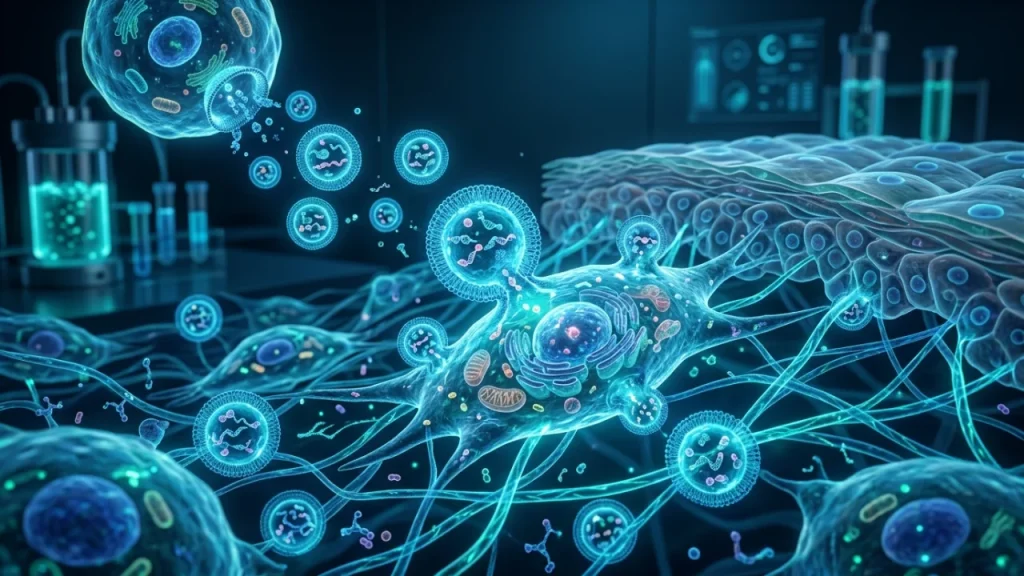
Your body is a vast network of trillions of cells. They must work together. To do this, they constantly talk. Exosomes are a key part of this conversation. Think of them as tiny biological packages. They are released by cells into the fluid around them.
These packages are incredibly small. Billions could fit on a pinhead. But what they carry is important. Each exosome contains specific cargo from its parent cell. This cargo includes proteins and genetic instructions. It acts like a message or a delivery.
Cells send out these exosomes for many reasons. A healthy cell might send signals for repair. An immune cell can send an alert about a threat. The receiving cell accepts the package. It then reads the instructions inside. This changes what the receiving cell does.
This process is natural and ongoing. Your body uses it every second. Scientists now study how to use this system for healing. This is the basis of exosomes therapy. The idea is to collect beneficial exosomes. They are often gathered from specialized stem cells.
These stem cells are good messengers. They can encourage growth and calm inflammation. Their exosomes carry these helpful signals. In therapy, these concentrated exosomes are prepared for use. They are then introduced to a target area in your body.
The goal is to support your body’s own repair systems. It is like giving your cells a clear, strong instruction manual. The therapy aims to reduce inflammation quickly. It also encourages tissue regeneration and healing from within.
The potential is significant because it uses the body’s language. It is not a synthetic drug or a foreign substance. It is a way to boost the natural signals that may have become weak or confused due to age or damage. This makes it a unique approach in regenerative medicine.
Understanding this cellular communication helps you see why scientists are excited. It is a shift from adding external chemicals to enhancing internal messaging. This foundational knowledge is key before exploring how the therapy is applied in practice for specific aesthetic and health goals.
How Exosomes Therapy Differs from Traditional Treatments
Traditional skin treatments often work from the outside in. They focus on the surface layer or add something foreign to your body. Exosomes therapy operates on a completely different principle. It works from the inside out by using your body’s own communication system.
Consider common procedures like dermal fillers or botulinum toxin. Fillers add physical volume to smooth lines. Neurotoxins temporarily block muscle signals. Both are effective. Yet their action is mechanical or inhibitory. They do not fundamentally instruct your skin cells to regenerate or improve their own function. Their results are often localized and temporary.
Laser treatments and chemical peels work by controlled damage. A laser creates micro-injuries in the skin. A peel removes outer layers of cells. The body then heals this damage. This healing process can lead to renewed skin. However, it relies on triggering a general injury response. This can involve significant downtime and inflammation.
Serums and creams provide topical nutrients and compounds. They must penetrate the skin barrier to work. Their molecules are often large. This limits how deeply they can go. Their effect is mostly on the upper layers of the skin.
So how is exosome treatment different? It is not about adding volume, causing damage, or applying topical agents. It is about delivering precise instructions directly to your cells. Think of it as a software update for your skin’s biology, not new hardware or a forced reboot.
The collected exosomes are introduced into the target area. They do not remain there as a filler substance. Instead, they are absorbed by your local skin cells. These include fibroblasts, which make collagen, and keratinocytes, the primary skin cells.
Once inside, the exosome cargo gets to work. It delivers proteins and genetic messages. This tells the receiving cell to change its behavior in specific ways. The core instructions generally focus on three key actions.
- First, reduce chronic inflammation. Aging skin often has a low level of ongoing inflammation. This disrupts normal repair. Exosome signals can calm this, creating a better environment for healing.
- Second, boost collagen and elastin production. These are the support structures of your skin. Exosomes directly encourage fibroblasts to make more of these proteins.
- Third, enhance cellular renewal and repair mechanisms. This helps cells function better and survive longer.
The effects are holistic and biological. The therapy does not just treat one symptom like a wrinkle or a fold. It aims to improve the overall health and function of the skin tissue. Results develop as your own cells respond and regenerate.
This approach also means there is no risk of rejection. The exosomes are natural signaling vehicles. Your body recognizes them as familiar entities. There is no synthetic material left behind.
Another key difference is the potential for systemic benefit. While applied locally, the signaling can influence surrounding tissues. This may lead to improvements beyond the exact injection site.
Traditional methods often provide quick but static results. Exosomes therapy seeks to create gradual, improving change by empowering your cells. The goal is lasting improvement that evolves from within your skin’s biology.
This fundamental shift explains the growing interest in this field. It moves aesthetics from correction to true regeneration. Understanding this distinction is crucial for evaluating its role in modern skincare. The next logical question is how this theoretical difference translates into practical, visible outcomes for specific concerns.
The Science Behind Cellular Communication
Think of your body as a vast, bustling city. Your cells are the individual citizens. For the city to function, these citizens must talk to each other constantly. They send urgent updates, work orders, and safety alerts. Exosomes are their microscopic messengers.
These messengers are tiny bubbles called vesicles. They are produced inside almost every cell type in your body. When a cell creates an exosome, it fills this bubble with a specific cargo. This cargo is a package of instructions and supplies.
What’s inside this package? The contents are precise and powerful: – Proteins that can change how another cell behaves. – Lipids that help with structure and energy. – Most importantly, genetic instructions in the form of RNA.
This RNA is like a software update for a cell. It can tell a skin cell to make more collagen. It can instruct an immune cell to calm down inflammation. The exosome seals this cargo and releases it into the spaces between cells.
The journey then begins. The exosome travels through your body’s fluids. It navigates until it finds a target cell. It does not deliver its message to just any cell. It finds one with the right molecular “address” on its surface.
The exosome docks at this address. It then transfers its entire instructional package into the target cell. The receiving cell reads the new instructions. It then changes its activity based on the message it received.
This process happens billions of times every day inside you. It is a primary language of your biology. Healthy communication means healthy tissue. Damaged or aging cells often send confused or weak signals. This can slow repair and renewal.
Exosome therapy uses this natural system. It provides a concentrated dose of clear, healthy messages. These messages come from young, vigorous donor cells. They are purified and prepared for clinical use.
Think of it as sending a flood of perfectly written memos to a disorganized office. The memos tell workers exactly what to do and how to fix problems. The therapy does not force cells to act. It simply gives them better information so they can make better decisions.
This science is why exosomes therapy is not a typical cosmetic treatment. It is not adding a foreign filler or paralyzing a muscle. It is leveraging the body’s own sophisticated communication network. We are supplementing the very language cells use to organize healing and maintenance.
The precision of this system is key. Because the messages are biological and targeted, side effects are rare. The body knows how to handle these vesicles. It has been doing so since birth.
Understanding this cellular post office helps explain the results. Better signals lead to better cellular behavior. Improved behavior leads to healthier tissue. This foundational science turns an abstract concept into a logical, elegant process for regeneration. Next, we will see how this precise communication translates into action against specific skin concerns.
How Exosomes Work to Improve Your Skin
Exosomes and Collagen Production: Building Better Skin
Collagen is the main structural protein in your skin. It acts like a scaffold. This scaffold provides firmness and support. As we age, collagen breaks down. New collagen production also slows. The result is thinner, looser skin with wrinkles.
Exosome therapy directly addresses this slowdown. It sends precise instructions to the cells responsible for collagen. These cells are called fibroblasts. Fibroblasts live in the deeper layer of your skin, known as the dermis. They are the builders of your skin’s support structure.
Think of a fibroblast as a construction factory. The blueprints for making collagen are stored inside it. However, the factory needs clear orders to start production. It also needs the right tools and materials. Aging or sun-damaged skin sends weak or confusing orders. The factory works slowly or makes poor-quality material.
Exosomes therapy delivers a powerful package of instructions to these factories. The exosomes carry specific molecules called growth factors and microRNAs. These are not the collagen itself. They are the detailed plans and management signals.
Here is how the process works in simple steps. – First, applied exosomes merge with the target fibroblast cells. – Next, they release their cargo of signaling molecules inside the cell. – These molecules then activate the cell’s own collagen-making machinery. – Finally, the fibroblast begins producing new, high-quality collagen strands.
This is a natural biological upgrade. The therapy does not inject foreign collagen. It tells your own cells to make more of their own best collagen. This endogenous collagen integrates seamlessly into your existing skin matrix.
The signals also do more than just start production. They help organize the new collagen properly. Healthy collagen forms in strong, woven bundles. Damaged or aged collagen is often disorganized and weak. Exosome messages promote the formation of that strong, structured network.
The increase in collagen has direct visual effects. Better scaffolding means improved skin thickness and elasticity. Fine lines may soften because the skin has more underlying support. Deeper folds can improve as the foundation is reinforced. Skin often gains a firmer, more toned appearance.
This process takes time. Cells need weeks to respond fully and rebuild tissue. Results are not instant like a filler. They develop gradually as your body renews itself from within.
The approach is fundamentally different from methods that just inflame skin to trigger a minor healing response. Exosomes provide targeted, intelligent communication. This leads to efficient and high-quality tissue regeneration.
Understanding this mechanism clarifies why exosomes therapy is considered regenerative. It goes beyond surface-level change. By precisely upregulating your skin’s essential building process, it helps restore a more youthful physiological function. Next, we will explore how this enhanced cellular activity also tackles another key sign of aging: uneven tone and texture.
Reducing Inflammation with Exosomes Therapy
Chronic, low-level inflammation is a hidden driver of skin aging. This state is sometimes called “inflammaging.” It is not a visible rash or acute sunburn. Instead, it is a quiet, smoldering fire within your skin’s tissues. This fire damages cells over time. It breaks down collagen and elastin. It can also disrupt your skin’s natural pigment system. The result is premature aging, redness, and sensitivity.
Your immune system constantly patrols your skin. Special cells look for threats like bacteria or damage. When they find a problem, they release signaling molecules. These molecules are called cytokines. Cytokines call other immune cells to the site. This process creates the classic signs of inflammation: redness, heat, and swelling. This is a normal, healthy short-term response. The problem begins when this alarm signal does not turn off.
In aged or stressed skin, the “off” switch can malfunction. Immune cells may stay overly alert. They keep sending pro-inflammatory cytokine signals. This creates a damaging cycle. Inflammation causes tissue breakdown. Broken tissue triggers more inflammation. Your skin remains in a state of constant, low-grade distress. This environment makes it very hard for skin to repair itself properly.
Exosomes therapy introduces a powerful modulating signal. Remember, exosomes are natural messengers. They carry instructions from one cell to another. In this case, therapeutic exosomes can carry anti-inflammatory commands. They deliver these orders directly to the overactive immune cells in your skin.
The messages tell these cells to calm down. They encourage the release of different cytokines. These new signals are anti-inflammatory. They help resolve the inflammatory response instead of prolonging it. Think of it as switching the cellular conversation from “attack” to “repair and restore.” This breaks the cycle of chronic irritation.
The effects of this modulation are significant for skin health and appearance. – Reduced Redness: Calming the immune response directly lessens background redness and visible capillaries. – Less Sensitivity: Skin becomes more resilient and less reactive to common triggers like skincare products or weather changes. – Improved Barrier Function: A calm environment allows skin cells to focus on rebuilding their protective lipid barrier. A stronger barrier keeps irritants out and moisture in. – Support for Healing: With inflammation reduced, the regenerative processes described earlier—like collagen production—can work more efficiently.
This approach is fundamentally different from simply suppressing symptoms with a cream. Topical steroids, for example, can quiet inflammation temporarily. But they do not teach cells how to self-regulate. Exosomes provide instructive information. They guide your skin’s own biology back toward a balanced, healthy state.
The timeline for seeing these calming effects can vary. Some individuals notice a reduction in baseline redness within several weeks. For others, the change is more subtle but foundational. The skin simply feels more comfortable and looks more even-toned over time.
By resolving underlying inflammation, exosomes therapy addresses a root cause of aging and dysfunction. It prepares the tissue for optimal renewal. This creates a healthier cellular environment for all other regenerative processes to succeed. Next, we will examine how this restored balance and communication directly improves another common concern: the uneven texture and tone that make skin look tired.
Improving Skin Texture and Elasticity Naturally
Your skin’s texture and elasticity depend on its support structure. Think of this structure as a mattress. The springs inside are made of collagen and elastin. The filling is hyaluronic acid and other molecules. Over time, springs sag and filling flattens. This leads to rough texture and loose skin. Exosomes therapy works by instructing your cells to repair this internal mattress.
Exosomes carry precise orders to fibroblast cells. Fibroblasts are your skin’s builders. They produce all the key support materials. The messages in exosomes tell these builders to become more active. They also tell them what to make.
The process focuses on three main areas.
First, exosomes boost collagen production. Collagen is the most abundant protein in your skin. It provides strength and firmness. Exosome signals increase both the amount and quality of collagen made. They encourage the creation of new, well-organized collagen fibers. This is like adding new, sturdy springs to the mattress.
Second, exosomes revitalize elastin. Elastin fibers give skin its snap-back ability. They let your skin stretch and then return to place. With age, these fibers break down and lose function. Exosome messages help fibroblasts make more elastin. They also help organize these fibers into a functional network. This restores bounce.
Third, exosomes enhance the ground substance. This is the gel-like material between collagen and elastin. It is rich in hyaluronic acid. Hyaluronic acid holds vast amounts of water. It plumps the skin from within. Exosomes signal cells to produce more of this vital hydrating molecule. This plumps up the mattress filling.
The improvement in texture comes directly from this rebuilt scaffold. New collagen fills in fine lines and small scars from within. It smooths out rough, uneven areas. The surface becomes more even because the foundation underneath is more uniform and strong.
Elasticity improves as the elastin network is repaired. Skin does not just look tighter. It actually becomes more resilient to deformation. When you pinch your skin, it should spring back quickly. Enhanced cellular activity from exosome signaling makes this happen more effectively.
This is a natural process. You are not adding foreign collagen or filler. Instead, you are using your body’s own communication system. You are telling your skin’s builders to do their original job better.
Results are not instant like a topical cream. They build over weeks and months as new proteins are synthesized. The timeline mirrors your skin’s natural renewal cycle. Most people first notice a change in texture. Their skin feels smoother to the touch. Improved elasticity often becomes apparent later.
This approach treats the cause, not just the surface. A rough texture is a sign of a damaged support structure. Exosomes provide the instructions to fix that structure at the cellular level. The outcome is skin that is not only smoother but also intrinsically stronger and more supple.
The restoration of a healthy foundation has another major benefit. It directly impacts how light reflects off your skin’s surface, influencing its overall radiance and tone.
Benefits of Exosomes Therapy for Common Skin Concerns
Fighting Visible Signs of Aging with Exosomes
Wrinkles are more than just lines on the surface. They are deep folds in a weakened support structure. This structure is made of collagen and elastin. As we age, our skin cells produce less of these proteins. The existing network also breaks down. This creates permanent creases and grooves. Exosome therapy addresses this core problem.
Exosomes carry specific signals to your skin cells. These signals tell your cells to become more active. Think of a construction site that has slowed down. The exosomes are like new project managers. They arrive with updated blueprints and orders. They instruct the fibroblast cells to ramp up production.
Fibroblasts are your skin’s builders. They make collagen and elastin. The signals from exosomes do several key things. – They encourage fibroblasts to divide and create more builder cells. – They direct these cells to synthesize new, high-quality collagen fibers. – They promote the creation of fresh elastin to restore snap.
This process is called neocollagenesis. It means the new formation of collagen. This is not about plumping skin with filler. It is about rebuilding its foundation from within. New collagen fibers are laid down in an organized way. They fill in the gaps under wrinkles. This gradually lifts and smoothes the overlying skin.
Fine lines are often the first to improve. These are shallow cracks in the skin’s surface. They result from minor collagen loss and dryness. Exosome signaling enhances overall skin cell health. It improves hydration at a deep level. Cells communicate better about moisture retention. The skin’s barrier becomes more robust. This plumps up the very top layers, softening fine lines.
Deeper wrinkles require more work. They are like trenches in the skin’s architecture. Filling them needs substantial new collagen growth. The exosome therapy process provides sustained instructions. Results build over months as new proteins accumulate. The depth of wrinkles can decrease visibly. The skin’s surface becomes notably smoother.
The approach is holistic. It does not target just one type of wrinkle. By renewing the fibroblast cells’ function, it improves multiple signs of aging at once. Dynamic lines from facial expressions may soften. Static lines present at rest can become less severe. The skin’s overall resilience increases.
This method works with your biology. It uses the body’s own language to initiate repair. The goal is lasting change, not temporary camouflage. The new collagen that forms is your own natural protein. It integrates seamlessly into your existing skin.
Consistency is important for optimal results. The cellular signals from a single treatment fade over time. Follow-up sessions can provide ongoing guidance. This helps maintain a higher level of regenerative activity. It supports the skin’s youthful functions longer.
Choosing exosomes therapy for aging skin is an investment in cellular health. It shifts focus from covering up damage to truly repairing it. The outcome is a complexion that looks rejuvenated because its underlying biology is more active and capable. This foundational restoration naturally leads us to consider how such renewed skin better protects itself from ongoing daily challenges.
Scar Remodeling: How Exosomes Help Heal Skin
Scars form when the skin’s normal healing process gets disrupted. The body rushes to close a wound. It often deposits collagen fibers in a hurried, disorganized way. This creates scar tissue. It looks and feels different from healthy skin. It can be raised, sunken, or discolored. The goal of scar remodeling is not to erase the scar completely. The goal is to improve its texture, color, and flexibility.
Exosomes therapy addresses scars at their source: the faulty repair process. They carry precise instructions to the cells within the scar. These instructions help recalibrate the healing response. Think of a fresh scar as a construction site in chaos. Exosomes act like new foremen. They guide the workers to clean up and rebuild with better materials.
The communication focuses on key cells called fibroblasts. In scars, fibroblasts are often overactive. They produce too much of the wrong type of collagen. The fibers are laid down in dense, cross-linked bundles. This makes the scar hard and raised. Exosomes can signal these fibroblasts to slow down. They encourage a shift in production. The cells start making more organized, flexible collagen. This helps flatten and soften a raised scar.
For sunken or atrophic scars, the problem is different. There is not enough supportive tissue. Common examples are acne scars or marks from chickenpox. Here, exosomes therapy sends a different message. It prompts fibroblasts to become more active in a productive way. It stimulates them to generate new, healthy collagen and elastin. This new matrix can gradually fill in the depressed area from below. The skin’s surface becomes more even.
Color improvement is another critical benefit. Scars can appear red, purple, or white compared to surrounding skin. Redness comes from dilated blood vessels and inflammation. Exosomes carry molecules that help regulate this inflammatory response. They support the normalization of blood vessels. For hypopigmented white scars, exosomes may encourage melanocyte activity. Melanocytes are the cells that give skin its color. This can help the scar blend better with your natural tone.
The process is gradual and biological. You will not see overnight miracles. The cellular instructions work over weeks and months. As old, disorganized collagen breaks down, new collagen takes its place. This remodeling cycle is continuous.
- Texture: Hard scars become softer to the touch.
- Elevation: Raised scars may reduce in height.
- Plumping: Depressed scars can gain supportive tissue.
- Color: Redness may diminish, improving overall blend.
It is vital to have realistic expectations. The age and type of scar matter greatly. A mature, old scar has established dense structure. It will respond more slowly than a newer scar. Multiple sessions of exosomes therapy are often needed for optimal remodeling. The therapy provides the tools and blueprints for repair. Your body’s own cells then do the actual work over time.
This approach is fundamentally different from methods that simply destroy scar tissue with lasers or surgery. Those can sometimes trigger more scarring. Exosomes aim to guide the tissue toward a more natural state. They promote genuine healing, not just removal.
By harnessing the body’s own communication system, exosomes therapy offers a sophisticated path for scar improvement. It works from the inside out to revise the skin’s narrative from one of damage to one of organized repair. This logical extension of cellular renewal demonstrates its potential not just for aging, but for healing visible past injuries, setting the stage for exploring its role in preventing future damage altogether.
Restoring Hydration and Skin Barrier Function
Healthy skin acts as a strong, flexible wall. This wall keeps water inside your body. It also keeps irritants and germs outside. The top layer of skin, the stratum corneum, is this critical barrier. When it works well, your skin looks plump and feels smooth. When it fails, skin becomes dry, flaky, and sensitive.
Exosomes therapy directly supports the cells that build this wall. Your skin barrier is made of bricks and mortar. Skin cells are the bricks. Lipids are the mortar. These lipids include ceramides, cholesterol, and fatty acids. They glue the cells together into a tight, waterproof layer.
Damaged or aging skin cells produce fewer lipids. The mortar weakens. Gaps appear between the bricks. Water escapes easily through these gaps. This is called transepidermal water loss. Irritants can also slip in. Exosomes carry messages to fix this.
They deliver instructions to keratinocytes. These are the main cells in your skin’s outer layers. The messages tell them to ramp up lipid production. Research shows exosomes can boost the activity of genes for making ceramides. Ceramides are the most important lipid for holding moisture.
Think of exosomes as a delivery of updated blueprints. The blueprints show a cell how to build better mortar. The cell then makes more and higher-quality lipids. This process refills the gaps between skin cells. The barrier becomes dense and cohesive again.
The benefits of this repair are clear and measurable. – Moisture retention improves significantly. The skin holds onto its natural water content. – Redness and reactivity often decrease. A strong barrier blocks external triggers. – The skin’s surface feels softer and looks more luminous. This is due to light reflecting off a smoother, hydrated surface.
Exosomes also influence another key protein: filaggrin. Filaggrin is essential for barrier function. It breaks down into natural moisturizing factors inside skin cells. These factors act like tiny sponges, binding water. Some skin conditions involve low filaggrin levels.
Exosome signaling can help normalize filaggrin production. This enhances the skin’s internal hydration system. It is a dual approach: repair the lipid mortar outside and boost the water-holding sponges inside.
This is not a surface-level fix like a heavy cream. Creams sit on top and temporarily slow water loss. Exosomes therapy addresses the root cause from within living cells. It prompts your skin to rebuild its own optimal barrier structure.
The result is more resilient skin. A restored barrier is better at handling environmental stress. It copes better with dry air, pollution, and temperature changes. This proactive strengthening is a logical next step after scar revision.
First, exosomes guide the repair of deep structural damage like scars. Next, they ensure the skin’s daily defensive wall is robust. This comprehensive approach highlights how exosomes therapy goes beyond cosmetic improvement. It works to fundamentally optimize skin health at a cellular level, creating a foundation that retains vitality and combats daily wear.
The Process of Exosomes Therapy Treatment
What to Expect During an Exosomes Therapy Session
An exosomes therapy session is a precise clinical procedure. It typically begins with a thorough consultation. Your provider will review your health history and aesthetic goals. This step ensures the treatment is appropriate for you. Clear communication here is vital for a good outcome.
The actual appointment often starts with preparing the treatment area. The skin is gently cleansed. A topical numbing cream is then applied. This cream sits on the skin for about 20 to 30 minutes. It makes the treatment process very comfortable for most people. You should feel minimal discomfort.
Once the skin is numb, the provider removes the cream. The skin is cleaned again with a medical-grade antiseptic. This step is crucial for safety. It prevents any bacteria from entering the micro-channels created during the next phase.
The delivery of exosomes usually requires creating tiny access points in the skin. The most common method uses a device with fine needles. This device is called a microneedling pen. It makes microscopic, controlled punctures in the top layers of the skin. These channels are not deep wounds. They are temporary pathways.
These micro-channels serve a key purpose. They allow the exosome solution to bypass the tough outer barrier of the skin. The exosomes can then reach the deeper living cells where they are needed. The microneedling process itself also stimulates a minor healing response. This primes the skin to accept the new signals.
Next comes the application of the exosome solution itself. The liquid is either brushed onto the skin or applied with a syringe. It is spread evenly over the treated area. The exosomes then travel down the micro-channels. They enter the interstitial fluid between your skin cells.
The entire active treatment process is relatively quick. The microneedling and application often take only 15 to 20 minutes for a focused area like the face. The provider uses gentle, deliberate techniques throughout.
After the solution is applied, there is a short waiting period. You may rest for 5 to 10 minutes. This lets the exosomes begin their absorption into the tissue. No bandages or dressings are typically required post-treatment.
Immediately after the session, your skin will look pink and feel warm. This is a normal, temporary reaction. It is similar to a mild sunburn. This redness usually fades significantly within 24 to 48 hours. Some minor swelling can also occur.
Your provider will give you clear aftercare instructions. These are simple but important for optimal results. – Avoid sun exposure and wear a high-SPF mineral sunscreen. – Use only gentle, non-irritating skincare products for a few days. – Avoid strenuous exercise and excessive heat for about 24 hours. – Do not scrub or exfoliate the treated area for one week.
You can usually return to normal daily activities right away. Makeup can often be applied the next day once redness subsides. The process requires no real downtime, which is a significant advantage.
The initial effects are often subtle improvements in texture and hydration within days. The deeper regenerative work happens silently over the following weeks. Cells receive and act on the new instructions carried by the exosomes.
A single session can provide noticeable benefits. However, many providers recommend a series of treatments for cumulative, long-lasting effects. A common protocol involves two to three sessions spaced about one month apart. Your personalized plan will be set during your initial consultation.
Understanding this process removes uncertainty. It shows that exosome treatment is a streamlined, modern procedure grounded in precise science and careful application, leading logically to considerations of its ideal uses and realistic outcomes.
Minimally Invasive Approaches in Exosomes Therapy
Exosome therapy uses delivery methods designed for precision and minimal disruption. These are not surgical procedures. Instead, they create tiny, controlled pathways for the exosomes to reach their target cells. This fundamental approach is why patients experience little to no real downtime.
The most common method is topical application combined with micro-needling. A device with very fine, sterile needles creates microscopic channels in the skin’s surface. These channels are incredibly small. They are not cuts or incisions. Think of them as temporary pathways.
The exosome solution is then applied directly to the skin. It travels down these micro-channels into the deeper layers. This bypasses the skin’s tough outer barrier. The exosomes can now reach the living cells that need them. The entire process is quick. It causes only temporary redness, as described earlier.
Another precise approach uses specialized injection techniques. Providers may use mesotherapy injections or nano-injection devices. These tools allow for ultra-shallow, targeted delivery. The exosomes are placed exactly where they are needed in the dermis.
This is not like a typical vaccine or filler injection. The needles used are often much finer. The goal is to distribute tiny droplets of solution in a grid pattern. This ensures widespread, even coverage in the treatment area. The sensation is often described as a light pinching.
Some protocols combine these methods for enhanced results. Micro-needling might be followed by a topical serum infusion. Or, a provider may use injections for specific areas of concern. The choice depends on the individual’s skin and goals.
The equipment itself supports a gentle process. Modern micro-needling pens and injectors are calibrated for comfort and safety. Depth settings are adjusted with precision. This controls how deep the exosomes go. It protects deeper tissues from unnecessary contact.
All these techniques share a core principle. They aim to deliver a biological signal, not a physical volume of product. You do not need large incisions or deep injections. The body’s communication system works on a microscopic scale. The treatment methods mirror that scale.
This minimizes trauma to the skin’s structure. Since there is no major wound, the body’s healing response is focused and efficient. It focuses on using the new instructions from the exosomes. It does not waste energy repairing large-scale damage.
Consider the difference between mailing a letter and building a new road. Major surgery builds a new road for access. These minimally invasive approaches simply mail a letter to the cells. The postal system, your skin’s natural pathways, handles the rest.
The benefits of this approach are clear for the patient. – There is no general anesthesia required. – The risk of scarring or significant bleeding is extremely low. – Discomfort is minimal and brief. – The skin barrier is compromised only temporarily and in a controlled way.
This makes exosomes therapy accessible for regular maintenance. People can schedule a treatment during a lunch break. They can return to work or social activities immediately after. The convenience matches modern lifestyles.
The scientific rationale is equally strong. Harsh procedures can create inflammation and oxidative stress. This chaotic environment can distract cells from their regenerative tasks. Gentle delivery avoids this counterproductive signal.
Cells can immediately begin processing the beneficial cargo. They are not first overwhelmed by repairing procedure-related damage. The therapeutic signal is clean and direct.
In essence, the method fits the message. Exosomes are sophisticated natural messengers. Their introduction into the skin respects that biology. The process works with the body’s systems, not against them.
This seamless integration is why results develop smoothly over weeks. It also opens the door to treating delicate areas safely. The minimally invasive nature of exosome therapy is not just a convenience; it is a core part of its scientific advantage and growing appeal for consistent skin rejuvenation.
Safety and Side Effects of Exosomes Treatment
Exosomes are naturally produced by your own body’s cells. This inherent biological origin is the primary foundation for their safety profile in treatment. Because they are not synthetic or foreign, the risk of a severe allergic reaction is exceptionally low. The body recognizes these vesicles as familiar biological cargo.
The processing of donor cells for exosome collection follows strict protocols. These steps are designed to ensure purity and safety. The goal is to isolate only the exosomes and their beneficial signals. All other cellular material is carefully removed. This creates a clean, concentrated therapeutic agent.
The minimally invasive delivery method itself adds another layer of safety. As discussed, it avoids deep wounds or general anesthesia. This significantly reduces common risks associated with more aggressive procedures. There is no risk of surgical complications or lengthy anesthetic recovery.
Most people experience only mild and temporary effects after an exosomes therapy session. These are typical signs of the skin’s natural engagement with the treatment. – Temporary redness at the application sites is common. This usually fades within a few hours. – Minor swelling or a sensation of warmth can occur. It is similar to a mild sunburn. – Some slight tenderness might be present for a day or two.
These effects are not side effects in a negative sense. They are often positive indicators. They show that the local cellular environment has been activated. The body’s repair and renewal processes are being signaled to begin their work.
Serious adverse events are extremely rare in clinical settings. Current research and treatment reports show a consistently high safety record. This is linked to the natural function of exosomes. They carry messages for regulation and healing, not for causing disruption.
There are important considerations for patient screening. Not everyone is an immediate candidate for exosomes therapy. A thorough consultation with a qualified provider is essential. Key factors they will review include active skin infections or inflammatory conditions. Treating over an active infection is not advised. A history of certain autoimmune disorders may require special evaluation. The provider needs a complete medical history. Pregnancy and breastfeeding are typically periods where treatment is postponed. This is a standard precaution for any non-essential procedure.
The long-term safety of aesthetic exosome applications is still being studied. Research is ongoing and extensive. The existing data from years of clinical use is very encouraging. No significant long-term safety concerns have emerged from this data set.
It is crucial to distinguish this regulated clinical use from other contexts. The safety profile described depends on medical-grade sourcing and professional administration. Do-it-yourself or non-medical uses carry unknown and potentially higher risks.
Understanding this safety framework allows for realistic expectations. Exosomes therapy is a powerful biological tool with a strong safety foundation when performed correctly. Its gentle nature translates directly to minimal downtime and low risk. This makes it a compelling option for those seeking effective yet low-intervention treatments.
The next logical question involves the tangible outcomes of this safe process. How does this biological signaling translate into visible improvements for skin texture, tone, and overall rejuvenation?
Scientific Research Supporting Exosomes Therapy
Recent Studies on Exosomes and Skin Regeneration
Recent laboratory and clinical studies provide strong evidence for exosomes therapy. Research shows exosomes carry specific instructions for skin repair. These instructions are delivered directly to aging or damaged cells.
The cargo inside exosomes is key. It includes growth factors and signaling molecules. It also includes microRNAs, which are tiny genetic regulators. This cargo can turn on youthful cellular functions. It can also turn off pathways linked to aging and damage.
One 2020 study in a scientific journal examined exosomes derived from stem cells. Researchers applied them to human skin cells in a lab model of photoaging. This model mimics sun-damaged skin. The treated cells showed a significant increase in collagen production. Collagen is the main structural protein that keeps skin firm. The study reported a measured boost of over 30% in key collagen types.
Another research focus is wound healing. A separate experimental study used exosomes on tissue samples. It found they accelerated the closure of wounds by more than 50% compared to untreated samples. The mechanism was clear. Exosomes promoted new blood vessel formation. They also reduced destructive inflammation at the wound site.
The effects observed in studies are comprehensive. They are not limited to just one protein.
- First, exosomes increase the skin’s own collagen and elastin production. This improves density and elasticity.
- Second, they enhance the skin’s hydration mechanisms. They support the function of hyaluronic acid and the skin’s moisture barrier.
- Third, they promote healthy turnover of skin cells. This leads to a fresher, more radiant complexion.
- Fourth, they deliver antioxidant enzymes directly into cells. This helps neutralize daily environmental damage.
Clinical observations on patients align with lab data. These studies monitor real people after treatment. Common reported improvements include better skin texture and smoother fine lines. Patients often note a more even skin tone and a healthy glow. The changes are typically gradual and natural-looking. They emerge over weeks as the biological signaling takes full effect.
Research also clarifies why exosomes therapy can be so precise. Exosomes have targeting abilities. Their surface contains address molecules. These molecules guide them to specific cell types that need repair, like fibroblasts or keratinocytes. This ensures the regenerative signals go exactly where they are needed most.
The scientific support extends to comparative analysis. Studies have begun to contrast exosome treatments with traditional approaches. For instance, some evidence suggests exosomes may help stabilize results from other procedures. They may improve outcomes when used alongside needling or laser treatments. The science points to a synergistic potential.
Current investigations continue to refine our understanding. Scientists are mapping which exact exosome contents are most vital for regeneration. They are exploring sources beyond stem cells. The goal is to optimize the therapeutic signal for specific aesthetic concerns.
This body of research answers the “how” behind the benefits. It moves the concept from theory to documented biological fact. The evidence shows exosomes act as a master regulator for skin health. They trigger the body’s innate and sophisticated repair systems.
Given this strong scientific foundation, a practical consideration naturally follows. How is this advanced therapy actually delivered in a clinical setting? The application method is a critical part of its success.
How Exosomes Deliver Signals to Target Cells
Exosomes deliver their instructions through a precise, multi-step process. Think of it as a secure package delivery system for your cells. The journey begins when an exosome arrives near its target cell. This target could be a fibroblast that makes collagen. It could also be a keratinocyte in the outer skin layer.
The exosome does not just bump into any cell. Its surface is covered with special proteins and sugars. These act like address labels or unique keys. They scan the surface of nearby cells. They look for the right lock, called a receptor. When the exosome’s key finds the matching receptor, it docks. This docking is the first critical step. It ensures the message goes to the correct recipient.
After docking, the exosome has two main ways to deliver its cargo. The first method is direct fusion. The exosome’s membrane merges with the cell’s own membrane. It is like two soap bubbles becoming one. When they fuse, the exosome’s interior cargo pours directly into the cell’s cytoplasm. This delivers proteins, growth factors, and RNA instantly.
The second method is called endocytosis. The cell’s membrane folds inward. It wraps around the docked exosome and swallows it whole. This forms a little bubble inside the cell called an endosome. The endosome then breaks apart. This releases the exosome’s payload into the cell’s internal environment.
Once inside, the cargo gets to work. The messenger RNA (mRNA) molecules are a key part. Your cell’s machinery reads this mRNA. It then uses the instructions to build new proteins. These proteins might be the building blocks for collagen or elastin. They could also be enzymes that repair damaged tissue.
The microRNA (miRNA) cargo works differently. These are small regulatory molecules. They do not carry instructions for making proteins. Instead, they control which genes are active. They can turn specific genes on or off. For example, they might silence a gene that causes inflammation. They might activate a gene that supports healing.
This entire process is fast and efficient. Signals can change a cell’s behavior within hours. The effects then build over time as new proteins are made. The beauty of this system is its natural precision. The body uses this method for its own communication every day.
Exosomes therapy harnesses this exact biological pathway. It provides a concentrated dose of these signal-carrying vesicles. This amplifies the body’s own repair commands. The therapy does not force cells to do something new. It simply gives them a clearer, stronger set of their own instructions.
Different exosomes carry different cargo mixes. Some might be loaded with signals for blood vessel growth. Others might carry instructions for calming inflammation. Clinicians can select sources rich in specific cargo types. This targets particular concerns like scarring, redness, or volume loss.
The delivery method ensures no genetic material integrates into the host cell’s DNA. The mRNA and miRNA are temporary instructions. They are used and then naturally broken down by the cell. This makes the process inherently safe at a fundamental level.
Understanding this mechanism clarifies why results feel natural. The change comes from within your own cells. They become more active and productive. This process restores a more youthful functional state. It is not just filling a line; it is improving how the skin behaves.
The next logical question involves timing and experience. How long does this cellular conversation take to show visible results?
Clinical Evidence for Exosomes Therapy Effectiveness
Scientific studies provide strong support for the use of exosomes in aesthetics. Research shows these tiny messengers can directly improve skin health. The evidence comes from laboratory tests, animal models, and human clinical trials.
One key area of proof is collagen production. Collagen gives skin its firmness and structure. Aging skin makes less collagen. Multiple studies have exposed human skin cells to exosomes in a lab. The results are clear. Treated cells significantly increase their collagen output. They do this by receiving the genetic instructions inside the exosomes.
Another proven effect is reducing inflammation. Chronic, low-level inflammation speeds up skin aging. It can cause redness and sensitivity. Exosomes carry molecules that calm this process. They signal immune cells to stand down. This creates a better environment for healing and repair.
Research also confirms exosomes boost elastin and hyaluronic acid. Elastin allows skin to snap back. Hyaluronic acid provides hydration and volume. By promoting these components, exosomes therapy addresses multiple signs of aging at once. The approach works from within the cellular framework.
Clinical evidence for exosomes therapy effectiveness is growing. Early human studies show promising visual and measurable changes. Patients often report improvements in skin texture and tone. Their skin feels smoother and looks more radiant.
Scientific measurements back these reports. Tools called visiometers can analyze skin surface quality. They measure roughness and smoothness. Studies using these tools note visible improvement after a series of treatments. The skin’s architecture becomes more organized.
Another measurement involves skin hydration. Devices called corneometers check the water content in the upper skin layer. Treatments with exosomes often lead to higher hydration readings. This happens because the signals encourage a healthier skin barrier.
The timeline for results aligns with the biological mechanism discussed earlier. Initial cellular changes start within days. Visible improvements typically begin in a few weeks. The full effect develops over one to three months. This matches the time needed for new collagen to form.
The effects also appear natural and integrated. This is a key finding from clinical observations. The therapy does not create a sudden, artificial look. Instead, it fosters a gradual restoration of healthy function.
Safety data from these clinical reports is equally important. The recorded side effects are generally minimal. They are often limited to temporary redness at the application site. Serious adverse events are notably rare in the published literature on aesthetic uses.
Researchers are now studying which exosome sources work best for specific goals. Some exosomes might be exceptional for wound healing. Others could be optimal for reducing hyperpigmentation. This targeted potential is a major focus of current science.
The body of evidence continues to expand each year. New studies are examining long-term benefits and optimal treatment schedules. The consistent thread across all research is the fundamental role of cell communication. Enhancing this natural system yields measurable, positive outcomes for skin health and appearance.
This clinical foundation answers the practical question of effectiveness. It shows the theory works in real-world applications. The next logical step is to understand what this means for an individual considering the treatment.
Practical Considerations for Exosomes Therapy
Who Is a Good Candidate for Exosomes Treatment?
Exosome therapy is not a universal solution for every person or concern. Its mechanism targets specific biological processes. This makes it ideal for certain conditions and less suitable for others. Understanding your own goals is the first step.
A good candidate often seeks improvement in skin quality and texture. They want to address signs of aging linked to slowed cell activity. These signs include fine lines, dullness, and loss of firmness. Exosomes work by signaling your skin cells to perform better. They encourage cells to produce more collagen and elastin. This approach is fundamentally different from simply filling a wrinkle.
People with early to moderate sun damage may also benefit. Exosome signaling can help normalize skin cell function. It can aid in repairing some of the cumulative environmental stress. The therapy supports the skin’s natural renewal cycles. It is not a quick fix for deep, established wrinkles or significant volume loss. Other treatments might be better for those specific issues.
General skin health is a primary focus. Candidates should have realistic expectations. They understand this is a regenerative process, not an instant transformation. The best results come from enhancing the skin’s own biology over weeks. Patience is key.
Certain medical histories require careful consideration. Active inflammatory skin conditions need attention. For instance, a person with a severe, ongoing rosacea flare or active eczema may not be an ideal candidate initially. The inflammatory environment could interfere with the exosomes’ signals. Managing that condition first would be a prudent step.
Oncology history is another vital factor. While research into exosomes for cancer is ongoing, aesthetic treatments require caution. A person with a recent or current cancer diagnosis should not pursue this therapy without detailed specialist consultation. The priority is always overall health.
Pregnancy and breastfeeding are typical times for precaution. There is limited data on exosome use during these periods. Most responsible providers will recommend waiting until after breastfeeding concludes. This is a standard safety measure for many elective treatments.
Overall health and lifestyle play a supporting role. The body’s cells need basic resources to respond well to exosomal signals. Chronic poor nutrition, very high stress, or heavy smoking can dampen cellular response. A candidate committed to a reasonably healthy lifestyle will likely create a better internal environment for success.
Individuals seeking preventative care are increasingly interested. Someone in their late 20s or 30s might use exosome therapy to proactively support skin resilience. This aims to slow the visible onset of aging by optimizing cell communication early.
The ideal candidate views this as part of a long-term skin health strategy. They see it as an advanced form of skincare that works from within. It complements other healthy habits like sun protection and a good diet.
Here are common profiles for good candidates: – Adults noticing early aging like fine lines or mild laxity. – Those with dull, fatigued skin seeking improved radiance. – Individuals with generally healthy skin wanting preventative maintenance. – People recovering from procedures like laser treatments, seeking to optimize healing. – Anyone interested in a science-backed, natural-process approach to aesthetics.
It is less suitable for those seeking dramatic, immediate changes in shape or volume. It is also not designed to treat active infections or major skin diseases.
A direct conversation with a qualified provider is essential. They will review your health history and skin assessment. This discussion will determine if your biology and goals align with what exosome therapy can achieve. The next step is understanding what that personalized treatment process looks like in practice.
Combining Exosomes Therapy with Other Skin Care
Exosome therapy works best when combined with good skin care. Think of it as a powerful upgrade to your existing routine. It does not replace daily habits. Instead, it makes them more effective.
Your skin cells are always communicating. They send signals for repair and renewal. Exosomes boost these natural signals. This creates a better environment for your other products to work.
Consider your current skincare steps. You likely cleanse, moisturize, and use sunscreen. These actions protect and nourish your skin’s surface. Exosomes therapy works at a deeper, cellular level. It prepares your skin to get more benefit from those surface steps.
The order of treatments matters greatly. Exosomes are often used after certain professional procedures. For example, a gentle laser treatment might create micro-channels in the skin. This can help exosomes reach deeper layers. The exosomes then guide the healing process. They can help reduce redness and speed up recovery time.
It is also common to use exosomes with microneedling. Tiny needles create controlled micro-injuries. This triggers the skin’s natural repair cycle. Applying exosomes during this window directs that repair. The goal is more collagen and healthier skin structure.
You should always discuss combination plans with your provider. They will create a smart schedule for you. Using treatments too close together can overwhelm the skin. A good plan spaces things out for the best results.
Your daily home care is equally important after treatment. Here is how exosome therapy integrates with your daily routine:
- Cleansing: Use a gentle, non-irritating cleanser. This maintains the skin barrier that exosomes help support.
- Antioxidants: Serums with Vitamin C or E are excellent partners. Exosomes improve cellular health. Antioxidants protect cells from daily environmental damage. They work on different parts of the same problem.
- Moisturizers: Hydration is key for healing skin. A good moisturizer locks in water. This helps the skin cells that are activated by exosomes function properly.
- Sunscreen: This is the most critical partner. Sun exposure creates inflammation and breaks down collagen. Exosomes promote collagen production and reduce inflammation. Sunscreen protects this investment every single day.
Do not use harsh products right after an exosome treatment. Avoid strong acids or abrasive scrubs for several days. Your skin is using its energy for internal renewal. Let it focus on that process.
The timing of your overall skincare strategy is key. Some people use exosome therapy as a seasonal treatment. They might get it twice a year. This approach gives the skin a periodic, major boost. Daily care maintains the benefits in between.
Others may use it as part of a specific series. For instance, they might have three sessions over a few months. This is often done to achieve a primary goal like improving texture or tone. After the series, they return to a maintenance plan with their daily products.
Patience is essential with combination approaches. You will not see changes from exosomes overnight. The process is gradual and builds over weeks. Your daily skincare will feel more effective during this time. Your skin may look more radiant and feel more resilient.
The core principle is synergy. Each part of your regimen has a job. Cleansing removes debris. Sunscreen blocks damage. Moisturizers hydrate. Exosomes therapy optimizes your skin’s biological machinery to respond better to all these inputs. It connects your daily efforts to your cellular potential.
This integrated approach leads to longer-lasting and more significant results. It turns isolated actions into a unified plan for skin health. The next logical step is to look at what happens during and immediately after the treatment session itself.
Cost and Accessibility of Exosomes Therapy
The price for a single session of exosomes therapy can vary widely. It often ranges from several hundred to a few thousand dollars. This cost depends on many factors. It is not a standardized product or procedure yet. Think of it like this. You are paying for a highly specialized biological preparation. You are also paying for the medical expertise required to handle and deliver it properly.
Several key elements influence the final price you might see. The source of the exosomes is one major factor. Some clinics use exosomes derived from stem cells. Others may use different sources. The concentration and purity of the preparation matter greatly. A higher dose of carefully processed exosomes typically costs more. The clinic’s location and the provider’s level of training also affect pricing. A treatment in a major city often carries a different price tag than one in a smaller town.
The method of delivery changes the cost too. A simple topical application after microneedling is usually one price point. An injection technique, like those used for joints or deeper skin layers, is often more complex. It may require more skill and a higher dose. This makes it more expensive. The number of sessions in your treatment plan is another obvious factor. A single booster session costs less than a full series of three treatments.
Insurance does not cover these treatments currently. Exosomes therapy is considered an elective aesthetic or wellness procedure. Patients pay for it directly out of pocket. Some clinics offer payment plans or financing options. It is always wise to ask about this during a consultation.
Accessibility is another practical concern. Exosome treatments are not available at every dermatology or medspa clinic. They are offered by providers who seek out specialized training and supply channels. You will find greater availability in larger metropolitan areas initially. Research is crucial here. Look for a licensed medical professional. A doctor, nurse practitioner, or physician assistant should oversee the treatment. They should have specific training in regenerative medicine and exosome use.
Ask questions during your consultation. You should inquire about the source of their exosomes. Ask about their safety testing protocols. Understand their experience with the procedure. A reputable provider will be transparent. They will explain what you are paying for in clear terms.
Because this is a newer field, regulations are still evolving. The FDA classifies exosomes for therapy as a drug in many cases. This means clinics must operate under certain guidelines to provide them legally. Be cautious of any provider making extreme or guaranteed promises. The results are subtle and regenerative, not dramatic and instant.
Considering cost and access is a key step in your decision process. It helps set realistic expectations from the start. This financial and logistical understanding allows you to plan effectively if you choose to proceed. The final piece of the practical puzzle involves knowing what to look for in a qualified provider and clinic environment.
The Future of Exosomes Therapy in Personal Skin Care
Emerging Trends in Exosomes Research
Scientists are now engineering exosomes to carry specific cargo. Think of them as tiny, natural delivery trucks. Researchers can load these trucks with precise instructions. These instructions can be growth factors or even genetic material. The goal is to send a very targeted message to aging or damaged skin cells.
One major trend is personalization. Future treatments may use exosomes derived from your own cells. Your blood or fat tissue could be a source. These personalized vesicles would carry your unique biological signals. This approach aims to maximize compatibility. It seeks to minimize any remote risk of reaction.
Another key area is combination therapy. Exosomes are being studied alongside other procedures. They could be used after laser treatments or microneedling. The idea is to enhance and accelerate the natural healing process. Exosomes would provide the repair instructions right when the skin is ready to listen. This synergy could lead to better outcomes with less downtime.
Research is also diving into specific skin concerns. Scientists are not looking for one general solution. They are investigating how exosomes can target distinct issues. – Photoaging from sun damage might require a different exosome profile. – Scarring, like from acne, may need signals that remodel collagen in a precise way. – Conditions like melasma or vitiligo involve complex pigment cells. Specialized exosome communication could help restore balance.
The sourcing of exosomes is evolving too. New methods focus on consistency and scale. Scientists use controlled laboratory environments. They grow specific types of cells that are excellent communicators. These cells are nurtured in conditions that encourage them to release helpful exosomes. This process aims for a reliable and potent product.
Diagnostics represent another exciting frontier. Exosomes in your blood or other fluids act as a snapshot of your health. A simple test might analyze these vesicles one day. It could reveal early signs of skin aging or stress long before they are visible. This allows for very early intervention strategies.
A crucial part of current research is understanding the mechanism better. Scientists want to know exactly how an exosome’s message changes a cell’s behavior. They map the pathways inside the cell that get activated. This deep knowledge helps design smarter, more effective future therapies.
The ultimate goal is precision regeneration. Future exosomes therapy might work like a software update for your skin. It would deliver exact commands to specific cell populations. The commands could tell cells to boost collagen, calm inflammation, or renew themselves more efficiently.
Safety remains a core focus of all new research. Long-term studies are tracking outcomes over months and years. Researchers are documenting how the skin responds over time. They are confirming the stability of results. This data builds the strong scientific foundation needed for wider acceptance.
These trends point toward a more integrated future for skin health. Exosome science could bridge daily care and clinical treatment. It offers a path that works with your biology, not against it. The next logical step is to consider how this evolving science translates into real-world treatment protocols and expected timelines for visible change.
Why Exosomes Therapy Represents a Shift in Aesthetic Medicine
Traditional aesthetic treatments often work from the outside in. They apply a force or a substance to the skin. This force can be mechanical, like microneedling. It can be chemical, like a peel. It can involve injecting a filler. These methods create a controlled injury or add volume. The skin then reacts and heals. This process can stimulate collagen. But it is a blunt approach. The body’s natural communication systems are not directly used.
Exosomes therapy represents a fundamental shift. It works from the inside out. Think of it as giving cells new instructions instead of causing an injury. Exosomes are natural messengers. Your own cells make them every day. In treatment, these vesicles deliver precise signals to skin cells. They tell cells what to do next. This is a move from manipulation to communication.
The change is clear in three key areas.
First is the mechanism of action. Traditional methods rely on the body’s general wound-healing response. The treatment causes damage. You then hope the healing process gives the desired result. Exosome signaling is different. It provides specific biological commands. A command might be “produce more collagen type I.” Another could be “reduce inflammatory signals.” The cell receives these orders and acts.
Second is the treatment experience and downtime. Many conventional procedures need recovery. There can be redness, swelling, and peeling. This happens because the skin barrier is breached or damaged. Exosome treatments are typically gentle. They are often delivered after minimal microneedling or with specialized devices. The goal is not to injure but to create pathways for the exosomes. This leads to far less social downtime for patients.
Third is the scope of results. Fillers address lines by adding physical volume. Lasers target pigment or tighten skin by heating it. Each tool solves one main problem. Exosomes influence many cellular activities at once. A single treatment can potentially improve skin texture, hydration, elasticity, and tone simultaneously. It works on the cellular functions that control all these aspects.
This shift mirrors changes in other fields of medicine. Think of chemotherapy versus targeted cancer drugs. Chemotherapy affects all fast-dividing cells. It is a broad attack with side effects. Targeted therapies interfere with specific pathways in cancer cells only. Aesthetic medicine is undergoing a similar evolution. We are moving from broad mechanical and chemical actions to precise biological signaling.
The core of this new approach is information transfer. Exosomes carry a cargo of proteins, lipids, and RNA. This cargo is the instruction set. When an exosome fuses with a target cell, it delivers this cargo. The cell’s machinery reads the instructions and changes its behavior. The therapy’s effectiveness depends on the quality and specificity of these biological messages.
This represents a more natural alignment with skin biology. The skin is a living organ, not a static material. It constantly communicates and renews itself. Exosome treatments aim to support and guide this innate process. They use the body’s own language of cellular repair. This is why it is considered a regenerative strategy, not just a corrective one.
The shift also changes how we think about maintenance and prevention. Traditional treatments often need repeating when effects fade. The focus with exosome science includes long-term cellular health. By improving cell function and communication, results may develop over weeks and last longer. The goal becomes sustaining optimal cell activity, not just fixing a surface problem when it appears.
This foundational shift sets the stage for truly personalized care in aesthetics. Understanding this new paradigm is key to grasping its potential and its appropriate use in modern skin revitalization protocols.
Taking the Next Steps with Exosomes Therapy
The journey into exosome therapy begins with research, not a clinic visit. Your first step is self-education. Understand what exosomes are and what they are not. They are not stem cells. They are not a drug. They are signaling vehicles. This basic knowledge protects you from misleading claims.
You must find a qualified medical professional. This is the most critical step. Look for a licensed provider with deep experience in regenerative medicine. A dermatologist or plastic surgeon with this focus is a good start. Schedule a consultation to discuss your goals. Do not seek treatment at medi-spas without strong medical oversight.
The consultation is your opportunity to ask detailed questions. Prepare a list. You need clear answers about the source of the exosomes. Ask about donor screening and testing protocols. Inquire about the processing and purification methods used. The provider should explain how the exosomes are administered. Common methods include micro-needling or injections.
You should also discuss realistic expectations. Exosome therapy is not an instant fix. It is a process that works with your biology. Results emerge over weeks as cells respond to new signals. The effects are often described as improved skin texture, tone, and resilience. It is about health and function, not just filling a line.
Consider your overall health and lifestyle. Exosomes support your body’s natural repair systems. These systems work better if you support them. Good nutrition, sleep, and sun protection matter. The therapy is part of a holistic approach to skin vitality. It is not a substitute for healthy habits.
Understand the investment. This is an advanced treatment with significant costs. The price reflects the complex science behind production. Be wary of prices that seem too low. They may indicate inferior quality or false products. Ask what is included in the fee, like follow-up visits.
Finally, listen to your intuition. A reputable provider will educate you, not pressure you. They will discuss both potential benefits and limitations. They will have a scientific rationale for their protocol. You should leave the consultation feeling informed, not confused.
Taking these steps prepares you for a responsible experience with exosome therapy. It ensures you are an active participant in your care. This foundation leads to the final consideration: how to evaluate the results and integrate this tool into a long-term strategy for skin health and aging gracefully.