
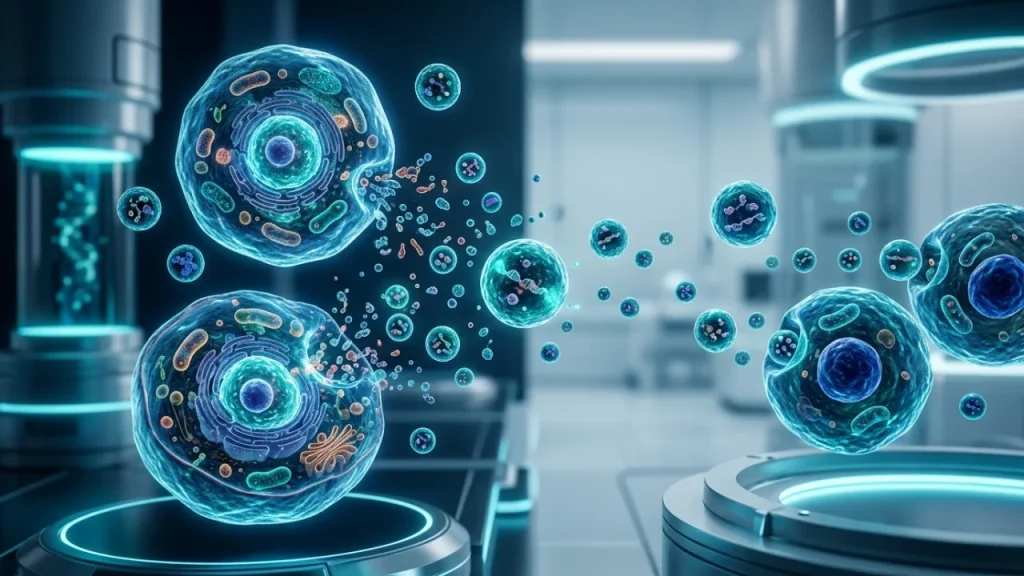
What Are Secretome and Exosomes and Why Should You Care?
Understanding the Secretome and Exosomes
Think of your body as a vast, bustling city. Cells are the citizens. They don’t just live in isolation. They constantly talk. This chatter isn’t with words. It is done with molecules. The entire collection of signaling molecules that cells release is called the secretome. It forms a massive and dynamic communication network. This network is essential for life.
The secretome includes many types of signals. Proteins and lipids are common. Genetic instructions like RNA are also sent. These signals travel to coordinate everything. They manage healing, growth, and daily maintenance. Without this molecular conversation, our bodies would fall into chaos.
Now, imagine a highly secure delivery truck in this cellular city. That is an exosome. Exosomes are tiny nanoscale vesicles. They are a crucial part of the secretome. Cells create them inside special compartments. Then they release them into the spaces between cells.
These vesicles are not random bubbles. They are sophisticated packages. Each exosome carries a precise molecular cargo selected by its parent cell. This cargo can include: – Specific proteins that give instructions. – Lipids that help with structure and recognition. – Pieces of genetic code, like microRNA, that can change how a recipient cell behaves.
This system is incredibly targeted. An exosome from a skin cell might carry signals for repair. An exosome from a nerve cell might send different messages. They travel through bodily fluids like blood or spinal fluid. Then they deliver their cargo directly to other cells. This changes what those cells do.
Why should you care about the secretome and exosomes? Because this is how your body truly works at a fundamental level. Healthy communication means a healthy body. When this system goes wrong, disease can follow. Scientists have found that cancer cells, for example, send out far more exosomes than normal cells. They use them to spread harmful signals.
Understanding this natural messaging system opens new doors. It helps us see how diseases start and spread. It also shows us new ways to heal. By learning the language of cells, we can find better treatments. This knowledge is changing medicine right now. It starts with knowing the simple truth: our cells are always talking, and exosomes are their messengers.
Why This Topic Matters for Everyone
Think of your body as a vast, living city. The secretome and exosomes are its communication system. This is not just background noise. It is the main way your organs and tissues coordinate. Every process in your body relies on these signals.
Your immune system uses exosomes to sound alarms. A cell detecting a virus will package warning signals. It sends these messages in exosomes. Nearby cells receive the alert. They then prepare their own defenses. This happens long before you feel a fever.
Aging is deeply linked to this cellular chatter. As we grow older, the secretome can change. The messages sent between cells become less precise. Some scientists call this “exosome exhaustion.” The result? Tissues repair themselves more slowly. Inflammation can persist longer. Understanding this shift is key to researching healthy aging.
Many common diseases involve broken cellular communication. Consider a condition like arthritis. Inflamed joint cells may send out harmful exosomes. These vesicles can carry signals that tell other cells to break down cartilage. They essentially spread the damage locally.
The reach of these tiny messengers is immense. They influence your: – Heart health: Exosomes help coordinate repair after a minor heart strain. – Brain function: Neurons release exosomes to support memory and learning. – Skin vitality: Fibroblasts send exosomes that help maintain collagen.
This matters because we can now listen in on these conversations. Doctors can take a simple blood sample. They can isolate the exosomes within it. By analyzing their cargo, they get a real-time report on what your cells are saying. This could lead to far earlier disease detection. A tumor’s exosomes might be found years before it shows up on a scan.
Therapeutic potential is equally profound. Researchers are learning to design synthetic exosomes. These could be loaded with healing cargo. Imagine a targeted treatment for a damaged liver. Exosomes could deliver repair instructions directly to the needed cells. They would bypass other tissues and reduce side effects.
This topic matters because it reframes our view of the body. We are not just a collection of independent parts. We are a network in constant, intelligent dialogue. Disruptions in this dialogue lead to illness. Supporting clear communication promotes health. The science of the secretome is not a niche field. It is the foundation for the next era of medicine, one that works with your body’s own language. This knowledge empowers us all to understand the profound connections within our own biology.
How Cells Talk Without Touching
Think of a single cell in your body. It is surrounded by fluid. It does not have a phone or email. Yet it must send urgent messages to cells far away. How does it do this? It releases signals into that fluid. This is the core of cellular communication without touch.
The collective term for all these released signals is the secretome. It is a complex mix. The secretome contains proteins, lipids, and genetic instructions. Crucially, it also contains special delivery vehicles called exosomes.
Exosomes are tiny bubbles made by the cell. They are about one-thousandth the width of a human hair. A cell creates them inside itself. It then loads them with a specific molecular cargo. Finally, it releases them into the surrounding fluid. Think of them as sealed, addressed packages. They travel safely through the body’s rivers—the bloodstream and other fluids.
This system is vital for several reasons. First, it allows for speed and reach. A hormone released into blood can affect an organ across your body in seconds. Second, it protects the message. An exosome’s membrane shield keeps its cargo safe from enzymes that would destroy it. Third, it enables precision. Exosomes can be targeted. They often carry address markers that direct them to certain cell types.
Here is a simple example from everyday health. You get a small cut. Cells at the site immediately release signals into the fluid around them. These secretome signals alert immune cells. The immune cells then rush to the area to fight germs. They also send their own exosomes. These exosomes carry instructions to start tissue repair. All this happens without cells ever touching directly.
The secretome and exosomes form a complete mail system for your body. The secretome is like the broadcast radio—signals sent out to anyone listening nearby. Exosomes are like confidential courier packets—targeted, secure, and packed with detailed documents.
This method of talking solves a major biological problem. Your body has trillions of cells. Direct contact between distant cells is impossible. The fluid-based secretome network makes large-scale coordination possible. Every process relies on it—from growth to healing to daily maintenance.
When this communication breaks down, problems start. Cells might send too many signals, or the wrong ones. Exosomes could deliver harmful instructions. Understanding this system helps us see disease in a new way. It is often a case of corrupted cellular messages. The next step is learning how to intercept and correct those messages for health.
The Basic Building Blocks of Cellular Communication
Think of your cells as tiny factories. They constantly build and release molecules. These molecules are the actual messages. The secretome and exosomes carry three main types of cargo. Each type has a different job.
First are proteins. These are the workhorses. Some proteins are enzymes. They speed up chemical reactions in the target cell. Other proteins are signals. They latch onto a receiver cell and give direct orders. For example, a growth factor protein tells a cell to divide. A different protein might tell a cell to stay calm.
Second are lipids. These are fat molecules. They are not just packing material. Lipids form the exosome’s protective bubble. They also act as identification tags. Specific lipids on the outside help the exosome find the right cell to deliver its package. Lipids can even be messages themselves. Certain lipids tell cells about stress or damage.
Third is genetic material. This is perhaps the most powerful cargo. Exosomes carry tiny pieces of RNA. RNA is a set of instructions. When an exosome delivers its RNA to another cell, it can change what that cell does. It is like sending new software code.
Here is a real example. A heart muscle cell is under stress. It releases exosomes packed with specific microRNAs. These exosomes travel to a blood vessel cell nearby. The vessel cell absorbs the exosomes. The microRNA instructions then tell the vessel cell to grow new branches. This improves blood flow to help the stressed heart.
The combination is what matters. An exosome never carries just one thing. It carries a coordinated set. – Proteins do the immediate work. – Lipids guide delivery and send basic signals. – Genetic material rewires long-term activity.
This mix allows for complex commands. A single exosome can tell a cell to move, change its shape, and activate new genes all at once. Different cell types send out different cargo blends. A nerve cell’s exosomes contain cargo for brain repair. A fat cell’s exosomes carry messages about energy storage.
Understanding these building blocks changes how we see health. Disease often corrupts this cargo. Cancer cells, for instance, send exosomes filled with proteins that tell blood vessels to feed the tumor. They also send RNA that shuts down the immune system nearby.
Knowing the exact cargo helps scientists look for new clues. They can search for these molecules in blood tests. Finding specific exosome cargo could give early warning signs long before symptoms appear. The next frontier is learning to design our own therapeutic cargo to correct these faulty messages.
How Secretome and Exosomes Form Inside Cells
Where Secretome and Exosomes Begin Their Journey
The journey starts deep inside the cell’s bustling workshop. For the secretome and exosomes, this workshop is a network of membranes called the endosomal system. Think of it as a cellular sorting facility. Its main job is to take in materials from outside and decide what to recycle, destroy, or repurpose.
The creation of an exosome begins with a simple inward fold of the cell’s outer membrane. This fold pinches off to form a bubble inside the cell. This bubble is an early endosome. It contains a sample of the cell’s environment and some of the cell’s own surface proteins.
The early endosome then matures. It moves inward and changes its shape. Its membrane pinches inward again, this time from the inside. This forms many tiny vesicles inside the larger bubble. The structure now looks like a raspberry. Scientists call it a multivesicular body, or MVB.
This is the critical packaging stage. The cell actively sorts its molecular cargo into these tiny internal vesicles. Special protein machines on the MVB’s membrane handpick the contents. They gather specific proteins, lipids, and genetic material like microRNA. This cargo is loaded into the forming vesicles.
The MVB now has two possible fates. It can fuse with a cellular garbage unit called a lysosome. The lysosome will digest everything inside. Or, it can travel to the cell’s outer membrane. This is the path for exosome release.
The MVB carrying its cargo of future exosomes docks at the cell’s perimeter. The membranes of the MVB and the cell wall fuse together. This action opens the MVB to the outside world. The tiny internal vesicles are ejected into the space surrounding the cell. They are now free exosomes, ready for their journey.
This entire process is highly controlled. A healthy cell regulates how many MVBs it makes. It controls what cargo gets packed. Disease can hijack this system. For example, a cancer cell often produces ten times more MVBs directed for release. It also packs harmful cargo designed to help the tumor spread.
The rest of the secretome follows different paths. Many proteins are made on structures called ribosomes. They are threaded into another membrane network, the endoplasmic reticulum. Here they are folded into their correct shapes. They then move to the Golgi apparatus, which acts like a finishing and shipping center.
The Golgi packages these proteins into other types of vesicles. These vesicles also travel to the cell surface and release their contents. So, the full secretome flows from several production lines within the cell. The exosome pathway is just one specialized, and very powerful, delivery service.
Understanding this origin story is key. It shows that these signals are not random leaks. They are products of a precise, organized assembly line. The next step is tracing where these sophisticated messengers go after they leave the factory floor.
The Packaging Process for Molecular Cargo
Cells do not pack exosomes at random. They follow precise sorting instructions. This process decides what gets mailed out and what stays inside. The cargo includes proteins, RNA messages, and even pieces of DNA. Each piece has a molecular address tag.
These tags are often small chains of molecules. One common tag is called ubiquitin. When a protein gets a ubiquitin tag, it signals the cell’s machinery. This machinery guides the tagged protein into the forming inner vesicle of the MVB. Think of it like a barcode on a package for a specific mail chute.
Special sorting complexes act as the mailroom workers. They recognize these tags. One key complex is called ESCRT. It has several teams that work in order.
- First, ESCRT-0 gathers the tagged cargo at the membrane.
- Then, ESCRT-I and ESCRT-II help bend the membrane inward.
- Finally, ESCRT-III pinches the vesicle off, sealing the cargo inside.
Not all cargo needs the ESCRT system. Some molecules use lipid-based sorting. They are drawn to specific fat regions in the membrane. These regions curve and bud off on their own. This is a second major pathway for loading exosomes.
The contents of an exosome depend on the cell’s state. A stressed cell packs different cargo than a happy one. An immune cell will load signal proteins to alert its neighbors. A neuron might pack growth factors for repair. This tailored packaging makes the secretome a dynamic information network.
Cancer cells exploit this system. They pack exosomes with cargo that helps tumors grow. This can include proteins that break down tissue. It can also include microRNA that silences protective genes in other cells. This hijacked packaging spreads disease.
The careful packaging ensures messages are protected. The lipid bilayer of the exosome shields its cargo from enzymes outside. This allows signals to travel far in the body. They can even enter the bloodstream intact.
Understanding this selective process is vital. It shows that exosome content is a deliberate message, not cellular trash. The next question is how recipient cells receive and read this precise molecular mail.
What Determines Exosome Size and Shape
Exosome size is tightly controlled by the cell. It is not random. Their diameter typically ranges from 30 to 150 nanometers. That is about one thousand times smaller than the width of a human hair. This small scale is crucial for their journey.
The final size depends on the machinery that forms them. The ESCRT complexes help decide this. A larger budding vesicle will create a bigger exosome. A smaller one makes a tinier package. The type and amount of molecular cargo inside also influence the final size. A densely packed vesicle may maintain a tighter, smaller shape.
Their shape is generally described as cup-shaped or spherical under a microscope. This form comes from their lipid bilayer structure. The membrane is flexible yet strong. It allows the vesicle to withstand pressure changes outside. The shape can appear to change based on how scientists prepare samples for viewing.
Size determines what an exosome can carry. Think of it like different shipping boxes. – A larger exosome can hold big protein complexes or long strands of genetic material. – A smaller one might carry only a handful of key signaling molecules or microRNAs.
Size also dictates where an exosomes can travel. Smaller vesicles navigate easier. They can slip through dense tissues more effectively. They may also pass certain biological barriers that block larger particles. This makes them efficient long-distance messengers in the bloodstream.
Cancer cells often produce exosomes with a specific size profile. They tend to release more vesicles in a certain size range. This may help them deliver growth signals more efficiently. Studying this size shift can provide clues about disease.
The lipid composition of the membrane adds another layer of control. Specific lipids in the bilayer can attract certain proteins. These lipids also determine stability. A sturdy membrane helps the exosome survive longer in harsh environments outside the cell.
This precise control over form is part of the broader secretome strategy. The cellular secretome uses these tailored vesicles for specific tasks. A small, sturdy exosome is built for a long trip through blood. A larger one might be designed for local delivery to a neighboring cell.
Ultimately, size and shape are functional features. They ensure the molecular message arrives intact at the right destination. The physical package is as important as the cargo inside. This careful design highlights why exosomes are such powerful communicators in the body’s vast signaling network.
How Cells Release Secretome and Exosomes
Cells do not simply leak their secretome. They package and release it with purpose. This active export is vital for communication. Think of it as a busy shipping department inside every cell.
The process starts with a cellular structure called the endosome. First, the cell’s membrane folds inward. It captures proteins and other molecules from inside the cell. This forms an early endosome, a sort of sorting station.
The endosome matures. Its membrane buds inward again. This creates many small vesicles inside the larger one. This structure is now a multi-vesicular body, or MVB. It looks like a tiny cellular raspberry. The vesicles inside are future exosomes.
The MVB now has a choice. It can fuse with a destructive organelle called a lysosome. This recycles the contents. Or, it can travel to the cell’s outer membrane. This is the path for release.
The MVB docks at the cell’s perimeter. Its membrane fuses with the cell’s own outer membrane. The small vesicles inside are then ejected into the space outside the cell. Once outside, they are called exosomes. This is a key part of the broader secretome and exosomes network.
Other parts of the secretome leave differently. Some proteins are secreted directly. They move through a network of internal membranes called the endoplasmic reticulum and Golgi apparatus. These proteins are often released through constant, smaller-scale fusion events.
The release is not random. Cells control it tightly using signals. – Calcium levels inside the cell can trigger a wave of exosome release. – Specific proteins on the MVB, like SNAREs, act like docking clamps. – Cellular stress, like heat or lack of oxygen, often increases secretion.
Cancer cells exploit this system. They may send out ten times more exosomes than healthy cells. This flood of signals can prepare distant sites for cancer spread. It can also suppress the immune system.
The entire secretome and exosomes release machinery is energy-dependent. The cell uses fuel to make it happen. This proves it is a deliberate act of communication, not waste disposal.
Once released, these messengers enter body fluids like blood or spinal fluid. Their journey to target cells begins. This precise dispatch ensures that critical signals reach their destination, maintaining the health of tissues throughout the body.
The Journey of Secretome and Exosomes Through the Body
How Exosomes Travel in Blood and Other Fluids
Exosomes enter a fast-moving highway: the bloodstream. They do not travel alone. A protective shield is key to their survival. This shield comes from their own membrane. It is made of a lipid bilayer, similar to a cell’s outer skin. This membrane seals their molecular cargo safely inside.
The journey is rough. Blood contains enzymes that can break down proteins. It also has forces that can crush fragile structures. The exosome’s membrane acts like a durable capsule. It withstands these harsh conditions. This allows exosomes to move over long distances in the body. They stay intact from their origin to their destination.
Their path is not random drift. Exosomes have addressing signals on their surface. These signals are proteins and sugars embedded in the membrane. Think of them as postal codes or docking tags. They help exosomes find the right tissues and cells.
Targeting works through specific locks and keys. A protein on the exosome’s surface might bind only to a matching receptor on a certain cell type. For example, an exosome from a liver cell may carry tags that bind best to other liver cells or to kidney cells that need liver signals.
This precise navigation defines the secretome and exosomes system. It ensures messages go to the correct address. Several factors guide this delivery. – Surface proteins direct exosomes to specific tissues. – Sugar chains on the membrane can stick to certain blood vessel walls, signaling an exit point. – The physical size of exosomes helps them squeeze through tiny capillary pores to reach tissue fluid.
Once near a target cell, the exosome must deliver its package. It does not always enter the cell fully. Often, it docks onto the cell’s surface. The membranes of the exosome and the cell can then fuse. This fusion dumps the exosome’s cargo directly into the cell’s interior.
Another method is cellular swallowing. The target cell’s membrane can wrap around the exosome and engulf it. The cell brings the entire vesicle inside. Then it opens it up to get the contents. The choice of method depends on the signal and the cell type.
The entire voyage proves these vesicles are true messengers. Their stable journey in blood allows organs to talk to each other. A muscle can signal to the brain. Fat tissue can send messages to the liver. This fluid-based network is vital for health.
Problems arise when this system fails or is hijacked. In sepsis, a flood of inflammatory exosomes can overwhelm the body. Tumors use these vesicles to prepare new sites for cancer spread miles away. They send out exosomes that manipulate blood vessels and immune cells at distant organs.
Researchers can track this movement by labeling exosome membranes with fluorescent dyes. Studies show they can travel from a mouse’s paw to its lymph nodes in minutes. They appear in blood within an hour after release from a specific organ.
This reliable transport makes the secretome and exosomes ideal for natural communication. It also makes them interesting for medicine. Understanding their journey is the first step toward using or intercepting their messages for therapy. Next, we must see exactly what happens when the message is delivered and read by the target cell.
What Protects Exosomes During Their Travel
Exosomes are built like armored trucks. Their protective design starts with a double-layered membrane. This membrane is not a simple bubble. It is a lipid bilayer packed with special molecules.
These molecules are called tetraspanins. They act like structural rivets. They hold the vesicle’s shape firm. This strong shell resists physical stress in the bloodstream. It also shields the cargo inside from destructive enzymes.
The membrane does more than protect. It also carries address labels. These labels are proteins and sugars on the outer surface. They help exosomes find the right target cell. The stable membrane keeps these labels intact and readable during the long trip.
Inside, the cargo is packed with care. Molecules are often bound to a scaffold of lipids and proteins. This prevents them from clumping together or breaking down. For example, delicate RNA strands are nestled within protein complexes. These complexes act like protective boxes.
The internal environment is also controlled. Exosomes maintain a specific pH level. This acidity helps preserve the biological activity of their payload. It keeps proteins folded correctly. It keeps genetic messages ready for use.
This robust packaging allows exosomes to travel through harsh conditions. They move through digestive enzymes in gut fluid. They endure immune attacks in the bloodstream. Their cargo stays safe and functional.
Consider a journey from bone marrow to a distant muscle. The exosome might pass through lymph nodes and heart chambers. It faces changing pressures and temperatures. Its membrane armor and internal packing ensure delivery.
The secretome and exosomes rely on this protection for their role. Without it, their signals would degrade quickly. Their messages would get lost or destroyed before arrival.
This protective system has clear benefits for health. It allows normal tissue repair signals to reach their goals. But diseases can exploit this same durability. Cancer exosomes are notably tough. They survive journeys that would destroy other vesicles.
Their strength comes from an altered membrane composition. Tumor cells add more cholesterol and specific proteins. This makes their exosomes even more resistant. It helps them spread harmful signals far and wide.
Researchers study these protective features for two reasons. First, they want to block bad exosomes from tumors. Second, they want to mimic the design for drug delivery. Synthetic vesicles could carry medicine using the same principles.
Understanding this protection completes the picture of their journey. We now see how they travel safely. The next question is about the message itself. What precise instructions do these durable packages carry?
How Target Cells Recognize and Accept Exosomes
An exosome floating in the bloodstream is not a random delivery truck. It seeks a specific address. Its journey only matters if the right cell opens the door. This final step relies on a precise lock-and-key system.
Think of proteins on the exosome’s surface as unique keys. These keys are part of its membrane. Corresponding lock proteins sit on the membranes of target cells. When a key finds its matching lock, the two structures bind together.
This binding is highly selective. A liver cell has different surface locks than a brain cell. An exosome from a stem cell carries keys for repair sites. A cancer exosome carries keys for organs it wants to invade. This targeting ensures messages go only where needed.
The process involves several clear steps. – First, the exosome drifts near a potential target cell. – Second, its surface keys weakly interact with the cell’s surface locks. – Third, if the match is correct, the binding becomes strong and stable. – Fourth, this binding triggers the cell to engulf the tiny vesicle.
Engulfment pulls the exosome inside the target cell. The cell membrane wraps around it. This forms a little bubble inside the cell’s cytoplasm. Then, the exosome’s membrane fuses with this bubble. It releases its molecular cargo directly into the cell’s interior.
The cargo can now give its instructions. It might deliver growth factors to tell the cell to divide. It could send microRNA to silence a harmful gene. The entire secretome and exosomes network depends on this accurate delivery. Without precise targeting, signals would cause chaos.
Researchers map these surface keys to understand diseases. For example, pancreatic cancer exosomes have a specific key protein called integrin αvβ5. This key fits locks found mainly on liver cells. This explains why this cancer often spreads to the liver first.
Scientists also use this knowledge for therapy. They can engineer synthetic exosomes. They can add specific keys to their surface. This directs them to diseased cells, like a homing missile for medicine. The natural system provides the perfect blueprint.
This lock-and-key mechanism completes their mission. The durable package traveled safely. It found the exact right cell. It delivered its instructions with precision. This is how tiny vesicles coordinate health and spread disease across vast distances in the body.
What Happens After Exosomes Deliver Their Cargo
The cargo delivery is not the end of the story. It is the start of a cellular transformation. The recipient cell now has new molecular instructions. It must act on them.
First, the cell processes the delivered materials. Proteins might be sent to specific machines within the cell. These machines are called ribosomes. Ribosomes can use the new blueprint to build more proteins. MicroRNA molecules take a different path. They guide a cellular silencing complex to find and disable specific messenger RNA targets.
This changes what the cell can do. The effects are powerful and direct. For instance, an exosome from a stem cell can deliver growth factors and RNA to a damaged skin cell. This tells the old skin cell to act young again. The cell may start dividing to repair a wound. It might produce more collagen for strength.
The altered behavior can spread. One changed cell can release its own new signals. These signals influence its neighbors. This creates a ripple effect from the original exosome message.
Consider a tumor’s use of this system. A cancer cell exosome can deliver a specific protein called TGF-β to an immune cell. This protein acts as a powerful instruction manual. It commands the immune cell to stop its attack. The immune cell becomes suppressed. This allows the tumor to grow unchecked. The secretome and exosomes network is hijacked for harm.
The timeline for these changes varies. Some signals cause a fast response within hours. Others alter the cell’s long-term program over days.
The final outcomes depend entirely on the original cargo. They can be grouped into several key functional changes:
- Cell Growth and Division: The recipient cell may enter a growth cycle it had paused.
- Specialized Function: A cell might start producing more of its key product, like insulin or collagen.
- Movement: Cells can receive instructions to migrate to a new location, crucial for healing or cancer spread.
- Cell Death: Some cargo can trigger programmed self-destruction, a process called apoptosis.
- Identity Shift: In rare cases, signals can partially reprogram a cell’s core identity.
This process shows why targeting is so critical. The right message must reach the right cell. A liver cell would react poorly to instructions meant for a neuron.
After the cargo is used, its components are recycled. The cell breaks down proteins and RNA into basic parts. These parts become building blocks for future needs. Nothing is wasted.
The journey concludes with an action. The silent conversation between cells results in a physical change in the body. A wound closes. An immune response calms down. A tumor grows. This is the ultimate power of the cellular secretome and exosomes. They translate microscopic messages into visible life functions, for better or worse. Understanding this final step opens doors to controlling it for medicine.
Secretome and Exosomes in Normal Body Functions
How Exosomes Help Repair Damaged Tissues
When you get a cut, your cells launch a precise repair mission. Exosomes are key messengers in this operation. They carry urgent instructions between cells. This coordinates the complex healing process.
The repair sequence follows clear stages. First, platelets and immune cells rush to the site. They release exosomes packed with early signals. These initial vesicles tell blood vessels to constrict. This slows bleeding. They also call for reinforcements, attracting more cells to the area.
Next, the cleanup and rebuild phase begins. Exosomes direct the essential steps.
- They signal fibroblasts, the body’s builder cells, to move into the wound.
- They instruct these fibroblasts to produce new collagen. Collagen is the main structural protein in skin.
- They guide the formation of new, tiny blood vessels. This process is called angiogenesis. It brings oxygen and nutrients to the new tissue.
- They help control inflammation. Later-stage exosomes tell immune cells to calm down. This prevents damage from lasting too long.
A critical function is preventing scar tissue. In ideal healing, exosomes promote regeneration. They can help skin cells regenerate with less scarring. Research shows exosomes from certain stem cells are especially good at this. They carry molecules that encourage organized, healthy tissue growth.
The entire secretome and exosomes network shifts during repair. The molecular cargo changes as healing progresses. Early inflammatory signals are replaced by growth signals. Then those are replaced by signals for remodeling. This ensures each step happens in the right order.
Think of a construction site. Exosomes act like foremen delivering blueprints. One foreman tells workers to clear debris. The next foreman delivers plans for the foundation. Another brings instructions for the framing and walls. Without this sequenced communication, the project would fail.
This system works internally too. Exosomes help repair muscle after exercise. They aid in liver regeneration. They support the healing of bone fractures. In each case, vesicles carry specific commands for that tissue type.
The power lies in the packaged cargo. Healing exosomes often contain growth factors like VEGF for blood vessels. They carry genetic instructions in the form of microRNA. These RNAs can turn on repair genes in the target cell. They also provide enzymes and proteins directly needed for rebuilding.
This natural messaging system is a target for new therapies. Scientists study how to boost or mimic these repair exosomes. The goal is to help chronic wounds that will not close. These are common in diabetes and elderly patients. By harnessing the body’s own communication tool, we may accelerate healing where it has stalled.
Understanding this role completes a picture of exosome function. From silent signal to physical repair, these vesicles translate microscopic commands into mended tissue. This shows their vital role in maintaining health every day.
The Role of Secretome in Immune System Defense
Your immune system is a defense network. It needs constant communication to work. Cells send signals to coordinate their attack. This flood of signals is part of the secretome and exosomes. These messengers tell immune cells where to go and what to do.
Imagine a castle guard spotting an invader. He sounds an alarm. Other guards rush to the walls. They prepare their weapons. In your body, infected cells send out exosomes like alarm signals. These tiny vesicles carry molecular “news” of the invasion.
Dendritic cells are crucial sentries. They capture pieces of a virus or bacteria. Then they package these pieces into exosomes. These exosomes travel to other immune cells. They deliver the enemy’s “fingerprint.” This teaches T-cells and B-cells what to attack.
The process is fast and specific. An exosome can tell a macrophage to eat invaders. It can command a neutrophil to release toxic granules. It can even order a cell to die if it is too infected. This stops the sickness from spreading.
Exosomes also help calm the immune system. After an infection is beaten, signals must change. Pro-inflammatory messages need to stop. Anti-inflammatory exosomes are then released. They tell fighter cells to stand down. This prevents the body from attacking its own healthy tissues.
Key signals in these vesicles include: – Major histocompatibility complex (MHC) molecules. These display the pathogen’s antigen. – microRNAs that turn defense genes on or off. – Cytokines, which are protein instructions for inflammation or peace.
Without this vesicle traffic, the immune response would be slow and confused. Cells would not know the enemy’s location. They might attack the wrong target. The secretome and exosomes provide the needed precision. They ensure defense is both powerful and controlled.
This communication is vital for health every day. It fights off common colds and heals small wounds without you ever knowing. The system is always quietly monitoring, using secreted signals to keep you safe. This seamless defense highlights how fundamental these messaging systems are to life itself.
How Cells Use Exosomes for Routine Maintenance
Cells constantly generate waste and need fresh supplies. Exosomes are key to this daily cleanup. They act as both garbage trucks and delivery vans. This process is a core part of the body’s secretome and exosomes network.
Damaged proteins are a common type of cellular trash. If these pile up, they can harm the cell. Exosomes help remove them. The cell packages these faulty molecules into vesicles. Then it ships them out for disposal.
Neighboring cells often handle this waste. Some cells, like macrophages, are professional cleaners. They can consume the exosomes and break down the contents. This keeps the tissue environment clean and safe.
Exosomes also manage recycling. They carry used but still-valuable materials to other cells. One cell’s trash can become another cell’s treasure.
For example, an exosome might contain iron-bound transferrin. This is a leftover from an old red blood cell. A developing red blood cell can receive this exosome. It gets the precious iron to build new hemoglobin. This is efficient recycling at a microscopic level.
This exchange is vital for energy balance too. Cells in active tissues, like muscle, release metabolic signals. Their exosomes can carry instructions for fat breakdown. These vesicles travel to fat storage cells. They trigger the release of energy for fuel.
The nervous system relies heavily on this maintenance. Neurons send exosomes down their long axons. These vesicles remove damaged components from distant nerve endings. They also deliver vital nutrients back up. Without this service, neural communication would fail.
Think of a busy office building. Exosomes are the internal mail system. They do several critical jobs: – They remove used paper and broken equipment. – They deliver fresh toner and paper clips to stations that need them. – They carry memos about conserving electricity or water. – They even take out the cafeteria’s food scraps for composting.
On a molecular level, exosomes perform similar tasks. Their cargo for maintenance includes: – Enzymes that break down waste products. – Chaperone proteins that help fix other proteins. – Lipids for repairing cell membranes. – microRNAs that regulate routine repair genes.
This system operates every minute of every day. It is silent and unseen. You do not feel your liver cells sending repair kits to your skin cells via exosomes. But it happens. This constant background traffic is essential for health. It prevents the slow accumulation of damage that leads to aging and disease.
The secretome’s maintenance role is foundational. It supports all the flashier functions like immune defense. A cell that cannot take out its trash cannot focus on fighting viruses. A tissue that cannot share resources becomes weak. This elegant logistics network keeps the entire body running smoothly from within.
Secretome Signals That Control Normal Growth
Cells in your body do not divide randomly. They wait for clear instructions. The secretome and exosomes form the core command network for this process. They deliver the exact signals that tell a cell when to grow and when to stop.
Think of a child building a tower with blocks. The secretome provides the instructions. Some signals say “add another block.” Other signals say “the tower is tall enough, stop now.” This balance is crucial for normal development and daily repair.
Exosomes carry specific growth commands. For example, after a paper cut, skin cells need to multiply to close the wound. Nearby cells release exosomes packed with growth factors. These are special protein signals. They dock onto target cells and deliver a simple message: “Divide now.”
The cargo inside these vesicles is precise. It can include: – Proteins like VEGF that tell the body to make new blood vessels. – Signaling molecules like Wnt that guide proper cell fate. – microRNAs that switch on entire genetic programs for multiplication.
But constant “go” signals would cause chaos. Uncontrolled growth is dangerous. This is where stop commands are vital. In healthy tissue, exosomes also carry halt orders. These signals are called growth inhibitors. They ensure cells do not overstep their boundaries.
A key example is contact inhibition. When cells become too crowded, they release inhibitory exosomes. These vesicles tell neighboring cells to pause division. The message is clear: “The space is full. Stand by.” This prevents overgrowth and maintains smooth tissue layers.
During embryonic development, this signaling is incredibly active. Exosomes help shape forming organs. They guide cells to the correct locations. They instruct some cells to become bone and others to become muscle. The secretome and exosomes act as a distributed blueprint. Every cell follows the local molecular instructions it receives.
This system operates throughout life. It repairs your liver after minor damage from medication. It rebuilds muscle fibers after a workout. It maintains the constant, gentle renewal of your intestinal lining. All this relies on perfectly timed signals from the cellular secretome.
When this communication network works correctly, health is sustained. Growth happens only when and where it is needed. The next logical question is what happens when these precise signals get corrupted or ignored.
When Secretome and Exosomes Go Wrong in Disease
How Cancer Cells Hijack Exosome Communication
Cancer cells are not just rebellious. They are clever communicators. They send out roughly ten times more exosomes than normal cells do. This flood of vesicles does not carry healthy instructions. It carries corrupted messages designed for one goal: helping the tumor survive and spread.
The secretome and exosomes from a tumor become weapons. They reshape the entire environment around the cancer. This area is called the tumor microenvironment. Exosomes from cancer cells can travel far ahead of the tumor itself. They prepare new sites in the body for future settlement. This process is called metastasis.
How exactly do these exosomes help cancer? They perform several key sabotage jobs.
- They suppress the immune system. Exosomes carry molecules that confuse or deactivate immune cells. These molecules can tell killer T-cells to stand down. They can stop immune cells from attacking.
- They create new blood vessels. Tumors need food and oxygen to grow. Cancer exosomes send signals to nearby blood vessel cells. The message is “build more vessels here.” This supplies the growing tumor with its own private blood supply.
- They break down barriers. Our tissues have strong, natural walls made of proteins. These walls keep cells in their proper place. Tumor exosomes release enzymes that chew through these walls. This creates a path for cancer cells to invade.
- They force normal cells to help. Exosomes can reprogram healthy neighbor cells. They turn these cells into cancer helpers. The helpers then feed the tumor and send more bad signals.
Cancer exosomes also protect the tumor from treatment. They can absorb chemotherapy drugs. The vesicles act like tiny sponges, soaking up medicine before it reaches the cancer cells. They can also deliver molecules that make cancer cells resistant to drugs. The treatment then fails.
This hijacked communication is a major reason cancer is so hard to beat. The disease does not just grow fast. It uses a sophisticated messaging system to defend itself and expand its territory. The very network meant to maintain health is turned against the body.
Understanding this hijack gives scientists a new target. If we can block the dangerous exosomes from cancer, we might stop its spread. The next challenge is learning how to intercept these bad messages without harming the vital good ones the body still needs.
Secretome Changes in Neurodegenerative Diseases
The brain’s communication network is incredibly dense and precise. Its health depends on perfect signaling between neurons. In diseases like Alzheimer’s, this signaling breaks down. A major cause is a corrupted secretome and exosomes.
Think of a healthy brain cell’s secretome as a stream of helpful instructions. It sends out nutrients, growth signals, and waste removal tools via exosomes. In Alzheimer’s, this stream turns toxic. The most famous toxic cargo is a protein called amyloid-beta. In a healthy brain, cells can clear this protein away. In Alzheimer’s, neurons pack amyloid-beta into exosomes.
These vesicles then ship the toxic protein to neighboring cells. This spreads the damage like a bad rumor through a network. The receiving cell gets overwhelmed. It cannot process the toxic cargo. The amyloid-beta starts to clump together inside and outside cells. These clumps form sticky plaques that disrupt brain function.
But amyloid-beta is not the only dangerous cargo. Another protein, called tau, also gets involved. Normally, tau helps stabilize the internal skeleton of a neuron. In Alzheimer’s, tau becomes damaged and tangled. Exosomes can carry this corrupted tau to new cells. The spread of tau tangles through the brain closely matches how the disease progresses from one region to another.
The corrupted secretome does more than spread trash. It also fails to deliver essential goods. Healthy exosomes carry molecules that support neuron survival and repair. In Alzheimer’s, this supportive cargo diminishes. The balance tips from help to harm.
- Exosomes spread toxic proteins like amyloid-beta and tau.
- They fail to deliver needed survival signals.
- They can carry inflammatory messages that activate the brain’s immune cells.
These overactive immune cells then cause collateral damage. They inflame healthy brain tissue.
This process creates a vicious cycle. A few sick cells send out bad exosomes. These vesicles make other cells sick. Those newly sick cells then send out their own bad exosomes. The damage amplifies itself. The brain’s own communication system is weaponized against it.
Scientists see this as a key reason neurodegenerative diseases are so persistent. The problem is not just a few dying cells. It is a faulty messaging system that propagates the error. Research now focuses on intercepting these bad exosomes. The goal is to block the spread of toxic cargo while preserving the vital good messages the brain still needs.
Understanding this faulty secretome offers new hope. It provides clear targets for potential therapies aimed at cleaning up cellular communication in the brain.
Inflammatory Diseases and Faulty Secretome Signals
Inflammatory diseases often start with a confused secretome. Cells send the wrong signals. This confusion can turn a short-term immune response into a lifelong problem. Exosomes are key messengers in this mix-up.
Consider rheumatoid arthritis. In this disease, cells lining the joints change. They release exosomes packed with unusual cargo. These vesicles carry specific proteins that the immune system sees as threats.
The body’s defense cells then attack the joint tissue. This attack causes swelling, pain, and stiffness. The exosomes do not stop after one signal. They keep telling immune cells to attack. This creates a constant state of alert.
The secretome and exosomes form a faulty network here. They amplify a local problem into a full-body issue. Faulty exosomes from the joints can travel through the bloodstream. They can reach distant organs and potentially affect them too.
The process follows a clear, damaging cycle: – Stressed or damaged cells release exosomes with inflammatory signals. – These exosomes activate immune cells like macrophages and T-cells. – The activated immune cells release their own inflammatory exosomes. – This feedback loop locks inflammation in place.
Chronic inflammation in diseases like lupus or inflammatory bowel disease shares this theme. The secretome is not just noisy. It is broadcasting the same alarm signal on repeat. The body cannot find the “off” switch.
Scientists are tracing these bad messages back to their source. They look at what exactly goes into the diseased exosomes. The cargo often includes: – Damage-associated molecules that trigger immune receptors. – Tiny RNAs that reprogram recipient cells to be more inflammatory. – Enzymes that break down healthy tissue.
Blocking these specific exosomes or their cargo could calm the immune system. It would not suppress immunity entirely. The goal is to stop the false alarms. This lets the body respond to real threats correctly.
This faulty communication highlights a broader principle. A healthy secretome maintains balance. A diseased one pushes systems toward chaos. The next challenge is learning how to reset this cellular messaging system without silencing it completely.
How Aging Affects Secretome and Exosome Function
Aging cells do not send the same messages as young ones. Their secretome changes. This shift plays a major role in how our bodies grow old. Think of it as a cellular broadcast system slowly losing its signal clarity. The messages become fuzzy and less helpful over time.
One key change is senescent cells. These are old cells that stop dividing but do not die. They are sometimes called “zombie cells.” Senescent cells are very active. They release a powerful mix of signals into their secretome. This mix is called the senescence-associated secretory phenotype, or SASP.
Exosomes are a major part of the SASP. These tiny vesicles carry specific cargo from senescent cells. Their job is to spread the senescent state to nearby healthy cells. This can cause several problems.
- It can push healthy cells into becoming senescent too.
- It can create constant, low-level inflammation.
- It can break down the supportive tissue between cells.
This process helps explain why older tissues often have more inflammation. It is not always from an infection. It is often from these aged exosomes sending out inflammatory signals day after day.
The cargo inside exosomes also changes with age. The balance of microRNAs shifts. These are tiny instruction molecules. In youth, they help with repair and renewal. In age, their profile alters. They may carry instructions that slow down regeneration or promote fibrosis, which is tissue scarring.
Furthermore, the cleanup system gets worse. Cells may release more exosomes as they age. But the body’s ability to clear these vesicles may weaken. This means signals can linger longer than they should. The molecular conversation gets clogged with old messages.
The impact is systemic. Faulty exosomes from aged muscle can affect the liver. Signals from an old brain can influence the immune system. This connects the health of one organ to another through the secretome and exosomes.
Research shows this is not just a passive decline. It is an active signaling process we might influence. Scientists are asking new questions. Can we filter out the bad aged exosomes? Can we change their cargo? The goal is to interrupt the spread of harmful signals without harming good communication.
This aging secretome creates a background noise of decay. It works alongside the sharper false alarms of disease. Together, they show how vital clean cellular communication is for lifelong health. Understanding this opens paths to targeting the messaging itself, not just the symptoms of age.
Using Secretome and Exosomes for Medical Diagnosis
Liquid Biopsies: Finding Disease Clues in Blood
Doctors can now find disease clues in a simple tube of blood. This is possible because of the secretome and exosomes. Every cell in your body releases these tiny messengers into your bloodstream. They carry a molecular snapshot of their cell of origin. A tumor cell’s exosomes are different from a heart cell’s exosomes. By catching and reading these messages, we can detect illness long before symptoms appear.
This method is called a liquid biopsy. It is much simpler than a traditional tissue biopsy. A tissue biopsy needs a needle or surgery. A liquid biopsy needs only a blood draw. It is less painful for the patient. It also gives a fuller picture. A single blood sample contains exosomes from all over the body. This provides a systemic report.
The process works in clear steps. First, exosomes are isolated from the blood plasma. Scientists use special filters or antibodies to capture them. Next, the cargo inside the vesicles is unpacked and analyzed. Researchers look for specific warning signs.
- Altered Proteins: Cancer exosomes often carry proteins linked to tumor growth.
- Faulty microRNAs: These tiny genetic instructions can be skewed by disease.
- Unique Lipids: The vesicle’s own membrane can have a disease signature.
For example, pancreatic cancer is often found too late. Recent studies show its exosomes have a distinct protein signature. Finding this signature in blood could lead to earlier diagnosis. This could save lives. The same logic applies to brain diseases like Alzheimer’s. Brain-derived exosomes cross into the blood. They may carry toxic proteins years before memory loss begins.
This technology turns the body’s communication system into a diagnostic network. We are not just detecting a tumor. We are intercepting its messages. The secretome and exosomes offer a real-time window into health. This moves medicine from reactive to proactive care.
The next challenge is using these signals not just for diagnosis, but for precise treatment guidance.
What Exosomes Reveal About Early Cancer Signs
Cancer cells are chatty. They send out far more exosomes than healthy cells do. This flood of vesicles happens very early in the disease. Often, it starts before a tumor is large enough to see on a scan. These exosomes act as advance messengers. They carry molecular clues about the cell they came from.
Think of it like finding a letter from a troubled friend. The letter’s content reveals their state. The paper and ink might also give clues. Exosomes work the same way. Their cargo and their structure both hold information.
The cargo inside is key for early signs. Scientists look for specific molecules.
- Oncogenic Proteins: These are proteins that drive cancer growth. A healthy cell might have very few. A precancerous cell may start producing them. It packs them into exosomes. Finding these proteins in blood suggests abnormal cell activity somewhere.
- MicroRNA Fingerprints: microRNAs control which genes are turned on or off. Cancer cells have a scrambled microRNA profile. They release these scrambled instructions into exosomes. Detecting this unique mix can signal trouble.
- Fragmented DNA: Sometimes exosomes carry pieces of tumor DNA. This DNA may contain early mutations. Finding mutated DNA in exosomes is a direct warning sign.
The vesicle itself also tells a story. The lipids in an exosome’s membrane can be different. Cancer cell membranes are often more rigid or have unique markers. These traits get passed to their exosomes. This creates a distinct physical signature.
Pancreatic cancer is a powerful example. By the time symptoms like jaundice appear, it is often advanced. Research shows that exosomes with a protein called GPC1 appear in blood much earlier. These vesicles come from precancerous lesions or very small tumors. Detecting them could shift diagnosis forward by months or even years.
Lung cancer offers another case. Exosomes from lung tumor cells can carry proteins like EGFR. Specific forms of this protein are linked to early-stage disease. A liquid biopsy looking for these exosomes could help high-risk patients, like long-term smokers.
This is the power of the cellular secretome. It broadcasts changes in real time. The network of exosomes provides a constant stream of data from every organ. The challenge is not finding signals. The challenge is interpreting the most important ones from the noise.
The goal is to catch cancer when it is just a few rogue cells communicating. At that stage, treatments are more effective and less invasive. This turns the body’s own signaling system into a powerful watchguard. The next step is using these precise signals to guide targeted therapies, not just find the disease.
Monitoring Treatment Response Through Secretome Changes
A tumor’s secretome changes the moment treatment begins. If a therapy works, the molecular messages its exosomes send will start to shift. Doctors could track these changes through simple blood tests. This offers a faster, more precise view than waiting weeks for a scan.
Think of it like listening to enemy radio chatter during a battle. Before treatment, the signals are strong and specific. An effective drug should disrupt that communication. The number of tumor exosomes might drop. Their protein cargo will likely change.
For example, a drug targeting a specific cancer protein should make that protein vanish from exosomes. If the protein persists in the vesicles, it suggests the tumor is resisting the treatment. This gives doctors an early warning. They would not need to wait for the tumor to grow visibly on an image.
Monitoring through the cellular secretome allows for rapid adjustments. This is often called “adaptive therapy.” The approach has several key advantages over traditional methods.
- It provides feedback in days or weeks, not months.
- It can show if a treatment is working on a molecular level, even before size changes.
- It may reveal why a treatment fails by highlighting new escape signals from the tumor.
A concrete example involves chemotherapy. These powerful drugs kill many cancer cells. Dying cells release a burst of distinct exosomes and other signals. The type and amount of these vesicles in blood could tell doctors how much tumor cell death is occurring. A strong spike might indicate good response. No change would be a clear sign to try another option.
This method is also vital for new targeted therapies and immunotherapies. These treatments aim to engage the immune system. Exosomes from immune cells and cancer cells tell the story of that battle. An increase in certain immune markers on vesicles would show the therapy is activating the right defenses. Tracking the secretome and exosomes gives a full picture of the tumor microenvironment.
The ultimate goal is dynamic treatment. Doctors would no longer use a static plan for months. Instead, they could adjust doses or switch drugs based on live secretome data. This turns cancer care into a responsive dialogue with the disease. The body’s own signaling network becomes the guide.
This leads directly to the next frontier. Using these precise exosome signals not just to monitor treatment, but to deliver it.
The Promise of Non-Invasive Diagnostic Tools
Doctors often need a tissue sample to diagnose disease. This usually means a biopsy. A biopsy is a minor surgery. It can be painful and carries some risk. For organs like the brain or pancreas, it is especially difficult. The body’s secretome and exosomes offer a powerful alternative. They are a liquid biopsy.
Tumors and diseased cells communicate constantly. They release exosomes into the bloodstream. These tiny vesicles carry molecular mail from their source cell. A lung cancer exosome has different markers than a healthy lung cell exosome. The same is true for early Alzheimer’s disease or liver fibrosis. Scientists can collect a small blood sample. They then isolate the exosomes and analyze their cargo.
The diagnostic promise is clear. A simple blood draw could replace invasive surgical procedures. This is not a distant dream. Researchers are already validating tests for specific cancers. For example, pancreatic cancer is often found late. It is hard to biopsy. Studies show exosomes from pancreatic cancer cells carry unique proteins. A blood test detecting these proteins could flag the disease much earlier.
The process involves several key steps. First, exosomes are separated from other blood components. Next, their cargo is unpacked and studied. Scientists look for telltale signs: – Specific proteins on the exosome surface. – Fragments of genetic material (miRNA) inside. – Combinations of lipids that point to a certain cell type.
This analysis creates a molecular fingerprint. That fingerprint reveals the health state of hidden tissues. It can show if a cell is under stress, becoming cancerous, or fighting infection. The secretome acts as a real-time report from every organ.
The advantages go beyond being non-invasive. These tests could be done more often. Regular monitoring would allow for earlier detection. Finding cancer at stage one is far better than stage four. It also allows doctors to check on hard-to-reach areas after treatment. They can watch for signs of return without repeated surgeries.
The path forward requires refining the technology. The goal is to make tests highly accurate and affordable. The potential, however, is immense. Using the body’s own signaling system for diagnosis turns blood into a window. We can see deep into tissues without making a single cut.
This leads to an exciting next question. If we can find disease with exosomes, can we use them to treat it?
Therapeutic Applications of Secretome and Exosomes
Engineering Exosomes as Drug Delivery Vehicles
Exosomes are nature’s perfect delivery trucks. Our own cells make them. Scientists are now learning to load these trucks with medicine. The goal is to send treatment straight to sick cells. This method could be better than standard drugs.
Standard drugs often spread throughout the whole body. They can hit healthy cells and cause side effects. The dose reaching the actual disease site may be low. Engineered exosomes aim to solve this. They use the body’s own transport system for precision.
The process starts with collecting exosomes. They can come from many cell types. Researchers then load them with a therapeutic cargo. This cargo can be many things. – Small drug molecules, like chemotherapy. – Healing proteins or growth factors. – Nucleic acids like siRNA to silence faulty genes.
Loading happens in different ways. Sometimes scientists mix drugs with exosomes after collection. The drugs pass through the exosome membrane. Other times, the parent cells are given the drug first. These cells then pack it into new exosomes as they form.
But loading is only the first step. Targeting is the real breakthrough. Scientists can change the exosome’s surface. They add special marker proteins or tiny antibodies. These act like homing devices. They recognize and bind only to specific cells, like cancer cells.
For example, a breast cancer cell might have a unique surface protein. An engineered exosome can carry a marker for that protein. It also carries a chemotherapy drug inside. The exosome travels through the bloodstream. It ignores most healthy cells. It latches onto the cancer cell and delivers its deadly cargo directly.
This approach uses the secretome and exosomes as a blueprint. We copy and improve a natural system. The benefits are clear. Treatment could be more powerful with lower doses. Side effects could drop sharply. It also allows delivery of fragile drugs that otherwise break down in blood.
The technology is still developing. Challenges include making enough exosomes and ensuring consistent quality. Yet early research is promising. Engineered exosomes have shown success in animal studies for cancer and brain diseases.
Turning exosomes into drug vehicles changes their role completely. They become guided missiles for medicine. This transforms the body’s cellular secretome from a signaling network into a treatment highway.
How Exosome Therapies Minimize Treatment Side Effects
Traditional treatments like chemotherapy are powerful but imprecise. They circulate throughout the entire body. These drugs attack all fast-dividing cells. This includes cancer cells. It also includes healthy cells in the gut, hair follicles, and bone marrow. This widespread damage causes severe side effects.
Targeted exosome therapy works differently. It uses the body’s own cellular secretome as a guide. Scientists design exosomes to carry medicine directly to sick cells. The exosome’s surface acts like a smart address label. It finds the correct destination in the body.
This precision creates several key advantages for patients. The medicine concentrates where it is needed most.
- Healthy tissues get much less exposure to toxic drugs.
- Lower, more effective doses can be used at the disease site.
- Fragile drugs that would break down in blood arrive intact.
For example, consider a brain tumor. The blood-brain barrier blocks most drugs. High-dose chemotherapy is often required. It affects the whole body to get a small amount to the brain. An exosome can be engineered to cross this barrier. It delivers its payload only to the tumor cells. The rest of the brain and body stay largely protected.
Side effects are not just reduced. Their very nature changes. Patients may avoid common chemotherapy effects. Severe nausea becomes less likely. Hair loss might be minimized. Risk of infection from bone marrow damage could drop.
The secretome and exosomes provide this natural targeting system. Cells already use exosomes for precise communication. Medicine now borrows this exact language. The result is a smarter treatment strategy. It focuses on effectiveness while protecting health.
This approach also helps with long-term health. Reducing damage to organs like the heart and kidneys is critical. Some strong cancer drugs can harm these organs over time. Precise exosome delivery shields them. This improves a patient’s quality of life during and after treatment.
Research continues to improve this targeting. Future therapies will become even more specific. The goal is a treatment that feels less like an assault on the body. It should feel more like a precise repair mission. This shift is possible by harnessing the natural logic of cellular communication for direct therapeutic benefit.
Secretome-Based Approaches for Tissue Regeneration
The body’s own repair signals are powerful. They can tell cells to grow, multiply, and form new tissue. The secretome and exosomes carry these exact instructions. Scientists are learning to collect and use these signals. The goal is to heal injuries that the body cannot fix alone.
Think about a heart attack. It damages heart muscle. This muscle rarely regrows on its own. Scar tissue forms instead. This weakens the heart. Researchers now use exosomes from stem cells. These nanoscale vesicles deliver a specific molecular cargo. This cargo instructs surviving heart cells. It tells them to make new blood vessels. It reduces harmful inflammation. It may even encourage limited muscle repair. The treatment helps the heart heal better after the attack.
Damaged joints are another target. Cartilage cushions bones. It wears down in arthritis. It has almost no blood supply. This makes natural repair very slow. Exosome therapy offers a new approach. Doctors can inject exosomes into the knee. These vesicles release growth factors and other proteins. The signals do several things at once. – They calm joint inflammation and pain. – They tell local cartilage cells to produce more cushioning matrix. – They may slow the disease’s progress.
This approach aims to restore function. It is not just pain management.
The nervous system can also benefit. Nerve cells heal very slowly. After a spinal injury, growth signals are often blocked. Exosomes can help unblock them. They create a better environment for nerve fibers to regrow. In animal studies, exosome treatments improve movement after nerve damage. Human trials are now exploring this potential.
These therapies work with the body’s language. They use natural communication packages. This makes them different from artificial drugs or risky surgeries. The secretome provides a full toolkit for repair. Exosomes deliver this toolkit directly to the injury site.
The future of regeneration looks promising. Scientists are designing smarter exosome treatments. They can load vesicles with extra healing factors. They can also engineer them to find specific damaged tissues. This field turns biological messengers into powerful medicines. It moves us beyond simply treating symptoms. The goal is to achieve true tissue restoration and improved long-term health.
Personalized Medicine Through Custom Exosome Design
Personalized medicine aims to treat you as a unique individual. Exosome design makes this possible. Think of exosomes as tiny, natural delivery trucks. Scientists can now load these trucks with specific cargo. This cargo is chosen just for a patient’s illness.
The process starts with a source. Exosomes can come from your own cells. Doctors take a small sample of your blood or skin. They grow your cells in a lab. These cells then release exosomes. These vesicles carry your unique biological signature. Your body is less likely to reject them.
Another method uses donor cells. Scientists then engineer the exosomes. They can change them in three key ways. – First, they can load special drugs inside the vesicle. – Second, they can attach proteins to the outside surface. – Third, they can alter the lipids in the vesicle membrane.
These changes help the exosome find its target. For example, a cancer tumor has specific markers. An exosome can be designed to seek those markers. It then delivers its cargo directly to the tumor cells. This spares healthy tissue.
The secretome and exosomes offer a unique advantage. The secretome is the full set of signals a cell releases. Scientists can analyze a patient’s diseased tissue. They can see which signals are missing or corrupted. They then design an exosome cocktail to fix that exact imbalance.
Custom design also applies to chronic diseases. Two people with arthritis may have different inflammation patterns. Their exosome treatment could have different anti-inflammatory molecules. One person’s formula might focus on calming immune cells. Another’s might prioritize cartilage repair signals.
This approach is now being tested. Early clinical trials are exploring personalized exosomes for hard-to-treat cancers. Researchers take a patient’s tumor cells. They study the messages those cells send and receive. They then create counter-messages packed into exosomes.
The future involves even finer control. Scientists are creating “smart” exosomes. These vesicles could release their cargo only under certain conditions. They might wait until they sense high inflammation in a joint. Then they open and deliver their healing load.
This moves therapy from a one-size-fits-all model to a tailored suit. It uses the body’s own communication system for precise intervention. The goal is maximum effect with minimal side effects. Custom exosome design turns a natural process into a powerful, personal treatment plan. This represents the next frontier in harnessing cellular communication for health.
The Future of Secretome and Exosome Research
Current Challenges in Exosome Research and Application
Harnessing the power of the secretome and exosomes is not simple. Scientists face several big technical challenges. These hurdles must be solved before treatments can become common.
First, isolating pure exosomes is difficult. Cells release many different vesicles and particles. Telling exosomes apart from similar-looking debris is tough. Current methods can be slow or expensive. They might also accidentally collect other material. This contamination can change experimental results. It could even affect treatment safety.
Second, making consistent batches is a major hurdle. Exosomes from the same cell type can vary. Their cargo changes with the cell’s health and environment. This natural variation is a problem for medicine. Doctors need every dose to be identical and reliable. Controlling this quality at a large scale is very hard.
Third, we need better ways to track exosomes inside the body. After injection, where do they go? How many reach the target tissue? Right now, it’s like sending a letter without tracking. Researchers are working on safe labeling methods. These “trackers” would let them see the exosome journey in real time.
Fourth, large-scale production is a bottleneck. Growing enough cells to produce therapeutic exosomes is complex. The process must be sterile and tightly controlled. It costs a lot of money. Making enough for millions of patients is a huge engineering challenge.
Finally, understanding the full effects is critical. Exosomes carry hundreds of signals. Their complete impact on recipient cells is still being mapped. Scientists must ensure treatments do not cause unexpected side effects. Long-term safety data is still being gathered.
Overcoming these issues requires smart engineering and careful science. Researchers are developing new tools and standards every day. Solving these puzzles is the key to unlocking the true potential of cellular communication for healing. The next steps will focus on the innovative tools making these solutions possible.
Emerging Technologies for Studying Secretome Dynamics
To truly understand cellular communication, scientists need to watch it happen. New tools now let them do exactly that. These technologies track the secretome and exosome network as it operates in living systems. This is a major shift from older methods. Before, researchers could only study frozen moments in time. Now they can see the dynamic flow of signals.
One powerful approach uses advanced microscopy. Super-resolution microscopes break a long-standing limit. They allow scientists to see individual exosomes clearly. Researchers can tag exosomes with harmless fluorescent markers. These markers act like tiny, glowing beacons. Scientists then watch the vesicles move from one cell to another. They can see where they are captured. This reveals communication routes that were once invisible.
Another key technology involves genetic engineering. Scientists can program cells to report their own activity. For instance, a cell can be engineered to glow green when it releases an exosome. It might glow red when it receives a specific signal from the secretome. This creates a real-time map of dialogue between cells. It shows which cells are talking and which are listening during crucial events like wound healing.
Sensitive biosensors are also crucial. These are tiny molecular devices placed in cell cultures or tissues. They detect and measure specific exosome cargo instantly. A biosensor can alert scientists when a cancer cell releases a harmful protein. It provides immediate data on the concentration of signals. This helps link specific exosome messages to specific cell behaviors.
The analysis of all this new data requires powerful computing. Artificial intelligence algorithms sort through massive information streams. They find patterns in exosome release and uptake. AI can predict how a cell will respond to a certain secretome signal. It helps identify which exosome cargo is most important for sending a repair command versus an alarm signal.
These emerging technologies work together. They transform our view of cellular communities from a collection of still photos into a living movie. Researchers can now test how drugs alter exosome traffic. They can see how disease corrupts normal secretome signaling. This real-time insight is accelerating the path to new therapies. It turns the complex puzzle of intercellular talk into a system we can observe, understand, and ultimately guide for better health outcomes. The next frontier is applying this knowledge to design smarter therapeutic exosomes themselves.
How Artificial Intelligence Decodes Exosome Signals
Imagine trying to understand a whispered conversation in a crowded stadium. That is the challenge scientists face with the secretome and exosomes. Each tiny vesicle carries hundreds of different molecules. This creates a massive, noisy data set. Artificial intelligence acts as a super-powered listener. It filters the noise and finds the meaningful patterns.
AI does not work like a human reading a list. It learns through training. Researchers first feed it known examples. For instance, they show it exosome data from healthy cells and from cancer cells. The AI analyzes thousands of these profiles. It learns the subtle differences. It identifies the key molecular signatures.
The process involves several clear steps. – First, machines clean the raw data. They remove background noise and technical errors. – Next, pattern recognition algorithms group similar exosomes together. They might find a cluster always released during inflammation. – Then, predictive models test hypotheses. They can forecast how a cell will react if a specific exosome signal is blocked.
A major task is linking cargo to function. An exosome may contain 150 different proteins. AI helps determine which five are actually sending the main signal. It correlates cargo patterns with observed cell behavior. This reveals which molecules are drivers and which are just passengers.
Deep learning networks can make surprising discoveries. They have found exosome signatures that predict disease progression years before standard symptoms appear. These models analyze images too. They can scan microscope pictures and count exosomes released from a single cell. They track their journey to a target cell.
This decoding leads to new biological rules. Scientists can now ask complex questions. Which exosome signal starts tissue repair? How does a tumor use exosomes to disarm the immune system? AI provides testable answers. It turns vague correlations into clear cause-and-effect maps.
The final goal is a dynamic translation dictionary for cellular language. AI is compiling this dictionary in real time. It translates the molecular chatter of the secretome and exosomes into actionable knowledge. This directly informs the next stage: designing precise exosome-based therapies that speak the correct cellular commands.
The Road to Clinical Applications of Exosome Science
Turning exosome discoveries into real treatments is a multi-step journey. The first major hurdle is manufacturing. Scientists must learn to produce identical exosomes at a large scale. This is not simple. Natural exosomes from cells are a mixed batch. For therapy, every dose must be pure and consistent.
Researchers are engineering source cells to act as precise factories. These cells can be instructed to load exosomes with specific healing cargo. The goal is to make billions of therapeutic exosomes that are all the same. This ensures reliable and safe effects for patients.
Next comes targeting. An exosome must find the correct tissue. Injecting exosomes into the bloodstream is not enough. Scientists are adding molecular “zip codes” to the exosome surface. These addresses guide vesicles directly to injured heart muscle or diseased brain cells. This prevents waste and reduces side effects.
Safety testing is a critical phase. The body’s immune system must not attack therapeutic exosomes. Scientists check for hidden toxic molecules in the cargo. They run extensive tests in models before human trials. Every batch is scanned for purity. This rigorous process can take years.
Clinical trials then happen in phases. Phase one tests safety in a small group of healthy volunteers. Phase two looks for initial signs of effectiveness in patients. Phase three involves large patient groups to confirm the treatment works better than current options. Each phase provides vital data.
The final challenge is regulatory approval. Agencies review all manufacturing data, targeting studies, and trial results. They must be convinced the therapy is both safe and beneficial. This step ensures public trust in new exosome medicines.
The road is long but mapped. Each solved problem brings us closer to clinics. Future therapies may use exosomes to deliver drugs directly inside cancer cells. Other exosomes could instruct stem cells to repair spinal cord injuries. The potential of the cellular secretome and exosomes is vast. Realizing it requires moving step-by-step from brilliant lab science to dependable medicine. This practical pathway ensures that the decoded language of cells finally speaks in healing.
Practical Implications and Next Steps for Readers
What Recent Discoveries Mean for Patient Care
Recent discoveries are shifting medicine from broad treatments to precise interventions. Exosomes offer a new level of targeting. They can deliver therapy directly to diseased cells. This minimizes damage to healthy tissue. For patients, this means treatments could become more effective and gentler.
Doctors may soon use exosomes as advanced diagnostics. A simple blood draw could reveal exosomes from a hidden tumor. These vesicles act as early warning signals. They carry molecular clues about their cell of origin. This allows for cancer detection long before a scan would show anything.
The cellular secretome and exosomes are also changing how we treat chronic conditions. Consider heart disease after a heart attack. Researchers are testing exosomes that instruct the heart to repair its own muscle. This approach aims to reduce scar tissue. It could help the heart heal more completely.
In neurology, exosomes present a unique opportunity. The brain is protected by a strict barrier. Most drugs cannot cross it. Exosomes from certain cells can naturally enter the brain. Scientists are loading them with therapeutic cargo for diseases like Alzheimer’s or Parkinson’s. This could unlock treatments for conditions with few options.
For patients, these advances point to a future of personalized medicine. Your treatment could be guided by your own biology. – Doctors might analyze the exosomes in your blood to choose the right drug. – Therapies could be tailored to the specific signals your diseased cells are sending. – Recovery times may shorten with treatments that aid natural repair processes.
The impact extends beyond drugs. The secretome provides a blueprint for healing. Exosomes from young, healthy stem cells are being studied for their rejuvenating signals. They don’t just deliver a drug. They can change how recipient cells behave. They can reduce inflammation or stimulate regeneration.
This science is moving fast from labs to clinics. Early trials show promise in hard-to-treat areas like tissue repair and immune modulation. The goal is clear: smarter, more direct medical care with fewer side effects. The next steps involve refining these tools for widespread, reliable use in everyday medicine.
How to Stay Informed About Secretome Advances
The science of the secretome and exosomes moves quickly. New findings appear almost every week. Staying informed can feel overwhelming. Yet you do not need a PhD to follow key advances. You just need to know where to look.
Start with major university and hospital news pages. These institutions often publish plain-language summaries of their research. Look for phrases like “cell communication” or “extracellular vesicles.” These stories explain discoveries without dense jargon. They link to the original studies if you want more depth.
Trusted science news websites are another excellent resource. They employ journalists who translate complex studies into readable articles. Seek out sites run by professional scientific societies or major public broadcasters. They prioritize accuracy over sensational headlines. Be cautious of sites that overuse words like “miracle” or “breakthrough” for every finding.
You can also follow key research journals on social media. Journals like *Nature* or *Cell* often share brief summaries of their new papers. These posts are written for scientists. But they can give you a sense of trending topics. The comment sections sometimes have helpful explanations from other researchers.
When you read any article, ask a few simple questions. – Does it explain the source of the information? It should cite a university, hospital, or peer-reviewed journal. – Does it mention funding? Research from government agencies like the NIH is typically rigorous. – Does it promise immediate cures? Real science discusses steps, trials, and timelines.
Be wary of clinics offering direct-to-consumer exosome therapies. These are largely unapproved and risky. Legitimate research follows a clear path through clinical trials. This process takes years. Reliable reporting will note the trial phase, such as Phase I or II.
Understanding this field is a gradual process. You will build knowledge over time. Focus on the big picture concepts first. Learn how cells package signals. See how these signals affect other cells. The details of specific proteins or RNA will make more sense later.
Your goal is not to become an expert. Your goal is to become a knowledgeable observer. This lets you ask better questions. You can discuss new findings with your doctor more effectively. You can separate realistic hope from exaggerated claims.
The journey from lab to medicine is a collaborative story. Scientists, doctors, and informed patients all play a part. By choosing reliable sources, you ensure your understanding is built on a solid foundation. This prepares you for the future practical uses of this remarkable science.
Questions to Ask Your Doctor About Exosome Medicine
Exosome research is moving from labs into early human trials. This creates a new topic for conversations with your doctor. You do not need to be an expert to have a useful discussion. You just need the right questions. These questions focus on safety, evidence, and realistic expectations.
Start by asking about the source and type of exosomes. Not all exosomes are the same. – “Are the exosomes in this trial or treatment derived from a specific cell type, like stem cells?” – “How is the molecular cargo, or secretome, of these vesicles characterized and controlled?”
This leads to questions about mechanism and targeting. Exosomes are messengers, not magic bullets. – “What is the proposed mechanism? How do these exosomes specifically reach and affect the target cells in my condition?” – “Is there imaging or biomarker data showing the exosomes go where they are intended?”
Next, focus squarely on clinical evidence. This is the most critical area. – “Is this approach part of an official clinical trial? What phase is it (Phase I, II, or III)?” – “Can you share the published pre-clinical or clinical trial results for this specific use?” – “What are the primary safety concerns or side effects observed so far?”
Finally, discuss practical and personal implications. Frame questions around your specific situation. – “How would this potential treatment compare to my current standard of care?” – “What are the clear success criteria in the trial? How would we measure if it’s working for me?” – “What is the long-term follow-up plan to monitor for delayed effects?”
These questions serve two main goals. They help you gather factual information. They also help your doctor understand your level of interest and knowledge. This fosters a collaborative partnership. It shifts the talk from general hope to specific science. Your informed curiosity supports better healthcare decisions for you. The future of exosomes and secretome biology in medicine depends on such thoughtful, patient-centered dialogues.
The Coming Revolution in Precision Healthcare
Imagine a future doctor’s visit. Your doctor does not just look at your symptoms. They analyze your personal secretome. This is the dynamic cloud of signals your cells release. This profile acts as a detailed health report card. It shows what is happening inside your tissues. Exosomes are key messengers in this cloud. They carry precise molecular instructions. This information could guide your care.
Precision healthcare means treatments made for you. Today, many medicines are designed for the average patient. Exosome science aims to change that. Think of it in three clear steps.
First, advanced diagnostics. A simple blood draw could isolate your exosomes. Their cargo—proteins, lipids, RNA—would be read. This reveals active disease processes long before symptoms worsen.
Second, targeted therapies. Doctors could use exosomes as natural delivery trucks. These vesicles can be engineered. They carry medicine directly to sick cells. For example, in a tumor, they might tell cancer cells to stop growing. In a damaged joint, they could signal repair.
Third, continuous monitoring. Treatment would not be a one-time event. Your exosome profile would be checked regularly. It shows if the therapy is working. It can also signal if adjustments are needed.
This is not distant science fiction. Early research is paving the way. Scientists are already mapping how exosomes from cancer cells differ from healthy ones. They are learning how to load exosomes with therapeutic cargo. The goal is a system that is both powerful and gentle.
The coming revolution hinges on data and design. It turns the body’s own communication system into a tool for healing. Your unique biology becomes the blueprint for your treatment. This approach could reduce side effects. It could improve outcomes for chronic and complex diseases.
The path forward relies on the rigorous science discussed earlier. It requires strong clinical evidence and safety data. Informed patients asking smart questions will help steer this future responsibly. The dialogue between patients and doctors will shape how this powerful technology integrates into everyday care, making precision medicine a practical reality for all.