
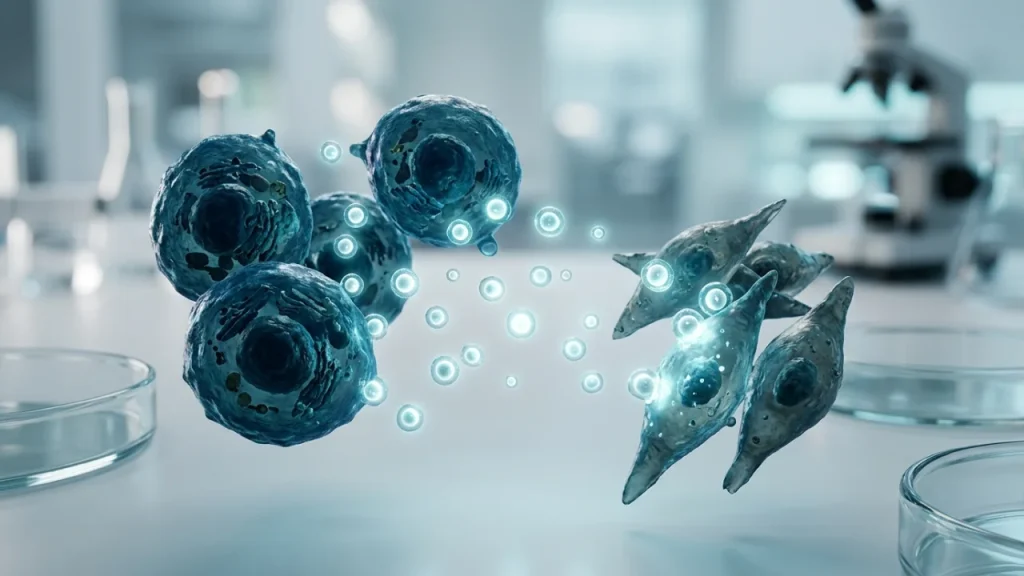
What Are Calecim Exosomes and Why Should You Care?
The Basics of Cellular Messengers Called Exosomes
Imagine your body’s cells are like a vast city. They need to talk to each other. They send messages constantly. These messages are not emails or texts. They are tiny biological packages. Scientists call them exosomes.
Exosomes are incredibly small bubbles. They are released by nearly every cell type in your body. Think of them as miniature mail carriers. Each exosome carries a cargo from its parent cell. This cargo can include proteins, lipids, and genetic instructions.
This system is vital for health. Cells use exosomes to coordinate their activities. For instance, an immune cell under attack can send an exosome. This message alerts neighboring cells to prepare for a threat. It is a rapid, precise communication network.
The structure of an exosome is key to its job. It has a protective lipid membrane. This membrane is like an envelope. It shields the precious cargo during transit through the body’s fluids. The outside of this envelope has address labels. These labels help the exosome find the right target cell.
What is inside these packages? The contents are specific and powerful. – Signaling proteins that can turn processes on or off. – Growth factors that encourage repair and renewal. – MicroRNAs, which are small pieces of genetic code that can change a cell’s behavior.
This is not random mail. It is targeted delivery. A skin cell sends different exosomes than a liver cell. The message depends on the cell’s needs and condition. A healthy cell sends maintenance signals. A stressed cell may send distress calls or repair orders.
Research shows their power in healing. For example, stem cells release many exosomes. These exosomes can travel to damaged tissue. They then instruct local cells to reduce inflammation. They also tell those cells to start rebuilding. This natural process is a cornerstone of recovery.
The science behind calecim exosomes builds on this exact principle. It focuses on enhancing this innate messaging system. The goal is to support the body’s own repair pathways with concentrated, purposeful communication.
Why should you care about these tiny messengers? Because they represent a fundamental language of life. Understanding them helps us see how the body maintains balance and heals itself. When this communication breaks down, problems can start. Supporting clear cellular dialogue is a modern approach to wellness.
In short, exosomes are your body’s natural delivery network for cellular commands. They ensure millions of cells work together in harmony. This sets the stage for exploring how advanced science can work with this system. Next, we will look at where these messengers come from and how they are prepared for use.
How Calecim Exosomes Differ from Other Cellular Therapies
Traditional cellular therapies often involve transplanting whole, living cells into the body. The goal is for these new cells to integrate and perform a function. This approach has shown promise but comes with inherent complexities. Cells are large and biologically active entities. Their behavior after injection can be unpredictable. They require specific conditions to survive and function correctly.
Calecim exosomes represent a fundamental shift in strategy. Instead of sending whole cells, this science focuses on sending only the precise instructions. Think of it as the difference between relocating an entire factory versus sending a detailed blueprint and toolkit. The exosomes are the blueprints and tools. They carry the essential signals without the cellular machinery that can cause issues.
This difference leads to several key advantages. First, exosomes are much smaller than whole cells. Their tiny size allows for easier movement through tissue. They can reach target areas more efficiently. Second, exosomes do not replicate. They deliver their message and are naturally processed by the body. This eliminates any risk of uncontrolled cell growth or division.
Third, and most importantly, exosomes are precise communicators. Whole cells release a vast, uncontrolled mix of signals. Some signals are helpful for repair. Others might promote inflammation or scarring. Purified exosome preparations aim to standardize the beneficial messages. This creates a more consistent and targeted effect.
The process of creating these exosomes is also distinct. It starts with specific stem cell sources chosen for their robust signaling profiles. These cells are cultured under controlled conditions to encourage exosome release. The resulting exosomes are then carefully collected and isolated from the cellular debris. This yields a concentrated preparation of signaling vesicles.
- Targeted Action: They work by instructing your body’s existing cells, not by adding foreign ones.
- Reduced Risk: Without living cells, concerns about immune rejection or improper integration are minimized.
- Precision: The cargo is enriched for factors known to support repair and calm inflammation.
Older methods rely on the hope that transplanted cells will “figure out” what to do. The exosome approach provides direct, pre-programmed commands. It leverages the body’s innate intelligence but gives it a clear directive. This is not about replacing your biology but about optimizing its natural conversation.
Research into this field is growing rapidly. Studies compare outcomes between cell therapies and exosome preparations. Early evidence suggests exosomes can stimulate similar or better repair responses. They do this with a potentially improved safety profile. This makes them a compelling next step in regenerative science.
Understanding this distinction is crucial. It moves the discussion from cell replacement to information therapy. The value lies in the quality of the message, not the mass of the material. Calecim exosomes embody this modern principle. They offer a sophisticated way to harness cellular communication for therapeutic benefit.
This leads to a logical next question: how are these potent messengers prepared for safe and effective use? The answer lies in a meticulous process of collection and purification.
Key Benefits of Using Calecim Exosomes for Health
Exosomes offer a direct line to your body’s repair systems. They carry specific instructions. These instructions can lead to real changes in your skin and overall health. The benefits are clear and science-backed.
One major benefit is enhanced skin repair and rejuvenation. As we age, our cells communicate less effectively. Healing slows down. Collagen production drops. Exosomes can change this. They deliver signals that tell your skin cells to act younger. Think of them as a software update for your cellular network. This can lead to several visible improvements.
- Improved firmness and elasticity from renewed collagen.
- Smoother texture and reduced appearance of fine lines.
- A more even skin tone and radiant glow.
- Faster recovery from environmental damage like sun exposure.
These changes happen because exosomes recalibrate cellular activity. They don’t just add a temporary layer. They encourage your skin to rebuild itself from within. The results are often more natural and lasting than topical products alone.
Another key advantage is powerful anti-inflammatory action. Chronic, low-level inflammation is a root cause of many aging issues. It can slow healing and damage tissues. Exosomes carry molecules that calm this inflammation. They signal the immune system to reduce its response. This creates a better environment for repair to occur. For joints or muscles, this can mean less discomfort and faster recovery from strain. For skin, it means less redness and irritation.
The third core benefit is safety and precision. Since they are not living cells, exosomes avoid certain risks. There is no chance they will multiply uncontrollably. The body does not typically see them as foreign invaders. This makes them compatible with most people. Their action is also targeted. They influence existing cells without altering your core genetic blueprint. You get a therapeutic effect with a high degree of biological safety.
Calecim exosomes exemplify this benefit profile through their specific preparation. Their potency comes from a controlled source. This ensures a consistent and powerful cargo of signaling molecules. Users care because these benefits address common concerns directly. People want healthier skin and reduced inflammation. They want safe and effective solutions. This technology delivers on those desires through cellular communication.
The benefits also work on a timeline that matches natural biology. Changes are not instant but foundational. You might first notice better hydration and calmness in your skin. Improved texture and firmness often follow as new collagen forms. This process can take weeks to months. The effects are built on your body’s own rhythms, supported by clear instructions.
Why should you care about these details? Understanding the benefits helps set realistic expectations. It moves the concept from science fiction to practical science. You see how influencing cell talk leads to tangible improvements in health and appearance. The value is in achieving these results through your body’s innate intelligence, simply guided in the right direction.
This leads to a practical consideration. How can such a potent biological tool be delivered effectively to where it’s needed most? The answer lies in advanced application techniques designed for optimal results.
Real-World Applications of Calecim Exosomes Today
Exosomes are now moving from lab research into real-world practice. Their power to change cell behavior is being applied in specific areas. These areas share a common need. They need to control inflammation or speed up repair.
One major application is in advanced skincare. The goal here is not just surface-level change. It aims to improve the skin’s fundamental health. Exosomes deliver precise instructions to aging or damaged skin cells. They tell these cells to calm down. They also tell them to make more structural proteins.
The results follow a clear sequence. First, redness and irritation often decrease. This is due to a modulated inflammatory response. Next, the skin’s support system gets reinforced. Collagen and elastin production can increase. This leads to improved firmness over time. Finally, the skin’s barrier function often strengthens. This helps it retain moisture and block irritants.
Another key use is in supporting recovery after procedures. This includes both medical treatments and cosmetic interventions. For example, consider laser treatments or microneedling. These procedures work by creating controlled damage to stimulate healing. Exosomes can be applied afterward. They provide a clear signal to accelerate the repair process.
This can lead to several practical benefits. Downtime after a procedure may be reduced. Discomfort and swelling might lessen more quickly. The final quality of the healed tissue can also improve. The goal is a smoother, more efficient recovery journey.
Research is also exploring their role in joint and tendon health. These tissues heal slowly due to poor blood supply. Exosomes offer a promising tool here. They can be injected directly into an affected area like a knee or shoulder. Once there, they communicate with local cells.
The instructions encourage cells to repair the damaged matrix. They also work to quiet chronic inflammation. This one-two approach addresses both pain and tissue degeneration. It supports the body’s own ability to mend these stubborn areas.
Hair restoration is another active field of application. The focus is on the scalp environment and hair follicle health. Exosomes can be introduced via micro-injections. Their signals target multiple problems at once.
They may help improve blood flow to follicles. They can also shift follicles from a resting phase back to a growth phase. Furthermore, they can help reduce scalp inflammation that contributes to hair loss. This creates a more supportive biological setting for hair growth.
The common thread in all these uses is targeted communication. Instead of a blunt force, exosomes provide nuanced instructions. They work within the body’s existing systems. This makes them a versatile tool in regenerative approaches.
Their value lies in this precision. They help guide processes that are already trying to happen, like healing or renewal. They just make those processes more efficient and effective.
Looking at these applications shows a clear trend. The science is moving toward specific, problem-focused solutions. It is not a general cure-all. The future will likely bring even more refined uses as understanding deepens.
The next logical question is about evidence. How do we know these applications actually work as described? This leads us to examine the research and clinical observations behind the claims.
The Science Behind Calecim Exosomes Explained Simply
Where Calecim Exosomes Come From and How They Are Made
Exosomes do not appear by magic. Cells create and release them naturally. The process starts with a specific type of cell. These are not ordinary cells. They are master cells with high regenerative potential.
Think of them as expert communicators. Their job is to repair and renew tissue. Because of their role, the messages they pack into exosomes are particularly potent. The source matters greatly for the final product.
The journey from cell to exosome involves several key steps. First, scientists select and grow these special cells. They are placed in a controlled environment. This environment is like a perfect nursery. It provides all the nutrients the cells need to thrive.
The cells are allowed to multiply and become very healthy. When they reach an ideal state, they begin their natural work. Part of that work is producing exosomes. The cells release these tiny vesicles into the liquid surrounding them.
This liquid is now full of valuable signals. But it also contains the cells themselves and other debris. The next stage is separation. The goal is to isolate only the exosomes. This requires careful, multi-step filtration.
Scientists use advanced methods to sort by size. They remove everything larger than an exosome. Then they remove everything smaller. What remains is a concentrated population of vesicles of the exact right size.
But size alone is not enough proof. The exosomes must also carry the correct markers on their surface. These markers are like identification badges. They confirm the vesicles are true exosomes, not other particles.
Further tests check for purity and strength. Scientists ensure no harmful agents are present. They also measure the concentration of key signaling molecules. This guarantees a consistent and active preparation.
The entire process happens under strict conditions. Temperature, sterility, and timing are all controlled. This mimics the body’s own careful regulation. It ensures the exosomes are not damaged or altered.
Why go through all this trouble? Because the source and process define the result. Exosomes from different cell types carry different instructions. A controlled process yields a reliable product.
It also allows for scale. A single batch can produce a significant quantity. This makes broader clinical use possible. Without this technology, harvesting enough exosomes would be very difficult.
The final product is a clear liquid. It contains billions of these signaling vesicles suspended in a solution. They are ready to be used in clinical settings. Their instructions are preserved intact.
This meticulous production is central to the science. It turns a natural biological event into a reproducible therapy. The quality of the source cells dictates the message. The rigor of the process ensures its delivery.
Understanding this origin story answers a critical question. It shows why not all exosome preparations are the same. The next step is seeing how these carefully made messengers are applied in practice to specific health goals.
How Calecim Exosomes Carry Messages Between Cells
Cells constantly talk to each other. They send tiny packages called exosomes. These packages carry important instructions. Think of them as biological mail. The previous section explained how these messengers are carefully made. Now, let’s see how they deliver their messages.
The process starts inside a cell. This is the sender cell. It creates a small bubble inside itself. This bubble is the exosome. The cell fills this bubble with special molecules. These molecules are the message. The cargo can include many things.
- Proteins that tell a cell to grow or repair.
- RNA blueprints for making new proteins.
- Lipids that help with structure and signaling.
Once packed, the bubble moves to the cell’s outer wall. It fuses with the cell membrane. Then, it is released into the space between cells. This space is called the extracellular matrix. Now the exosome is on its journey.
It travels through bodily fluids. This could be blood, lymph, or the fluid around tissues. The exosome’s outer membrane protects its cargo. This is like a sealed envelope protecting a letter. The journey can be short or long.
The exosome finds a target cell. This is the receiver cell. How does it know where to go? The exosome’s surface has address tags. These are proteins and sugars that stick out. They match specific receptors on the target cell’s surface. It is a lock-and-key system.
The exosome docks onto the target cell. Several things can happen next. One common way is fusion. The exosome’s membrane merges with the target cell’s membrane. It empties its cargo directly into the cell’s interior.
Another way is called endocytosis. The target cell wraps its membrane around the exosome. It pulls the whole package inside. This creates a new bubble inside the receiver cell. Then this bubble breaks open to release the cargo.
Once inside, the message is delivered. The RNA blueprints can be read by the cell’s machinery. New proteins are made. The signaling proteins can turn on pathways. They tell the cell to change its behavior.
For example, an exosome from a stem cell might reach a skin cell. Its cargo could tell the skin cell to make more collagen. Collagen gives skin its firmness. Another exosome might reach an immune cell. It could tell that cell to calm down, reducing inflammation.
This system is precise and powerful. A single sender cell can release thousands of exosomes. One exosome can affect one receiver cell. Or it can trigger a chain reaction of signals. The effect depends entirely on the original message packed inside.
The beauty is in the specificity. An exosome meant for a liver cell likely won’t bind to a brain cell. The address tags ensure messages go to the right place. This natural targeting makes them ideal therapeutic messengers.
Scientists can harness this process. By controlling the sender cells, they control the message. By producing pure exosomes, they ensure clear delivery. This is how calecim exosomes are designed to work. They carry specific instructions for repair and renewal.
The entire conversation happens at a microscopic level. But its effects are visible. Better tissue repair, reduced inflammation, and improved cell function all start here. With this delivery system, cells can coordinate their actions across the whole body.
Understanding this step completes the picture. We know how these messengers are made with care. Now we see how they deliver their precise instructions. This sets the stage for exploring their real-world applications in promoting health.
The Role of Calecim Exosomes in Reducing Inflammation
Inflammation is your body’s alarm system. It signals that something is wrong. White blood cells rush to the area. They release chemicals to fight threats. This process is vital for healing cuts or fighting infections. But sometimes, this alarm does not turn off. It becomes chronic. This ongoing inflammation can damage healthy tissues. It is linked to many health issues.
Calecim exosomes can help reset this overactive alarm. They carry specific instructions from stem cells. These instructions tell immune cells to calm down. Think of it like a firefighter arriving at a small kitchen fire. The firefighter’s job is to put out the flames. But they also ensure the fire alarm stops blaring once the danger is gone. These exosomes act as that crucial ‘off’ signal.
The process involves direct communication with immune cells. Key players are macrophages. These are large white blood cells. They can exist in two main states. One state is pro-inflammatory. It attacks threats aggressively. The other state is anti-inflammatory. It cleans up damage and promotes repair. Chronic inflammation keeps too many macrophages in the aggressive state.
Exosomes shift this balance. They deliver their cargo directly to these immune cells. This cargo includes microRNAs and proteins. These molecules change the cell’s behavior. They instruct the macrophage to switch modes. The cell moves from an attacking state to a healing state. This switch reduces the flood of inflammatory chemicals.
The effects of this switch are significant. – Less swelling and redness in tissues. – Reduced pain signals from the area. – A slower breakdown of structural proteins like collagen. – A faster start to the tissue regeneration phase.
This is not just blocking a single signal. It is reprogramming the cell’s response. The result is a more complete and natural resolution of inflammation. The body’s own repair systems can then work without constant interference.
Consider a common example like joint discomfort. In a joint, chronic inflammation breaks down cartilage. It creates a cycle of pain and stiffness. Introducing these exosomes can interrupt that cycle. They tell local immune cells to stop the attack. This allows cartilage cells to function better. It may support the joint’s natural cushioning.
The precision of this approach matters greatly. General anti-inflammatory drugs affect the whole body. They can have unwanted side effects. Exosome communication is more targeted. They primarily engage with overactive immune cells at the site of need. This leads to a localized effect. It supports systemic balance without widespread suppression.
Scientific studies show this mechanism in action. Research observes changes in specific inflammatory markers after exosome application. Levels of signals like TNF-alpha and IL-6 often decrease. Levels of helpful, repair-focused signals often increase. This measurable shift confirms the biological activity.
Using calecim exosomes for this purpose leverages a natural process. The body already uses exosomes for immune talk. This method simply enhances that existing dialogue. It provides clear instructions when the body’s own signals are confused or stuck on high alert.
The ability to reduce damaging inflammation opens many doors. It creates a better environment for healing any tissue. With calmer immune responses, the next steps of repair and renewal can proceed more effectively. This sets the stage for exploring how these messengers directly support cellular rejuvenation and structural repair throughout the body.
Calecim Exosomes and Collagen Production for Skin
Healthy, youthful skin relies on a strong network of proteins. Collagen is the most important one. It provides firmness and structure. Another key protein is elastin. It gives skin its bounce and snap. As we age, our skin cells make less of these proteins. The existing network also breaks down. This leads to wrinkles and sagging.
Exosomes address this problem at its source. They carry precise instructions to the skin’s cells. These instructions are delivered directly to the fibroblast cells. Fibroblasts are the collagen factories in your skin. The messages inside calecim exosomes tell these factories to get back to work.
The process starts with a signal landing on the fibroblast. The exosome merges with the cell’s membrane. It delivers its cargo of molecules inside. This cargo includes microRNAs and growth factors. These molecules do not become part of the cell. Instead, they influence the cell’s own machinery.
Think of it like updating a computer’s software. The exosome delivers new code. This code reprograms the cell’s activity. It shifts the cell from a passive state to an active, productive state. The fibroblast then increases its production of collagen and elastin strands.
The instructions are very specific. They don’t just tell the cell to make more of everything. They guide the production of high-quality, well-structured proteins. This helps build a durable support network under the skin.
Several key changes happen inside the activated fibroblast: – The genes responsible for collagen production are switched on more strongly. – The cellular structures that build protein chains work faster. – More enzymes that cross-link and stabilize the new collagen are produced.
This results in a measurable increase in protein output. Scientific studies track this by measuring procollagen levels. Procollagen is the precursor molecule to mature collagen. Higher levels mean more building blocks are being made.
The effect is not just about making new protein. Exosome signals also help regulate enzymes that break down collagen. These enzymes are called matrix metalloproteinases (MMP). Overactive MMPs destroy good collagen. Exosome communication can help reduce their excessive activity.
This dual action is powerful. It boosts construction while slowing unnecessary demolition. The skin’s structural foundation becomes stronger over time.
The use of calecim exosomes for this purpose mimics a natural youth signal. Younger cells constantly send these repair messages. The method restores a dialogue that fades with age or damage. It gives fibroblasts the correct information to perform their best.
Visible improvements in skin follow this cellular activity. Enhanced collagen plumps the skin from within. This can reduce the appearance of fine lines. Improved elastin helps skin regain its resilience. The overall architecture becomes more robust.
This process requires energy and raw materials. Cells need amino acids like proline and glycine to build collagen. A healthy diet supports this enhanced cellular activity. The exosomes provide the instruction manual, but the cell still needs the supplies.
The timeline for results aligns with the skin’s natural renewal cycle. Collagen synthesis is a complex biological process. It does not happen overnight. Changes begin at a cellular level long before they become visible in the mirror.
Supporting the skin’s protein framework has lasting benefits. It is more effective than just filling wrinkles temporarily. It addresses the underlying structural cause. This approach builds true resilience in the skin’s architecture.
The science shows a clear pathway from signal to structure. Targeted cellular communication leads to increased protein production. This strengthens the skin’s foundational matrix for a healthier appearance. This same principle of guided repair applies to other tissues needing structural renewal throughout the body.
Elastin Synthesis Enhanced by Calecim Exosomes
Elastin is the protein that gives skin its snap. Think of a rubber band. Elastin allows your skin to stretch and then bounce back to its original shape. This happens countless times each day when you smile or frown. Without robust elastin, skin loses this vital resilience. It begins to sag and form permanent creases.
Collagen provides firmness, but elastin provides recoil. They work as a perfect team. The cellular instructions for making each protein are different. Fibroblasts must receive a distinct set of signals to produce high-quality elastin. This is a key part of the cellular communication process.
The synthesis of elastin is more complex than collagen in some ways. Its molecules must link together in a highly organized network. This network is called an elastic fiber. Creating these durable fibers requires precise biological guidance. Cells can lose this blueprint over time.
External damage accelerates this loss. Ultraviolet light from the sun breaks down elastic fibers. This process is called solar elastosis. It results in a leathery, wrinkled texture. The body’s natural repair signals become weaker and less frequent with age. Cellular dialogue about maintenance fades.
This is where advanced signaling technology enters the picture. Potent messengers can restart the conversation about elastin production. These messengers carry specific instructions. They tell the fibroblast to activate the genes for elastin synthesis. They also provide cues for proper fiber assembly.
The mechanism involves several clear steps inside the cell: – The signaling molecules are received by the fibroblast. – This reception triggers a cascade of internal events. – Specific genes within the cell’s nucleus are switched on. – The cell’s machinery begins to read the genetic code for elastin. – Amino acids are assembled into tropoelastin, the building block. – Enzymes then process and cross-link these blocks into mature fibers.
This entire process demands energy and raw materials. Vitamin C is crucial here. It acts as a cofactor for the enzymes that stabilize elastic fibers. Copper is another important mineral for proper cross-linking. A nutrient-rich diet supports this enhanced cellular activity.
The timeline for elastin renewal is measured in months. New elastic fibers integrate slowly into the existing skin matrix. Early changes are subtle. Skin may feel more supple and less loose. Visible lifting occurs gradually as the network strengthens.
Improving elastin has a dramatic effect on skin appearance. It helps reduce the look of sagging, especially around the jawline and cheeks. Skin behaves more like youthful skin. It recovers better from deformation. This structural improvement is fundamentally different from surface-level smoothing.
The science shows a targeted approach to skin resilience. Enhanced cellular communication addresses both collagen and elastin. Together, they restore the skin’s complete architectural integrity. This dual focus on firmness and elasticity is essential for comprehensive rejuvenation. The next logical consideration is how this renewed matrix interacts with its environment for lasting health.
Tissue Regeneration Speed with Calecim Exosomes
Tissue regeneration is a slow process. Our bodies repair damage at a natural, set pace. Exosomes can help speed this up. They do not force cells to work. Instead, they deliver clear instructions. This makes the repair process more efficient.
Think of a construction site after a storm. The crew is ready to rebuild. But they spend days waiting for blueprints and talking to the foreman. Work moves slowly. Now imagine those plans arrive instantly. Every worker knows their exact task immediately. The rebuild finishes much faster.
Exosomes work in a similar way. They are tiny message carriers. Cells release them naturally. These vesicles contain specific orders for growth and repair. The instructions are packaged as proteins and genetic material.
When introduced to damaged tissue, exosomes act fast. They are quickly taken up by local cells like fibroblasts and stem cells. This direct delivery bypasses slower signaling methods. Cells get to work right away without delay.
The process involves several coordinated steps. First, exosomes reduce initial inflammation. They send signals to calm the immune response. This stops unnecessary damage and clears debris faster. Then, they directly stimulate cellular activity.
- They trigger cells to divide and multiply more rapidly.
- They guide new blood vessel formation for better nutrient delivery.
- They increase the production of structural proteins like collagen and elastin.
This multi-step approach is key. It addresses all phases of healing at once. The result is a significantly shortened timeline for tissue regeneration. What might naturally take months can show progress in weeks.
The science behind this speed is precise. Exosomes from certain sources carry a potent mix of signals. These calecim exosomes are engineered for high activity. Their cargo is selected to optimize the repair pathways. This ensures messages are strong and clear.
Healing is not just about building materials. It is about perfect timing and coordination. Exosomes excel at this coordination. They ensure all cell types work together in harmony. Fibroblasts, endothelial cells, and immune cells act as a unified team.
The effect is most visible in wound healing and skin renewal. Studies show faster closure of wounds and improved scar quality. The new tissue forms with better structure and strength. This mirrors the enhanced elastin network discussed earlier but achieves it quicker.
Speed does not mean rushed or poor quality. The process follows the body’s natural blueprint exactly. Exosomes simply help cells read that blueprint faster and with fewer errors. The final architecture of the tissue remains robust and functional.
This accelerated healing has broad implications. It supports recovery from environmental damage and daily stress. The skin’s resilience improves because repairs are timely and complete. A stronger barrier is maintained against future challenges.
Ultimately, faster regeneration means quicker visible results and sustained tissue health. It represents a fundamental shift from passive support to active biological guidance. The next step is understanding how this improved communication affects long-term cellular vitality and aging processes.
How Calecim Exosomes Work in Skin and Body Repair
Mechanisms of Action for Calecim Exosomes in Skin
Exosomes deliver precise instructions directly to skin cells. They do not work alone. They act as a sophisticated communication network. Their cargo includes key signaling molecules. These are proteins and genetic material. They tell cells what to do next.
The process starts with targeting. Exosomes find specific cell types. They bind to the cell’s surface. This binding is like a key fitting a lock. It ensures the message goes to the right recipient. Fibroblasts are a primary target. These cells build skin structure.
Once bound, exosomes transfer their cargo inside the cell. This cargo then influences cell behavior. The main actions can be broken into clear steps.
- First, exosomes can turn on repair genes. They carry microRNAs. These are small pieces of genetic code. They silence genes for inflammation. They activate genes for collagen production.
- Second, they provide enzymes and growth factors. These molecules kickstart metabolic pathways. Cells get the tools they need to rebuild.
- Third, they modulate the immune response. They signal to immune cells nearby. This reduces unnecessary inflammation. Cleanup of damaged tissue happens faster.
A critical mechanism is the enhancement of cellular energy. Mitochondria are the power plants of the cell. Exosome signals can improve mitochondrial function. Cells have more energy for repair tasks. This is vital for older or stressed cells.
Another focus is the extracellular matrix. This is the supportive scaffold between cells. Exosomes instruct fibroblasts to produce more of its components. The list includes collagen type I and III. It also includes elastin and hyaluronic acid. The new matrix is denser and more organized.
The result is not just more material, but better quality material. Collagen fibers align correctly. They form a strong, flexible network. This directly improves skin firmness and elasticity. Fine lines may appear softened because the underlying support is restored.
These calecim exosomes exemplify this targeted delivery system. Their engineered profile ensures a high concentration of useful signals. The mechanisms work in a coordinated sequence. Targeting comes first, then cargo delivery, and finally gene activation.
The timing of these signals is also controlled. Exosomes can release their contents slowly. This provides sustained instruction over time. Cells do not get a single, fleeting command. They receive a continuous program for renewal.
This process mirrors natural healing but removes bottlenecks. Damaged skin often has confused or slow communication. Exosomes restore clarity and speed. They help reset the cellular environment to a younger, more responsive state.
The final outcome is comprehensive skin repair. It happens from the inside out. The mechanisms address structure, energy, and inflammation at once. This integrated approach supports lasting improvements in skin health and appearance.
Understanding these steps shows why cellular communication is foundational. The next logical question concerns the source and consistency of these powerful messengers.
Addressing Root Causes of Aging with Calecim Exosomes
Aging is not one event. It is a slow shift in how our cells behave. Over time, cells get tired. They communicate less. Repair signals get weaker. This leads to visible changes. Skin gets thinner. It recovers slower from damage. Exosomes target these core problems directly.
One major cause is cellular senescence. Senescent cells are old, tired cells. They do not divide or work well anymore. But they do not die easily. Instead, they stay and send out harmful signals. These signals cause inflammation. They also damage nearby healthy cells. This creates a cycle of decline.
Exosomes can break this cycle. They carry instructions that help clear these senescent cells. They also tell healthy cells to ignore the harmful signals. This reduces chronic, low-level inflammation. Less inflammation means a better environment for repair.
Another root cause is mitochondrial decline. Mitochondria are tiny power plants inside cells. They make energy. As we age, they become less efficient. Cells then have less fuel to function. This affects everything from collagen production to healing.
Exosomes deliver molecules that support mitochondria. They can help mitochondria produce energy better. They may also encourage the creation of new mitochondria. With more energy, cells can perform their repair duties properly.
The extracellular matrix also suffers with age. This is the support scaffold between cells. It loses its structure. Key proteins like collagen break down faster than they are made. New collagen fibers may form in a disorganized way.
Exosomes instruct fibroblasts, the cells that build this matrix. They tell them to make more of the right types of collagen. They also guide the proper alignment of these fibers. This rebuilds the skin’s foundation from within.
Cellular communication itself becomes faulty with age. Messages between cells get lost or distorted. This miscommunication leads to inefficient repair responses. The body’s natural healing systems become slow and confused.
Exosomes act as precise replacement messengers. They restore clear communication lines. They deliver exact instructions that aging cells may no longer send or receive. This helps reset the system to a more youthful state of dialogue.
Key targets of aging that exosomes address include: – Senescent cell accumulation and their inflammatory signals. – Declining mitochondrial energy production. – Breakdown of the structural extracellular matrix. – Weakened and confused cell-to-cell signaling.
The approach is systemic. Exosomes do not just treat one symptom. They work on several connected causes at once. By improving energy, reducing inflammation, and restoring clear instructions, they support comprehensive renewal.
This makes them fundamentally different from surface-level treatments. Creams may moisturize the top layer of skin. Injections may fill a line temporarily. Exosomes aim to change the cellular environment that created the problem in the first place.
The goal is to shift the body’s internal processes. The focus moves from fixing a single wrinkle to improving overall cellular health. When cells function better, multiple signs of aging can improve together.
Skin becomes more resilient. It can better protect itself from daily stress. It may heal faster from minor damage like sun exposure or scratches. The texture and tone often improve because underlying health is better.
This process takes time because it works at a cellular level. Changes are not instant like a cosmetic cover-up. They build gradually as cells regenerate and behave in a healthier way.
Understanding these root causes shows why the technology is significant. It moves beyond treating symptoms to influencing biology itself. The next consideration is how to ensure these messengers are consistent and reliable for such important work.
The source and preparation of exosomes become critical when targeting these deep processes.
Enhancing Natural Repair Processes Using Calecim Exosomes
The body is always working to fix itself. Cells constantly talk to coordinate this repair. Exosomes are key messengers in this conversation. They carry precise instructions. These instructions can tell other cells to start healing.
Think of a minor skin cut. Damaged cells send out signals. Nearby healthy cells get these signals. They then begin to multiply and close the wound. This is natural repair. Sometimes, this system slows down or gets noisy. The signals become weak or confused. Repair becomes less efficient.
Exosomes from certain stem cells can enhance this process. They do not replace the body’s own cells. Instead, they deliver a concentrated set of instructions. These instructions are like a clear, powerful update for the cellular network. They help reset the communication lines.
The messages inside these vesicles are diverse. They include proteins and genetic material. This cargo can trigger several key repair actions in target cells.
- It can boost cellular energy production. More energy means a cell has the power to do its job better.
- It can reduce inflammatory signals. Chronic inflammation is a major block to healing.
- It can encourage cells to produce fresh collagen and elastin. These are the support structures of skin.
- It can guide stem cells in the area to become new, healthy tissue cells.
This multi-step approach addresses repair at a fundamental level. It is not just one signal. It is a full program delivered in a tiny package. The target cell receives this program and changes its behavior.
For skin, this means visible improvements come from within. Dermal cells become more active. They rebuild their own support framework. The skin’s barrier function strengthens. Hydration may improve because the skin holds moisture better. Tone evens out as cells get clearer instructions for healthy function.
The same principles apply to repair throughout the body. Joint tissues, for example, need clear signals for maintenance. Cartilage cells require precise commands to maintain their cushioning structure. Exosomes can deliver these supportive messages. They help create an environment where repair is possible.
The process relies on timing and targeting. Exosomes naturally seek out areas that need help. They are drawn to sites of stress or damage. Once there, they fuse with recipient cells. Their cargo is released inside. The new instructions are then read and acted upon.
This enhancement is temporary but powerful. It gives the body’s systems a strong nudge in the right direction. The effects last because they kickstart a healthier cycle of cellular activity. Cells not only repair current damage. They also become better at handling future stress.
The key is the quality and relevance of the messages sent. Not all exosomes are the same. Their content depends entirely on their source cell. The source must be carefully chosen to produce the right repair signals.
This leads to an important question about consistency and reliability for clinical use.
Holistic Rejuvenation Through Calecim Exosomes
True rejuvenation is not just skin deep. It involves the entire system. Exosomes support this whole-body approach. They send coordinated signals to multiple tissues at once. This creates a synchronized repair response. Think of it as updating the software across all your devices. Each one functions better, and they work together more smoothly.
The skin often shows the first visible signs of this process. But changes begin much deeper. Exosomes communicate with cells in your blood vessels. This supports healthy circulation. Better blood flow delivers more oxygen and nutrients everywhere. It also removes waste products more efficiently. Your skin glows because the underlying delivery system is improved.
Inside your joints, a similar harmony is encouraged. Cartilage receives signals for maintenance. The surrounding synovial fluid gets cues for optimal lubrication. Supporting ligaments and tendons are included in the conversation. This multi-point support helps joint function feel more integrated and smooth. Discomfort often lessens because the entire structure is better coordinated.
The body’s repair systems are interconnected. A key benefit is reducing background inflammation. Chronic, low-grade inflammation disrupts cellular communication. It creates noise that drowns out important signals. Exosomes can help quiet this noise. They carry messages that promote a balanced immune response. This calmer state allows normal repair cycles to proceed without interference.
Energy production within cells can also improve. Mitochondria are the tiny power plants in each cell. They need clear instructions to work well. Exosomal messages can optimize mitochondrial function. Cells then have more energy for their daily tasks, including repair and renewal. You may notice this as a feeling of increased vitality or reduced fatigue.
The nervous system benefits from this communication too. Skin has a vast network of sensory nerves. Exosomes can support the cells that maintain these nerves. This contributes to a healthy sensory response and skin resilience. The calming effect on systemic inflammation also supports brain health indirectly, influencing mood and clarity.
Holistic rejuvenation follows a clear order: – First, core cellular functions are optimized. – Next, inter-cellular communication is enhanced. – Then, tissues begin to operate in better harmony. – Finally, entire organ systems see improved performance.
This cascade explains why people often report diverse benefits. Skin appears firmer and more radiant. Joint mobility may feel easier. Recovery from daily stress can be quicker. Sleep patterns sometimes improve. These are not separate effects. They are different results of the same process: upgraded cellular communication across the board.
The concept of *Calecim exosomes* fits here because source matters for holistic impact. Exosomes derived from certain potent stem cells carry a wider range of relevant instructions. Their cargo is designed for systemic dialogue, not just a single task. This broad capability is what enables whole-body benefits.
The outcome is a state of improved resilience. Your cells are better equipped to handle internal and external stressors. They maintain their functions more consistently. They repair minor damage before it accumulates. This proactive maintenance is the essence of holistic rejuvenation. It shifts the body from a reactive state to a proactive one.
This systemic view leads to the next logical consideration: how to ensure these sophisticated signals remain potent and pure from source to delivery.
Clinical Uses of Calecim Exosomes in Modern Medicine
Skin Revitalization Protocols with Calecim Exosomes
Skin revitalization begins with a simple cellular fact. Aged or damaged skin cells send poor quality signals. This slows down repair and renewal. Exosomes offer a solution. They carry precise instructions to correct this. Think of them as a software update for your skin’s cellular network.
The protocol targets several key aging processes at once. It is not a single-action treatment. The approach is multi-faceted. First, exosomes signal fibroblasts to produce more collagen and elastin. These are the skin’s support fibers. More fibers mean firmer, plumper skin. Second, they encourage faster cellular turnover. Old surface cells shed more efficiently. New, healthy cells rise to the surface. This leads to a smoother texture and brighter tone.
A critical function is modulating inflammation. Chronic, low-level inflammation breaks down skin structure. It is a key driver of aging. Exosomes calm this inflammatory environment. They help restore a balanced state. This allows natural repair mechanisms to work optimally.
The process also enhances the skin’s moisture barrier. A strong barrier keeps hydration in and irritants out. Exosomes support the cells that build this protective layer. Healthier barrier function means less dryness and reduced sensitivity.
Clinical approaches for skin revitalization often follow a structured method. The goal is to ensure exosomes reach the living layers where they can act.
- Preparation: The skin is gently cleansed. Sometimes, micro-channels are created. This can be done with very fine needles or laser. These tiny, temporary openings help the exosomes penetrate deeper.
- Application: The exosome solution is carefully applied. It may be spread on the skin or infused using gentle techniques like sonophoresis. This uses sound waves to aid delivery.
- Activation: The skin is then soothed. A calming serum or light therapy might be used. This supports the initial cellular response.
- Aftercare: A critical phase begins. Patients use simple, non-irritating skincare. Sun protection is absolutely essential. The cells need a stable environment to act on their new instructions.
Results are not immediate like a filler. They unfold over weeks as cellular activity changes. Patients often report a improvement in skin quality first. Hydration feels better. Then, texture refines. Fine lines may soften as new collagen forms. The glow comes from healthier, more efficient cells.
The success of any protocol hinges on the quality of the signal. Exosomes derived from potent stem cell sources carry a richer library of instructions. This is why the concept of calecim exosomes is relevant here. Their broad cargo can address multiple aging pathways simultaneously. They tell skin cells not just to do one thing, but to coordinate renewal.
This targeted revitalization demonstrates the principle of upgraded cellular communication in action. The skin visibly improves because its fundamental biology is being supported. The next logical step is to examine how this precise communication tool is being used for deeper tissue repair in other medical fields.
Scar Revision Techniques Using Calecim Exosomes
Scars form when the body’s repair process goes into overdrive. After an injury, cells rush to make new collagen. Sometimes they make too much. They also make the wrong type. This creates stiff, raised, or discolored scar tissue. Traditional treatments often try to break this tissue down physically. They use lasers, needles, or silicone sheets. These methods can be effective. Yet they do not address the flawed healing instructions at the cellular level.
This is where advanced exosome science offers a different path. Exosomes carry messages that can recalibrate the entire healing process. They do not just dissolve old scar tissue. They instruct local cells to remodel it properly. Think of a scar as a building made with poor materials and messy plans. Exosomes send in new architects and better blueprints. The workers—your skin cells—then rebuild the area with more order and flexibility.
The technique for scar revision uses this principle. A provider will first prepare the scarred area. This may involve very mild micro-needling. The goal is not to injure but to create tiny channels. These channels allow for better product absorption. Next, a solution containing concentrated exosomes is applied. It soaks into the micro-channels. The exosomes quickly reach the deeper layers where scar tissue lives.
Their cargo then gets to work. The messages inside calecim exosomes are particularly broad. They can influence several key processes at once. – They signal fibroblasts, which are collagen-making cells, to slow down. This stops excessive production. – They encourage these cells to switch from making stiff type I collagen to making more flexible type III collagen. This improves texture and movement. – They reduce chronic inflammation. Old scars often have low-level inflammation that maintains redness and itching. Exosome signals calm this response. – They promote the formation of new, healthy blood vessels. This brings better oxygen and nutrients to the area, supporting true repair.
Patients typically undergo a series of sessions. Improvements happen in stages. Early changes often include reduced redness and itching. The scar may feel softer to the touch. Over subsequent weeks, its appearance changes. Thick, raised scars often become flatter. The color starts to blend more with the surrounding skin. The surface texture becomes smoother.
This approach is useful for several scar types. – Hypertrophic scars and keloids: These are thick, raised scars that stay within or grow beyond the original wound borders. Exosome signals can help flatten and soften them. – Atrophic scars: These are sunken or pitted scars, like those from acne or chickenpox. The therapy supports filling from within by guiding structured tissue regeneration. – Surgical scars: The goal here is to improve the linear scar’s pliability and color for a less noticeable result. – Burn scars: Remodeling stiff collagen can significantly improve mobility and appearance.
The results represent a fundamental shift in strategy. Medicine is moving from simply destroying problem tissue to reprogramming it. The use of calecim exosomes in scar revision highlights this shift perfectly. It leverages the body’s own communication systems to guide a more natural and functional repair outcome. This logic of sending precise instructions is now being applied to an even more complex challenge: healing within joints and tendons where poor blood flow often hinders recovery.
Post-Procedural Recovery Boosted by Calecim Exosomes
After any medical treatment, your body must heal. This healing process takes time. It often involves swelling, redness, and discomfort. Modern medicine now has a new tool to help. This tool uses natural cell messengers. These messengers can make recovery faster and smoother.
Think of these messengers as tiny instruction packets. Cells release them into the body’s fluids. They travel to other cells. Then they deliver their messages. These messages tell cells how to act. They can say “reduce swelling here” or “start building new tissue now.” This direct communication speeds everything up.
Let’s look at what happens after a common procedure like laser therapy. Laser treatments work by creating controlled micro-injuries in the skin. This prompts the skin to repair itself. The process naturally causes inflammation. Recovery can take one to two weeks. Now, imagine adding those cellular messengers right after the treatment. Their signals can quickly calm the inflammatory response. This means redness and swelling go down much faster. Patients might see this change in just a few days instead of a week.
The benefits are clear for many procedures. – After cosmetic injections: They can reduce common side effects like bruising. – Following minor surgeries: They support cleaner wound closure with less scarring. – Post chemical peels: They help soothe the skin and accelerate the renewal cycle.
The core mechanism is coordination. Without clear signals, healing cells can be slow or disorganized. It is like a construction site without a foreman. Workers might show up late. Materials might not arrive on time. The project gets delayed. These cellular messengers act as the perfect foreman. They direct the cellular workforce efficiently.
One key instruction is for blood vessel growth. New blood vessels are vital for healing. They bring oxygen and nutrients to the damaged area. Certain messenger signals directly encourage blood vessel formation. This improved blood supply fuels the entire repair process.
Another instruction controls collagen. Collagen is the main building protein for skin and tissue. During healing, it must be laid down in an orderly way. Haphazard collagen leads to thick, visible scars. Guided collagen production leads to stronger, neater tissue. The use of calecim exosomes provides this precise guidance.
Patients report noticeable differences. They talk about less downtime. They experience less pain after treatments. The treated area feels normal again more quickly. For active individuals, this means a faster return to daily life and exercise.
The science behind this is robust. Research shows these messengers carry specific proteins and genetic material. This cargo can reprogram the local environment of cells. It shifts the state from one of reactive inflammation to active rebuilding.
This approach represents a fundamental upgrade in aftercare. It moves past just managing symptoms of recovery. It actively enhances the body’s innate repair program. The goal is no longer just to heal, but to heal optimally and swiftly.
This logic of enhancing natural processes extends beyond the skin’s surface. The same principles of directing repair are powerful for deeper structures in the body, like aging joints where cartilage breakdown causes pain and stiffness.
Improved Outcomes with Calecim Exosomes in Aesthetics
The skin is a living record of environmental exposure and biological aging. Over time, its natural repair systems slow down. This leads to common visible signs. Fine lines may appear. Elasticity can diminish. Tone and texture often become uneven. Traditional approaches often work on the surface alone. They may temporarily plump or exfoliate. The goal with advanced cellular signaling is different. It aims to recalibrate the skin’s own repair activities at a fundamental level.
Consider the process after a professional aesthetic treatment. Procedures like laser therapy create controlled micro-injuries. This triggers the skin’s healing response. The quality of this healing phase determines the final result. It influences everything from redness to new collagen formation. Guiding this phase with precise biological instructions can shift outcomes. The use of calecim exosomes represents this guiding strategy. These messengers deliver a concentrated set of natural directives directly to the skin cells.
The clinical effects are measurable and multi-faceted. Patients and practitioners report several key improvements in skin quality and treatment recovery.
- Enhanced Collagen Remodeling: The skin doesn’t just make more collagen. It makes better-organized collagen. This leads to a firmer, more supportive dermal layer. The result is a reduction in the appearance of fine lines and improved skin firmness.
- Accelerated Barrier Repair: The skin’s outer barrier protects against moisture loss and irritants. Rapid, effective repair after procedures means less trans-epidermal water loss. Skin feels hydrated and calm sooner, with reduced post-procedure dryness and sensitivity.
- Modulation of Pigmentation: Cellular signals can help normalize melanin activity. This addresses hyperpigmentation or blotchiness at a cellular level. It promotes a more uniform, radiant complexion over time.
- Reduced Inflammatory Response: While some inflammation is necessary for healing, excessive or prolonged inflammation can hinder results and increase downtime. Targeted signaling helps calm the cellular environment, directing energy toward structured rebuilding instead.
The practical impact for someone receiving care is significant. Recovery timelines are often condensed. The period of visible redness and swelling may be shorter. The skin transitions to a normalized state more quickly. Furthermore, the long-term aesthetic gains from a single treatment can be more pronounced. Because the repair process was optimally guided, the foundation for new, healthy skin is stronger.
This represents a paradigm shift in aesthetic medicine. The focus expands from the procedure itself to the biological window that follows it. By strategically supporting the skin’s innate intelligence during this critical period, outcomes are not just faster but also of a higher quality. The skin’s appearance reflects not just an intervention, but a successfully completed and optimized healing journey. This logic of optimizing a biological process now extends to another major area of health: chronic joint conditions, where similar principles of communication and repair are applied to deep tissue structures.
Reduced Downtime Thanks to Calecim Exosomes
The period after a medical treatment is critical. This phase is often called downtime. It involves healing, repair, and sometimes discomfort. A key goal in modern care is to shorten this phase safely. Advanced signaling agents can help achieve this. They work by enhancing the body’s own repair systems.
Think of a skin procedure or a joint injection. These interventions create a controlled, local injury. The body must then respond to start fixing it. This natural process follows specific steps. First, cells send out inflammatory signals. These signals call in help from the immune system. Next, the cleanup of damaged tissue begins. Finally, new, healthy tissue is built to replace what was lost. This sequence takes time.
Sometimes, the communication between cells during healing is not optimal. Signals can become confused or excessive. Inflammation might last too long. The cleanup phase could be delayed. The instructions for rebuilding may be weak or unclear. This leads to a longer and sometimes more uncomfortable recovery.
This is where specialized signaling vesicles show their value. They are not drugs. They are natural messengers. When introduced to a treatment area, they deliver precise instructions directly to local cells. These instructions help coordinate the healing stages more efficiently.
The effect on downtime is direct and multi-faceted. Several key actions happen at once.
- They can help modulate the initial inflammatory response. This means they encourage necessary inflammation but help prevent it from becoming excessive or prolonged. Less excessive swelling means less immediate discomfort.
- They carry signals that accelerate the clearance of cellular debris. Faster cleanup allows the rebuilding phase to start sooner.
- They promote angiogenesis. This is the formation of new, tiny blood vessels. Improved blood flow delivers more oxygen and nutrients to the area. It also removes waste products faster.
- They directly stimulate cells like fibroblasts and keratinocytes. These cells are responsible for making new collagen, elastin, and skin cells. Giving them a clear, strong signal to work speeds up tissue regeneration.
The practical result for a patient is clear. The window of noticeable recovery shrinks. Redness and swelling after a skin treatment may subside in days rather than weeks. Stiffness after a joint therapy might ease more quickly. The patient returns to normal daily activities sooner.
This benefit extends beyond simple convenience. A shorter, smoother recovery improves the overall treatment experience. It can increase patient satisfaction and adherence to care plans. It also means the visible or functional benefits of the procedure emerge faster.
The science behind this is rooted in biology’s own language. By providing a concentrated dose of precise biological instructions, these messengers help optimize a process that is already happening. They essentially help the body help itself more efficiently.
This reduction in downtime represents a tangible advance in patient care. It shifts the focus from enduring recovery to embracing it as an active, well-supported phase of treatment. The next logical question is how these same principles apply to long-term tissue quality and resilience, moving beyond the recovery period to lasting structural improvement.
Safety and Effectiveness of Calecim Exosomes
Essential Safety Frameworks for Calecim Exosome Use
Exosomes are natural biological messengers. Their therapeutic use requires strict safety standards. These standards ensure purity and consistency. Think of it like a powerful medicine. It must be clean and predictable to be safe.
The first framework involves the source material. Not all exosomes are the same. They inherit characteristics from their parent cells. Therefore, the starting cells must be carefully selected and screened. This screening process is thorough. It checks for genetic stability and overall cell health. Any questionable source material is rejected. This creates a clean foundation for the entire process.
Next comes the manufacturing environment. Exosomes are collected and processed under controlled conditions. These conditions are called “current good manufacturing practices” or cGMP. This is a standard for pharmaceutical production. cGMP facilities are extremely clean. They have filtered air and strict access rules. Every piece of equipment is sterilized. Every step is documented. This prevents contamination from bacteria, viruses, or other particles.
The collection process itself is also vital. Scientists must harvest the exosomes without damaging them. Gentle separation techniques are used. These techniques isolate the exosomes from other cell debris. The goal is to get a pure population of vesicles. This purity is confirmed through testing.
Rigorous testing is the core of the safety framework. Multiple tests are run on every batch. These tests check three main things. – Identity: Confirming the vesicles are truly exosomes with the expected markers. – Potency: Measuring the biological activity to ensure they work as intended. – Safety: Verifying the absence of contaminants like endotoxins or microbes.
Only after passing all tests is a batch released. This lot-release testing is non-negotiable. It provides a final safety check.
Storage and handling form another critical layer. Exosomes are sensitive biological products. They must be stored at very cold temperatures to stay stable. The supply chain, called the “cold chain,” must not break. Shipping uses special insulated containers with dry ice. Clinics must have proper freezer equipment. This protects the product’s integrity until the moment of use.
Finally, medical supervision guides proper use. A qualified professional determines the correct treatment protocol. They consider the patient’s specific condition and medical history. The administration technique is precise. Follow-up assessments are standard. This clinical framework ensures the exosomes are used where they can be most effective and safe.
These frameworks work together like a series of filters. Each step removes potential risks. The result is a highly refined therapeutic agent. This meticulous approach transforms a natural biological process into a reliable clinical tool. It builds the essential trust required for any advanced treatment. Understanding these protocols leads to a final, important consideration: how their effectiveness is measured in real-world clinical settings over time.
Current Treatment Efficacy Data on Calecim Exosomes
Research into exosome therapies is building a picture of their potential. Studies show these tiny messengers can influence cell behavior in specific ways. This influence leads to measurable changes in tissue. The data comes from laboratory models, animal studies, and early human trials.
One key area of research is skin rejuvenation. Scientific reports indicate that certain exosome applications can improve skin quality. They do this by sending signals to resident skin cells. These signals encourage cells to produce more collagen and elastin. These are the structural proteins that give skin its firmness and elasticity. Clinical assessments often measure specific outcomes.
- Reduction in the appearance of fine lines and wrinkle depth.
- Improvements in skin hydration and barrier function.
- Enhanced skin texture and overall tone.
In one controlled study, participants received a series of treatments. Objective measurements were taken using specialized imaging devices. The data showed a statistically significant increase in collagen density after several weeks. Subjective patient surveys also reported higher satisfaction with skin appearance. These effects are linked to the exosomes’ cargo of growth factors and nucleic acids.
Another active field of study involves musculoskeletal support. Here, the focus is on modulating inflammation and promoting repair. In models of tendon or joint discomfort, exosome applications have shown promising activity. They appear to help create a better environment for healing. This is done by influencing local immune cells and resident stem cells.
Research notes a decrease in certain inflammatory markers after treatment. Simultaneously, there is an increase in markers associated with tissue regeneration. This two-part action is central to their proposed mechanism. It suggests a move away from simply masking symptoms toward supporting the body’s innate repair processes.
The timeline for observable effects is an important data point. Biological signaling is not an instant event. Most study protocols show that cellular changes begin quickly, often within days. However, visible or functional improvements typically accumulate over weeks or months. This aligns with the natural pace of cellular turnover and matrix remodeling in tissues.
Dose-response relationships are also being mapped. Research indicates that efficacy is not just about the presence of exosomes, but their concentration and potency. Different conditions may require different treatment protocols. The frequency of application is another variable under study. Current treatment efficacy data for advanced exosome formulations points toward a personalized approach. The optimal results depend on matching the product’s strength with the individual’s biological need.
It is crucial to interpret this data with context. Much of the most detailed evidence exists in preclinical studies. Human clinical data continues to grow but is still evolving within regulatory frameworks. The consistency of results across studies adds weight to the biological plausibility of the approach. The emerging efficacy profile supports the idea that refined exosome preparations are bioactive. Their strength lies in targeted cellular communication. This data foundation leads to the next logical question: how these biological tools are integrated into a complete therapeutic journey from consultation to outcome.
Regulatory Standards for Advanced Biologic Therapies
Government agencies set rules for new biologic therapies. These rules protect patient safety. They also ensure product quality. Think of these standards as a rigorous checklist. A therapy must pass every item before clinical use. This process is especially critical for exosome-based applications. Exosomes are powerful natural signaling tools. Their potency requires careful oversight.
Regulatory pathways for biologics are distinct from those for simple drugs. A conventional drug is often a single chemical compound. Its structure is easy to copy and verify. Advanced biologic therapies are far more complex. They are derived from living systems. This includes certain exosome preparations. Their complexity makes standardization a challenge.
Authorities focus on several core areas. These areas form the pillars of regulatory review.
- Manufacturing Consistency. Every batch must be identical in its critical qualities. The source material, growth conditions, and purification steps are tightly controlled. This ensures a patient receives a predictable and reliable product.
- Purity and Safety Testing. The final product is tested for unwanted components. These could include microbial contaminants or residual materials from the production process. Extensive testing confirms the preparation is clean and safe for its intended use.
- Characterization. Scientists must deeply understand what is in the vial. They identify key markers on the exosomes. They measure the concentration of vesicles and their biological activity. This defines the product’s specific identity.
- Preclinical Evidence. Data from laboratory and animal studies must support the intended use. This evidence shows a reasonable expectation of effectiveness. It also profiles the therapy’s safety before human trials begin.
The journey from lab to clinic has clear phases. First comes preclinical research. Next is clinical trial authorization. Regulators review all manufacturing and animal data. They must grant approval before human studies can start.
Clinical trials themselves have multiple stages. Phase 1 trials primarily assess safety in a small group. Phase 2 trials explore effectiveness and further evaluate safety. Phase 3 trials confirm these findings in a larger population. At each step, regulators examine the data. Their continued oversight is constant.
This framework adapts as the science evolves. For novel agents like exosomes, regulators may create new specific guidelines. These guidelines address unique aspects of cell-derived vesicles. The goal is to create clear rules for developers. This fosters innovation while maintaining safety.
The entire system is designed to be iterative. As more clinical data is gathered from studies, the understanding of the therapy deepens. This can lead to refined regulations. It creates a feedback loop between science and policy.
For anyone considering such therapies, regulatory status is a key indicator. It signals that a product meets defined benchmarks for quality and safety. It does not guarantee individual results. However, it provides a foundational level of assurance. This assurance comes from independent expert review.
These standards ultimately serve the public. They help ensure that advanced treatments are both innovative and trustworthy. The rigorous process validates the science behind cellular communication tools. It turns promising biological concepts into tangible, well-characterized therapeutic agents. This structured approach bridges laboratory discovery to real-world clinical application, setting the stage for understanding how these treatments are personalized in practice.
Evolving Regulations for Calecim Exosome Technology
Regulatory guidelines for advanced therapies are living documents. They are not fixed rules set in stone. Instead, they adapt as our scientific knowledge grows. This is especially true for a new field like exosome applications. Early rules were often based on theories and limited data. Now, real-world evidence from clinical studies is shaping new standards.
For instance, initial safety testing focused on general toxicity. Scientists would look for any immediate harmful effects. Now, regulators ask for more detailed, long-term studies. They want to understand how the body processes these vesicles over months or years. This shift happened because longer-term data became available. It showed what specific factors needed closer watch.
The amount of exosomes used in a treatment is one evolving topic. Early studies might have tested a wide range of doses. Later research often identifies a more precise, effective window. Regulatory guidelines then update to reflect this optimal range. This helps ensure future products use doses proven to be both safe and effective. It moves the field from estimation to precision.
Another area of change is in quality control. First-generation rules required checking for basic contaminants. Modern standards are far stricter. They now often require tracking the exact biological messages inside the exosomes. This means verifying the presence of specific proteins or genetic material. These molecules are key to the exosome’s function. This evolution in testing makes products more consistent and reliable.
The source of the exosomes also influences regulatory evolution. Guidelines differ for exosomes from different cell types. As research reveals which sources are most potent or safest, regulations adjust. They may create new, specific categories for different exosome profiles. This allows for more tailored and accurate oversight.
What drives these changes? Several key forces are at work. – New published research in scientific journals provides fresh evidence. – Data from ongoing clinical trials reveals what matters for patient outcomes. – Reports from doctors using therapies in practice offer practical insights. – Technological advances allow for better measurement and characterization.
Regulatory agencies worldwide communicate regularly. They share findings and discuss challenges. When one agency learns something important, others often consider it. This global conversation helps regulations evolve in a harmonized way. It prevents wildly different standards across countries.
For anyone following this technology, understanding this evolution is crucial. A therapy’s regulatory status today might be different tomorrow. This is usually a sign of scientific progress, not uncertainty. It means the system is working. It integrates new learning to better protect patients and ensure treatments work.
This dynamic process ultimately benefits everyone. It means the first approved therapies are just the starting point. Future versions, guided by evolved rules, will likely be more refined. They will be better characterized and potentially more effective. The landscape keeps improving.
The constant update of regulations ensures that innovation is matched by vigilance. It creates a pathway where safety and effectiveness are continuously re-evaluated. This builds lasting trust in new scientific approaches. It also prepares the ground for the next logical step: understanding how these advanced tools are tailored for individual patient needs in clinical settings.
The Future and Practical Takeaways of Calecim Exosomes
Next-Generation Biotech and Calecim Exosomes
The next wave of biotechnology is moving beyond simple delivery. It aims to create exosomes with precise, intelligent functions. Think of them as targeted messengers, not just general couriers. Scientists are now designing these vesicles for specific tasks. This turns natural communication into directed therapy.
One major focus is targeting. Researchers can attach special molecules to the exosome’s surface. These molecules act like homing devices. They guide the vesicle directly to a certain cell type. For instance, they could target only inflamed skin cells or damaged liver tissue. This precision reduces side effects. It also increases the treatment’s power.
Another frontier is cargo loading. Scientists are getting better at packing exosomes with specific therapeutic agents. These can be custom RNA sequences, growth factors, or even drugs. The goal is high-efficiency loading. This ensures each vesicle carries a potent, defined dose of medicine. Controlled release mechanisms are also being studied. They allow the cargo to be delivered exactly when and where it is needed.
Engineering even extends to the exosome membrane itself. Its composition can be altered for stability. Some designs help vesicles survive longer in the bloodstream. Others help them cross tough biological barriers. The blood-brain barrier is a key example. Engineered exosomes show promise in reaching the brain for neurological conditions.
The source of exosomes is also evolving. Newer, more controlled stem cell environments are used. These environments yield vesicles with more consistent profiles. This consistency is vital for manufacturing and reliable patient outcomes. Advanced calecim exosomes represent this engineered approach. They highlight the shift from a natural byproduct to a designed therapeutic agent.
What does this mean in practice? Several applications are now in active research: – Wound healing: Programmed exosomes can instruct cells to rebuild tissue faster and with less scarring. – Neurodegenerative diseases: Targeted vesicles may deliver protective factors to neurons in the brain. – Immune modulation: Specially designed exosomes could calm an overactive immune system in autoimmune disorders. – Cosmetic dermatology: Focused cellular messages can promote collagen and elastin production more effectively.
The role of artificial intelligence is growing too. AI models analyze vast amounts of data. They predict which exosome properties will work best for a given condition. This accelerates the design process from years to months. It helps create highly personalized therapeutic strategies.
This engineering leap relies directly on the regulatory framework discussed earlier. Clear characterization rules allow scientists to prove their modifications work. Safety standards ensure these powerful tools are tested carefully. The synergy between innovation and regulation pushes the entire field forward.
The ultimate goal is a new class of treatments. These treatments are minimally invasive yet highly intelligent. They use the body’s own communication language, but with enhanced instructions. This represents a true merger of biology and technology. It turns our cells’ natural packages into customizable medical solutions.
This progress leads directly to a critical question for anyone considering this path. How are these advanced tools being integrated into real-world clinical care and treatment plans today?
Redefining Standards in Skin Health with Calecim Exosomes
The skin is a living organ that constantly sends and receives cellular messages. Its health depends on clear communication. Exosomes act as critical messengers in this system. They carry precise instructions for repair and renewal. Advanced exosome science is now setting new standards for skin care. These standards go beyond surface-level improvement. They aim for fundamental cellular revitalization.
One key benchmark is the speed and quality of wound healing. Traditional approaches often focus on creating a protective barrier. Exosome-based strategies work differently. They deliver direct signals to the cells rebuilding the tissue. This can lead to faster closure of the wound area. More importantly, it improves the structure of the new skin. The goal is to regenerate stronger, more organized collagen networks. This results in less noticeable scarring and better skin resilience.
Another new standard is targeted rejuvenation. Aging skin shows specific changes. Collagen production slows down. Elastic fibers degrade. Pigmentation can become uneven. Broad-spectrum treatments address these issues generally. Advanced exosome applications aim for precision. They can be designed to carry specific growth factors or genetic instructions. These instructions tell skin cells to activate particular pathways. For example, a formulation might focus primarily on boosting elastin synthesis in mature skin. This creates a more tailored and effective outcome.
The approach also redefines expectations for treatment longevity. Many cosmetic procedures offer temporary structural support. The new paradigm uses exosomes to change cellular behavior. The idea is to guide skin cells to a more youthful and active state. This shift can lead to results that develop over weeks and then persist. The skin maintains its improved function because the underlying cellular activity has been reset.
Safety profiles are being elevated too. The purity and consistency of exosome preparations are paramount. Scientists use rigorous methods to characterize these vesicles. They ensure each preparation contains the intended cargo without harmful contaminants. This level of control allows for predictable and gentle treatments. It minimizes the risk of adverse reactions that can occur with less refined biological products.
Practical takeaways for consumers are becoming clearer. – Look for treatments based on solid scientific principles, not just marketing claims. – Understand that true regeneration works from within the skin’s cellular layers. – Expect protocols that may combine exosome applications with other technologies for synergistic effects. – Recognize that results should be measured in improved skin function, not just immediate visual changes.
The integration of this science into clinical practice is creating a new category of care. It sits between traditional topical creams and invasive surgical procedures. This category is defined by its biological intelligence. It leverages the body’s own language to guide healing and rejuvenation. The benchmark is no longer just looking better temporarily. It is about achieving measurably healthier skin biology.
This leads to a final, essential consideration for anyone exploring these options: understanding the evidence behind the claims and knowing what questions to ask a provider.
Therapeutic Recovery Advances Using Calecim Exosomes
Therapeutic Recovery Advances Using Calecim Exosomes
Imagine healing a deep wound without a thick, visible scar. Picture restoring a sun-damaged patch of skin to its former healthy state. These are not distant dreams. They are active goals of next-generation recovery science. Exosome technology sits at the heart of this progress. These natural messengers can instruct cells to repair tissue with remarkable precision. This goes beyond simple anti-aging. It targets genuine medical and cosmetic recovery needs.
The future lies in targeted healing protocols. Different injuries and conditions require specific instructions. Scientists are learning to load exosomes with unique molecular cargo. This cargo can guide very specific repair processes. For example, one protocol might focus solely on rebuilding collagen networks in aged skin. Another could be designed to calm severe inflammation from conditions like eczema. The approach becomes highly personal. Your treatment would match your body’s exact needs.
Consider the journey of a surgical incision or a burn. Traditional healing often leaves imperfect results. The new science aims for regenerative healing. Here, exosomes would be applied at the wound site. They would deliver signals directly to local fibroblasts and stem cells. These signals would tell cells to rebuild the normal skin architecture. The goal is to restore hair follicles, sweat glands, and elastic fibers. The outcome would be functional skin, not just a scar.
Sports medicine and joint health represent another major frontier. Chronic tendon injuries are notoriously slow to heal. They have poor blood supply. Exosomes offer a clever solution. They can be injected directly into the damaged tendon. Their signals can reduce persistent inflammation. More importantly, they can stimulate resident stem cells to regenerate healthy tendon tissue. This could cut recovery time for athletes in half. It could also offer lasting relief for people with chronic joint pain.
The concept of “cellular reset” is key for damaged skin. Decades of sun exposure alter skin cells at a genetic level. They behave poorly and create damaged proteins. Advanced exosome applications aim to reverse this. The messengers can deliver instructions that help normalize cell behavior. They encourage cells to clear out old, malfunctioning parts. They then support the production of fresh, healthy structural proteins. The skin’s foundation is literally renewed from within.
Practical recovery protocols will likely follow clear steps. – First, a detailed analysis of the damaged tissue identifies the key problems. – Next, a specific exosome formulation is selected or prepared to address those issues. – The application method is chosen for maximum effect, such as precise injections or specialized topical delivery. – Finally, the treatment is followed by supportive care to optimize the cellular environment for healing.
Safety in these advanced applications is non-negotiable. The purity of the exosome preparation is critical for predictable results. Consistent dosing ensures the cellular signals are strong enough to work but not overwhelming. This controlled approach minimizes risks. It makes powerful biological healing accessible for routine recovery needs.
The ultimate takeaway is a shift in mindset. Recovery will not just be about closing a wound or reducing pain. It will be about achieving true biological restoration. The evidence for this will come from advanced imaging and molecular tests. These tests will show that tissue structure and function have returned to normal. Patients will ask providers not just about before-and-after photos. They will ask for proof of restored cellular health.
This leads to an important final point about integration. The most effective future recovery plans will combine tools. Exosome therapy will likely work alongside other technologies. These could include specialized light therapy or micro-needling devices. Each component will play a specific role in supporting the healing cascade. The exosomes provide the precise instructions. Other technologies help prepare the tissue to receive those instructions effectively. Together, they promise a new standard for recovery where the body heals itself intelligently and completely.
How to Learn More About Calecim Exosomes Safely
Learning more about exosomes starts with understanding their basic biology. Think of them as tiny message carriers. Our cells make them naturally. They travel between cells to share information. This process is key for health and repair. To learn safely, focus on the core science first. Avoid sources that jump straight to miracle cures. Good information explains the “how” and “why.”
Start with trusted medical and university websites. These sites explain complex topics in clear language. They often have sections written for patients or the public. Look for articles that describe cell communication. Search for terms like “extracellular vesicles” or “cell signaling.” These are the scientific names for exosomes and their function. Reputable sources will discuss both potential and ongoing research.
Be very careful with commercial websites. A site selling a treatment may not give balanced facts. Watch for red flags in your reading. One red flag is a promise of a single solution for many different problems. Another is language that seems too good to be true. Real science discusses limits and unknowns. It does not claim to cure everything.
When you see a term like calecim exosomes, use it as a search clue. Do not just read one page. Look for the general science behind the term. Find out what stem cell sources are. Learn why signaling molecules are important. This builds your knowledge foundation. You can then better judge any specific product claims.
Scientific journals are the primary source, but they can be hard to read. You do not need to read full studies. Instead, look for press releases from major research institutions. These summarize new findings for a public audience. Also, science news websites often report on key advances in regenerative medicine. They interview independent experts.
Here is a simple checklist for evaluating any source: – Check the author’s credentials. Are they a researcher or a doctor? – Look for dates. Science changes fast. Information should be recent. – See if references or studies are linked. – Notice if the page is trying to sell you something directly.
Talk to healthcare professionals about what you learn. A dermatologist or sports medicine doctor may have insights. Ask them about the role of exosomes in healing. Their clinical perspective is valuable. They can help separate hype from realistic applications. Do not expect every provider to know about this emerging field yet.
Remember that this science is still developing. True breakthroughs take time to confirm. Safe adoption in medicine requires many careful steps. Your learning journey should mirror that care. Build your knowledge step by step from solid ground. This approach turns excitement into empowered understanding, preparing you for thoughtful conversations about future care options.
Key Points to Remember About Calecim Exosomes
Exosomes are tiny messengers released by your cells. They carry important signals. Think of them as biological text messages. These messages can tell a cell to repair itself or to calm inflammation. This is a natural process happening inside you right now.
The source of exosomes matters greatly. Their cargo changes based on which cell sent them. Stem cells are often studied as sources. These cells have powerful regenerative signals. Exosomes from such sources carry those instructions. They can influence skin health, joint function, and tissue recovery.
Research shows these vesicles target specific cells. They do not work randomly. An exosome from a skin cell will likely seek another skin cell. This targeting is key to their potential. It makes their action precise. Scientists are learning to direct this natural targeting for therapy.
Remember these core facts about their function: – They are carriers, not living cells. This makes them stable and easier to store. – Their effect comes from their cargo. This includes proteins, lipids, and RNA. – They work by changing recipient cell behavior. They can turn genes on or off. – Their production increases during repair processes. The body makes more when healing.
The future of this field is in clinical translation. Current studies are mapping exact cargoes. Researchers link specific molecules to specific outcomes. For example, one protein may reduce scarring. Another might boost collagen production. The goal is consistent, predictable results.
Practical takeaways for anyone following this science are clear. First, understand it is a signaling technology. It is about communication, not replacement. Second, know that source defines potential. The originating cell’s state is everything. Third, recognize the importance of delivery. Getting vesicles to the right place is a major focus.
Manufacturing quality is a critical frontier. Lab methods must mimic natural processes. Gentle isolation preserves the vesicle’s structure and contents. This ensures the messages arrive intact. Scaling this up reliably is an engineering challenge.
In skincare and wellness, expect a focus on proven ingredients. The goal is to support your body’s own messaging systems. Topical products may aim to protect existing exosomes or enhance their function. The most advanced work combines exosomes with other regenerative signals.
For medical use, the path involves rigorous trials. These will test for specific conditions like osteoarthritis or chronic wounds. Success will be measured by clear clinical endpoints, such as reduced pain or faster closure of an injury.
Your key point is this: exosome science leverages an existing biological network. The future lies in learning its language and sending precise instructions through it. This approach could make therapies more targeted and personal than ever before.
The next step is seeing how these principles move from lab to real-world applications, shaping a new model for maintenance and repair across medicine.