
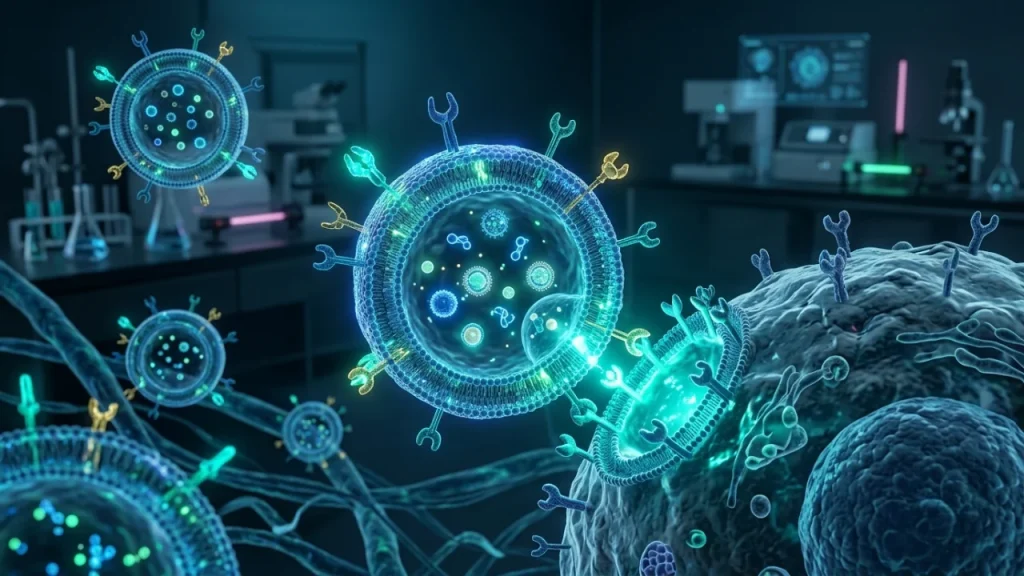
What Are Exosomes and Why Should You Care About Them?
Tiny Messengers Inside Your Body
Imagine your body’s cells are like cities. They need to send messages. They do not use phones or emails. They use tiny packages. These packages are called exosomes. They are incredibly small. You could line up thousands across a single grain of sand.
Cells create exosomes inside themselves. They load these vesicles with special cargo. This cargo is the message. It can include proteins, lipids, and genetic material like RNA. Then the cell releases the exosome into the bloodstream or other fluids. It travels until another cell takes it in. That cell reads the message and acts on it.
This system is vital for health. It helps coordinate many body functions. For example, immune cells use exosomes to alert others about an infection. Stem cells send exosomes to help repair damaged tissue. Even your brain cells use them to communicate.
Scientists find these particles fascinating for a reason. They are natural. Your body already makes them. They are also precise. They can find specific target cells. This makes them ideal candidates for new medical treatments. Researchers are creating advanced exosomes-based strategies to fight disease.
Think of a harmful cell, like a cancer cell. It also sends exosomes. Its messages are different. They might tell blood vessels to grow toward the tumor. They could tell the immune system to stand down. Understanding this bad communication helps us stop it.
Here is what makes exosomes unique messengers: – They are protected. Their lipid bubble shield keeps their cargo safe during travel. – They are targeted. They carry address labels that guide them to the right cell type. – They are complex. Their message is not one single item but a combined instruction set.
Because they are so small and natural, they can go places many drugs cannot. They might cross the blood-brain barrier. This protects the brain but blocks most medicines. Exosomes could deliver therapy directly to brain cells.
The average human cell releases thousands of these vesicles. Their numbers change with health and disease. This makes them useful as biomarkers too. Doctors could test your blood for exosomes from a sick organ. It gives an early warning sign.
This natural delivery network is always working inside you. It is a hidden highway of information. Scientists now aim to hijack this system for good. They want to design smart exosomes that carry healing instructions directly to diseased cells.
This foundational knowledge changes how we view medicine. We are not just making foreign drugs. We are learning to speak the body’s own language. The next step is learning how to write new messages for these tiny couriers to carry.
Why Synthetic Drug Carriers Often Fail
Most man-made drug carriers are built for one main job. They must get a medicine to the right place in the body. This sounds simple. It is not. The human body is a fortress designed to destroy invaders. Synthetic nanoparticles often look like invaders to our immune system.
White blood cells are the body’s security guards. They constantly patrol the bloodstream. They quickly spot and swallow foreign particles. This process is called clearance. Up to 99% of injected synthetic carriers can be cleared by the liver and spleen within minutes. The medicine never gets a chance to work.
These carriers also struggle with navigation. They lack precise targeting. Imagine mailing a letter with only a city name on the envelope. A synthetic particle might reach the general area of a tumor. It cannot find the specific front door of a cancer cell. This leads to collateral damage. Healthy cells are hit by the toxic drug. This causes severe side effects.
The materials themselves can cause problems. Many synthetic carriers are made from plastics or metals. These materials can be toxic. They might trigger inflammation or an allergic reaction. The body may have trouble breaking them down safely. They can accumulate in organs over time.
Another major hurdle is biological barriers. The blood-brain barrier is a famous example. It is a tight seal of cells protecting the brain. It blocks nearly all large molecules and foreign particles. Most synthetic carriers are too big or too foreign to pass through. This makes treating brain diseases very hard.
Even if a carrier reaches its target, it must deliver its cargo correctly. Many synthetic vesicles get stuck. They are taken into the target cell but trapped in a cellular compartment called an endosome. The endosome acts like a stomach. It acidifies and digests the carrier and its drug. The medicine is destroyed before it can act.
Dose control is another issue. Synthetic carriers can release their drug all at once. This is called burst release. It floods the area with medicine. The level then drops too low to be effective. Achieving a steady, controlled release over days is technically difficult with many man-made systems.
These repeated failures highlight a core design flaw. Synthetic carriers are outsiders. The body did not evolve with them. It sees them as a threat. This is why scientists are turning to exosomes-based strategies. The goal is to use the body’s own communication system instead of fighting against it.
Exosomes offer built-in solutions to these problems. They are made by human cells, so the immune system often ignores them. They have natural address labels for targeting. Their membrane fuses easily with recipient cells to ensure delivery. They are biodegradable and leave no toxic residue.
The shift from synthetic to natural carriers is a major step forward. It moves us from brute force to intelligent design. We stop trying to force our way through the body’s defenses. We start using its own pathways instead. This elegant approach could finally solve the delivery problem that has plagued medicine for decades. The next section explores how we engineer these natural vesicles for this precise purpose.
How Exosomes Solve Delivery Problems
Exosomes solve delivery problems because they speak the body’s native language. Their design comes from millions of years of evolution. This gives them unique abilities man-made particles lack.
First, they are masters of stealth. Your immune system constantly patrols for invaders. It looks for foreign shapes and chemical signals. Synthetic carriers often trigger this alarm. Exosomes usually do not. They display “self” markers on their surface. These markers signal “friend, not foe” to immune cells. This allows exosomes to move through the bloodstream with much less interference. They avoid rapid capture and destruction by the liver and spleen.
Their second advantage is precise addressing. Cells send exosomes to specific destinations. They do this using targeting molecules on the exosome’s outer shell. Think of these molecules as postal codes or street addresses. For example, an exosome from a brain cell might carry tags that help it bind only to other brain cells. Scientists can now harness this natural system. They can engineer these address labels to direct exosomes to diseased tissues, like tumors.
The third solution is efficient delivery. Getting a drug inside a target cell is a major hurdle. Exosomes have a natural mechanism for this. Their membrane can fuse directly with the membrane of the recipient cell. It is like two soap bubbles merging into one. This fusion dumps the exosome’s cargo directly into the cell’s interior. The cargo avoids getting trapped in a digestive endosome. This ensures the therapeutic molecule stays intact and can do its job.
These vesicles also offer superior biocompatibility. They are made from natural lipids and proteins. After delivering their cargo, they break down smoothly. Their parts get recycled by the body. They do not leave behind toxic fragments or cause long-term inflammation like some plastics can.
Finally, exosomes handle cargo with great care. Their interior protects fragile molecules. This includes: – RNA, which can easily degrade in the bloodstream. – Proteins, which can unfold and become inactive. – Certain drugs that are sensitive to their environment.
This protective bubble maintains the cargo’s stability from production until delivery.
The practical benefits of these traits are clear. In research, exosome-based strategies show longer circulation times in blood. They achieve higher target tissue accumulation. They demonstrate reduced side effects from drugs going to the wrong places. This leads to a better therapeutic index. That term means more medicine gets to the sick cells, and less bothers healthy ones.
Consider cancer treatment. A chemotherapy drug packed into an exosome with a tumor-targeting address could directly attack the cancer. It would largely spare healthy organs like the heart and gut. This could mean stronger treatment with fewer severe side effects for patients.
The potential extends to genetic medicine. Delivering corrective genes or RNA instructions has been a huge challenge. Viruses used as carriers can cause immune reactions. Synthetic nanoparticles often fail to reach the right cells. Exosomes, as natural carriers of genetic material, are a promising alternative. They could safely deliver these delicate blueprints to fix disease at its root.
In summary, exosomes are not just another container. They are a sophisticated, biological delivery system honed by evolution. Their innate abilities in stealth, targeting, and delivery solve the core failures of synthetic designs. This makes them a powerful foundation for next-generation therapies. The next question is how we can tailor these natural vesicles for specific medical missions through bioengineering.
The Promise of Personalized Medicine
Personalized medicine means your treatment is designed just for you. It considers your unique biology. This approach is more effective and safer than standard treatments. Exosome-based strategies are a perfect tool for this new era. They can be custom-built as biological couriers for individual patients.
Think about a tumor. Your tumor releases specific exosomes. These vesicles carry a molecular fingerprint of that cancer. Doctors can collect a blood sample from you. They can analyze these tumor exosomes to understand the cancer’s weak points. This information guides drug choice. It is like getting a detailed report on the enemy before the battle.
The personalization can go even further. Your own cells can become the source of therapeutic exosomes. A small sample of your skin or blood cells can be taken. Scientists can then reprogram these cells in a lab. They can engineer them to produce exosomes loaded with medicine you need. These exosomes would come from you. Your body is less likely to see them as foreign and attack them.
This self-derived approach has major benefits for chronic conditions. – It minimizes immune rejection risks. – It allows for repeated dosing over a lifetime. – It creates a treatment that is biologically matched to the patient.
Consider a patient with a rare genetic disorder. Current treatments might not exist or be very crude. With advanced bioengineering, their own corrected cells could produce healing exosomes. These vesicles would carry the fixed genetic instruction or the missing protein. They would then deliver it precisely to tissues in need. This turns the patient’s biology into its own pharmacy.
The process for creating personalized exosome therapies involves several key steps. First, doctors collect a patient’s cells through a simple biopsy. Next, these cells are expanded and modified in a controlled laboratory setting. They are engineered to produce exosomes with a specific cargo. This cargo could be a drug, a gene, or a silencing RNA molecule. Finally, the harvested exosomes are purified and prepared for infusion back into the same patient.
This method is not science fiction. Early clinical trials are exploring this concept. The vision is powerful. One day, your treatment could be produced in a lab from your own materials. It would be designed to address your specific disease signature. This moves medicine from reactive to proactive and precise.
The promise extends beyond single treatments. These personalized exosomes could also act as monitoring systems. After delivering their cargo, they might continue circulating. They could send back signals about how the treatment is working. Doctors could track these signals with simple blood tests. This allows for real-time adjustment of therapy.
Of course, creating such tailored treatments is complex. It requires sophisticated technology and careful quality control. The cost today is high. But as methods improve, the goal is to make this precision accessible. The ultimate aim is to treat each patient as the unique individual they are.
Exosomes provide the adaptable platform needed for this shift. Their natural role in communication makes them ideal for carrying personalized messages. Their biocompatibility allows them to be sourced from the patient. This combination is key for the future of medicine. It is a future where therapy is as unique as your DNA, offering hope for conditions that are currently untreatable. The next challenge lies in scaling these sophisticated bioengineering methods safely and reliably for widespread use.
How Scientists Engineer Exosomes for Medical Use
Collecting Natural Exosomes from Cells
The journey of an engineered exosome begins with a collection. Scientists must first gather the natural vesicles. They source these from living cells. Different cell types produce different exosomes. The choice of source is a critical first decision. It shapes the entire therapeutic strategy.
Researchers often use cells that grow well in labs. These are called cell lines. Mesenchymal stem cells are a common example. They are found in bone marrow and fat tissue. These cells naturally release many exosomes. Their vesicles carry signals for repair and regeneration. This makes them a powerful starting point for healing applications.
Another source is the patient’s own blood. Immune cells in blood constantly release exosomes. A simple blood draw can provide the raw material. This is key for personalized exosomes-based strategies. Using a patient’s own cells avoids immune rejection. The process starts with drawing blood. Then, specific white blood cells are separated and grown in culture flasks. These cells are fed a special nutrient broth. As they grow, they release exosomes into this liquid medium.
The collection environment is tightly controlled. Cells are kept in incubators. These machines maintain perfect temperature and humidity. The goal is to keep cells healthy and productive. Stressed or dying cells release different vesicles. They can contaminate the desired exosome population. Scientists monitor cells carefully under microscopes.
After a period of growth, the culture medium holds the treasure. It contains the exosomes secreted by the cells. But it also contains many other things. The medium has leftover nutrients and cellular debris. Isolating exosomes from this mix is like finding tiny diamonds in muddy water. The next step is purification.
The harvested liquid is processed through a series of steps. Each step removes larger contaminants. – First, centrifugation spins the liquid at low speed. This removes whole cells and large cell fragments. – The clearer liquid then spins at much higher speeds. This is called ultracentrifugation. It pellets the tiny exosomes to the bottom of the tube. – Other methods use special filters. These filters have extremely small pores. Only particles as small as exosomes can pass through.
The final product is a concentrated pellet or solution of natural exosomes. Under an electron microscope, they look like tiny, cup-shaped bubbles. They are incredibly small. Billions could fit on the head of a pin. This collection is just the raw material. It is not yet a medicine.
The properties of these collected vesicles depend entirely on their source. Cancer cell exosomes carry different signals than stem cell exosomes. Scientists choose the source based on the intended job. For delivering a drug to a tumor, using exosomes from similar cancer cells might be effective. Those vesicles naturally home to tumor tissue.
This harvesting process sets the stage for bioengineering. Once scientists have pure, natural exosomes, they can begin to modify them. They can load them with therapeutic cargo or alter their surface. But that work requires a clean and reliable starting point. Collecting exosomes is the essential foundation for all advanced medical applications that follow.
Loading Drugs into Exosome Cargo
Scientists have a clean batch of exosomes. Now they need to fill them. Think of an exosome as a tiny, natural shipping container. Its hollow interior can carry many things. The goal is to pack it with a useful drug or genetic medicine.
Loading must be careful. The process should not destroy the delicate vesicle. It also needs to be efficient. Many cargo molecules must get inside for the treatment to work. Researchers have developed several clever loading techniques. These are key exosomes-based strategies.
One common method is called incubation. Scientists simply mix the drug with the exosomes in a tube. They let them sit together for hours. During this time, some drug molecules drift across the exosome’s membrane. This passive diffusion works for small drugs. It is simple but not always efficient.
For larger cargo, scientists use more active methods. Electroporation is one powerful technique. It uses short electrical pulses. These pulses create tiny temporary holes in the exosome’s membrane. The drug molecules can then slip inside through these holes. After the pulse ends, the membrane seals itself. This method is good for loading RNA or DNA.
Another active method is sonication. Sound waves are applied to the mixture. These waves create physical stress on the exosome membranes. The membranes become more flexible and permeable. Drug molecules are pushed inside during this process. It is effective but requires careful control. Too much sound energy can break the vesicles.
Scientists can also load exosomes from the inside out. They engineer the parent cells first. They give those cells the desired drug or genetic instructions. The cells then produce exosomes that already contain the cargo. This is called parental cell pre-loading.
For example, a researcher might insert a gene into a stem cell. This gene tells the cell to make a specific healing protein. The stem cell packages some of that protein into exosomes as it makes them. The exosomes are then harvested already loaded. This method uses the cell’s own natural packing machinery.
The choice of method depends on the cargo. Small chemical drugs often use incubation or sonication. Large, fragile genetic material like mRNA may need electroporation. Each strategy has pros and cons for stability and loading yield.
After loading, scientists must check their work. They test to confirm the drug is inside. They also verify the exosomes are still intact and functional. An exosome damaged during loading will not deliver its cargo correctly.
Successfully loaded exosomes become targeted delivery vehicles. They carry their hidden medicine through the body. But the cargo is only one part of the engineering puzzle. The outside of the vesicle also needs attention for precise targeting.
Teaching Exosomes to Target Specific Cells
A loaded exosome is useless if it goes to the wrong place. Scientists must teach it where to deliver its cargo. They do this by engineering the exosome’s outer surface. Think of it like adding a GPS address to a delivery truck.
The natural surface of an exosome has many proteins and sugars. These act like vague postal codes. They guide exosomes toward certain general cell types. But for precise medicine, we need exact street addresses. This is where bioengineering creates advanced exosomes-based strategies.
One common method is called ligand display. A ligand is a tiny molecular key. It fits into a specific lock on a target cell. Scientists can attach these keys to the exosome membrane.
- They can engineer the parent cell to make a new protein key. This protein becomes part of the exosome’s surface during its formation.
- They can also attach keys directly to harvested exosomes. This uses chemical linkers to connect the key to existing surface proteins.
For example, a common target on cancer cells is a protein called EGFR. Scientists can attach an EGFR-binding ligand to an exosome. The engineered exosome will then seek out and latch onto cancer cells displaying that protein.
Another powerful strategy uses antibody fragments. Antibodies are the body’s own targeting molecules. They bind to targets with great precision. Researchers can attach small pieces of antibodies to exosomes. These fragments guide the vesicle directly to diseased tissue.
Sometimes the goal is not just targeting but also penetration. Some tissues have dense protective barriers. The brain is protected by the blood-brain barrier. Scientists are engineering exosomes to cross it.
They might add peptides that trick the barrier’s cellular guards. These peptides act like secret passwords. They allow the exosome to pass through into the brain. This opens doors for treating neurological diseases.
All these methods require careful testing. An engineered targeting signal must not disrupt the exosome’s stability. It must also not trigger an unwanted immune response. The best modifications are stealthy and efficient.
The choice of targeting signal depends entirely on the disease. Different cell types have unique surface markers. Researchers first identify a marker that is abundant on sick cells but rare on healthy ones. Then they design the key to fit that specific lock.
This precision targeting reduces side effects. Traditional drugs flood the entire body. They affect healthy cells and cause reactions. Targeted exosomes aim to deliver their potent cargo only where it is needed most.
Current research is making these systems even smarter. Some teams are designing logic-gated exosomes. These vesicles might require two keys on a cell surface before they unlock their cargo. This double-check system could further improve safety.
The field is rapidly moving from simple homing to active navigation. Future exosomes-based strategies may include elements that respond to local conditions. An exosome might only open in an acidic environment, like a tumor, or when it senses a specific enzyme.
Teaching exosomes to target specific cells transforms them from generic carriers into guided missiles. It is the final piece of core engineering that makes them true delivery platforms. With cargo loaded and address set, they are ready for their journey. The next question is how they actually deliver their therapeutic package upon arrival.
Making Exosomes Safer and More Stable
A therapeutic exosome must be both effective and harmless. Its safety profile is as important as its targeting ability. Scientists use several key methods to ensure this.
First, they work to remove any potentially harmful molecules. Natural exosomes can carry traces of their parent cell’s activity. For instance, an exosome from a cancer cell might contain signals that promote tumor growth. Engineers must clean or “decorate” the exosome surface. They can replace risky native proteins with safer, synthetic ones. This process minimizes the chance of unintended side effects.
Stability is another major hurdle. Exosomes are delicate biological bubbles. They can break down in the bloodstream or during storage. Improving their shelf life is crucial for real-world medical use.
Researchers borrow strategies from the pharmaceutical industry. One common approach is lyophilization. This is a freeze-drying process. It removes water from the exosome sample under a vacuum. The result is a stable powder that can be stored for months. Adding special sugar molecules during this process helps protect the exosome’s structure. When needed, doctors simply add sterile water to reconstitute the therapeutic dose.
For liquid storage, scientists tweak the solution’s environment. They adjust factors like pH and salt concentration. Adding certain protective agents can shield exosomes from temperature changes. These steps prevent the vesicles from clumping together or degrading.
The body’s immune system is always on patrol. A therapeutic exosome must avoid being seen as a foreign invader and destroyed. Advanced exosomes-based strategies focus on immune evasion. Engineers can attach “stealth” molecules to the exosome’s outer membrane. These molecules act like a cloak. They make the exosome invisible to immune cells, allowing it to travel undisturbed to its target.
Long-term safety monitoring is also part of the engineering process. Researchers test how these modified exosomes behave over time. They check for two main things: – Do the exosomes accumulate in healthy organs like the liver or spleen? – Do they break down into non-toxic components after delivering their cargo?
Successful engineering creates an exosome that is inert until it reaches its target. It should not trigger inflammation or an immune attack. It must remain intact from factory to patient. These features are non-negotiable for clinical use.
Making exosomes safer and more stable transforms them from lab curiosities into reliable medicines. It ensures they can be manufactured, shipped, and stored like other drugs. This practical engineering work bridges the gap between a brilliant idea and a usable treatment. Once these hurdles are cleared, the focus shifts to the final step: seeing how they perform in living systems.
Breakthrough Applications in Cancer Treatment
Delivering Chemotherapy Directly to Tumors
Cancer cells send out far more exosomes than healthy ones. This natural activity creates an opportunity. Scientists can load chemotherapy drugs into engineered exosomes. These exosomes then seek out cancer cells.
Traditional chemotherapy is a blunt tool. It floods the entire body with powerful drugs. This attacks fast-growing cancer cells. But it also harms other fast-growing healthy tissues. This causes severe side effects. Patients often experience nausea, hair loss, and extreme fatigue. Their immune systems can become weak.
Exosomes offer a smarter delivery method. They act like targeted couriers. The goal is to package chemo drugs inside these tiny vesicles. The exosome’s natural membrane protects the drug during travel. More importantly, it can guide the drug to the tumor.
Engineers use clever exosomes-based strategies for targeting. One method uses special molecules called antibodies. These antibodies are attached to the exosome’s surface. They are designed to recognize and lock onto markers found only on cancer cells. It is a key fitting into a lock.
Another strategy exploits the tumor environment itself. Tumors often leak signals that attract exosomes. Engineers can tune exosomes to respond to these signals. The exosomes then gather at the tumor site through natural homing.
Once at the tumor, the exosome delivers its cargo. It fuses with the cancer cell’s membrane or is swallowed whole. The chemotherapy drug is released directly inside the cell. This is a direct hit. The mechanism has several key advantages.
- It increases the drug concentration at the tumor. More of the medicine goes where it is needed.
- It decreases exposure in healthy tissues. Less of the drug circulates freely in the blood.
- This lowers the overall dose needed for effect. A smaller amount can be more powerful when delivered precisely.
Research shows this targeted approach works in models. For example, exosomes loaded with doxorubicin, a common chemo drug, can shrink tumors. Critically, they cause less damage to the heart. Heart damage is a known side effect of systemic doxorubicin.
The process turns a weakness into a strength. Cancer’s own communicative network is hijacked. The exosomes become Trojan horses. They look like normal cellular messengers to the body. But they carry a therapeutic weapon inside.
This direct delivery system tackles the major flaw of chemotherapy. It separates the powerful effect from the punishing side effects. Patients could potentially get better treatment with less suffering. Their quality of life during therapy could improve significantly.
The success of this approach relies entirely on prior engineering steps. The exosome must be stable to carry its load. It must be invisible to the immune system to reach its target. Meeting those challenges makes this targeted attack possible.
Current work is refining these systems further. Scientists are testing which drugs pair best with exosome delivery. They are making targeting more precise to avoid any healthy cells. Each step brings this technology closer to clinical reality.
Using exosomes for chemotherapy delivery represents a paradigm shift. It moves treatment from widespread bombardment to precise surgical strikes. This application highlights how bioengineering can humanize powerful medicine, focusing its power where it belongs.
Using Exosomes to Stop Cancer Spread
Cancer cells send out far more exosomes than healthy ones. These vesicles act as advance scouts. They prepare distant organs for the arrival of cancer cells. This process is called pre-metastatic niche formation. Bioengineers are creating countermeasures. Their goal is to block this deadly communication.
One strategy uses decoy exosomes. Scientists design empty exosomes that carry specific docking ports. These ports match the ones on cancer cells or their target organs. The decoys flood the system. They saturate the binding sites. This blocks the real cancer exosomes. The harmful messages cannot be delivered.
- Decoy exosomes bind to receptors on organ cells.
- They physically prevent tumor exosome attachment.
- They can also soak up signaling molecules in the blood.
Another approach loads exosomes with anti-metastatic drugs. These are not classic chemotherapy drugs. They are different compounds. Their job is to disrupt the steps of spread. For instance, some drugs break down the matrix around a tumor. Cells need this breakdown to escape. An exosome can deliver a matrix-blocking drug right to the tumor’s edge.
Exosomes can also carry genetic instructions. They deliver microRNA or siRNA. These are small pieces of genetic material. They can turn off key genes inside a cancer cell. A target gene might control movement or invasion. Switching it off traps the cancer cell in place. It cannot start its journey.
Research shows these exosomes-based strategies can halt spread in animal models. In one study, engineered exosomes reduced lung metastases by over 70%. They did this without treating the primary tumor directly. The focus was solely on interrupting the spread.
The engineering challenge here is targeting. The exosome must find the right cells to deliver its blocking payload. Scientists often use the same targeting methods from drug delivery. They add proteins to the exosome surface. These proteins guide the vesicle to liver, bone, or lung cells. These are common sites for metastasis.
Timing is also critical. These interventions may work best after initial tumor treatment. They could act as a clean-up crew. They would mop up stray cells trying to establish new colonies. This could prevent recurrence years later.
The beauty of this approach is its systemic nature. Metastasis is a whole-body problem. Exosomes are a whole-body solution. They travel naturally through the bloodstream. They can reach those distant organs that surgery or radiation cannot easily touch.
Using exosomes to stop cancer spread represents a proactive defense. It moves beyond attacking a known tumor. It aims to protect the entire body from an invisible threat. This shifts the treatment goal from simple removal to complete containment. The next frontier combines these approaches into a unified therapy system.
Training the Immune System to Fight Cancer
Cancer cells are clever. They often hide from the body’s natural defenses. They send signals that tell immune cells to stand down. This lets tumors grow unchecked. Scientists are now fighting this trick with a cleverer one. They use engineered exosomes to retrain the immune system. These vesicles can turn a weak defense into a powerful attack.
The strategy hinges on two key immune players. The first is the T-cell. This cell can kill cancer directly. The second is the dendritic cell. It acts as a general. It shows T-cells what to attack. Cancer disrupts communication between these cells. Exosomes-based strategies aim to restore it.
One method loads exosomes with tumor markers. These markers are called antigens. An antigen is like a wanted poster for the immune system. Dendritic cells usually display these posters. Engineered exosomes can do this job instead. They deliver the cancer antigen directly to T-cells. This primes the T-cells to hunt.
Another approach targets the “off” switches. Cancer cells activate proteins like PD-L1. This protein binds to T-cells and disables them. Researchers create exosomes that carry blockers for these switches. The exosomes act as shields. They protect T-cells from being shut down. The T-cells remain active and lethal.
Engineering these smart vesicles involves specific steps. – Scientists first choose a source cell. This cell will produce the exosomes. – They then modify those cells. The cells might be told to produce specific antigens. – The cells might also be told to pack blocking antibodies inside the vesicles. – The harvested exosomes are then purified. They are now ready for delivery.
The results from early studies are promising. In melanoma models, antigen-loaded exosomes boosted T-cell numbers by over fifty percent. In other studies, exosomes carrying checkpoint blockers shrank solid tumors. The effect was durable. The immune system remembered the threat.
This therapy offers clear advantages. Exosomes are naturally good at talking to immune cells. They are also small. They can travel to lymph nodes easily. Lymph nodes are command centers for immunity. Direct delivery here creates a strong response.
Timing matters for this treatment too. It could work after surgery. It would clear any remaining cancer cells. It might also work with traditional therapies. Radiation can release tumor antigens. Exosomes could amplify the resulting immune reaction.
The goal is a sustained defense. A trained immune system can patrol the body long-term. It can detect returning cancer cells quickly. This creates a living therapy inside the patient.
Combining this with metastasis-blocking exosomes-based strategies creates a full campaign. One set of exosomes stops cancer from moving. Another set directs immune forces to destroy it. Together, they attack the disease on multiple fronts.
This approach moves us toward smarter cancer care. It uses the body’s own systems as powerful tools. The future lies in coordinating these biological messengers for total therapeutic control.
Overcoming Drug Resistance in Tumors
Cancer cells are clever defenders. They often develop ways to push chemotherapy drugs right back out. This is a major form of drug resistance. It leaves treatments powerless. Exosomes offer a smart way around this wall.
Think of a tumor as a fortified castle. Chemo drugs are like soldiers trying to break in. The cancer cells have powerful pumps on their walls. These are called efflux pumps. They throw the attacking soldiers back out before they can work. Exosomes can be engineered to carry the same drug soldiers, but they have a secret disguise.
Exosomes look like friendly messengers to the cancer cell. The cell’s own membranes recognize them. This allows the exosome vesicle to fuse directly with the tumor cell’s wall. It delivers its drug cargo inside the fortress. The defensive pumps are bypassed completely. The drug is already where it needs to be.
The strategy is precise. Scientists can load exosomes with common chemo drugs like doxorubicin or paclitaxel. Studies show this method can increase drug inside resistant cancer cells by tenfold or more. The cancer’s main defense becomes useless.
But getting the drug inside is only the first step. Tumors have other shields. They create a dense, tangled network around themselves. This is the extracellular matrix. It blocks large particles from penetrating deep into the tumor mass. Standard drug nanoparticles get stuck at the edges.
Exosomes have a natural advantage here too. Their small size and flexible shape let them navigate this dense jungle. They can worm their way closer to the core of the tumor. This improves delivery to the cells that are hardest to reach. More of the tumor is exposed to the treatment.
Another problem is the tumor microenvironment. This area around the cancer is hostile. It is often acidic and low in oxygen. These conditions can break down drugs before they arrive. Exosomes protect their cargo like a armored vehicle. The lipid bilayer shields the drugs from this harsh journey. The payload stays intact until release.
Combining strategies makes this even more powerful. Exosomes can be designed for dual attacks. They might carry a chemotherapy drug and a special RNA molecule at the same time. The RNA could silence the genes that create the cancer’s efflux pumps. This one-two punch delivers the drug and disables the resistance mechanism simultaneously.
- The exosome delivers its toxic drug cargo.
- It also delivers instructions to stop making defense pumps.
- The cancer cell is hit now and left defenseless for later.
This approach turns a weakness into strength. Cancer cells release many exosomes naturally. Bioengineers are hijacking this very system for therapy. The same vesicles tumors use for communication become their downfall.
Research in models of breast and lung cancers shows this works. Tumors that stopped responding to normal chemo drugs shrank when treated with exosome-delivered versions. The treatment was more effective at lower doses. This could mean fewer side effects for patients in the future.
These exosomes-based strategies create a robust solution package. They tackle multiple layers of resistance at once. – They bypass cellular pump defenses. – They penetrate deep into tumor tissue. – They protect delicate drug cargos. – They can deliver combination therapies.
Overcoming resistance is not just about using a stronger drug. It is about being smarter than the cancer’s adaptations. Exosomes provide that intelligent delivery system. They use biology’s own rules to win the battle.
This moves treatment toward a more reliable outcome. It aims to ensure that when a therapy is prescribed, it will work as intended every time. The next frontier is integrating this delivery power with other cutting-edge approaches for a complete cure.
Revolutionizing Brain and Nerve Disease Therapies
Crossing the Blood-Brain Barrier Safely
The brain is protected by a powerful shield. This shield is called the blood-brain barrier. It is a tight layer of cells lining the blood vessels in the brain. Its job is to keep harmful things out. This includes many helpful medicines. For decades, this barrier has blocked treatments for brain diseases.
Exosomes offer a unique key to this lock. They are natural carriers in the body. Our own cells use them to send messages. Critically, some exosomes can cross the blood-brain barrier. They do this safely and without surgery. Bioengineers are now loading these vesicles with therapeutic cargo.
The process uses the body’s own communication routes. Certain signals on the exosome’s surface act like passports. These signals are recognized by cells of the blood-brain barrier. This allows passage from the bloodstream into the brain tissue. It is a targeted biological delivery.
These exosomes-based strategies are being tested for several conditions. – In Alzheimer’s disease, they can carry enzymes to break down toxic protein clumps. – For Parkinson’s, they might deliver molecules to protect dying nerve cells. – In brain tumors, they can bring chemotherapy drugs directly to the cancer. – For stroke recovery, they may deliver growth factors to heal damaged areas.
One major advantage is safety. Because exosomes are natural, they cause less inflammation. Synthetic nanoparticles often trigger an immune response. This can damage the delicate brain. Native exosomes avoid this problem. They are stealthy carriers.
Precision is another benefit. Scientists can engineer exosomes to go to specific brain cells. They can add targeting signals to the vesicle’s surface. An exosome could be directed to neurons instead of other cell types. This makes treatment more effective and reduces side effects.
Research in animals shows clear promise. In models of brain injury, exosome-delivered drugs reduce swelling. In models of genetic disease, they correct missing proteins. The effects are seen at doses far lower than traditional methods require. This is because more medicine actually reaches its target.
The potential extends beyond drugs. Exosomes can also deliver nucleic acids. These are instructions for cells. They could tell a brain cell to produce a healing protein itself. This turns the cell into its own medicine factory. The approach could treat conditions with a single genetic fix.
Crossing the blood-brain barrier safely was once a dream. Exosome technology is making it a tangible reality. It transforms a major obstacle into a navigable pathway. This opens doors for treating illnesses we could not touch before.
The next logical step is combining this delivery power with advanced diagnostics. Imagine exosomes that both treat a disease and report back on their progress. This closed-loop system would represent the ultimate in targeted therapy. It brings us closer to cures for the most complex neurological disorders.
Treating Alzheimer’s and Parkinson’s Diseases
Neurodegenerative diseases like Alzheimer’s and Parkinson’s involve the slow loss of brain cells. This loss leads to problems with memory, movement, and thought. Current treatments often just manage symptoms. They do not stop the disease from progressing. Exosome-based strategies offer a new path. They aim to treat the root causes inside cells.
Alzheimer’s disease is marked by two main issues. Toxic proteins called amyloid-beta clump together. They form plaques between neurons. Another protein, tau, forms tangles inside cells. These plaques and tangles disrupt cell communication. They eventually kill neurons. Exosomes can be engineered to carry tools against these proteins.
One approach uses exosomes to deliver special enzymes. These enzymes can break down amyloid-beta plaques. Another method uses exosomes to carry small RNA molecules. These RNAs can silence the genes that produce too much toxic protein. Exosomes deliver these cargoes directly to the affected brain cells. This is more precise than a drug circulating everywhere.
For Parkinson’s disease, the problem often starts with a protein called alpha-synuclein. It misfolds and forms sticky clumps called Lewy bodies. These clumps damage neurons that produce dopamine. Dopamine is a crucial chemical for smooth movement. Its loss causes tremors and stiffness.
Exosome therapies for Parkinson’s could work on several fronts. – They could deliver antioxidants to protect neurons from stress. – They could carry molecules that help cells clear out the misfolded protein clumps. – They could even provide growth factors to support surviving dopamine neurons.
The goal is to rescue cells before they are lost forever.
A key advantage is personalization. A patient’s own cells could be used to create exosomes. For instance, skin cells can be reprogrammed into stem cells. These stem cells can then be coaxed into producing therapeutic exosomes. This method reduces the risk of an immune reaction. The body sees these exosomes as friendly, not foreign.
Research is moving from animals to early human trials. Scientists are testing safety first. Early results show that engineered exosomes can reach human brain areas in need. They do this without causing major side effects. Measuring real clinical improvement takes longer, but the path is clear.
The challenge is timing. These diseases start years before symptoms appear. Future exosome treatments may need to be given very early. They could act as a maintenance therapy. This would slow or halt progression for decades.
Combining diagnostics with treatment is also promising. Imagine exosomes designed to seek out amyloid clumps. Upon finding them, they could release a treatment and also a signal. This signal would show up on a brain scan. Doctors could then see the treatment working in real time.
This represents a shift from managing decline to active brain repair. Exosomes are not a single magic bullet. They are a versatile delivery platform. They bring multiple therapeutic tools directly to the battlefield inside neurons.
The logic now extends to other conditions. If exosomes can tackle these complex diseases, they can address simpler targets too. The next frontier includes acute injuries and widespread inflammation.
Repairing Nerve Damage After Injury
Spinal cord injuries create a hostile environment for healing. The initial trauma shears nerve fibers. A cascade of inflammation and scar tissue then blocks any natural repair. This double damage makes recovery so difficult. Exosomes offer a way to change this hostile scene. They can carry instructions directly to the cells at the injury site.
These instructions tell cells to shift from a destructive to a repair mode. Specific exosome-based strategies deliver key molecules. These molecules perform several critical jobs. They calm the overactive immune response. They reduce the formation of dense scar tissue. They also create a better environment for nerve fiber growth.
The cargo inside exosomes directs this repair. Scientists can load them with precise tools. – Growth factors tell nerve cells to extend their fibers, called axons. – MicroRNAs can turn off genes that cause cell death or inflammation. – Enzymes can break down some early scar components physically.
This approach targets the biology that prevents healing. Traditional drugs often fail here. They cannot reach the injury core effectively. They also lack this multi-pronged action. Exosomes act as a combined troop carrier and command unit. They arrive at the exact location and deploy different tools together.
Nerve regeneration requires more than just growing new fibers. Those fibers need to connect correctly over long distances. Exosomes guide this process too. They can carry adhesion molecules. These molecules act like road signs for growing nerves. They help axons find their proper paths toward their original targets.
Evidence from animal studies is compelling. In rodent models of spinal injury, treated animals show notable improvement. They regain some limb movement and coordination. Scientists see new axons bridging the injury site under microscopes. The exosomes helped modify the local environment successfully. This allowed the nervous system’s innate, but weak, repair programs to work much better.
The timeline for this repair is crucial. Treatment likely needs to happen within a specific window. Early intervention may prevent much of the secondary damage. This is different from chronic diseases discussed earlier. Here, the goal is urgent environmental modification after a single event.
Repair also demands sustained support. A single exosome dose might not be enough. Researchers are exploring repeated administrations or slow-release systems. These systems would provide a steady supply of pro-repair signals for weeks. This ongoing support could guide longer, more stable nerve regeneration.
The principle extends beyond spinal cords to peripheral nerve damage. A severe cut in an arm or leg can sever nerves. Engineered exosomes could accelerate that repair process too. They could be applied locally during surgery. This would directly aid reconnection and reduce muscle wasting.
The vision is clear for acute injuries. Exosomes are not just delivering drugs. They are reprogramming the entire injury zone. They turn a site of permanent damage into a site of active repair. This shifts medicine from passive care toward true biological restoration.
This logic of direct repair now leads to another major frontier: cancer. Tumors use exosomes for their own dark purposes. The next challenge is to intercept and counter those signals for therapy.
Reducing Brain Inflammation
Chronic brain inflammation is a hidden engine behind many diseases. It drives damage in Alzheimer’s, Parkinson’s, and multiple sclerosis. This inflammation is not like an infection. It is a misguided immune attack that does not stop. It harms the very neurons it should protect.
The brain has its own immune cells called microglia. Their job is to guard and clean. In a healthy state, they are quiet and watchful. In disease, they become overactive. They start releasing toxic chemicals. These chemicals harm neurons and worsen disease progression. Calming these cells is a major therapeutic goal.
Exosomes offer a unique way to deliver the ‘stop’ signal. They are natural carriers for messages between cells. Scientists can load them with specific anti-inflammatory instructions. These instructions can reprogram the overactive microglia. The goal is to make them return to their peaceful, protective state.
How do these engineered vesicles achieve this? They use precise exosomes-based strategies. One strategy involves loading exosomes with special RNA molecules. These molecules can silence genes that cause inflammation. Another method packs them with soothing protein signals. The exosome delivers its cargo directly to the inflamed brain cells.
The delivery route is critical. The brain is protected by a tight barrier. Most drugs cannot cross it. Exosomes have a natural advantage. Some can cross the blood-brain barrier. This means they could be given through a simple injection. They then travel to the site of inflammation in the brain.
Once they arrive, their work begins. The exosomes are absorbed by the raging microglia. Their cargo is released inside the cell. This cargo might tell the cell to produce less toxic chemicals. It might encourage the cell to clear debris instead of creating it. This shifts the local environment from attack mode into repair mode.
The benefits of this approach are multi-layered. – It targets the source of the problem directly. – It reduces collateral damage to healthy neurons. – Its effects can be longer-lasting than conventional drugs. – It uses the body’s own communication system for precision.
This is different from just blocking a single inflammatory molecule. It is about resetting the cell’s entire behavior. Think of it as retraining rather than restraining. The cell’s function is changed for a longer period.
Research in animal models shows promising results. In models of Alzheimer’s, such exosomes reduced plaque-related inflammation. In models of multiple sclerosis, they decreased nerve sheath damage. The treated animals often show better memory and motor function. This proves the principle that calming inflammation aids function.
The timeline for treatment is also important. For chronic diseases, therapy might need to be repeated. It could become a management strategy, like maintenance therapy. The aim is not always a cure but slowing or stopping decline. Improving quality of life is a key measure of success.
This logic extends beyond microglia. Other brain cells contribute to inflammation too. Astrocytes, another support cell type, can also become harmful. Engineered exosomes can carry instructions for them as well. A broad calming effect across cell types may be most effective.
Reducing brain inflammation tackles a root cause. It creates a better environment for neurons to survive and function. This approach complements others aimed at removing toxic proteins or replacing dead cells. By quieting the hostile environment, other therapies have a better chance to work.
The ability to reprogram the brain’s immune landscape is powerful. It turns a destructive process into a protective one. This moves treatment from symptom management to disease modification. The next step is ensuring these smart vesicles go exactly where needed most in the complex brain network.
Advanced Approaches in Healing and Regeneration
Accelerating Wound Healing with Exosomes
Skin wounds trigger a complex repair sequence. The body must stop bleeding, fight infection, and rebuild tissue. This process can fail or be too slow. Chronic wounds are a major health burden. Engineered exosomes offer a way to directly control and accelerate this natural healing.
Exosomes act as precise messengers at the wound site. They carry specific instructions to the key cells involved in repair. These exosomes-based strategies deliver signals that cells might be missing. The goal is to restart a stalled process or make a slow one faster.
The healing process has several phases. Exosomes can be designed to target each one.
- First, inflammation must be controlled. Early exosome signals can calm overactive immune cells. This prevents excessive damage to healthy tissue.
- Next, new blood vessels must form. This is called angiogenesis. Exosomes can carry growth factors that tell blood vessel cells to multiply and migrate.
- Then, new skin cells, or fibroblasts, must create collagen. This protein is the main scaffold for new tissue. Exosomes can boost collagen production.
- Finally, the outer layer of skin, the epidermis, must regrow. Exosomes signal stem cells to become new skin cells.
Research shows exosomes from stem cells are especially potent. They naturally contain a rich mix of healing molecules. Scientists can enrich them further. They can load exosomes with extra microRNAs or proteins. These additions make the vesicles even more powerful.
For example, a diabetic ulcer often lacks good blood flow. Exosomes engineered to promote angiogenesis can be applied topically. They tell blood vessel cells to grow into the wounded area. This delivers oxygen and nutrients. The wound bed becomes healthier and can support new tissue growth.
Another target is scarring. Excessive scar tissue forms when collagen production is unbalanced. Specific exosome signals can guide fibroblasts to make more organized collagen. This leads to stronger, more flexible skin. It can reduce thick, raised scars.
The delivery method is also key. For skin wounds, a gel or spray containing exosomes is simple. It places the vesicles exactly where they are needed. The exosomes fuse with target cells in the wound bed. They release their cargo and change the cell’s behavior.
Preclinical studies are convincing. In models of burn wounds, exosome treatment sped up closure by about thirty percent. Treated wounds showed better blood vessel density and thicker new skin layers. The quality of healing was visibly improved.
This approach moves beyond just adding a single growth factor. Exosomes deliver a coordinated package of instructions. They mimic the body’s own sophisticated communication system. This makes them a powerful tool for regenerative medicine.
The logic is similar to calming brain inflammation but applied outwardly. Instead of quieting microglia, we are directing fibroblasts and endothelial cells. The core principle remains: using engineered vesicles to send precise repair commands to specific cells.
Accelerating wound healing demonstrates a clear practical benefit. It reduces pain, prevents infections, and restores function faster. This application highlights the versatility of exosome engineering for different medical needs. The next challenge is scaling production for widespread clinical use while maintaining consistency and potency in every batch.
Repairing Heart Tissue After Attacks
A heart attack kills millions of muscle cells in minutes. This damage creates a stiff scar. The scar cannot pump blood. This often leads to heart failure. The heart’s natural repair tools are overwhelmed. Scientists are now engineering exosomes to help. These vesicles can carry instructions to the damaged area. They aim to reduce scarring and encourage regrowth.
The goal is not to replace the entire scar. That is currently impossible. Instead, exosome-based strategies focus on two key actions. They seek to protect surviving cells at the injury’s edge. They also try to modify how the scar forms. The result should be a stronger, more functional heart muscle after injury.
Engineered exosomes for the heart carry specific molecular messages. These messages target three main cell types.
- Cardiomyocytes are the heart’s beating cells. Exosomes can deliver signals that help these stressed cells survive. This prevents further cell death after the attack.
- Fibroblasts are the cells that build scar tissue. Exosomes can instruct them to make a more flexible, less rigid matrix. A softer scar strains the remaining heart muscle less.
- Endothelial cells line blood vessels. Exosomes can tell them to grow new capillaries. This improves blood flow to the healing area.
Preclinical studies in animals show real promise. In rodent models of heart attacks, treatment with engineered exosomes led to measurable improvements. Treated hearts showed better ejection fraction. This is a measure of pumping power. Scar size was often reduced by about twenty to thirty percent. New blood vessel growth increased significantly in the border zone.
The engineering process is critical. Scientists load exosomes with specific microRNAs or proteins. For example, a microRNA called miR-21-5p can reduce cell death signals. Another, miR-29, can slow down stiff collagen production in fibroblasts. The exosome’s surface might also be modified. This helps it find and fuse with heart cells more efficiently after intravenous injection.
Delivery timing is another important factor. The therapeutic window matters most in the first days after the attack. This is when inflammation and cell death are most active. Early intervention with exosomes can alter the entire healing trajectory. It sets the stage for better long-term outcomes.
Scaling this for human use presents challenges. The heart is a large, hard-working organ. It needs a substantial dose of therapeutic vesicles. Producing enough pure, potent exosomes is a major hurdle. Researchers are working on large-scale cell culture methods. They are also developing synthetic mimics that copy natural exosome functions.
The potential benefit for patients is enormous. Effective treatment could prevent the decline into chronic heart failure. It could improve quality of life and reduce hospital visits. This application turns exosomes into targeted couriers for cardiac repair. They offer a sophisticated strategy where current drugs often fall short.
This logic moves from external skin repair to deep internal organ healing. The core principle remains using biological communication to guide repair. The next frontier may involve even more complex tissues like the spinal cord or whole organs. Each step requires tailoring the message and the messenger for the specific task ahead.
Regenerating Bones and Cartilage
Bone is not a static scaffold. It constantly remodels itself. This process requires precise signals between cells. Exosomes carry these natural instructions. They can guide the healing of fractures or defects. After a break, the body must form a callus. This is a temporary bridge of new bone. Certain exosomes speed up this callus formation. They do this by carrying molecules that tell bone-building cells to work. These cells are called osteoblasts. The vesicles also tell bone-resorbing cells to slow down. This balance is crucial for strong repair.
Cartilage presents a tougher challenge. This smooth tissue cushions our joints. It lacks blood vessels. This means it heals poorly on its own. Wear or injury can lead to osteoarthritis. Exosomes offer a clever solution. They can be engineered to carry regenerative signals directly to chondrocytes. These are the only cells found in cartilage. The messages encourage these cells to produce new matrix. This matrix is the essential cushioning material.
Advanced bioengineering tailors vesicles for these jobs. Scientists can load exosomes with specific growth factors. Bone morphogenetic proteins are a key example. These proteins are powerful for bone growth. Packaging them inside exosomes protects them. It also delivers them right to the injury site. Surface engineering is also used. A peptide can be added to the exosome’s outer shell. This peptide has a strong affinity for bone mineral. It acts like a homing device for skeletal tissue.
The strategies for bone versus cartilage differ in their goals. – For bone: The aim is to promote rapid, robust mineralization. Exosomes might be combined with a biodegradable scaffold. This scaffold gives structure for new bone to grow into. – For cartilage: The goal is to regenerate soft, flexible tissue without scarring. Exosomes might be injected directly into the joint space. Their surface is designed to bind to cartilage and stay there.
These exosomes-based strategies address a major medical need. Millions suffer from degenerative joint disease or suffer complex fractures. Traditional surgeries and implants have limits. Biological signaling offers a more elegant path. It uses the body’s own language to instruct repair.
The source of the therapeutic exosomes matters greatly. For orthopedic uses, mesenchymal stem cells are a common choice. These stem cells naturally specialize in making bone, cartilage, and fat. Their exosomes are pre-loaded with helpful instructions. Using these vesicles is like delivering a concentrated toolkit for structural repair.
Research shows promising numbers in animal studies. One study saw a 40% improvement in bone density at a fracture site after treatment. Another showed a 50% reduction in cartilage degradation markers. These figures highlight the potential impact. The therapy doesn’t just mask pain. It addresses the underlying biological problem.
Scaling this for widespread use involves clever manufacturing. Scientists are developing methods where stem cells are grown in large bioreactors. The cells are given cues that make them produce more healing exosomes. These vesicles are then collected and purified. The final product must be consistent and potent for every patient.
The future may involve personalized orthopedic treatments. A patient’s own cells could be used to generate custom exosomes. This would minimize any immune reaction. It could optimize the healing signal for their specific biology.
This approach moves healing from mechanical fixation to biological instruction. It represents a fundamental shift in orthopedic medicine. The next logical step applies similar principles to even more delicate systems, like nerves or liver tissue, where precision is paramount.
Slowing Aging and Promoting Longevity
Aging cells send different signals than young ones. Their communication becomes noisy and faulty. Exosomes carry these altered messages throughout the body. This contributes to system-wide decline. Scientists are now engineering exosomes to correct these signals. The goal is to slow aging and promote longevity.
One key target is cellular senescence. Senescent cells are old cells that should die but don’t. They linger and release harmful signals. These signals cause inflammation and damage nearby tissues. It’s like having a few rotten apples spoil the whole barrel.
Exosome-based strategies aim to clear this problem. Researchers load exosomes with special instructions. One instruction might tell a senescent cell to self-destruct. Another could deliver tools to repair the cell instead. This precise cleanup reduces inflammation at its source.
Cellular waste management is another focus. Young cells efficiently recycle their broken parts. This process is called autophagy. As we age, autophagy slows down. Toxic junk piles up inside cells. This junk interferes with normal function.
Engineered exosomes can kickstart this cleanup. They can deliver molecules that turn the recycling machinery back on. Think of it as sending a maintenance crew with fresh supplies. Restoring autophagy helps cells function better for longer.
Telomere protection is a promising area. Telomeres are caps on the ends of chromosomes. They shorten each time a cell divides. Very short telomeres signal a cell to stop dividing. This leads to aging.
Some studies explore exosomes carrying telomerase. Telomerase is an enzyme that can maintain telomere length. Delivering it via exosomes is a complex challenge. Success could help maintain our cellular replicative clock.
Mitochondria are the power plants of our cells. They become less efficient with age. They produce less energy and more waste. This leads to fatigue and weaker organs.
New exosome designs target mitochondria directly. They might carry antioxidants to neutralize waste. They could deliver healthy mitochondrial components for repair. Better energy production supports overall vitality.
These approaches work through several shared mechanisms: – Delivering precise instructions to specific cell types. – Resetting faulty communication networks. – Removing damaged components or cells. – Providing building blocks for cellular repair.
The vision is a multi-pronged therapy. It would not target just one symptom of aging. It would address several root causes at once. This integrated approach has greater potential impact.
Research is mostly in early stages. Animal studies show encouraging results. Treated mice have improved muscle strength and cognitive function. They also show longer healthspans, not just lifespans.
Safety is a primary concern for any longevity treatment. Using exosomes from a patient’s own cells could minimize risks. The body is less likely to reject its own biological vehicles.
The ultimate goal is not extreme life extension. It is extending the period of healthy, functional life. The focus is on quality, not just quantity of years.
This science moves us from treating age-related diseases to targeting aging itself. It shifts the medical paradigm fundamentally. The next frontier is applying this precise delivery to one of aging’s biggest challenges: the complex environment of cancerous tumors, where communication is hijacked for malignant growth.
Current Progress and Real-World Challenges
Clinical Trials Showing Early Success
Early-stage human trials are now testing exosome-based strategies. These studies involve real patients. Their goal is to check safety and find early signs that treatments work.
One major area is wound healing. Chronic wounds are a serious problem. They often affect people with diabetes. A completed Phase I trial used exosomes derived from mesenchymal stem cells. Doctors applied them directly to diabetic foot ulcers. The results were promising. The treatment proved safe with no serious side effects. Many patients saw their wounds heal faster. This shows a clear practical application.
Another key area is reducing inflammation after injury. A clinical study focused on patients with severe COVID-19 lung damage. Researchers used purified exosomes from donor cells. These exosomes were given through an intravenous drip. The aim was to calm the body’s dangerous overreaction. Patients who received the exosomes needed less oxygen support. Their overall recovery time improved. This demonstrates a systemic effect.
Oncology trials are also underway. These studies are more complex. Cancer cells use exosomes to spread. Scientists are turning this against tumors. One approach loads exosomes with anti-cancer RNA molecules. The exosomes deliver this cargo directly to tumor cells. An early trial for pancreatic cancer used this method. Initial data shows the therapy is well-tolerated. Some patients had their disease stabilize.
These human studies share common features. They are all Phase I or Phase II trials. The primary goal is always safety monitoring. Researchers watch for immune reactions or organ stress. Secondary goals measure biological activity. They look for markers in the blood or visible tissue repair.
The scale of these trials remains small. They typically include between twenty and fifty patients. This is normal for early clinical research. It allows careful observation of each individual.
Dosing is a critical challenge being solved. Scientists must determine the right amount of exosomes. They also need the best way to give them. Methods include local injection, intravenous infusion, or topical application. Each route has its own advantages.
Manufacturing consistency is another real-world hurdle. Producing identical exosome batches for hundreds of patients is difficult. Researchers must ensure each dose has the same properties. This is vital for reliable results.
Despite challenges, these trials provide crucial proof-of-concept. They move the science from mice to humans. Early success builds a foundation for larger studies.
The data so far supports further investment and research. It confirms the potential of engineered exosomes as precise delivery tools. The next step involves refining these methods for broader use.
Future trials will need more participants. They will also test combination therapies. The path from early success to approved medicine is long but now visible.
These initial human results validate years of laboratory work. They mark a transition toward practical medical solutions. The focus now shifts to overcoming production and regulatory barriers for wider access.
Scaling Up Production for Widespread Use
Producing exosome medicines for thousands of patients is very different from making them for a lab study. The process must be reliable, large-scale, and strictly controlled. This is called scaling up. It is a major hurdle for the entire field.
Think of it like baking. A recipe for one perfect loaf is hard to multiply for a thousand loaves. The same is true for exosomes. Scientists face three big scaling problems. They need more starter cells. They need bigger bioreactors. They also need better purification methods.
First, they need a consistent source of cells. These cells are the factories that make exosomes. Researchers must choose the right cell type. They often use mesenchymal stem cells. These cells are good producers. But growing billions of identical cells is tough. Each batch must start from the same healthy, young cells.
The cells are then placed in large nutrient baths called bioreactors. These are like giant, sophisticated fish tanks. The environment inside must be perfect. Temperature, oxygen, and food levels are constantly monitored. Small changes can alter the exosomes produced. Keeping everything stable for weeks is a complex engineering task.
After the exosomes are made, they must be collected and purified. This is perhaps the hardest step. The nutrient broth contains many things besides exosomes. Scientists must separate the exosomes without damaging them. They use methods like filtration and ultracentrifugation. These processes are slow and costly at large volumes.
Newer methods are being developed to speed this up. Tangential flow filtration is one promising technique. It works like a very fine sieve. It allows for continuous, gentle separation. Another method uses size-exclusion chromatography. It sorts particles by their size as they flow through a column.
Quality control is non-negotiable. Every batch must be tested to confirm its contents. Scientists check for key markers. They measure the particle concentration and size. They ensure no harmful contaminants are present. This testing adds time and expense to production.
The goal is to create a closed, automated system. This minimizes human handling and error. It also reduces the risk of contamination. Such systems are now in development. They aim to turn exosome production into a smooth, repeatable pipeline.
Cost is a significant real-world factor. Today, producing a single dose is expensive. Scaling up should lower the cost per dose dramatically. This is essential for any future medicine to be accessible.
These production challenges directly impact therapy design. Some exosomes-based strategies might be easier to manufacture than others. For example, exosomes designed for local injection may require fewer purification steps than those for intravenous use.
Overcoming these hurdles is the key to clinical translation. Success in small trials means little without a way to make more medicine. The industry is now building the infrastructure for scalable manufacturing. This work is less glamorous than lab discoveries but equally vital.
The next phase will involve perfecting these processes under strict regulations. This ensures every patient receives a safe, effective, and identical product. Solving production is what will ultimately bring these therapies from the lab to the pharmacy shelf.
Ensuring Safety and Regulatory Approval
Before any new therapy reaches a patient, it must pass strict safety checks. This process is long and detailed. It ensures the treatment is both safe and effective. For exosome therapies, this path is still being mapped out. Regulatory agencies like the FDA provide the guideposts.
The journey starts with extensive laboratory testing. Scientists study how the engineered exosomes behave. They want to know where the exosomes go in the body. They also study how long they stay there. This is called biodistribution. A key question is whether exosomes gather in healthy organs where they are not needed.
Researchers also look for any toxic effects. They use cells in dishes and then animal models. They watch for signs of inflammation or immune system reactions. Even though exosomes are natural, engineered versions can act differently. Their cargo or surface changes might trigger unexpected responses.
A major focus is on consistency. Every single batch of therapeutic exosomes must be nearly identical. Regulators demand proof of this uniformity. They examine data on size, purity, and strength. A medicine cannot work one way in one batch and another way in the next.
This leads to precise analytical methods. Scientists use advanced machines to characterize exosomes. They count every particle. They confirm the presence of correct surface proteins. They measure the exact amount of drug cargo inside. This creates a detailed fingerprint for the product.
After lab and animal studies come human trials. These happen in careful phases. – Phase 1 tests safety in a small group of healthy volunteers or patients. The goal is to find the right dose and watch for side effects. – Phase 2 tests for effectiveness in a larger patient group. It continues to monitor safety closely. – Phase 3 involves hundreds of patients. It compares the new therapy to existing treatments or a placebo.
All data from these stages goes to regulators for review. The application can be thousands of pages long. Experts scrutinize every detail of manufacturing and testing. They must be convinced the benefits outweigh any risks.
For exosomes-based strategies, specific questions arise. Can the engineering process itself create impurities? Do loaded exosomes release their cargo too fast or too slow? Regulators will require answers to these questions.
Real-world monitoring continues even after approval. This is called pharmacovigilance. Doctors report any unexpected side effects in patients. This long-term tracking is crucial for new technology.
The entire system is designed to protect people. It moves cautiously on purpose. For companies, navigating this pathway requires significant time and investment. However, it builds the essential foundation of trust.
Successfully clearing these hurdles proves a therapy is truly ready. It transforms an experimental idea into a reliable medicine. This rigorous approval process is the final gatekeeper before these advanced treatments can help patients widely. The next step will be integrating them into real-world healthcare systems and managing their use.
Making Treatments Affordable and Accessible
The high cost of advanced therapies is a major hurdle. Some current cell and gene treatments exceed one million dollars per patient. Exosomes-based strategies face similar challenges. Their complex manufacturing is a primary reason. Let’s break down why.
Creating therapeutic exosomes is a multi-step process. First, scientists must grow the source cells. These cells need expensive nutrients and sterile conditions. Then, the cells release exosomes into their growth fluid. The exosomes must be collected from this fluid. This is like finding tiny needles in a huge haystack.
The purification process requires advanced machines. These machines separate exosomes from other cell debris. They must do this without damaging the delicate exosomes. Next, engineers may load the exosomes with drug cargo. This adds another technical step. Finally, the product must be tested for purity and strength at each stage. All these steps require specialized labs and highly trained staff. This drives the price upward.
Storage and transportation add more layers. Exosome therapies are often fragile. They may need to be kept frozen at very low temperatures. This is called a cold chain. Maintaining a perfect cold chain from factory to clinic is difficult. It requires reliable freezers and monitored shipping. Any break can ruin the product. This logistics network is costly to build.
So, how can we make these treatments more affordable? Researchers are working on several solutions.
- Scaling up production is key. Moving from small lab batches to large industrial volumes can lower the cost per dose. Think of it like baking one cookie versus a thousand cookies. The cost for each cookie drops.
- Improving efficiency matters too. New methods aim to get more exosomes from fewer cells. Better purification techniques can speed up the process and reduce waste.
- Creating stable products would help. If exosomes could survive at refrigerator temperatures, the cold chain challenge would ease. This would cut logistics costs significantly.
Access is another issue beyond just price. These therapies might only be available at major medical centers initially. Patients in rural or poorer areas could be left out. Healthcare systems need fair payment models. One idea is paying for treatments over time, based on how well they work. This links cost to real-world results.
Insurance coverage will be a decisive factor. Companies must show clear value to insurers. They must prove the therapy saves money in the long run. It could prevent expensive hospital stays or replace lifelong drug regimens.
The goal is to avoid a future where only a few can benefit from this science. Solving the cost puzzle is as vital as solving the scientific one. It requires smart engineering, smart business, and smart policy working together. The next phase of discussion focuses on what patients can realistically expect from this evolving field.
The Future of Medicine with Exosomes-Based Strategies
Moving Toward Personalized Precision Therapies
Exosomes are natural carriers of information. This makes them perfect tools for personalized medicine. Think of them as custom messengers. They can be designed to carry treatment meant for one person alone.
The process starts with a patient’s own cells. Doctors can take a small sample of a patient’s cells. These cells are grown in a lab. Then, they are used to produce exosomes. These exosomes come from the patient’s body. This means the body is less likely to reject them.
These personal exosomes can be loaded with specific drugs. The drugs are chosen based on the patient’s unique illness. For example, a tumor has certain markers. The therapy can target just those markers. This spares healthy parts of the body.
This is the core of exosomes-based strategies. They move beyond a one-size-fits-all approach. They allow for precision targeting. The goal is to make treatments more effective and safer.
Here is how a personalized therapy might be created step-by-step: – A doctor collects a blood or tissue sample from the patient. – Specific cells, like stem cells or immune cells, are isolated and grown. – These cells produce exosomes in a controlled lab environment. – Scientists load these exosomes with a precise drug or genetic instruction. – The finished product is delivered back to the same patient.
This method is being studied for complex diseases. Cancer is a prime example. Two people might have the same type of cancer. But their tumors can be genetically different. A treatment made for one person may not work for another.
Personalized exosome therapy could change this. The exosomes can be engineered to hunt down that specific person’s cancer cells. They deliver a knockout punch directly to the tumor. This reduces damage to healthy organs.
Neurological diseases also need tailored solutions. Conditions like Alzheimer’s progress differently in each person. Exosomes could carry healing signals across the blood-brain barrier. The signals would be designed for that patient’s brain chemistry.
Even rare genetic disorders could be addressed. The fix for a faulty gene could be packed into a person’s own exosomes. This creates a targeted delivery system the body accepts.
The data for this comes from the patient too. Doctors use genetic tests and biomarkers. These tests show what is wrong at a molecular level. The test results guide the design of the exosome therapy. It is a true feedback loop.
Personalized medicine aims to reduce trial and error. Today, patients often try several drugs before finding one that works. This wastes time and causes side effects. A custom-made exosome treatment could be the first and only option needed.
Of course, this approach has challenges. Making a unique therapy for each person is complex. It takes more time than mass-producing a drug. The costs we discussed earlier are even more relevant here.
But the potential payoff is huge. A perfectly matched treatment could work better and faster. It could lead to longer-lasting remissions. It might even cure conditions that are now managed for a lifetime.
The future of exosomes-based strategies lies in this customization. It turns medicine from reactive to proactive and precise. The next step is understanding how these smart systems will be tested and approved for widespread use.
Combining Exosomes with Other Technologies
Exosomes do not work alone in future medicine. Scientists often combine them with other advanced technologies. This creates hybrid systems with extraordinary abilities. One major partner is gene editing. Tools like CRISPR can fix faulty genes inside a cell. But delivering these tools to the right cells in the body is hard. Exosomes offer a natural solution. They can carry gene-editing machinery directly to target cells.
Think of an exosome as a delivery truck. The cargo is not a traditional drug. Instead, the cargo could be CRISPR components. These components are instructions and molecular scissors. They enter a cell guided by the exosome. Once inside, they can repair a genetic error. This error might cause a disease. The repair could be permanent. This approach merges two huge scientific advances. It combines targeted delivery with precise genetic correction.
The process has several key steps. First, scientists load the exosomes. They insert CRISPR molecules into the vesicles. This happens outside the body. Next, the loaded exosomes are given to the patient. The exosomes travel through the bloodstream. Their surface guides them to the sick cells. Then, they fuse with the target cell membrane. They release their editing cargo inside. Finally, the CRISPR machinery goes to work. It finds the exact spot in the DNA and makes the correction.
These hybrid strategies are being tested for many conditions. They show promise for genetic blood disorders. Examples include sickle cell disease and thalassemia. The goal is to edit blood stem cells. Exosomes could carry the editor to bone marrow. Research is also active in muscular dystrophy. Here, the aim is to fix genes in muscle tissue. Even some cancers with known genetic drivers are targets.
Another exciting combination is with RNA interference. This technology can silence harmful genes. It uses small RNA molecules to stop bad instructions. Packaging these RNAs into exosomes protects them. It also ensures they reach the correct organ. This method could treat diseases caused by overactive genes.
Combining tools also helps with imaging and tracking. Doctors need to see if therapy reaches its goal. Scientists can label exosomes with tiny markers. These markers are safe for the body. They show up on medical scans like an MRI. This lets doctors watch the exosomes move in real time. They can confirm the vesicles arrive at the diseased tissue.
The benefits of these hybrid approaches are clear. They increase precision dramatically. They use the body’s own transport system for safety. They can make advanced therapies like gene editing more practical. However, challenges remain. Loading exosomes efficiently with large machinery is difficult. Controlling the exact dose of editing tools is crucial. Scientists must ensure edits happen only in the intended cells.
These exosomes-based strategies represent a new frontier. They are not about one technology alone. The real power comes from integration. By merging exosomes with gene editors and other tools, medicine gains a versatile platform. This platform can address problems at their root cause.
The path from lab to clinic requires careful proof. Researchers must show these hybrid systems are both safe and effective in humans. Rigorous testing will define their role in the future of treatment
Transforming Chronic Disease Management
Chronic diseases often need lifelong management with drugs that cause side effects. Exosomes-based strategies offer a different path. They aim to fix the underlying problem, not just manage symptoms. This could change lives for millions.
Take Type 1 diabetes as an example. The immune system destroys insulin-producing cells. Current treatment involves constant blood sugar monitoring and insulin injections. Engineered exosomes could deliver two things. First, they could carry messages to calm the immune attack. Second, they might deliver factors to help regenerate damaged pancreatic tissue. This one-two approach targets the root cause. It could reduce or even eliminate daily insulin dependence.
Heart failure is another major challenge. After a heart attack, scar tissue forms. This weakens the heart’s pumping ability. Medicines today help the heart work harder, but they don’t repair the scar. Scientists are designing exosomes to change this. These vesicles can be loaded with instructions for heart cells. The instructions tell cells to repair themselves and grow new blood vessels. Early animal studies show this can improve heart function by over 20%. The goal is a single treatment that provides lasting repair.
For autoimmune diseases like rheumatoid arthritis, the problem is a confused immune system. It attacks the body’s own joints. Therapies often suppress the entire immune system. This leaves patients open to infections. Smart exosomes can be programmed as targeted negotiators. They would travel specifically to overactive immune cells in the joints. Once there, they would release signals to reset those cells to a peaceful state. This precision stops the attack without harming overall immunity.
The benefits for chronic care are profound: – Reduced treatment frequency: A single exosome infusion might work for months, not daily pills. – Fewer side effects: Targeted delivery means medicine goes only where it’s needed. – Halting disease progression: By addressing the biological cause, damage could be stopped early.
Managing chronic illness is also about monitoring. Exosomes can be part of the solution here too. They could act as tiny diagnostic reporters. Doctors could inject engineered exosomes that gather data from deep inside an organ. These exosomes would then release signals into the bloodstream. A simple blood test could read those signals. This gives a precise picture of what is happening inside a joint or a pancreas without invasive biopsies.
The shift from daily management to potential repair is key. It moves healthcare from a passive to an active model. Patients would not just be stabilizing their condition. They could be moving toward restoring their health. This requires exosomes that are consistent, reliable, and manufacturable at large scale. Advances in bioengineering are making this possible.
The true transformation lies in improving quality of life over decades. It means less time in clinics and more time living fully. The next step is to ensure these sophisticated systems work safely in long-term human use. Their stability and effect over years must be proven. This will turn a powerful concept into a routine part of future medicine.
Your Role in the Coming Medical Revolution
The journey from lab to medicine needs more than just scientists. It needs an informed public. You have a role in this change. Think of past medical revolutions. Public support helped shape vaccine programs and cancer screening. Awareness drives funding, smart policy, and faster adoption. The same is true for exosomes-based strategies. Your understanding today shapes treatments available tomorrow.
First, knowledge dispels fear. New science can sound complex. Clear facts replace uncertainty. Exosomes are not synthetic strangers to your body. They are natural carriers your cells make every day. Bioengineering simply guides them. Knowing this turns a strange concept into a logical step forward. It builds trust in the research process.
Informed patients can ask better questions. Talk to your doctors about new trials. Discuss future options for chronic conditions. When you understand the core idea, you evaluate news critically. You can tell real science from exaggerated claims. This demand for quality pushes the entire field toward higher standards.
Public interest also guides research priorities. Scientists and funders listen. What diseases cause the most daily struggle? Community focus can steer exosome work toward those needs. For example, pain management or healing stubborn wounds might get more attention. Your voice helps decide which problems are solved first.
Support takes several practical forms: – Learn from reliable sources. Seek out university or major hospital websites. – Consider joining a clinical trial if you are eligible. This provides crucial human data. – Discuss these advances with family and friends. Simple conversations spread awareness. – Advocate for balanced science funding when possible.
The path has clear steps. Research moves from cells to animals to human trials. Each phase requires volunteers, funding, and review. Widespread understanding smooths each step. It helps ethics boards approve studies faster. It encourages companies to invest in large-scale production. Ultimately, it helps regulators create clear safety rules.
This is not a distant future. Early exosome therapies are already in testing for many conditions. Your awareness now prepares you for decisions later. In five or ten years, a doctor might present this as a treatment option. You will already know the basic principles. You can make a confident choice.
The medical revolution is built on science and society together. Engineers design the tools. Biologists understand the mechanisms. Doctors deliver the care. Patients and the public complete the cycle. You provide the context for why this work matters in real lives.
Your role is active, not passive. Stay curious, seek facts, and engage in the dialogue. This collective effort turns brilliant science into routine healing. It ensures these advanced strategies reach those who need them most, safely and swiftly. The future of medicine is a partnership waiting for you to join.