
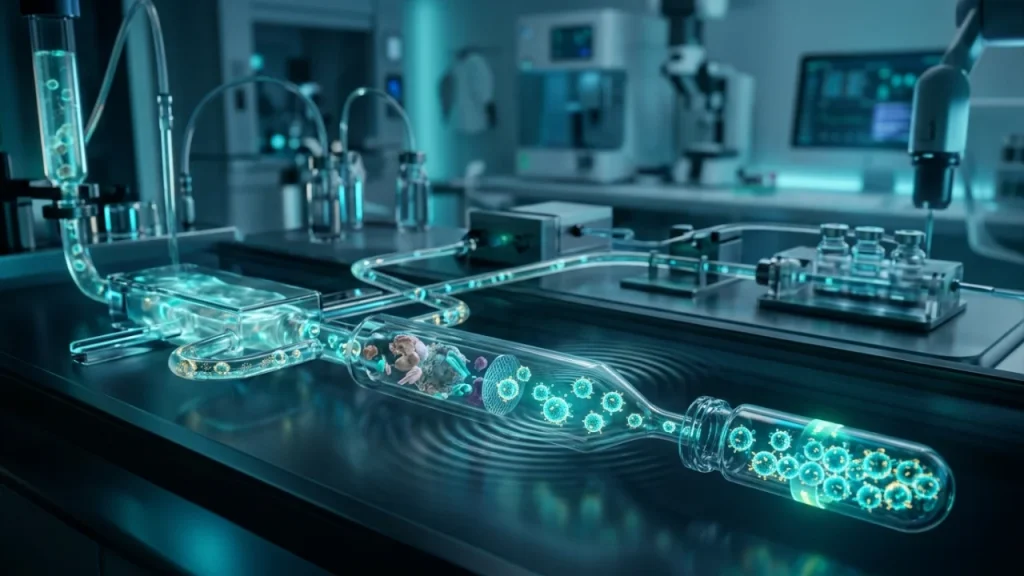
What Are Exosomes and Why Harvesting Matters
How Are Exosomes Harvested for Medical Research
Scientists need pure exosomes to study their messages. Harvesting them is a key first step. Think of it like fishing in a vast, crowded ocean. The ocean is a biological fluid like blood or cell culture medium. The exosomes are the tiny fish we want. Everything else is debris. This debris includes proteins, viruses, and other particles. Isolating just the exosomes is a technical challenge.
So, how are exosomes harvested? Researchers use several physical and chemical methods. Each method balances purity, yield, and speed. No single method is perfect for every situation.
One common approach is ultracentrifugation. This method uses very high spinning speeds. A machine called an ultracentrifuge spins the fluid. This creates immense forces. Heavier particles sink to the bottom first. Lighter exosomes form a pellet later. This technique is considered a standard. However, it requires expensive equipment. The process can also be slow. The high forces may sometimes damage delicate exosomes.
Another popular method is size-based chromatography. It filters the fluid through columns with tiny pores. These pores act like a sieve. Larger molecules get trapped or slowed down. Smaller exosomes pass through at different rates. This method is gentler than spinning. It often gives good purity. The process can be automated for consistency.
Precipitation is a simpler chemical method. Special solutions are added to the sample. These solutions change the solubility of exosomes. The exosomes clump together and fall out of solution. This method is fast and needs no special machines. It works with small sample volumes. The downside is lower purity. Other non-exosome material often comes down too.
Researchers choose their method based on their goal. Diagnostic tests might prioritize speed and simplicity. Therapeutic development demands extremely pure exosomes. Newer technologies combine these principles for better results.
The harvest directly impacts all future research. Impure samples give confusing data. Damaged exosomes send wrong signals. Mastering isolation unlocks their true potential. It allows scientists to read their cargo accurately. This precision is vital for creating reliable tests and safe treatments.
Next, we will explore what scientists find inside these harvested vesicles. Their cargo holds the secrets to new medical breakthroughs.
Why Tiny Vesicles Carry Big Messages Between Cells
Think of your body as a vast, bustling city. Your cells are the citizens. They don’t use phones or email. Instead, they send tiny biological packages to communicate. These packages are exosomes.
Exosomes are natural nanoscale messengers. Almost every cell in your body can make and release them. They travel through bodily fluids like blood or saliva. Their mission is to deliver molecular instructions from one cell to another.
This system is crucial for health. Your immune cells send exosomes to sound alarms about an infection. Stem cells dispatch exosomes to help repair damaged tissue. Nerve cells use them to maintain brain connections. It’s a constant, vital flow of information.
The content of these messages is called “cargo.” Each exosome carries a specific set of molecules it picked up from its parent cell. This cargo can include: – Proteins that can change a cell’s behavior. – Lipids that help the exosome fuse with a target cell. – Nucleic acids like RNA, which carry genetic instructions.
This last one is key. RNA acts like a software update. When an exosome delivers RNA to a target cell, it can reprogram that cell’s activities. A healthy cell might tell a neighbor to grow. A cancer cell might send signals to spread disease.
This is precisely how are exosomes harvested becomes so important. Scientists must capture these messengers intact to read their cargo accurately. If the harvesting process is rough or impure, the messages get scrambled or lost.
For example, a tumor might release ten times more exosomes than a normal cell. These tumor exosomes carry unique cargo. They can prepare distant organs for cancer spread. They can suppress the immune system. Capturing them cleanly from a blood sample gives doctors a powerful diagnostic tool. It’s like intercepting a secret enemy communique.
Harvesting matters because the message defines the function. Isolating exosomes lets scientists listen in on cellular conversations. They can hear what healthy cells are saying during healing. They can also hear the dangerous whispers of disease.
This communication network is always active. The exosomes you harvest today from a patient’s blood reflect their current biological state. They are a real-time report on health or disease processes happening deep inside tissues.
Therefore, gentle and precise harvesting isn’t just a technical step. It is the act of preserving a fragile biological signal. A damaged exosome is a corrupted file. A contaminated sample is full of cross-talk and noise.
Mastering this step allows researchers to translate cellular language. They can identify early warning signals long before symptoms appear. They can also design therapeutic exosomes that carry healing instructions to precise locations in the body.
The tiny vesicle’s journey from one cell membrane to another carries immense meaning. Our ability to harvest it faithfully determines how well we can understand and ultimately guide that conversation for better health. Next, we will decode the specific cargo that makes these messages so powerful.
What Makes Exosome Collection So Challenging Today
Exosomes are not alone in a blood sample. They exist in a crowded sea of other particles. This biological noise is the first major challenge. A single milliliter of blood contains billions of extracellular vesicles. Only a small fraction are the exosomes scientists want to study.
The problem is one of size and similarity. Many things in blood are about the same tiny scale. This creates a classic needle-in-a-haystack scenario.
- Lipoproteins like LDL and HDL cholesterol are similar in size.
- Protein aggregates and cell debris clutter the sample.
- Other, larger types of vesicles are also present.
Telling these apart based on size alone is nearly impossible. Their physical properties overlap too much. This leads directly to the second big challenge: purity. A key question for researchers is how are exosomes harvested without this contamination. If a sample is impure, any signal detected could be false. It might come from a cholesterol particle, not an exosome. This corrupts the cellular message.
The exosome’s own delicate nature is the third hurdle. Their lipid membrane is fragile. Harsh processing methods can destroy them. They can burst open, spilling their precious cargo. Even gentle methods can cause stress. This changes the very signals we want to measure.
Speed and cost present practical barriers. The gold-standard method for isolation is ultracentrifugation. It uses very high spinning speeds to separate particles by weight. This process is slow. It can take many hours. It requires expensive, bulky equipment. It also needs a highly trained technician to run it.
The method is not perfect for clinical use. Its yield can be low and variable. Through all these spinning steps, some exosomes are lost. Others get damaged. This makes it hard to compare results between different labs.
Newer methods try to solve these issues. Some use special filters based on size. Others use antibodies to latch onto specific surface markers. Each approach has trade-offs. Filtering can clog or create shear forces that break vesicles. Antibody-based capture is very specific but often very expensive.
The ultimate goal is a method that is gentle, fast, cheap, and pure. No single technique today excels at all four. Scientists often have to choose between high purity and high yield. They must balance cost with the need for speed in a clinical setting.
This collection challenge directly impacts every downstream application. A diagnostic test is only as good as the sample it analyzes. A therapeutic exosome product must be clean and intact to work safely. Overcoming these isolation hurdles is the critical gatekeeper. It stands between the promise of exosome science and its real-world use for patients. Mastering this step clears the path to reliably decoding the messages inside.
The Gold Standard: Density Gradient Ultracentrifugation
How Density Gradients Separate Exosomes from Other Particles
Ultracentrifugation alone throws everything in a sample into a pellet. Density gradient ultracentrifugation adds a clever sorting step. It does not just rely on particle weight or size. This technique uses density, which is mass per volume, as the key sorting tool.
Think of it like a layered cocktail or a science experiment with oil and water. Scientists first prepare a special tube. They fill it with a liquid medium that has layers. The bottom layer is the densest. The top layer is the least dense. These layers form a smooth density gradient from top to bottom.
The prepared biological sample goes on top of this gradient column. Then, the tube goes into the ultracentrifuge. The machine spins at incredibly high speeds. This creates forces hundreds of thousands of times stronger than gravity.
Every particle in the sample gets pulled downward by this immense force. But they do not all crash to the bottom. They travel only until they reach a layer that matches their own density. At that point, they float. They cannot sink further into denser liquid below. They also cannot rise into lighter liquid above.
This is how scientists harvest exosomes with better purity. Different particles have different densities. – Protein aggregates are often denser. They settle lower in the tube. – Larger cell debris is usually less dense. It often stays higher up. – Exosomes have a specific density range. They typically band together in one distinct layer.
After the long spin, the machine stops. The particles are now separated into visible bands or zones within the tube. A researcher can then carefully extract the specific band containing the exosomes. This is often done with a fine needle or pipette.
This method solves a major problem of simple ultracentrifugation. The pellet from a standard spin is a messy mix. It contains exosomes, but also many contaminants. The gradient cleanly pulls them apart during the journey downward.
The process is gentle in one key way. Exosomes are not crushed at the bottom under other debris. They float suspended in their matching layer. This helps keep their structure intact.
However, this precision comes with costs. Creating perfect gradients requires skill and time. The ultracentrifugation run itself is still very long, often overnight. The equipment remains expensive and not portable.
Yet for research demanding high purity, this method is often chosen. It provides a cleaner population of vesicles for study. Scientists can be more confident that the signals they detect come from exosomes, not other junk.
Understanding this process shows why answering “how are exosomes harvested” is complex. It is not one simple action. It is a precise physical sorting event. Mastering this separation is fundamental to seeing exosomes clearly, free from the noise of other cellular material. This clarity is the essential first step before anyone can read their messages or use them as medicine.
Step-by-Step Process of Ultracentrifugation for Exosomes
The journey to harvest exosomes begins with a liquid sample. This liquid is called conditioned cell culture media. Researchers first remove whole cells and large debris. They do this with slower spins in a centrifuge. This is called differential centrifugation. It is the essential first cleanup step.
Next, scientists prepare the density gradient. They create layers of a special solution inside a tube. The solution is often made from sucrose or iodixanol. Each layer has a different density. The heaviest layer goes at the bottom. The lightest layer sits on top. The layers are poured very carefully. They must stay distinct.
The pre-cleared sample is then placed on top of this layered column. The tube is now ready for the main event. It is loaded into a rotor. The rotor spins inside an ultracentrifuge. This machine spins at extremely high speeds. Speeds can exceed 100,000 times the force of gravity. The run is very long. It often lasts overnight.
During this long spin, particles travel downward. They move through the gradient layers. Their journey is governed by buoyancy. Each particle type has a specific density. It sinks until it reaches a layer matching its own density. There, it stops and floats. Exosomes have a known density range. They typically collect in a band between 1.13 and 1.19 grams per milliliter.
After the spin, the machine stops gently. The tube now shows visible bands. Each band contains different particles. Researchers locate the exosome band by its known density position. They then extract it. This is done with a fine needle or a pipette. The extraction requires a steady hand.
The collected fraction is rich in exosomes. But it still contains the gradient material. Scientists must remove this solution. They do this with a final ultracentrifugation step. This step pellets the exosomes. They are washed in a clean buffer like phosphate-buffered saline. This buffer is harmless to biological structures.
Finally, the pure exosome pellet is resuspended in a small volume. It is now ready for analysis or use. The entire process answers the core question of how are exosomes harvested with high purity. It shows it is a multi-stage physical filtration. Each stage removes specific contaminants.
This method’s power lies in its separation principle. It does not rely on surface markers. It uses inherent physical properties instead. This makes it a versatile tool. It can isolate exosomes from many sample types. These include blood plasma, urine, and cell culture media.
However, each step has critical points for success. The gradient must be prepared perfectly. The run times and speeds must be exact. The extraction must be precise to avoid mixing bands. One mistake can compromise purity.
The result is a cleaner population of vesicles. Researchers get a better look at the true exosome signal. This clarity is not easily achieved with simpler methods. It comes from patiently guiding particles through a density maze. This process isolates nature’s tiny messengers for closer study.
Why Ultracentrifugation Gives High Purity but Low Yield
The density gradient method delivers exceptionally clean exosomes. Yet, it recovers only a small portion of them from the original sample. This is the central trade-off. High purity often means low yield. Understanding why reveals the method’s true nature.
Think of the process as a very strict filter. It is designed to let only perfect exosomes through. Anything questionable gets left behind. This selectivity is intentional. It ensures scientists study only the target vesicles.
Several steps contribute to particle loss. First, the initial ultracentrifugation pellets all vesicles together. Some exosomes may not pellet efficiently. They stay in the liquid and are discarded. Next, the sample is layered onto the gradient. This step itself can cause loss. Pipetting must be gentle to avoid mixing.
The gradient run is highly selective. It only captures exosomes floating at the exact correct density. Vesicles that are slightly damaged or misshapen may band at different levels. These are excluded during extraction. The final washing and pelleting steps also cause loss. Each time liquid is removed, some exosomes go with it.
The pursuit of purity directly reduces yield. To remove every contaminant, scientists must accept leaving some exosomes behind. The goal is quality over quantity. A typical yield can be less than half of the exosomes originally present. Sometimes it is much lower.
This low yield creates practical challenges. It limits the number of downstream tests possible. Researchers might have enough exosomes for one analysis but not for three. This is critical for rare or precious samples. A small blood draw may not provide enough material.
The trade-off influences how are exosomes harvested for different goals. For discovery research, purity is usually paramount. Scientists need a clean signal to identify biomarkers accurately. For therapeutic development, yield becomes more important. Large quantities are needed for experiments and potential treatments.
Alternative methods try to address this balance. Some kits use polymers to pull exosomes out of solution. They often get higher yields. However, they co-precipitate other proteins and particles. The sample is less pure. Each approach has its own compromise.
Therefore, choosing a method depends on the final question. The density gradient remains the benchmark for purity. Its low yield is not a failure of technique. It is a consequence of its rigorous standards. This precision allows us to trust the data it generates.
Scientists continue to refine these processes. They seek ways to improve recovery without sacrificing cleanliness. For now, the trade-off stands as a fundamental lesson in exosome science. You must decide what you value most in your harvest: impeccable quality or greater quantity. The choice defines your experimental path forward and your results.
How Long Does Ultracentrifugation Take to Harvest Exosomes
The density gradient method for harvesting exosomes is not a quick process. It requires a significant time investment. This investment is the direct cost of achieving its high purity. The entire procedure often spans multiple days. It is not measured in hours but in long, sequential steps.
A typical protocol can take between 24 and 48 hours from start to finish. This does not include the final analysis steps. The clock starts with sample preparation. Blood or cell culture fluid must be processed first. This pre-clearing step removes whole cells and large debris. It uses slower spins in a standard centrifuge. This initial stage can take one to two hours.
The real time commitment begins with ultracentrifugation. An ultracentrifuge spins samples at extreme forces. These forces can exceed 100,000 times gravity. The first major run is called differential ultracentrifugation. It pellets larger vesicles and particles. This spin itself lasts about two hours. Then comes the core of the method: the density gradient separation.
Preparing the gradient is a careful task. Layers of a special solution are arranged in a tube. Each layer has a different density. The pre-cleared sample is placed on top. The tube then goes into the ultracentrifuge for a very long spin. This is the key separation run. It can last anywhere from 12 to 18 hours overnight. During this time, particles migrate to their matching density layer. Exosomes gather in a specific band.
The run does not finish the job. After the long spin, the exosome band must be carefully extracted. Scientists use a needle or pipette to draw out that specific layer. This demands a steady hand and precision. Harvesting the band can take another 30 minutes. The collected exosomes then often need a final wash. They go back into the ultracentrifuge for another one to two hours. This step removes the gradient material. It leaves a pure exosome pellet.
Finally, the pellet is resuspended in a small buffer. It is now ready for use or storage. The total hands-on time for a scientist is not 48 hours straight. Much of the process involves waiting for the centrifuge to run. However, it blocks the equipment for long periods. It also requires planning and multiple work sessions.
Several factors influence the total time needed. – Sample volume: Larger starting volumes require longer initial spins. – Rotor type: Different rotors have varying maximum speeds and run capacities. – Desired purity: Extra wash steps add more hours. – Protocol specifics: Published methods have slight variations in timing.
This lengthy process answers part of how are exosomes harvested for high-stakes research. The time is a trade-off for confidence. Scientists exchange speed for certainty in their results. They know the exosomes they collect are clean. This method remains the benchmark because that certainty is valuable. For diagnostic discovery or rigorous biology, this investment is often necessary. The next consideration is how this time factor compares to newer, faster techniques seeking to match its quality.
What Sample Types Work Best with Ultracentrifugation
Not every liquid sample is a good candidate for the density gradient method. The process works best with certain starting materials. Scientists need clean exosomes for their work. The source material must allow for that.
Cell culture supernatant is the ideal starting point. This is the nutrient-rich fluid bathing cells grown in a lab dish. Researchers can control the experiment perfectly. They know exactly what cells produced the exosomes. They also control the time frame. This results in a relatively clean sample from the start.
The method also handles blood plasma and serum quite well. These are common sources for diagnostic research. Blood carries exosomes from all over the body. It is a treasure trove of information. However, blood is a complex soup of proteins and lipids. Ultracentrifugation is powerful enough to sort through this mess. It isolates the tiny exosomes from everything else.
Other bodily fluids can be used but present challenges. Urine, saliva, and cerebrospinal fluid are valuable sources. They offer clues about organ health. Yet, their composition varies greatly from person to person. The ultracentrifugation protocol may need adjustments for these fluids. Spin times or gradient densities might change.
The volume of the starting sample is a major factor. Ultracentrifugation requires a minimum volume to work properly. Typical lab rotors need at least several milliliters of fluid. Very small sample volumes, like a single drop, are not suitable. They get lost in the large tubes.
The sample must also be prepared correctly before the spin. Cell culture media often needs a preliminary low-speed spin. This removes dead cells and large debris. Blood samples require careful processing to get pure plasma or serum. Skipping these prep steps will ruin the final result.
So, what makes a sample type “work best”? Three key qualities matter most. – High exosome concentration: More exosomes in the starting fluid means a better yield. – Low viscosity: Thick fluids do not separate well in the centrifuge. – Consistent composition: Predictable samples let scientists use a standard protocol.
This explains part of how are exosomes harvested for different research goals. A cancer biologist might use cell culture. A doctor searching for disease markers would use blood plasma. The method is versatile but demands suitable material.
The gold standard technique is forgiving of messy samples but not tiny ones. It trades time and effort for pure results from complex liquids. This makes it a foundational tool. Scientists can apply it to many questions in biology and medicine. Next, we will look at what happens when pure exosomes are finally collected and studied.
Affinity-Capture Systems: Targeting Specific Exosomes
How Antibodies Bind to Exosome Surface Markers
Antibodies act like smart molecular hooks. They are proteins designed by the immune system. Their job is to grab one specific target. For exosomes, scientists use antibodies that bind to surface markers. These markers are like ID cards on the exosome’s outer membrane.
Different cell types release different exosomes. These exosomes carry unique surface proteins. A cancer exosome might display one marker. An exosome from a stem cell shows another. This is the core principle of affinity capture. It selects exosomes based on their biological identity, not just their size.
The process is a precise form of fishing. First, researchers choose their antibody. This antibody matches the marker they want to catch. For example, they might use an antibody for CD63. CD63 is a common protein on many exosomes.
Next, they attach these antibodies to a solid surface. This surface is often magnetic beads or a plastic plate. The beads are tiny and coated with the antibodies. The prepared sample, like blood plasma, is then added.
Exosomes with the right marker bind to the antibodies. It is a key fitting into a lock. Other particles in the sample do not bind. They get washed away. This leaves only the targeted exosomes stuck to the beads.
Scientists then release the captured exosomes. They use a special solution that breaks the antibody bond. The pure exosomes float free in a small volume. This method is highly specific. It directly answers how are exosomes harvested for particular studies.
Why choose this method? It has clear advantages in certain cases. – It isolates specific exosome types from a mix. – It works with very small sample volumes. – The process is faster than ultracentrifugation. – It can target exosomes from rare or hard-to-get cells.
But the method has limits. You must know which marker you want to target. If an exosome lacks that marker, it will be missed. The antibodies can also be expensive. The binding step might not catch every single exosome present.
This targeted approach is powerful for diagnostics. Doctors can search for exosomes from tumor cells in blood. Researchers can study signals from only one cell type in a complex environment. It transforms a messy biological fluid into a clean source of information.
The result is a highly purified population. Scientists know these exosomes came from a specific source. This precision unlocks deeper insights into cellular messages and disease mechanisms. Next, we explore how these captured messengers are analyzed to reveal their secrets.
Why Affinity Capture Improves Exosome Specificity
Affinity capture works like a molecular address system. Every cell type, and even different cell states, places unique protein markers on its exosomes. Think of these markers as tiny flags. A healthy liver cell’s exosome flies a different flag than a breast cancer cell’s exosome. An affinity-capture system uses these flags for precise identification.
The method employs custom-made antibodies as capture tools. Each antibody is designed to grab one specific flag, or marker. This design is the key to improved specificity. The process does not just isolate all small vesicles. It actively selects only the ones displaying the target.
This answers a key question about how are exosomes harvested for precise research. Scientists often need exosomes from a particular source. Blood contains exosomes from platelets, immune cells, and possibly tumor cells all mixed together. Ultracentrifugation collects them all as a group. Affinity capture can pick out just the tumor-derived ones.
Specificity transforms diagnostic potential. A doctor can test a blood sample for exosomes carrying a cancer-specific marker. Finding them is a strong signal. It means those cells are active and communicating in the body. This signal can appear long before other symptoms.
The method also improves research accuracy. Imagine studying heart disease. You want messages from heart muscle cells, not blood cells. Affinity capture lets you isolate just those cardiac exosomes. Your data then reflects true cardiac signals, not background noise.
Why does this level of detail matter? Biological messages are context-dependent. An exosome from an immune cell might signal inflammation. One from a tumor might signal growth. Mixing them together creates confusing results. Isolating by source clarifies the message.
Consider these common targeting strategies: – Target CD63, a general exosome marker, to get most vesicles. – Target EpCAM, a marker often on cancer cells, to get tumor exosomes. – Target L1CAM, a marker for neuron-derived exosomes, to study brain health.
Each antibody choice changes the harvest outcome. This decision is the first critical step in the workflow. You must know what you are looking for to find it effectively.
The power lies in direct targeting. Other methods rely on physical traits like size or density. Many particles share these traits. Affinity capture uses biological identity. This biological lock-and-key mechanism is far more selective.
This selectivity comes with important requirements. You need prior knowledge about your target. You must know which marker is present on your desired exosomes. This often requires preliminary experiments or published data.
The result is a cleaner sample. There are fewer contaminating proteins and unrelated vesicles. Downstream analysis becomes more reliable. Genetic material and proteins inside the exosomes can be confidently linked to their source cell type.
This precision enables new science. Researchers can compare exosome cargo from two different cell types in the same patient. They can track how a cell’s exosome output changes when it becomes diseased. The method turns a complex fluid into a sorted library of cellular messages.
In essence, affinity capture adds a layer of intelligent selection to exosome isolation. It moves beyond simple collection to purposeful curation of vesicles. This targeted approach is fundamental for developing sensitive tests and understanding precise cellular dialogues. Next, we examine how these purified messengers are analyzed to decode their contents.
Comparing Magnetic Beads and Column-Based Affinity Methods
Two main tools exist for the affinity capture of exosomes. Scientists often choose between magnetic beads and column-based systems. Each method uses the same lock-and-key biology. Their practical application differs significantly.
Magnetic bead systems are highly flexible. Tiny beads are coated with capture antibodies. These antibodies bind to specific exosome surface markers. The bead-exosome mix is then placed near a strong magnet.
The magnet pulls the bead-bound exosomes to the tube’s side. The unwanted liquid is simply poured off. This process is called washing. The purified exosomes are then released from the beads for study.
This method offers clear advantages. – It is easily scaled up or down for different sample volumes. – The process is visually intuitive and simple to perform. – It allows for sequential captures from a single sample.
Researchers might first pull out all exosomes with a common marker. They could then use a second antibody to isolate a specific sub-population. This multi-step sorting is a powerful feature.
Column-based affinity methods work differently. Here, the capture antibodies are fixed inside a plastic column or spin cartridge. The biological sample is passed through this column.
Exosomes with the right marker stick inside the column as the fluid flows through. Contaminants wash away. The captured exosomes are later eluted in a small, clean buffer volume.
This approach has its own strengths. – It can be faster, often completing in under an hour. – The process is easily automated for handling many samples. – It typically requires less hands-on time from a researcher.
The choice between beads and columns depends on the final goal. Magnetic beads are excellent for exploratory research. They allow for complex, multi-target experiments. Beads are also ideal when starting with large or viscous samples.
Columns excel in clinical or diagnostic settings. Speed and consistency are critical here. A lab processing many blood samples might prefer columns. The workflow is streamlined and less open to user error.
Both methods answer the core question of how are exosomes harvested with precision. Beads offer versatile power for discovery. Columns provide efficient routine for application. The selection ultimately hinges on the need for flexibility versus the need for speed and throughput.
Understanding this practical split guides the next step. After isolation, scientists must confirm they have what they sought. Validation is essential before any analysis can be trusted.
How Fast Can Affinity Methods Harvest Exosomes
Speed is a major advantage of affinity capture. These methods can isolate specific exosomes in under two hours. Some protocols finish in just thirty minutes. This is far faster than traditional ultracentrifugation. That older technique often takes a full day or longer.
The exact time depends on several key factors. The sample type is the first consideration. Simple cell culture media is processed quickly. Complex fluids like blood serum need more steps. These samples require careful preparation to avoid clogging the system.
The scale of the experiment matters too. Processing a single small sample is fast. Handling dozens of samples at once takes more time. However, affinity methods scale efficiently. Automated systems can manage many samples in parallel. This keeps the per-sample time very low.
The choice between magnetic beads and columns affects speed. Bead-based protocols often have shorter incubation periods. The binding step might take only thirty minutes. However, the subsequent washing and elution steps add time. The total hands-on time can be longer.
Column-based systems are designed for rapid flow-through. The actual capture happens as the sample passes through the device. This step can take mere minutes. The entire process from loading to elution is highly streamlined. It is built for consistent, quick results.
Here is a simplified timeline for a typical column-based harvest from blood plasma: – Sample preparation and filtration: 20 minutes – Loading sample onto the column: 5 minutes – Washing steps: 10 minutes – Elution of captured exosomes: 5 minutes
Total hands-on time can be under forty minutes. This explains how are exosomes harvested for urgent clinical analysis. A doctor could theoretically get results within a few hours. This speed enables new diagnostic possibilities.
Throughput is different from pure speed. Throughput means how many samples you can process at once. Affinity columns excel here. A researcher can use a multi-column spinner. They can process eight or twelve samples simultaneously in that same forty-minute window.
Automation pushes speed and throughput even higher. Robotic liquid handlers can perform every step. They load samples, operate columns, and collect the final eluate. This removes human variability. It also allows for non-stop operation around the clock.
The need for purity can trade off with speed. A very quick protocol might sacrifice some yield. A slightly longer, gentler elution step can improve recovery. Researchers must balance their need for speed against their need for material.
This rapid harvest protects the exosomes. Long, harsh isolation methods can damage vesicles. They can cause fusion or degradation. Fast, gentle affinity capture preserves exosome integrity. The vesicles remain functional for downstream experiments.
In summary, affinity methods turn exosome isolation into a quick procedure. What once took a day now takes an hour. This acceleration is transformative for medicine and research. Fast isolation means faster answers to critical biological questions.
The next logical question concerns verification. How do scientists confirm the harvest was successful? They must analyze what they captured before moving forward.
What Are the Limits of Affinity-Based Exosome Harvesting
Affinity-based harvesting is powerful but not perfect. Its success depends completely on a known target. You must choose the right “hook” for the exosomes you want. If the target molecule is not present on the vesicle surface, the capture will fail. This is a fundamental limit.
The method can also miss important exosome populations. Not all exosomes from a cell type carry the same surface markers. An antibody for CD63 might grab only a portion of the total vesicles. Others without CD63 will flow through the column untouched. This creates a biased sample. Your view of the exosome landscape becomes narrow.
Sample quality is another major concern. The starting material must be clean. Contaminants like proteins or lipids can block the binding sites on the column matrix. They compete with exosomes for space. This lowers the yield significantly. Complex biofluids like blood plasma are especially tricky. They require careful pre-cleaning steps.
The process itself can sometimes damage exosomes. The binding and washing steps apply physical forces. Harsh elution conditions might be needed to break the antibody bond. Low pH or high salt buffers can stress the vesicles. This can alter their natural structure and function. Gentle elution helps but may leave exosomes stuck on the column.
Cost and scalability present practical hurdles. High-quality antibodies and specialized columns are expensive. They are often designed for small research samples, not large volumes. Scaling up for potential therapeutic use is a big challenge. The costs can become very high very quickly.
Here are other key limits to consider: – Antibody specificity is critical. Some antibodies might bind to similar proteins on non-exosome particles. This leads to co-isolation of contaminants. – The binding capacity of a column is finite. Overloading a sample wastes material. Underloading it is inefficient. – The process is not easily adaptable to new targets. Discovering a new exosome marker means developing a new capture tool from scratch.
These limits shape how scientists plan their work. They ask crucial questions before starting. What is my target marker? Is it expressed consistently? How pure is my sample? What will I do with the exosomes next? The answers guide the choice of method.
Understanding these constraints is vital for good science. It prevents false conclusions drawn from an incomplete or damaged harvest. No single isolation method is ideal for every question. Affinity capture is a precise tool for specific jobs. Knowing its limits ensures it is used correctly and effectively.
The next step involves looking at the captured vesicles closely. Scientists must confirm they have what they sought. This leads to analysis and validation techniques.
Polymer Precipitation Kits: Simple and Quick Harvesting
How Polymers Pull Exosomes Out of Solution
Polymer precipitation kits offer a straightforward path to harvest exosomes. They use simple chemistry, not biological locks and keys. The core idea is making exosomes fall out of liquid solution. Think of it like a crowded party suddenly getting very quiet. Everyone leaves quickly.
The process starts with your liquid sample. This could be blood plasma or cell culture media. Scientists add a special polymer solution to it. This polymer is often polyethylene glycol, or PEG. PEG is a long, chain-like molecule. It is harmless and used in many products.
PEG works by changing the solution’s physical properties. It does not bind to exosomes directly. Instead, it takes up space. The long PEG molecules fill the liquid, pushing water molecules aside. This creates a more crowded environment. Exosomes and other particles have less room to move freely.
This crowding effect is called “volume exclusion.” The polymers exclude, or push out, the exosomes from the solution. It is similar to reducing the amount of water in a soup. The solid ingredients start to clump together.
Two key forces are at play here: – The polymers reduce solubility. Exosomes become less soluble in the crowded liquid. – They also promote aggregation. Exosomes are driven closer together.
The mixture is then left overnight in the cold. This incubation step is crucial. The cold temperature slows molecular motion. The crowding effect has more time to work. Exosomes gradually come together into larger clusters.
These clusters become too heavy to stay suspended. Gravity pulls them down. This forms a pellet at the bottom of the tube. The final step is a slow spin in a centrifuge. This machine spins samples very fast. It gently pushes the pellet firmly to the bottom.
After centrifugation, you pour off the clear liquid above. The pellet remains. This tiny pellet contains your harvested exosomes. It also contains other particles of similar size and density. The method is not highly selective. It is a catch-all for small vesicles.
The entire process answers a key question for researchers: how are exosomes harvested quickly from large volumes? Precipitation kits excel here. They are simple, require no special equipment, and handle bigger samples well. They are a popular starting point for many labs.
However, this simplicity has a trade-off. The polymer method co-precipitates many things. It pulls down proteins, viruses, and other debris alongside exosomes. The harvest is often less pure than with affinity capture. The polymer chemicals must also be removed carefully before any downstream use.
Understanding this basic chemistry reveals the method’s power and its limits. It is a broad net, not a precision hook. For initial discovery or when purity is less critical, it is a vital tool. The next step is always analyzing what exactly landed in that pellet.
Why Precipitation Kits Are Popular for Fast Exosome Harvest
Precipitation kits answer a critical need for speed and simplicity. Many experiments start with large volumes of cell culture fluid or biofluid. Researchers need to capture the exosomes quickly. They need to move to the next analysis step without delay.
These kits turn a complex task into a straightforward protocol. The process often involves just a few simple steps. You mix the sample with the polymer solution. You incubate it overnight at a cold temperature. Then you spin it in a standard centrifuge.
This simplicity makes the method highly accessible. It does not require expensive, specialized machinery. A typical lab centrifuge is sufficient. This lowers the barrier to entry for many research groups. It allows more scientists to begin exploring how are exosomes harvested and studied.
The method handles large sample volumes effectively. This is a key advantage over some other techniques. Processing a large volume of blood plasma or conditioned media is feasible. The polymer works on the entire volume uniformly. This helps ensure a good yield of exosomes for downstream work.
Time is a major factor in research. Precipitation is relatively fast from a hands-on perspective. The actual work for a scientist might take less than an hour. The overnight incubation happens unattended. By the next morning, the exosomes are ready for collection.
Consider a new research project. The goal might be an initial survey. Scientists ask if exosomes from a certain disease state show any interesting signals. They need a method to get vesicles fast for a first look. Precipitation serves this exploratory role perfectly.
The popularity stems from clear workflow benefits: – Minimal equipment needs – Scalable for different sample sizes – Simple, protocol-driven steps – Compatible with many starting materials
These kits provide a solid starting point. They generate enough material for early tests. Scientists can use the harvested exosomes for initial protein analysis or genetic screening. They can confirm the presence of expected markers.
This approach reduces technical risk at the project’s start. Complex methods can fail in many ways. A simple precipitation step often works reliably on the first try. This reliability builds confidence and momentum.
Of course, researchers understand the trade-off. They know purity is not the method’s strength. Yet for a fast harvest, the benefits often outweigh this limitation. The priority is obtaining vesicles to begin asking questions.
The choice ultimately depends on the experiment’s goal. When the answer to “how are exosomes harvested” must include “quickly and reliably,” precipitation is a top candidate. It gets scientists from sample to result with minimal procedural complexity. This practical efficiency explains its widespread adoption in labs worldwide, serving as a foundational technique that enables further discovery.
Step-by-Step Guide to Using Precipitation Kits for Exosomes
The process for how exosomes are harvested using a polymer-based kit is straightforward. It follows a consistent series of steps. These steps turn a liquid sample into a pellet of exosomes ready for study.
First, you must prepare your sample. This liquid could be blood plasma or cell culture media. The sample needs to be cleared of cells and large debris. You do this by spinning it in a centrifuge. This is a critical cleaning step. It ensures only small particles, including exosomes, remain in the liquid.
Next, you add the precipitation reagent. This is a special solution provided in the kit. You mix it thoroughly with your cleaned sample. The mixture then goes into a refrigerator. It chills for several hours, often overnight. During this time, the polymer in the reagent works invisibly. It gently surrounds the exosomes and other small vesicles. This action makes them less soluble in the liquid.
After incubation, the exosomes are ready to be collected. You spin the chilled mixture at high speed in a centrifuge. This step takes about an hour. The force causes the exosomes to form a tiny, often invisible, pellet at the bottom of the tube. You carefully pour off the leftover liquid. The pellet contains your harvested vesicles.
The final step is resuspension. You add a small amount of buffer or saline to the tube. This liquid redissolves the polymer and releases the exosomes. A gentle pipetting motion mixes everything. You now have a concentrated exosome sample in a clean solution.
Key points ensure success during this procedure: – Keep samples cold whenever possible. This protects the exosomes. – Avoid vigorous shaking or vortexing. Gentle mixing preserves vesicle structure. – Use the correct tube types. They must withstand high centrifugal forces. – Note the timing. Do not shorten the incubation or spin times.
The entire process, from start to finish, can often be completed within a single day. Overnight incubation is common for convenience. The hands-on time for a scientist is minimal. Most of the time involves waiting for the refrigerator or centrifuge.
This method yields exosomes suitable for many initial analyses. Scientists frequently use the harvested material to check for known protein markers. They might also extract RNA to see what genetic messages the exosomes carry. The simplicity of the protocol allows many samples to be processed at once. This is helpful for comparing healthy and diseased states.
However, remember what the pellet contains. It is not just exosomes. Other small particles and some leftover proteins will also be there. For this reason, scientists consider results from precipitation kits as a strong starting point. Further purification may be needed for advanced studies.
Mastering this basic technique opens the door to discovery. It provides the essential first material needed to ask critical questions about health and disease. With exosomes in hand, the real investigation can begin. The next logical step often involves characterizing these nanoscale messengers in greater detail to confirm their identity and function.
How Precipitation Affects Exosome Yield and Purity
Polymer precipitation kits change how exosomes behave in liquid. They do not target exosomes directly. Instead, these kits add special polymers to the liquid sample. The polymers create a net that catches many particles. Exosomes get tangled in this net along with other things. The entire net becomes heavy and falls out of solution. This is the visible pellet.
This method is excellent for how are exosomes harvested with high recovery. Scientists can collect most of the exosomes present in their starting material. This high yield is crucial for many studies. You need enough material to run tests. For example, detecting rare RNA messages requires many exosomes. Precipitation helps ensure you have them.
However, the net is not selective. It captures almost everything of a similar size. The final pellet is a mixed population. Think of it like catching fish with a wide net. You get the fish you want, but also seaweed, shells, and other ocean debris. Your yield of “sea life” is high, but the purity of just fish is low.
What else ends up in the pellet? Several non-exosome items co-precipitate. – Protein aggregates and lipoprotein particles. – Other small vesicles from cells that are not exosomes. – Remnants of the polymer used in the kit itself.
This mixture affects downstream analysis. If you check for a disease marker, the signal might be strong. But is it from the exosomes? Or is it from the other junk in the pellet? This uncertainty is the core trade-off. The kit gives you speed and volume at the cost of sample cleanliness.
Purity becomes important for specific applications. Using impure exosomes in a cell culture experiment can confuse results. The other particles might cause effects you mistake for exosome activity. Therapeutic research demands very pure exosomes. Contaminants could cause unwanted immune reactions.
So how do scientists manage this? They use precipitation as a first, powerful concentration step. Then, they often add a second cleaning method. This two-step process is common. It balances the need for good yield with the need for reliable data.
The choice depends on the question being asked. For a quick survey of many samples, precipitation alone may be sufficient. For detailed mechanistic studies, further purification is a must. Understanding this balance lets researchers plan wisely. They can harvest exosomes efficiently and interpret their findings correctly. The next step often involves using tools to assess exactly what is in that harvested pellet, distinguishing the true messengers from the background noise.
What Samples Work Well with Polymer Precipitation
Polymer precipitation works best with certain biological fluids. Scientists often use it to harvest exosomes from large volumes of liquid. These samples have exosomes floating in a relatively simple background. The method concentrates them efficiently.
Cell culture media is a prime example. Researchers grow cells in a nutrient broth. The cells release exosomes into this liquid. This conditioned media is a clean starting material. It lacks the complex proteins found in blood. Precipitation kits pull exosomes from this broth very well. The yield is often high. Purity is sufficient for many initial experiments.
Another good sample type is urine. Your body filters waste through urine. Exosomes from the urinary tract end up there too. Urine has less protein clutter than blood plasma. Precipitation effectively concentrates these vesicles. It is a standard first step in urine exosome studies.
Blood serum or plasma can also be used. But these are more challenging samples. Blood is filled with many other particles. Lipoproteins and protein clusters are everywhere. Precipitation will collect exosomes from blood. However, it will also grab those other particles. The resulting mix is less pure. For early discovery work in blood, this can still be useful. Scientists might use it to see if a disease marker is present at all. They confirm later with cleaner methods.
The research goal is key. Polymer precipitation is a powerful tool for specific tasks.
First, it is excellent for discovery screening. Imagine you have one hundred patient blood samples. You need to check all of them for a potential exosome signal. Speed and volume handling matter most here. Precipitation kits let you process many samples quickly. You can get a broad view of your data.
Second, it works well when you need a lot of exosome material for downstream steps. Some analyses require massive amounts of RNA or protein. Precipitation gives you a high yield from large liquid volumes. You can then use this concentrated material for further purification if needed.
Third, it is ideal for stable biofluids like stored cell media or urine. These samples do not degrade the polymer reagent quickly. The process remains reliable.
Here are typical scenarios where this harvesting approach fits: – Initial biomarker discovery from large sample sets. – Collecting exosomes from conditioned cell culture media. – Generating bulk material for RNA sequencing pools. – Pilot studies where speed outweighs purity concerns.
The method struggles with very dirty samples. Fluids packed with lipids or antibodies need extra care. Synovial fluid from joints or milk are examples. Precipitation alone may not be enough for these. The contaminant load can be too high.
So, how are exosomes harvested for different purposes? The sample source dictates the best path. Clean starting liquids pair perfectly with polymer kits. More complex fluids require careful planning. Scientists match the tool to their sample and their question. This ensures they get meaningful results. The next logical step is asking what to do after precipitation, especially when higher purity is required for definitive answers.
Comparing Harvesting Methods: Purity, Yield, and Time
How to Choose the Best Method for Your Exosome Harvest
Choosing how to harvest exosomes is a balancing act. You must weigh three competing goals: purity, yield, and time. No single method excels at all three. Your research question decides which factor matters most.
Purity means getting exosomes with few contaminants. Ultracentrifugation is the historical gold standard for purity. It spins samples at immense speeds. This separates particles by size and density. It delivers relatively clean exosomes. However, it requires expensive equipment. The process also takes a full day or more. The long, harsh spins can damage some exosomes too.
Yield refers to the total amount of exosomes you recover. Polymer precipitation often gives the highest yield. It pulls most vesicles out of solution. But it also brings down other things. Proteins and lipoproteins co-precipitate. Your yield is high, but purity is lower.
Time is about speed and workflow. Size-exclusion chromatography is fast and gentle. It uses a column with tiny pores. Small contaminants enter the pores and get delayed. Exosomes, being larger, flow through quickly and are collected first. The process takes under an hour. It gives good purity but has a low sample volume capacity. You cannot process large amounts of liquid at once.
So, how are exosomes harvested for your specific needs? Start by asking three questions.
First, what is your sample type? Clean samples like cell culture media offer flexibility. Complex biofluids like blood plasma are crowded with similar-sized particles. They demand methods with high resolution, like chromatography or refined centrifugation.
Second, what will you do with the exosomes afterward? Downstream analysis dictates your needs. – If you are doing RNA sequencing, you need high-quality, intact RNA. Gentle, fast methods are key. – For protein analysis, you need to avoid contaminating proteins. High-purity methods are better. – If you need many exosomes for a functional experiment, yield may be your priority.
Third, what are your practical limits? Consider your equipment budget and timeline. – Do you have access to an ultracentrifuge? – Do you need results in two hours or two days? – How many samples are you processing?
Here is a simple comparison guide. – For maximum purity: Choose density gradient centrifugation or size-exclusion chromatography. – For maximum yield: Choose polymer precipitation. – For speed and gentleness: Choose size-exclusion chromatography or some kit-based filters. – For large sample volumes: Choose precipitation or ultracentrifugation.
Remember your goal. A diagnostic test might need pure exosomes from blood to find a single biomarker. A therapy study might need vast numbers of exosomes from cell cultures for testing. Your choice directly shapes your results.
The best strategy sometimes uses two methods in sequence. A researcher might use precipitation for its high yield first. Then they might use chromatography to clean the sample further. This tandem approach balances the strengths of different techniques.
In summary, map your priorities. Rank purity, yield, and time for your project. Let this ranking guide your tool selection. The correct harvest method unlocks reliable data. It turns a technical step into a strategic advantage. Next, we will explore how to validate your harvest, ensuring what you collected are truly exosomes.
Why Purity Matters Most for Diagnostic Exosome Studies
Imagine trying to hear a single whisper in a crowded, noisy room. That is the challenge of a diagnostic test searching for a disease signal. Exosomes from your blood carry molecular whispers from your cells. These whispers are potential disease biomarkers. For a test to be accurate, scientists must hear only the exosome whispers, not the background noise. This is why purity matters most when exosomes are harvested for diagnostics.
Impure samples contain many other particles. These contaminants can hide or mimic the true signal. Common contaminants include proteins, lipoproteins, and other vesicles. They create a loud biochemical noise. A test might mistake noise for a real disease marker. This leads to false results. False positives cause unneeded worry and further testing. False negatives miss real problems, allowing disease to progress.
Consider a search for an early cancer signal. Tumors release exosomes with unique surface proteins. A pure harvest captures mostly these exosomes. Scientists can then count them or analyze their cargo. But if the sample has many impurities, the cancer signal gets diluted. The test sensitivity drops. A tiny but important change might go completely unseen.
High purity enables precise measurement. Scientists often look for specific molecules inside exosomes, like microRNAs. These tiny RNA strands can indicate disease state. Contaminating particles may also carry similar RNAs. Without a clean separation, you cannot know the true source of the RNA you detect. Your measurement becomes unreliable.
The need for purity dictates the choice of harvest method. From our comparison, techniques like density gradient centrifugation excel here. They separate exosomes from other materials based on physical density. This process is slower and gives lower yield. But for diagnostics, yield is secondary. A small, clean sample is far more valuable than a large, dirty one.
Validation depends on purity as well. After scientists harvest exosomes, they must prove what they have. They use tests to check for exosome markers and look for contaminants. A pure sample shows strong exosome signals and low contaminant levels. This validation trust allows researchers to link their findings directly to biology, not to artifacts from the harvest process.
In essence, diagnostic exosome studies are a hunt for truth in a complex mixture. Purity is the lens that brings the truth into focus. It transforms a harvested sample from a biological soup into a precise tool for discovery. Compromising on purity means compromising on the test’s very purpose: to give a clear, trustworthy answer about health. Next, we must ask how these pure exosomes are analyzed to find those critical disease whispers.
How Yield Impacts Large-Scale Exosome Harvesting
Yield refers to the total number of exosomes collected. For some projects, this number is the most important goal. Think of it like collecting seeds to plant a large field. A handful of pure seeds is not enough. You need buckets of them.
The need for high yield changes everything. Diagnostic tests often use a small sample from one patient. Therapeutic applications are different. They may require enough exosomes to treat hundreds of patients. A single dose for one person might need billions of exosomes. Harvesting that many requires methods optimized for quantity.
Some methods are better for high yield. Ultracentrifugation is a common choice here. It processes large volumes of starting material. Think of it as casting a wide net. It captures many vesicles, including exosomes. The trade-off is purity. The catch will contain other particles similar in size. For therapies, this can sometimes be acceptable if the final product is cleaned further.
Timing is also tied to yield. A slow, precise method cannot produce a large batch quickly. Scaling up a harvest for therapy must be practical. Researchers must ask: Can this process work for 100 liters of fluid? Will it take weeks? Time and cost become major factors.
Why do therapies need so many exosomes? The body is vast. Injected exosomes must survive in the bloodstream. They need to reach their target tissue in sufficient numbers to have an effect. A low dose might simply disappear, having no impact. High yield ensures enough messengers arrive to deliver their healing signal.
Consider these key needs for large-scale harvests: – Volume: The method must handle large amounts of starting liquid, like cell culture media. – Speed: The process should be completed in a reasonable time to keep exosomes active. – Cost: Equipment and reagents must not be too expensive per batch. – Scalability: A lab protocol must work when made ten or a hundred times larger.
The choice of source material directly impacts yield. Some cells naturally release more exosomes than others. Scientists can also “condition” cells to produce more. They change the cell’s environment to encourage secretion. This is a crucial first step to boost the final harvest number.
Ultimately, the purpose dictates the priority. Diagnostics prize purity above all. Therapeutics and large-scale biology often prize yield. The ideal harvest method finds a balance. It gathers enough exosomes for the job while keeping them functional and reasonably clean. The next step is seeing how time constraints shape these choices further.
What Time Constraints Mean for Your Exosome Research
Time is not just a clock ticking. In exosome research, it is an active force that degrades your target. Exosomes are delicate biological packages. They are not stable forever in a test tube. Their precious cargo of proteins and RNA can break down. This breakdown happens faster at warm temperatures. A slow harvest method can damage the very messengers you are trying to study or use.
So, how are exosomes harvested when speed is critical? The answer shapes every step. A researcher with a time-sensitive diagnostic sample will pick a very different tool than a lab growing exosomes for therapy over weeks.
Think about a blood sample from a patient. A doctor suspects a disease and wants to check for exosome biomarkers. This sample cannot wait. The exosomes must be separated from the plasma quickly to preserve their genetic signals. Ultracentrifugation is often too slow for this need. It takes many hours. Instead, methods like precipitation or certain filtration kits are chosen. They can give results in a fraction of the time.
Speed affects purity and yield. Faster methods often trade some purity for time. A precipitation kit might pull down many exosomes in thirty minutes. But it also collects other things, like proteins and aggregates. The result is good yield quickly, but lower purity. For a quick diagnostic screen, this can be acceptable. The goal is to see if a biomarker is present, not to get the world’s purest exosome sample.
For therapy, the timeline is longer but still pressured. Cells might be grown for days to secrete exosomes into their liquid medium. Harvesting this large volume cannot take another week. A multi-day ultracentrifugation process is impractical. It would risk exosome degradation. Large-scale filtration or chromatography methods are better here. They process liters of fluid in a more reasonable timeframe.
Consider these common time constraints:
- Clinical diagnostics: Results are needed in hours. Speed is the top priority.
- Functional experiments: Exosomes for cell testing should be fresh and active. A harvest under 4 hours is ideal.
- Biobanking: Samples are stored for future use. Here, method robustness matters more than sheer speed, but long protocols add cost.
- Therapeutic manufacturing: The process must be completed in days to ensure product stability and control cost.
Every hour in processing is a risk. Agitation, temperature changes, and simple aging can alter exosomes. A fast, streamlined protocol minimizes this “handling time.” It gets exosomes from their source to analysis or use with minimal delay.
The need for speed also pushes innovation. Scientists are developing integrated systems that combine steps. These systems separate and concentrate exosomes in one continuous flow. This approach cuts total time dramatically. It avoids stops and transfers that slow things down.
Ultimately, your deadline chooses your method. Ask yourself: When do I need these exosomes? If the answer is “tomorrow,” you will not choose the slowest technique. You will find the fastest method that still gives you usable results for your goal. Time forces a practical balance between the ideal and the possible. This balance directly influences what you can discover or develop with these tiny messengers.
The next logical question is about cost, which is tightly linked to both time and scale.
Real Examples of Exosome Harvesting in Different Labs
Scientists in a cancer biology lab face a specific challenge. Their tumor cells release many exosomes. But these exosomes mix with other particles in the cell culture soup. The team needs very pure exosomes to study their unique cancer signals. They often choose ultracentrifugation. This method spins samples at very high speeds. It separates particles by size and weight. The process takes over a day. It also needs expensive equipment. Yet the high purity is worth the time and cost for their precise experiments. They need clean samples to find tiny differences.
A different lab works on quick diagnostics. Imagine a clinic studying blood samples for disease markers. They need answers fast. Speed is more important than perfect purity here. They might use a polymer-based method. This technique mixes a special solution with the blood sample. It makes the exosomes clump together quickly. The whole process can finish in under an hour. The yield is good. The purity is enough to detect strong disease signals. This shows how are exosomes harvested for urgent medical questions.
For creating potential therapies, scale and safety are key. A biotech group plans to grow exosomes from stem cells. They want to use them for healing damaged tissues. They cannot use methods with harsh chemicals. Those chemicals might stay in the final product. Instead, they use size-based filtration and chromatography. These techniques are gentle. They filter exosomes through tiny pores or separate them in columns. The process is scalable from small tests to large batches. It protects the exosomes’ natural function, which is vital for treatment.
- A neuroscience lab studying brain fluid uses affinity capture. They have a tiny sample volume from a spinal tap. They use magnetic beads with antibodies that stick only to exosomes. This gives them the highest purity from a small start.
- A plant biology team uses simple precipitation for tough plant sap. It is a robust first step to get enough material for initial tests.
- A lab with a low budget and many samples might pick ultrafiltration. It is faster than ultracentrifugation and uses less costly equipment.
Each lab’s goal shapes its path. The cancer lab sacrifices speed for purity. The clinic sacrifices some purity for speed. The therapy lab focuses on safe, large-scale production. There is no single best method for every situation. The real example depends on the final use of the exosomes. This practical choice links directly to the cost and time limits discussed before. It shows science as a series of smart compromises.
The next consideration is what happens after harvest. How do researchers know they got what they wanted? This leads to the critical step of analysis and validation.
Advanced Techniques and Future of Exosome Harvesting
How Microfluidics Speed Up Exosome Isolation
Imagine sorting exosomes on a chip the size of a postage stamp. This is microfluidics. It uses incredibly small channels to process fluids. These channels are thinner than a human hair. Scientists design these tiny pathways to catch exosomes with great speed and care.
The core idea is simple. Force a liquid sample through these microscopic channels. Use physical forces or chemical hooks inside the channels to trap the exosomes. Because everything happens on such a small scale, the process is very fast. It also uses very small sample volumes. This is perfect for precious samples like a drop of blood.
One common method uses sound waves. Scientists call this acoustofluidics. They send sound waves through the microfluidic chip. The sound waves push exosomes toward a specific channel wall. Other bigger particles move differently. This gentle sound-based sorting takes just minutes.
Another method uses tiny pillars or obstacles in the channel. As the sample flows, exosomes bump into these obstacles and get caught. Larger cells simply flow around them. This is a size-based filter but much more precise than a standard membrane.
So how are exosomes harvested with this tool? The process is often automated. A small sample is injected into the chip. It flows through the engineered channels. Exosomes are isolated on the chip itself. Then they are flushed out into a clean collection vial. All this can happen in under thirty minutes.
The benefits are clear. Speed is the biggest advantage. Traditional ultracentrifugation takes hours. Microfluidic chips can do it in a fraction of the time. They also automate the process. This reduces human error and makes results more consistent.
These chips can be very sensitive. They can find rare exosomes from a tiny blood sample. This is crucial for early disease detection. A researcher might spot cancer signals long before other symptoms appear.
However, the method is not perfect yet. Making these chips can be complex and expensive. They are not always ideal for processing huge volumes of liquid. Scaling up production is an active challenge for engineers.
The future points toward integration. Scientists are building “lab-on-a-chip” systems. These chips might soon isolate, analyze, and count exosomes all at once. This would turn a multi-day lab procedure into a single automated hour.
This technology moves us beyond old compromises. It offers both speed and precision in one device. Next, we must ask how these advanced harvests are verified for quality and purity before use.
Why Size-Based Filtration Improves Exosome Harvest
Think of exosomes as tiny biological letters. They are all roughly the same size. This is their key physical trait. Most exosomes are between 30 and 150 nanometers wide. A nanometer is one billionth of a meter. For scale, a human hair is about 80,000 nanometers thick.
Cells release many other particles too. These include proteins and larger vesicles. They all mix together in a sample. The goal is to separate the exosomes from this crowd. Size-based filtration uses this simple rule. It sorts particles purely by their physical dimensions.
The tool is a membrane with precise pores. These pores act like a sieve. Imagine sorting sand from pebbles with a screen. The process works the same way. A liquid sample is pushed through the filter. Anything smaller than the pore size passes through. Anything larger gets trapped.
For exosome harvest, the pore size is critical. A common filter has 200-nanometer pores. Large cell debris and big vesicles cannot pass. They are blocked on top of the filter. Small proteins and free molecules flow right through. The exosomes are the perfect size. They are caught on the filter’s surface.
This answers a key question for many: how are exosomes harvested with basic tools? Filtration is a direct answer. It is a core first step in many labs. The method is gentle on the exosomes. It does not use harsh chemicals or high forces that could damage them.
The process has clear steps. – First, a sample is collected. This could be blood plasma or cell culture fluid. – Next, it goes through a quick spin to remove whole cells. – Then, the liquid is passed through the size filter. – Finally, the captured exosomes are washed off the membrane.
This technique offers major advantages. It is relatively fast and simple. It does not need expensive equipment like ultracentrifuges. The method can also handle larger sample volumes than some chips. It provides a clean population of particles in the correct size range.
But filtration has limits too. The membrane pores can clog easily. This slows down the flow and can trap exosomes incorrectly. Some smaller contaminants might also be similar in size. They can co-isolate with the exosomes. Pure size sorting does not check for biological markers.
Still, this method improves harvests significantly. It creates a much cleaner starting material than raw fluid. Researchers often use it before other techniques. It preps the sample for more precise analysis later.
The true power comes from combination. Scientists frequently pair size filtration with other methods. For instance, they might use it after ultracentrifugation for extra purity. Or they might concentrate exosomes with a filter before loading them onto a microfluidic chip.
Understanding this principle unlocks advanced techniques. It shows why physical property sorting is so fundamental. The next logical step is to ask how we identify what we’ve caught. Harvesting by size is just the beginning. Confirming you have true exosomes requires checking their biological passports.
What New Technologies Promise for Exosome Collection
The field of exosome harvesting is not standing still. New tools are being invented to solve old problems. These problems include low yield, contamination, and slow speed. The next wave of technology aims to be smarter, faster, and gentler. It promises to change how are exosomes harvested in research and medicine.
One exciting area is acoustic wave sorting. This method uses sound waves to move tiny particles. Exosomes in a fluid can be gently pushed by these invisible sound forces. They are guided into a separate channel without touching any walls. This contact-free method keeps the exosomes very intact. It also works quickly and can process useful volumes of liquid.
Another smart approach uses tiny magnetic beads. These beads are coated with special antibodies. The antibodies stick only to exosomes that have a specific marker on their surface. Then, a simple magnet pulls the bead-bound exosomes out of the solution. It is like fishing with a magnetic hook. This gives a very pure harvest based on biology, not just size.
Microfluidic chips are also getting more advanced. Early chips mainly used size filters. New designs mix multiple techniques on one small device. A single chip might first sort by size, then use electrical charges to pull exosomes apart from similar particles. Some even have built-in sensors to detect the exosomes as they flow by. This creates a powerful all-in-one lab on a chip.
Looking further ahead, artificial intelligence is entering the lab. AI programs can analyze data from harvesting machines. They can learn to spot the best settings for different sample types. For example, AI could adjust fluid flow in real time to prevent filter clogging. It could predict the ideal sound wave frequency for a new cell type. This makes the process smarter and more consistent.
These new technologies share common goals. – They seek to combine isolation steps into one smooth workflow. – They aim to protect exosome quality for better downstream use. – They try to automate processes to save time and reduce human error. – They work towards standards for more reliable results across labs.
The ultimate promise is personalized harvesting. Imagine a small device that could quickly process a patient’s own blood sample. It would cleanly isolate their exosomes for immediate analysis or therapy. This moves us from lab research to real-world clinical tools. It turns complex science into practical medical action.
Each method still faces hurdles for widespread use. Acoustic systems need careful calibration. Magnetic beads must be perfectly designed to avoid clumping. Advanced microchips can be expensive to produce. But the progress is clear and steady. The focus has shifted from just collecting particles to collecting the *right* particles in perfect shape.
This evolution directly impacts medicine. Cleaner, intact exosomes mean more accurate diagnostic tests. They also mean more potent therapeutic vesicles. The future of harvesting is about precision and integration. It ensures these powerful messengers arrive at their next job ready to work, not damaged from the journey. The next challenge lies in scaling these elegant methods from the lab bench to the hospital bedside.
How to Harvest Exosomes for Personalized Medicine
Personalized medicine treats you as a unique individual. It does not use a one-size-fits-all approach. Your exosomes carry a molecular snapshot of your health at that exact moment. This makes them perfect for tailored care. The key question becomes: how are exosomes harvested specifically for you? The answer changes based on your needs.
Doctors start with your sample. This is often blood. But it could also be urine or saliva. The source is chosen for a reason. For a brain tumor, spinal fluid might be best. For a liver condition, blood is the logical choice. The first step is always collecting your biological fluid safely and quickly.
The isolation method is then selected. The goal is to get your exosomes out without damage. The method must also remove other particles effectively. For a therapy, purity is critical. For a quick diagnostic test, speed might be more important. Scientists match the tool to the task.
Your exosomes are then analyzed. This is where personalization happens. Machines read the cargo inside your vesicles. They look at proteins, RNA, and lipids. This creates your personal exosome profile. A healthy profile looks one way. A profile during disease looks different.
Cancer monitoring shows this well. A tumor releases distinct exosomes. After surgery, doctors can watch for these specific vesicles in your blood. If they disappear, the treatment may be working. If they come back, it might signal a return. The harvest is timed to your treatment schedule.
Therapeutic harvesting takes this further. Imagine using your own exosomes as medicine. First, your cells are collected. They might be stem cells from fat tissue. These cells are grown in a lab. They release healing exosomes into their culture medium.
Scientists then harvest exosomes from this tailored brew. The vesicles are cleaned and concentrated. They are then prepared for reinjection into you. Because they come from your own cells, the risk of rejection is very low. This is autologous therapy.
Several factors must be controlled for success. – The health of your donor cells matters. – The lab conditions must be perfectly clean. – The harvest must capture vesicles of the correct size and type. – The final product must be tested for safety and strength.
Future systems will automate this entire process. A single machine could take your sample. It would process it with a patient-specific protocol. It would then analyze the results instantly. This point-of-care device would sit in a doctor’s office, not a distant lab.
The main hurdle is cost and validation. Creating a unique process for each person is complex. Regulators need proof that these personalized harvests are safe and reliable every single time. Large clinical trials are underway to gather this evidence.
The shift is fundamental. We are moving from batch processing to bespoke isolation. The harvest protocol becomes part of your medical record. This ensures your exosomes reveal their full story for better health decisions tailored only to you.
Why Mastering Harvesting Unlocks Exosome Potential
Think of an exosome harvest like a fishing net. The size of the net’s mesh decides what you catch. A wide mesh lets small fish escape. A tight mesh catches everything, even debris. Scientists face a similar choice. Their harvesting method is that net. It directly controls what they pull from the complex fluid around cells.
This is why mastering harvesting unlocks potential. A poor harvest yields a messy mix. It contains exosomes, but also proteins and other fragments. These contaminants cloud the true signal. They can even cause side effects in treatments. A precise harvest gives a clean, powerful product. It ensures scientists study or use only the target vesicles.
Consider cancer detection. Tumors shed exosomes into blood. These vesicles carry molecular flags from the cancer cell. A crude harvest might collect all vesicles from blood plasma. The cancer signals get diluted among billions of normal exosomes. The diagnostic test lacks sensitivity. An advanced harvest can selectively pull out vesicles with the cancer flags. This technique enriches the signal. It makes early detection far more likely.
The same rule applies to therapeutics. Exosomes from stem cells can aid healing. But their culture medium contains many other factors. A simple harvest might take it all. An optimized harvest isolates just the exosomes. Researchers can then prove the exosomes alone cause the therapeutic effect. This precision is vital for regulatory approval and consistent results.
Harvesting defines two key properties of the final sample. – Purity: This is the proportion of exosomes versus other material. High purity is non-negotiable for injections. – Yield: This is the total number of exosomes recovered. High yield is needed for enough doses.
Most methods force a trade-off. You can get high purity with a low yield. Or you can get a high yield with low purity. Mastering harvesting means optimizing both. New technologies aim to break this compromise. They seek to capture nearly all exosomes without junk.
The cargo inside exosomes is delicate. RNA molecules can degrade. Proteins can unfold. Harsh harvesting methods damage these fragile signals. Gentle techniques preserve them intact. This allows researchers to see an accurate molecular snapshot of the source cell. The harvest method protects the information.
Ultimately, the question how are exosomes harvested is fundamental. It is not just a first step. It is the decisive step. The harvest protocol determines the quality of all downstream data or therapy. A masterful harvest ensures exosomes tell their true story. It guarantees a therapeutic dose is potent and safe.
Future progress hinges on this skill. As we discover new exosome markers for diseases, harvesting must evolve to target them specifically. The goal is intelligent isolation—pulling exactly the right vesicles for a given purpose from a complex soup. This precision turns broad potential into real-world impact.
Putting It All Together: Your Exosome Harvesting Plan
How to Start Your First Exosome Harvest Project
Starting your first project is exciting. You need a clear source for your exosomes. This source is called your “conditioned media.” Cells release exosomes into the liquid around them. You collect this liquid after the cells have grown in it for a time. The choice of source cell is your first major decision. Different cells send different messages.
Think carefully about your end goal. Your goal dictates your source. Are you studying cancer biomarkers? Then you might use tumor cells. Are you exploring wound healing? Mesenchymal stem cells could be your source. The cells must be healthy and growing well. Unhealthy cells release confusing debris. This debris complicates your harvest.
Plan your cell culture phase meticulously. You will grow your chosen cells in special flasks. They need the right food and environment. Let them grow until they are about 70% confluent. This means they cover most of the surface but are not overcrowded. Next, you change their liquid food to a special serum-free medium.
Cells normally grow in medium containing animal serum. This serum is full of its own exosomes and proteins. These would contaminate your harvest. Using a serum-free medium for the final phase avoids this. Let the cells secrete exosomes into this clean medium for 24 to 48 hours. Now you have your raw material: conditioned media full of exosomes.
Your next step is collection. Gently take the liquid from the flasks. You must remove all the floating cells and big debris first. This is done by simple centrifugation. It is a slow spin. This spin pellets the cells but leaves the tiny exosomes in the liquid. Pour the clean supernatant into a new tube. Do this carefully. Avoid disturbing the cell pellet at the bottom.
Now you face the core question: how are exosomes harvested from this clean liquid? You must select an isolation technique. For a first project, ultracentrifugation is a common starting point. It is considered a gold standard. It uses very high speeds to pellet exosomes. The process takes several hours.
Another good first method is size-exclusion chromatography. It filters the liquid through a column with tiny pores. Large particles move quickly. Small exosomes move slowly and separate out. This method is gentle on the exosomes. It helps preserve their fragile RNA cargo.
Precipitation kits are also an option for beginners. They add a polymer to the liquid. This makes exosomes clump together and fall out of solution. It is simple and fast. But it may co-precipitate some non-exosome material. This can affect purity.
Choose one method to start. Follow the protocol exactly. Consistency is key for learning. After isolation, you must confirm your harvest worked. You need to check two things. First, check the size of your particles. Use a tool called a nanoparticle tracker. Exosomes should be between 30 and 150 nanometers in diameter.
Second, check for exosome markers. Use a simple protein analysis called a western blot. Look for specific proteins like CD63 or TSG101. Their presence confirms you have vesicles, not just protein clumps. Their absence means your harvest failed.
Finally, store your harvested exosomes correctly. Flash-freeze them in small batches using liquid nitrogen. Then store them at -80 degrees Celsius. This prevents degradation. Never freeze and thaw them repeatedly. Each cycle damages them.
Your first harvest may not be perfect. That is normal and educational. Note every detail in a lab notebook. Record your cell source, culture time, and isolation method. Note your yield and purity results. This record lets you improve your next attempt.
Mastering how are exosomes harvested builds from this foundation of careful planning and precise execution. Your systematic approach turns complex science into a repeatable routine, setting the stage for discovery or therapy development
Why Regular Practice Improves Exosome Harvest Results
Skill in exosome harvesting is not a single event. It is a process built over time. Each attempt teaches you something new. Your hands learn the subtle motions. Your eyes learn to spot small signs. Your mind connects cause and effect. This is why regular practice is vital. It transforms a written protocol into reliable skill.
Think about learning to drive a car. At first, you think about every action. You check mirrors, signal, and brake with conscious effort. After many hours of practice, these actions become automatic. The same principle applies to how are exosomes harvested. Your first harvest requires intense focus on each step. With practice, the workflow becomes fluid and efficient.
Regular repetition leads to tangible improvements. Your yields become more consistent. The purity of your exosome samples increases. You will notice patterns that are not in any manual. For instance, you might see how slight changes in cell culture density affect vesicle release. You may find that a specific centrifugation speed works best for your lab’s equipment. These insights only come from doing the work again and again.
Practice also sharpens your troubleshooting skills. Problems will occur. A harvest might have low yield. Another might show contamination. An experienced researcher stays calm. They systematically review their process to find the issue. Was the culture supernatant collected at the right time? Were the ultracentrifuge tubes properly balanced? Each problem solved deepens your understanding.
Consider these specific skills that improve with practice: – Pipetting technique becomes precise and steady, reducing sample loss. – Timing between steps becomes consistent, which is critical for stability. – Judgment calls, like assessing pellet visibility, become more accurate. – Ability to adapt when minor deviations occur improves greatly.
Your lab notebook becomes a powerful tool through practice. Early entries may be simple records of steps taken. With experience, your notes will include detailed observations and hypotheses. You might write, “Reduced serum starvation time by two hours. Yield was 15% lower, but markers were stronger.” This data creates a feedback loop for continuous improvement.
The biological system itself is variable. Cells are living entities. Their exosome production can change with passage number or nutrient levels. Regular practice helps you understand this natural variation. You learn to distinguish a technical error from a biological shift. This discernment is key for producing reliable data for diagnostics or therapy development.
Ultimately, consistency in practice builds confidence. You move from hoping an experiment works to knowing it will work. You trust your technique. This confidence allows you to focus on the bigger scientific questions. The harvest becomes a robust tool, not a barrier. Mastery of the fundamental process frees you to explore innovative applications.
Therefore, view each harvest as a learning cycle. Plan carefully, execute precisely, analyze thoroughly, and then plan again with new knowledge. This disciplined approach turns practice into genuine expertise, ensuring your exosome research is built on a foundation of reproducible skill.
What Questions to Ask Before Choosing a Harvest Method
Choosing how to harvest exosomes is a critical first step. Your choice directly impacts your results. Different methods excel at different tasks. You must match the method to your final goal. Start by asking a few key questions. Your answers will point you toward the best technique.
First, consider your source material. What type of sample are you using? The volume and complexity matter greatly.
- Are you working with a large volume of cell culture media? This is common for lab studies.
- Is your sample a small volume of bodily fluid? Blood plasma or urine samples are much smaller.
- Does your sample have many contaminants? Blood has proteins and lipids that can interfere.
Ultracentrifugation handles large, clean volumes well. Precipitation kits work better with small, complex samples. Your source material narrows your options.
Next, define your purity requirements. How clean do the exosomes need to be? Diagnostic tests often need very pure exosomes. Therapeutic applications have even stricter rules. Basic research on exosome cargo can sometimes tolerate some impurities. High purity methods often have lower yields. High yield methods may sacrifice some purity. You must decide which factor is more important for your work.
Then, think about your downstream analysis. What will you do with the exosomes after you get them?
- Will you analyze their RNA or protein content? Fragile cargo requires gentle isolation.
- Do you need intact exosomes for cell experiments? Functionality is key here.
- Are you simply checking for their presence? A quicker method may suffice.
Harsh methods can damage exosome membranes. This damage can release or destroy their precious cargo. Your analysis plan dictates the gentleness of your harvest.
Also, evaluate your available tools and time. Do you have access to an ultracentrifuge? This machine is expensive and not found in every lab. Do you need results in a few hours or can you wait days? Some kits provide exosomes in an afternoon. Traditional centrifugation takes much longer. Your resources and schedule are practical limits.
Finally, always consider your final application. This is the most important question. The same sample processed two ways can give different biological results. For a cancer study, you might need exosomes that are fully functional for immune cell tests. For a biomarker search, you might prioritize capturing all vesicle types from blood.
Your answers create a clear profile. You might say, “I need high-purity exosomes from a small blood sample for RNA sequencing within one day.” This profile eliminates unsuitable methods immediately. It guides you toward a viable protocol. Learning how are exosomes harvested effectively means choosing the right tool for the job first. A thoughtful plan here prevents wasted effort later. It sets the stage for the reproducible skill you build through practice. With these questions answered, you can confidently select and then master your optimal harvest path.
How Exosome Harvesting Drives Future Medical Breakthroughs
The clean exosomes you harvest today could one day help diagnose a disease with a simple blood test. This is not distant science fiction. It is the direct goal of current research. The quality of your harvest directly fuels these medical breakthroughs. Think of exosomes as tiny messengers carrying news from every cell in the body. A tumor cell sends different messages than a healthy one. It also sends more of them. Capturing those specific exosomes intact lets scientists read their cargo. They can look for early warning signs of cancer, Alzheimer’s, or liver disease. This field is called liquid biopsy. It relies entirely on effective harvesting methods. A sloppy harvest mixes signals from different vesicles. This creates noise and hides the crucial message. Mastering how are exosomes harvested with precision is what makes such a test reliable.
Beyond diagnosis, exosomes show immense promise as natural drug delivery vehicles. Your body makes them already. They are biocompatible and can target specific tissues. Scientists can load them with therapeutic cargo like small RNA or drugs. Imagine exosomes delivering cancer-killing medicine straight to a tumor. Or they could carry healing instructions to damaged heart muscle after an attack. The key is harvesting exosomes that are fully functional. Their outer membrane must be intact to protect the cargo. It must also carry the right address labels for targeting. Harsh isolation methods strip these features away. A gentle, precise harvest preserves this natural engineering. It provides the raw material for the next generation of treatments.
Future applications are expanding rapidly: – Early disease detection from a routine blood draw, replacing invasive biopsies. – Personalized medicine where your own exosomes are used to deliver therapies tailored just for you. – Tracking how well a treatment is working by monitoring exosome signals over time. – Repairing damaged nerves or tissues with exosomes that instruct cells to regenerate.
Each application starts in the lab with a critical step. Researchers must isolate these vesicles from complex fluids like blood or cell culture. The method they choose determines the outcome. A good harvest yields a pure, active population of exosomes. This allows for clear, reproducible results in experiments. Those experiments build the evidence needed for new clinical tools. In short, the careful technique you apply now lays the foundation for future medical advances. It turns a biological curiosity into a powerful tool for health. The path from lab bench to patient bedside begins with mastering this fundamental skill. Your harvesting plan is the first step on that transformative journey.