
What Are Exosomes and Why Should You Care About Them?
How Do Exosomes Work as Nature’s Cellular Messengers?
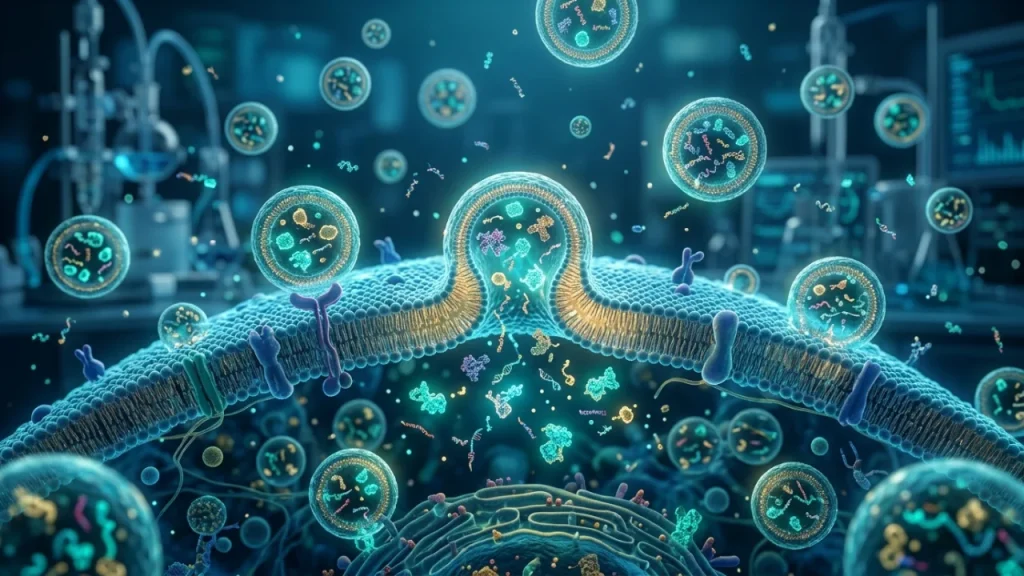
Think of a cell as a busy factory. It has a main command center, the nucleus. It also has sorting stations and shipping departments. Exosomes begin their life inside these shipping departments. They are tiny bubbles made from the cell’s own membrane. The cell carefully packs them with cargo. This cargo is the message.
What’s inside? The package holds vital instructions. It contains proteins. It carries lipids. Most importantly, it includes nucleic acids like RNA. This RNA can tell another cell what to do. The cell loads all this into the exosome. Then it seals the vesicle shut. The exosome is now ready for delivery.
The cell releases these packages into the space around it. This space is the extracellular matrix. It is like the city streets between buildings. The exosomes travel through this fluid environment. They move until they find a target cell. This is how exosomes work as messengers.
But how does the message get delivered? The exosome doesn’t just bump into any cell. It finds a specific one. It looks for a cell with a matching lock on its surface. The exosome has a key on its own surface. When the key fits the lock, the exosome docks. It then has two main delivery options.
First, it can fuse with the target cell’s outer membrane. Imagine two soap bubbles merging into one. The exosome’s membrane becomes part of the cell’s membrane. Its cargo spills directly into the cell’s interior. The instructions are now inside.
Second, the entire exosome can be swallowed by the cell. The cell membrane wraps around the vesicle. It pulls it inside in a little pouch. This pouch then opens. The exosome’s contents are released into the cell’s cytoplasm.
Once inside, the cargo goes to work. The RNA molecules are powerful. They can instruct the cell to make new proteins. They can tell it to repair itself. They can signal it to calm inflammation. They can even encourage it to produce more collagen.
This process is constant and natural. Your cells do this every second. Skin cells use this system to talk to each other. A stressed fibroblast might send out exosomes with SOS signals. A healthy neighboring cell receives them. It then starts producing support molecules to help.
The beauty lies in the precision. Exosomes deliver their payload right where it’s needed. They protect their fragile RNA cargo during transit. Without this protection, the messages would break down. They would never reach their destination.
This targeted system is why science is so interested. Understanding how do exosomes work opens new doors. We see how cells coordinate repair without direct contact. We learn how skin maintains its balance and health through constant, invisible conversation.
The next question is clear. How can this natural messaging system be used purposefully? The answer involves careful collection and application of these signal-rich vesicles for therapeutic benefit.
Why Exosomes Matter for Your Skin’s Natural Processes
Your skin is a living, breathing organ. It is not just a surface. It is a community of billions of cells. These cells must work together. They need to coordinate their actions for your skin to stay healthy and resilient. This is where exosomes become essential. They are the core communication network for this cellular community.
Think about what your skin faces every day. Sunlight sends ultraviolet rays into its layers. Pollution particles land on its surface. Daily life causes small scratches and irritations. Your own body’s processes create waste products. Your skin cells handle all this. They constantly repair the damage. They renew themselves. This is a massive logistical task.
Cells cannot shout across tissues. They need a precise mailing system. Exosomes provide exactly that. A cell under stress will package specific instructions into an exosome. It releases this vesicle into the space between cells. A neighboring cell takes in the message. It then changes its behavior based on the news it received.
This system supports your skin’s natural processes in several key ways.
- Guided Repair: When damage occurs, alert signals travel via exosomes. They tell stem cells and fibroblasts to become active. These cells then move to the site. They start rebuilding the structural proteins, like collagen and elastin, that give skin its firmness and bounce.
- Calming Signals: Inflammation is a natural first response to injury. But it must be controlled. Exosomes carry molecules that tell immune cells to stand down once their job is done. This helps prevent chronic, low-level inflammation that breaks down healthy tissue over time.
- Renewal Orders: Your skin constantly makes new cells to replace old ones. Exosomes help regulate this turnover cycle. They can signal basal cells in the deepest layer to divide and start their journey upward. This keeps the skin’s surface fresh and functioning as a strong barrier.
- Resource Management: Cells share resources through exosomes. A cell rich in antioxidants may send some to a neighbor facing oxidative stress. This sharing economy helps the entire skin community survive challenges better.
Without this constant flow of messages, coordination would break down. Repair would be slow and disorganized. Inflammation might not switch off. The renewal cycle could become uneven. The skin’s appearance and health would suffer as a direct result.
Understanding how do exosomes work shows us why this matters. Their function is not an extra feature. It is a fundamental operating principle for healthy tissue. Your skin’s ability to look youthful and bounce back from stress depends heavily on the quality and volume of this cellular conversation.
As we age, this communication system can degrade. Cells may send fewer exosomes. The messages they send might become less clear or less potent. The receiving cells might also become less responsive. This natural decline is one reason why skin’s self-repair capacity slows down over decades.
The goal of modern skincare science is to find supportive ways to enhance this intrinsic dialogue. By appreciating why exosomes matter for your skin’s core functions, we can better understand the potential of approaches aimed at revitalizing this essential cellular network for improved skin health and resilience.
The Basic Science Behind Exosome Formation and Release
Cells do not simply leak exosomes. They manufacture and release them with clear purpose. The process is a precise, multi-step operation inside nearly every cell in your body. It begins with a crucial cellular compartment called the endosome.
An endosome is like a sorting hub inside the cell. It gathers various molecules from the cell’s cytoplasm. These molecules can be proteins, lipids, or genetic instructions like RNA. The endosome’s membrane then folds inward. It creates tiny bubbles inside itself. This is a key step.
These internal bubbles are the future exosomes. Scientists call this forming structure a “multivesicular body.” Think of it as a shipping container packed with individual parcels. Each tiny parcel, or exosome, now holds a specific cargo selected by the cell. The cargo reflects the cell’s current state and needs.
Next, the multivesicular body must deliver its parcels. It travels through the cell to fuse with the outer cell membrane. This is the cell’s perimeter wall. Upon fusion, the container opens to the outside. All the small exosome parcels are released into the extracellular space.
This release is called exocytosis. It is a fundamental cellular process. The released exosomes now float in the fluid surrounding cells. They are ready for delivery to neighboring cells.
The entire sequence is highly regulated. Cells decide what to pack based on signals they receive. Stress, damage, or normal healthy signals can trigger exosome production. A stressed skin cell might pack antioxidant enzymes. A healthy fibroblast might pack collagen-building signals.
Understanding how do exosomes work requires looking at this packaging precision. The cargo is not random. It is a curated snapshot of the source cell’s function and intent. This makes exosomes powerful messengers.
Their formation involves several cellular machines: – ESCRT proteins act as an assembly crew. They help shape the endosome membrane into those internal bubbles. – Tetraspanins are marker proteins on the exosome surface. They are like address labels or identification tags. – The cell’s cytoskeleton provides transportation rails. It moves the multivesicular body to the cell membrane.
The release mechanism is also selective. Cells can release more or fewer exosomes based on need. For example, immune cells ramp up exosome release when fighting an infection. They send out alert signals to coordinate a defense.
The final exosome structure is perfectly designed for its journey. It has a lipid bilayer membrane. This protects its delicate cargo during transit. The membrane also carries those surface proteins. These proteins help target specific recipient cells.
In summary, exosome biogenesis is a core cellular export program. It turns internal cellular information into a physical package. The package is then shipped out for local delivery. This process happens countless times every second in your tissues.
It is a fundamental form of biological communication. The next logical question is how these packages are received and read by other cells, completing the vital dialogue that maintains skin health.
Key Components Inside Exosomes: Proteins, Lipids, and RNA
Think of an exosome as a tiny, sealed delivery truck. Its power comes from what it carries inside. The cargo is a precise mix of molecules. These molecules can change how a recipient cell behaves.
The cargo has three main parts. These are proteins, lipids, and nucleic acids like RNA. Each part has a different job. Together, they form a complete set of instructions and tools.
First, let’s look at proteins. Many proteins are stuck to the exosome’s membrane or float inside it. – Enzymes can speed up chemical reactions in the target cell. – Growth factors act like signals. They tell a cell to grow, divide, or repair itself. – Cytokines are messaging proteins. They can calm or activate an immune response.
These proteins are ready to work immediately upon delivery. They do not need to be made from scratch. This gives exosomes a fast-acting effect.
The second key component is the lipid membrane itself. Lipids are fatty molecules. They are not just a simple bubble. The specific lipids in the exosome membrane do important things. They help the exosome fuse with a target cell. This fusion is like two soap bubbles merging into one. It allows the exosome to empty its cargo directly into the cell’s interior. Some lipids also act as signals. They can be recognized by receptors on other cells. This is another way exosomes send messages.
The third and most famous cargo is RNA. RNA is genetic material. It carries instructions for making proteins. This is how exosomes can have long-lasting effects. The main type inside exosomes is called microRNA, or miRNA for short. miRNA does not carry instructions to build a protein. Instead, it carries instructions to *control* other instructions. Think of miRNA as a manager. It can tell the cell’s machinery to slow down or stop making certain proteins. This fine-tunes the cell’s activity.
Here is a simple example of how do exosomes work with this RNA cargo. A skin fibroblast cell packages miRNAs into an exosome. These miRNAs are instructions for boosting collagen production. The exosome is released and travels. It finds another fibroblast cell and delivers the miRNAs. The recipient cell reads these new manager instructions. It then increases its own collagen output. The exosome did not deliver collagen. It delivered the blueprint for making more collagen.
Other forms of RNA can be present too. Messenger RNA (mRNA) can provide a template to build a new protein directly. Transfer RNA (tRNA) helps in that building process. The mix of RNAs is highly selective. A stressed cell will send different RNA instructions than a healthy one. This is how cellular states are communicated.
The combination of these components is what makes exosomes so smart. Proteins offer immediate action. Lipids ensure safe delivery and fusion. RNA provides programmable, long-term guidance. This trio allows one cell to send a complex repair kit to another. It is not just a single signal. It is a full suite of tools and blueprints.
Understanding this cargo explains their potential in skincare science. The goal is to harness exosomes from healthy, young cells. Their curated payload could deliver specific instructions to aging or damaged skin cells. The next step is seeing how these loaded packages find their exact destination and deliver their precious load.
How Exosomes Differ from Other Extracellular Vesicles
Cells release different types of tiny bubbles. Scientists call them extracellular vesicles. Think of them as a fleet of different delivery trucks. They all carry cargo from one cell to another. But they are not all the same. Exosomes are one specific and highly important type.
First, let’s sort them by size and origin. This is the key to understanding their differences. – Apoptotic bodies are the largest. They can be 500 to 2000 nanometers across. They form when a cell is dying and falls apart. Their cargo is a random mix of the cell’s leftover parts. – Microvesicles are mid-sized. They range from 100 to 1000 nanometers. They bud or bleb directly off the cell’s outer membrane. It is like the cell pinching off a piece of itself. – Exosomes are the smallest and most uniform. They are only 30 to 150 nanometers in diameter. They form inside the cell in compartments called endosomes.
This different origin is critical. Exosomes are not simply pinched off the surface. They are made inside a special cellular sorting facility. The cell actively loads them with selected cargo. Then they are released when this internal compartment fuses with the cell membrane.
Their small size gives exosomes unique advantages. It allows them to travel more easily through dense tissues. They can navigate the fluid between cells with less hindrance. Their uniform shape also aids in stability. Larger vesicles are more fragile and can break apart.
But the biggest difference is in cargo control. Microvesicles and apoptotic bodies carry a more random sample of the cell’s contents. The loading process is less selective. An exosome’s formation allows for precise sorting. Molecules are chosen and packed with intention.
This is central to how do exosomes work as targeted messengers. Their membrane is rich in specific proteins. These proteins act like address labels and keys. They help the exosome find and enter a particular target cell. Other vesicles often have more generic surfaces.
Think of it this way. An apoptotic body is like a moving truck clearing out a house. A microvesicle is like a postcard sent from a vacation spot. An exosome is like a secure diplomatic pouch. It carries a curated message for a specific recipient.
The destination matters too. Due to their surface markers, exosomes can have precise targeting. They can bind to receptors on certain cell types only. Other vesicles may be absorbed by any nearby cell that encounters them. This targeting makes exosome communication efficient and specific.
Their stability in body fluids is another practical difference. Exosomes are protected by their double-layered membrane. They can survive in bloodstream or other fluids for some time. This lets them carry signals over longer distances in the body.
In summary, exosomes stand out for their small size, selective formation, and targeted delivery. They are not just cellular debris or simple blebs. They are refined communication packages engineered by the cell itself.
This precision is why science is so interested in them, especially for skincare. Delivering a repair signal to a fibroblast requires a targeted approach. You want the message to reach the right cell type. Exosomes, by nature, are designed for this exact task.
Understanding this distinction sets the stage for the next logical question. How do these precise messengers actually complete their delivery after they find the right cell?
How Do Exosomes Work in Skincare and Skin Biology?
How Exosomes Deliver Signals to Skin Cells for Repair
Exosomes deliver their repair instructions through a precise, multi-step process. They do not simply dump their contents randomly into a cell. The delivery is controlled and specific. This ensures the message is received correctly.
The journey begins with binding. An exosome floats until it meets its target skin cell, like a fibroblast or keratinocyte. Special proteins on the exosome’s surface act as keys. They fit into matching lock proteins on the target cell’s membrane. This is the targeting we discussed earlier.
Binding alone is not enough for the message to get inside. The cell must actively bring the exosome in. There are two main ways this happens. The first is called fusion. The exosome’s membrane merges directly with the cell’s outer membrane. It is like two soap bubbles becoming one. This releases the exosome’s cargo directly into the cell’s interior fluid.
The second way is endocytosis. The cell’s membrane folds inward, wrapping around the exosome. It forms a little pouch inside the cell. This pouch then opens to release the cargo. Think of the cell reaching out, grabbing the package, and pulling it inside.
Once inside, the exosome’s precious cargo gets to work. This cargo is the actual repair message. It typically consists of three main types of molecules.
- Proteins: These are worker molecules. They can directly kickstart processes like collagen production or antioxidant defense.
- Lipids: These are building blocks and signaling molecules themselves. They help maintain healthy cell membranes.
- Nucleic Acids (RNA): This is the most crucial part. RNA acts as a set of instructions. It tells the cell’s machinery which new proteins to make.
The RNA message does not alter the cell’s own DNA. Instead, it temporarily changes what the cell is doing. For example, an exosome from a healthy cell can carry RNA instructions for making collagen. When a tired fibroblast receives this, it reads the instructions. It then starts producing more collagen fibers.
This signal delivery has powerful effects in skin biology. It can turn on repair pathways that have become slow with age or damage. The signals tell skin cells to do several key things.
They boost the production of structural proteins like collagen and elastin. These proteins give skin its firmness and bounce. They increase the skin’s own antioxidant enzymes. This helps neutralize daily damage from pollution and UV light. They can also calm inflammation, reducing redness and irritation.
The process is natural and efficient. The body already uses exosomes for this internal communication. Skincare science aims to support this system. By providing additional targeted exosomes, we can deliver a clearer, stronger repair signal to skin cells that need it most.
Think of a tired fibroblast as a factory running slow. It has all the equipment but lacks updated blueprints. An exosome delivers those new blueprints (RNA). The factory then efficiently produces high-quality materials again.
This direct delivery system avoids many problems. The exosome’s membrane protects its cargo from degradation en route. The targeting ensures it reaches the right cell type. The natural fusion or uptake means the cell accepts the message without alarm.
Understanding how do exosomes work at this mechanical level shows their elegance. They are not just carriers but complete delivery systems. They find the right address, secure entry, and provide clear instructions.
The result is a targeted cellular update that promotes repair from within. This leads to visible improvements in skin health, resilience, and appearance. The next logical question explores what specific changes this process can create in skin that we see and feel.
The Role of Exosomes in Boosting Collagen Production
Collagen is the main structural protein in your skin. It creates a strong, supportive network. This network gives skin its firmness and youthful plumpness. As we age, our cells produce less collagen. The existing collagen also breaks down faster. This leads to thinner, looser skin with fine lines.
Exosomes address this problem directly. They carry specific instructions to the cells that make collagen. These cells are called fibroblasts. Fibroblasts live in the dermis, the skin’s deeper layer. An exosome can travel to a fibroblast and deliver its cargo.
This cargo often includes microRNAs. These are small pieces of genetic code. They do not create collagen themselves. Instead, they act like master switches. They turn on the cell’s own collagen-producing genes. Think of a fibroblast as having a library of instruction manuals. Some manuals are for making collagen. The exosome’s microRNA finds the right manual and opens it.
The process is highly efficient. The cell receives a clear, targeted signal. It is not a general command to “work harder.” It is a precise instruction to “increase collagen type I production.” This specificity is key. It means the cell uses its energy for the right task.
The signaling does more than just start production. It also helps regulate the quality of the collagen made. Healthy, long-lasting collagen needs proper structure. Exosome signals can support the enzymes that assemble and stabilize this structure. This results in a stronger, more resilient collagen network.
We can break down the sequence into clear steps: – Exosomes are applied to the skin or delivered into the dermis. – Their surface markers guide them to target fibroblast cells. – The exosome fuses with the fibroblast or is taken inside. – It releases its payload of signaling molecules, like microRNAs. – These molecules interact with the cell’s machinery. – This interaction upregulates genes responsible for collagen synthesis. – The fibroblast then produces and secretes more high-quality collagen.
This entire process mirrors natural healing. When skin is wounded, fibroblasts become very active. They release exosomes to coordinate repair and build new tissue. Skincare science harnesses this natural system. It provides additional exosomes to send a similar “repair and rebuild” signal, even without a wound.
The outcome is a gradual restoration of skin’s foundation. New collagen fibers integrate into the existing matrix. They reinforce and thicken the dermal layer. Visibly, this translates to improved firmness and elasticity. Skin texture becomes smoother because the underlying support is stronger.
Understanding how do exosomes work for collagen shows their strategic role. They are messengers that trigger a fundamental building process. This is different from simply applying collagen topically. Topical collagen molecules are too large to penetrate deeply. Even if they could, they would not instruct cells to make more.
Exosomes work from within the cell to create lasting change. They shift the skin’s biology toward a more youthful state of production. The focus is on restoring function, not just adding a temporary substance. This leads us to consider another key aspect of skin health: cellular renewal and protection from daily stress.
How Exosomes Support Elastin and Skin Elasticity
Elastin is the protein that gives skin its snap-back quality. Think of a rubber band. Elastin fibers form a network in the dermis. This network allows skin to stretch and then return to its original shape. Without a healthy elastin network, skin loses its resilience. It can begin to sag.
Exosomes support this crucial elastin network in several direct ways. Their cargo includes specific signaling molecules. These molecules target the skin cells responsible for elastin production. These cells are called fibroblasts. The signals tell fibroblasts to make more tropoelastin. Tropoelastin is the building block of mature elastin fibers.
But making the building blocks is only the first step. Elastin fibers need to be assembled and organized properly. They must integrate into the existing skin matrix. This is a complex process. Exosomes help here too. They carry instructions that guide the cross-linking and organization of these new fibers. Proper organization is vital. A messy elastin network does not function well.
The process mirrors how exosomes work for collagen, but the goal is different. Collagen provides strength and structure. Elastin provides dynamic movement and recoil. Both are needed for youthful, healthy skin. Exosomes coordinate the production of both.
Daily life constantly stresses elastin. Expressions like smiling or squinting involve tiny stretches. Sun exposure generates enzymes that degrade elastin fibers. This damage accumulates over years. The body’s natural repair system can become slow or overwhelmed.
This is where exosome science offers a strategic approach. It provides supplemental signaling. These signals do not just tell cells to make more elasto-genic materials. They also help regulate the balance between construction and demolition.
Exosomes can carry messages that calm down overactive demolition crews. These crews are enzymes called matrix metalloproteinases (MMPs). MMPs break down old or damaged proteins. Some MMP activity is normal and necessary for remodeling. Too much activity, often triggered by UV exposure, destroys healthy elastin. Exosome signals can help reduce this excessive breakdown.
The result is a dual benefit for skin elasticity. – First, it promotes the synthesis of new, high-quality elastin components. – Second, it helps protect the existing elastin infrastructure from unnecessary damage.
The visual effect of this biological support is gradual but significant. Skin gains improved bounce and suppleness. It resists sagging, especially in areas prone to movement like around the eyes and mouth. Fine lines caused by repetitive motions may appear less deeply etched. The skin’s overall texture feels more pliable and firm.
Understanding how do exosomes work for elastin completes a key picture. Skin’s foundation relies on a strong collagen matrix for support. It equally relies on an intact elastin network for movement and flexibility. Exosomes address both systems at their source: the fibroblast’s genetic programming.
They shift the cell’s activity toward a more balanced, youthful state of production and protection. This is not about filling skin with static substances. It is about restoring its innate ability to maintain itself dynamically. The focus moves from temporary surface improvement to sustained functional renewal.
The next logical question involves defense. How does this enhanced cellular activity translate into protection against daily environmental stressors?
Exosomes and Cellular Turnover: Renewing Your Skin
Your skin is a living organ. It constantly makes new cells. Old cells on the surface are shed. This cycle is called cellular turnover. In young skin, this process is fast and efficient. A full renewal might take about 28 days. As we age, this process slows down. It can take 40 days or more. The result is a buildup of old, tired cells on the surface. Skin looks dull and rough. Fresh, vibrant cells struggle to reach the top.
This is where exosomes deliver crucial instructions. They target the basal layer of the epidermis. This is where new skin cells are born. Keratinocytes are the primary cell type here. They multiply and gradually move upward. Exosomes communicate with these keratinocyte stem cells and progenitor cells. They carry specific signals to optimize the renewal cycle.
The signals tell the cells to do two main things. – First, they encourage healthy proliferation. This means cells divide at a more youthful, regulated pace. – Second, they support proper differentiation. This is the process where a new cell matures and takes on its specific job in the skin’s structure.
Think of it like a factory assembly line. Proliferation is about making the right number of new units. Differentiation is about ensuring each unit is correctly built and functional. Aging or stressed skin has a slow, error-prone line. Exosome signals help reset the production speed and improve quality control.
The biological tools for this are miRNAs and proteins inside the exosome. For example, certain miRNAs can silence genes that promote cellular senescence. Senescence is when a cell becomes old and stops dividing but doesn’t die. It just sits there, causing trouble. By reducing this signal, exosomes help keep the progenitor cell pool active and ready.
Other cargo can activate pathways like Wnt/β-catenin or Notch. These are fundamental pathways for stem cell fate. They decide if a cell should divide, what type of cell it should become, and when it should stop. Exosomes provide precise modulation of these systems. The goal is not uncontrolled growth. It is a harmonized, efficient renewal rhythm.
The visible effects of this optimized turnover are clear. – Skin texture becomes smoother because dead cell buildup is reduced. – The complexion appears brighter and more radiant. Fresh cells reflect light better. – Hyperpigmentation spots may fade more quickly as pigmented cells are shed at a regular pace. – The skin’s barrier function can improve. A robust layer of fresh, well-differentiated cells forms a stronger shield.
This process works in tandem with the collagen and elastin support discussed earlier. A strong dermal matrix provides the supportive bed for a healthy epidermis. Meanwhile, a rapidly renewing epidermis protects that underlying matrix. It is a perfect example of skin biology as an integrated system.
Understanding how do exosomes work in cellular turnover completes another piece of the puzzle. They do not force the skin to act in an unnatural way. Instead, they restore the native language your cells use to coordinate renewal. They remind your skin’s foundational cells of their original, efficient blueprint.
The outcome is skin that not only has better structure but also a fresher, more vibrant surface appearance. This moves us closer to a holistic view of skin health. Yet, even renewed skin faces constant threats from its environment. How does this revitalized cellular activity equip skin to handle daily assaults from pollution and oxidative stress?
How Exosomes Reduce Inflammation and Calm Skin
Inflammation is your skin’s alarm system. It is a necessary response to injury or attack. However, chronic, low-grade inflammation is a major source of damage. It can lead to persistent redness, sensitivity, and accelerated aging. Exosomes offer a sophisticated way to calm this reaction. They work by resetting the communication that starts and stops inflammation.
So, how do exosomes work to achieve this? They carry precise instructions to immune cells in the skin. Think of an inflammatory signal as a shouted alert. Exosomes can deliver messages that lower the volume. They tell overactive immune cells to stand down. This process helps return the skin to a balanced, neutral state.
The cargo inside exosomes is key. They deliver specific molecules that actively cool inflammation. – MicroRNAs can silence the genes that produce inflammatory proteins. – Enzymes can break down or neutralize the signals that cause swelling and redness. – Growth factors can promote repair processes, shifting focus from alarm to healing.
This is not about suppressing the immune system. It is about restoring its intelligence. Healthy skin knows when to fight and when to stop. Exosomes from healthy cells carry the blueprint for this balanced response. They help retrain confused or overwhelmed skin cells.
The effects are visible and measurable. Skin with conditions like rosacea or general sensitivity often has a constant low-level fire. Exosome signaling can help douse these flames. Redness may diminish because blood vessels receive signals to constrict to a normal size. Irritation soothes because nerve endings get calming messages.
This anti-inflammatory action also protects the skin’s long-term health. Chronic inflammation breaks down collagen and elastin. It weakens the skin’s barrier. By calming this response, exosomes help preserve the structural matrix you are trying to build. They also protect the fresh, newly renewed cells from being damaged by their own defensive processes.
Consider a simple example: sun exposure. UV rays cause immediate inflammatory damage. Post-procedure skin is also inflamed. In both cases, cells are sending out distress signals. Exosomes can intervene in this chatter. They provide the correct codes to start repair and stop unnecessary ongoing alarm.
The outcome is skin that is not just renewed but also resilient. It is less reactive to common triggers like environmental stressors or topical products. A calm skin environment is better at everything. It hydrates more effectively. It heals faster from minor insults. It maintains its renewed appearance for longer.
Understanding this function completes a critical triad for skin health. We have seen how exosomes support the building materials like collagen. We have explored how they optimize cellular renewal for a fresh surface. Now, we see their role in defense and peacekeeping. They maintain the quiet, stable environment where repair and renewal happen best.
This leads to a final, practical consideration. How does this sophisticated biological messaging translate into a skincare product? What ensures these delicate messengers arrive at your skin ready to work?
How Do Exosomes Work with Advanced Skincare Formulations?
The Process of Engineering Exosomes for Skincare Use
Scientists do not simply collect exosomes and put them in a bottle. The journey from a cell’s natural release to a stable skincare ingredient is precise. It involves careful selection, purification, and testing. This engineering ensures safety and function.
The process starts with choosing a source. Researchers select specific types of cells known for their beneficial properties. These are often human cells, like stem cells from certain tissues. These cells are grown in controlled lab environments called bioreactors. The cells are healthy and thriving. They naturally release exosomes into their nutrient-rich growth medium as they communicate.
Collecting the exosomes is the next critical step. The cell culture medium contains many things. It has leftover nutrients, cellular debris, and other particles. Scientists must separate the tiny exosomes from this mixture. They use advanced techniques like ultracentrifugation. This method spins the fluid at extremely high speeds. The heavier particles sink first. The exosomes, due to their specific size and weight, form a pellet at the bottom.
Further filtration steps remove any remaining impurities. The goal is a pure concentration of exosomes. This purity is vital for both safety and predictable results. Scientists then analyze the harvested vesicles. They confirm their size, which is typically between 30 and 150 nanometers. They also check for specific protein markers on the surface. These markers prove they have genuine exosomes.
A pure sample is not yet ready for skin. The exosomes must be stabilized. In their natural liquid state, they are fragile. Their lipid membrane can degrade. Their precious cargo could spill or become inactive. Formulation scientists work to protect them. They create special carrier solutions. These solutions often mimic the body’s own environment. They maintain the correct pH and ionic balance.
The formulation must also help the exosomes reach their target. The skin’s outer layer, the stratum corneum, is a formidable barrier. It keeps things out. Effective delivery systems are designed to overcome this. Some formulations use liposomes or other nano-carriers to escort the exosomes deeper. Others use specific peptides that help open temporary pathways.
Finally, rigorous testing confirms everything works. Scientists run assays to check for biological activity. They ensure the exosomes can still be taken up by skin cells in lab models. They test for stability over time under various storage conditions. Every batch is screened for sterility. There must be no harmful bacteria or endotoxins.
This entire engineering process answers a key question: how do exosomes work in a product? They work because science prepares them correctly. Each step protects their natural ability to communicate. It ensures they arrive on your skin intact and ready to deliver their messages.
The result is a concentrated, stable, and active ingredient. It is designed for maximum compatibility with skin biology. This careful preparation distinguishes true exosome science from simpler extracts or conditioned media. It transforms a biological phenomenon into a reliable skincare component.
Understanding this process highlights why not all products are equal. The source cells matter. The purification method matters most of all. The formulation strategy is critical for delivery. These factors directly influence what your skin cells ultimately receive.
Now we know how exosomes are made ready for skin. The next logical question is about application. How should this sophisticated ingredient be used in a real-world routine? What practices ensure you get the full benefit from each dose?
How Exosomes Are Stabilized in Cosmetic Products
Exosomes are delicate. They are not like rugged vitamin C or stable hyaluronic acid. Their power lies in their complex biological structure. This structure can break down easily. It is sensitive to heat, light, and physical forces. So a major challenge exists. How do you put these fragile messengers into a bottle? The goal is to keep them fully active for months.
The answer lies in advanced stabilization. Formulators use specific methods to protect exosomes. They create a supportive environment. This environment mimics the stable conditions inside our bodies. Think of it as putting the exosomes into a state of suspended animation. They remain intact but quiet until they meet your skin.
One common method involves cryoprotectants. These are special sugar molecules. Trehalose is a famous example from nature. Some plants and insects use it to survive freezing. These sugars form a glass-like shield around the exosome. This shield protects the vesicle’s membrane. It prevents damage from ice crystals or dehydration during storage.
Lyophilization is another key technique. This is a freeze-drying process. The exosome solution is frozen solid. Then, all the water is gently removed under a vacuum. What remains is a dry powder. This powder is very stable at room temperature. The exosomes are dormant inside it. When you mix the powder with a liquid, they reactivate. Many premium serums use this method. You mix the two parts just before your first use.
The liquid base of the product is also critical. It is called the vehicle or carrier. This is not just simple water or oil. It is a carefully designed formula. The pH must be perfectly balanced to match skin and exosome stability. Harsh preservatives that disrupt membranes are avoided. Gentle, multifunctional systems are used instead.
Formulators also guard against oxidation. Antioxidants like tocopherol are often added. They neutralize free radicals in the formula. This prevents oxidative stress from damaging the exosomes’ cargo. The packaging plays a huge role here too. Airless pump bottles or sealed single-dose vials are preferred. They limit the exosomes’ exposure to air each time you use the product.
Physical agitation is another enemy. Shaking can pop the vesicles like bubbles. Thickening agents are sometimes used to create a slightly viscous serum. This gel-like matrix minimizes movement inside the bottle. It cushions the exosomes during transport and daily handling.
So, how do exosomes work in this final product format? They work because they are preserved in a protective capsule of science. Every element of the formulation has a job. Some ingredients shield from chemical damage. Others guard against physical stress. The packaging provides a dark, airtight home.
This leads to important user guidelines. To maintain stability, store your exosome product correctly. Keep it in a cool, dark place like a medicine cabinet—not a warm, sunny bathroom shelf. Use it within the recommended period after opening. Follow any special mixing instructions precisely.
These stabilization steps are non-negotiable for efficacy. They ensure the messengers you apply are the same messengers that were bottled. Their biological instructions remain clear and uncorrupted. This allows them to perform their intended dialogue with your skin cells upon contact.
The journey from cell culture to your skincare routine is now complete. We have covered creation, purification, and final stabilization. The logical next step is understanding what happens upon application—the moment these messengers meet your living skin cells and begin their work
Delivery Systems: Getting Exosomes Deep into Skin Layers
The skin’s outermost layer, the stratum corneum, is a formidable barrier. It is made of dead, flattened cells held together by lipids. This structure blocks most large molecules and particles. Exosomes are nano-scale messengers. They are much smaller than most skincare ingredients. Their tiny size is their first key advantage for penetration.
But size alone is not enough. The skin’s lipid matrix can still trap them. Advanced formulations use specific strategies to create a clear path. These systems are designed to escort exosomes past this initial barrier. Their goal is to reach the living layers beneath. This is where target cells like fibroblasts and keratinocytes reside.
One common strategy involves encapsulation. Exosomes can be housed within a larger, compatible carrier particle. This carrier is engineered to fuse with the skin’s own lipids. Think of it as a ferryboat docking. The carrier merges with the barrier, creating a temporary opening. It then releases its exosome cargo into the deeper layers.
Another method uses penetration enhancers. These are safe ingredients that temporarily alter the barrier’s structure. They might gently loosen the bonds between skin cells. They do not damage the skin. Instead, they create microscopic channels. Exosomes can then travel through these channels via passive diffusion.
The formulation’s base, or vehicle, is also critical. A well-designed serum has the correct rheology. This refers to its flow and spreadability. A formula that is too thick sits on the surface. One that is too thin may not maintain contact long enough. The ideal vehicle spreads evenly into a thin film. It hydrates the stratum corneum, making it more permeable. This allows exosomes to begin their journey.
So, how do exosomes work once they cross this barrier? Their journey becomes guided by biology. They move through the extracellular matrix, the gel-like substance between cells. Their natural targeting signals come into play. These signals are proteins and lipids on the exosome’s own surface.
These signals act like addresses. They help exosomes find specific cell types. A fibroblast, which makes collagen, has different surface receptors than an immune cell. Exosomes can bind preferentially to fibroblasts. This targeting ensures their message is delivered to the right recipient.
The final step is cellular uptake. The target cell recognizes the exosome. It then engulfs the vesicle in a process called endocytosis. The cell membrane wraps around the exosome and draws it inside. Once internalized, the exosome releases its payload of signaling molecules, proteins, and genetic instructions.
This direct delivery is what makes exosomes unique. They do not merely signal from the outside. They enter the cell and deliver their instructions internally. This can influence cell behavior more profoundly than a surface-level signal.
- Size: Their nano-scale diameter allows initial entry.
- Formulation: Carriers and enhancers create pathways through the barrier.
- Targeting: Natural surface signals guide them to specific skin cells.
- Uptake: Cells engulf them, allowing internal delivery of their cargo.
This sophisticated delivery process ensures that the stabilized messengers reach their destination intact and functional. They are not wasted on the skin’s surface. Their biological instructions are delivered directly into the cellular environment where they can be read and acted upon. The next logical question is what happens after that delivery—what specific instructions do they carry, and what changes do they trigger within the skin cell?
Synergy with Other Skincare Ingredients and Exosomes
Exosomes do not work in isolation on the skin. They function best alongside proven skincare ingredients. Think of a skin cell as a factory. Classic ingredients like vitamins provide the raw materials. Exosomes deliver the blueprints and instructions on how to use those materials best. This synergy creates results greater than either could achieve alone.
Consider vitamin C, a powerful antioxidant. It neutralizes free radicals on the skin’s surface and within cells. But its effectiveness depends on the cell’s own health and activity. An exosome can carry instructions that boost the cell’s internal antioxidant systems. It can signal the cell to produce more of its own protective enzymes. The vitamin C handles immediate threats. The exosome helps the cell become more resilient for the future. This is a powerful partnership.
The same principle applies to hydrating ingredients like hyaluronic acid. HA holds water in the skin’s layers. However, dehydrated skin often has compromised barrier function. Exosomes can carry growth factors that encourage cells to repair that barrier. A stronger barrier means the hydration from HA is retained more effectively. The HA provides immediate moisture. The exosomes help the skin better lock it in.
Retinol is another key example. It signals skin cells to renew themselves faster. This process can sometimes cause irritation. Exosomes may help modulate this response. They can carry calming signals that support skin repair. This could allow for better tolerance of retinol. The retinol drives renewal. The exosomes help manage the transition smoothly.
So, how do exosomes work with these ingredients on a practical level? Their internal cargo directly influences cellular pathways.
- They can upregulate receptors. This makes a cell more receptive to external signals from ingredients like peptides.
- They can enhance protein synthesis. This means a cell uses amino acids from your serum to build structural proteins more efficiently.
- They can optimize energy production. A cell with better metabolism processes all nutrients more effectively.
This is not a simple mixing of bottles. It is a coordinated biological strategy. The formulation science aims to create products where each component supports the others. The goal is to support the skin’s natural intelligence, not overwhelm it.
The timing of application also matters. In a routine, exosome-based products are often applied first. Their nano-scale size allows for deep penetration. They prepare the cellular environment. Following with nutrient-rich serums provides the building blocks. The primed cells are then ready to use those materials optimally.
This synergistic approach mirrors how our body’s systems naturally operate. Different signals and materials constantly interact inside us. Advanced skincare seeks to replicate this harmony. It moves beyond singular ingredients to consider the entire cellular conversation.
Ultimately, exosomes act as cellular facilitators in a skincare regimen. They help ensure that the investment in quality ingredients pays off fully. The cell becomes a more active, capable participant in its own rejuvenation. The next consideration is how this internal communication translates into visible improvements for skin concerns like aging or damage.
Safety and Testing Standards for Exosome-Based Products
Exosome-based skincare is subject to strict laboratory testing. This testing ensures products are safe and effective before they reach your skin. The process is multi-layered. It begins with the source material.
Exosomes used in skincare are not taken directly from human donors. They are produced under controlled conditions. Scientists use cultured human cells in sterile environments. These cells are carefully screened. They must be free from viruses, bacteria, and other contaminants. The cells are nurtured to release exosomes naturally. This method provides a pure and consistent supply.
The collection process is next. Scientists harvest the exosome-rich fluid from the cell culture. Advanced filtration techniques separate the exosomes from other components. The goal is to isolate only the nano-scale vesicles. This step is crucial for purity. Impurities could cause unwanted reactions or reduce product performance.
Every batch of isolated exosomes undergoes rigorous analysis. Scientists check several key factors. They confirm the size of the vesicles. Exosomes should be within a specific nano-scale range. They analyze the surface markers. These markers confirm the vesicles are true exosomes, not other particles. They also test for potency. This means checking if the exosomes contain the intended signaling molecules.
Safety testing is a major priority. Labs conduct tests to rule out toxicity. They check for endotoxins, which are harmful substances from bacteria. They ensure the final product is sterile. Microbial testing confirms no growth of fungi or bacteria exists. These tests follow established international guidelines for biologics.
Stability testing is another critical phase. Scientists need to know the product remains active and safe over time. They store samples under different conditions. They check for changes in particle size, concentration, and biological activity. This determines the product’s shelf life. It ensures the exosomes you apply are still functional.
Third-party verification adds an extra layer of trust. Reputable manufacturers send their products to independent labs. These external labs repeat key safety and identity tests. Their confirmation provides unbiased validation of the manufacturer’s claims.
The final formulation is also tested. Exosomes are blended with other skincare ingredients carefully. Compatibility tests ensure the other components do not damage the exosomes. The pH is adjusted to be skin-friendly. The final mixture is tested again for stability and safety on skin models.
This extensive process answers a key question for consumers: how do exosomes work safely? The answer lies in this meticulous science. It transforms a natural biological process into a reliable skincare component. Each step is designed to protect you and guarantee product quality.
Regulatory oversight provides a framework for this testing. In many regions, exosome skincare falls under specific regulations for biological products. These rules mandate good manufacturing practices. They require detailed record-keeping for every batch. This creates a system of accountability from the lab to the bottle.
The result is a highly refined ingredient you can trust. The rigorous checks ensure the exosomes in the bottle are pure, potent, and safe. They are ready to perform their messenger role without risk. This scientific diligence supports the skin’s natural processes, aligning with the harmonious approach described earlier. Understanding these standards allows you to appreciate the science behind safety, not just efficacy. This foundation of trust is essential for any advanced skincare innovation to deliver its promised benefits consistently and reliably.
How Do Exosomes Work for Visible Skin Benefits?
Improving Skin Texture and Smoothness with Exosomes
Think of your skin’s surface like a brick wall. Over time, weather and wear can make it rough and uneven. Your skin cells face similar daily challenges. Exosomes work by sending precise repair instructions to those cells. This improves the skin’s foundation for a smoother texture.
How do exosomes work to achieve this? They carry orders for better collagen production. Collagen is the main structural protein in your skin. It acts like a supportive scaffold. As we age, collagen breaks down and production slows. This leads to a loss of firmness and texture becomes rough.
Exosomes address this directly. They deliver signals called microRNAs and proteins to fibroblast cells. Fibroblasts are your skin’s collagen factories. The exosome signals tell these factories to become more active. They encourage the synthesis of new, healthy collagen fibers.
This is not a vague stimulation. It is a targeted biological command. The new collagen helps fill in minor unevenness under the surface. Imagine patching small holes in a wall before repainting. The result is a smoother substrate.
Exosomes also improve skin smoothness by optimizing cell turnover. Your skin constantly sheds old cells and generates new ones. This process can become sluggish. Dead cells accumulate on the surface. This creates a dull, rough feel.
The messengers carry instructions for better keratinocyte function. Keratinocytes are the primary cells in the skin’s outer layer. Exosome signals help regulate their life cycle. This promotes a more orderly and efficient renewal process.
- Old cells shed more uniformly.
- New cells migrate to the surface properly.
- The outermost layer, the stratum corneum, becomes more compact and even.
The effect is akin to gentle, continuous polishing from within. Your skin feels softer to the touch because the surface is literally more regular.
Another key action is reducing invisible micro-inflammation. Even without visible redness, skin can have low-level stress responses. This disrupts healthy cell function and damages the extracellular matrix. The matrix is the supportive gel between cells.
Exosomes deliver anti-inflammatory signals. They can calm overactive immune signals in skin cells. This creates a more peaceful environment for repair work. Cells can focus on rebuilding instead of defending.
This directly improves texture. Inflammation can break down collagen and elastin. It can also weaken the skin’s barrier. A compromised barrier loses moisture and feels rough. By quieting this stress, exosomes help maintain a strong, hydrated, and smooth surface.
The combined effect on these three areas—collagen, cell turnover, and inflammation—is synergistic. They work together. More collagen provides a better foundation. Efficient cell turnover ensures a fresh, smooth top layer. Reduced inflammation protects both structures.
You do not see one single change overnight. Instead, you experience a cumulative improvement. Skin gradually feels softer and more refined. Fine lines associated with dry or uneven texture may appear diminished. The overall complexion looks more uniform.
This process relies entirely on cellular communication. It is your skin’s own language used for repair. The exosomes are simply delivering the right memos to the right departments. The previous section covered how these messengers are safely prepared for this job.
Understanding this mechanism answers how do exosomes work for tangible benefits. It moves from concept to tactile result. The next logical step is to explore how these cellular improvements translate to other visible signs of aging, such as tone and resilience.
How Exosomes Enhance Skin Radiance and Glow
Skin radiance comes from within your cells. It is not just about surface shine. True glow happens when skin cells are full of energy and work well. Dull skin often means tired cells. These cells struggle with their basic jobs. Exosomes help fix this energy problem. They are key to understanding how do exosomes work for a brighter look.
Think of a cell as a tiny factory. This factory needs power to run. Mitochondria are the cell’s power plants. They make energy. As we age, these power plants get less efficient. They also make more pollution. This pollution is called oxidative stress. It is like exhaust fumes inside your cell. This exhaust damages machinery and dims the cell’s light.
Exosomes deliver specific instructions to these power plants. They carry microRNAs and proteins. These molecules talk to the mitochondria. The message is simple: work better and cleaner. This process can boost energy production. A cell with more power is a more vibrant cell. It can perform its duties with ease.
More cellular energy leads to several direct changes. First, cells can renew themselves better. A lively cell sheds its old surface more efficiently. This reveals fresher, smoother skin underneath. Second, good energy supports better hydration. Cells can pump nutrients and water more effectively. This leads to a plumper appearance.
Exosomes also tackle the exhaust problem directly. They help upregulate the cell’s own antioxidant systems. These systems neutralize oxidative stress. They mop up the damaging fumes. This protects the cell’s vital structures. Key proteins for a bright complexion are kept safe.
The benefits for radiance are clear: – Enhanced cellular energy production revitalizes skin from within. – Reduced internal pollution protects light-reflecting structures. – Improved turnover reveals newer, more uniform skin cells. – Optimized hydration creates a plump, light-catching surface.
Dullness often comes from a buildup of old, tired cells. It also comes from a weak skin barrier that scatters light poorly. By addressing energy and defense, exosomes help on both fronts. Skin becomes more translucent. Light reflects off it in a even way. This creates a natural, lit-from-within glow.
The change is not about adding sparkle on top. It is about restoring the skin’s own ability to glow. This process is gradual. Over time, complexion loses its gray or sallow tone. It looks more alive and vibrant. The clarity improves because cells are healthier.
This ties directly to earlier improvements in texture and structure. A strong collagen foundation supports plumpness. Smooth surface cells reflect light evenly. Now, add high cellular energy into this system. The result is synergistic skin health.
Radiance is a sign of fundamental wellness at the cellular level. When cells have good energy and low stress, they function optimally. This optimal function shows on your face. The next logical step is to see how this internal renewal strengthens the skin’s outer shield against daily challenges.
Exosomes and Hydration: Keeping Skin Plump and Moist
Hydrated skin is more than just skin with water on top. True hydration means water is held deep within your skin cells and the spaces between them. Dry skin lacks this internal water reserve. It can look flaky, feel tight, and show fine lines more easily. Exosomes address this problem at its source. They carry specific instructions to the cells that manage your skin’s water supply.
So, how do exosomes work to improve hydration? They deliver messages that boost your skin’s natural moisturizing systems. Think of a dry sponge. A damp sponge is soft and plump. Your skin works in a similar way. Exosomes help your skin act like that damp sponge. They send signals to cells called keratinocytes. These cells make up most of your outer skin layer.
The messages tell these cells to produce more of certain proteins. These proteins are like tiny magnets for water. They are called aquaporins. Aquaporins are channels embedded in cell walls. Their main job is to move water in and out of the cell efficiently. With more aquaporins, skin cells can pull in and hold onto water much better. This is a key mechanism for lasting moisture.
Exosomes also influence the skin’s glue. This glue is the substance between your cells. It is known as the extracellular matrix. A healthy matrix is rich in molecules like hyaluronic acid. Hyaluronic acid is famous for holding many times its weight in water. Exosome signals can encourage skin cells to make and organize more of these supportive, water-loving molecules.
The result is a double-layer hydration effect. First, individual cells become better at holding water internally. Second, the space around them becomes a better water reservoir. This combination leads to visible changes.
- Skin loses its tight, papery feeling.
- Fine lines caused by dryness become less noticeable.
- The surface appears smoother and more supple.
- Skin gains a dewy, fresh look.
This process is fundamentally different from applying a moisturizer. A topical cream adds a temporary layer of hydration on the surface. It often evaporates or washes away. Exosome signaling helps your skin improve its own long-term water management system. The goal is self-sufficient hydration.
Good hydration also strengthens the skin barrier. A strong barrier keeps moisture in and irritants out. This creates a positive cycle. Better hydration supports a better barrier. A better barrier then prevents further water loss. Your skin becomes more resilient.
Remember the glow from the previous section? Hydration is a major part of that radiance. Plump, well-hydrated skin cells reflect light evenly. Dehydrated cells are shriveled and scatter light poorly. By fixing hydration from within, exosomes directly contribute to that lit-from-within look. The glow comes from health, not just shine.
The timeline for seeing improved hydration varies. Some people notice softer skin within weeks. Deep, structural changes to the matrix take longer to build. Consistency is important because skin cells are constantly renewing themselves. The new cells benefit from the improved instructions.
Ultimately, exosomes treat dry skin as a communication problem. They provide the missing signals that tell your skin to prioritize moisture retention. This approach targets the cause, not just the symptom. When your skin can maintain its own ideal water balance, it looks and feels healthier every day. This robust, well-hydrated state then forms the perfect foundation for the skin’s final protective duty: defending itself against daily environmental stress.
Reducing Fine Lines and Wrinkles Through Exosome Signaling
Fine lines and wrinkles are not just on the surface. They form deep within your skin’s support structure. This structure is called the extracellular matrix. Think of it as your skin’s scaffolding. The main components of this scaffold are collagen and elastin fibers. Collagen provides firmness. Elastin gives skin its snap-back quality. As we age, the production of these proteins slows down. Existing fibers also get damaged. This process weakens the scaffolding. The skin above it then sags and creases. This creates the lines we see.
Exosomes address this problem at its source. They carry specific instructions to the skin cells responsible for maintenance. These cells are called fibroblasts. Fibroblasts live in the dermis, your skin’s deeper layer. Their job is to build and repair the collagen and elastin scaffold. How do exosomes work to help them? They deliver signals that change the fibroblast’s behavior. The messages tell the fibroblast to become more active. They encourage it to produce new, high-quality collagen.
This is not a simple one-step command. It is a coordinated program. The signaling from exosomes can do several key things. – It can turn on the genes in the fibroblast that are responsible for making collagen. – It can help protect existing collagen from enzymes that try to break it down. – It can guide the fibroblast to organize the new collagen fibers properly. This creates a strong, supportive network.
The result is a gradual rebuilding of your skin’s foundation. New collagen fibers integrate into the existing matrix. They add density and support where it has been lost. Imagine reinforcing a sagging mattress with new, sturdy springs. The surface above becomes smoother and more taut. This is how exosomes work to reduce the depth of wrinkles from the bottom up.
The process also improves skin texture and elasticity. Elastin production gets a similar boost. With better elastin content, skin can recover more easily from expressions like smiling or squinting. It is less likely to hold a crease permanently. Over time, this can make fine lines appear less pronounced. The skin looks firmer and more resilient.
The timeline for these changes is measured in skin renewal cycles. You do not rebuild collagen overnight. A full skin renewal cycle can take about 30 days or more. Structural repair takes longer than noticing improved hydration. Initial changes in skin texture and plumpness may be visible in a few weeks. Significant improvements in line depth often require consistent use over several months. This is because you are literally remodeling your skin’s architecture.
This approach differs from many common treatments. Some ingredients or procedures only temporarily plump the skin with moisture. Others may irritate the skin to trigger a minor repair response. Exosome signaling aims for a more natural, sustained repair process. It uses your skin’s own biological language to promote authentic renewal.
Ultimately, reducing lines through exosomes is about restoring communication. It tells your fibroblasts to return to their youthful, productive state. The skin begins to rebuild its own support system. This leads to a natural-looking firmness. The reduction in wrinkles is a side effect of a healthier foundation. With a stronger scaffold and better hydration, the skin is now primed for its final critical task: defending itself against ongoing daily damage from the environment.
Strengthening Skin Barrier Function with Exosomes
Your skin’s barrier is its frontline defense. This outer layer, the stratum corneum, acts like a wall. Exosomes help reinforce this wall from within. They do this by sending precise instructions to skin cells called keratinocytes. These cells are the builders of your barrier.
So, how do exosomes work to achieve this? They deliver molecular blueprints. These blueprints tell your skin cells to produce more of the right building materials. Key materials include ceramides, cholesterol, and fatty acids. Think of these as the mortar, bricks, and sealant for your skin’s wall. A strong barrier needs all three in the correct balance.
Exosome signaling promotes this optimal balance. It encourages keratinocytes to synthesize these lipids efficiently. The cells then organize these lipids into structured layers. This creates a tighter, more cohesive barrier. A cohesive barrier performs two critical jobs better.
First, it prevents excessive water loss. This is known as transepidermal water loss (TEWL). A weak barrier lets water escape easily. This leads to dryness and dehydration. A strong barrier locks moisture in. Your skin stays plump and resilient on its own.
Second, it blocks external threats. These threats include pollution particles, allergens, and microbes. A compromised barrier lets these irritants slip through. This can cause inflammation, sensitivity, and damage. A robust barrier acts as a selective shield.
The process is dynamic and ongoing. Your skin’s barrier faces constant assault from the environment. Daily washing, weather changes, and UV exposure weaken it. Exosome communication supports continuous maintenance and repair. It helps your skin adapt and recover from these stresses.
We can break down the sequence of events clearly. – Exosomes derived from stem cells are applied to the skin. – These vesicles fuse with target skin cells, including keratinocytes. – They release their cargo of signaling molecules and genetic instructions. – This cargo upregulates genes responsible for lipid synthesis. – Keratinocytes produce more high-quality barrier lipids. – The lipids are assembled into the extracellular matrix between cells. – The stratum corneum becomes denser and more organized.
The visible benefits of a stronger barrier are significant. Your skin feels less reactive and more comfortable. It appears smoother and more uniformly hydrated. Redness and irritation may diminish. The overall complexion looks healthier and calmer.
This benefit is distinct from simply moisturizing the surface. Topical creams add temporary hydration. Exosome signaling addresses the barrier’s fundamental architecture. It improves the skin’s own ability to hold moisture and resist insults.
Strengthening the barrier is the final step in a comprehensive renewal cycle. Internal collagen support provides the foundational structure. Improved hydration adds cushion and volume. A fortified barrier then seals and protects these gains. This creates a self-sustaining cycle of healthier skin function.
The timeline for barrier improvement can be relatively swift. Some changes in skin comfort and hydration may be noticed within weeks. Full stabilization of a compromised barrier requires consistent support over several skin renewal cycles.
Ultimately, this process uses your skin’s biological language for protection. It moves beyond temporary fixes to enhance innate resilience. With a robust barrier in place, your skin is better equipped to maintain its improved appearance long-term. This foundational strength prepares it to face future environmental challenges with greater fortitude.
How Do Exosomes Work in Future Skincare Innovations?
Emerging Research on Exosomes and Personalized Skincare
Emerging research suggests exosome treatments will not be one-size-fits-all. Future skincare may be tailored to your unique biological profile. Scientists are investigating how to match specific exosome signals to individual skin needs. This is the core of personalized skincare.
The process begins with detailed skin analysis. This goes beyond surface observations. It could involve genetic testing or biomarker profiling. These tools identify your skin’s specific strengths and weaknesses. The goal is to understand your personal aging pattern or sensitivity triggers.
Research is identifying distinct exosome “signatures.” Different donor cells release exosomes with different cargo. For example, exosomes from young, healthy fibroblasts are rich in collagen-building signals. Exosomes from certain stem cells might carry potent anti-inflammatory instructions. The future lies in selecting the exact signal profile you need.
Imagine targeting these precise concerns: – Repairing sun damage in a specific genetic subtype. – Calming a unique inflammatory pathway causing redness. – Restoring hydration in skin with a particular barrier protein deficiency.
This approach answers “how do exosomes work” on a personal level. They work by delivering a customized set of instructions. These instructions would address your skin’s exact imbalances. This is far more targeted than general rejuvenation.
A key innovation area is “priming” or engineering exosomes. Scientists can load vesicles with specific therapeutic molecules. They can also alter their surface to improve targeting. An exosome could be designed to seek out and fuse only with weakened barrier cells. This increases efficiency and reduces waste.
Personalization also applies to treatment timing and combination. Your skin’s needs change with seasons, stress, and age. A future regimen might involve different exosome formulations used cyclically. One phase could focus on deep repair during winter. Another might prioritize antioxidant protection in summer.
The science relies on advanced diagnostics and bioinformatics. Researchers must link skin conditions to measurable molecular markers. They then map those markers to known exosome cargo profiles. This creates a data-driven matching system for optimal results.
Challenges remain in standardization and safety for custom approaches. Each personalized batch must be rigorously tested for purity and potency. Regulatory pathways for such tailored biological treatments are still evolving. The science is promising but requires careful development.
This direction transforms skincare from reactive to proactive and precise. It leverages the body’s communication system for individualized repair. The potential is to correct the root causes of aging and damage unique to each person.
Ultimately, personalized exosome science aims to work with your biology, not just on it. It represents a shift towards truly precision dermatology. The next frontier is integrating this approach with other wellness data for holistic skin health management. This convergence will define the future of effective, long-term skincare solutions.
Potential for Exosomes in Treating Specific Skin Conditions
Scientists are now mapping how different exosome cargoes could correct specific skin problems. This research moves beyond general anti-aging. It aims to design targeted treatments for issues like scarring and dark spots.
Think of exosomes as specialized repair crews. Each crew carries a unique set of tools. For a sunspot, the needed tools differ from those for a deep wrinkle. Future innovations will match the right crew to the right job.
Consider acne scars. These are often depressions in the skin from damaged collagen. Current treatments can be harsh. They remove layers of skin to force rebuilding.
Future exosome therapy could work differently. It would use exosomes loaded with specific growth factors and instructions. These nano-messengers would tell scarred skin cells to produce healthy collagen in a precise way. They could guide the skin to fill the depression from within. This approach promotes structured repair, not just inflammation.
Hyperpigmentation is another key target. This condition involves melanocytes producing too much pigment. The problem sits deep within the skin’s layers.
Exosomes could offer a two-part solution for uneven tone. First, certain exosome signals might calm overactive pigment cells. They could tell these cells to slow down melanin production. Second, other exosome cargoes could accelerate skin renewal. This helps shed pigmented surface cells faster and more evenly.
The process shows how do exosomes work with natural biology. They deliver commands to coordinate a multi-step correction.
Research is also exploring exosomes for strengthening fragile skin. Conditions like rosacea involve weak blood vessels and sensitive nerves. General stimulants can make it worse.
The goal here is reinforcement and calming. Exosomes derived from certain stem cells carry messages for vascular fortification. They might instruct cells to build stronger capillary walls. Other cargoes could carry anti-inflammatory signals directly to irritated nerve endings. This tackles the root causes of redness and reactivity.
For chronic dryness or eczema, the problem is often a broken skin barrier. Lipids that hold skin cells together are missing.
Future formulations might use exosomes packed with the genetic blueprints for those lipids. The exosomes would teach compromised skin cells how to rebuild their own protective wall. This restores long-term function instead of offering a temporary moisturizing fix.
- For scars: Signals for structured collagen production.
- For dark spots: Commands to regulate pigment and increase turnover.
- For sensitivity: Messages to fortify vessels and reduce inflammation.
- For dryness: Instructions to synthesize essential barrier lipids.
Each strategy relies on diagnostic precision. A practitioner would first analyze the dominant issue in your skin. Is it primarily scarring? Is it mainly pigment? The treatment protocol would then select the exosome profile designed for that condition.
Safety for condition-specific use is paramount. Scientists must ensure that a signal for one issue does not accidentally trigger another. An exosome meant to stimulate collagen in a scar must not over-stimulate it elsewhere.
The development path involves rigorous lab models and clinical trials for each indication. The science is moving from “skin renewal” to “problem-specific reprogramming.” This represents the next logical step in personalized care—targeting not just your unique skin, but your most pressing concerns within it.
Technological Advances in Exosome Production and Purification
The journey from a lab concept to a reliable skincare ingredient is a massive technical challenge. For exosomes, this challenge is especially steep. Scientists must produce vast numbers of these pure, intact vesicles. They must do this consistently and affordably. Current methods are often slow and costly. They can also yield mixtures contaminated with other cell debris. This limits widespread use. Future accessibility depends entirely on new production technologies.
One major focus is moving beyond traditional cell culture. Today, most exosomes are collected from cells grown in flasks. These cells release exosomes into their liquid nutrient medium. The yield is limited by the number of cells and the space they have to grow. Think of it like a small farm. It can only produce so much crop. Researchers are now developing industrial-scale bioreactors. These are large, controlled vessels that can grow cells in three dimensions. They provide optimal conditions for cells to thrive and release more exosomes. This is like moving from a small farm to a vast, automated agricultural facility. Output can increase dramatically.
Purification is the next critical step. The liquid from cell culture contains more than just exosomes. It has proteins, lipids, and other vesicles. Isolating only the therapeutic exosomes is like finding needles in a haystack. Ultracentrifugation is a common method. It spins samples at extremely high speeds. Heavier particles sink first. Lighter exosomes form a pellet later. This method can damage the delicate vesicles with harsh forces. It also may not fully separate exosomes from similar-sized contaminants.
Newer techniques aim for gentler, more precise sorting. Tangential flow filtration uses specialized membranes with precise pore sizes. It filters the liquid in a continuous flow. This method is scalable and less damaging. Size-exclusion chromatography is another advance. The mixture flows through a column packed with porous beads. Smaller particles get trapped in the pores and move slowly. Larger exosomes flow around the beads and exit first. This gives a very clean separation based on size alone.
Perhaps the most exciting frontier is engineering the exosomes themselves. Natural exosomes carry whatever messages their parent cell sent. Future methods may allow us to load them with specific cargo on demand. Scientists are experimenting with electroporation. This uses short electrical pulses to temporarily open tiny holes in an exosome’s membrane. Therapeutic molecules can be inserted through these holes. The membrane then reseals itself. Another method is sonication. It uses sound waves to mix cargo with exosomes, encouraging uptake.
These technological leaps serve one ultimate goal: standardization. For exosome skincare to be trusted and effective, every batch must be identical. It must have the same number of particles, the same size range, and the same proven cargo. Advances in production and purification make this possible. They allow for rigorous quality control checks.
We can now measure exact particle concentrations with tools like nanoparticle tracking analysis. This machine uses a laser to visualize each tiny vesicle moving under a microscope. It counts them and calculates their size in real time.
Researchers can also confirm the purity of their harvest. They test for specific surface markers that are unique to exosomes. The absence of other cellular proteins confirms that contaminants have been removed.
So, how do exosomes work in this context? They work because science is learning to manufacture them with industrial precision and purity. This engineering groundwork transforms them from a fascinating biological phenomenon into a reliable tool.
The final piece of the puzzle is delivery into living skin. Even the most perfectly produced exosome must reach its target cell. New formulation science focuses on protecting these vesicles until they penetrate the skin’s barrier.
This involves embedding them in advanced serums or creams. These carriers maintain stability and activity. They create a favorable environment for skin absorption. The combination of superior production and smart formulation paves the way for the next generation of skincare. It moves us closer to truly programmable skin repair, built on a foundation of robust and repeatable science.
Integrating Exosomes with Other Biotech Skincare Trends
Exosomes do not work in isolation within the complex environment of the skin. Future innovations will likely integrate them with other powerful biotech ingredients. This creates a multi-level approach to skin rejuvenation. Think of it as a coordinated team. Each player has a specific role. Together, they achieve more than any single ingredient could alone.
One key partnership is with signaling peptides. Peptides are short chains of amino acids. They act as precise instructions for skin cells. A peptide might tell a fibroblast to build more collagen. Another might signal a cell to calm inflammation. Exosomes can enhance this process significantly. They deliver the tools and raw materials needed for the cell to obey those instructions efficiently.
Here is a simplified sequence of how this combination might work: – First, a topical peptide serum sends a clear command to a skin cell. The command is to ramp up elastin production. – Next, engineered exosomes arrive at that same cell. They fuse with the cell membrane. – The exosomes release their cargo directly into the cell’s cytoplasm. This cargo includes lipids, enzymes, and nucleic acids. – This cargo provides the energy and building blocks the cell needs. Now it can effectively execute the peptide’s command.
The result is a stronger, faster rejuvenation response. The peptide gives the order. The exosome provides the logistics. This is how exosomes work in a supportive, amplifying role.
Another promising combination is with growth factors. Growth factors are natural proteins that stimulate cell growth and healing. They are powerful but can be unstable on their own. Exosomes may offer a solution. They can act as protective carriers for these delicate proteins. The vesicle shields the growth factor from degradation on the skin’s surface.
More intriguingly, exosomes themselves carry many growth factors and their activators. Using exosomes alongside traditional growth factor serums could create a sustained release effect. The initial serum provides an immediate signal. The exosomes then continue to supply supporting signals over time. This mimics the body’s own natural, prolonged healing process.
The integration extends to antioxidants and vitamins as well. Vitamin C is a cornerstone of skincare. It brightens skin and protects it from environmental damage. However, its effectiveness depends on getting it into living cells. Exosomes could be engineered to carry stabilized vitamin C derivatives directly into fibroblasts. This ensures the antioxidant is used exactly where it is needed most.
Future formulations may look like sophisticated layered systems. A single product could contain a carefully balanced consortium of actives. Each component would be chosen for its specific phase of skin renewal. Exosomes would serve as the universal delivery and support system for all of them.
This approach moves beyond simply adding more ingredients. It is about creating intelligent communication networks on the skin. The goal is to guide cellular behavior with precision. How do exosomes work to make this possible? They function as the adaptable messengers and supply vehicles in this network. They ensure other biotech ingredients are heard and supported.
The ultimate vision is programmable skin health. We could one day design regimens that target very specific concerns. A formula could be tuned to first reduce inflammation with targeted exosomes and peptides. Then it could shift to a collagen-building phase with different exosome cargo and growth factors. The skin’s own responses would guide the next steps.
This integrated model represents the next logical phase in cosmetic science. It leverages the unique strengths of multiple advanced technologies. Exosomes provide the critical link between external application and internal cellular machinery. Their role makes other ingredients smarter and more effective. The future of skincare lies not in a single miracle component, but in this harmonious, scientifically-designed synergy.
Practical Steps to Incorporate Exosome Science into Your Routine
Understanding exosome science lets you make smarter choices for your skin. You do not need to be a scientist. You just need to know what to look for and what questions to ask. The field is moving fast. Staying informed is your first practical step.
Start by learning the key terms. Know what “vesicle” means. It is a tiny bubble that carries cargo. An exosome is a specific type of vesicle made by cells. Its job is communication. In skincare, these messengers can deliver signals to your skin cells. This process tells cells to act in certain ways. It might tell them to calm down or to make more collagen.
Look for clear explanations from brands. A good company will explain the science simply. They should tell you where their exosomes come from. Common sources are plant cells or human stem cells grown in labs. They should also explain what is inside the exosomes. This cargo is what does the work. It includes proteins, growth factors, and RNA.
The product’s formula is critical. Exosomes are delicate. They need a stable environment. Look for packaging that protects them. Airless pumps and opaque bottles are good signs. The formula should also be designed for delivery. It needs to help exosomes reach the right layers of skin.
Here is how to evaluate new products:
- Check the ingredient list for “exosomes” or “extracellular vesicles.” It should be listed clearly.
- Research the brand’s scientific background. Look for published research or partnerships with universities.
- Be wary of wild claims. Exosomes are powerful, but they are not magic. They work as part of a system.
- Understand that proper exosome skincare is often in serum or treatment formats. They are usually not in simple cleansers or soaps.
Incorporate exosome-based products into your routine carefully. Treat them as active treatments. Use them after cleansing but before heavier creams. Follow the instructions provided exactly. More is not always better. Consistency matters more than quantity.
Support the exosomes’ work with a healthy skin barrier. A damaged barrier cannot receive signals well. Use a good moisturizer and sunscreen every day. This protects your skin and makes any advanced treatment more effective.
Talk to a dermatologist or skincare professional. They can offer guidance tailored to your skin. They may have access to clinical information you cannot find online. A professional can help you see if a product is right for your specific concerns.
Remember that real science takes time. Do not expect overnight miracles from any product, including exosome formulas. Look for gradual improvements in skin texture, tone, and resilience. These are signs the cellular communication is working.
The future of skincare is precise and intelligent. Your approach should be the same. By understanding how exosomes work, you move from a passive consumer to an active participant in your skin’s health. This knowledge allows you to navigate innovations with confidence and clarity, building a routine that truly works with your biology