
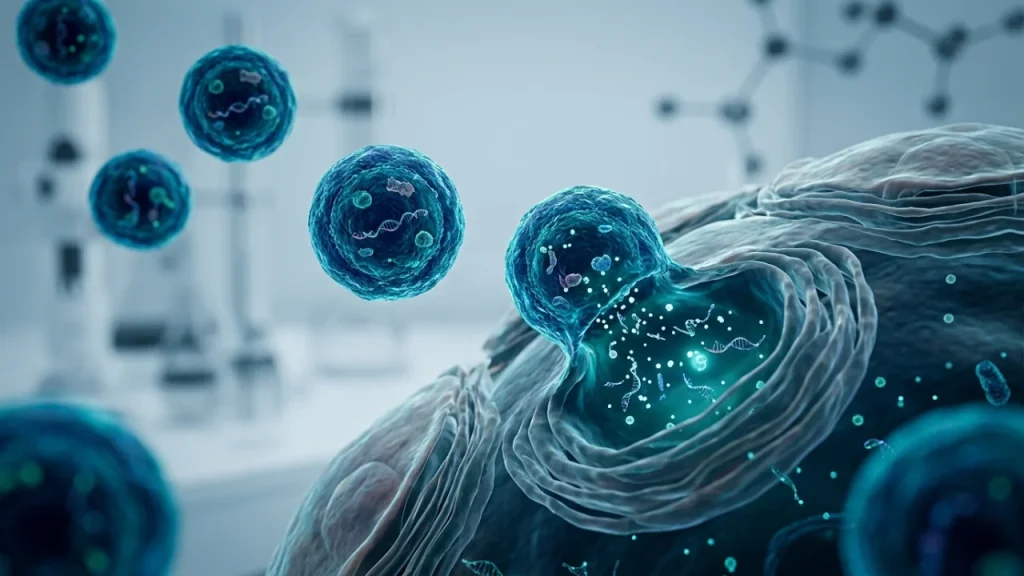
What Are MSC Exosomes and Why Should You Care?
Understanding MSC Exosomes in Simple Terms
Think of your body’s cells as tiny cities. They need to communicate. They send messages. MSC exosomes are some of the most important messengers. They come from mesenchymal stem cells. These are special repair cells found in places like bone marrow or fat tissue.
The stem cells create and release these exosomes naturally. Exosomes are incredibly small bubbles. They are called extracellular vesicles. Imagine a microscopic envelope filled with instructions. Each exosome carries a precious cargo.
This cargo includes proteins, lipids, and genetic material like RNA. It is not random. It is a carefully packed set of signals and tools. The exosome delivers this cargo to other cells. It tells those cells what to do.
This process is key for healing. For example, a skin cell might be damaged. An MSC exosome can reach it. It delivers instructions to reduce inflammation. It tells the cell to make more collagen. It encourages the cell to repair itself.
This makes exosomes powerful. They are like a repair crew’s instruction manual. They do not work alone. They direct your own cells to do the work. This is a natural process made more precise.
Why use exosomes instead of the stem cells themselves? There are clear reasons. First, exosomes are much smaller and more stable. They can travel more easily through tissues.
Second, they offer more control. Scientists can collect and purify the exosome signals they want. Third, they avoid some risks of whole cell therapies. Exosomes cannot replicate or form tumors.
They are pure communication packets. Their job is to send a message and then be gone. The message, however, has lasting effects.
Think about skin aging. Aging skin often has less collagen. Its repair signals get weaker. Inflammation may linger. MSC exosomes can interrupt this cycle.
They provide fresh, youthful instructions to tired skin cells. The results can be visible. Skin may look firmer and smoother. Redness may calm down. The tone can become more even.
This is not magic. It is advanced biology. We are harnessing the body’s own repair language. We are using its most sophisticated messaging system.
The science behind this is solid. Thousands of studies explore exosome functions. Researchers see how they help in wound healing. They understand their role in reducing scars.
The move to skincare is a logical step. It applies this deep science to a visible area. The goal is to support skin health at a fundamental level.
In simple terms, MSC exosomes are tiny biological messengers. They carry repair instructions from stem cells to your skin cells. This triggers your skin’s own renewal processes. It is a targeted, intelligent approach to regeneration.
Understanding this sets the stage for how they are used. It explains why they represent such a significant advance in modern skincare science.
How MSC Exosomes Differ from Stem Cell Therapies
MSC exosomes are not living cells. This is their most important difference. Whole stem cell therapies inject living, dividing cells into your skin. Exosome therapies do not.
Living cells are complex. They can act in unpredictable ways after injection. They might not survive in their new environment. They could migrate to an unwanted area. Their growth signals might become too strong. Exosomes avoid these issues completely.
Think of it like receiving a letter instead of hosting the writer. The letter contains the exact message you need. The writer stays safely away. You get the benefit without the potential problems of a guest.
One major concern with live cell therapy is immune response. Your body may see new cells as foreign invaders. It might attack them. This can cause inflammation or rejection. MSC exosomes have a much lower risk. They carry signals from your body’s own repair system. But they lack the surface markers that trigger strong immune attacks.
Another concern is uncontrolled growth. Stem cells can divide. In very rare cases, this division might not stop properly. Exosomes cannot replicate. They deliver their cargo and then break down naturally. They are a one-time signal, not a permanent resident.
Precision is another key difference. A living cell releases many types of signals over time. Scientists cannot fully control this mix. With MSC exosomes, researchers can purify specific vesicles. They can select exosomes that carry the most helpful messages for skin repair.
For example, some exosomes are rich in growth factors for collagen. Others carry instructions to calm inflammation. Skincare science can target these specific types.
Here is a simple comparison of the two approaches:
- Whole Stem Cell Therapy: Uses living, dividing cells. Cells may have variable activity. They pose a small but real risk of immune reaction or uneven growth. Their effects can be less predictable.
- MSC Exosome Therapy: Uses non-living signaling vesicles. Exosomes cannot divide or form tissue. They have minimal immune risk. Their effects are more targeted and controlled from the start.
The production process also differs greatly. Growing live stem cells requires strict, long-term control. Keeping them stable and consistent is challenging. Producing pure exosomes is a process of collection and filtration. It focuses on isolating the communication packets cells naturally release.
This makes exosome products more consistent from batch to batch. Consistency is vital for reliable results in skincare.
Safety profiles are therefore distinct. Live cell therapies require careful donor screening and long-term safety studies. Exosome therapies build on a different safety foundation. The focus shifts from cell behavior to vesicle purity and dosage.
The goal of both is regeneration. But the mechanisms are different. One relies on the actions of a living guest worker in your skin. The other relies on precise instructions sent to your skin’s own workforce.
You empower your existing cells to do their job better. This is a supportive strategy rather than a replacement strategy.
Why should you care about this difference? It matters for safety and predictability. Modern skincare aims for high efficacy with minimal risk. MSC exosomes align with this goal perfectly.
They offer a sophisticated level of control. Science can harness their power without the complexities of managing living cells elsewhere in your body.
This represents a significant evolution in regenerative science. It moves from cell-based therapy to signal-based therapy. The next logical question is how these precise signals actually work when they reach your skin cells.
The process involves a direct conversation with your cellular machinery, triggering a cascade of natural renewal events.
The Natural Role of Exosomes in Your Body
Your body is already using exosomes right now. They are not a foreign invention. Your cells create and release billions of these tiny packets every day.
Think of each cell in your body as a small, busy factory. It has a job to do. It also needs to talk to its neighbors. Cells cannot send text messages or make phone calls. Instead, they send physical mail.
Exosomes are that mail. They are microscopic envelopes made from the same material as the cell’s outer membrane. Each envelope is filled with specific instructions and supplies.
The contents are carefully chosen. A cell will load an exosome with proteins, lipids, and genetic material like RNA. This cargo is the actual message. It tells another cell what to do.
This system is crucial for health. It allows tissues to coordinate their actions. When skin is damaged by a cut, cells at the site send out urgent exosome messages. These messages tell nearby cells to multiply faster. They instruct other cells to build new collagen.
The process is a natural repair cascade. MSC exosomes are particularly powerful messengers in this system. Mesenchymal stem cells are master regulators found in your bone marrow and fat tissue. Their job is to monitor the body and support healing.
When these MSCs detect a problem, they release exosomes packed with precise regenerative commands. These MSC exosomes travel through bodily fluids. They then deliver their cargo directly to target cells in need.
The delivery method is key. An exosome fuses with the membrane of a target cell. It empties its instructional cargo directly into that cell’s interior. It is a secure, efficient transfer.
This daily communication serves several vital functions: – Tissue repair and regeneration after injury. – Modulation of the immune system to control inflammation. – Removal of cellular debris and waste products. – Maintenance of healthy cellular metabolism and energy.
Without exosomes, this constant, fine-tuned conversation would stop. Tissues would not heal properly. Inflammation could rage out of control. The body’s systems would fall out of sync.
The brilliance of using MSC exosomes in skincare lies in harnessing this innate system. Scientists are not introducing a strange new substance. They are amplifying a natural language your skin cells already understand perfectly.
By providing a concentrated dose of these precise signals, you support your skin’s own repair protocols. You are giving your cellular workforce clearer blueprints and better tools. This approach works *with* your biology, not against it.
Understanding this background changes how you view the technology. It moves from a complex treatment to a logical support strategy. Your skin is designed to renew itself constantly. MSC exosomes simply enhance that existing program.
This foundational role sets the stage for their targeted action in skincare, where their messages can focus specifically on aging or damaged skin cells.
Why MSC Exosomes Matter for Skin Health
MSC exosomes carry specific instructions for skin repair. They target the core processes that keep skin youthful and resilient. Think of them as a targeted update for your skin’s operating system.
These tiny vesicles address aging at a cellular level. They do not just sit on the surface. They deliver messages that change cell behavior from within.
One primary message is “make more collagen.” Fibroblasts are the skin cells that produce collagen and elastin. As we age, fibroblast activity slows down. MSC exosomes can reactivate these cells.
The result is improved skin firmness and elasticity. Fine lines may appear softened. The skin’s foundation becomes stronger.
Another critical instruction is “reduce inflammation.” Chronic, low-level inflammation is a key driver of aging. It breaks down healthy tissue and impairs repair.
MSC exosomes calm this inflammatory state. They help reset the skin’s immune environment. This creates better conditions for healing.
Exosomes also promote robust new blood vessel formation. This process is called angiogenesis. Enhanced blood flow delivers more oxygen and nutrients to skin cells.
Better nourishment means cells function optimally. A healthy glow often follows this improved circulation.
These vesicles aid in cellular cleanup and defense. They encourage the removal of damaged proteins and debris. They also support the skin’s antioxidant systems.
This protects vital structures from daily environmental damage. Protection is a proactive form of anti-aging.
The combined effect is multi-directional support. – Structural proteins like collagen increase. – Destructive inflammation decreases. – Nutrient delivery improves through better blood flow. – Cellular defense and repair mechanisms are enhanced.
This approach contrasts with many conventional treatments. Those often address only one single symptom. Exosomes coordinate a broader regenerative response.
Why does this targeted approach matter? Skin aging is not one problem. It is a complex series of biological slowdowns and malfunctions. A single solution rarely works for long.
MSC exosomes offer a way to influence multiple pathways at once. They use the skin’s own language to coordinate this effort. This leads to more harmonious and sustainable results.
The potential is significant for concerns like fine lines, uneven texture, and slow healing. The science points to a fundamental refresh of skin function. This goes beyond temporary surface improvement.
Carefully sourced MSC exosomes act as a strategic biological tool. They provide the precise signals aging skin needs to remember its youthful functions. This represents a logical next step in evidence-based skincare science, moving us closer to truly supporting the skin’s innate intelligence for lasting health.
Key Benefits of Using MSC Exosomes for Skin
MSC exosomes send clear instructions to your skin cells. These instructions lead to several visible improvements. The changes start deep within the skin’s layers.
One major benefit is increased collagen production. Collagen is the main structural protein in your skin. It gives your skin firmness and bounce. As we age, our cells make less collagen. Exosomes carry messages that tell fibroblast cells to become more active. These cells then produce more collagen and elastin. This helps to plump the skin from within. Fine lines may appear softened. Skin texture often feels firmer.
Another key benefit is a strong reduction in inflammation. Inflammation is a root cause of many skin issues. It can break down collagen. It can also lead to redness and sensitivity. MSC exosomes carry molecules that calm overactive immune signals. They help shift the skin’s environment from a state of stress to a state of repair. This is crucial for conditions like rosacea or general irritation. It also protects existing collagen from damage.
Exosomes also improve the skin’s natural healing processes. They enhance cell turnover and migration. This means your skin can recover faster from minor wounds or procedures. It also means the skin’s barrier function can strengthen. A stronger barrier keeps moisture in and irritants out. Your skin becomes more resilient.
These vesicles also improve overall skin hydration and nourishment. They promote the formation of new, tiny blood vessels. This process is called angiogenesis. Better blood flow means more oxygen and nutrients reach skin cells. Cells function better when they are well-fed. This leads to a healthier, more radiant complexion.
The benefits work together in a cycle. – More collagen improves structure and firmness. – Less inflammation protects that new collagen. – Better healing renews the surface more efficiently. – Improved nutrient delivery supports all these activities.
This creates a positive feedback loop for skin health. The goal is not just a single fix. The goal is to reset the skin’s overall operating system.
Using MSC exosomes can lead to several visible changes over time. Skin often appears smoother and more even in tone. It may show a restored glow because cells are more active. The feeling of tightness or dryness can lessen due to barrier repair. Results are cumulative and sustainable because they address root causes.
It is important to have realistic expectations. These are biological signaling tools, not instant fillers. The process is gradual as your own cells respond to the messages. The science supports a fundamental improvement in skin function. This functional improvement then translates to cosmetic benefits.
The advantages go beyond what most single-ingredient serums can offer. A vitamin C serum mainly fights oxidative stress. A retinoid primarily speeds cell turnover. MSC exosomes coordinate multiple actions at once. They use the body’s own language for communication.
This multi-pathway approach is why the science is so compelling for aging skin. Aging involves many systems declining at once. A solution that addresses several systems together is more effective. The key benefits reflect this comprehensive strategy.
Ultimately, caring for your skin with this technology means supporting its innate intelligence. You provide the precise signals it has lost with age. Your cells then do the work they were always meant to do. This leads to skin that not only looks better but truly functions in a healthier, more youthful way. The next logical question is how these powerful tools are safely prepared for use in skincare formulations.
How MSC Exosomes Work Inside Your Skin
The Journey of MSC Exosomes to Skin Cells
MSC exosomes begin their work the moment they meet your skin. They are not passive ingredients. They are active messengers seeking conversation.
Think of your skin’s surface as a bustling city. The exosomes are tiny delivery vehicles. They carry important packages of information. Their first task is to navigate through this landscape. They move through the spaces between skin cells. They travel toward living layers where cells can listen.
The outer barrier of skin is designed to keep things out. Yet exosomes have a natural ability to cross it. They are incredibly small. Their size is measured in nanometers. Billions could fit on the head of a pin. This small size is their first key. It lets them penetrate where larger particles cannot.
Their journey goes deeper than most topical ingredients. Many creams only work on the very surface. MSC exosomes reach the vital epidermal and dermal layers. These layers contain the functional cells like fibroblasts and keratinocytes. These cells are the targets for the exosomes’ messages.
The real magic happens at the cellular membrane. This membrane is like a secure gate around each cell. Exosomes have special keys on their surface. These keys are proteins and lipids. They bind to specific locks on the target cell’s membrane.
This binding is a precise handshake. It signals the cell to open up. The cell then engulfs the exosome in a process called endocytosis. Imagine the cell membrane gently wrapping around the vesicle. It pulls the exosome inside safely. The cargo delivery is now inside the cell’s territory.
Once inside, the exosome releases its precious load. This cargo includes: – Growth factors that tell cells to renew and repair. – MicroRNAs that act as instruction manuals for protein production. – Enzymes that help break down damaged materials. – Signals that calm inflammation.
These molecules do not force the cell to act. They simply provide clear, biological instructions. The cell recognizes these signals as native and trustworthy. It then chooses how to respond based on its own state and needs.
This targeted delivery system is highly efficient. It avoids waste and minimizes side effects. The entire process is a natural form of communication that our cells understand deeply. It is why MSC exosomes can be so effective at low concentrations.
The journey from bottle to cell cytoplasm is complex but swift. It relies on fundamental biological principles. This elegant mechanism ensures the right message gets to the right place at the right time. Understanding this path clarifies why their action is both profound and gentle, setting the stage for how these delicate messengers are carefully manufactured for stability and purity in skincare science.
What MSC Exosomes Carry: Proteins and Lipids
MSC exosomes carry a complex toolkit for skin repair. This cargo is not random. It is a carefully selected package of biological instructions. These instructions are made of proteins and lipids.
Proteins are the workhorse molecules in this process. They perform specific jobs. One major group is growth factors. These are signaling proteins. They bind to receptors on skin cells. This binding starts a chain reaction inside the cell.
For example, VEGF promotes new blood vessel formation. This improves nutrient delivery. TGF-β helps regulate collagen production. Collagen gives skin its firm structure. FGF aids in the growth of new skin cells and tissue.
Another key protein cargo is enzymes. Enzymes speed up chemical reactions. Collagenase and elastase help remodel the skin’s support network. They carefully break down old or damaged proteins. This makes space for new, healthy ones to form.
The lipid content is equally vital. Lipids are fatty molecules. They are not just structural parts of the exosome’s membrane. Many lipids are bioactive signaling molecules themselves.
Sphingolipids are one important type. They help control cell growth and death. They also play a role in calming inflammation. Phospholipids are another major class. They are key building blocks for new, healthy cell membranes.
This lipid signaling helps restore the skin’s barrier function. A strong barrier keeps moisture in and irritants out. It is essential for healthy, resilient skin.
The combination of proteins and lipids creates a powerful synergy. The proteins give direct commands for repair and renewal. The lipids provide the materials and signals for rebuilding structures. Together, they address multiple aspects of skin aging and damage simultaneously.
Think of it like a repair team arriving at a site. The proteins are the skilled workers and foremen with blueprints. The lipids are the high-quality building materials and communication tools. Both are needed to complete the job correctly.
This cargo remains protected inside the exosome until delivery. The vesicle’s membrane shields it from degradation. This ensures the molecules arrive intact and functional at their destination inside your skin cells.
The precise mix of these components is what makes MSC exosomes so effective. Different proteins and lipids target different cellular pathways. This allows for a coordinated healing response.
Understanding this cargo explains the clinical effects people see. Reduced wrinkles come from new collagen. Improved hydration comes from a stronger barrier. Even tone comes from regulated inflammation.
This sophisticated payload works with your skin’s natural biology. It does not force unnatural changes. It simply provides the right tools at the right time to help your skin help itself.
The next logical question is about quality and consistency. Not all exosome preparations are equal. The methods used to collect and purify these vesicles are critical for preserving their delicate cargo and ensuring it reaches your skin ready to work.
Nucleic Acids in MSC Exosomes and Cell Instructions
The cargo inside MSC exosomes includes a powerful set of instructions. These instructions are made of nucleic acids. Specifically, they are tiny strands of RNA.
RNA is a messenger molecule. Cells use it to send internal commands. MSC exosomes package this RNA and deliver it to your skin cells.
This delivery changes what your skin cells do. The new RNA enters the cell’s command center. It tells the cell to start specific repair programs.
Think of it like updating a computer’s software. The proteins and lipids are like running a current program better. The RNA is like installing a new, more efficient program entirely.
The RNA in exosomes does not change your DNA. That remains safe and untouched. Instead, this RNA influences which parts of your DNA are read and used.
Your skin cells have genes for making collagen. They have genes for calming inflammation. These genes can become slow or quiet with age and damage.
Exosomal RNA can turn these helpful genes back on. It sends a strong signal to the cell’s machinery. The cell then starts producing more of its own beneficial proteins.
This process has several key effects on aging skin. – It instructs fibroblasts to produce new collagen and elastin. – It tells cells to make more of the natural moisturizing factors that hold water. – It directs pigment cells to normalize their activity, reducing uneven tone. – It commands immune cells in the skin to lower chronic, damaging inflammation.
The RNA types are carefully selected by the parent stem cell. MicroRNAs are especially important. They are like master control switches for cellular processes.
One microRNA might block a signal for collagen breakdown. Another might promote the growth of new blood vessels for better nutrient delivery. A suite of these RNAs works together.
This is why the effects of MSC exosomes can be long-lasting. Proteins get used up quickly. Instructions from RNA can lead to sustained change in cell behavior.
The skin cell begins to act younger. It follows a healthier, more productive routine. This happens because the fundamental cellular messages have been updated.
The entire process is natural and biocompatible. Your cells know how to read these RNA messages. The exosome simply delivers them to the right address.
Quality is critical for this nucleic acid cargo. RNA is a fragile molecule. It can easily break down outside a protective vesicle.
Properly prepared MSC exosomes keep their RNA intact. The lipid membrane acts as a secure capsule. This ensures the instructions arrive without corruption.
The combination of tools and commands is what makes the therapy so complete. Proteins and lipids handle immediate tasks and supply materials. Nucleic acids provide the blueprint for ongoing renewal.
This multi-level approach addresses the root causes of skin aging. It goes deeper than surface-level fixes. The next logical step is understanding how these vesicles are collected and prepared for use in skincare, ensuring their powerful cargo remains fully active.
MSC Exosomes and Collagen Production Boost
Collagen is the main support structure of your skin. Think of it as the scaffolding underneath a building. As we age, this scaffold weakens and breaks down. Skin becomes thinner and less firm. MSC exosomes directly address this problem.
They send clear instructions to your skin’s fibroblasts. Fibroblasts are the cells that make collagen. These instructions come packaged as microRNAs inside the exosome. The message is simple: make more collagen.
The process is precise. An MSC exosome docks onto a fibroblast. It delivers its molecular commands. Specific microRNAs inside the exosome target and silence genes that promote collagen breakdown. Other microRNAs activate genes for collagen production.
This dual action is powerful. It stops the loss of existing collagen. It also jumpstarts the creation of new collagen fibers. The fibroblast shifts from a passive state into an active building phase.
The result is not just more collagen, but better-organized collagen. New fibers are laid down in a strong, crisscross pattern. This rebuilds the skin’s foundational network. The network provides better support and elasticity.
Consider the timeline of this effect. A topical cream might plump skin temporarily by drawing in water. The signaling from MSC exosomes creates a lasting change. The fibroblast continues its renewed activity for a significant period after the initial signal.
The boost in collagen production leads to visible improvements. Skin gains measurable thickness and firmness. Fine lines caused by a weak support structure can soften. The skin’s overall resilience improves.
Several factors are needed for this boost to happen effectively. The exosomes must be intact upon application. Their RNA cargo must be protected and viable. The fibroblasts must be receptive to the signals.
This process highlights a core advantage of exosome therapy. It uses the body’s own natural language for repair. The fibroblast knows exactly how to respond to these biological signals. The outcome is authentic, structural rejuvenation.
The increase in collagen also benefits other skin functions. A stronger dermal layer improves nutrient flow. It enhances the skin’s barrier protection. It creates a healthier environment for all skin cells.
Understanding this mechanism clarifies why MSC exosomes represent a sophisticated tool. They do not simply add a temporary substance to the skin. They reprogram cellular activity to achieve a fundamental restorative goal. This leads us to consider another critical aspect of skin aging: inflammation and how these vesicles work to calm it.
Reducing Inflammation with MSC Exosomes
Inflammation is a hidden force that ages your skin. It is not just about redness or acne. A quiet, chronic type of inflammation constantly happens beneath the surface. This slow burn damages skin cells over time. It breaks down collagen and elastin. MSC exosomes carry specific instructions to calm this fire.
Think of inflamed skin as an area with too many alarm signals. Damaged or stressed cells send out these signals. They are called inflammatory cytokines. These cytokines tell immune cells to come and help. But when the alarm never stops, it causes collateral damage. Healthy structures get harmed in the crossfire.
MSC exosomes act as skilled negotiators in this chaotic environment. They are released by stem cells known for their healing power. These vesicles deliver a package of calming orders directly to the overactive cells. The cargo inside includes microRNAs and proteins. These molecules can switch off the genes that produce inflammatory signals.
The process is precise and targeted. Exosomes bind to the recipient cell, like a key in a lock. They transfer their regulatory molecules inside. Once inside, these molecules intervene in the cell’s communication pathways. They effectively tell the cell to lower the volume of its alarm signals. The production of damaging cytokines slows down.
This leads to several direct benefits for skin health and appearance. – It protects existing collagen from being degraded by inflammatory enzymes. – It allows fibroblasts to focus on building new support structures again. – It reduces skin sensitivity and visible redness. – It helps repair a compromised skin barrier.
The reduction of inflammation also has a preventive effect. Calmer skin is less prone to reactive damage from daily stressors. These stressors include UV exposure and environmental pollutants. By managing the inflammatory response, exosomes help prevent future aging signs. They address the cause, not just the symptom.
Scientific studies show this effect clearly. In laboratory models, MSC exosomes decrease levels of key inflammatory markers. These markers include TNF-alpha and IL-6. The change happens at a genetic level. The exosomes help restore a balanced, healthy state in the tissue.
This anti-inflammatory action works together with the collagen boost described earlier. They are two sides of the same regenerative coin. One builds new support. The other stops the destruction of existing support. The combined outcome is stronger, more resilient skin.
The ability to reduce inflammation makes MSC exosomes a powerful tool for many concerns. This includes conditions like rosacea or post-procedure redness. It also applies to general age-related inflammation. The skin’s overall environment becomes more peaceful and conducive to repair.
Ultimately, this function highlights the intelligence of this biological approach. The exosomes do not simply smother inflammation with an outside chemical. They guide your skin’s own cells toward a state of balanced calm. This promotes long-term stability and health from within. This foundational repair sets the stage for another vital process: enhancing the skin’s own healing speed and efficiency after damage occurs.
MSC Exosomes for Fighting Skin Aging
What Causes Photoaging and How Exosomes Help
Sunlight is essential for life. Yet its ultraviolet rays are a leading cause of visible skin aging. This specific process is called photoaging. It is different from chronological aging. Photoaging causes most wrinkles, dark spots, and leathery texture.
Ultraviolet light penetrates the skin deeply. It does not just cause a sunburn. It creates silent damage at a cellular level. This damage has several clear effects.
First, UV radiation directly breaks down collagen and elastin fibers. These fibers are your skin’s support structure. Think of them like the springs inside a mattress. UV rays snap and weaken these springs. The skin then loses its firmness and smoothness.
Second, it triggers a flood of harmful molecules called free radicals. These unstable molecules attack healthy skin cells. They damage cell membranes, proteins, and even DNA. This is known as oxidative stress.
Third, it disrupts the normal activity of fibroblasts. These are the cells in your skin that make new collagen. Under UV attack, fibroblasts slow their production. They also start to make poor-quality, disorganized collagen fibers.
The result of these three actions is clear. The skin becomes thinner and weaker. Wrinkles form more deeply. Pigmentation becomes uneven, leading to sun spots. This damage accumulates with every unprotected exposure.
Conventional skincare often struggles here. Topical antioxidants can help neutralize some free radicals. Sunscreen is vital for prevention. But these methods cannot fully reverse the cellular damage that has already occurred. They cannot effectively instruct damaged fibroblasts to resume healthy activity.
This is where the science of MSC exosomes offers a new path. These vesicles deliver precise instructions to cells affected by photoaging.
For example, exosomes carry specific microRNAs. These are tiny genetic messages. They can tell the damaged fibroblast cells to restart their collagen factories. They help shift cells from a stressed, inactive state back to a productive, regenerative state.
The exosomes also deliver antioxidant enzymes directly into cells. These enzymes work from the inside out. They mop up free radicals more efficiently than topical products often can. This reduces ongoing oxidative stress.
Furthermore, MSC exosomes help regulate melanin production. This can address the hyperpigmentation or sun spots caused by UV overexposure. They send signals to calm overactive pigment cells, promoting a more even skin tone over time.
The process is one of cellular communication and repair. – They signal for new collagen synthesis. – They provide direct antioxidant defense. – They help normalize skin cell behavior after UV insult.
This approach targets photoaging at its source. It goes beyond surface-level exfoliation or temporary plumping. The goal is to restore the skin’s intrinsic health and function. By repairing the cellular environment, the skin can better defend itself against future damage. This creates a sustainable cycle of improvement rather than just a temporary fix.
Ultimately, fighting photoaging requires repairing the information network within your skin. Sun damage corrupts cellular signals. MSC exosomes work by restoring those signals correctly. They help guide skin back to its original, healthier blueprint. This logical next step is understanding how this precise communication also accelerates the skin’s natural healing process after injury, closing wounds faster and with less scarring.
Chronological Aging and MSC Exosome Solutions
Our skin cells naturally slow down as we get older. This is called chronological aging. It is different from sun damage. This process happens to everyone over time. Key support cells become fewer and less active. They send weaker signals. The skin’s communication network grows faint.
Think of a busy factory slowing its production lines. Skin cells act like this. Fibroblasts are crucial skin cells. They make collagen and elastin. These proteins give skin its firmness and bounce. With age, fibroblast activity drops. They produce less collagen. Existing collagen fibers also break down faster. The skin’s foundation weakens.
This leads to common visible signs. Skin becomes thinner and more fragile. Fine lines appear without sun exposure. Loss of volume and elasticity occurs. The skin may look dull. Its natural renewal cycle slows from about 30 days to 40 or 50 days. Dead cells linger on the surface longer.
The root cause is cellular aging or senescence. Old, worn-out cells accumulate. They stop dividing but do not die. These senescent cells cause trouble. They release harmful signals that create inflammation. This low-grade inflammation further damages nearby healthy cells. It is a vicious cycle.
MSC exosomes intervene in this cycle directly. They carry specific instructions to adult skin cells. One key instruction is to boost collagen production. Exosomes deliver growth factors and blueprints for protein building. This helps fibroblasts work better.
Exosomes also help manage senescent cells. They can modulate the inflammatory signals these cells send. This calms the local skin environment. A calmer environment helps healthy cells function optimally. Furthermore, MSC exosomes promote cellular turnover. They encourage the removal of old cells and support the generation of new ones.
The communication from MSC exosomes is restorative. It tells aging skin cells to behave more youthfully. The goal is not to make cells immortal. The goal is to optimize their function for their biological age.
Consider these key actions of MSC exosomes for chronological aging: – They upregulate collagen and elastin gene expression in tired fibroblasts. – They provide enzymes and molecules that protect cells from internal metabolic stress. – They help reduce the pro-inflammatory signals from senescent cells. – They support the skin’s natural barrier function, which often weakens with age.
The approach is holistic at a cellular level. It addresses supply and demand. It improves the quality of cellular communication that time has degraded. This is not about adding a single ingredient like collagen topically. Topical collagen molecules are often too large to penetrate deeply. Even if they could, they do not instruct cells to make more.
MSC exosomes work from within the cell’s command center. They deliver the message, not just the material. The cell then uses its own machinery to rebuild. This results in more natural and durable improvements.
The effects manifest gradually but fundamentally. Skin may gain improved texture and resilience. Fine lines associated with natural thinning may soften. The complexion can appear more vibrant as turnover improves. This addresses aging from the inside out.
Chronological aging is inevitable, but its pace and presentation can be influenced. By restoring clearer biological directives, MSC exosomes help skin age more gracefully. They support the skin’s inherent repair systems that have grown sluggish. This foundational repair sets the stage for addressing another critical concern: acute damage and healing, where these vesicles also show remarkable potential.
Restoring Skin Elasticity with MSC Exosomes
Skin loses its snap and bounce as we age. This is largely due to two proteins breaking down. These proteins are collagen and elastin. Think of them as the skin’s support system. Collagen provides firmness and structure. Elastin gives skin its ability to stretch and recoil. Over time, our cells produce less of these proteins. Existing fibers also get damaged. This leads to sagging and wrinkles.
MSC exosomes address this problem directly. They carry specific instructions to skin cells called fibroblasts. Fibroblasts are the skin’s factory for collagen and elastin. As we age, these factories slow down. They also produce poorer quality materials. Exosomes deliver signals that reverse this trend.
The process involves clear biological steps. First, MSC exosomes are absorbed by fibroblast cells. Inside, they release their molecular cargo. This cargo includes growth factors and RNA messages. These signals activate the cell’s production machinery. The fibroblast then gets to work. It starts synthesizing new, high-quality collagen type I and type III. These are the main structural types in young, healthy skin.
Simultaneously, exosome signals boost elastin production. Elastin is the rubber band protein. New elastin fibers help skin spring back after being pulled. The exosomes also encourage the proper organization of these new fibers. They form a strong, supportive network under the surface.
Another critical action is protection. Exosomes help shield existing collagen and elastin from destruction. They do this by delivering enzymes that inhibit matrix metalloproteinases, or MMPs. MMPs are scissors that cut down collagen. Stress and sun exposure increase MMP activity. MSC exosomes help blunt these scissors. This protects the skin’s current support structure.
The results are measurable and gradual. – Skin density improves as the collagen network thickens. – Fine lines caused by thin skin may become less noticeable. – Skin gains better tensile strength and recoil ability. – The overall appearance becomes firmer and more lifted.
This is not a temporary plumping effect. It is a genuine restoration of the skin’s infrastructure. The cell makes its own structural proteins again. This leads to durable improvements in elasticity. The skin’s youthful bounce is supported from within its own cellular framework.
The science shows that MSC exosomes offer a targeted approach for elasticity loss. They go beyond surface-level hydration. They directly instruct the cellular factories to rebuild the foundational matrix. This addresses a primary cause of sagging skin. Restoring this internal framework naturally improves firmness and resilience over time. This mechanistic repair also creates a healthier environment for addressing visible damage from external sources, such as sunlight.
MSC Exosomes for Wrinkle Reduction and Smooth Skin
Wrinkles are more than just lines on the surface. They are deep folds in a weakened skin structure. MSC exosomes address this problem at its source. They send precise repair instructions to aging skin cells.
One key instruction is for collagen production. We learned exosomes help build a stronger collagen network. This network acts like a mattress pad under a sheet. A plump, firm mattress smooths out wrinkles in the sheet above. Thicker collagen under the skin does the same for surface lines.
Exosomes also carry signals for better hydration. They encourage skin cells to produce more hyaluronic acid. This is a natural substance that holds water. Think of a grape versus a raisin. Hydrated skin cells are plump like grapes. This plumpness pushes against the skin from inside. It helps smooth fine lines and crepey texture.
The process also improves cell turnover. Older skin cells can linger on the surface. This makes skin look dull and rough. MSC exosomes promote healthier renewal. They help shed old cells more efficiently. Fresher, younger cells come to the surface. This leads to a smoother skin texture and radiant glow.
Sun damage is a major cause of wrinkles. Ultraviolet light creates unstable molecules called free radicals. These radicals damage collagen and cell DNA. MSC exosomes deliver antioxidant enzymes directly into cells. These enzymes neutralize free radicals. This protects skin from further wrinkle-causing damage.
The combined effects create a visible smoothing result: – Deep wrinkles may become less severe as collagen fills them from below. – Fine lines can soften due to better hydration and plump cells. – Skin texture evens out through improved cell renewal. – Dullness fades as protection and repair restore healthy function.
This is not about filling wrinkles with a foreign substance. It is about helping the skin repair its own architecture. The skin becomes smoother because its foundation is stronger. The surface becomes more even because cells function better.
The action of MSC exosomes is comprehensive. They do not just target one single cause of wrinkles. They coordinate multiple repair pathways at once. This multi-target approach is why results can be significant. Skin looks younger because it is acting younger at a cellular level.
The timeline for these changes is gradual. Cells need time to receive signals and change their behavior. Improvements in wrinkles and smoothness build over weeks and months. The changes are durable because they come from within the skin’s own biology.
This mechanistic approach sets a new standard for anti-aging. It moves beyond temporary smoothing or superficial plumping. MSC exosomes facilitate true cellular rejuvenation for lasting smoothness and a visibly younger appearance. This foundational repair naturally prepares the skin to better handle future environmental stress, creating a resilient cycle of renewal.
Preventing Future Skin Damage with Exosomes
MSC exosomes do more than fix past damage. They also help shield your skin from future harm. Think of them as sending instructions to your skin’s cells. These instructions tell cells how to better protect themselves.
Your skin faces daily attacks. Sunlight, pollution, and stress are constant threats. These factors create free radicals. Free radicals are unstable molecules. They damage collagen and healthy cells. This process is called oxidative stress. It is a main cause of premature aging.
MSC exosomes carry protective messages directly to skin cells. They deliver specific proteins and genetic material. This cargo activates the cell’s own defense systems. The cells become more resilient. They are better prepared before damage even occurs.
One key defense is boosting antioxidant activity. Your skin has natural antioxidant enzymes. Examples are superoxide dismutase and catalase. Exosome signals can increase the production of these enzymes. The result is a stronger internal shield against free radicals.
This is different from applying a topical antioxidant serum. A serum acts on the surface. Exosome signals work from within the cell itself. They enhance the cell’s permanent defense machinery.
Exosomes also help maintain the skin’s barrier. A strong barrier keeps irritants out and moisture in. They support the cells that produce lipids for this barrier. A robust barrier prevents inflammation and dehydration.
Consider sun exposure as an example. Ultraviolet (UV) rays cause immediate and long-term damage. MSC exosomes can modulate the skin’s response to UV light. They do not replace sunscreen. Instead, they help skin cells manage the stress that gets through your protection.
The communication from MSC exosomes reduces chronic inflammation. Low-grade inflammation silently breaks down collagen over time. By calming this inflammatory response, exosomes help preserve your skin’s structure.
The protective effects create a cycle of benefits. – Stronger cells face less daily damage. – Less damage means repair systems are not overwhelmed. – Skin stays healthier for longer periods. – The visible signs of aging slow down significantly.
This proactive approach changes skincare strategy. The goal shifts from just fixing problems to preventing them. Your skin’s biology becomes more capable and durable.
The timeline for protection is ongoing. As long as exosomes are signaling, cells maintain their heightened defenses. This leads to cumulative benefits over months and years.
Using MSC exosomes for prevention is an investment in future skin health. It helps your skin withstand an increasingly challenging environment. The focus is on long-term resilience and sustained youthfulness.
This protective function completes the picture of true rejuvenation. First, exosomes repair existing damage to restore a strong foundation. Then, they fortify the skin to defend against new assaults. This two-part action supports lasting results and a healthier complexion over time.
Practical Uses of MSC Exosomes in Skincare
Improving Skin Texture and Tone with Exosomes
MSC exosomes directly instruct skin cells to produce higher-quality structural proteins. This is key for improving texture. Your skin’s feel depends on its collagen and elastin network. These proteins form a supportive scaffold. Exosomes send signals that boost the creation of new, robust collagen fibers. They also encourage the organization of these fibers into a tight, orderly lattice. This rebuilt foundation makes skin feel firmer and smoother to the touch.
The improvement happens from within your skin’s layers. Old, damaged collagen is slowly replaced. New, healthy collagen takes its place. The result is a denser dermal structure. Skin no longer feels loose or crepey. Instead, it develops a resilient, plump quality. This change is often described as a “bounce-back” effect. You can physically feel the difference in suppleness.
Exosomes also tackle uneven skin tone with precision. Hyperpigmentation like sun spots occurs when melanocytes overproduce pigment. MSC exosomes communicate with these pigment-making cells. They help restore a balanced rate of melanin production. The signals calm overactive cells without harming them. This leads to a gradual, natural fading of dark spots. The process avoids the irritation that some harsh lightening agents cause.
The mechanism for tone is about smart regulation. Exosomes do not bleach the skin. They normalize cell behavior. This means pigment is distributed more evenly across your skin’s surface. The goal is a unified complexion, not a blank slate. Your natural glow returns without blotchiness or patches.
The combined effect on texture and tone is synergistic. – Refined pores appear smaller as surrounding skin tightens. – Fine lines become less visible as the skin plumps from beneath. – Rough patches smooth out as cell turnover optimizes. – Dullness fades because healthier cells reflect light better. – Redness may diminish thanks to exosomes’ anti-inflammatory signals.
These changes create what is often called “filter-free” skin. The surface becomes more even and reflective. It feels consistently soft across all areas. This transformation relies on biological correction, not just surface masking. Makeup may sit more smoothly, but the goal is to need less of it.
The timeline for seeing these benefits is progressive. Initial subtle softening can be noticed within several weeks. Significant improvements in firmness and spot fading typically develop over two to three months. This pace matches your skin’s natural renewal cycle. Lasting change requires consistent cellular communication from MSC exosomes.
Ultimately, improving texture and tone is about restoring optimal function. When fibroblasts and melanocytes receive clear instructions, they perform their jobs correctly. Your skin’s appearance is a direct reflection of this internal efficiency. The next logical step is to understand how these tools are integrated into a real skincare routine for daily use.
MSC Exosomes in Scar Revision and Healing
Scars form when the skin’s healing process is rushed or disrupted. After an injury, the body quickly makes collagen to patch the wound. This emergency collagen is often thick and disorganized. It creates a raised or sunken mark with a different texture. The goal of scar revision is to remodel this haphazard tissue. The aim is to make it look and feel more like the surrounding healthy skin.
MSC exosomes act as precise instructors for this remodeling job. They carry orders directly to the cells working on the scar. These are fibroblasts and immune cells. The exosomes tell these cells to calm down. They signal for less of the stiff, scar-type collagen. They also encourage more of the flexible, organized collagen found in normal skin. This process is not about removing the scar. It is about gradually improving its quality.
The messages inside exosomes target every phase of wound healing. This makes them useful for both new and old scars. – For new wounds, they can guide proper closure from the start. This may reduce excessive scarring. – For existing scars, they can slowly break down old, bad collagen. They then help build new, better collagen in its place.
The results are often visible changes. Raised scars may become flatter and softer. Red or dark scar discoloration can fade as inflammation ends. The skin’s flexibility over the area often improves. This happens because the new collagen matrix allows for more natural movement.
Scientific studies show why this works. MSC exosomes are packed with growth factors and microRNAs. These molecules directly regulate collagen production. They also strongly reduce inflammation. Chronic inflammation is a key reason some scars become thick and raised. By quieting this inflammation, exosomes prevent the signal for excessive scar tissue.
Using exosomes for scars is a patient process. It follows the slow pace of your skin’s natural turnover. You cannot rush biological remodeling. A series of professional treatments is typically needed. Consistent application gives cells a steady stream of corrective instructions. Over months, the scar tissue integrates better with the area around it. The boundary between scar and normal skin becomes less obvious.
This approach is fundamentally different from older methods. Lasers or acids often remove the top layers of skin. They hope new skin grows back better. Exosomes work from within the living layers. They change how cells behave in the dermis where the scar truly exists. The improvement comes from inside out.
The potential extends beyond cosmetic scars. The same principles apply to helping surgical incisions heal neatly. They also aid the repair of damage from acne. The core action remains cellular instruction for organized tissue repair.
Ultimately, scar revision showcases the regenerative power of cellular communication. MSC exosomes provide the missing signals for harmonious healing. They help the skin remember its original blueprint. This leads us to consider how these vesicles protect skin from daily environmental challenges that cause damage in the first place.
Supporting Wound Healing with MSC Exosomes
When you get a cut or scrape, your skin launches a complex repair mission. MSC exosomes act as critical messengers in this process. They help coordinate the different phases of healing. This leads to faster and more complete recovery.
Healing happens in clear stages. First comes inflammation to clean the wound. Then new tissue forms. Finally, that tissue remodels. Exosomes provide support at each step. They do not replace your body’s natural systems. Instead, they optimize them.
One key role is controlling early inflammation. Some inflammation is necessary. It fights germs and removes debris. But too much or prolonged inflammation harms new cells. MSC exosomes send anti-inflammatory signals. They tell immune cells to calm down once their job is done. This creates a better environment for rebuilding.
Next, exosomes directly stimulate cells to move and multiply. Fibroblasts are the skin’s builders. They produce collagen and other structural proteins. Exosomes carry growth factors and instructions. These signals tell fibroblasts to migrate into the wound area. They also encourage these cells to divide and become active.
The result is quicker formation of granulation tissue. This is the new, temporary tissue that fills a wound. It is rich in blood vessels and collagen. By speeding its development, exosomes help close the wound faster. This reduces the window for infection.
Angiogenesis is another vital process. This is the creation of new blood vessels. A fresh blood supply delivers oxygen and nutrients to the healing site. MSC exosomes promote angiogenesis. They carry molecules like VEGF. This tells endothelial cells to form new capillary networks.
Consider a surgical incision as a practical example. A clean surgical wound still faces healing challenges. The goal is strong, linear closure with minimal complications. Exosome application can support this.
The potential benefits in professional wound care settings include: – Reduced risk of wound breakdown or dehiscence. – Faster return of skin barrier function. – Improved tensile strength of the new tissue. – Better management in patients with slower healing capacity.
It is important to understand the timing. Exosome signaling is most effective when applied during the active healing window. This is typically in the first days and weeks after injury. The vesicles provide the instructions when cells are most receptive.
The mechanism is about communication, not substitution. MSC exosomes do not physically patch the wound. They deliver molecular messages that your own cells send, but sometimes in insufficient amounts. This nudges your biology toward its optimal repair program.
Research shows these vesicles can modify the entire wound microenvironment. They influence many cell types at once. This includes immune cells, skin cells, and blood vessel cells. The coordinated effect is more efficient than targeting just one pathway.
Ultimately, supporting wound healing showcases the fundamental strength of this technology. It enhances the body’s innate intelligence for repair. By improving the initial healing trajectory, MSC exosomes can set the stage for a less noticeable scar later. This proactive support naturally leads us to consider how they also defend skin from the slower, cumulative damage of daily life.
Enhancing Skin Hydration and Barrier Function
Healthy skin acts like a strong wall. This wall keeps water in and irritants out. MSC exosomes help repair and reinforce this wall. They do this through precise biological communication.
Your skin’s barrier is mostly made of cells called keratinocytes. These cells are like bricks. They are held together by a lipid mortar. This mortar is a mix of oils like ceramides and cholesterol. A weak mortar lets water escape. This leads to dry, tight, and reactive skin.
MSC exosomes deliver signals to these skin cells. The signals tell cells to produce more of that critical lipid mortar. Research shows exosome treatment can increase ceramide production. Ceramides are essential for holding skin cells together. More ceramides mean a tighter, less leaky barrier.
The result is better hydration from the inside. Stronger skin holds onto its natural water content. This is different from just applying a moisturizer on top. Topical creams add a temporary layer. Exosomes help your skin build its own permanent defense system.
The vesicles also carry instructions for other key proteins. One important protein is filaggrin. Filaggrin is vital for skin barrier integrity. It helps form the protective outer layer of your skin. Some people have genetically low filaggrin levels. Their skin is prone to dryness and conditions like eczema. MSC exosome signaling can encourage healthier filaggrin metabolism.
This process addresses the root cause of dryness. It is not a superficial fix. The effects develop over time as your skin’s cellular function improves.
Think of your skin barrier as a smart, dynamic structure. It constantly faces challenges. These include cold weather, harsh cleansers, and environmental pollutants. Each challenge can weaken the lipid mortar. A robust barrier recovers quickly from these insults. MSC exosomes provide the tools for faster and more effective recovery.
The benefits extend beyond simple moisture. – A stronger barrier reduces trans-epidermal water loss. This is the technical term for water evaporating from your skin. – It improves the skin’s overall resilience against irritants. – It can calm sensations of sensitivity and redness linked to a compromised barrier. – The skin’s surface becomes smoother and more plump.
This mechanism is consistent across different studies. MSC exosomes do not hydrate skin by being wet themselves. They work by optimizing your skin’s own biology. They turn up the volume on your cells’ natural barrier-building programs.
The timeline for seeing results is gradual. Barrier repair is a cellular process. You might notice less tightness within a few weeks. Deeper improvements in resilience take longer. This reflects the natural skin renewal cycle.
Ultimately, enhancing hydration is about fortification. MSC exosomes help construct a more competent barrier. This foundational improvement supports every other aspect of skin health. Well-hydrated skin functions better, looks brighter, and ages differently. A strong, moisturized barrier is the first line of defense against the visible signs of aging, which often begin with cumulative stress and dehydration.
Combining Exosomes with Other Skincare Steps
MSC exosomes are a potent active ingredient, not a standalone product. They work best within a thoughtful skincare routine. Think of them as a key instruction manual for your skin cells. Other products provide the raw materials. The combination creates optimal results.
Your routine should support the exosomes, not disrupt them. This requires understanding product order and timing. The core principle is simple: apply exosomes to clean, prepared skin. Then follow with products that lock in their message.
Start with a gentle cleanser. Harsh soaps can strip the skin’s surface. This can create a minor barrier disturbance. A mild, pH-balanced cleanser is ideal. It removes dirt without causing stress. Pat your skin dry gently. Do not rub.
Next, apply a toner or essence if you use one. Choose an alcohol-free formula. This step can further balance the skin’s pH. It provides a hydrating base. Damp skin can also help with the next step.
Now apply your MSC exosomes product. This is usually a serum or liquid. Dispense the recommended amount onto your fingertips. Gently press and pat it onto your face and neck. Avoid rubbing vigorously. Let it absorb for sixty to ninety seconds.
This pause is important. It allows the vesicles to interact with your skin. They begin their signaling work undisturbed.
After the exosomes absorb, apply a moisturizer. This is a critical partner. A good moisturizer provides occlusive and emollient benefits. It seals in the exosomes and their message. It also reinforces the barrier repair they stimulate.
Finally, apply sunscreen during the day. Sun protection is non-negotiable. UV radiation is a major source of skin stress and damage. It can undermine the regenerative signals from MSC exosomes. Use a broad-spectrum SPF 30 or higher.
You can combine exosomes with other active ingredients, but carefully. Some combinations are supportive. Others can be counterproductive.
- Supportive partners include hyaluronic acid and peptides. These provide hydration and building blocks. They work on different pathways.
- Vitamin C is another potential partner. Its antioxidant effect can protect the skin’s environment. This may help the exosomes’ signals.
- Use caution with strong exfoliating acids like glycolic or salicylic acid. Do not apply them at the same time of day as exosomes. Their intense action could interfere.
- Retinoids are powerful but can be irritating. It is best to use them on alternate nights from your exosome serum.
Consistency matters more than quantity. Using your MSC exosomes serum daily or as directed yields better results than occasional use. The signaling needs to be repeated to guide cellular behavior effectively.
Store your product as instructed, often in a cool place or refrigerator. This helps preserve the stability of the vesicles.
In short, MSC exosomes are the directors of your skincare routine. Cleansers, moisturizers, and sunscreens are the essential crew. Together, they produce visible skin health. This integrated approach maximizes your investment in advanced skincare science.
The next consideration is knowing what to expect from this regimen over time, setting realistic goals for visible change
The Science and Safety of MSC Exosomes
Evidence Behind MSC Exosome Efficacy
The power of MSC exosomes is not just a theory. It is backed by growing laboratory and clinical research. These tiny vesicles carry specific instructions. They tell skin cells how to behave.
Think of a damaged skin cell. It might be inflamed or slow to make collagen. An MSC exosome can deliver a package of molecules directly to that cell. This package includes proteins and RNA. These are biological messages.
The cell receives these messages. Then it can change its activity. Research shows exosomes can trigger several key processes.
- They can reduce inflammation signals. This calms redness and irritation.
- They encourage fibroblast cells to produce more collagen and elastin. These are the skin’s support structures.
- They promote the growth of new blood vessels. This improves nutrient delivery and skin vitality.
- They accelerate the skin’s natural repair cycle. This helps with wound healing.
Scientists study this in clear ways. One common method uses cell cultures. Researchers stress skin cells in a dish. They then add MSC exosomes. They measure the changes.
For example, a study might expose fibroblasts to ultraviolet light. This sun damage slows collagen production. After adding exosomes, scientists often see collagen levels rise significantly. The cells act younger.
Another area of proof comes from wound healing models. These can be animal studies or engineered human tissue. Results frequently show exosomes speeding up closure rates. They improve the quality of the new tissue with less scarring.
The logic is strong. Mesenchymal stem cells themselves are known healers. But using the whole cell is complex and risky. Exosomes are how these stem cells communicate their healing orders. Using the exosome alone is like using the cell’s precise instruction manual without the cell itself.
This makes the therapy targeted and efficient. The vesicles naturally seek out cells that need help. They merge with the cell’s membrane to deliver their cargo. It is a sophisticated, natural delivery system.
Human clinical data is also emerging. Early trials on skin rejuvenation report measurable improvements. Participants see better skin hydration, firmness, and texture. Researchers use tools like visia imaging to document these changes objectively.
Safety is a key part of the evidence. Because MSC exosomes are cell-free, they avoid major risks. There is no risk of the cells dividing uncontrollably. The vesicles do not replicate. They do their job and are cleared by the body.
The evidence points to a fundamental idea. MSC exosomes work by resetting cellular communication. They restore the signals that decline with age and damage. This signal restoration is what leads to visible improvements over time.
This scientific foundation supports a realistic expectation for your skincare journey. The next step is understanding what this cellular reset means for your skin’s timeline and potential results.
Safety Profile of MSC Exosomes Compared to Cells
The core safety advantage of MSC exosomes is their lack of a nucleus. They cannot divide or replicate. This single fact eliminates the primary concern with live cell therapies: uncontrolled growth.
Live stem cells are powerful. They are also complex living entities. Once injected, their behavior can be unpredictable. The host environment signals them to act. Sometimes these signals can be wrong.
A major documented risk is ectopic tissue formation. This means cells might start growing in the wrong place. For example, a cell intended for skin repair could theoretically contribute to bone or cartilage where it is not wanted. This is a rare but serious complication.
Another risk is immune rejection. Even with careful matching, donor cells can be seen as foreign. The recipient’s immune system may attack them. This can cause inflammation. It can also neutralize the therapy’s benefits.
MSC exosomes bypass these dangers entirely. They are not cells. Think of them as sealed biological packages. They carry instructions but cannot execute new ones on their own.
Their mechanism is transient and catalytic. They deliver their molecular cargo to recipient cells. Then they are broken down by the body’s normal processes. They do not persist long-term in the tissue.
This transient nature is key for safety. It provides a controlled, short-term signal. There is no long-term biological footprint from the vesicle itself. The changes come from the patient’s own cells responding correctly.
The manufacturing process adds another layer of safety. MSC exosomes are collected from cell cultures under strict conditions. The parent cells are screened thoroughly for pathogens. The final exosome product is then purified.
This purification removes cell debris and other components. What remains is a concentrated population of vesicles. They are often filtered through very small pores. This ensures no whole cells are present.
Storage and handling are simpler too. Live cells often need extreme cold or special solutions to survive shipping. Exosomes are more stable. They can be frozen and stored without losing function. This reduces chances of product degradation.
Clinical observations support this profile. Studies using MSC exosomes for skin and other conditions report minimal adverse events. Most reactions are mild and local, like temporary redness at an injection site. Systemic reactions are exceedingly rare.
This strong safety profile opens doors for repeated use. Because risks are low, treatments can be part of a sustained regimen. This is important for addressing chronic issues like skin aging. Safety enables consistency.
The comparison is clear. Live cell therapy carries inherent biological risks of living units. MSC exosome therapy uses a cell’s refined communication system without its risky machinery. It harnesses healing signals while leaving potential dangers behind.
This foundational safety allows focus on efficacy and results. Understanding this risk profile helps set realistic expectations for treatment outcomes and long-term skin health strategy.
Regulatory Aspects of MSC Exosome Use
The use of MSC exosomes in skincare is guided by important rules. These rules exist to protect you. They ensure products are safe, pure, and work as intended. Think of it like food or drug safety standards. They provide a reliable framework.
Regulatory bodies classify these products carefully. In the United States, the FDA oversees them. MSC exosomes for skin are often regulated as biologic products or drugs. This is a strict category. It requires proof of safety and manufacturing control before public use.
This classification triggers a rigorous pathway. Companies must submit extensive data. This data covers every step from cell source to final vial. Key areas of scrutiny include: – Origin and screening of the parent stem cells. – The entire production process for exosomes. – Thorough testing for purity and strength. – Detailed safety studies in models.
The “drug” designation is crucial. It means claims about fixing or treating skin structure must be proven. A product cannot simply say it reduces wrinkles without evidence. This protects against false marketing. It separates science from hype.
Current rules also address labeling and marketing. Direct-to-consumer claims are monitored. Terms like “stem cell therapy” for exosome products can be misleading. Regulators focus on truthful communication. The goal is to inform, not confuse, the public.
The regulatory landscape is still evolving. Scientists and agencies are working together. They are creating clear guidelines specifically for exosome-based treatments. This ongoing work aims to match the pace of science with patient safety.
For you, this means several things. A regulated product has passed multiple checkpoints. Its contents are verified. Its production is consistent from batch to batch. The stated benefits are backed by data, not just hope.
This process directly supports the safety profile discussed earlier. Internal biological safety is one pillar. External regulatory validation is the second, equally critical pillar. Together, they build a foundation of trust.
Choosing a product developed under this framework is wise. It indicates a commitment to proven science over shortcuts. It prioritizes your long-term skin health over temporary trends.
The path forward relies on this responsible structure. Clear rules encourage better research and innovation. They ensure that the promise of MSC exosomes is delivered reliably and safely to those who need it. This framework turns potent science into trustworthy care for your skin.
How MSC Exosomes Are Made and Purified
MSC exosomes do not come from a simple extraction. They are made through a precise laboratory process. This process starts with mesenchymal stem cells. These cells are grown in special containers called bioreactors. The cells are fed a clean nutrient solution. They thrive and multiply in this controlled setting.
As they grow, the cells naturally release exosomes. Think of it like a factory. The cells are the production units. The exosomes are their tiny, beneficial packages. These packages are released into the liquid surrounding the cells. This liquid is called the conditioned medium. It contains the exosomes we want, but also many other things.
The medium holds leftover nutrients, cell waste, and other particles. Our goal is to separate the exosomes from everything else. This separation is called purification. It is the most critical part of making MSC exosomes for skincare. Pure exosomes are safe and effective. Impure mixtures can cause problems.
Scientists use several methods to purify exosomes. Each method filters particles by size or weight.
- Ultracentrifugation spins the liquid at extremely high speeds. Heavier particles sink first. Lighter exosomes gather in a specific layer.
- Size-exclusion chromatography passes the liquid through a gel filter. Smaller particles move slowly through tiny pores. Larger particles flow out faster.
- Tangential flow filtration pushes liquid across special membranes. The membranes have precise holes. Only particles below a certain size can pass through.
These methods are often combined. Using two or more steps gives the best results. It ensures a clean final product. After purification, scientists must check their work. They test the collected material to confirm it contains exosomes. They use tools to see the vesicles. They also check for specific markers on the exosome surface.
This testing verifies two key points. First, it confirms that the vesicles are truly exosomes. Second, it ensures that other cell debris has been removed. The entire process, from cell growth to final testing, happens in sterile labs. This prevents contamination by bacteria or viruses.
The result is a pure concentrate of MSC exosomes suspended in a neutral solution. This concentrate is what gets formulated into advanced skincare serums. The complexity of this process explains why genuine exosome products are significant. It is not a simple ingredient mix.
This careful production directly supports safety and regulatory claims. A clear, repeatable process can be inspected and standardized. Knowing how MSC exosomes are made builds trust in their quality and potential for your skin.
Future Research Directions for MSC Exosomes
Scientists are now working to make MSC exosomes even more powerful. They are not just using them as they are found. Research aims to boost their natural skills. This field is often called exosome engineering.
One major goal is to load exosomes with specific healing cargo. Natural exosomes carry a mix of signals. Scientists can now pack them with extra amounts of chosen molecules. For example, they might load exosomes with a growth factor for collagen. They could also pack them with antioxidants for pollution protection. This targeted loading makes the vesicles more effective for a precise skin concern.
Another direction is targeting. How can we make sure exosomes go exactly where they are needed? Researchers are studying the exosome surface. They can attach tiny “address tags” to this surface. These tags could guide the vesicles to damaged skin cells. This would make treatments more efficient. Less product would be needed for a stronger result.
The source of MSC exosomes is also a key study area. Cells from different tissues may release unique vesicles. Exosomes from fat-derived stem cells might have a different profile than those from bone marrow. Scientists are comparing these sources. They want to know which ones work best for specific skin jobs. Some might excel at calming inflammation. Others might be better at triggering new skin cell growth.
Future work also looks at personalization. Could your own cells provide the ideal exosomes for you? Research into autologous exosomes explores this idea. A small sample of your cells could be grown in a lab. Their exosomes would then be harvested and used for your skin. This approach could minimize any risk of reaction.
Safety studies continue to evolve alongside these advances. Long-term effects are being monitored in clinical trials. Researchers are establishing clear dosage guidelines. They are defining how much is effective and safe. Studies also confirm that MSC exosomes do not replicate like living cells. This addresses a common concern about stem cell materials.
The potential applications are expanding beyond general rejuvenation. Focused research is happening in specific areas: – Improving wound healing and reducing scar formation. – Mitigating damage from UV radiation at a cellular level. – Restoring barrier function in conditions like eczema. – Supporting hair follicle health and growth.
These studies rely on advanced models. Scientists use 3D skin tissues grown in labs. These models provide a realistic environment to test exosome effects. The results from these models help design better human trials.
The path forward is about precision and proof. The next generation of MSC exosome science moves from a broad tool to a targeted therapy. Each study adds a piece to the puzzle. The aim is to unlock the full, safe potential of these cellular messengers for skin health. This rigorous research foundation ensures that future innovations are both groundbreaking and reliable for everyone.
Taking Action with MSC Exosomes for Better Skin
Steps to Incorporate MSC Exosomes into Your Routine
MSC exosomes are not a typical serum you use once in a while. They work best with consistent, informed application. Think of them as sophisticated cellular instructions, not a quick mask. Your routine must support their function.
Start by choosing the right product format. Look for serums or concentrated solutions. These are designed for direct skin contact. Avoid cleansers or washes containing exosomes. Their contact time is too short to be effective.
The application process is simple but specific. Follow these steps for best results. – First, cleanse your face thoroughly with a gentle product. – Second, apply any lightweight toners or essences you normally use. – Third, dispense the recommended amount of MSC exosome serum. This is often just a few drops. – Fourth, pat the serum gently onto your skin. Focus on areas of concern. – Fifth, let the formula absorb fully for sixty to ninety seconds. – Finally, apply your moisturizer to seal in the benefits.
Frequency depends on your skin’s goals and tolerance. Most protocols suggest starting slowly. Use the serum once every other day for the first two weeks. This allows your skin to adjust. You can then increase to daily use if desired. Some research supports a cyclical approach. You might use it daily for three months, then take a one-month break.
Storage is critical for keeping exosomes active. Always store the product in its original container. Keep it in a cool, dark place. A medicine cabinet away from steam is ideal. Do not leave it on a sunny windowsill. Heat and light can degrade the delicate vesicles.
Pairing exosomes with other ingredients requires care. They are compatible with many skincare staples. Hyaluronic acid is an excellent partner. It provides hydration that may aid delivery. Peptides also work well alongside exosomes. Both support skin repair.
Avoid combining exosomes with harsh actives on the same night. This includes high-strength vitamin C serums. Also avoid direct mixing with retinoids or strong acids like glycolic acid. These can compromise the exosome structure. Use these potent ingredients at a different time of day.
Patience is key with biological skincare. Do not expect overnight miracles. The first changes are often subtle. You may notice better hydration within a few weeks. Skin might feel smoother and look more even. Improvements in firmness or fine lines take longer. Consistent use over two to three months shows more visible results.
Listen to your skin’s signals. Mild tingling upon first use can be normal. Any persistent redness or irritation is a sign to pause. Reduce frequency or stop using the product. Consult a dermatologist if concerns continue.
Your overall skin health supports exosome efficacy. Protect your results with daily sunscreen. UV damage creates inflammation that exosomes must then address. A good diet and proper sleep enhance your skin’s natural repair systems. Exosomes amplify these inherent processes.
This thoughtful approach maximizes your investment in advanced skincare. It ensures the cellular messengers can perform their intended task effectively and safely for your unique skin
What to Expect from MSC Exosome Treatments
MSC exosomes send precise repair instructions to your skin cells. Think of them as a software update for your skin’s operating system. They do not work like a scrub or an acid peel. Those remove surface layers. Exosomes work beneath the surface. They communicate with your living cells.
Your skin responds in a logical biological order. First, cells reduce inflammation. This is a silent process. You may not see it. Yet it is crucial. Chronic, low-level inflammation speeds aging. MSC exosomes calm this fire. They signal cells to lower inflammatory messages.
Next comes the repair phase. Your fibroblasts get busy. These cells make collagen and elastin. They are your skin’s support structure. Exosomes tell fibroblasts to become more active. They also help form new, healthy blood vessels. This improves nutrient delivery.
What does this mean for your mirror? Changes appear in stages.
- Weeks 2–4: You may first notice a change in texture and hydration. Skin often feels smoother and softer. It may look more radiant or “plump.” This is due to better cell function and moisture balance.
- Month 1–2: Improvements in evenness and clarity can become visible. Some redness or blotchiness may fade. Fine lines, especially around the eyes, might start to look softer. This reflects deeper cellular renewal.
- Month 3 and beyond: This is when structural improvements solidify. Skin firmness and elasticity can improve. Deeper lines may appear reduced. The overall complexion often looks more youthful and resilient.
The timeline depends on your starting point. Skin that is very sun-damaged or inflamed has more work to do. It might take longer to see visible firmness. Younger skin using exosomes for prevention may see radiance boosts quickly. Consistency is your greatest tool.
Do not judge results daily. Biological renewal operates on a cycle of weeks. Skipping applications slows progress. Think of it as feeding your skin consistent information.
Results are also cumulative with good habits. Sunscreen protects the new collagen you are building. A healthy diet provides the raw materials. Exosomes optimize the repair machinery. But they cannot build collagen without proper nutrients.
Some people ask about a “purge” with MSC exosomes. True purging happens with ingredients that increase cell turnover. Exosomes do not typically cause this. They modulate and repair. Any mild tingling at the start usually fades fast. Real irritation is rare and means you should stop.
The goal is sustainable skin health, not a temporary fix. The beauty of this technology is its intelligence. MSC exosomes guide your skin to a better state of balance. They help your skin help itself.
This process establishes a stronger foundation for long-term skin quality. Understanding what to expect makes you an informed partner in your skin’s journey. It sets the stage for knowing how to maintain these impressive results over time.
Long-Term Benefits of Consistent Exosome Use
Consistent use of MSC exosomes trains your skin to maintain its own health. Think of it as teaching your skin a new, better way to function. This training leads to benefits that last well beyond any single application.
Your skin’s memory improves over time. Early treatments address immediate damage like inflammation or weak collagen. With continued use, the skin cells learn from the signals carried by MSC exosomes. They start to replicate healthier behaviors on their own. This is called cellular communication. The skin’s natural repair cycles become more efficient.
Long-term use supports the skin’s structural framework. This framework is called the extracellular matrix. It is like the scaffolding beneath the surface. Key components are collagen and elastin fibers. They give skin its firmness and bounce. Environmental stress and age break down this matrix.
MSC exosomes provide ongoing instructions to protect and rebuild this scaffold. They tell fibroblast cells to produce high-quality collagen. They also tell cells to produce less of the enzymes that destroy collagen. This dual action strengthens your skin’s foundation month after month.
The result is progressive improvement in several visible areas: – Skin density and thickness often increase. Thin, crepey skin becomes more resilient. – Fine lines may continue to soften. Deeper lines can appear less pronounced. – Elasticity improves. Skin snaps back better when pulled gently. – Tone becomes more even. Redness and dark spots fade further.
These changes happen gradually. They are the sign of true biological renewal.
Another major benefit is enhanced barrier function. Your skin’s barrier is its outer shield. A strong barrier keeps moisture in and irritants out. A weak barrier leads to dryness, sensitivity, and damage.
MSC exosomes help reinforce this vital shield long-term. They promote the production of key barrier proteins like filaggrin and ceramides. Healthier barrier function means your skin is better protected daily. It becomes less reactive to stress, weather, or other products.
This leads to a state of greater stability. Your skin is less likely to flare up or become easily irritated. It maintains better hydration levels naturally. You might find you need fewer corrective products over time.
The concept of “skin age” can actually slow down. Biological aging in skin involves shortening telomeres and slower cell turnover. MSC exosomes carry factors that can help counteract some of these processes. They promote cellular vitality and longevity.
Your chronological age keeps moving forward. But your skin’s biological age can lag behind. Consistent support helps maintain a more youthful cellular environment internally. The external glow is a reflection of this internal health.
Think of long-term use as an investment in future skin quality. It is proactive care, not just reactive repair. The goal shifts from fixing past damage to preventing new damage from taking hold as severely. Your skin’s inherent ability to heal itself is kept in peak condition.
This creates a powerful cycle of benefits. Healthier skin is more resilient. Resilient skin resists damage better. Less damage means the repair system is not overwhelmed. The MSC exosomes then work on maintenance instead of constant crisis management.
The commitment is to a process, not just a product. Lasting skin vitality comes from consistent, intelligent support. MSC exosomes offer a way to provide that support at the most fundamental cellular level. The long-term reward is skin that not only looks better but is truly stronger and more capable for years to come. This sustainable approach sets the stage for understanding how to integrate this technology into a complete skincare philosophy.
MSC Exosomes as Part of a Holistic Skincare Approach
MSC exosomes work best when they are part of a complete plan. Think of them as a powerful support tool. They are not a magic fix by themselves. Your daily habits create the environment where these exosomes can do their best work.
Your skin is a living organ. It reflects your overall health. What you eat and how you live directly affect your skin cells. MSC exosomes deliver helpful signals to those cells. But if your body is under stress, those signals face an uphill battle.
Start with your diet. Cells need specific nutrients to function well. Key building blocks help your skin use the exosome signals effectively.
- Eat foods rich in antioxidants. Berries, leafy greens, and nuts are good examples. Antioxidants protect skin cells from daily damage.
- Include healthy fats. Avocados, olives, and fatty fish support strong cell membranes.
- Drink enough water every day. Hydrated cells communicate better and repair faster.
These foods create a nourished internal environment. MSC exosomes then amplify the natural repair processes this environment supports.
Sleep is another critical factor. Your skin does most of its repair work at night. During deep sleep, blood flow to the skin increases. Cell renewal and collagen production peak. Using MSC exosome products as part of your evening routine makes logical sense. You apply them when your skin is most active in repair.
Chronic stress harms skin health. Stress hormones like cortisol can break down collagen. They can also increase inflammation. This creates a state of constant alert in your skin. MSC exosomes carry messages that can calm inflammation. Managing stress through meditation or walking helps those messages work better.
Sun protection remains essential. UV radiation is a major cause of skin aging. It damages cell DNA and creates free radicals. MSC exosomes can help repair some of this damage. But preventing the damage in the first place is smarter. Always use a broad-spectrum sunscreen during the day.
Your topical skincare routine matters too. Use gentle cleansers. Harsh products can strip the skin’s barrier. A compromised barrier cannot absorb nutrients well. Apply MSC exosome serums to clean, slightly damp skin. Follow with a good moisturizer to seal in hydration.
Avoid habits that cause inflammation. Smoking restricts blood flow to skin cells. Excessive sugar can trigger inflammatory pathways. Reducing these habits removes obstacles for cellular repair.
The goal is synergy. Each healthy habit supports the others. Good nutrition strengthens cells from within. Quality sleep provides optimal repair time. Stress management lowers inflammatory signals. Sun protection prevents new damage. Your MSC exosome serum then focuses on targeted cellular communication within this supportive framework.
This holistic approach treats the root causes of aging. It does not just treat the symptoms on the surface. You build a foundation of health. Advanced tools like MSC exosomes work on top of that strong foundation. The result is more resilient and vibrant skin over the long term.
This integrated method leads to the next practical step: understanding how to choose a quality product and use it correctly in your daily life
Embracing the New Era of Cellular Skincare
Traditional skincare often works on the surface. It adds moisture. It exfoliates dead cells. This approach has clear limits. The real control center for skin health lies deeper. It lies within your cells. A new era of skincare now targets this level directly. This is called cellular skincare. It focuses on cell-to-cell communication.
Think of your skin cells as a vast network. They must constantly talk to each other. They send signals to coordinate repair. They manage inflammation and collagen production. As we age, this communication breaks down. Signals get weak or distorted. The repair process slows. This leads to visible aging.
MSC exosomes are master messengers in this system. They are not living cells. They are tiny natural delivery vehicles. Mesenchymal stem cells release them. Each vesicle carries a precise set of instructions. These instructions are made of proteins and genetic material. Exosomes travel between cells. They deliver their cargo directly to a target cell.
This process is key. It is like giving a cell a new instruction manual for repair. The receiving cell reads these signals. It then can boost its own collagen output. It can calm inflammatory reactions. It can improve its energy metabolism. The action happens at the source.
This is a fundamental leap from conventional actives. Many good ingredients struggle with delivery. They must penetrate the skin barrier. They then need to reach the right cells in a usable form. Exosomes have a natural advantage. Their lipid membrane fuses easily with cell membranes. This allows direct, efficient delivery of their payload.
The goal shifts from just treating symptoms to supporting biological function. You are not merely plumping a wrinkle temporarily. You are helping the skin rebuild its own support structure. The effects are more sustainable. They come from restored cellular activity.
Embracing this era means changing your perspective. Look for products that support cellular communication. MSC exosomes represent the most advanced tool for this job. They work best within the healthy framework you already built. That framework includes nutrition, sleep, and sun protection.
Your skincare routine becomes a supportive environment. Your serum provides intelligent instructions. Your cells execute them using the nutrients you supply. This synergy creates a powerful cycle of renewal.
The science behind this is robust and growing. Thousands of peer-reviewed studies explore exosome biology. Research shows their role in wound healing and tissue regeneration. This is not speculative futurism. It is applied biology available today.
Adopting this technology means choosing evidence-based care. You move beyond marketing claims about miracle ingredients. You invest in a process grounded in cellular science. Your skin’s cells have an innate ability to heal and rejuvenate. Your role is to give them the right tools and messages to do so effectively.
This leads to a practical consideration: how to identify a genuine and potent formulation for daily use