
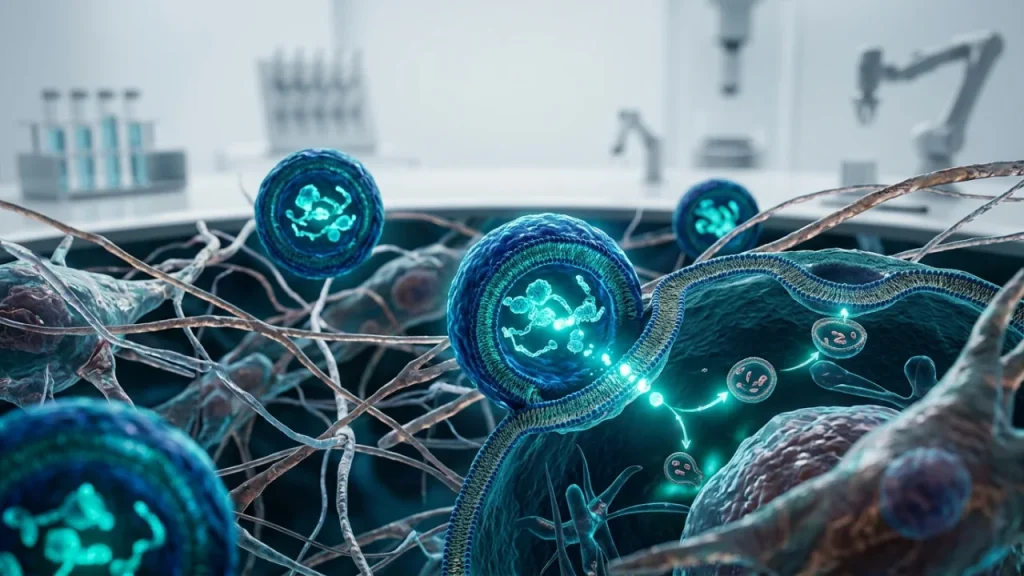
What Are Human Exosomes and Why Should You Care?
Understanding Human Exosomes as Natural Messengers
Imagine your body’s cells are like a vast network of cities. They need to communicate constantly. They send urgent messages and vital supplies. But they don’t use phones or trucks. They use tiny biological packages. These packages are called human exosomes.
Human exosomes are incredibly small bubbles made by your own cells. They are natural messengers. Think of them as microscopic mail carriers. Each exosome is filled with a special cargo. This cargo includes proteins, lipids, and genetic instructions.
Cells create exosomes inside themselves. They load these vesicles with specific molecules. Then, they release them into the body’s fluids. This is like a post office sending out letters. The exosomes travel through blood or tissue fluid. They eventually reach other cells.
The receiving cell accepts the exosome. It opens this tiny package. It reads the instructions inside. This process tells the cell what to do next. The message might say “repair damage here” or “reduce inflammation now.” It is a direct form of biological communication.
This system is crucial for skin health. Skin is your body’s largest organ. It faces constant challenges from the environment. Sunlight, pollution, and minor injuries happen every day. Your skin cells use exosomes to coordinate their response.
For example, a fibroblast cell in the dermis can send an exosome. This vesicle travels to a keratinocyte in the epidermis. Its cargo signals for more collagen production. Collagen gives skin its firmness and strength. This is how cells work together to maintain healthy skin.
The cargo inside an exosome is very specific and protected. The lipid bilayer membrane acts like a secure envelope. It shields the contents from degradation during travel. This ensures the message arrives intact and potent.
Scientists are fascinated by this natural delivery system. It is efficient and precise. The body has used it for millions of years. Now, researchers are learning how to harness its power for dermatology.
What makes human exosomes so special for skin care? Their messages are inherently recognized by your body. Because they come from human cells, your skin understands their language perfectly. There is no confusion or rejection.
These messengers carry out many key functions for skin maintenance and repair: – They can signal for increased collagen and elastin production. – They help modulate inflammation, calming irritated skin. – They promote cellular renewal and turnover. – They support the formation of new blood vessels for healing. – They carry antioxidants to combat oxidative stress from UV rays.
The process is dynamic and responsive. When skin is injured, nearby cells immediately release more exosomes. These vesicles rush to the site of damage. They deliver the blueprints for repair directly to the cells that need them most.
This is different from applying a topical serum with isolated ingredients. A serum gives cells raw materials. Exosomes give cells precise commands on how to use those materials. They provide the intelligence, not just the supplies.
Understanding this messenger role is the first step. It explains why human exosomes are a transformative topic in dermatology. They represent a shift from simply nourishing skin to actively directing its own repair processes.
The next logical question is how this natural system changes as we age, and what that means for our skin’s appearance and health over time.
How Human Exosomes Differ from Traditional Skincare
Traditional skincare works from the outside in. It applies substances to the skin’s surface. These ingredients must then penetrate the barrier to reach living cells. Think of it like delivering a box of supplies to a factory gate. The box contains raw materials like vitamins, peptides, or acids. The factory workers—your skin cells—must figure out what to do with them. They might use them well. They might not. The instructions are unclear.
Human exosomes operate on a completely different principle. They work from the inside out, at a cellular level. They are not raw materials. They are skilled messengers delivering direct commands. Using our analogy, the exosome is not a box of metal and plastic. It is the chief engineer walking onto the factory floor with a detailed blueprint. The engineer tells the workers exactly which machine to fix, which product to build, and how fast to work.
This difference is crucial for results. A traditional antioxidant serum, for example, delivers antioxidant molecules. These molecules neutralize free radicals until they are used up. It is a passive, sacrificial process. An exosome from a healthy human cell can deliver genetic instructions. These instructions tell your skin cells to activate their own, more powerful antioxidant defense systems. The effect is teaching your skin to fish, not just giving it a single fish.
The communication is precise and biological. Your skin cells have specific receptors on their surfaces. These receptors are like unique locks. The proteins on the surface of human exosomes are the perfect keys for these locks. Because they originate from human cells, the match is natural. This ensures the message is received and understood without error or inflammation. A synthetic ingredient or a plant extract might knock on the door. A human exosome has the key to enter.
Let’s break down specific contrasts in action.
- Collagen Support: A topical collagen cream places large collagen molecules on the skin. They are too big to penetrate deeply. Their effect is mostly surface hydration. A peptide serum signals fibroblasts to produce more collagen. It is a simpler signal. Exosomes carry a complex cocktail of signals. They can instruct fibroblasts not only to make more collagen but also to organize it properly and reduce the enzymes that break it down.
- Inflammation Control: A calming cream with aloe soothes redness temporarily. It addresses the symptom. Exosomes from mesenchymal stem cells can send instructions to immune cells in the skin. These instructions can change the immune cells’ behavior, shifting them from a pro-inflammatory state to a healing state. This addresses the root cause of the irritation.
- Cellular Renewal: An acid-based exfoliant dissolves the glue between dead surface cells. It forces physical shedding. Exosomes can promote natural renewal by enhancing cellular communication in the basal layer. This encourages healthier, faster turnover from the living layer upward. The result is less about stripping and more about revitalizing.
The timeline of effects also differs. Many traditional products offer immediate but temporary effects—plumping from hyaluronic acid or smoothing from silicones. These effects wash away. The activity of human exosomes happens over days and weeks as cells enact new instructions. The changes are gradual but foundational because they modify skin behavior.
Why should you care about this distinction? It shifts the goal from simply managing symptoms to influencing skin biology. It is the difference between adding paint to a fading wall and repairing the wall’s structure so it retains its integrity and color longer. For long-term skin health and resilience, working with your skin’s innate language holds distinct promise.
This leads us to a critical point: if this system is so powerful, what happens when it weakens? The natural production and quality of these vital messengers do not remain constant throughout our lives.
The Science Behind Human Exosomes in Dermatology
Human exosomes are tiny biological packages. Your own cells make them constantly. Think of them as microscopic mail trucks. They travel between cells carrying vital cargo.
This cargo is not random. It contains precise instructions. These instructions are made of proteins and genetic material. The material tells a recipient cell what to do. This is cellular communication at its most direct.
The skin is a perfect environment for this system. Skin is our largest organ. It is dense with different cell types. Fibroblasts make collagen. Keratinocytes form the barrier. Immune cells patrol for threats. All these cells must work together.
Human exosomes facilitate this teamwork. A fibroblast can send an exosome to a neighboring keratinocyte. The package might carry a signal to produce more supportive proteins. The keratinocyte receives the order and acts.
This process is crucial for repair. When skin is damaged, communication needs to speed up. Cells at the site of a wound release specific exosomes. These vesicles rush to the area’s stem cells and other repair units.
The message is clear: start rebuilding now. The exosomes deliver blueprints for new tissue. They help coordinate the complex healing cascade. This happens from the deepest layers upward.
Science shows this clearly in studies. Research using laboratory models of human skin provides evidence. Exosomes from healthy cells can change the behavior of aged or stressed cells.
The effect is measurable. Scientists look at key markers of skin health. They measure collagen production and the speed of cell renewal. They assess the strength of the skin’s barrier function.
Introducing certain human exosomes improves these markers. The vesicles do not act as a single ingredient like retinol or vitamin C. They act as a master switch. They turn on the skin’s own regenerative programs.
Consider the biology of aging skin. Over time, cellular communication breaks down. Cells send fewer messages. The messages they do send become garbled or weak. The repair systems slow and falter.
This is where applied science enters dermatology. Researchers can harvest human exosomes from specific cell types. These cells are grown under controlled conditions. The exosomes they release are collected and purified.
The goal is to capture a potent, youthful signal. These vesicles carry instructions from vibrant, healthy donor cells. When applied to skin, they can deliver those same instructions to recipient cells.
The mechanism is elegant and natural. It uses the body’s own language. The exosomes fuse with the membrane of a target cell. They release their cargo directly into the cell’s interior.
The cell reads the new genetic instructions. It then begins to change its activity. This is not a superficial change. It is a change in the cell’s core functions.
For example, a sluggish fibroblast might get a new directive. The directive tells it to ramp up collagen and elastin production. The fibroblast responds because it understands the biological command.
The results are not instant like a moisturizer. They are foundational like a software update for your skin. The timeline aligns with the skin’s natural renewal cycle.
Benefits accumulate over weeks. Skin may begin to look more supple and even-toned. Fine lines may appear softened because the support structure underneath is improving.
This represents a shift in dermatological thinking. The focus moves from passive supplementation to active cellular instruction. It is about restoring the body’s innate ability to maintain itself.
Why should you care about this distinction? It changes what is possible for long-term skin health. Managing visible symptoms is one approach. Supporting the underlying biology is another.
Human exosomes offer a path to the second approach. They provide a tool based on sophisticated science. This tool works in harmony with your skin’s own systems.
The promise lies in addressing causes, not just effects. It is a promising frontier for conditions rooted in poor communication or slow repair. The science continues to evolve rapidly.
New studies are published each year. They explore different sources and applications for these vesicles. The core principle remains empowering the skin’s own intelligence.
Understanding this science helps set realistic expectations. It explains why results are gradual and cumulative. The skin is literally relearning how to function at a better level.
This leads to a logical next question. If this system is so powerful, how can its natural decline be addressed? The answer involves both protecting our native exosomes and understanding how therapeutic ones are prepared for use.
Why Human Exosomes Matter for Your Skin Health
Human exosomes carry specific instructions for skin cells. They are not random packages. Their cargo is carefully selected by the parent cell. This cargo tells recipient cells what to do.
Think of your skin as a busy city. Cells must constantly talk to each other. They need to coordinate repair, produce collagen, and manage inflammation. As we age, this communication slows down. Messages get lost or delayed.
Human exosomes restore clear communication. They deliver precise molecular commands. These commands can trigger several key processes. The results lead to visible skin improvements.
One major command is for collagen production. Collagen is the main support protein in your skin. Its breakdown causes wrinkles and sagging. Exosomes can signal fibroblasts, the collagen-making cells, to become more active. They tell these cells to build new, strong collagen networks.
Another command controls inflammation. Temporary inflammation helps heal wounds. Chronic, low-level inflammation damages skin. It breaks down collagen and elastin. Human exosomes carry molecules that can calm this harmful inflammation. They help reset the skin’s immune response to a healthier state.
Exosomes also aid in tissue repair. They can encourage the formation of new blood vessels. This improves nutrient and oxygen delivery to skin cells. Better nourishment means cells function more efficiently. They also help in the cleanup process after damage, removing cellular debris.
Why does this biological approach matter? Most topical skincare works on the surface layers. It provides ingredients for cells to use passively. Exosomes work differently. They actively change cell behavior from within.
This leads to more durable results. You are not just temporarily plumping a wrinkle. You are instructing the skin to rebuild its own foundation. The improvements come from your skin’s renewed activity.
Consider these key benefits of this cellular communication: – Targeted Action: Exosomes naturally seek out cells that need help. They home in on areas of damage or stress. – Multitasking Cargo: A single vesicle carries many types of instructions. It can address collagen, inflammation, and repair at once. – Natural Compatibility: Because they are human-derived, your skin recognizes them. This minimizes the risk of reaction or rejection. – Fundamental Support: They work on the root causes of aging skin, not just the superficial signs.
The use of human exosomes represents a significant advance. It moves beyond simply adding materials to the skin. Instead, it focuses on restarting the skin’s own youthful programs. The goal is to make your skin behave like it did when it was younger and more resilient.
This method supports long-term skin vitality. Vitality means your skin is not just looking better. It is actually functioning better. It can protect itself, repair minor damage, and maintain its structure without constant external help.
The process is gradual because it relies on biological change. Cells need time to receive new instructions and act on them. They also need time to produce new proteins and structures. This is why results accumulate over weeks and months.
The promise is lasting improvement. When you support the underlying biology, the effects are more sustainable. Your skin maintains its improved state because its cellular machinery is working properly again.
This leads us to a practical consideration. How are these powerful biological tools sourced and prepared for safe use in dermatology? The journey from a donor cell to a purified treatment is a precise scientific process.
How Human Exosomes Work Inside Your Skin
The Journey of Human Exosomes from Cell to Cell
Human exosomes begin their journey inside a living cell. Think of the cell as a busy factory. It has a special shipping department called the endosomal system. This is where exosomes are made. The cell carefully packs these tiny vesicles with a specific cargo. This cargo includes proteins, lipids, and most importantly, genetic instructions like RNA.
The cell does not pack these vesicles at random. It selects molecules based on current needs and signals. A stressed skin cell might pack healing signals. A healthy, youthful cell might pack instructions for making collagen. Once packed, the vesicle is sealed. It now has a protective lipid membrane. This membrane acts like a secure envelope.
The loaded exosome moves to the cell’s outer wall. It fuses with the cell membrane. Then, it is released into the space between cells. This space is called the extracellular matrix. Here, the exosome begins its mission as a messenger. It navigates through a dense network of collagen and other fibers.
The exosome’s membrane is key to its success. It is covered with identifying markers. These markers are like address labels. They help target cells recognize the exosome as a friendly messenger, not debris. This targeting is precise. It ensures messages get to the right place.
The exosome travels until it finds a target skin cell. This could be a fibroblast that makes collagen. It could be a keratinocyte in the outer layer. The exosome docks onto the surface of this target cell. It does this by binding to specific receptors. The two membranes then fuse together.
The contents of the exosome are delivered directly into the target cell’s cytoplasm. This is a direct transfer. The genetic instructions and proteins are now inside a new cellular environment. They do not need to be broken down and reassembled. They are ready to use.
This delivery method is fast and efficient. It bypasses many slower cellular processes. The target cell immediately reads the new instructions. It then changes its behavior based on this new information. The entire process has several distinct steps.
- First, a donor cell produces and releases the exosome.
- Second, the exosome navigates the extracellular space.
- Third, it identifies and binds to a specific target cell.
- Fourth, it delivers its bioactive cargo directly into that cell.
- Fifth, the target cell acts on the new instructions.
The speed of this journey varies. Some exosomes act on neighboring cells almost immediately. Others may travel a short distance through tissue fluids. The effect is local and direct. This makes the therapy very focused.
The cargo inside human exosomes is what creates change. Let’s look at two key types of cargo. First, microRNAs are small pieces of genetic code. They can turn specific genes on or off in the target cell. For example, they can turn up collagen production genes.
Second, signaling proteins can activate cellular pathways directly. They might trigger a pathway for tissue repair. Or they might calm a pathway for inflammation. The result is a coordinated shift in how the skin cell behaves.
This process is naturally happening in your body all the time. Younger, healthier skin cells communicate this way frequently. They maintain tissue balance and prompt repair. As skin ages, this communication network slows down. The number and quality of messages drop.
Using prepared human exosomes in dermatology supplements this declining system. It introduces a high volume of clear, youthful instructions. This helps restart vital conversations between skin cells that have grown quiet.
The journey from cell to cell is a masterclass in biological efficiency. There is no waste. There is no confusion when the system works well. The message is packaged securely, delivered accurately, and executed precisely.
This direct delivery explains why exosomes can have such fundamental effects. They are not sitting on the surface. They are going inside the skin’s living machinery and providing updates to its core software.
Understanding this journey makes the next question obvious. What exactly are these powerful messages saying? What specific commands do they carry that can change skin’s behavior so profoundly?
What Human Exosomes Carry: Proteins and Genetic Info
Human exosomes carry a precise toolkit for cellular repair. This cargo is not random. It is carefully selected and loaded by the parent cell. Think of it as a packed suitcase for a skin cell’s journey to better health.
The contents fall into two main categories. These are functional proteins and genetic information. Together, they form a complete set of instructions and tools.
First, let’s explore the proteins. These are workhorse molecules that perform immediate tasks. They are not just building blocks. They are active signals and enzymes.
- Growth factors are key proteins. They act like urgent text messages telling a cell to grow or divide. One example is TGF-β. This protein can instruct fibroblasts, the skin’s support cells, to ramp up collagen production. It starts a construction project within hours.
- Enzymes are another critical protein type. They are biological catalysts. They speed up chemical reactions that skin cells need. Some enzymes help break down damaged proteins. Others assist in building fresh, new structural components.
- Signal pathway proteins work like switches. They can directly turn on a cell’s internal programs for repair. They might activate a pathway focused on antioxidant defense. Or they could trigger a pathway for new blood vessel formation, improving nutrient delivery.
This protein cargo provides fast, actionable commands. It gives skin cells the direct signals to change their behavior now.
The second major cargo is genetic information. This comes in the form of nucleic acids like microRNAs (miRNAs). These are not full genes. They are tiny snippets of genetic code that regulate gene expression.
MicroRNAs function as master volume controls for your skin’s DNA. They do not change the genetic code itself. Instead, they fine-tune how loudly or softly a gene is read.
A single microRNA can target hundreds of messenger RNAs for silencing. This makes them incredibly powerful coordinators. For instance, one miRNA might lower the volume on genes that promote inflammation. Another might turn up the volume on genes responsible for making hyaluronic acid.
This genetic regulation is slower but longer-lasting than protein signals. The proteins give immediate orders. The microRNAs reprogram the cell’s future activity by managing its genetic playbook. They help ensure the new, healthier behavior continues.
The synergy between these cargo types is what makes human exosomes so effective. The proteins deliver an instant push toward repair and renewal. Simultaneously, the microRNAs work behind the scenes to adjust the cell’s core settings. They help silence genes linked to aging and boost genes linked to youth.
Consider a scenario of sun damage. An exosome arrives at a stressed skin cell. Its protein cargo instantly activates antioxidant enzymes to neutralize free radicals. Its growth factors immediately signal for repair processes to begin. At the same time, its microRNA cargo starts downregulating genes that lead to collagen breakdown. It also upregulates genes for robust collagen synthesis.
The cargo is always multi-faceted and coordinated. It addresses both the symptom and the root cause within the cell’s machinery.
Different parent cells pack different cargo mixes. Exosomes from mesenchymal stem cells are often rich in healing growth factors. Those from skin fibroblasts might carry precise instructions for extracellular matrix remodeling. The source defines the mission of the vesicle.
Understanding this specific cargo demystifies their profound impact. We see they are not simple moisturizers or superficial treatments. They are sophisticated communication packets filled with both urgent memos and updated policy manuals for the cell.
This leads us to a crucial practical question. How does this internal cellular activity translate into visible, tangible improvements for human skin?
How Human Exosomes Talk to Your Skin Cells
Human exosomes do not simply bump into skin cells. They initiate a deliberate conversation. This process is called cellular signaling. It is a precise sequence of biological events.
First, exosomes must find the right cell to address. They navigate the spaces between your skin cells. This area is the extracellular matrix. Exosomes carry specific addressing proteins on their outer surface. Think of these as molecular zip codes.
A skin cell has corresponding receptor proteins on its membrane. These act like docks. When an exosome’s address protein meets a matching cell receptor, they lock together. This binding is highly selective. It ensures the exosome’s cargo is delivered only to cells that can use its instructions.
This targeted delivery is crucial. It prevents wasted signals and focuses healing where it is needed most.
After docking, the exosome has two main ways to deliver its message. The first method is direct fusion. The exosome’s membrane merges with the cell’s membrane. It is like two soap bubbles becoming one. The exosome’s interior space opens directly into the cell’s interior. Its entire cargo is emptied into the cell’s cytoplasm.
The second method is endocytosis. The cell’s membrane folds inward. It wraps around the docked exosome and swallows it whole. This forms a small internal bubble inside the cell called an endosome. The endosome then breaks apart. This releases the exosome’s contents safely inside the cell.
Once inside, the cargo gets to work immediately. Different components have different jobs.
The protein signals act fast. They bind to specific targets within the cell. This can instantly switch on pathways for repair. For example, a growth factor protein might activate a receptor. This triggers a cascade of internal signals. The cell responds by dividing faster or producing fresh collagen.
The nucleic acids work on a longer timeline. MicroRNAs seek out messenger RNA strands inside the cell. These strands are blueprints for making proteins. Some proteins promote aging or inflammation.
The microRNA binds to a specific messenger RNA blueprint. This marks it for destruction or blocks its use. The cell stops producing that undesirable protein. It is like deleting an outdated instruction manual.
Simultaneously, other signals can upregulate positive genes. They encourage the cell to read beneficial blueprints more often. This increases production of proteins like elastin and hyaluronic acid.
This two-part action creates a powerful shift. The cell’s behavior changes from the inside out.
The entire process is efficient and natural. It mirrors how your own cells already communicate. We are simply enhancing a native biological language.
The effects are cumulative and self-reinforcing. A treated fibroblast cell does not just repair itself. It often becomes more active and youthful. It then sends out its own beneficial signals to neighboring cells. This creates a positive ripple effect through the tissue.
One stimulated cell can influence many others around it.
Consider a practical example in wound healing. Damaged skin cells release stress signals. Exosomes derived from stem cells respond to these signals. They home in on the wound site.
They dock with the stressed cells and deliver their cargo. Proteins immediately reduce inflammation and spur new blood vessel growth. MicroRNAs silence genes that cause tissue breakdown.
The result is coordinated, intelligent repair. The process is faster and more organized than without this guided communication.
This explains why results from human exosomes can be so transformative. They do not just add a temporary substance to the skin’s surface. They reprogram the cellular environment itself. They change how skin cells behave, talk to each other, and sustain themselves.
The conversation starts with a single vesicle docking at a cell’s membrane. It ends with a renewed cellular community working in better harmony.
Understanding this dialogue leads us to the next logical point. We must consider how these internal changes manifest as visible skin improvements over time.
Targeting Skin Cells with Human Exosome Signals
Human exosomes are not broadcast randomly. They carry specific molecular addresses. These addresses guide them to the exact cell types that need their help.
Think of your skin as a busy city. Different cells have different jobs. Fibroblasts build collagen. Keratinocytes form the protective barrier. Immune cells patrol for threats. Each cell type displays unique protein “zip codes” on its surface.
Exosomes carry matching “destination labels.” These labels are called targeting ligands. A ligand on the exosome seeks its matching receptor on a cell. This system ensures precision.
For example, an exosome meant for repair will often target a fibroblast. It finds that cell because it carries ligands for fibroblast receptors. The exosome binds only where it fits. This is like a key finding its specific lock.
The source of the exosome determines its cargo and its target. Exosomes from mesenchymal stem cells are master communicators. They naturally seek out areas of inflammation and damage. Stressed or injured cells send out chemical SOS signals.
These stem cell-derived exosomes detect those signals. They then navigate toward the higher concentration of distress chemicals. This process is called chemotaxis. It ensures help arrives where it is needed most.
Once an exosome reaches its target cell, docking begins. The membranes of the vesicle and the cell interact. They fuse together. The exosome’s precious cargo is then delivered directly into the cell’s interior.
The cargo release triggers immediate changes. Let’s trace the journey for a skin-repair mission.
- First, a fibroblast in aged skin becomes less active. It produces weak collagen.
- This cell releases certain signals into its environment.
- An arriving human exosome reads these signals and binds to the cell.
- It delivers transcription factors and microRNAs.
- These molecules enter the cell nucleus and act like instruction manuals.
- They switch on genes for robust collagen production.
- They switch off genes that promote inflammation and breakdown.
The entire process is fast and efficient. Signaling happens within hours. Longer-term changes in gene expression unfold over days.
This targeting ability solves a major problem in skincare. Many potent molecules cannot effectively penetrate skin. They are too large or get broken down. Exosomes are nature’s own delivery vehicles.
They protect their cargo during transit. Their lipid membrane shields contents from degradation. This ensures that growth factors and genetic instructions arrive intact and functional.
Specificity also reduces potential side effects. Because exosomes home in on specific cells, their effects are focused. They do not broadly stimulate all tissues. This creates a localized, intelligent response.
The result is a coordinated repair effort. Multiple cells receive synchronized instructions. They begin working in unison to rebuild tissue architecture.
This explains the difference between superficial and structural change. A cream might temporarily plump skin with moisture. Exosome signaling tells fibroblasts to rebuild their own structural support network.
The change comes from within the cell itself. It is not a temporary filler effect. It is a reactivation of innate cellular function.
The precision of this system is vital for safety and efficacy. Random delivery would cause chaos. Targeted delivery creates harmony.
After the exosome’s cargo is delivered, its job is complete. The receiving cell now has new tools and blueprints. It can begin its own tasks of repair and renewal.
This cellular activation sets the stage for the next phase. The real-world, visible results begin to emerge from this precise molecular conversation.
Benefits of Human Exosomes for Skin Repair
Human Exosomes and Collagen Production Boost
Collagen is the fundamental scaffold that keeps skin firm and smooth. Its gradual decline is a primary cause of wrinkles and sagging. Human exosomes provide a direct solution to this problem. They carry precise instructions that tell your skin’s cells to make more collagen.
The key cellular workers for this task are called fibroblasts. Fibroblasts live in the skin’s deeper layers. Their main job is to produce and organize collagen fibers. As we age, fibroblasts become sluggish. They receive fewer natural signals to produce collagen. They also produce more of the enzymes that break collagen down. This double problem leads to net collagen loss.
Human exosomes intervene in this cycle. They do not simply add a temporary layer of collagen. Instead, they reprogram the fibroblast’s own behavior. An exosome from a healthy, young cell can deliver a revitalizing package to an older, tired fibroblast. This package contains specific tools and blueprints.
The cargo includes active growth factors. These are signaling proteins that bind to receptors on the fibroblast’s surface. This binding acts like a master switch. It turns on the cell’s internal collagen production machinery. The fibroblast gets a clear, strong command to resume work.
More importantly, exosomes deliver genetic blueprints. These blueprints are in the form of messenger RNA, or mRNA. Think of mRNA as a detailed instruction sheet. The fibroblast reads this sheet. It then uses the instructions to build new proteins. In this case, the primary protein is Type I collagen—the most abundant and structural form in skin.
This process is efficient and focused. The exosome delivers its mRNA directly into the fibroblast’s cytoplasm. This is the cell’s workshop area. The instruction sheet does not need to navigate the complex nucleus. It goes straight to the protein-building ribosomes. Collagen production starts quickly.
The effect is twofold. First, synthesis of new collagen increases dramatically. Second, the breakdown of existing collagen is often reduced. Exosome signals can downregulate the expression of collagen-destroying enzymes. This protects the existing scaffold while new fibers are being made.
The newly produced collagen is also high quality. It is properly structured and functional. The exosome’s instructions help ensure correct assembly. The collagen fibers integrate into the skin’s existing extracellular matrix. They add real structural support from within.
This leads to measurable, visible changes over time. – Improved skin firmness and elasticity – Reduction in the depth of fine lines and wrinkles – A more lifted and supported facial contour – Better overall skin texture and resilience
The boost is sustained because it changes cellular activity. A treated fibroblast does not just make one batch of collagen and stop. Its activity level is reset for a period. It continues to produce at a higher rate even after the initial exosome signal is gone. This creates a lasting repair cycle.
The use of human exosomes for this purpose is particularly logical. They carry the exact human signals and blueprints our fibroblasts evolved to understand. The instructions are not foreign or synthetic. The cell recognizes them and responds efficiently.
This targeted approach minimizes waste and off-target effects. The message goes specifically to fibroblasts in need of activation. It does not broadly stimulate all cell types. This precision is key for achieving firming effects without unnecessary inflammation or disruption.
The result is not a superficial plumping. It is a genuine restoration of foundational support. The skin becomes firmer because its underlying architecture is being actively rebuilt. This process mirrors how healthy, young skin naturally maintains itself.
Ultimately, human exosomes act as a cellular training program for aging skin. They provide the missing instructions and motivation. Fibroblasts regain their purpose and productivity. A consistent supply of fresh, robust collagen then transforms the skin’s physical properties from the inside out. This foundational repair enables the next visible improvements in tone and texture.
Elastin Enhancement Through Human Exosome Therapy
Human skin needs more than just collagen to stay firm and snap back. It also requires elastin. Elastin is a vital structural protein. It forms a network of fibers within the skin’s support layer. These fibers act like countless tiny springs. They allow skin to stretch and then recoil to its original shape. Every smile, frown, and facial movement relies on this elastic network.
Elastin production slows dramatically as we age. Existing elastin fibers also degrade. They become fragmented and lose their spring-like quality. This process leads to a loss of skin resilience. Skin no longer snaps back quickly after being pulled. It begins to sag and form permanent creases. Addressing this requires more than just filling wrinkles. It needs the actual restoration of elastic tissue.
This is where human exosomes offer a targeted strategy. They can specifically instruct cells to boost elastin synthesis. The process is precise and follows a clear biological chain.
First, exosomes deliver signals to skin cells called fibroblasts. Fibroblasts are the factories for both collagen and elastin. The messages within the exosomes tell these factories to focus on elastin production.
Second, the signals activate the genes responsible for making elastin proteins. Think of it as flipping a genetic switch that has been turned off. The fibroblast reads the new instructions and gets to work.
Third, the cell assembles and releases fresh, functional elastin proteins. These new proteins integrate into the existing skin matrix. They help repair and reinforce the damaged elastic network.
The result is not just more elastin, but better-functioning elastin. The goal is to improve the quality and organization of the elastic fibers. This quality is key for real elasticity. Human exosomes are effective here because they carry native human signaling molecules. These are the exact blueprints our fibroblasts recognize for making elastin.
The benefits of enhanced elastin are direct and visible. Skin gains improved resilience and recoil. It bounces back faster after being stretched. This contributes to a firmer, more lifted appearance. Fine lines caused by repetitive movements may soften. The skin’s overall texture feels more supple and tight.
The therapy works in harmony with natural collagen renewal. Think of collagen as the steel girders in a building. It provides rigid support. Elastin is like the flexible rubber joints between those girders. It allows for movement without damage. Both systems must be strong for optimal skin architecture.
Restoring elastin also has a protective long-term effect. A robust elastic network helps skin withstand daily stresses. It reduces the mechanical damage from constant facial expressions. This can slow the formation of deeper wrinkles over time.
The approach is fundamentally different from treatments that only plump skin temporarily. Those methods add volume from the outside. Exosome therapy aims to rebuild the skin’s innate elastic capacity from within. It addresses the root cause of sagging, not just the symptom.
Treatment involves applying concentrated human exosomes to the skin. The exosomes penetrate to reach the living dermal layer. There, they communicate directly with the resident fibroblasts. This process does not require needles or injections in many protocols. The exosomes themselves are the messengers, not a foreign filler material.
Patients may notice changes in skin elasticity over several weeks. This timeline reflects the biological process of protein synthesis and matrix remodeling. The effect is cumulative as new elastin continues to form and integrate.
Combining elastin enhancement with collagen stimulation creates a powerful synergy. The skin’s foundational scaffold becomes both strong and flexible. This dual repair is essential for comprehensive rejuvenation. It moves beyond surface-level improvement to genuine structural restoration.
Ultimately, targeting elastin completes a critical piece of the skin repair puzzle. Human exosomes provide the precise instructions needed for this task. They help aging skin regain its lost bounce and resilience, contributing significantly to a more youthful complexion
Wound Healing Acceleration with Human Exosomes
Human exosomes act as a rapid-response team for damaged skin. They significantly speed up the body’s natural healing process. This is crucial for recovering from cuts, burns, or surgical incisions. The science behind this is precise and powerful.
Skin healing happens in clear stages. First comes inflammation to clean the wound. Next, new tissue forms to fill the gap. Finally, that tissue remodels and strengthens. Human exosomes optimize every single one of these phases. They make the entire sequence faster and more efficient.
At the injury site, cells release stress signals. These signals attract exosomes to the exact location of damage. The exosomes deliver direct orders to local skin cells. One key order is to grow new blood vessels. This process is called angiogenesis.
New blood vessels are vital for repair. They supply oxygen and nutrients to the rebuilding tissue. Without this supply chain, healing stalls. Exosomes carry specific growth factors that trigger vessel formation. This establishes a critical lifeline early in the recovery process.
Exosomes also reduce excessive inflammation. Some inflammation is necessary to fight infection. But too much can damage healthy tissue and delay healing. Exosomes help modulate the immune response. They calm overactive immune cells at the wound site.
This creates a better environment for repair cells to work. Fibroblasts can then move in more effectively. These are the same cells that build collagen and elastin. In a wound, their first job is to create a temporary matrix.
Human exosomes supercharge fibroblast activity. They instruct fibroblasts to multiply quickly. They also guide them to produce the structural proteins needed for new tissue. Collagen production is a primary focus here. The new collagen forms a scaffold across the wound.
This scaffold is the foundation for new skin. Keratinocytes, the main skin cells, then migrate across this scaffold. Exosomes send signals that encourage this cell migration. The wound edges gradually close and seal.
The final stage is remodeling. The initial collagen scaffold is somewhat disorganized. Over time, the body must refine and strengthen it. Exosomes aid in this refinement process too. They help organize collagen fibers into a stronger, more aligned pattern.
The result is a healed wound with better integrity. The scar tissue is often less noticeable. It possesses greater tensile strength. This reduces chances of the wound reopening under stress.
Clinical evidence supports these mechanisms. Studies show exosome-treated wounds close faster. They show increased epithelialization, which is new skin growth. Cellular proliferation rates are measurably higher.
The beauty of this therapy lies in its natural logic. Human exosomes enhance the body’s own repair blueprint. They do not introduce foreign chemicals or synthetic drugs. They simply amplify and optimize innate biological signals.
This has clear implications for post-procedure care. Imagine recovering from a laser treatment or a minor cosmetic procedure. Applying human exosomes could shorten downtime significantly. It supports cleaner healing with potentially less redness and swelling.
The approach is also promising for chronic wounds. Some wounds, like diabetic ulcers, fail to heal through normal pathways. They get stuck in a prolonged inflammatory phase. Exosome therapy can help restart the stalled healing cycle.
It provides the missing instructions to move forward. Research into this application is particularly active. The goal is to offer new solutions where current options are limited.
In summary, human exosomes are master coordinators of skin repair. They accelerate healing through direct cellular communication. Their actions are multifaceted and perfectly timed to each healing stage.
This capability complements their role in anti-aging discussed earlier. One focuses on acute repair, the other on chronic rejuvenation. Both rely on the same core principle: guiding skin cells to perform their best functions.
The next logical question concerns safety and application method. How are these potent messengers delivered without causing adverse reactions? The following section will address the sophisticated preparation and topical delivery of exosome therapies for clinical use.
Reducing Inflammation via Human Exosome Modulation
Inflammation is your skin’s natural alarm system. It signals that damage has occurred. Immune cells rush to the site. They work to clear debris and fight potential invaders. This process is vital for protection. However, problems arise when this alarm does not shut off. Prolonged inflammation itself becomes damaging. It can delay healing and degrade healthy tissue. Chronic skin conditions often feature this type of unchecked inflammatory response.
Human exosomes act as master regulators for this system. They carry precise instructions to immune cells. Think of them as a “stand down” order delivered directly to the front lines. They do not broadly suppress the immune system like some drugs. Instead, they modulate it. They help shift the response from a prolonged inflammatory state to a productive repair phase.
The communication happens through specific molecules. Exosomes carry proteins and microRNAs. These are tiny pieces of genetic code. They can turn certain cell signals on or off. For instance, exosomes can reduce the production of pro-inflammatory signals like TNF-alpha and IL-6. These signals normally tell immune cells to stay active and aggressive. By lowering their levels, exosomes help calm the environment.
Simultaneously, they promote anti-inflammatory signals. They can increase levels of IL-10. This is a powerful calming signal between cells. They also encourage the activity of regulatory T-cells. These are specialized peacekeeper cells. Their job is to survey the area and ensure the response is proportionate. This two-way action is key to modulation.
The effect is a more balanced and efficient healing landscape. Swelling and redness can subside faster. The painful heat associated with inflammation diminishes. Resources are then redirected from constant defense to active reconstruction. New collagen and elastin fibers can be laid down without constant interruption.
This modulation is crucial for several common skin scenarios: – After an aggressive cosmetic procedure like laser resurfacing, the skin is in a controlled injury state. Timely application of human exosomes can guide the inflammatory phase to be shorter and more organized. This directly reduces downtime. – In conditions like rosacea or psoriasis, the inflammatory pathways are overactive and misfiring. Exosome therapy offers a potential way to retrain this response at a cellular level, promoting a return to balance. – For stubborn acne lesions, reducing inflammation around follicles can prevent severe scarring and promote clearer skin resolution.
The beauty of this system lies in its intelligence. Exosomes derived from certain cell types seem particularly skilled at this task. Mesenchymal stem cell exosomes are widely studied for this purpose. They naturally possess a strong immunomodulatory character. Their cargo is inherently designed to suppress excessive immune reactions and promote tolerance.
This makes human exosomes a compelling tool for chronic inflammatory skin diseases. Traditional approaches often aim to blunt the entire immune response. This can have side effects. Exosomes offer a more nuanced strategy. They work by changing the conversation between cells. They help restore the body’s own ability to self-regulate.
The outcome is skin that can heal more cleanly and completely. Reducing inflammation via human exosome modulation prevents collateral damage to healthy structures. It protects the skin’s foundation during repair. This leads to better cosmetic and functional results over time.
Ultimately, this capability transforms inflammation from a destructive force into a finely tuned, temporary event. The skin moves efficiently from alarm to reconstruction. This sets the stage for robust tissue regeneration, which is the next critical phase of repair.
Human Exosomes in Daily Skincare and Treatments
Incorporating Human Exosomes into Your Routine
Human exosomes are now found in serums, creams, and professional treatments. Their daily use focuses on maintenance and prevention, not just repair. Think of them as cellular messengers for ongoing skin health.
These products work through topical application. The exosomes in the bottle do not live forever inside your skin. Instead, they deliver their molecular instructions upon contact. They transfer growth factors, proteins, and RNA to your skin cells. This process signals your cells to behave in a more youthful, resilient way.
The core goal is cellular communication. Your skin cells constantly send signals to each other. Stress, age, and sun exposure can scramble these signals. Human exosomes provide a clear, corrective message. They tell your cells to boost collagen production. They instruct cells to enhance their natural repair processes. They encourage a balanced inflammatory response.
For daily routines, consistency matters more than quantity. A few drops of an exosome serum applied daily can be more effective than a large amount used rarely. The steady stream of biological information helps keep skin functions optimized.
Look for products designed for stability. Exosomes are delicate. Quality formulations protect their biological activity. They often come in airtight, opaque containers. Storage in a cool, dark place is usually recommended.
Application technique is simple but important. – Start with clean, slightly damp skin. Pat your face dry but leave it moist. – Dispense the recommended amount of product into your palm. – Gently press and pat the serum onto your skin. Avoid harsh rubbing. – Allow a minute for absorption before applying your next product. – Follow with a moisturizer to seal in hydration.
The effects are cumulative and subtle at first. You may not see a dramatic change overnight. Initial improvements often involve skin texture and hydration. Your complexion may appear more even and radiant. Over weeks, deeper changes in firmness and fine lines can become visible.
These products are generally compatible with other skincare ingredients. They can be paired with vitamin C serums for antioxidant support. They work well with hyaluronic acid for added hydration. However, it is wise to avoid using them with very strong acids or retinoids at the exact same time. Consider using exosomes in your morning routine and potent actives at night.
Professional treatments offer a stronger approach. Clinics may use methods like micro-needling or specialized devices. These techniques create temporary micro-channels in the skin’s surface. This allows for deeper delivery of human exosome preparations. The controlled injury from micro-needling also triggers the skin’s own repair cycle. The applied exosomes then directly guide that healing process toward optimal results.
The frequency of professional treatments varies. A common plan involves an initial series of three sessions. These are spaced about four weeks apart. This establishes a strong foundation. After that, maintenance treatments might be done every three to six months.
Combining daily home care with periodic professional treatments is powerful. The daily routine sustains cellular communication. The periodic professional treatments provide a deeper, reset-level intervention. This two-part strategy addresses both surface-level concerns and foundational skin health.
It is crucial to have realistic expectations. Human exosomes are not a magic eraser. They are a sophisticated biological tool. They help your skin function at its best possible level given your age, genetics, and environment. They improve resilience and quality. They do not stop time completely.
Safety is a key advantage. As natural biological messengers, human exosomes are typically well-tolerated. The risk of allergic reaction is very low because they are derived from human cells. Always ensure your skin barrier is intact before starting any new active product.
The true value lies in long-term investment. Using human exosomes is like upgrading your skin’s internal software. It enhances how your cells read their environment and respond to challenges. This leads to skin that not only looks better but is fundamentally healthier and more robust over time.
This proactive approach to skin biology naturally leads us to consider the future of this science and its lasting impact on dermatology as a whole.
Professional Treatments Using Human Exosome Technology
Professional treatments with human exosomes represent a direct, high-concentration approach. Clinicians apply these biological messengers after creating controlled, minor channels in the skin. This process is often called a “skin reset.” It allows for deeper, more effective delivery. The exosomes can then communicate directly with your skin’s repair cells.
The procedure typically begins with thorough cleansing. Next, a medical-grade device creates micro-channels. This is not aggressive ablation. It is a precise, fractional method. The goal is to open temporary pathways. These pathways are thousands of times smaller than a hair’s width. They bypass the tough outer barrier of the skin.
A solution rich in human exosomes is then applied. It penetrates through the micro-channels. The exosomes reach the living layers where fibroblasts reside. Fibroblasts are your skin’s collagen factories. The exosomes deliver specific instructions to these cells. They signal for renewed activity and healthier protein production.
The entire process is usually quick. Most sessions take under an hour. Discomfort is minimal. Patients often describe a mild tingling sensation during application. There is no significant downtime afterward. You might experience slight redness for a few hours. Your skin may feel warm, similar to a mild sunburn. This reaction is normal and fades quickly.
The biological response inside your skin is immediate and complex. Human exosomes release their cargo of signaling molecules and genetic material. This cargo acts like a software update for cellular function. It does not force cells to act unnaturally. Instead, it helps optimize their innate repair processes.
Key clinical targets for these treatments include several common concerns. The approach is fundamentally restorative, not just cosmetic.
- Photodamage Reversal: Sun exposure damages skin over decades. Exosome signals can help recalibrate cells affected by UV radiation. They promote the breakdown of disorganized, damaged collagen. They simultaneously encourage the synthesis of new, healthy collagen fibers.
- Scar Improvement: Both acne scars and surgical scars involve flawed healing. Exosomes can modulate this process. They help normalize collagen deposition in atrophic scars. They can also soften and flatten raised hypertrophic scars by calming overactive fibroblasts.
- Tone and Texture Refinement: Uneven pigment and rough skin stem from poor cell communication. Exosomes carry messages that help regulate melanocyte activity. This can reduce hyperpigmentation. They also promote more orderly epidermal renewal for smoother skin.
- Barrier Reinforcement: A weak skin barrier leads to sensitivity and dryness. Exosome signaling enhances the production of key barrier proteins and lipids. This strengthens the skin’s natural defense wall against irritants and moisture loss.
The results are not instantaneous like a filler. They develop over weeks as your skin’s biology responds. You may notice improved hydration first. Then, texture begins to soften. Collagen remodeling takes longer, often becoming visible after several weeks. The full effect typically unfolds over two to three months.
Combination therapies amplify the benefits. Many practitioners pair exosome application with other energy-based treatments. For example, they might use radiofrequency or non-ablative laser first. These devices create a targeted thermal effect in the dermis. This stimulates the skin’s natural wound-healing cascade. Applying human exosomes immediately after provides the optimal instructions for that healing phase. The exosomes guide the repair toward optimal, rather than chaotic, tissue regeneration.
Safety protocols are paramount in these clinical settings. The exosome solutions used are rigorously tested for purity and potency. They are free from whole cells or growth hormones that could cause uncontrolled growth. The risk of adverse reaction is very low due to their human-derived nature. However, treatment should always be performed on intact, clean skin without active infection or significant inflammation.
This targeted in-office methodology represents a significant shift from traditional approaches that merely remove or damage tissue. Instead, it supplies the intelligence for smarter healing. The subsequent maintenance of these results relies on the consistent at-home use discussed earlier, creating a complete cycle of care that begins with this powerful professional intervention
Safety and Efficacy of Human Exosome Formulations
Human exosomes are not a foreign substance to your body. Your own cells produce billions of them daily as a natural communication system. This inherent biological compatibility forms the core of their safety profile. Because they are derived from human sources, the risk of an allergic rejection is exceptionally low. Think of it as receiving a precise instruction manual written in your body’s native language.
The efficacy of these vesicles hinges on their cargo. Each exosome carries a specific set of instructions. These instructions come in different forms. – Signaling proteins tell a cell to start a process like collagen production. – Growth factors guide cellular repair and renewal. – Nucleic acids like miRNA can actually regulate gene expression in the target cell.
This cargo is protected during delivery. The exosome’s lipid bilayer membrane acts like a secure envelope. It shields the precious contents from degradation as they travel. This ensures the instructions arrive intact and functional at the destination skin cell.
Scientific research provides concrete support. Multiple laboratory studies show clear results. Human dermal fibroblasts, the cells that make collagen, increase their activity when exposed to certain exosomes. They produce more structural proteins. They also speed up their own migration to help heal wounds. This is not theoretical. It is observable under a microscope.
Safety testing is rigorous for clinical-grade formulations. Reputable sources subject their exosome preparations to extensive analysis. This process verifies several key points. – The solution contains only vesicles, not whole cells. – It is free from harmful pathogens. – The concentration of active particles is standardized for reliable effects.
The manufacturing process itself is a critical safety step. Advanced filtration techniques are used. These methods isolate exosomes by size. They exclude larger cellular debris and potential contaminants. The final product is often characterized to confirm the presence of desired markers. This ensures consistency from batch to batch.
Real-world evidence from clinical practice adds another layer. Practitioners observe consistent outcomes when protocols are followed. These include improved skin texture and enhanced hydration. Reduced irritation compared to some traditional treatments is also noted. The low immunogenic potential means treatments can often be combined safely with other procedures.
It is important to understand what exosomes do not do. They are not living cells. They cannot replicate or divide. They carry instructions but do not force a cell to act beyond its natural capacity. They essentially optimize processes that are already part of the skin’s normal function. This minimizes the risk of uncontrolled or abnormal tissue growth.
The timeline for results is linked to the skin’s natural cycle. You do not see changes overnight because skin renewal takes time. Exosomes accelerate and improve the quality of this renewal. Initial effects like calmness and brightness may appear within weeks. Deeper structural improvements follow over subsequent months as new collagen matures.
Consumer skepticism is natural with any new advancement. The key is to look for the science behind the claims. Valid research focuses on specific cargo and measurable cellular responses. It avoids vague promises of miracle cures. The legitimate use of human exosomes in dermatology is built on a growing foundation of peer-reviewed studies and reproducible biological mechanisms.
This foundation of safety and biological activity makes exosome therapy a viable long-term strategy. It supports both the powerful in-office treatments and the sustained benefits of topical care. Understanding this science empowers you to make informed decisions about incorporating this technology into your skincare journey.
Choosing the Right Human Exosome Products
Choosing the right product starts with understanding the source. Human exosomes used in skincare must come from a controlled, ethical origin. They are typically harvested from mesenchymal stem cells. These cells are known for their healing signals. The growth environment for these cells is critical. It must be free of animal components and contaminants. This ensures the exosome cargo is pure and safe. Always look for information about the cell source and manufacturing process. Reputable suppliers provide this data.
The method of preservation is another key factor. Exosomes are delicate biological structures. They can lose their activity if handled incorrectly. Lyophilization, or freeze-drying, is a common technique. It removes water and stabilizes the vesicles for storage. The product should be reconstituted with a provided solution just before use. Some serums keep exosomes suspended in a liquid medium. They require consistent cold storage. Check the label for storage instructions. A clear, scientific protocol is a good sign.
Exosomes themselves are invisible particles. You cannot feel them in a formula. Their effectiveness depends on their delivery into the skin. The product’s other ingredients must facilitate this. Look for formulations that include penetration enhancers. These are safe compounds that help cargo reach living cells. Examples include certain peptides and phospholipids. Avoid products with high concentrations of harsh alcohols or fragrances. These can damage the skin barrier. They may degrade the exosomes before they can work.
Concentration is often listed on the label. It might be given as particle count per milliliter. A higher number is not automatically better. Research suggests an optimal range exists for skin application. Too few particles may have little effect. An extremely high count may not offer extra benefit and could be wasteful. Focus on products that disclose a measurable concentration. Be wary of those that simply list “exosomes” as an ingredient without quantification.
The formulation’s purpose should match your goal. Exosome serums are often designed for specific concerns. – For barrier repair and hydration, seek products combined with ceramides and hyng. – For anti-aging and collagen support, look for blends with growth factors or vitamin C. – For post-procedure calming, find simple formulas with centella asiatica or zinc. Exosomes enhance the activity of these companion ingredients. They do not work well in isolation within a bottle.
Third-party testing is a cornerstone of legitimacy. Independent labs should verify three things. First, they confirm the vesicles are indeed exosomes of the correct size. Second, they test for purity, ensuring no bacterial endotoxins are present. Third, they check for biomarker proteins that confirm biological activity. Certificates of Analysis (CoA) from these labs should be available upon request. A company’s willingness to share this documents their commitment to quality.
Finally, manage your expectations realistically based on science. Topical human exosomes are not a surgical substitute. They are a sophisticated communication tool for skin maintenance and improvement. Consistent use over a full skin cycle, about 28 days, is needed to see initial effects. The most significant structural changes develop over three to six months. Pairing topical products with professional treatments often yields the best synergy. This approach leverages exosome biology for both immediate and long-term skin health, creating a solid bridge to understanding their clinical applications.
The Future of Human Exosomes in Skin Health
Long-Term Effects of Human Exosome Use
Human exosomes send maintenance instructions to your skin cells every day. This repeated communication creates lasting change. Think of it like training for a marathon. A single run does little. Consistent training rebuilds your endurance over months. Exosomes work the same way on a cellular level.
Their long-term power comes from changing how your cells behave. Skin cells often become lazy or confused with age. They produce less collagen. They forget to repair damage quickly. Topical human exosomes deliver a steady stream of correct instructions. This guidance helps reset the cells to a more youthful program.
The effects are cumulative and multi-layered. The first month focuses on surface renewal and calming. The real transformation happens deeper in the dermis. This is where your skin’s structural proteins live.
Here is what consistent use promotes over three to six months and beyond:
- Increased collagen and elastin production. Fibroblasts are the cells that make these proteins. Exosomes tell them to become more active and efficient. New collagen fibers strengthen the skin’s foundation. This reduces fine lines and improves firmness.
- Enhanced skin barrier resilience. The outermost layer of skin becomes better organized. Lipid production improves. This means your skin holds moisture more effectively. It also becomes less reactive to irritants and environmental stress.
- Improved cellular turnover and repair. Exosomes help optimize the life cycle of skin cells. Old cells shed in a more orderly way. New, healthy cells replace them faster. This leads to a smoother texture and more even tone over time.
- Sustained antioxidant defense. Exosomes carry enzymes that neutralize free radicals. With regular use, this boosts the skin’s own defense network. It provides ongoing protection against daily pollution and UV exposure.
The goal is not just a temporary fix. It is a fundamental improvement in skin health. This is why results keep building with continued use. The skin enters a better-maintained state.
Research suggests these vesicles may help extend the lifespan of certain skin cells. They do this by reducing signals for inflammation and cellular senescence. Senescence is when cells stop dividing but do not die. These “zombie cells” can harm nearby tissue. Exosome signaling helps keep the cellular population healthier and more functional.
Long-term use also creates a positive feedback loop. Healthier skin cells themselves release more beneficial exosomes. This improves cell-to-cell communication naturally. You are essentially supporting the skin’s own innate messaging system.
The approach shifts from treating single problems to upgrading overall skin biology. Instead of just targeting wrinkles or dryness alone, you improve the system that manages both. This provides broader, more resilient results.
Patient studies show interesting long-term patterns. Many users find they need fewer corrective treatments over time. Their skin maintains itself better between professional procedures. The need for aggressive interventions can decrease.
Consistency is the most important factor for these effects. The signaling needs to be regular to reinforce the new instructions. Skipping applications disrupts this communication rhythm.
Think of it as building a new habit for your skin cells. It takes time for them to learn and adopt the new routine. Once established, the benefits become self-reinforcing.
The future of this science looks at personalized long-term plans. Different exosome profiles may support specific aging pathways. The ultimate aim is proactive maintenance, not just late-stage repair.
This sustained improvement forms a bridge to the next frontier: combining this technology with other advanced modalities for even greater synergy
Innovations in Human Exosome Research
Scientists are now engineering human exosomes to carry specific cargo. Think of them as custom delivery trucks. Researchers can load these vesicles with precise instructions. These instructions are often RNA molecules. The goal is to send targeted commands to aging or damaged skin cells.
One major focus is wound healing. Certain microRNAs can tell cells to rebuild tissue faster. Early studies show this can reduce scar formation. The process becomes more efficient and organized. This goes beyond simple hydration or collagen boost.
Another frontier is targeted pigment correction. Exosomes could carry messages to calm overactive melanocytes. These are the cells that produce too much pigment in sun spots. The approach would be precise and gradual. It would avoid the harsh effects of some traditional lightening agents.
The source of human exosomes is also evolving. Scientists are moving beyond standard cell cultures. They are exploring exosomes from different cellular origins. Each source type has a unique natural cargo profile.
- Mesenchymal stem cell exosomes are potent for regeneration and calming inflammation.
- Fibroblast-derived exosomes may speak more directly to structural skin cells.
- Epidermal progenitor cell exosomes could strongly influence the skin’s barrier and renewal.
The future may involve blending these profiles. A personalized cocktail could address multiple concerns at once. This is true synergy at a biological level.
Delivery methods are getting smarter too. Current topical serums work well. Yet new research aims to enhance penetration. Some teams are experimenting with fusion technologies. These methods combine exosomes with other carrier systems. The goal is to ensure more vesicles reach the living cell layers.
Microneedling is a common partner today. Tomorrow’s devices might be designed specifically for exosome application. They could create temporary channels that perfectly match the vesicle size. This would allow for deeper, more efficient delivery without waste.
Diagnostics will play a bigger role. The future is not just about applying exosomes. It is about knowing exactly which ones you need. Skin analysis could move to a molecular level. A small sample might reveal your skin’s specific signaling deficits.
The treatment plan would then fill those exact gaps. This is called precision dermatology. It moves past one-size-fits-all solutions. Your regimen would be as unique as your cellular communication pattern.
Sustainability in production is another key innovation. Growing human cells for exosomes requires care. New bioreactor technologies aim to make this process cleaner and more scalable. The focus is on purity and consistency. Every batch of therapeutic human exosomes must be identical and potent.
Research into storage and stability is also critical. Scientists are finding ways to preserve exosome function without freezing. This could lead to more convenient product formats. Stability ensures the biological messages remain intact until they reach your skin.
The ultimate vision is a closed-loop system. Your skin’s health would be constantly monitored. Its needs would be assessed in real time. A tailored exosome signal would then be delivered to maintain optimal function. This turns skincare into a dynamic, responsive conversation with your biology.
These innovations transform human exosomes from a general booster to a precise tool. They promise a new level of control over skin health and aging. This sets the stage for their most profound application: integrating seamlessly with the body’s own repair systems for truly regenerative outcomes.
Human Exosomes vs. Other Skincare Technologies
Human exosomes operate on a different biological level than most skincare ingredients. They are not a single molecule. They are complex messengers carrying many instructions. This is their key difference.
Consider a common anti-aging hero: retinoids. Retinoids work primarily by binding to specific receptors in skin cells. This binding triggers a program. It boosts collagen production and speeds cell turnover. The approach is direct but broad. It can also cause irritation and dryness. The signal is a single, powerful command.
Human exosomes take a more nuanced path. They deliver a portfolio of natural signals. These include proteins, lipids, and RNA. They don’t just command a cell. They communicate with it. This dialogue can adjust inflammation, repair mechanisms, and antioxidant responses simultaneously. The effect is multi-targeted and often gentler.
Growth factors are another advanced category. They are powerful proteins that stimulate cell growth and division. In skincare, they aim to rejuvenate tissue. However, a single growth factor can only do so much. Skin repair requires a coordinated sequence of events.
Exosomes naturally package the right mix of growth factors and other modulators. They deliver them in their native biological context. This mimicry of the body’s own communication may lead to more harmonious results. The risk of overstimulation is theoretically lower.
What about antioxidants like vitamin C? Their role is mainly defensive. They neutralize free radicals from sun exposure and pollution. This prevents damage but does not actively instruct repair.
Exosomes can carry antioxidant enzymes themselves. More importantly, they can upregulate the skin’s own antioxidant defenses. They address the cause of oxidative stress by improving cellular resilience. This is a sustained response versus a one-time neutralization.
Peptides are short chains of amino acids. They act as tiny keys to unlock specific cellular functions. Some peptides signal for collagen synthesis. Others may calm nerves to reduce wrinkles. Their action is precise but singular.
A single preparation of human exosomes contains hundreds of different proteins and peptides. It represents a full spectrum of biological language. The potential is to address multiple aging pathways at once through coordinated signaling.
Delivery is another critical distinction. Many potent molecules struggle to penetrate the skin’s barrier. Their size or charge stops them at the surface. Formulations work hard to overcome this.
Exosomes have a natural advantage here. Their lipid membrane is similar to our cell membranes. This biocompatibility helps them fuse with target cells or be taken up efficiently. Nature designed them for intercellular delivery.
Let’s summarize the core contrasts: – Mechanism: Single-target command vs. multi-signal dialogue. – Composition: One purified molecule vs. a natural cargo of many biomolecules. – Action: Direct stimulation vs. coordinated regulation of cellular processes. – Source: Synthetic or bioengineered vs. derived from human cell cultures. – Scope: Often addresses one aspect of aging vs. potentially orchestrates several.
This does not make human exosomes a replacement for all other technologies. Instead, they represent a paradigm shift. Traditional ingredients are like sending a specific tool into the skin. Exosomes are like sending a smart instruction manual and a team of helpers.
The future likely lies in combination strategies. Imagine a regimen where retinoids efficiently renew the skin structure. Then, human exosomes are used to optimize the health and function of that new structure. Each technology plays to its strength.
Understanding these differences empowers informed choices. It moves beyond marketing terms into the realm of biological strategy. The goal is selecting the right tool for the right job in your skin’s long-term health.
This comparison sets the stage for a crucial practical discussion: how to evaluate quality and science when considering these advanced options, separating hope from hype in a rapidly evolving field.
Practical Steps to Start with Human Exosomes Today
Human skin cells constantly release and receive exosomes. This is a natural, ongoing process. You can support this system today. You do not need to wait for future treatments. The goal is to create a skin environment where this natural communication works best.
Start with your skin barrier. A healthy barrier is crucial. Think of it as clear reception for cellular signals. A damaged or inflamed barrier creates static. Exosome signaling gets disrupted.
Focus on gentle cleansing. Use a mild, pH-balanced cleanser. Avoid harsh scrubbing. Harsh cleansers strip protective lipids. This can impair cell health and signaling.
Next, prioritize consistent hydration. Well-hydrated skin supports all cell functions. Cells in a hydrated environment function optimally. They are better at sending and receiving vital messages. Look for proven hydrating ingredients.
Ceramides are excellent. They are natural lipids found in your skin barrier. Topical ceramides help repair and maintain this barrier. A strong barrier protects the delicate cell communication network.
Niacinamide is another key ingredient. It is a form of vitamin B3. Research shows it helps improve skin barrier resilience. It also supports cellular energy processes. These processes are needed for producing and using exosomes.
Protect your skin from the sun every single day. Ultraviolet radiation is a major disruptor. UV rays damage skin cell DNA. They create oxidative stress and inflammation. This chaotic environment overwhelms natural exosome pathways.
Use a broad-spectrum sunscreen. Choose SPF 30 or higher. Reapply it every two hours during sun exposure. Sun protection is the most powerful anti-aging step you can take. It directly preserves cellular health.
Your lifestyle choices deeply affect your exosome profile. What you eat matters. Chronic inflammation harms cellular communication. An anti-inflammatory diet can help.
Reduce sugar and processed foods. Increase antioxidant-rich foods. Berries, leafy greens, and nuts are great choices. These foods combat oxidative stress. This stress can corrupt the messages exosomes carry.
Manage your stress levels. Chronic stress elevates cortisol. This hormone can break down skin proteins. It also promotes inflammation. Practices like meditation, walking, and good sleep lower stress. They support healthier cellular activity.
Consider your sleep quality. Skin repair and regeneration peak at night. Cellular cleanup and renewal happen during sleep. This is when exosome activity may be particularly important. Aim for seven to nine hours of quality sleep per night.
Avoid smoking and limit alcohol. Both introduce toxins and cause oxidative damage. They accelerate skin aging by damaging cells. Healthy cells send healthy signals.
These steps optimize your skin’s internal environment. They prepare your skin to benefit from advanced science. Think of it as tuning an instrument before a concert.
Now, be a smart consumer about topical products. The market for exosome-containing skincare is new and unregulated. Many products make bold claims but contain ineffective ingredients.
Look for products with stability data. Exosomes are fragile vesicles. They must be processed and stored correctly to remain active. Ask how the product preserves exosome integrity.
Seek out brands that disclose their source. Human exosomes should come from defined human cell cultures. The cells should be screened for safety and grown under strict conditions.
Understand that topical exosomes face a delivery challenge. The skin’s outer layer is a formidable barrier. Formulation technology is key to helping them reach living cells.
Do not expect overnight miracles from any product. Skin renewal is a biological process, not an instant fix. Consistent care over months yields visible results.
Finally, consult a knowledgeable dermatologist or aesthetic provider. They can offer guidance tailored to your skin. They monitor the latest clinical research on exosome applications. Professional advice is invaluable for navigating new treatments.
Your journey begins with these foundational habits. They are powerful on their own. They also build a solid base for future innovations. The future of skin health combines daily care with advanced science. You can start building that future today with your next skincare choice
Why Human Exosomes Represent a Skincare Revolution
Human exosomes work at a level most skincare cannot reach. Traditional products act on the skin’s surface. They moisturize, exfoliate, or deliver antioxidants. This is helpful. But it is often a temporary fix. Exosomes operate differently. They carry instructions into your skin’s living cells. This is a fundamental shift from working *on* skin to communicating *with* it.
Think of your skin cells as a busy factory. Over time, or due to damage, the factory’s blueprints get worn. Production lines slow down. Quality control suffers. Most creams simply polish the factory’s exterior. They might add a fresh coat of paint. Human exosomes deliver new blueprints and repair manuals directly to the factory floor. They tell the cells how to restore their own optimal function.
This cellular communication triggers several key processes. It can increase collagen production. Collagen is the main structural protein that keeps skin firm. Exosome signaling reminds fibroblast cells to build more of it. It also enhances elastin synthesis for better snap-back. The vesicles can modulate inflammation, calming irritated skin. They promote better wound healing and tissue repair at a microscopic level.
The revolution lies in this targeted, natural action. Exosomes are not a single drug or a foreign chemical. They are a sophisticated biological toolkit. Your cells already use this toolkit to talk to each other. Science is now learning to direct that conversation for skin health.
Consider the limitations of common ingredients. Retinoids work by irritating skin slightly to force renewal. Peptides are short protein chains that give simple signals. Growth factors are powerful but can be unstable and may signal uncontrollably. Exosomes are smarter packages. They contain not just one signal, but hundreds of proteins, lipids, and RNA molecules. These components work in harmony. This makes their message more balanced and complete.
The potential for personalized care is immense. In the future, exosome profiles could be tailored to specific concerns. One profile might focus intensely on pigment control. Another could be optimized for scar remodeling or barrier repair. This moves us beyond one-size-fits-all solutions.
Safety is another revolutionary aspect. Because they are derived from human cells and carry natural signals, the risk of allergic reaction is very low. The body recognizes them as friendly messengers. Their activity is also self-limiting. They deliver their instructions and are then naturally broken down. They do not permanently alter your DNA or cell function.
This technology also bridges topical care and professional treatments. In a clinic, exosomes can be used after procedures like lasers or microneedling. They accelerate healing and improve outcomes. In daily skincare, they offer a maintenance strategy. They support skin resilience against daily stressors like pollution and UV exposure.
The shift is from passive to active skincare. Passive products sit on the stratum corneum, the dead outer layer. Active products, like these vesicles, engage the living layers below. They turn your skin into an ally in its own rejuvenation.
Research continues to unlock new possibilities. Scientists are exploring how exosomes from different cell types have unique effects. Mesenchymal stem cell exosomes are excellent for repair and regeneration. Dermal fibroblast exosomes may be perfect for structural support. The field is mapping this complex language.
Adopting this science requires a change in mindset. Results are not about immediate tingling or peeling. Progress is measured in gradual improvements in skin quality, tone, and strength over weeks and months. It is a commitment to supporting your skin’s biology.
The ultimate promise is healthier skin, not just better-looking skin. When cellular functions improve, appearance follows naturally. This creates a more sustainable and foundational beauty.
Human exosomes represent this core principle: the most powerful results come from empowering your body’s own innate intelligence. The future of skincare is not about adding more foreign chemicals. It is about enhancing the conversation your cells are already having. This biological approach marks a true revolution in our pursuit of lasting skin health, paving the way for increasingly precise and natural interventions.