
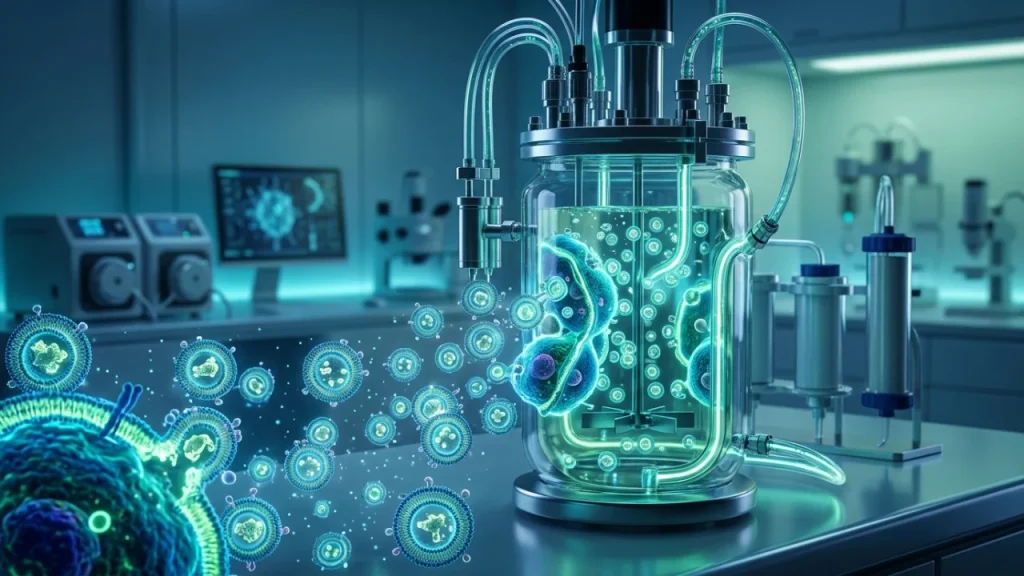
What Are Exosomes and Why Manufacturing Matters
Understanding Exosomes as Natural Messengers
Cells in your body are constantly talking. They do not use words. They send tiny packages instead. These packages are called exosomes. Think of them as microscopic mail trucks. Each exosome carries a cargo of important signals. This cargo can include proteins, RNA, and fats. Exosomes travel through bodily fluids like blood. They deliver their messages to other cells. This system is how a cell in your liver can talk to a cell in your brain.
Exosomes are incredibly small. You could line up thousands of them across the width of a single human hair. They are not alive. They are vesicles, which means small sacs or bubbles. Your body’s cells make them naturally all the time. Almost every type of cell can release exosomes. This makes them universal messengers.
The message inside an exosome changes based on the cell that sent it. A healthy cell sends normal signals. These signals might tell another cell to grow or to rest. A stressed cell sends different signals. A cancerous cell sends very different mail. In fact, some cancer cells send ten times more exosomes than healthy ones. Their exosomes can carry messages that help the tumor grow. They might tell the body to build new blood vessels to feed the cancer.
This is why scientists are so interested. Exosomes are a natural delivery system. The body already uses them. Researchers believe we can harness this system for medicine. We could load exosomes with helpful therapeutic cargo. Imagine an exosome carrying medicine directly to a sick cell. This could mean better treatments with fewer side effects.
But there is a big problem. Your body makes only tiny amounts of exosomes naturally. The amounts are far too small for use as a medicine. We cannot collect enough from people to treat patients at scale. This is where exosomes manufacturing becomes essential. Manufacturing means we learn to make them ourselves, outside the body, in large quantities.
To manufacture something, you must first understand it completely. You need to know how it is built and how it works. The next step in our story is learning how cells create these messengers. This process happens inside the cell in special compartments. Understanding this natural assembly line is the first key to replicating it in a lab. It is the foundation for all the engineering that follows.
The journey from a natural process to a reliable factory is complex. It starts with this basic knowledge of what exosomes are and why we need to make more of them. Their role as precise messengers makes them powerful. Our need for large amounts makes exosomes manufacturing not just interesting, but vital for future medicine.
Why Exosomes Manufacturing Is Crucial for Medicine
Manufacturing exosomes unlocks their true potential for medicine. Think of it like this. Discovering a powerful compound is one thing. Producing enough of it to treat millions of patients is another. Exosomes manufacturing bridges that gap. It turns a brilliant biological discovery into a practical tool.
Therapeutic applications are the most direct benefit. We can engineer exosomes to carry specific cargo. This cargo can be many things. It can be small drug molecules. It can be healing proteins or growth factors. It can even be RNA instructions that tell a cell to repair itself. The exosome’s natural membrane protects this precious cargo. It ensures delivery to the right address in the body.
This leads to targeted treatments with fewer side effects. Consider chemotherapy. It attacks all fast-growing cells, healthy or not. An exosome could be designed to seek only cancer cells. It would deliver its toxic payload directly to the tumor. Healthy tissues would be spared. This precision is the future of oncology.
Manufacturing is also vital for regenerative medicine. Exosomes from stem cells can promote healing. They can reduce inflammation and stimulate tissue repair. For this to work, a single patient might need billions of exosomes. Only a robust manufacturing process can provide those numbers consistently and safely.
Beyond treatment, manufacturing enables advanced diagnostics. Exosomes are abundant in easy-to-access fluids like blood or urine. They carry molecular signatures from their parent cells. A tumor exosome in a blood sample is like a message in a bottle.
Scalable manufacturing is key here too. Scientists need vast amounts of reference exosomes to develop accurate tests. They use manufactured exosomes to calibrate sensitive detection tools. This helps create liquid biopsies. These are simple blood tests that can spot cancer early by finding its exosomal fingerprints.
The need for consistent quality cannot be overstated. Every batch of therapeutic exosomes must be identical. It must be pure, potent, and free of contaminants. A lab making tiny amounts for research cannot guarantee this. Industrial exosomes manufacturing processes are built for this control. They ensure every dose meets strict standards.
Here are the core reasons manufacturing is non-negotiable: – It provides the massive quantities needed for clinical trials and treatments. – It ensures product consistency and safety from batch to batch. – It makes therapies financially viable by enabling large-scale production. – It supplies the materials necessary to develop precise diagnostic tools.
Without manufacturing, exosome medicine stays in the lab. It remains a fascinating idea in scientific papers. With it, we can move into clinics and pharmacies. The path from a single cell’s secretion to a shelf-stable therapy is long. It is filled with engineering challenges. Yet the destination is clear: a new class of medicines that work with the body’s own communication system.
This shift from small-scale to large-scale defines the entire field. The next logical step is examining how we build this process. We must look at the source—the cells themselves—and how we grow them to become efficient exosome factories.
The Journey from Discovery to Industrial Scale
The first lab-grown exosomes came from small flasks of cells. These flasks held maybe a few hundred milliliters of nutrient broth. Scientists used them for basic research. Scaling to industrial levels requires a monumental jump in volume. We are talking about thousands of liters. This jump is not just about making things bigger. It is about re-engineering every single step for control and consistency.
The journey starts with cell line development. Not all cells are good exosome producers. Researchers select a specific cell type for its yield and therapeutic potential. These cells are then engineered to become optimal factories. The goal is to make them stable, safe, and highly productive over many generations. This creates a master cell bank. Think of it as the original seed stock for all future production.
Next comes upstream processing. This is the phase where cells are grown and expanded. In the lab, this happens in simple dishes or spinner flasks. Industrial exosomes manufacturing moves to bioreactors. A bioreactor is a tightly controlled vessel. It provides perfect conditions for growth. It controls temperature, oxygen levels, and nutrient feed.
The environment inside a bioreactor is critical. Cells need specific signals to release exosomes efficiently. Scientists fine-tune the chemical broth, or medium. They adjust factors like pH and glucose. The process must be gentle too. Stirring cannot damage the fragile cells. This careful optimization maximizes both cell health and exosome output.
After growth, the cells have released exosomes into the liquid medium. Now downstream processing begins. The goal is to separate the tiny exosomes from everything else. The starting mixture contains cell debris, proteins, and other waste. This separation is a major technical hurdle.
The first step is clarification. Large particles and dead cells are filtered out. Then concentration happens. The liquid volume is reduced dramatically. This brings the exosomes closer together. Finally, purification isolates the exosomes with high precision. Methods like tangential flow filtration and chromatography are used. They sort particles by size and surface charge.
Each purification step must protect the exosomes. Their delicate membrane and cargo can be damaged by harsh forces. The entire process seeks a balance. It must achieve high purity without losing functional quality.
The final stages involve formulation and storage. Purified exosomes are put into a stable buffer solution. This solution preserves them during storage and transport. Scientists test different conditions to ensure long-term shelf life. The product is then frozen, often at very low temperatures like -80°C.
Analytical testing runs parallel to every stage. Teams take small samples constantly. They check for identity, potency, purity, and safety. They measure particle count, size distribution, and key markers. They ensure no contaminants remain. This data confirms the process is under control.
Scaling each step presents unique obstacles. A method that works for one liter may fail at one thousand liters. Forces like shear stress become more powerful. Mixing times change. Filtration membranes can clog faster. Solving these issues requires process engineering and innovation.
The entire journey is a chain of interdependent steps. A weak link at any point compromises the final product. Successful exosomes manufacturing integrates biology with engineering rigor. It transforms a biological secretion into a standardized therapeutic agent.
This systematic approach turns discovery into a reliable product. The next focus is on the critical benchmarks used to judge the success of this entire endeavor: the quality controls that define a therapeutic-grade exosome batch
Starting Exosomes Manufacturing with Cell Culture
Choosing Cells for Exosome Production
The first decision in exosomes manufacturing sets the course for everything that follows. Scientists must choose which cells to grow. This choice determines the exosomes’ function, yield, and safety.
Not all cells are equal producers. Some cell types naturally release many exosomes. Others release only a few. The goal is to find a source that is both productive and appropriate for the intended use.
Two main categories exist for therapeutic production. The first is adult stem cells. The second is immortalized cell lines. Each has distinct advantages and challenges.
Adult stem cells come from tissues like bone marrow or fat. Mesenchymal stem cells (MSCs) are a common example. They are popular for a key reason. Their exosomes often carry natural healing signals.
These signals can reduce inflammation. They can help repair tissue. This makes MSC exosomes strong candidates for regenerative medicine. However, these primary cells have limits. They cannot divide forever in a lab dish. Their production runs have a natural end point.
Immortalized cell lines offer a different solution. These are cells engineered to grow indefinitely. HEK293 cells are a well-known example. Their big advantage is consistency and scale.
They provide a nearly unlimited cell supply. This is vital for large-scale exosomes manufacturing. Their growth is predictable and robust. Yet, their origin matters. They are often derived from human embryonic kidney tissue decades ago.
Their exosomes may not carry the same innate therapeutic messages as stem cells. Scientists sometimes modify these cell lines. They add new genes to make the exosomes carry specific therapeutic proteins or RNAs.
Yield is a practical concern. A high-producing cell line means more exosomes per liter of culture. This improves efficiency and lowers costs. Some cancer cell lines produce vast amounts of exosomes. But their use is risky for therapy.
Cancer exosomes could carry harmful information. Safety testing becomes much harder. Therapeutic-grade processes avoid these sources.
Safety is the ultimate filter. The chosen cells must be free from viruses and other pathogens. They must have a stable genome. Any change in the cell’s DNA could alter the exosomes it makes.
Scientists create detailed profiles of their master cell bank. They check for identity and purity. This ensures every production run starts from the same, safe source.
The choice often involves trade-offs. – Stem cells may offer superior biological activity but limited expansion. – Immortalized lines offer scale and consistency but may need engineering for function. – Yield must be balanced against therapeutic relevance. – Safety and characterization are non-negotiable for all types.
This decision is not made in isolation. It connects directly to the next step: growing these chosen cells under optimal conditions. The cell culture environment itself becomes a powerful tool. It can dramatically influence how many exosomes the cells release and what they contain.
Selecting the right cell source is therefore a strategic foundation. It aligns biological potential with manufacturing reality, setting the stage for scalable production.
Setting Up Cell Culture Conditions
Once the ideal cell line is chosen, the real work of exosomes manufacturing begins. Cells are not simple factories. They are living entities that respond to their environment. Scientists carefully control this environment to encourage cells to produce more exosomes. They also ensure those exosomes contain the desired therapeutic molecules.
Think of cell culture like farming. You need the right soil, nutrients, and conditions for a good harvest. For cells, the “soil” is the culture medium. This liquid provides everything cells need to live and multiply.
The culture medium is a carefully designed cocktail. Its composition is a primary tool for controlling exosome output.
- It contains sugars like glucose for cellular energy.
- It includes amino acids and proteins as building blocks.
- It has growth factors and vitamins to support health.
- Its exact recipe can be adjusted to stress cells in a controlled way.
Controlled stress is a key concept. Mild stress signals can tell cells to release more exosomes. Scientists might temporarily reduce certain nutrients. They might change the pH balance slightly. This mimics natural conditions and triggers an exosome release response. The goal is to maximize yield without harming the cells.
Oxygen levels are another critical factor. Most cells used for production require precise oxygen control. Too little oxygen can stress cells and change exosome content. Too much can generate harmful byproducts. Modern bioreactors constantly monitor and adjust dissolved oxygen. This maintains a steady, optimal state for production.
Temperature must stay within a narrow range. Human-derived cells typically grow at 37°C, our body’s temperature. Even a small shift can slow growth or alter cell behavior. This changes exosome production. Precise heating systems maintain this temperature without fluctuations.
Cells produce waste as they grow. Metabolic byproducts like lactate can build up. This waste acidifies the environment and inhibits growth. Ineffective exosomes manufacturing processes let waste accumulate. Advanced systems constantly remove waste or refresh the medium. This keeps cells healthy and productive for longer periods.
Physical forces also matter. In some systems, cells are grown on microcarriers or in suspension. Agitation ensures they get even access to nutrients and oxygen. However, too much shear force from stirring can damage cells. Engineers find a balance between mixing and gentle treatment.
All these parameters are monitored in real time. Sensors track pH, oxygen, and temperature. Computers make automatic adjustments. This process control is what transforms lab methods into reliable manufacturing.
The duration of the culture run is a final decision point. Cells release exosomes continuously, but not at a constant rate. Scientists determine the optimal harvest time. This is when exosome yield is highest but before cell health declines significantly.
Perfect conditions lead to a harvest rich in extracellular vesicles. The next challenge is separating the tiny exosomes from this complex mixture. The culture supernatant contains everything: leftover nutrients, cell debris, proteins, and vesicles of many sizes. Isolating pure exosomes is a formidable filtration task.
Setting up cell culture conditions is about creating a stable, optimized environment. It translates biological potential into tangible product volume. This step establishes the foundation for yield and consistency in every production batch.
Using Bioreactors for Large-Scale Growth
A bioreactor is not just a big flask. It is a controlled environment for growing cells by the billions. Think of it as a sophisticated, self-regulating tank. This tank provides everything cells need to thrive and produce exosomes. Scaling up from lab dishes to these systems is central to exosomes manufacturing.
The core task is simple: support massive cell growth. More healthy cells mean more exosomes. But doing this consistently is complex. Bioreactors manage the culture medium like a life support system. They control key factors with precision.
Temperature is kept at a steady, warm level. This mimics the human body. Oxygen levels are constantly monitored and adjusted. Cells need oxygen to create energy. A bioreactor delivers it without creating damaging bubbles.
pH is also critical. Cells naturally make their environment more acidic as they grow. The bioreactor automatically adds a mild base to balance this. It maintains a neutral pH that cells prefer.
Agitation is another key function. The culture medium must be stirred. This keeps nutrients and oxygen evenly distributed. It also prevents cells from clumping together. The stirring must be gentle. Powerful stirring would shear and stress the cells.
Bioreactors come in different designs for different cell types. – Some cells grow best when they are free-floating in liquid. Stirred-tank bioreactors are ideal for these suspension cultures. – Other cells need a surface to attach to. For these, bioreactors can be filled with tiny microcarrier beads. The cells cover the beads, creating a vast growth area inside one tank.
The entire process is automated. Sensors feed data to a computer in real time. If oxygen dips, the system responds instantly. This automation removes human guesswork. It ensures every batch grows under identical conditions.
Harvesting from a bioreactor is also streamlined. The system can drain the cell-filled medium without stopping the process. Some setups even allow continuous harvesting. Fresh medium flows in as product-rich fluid is collected.
This scalable control is what makes industrial production possible. A single bioreactor run can yield exosomes equivalent to thousands of lab flasks. The transition to bioreactors marks the true shift from bench science to factory-scale exosomes manufacturing. It turns biological principles into reliable, repeatable output.
The next step happens after this harvest. The bioreactor’s contents are a complex mixture. It holds the precious exosomes, but also cells, debris, and spent nutrients. Isolating the pure exosomes from this soup requires equally advanced technology.
Monitoring Cell Health During Culture
Healthy cells make the best exosomes. This is the core rule. Cells under stress or nearing death release different vesicles. These vesicles may carry unwanted signals or debris. They can contaminate the final product. Consistent exosomes manufacturing requires consistent cell health.
How do we know if cells are healthy inside a bioreactor? We cannot look at them with a microscope. The tank is sealed. Instead, we rely on indirect signals. These signals are called critical process parameters. They give us a real-time health report.
We track key indicators from the culture medium. – Glucose level shows how much food the cells are eating. – Lactate level reveals their metabolic waste. – Oxygen consumption tells us how active they are. – pH indicates the chemical balance of their environment.
A sudden drop in glucose means cells are feeding fast. A spike in lactate means they are producing more waste. Both can signal high growth or the onset of stress. The computer tracks these trends every minute.
Cell count and viability are also crucial. We take tiny automated samples. Instruments analyze these samples. They count how many cells are present. More importantly, they check what percentage are alive. High viability is essential. Dead cells burst apart. They release internal proteins and genetic material. This contaminates the broth and complicates later purification.
The secret is in the metabolites. Cells communicate through molecules they release. The pattern of these metabolites is a fingerprint of cell state. Scientists analyze this fingerprint. They look for the perfect metabolic profile. This profile shows cells are happy, growing, and actively producing exosomes.
Reaching this ideal state is not accidental. It is a result of precise feeding strategies. There are two main approaches. – Batch feeding adds fresh nutrients all at once at the start. – Fed-batch feeding adds nutrients in small doses over time.
Fed-batch is often superior for exosomes manufacturing. It keeps nutrient levels steady. It prevents cells from being starved or overwhelmed. This steady state supports prolonged health and production.
Why does this monitoring matter so much? Unhealthy cells do not just stop making exosomes. They start making bad ones. Stressed cells can release exosomes with altered cargo. These exosomes might carry proteins linked to inflammation or cell death. For therapeutic use, this is unacceptable.
The entire goal is product quality and safety. Monitoring ensures every batch meets strict standards. It turns a living biological process into a controlled factory line. We move from hoping cells are healthy to knowing they are.
This data does more than monitor a single run. It builds a knowledge library over many batches. Scientists learn the exact conditions for peak performance. They can then program the bioreactor to replicate those conditions every single time.
The outcome is a harvest rich in high-quality vesicles. But the journey is not over yet. The next challenge awaits: separating these tiny exosomes from everything else in the tank.
Harvesting Exosomes from Cell Culture
Collecting Cell Culture Media
The bioreactor’s work is complete. Inside the tank, millions of cells have released their precious cargo into the surrounding liquid. This nutrient-rich fluid is now called “conditioned media.” It holds the exosomes we want. Collecting this media is the first harvest step.
Think of it like collecting sap from a maple tree. The tree produces the sap. We carefully gather it without harming the tree. Here, the cells are the tree. The conditioned media is the sap full of exosomes.
The goal is simple. We must separate this liquid from the cells that made it. This seems easy. But it is a critical point. A mistake here can ruin the entire batch.
We begin by stopping the action. The bioreactor’s stirring and gas flow are halted. This lets the cells settle gently. For some processes, a gentle spin in a centrifuge is used. This pulls the cells to the bottom of a container.
The key is gentleness. We do not want to break the cells open. Broken cells spill their internal contents. This includes DNA, large proteins, and cell debris. These contaminants would flood our media. They would make the next purification steps much harder.
After settling, we have two layers. The heavy, dense layer at the bottom contains the cells. The clear liquid on top is the conditioned media. Scientists use sterile tubing or pumps to draw off this top layer. They transfer it into a clean, sterile collection vessel.
This step must be done in a clean environment. Even tiny bacteria or fungi can spoil the batch. All tools and containers are sterile. The process often happens inside a safety cabinet with filtered air.
Not all conditioned media is collected at once. In some exosomes manufacturing processes, media is collected multiple times. This is called a “perfusion” method. Fresh media flows into the bioreactor continuously. Used, exosome-rich media flows out at the same rate.
This method has a big advantage. It never lets waste products build up around the cells. Cells stay healthier and produce exosomes for longer periods. It is like having a constant stream of fresh water while removing dirty water.
What happens to the cells left behind? Sometimes they are given fresh media and returned to production. They can make more exosomes in another cycle. Other times, their job is done. The focus shifts entirely to the collected liquid.
The collected media looks ordinary. It is often a clear, amber-colored liquid. To the naked eye, it seems no different from the nutrient broth we started with. But it has been transformed. It now contains billions of tiny exosomes, invisible without special tools.
We have successfully captured the product of the cell factory. But we have also captured many other things. The media still contains leftover nutrients from feeding. It contains metabolic waste from the cells. It may contain other small vesicles and particles.
The exosomes are there, but they are not alone. They are a tiny fraction of the total liquid. Our next task is to find them and isolate them from this complex mixture. We move from collection to concentration and purification.
This step turns a large volume of weak solution into a small volume of potent extract. The journey toward pure exosomes has truly begun.
Removing Cells and Debris First
The collected liquid is not ready for exosome isolation. It is a crowded mixture. Before we can find the exosomes, we must remove the largest components. This is a filtration process. We start big and work our way down to small.
Think of it like panning for gold. First, you remove large rocks and branches from the river sediment. You would not look for tiny gold flakes while big stones are in your way. The same logic applies here. The biggest items in our liquid are whole cells and large pieces of cell debris.
These large particles must be removed completely. Leaving them in would cause major problems later. They could clog delicate filters in subsequent steps. They could degrade and release unwanted proteins and genetic material. This contamination would ruin the purity of the final exosome product.
The primary tool for this step is centrifugation. This machine spins samples at high speeds. It creates a strong force called centrifugal force. Heavier and larger particles are pulled to the bottom of the tube. Lighter particles stay in the liquid above.
A typical first spin is slow. It might spin for ten minutes at a low speed. This force is enough to pellet whole cells and very large debris. The cells gather in a solid mass at the tube’s bottom. The liquid above them, called the supernatant, is carefully poured off. This supernatant moves forward. The cell pellet is discarded.
But the job is not done yet. The supernatant still contains smaller debris. It has fragments of broken cells and other large proteins. A second, faster centrifugation step often follows. This spin uses more force for a longer time. It removes these medium-sized particles.
Another common method is simple filtration. The liquid is passed through a filter with specific pore sizes. A pore size of 0.8 or 0.45 micrometers is common for this first step. Anything larger than the pore gets trapped on the filter surface. The clarified liquid flows through.
Why choose one method over another? Each has pros and cons. – Centrifugation is straightforward. It handles large volumes well. However, very high forces can sometimes rupture fragile exosomes if not done carefully. – Filtration is gentle and fast. But filters can clog if the liquid has too much debris. This can waste valuable sample.
Often, scientists use both methods in sequence. They might do a slow spin first to remove the bulk of cells. Then they filter the supernatant to catch any remaining smaller debris. This two-step approach ensures a clean starting point.
The goal is crystal-clear liquid. After this step, the media should look transparent. All visible cloudiness from cells and debris should be gone. We have removed the “rocks and branches.” Now we have a smoother mixture to work with.
However, the liquid is still chemically complex. It is full of soluble proteins, salts, and leftover nutrients from the culture media. The exosomes are still dissolved in this soup. They are thousands of times smaller than the cells we just removed.
We have successfully completed the first cleanup. The path to finding the exosomes is less cluttered. Our next task is to concentrate these tiny vesicles from the vast volume of liquid. We move from clarification to concentration, bringing the exosomes closer together for the final purification stages of exosome manufacturing.
Concentrating Exosomes for Further Processing
The clarified cell culture media is now free of cells and large debris. But it is still a very dilute solution. Exosomes are spread thinly throughout liters of liquid. The next step is concentration. This process gathers the exosomes into a much smaller volume. Think of it like reducing a large pot of soup into a rich, thick sauce. The goal is to increase the number of exosomes per drop.
Scientists have several reliable tools for this task. Each method uses a different physical principle to capture and concentrate the tiny vesicles.
Ultrafiltration is a common and gentle approach. It uses special filters with extremely tiny pores. These pores are measured in nanometers. The pores are small enough to block exosomes but large enough to let water and salts pass through. The liquid is pushed against the filter membrane. Solvent and small molecules exit. The exosomes are retained and become more concentrated. This method is scalable and does not require harsh chemicals.
Tangential flow filtration is a sophisticated version of this. The liquid flows across the filter surface, not directly into it. This cross-flow action prevents the filter from clogging quickly. It allows for processing large volumes efficiently. This technique is vital for larger-scale exosome manufacturing.
Another key method is precipitation. Scientists add special polymers to the liquid. These polymers change the solution’s properties. They gather around the exosomes and other particles. This makes the exosomes form larger, visible clumps. These clumps become heavy enough to collect by a simple, low-speed centrifugation step. It is a relatively simple process. However, it requires careful optimization to avoid co-precipitating unwanted proteins.
Centrifugation itself can also be used for concentration, but in a specific way. Ultracentrifugation uses very high speeds over long periods. The immense force pulls exosomes to the bottom of the tube, forming a pellet. This pellet can then be resuspended in a tiny amount of buffer. This method is powerful but can be stressful for the exosomes due to the high forces involved.
Choosing a method depends on the goal. – Ultrafiltration is excellent for speed and preserving exosome function. – Precipitation is useful for capturing a broad range of vesicles from difficult samples. – Ultracentrifugation is a traditional workhorse but can be time-consuming.
The concentration step dramatically changes the sample. We might start with one liter of clarified media. After concentration, we could have just ten milliliters of liquid. This represents a one-hundred-fold increase in density. The exosomes are now packed together. This makes them much easier to handle in the final purification stage.
However, concentration is not perfect purification. The process also concentrates other things. Soluble proteins, nucleic acids, and lipoprotein particles may also become denser. These contaminants are similar in size or density to exosomes. They hitchhike through the concentration step.
So what do we have after concentration? We have a small volume of liquid rich with exosomes. But it is still a mixed population. The final and most precise step is purification. Here, we separate the exosomes from these remaining impurities to get a pure product ready for use in research or therapy.
Purifying Exosomes with Advanced Techniques
How Tangential Flow Filtration Works
Purification isolates exosomes from other concentrated material. One advanced method excels at this task. It is called Tangential Flow Filtration. This technique is gentle and scalable. It is ideal for exosomes manufacturing.
The core idea is simple. The liquid mixture flows *across* the filter surface. It does not push directly through it. Think of a fast-moving stream flowing over a net. Small items like pebbles pass through the net holes. Larger items like branches slide along the net’s surface. This is tangential flow.
In the lab, the “stream” is the concentrated exosome sample. The “net” is a special membrane with precise pores. These pores have a specific size cutoff. For exosome purification, a common cutoff is 200 nanometers. Particles smaller than this pass through as waste. Larger particles, including exosomes, are retained.
The tangential motion is crucial. It prevents the membrane from clogging. Direct flow would jam exosomes and proteins onto the filter surface. The sideways flow sweeps them along. This keeps the membrane clean and working longer.
A TFF system uses a closed loop of tubing and pumps. The process has clear steps. – First, the sample is pumped from a reservoir. – It moves tangentially across the filter membrane. – Buffer solution constantly adds to the loop. This dilutes small contaminants. – Small impurities and excess fluid pass through the membrane. They are called permeate. – The exosomes remain in the flowing loop. This stream is called retentate.
The retentate cycles back to the starting reservoir. It flows across the filter again and again. Each pass removes more contaminants and excess liquid. The exosome solution becomes purer and more concentrated simultaneously.
This method offers key advantages for processing exosomes. – It is very gentle. There are no crushing centrifugal forces or chemical polymers. – Exosome structure and function remain intact. – The system can handle large volumes efficiently. It scales from lab research to industrial production. – Scientists can control purity by choosing different membrane pore sizes.
The entire process happens in a sealed system. This reduces contamination risk. It also allows for consistent, repeatable results. After TFF, the final product is both pure and concentrated. It is ready for detailed analysis or therapeutic use.
Tangential Flow Filtration represents a sophisticated approach to purification. It solves multiple problems at once. It cleans the exosome sample while making it denser. The gentle nature of the flow protects these delicate vesicles. This makes TFF a cornerstone technique in modern exosomes manufacturing. The next step is analyzing what this pure product contains and how well it works.
Using Chromatography for High Purity
Chromatography is a powerful separation method. It can isolate exosomes with exceptional precision. Think of it as a highly selective filter. It sorts molecules by their physical and chemical traits.
The process uses a column packed with special beads. These beads create a porous matrix. A liquid buffer carries the sample through this column. Different molecules in the sample interact with the beads differently. They travel at different speeds. This causes them to separate from each other.
Exosomes have unique surface properties. They are larger than most proteins and nucleic acids. Their lipid membranes also have a specific charge. Chromatography exploits these differences. It allows exosomes to be collected separately from impurities.
Several chromatography types are used in exosomes manufacturing. Each one separates molecules based on a distinct principle.
Size-exclusion chromatography is very common. It is also called gel filtration. The column beads have tiny pores of a specific size. Large molecules like exosomes cannot enter these pores. They flow around the beads quickly. They exit the column first.
Smaller molecules like free proteins slip into the pores. They take a longer, slower path through the column. They exit later. This cleanly separates exosomes from smaller contaminants.
Ion-exchange chromatography uses charge for separation. The beads in the column carry a positive or negative charge. They attract molecules with the opposite charge.
Exosome surfaces have a net negative charge. They will bind to positively charged beads. Most impurities flow right through. Then scientists change the buffer solution. They increase its salt concentration. This releases the purified exosomes from the beads.
Affinity chromatography is the most specific method. It uses a ‘lock-and-key’ approach. Special molecules are attached to the column beads. These molecules bind only to one specific target on the exosome surface.
An antibody might be used to capture exosomes from a certain cell type. This method offers extreme purity. It isolates only the desired exosome population.
Chromatography provides major advantages for purification. – It achieves very high purity levels. It removes tiny protein aggregates and genetic material. – The process is gentle and controllable. Buffers maintain a healthy environment for exosomes. – It is highly reproducible. The same column conditions give the same results every time. – Different methods can be combined in sequence. This creates a multi-step purification train.
The main challenge is scaling up. Lab columns are small. Industrial production needs large, robust systems. Engineers design larger columns with the same bead chemistry. They optimize flow rates to maintain resolution at big volumes.
Chromatography also requires careful preparation. The sample must not clog the column. Tangential Flow Filtration is often used first. It concentrates the sample and removes big debris. This tandem approach is very effective.
After chromatography, exosomes are in a clean buffer solution. They are ready for final formulation and testing. This step confirms their identity, quantity, and biological activity.
Chromatography refines the exosome product to a high standard. It moves beyond basic cleaning to precise molecular selection. This precision is critical for therapeutic applications where every component matters. The final stage is ensuring these pure vesicles remain stable and potent for their intended use.
Preserving Exosome Integrity During Purification
Purification must not damage the exosomes. This is a core rule of exosome manufacturing. Think of an exosome like a tiny, fragile bubble with a complex surface. Its outside is covered with important proteins. These proteins act like address labels and keys. They tell the exosome where to go in the body. They also allow it to unlock and deliver its cargo to a target cell. Harsh handling can strip these proteins away. It can also rupture the vesicle membrane. A broken exosome is useless. Its therapeutic cargo spills out and is lost.
The purification environment is full of potential dangers. Scientists must control every factor to shield the vesicles.
Shear stress is a major threat. This is a tearing force from liquid movement. Fast pumping or rough mixing creates shear. It can rip exosomes apart. Engineers design gentle fluid pathways. They use slow, steady pump speeds. This minimizes turbulent flows that cause damage.
Chemical stress is another risk. The wrong buffer solution can destroy exosomes. pH is a measure of how acidic or basic a liquid is. Exosomes need a specific pH range to stay stable. A sudden pH shift can deform their structure. The salt concentration, or ionic strength, is also vital. Solutions that are too strong can pull exosomes apart through osmotic pressure. The purification buffers are carefully matched to biological conditions.
Temperature control is non-negotiable. Heat increases molecular movement. Too much warmth makes exosome membranes more fluid and unstable. It can also degrade the RNA inside. Most processes keep everything cold, typically around 4°C (39°F). This slows down all activity and preserves integrity.
Even time is an enemy. The longer purification takes, the more chance for decay. Processes are optimized for speed without sacrificing purity. Quick, gentle methods are the ideal goal.
How do scientists know if integrity is preserved? They run tests before and after purification. – They measure particle size. Intact exosomes should show a consistent, small size distribution. A spread of tiny fragments indicates breakage. – They check for classic marker proteins on the surface. A loss of these markers means surface damage occurred. – They analyze the cargo. Good manufacturing will keep RNA inside, not leaking into the solution.
The goal is a perfect balance. The process must remove all contaminants. Yet it must leave every exosome whole and functional. This balance defines successful manufacturing. Advanced techniques like chromatography help achieve this. Their gentle, controllable nature is key for integrity.
Preserving exosome integrity turns a pure sample into a potent product. The next step is ensuring this product remains stable and active until it reaches the patient.
Ensuring Bioactivity Remains Strong
Purified exosomes must do more than just exist. They must function. Bioactivity means the exosome can deliver its cargo and cause a desired effect in target cells. A perfectly intact vesicle with dead cargo is useless for therapy.
Scientists test bioactivity with specific functional assays. These are experiments that measure what exosomes actually do. Think of it as a job interview for the purified particles.
One common test measures cell migration. Researchers place cells in one area. They add purified exosomes to another area. Active exosomes send chemical signals. Do the cells move toward the exosomes? If yes, the exosomes are bioactive. This is key for wound healing applications.
Another test checks for protein production. Scientists give exosomes to cells in a dish. After a time, they look for new proteins. For instance, do the cells now make more collagen? That shows the exosome’s RNA cargo was delivered and read. The machinery worked.
A third assay might measure a change in cell growth. Do certain immune cells become more calm? Do inflamed cells show lower signs of stress? These functional readouts prove the exosomes are not inert.
Several factors can destroy bioactivity during exosomes manufacturing. Heat is a major one. Even brief exposure to high temperatures can permanently damage signaling proteins on the surface.
The purification buffers themselves can be a problem. A buffer with the wrong salt concentration can shut down biological activity. The pH must match the body’s natural conditions. A slight shift can deactivate crucial enzymes.
Freezing and thawing is a big risk. Ice crystals form during slow freezing. These sharp crystals can pierce the exosome membrane. They can shred the delicate RNA inside. This kills function instantly.
So how is bioactivity preserved? The process requires careful planning from start to finish. – First, use gentle purification methods. Techniques like size-exclusion chromatography are good. They avoid harsh forces that crush or shear the vesicles. – Second, formulate the final product with protectants. These are molecules like sugars that act as a shield. They surround exosomes during freezing to prevent ice damage. – Third, store exosomes correctly. This often means rapid freezing at very low temperatures. Some products are stored at -80°C (-112°F). Others are made into stable powders.
Testing happens at the very end too. The final product batch undergoes a potency assay. This confirms the biological strength is within a specified range. It ensures one batch works as well as the next.
Without proven bioactivity, exosomes manufacturing fails its main goal. The entire process aims to produce a tool that can change cell behavior. Successful manufacturing keeps these tiny messengers alive and ready for work. It bridges the gap between a clean sample and a reliable therapeutic. The final challenge is delivering this active product to the human body safely and effectively.
Quality Control in Exosomes Manufacturing
Measuring Exosome Size and Concentration
Every exosome is incredibly small. You could line up thousands of them across the width of a single human hair. Their size is not random. It is a key sign of their identity and purity. In exosomes manufacturing, confirming size is a mandatory quality check. So is counting them. You need to know exactly how many particles you have in a vial.
Why does size matter so much? True exosomes fall within a specific range. They are typically between 30 and 150 nanometers in diameter. Particles smaller than this might be other things. They could be protein clumps or leftover cell debris. Particles much larger are likely microvesicles. These are different cell bubbles that form through another process.
Measuring something this tiny requires special tools. You cannot use a regular microscope. Light waves are too big to see nanoparticles clearly. Scientists instead rely on advanced instruments. These machines use physical principles to detect and count particles one by one.
One common method is Nanoparticle Tracking Analysis, or NTA. This technique is a workhorse in many labs. Here is how it works in simple terms. A laser beam shines through a liquid sample containing exosomes. The tiny vesicles scatter the laser light. A sensitive camera records this scattered light as tiny white dots moving under Brownian motion. That is the random jittering of particles in fluid.
Sophisticated software then tracks each moving dot’s path. It calculates speed from this movement. Smaller particles move faster and more erratically. Larger ones move slower. The software uses this speed to calculate the size of every single particle it sees. It also counts them all. The result is two vital numbers: a concentration and a size distribution profile.
The concentration tells you the particle count. It is often given as particles per milliliter. The profile shows a graph. You see what percentage of particles are 50nm, 80nm, 120nm, and so on. A good exosome preparation shows a sharp, clean peak within the 30-150nm window.
Another major technique is Tunable Resistive Pulse Sensing, or TRPS. It operates on a different idea. The sample is pulled through a tiny nano-sized pore in a membrane. As each exosome passes through, it briefly blocks the pore. This causes a measurable change in electrical current.
The amount of current blockage relates to the particle’s size. The number of blockages over time gives the concentration. TRPS can provide very precise sizing data on each individual particle event.
Dynamic Light Scattering is a third method, known as DLS. It measures scattered light fluctuations from many particles at once to estimate an average size. It is very fast and good for a quick check. However, it is less precise for mixed samples. A few large contaminants can skew the average size reading dramatically.
These tools are used throughout the manufacturing process. They check purity after isolation steps. They confirm consistency between different production batches. Most importantly, they provide the foundational data for dosing. If you do not know your exact particle count, you cannot give a precise dose for therapy or research.
The data from these machines forms a core part of a Certificate of Analysis. This is a document that accompanies a professional exosome product. It proves the vesicles meet strict physical specifications.
But size and number are just part of the story. They tell you you have the right *quantity* of particles in the correct *size* range. They do not confirm what is on the outside of the vesicles or inside them. The next layer of quality control looks at these molecular details. It asks if the exosomes carry the correct markers and cargo to do their intended job
Analyzing Protein Content with Proteomics
Proteins define what an exosome can do. They are the tools and identification cards for these tiny vesicles. The study of all these proteins is called proteomics. In exosomes manufacturing, a detailed protein profile is a non-negotiable quality check.
Think of it like this. Knowing a delivery truck’s size and weight is useful. But you must also verify its company logo and check its cargo manifest. Proteins serve both these roles for exosomes. Some proteins sit on the outside surface. These are markers. They act like shipping labels. They help target the exosome to certain cells.
Other proteins are inside the vesicle. This is the functional cargo. It might include growth factors or enzymes. This cargo can change a recipient cell’s behavior. A complete proteomic analysis checks for both types.
The process starts with breaking the exosome open. Scientists use detergents or sound waves to do this. The released proteins are then prepared for analysis. The main tool is a mass spectrometer. This is a complex machine. It measures the weight of thousands of protein fragments with extreme accuracy.
The data creates a list. This list is compared against massive protein databases. The match confirms each protein’s identity. The result is a proteomic profile. This profile is like a molecular fingerprint for that batch of exosomes.
This fingerprint answers critical questions for manufacturers:
- Does the product contain the expected exosome markers? Key markers include CD9, CD63, and CD81. Their presence confirms the vesicles are truly exosomes.
- Are there contaminating proteins? Albumin from culture serum is a common red flag. Its presence suggests inadequate purification.
- Does the cargo match the intended function? Exosomes for skin repair should show certain collagen proteins. Exosomes for immune modulation need different signal proteins.
A consistent profile proves process control. It shows your cell culture and purification methods are stable. Major shifts in the protein fingerprint signal a problem. The source cells might be stressed. A purification step may have failed.
Proteomics also drives advanced applications. Scientists can engineer cells to produce exosomes with special proteins. These could be therapeutic proteins for disease treatment. Proteomic analysis then verifies this engineering was successful. It checks if the designed cargo is actually loaded.
This level of detail is essential for clinical goals. Regulatory agencies demand thorough characterization. A therapy cannot advance without proving its molecular identity batch after batch. Proteomics provides that proof.
It moves quality control from “how many particles?” to “what exactly are they carrying?” The next logical step is looking at genetic material inside. After confirming the protein tools, scientists must inventory the instruction manuals. These are the RNA molecules that guide long-term cellular changes.
Testing for Contaminants and Purity
Pure exosomes are the only goal. The manufacturing process must remove everything else. Contaminants can ruin a batch. They can even cause harm.
Think of it like filtering water. You want clean water, not water with dirt or bacteria. Exosome purification faces a similar challenge. Many unwanted particles are similar in size to exosomes. They can slip through if the process is not perfect.
Major contaminants fall into a few groups. Each group poses a unique problem.
First are leftover cell debris. Cells constantly shed bits of membrane and protein clumps. These fragments are not exosomes. They are just cellular trash. If present, they add useless protein to the final product. This skews quality control tests. A therapy might appear to have more material than it truly does.
Second are other vesicles. Cells release different types of tiny bubbles. Microvesicles are larger and form differently. Apoptotic bodies come from dying cells. They carry different cargo. Their presence dilutes the pure exosome signal. The therapeutic effect becomes unpredictable.
Third is serum from the cell culture. This is a major source of impurity. Fetal bovine serum was once common in cell growth media. It is packed with animal proteins and other vesicles. These foreign particles get mixed with the human exosomes. Modern methods use serum-free media to avoid this huge problem.
Testing checks for these impurities. Scientists use several tools.
One tool is electron microscopy. It takes ultra-detailed pictures. Experts can see the classic cup-shaped exosomes. They can also spot irregular debris or other vesicle types.
Another test measures protein quantity against particle count. This creates a simple ratio. Pure exosome preps have a consistent ratio. A high protein number relative to particle count is a red flag. It suggests too many contaminating proteins are present.
Specific chemical tests look for common contaminants. An albumin test checks for leftover serum proteins. A DNA assay looks for genetic material from broken cells. Exosomes should have very little free DNA.
Why does this purity matter so much? Safety is the biggest reason.
Contaminants can trigger immune reactions. Foreign serum proteins might cause inflammation in a patient. Cell debris could activate an unwanted immune response. This defeats the purpose of a healing therapy.
Efficacy is the second reason. Impurities create noise. They make it hard to know what is actually working. Was the therapeutic effect from the exosomes? Or was it from the other vesicles in the mix? Reliable manufacturing requires a clear answer.
For regulatory approval, proof of purity is mandatory. Agencies will reject a product with inconsistent impurity profiles. They need to see clean, repeatable data batch after batch.
The final product must be both potent and clean. Testing for contaminants guards the product’s integrity. It ensures that every vial contains what the label promises. This builds trust in the entire field of exosomes manufacturing.
After ensuring purity, the focus turns to function. The next question is vital: do these clean exosomes actually work as intended? This leads to biological activity assays, the final proof before clinical use.
Meeting Regulatory Standards for Safety
Regulatory agencies set strict rules for any medicine. Exosomes are no exception. These rules exist for one main reason. They protect patient safety above all else. Every step in exosomes manufacturing must be documented and controlled.
Think of it like a recipe for a critical medicine. You cannot change the ingredients halfway through. You cannot use a different oven temperature each time. The process must be identical for every single batch. This is called process control. Agencies demand proof of this control.
The journey from lab to clinic is long. It has clear phases. First, researchers do preclinical studies. They test exosomes in cells and animals. This data shows basic safety and possible effect. Next comes the Investigational New Drug application. This is a big dossier. It requests permission to start human trials.
The manufacturing information here is key. Agencies scrutinize the source of the exosomes. Where did the original cells come from? How were those cells banked and stored? The entire history must be traceable.
The rules for the cells are very tight. They must come from a qualified source. Master cell banks are created and tested thoroughly. Scientists check for viruses, bacteria, and other pathogens. This ensures the starting material is clean and stable.
Next, the production process itself is reviewed. Agencies look at every piece of equipment. They examine all the growth materials and buffers used. Each component must be medical grade or better. Any animal-derived serum is a major concern. It raises the risk of unknown pathogens.
The purification steps are analyzed in detail. Can the process reliably remove contaminants? Data must prove it removes host cell proteins and DNA. It must also remove other vesicles if a pure exosome product is claimed.
Finally, the rules cover the final product formulation. What are the exosomes stored in? The liquid buffer must be safe for human injection. The concentration of particles must be specified. The shelf life and storage conditions must be validated through testing.
All these rules lead to consistency. The goal is a product that does not change from batch to batch. Patients must get the same thing every time. This is non-negotiable for safety and trust.
Documentation is as important as the science itself. Every action must be written down. This creates an audit trail. An inspector should be able to trace any vial back to its original cell culture.
What happens if a company does not follow these standards? Their application will be put on hold. They may receive a clinical hold letter. This stops all planned human trials until issues are fixed. Common problems include incomplete testing data or poorly defined processes.
Meeting these standards is a massive effort. It requires careful planning from the very start. Scientists must design their process with regulations in mind. They cannot just optimize for yield alone. They must optimize for control and proof.
This rigorous framework benefits everyone. It protects patients from harmful or unpredictable products. It gives doctors confidence in what they are administering. For the field of exosomes manufacturing, strong regulations build credibility. They show the world that exosome therapies are serious, well-characterized medicines.
Success here opens the door to the final stage: clinical trials in people, where the therapy’s true value is measured.
Scaling Up Exosomes Manufacturing
Moving from Small to Large Batches
Scaling up exosomes manufacturing is not just about making more fluid. It is about keeping the tiny vesicles identical when you produce them in huge tanks. Think of baking a single perfect loaf of bread. Now imagine baking a thousand loaves at once in a giant oven. You must ensure every loaf gets the same heat. You must mix the giant batch of dough perfectly. The same principles apply to living cells making exosomes.
Cells are the factories. In a small flask, every cell has easy access to food and oxygen. Waste products are removed quickly. The environment is nearly perfect. In a large bioreactor tank, this balance is hard to keep. Cells in the middle might starve. Cells on the edges might get too much stress. Stressed cells change their behavior. They might release different exosomes. They might even release more harmful particles alongside the good ones.
The goal of scaling is to keep the cell “happy” and consistent at every scale. This requires precise control over many factors.
- Temperature must be perfectly even throughout the large tank.
- Oxygen levels must be monitored and adjusted constantly.
- The pH, which is a measure of acidity, must stay in a narrow range.
- Cells need to be fed nutrients without stopping. Waste must be continuously filtered out.
Moving from small to large batches often means changing equipment. Scientists might start with simple flasks that sit on a shelf. The next step is a spinner flask that gently stirs the liquid. For the largest scale, they use stirred-tank bioreactors. These are big stainless steel or plastic tanks with complex sensors and mixing systems.
The mixing itself is a major challenge. Stir too slowly, and cells clump together or sink. They will not get enough oxygen. Stir too fast, and the shear force from the spinning impeller can tear cells apart. This physical stress kills cells and ruins the product. Finding the right speed is a key part of process development.
Harvesting the exosomes also gets harder with more liquid. The conditioned media from a large bioreactor can be hundreds of liters. All the desired exosomes are dissolved in this vast ocean of used cell food and waste. Concentrating them down is a massive filtration task. The filters can clog. The process can take too long, risking damage to the delicate exosomes.
Finally, scaling tests every part of the earlier quality control. Can you check purity quickly enough for a large batch? Can you prove that exosomes from a 500-liter tank are the same as those from a 2-liter flask? This requires more sampling, more tests, and more data.
Successful scale-up means the process is robust. A robust process gives the same result every time, even when conditions shift slightly. It is the foundation of true industrial manufacturing. Without it, you cannot make enough medicine for clinical trials or for patients. Mastering this step transforms an interesting lab discovery into a potential therapy for thousands. The next hurdle is making this large-scale process efficient and cost-effective, which involves clever engineering and new technologies.
Maintaining Consistency at Bigger Scales
Making exosomes in a big tank is not just about size. The real goal is making every batch the same. Cells are living things. Their behavior can change with time. A process must control these changes to get a consistent product. This is called process control.
Think of baking bread in a home kitchen. You might get a great loaf one day. The next day, it might be too dense. The oven temperature could fluctuate. The yeast might be older. Scaling to a bakery fixes this. They use precise ovens and measure every ingredient by weight. They get the same loaf every single time. Exosome production needs the same shift.
Cells make exosomes based on their environment. Key factors must stay in a tight range. – Temperature must be constant. A small shift can change how cells grow. – Oxygen levels are critical. Too little starves cells. Too much can be toxic. – The pH, or acidity, of the broth must be controlled. Cells alter their medium as they eat and release waste. – Nutrient levels must be monitored and fed in carefully.
In a small flask, these are easy to check. A scientist can take a sample and test it. In a large bioreactor, you cannot rely on manual checks alone. The conditions in one spot might differ from another. Sensors are placed directly into the tank for real-time data. These sensors send information to a computer. The computer can then make small adjustments automatically. It might add a bit more oxygen or a drop of base to control pH.
This constant monitoring is called process analytics. It is the eyes and ears of the operation. Without it, you are running blind. A batch could fail before anyone notices.
Consistency also depends on the cells themselves. They are the factory workers. Their health and stability are vital. Scientists use special master cell banks. These are identical vials of cells frozen at a very low temperature. Each large production run starts from one vial from this bank. This ensures every batch begins with the same “seed.” The cells’ age and passage number are also tracked closely. Older cells can behave differently and must be replaced.
The final product must be tested too. This is where analytics get detailed. Scientists look at specific markers on the exosome surface. They measure the size distribution of the particles. They check for unwanted proteins or DNA from broken cells. All these tests create a fingerprint for the batch.
This fingerprint is compared to a reference standard. The reference comes from earlier, successful small-scale runs. If the fingerprints match, the batch passes. This proves that scaling up did not change the product.
Achieving this level of control turns a biological process into a reliable manufacturing line. It moves from an art to a science. The data collected also helps improve the process over time. Engineers can see which small adjustments lead to better yields or purity.
The reward for this hard work is trust. Doctors and patients need to trust that every vial of an exosome therapy is identical. It must have the same healing potential as the one used in successful lab experiments. Without consistency, there is no safety and no real medicine.
This leads to the next logical step: cost. All this control and testing is expensive. The final challenge is making this precise, consistent process affordable enough for widespread use.
Aseptic Techniques for Clean Production
Contamination can ruin an entire batch of exosomes. A single bacterium, fungus, or virus can multiply quickly. It can take over the cell culture. It can also hide inside the exosomes themselves. This makes the final product unsafe and useless. Preventing this is not just about cleanliness. It is a strict science called aseptic technique.
Aseptic means “without infection.” The goal is to keep the cells and the exosomes completely free of any outside life. Everything the cells touch must be sterile. This includes the nutrient broth, the plastic flasks, and the air they breathe. The work happens in specialized safety cabinets. These cabinets blow a steady stream of filtered air over the workspace. The air flow pushes contaminants away from the open containers.
Operators are a major source of contamination. They wear full protective gear. This includes sterile gowns, gloves, masks, and hair covers. Every movement is planned and slow. Fast movements can create tiny air currents. These currents can carry skin particles or microbes into the sterile zone. Training for this is extensive. It often involves practicing with mock setups until every action is perfect.
The most modern approach uses closed systems. Think of a completely sealed plastic bag or bottle. Cells grow inside it. Nutrients are added through sterile ports. The used media is removed the same way. The exosomes are harvested through connected, sterile tubes. At no point is the product exposed to the open room air. This dramatically lowers the risk. Closed systems are a key part of industrial exosomes manufacturing. They allow for larger scales while keeping control.
Common sources of contamination are always monitored: – The air: HEPA filters clean it, but regular checks are done. – The water: Water used to make solutions is highly purified. – Surfaces: Work areas are cleaned with strong disinfectants before and after use. – Equipment: Pipettes and tools are sterilized with high heat or radiation.
Even with all these steps, testing is constant. Small samples are taken regularly from the cell culture. These samples are placed on growth plates. If any bacteria or yeast are present, they will grow into visible colonies on the plate within days. This is a fail-safe check. If contamination is found early, the batch is stopped immediately. This saves time and money that would be wasted on processing a spoiled batch.
The cost of failure is high. A contaminated batch must be thrown out. All the expensive nutrients, labor, and time are lost. More importantly, patient safety is paramount. A contaminated therapeutic could cause a severe infection. This makes aseptic practice non-negotiable. It is a core cost and a technical pillar of production.
These techniques ensure the product is biologically clean. But purity has another side. The exosome preparation itself must be free of cellular debris. This leads to the next critical step: isolation and purification. How do scientists separate the tiny exosomes from everything else in the soup?
Fill-Finish Steps for Final Products
After purification, exosomes are not ready for use. They exist in a simple buffer. This liquid is not suitable for storage. The final steps make them stable and functional. This phase is called fill-finish. It is a core part of industrial exosomes manufacturing.
First, scientists formulate the exosomes. This means mixing them into a final buffer solution. This solution is a special recipe. It protects the tiny vesicles. The goal is to stop them from breaking apart. It also prevents them from sticking together.
A good formulation buffer does several key things: – It maintains the correct pH level. This keeps the exosome membrane stable. – It includes cryoprotectants. These are substances that protect during freezing. – It may have sugars like trehalose. These form a glassy shell around each exosome. – It avoids harsh salts. These salts could damage the exosome’s surface proteins.
Without proper formulation, exosomes degrade quickly. Their therapeutic cargo could leak out. Their targeting signals on the surface could be lost. Good formulation locks in their quality.
Next comes the filling step. The formulated exosome liquid is moved into its final containers. These are usually small glass vials. The process must be extremely clean. Any new contamination here would ruin the pure product.
Filling is done by automated machines. These machines are in a sterile cabinet. A pump moves the liquid with great accuracy. Each vial gets the exact same dose. Precision is critical for patient safety and consistent effects.
The vials are then partially sealed. A special rubber stopper is placed on top. It sits loosely for the next step. That step is freezing. Most exosome products are stored frozen for long shelf life.
Freezing must be controlled and fast. Scientists use a method called snap-freezing. Vials are placed in liquid nitrogen vapor or ultra-cold freezers. Rapid freezing prevents the formation of large ice crystals. Large crystals can pierce and destroy exosome membranes.
After freezing, the vials go under a vacuum. The rubber stopper is pushed down completely. This creates a tight seal. It keeps out air and moisture. Finally, a metal crimp secures the stopper in place. The vial is now closed for good.
Every single vial is labeled with vital data. This includes a batch number, concentration, and expiration date. This traceability is essential for quality control.
The last stage is rigorous quality testing on the finished product. Samples from the batch are checked again. – Sterility tests confirm no microbes are present. – Potency assays measure biological activity. – Tests check particle concentration and size distribution. – Endotoxin levels are verified as safe.
Only after passing all these checks is a batch released. This concludes the physical exosomes manufacturing journey. From cell culture to a frozen vial, the process focuses on purity, potency, and stability. The next questions are about delivery: how do these finished products reach their target inside the human body?
Future of Exosomes Manufacturing and Applications
Innovations in Production Technology
The future of exosomes manufacturing is being shaped by new tools. These tools aim to solve current challenges. Scientists want to make more exosomes. They also want to make them more consistent. Better control over quality is another key goal.
One major innovation is in bioreactor design. Traditional flasks are limited for large-scale growth. Modern bioreactors are closed, automated systems. They constantly monitor the cell environment. Sensors track oxygen levels and pH. Nutrients are added automatically. Waste products are removed. This steady state helps cells stay healthier for longer. Healthier cells often produce more exosomes. More importantly, they produce more consistent exosomes from batch to batch.
Another advance focuses on the purification step. Tangential flow filtration is getting smarter. New filter materials have ultra-precise pore sizes. They can separate exosomes from similar-sized particles better. Some systems now combine filtration with gentle chromatography. This two-step method achieves very high purity. It does this without harsh chemicals that could damage the exosomes’ natural structure.
Stimulating cells to release more exosomes is a hot research area. This is called “priming” or “activation.” Scientists are not using genetic engineering alone. They are testing precise physical and chemical triggers. – Certain nutrient mixtures can signal cells to produce more vesicles. – Mild stress from low oxygen can sometimes boost release. – Specific molecules added to the culture can activate cellular pathways.
The goal is to turn up the cell’s natural production dial. This makes the entire process more productive.
Automation and artificial intelligence are entering the lab. Robots can handle repetitive tasks like feeding cells or sampling. This reduces human error. AI software can analyze vast amounts of process data. It looks for patterns humans might miss. The software might find that a tiny change in temperature at a specific time leads to a better yield. This allows for ultra-precise process optimization.
Finally, new analytical tools provide better quality checks. Advanced microscopes can visualize single exosomes in real time. New techniques measure their “hardness” or mechanical properties. This is important because softer vesicles might not survive in the body. These tools help ensure only the best exosomes move forward in manufacturing.
These innovations work together. They aim to transform exosomes manufacturing from a complex art into a reliable engineering discipline. The result could be more affordable and widely available therapies. The next logical question is about the final step: how are these precisely manufactured exosomes designed to act as targeted medical treatments?
Expanding Uses in Therapy and Diagnosis
Better exosomes manufacturing means more than just making more vesicles. It means making them consistently pure and potent. This reliability opens doors for new medical uses. Doctors can now design exosomes for very specific jobs in the body.
One major area is targeted drug delivery. Think of an exosome as a tiny, natural delivery truck. Scientists can load it with medicine. Advanced manufacturing ensures each “truck” is built correctly. It also lets engineers attach special tags to its surface. These tags act like GPS addresses. They guide the exosome directly to sick cells, like cancer cells. This method protects healthy tissue. It also allows the use of powerful drugs that were too toxic to inject generally.
The list of potential cargo for these vesicles is growing: – Small drug molecules for cancer or inflammation. – Healing RNA or DNA snippets to fix faulty genes. – Protective proteins for damaged nerves or heart tissue.
In diagnosis, exosomes are like liquid biopsies. They carry molecular messages from their parent cells. A tumor cell sheds exosomes with unique signatures. The same is true for cells infected with a virus. Reliable manufacturing is key here too. It provides the clean, consistent exosome samples needed to develop accurate tests. Doctors could use a simple blood draw to check for early cancer signs. They could monitor how well a treatment is working without invasive surgery.
Another exciting use is in regenerative medicine. The body uses exosomes for natural repair. Mesenchymal stem cells release vesicles that reduce inflammation. They also tell other cells to grow and heal. Mass-producing these healing exosomes is a goal. It could create an “off-the-shelf” treatment for injuries. Imagine a standardized treatment for wounds that won’t close. It could help repair muscle after a heart attack. This approach avoids the risks of injecting whole living cells.
The path from lab to patient requires strict safety checks. Consistent manufacturing makes these checks possible. Every batch must be tested for purity. Engineers must confirm no harmful molecules hitch a ride. They also verify the exosomes are stable and active after storage and shipment.
Future applications will become even more sophisticated. Researchers are exploring combination therapies. An exosome could deliver a drug and also carry its own immune-stimulating signal. Another idea is sequential targeting. One vesicle type might first break down a tumor’s protective barrier. A second wave could then deliver the killing drug.
The ultimate promise lies in personalization. Manufacturing tech could one day use a patient’s own cells. These cells would produce custom exosomes tailored to their specific disease. This is not yet a common reality. Yet improved exosomes manufacturing provides the essential foundation. It turns brilliant lab concepts into viable, scalable medicines.
This progress links directly back to production quality. You cannot have precise, safe therapies without precise, controlled processes. The engineering work in the bioreactor directly translates to hope in the clinic. Next, we must consider the final hurdles in bringing these products from the factory to the pharmacy shelf.
Overcoming Logistical Hurdles for Global Use
Getting exosomes from the factory to a hospital across the world is a major task. These tiny vesicles are fragile. They are not simple chemical pills. Their complex biological activity must survive the trip intact. This creates a chain of logistical problems. Each link must hold strong.
The primary enemy is temperature. Most exosome therapies require deep cold. They often need storage at minus eighty degrees Celsius. This is far colder than a standard kitchen freezer. This temperature must stay constant for months or even years. Any thawing can ruin the product. It might make the exosomes inactive. It could even change their contents in unsafe ways. Shipping becomes a high-stakes operation. Special containers are essential. These containers use dry ice or liquid nitrogen. They are like sophisticated thermoses. Yet they have limits. The cooling material eventually runs out. This creates a strict timeline for delivery. A flight delay can risk an entire batch.
The scale of distribution adds another layer. A manufacturing center might be on one continent. Patients in need are on another. This is not just about distance. Different countries have different rules. Each nation’s health regulators set unique standards. They demand specific paperwork. They require proof of every step in the cold chain. A single gap in the temperature record can reject a shipment. This wastes medicine and time.
Overcoming these hurdles demands new technologies and smart planning. Researchers and engineers are working on several solutions.
- Improved stabilization methods are key. Some teams are developing freeze-dried exosome powders. These powders could stay stable at simple refrigerator temperatures. This would change everything. It would turn a deep-frozen product into something easier to handle.
- Better tracking systems are also vital. New sensors can monitor temperature in real time. They send alerts if a cooler is failing. This data provides digital proof of safe transport.
- Stronger packaging materials are in development. New insulating foams and phase-change materials can keep cold longer. They extend the safe travel window for these sensitive therapies.
Standardizing global rules would also help. If more countries agreed on one set of requirements, shipping would get simpler. This is a slow diplomatic process alongside the science.
The goal is patient access. A perfectly made therapy is useless if it cannot arrive safely. Exosomes manufacturing must include the entire journey. The process does not end when the product leaves the bioreactor. It ends when a doctor administers a fully potent dose to a patient.
Successful logistics make global clinical trials possible. They ensure that a treatment proven in one city can be studied worldwide. This speeds up research for everyone. Ultimately, solving these supply puzzles is what turns a lab marvel into a reliable medicine you can actually receive.
The final step is what happens inside the patient’s body after delivery
Achieving Reliable Clinical-Grade Exosomes
Creating exosomes for a lab experiment is one task. Making them for human medicine is a far greater challenge. The goal is clinical-grade exosomes. This means they are safe, pure, and work the same way every single time.
Think of it like baking. At home, one cake might turn out slightly different from another. In a factory, every cake must be identical. For medicine, this consistency is a law. A patient’s life depends on it.
The first major hurdle is scale. A lab might grow cells in small flasks. Medicine needs thousands of doses. Scientists use large bioreactors for this. These are big tanks that carefully control the cell environment. Cells need the perfect temperature and food mix. This ensures they release high-quality exosomes consistently.
Harvesting the exosomes is the next critical step. The fluid from the bioreactor contains many things. It has exosomes, cell debris, proteins, and other waste. Isolating just the exosomes is like finding needles in a haystack.
Scientists use advanced methods for this purification. – Ultracentrifugation spins samples at extreme speeds. Heavier particles sink, leaving exosomes in the liquid. This method is common but can be slow. – Tangential flow filtration uses fine membranes. It filters out everything larger than an exosome. This process is gentler and can handle larger volumes. – Size-exclusion chromatography passes the fluid through a column. Smaller particles get trapped, letting exosomes pass through cleanly.
Each method has pros and cons. The best exosomes manufacturing processes often combine two or more techniques. This guarantees the highest purity.
Purity alone is not enough. Every batch must be tested rigorously. Scientists check for three key things. First, they confirm identity. They use instruments to prove the particles are truly exosomes. They look for specific protein markers on their surface. Second, they measure potency. They test if the exosomes can perform their intended task. For example, can they reduce inflammation in a lab model? Third, they ensure safety. Tests must show no dangerous contaminants. This includes checking for toxins, viruses, or bacterial remnants from the manufacturing process.
This entire system is called Quality Control. It creates a detailed fingerprint for every batch produced. If a batch’s fingerprint does not match the standard, it is rejected. This strictness protects patients.
Documentation is also vital. Every single step must be recorded. What temperature was the bioreactor? Which filter lot number was used? When was the sample tested? This paper trail is audited by health authorities like the FDA.
Achieving reliable clinical-grade exosomes turns biology into precise engineering. It builds trust. Doctors need to know the vial they hold meets the highest standards. Patients need to know the therapy is both safe and potent. This rigorous foundation is what allows the next phase: treating real diseases in clinical trials.