
What Are Exosomes and Why Should You Care?
Understanding Exosomes as Nature’s Delivery System
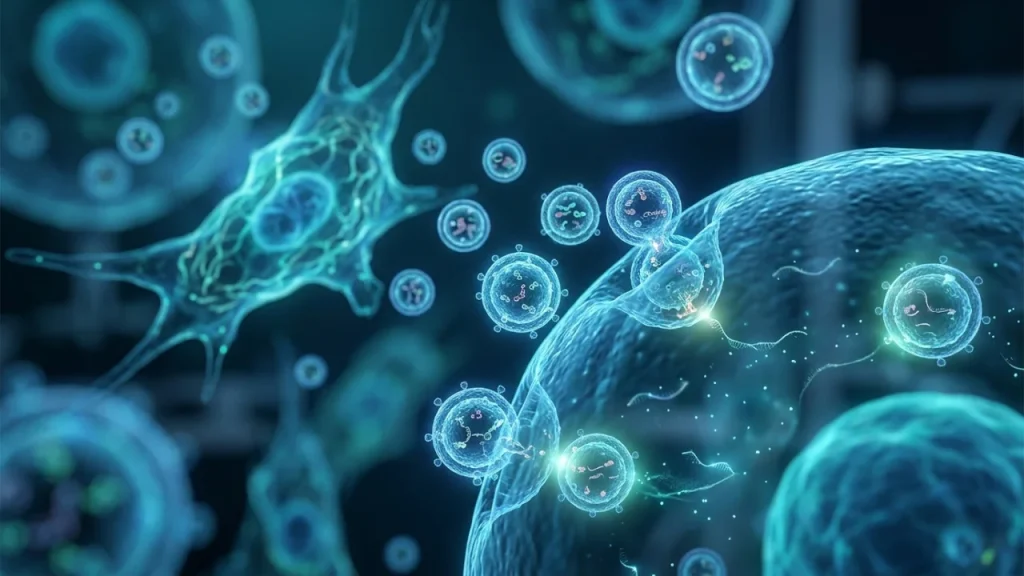
Think of a busy city. Cells are like buildings in that city. They need to communicate. They send tiny packages to each other. These packages are called exosomes.
Exosomes are extremely small bubbles. They are made by cells. A cell creates an exosome inside itself. Then it releases the exosome into the space around it. This is a natural process. It happens in your body all the time.
These tiny bubbles carry important cargo. This cargo includes proteins and genetic instructions. Think of them as letters or toolkits. They travel from one cell to another. The receiving cell opens the package. It uses the instructions inside.
This system is nature’s own delivery service. It is precise and efficient. It allows cells to coordinate their actions. For skin, this communication is vital. Skin cells constantly talk to each other. They send signals for repair and renewal.
Why should you care about this delivery system? Conventional skincare faces a big problem. Many ingredients cannot penetrate deep into the skin. They sit on the surface. Your skin’s barrier is strong for a good reason. It keeps bad things out. Unfortunately, it also keeps many good things out.
Exosome-based therapies use this natural idea. Scientists harness the power of these vesicles. They do not create an artificial delivery method. They use the method your body already knows. This is a key difference from traditional creams.
The cargo inside exosomes is powerful for skin health. It can tell older cells to act younger. It can reduce unnecessary inflammation. It can signal for more collagen production. Collagen is the protein that keeps skin firm.
Here is a simple list of what exosome cargo can do: – Instruct cells to repair damaged tissue. – Calm down overactive immune responses in the skin. – Encourage the production of new, healthy skin proteins.
This messaging happens at a fundamental level. It is not just masking a problem on the surface. It is about telling your skin how to fix itself from within. The goal is to support your skin’s own intelligence.
The process is specific. Different cells send different messages. A healthy, young cell might send rejuvenating signals. Scientists can guide these signals for therapeutic purposes. This makes the approach very targeted.
Understanding this changes how we see skincare. It moves from just applying substances to facilitating communication. The therapy works with your biology, not against it. This can lead to more lasting results.
The potential here is significant because it uses an existing pathway. Your body already uses exosomes every second. Advanced skincare aims to direct this traffic for a clear benefit. The next step is seeing how this applies to actual skin concerns and results.
This natural delivery system sets the stage for real change in how we treat skin aging and damage.
The Shift from Topical Creams to Cellular Solutions
Traditional skincare creams work on the surface. They moisturize the top layer of your skin. They can smooth fine lines temporarily. But they face a major physical barrier. This barrier is called the stratum corneum. It is the outermost layer of dead skin cells. Its job is to keep things out. This includes keeping most cream ingredients out too.
Think of it like a wall. Creams sit on the outside of the wall. They can paint it or polish it. But they cannot easily get through to the living city inside. The active ingredients in creams are often too large. Their molecules cannot pass through the tight gaps. Even smaller molecules struggle. The skin’s barrier is very good at its job.
This creates a big problem for anti-aging goals. Key skin structures live much deeper. Fibroblasts are the cells that make collagen. They live in the dermis. This is a layer far below the surface. Hyaluronic acid is produced there too. Surface creams cannot reach these cells in effective amounts. The signal never gets through.
Some treatments try to force their way in. Chemical peels remove layers of the wall. Microneedling creates tiny holes. These methods can help but they are invasive. They cause controlled damage. The skin must then heal from that damage. The process can be harsh and require downtime.
Exosome-based therapies take a completely different path. They do not try to break down the wall. Instead, they use the body’s own communication system. Remember, your cells are already sending tiny vesicles to each other every day. These natural vesicles can carry messages deep into the skin.
Here is the key difference in a simple list: – Creams: Apply substance from outside. Hope it penetrates. – Exosomes: Deliver instructions from within. Cells listen and act.
It is like the difference between shouting instructions over a castle wall versus sending a trusted messenger through a secret gate. The messenger is accepted. It goes directly to the right room. It speaks the native language.
The cargo inside exosomes is meant for cellular reception. Cells have receptors for these signals. It is a pre-programmed system. This makes the messaging highly efficient. A cream ingredient might float around, unsure of its target. An exosome’s cargo has a clear address.
This shift is fundamental. Skincare becomes less about applying an external chemical. It becomes more about providing precise internal instructions. Your skin cells already know how to repair and rejuvenate. They just need the right guidance at the right time.
Exosome therapies aim to supply that guidance. The vesicles come from healthy, young cells cultured in labs. Scientists harvest the exosomes these cells release naturally. The exosomes are then prepared for clinical use. This process concentrates nature’s own messaging system.
The result is a targeted approach with deeper access. The benefits start where it matters most – at the cellular level. This can influence long-term skin behavior. It is not a temporary surface fix.
Consider collagen again. A cream with peptides might gently suggest more collagen production from the surface. An exosome can deliver a direct, strong instruction to the fibroblast cell itself. The cell responds more completely.
This is why the shift from topical to cellular matters. It moves the point of action. The battlefield for aging skin is not the surface you see in the mirror. The real battlefield is inside, within your dermis. Winning there requires messengers that can reach the front lines.
The potential for lasting change increases with this method. You are supporting the skin’s innate biology rather than working around it. You are using pathways that already exist. This approach tends to be more harmonious with your body.
Of course, this does not mean creams are useless. They are excellent for maintenance and hydration. But for transformative repair and rejuvenation, science is looking deeper. The future lies in cellular communication.
Understanding this shift helps you see skincare as a layered strategy. Surface care protects and prepares. Cellular care instructs and renews from within. Together, they offer a more complete solution for skin health as we age.
The next logical question is how these messages translate into visible results for specific concerns like wrinkles or scars
How Exosomes Transport Bioactive Cargo into Cells
Exosomes are tiny biological mail carriers. They travel from one cell to another. Their job is to deliver important packages. These packages are called bioactive cargo.
This cargo is not a single thing. It is a complex mix of instructions and tools. An exosome’s cargo can include many different molecules. – Growth factors tell cells to grow or repair. – Messenger RNA (mRNA) carries blueprints for making new proteins. – MicroRNAs can silence unwanted cell activities. – Enzymes help speed up chemical reactions inside the target cell.
All this material is safely packed inside the exosome’s lipid membrane. This membrane is like a protective bubble. It shields the cargo during its journey through the body’s tissues.
Delivery is the critical step. A cream’s ingredients must slowly soak through the skin’s barrier. An exosome takes a more direct route. It interacts with the target cell’s surface.
Think of a cell’s membrane as a security gate. It controls what enters. Large molecules often cannot get in. Exosomes have a special way to pass this security.
They use keys on their surface. These keys are proteins and sugars. They bind to matching locks on the target cell. This binding is specific. A skin fibroblast cell will have different locks than a liver cell.
Once locked on, the exosome has two main delivery methods. The first is called membrane fusion. The exosome’s bubble merges with the cell’s own bubble-like membrane. It is like two soap bubbles becoming one. The exosome’s contents spill directly into the cell’s interior.
The second method is endocytosis. The cell’s membrane folds inward. It wraps around the exosome and swallows it whole. Now the exosome is inside a new, smaller bubble inside the cell. That bubble opens, releasing the cargo.
This efficient delivery system is why exosomes-based therapies are so promising for skin. They solve a major problem in skincare. The problem is getting large, fragile molecules deep into living skin cells.
Creams cannot do this reliably. Their active ingredients are often broken down or blocked. An exosome protects its precious cargo until the moment of release inside the target cell.
The result is a high-impact signal. The fibroblast gets a concentrated set of instructions. It is not a faint suggestion from the surface. It is a clear, direct command delivered to its headquarters.
For example, an exosome from a young, healthy cell might deliver a package that says “produce collagen now.” It delivers both the order and some of the tools needed to follow it. The aging fibroblast receives this and can ramp up production effectively.
This process is natural. Your body uses exosomes every day for internal communication. Exosomes-based therapies aim to guide this system for a specific goal. The goal is skin rejuvenation.
The cargo defines the outcome. Different exosomes carry different instructions. Scientists can select exosomes that encourage healing, reduce inflammation, or build structural proteins.
This targeted delivery leads to visible changes. Wrinkles may soften because new collagen firms the skin. Scars may remodel because the healing process is carefully redirected. Tone can improve because inflammatory signals are calmed.
The power lies in speaking the cell’s language and delivering the message inside its walls. This is how cellular communication translates into visible renewal.
The next step is understanding where these potent messengers come from and how they are prepared for safe use in treatments.
Why Exosomes Target the Root Causes of Aging
Skin aging is not just surface lines. It begins deep within your skin cells. Over time, your cells face constant stress. Sunlight, pollution, and natural metabolism create damage. Young cells repair this damage well. They also communicate clearly with each other. Aging cells struggle with these basic jobs.
Two key processes break down. First, cellular communication slows. Second, repair systems become less efficient. Think of a young skin cell as a busy, well-run factory. It gets clear blueprints and has new machines. An old factory gets fuzzy instructions. Its machines are worn out. Production slows. The quality drops.
Exosomes target these root issues directly. They do not just add a temporary surface layer. They deliver specific instructions to change cell behavior. This is the core of exosomes-based therapies. They aim to reboot the cell’s own youthful functions.
The cargo inside exosomes can address several root causes. – It can supply antioxidants to neutralize daily damage. – It can deliver molecules that boost the cell’s energy production. – It can carry precise signals to restart collagen and elastin genes. – It can reduce chronic, low-grade inflammation that accelerates aging.
For example, collagen loss is a major sign of aging. Topical creams often cannot tell cells to make more. An exosome can carry the exact signal to activate the fibroblast’s collagen production line. It addresses the cause, not the symptom.
Another root cause is cellular senescence. This is when cells become old and stop dividing. They do not die. They just sit there and release harmful signals. These signals damage nearby healthy cells. Some exosomes can help clear these senescent cells. They can also counter their harmful signals.
Why is internal delivery so important for this? Because the commands for repair are issued inside the cell nucleus. A surface-level serum cannot get there. An exosome fuses with the cell membrane. It releases its cargo directly into the cell’s interior. The message reaches the control center.
This approach is fundamentally different. Most skincare works from the outside in. Exosome-based therapies work from the inside out. They use the body’s own language and delivery system. The goal is to restore function, not just cover results.
The effects are also more sustainable. When you teach a cell to act young again, the benefits last. The cell continues to follow the new instructions for a period of time. It is not a one-time plumping effect that washes away.
Consider wound healing. Young skin heals fast with minimal scarring. This is due to perfect cellular communication. Aging skin heals slowly because those signals are weak. Exosomes from young cells can restore that strong signal pattern. They guide the healing process correctly from the start.
Targeting root causes leads to cumulative improvement. Each treatment cycle aims to reset more cells. The skin’s foundation becomes stronger. Resilience against future damage improves. The skin behaves like a younger version of itself.
This does not mean exosomes are a magic cure for time. They are a tool for cellular rejuvenation. They give your skin cells the resources they have lost. The cells then do their natural job better.
The promise is clear: healthier cell function leads to healthier-looking skin. By focusing on causes, the results are often more comprehensive. Improvements can be seen in texture, firmness, tone, and clarity.
Understanding this leads to a key question. Where do these therapeutic exosomes come from? How are they collected and prepared for safe use? The source is critical for both safety and consistent results.
The Role of Exosomes in Reducing Skin Inflammation
Chronic skin inflammation is a hidden problem behind many visible concerns. It is not always red or painful. This low-grade fire weakens your skin’s foundation over time. Exosomes offer a powerful way to put out this fire. They do this by resetting the immune conversation in your skin.
Think of inflamed skin as a neighborhood with a broken alarm system. The immune cells are like overactive security guards. They keep sounding alarms for minor issues. This creates constant chaos and damage. Exosomes act as a system reset. They carry instructions that calm these guards. The instructions tell them the real emergency is over.
The process is precise. Exosomes deliver specific codes to your skin cells. These codes are microRNAs and proteins. They target the core pathways of inflammation. One key target is a signal called NF-kB. This signal is a master switch for inflammation. Exosomes can turn this switch off. They also increase signals for repair and calm.
The results are measurable in several ways. Skin redness and heat can decrease. Irritation from conditions like rosacea may lessen. The skin often feels less sensitive overall. This calm state allows normal repair processes to work correctly. Healing happens without constant interruption.
This makes exosome-based therapies promising for inflammatory conditions. Research points to potential benefits for issues like eczema and dermatitis. The approach is different from just suppressing symptoms with a cream. Exosomes aim to correct the faulty cellular dialogue causing the inflammation.
The effect is also deeply protective. Chronic inflammation breaks down collagen and elastin. These are the fibers that keep skin firm and springy. By reducing inflammation, exosomes help protect these vital structures. This prevents future sagging and wrinkles. It is a long-term preservation strategy.
Here is how the anti-inflammatory action unfolds step by step: – Exosomes from healthy, young cells are applied or delivered. – Your skin cells absorb these vesicles and unpack their molecular messages. – These messages reprogram overactive immune cells called macrophages. – The macrophages shift from a pro-inflammatory mode to a healing mode. – Inflammatory cytokine signals drop sharply. – Repair and regeneration signals increase.
The beauty of this system is its intelligence. Exosomes do not simply block all immune activity. That would be dangerous. Instead, they restore balance. They promote a smart, appropriate response. Your skin can still defend itself against real threats.
This has clear implications for aging skin. Aging often involves “inflammaging.” This is a state of constant, low-level inflammation. It silently damages tissues over decades. Exosome therapies directly address inflammaging at its source. They provide the aged cells with the same instructions young cells use.
The outcome is skin that behaves in a more resilient way. It is less reactive to stress, sun, or pollution. The barrier function strengthens because it is not under attack from within. This creates a positive cycle of improved health and appearance.
Ultimately, calming inflammation is about creating the right environment for skin to thrive. It is like preparing soil before planting seeds. Exosomes prepare your skin by stopping the internal fire. This allows all other rejuvenating processes to work much better.
Reducing inflammation is one major pillar of how these therapies work. The next logical question involves another core sign of aging: loss of structure and support. How do exosomes directly tackle the issue of thinning skin and wrinkles?
How Exosomes Work in Skincare Treatments
The Journey of Exosomes from Source to Skin
Exosomes begin their journey inside specialized cells. These donor cells are often young, healthy stem cells. The cells create tiny vesicles called exosomes. They package the vesicles with powerful instructions. These instructions include proteins, growth factors, and RNA.
The cell releases these exosomes into the surrounding fluid. This is like sending out a fleet of tiny messengers. Each exosome is incredibly small. Billions could fit on the head of a pin. Their small size is key to their journey.
For skincare, these exosomes must be collected and prepared. Scientists harvest them from cell culture fluid. They use precise filtration methods. This process separates exosomes from other components. The result is a pure concentrate of exosomes. This concentrate is then stabilized for use in treatments.
The next step is delivery to your skin. This is a critical phase. The skin’s outer layer, the stratum corneum, is a strong barrier. It keeps most things out. Traditional creams cannot pass this barrier effectively. Their large molecules sit on the surface.
Exosome-based therapies solve this problem. The tiny size of exosomes is their advantage. They are small enough to penetrate the skin’s barrier. They do not need needles or harsh methods. They can be applied in a serum or gel.
Application is typically simple. A provider applies the exosome formula to cleansed skin. It might be gently massaged in. Sometimes, very mild pre-treatments are used. These treatments create micro-channels in the skin. They are not like aggressive lasers. They simply help guide the exosomes inward.
Once applied, the exosomes start their mission. They move through the outer skin layers. Their target lies deeper. They seek the living cells in the dermis. These are the fibroblasts that make collagen. They also seek keratinocytes and immune cells.
The journey relies on natural mechanisms. Exosomes have surface markers. These markers act like addresses or keys. They help exosomes find and bind to specific target cells. A skin cell recognizes the exosome signal. Then, it allows the vesicle to merge with its membrane.
The cargo delivery happens inside the cell. The exosome releases its instructions into the cell’s cytoplasm. This cargo does not change the cell’s DNA. Instead, it changes the cell’s behavior. It tells an old, tired cell to act like a young, energetic cell.
Think of it like a software update for your skin cells. The exosome delivers new code. The cell then runs this new program. The results are renewed collagen production and better repair.
The entire journey has several clear stages: – Production and packaging inside donor cells. – Harvesting and purification in a lab. – Formulation into a stable skincare treatment. – Topical application and barrier penetration. – Targeted delivery to specific skin cells. – Internal cargo release and cellular reprogramming.
This process is efficient and intelligent. It uses the body’s own communication system. The therapy does not force foreign chemicals into cells. It simply enhances natural signaling that declines with age.
The timeline for this journey is rapid. Penetration into the skin begins within hours. Cellular uptake and signaling can start within a day. However, the visible results come later. Cells need time to act on their new instructions.
This explains why clinical improvements are not instant. Skin renewal follows a biological clock. The exosomes start the clock ticking on repair. Then, your own cells do the work over weeks and months.
Understanding this path shows why these therapies are different. They are not a surface-level coating. They are a targeted delivery of fundamental biological commands. The journey from source to skin ensures these commands arrive intact and ready to work.
Now, seeing how they reach the cells, we can examine their most visible action: rebuilding the skin’s structural foundation from within
Key Components Inside Exosomes for Skin Health
Exosomes are tiny packages filled with powerful tools. These tools are the key components for skin health. They include proteins, lipids, and genetic material. Each component has a specific job in skin repair.
Think of an exosome as a delivery truck. The truck itself is the lipid membrane. The cargo inside are the active ingredients. These ingredients send precise signals to your skin cells.
Proteins are one major group of cargo. Growth factors are a crucial type of protein. They act like instruction manuals for cells. They tell cells to multiply or to make new structural proteins.
For example, transforming growth factor-beta (TGF-β) is common in exosomes. This protein directly instructs cells to produce collagen. Collagen is the main support fiber in your skin. More collagen means firmer, plumper skin.
Another important protein is fibronectin. This protein helps cells attach to their surroundings. It provides a scaffold for new tissue growth. This aids in wound healing and skin renewal.
Enzymes are also present. Some enzymes protect other cargo from damage. Others help break down damaged proteins in the skin. This clears the way for new, healthy structures.
Lipids are not just for the exosome’s outer shell. Certain lipids inside the vesicle also act as signals. Sphingolipids and phospholipids can influence cell survival. They can tell a cell to resist stress or to begin repair processes.
These lipids help maintain the skin’s barrier function. A strong barrier keeps moisture in and irritants out. This is fundamental for healthy, resilient skin.
Genetic material is the third key component. This includes microRNAs (miRNAs). These are small pieces of genetic code. They do not carry instructions for making proteins directly.
Instead, miRNAs regulate gene activity. They can turn specific genes on or off inside a recipient cell. This is a form of cellular reprogramming.
An exosome might deliver miRNAs that silence genes for inflammation. Other miRNAs might activate genes for antioxidant defense. This allows exosome-based therapies to fine-tune cell behavior at a deep level.
The combination of these components creates a synergistic effect. Proteins give direct commands. Lipids support cell membrane health and signaling. Genetic material offers long-term regulatory control.
This multi-component cargo explains the broad benefits seen in treatments. The therapy addresses several aging processes at once. It supports structure, reduces damage, and enhances repair.
Different donor cells produce exosomes with different cargo profiles. Exosomes from stem cells are often rich in regenerative factors. This makes them particularly useful for advanced skincare applications.
The purity of the final product is critical. The goal is to harvest exosomes packed with these beneficial components. The process must remove unwanted cellular debris and other particles.
Understanding this internal cargo demystifies how these treatments work on a molecular level. The exosome delivers a complete toolkit for skin renewal. This toolkit works with your biology, not against it.
The next logical question is about results. What visible changes can this cellular toolkit produce in skin that shows signs of aging or damage?
Exosomes and Collagen Production: A Direct Link
Collagen is the main structural protein in your skin. It acts like a scaffold. This scaffold provides firmness and support. As we age, collagen breaks down. New collagen production also slows. This leads to thinner, looser skin with wrinkles.
Exosome-based therapies target this problem directly. They do not just add collagen on top. They instruct your skin cells to make more of their own collagen. This is a fundamental difference from many topical products.
The process starts when exosomes reach fibroblast cells. Fibroblasts are your skin’s collagen factories. The exosomes deliver their cargo directly to these cells. This cargo includes specific growth factors and genetic instructions.
Key signals inside the exosomes tell fibroblasts to become more active. Think of it as switching the factory from standby mode to full production. The fibroblasts get a clear message to build.
One primary instruction is to increase the production of Type I collagen. This is the most abundant collagen in healthy, young skin. It forms thick, strong fibers that give skin its resilience.
The genetic material in exosomes plays a critical role here. MicroRNAs can silence genes that promote collagen breakdown. They can also activate genes involved in new collagen synthesis. This dual action helps rebuild the skin’s foundation.
The result is a net increase in collagen density. More collagen fibers are woven into the skin’s matrix. This matrix becomes denser and more organized over time.
The benefits of this process are clear and measurable. – Improved skin firmness and elasticity. – A reduction in the depth of fine lines and wrinkles. – A more supported skin structure that resists sagging.
This is not a temporary plumping effect. It is the gradual restoration of your skin’s natural support system. The effects develop as your cells respond and produce new protein.
The timeline for results aligns with the skin’s natural renewal cycle. Collagen production is a biological process, not an instant fix. Initial changes may be subtle. Visible improvements in firmness typically become clearer after several weeks.
The therapy also helps improve the quality of new collagen. The exosome signals encourage proper collagen formation and alignment. This leads to a stronger, more functional network.
Environmental damage from UV rays accelerates collagen loss. Exosome treatments can help counteract this damage. They support the skin’s repair mechanisms at a cellular level.
The link between exosomes and collagen is a powerful example of regenerative skincare. It moves beyond surface-level care to foundational renewal. Your cells are guided to perform their natural functions more effectively.
This cellular instruction creates lasting change. The goal is a resilient skin structure that maintains itself better. The next step is to see how this renewed foundation improves the skin’s surface texture and tone.
Elastin Synthesis Enhanced by Exosome Therapies
Elastin is the protein that gives your skin its snap. Think of a rubber band. Collagen provides the strong fibers. Elastin provides the stretch and recoil. Together, they create skin that is both firm and supple.
Like collagen, elastin production slows with age. Sun exposure and environmental stress damage existing elastin fibers. The skin loses its ability to spring back. This leads to sagging and loose contours.
Exosome-based therapies address this decline directly. They do not add artificial elastin to the skin. Instead, they instruct your own cells to make more of it. They also guide cells to repair the existing elastin network.
The process starts with communication. Exosomes carry specific signals to skin cells called fibroblasts. Fibroblasts are the factories that produce structural proteins. The signals act like a precise work order.
This order tells the fibroblast to increase elastin synthesis. It also promotes the proper assembly of the protein. Elastin molecules must be cross-linked to form durable fibers. Exosome signals help optimize this crucial step.
The result is not just more elastin. It is better-quality elastin. The new fibers integrate into the skin’s supportive matrix. They work alongside newly formed collagen.
This dual action is key for comprehensive rejuvenation. Collagen provides strength and fullness. Elastin provides movement and resilience. Improving both creates a more complete structural renewal.
The benefits of enhanced elastin synthesis are visible and tangible. – Skin gains improved bounce and recoil. – It resists deformation from expressions and gravity. – The overall appearance becomes more lifted and toned.
This improvement happens from the inside out. It is not a surface-level tightening effect. The skin’s foundational architecture is genuinely restored.
The timeline mirrors natural biological processes. Elastin production is complex and slower than collagen renewal. Initial changes in elasticity may be subtle. More significant improvements often develop over several months.
These therapies offer a strategic advantage. Topical creams cannot effectively deliver ingredients to rebuild elastin. Their molecules are too large to penetrate deeply. Exosomes solve this delivery problem naturally.
They act as targeted messengers. They reach the exact cells that need the instruction. This ensures the signal is received where it matters most.
Research into these mechanisms is ongoing. Studies show exosomes can influence multiple pathways at once. They can reduce enzymes that break down elastin. They can also calm inflammation that damages elastic fibers.
This multi-path approach protects existing structures while building new ones. It represents a shift from single-target treatments. The goal is holistic cellular support.
For the patient, this translates to lasting skin quality. The skin maintains its shape better throughout the day. It recovers faster from being stretched. The texture feels smoother and more supple.
Combining elastin and collagen support tackles aging comprehensively. It addresses both volume loss and loss of snap. The skin’s natural support system is revitalized on multiple fronts.
This foundational renewal sets the stage for optimal surface health. With a stronger, more elastic matrix, the skin can better protect itself. It also responds more effectively to other care products.
The next logical step is examining the surface results. A renewed foundation directly impacts clarity, tone, and overall radiance.
Restoring Skin Barrier Function with Exosomes
Your skin has a built-in shield. It is called the skin barrier. This thin, top layer keeps good things in and bad things out. A strong barrier locks in moisture. It also blocks out pollution, germs, and irritants. Many common skin issues start with a damaged barrier.
Exosome-based therapies are uniquely suited to repair this shield. They do not just sit on top of it. They communicate directly with the living cells that build it. Think of your skin cells as construction workers. Exosomes deliver updated blueprints and tools to them.
The barrier is mostly made of proteins and lipids. Lipids are special fats. They fit together like bricks and mortar. Healthy skin cells produce these lipids in an orderly way. Stress, aging, or harsh products can disrupt this process. The lipid layer becomes weak and full of gaps.
This is where exosomes go to work. They carry precise instructions to your skin cells. One key instruction is to produce more of the right barrier lipids. These include ceramides, cholesterol, and fatty acids. Cells receive the signal to ramp up production.
The result is a denser, better-organized lipid wall. Moisture cannot escape as easily. Irritants have a harder time getting in. Studies show exosome signals can increase ceramide production significantly. This repair happens at the cellular level.
Exosomes also calm barrier damage at its source. A compromised barrier often triggers inflammation. This inflammation further weakens the barrier structure. It becomes a cycle of damage.
Exosomes carry molecules that quiet this inflammatory alarm. They help reset the skin’s immune response to a normal state. This allows repair processes to proceed without interruption.
The benefits of a restored barrier are immediate and long-term. – Hydration improves because water loss is reduced. – Redness and reactivity decrease. – The skin feels smoother and looks plumper. – It becomes more resilient to daily stressors.
This process complements the deeper work on elastin and collagen. A strong matrix provides support from below. A strong barrier provides protection from above. Together, they create a stable environment for overall skin health.
Restoring the barrier also makes other skincare products work better. Serums and moisturizers face less resistance. Their active ingredients can be more effective when the barrier is intact. This creates a multiplier effect for your entire routine.
The science shows this is a targeted approach. Exosomes send signals for specific jobs. For the barrier, the main jobs are lipid synthesis and inflammation control. This precision avoids unnecessary side effects.
Clinical observations support these mechanisms. Patients often report less tightness and dryness quickly. Their skin tolerates active ingredients better. The overall complexion appears calmer and more even.
Strengthening this protective layer is a fundamental step in advanced skincare. It addresses the root cause of sensitivity and dehydration. It builds a foundation for lasting radiance.
A resilient skin barrier is essential for a healthy appearance. With this shield repaired, the skin can truly thrive. The next focus is on how this cellular renewal translates to visible clarity and glow on the surface.
Benefits of Exosomes-Based Therapies for Skin
Reducing Photodamage and Sun-Related Skin Issues
Sunlight leaves a lasting mark on your skin cells. Ultraviolet rays create damage deep within. This damage builds up over years. It shows as wrinkles, dark spots, and a loss of firmness. Exosomes-based therapies offer a new way to address this accumulated harm.
These tiny vesicles carry precise instructions. They are derived from stem cells. Their cargo includes growth factors and RNA molecules. This cargo can reprogram how damaged skin cells behave. Think of it as sending a software update to aging hardware.
The primary target is the collagen network. UV radiation breaks down collagen fibers. It also hampers the cells that make new collagen. Exosomes directly signal to these fibroblast cells. They tell them to restart robust collagen production. This helps rebuild the skin’s supportive structure from within.
Another key issue is hyperpigmentation. Sunspots occur when UV light triggers melanin overproduction. Exosomes can help normalize this process. They carry messages that calm overactive pigment cells. This leads to a more even skin tone over time. The approach works at the cellular communication level.
The therapy also addresses DNA stress. Sun exposure creates oxidative stress inside cells. Exosomes deliver antioxidants and repair signals. This helps cells recover their normal function. It supports the skin’s own repair systems, making them more efficient.
Here is how the process works in a series of steps: – Applied exosomes are absorbed into the skin. – They fuse with target cells affected by sun damage. – Their cargo is released inside those cells. – The genetic instructions and proteins get to work. – Cells begin repairing themselves and producing healthy new components.
The results are not just superficial. Improvements happen at the living cellular layer. This leads to changes that are sustainable. The skin’s own biology is guided toward a healthier state.
Clinical observations show several consistent benefits. Fine lines linked to sun exposure often appear softened. Skin texture becomes more refined and uniform. There is a noticeable improvement in overall luminosity. These changes occur because the foundation of the skin is being restored.
This method differs from harsh treatments that strip the skin. It does not rely on aggressive destruction of tissue. Instead, it uses natural signaling to encourage renewal. The process is gentle yet profoundly effective at the source.
Repairing photodamage takes time and consistent signaling. Results accumulate with each treatment session. The goal is long-term restoration, not a temporary fix. The skin’s appearance improves as its health is rebuilt from the inside out.
Addressing sun damage is crucial for lasting skin vitality. It reverses a major cause of premature aging. With cellular function improved, the skin can better protect itself in the future. This creates a positive cycle of resilience and repair, setting the stage for addressing other signs of aging like volume loss.
Minimizing Scarring Through Cellular Regeneration
Scars form when the skin’s healing process is rushed or disrupted. After an injury, the body quickly makes collagen to patch the area. This emergency collagen is not arranged in a neat, woven pattern. It is laid down in thick, haphazard bundles. The result is scar tissue. It looks and feels different from normal skin. It often appears raised, sunken, or discolored.
Exosome-based therapies aim to guide this process toward a better outcome. They do not simply hide a scar. They work to improve how the scar tissue itself forms. The goal is regenerative healing. This means the new tissue closely resembles the original, healthy skin.
The therapy works by sending precise instructions to the cells in the wound area. Exosomes carry messages that tell cells how to rebuild properly. These messages encourage several key actions.
- First, they help control inflammation. Too much inflammation early in healing leads to worse scarring.
- Second, they direct cells called fibroblasts to make the right type of collagen. This is the structural protein that gives skin strength.
- Third, they support the formation of new blood vessels. This brings vital nutrients to the healing site.
- Finally, they promote the organized remodeling of new tissue over time.
This approach is fundamentally different from older methods. Many traditional treatments try to remove or destroy scar tissue after it has already formed. Exosome-based therapies intervene during the active healing phase. They seek to influence how the scar is built from the very beginning.
The potential applications are broad. This logic applies to various scar types.
- It can help with acne scars, where collagen damage occurs under the surface.
- It may improve the appearance of surgical scars by supporting cleaner healing.
- It could aid in healing after procedures like laser treatments, guiding the skin to recover smoothly.
The process relies on consistent cellular communication. A single application may not be enough. The healing skin needs a sustained signal to follow the optimal path. Multiple treatment sessions can provide this ongoing guidance. The result is a scar that is less noticeable. It tends to be flatter, softer, and closer to the surrounding skin color.
Clinical observations show promising effects. Studies note improved texture and elasticity in treated scar tissue. The redness or darkness of scars often diminishes more quickly. The area becomes more pliable and integrated with the surrounding skin.
This method aligns with a broader shift in advanced skincare. The focus moves from correction to intelligent support. The skin is given the tools it needs to heal itself in the best way possible. This minimizes long-term evidence of damage.
The benefits extend beyond just appearance. Well-healed, flexible scar tissue is functionally better. It is less likely to cause tightness or discomfort. It can withstand stress and movement more effectively. This restores both form and function.
Successful scar minimization depends on timing and technique. Starting treatment during the early remodeling phase is often most effective. This is when the skin is still actively organizing the new collagen. The exosomes can then steer that organization.
It is a patient and precise strategy. The changes happen at a cellular level, so visible improvements accumulate gradually. The final outcome is a testament to the body’s innate ability to regenerate—when given the right instructions.
This principle of guiding regeneration does not stop at scars. The same logic of cellular communication can be applied to other structural concerns, such as restoring lost volume and firmness in aging skin.
Improving Skin Texture and Tone with Exosomes
Exosomes send precise instructions to your skin cells. These instructions tell your cells how to behave. This direct communication is why exosomes-based therapies can improve skin texture and tone so effectively.
Think of your skin’s surface like a wall. A smooth wall has even bricks and fresh mortar. A rough wall has broken bricks and crumbling mortar. Your skin cells and the collagen between them are like those bricks and mortar. As we age, or after sun damage, the collagen framework weakens. It becomes disorganized. This leads to rough texture and fine lines.
Exosomes address this problem at its source. They carry messages to the fibroblasts. Fibroblasts are your skin’s collagen factories. The messages tell these factories to produce new, healthy collagen. More importantly, they instruct them to organize it properly. This strengthens the skin’s foundation.
The result is a smoother surface. Pores can appear smaller because the skin around them is firmer. Fine lines are softened because the support underneath is better. This is not a temporary plumping effect. It is a gradual rebuilding process.
Skin tone is a separate challenge. Uneven tone comes from an uneven distribution of melanin. Melanin is your skin’s pigment. Sunspots and dark patches happen when some skin cells produce too much melanin.
Melanocytes are the cells that make melanin. They transfer this pigment to nearby skin cells. This process can become overactive. Exosomes help regulate this communication. They can carry signals that calm overactive melanocytes. This leads to a more controlled, even production of pigment.
The goal is not to bleach the skin. The goal is to restore balance. Over time, this can reduce the appearance of sun damage. It promotes a clearer, more uniform complexion.
The benefits for texture and tone often work together: – Improved collagen reduces roughness. – Better elasticity makes skin feel firmer. – Balanced pigment production evens out color. – Enhanced hydration adds a natural glow.
These changes happen because exosomes work on multiple cell types at once. They talk to fibroblasts for structure. They communicate with keratinocytes for the skin’s barrier. They signal melanocytes for pigment control. This coordinated approach is key.
It is different from using a single-ingredient serum. A serum might only target one part of this process. Exosomes deliver a full set of instructions. Your cells then execute these instructions naturally.
The process requires patience. You will not see changes overnight. Cells need time to receive messages, act on them, and rebuild. First, you might notice better hydration. Then, skin may start feeling softer. Improvements in tone and firmness often follow.
This method supports your skin’s own biology. You are not covering up problems. You are giving your cells the information they need to correct them. This leads to results that look natural and healthy.
The logic extends from healing scars to renewing healthy skin. The core principle remains guiding cellular activity for better outcomes. Next, we can explore how this same approach helps combat another key sign of aging: the loss of volume and facial contours.
Long-Term Skin Health from Exosome Applications
Exosome-based therapies do more than improve how skin looks today. They help change how your skin behaves over time. This leads to lasting health. Think of it as upgrading your skin’s internal software. The updates keep running long after the initial treatment.
Your skin cells constantly talk to each other. They send signals for repair and renewal. As we age, this communication slows down. Messages get lost or ignored. Cells become less active. This is why healing takes longer. Skin also loses its youthful resilience.
Exosomes restore these vital conversations. They carry precise instructions directly into your cells. These instructions are not commands for a one-time fix. They are blueprints for better long-term function. Your cells use these blueprints to work more efficiently.
The process focuses on three key areas for lasting health.
First, exosomes support cellular renewal. Your skin naturally sheds old cells and makes new ones. This cycle slows with age. Exosomes can help speed it up to a healthier rate. They encourage cells to divide and replace themselves properly. This means your skin renews itself more effectively.
Second, they enhance your skin’s natural defense systems. Your cells have tools to fight daily stress. This includes damage from UV rays and pollution. Exosomes can boost the production of these protective proteins. Your skin becomes better at shielding itself from harm.
Third, they help maintain cellular energy. Mitochondria are tiny power plants inside your cells. They make the energy needed for all repair work. As mitochondria weaken, so does your skin’s ability to fix itself. Exosome signals can help improve mitochondrial function.
This leads to a powerful cumulative effect. Each treatment builds upon the last. You are not just fixing current damage. You are preparing your skin to handle future challenges better.
Consider how a single sunburn works. It causes immediate redness and peeling. It also creates silent damage deep in your skin’s layers. This hidden damage can show up years later as wrinkles or spots. Traditional creams might soothe the surface redness. They rarely address the hidden problem.
Exosome therapies aim to correct both. They tell your cells to repair the deeper damage now. They also instruct them to stay alert for similar stress in the future. This is a shift from passive care to active cellular training.
The results manifest as lasting improvements in skin quality.
- Skin recovers faster from irritation or minor injuries.
- It maintains better hydration on its own.
- The complexion remains more even-toned through seasons.
- Fine lines take much longer to reappear or deepen.
This approach is fundamentally different from most skincare. Many products add a temporary layer of moisture or plumping. Their effect washes away or fades quickly. Exosome-based therapies teach your skin to create its own moisture and plumpness.
The longevity of results varies by person. Your age, genetics, and lifestyle play a role. Yet the core principle holds true across all cases. You are changing underlying biology, not just surface appearance.
For long-term success, consistency matters. Think of it like fitness for your skin cells. One workout brings some benefit. A regular routine builds lasting strength and endurance. A planned series of treatments establishes a strong foundation. Occasional maintenance sessions can then support this new baseline.
This creates a sustainable cycle of skin health. Your cells operate at a higher level of function. They collaborate more effectively. They sustain their own repair processes longer. The goal is skin that is not only beautiful now but also more capable and resilient for years to come.
The logic extends naturally to another concern. When skin is fundamentally healthier and more resilient, it can also better support the structures beneath it. This leads us to the next benefit: restoring facial volume and firm contours
Personalized Skincare Through Exosome Science
Your skin’s needs are unique. They change with age, environment, and genetics. A one-size-fits-all product cannot address this. Exosome-based therapies offer a new path. They allow for highly personalized skincare solutions.
The key is in the exosomes’ cargo. Different cells release exosomes with different instructions. Scientists can source exosomes from specific cell types. Each type carries a distinct set of signals. These signals can guide your skin cells in targeted ways.
Think of it like sending different repair crews to a city. One crew specializes in rebuilding roads. Another excels at restoring power lines. Exosome science works similarly. Specific exosome preparations can be chosen to match your primary skin concern.
For example, exosomes from skin cells that produce a lot of collagen send strong “build structure” messages. When applied to aging skin, they encourage your own cells to make more collagen and elastin. This directly targets sagging and loss of firmness. It is a precise biological instruction.
For someone struggling with dark spots, the approach shifts. Exosomes can carry signals that help normalize melanin production. Melanin is your skin’s pigment. These signals tell overactive pigment cells to calm down. The result is a more even skin tone over time.
Sensitive or inflamed skin requires a different strategy. Certain exosomes have strong anti-inflammatory messages. They tell irritated cells to reduce their defensive reactions. This helps strengthen the skin’s barrier. A stronger barrier means less redness and reactivity.
The personalization extends beyond the initial choice. Your skin’s response is monitored. The treatment plan can be adjusted based on progress. This adaptive approach is core to advanced exosome-based therapies. It is skincare that learns and responds.
This is not guesswork. It is grounded in cell biology. Your skin cells have receptors. These receptors act like docks for the exosomes’ signals. The right exosome finds the right dock. It delivers its instructions directly to the cell’s command center.
The process respects your skin’s natural rhythm. You are not forcing it with harsh chemicals. You are providing it with precise information. Your cells use this information to correct their own course. This leads to results that look and feel natural.
Personalized plans often combine goals. You might want both firmer skin and fewer wrinkles. A treatment can be designed with this in mind. It uses exosomes that send a coordinated set of signals for multiple benefits.
The timeline for results also varies by person and goal. Structural improvements like firmness may take longer to become visible. Changes in brightness or calmness can appear sooner. Your provider will set realistic expectations for your specific journey.
This tailored method makes treatments efficient. Energy and resources are focused where your skin needs them most. Nothing is wasted on generic actions that your skin does not require. This precision is a major advantage of the science.
Ultimately, personalized exosome skincare is about alignment. Your treatment aligns with your skin’s biology and your aesthetic goals. This creates a powerful synergy for lasting health and beauty. It is the logical next step in moving from general care to truly intelligent skincare.
The Science Behind Exosomes in Dermatology
Biotechnology Meets Skincare: The Exosome Revolution
Exosomes begin inside your cells. They are not simply made. They are carefully packed. Cells create tiny sacs called vesicles. These vesicles gather specific cargo from the cell. This cargo includes proteins, lipids, and genetic instructions like RNA.
Think of it as a cell preparing a mission-critical package. The vesicle moves to the cell’s outer wall. It fuses with the cell membrane. Then it is released into the space between cells. Now it is called an exosome.
This natural process happens constantly in your body. It is a primary way cells communicate. A skin cell can send signals to its neighbor. A fibroblast can instruct a collagen-producing cell. This is how tissues coordinate repair and maintenance.
Exosome-based therapies harness this innate system. Scientists learn which cargo is best for specific skin goals. They source exosomes from certain types of cells. These donor cells are grown in controlled laboratory settings. The cells are kept healthy and stable.
The cells release exosomes into their growth medium. Researchers then collect and purify these exosomes. This creates a concentrated solution of signaling vesicles. It contains no whole cells, just their communication packets.
The power lies in the exosome’s cargo. Different cargos trigger different skin responses. Here is what these tiny packages can deliver:
- Growth factors that encourage cell renewal and repair.
- MicroRNAs that can turn down inflammation.
- Enzymes that help break down damaged collagen.
- Antioxidants that protect against daily environmental stress.
When applied to skin, exosomes face a challenge. They must deliver their cargo into living cells. Their natural design solves this. Exosomes have proteins on their surface. These proteins act like keys.
Your skin cells have matching locks, or receptors. The exosome finds its match and docks onto the cell. The two membranes can merge. The exosome’s precious cargo is emptied directly into the target cell’s interior.
This direct delivery is efficient. Topical creams with large molecules often cannot penetrate deeply. Their active ingredients may degrade on the surface. Exosomes are designed for this transfer. They protect their cargo during the journey.
The result is a clear biological instruction. The receiving cell reads the new genetic information. It responds by changing its behavior. A dormant fibroblast may wake up and make fresh collagen. An inflamed cell may calm down.
This process is signaling, not forcing. It is fundamentally different from harsh chemical peels or abrasive treatments. Those methods remove or injure layers of skin to force a response. Exosome therapy provides information to guide a natural response.
The science shows why results can be both subtle and significant. The changes originate from your own cells’ activities. Skin texture improves because new collagen forms naturally. Redness diminishes because inflammatory pathways are gently modulated.
Research continues to reveal more details. Scientists are mapping which exosome cargo works best for specific concerns like hydration, pigmentation, or scarring. This allows for even more refined formulations in the future.
The revolution is this shift from external application to internal communication. Biotechnology did not invent a new process. It learned to amplify and direct a conversation that already happens in your skin billions of times each day. This foundational understanding paves the way for exploring their remarkable safety profile and how they integrate into a modern skincare routine.
Clinical Evidence Supporting Exosome Therapies
The first clinical studies on exosomes for skin began over a decade ago. Researchers asked a simple question. Could these vesicles actually change damaged or aged skin? Early answers were promising.
One pivotal study focused on skin rejuvenation. Scientists used exosomes derived from stem cells. They applied them to human skin samples in the lab. They also tested them in a small human trial. The results were measured with precise tools.
Key findings were clear and measurable. – Collagen production increased by over 30% in treated tissue. – Skin elasticity showed significant improvement. – The density of the dermis, the skin’s structural layer, became greater.
This was not a surface change. It was a structural rebuild from within.
Another major area of research is wound healing. Chronic wounds are a serious medical problem. Exosome therapies have shown remarkable potential here. In studies, they accelerate closure of diabetic ulcers and other difficult wounds.
The mechanism is a coordinated repair response. Exosomes carry signals that do several jobs at once. – They reduce inflammation at the wound site. – They spur the growth of new blood vessels. – They recruit the patient’s own repair cells to the area.
This triples the body’s natural healing capacity. It provides a blueprint for how they calm inflamed skin in conditions like rosacea.
Research on hyperpigmentation is equally compelling. Dark spots occur when melanin production goes into overdrive. Certain exosomes carry specific microRNAs. These are tiny genetic regulators.
They can target the melanin-producing cells called melanocytes. The exosome signals tell these cells to slow down. They do not destroy the cells. They simply reset their activity to a normal level. Clinical measurements show a visible lightening of pigmented lesions over a treatment period.
The evidence for scar improvement comes from both labs and clinics. Exosomes can soften and remodel scar tissue. They do this by balancing collagen types. Scars often have too much stiff, type I collagen.
Exosome signaling encourages a better ratio with more flexible type III collagen. This makes scars less raised and more pliable. The texture of the skin becomes smoother.
What does this mean for safety? Clinical trials report an excellent profile. Most studies note only mild, temporary redness at the application site. Serious adverse events are extremely rare in dermatology uses.
This safety stems from the natural process. Exosomes are not foreign chemicals. They are biocompatible messengers. The body recognizes their language.
The volume of research is growing fast. New clinical trials are published each year. They explore more specific concerns like hair regrowth and acne scarring. Each study adds another piece to the evidence puzzle.
The data now forms a solid foundation. It moves exosome therapy from a lab curiosity to a credible treatment option. Doctors can point to these studies when discussing potential benefits with patients.
This research-backed confidence is crucial for anyone considering this approach. It shows that the science is real and the outcomes are measurable. The next logical step is understanding how these treatments are performed in a professional setting.
Safety and Efficacy of Minimally Invasive Exosome Use
Minimally invasive methods deliver exosomes beneath the skin’s surface. This approach is key to their effectiveness and safety. The skin’s outer layer, the stratum corneum, is a strong barrier. It blocks most topical creams and serums. Exosomes need to reach the living cells in the deeper dermis. Direct application through tiny channels is the solution.
Professionals use two primary techniques for this. Both are quick and involve minimal discomfort. The first method is microneedling. A sterile device with fine needles creates micro-channels. These channels are incredibly small. They are not like injection needles. The exosome solution is then applied topically. It flows into these temporary pathways.
The second method is very shallow micro-injections. A specialized device delivers a controlled dose into the upper dermis. The needles used are extremely thin. The goal is precise placement without deep trauma. Both methods work around the skin’s barrier. They allow direct access to the target cells.
Why are these methods considered safe? The procedures are brief. They use sterile, single-use equipment to prevent infection. The created micro-channels close within hours. The skin’s integrity repairs itself quickly. There is no significant wound to heal. This minimizes downtime and risk.
The exosome solution itself is biocompatible. It does not contain synthetic chemicals that can irritate. The body recognizes the vesicles as natural messengers. This reduces the chance of an allergic reaction or rejection. Clinical reports consistently show favorable safety data.
Let’s look at what a typical session involves. The process is straightforward and often completed in an office visit. – First, the skin is cleansed thoroughly. – A topical numbing cream may be applied for comfort. – The chosen delivery device is prepared with the exosome formulation. – The procedure itself takes only 10 to 20 minutes for a full face. – A calming serum or cream is applied afterward.
Patients can usually resume normal activities the same day. Side effects are typically mild and short-lived. Temporary redness is the most common effect. It resembles a mild sunburn. This usually fades within 24 to 48 hours. Minor swelling can sometimes occur. It subsides quickly.
These exosomes-based therapies avoid the pitfalls of older treatments. They do not rely on harsh chemicals that strip the skin. They do not use heat or energy that can damage surrounding tissue. The process supports the skin’s own repair systems. It gives cells the instructions and tools they need.
The minimally invasive nature also allows for combination treatments. Exosomes can be used after a gentle laser treatment. They can support healing after a careful peel. This synergistic use enhances results. It can also reduce recovery time from those other procedures.
Long-term safety is supported by how exosomes work. They do not permanently alter cell DNA. They do not stay in the skin indefinitely. They deliver their signals and are naturally processed by the body. Their effects come from changing cell behavior, not from a foreign substance lingering for months.
Efficacy is closely tied to this delivery method. Applying exosomes on unbroken skin would waste most of the product. Getting them to the right place ensures a high percentage are used by cells. This makes the treatment efficient and consistent.
Patients report a comfortable experience overall. The sensation during microneedling is often described as light scratching. Micro-injections feel like tiny, quick pinpricks. Discomfort is minimal for most people. The absence of major pain or long recovery is a significant advantage.
This gentle approach makes it suitable for many skin types. It can be used on delicate areas like the neck and under eyes. Sensitivity is rarely an issue because the core material is natural. The procedures themselves are adaptable and precise.
In summary, safety and efficacy are built into the method itself. Minimally invasive delivery ensures targeted action with minimal disruption. It turns a powerful biological tool into a practical, patient-friendly treatment. This reliable process forms the foundation for achieving visible, lasting results.
Comparing Exosomes to Traditional Skincare Methods
Traditional skincare works from the outside in. Most creams and serums rely on their ingredients penetrating the top layer of skin, the stratum corneum. This barrier is designed to keep things out. Only very small molecules can get through reliably. This limits what traditional products can do.
Think of your skin as a wall. Traditional products try to paint or patch the outside surface. They can improve its look and feel. But they cannot easily send repair crews to the living layers underneath.
Exosome-based therapies take a completely different path. They work from the inside out. The exosomes are delivered past that protective wall. They reach the dermis, where your living skin cells operate. They do not act as a new paint. Instead, they act as messengers.
These messengers carry instructions to your skin’s own cells. The signals tell cells to boost collagen production. They encourage cells to make more elastin and hyaluronic acid. They can reduce inflammation. The cells then do the repair work themselves.
This is a key difference. Traditional methods supply materials. Exosome methods supply instructions. Your body uses its own natural systems to rebuild and renew.
Let’s compare results and timelines. A good moisturizer can hydrate and soften skin in hours or days. A retinoid cream can improve skin texture over weeks or months. These are valuable effects. But they often need constant use to maintain.
The effects of exosome treatments are different. They aim to change your skin’s behavior for a longer time. A single treatment session sends a powerful set of signals. The cells respond over the following weeks and months. Results develop gradually as new, healthier tissue forms.
Think of it like training. A traditional cream is like a daily pep talk. An exosome treatment is like sending your cells to a intensive training camp. The skills they learn there last long after the camp ends.
Now consider the scope of action. Most topical products address one or two concerns. A vitamin C serum targets brightness and some protection. A peptide cream may focus on fine lines.
Exosome signaling is broader. One type of exosome can carry many different instructions at once. A single treatment can simultaneously address multiple issues. – It can support firmer skin by boosting collagen. – It can improve hydration by increasing hyaluronic acid. – It can calm redness by modulating inflammation. – It can promote healing by accelerating cell turnover.
This multi-target approach is hard to match with topical cocktails.
Finally, let’s talk about personalization and precision. Your body produces exosomes naturally. They are part of your cell-to-cell communication system. The therapies using them leverage this existing biological language.
This makes the approach fundamentally compatible with your skin. It is not forcing an external chemical to do a job. It is amplifying your skin’s own repair and renewal programs.
Traditional skincare has brought us far. It is essential for daily maintenance and protection. Exosome-based therapies represent the next logical step. They move beyond surface management to cellular communication.
They offer a way to guide your skin’s biology more directly. This comparison shows a shift from working on the skin to working with it. The next question is how this science translates into real-world applications for different skin concerns.
Future Directions in Exosome Research for Skin
Research is actively making exosome-based therapies more targeted and powerful. Scientists are learning to engineer the vesicles. They can load exosomes with specific therapeutic molecules. Think of it as programming a natural delivery vehicle. This could direct repair signals with even greater precision.
A key future direction is source optimization. Not all exosomes are the same. Their cargo depends on the parent cell. Researchers are testing exosomes from many cell types. – Stem cells from fat tissue might excel at promoting healing. – Skin cells might send signals perfect for barrier repair. – Immune cells could offer superior anti-inflammatory messages. Finding the best source for each skin goal is a major focus.
Personalization is another exciting path. The goal is a treatment designed for your unique biology. In the future, a small skin sample could be analyzed. Doctors might identify which signals your skin needs most. Therapies could then be tailored to address your specific imbalances. This moves beyond a one-size-fits-all solution.
Delivery methods are also evolving. Current approaches often involve professional procedures. Future research aims for more accessible formats. Scientists are working on stable topical serums that protect exosome integrity. They are also exploring advanced microneedling techniques. These methods could improve how deeply and effectively exosomes reach living skin cells.
Safety and standardization remain critical research areas. The field is developing strict quality controls. Researchers are creating clear benchmarks for purity and potency. They are defining what a therapeutic-grade exosome preparation must contain. This ensures consistent and reliable results for everyone.
Long-term effects are being studied in real time. Scientists are tracking how exosome signals influence skin over months and years. They want to understand the duration of benefits. Studies are examining if periodic treatments can support skin health as we age. This research will help define optimal treatment schedules.
Combination strategies show great promise. Exosome therapies may work best with other technologies. For example, they could be used after laser treatments to calm skin and speed recovery. They might be paired with growth factors for a synergistic effect. Research is mapping these powerful partnerships.
The diagnostic potential of exosomes is groundbreaking. Exosomes in your blood or on your skin surface carry information. They can act as tiny messengers reporting on your skin’s internal state. Analyzing these exosomes might one day help detect early signs of aging or stress long before they are visible.
Ethical and regulatory frameworks are expanding alongside the science. As research progresses, clear guidelines are being established. These rules ensure patient safety and treatment transparency. They help build trust in these advanced biological therapies.
The future points toward intelligent skincare systems. Imagine a sensor that analyzes your skin’s exosome profile. It could then recommend a personalized treatment cocktail. This closed-loop system would respond directly to your skin’s changing needs.
These future directions rely on ongoing clinical validation. Each new application requires rigorous testing. Scientists are conducting trials to measure real-world outcomes. This evidence will separate proven uses from theoretical ones.
Ultimately, the trajectory is clear. Research is transforming exosomes from a general tool into a precise, adaptable technology. The focus is shifting from what exosomes can do to how we can optimize their innate potential for every individual. This progress promises to further blur the line between medical treatment and advanced skincare, offering increasingly sophisticated ways to support skin health from within its own biological framework.
Practical Insights into Exosomes-Based Skincare
What to Expect from an Exosome Treatment Session
An exosome treatment session is a precise clinical procedure. It is not like applying a regular cream. Your visit will likely follow a clear sequence of steps. First, a skincare professional will assess your skin. They will discuss your specific goals. This consultation is vital. It ensures the treatment plan matches your needs.
The skin is then prepared for the exosomes. This preparation is a key step. The professional will thoroughly cleanse your skin’s surface. They may use a gentle exfoliant. This process removes barriers like dead cells and oils. A clean surface helps the exosomes make better contact.
Some clinics use a device to create micro-channels. This device is often a microneedling pen or a fractional laser. It creates tiny, invisible openings in the skin’s top layer. These channels are not deep. They do not cause significant pain. The goal is to give the exosomes a direct pathway to the living cells below.
The application of the exosome solution comes next. The liquid is carefully applied to your skin. A professional may use a brush or a dropper. They will gently massage it into the treated area. The exosomes then begin their work. They enter through the micro-channels or natural pathways.
The solution itself is clear and odorless. You will not feel a burning or stinging sensation from the exosomes. This is different from some acid-based treatments. The exosomes are biocompatible messengers. Your skin recognizes them as natural particles.
The entire process is usually quick. The active treatment time often takes less than thirty minutes. You can typically return to your daily activities right after. There is no required downtime. Your skin might look slightly pink for a few hours. This is normal and fades quickly.
You should manage your expectations after the session. You will not see dramatic changes immediately. Exosomes work by signaling your cells. This triggers your skin’s own repair and renewal processes. These biological actions take time.
Visible results usually develop over weeks. You might first notice improved hydration. Your skin could feel smoother. Later, you may see a more even skin tone and texture. The full effect often appears after a series of sessions. Most plans involve multiple treatments.
Clinics recommend a specific post-treatment routine. You must protect your skin from the sun. Use a high-SPF sunscreen every day. Avoid harsh products for about forty-eight hours. Do not scrub or exfoliate the treated area. Gentle cleansing and moisturizing are best.
These exosomes-based therapies are part of a broader regimen. They are most powerful when combined with good skincare habits. Continued use of antioxidants and sun protection supports the results. The exosomes enhance your skin’s function from within.
It is important to choose a qualified provider. Look for a licensed medical or skincare professional. They should have specific training in advanced procedures. Ask about the source and handling of the exosomes used. Reputable providers will be transparent.
A treatment session represents a partnership between biology and technology. The clinician provides the precise delivery method. Your own skin cells perform the complex restorative work. This collaborative approach defines modern, intelligent skincare.
Understanding this process prepares you for a realistic and informed experience, setting the stage for knowing how to evaluate its success over time
Integrating Exosomes into Daily Skincare Routines
Your daily skincare routine is the foundation that supports any advanced treatment. Think of exosomes-based therapies as a powerful reset for your skin’s cells. Your daily habits are the ongoing care that keeps those cells healthy. This integration is key for lasting results.
Exosomes deliver instructions and nutrients to your skin. After a treatment, your cells are actively repairing and renewing themselves. Your daily products and practices can either help or hinder this process. The goal is to create a supportive environment.
Start with a consistent cleansing routine. Use a gentle, pH-balanced cleanser morning and night. Harsh soaps can strip the skin’s natural barrier. A compromised barrier makes it harder for cells to function well. Gentle cleansing preserves the skin’s microbiome.
Hydration is non-negotiable. Look for moisturizers with ingredients like ceramides and hyaluronic acid. These molecules help retain water in the skin. Well-hydrated cells communicate more effectively. This supports the signaling pathways that exosomes use.
Sun protection is your most important daily step. Ultraviolet rays cause immense cellular damage. They break down collagen and create oxidative stress. This directly counteracts the regenerative work of exosomes. Apply a broad-spectrum SPF 30 or higher every single day.
Reapply sunscreen every two hours if you are outdoors. Do this even on cloudy days or in winter. Sun damage accumulates silently over time. Consistent protection locks in your treatment benefits.
Your product choices matter after an exosome procedure. For at least two weeks, avoid certain active ingredients. These can be too irritating for freshly treated skin.
- Do not use high-percentage alpha hydroxy acids (AHAs).
- Avoid strong beta hydroxy acids (BHAs) like salicylic acid.
- Skip retinoids and prescription vitamin A derivatives.
- Pause on physical scrubs or exfoliating brushes.
Instead, focus on nourishing and calming ingredients. Antioxidants are perfect allies for exosome-enhanced skin. They neutralize free radicals that cause aging.
- Vitamin C serums help brighten skin and boost collagen.
- Vitamin E soothes and provides additional protection.
- Niacinamide strengthens the barrier and reduces redness.
- Peptides support skin firmness and elasticity.
Apply these products in a logical order. Cleanse first, then apply any treatment serum. Follow with a moisturizer. Always finish with sunscreen in the morning. At night, you can use a slightly richer moisturizer.
Your lifestyle choices directly impact your skin’s biology. What you eat provides the raw materials for cell repair.
- Drink plenty of water throughout the day.
- Eat foods rich in antioxidants like berries and leafy greens.
- Include healthy fats from avocados or nuts for cell membranes.
- Reduce sugar intake, which can cause inflammation.
Sleep is when your skin does its deepest repair. Aim for seven to eight hours of quality sleep per night. Stress management is also crucial. High stress increases cortisol, which can break down collagen.
Do not overwhelm your skin with too many products. A simple, consistent routine is better than a complex one. Introduce new products one at a time. Wait a few weeks before adding another. This allows you to see how your skin responds.
Listen to your skin’s signals. If you notice new redness or sensitivity, scale back. Return to a basic routine of cleanser, moisturizer, and sunscreen. Your skin’s needs may change with seasons or stress levels.
Schedule follow-up consultations with your provider. They can assess your long-term progress. They might adjust your home care plan based on your results. This professional guidance ensures your routine stays effective.
Long-term maintenance might involve periodic professional treatments. These sessions can provide a fresh boost of exosomes or other supportive therapies. Your provider can recommend an ideal schedule for you.
Integrating exosomes into your skincare is about synergy. The treatment provides a powerful cellular directive. Your daily routine provides the sustained support system. Together, they work to maintain optimal skin health over time.
This thoughtful approach maximizes your investment in advanced skincare. It turns a single procedure into an ongoing journey of skin improvement. The next logical step is understanding how to track these subtle, cumulative changes over months and years
Choosing the Right Exosome Therapy for Your Skin
Choosing the right exosome therapy starts with understanding the source. Exosomes are not all the same. They come from different types of donor cells. The messages they carry depend on their origin. Exosomes from stem cells are common in skincare. These vesicles can encourage skin repair and renewal. Their signals tell your skin cells to behave in a younger, healthier way.
The production method is another critical factor. This process must keep the exosomes intact and active. Gentle techniques preserve the vesicles’ natural structure. Harsh methods can damage them. Damaged exosomes lose their effectiveness. They cannot deliver their signals properly. Think of it like sending a letter. The envelope must be sealed and addressed correctly. A torn envelope means the message gets lost.
You should look for information about characterization. This is a scientific term for identification. Reputable providers characterize their exosomes. They confirm the vesicles are truly exosomes. They also check for purity. This ensures the preparation contains what it claims to contain. It should have minimal other cellular debris. A pure product is a more predictable product.
Consider the concentration of particles. This is often listed as a number. It might be particles per milliliter. A higher concentration is not always better. The right dose depends on your skin’s needs and condition. An expert provider will match the concentration to your goals. They consider factors like skin thinning or scar tissue.
The application technique matters greatly. Simply applying exosomes to the skin’s surface is often not enough. The molecules are too large to penetrate deeply on their own. Professional treatments use methods to enhance delivery. Micro-needling creates tiny channels. Ultrasound helps push the vesicles deeper. These methods ensure exosomes reach the living layers of your skin.
Here are key questions to discuss with a provider: – What is the biological source of the exosomes? – How are they processed and stored to ensure activity? – Can you share data on vesicle characterization and purity? – What application method do you recommend for my skin type? – What is the expected mechanism of action for my concern?
Your specific skin concern should guide the choice. Different exosomes-based therapies may have different strengths. Some preparations might be optimized for hydration. Others could focus on collagen stimulation or reducing inflammation. A provider with deep knowledge can match the exosome profile to your issue. This is more precise than a one-size-fits-all solution.
The setting of the treatment is also important. These are advanced biological products. They require careful handling and storage. A medical or clinical environment is ideal. It ensures proper hygiene and protocol. It also allows for a full assessment of your skin health before treatment.
Realistic expectations are part of choosing well. Exosome therapies work at a cellular level. Changes are gradual and biological. You are not simply plumping skin with filler. You are instructing cells to improve their own function. The results should look natural and improve over time.
Finally, view this as a collaborative decision with your provider. Share your complete history and goals openly. A qualified professional will explain why a specific protocol suits you best. This informed partnership is the foundation of a successful outcome, leading naturally to understanding what happens during the treatment session itself.
Myths and Facts About Exosomes in Skincare
A common myth is that exosomes are stem cells. They are not. Exosomes are tiny messengers. Cells make them and release them. Think of them as letters, not the letter writers. This is a key fact. Stem cells are living units. Exosomes are cargo carriers. They cannot divide or grow. They simply deliver instructions.
Another fiction suggests these therapies give instant results. This is false. Biological signaling is not quick. You might see initial hydration in days. True structural change takes weeks. Your skin cells need time to receive signals and act. Collagen rebuilds slowly. Exosomes-based therapies encourage this natural pace. They do not force it.
Some believe exosomes from any source work the same. This is incorrect. The cargo inside matters greatly. Exosomes from skin cells may carry different signals than those from bone marrow cells. The “sender” cell defines the message. Research aims to match the source to the skin’s need. Not all preparations are equal.
A dangerous myth is that purity does not matter. It is vital. An exosome product contains more than just exosomes. It has proteins and other molecules from its original fluid. High purity means more target vesicles and less irrelevant material. This affects safety and effect. Reputable producers measure and share this data.
People often think application is simple like a serum. For true effect, it often is not. Topical barriers are strong. Many clinical protocols use methods to aid delivery. These can include micro-needling or laser treatments. These create temporary channels. They help the exosomes reach deeper living layers.
There is a fear that using exosomes can cause cancer. Current science finds this unlikely for quality skincare preparations. Remember, exosomes are natural communication tools. Healthy cells use them every day. Therapy uses controlled amounts for healing signals. There is no evidence proper cosmetic use causes disease.
Let’s separate more fact from fiction: – Myth: Exosomes are a temporary “filler” effect. – Fact: Their goal is lasting cellular change, not just volume. – Myth: One treatment lasts forever. – Fact: Like most skin care, benefits may need periodic support. – Myth: They work for every single skin condition equally. – Fact: They are tools best for specific concerns like aging or damage.
Some ask if exosomes replace all other skincare. They do not. Think of them as a powerful reset button. They help your skin function better on its own. You still need basics like sunscreen and gentle cleansing. A healthy lifestyle also supports results.
Finally, a major fact: this field is backed by real science. It did not come from beauty blogs. It came from decades of cell biology research. Scientists first studied exosomes for cancer and immune system roles. Their role in healing and signaling is well documented in journals. Skincare applications build on this strong foundation.
Understanding these points helps you have realistic hopes. It also helps you ask better questions. You can now look past marketing claims. This knowledge prepares you for the next step: what to actually expect during and after a treatment session
The Path to Healthier Skin with Exosome Innovations
Imagine your skin cells as a busy community. Healthy cells constantly send tiny messages to each other. These messages are exosomes. They carry vital instructions for repair and renewal. Think of exosomes-based therapies as a way to send a powerful, targeted update to this network. This is not a surface-level cover-up. It is a deep cellular conversation aimed at resilience.
The journey starts beneath what you see. Sun exposure and time can slow down your skin’s natural messaging. Cells become less chatty. They do not repair as quickly. Collagen production drops. The community’s communication weakens. This leads to fine lines, dullness, and slower healing. Traditional creams work from the outside in. They often struggle to restart this core cellular dialogue.
Here is where the innovation shines. In a clinical setting, carefully prepared exosomes are introduced. These vesicles act like skilled couriers. They deliver specific biological blueprints directly to your skin cells. These blueprints can tell your cells to: – Boost collagen and elastin production. – Calm unnecessary inflammation. – Accelerate the skin’s own repair mechanisms. – Enhance overall cellular energy and function.
This process is a reset, not an invasion. Your cells recognize these signals as natural. They are encouraged to act younger and more efficiently. The goal is to restore your skin’s inherent ability to care for itself. This is a fundamental shift from merely treating symptoms to supporting biological function.
What does this path look like in practice? Your experience is typically straightforward. A professional applies the preparation after a gentle skin treatment. This helps with delivery. The process itself is usually quick and involves minimal discomfort. There is no significant downtime for most people. You can often resume normal activities immediately.
The results unfold over weeks and months. This timeline is key. You are not watching a filler plump the skin instantly. You are waiting for your cells to read new instructions and get to work. Early changes might include improved hydration and a more even tone. Deeper improvements, like firmness and diminished lines, follow as collagen rebuilds. Think of it as gardening. You plant seeds (the exosomes) and then patiently nurture the soil for growth.
To support this journey, your daily habits remain crucial. Exosomes-based therapies are a powerful catalyst, but they are not magic. Lasting skin health is a partnership. Your actions after treatment protect and extend the benefits. – Use a high-quality sunscreen every single day. UV rays are a major disruptor of cellular health. – Maintain a simple, nourishing skincare routine with gentle cleansers and moisturizers. – Support your body with good nutrition, hydration, and sleep. Your skin cells thrive on overall wellness.
This integrated approach builds resilient skin. Resilience means your skin can better handle daily stressors. It recovers faster from minor damage. It maintains its balance more easily. The innovation lies in giving your skin the tools to be stronger on its own.
Ultimately, this path moves beyond chasing single flaws. It focuses on systemic vitality. Your skin becomes more vibrant because its foundational processes are reinvigorated. The next logical step is understanding how to evaluate these treatments and find credible care, ensuring your journey is built on solid science and professional expertise.