
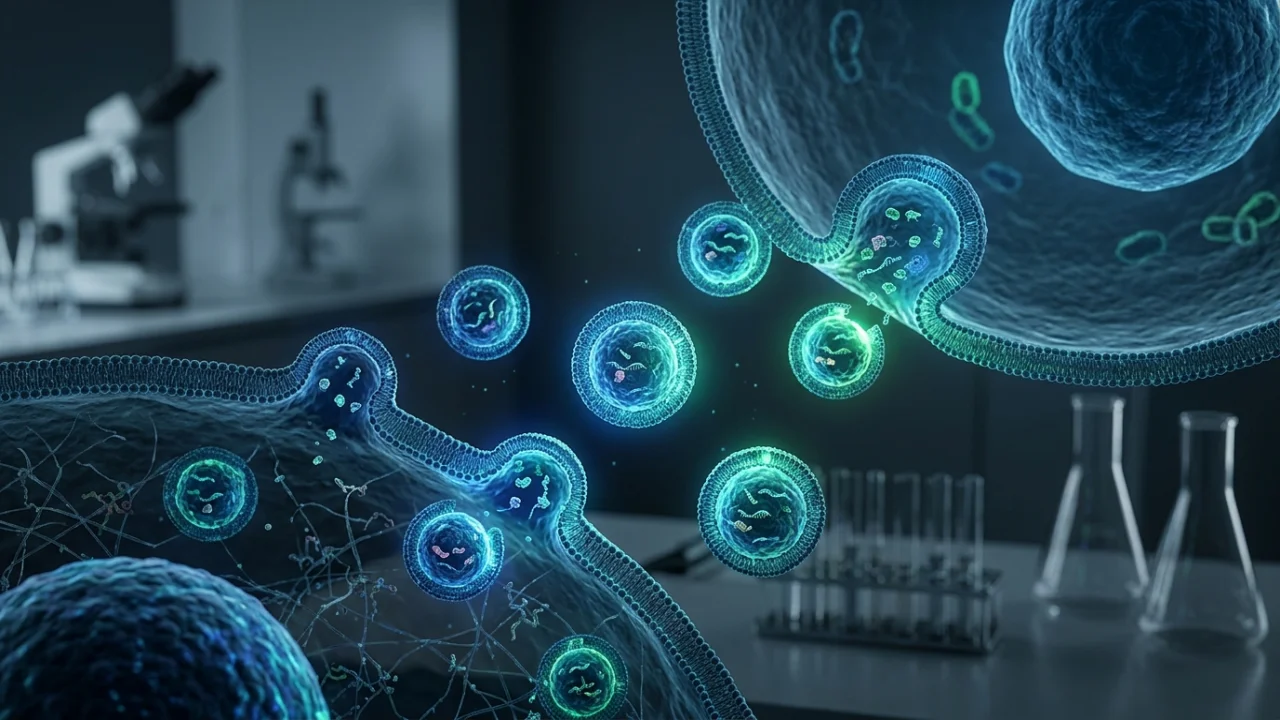
What Are Exosomes and Why Should You Care?
Tiny Bubbles That Carry Big Messages
Imagine your body’s cells are in a giant, crowded city. They don’t have phones. Instead, they send tiny letters. These letters are exosomes. They are incredibly small bubbles released by cells. Think of them as nano-sized mail carriers.
Every cell in your body can make and release them. This includes your skin cells, brain cells, and heart cells. Exosomes travel through your bodily fluids. They move in blood, saliva, and even spinal fluid. Their job is to deliver cargo from one cell to another.
What’s inside these tiny packages? The cargo is very specific. It contains important instructions. – Genetic blueprints like RNA. – Proteins that act as signals. – Enzymes that can start reactions.
This cargo is protected by a lipid membrane. This membrane is like a secure envelope. It keeps the messages safe during their journey. When an exosome reaches a target cell, they fuse. The cargo is delivered directly into that cell. The receiving cell then reads the instructions. It changes its behavior based on the new information.
This system controls many processes. It helps coordinate healing after a cut. It manages your immune system’s response to a cold. It even aids in how your brain cells form memories. The question “do exosomes really work” is answered by biology itself. They are not an experimental idea. They are a natural, essential part of how your body functions every single day.
Different cells send different messages. A stressed cell might send a warning signal. A healthy cell might send repair instructions. Cancer cells, for example, send many more exosomes. They use them to spread harmful messages. This shows the system’s power for both good and bad.
Understanding this changes how we see health and disease. It is not just about single cells. It is about the constant conversation between them. Exosomes are the vocabulary of that talk. When communication fails, problems can start. The goal of science is to learn this language. We want to fix corrupted messages and support helpful ones.
This natural messaging network is the foundation for new medicine. By harnessing these tiny bubbles, we aim to help the body heal itself more effectively. The next step is to explore how this internal system connects to treatments we might receive from outside.
Why Scientists Are So Excited About These Messengers
Scientists see exosomes as a new kind of medicine. They work differently from most drugs we take today. A typical pill or injection sends a chemical signal. It tells your body to do one specific thing. This approach can be very effective. But it can also cause side effects. The drug acts on many cells, not just the sick ones.
Exosomes offer a more natural strategy. They use the body’s own communication system. Think of it like this. A traditional drug is a loudspeaker announcement. Everyone in the building hears it, whether they need to or not. An exosome treatment is like a sealed, addressed envelope. It delivers its instructions directly to the right department.
This targeted delivery is a major reason for excitement. It means treatments could be more precise. They could also be more powerful. An exosome’s cargo is complex. It can contain hundreds of different signaling molecules at once. A single drug molecule usually does just one job. This lets exosomes orchestrate entire healing processes.
For example, consider a damaged tendon. A drug might reduce inflammation there. But healing requires many steps. Cells need to be called to the site. They need to start building new tissue. Blood flow must improve. Research shows exosomes from stem cells can trigger all these events in order. They do not just block one problem. They activate the body’s full repair program.
This leads to the big question: do exosomes really work in medical settings? Early research is promising. Studies in animals and early human trials show potential in tough areas.
- Wound Healing: Exosomes can speed up skin repair in chronic wounds.
- Osteoarthritis: They may reduce joint inflammation and help regrow cartilage.
- Brain Injury: After a stroke, they might protect neurons and aid recovery.
Their power also lies in their safety profile. Because they are natural carriers, the body knows how to handle them. Your own cells make billions of them daily. Lab-made versions aim to copy this natural design. This reduces the risk of rejection or toxic reactions.
Another key advantage is their ability to cross barriers. The blood-brain barrier protects our brain from harmful substances. It also blocks many helpful drugs. Exosomes, however, can naturally cross this barrier. This opens doors for treating brain diseases like Alzheimer’s or Parkinson’s. No current pill can do this effectively.
The excitement is not about replacing all medicine. It is about adding a new tool. For conditions where drugs fall short, exosomes offer a different path. They work with biology, not just on it. The goal is to give the body the exact instructions it needs to heal itself. This shifts medicine from managing symptoms to truly promoting repair. The next challenge is turning this brilliant natural concept into reliable, standardized treatments for patients.
How Exosomes Differ From Stem Cells
Many people hear about exosomes and think of stem cell therapy. They are related, but they work in fundamentally different ways. Stem cells are complete living units. They can divide and turn into different cell types, like bone or muscle cells. Exosomes are not cells at all. They are tiny communication packages released by cells, including stem cells.
Think of a stem cell as a full factory. It has machinery to build products and can even create new factories. An exosome is like a single delivery truck sent out from that factory. The truck does not contain the whole factory. It carries only specific instructions and tools. This is a key difference. Exosome therapy uses these natural delivery trucks, not the living factory itself.
This leads to important practical contrasts. First, stem cells are alive and must survive after injection. They need the right environment to function. Exosomes are not alive. They are stable vesicles carrying molecular cargo. Their job is to deliver their message and be recycled by the body.
Second, their mechanisms differ greatly. A transplanted stem cell aims to integrate into tissue. It might replace damaged cells directly. An exosome never becomes part of your tissue. Instead, it influences how your existing cells behave. It delivers signals that tell your cells to reduce inflammation, repair themselves, or grow new blood vessels. The exosome activates your body’s own repair systems.
Safety profiles are also distinct. Living stem cells can sometimes divide in unpredictable ways or cause immune reactions. Because exosomes are not alive, they cannot multiply or form tumors. Their natural origin generally makes them well-tolerated. This addresses a core question for many: do exosomes really work in a safer framework? Their non-living, targeted action is a major part of the scientific rationale.
Consider a real example: skin rejuvenation. A stem cell treatment might aim to add new, young cells to the skin. An exosome treatment works differently. It sends signals to your older skin cells. These signals encourage them to produce more collagen and heal better. Your original cells do the work, guided by the exosome instructions.
Storage and handling highlight another advantage. Living stem cells often require complex, frozen logistics. Many exosome preparations are more stable. They can be stored longer without losing their function.
So, why should you care about this difference? It defines a new approach in medicine. Stem cell therapy is about adding new workers to a construction site. Exosome therapy is about giving better blueprints and tools to the existing crew. This shift is significant. It leverages the body’s innate intelligence for precise healing. The goal is not replacement but expert guidance. Understanding this distinction is crucial for seeing the unique potential of exosomes as sophisticated messengers, not tiny cells. This foundation helps us examine how they are actually made and purified for clinical use.
How Your Body Makes and Uses Exosomes
The Cellular Factory That Creates Exosomes
Imagine a bustling factory inside one of your cells. This is the endosomal system. It is the production line for exosomes. The process is deliberate and complex. It starts with the cell’s membrane. This membrane folds inward. It captures proteins and RNA from inside the cell. This forms a small pouch called an early endosome.
The early endosome moves inward. It matures into a late endosome. During this time, the membrane of the endosome buds inward again. It creates tiny vesicles inside the larger one. Scientists call this a multivesicular body. Think of a larger bubble filled with many smaller bubbles. Each small bubble is a future exosome. Its cargo is now sealed inside.
What goes into these tiny packages? The cell selects the contents with care. The cargo includes signaling proteins and genetic instructions. These instructions are often microRNAs. They are short strands of RNA that can silence genes in target cells. The cell packs these molecules based on its current state and needs. A stressed cell sends different signals than a healthy one.
Finally, the multivesicular body travels to the outer membrane of the cell. It fuses with this membrane. The small vesicles are released into the space outside the cell. They are now exosomes, ready for delivery. This whole process answers a practical question: do exosomes really work as intended messages? Their effectiveness begins with this precise packaging.
Different cells create different exosomes. A stem cell’s exosomes carry instructions for repair and growth. An immune cell’s exosomes might carry alert signals. A cancer cell’s exosomes can carry messages that help tumors spread. The source cell defines the cargo.
The key steps are consistent: – Membrane invagination forms an early endosome. – Cargo sorting and inward budding create a multivesicular body. – Fusion with the cell membrane releases exosomes.
This system is efficient and widespread. Almost every cell type in your body can produce exosomes. They are constantly released into your bodily fluids. Your blood, saliva, and spinal fluid contain them. This natural production is a continuous background conversation between your tissues.
Understanding this factory process is crucial. It shows why exosomes are not random debris. They are refined products of cellular activity. Their formation ensures their messages are protected during transit through the body’s harsh environments. This reliable production method underpins their role as master messengers, setting the stage for how they are harvested and purified for science.
What’s Inside an Exosome Package
The cargo inside an exosome defines its mission. Think of it as a tiny, sealed toolbox or a biological USB drive. Each exosome carries a precise set of molecules. These molecules are instructions and tools for other cells. The contents are not random. They are carefully selected by the parent cell. This selective packaging is why scientists ask: do exosomes really work as targeted therapies? The answer lies in their cargo.
Proteins form a major part of the load. Some proteins sit on the exosome’s outer membrane. They act like address labels. These labels help the vesicle find and dock with the correct target cell. Other proteins are packed inside. They can include enzymes, growth factors, and signaling molecules. Once delivered, these proteins can directly change a recipient cell’s behavior. They can turn genes on or off. They can kick-start repair processes.
Perhaps the most powerful cargo is RNA. Exosomes carry many types of genetic instructions. – MicroRNA (miRNA) are short strands. They do not make proteins. Instead, they silence specific genes in the target cell. – Messenger RNA (mRNA) carries blueprints. A target cell can use these blueprints to build new proteins. – Other RNA types help regulate these processes.
This RNA transfer is a direct form of genetic communication. A stem cell’s exosome can tell an aging skin cell to produce more collagen. An immune cell’s exosome can instruct another to calm inflammation. The RNA is protected during transit. The exosome’s lipid bilayer shields it from degradation.
That lipid membrane itself is functional cargo. It is not just a bubble. It is rich in cholesterol and special lipids called sphingolipids. This composition makes it sturdy. It also contains molecules called tetraspanins. These help with cell targeting and fusion.
The combined effect is sophisticated. An exosome delivers a coordinated signal package. Proteins provide immediate tools and targeting. RNA offers long-term genetic instructions. Lipids ensure safe delivery and fusion. This multi-part cargo allows for complex commands.
Different cells pack different combinations. A cancer exosome might carry RNA that tells blood vessels to grow toward a tumor. A mesenchymal stem cell exosome often carries RNA and proteins that reduce inflammation and promote tissue healing.
Understanding this internal package is key. It explains the mechanism behind the promise. The cargo is the message. The exosome is the secure envelope. Researchers now work to characterize these contents precisely. They aim to understand which cargo combinations produce specific healing effects. This knowledge directly guides how exosomes are harvested and applied in medicine, leading to the next logical question: how do we collect these natural messengers for study and use?
How Exosomes Travel Through Your Body
Exosomes travel through your body’s highways. They move in blood, lymph, and other fluids. Their journey is not random. It is a targeted delivery mission.
Think of your bloodstream as a busy river. Exosomes are tiny boats navigating this current. They face challenges along the way. Immune cells patrol these waters. Enzymes that break down molecules are present. The exosome’s sturdy lipid membrane protects its precious cargo from these threats.
How do they know where to go? Their surface acts like an address label. Proteins and lipids on the outside provide targeting signals. One key group is called tetraspanins. These help the exosome find the right cell type. Other molecules, like integrins, act like zip codes. They guide exosomes to specific tissues, such as lungs or bones.
The travel process involves several clear steps: – Release: The parent cell pushes the exosome out into the extracellular space. – Navigation: The vesicle enters a fluid like blood plasma. It uses its surface markers to avoid destruction. – Homing: Targeting molecules recognize matching receptors on a distant cell’s surface. – Docking: The exosome attaches firmly to the target cell. – Delivery: It transfers its cargo through membrane fusion or direct uptake.
Distance is not a major barrier. Studies show exosomes from one organ can reach distant organs. For instance, exosomes from fat tissue can signal to the liver. This systemic communication is vital for health. It helps coordinate body-wide responses.
The fluid itself influences the trip. Blood flow speed changes in different vessels. In slow-moving capillaries, exosomes have more time to find their target. The composition of the fluid matters too. Inflammatory conditions can alter the journey, sometimes improving delivery to injured sites.
This precise targeting answers a part of “do exosomes really work.” Their effectiveness relies on this navigation. Without it, their healing messages would be lost. A cancer exosome, for example, might target bone marrow to prepare a site for metastasis. A stem cell exosome seeks out damaged tissue.
Researchers track these journeys with fluorescent tags. They watch real-time movement in animal models. This science confirms their natural homing ability. Scientists are learning to engineer surface markers. They aim to direct therapeutic exosomes to precise locations.
The final step is cargo unloading. Upon arrival, the exosome delivers its instructions. It might fuse with the target cell’s membrane. Its contents spill into the cell’s interior. Alternatively, the whole vesicle can be swallowed by the cell. The internal package is then unpacked to direct cellular activity.
This entire transit system is efficient and specific. It ensures messages reach the correct inbox. The body uses this network for constant conversation between cells. Understanding this journey is crucial for medical applications. It shows how natural exosomes operate. Next, we must explore how this natural process translates into clinical use.
The Delivery System That Targets Specific Cells
Exosomes do not wander randomly. They carry specific addressing codes on their surface. These codes are protein and sugar molecules. Think of them as molecular zip codes. A target cell displays matching “locks” or receptors. When the exosome’s code finds its match, it docks. This binding is the final step in navigation.
The surface markers determine the exosome’s target. For instance, an exosome from a neuron often carries adhesion molecules. These molecules bind to other neural cells. This ensures brain-derived exosomes talk mainly to other brain cells. A liver cell exosome has a different set of surface tags. It will seek out other liver or immune cells.
This system answers a core part of “do exosomes really work.” Specific targeting is why they can have precise effects. Without these codes, therapeutic exosomes would be useless. Their cargo would go to the wrong place.
The docking process involves several steps. First, the exosome slows near its target cell. Weak initial bonds form. These bonds are like a first handshake. They allow the vesicle to roll along the cell membrane. Stronger, specific bonds then lock it in place.
After docking, the exosome must deliver its package. Cells use three main methods for this entry. – Membrane fusion is one direct method. The exosome’s outer layer merges with the cell’s membrane. This spills the cargo directly into the cell’s interior. – Endocytosis is another common path. The cell’s membrane folds inward. It wraps around the exosome and swallows it whole. This creates a new bubble inside the cell. – Receptor-mediated uptake is a third way. The docking itself triggers the cell to engulf the vesicle.
The method affects how fast the message is read. Direct fusion is quick. Endocytosis takes more time. The cargo must then escape the internal bubble.
Cancer cells exploit this system. They send exosomes with deceptive codes. These vesicles can prepare distant organs for tumor spread. They dock at sites like the lungs or bones. Then they deliver signals that create a welcoming environment.
Researchers study these natural codes intensely. They aim to copy or engineer them. The goal is to create smart delivery vesicles. These designed exosomes could target a diseased organ only. This precision reduces side effects.
The entire process is a masterclass in biological communication. It shows how our cells send targeted mail. The system is efficient and remarkably accurate. Understanding this targeting is key for real-world treatments. It turns a natural phenomenon into a potential tool. Next, we examine what happens after the package is inside the cell.
The Healing Power of Exosomes in Your Body
How Exosomes Help Repair Damaged Tissues
Exosomes carry precise instructions for tissue repair. They are not just simple messengers. They are complex toolkits for healing. Their cargo tells damaged cells how to fix themselves. This process is natural and ongoing in your body.
Consider a cut on your skin. The healing response starts immediately. Nearby cells release a flood of exosomes. These vesicles travel to the site of damage. They deliver specific signals to many cell types.
- They instruct blood vessel cells to grow. This brings oxygen and nutrients.
- They signal skin cells to multiply and migrate. This closes the wound.
- They calm excessive inflammation. This prevents further damage.
The key is the packaged molecules. Exosomes contain growth factors. These are proteins that tell cells to grow and divide. They also carry special RNA called microRNA. This RNA can turn genes on or off in the target cell. It reprograms the cell’s behavior.
Research shows exosomes help heal heart muscle after a heart attack. In studies, exosomes from stem cells are given to injured hearts. The vesicles reduce scar tissue formation. They encourage new, healthy blood vessels to grow. This improves heart function significantly.
The same principle applies to tendons and joints. Exosomes can modulate the repair process in slow-healing tissues. They tell connective tissue cells to produce more collagen. Collagen is the main structural protein in our bodies. This strengthens the repaired area.
A critical question many ask is: do exosomes really work based on solid evidence? Laboratory and animal studies provide strong proof of concept. They show clear biological activity in reducing inflammation and speeding repair. The science behind their natural role is undeniable.
The nervous system also uses this communication. After nerve injury, exosomes help guide regeneration. They can support the fragile environment around neurons. This aids in recovery of function.
The healing power lies in coordination. Exosomes do not act alone. They work as a system. One vesicle can affect multiple cells in a damaged area. This creates a synchronized repair response.
Their effect is often regenerative. This means they help restore original tissue structure and function. This is different from just forming a scar. It is true, functional healing.
Scientists are now harnessing this natural power. By collecting exosomes from certain cell types, they can concentrate these healing signals. The goal is to boost the body’s own repair mechanisms where they are failing.
This leads directly to the next logical step in our exploration: understanding how this natural tool is being prepared for clinical use in medicine.
Exosomes as Natural Inflammation Managers
Inflammation is your body’s alarm system. It signals that damage has occurred. But this alarm must be turned off to allow real healing. Exosomes are key messengers in this on-off switch.
They carry precise instructions to immune cells. One exosome might tell a macrophage, a type of immune cell, to stop attacking. Another might tell a different cell to start cleaning up debris. This coordination prevents excessive or chronic inflammation.
Think of a construction site after an accident. First, emergency crews arrive. This is the inflammatory response. Then, foremen with blueprints show up. These are the exosomes. They direct the cleanup and tell the crews when their job is done.
Exosomes manage inflammation through their cargo. They deliver specific molecules that change cell behavior. – MicroRNAs can silence genes that promote swelling. – Proteins can block signals that call for more immune cells. – Enzymes can break down molecules that cause pain.
This process is dynamic and responsive. The messages change as healing progresses. Early exosomes might boost the alarm to fight infection. Later ones actively calm the immune response. This ensures repair can begin.
Chronic inflammation is a problem in many diseases. It is like an alarm that never stops ringing. It damages healthy tissue. Research shows exosomes from certain stem cells can reset this faulty system. They provide the correct ‘off’ signal that the body is missing.
So, do exosomes really work in managing inflammation? The biological evidence is compelling. In studies, they have been shown to reduce swelling in arthritic joints. They help heal inflamed skin wounds faster. They calm brain inflammation after injury.
Their natural origin is crucial. Because they are part of the body’s own language, cells are programmed to listen. This makes them precise managers. They do not just blanket the area with a drug. They deliver targeted memos to specific cell types.
The result is a balanced environment. Inflammation does its short-term job and then recedes. This clears the way for the next phase: rebuilding tissue. Without this management, healing stalls or becomes destructive.
This precise control over our immune system is why scientists are so focused on these vesicles. Harnessing this innate ability offers a powerful strategy for conditions defined by inflammatory dysfunction.
Why Wounds Heal Faster With Exosome Help
A deep skin cut creates a complex repair zone. Cells there need precise instructions to rebuild correctly. Exosomes deliver these instructions directly to the construction site.
Think of a healing wound as a busy construction project. First, inflammation clears the debris. Next, new tissue must fill the gap. This requires many coordinated steps. Cells must multiply. New blood vessels must form. Collagen fibers must be laid down.
Exosomes coordinate all these steps. They carry specific orders to different cell types. The results are measurable. In studies, exosome-treated wounds often show significantly faster closure rates.
The process begins with cell proliferation. Fibroblasts are the key builders in your skin. They produce collagen and other structural proteins. After injury, fibroblasts need a signal to start working. Exosomes from stem cells deliver growth factors and genetic messages. These signals tell fibroblasts to multiply and move into the wound bed.
New blood supply is also critical. This process is called angiogenesis. Exosomes encourage endothelial cells to form new capillaries. They do this by carrying proteins like VEGF. This brings oxygen and nutrients to the healing tissue. Better fuel means faster repair.
Exosomes also guide the quality of the new tissue. They help regulate how collagen is organized. Poorly organized collagen leads to weak scars. Exosome signals help align collagen fibers properly. This improves tensile strength and flexibility of the healed skin.
So, do exosomes really work to speed healing? The evidence points to a clear biological rationale. Their effectiveness lies in multi-target signaling.
- They turn on growth programs in dormant cells.
- They attract necessary builder cells to the site.
- They ensure new blood vessels infiltrate the area.
- They direct the proper assembly of new matrix.
This is not a single action. It is a coordinated campaign of cellular communication. The body uses exosomes for this naturally. Therapeutic approaches aim to boost this innate system.
The final phase of healing is remodeling. This can last for months. Exosomes continue to provide signals during this time. They help the tissue mature and strengthen gradually.
This precise guidance reduces healing time. It also can improve the cosmetic and functional outcome. The scar tissue may be stronger and more flexible. The focus now shifts from closing the wound to optimizing its quality.
This orchestrated repair showcases their power as master regulators. The next logical question is about sourcing these remarkable messengers for therapeutic use.
Brain Repair and Exosome Communication
The brain is our most protected organ. It is shielded by a strict barrier. This barrier keeps out most germs and large molecules. It also blocks many potential medicines. Exosomes have a unique key. They can cross this blood-brain barrier naturally.
Cells in the brain constantly communicate. Neurons and support cells release exosomes. These tiny vesicles carry vital messages. Their cargo includes protective proteins and regulatory RNA. This system is crucial for brain health and repair.
During injury or disease, this communication ramps up. Stem cells in the brain release more exosomes. These vesicles travel to stressed or damaged neurons. They deliver molecules that tell the nerve cell to survive. They can reduce harmful inflammation around the injury site.
Think of a neuron under attack. It might be starved of oxygen or poisoned by toxins. An arriving exosome acts like an emergency kit. It provides tools to repair cellular damage. It also sends signals that say, “Do not self-destruct.” This process is called neuroprotection.
The cargo list for brain repair is specific. – Growth factors encourage nerve fibers to regrow. – Anti-inflammatory signals calm overactive immune cells. – Waste-removal prompts help clear toxic proteins. – Survival instructions prevent programmed cell death.
This raises a key question for therapy: do exosomes really work for brain conditions? Research in models shows promising effects. In strokes, exosome treatment can reduce the area of brain damage. In neurodegenerative models, they can slow disease progression. The effect comes from boosting the body’s own repair signals.
The mechanism is again about master regulation. Exosomes do not just deliver one drug. They deliver a full program of instructions. This program coordinates many cells at once. It turns down damaging processes. It turns up healing processes.
The challenge is immense. Brain diseases are complex. But the natural design of exosomes offers a strategic advantage. They are engineered for precise, multi-target communication in a fragile environment.
This potential extends beyond acute injury. Chronic conditions like Alzheimer’s involve tangled proteins and lost connections. Here, exosome signals might help clear debris and support synaptic health. The goal is not to cure with one shot, but to modify the disease environment over time.
Safety is a prime concern. Using the body’s own messaging system lowers some risks. The signals are natural and biodegradable. The therapy aims to guide rather than force a biological outcome.
The evidence builds a compelling picture. Exosomes represent the brain’s intrinsic repair language. Harnessing this language requires deep understanding and careful sourcing. The next step is examining where these therapeutic messengers come from and how they are prepared for clinical use.
Heart Health and Exosome Signals
The heart is a muscle that never rests. After an injury like a heart attack, its repair process is critical. Damaged heart tissue can form stiff scars. These scars weaken the heart’s pumping power. Exosomes carry signals that may directly address this problem.
Research shows exosome signals can encourage new blood vessel growth. This process is called angiogenesis. New vessels bring more oxygen and nutrients to struggling heart muscle. This is vital for healing the injured zone. It helps salvage tissue at risk.
Exosomes also communicate with the cells that form scars. They can send instructions to modulate this fibrosis. The goal is not to stop scarring completely. Scar tissue provides needed short-term structure. Instead, exosomes aim to guide a healthier, more functional repair. This can improve the heart’s elasticity and strength post-injury.
The question “do exosomes really work” finds early answers here. Preclinical studies are encouraging. In animal models of heart attack, exosome treatments have shown measurable benefits: – Reduced overall scar size – Improved blood flow to the damaged area – Better preservation of left ventricular function
The mechanism mirrors their action in the brain. Exosomes deliver a coordinated program. They don’t just trigger one single event. They simultaneously calm harmful inflammation. They promote survival of stressed heart muscle cells. They recruit helpful progenitor cells to the site. This multi-target approach is key for complex organ repair.
Chronic heart failure is another potential target. This condition often involves ongoing inflammation and poor vessel health. Here, exosome signals might act as a long-term regulator. They could help rebalance the cardiac environment. The strategy shifts from acute repair to sustained support.
Safety considerations remain paramount. The natural origin of these vesicles is a benefit. Using the body’s own communication system minimizes foreign reactions. The signals are biodegradable and precise.
The evidence suggests a powerful role for exosomes in heart health. They act as the body’s innate toolkit for cardiovascular repair. Their power lies in sophisticated, multi-channel communication. This offers a strategic path beyond single-drug approaches.
The journey from basic science to proven therapy continues. Each study adds to our understanding of their healing logic. Next, we must explore how these potent messengers are sourced and prepared for potential use.
Do Exosomes Really Work for Skin and Beauty?
The Science Behind Younger-Looking Skin
Skin aging shows clear signs. Collagen and elastin fibers break down. This leads to wrinkles and loss of firmness. The body’s natural repair systems slow with age. Fibroblasts are the skin’s collagen factories. They become less active over time. The question is: can we safely restart them? This is where exosome science enters the beauty conversation.
So, do exosomes really work for skin renewal? Research points to their role as master coordinators. They carry specific instructions to dormant skin cells. Exosomes from stem cells are especially studied. They deliver a package of signals directly to fibroblasts.
The process is precise. Exosomes bind to the target fibroblast. They transfer their molecular cargo inside. This cargo includes microRNAs and proteins. These molecules act like a software update for the cell. They switch on genes that were turned off. They silence genes causing inflammation.
The main result is boosted collagen production. Fibroblasts get a clear directive to rebuild. They start producing new Type I collagen. This is the main structural protein in skin. Elastin production can also increase. This improves skin elasticity. The effect is not just adding bulk. It is about restoring organized, healthy networks of fibers.
The mechanism offers several advantages over single-ingredient approaches. – It is multi-targeted. Exosomes address collagen, inflammation, and cell health at once. – The signals are natural. Cells recognize them and respond appropriately. – The action is communicative. It guides the skin’s own repair processes.
Evidence from lab studies is promising. Treated skin models show thicker epidermal layers. They reveal denser collagen in the dermis. The collagen fibers appear well-organized. This structure is key for strength and youthfulness. Clinical observations support these findings. Improvements in hydration and texture are noted.
The science suggests a fundamental shift. It moves from simply applying collagen topically to telling cells to make their own. This endogenous production is superior. The body integrates it perfectly into the existing framework.
Safety stems from their biological nature. Exosomes are not living cells. They cannot replicate. They perform their signaling task and are cleared. Their precision reduces off-target effects.
The potential for younger-looking skin is real at a cellular level. It hinges on restoring clear communication. The next logical step examines how these findings translate into practical applications for skin health.
How Exosomes Could Reduce Wrinkles Naturally
Wrinkles form from a breakdown in skin structure. Collagen fibers fragment. The supportive network weakens. Skin loses its firm, smooth surface. The question is: do exosomes really work to reverse this? Their potential lies in sending precise renewal signals.
Exosomes carry instructions for cellular repair. They target fibroblasts, the collagen-making cells in your skin. Aged or sun-damaged fibroblasts slow down. They produce less collagen. They also make more of the enzymes that break collagen down. This imbalance creates wrinkles.
Exosome signals can reset this balance. They deliver active molecules directly to these cells. The cargo includes growth factors and microRNAs. These are like master control switches. They tell the fibroblast to change its behavior.
The natural anti-wrinkle action happens in several key ways. – It boosts new collagen production. Signals turn on the genes needed to build fresh, strong fibers. – It slows collagen destruction. Other signals can reduce the output of those damaging enzymes. – It improves cell energy. Some exosome components help revitalize the fibroblast’s own metabolism. A more energetic cell works better.
This is not a surface-level plumping effect. It is a deep restructuring. New collagen integrates into the existing dermal layer. It gradually replaces damaged and fragmented fibers. The skin’s foundation becomes stronger and more organized.
Think of a wrinkled piece of paper. You can smooth it temporarily with your hand. That is like a topical filler or moisturizer. To truly remove the wrinkle, you must restructure the paper fibers themselves. Exosome signaling aims for this deeper fix.
The process takes time. Cellular renewal is not instant. Skin cells need weeks to respond, produce new proteins, and remodel tissue. Consistent signaling may lead to cumulative improvements. Early studies show measurable increases in dermal density after repeated applications.
Safety is linked to this natural mechanism. Because the signals guide your skin’s own processes, results should look natural. The goal is not to create an artificial, puffed-up appearance. It is to restore a more youthful version of your own skin texture.
The evidence for wrinkle reduction is growing from preclinical models. Research shows treated skin samples have thicker dermal layers. Their collagen networks appear denser and more woven. This structural improvement directly correlates with smoother surfaces.
For lasting results, the skin’s communication system must stay active. This suggests why ongoing use might be beneficial. It provides continued support to fibroblasts facing daily environmental stress.
Ultimately, exosomes offer a biological strategy for wrinkles. They work by addressing the root cellular causes, not just the surface signs. This positions them as a potentially powerful tool for natural skin rejuvenation. The next consideration is how these lab findings meet real-world skin types and aging patterns.
Wound Healing and Scar Reduction Evidence
The skin’s ability to heal a deep cut is a complex biological dance. Exosomes appear to be key conductors of this process. They carry precise instructions to coordinate repair. This makes them a compelling subject for wound care science.
Research shows exosomes can accelerate wound closure. In laboratory and animal studies, treated wounds often close faster. They do this by enhancing several critical stages of healing. The question, “do exosomes really work,” finds early support here.
The mechanism involves clear steps. First, exosomes signal for increased blood vessel growth at the site. This brings more oxygen and nutrients to the damaged tissue. Second, they modulate inflammation, preventing it from becoming too aggressive. Third, they directly encourage fibroblast cells to migrate and produce new collagen.
Collagen deposition is crucial for strong scar tissue. However, the goal is not just any collagen. The ideal is organized, flexible collagen that resembles normal skin. Evidence suggests exosome signaling may promote this better alignment. This leads to less noticeable scarring.
Scar reduction is a major focus. Hypertrophic and keloid scars result from overactive healing. Exosomes may help regulate this overactivity. They appear to guide fibroblasts toward a more balanced collagen production cycle. Early clinical observations note improved scar pliability and color.
Human clinical data is still emerging but promising. One pilot study involved patients with chronic wounds. The group receiving exosome-derived treatments showed markedly improved healing rates. Their tissue regeneration metrics were superior to the control group’s results.
The evidence for scar improvement often comes from combined approaches. Exosomes are frequently studied alongside microneedling or laser procedures. The micro-injuries from these treatments create a demand for healing. Exosome application then guides that repair toward optimal results.
Key observed benefits in research include: – Reduced wound contraction, which can limit mobility. – Enhanced regeneration of hair follicles and sweat glands. – Improved tensile strength in the newly formed skin. – More natural pigmentation during scar maturation.
The logic is consistent with their natural role. Your body already uses its own exosomes for repair. Therapeutic applications aim to boost this existing system. They provide a concentrated dose of precise signals right when and where the skin needs them most.
Safety in this context relates to supporting natural pathways. Because the signals encourage the body’s innate programs, risks of abnormal tissue growth are considered low. The process aims for functional, aesthetic restoration.
For burn victims or surgical patients, this technology holds particular hope. Faster healing means lower infection risk and less discomfort. Improved scar quality directly impacts psychological recovery and quality of life.
The transition from wound repair to cosmetic improvement is seamless. A healed wound is the ultimate test of skin’s regenerative capacity. Success here builds a strong foundation for their use in aesthetic medicine. This evidence positions exosomes as a versatile tool for comprehensive skin health, moving next to their potential in addressing pigmentation concerns.
What Studies Say About Cosmetic Applications
Research directly connects exosome signaling to several key cosmetic goals. Studies show they can influence the skin cells responsible for our visible complexion. The question “do exosomes really work” finds early answers in lab and clinical observations.
One major area is collagen production. Fibroblasts are the skin’s collagen factories. As we age, these cells slow down. Research indicates certain exosomes can reactivate them. They deliver messages that tell fibroblasts to build new, robust collagen networks. This is not just plumping from hydration. It is a fundamental signal for structural renewal.
Another well-documented effect is reducing inflammation. Chronic, low-level inflammation silently breaks down skin. It accelerates aging. Exosomes carry molecules that can calm this process. They help shift the cellular environment from a state of stress to one of repair. This action supports barrier health and overall resilience.
Hyperpigmentation is a common concern. Melanocytes produce too much pigment in spots. Early studies suggest exosome therapy may help restore a more even tone. The vesicles appear to carry instructions that help normalize melanocyte activity. They encourage a balanced distribution of pigment rather than simply bleaching skin.
The evidence comes from various study types. – Laboratory studies on human skin cells show clear changes in gene activity after exosome exposure. Cells increase production of proteins like collagen and elastin. – Animal models, particularly with photoaged skin, demonstrate improved skin thickness and elasticity after treatment. – Early human pilot studies report measurable improvements in hydration, wrinkle depth, and firmness.
It is crucial to understand the “how.” Exosomes work by changing cell behavior, not by acting as a direct filler. Their effects are typically gradual. They support the skin’s own biological processes over weeks and months. This is why they are often framed as a regenerative treatment rather than an instant fix.
Current research is also exploring specific sources. Exosomes from different cell types may have unique advantages. Some might be exceptionally good at promoting blood vessel formation for vitality. Others could be potent modulators of immune response in sensitive skin. The field is mapping this landscape.
The scientific consensus is growing but cautious. The biological rationale is strong and consistent with their natural role. Observed effects in studies are promising and mechanistically plausible. However, large-scale, long-term human trials are still ongoing to fully establish standardized protocols and lasting outcomes.
This research foundation provides a solid premise for their use in aesthetic practice. It moves beyond theory into observable biological changes. The next logical step is to examine what this means in a real-world clinical setting, considering how these treatments are applied for optimal results.
The Big Question: Do Exosomes Really Work in Medicine?
What Animal Studies Tell Us About Effectiveness
Animal studies provide crucial early answers to the question, “do exosomes really work?” These experiments allow scientists to see clear biological effects in a living system. Researchers can track exactly what happens after treatment.
For instance, in a heart attack model, exosomes from stem cells were injected into damaged hearts. The treated hearts showed significantly less scar tissue. They also grew new, tiny blood vessels. This improved the heart’s pumping ability. The exosomes helped the heart muscle repair itself.
In brain injury studies, exosomes have shown remarkable promise. After a stroke, neurons die and inflammation flares. Exosomes administered to the brain can reduce this harmful inflammation. They also promote the growth of neural connections. This can lead to better recovery of movement and memory in animals.
The power of exosomes is also clear in wound healing. Diabetic animals often heal very slowly. Their wounds can stay open and get infected. Studies apply exosome gels to these chronic wounds. The results are striking. – New skin layers form faster. – Blood supply to the area improves. – The overall healing time can be cut in half.
This happens because exosomes instruct local cells to rebuild tissue. They turn on genes for making collagen. They also call in cells needed for repair.
Liver disease is another active area of research. In models of liver fibrosis, healthy tissue gets replaced by stiff scar tissue. Exosome treatments can slow or even reverse this process. They send signals that tell the scar-making cells to become quiet. This allows the liver to regenerate its own functional cells.
The key insight from all this animal data is consistency. Different research groups see similar positive effects across various diseases. The mechanism is always about communication and instruction. Exosomes do not work by becoming a permanent part of the organ. Instead, they deliver a temporary set of commands. These commands change how the local cells behave.
This preclinical evidence is powerful and persuasive. It shows a strong biological effect in complex living organisms. It moves the concept from cells in a dish to whole-body repair. However, animals are not humans. Their biology, while similar, is different. The next essential step is translating these robust findings into safe and effective human therapies through careful clinical trials.
Early Human Trials and Their Findings
The first human trials for exosome therapies are now underway. These early studies are small and carefully controlled. Their main goal is to check for safety. Researchers also look for early signs that the treatment might help.
One promising area is wound healing, similar to animal studies. A pilot trial tested an exosome gel on patients with slow-healing diabetic foot ulcers. These wounds are a major health problem and can lead to amputation. The gel was applied weekly. – Ulcers treated with exosomes showed a faster reduction in wound size. – New, healthy tissue formation was observed. – The treatment appeared safe, with no serious side effects reported.
The mechanism mirrors what was seen in animals. The applied exosomes instruct the patient’s own skin cells to move faster into the wound. They also calm down harmful inflammation. This creates a better environment for the body to repair itself.
Orthopedic conditions are another focus. A clinical study examined exosome injections for knee osteoarthritis. Patients received a single injection into the painful joint. Follow-up assessments occurred over several months. Many patients reported less pain and better joint function. MRI scans showed possible improvements in cartilage quality. The exosomes seem to work by signaling to the cartilage cells and reducing joint inflammation.
So, do exosomes really work in these early human tests? The data so far is encouraging but preliminary. These studies show that exosome treatments can be safe for patients. They also show clear biological activity in humans. The effects seen in animals are beginning to translate.
However, these are not large definitive trials. They involve dozens of patients, not thousands. We do not yet know the long-term effects. We also do not know the optimal dose for different conditions. The early findings justify much larger and longer studies.
Critical questions remain for future research. Scientists must pinpoint which sources of exosomes are most effective. They need to standardize how these vesicles are collected and stored. Delivery methods must be perfected for each organ system.
The path from a small pilot study to an approved therapy is long and rigorous. These early human trials are the first crucial steps on that path. They provide the initial evidence that exosome-based communication can be harnessed for therapy in people. The next phase will involve larger trials that compare exosomes directly to placebo or standard care. This will give a clearer answer to the big question of true clinical efficacy.
Conditions Where Exosomes Show Most Promise
Exosomes naturally target specific tissues. This targeting ability is key to their medical promise. Some conditions are better targets than others. The most promising areas often involve damaged tissue, chronic inflammation, or poor blood flow.
Skin wounds and aging are a primary focus. The skin repairs itself constantly. Exosomes from stem cells can accelerate this process. They signal skin cells to move faster into a wound. They also boost collagen production. Collagen gives skin its strength and structure. Early studies show exosome gels can reduce healing time for ulcers and burns. In cosmetic applications, they may improve skin texture and hydration by rejuvenating older cells.
Orthopedic injuries represent another strong candidate. This includes tendon tears and osteoarthritis. Cartilage has very limited self-repair capacity. Injected exosomes can reduce joint inflammation directly. More importantly, they may instruct local stem cells to build new cartilage matrix. This is a regenerative signal the body often loses with age or major injury. The goal is not just pain relief but actual tissue restoration.
Neurodegenerative diseases present a unique opportunity. The brain is protected by a tight barrier. Most drugs cannot cross it. Exosomes from certain stem cells can cross this blood-brain barrier. They deliver their cargo directly to brain cells. In models of Alzheimer’s and Parkinson’s, exosomes have shown they can reduce toxic protein clumps. They also support the survival of neurons. This makes them potential delivery vehicles for therapeutic molecules.
Cardiovascular repair is a major area of research. After a heart attack, scar tissue forms. This weakens the heart muscle. Exosomes appear to help in two ways. They promote the growth of new, small blood vessels. This improves blood flow to damaged areas. They also send signals that may reduce scar tissue formation and encourage healthier muscle cells.
- Chronic non-healing wounds (diabetic foot ulcers)
- Degenerative joint disease (osteoarthritis)
- Certain neurological conditions
- Post-heart attack tissue damage
- Autoimmune-related inflammation
The common thread is clear communication failure. These conditions often involve broken cellular signals or chronic inflammation. Exosomes work as a reset button for cell talk. They carry the original instructions for repair that adult tissues can forget.
So, do exosomes really work for these specific issues? The preclinical and early human data suggest a strong biological effect is likely. The natural design of exosomes makes them ideal for these complex tasks. They are not simple drugs with one action. They are information systems.
The next challenge is matching the right exosome source to each specific condition. Not all exosomes are the same. Their cargo changes based on the parent cell and its environment. Future medicine may use specific exosome “libraries” for different diseases. This precision will be the next step in proving their true clinical worth beyond early promise.
The Gap Between Lab Results and Real Patients
A mouse is not a person. This simple fact is central to medical science. Promising lab results in animals are a vital first step. They are not a final answer for patients.
The journey from a lab dish to a human clinic is long. It has many hurdles. Exosome research faces these same challenges. A treatment might work perfectly in a controlled mouse study. The human body is far more complex and variable.
One major gap is dosage. Scientists can give a precise dose to a small animal. Scaling that dose for a human is not simple. It is not just about body weight. Human metabolism and immune responses differ. Finding the effective yet safe dose requires new, careful human trials.
Delivery is another hurdle. In a lab, scientists can inject exosomes directly into a target area in an animal. Treating a disease in a human patient is often harder. How do you get exosomes to the exact right place in a human heart or brain? Systemic delivery through an IV is easier. But it means most exosomes may end up in the liver or spleen, not the injured tissue.
The source of exosomes matters greatly for consistency. Lab studies often use exosomes from specific, uniform cell cultures. For widespread human therapy, we need vast, reproducible amounts. Manufacturing exosomes at this scale is a huge technical challenge. Every batch must be identical in purity and function. This process must be perfect for regulatory approval.
Human biology adds more layers. Our immune systems are highly trained. They might recognize and clear therapeutic exosomes too quickly. Chronic human diseases like osteoarthritis also create a hostile environment. Inflamed joints have different chemistry than a young, healthy animal model. The exosome signals must work despite this.
So, do exosomes really work in medicine? The honest answer has two parts. The biological principle is powerful and valid. The practical application in diverse human patients is still being proven. Early human data is encouraging but limited.
The path forward requires rigorous clinical trials. These trials must answer key questions: – What is the optimal dose for each condition? – What is the best method and timing for delivery? – Which patient groups will benefit the most? – Are there any long-term side effects?
These studies take years and significant investment. They are the only way to close the gap between lab hope and real-world help. The strong science justifies this effort. The next section will explore what these real-world applications might look like when the evidence is complete.
Challenges That Must Be Solved for Real Treatments
Why Manufacturing Exosomes Is So Difficult
Producing exosomes for medicine is not like brewing a simple tea. It is a complex biomanufacturing puzzle. Scientists must solve it for treatments to become common. The core challenge is making billions of identical, pure exosomes every single time.
Think of a cell as a tiny factory. This factory makes many products. Exosomes are just one of them. The cell also releases other vesicles and debris. Isolating only the exosomes is the first big step. Current methods can struggle with this purity.
Common techniques include ultracentrifugation and filtration. These methods can be rough. They might damage the delicate exosome structure. They also often co-isolate impurities. These impurities could cause unwanted immune reactions in a patient. So, purity is a major hurdle.
Scalability is another huge issue. Lab methods work for small dishes of cells. Medicine needs industrial-scale volumes. Growing enough cells is costly and complex. The cells must be kept in perfect conditions. Their health directly affects the exosomes they produce.
Then comes the consistency problem. Each batch of exosomes must be the same. This is called batch-to-batch consistency. It is non-negotiable for safety and effect. But cells are living things. Slight changes in food, temperature, or density can change the exosomes.
Scientists track key markers to ensure quality. They look at the exosome size, count, and surface proteins. They test the biological cargo inside, like RNA. Even with strict controls, achieving perfect uniformity is difficult.
The entire process must also be cost-effective. Complex, slow methods will make therapies too expensive. The goal is robust, scalable, and affordable production. This is essential for real-world use.
So, do exosomes really work as a concept? Their natural function is clear. But for clinical success, we must master their manufacture. Solving these production puzzles is what will turn powerful science into reliable medicine. The next step is ensuring these manufactured exosomes can safely reach their target inside the human body.
The Delivery Problem: Getting Exosomes Where They Need to Go
Producing pure exosomes is only half the battle. The human body is a defended fortress. Injected exosomes face immediate and formidable barriers.
First is the blood. This river is full of immune sentinels. These cells constantly patrol for foreign material. They can engulf and destroy exosomes before they reach their target. Enzymes in the blood can also degrade the vesicles.
Next is filtration. The liver and spleen act as the body’s cleanup filters. Their job is to remove particles and debris from circulation. Small exosomes are prime candidates for this clearance. A large dose can be filtered out in mere minutes.
Then there is the targeting problem. An exosome released naturally by a knee cell likely stays near the knee. An injection into the arm must travel a long distance. It must then find the exact damaged tissue. Without a homing signal, exosomes disperse widely. Their effect dilutes.
Scientists are engineering solutions to these delivery problems. They are creating “stealth” exosomes. The goal is to cloak them from the immune system and filters.
One method modifies the surface. Researchers add specific molecules to the exosome’s outer membrane. These molecules can act like a passport. They help the vesicle evade immune detection.
Another strategy is direct targeting. Scientists attach tiny navigation tags to exosomes. These tags bind only to receptors on certain cell types. Think of it as a postal code for a specific organ.
Physical methods also help. Local injection places exosomes right at the injury site. This bypasses systemic travel altogether. For a knee joint or a skin wound, this direct approach is often best.
Systemic delivery for whole-body effects is much harder. It requires overcoming all barriers at once. This is a key focus for treating conditions like systemic inflammation.
So, do exosomes really work if they cannot reach their goal? The answer depends on solving delivery. Smart engineering aims to guide these messengers through the body’s defenses. Success means more exosomes arrive intact at the site of damage.
The final challenge is proving what happens next. We must show these delivered exosomes perform their healing task reliably in patients.
How Much Is Enough? Finding the Right Dose
Finding the right dose for exosome treatments is not like measuring a pill. A single exosome injection can contain billions of these tiny vesicles. But more is not always better. Scientists must answer a difficult question. How many exosomes are needed to trigger healing without causing harm?
The source of the exosomes changes the math. Exosomes from young, healthy stem cells carry different signals than those from older cells. They also differ from exosomes released by inflamed or cancerous tissue. A dose based on vesicle count alone misses this vital quality difference. Ten billion vesicles from one source may be useless. One billion from another could be powerful.
The target tissue also dictates the dose. A large area of damaged skin may need a higher local concentration. A systemic issue like widespread inflammation may require a different calculation entirely. The body’s own clearance systems constantly remove exosomes from the bloodstream. This means the effective dose at the injury site is always lower than what was injected.
Researchers are identifying key factors for dosing: – The biological activity of the exosome cargo, not just particle number. – The severity and type of the injury being treated. – The route of administration, as local injections need less than intravenous ones. – The frequency of doses, as a single treatment may not be enough.
Human trials are now testing these variables. Early phase studies often start with a safe, low dose. They then gradually increase it in later groups. The goal is to find the minimum effective dose. This approach maximizes benefit and minimizes potential side effects. It also makes future treatments more affordable to produce.
A major hurdle is measuring success. How do we know if the dose worked? Scientists look for specific biological changes. They check for reduced inflammation markers in blood tests. They image tissues to see if regeneration has begun. Patient-reported pain levels and mobility are also crucial signs. All these outcomes help define what “enough” truly means.
So, do exosomes really work in a clinical setting? Their effectiveness depends heavily on this dosing puzzle. A perfect delivery system fails if the amount is wrong. The right dose must be potent enough to change cell behavior. It must also be safe for long-term use. Current science is methodically mapping this unknown territory. Each study brings us closer to reliable formulas. The next logical step is understanding what happens after the dose arrives and acts. We must track the long-term fate of these cellular messengers inside the body.
Safety Questions That Still Need Answers
Exosomes are natural, but that does not automatically make them safe as a drug. Any therapeutic agent powerful enough to heal can also cause harm if not perfectly controlled. The central safety question is not just about immediate reactions. Scientists are focused on the long-term and unpredictable effects of introducing billions of active particles into a complex system.
One major concern is targeting. We want exosomes to go to injured tissue. But what stops them from affecting healthy organs? An exosome dose given for a knee injury circulates through the entire body. Its signals could accidentally stimulate the wrong cells. For example, exosomes can promote growth. This is good for repairing cartilage. It is potentially dangerous if they also accelerate the growth of pre-cancerous cells that we do not know about. Current research cannot yet guarantee perfect targeting.
The source of the exosomes is another critical safety factor. Most clinical-grade exosomes come from mesenchymal stem cells grown in labs. The growth medium and lab conditions can change the exosomes’ cargo. Tiny differences in production could lead to big differences in effect. There is also a risk of contamination. The process must ensure no viruses or other pathogens are transferred in the final product. Strict manufacturing standards are still being developed.
The immune system presents its own puzzle. Exosomes from a donor are not your own. Will your body see them as foreign and attack them? An immune reaction could make the treatment ineffective. It could also trigger inflammation, causing more pain instead of less. Early studies suggest certain exosomes are immune-privileged, meaning they avoid detection. But this needs confirmation in larger, diverse patient groups over longer periods.
Finally, we must ask what happens when treatment stops. Do the exosomes keep working indefinitely? Or does their effect fade quickly? If it fades, patients might need repeated doses for years. The safety of chronic, lifelong exosome use is completely unknown. There are no decades-long studies yet. Potential side effects might only appear after many months or years.
- Uncontrolled cell growth stimulation.
- Off-target effects on healthy organs.
- Immune system rejection or reaction.
- Long-term consequences of repeated doses.
So, do exosomes really work safely? The answer depends on solving these precise issues. The science is progressing quickly to address each point. Researchers are engineering exosomes to carry homing signals for specific tissues. They are creating more consistent production methods. Large trials are monitoring patients for adverse events over time. Safety is the final, non-negotiable gatekeeper. It will determine if this promising field delivers real, reliable treatments to the public. The next challenge is turning these biological messengers into a standardized, regulated medicine.
Separating Hope From Hype in Exosome Science
What We Know Versus What We Hope
Exosomes are real. Scientists can isolate and measure them. Cells release billions daily. This is a solid fact. But what these tiny vesicles actually do in therapy is a different story. We must separate known biology from hoped-for medical applications.
Laboratory studies provide strong basic evidence. Researchers see exosomes carry signals. They watch them get taken up by other cells. In dishes and animal models, exosomes show clear effects. For instance, mesenchymal stem cell exosomes can reduce swelling in injured rat hearts. They help skin wounds heal faster in mice. These results are promising. They tell us the biological principle works.
However, a lab model is not a human patient. The human body is far more complex. A treatment that works in a controlled mouse experiment may fail in people. The jump from animal studies to human trials is huge. This is where hope and hype often get confused.
So, what do we know for sure in humans? The knowledge is growing but limited. We know exosomes exist in all bodily fluids. Their numbers and cargo change with disease. Cancer patients often have more exosomes in their blood. This is a known diagnostic clue. We know that in early-stage clinical trials, some exosome therapies appear safe for short-term use. A few show positive signs in conditions like osteoarthritis or chronic wounds.
Now, what remains in the hope category? We hope exosomes can reliably reverse aging skin. We hope they can regenerate lost knee cartilage permanently. We hope they can treat complex brain diseases like Alzheimer’s. These are theoretical possibilities. They are not yet proven facts. Large, rigorous human trials are still needed.
The key is the mechanism of action. For a treatment to “really work,” we must know exactly how it operates. With exosomes, the mechanism is incredibly broad. An exosome contains hundreds of different molecules. Which specific molecule causes the healing effect? Is it the proteins, the RNA, or the lipids? Without this pinpoint knowledge, results can be inconsistent.
Think of it like receiving a full toolbox when you only need a single screwdriver. The toolbox might help. But it is inefficient. It could also cause unintended effects if you use the wrong tool. Science is now working to identify the exact “tools” inside exosomes.
This leads back to a core question: do exosomes really work as a standardized drug? The honest answer is we are still learning. The hope is based on solid biological principles. The hype often skips the necessary steps of proof. Proven facts exist in basic science and early signals. Widespread medical use awaits more conclusive human data.
The path forward requires patience and careful science. The next phase involves turning this hopeful biology into dependable medicine through targeted research and robust clinical validation.
Red Flags in Exosome Marketing Claims
When a company claims its exosome product can “cure” a major disease like Alzheimer’s or reverse aging completely, that is a major warning sign. No exosome treatment is approved by the FDA for such uses. These claims go far beyond current science. They are hype, not hope.
Real science moves step by step. Marketing often jumps to big conclusions. Here are specific red flags to watch for in promotional materials.
- Claims of a “miracle cure” or “permanent solution” for complex conditions. Chronic diseases involve many factors. A single treatment is unlikely to fix them all.
- Use of dramatic before-and-after photos without context. A skin photo might show improvement from many factors. It does not prove the exosomes alone caused it.
- Language like “scientifically proven” when referring only to lab studies or animal research. Results in a dish or a mouse often do not translate directly to humans.
- Vague descriptions of the exosome source. Reputable sources will state if exosomes come from stem cells and what type. Unclear origins raise safety concerns.
- Pressure to buy quickly due to “limited supply” or “groundbreaking secret technology.” Real medical advances are published and reviewed openly.
A key question to ask is: “Do exosomes really work for this specific condition in people?” Look for published human clinical trial data. A few small pilot studies exist for some areas. Large, phase 3 trials that prove effectiveness are mostly absent. Marketing may cite the promising pilot studies but ignore the lack of larger proof.
Another red flag is the price. Very high costs are often justified with talk of “cutting-edge” technology. High price does not equal proven value. It may simply reflect an unregulated market.
The mechanism also matters. Be wary of over-simple explanations. Claims that exosomes “tell cells what to do” are too vague. Serious science is still figuring out the precise signals. If an explanation sounds like magic, it probably is not solid science.
Your best defense is healthy skepticism. Ask for the evidence behind every claim. Look for references to trials listed on public websites like ClinicalTrials.gov. Understand that real medical progress is usually slow and careful. It involves setbacks and repeated testing.
This critical mindset helps you separate exciting potential from unfounded promises. It protects your health and your finances. It also supports the serious researchers doing the hard work to find true answers. The next step is understanding what genuine, responsible progress in this field actually looks like.
Realistic Timelines for Exosome Therapies
Real medical treatments do not appear overnight. Developing a proven exosome therapy is a long road. It often takes over a decade. This process moves step by step. Each step answers specific questions.
First, scientists do preclinical research. They study exosomes in cells in a lab dish. Then they move to animal models. This stage asks if the idea is safe and shows any effect. It can take several years. Many promising ideas stop here. They might not work as hoped in a living system.
The next phase involves human trials. This is where we ask, “do exosomes really work” in people? These trials happen in distinct stages.
- Phase 1 trials test for safety in a small group of healthy volunteers or patients. The goal is to find side effects and a safe dose. This stage typically lasts one to two years.
- Phase 2 trials test for early signs of effectiveness. They also continue safety checks in a larger patient group. Researchers look for biological signals that the therapy helps. This phase can take two to three years.
- Phase 3 trials are the final and largest test. They compare the new therapy to a standard treatment or a placebo. Hundreds or thousands of patients join. The goal is to prove clear effectiveness and monitor long-term safety. This phase alone often takes three to five years.
After a successful Phase 3 trial, researchers must analyze all the data. They then submit it to regulators like the FDA for review. This regulatory review can add another one to two years before potential approval.
The entire journey from lab to clinic is filled with pauses and checks. At any point, results may show the therapy is not effective or is unsafe. The study must then stop. This careful pace protects patients. It ensures that only treatments with strong evidence move forward.
Currently, most exosome applications are still in early phases. The few human studies published are often Phase 1 or small Phase 2 trials. They are pilot studies. They are not final proof. The large Phase 3 trials needed for widespread medical acceptance are mostly still ahead.
This timeline explains why you see many claims but few approved products. Real science operates on this scale. It requires patience and significant funding. Understanding this process helps you gauge real progress. It shows why a claim of a “quick breakthrough” is likely just hype. True advances are measured in years of diligent work, not months of marketing. This leads us to consider what responsible innovation looks like within this necessary, slow framework.
The Future of Exosomes in Healthcare
Next Steps in Exosome Research
The next steps in exosome research are not just about running more trials. They are about asking sharper questions. Scientists must design studies that definitively answer, “Do exosomes really work?” for specific conditions. This requires solving several key puzzles.
First, researchers need to better define what a therapeutic exosome even is. Not all exosomes are the same. Their cargo changes based on the parent cell and its environment. A future study might compare vesicles from young cells against those from older cells. It would measure precise differences in their RNA and protein loads. This work creates standards. It ensures that one lab’s “exosome therapy” is comparable to another’s.
Second, delivery methods must be perfected. Getting these tiny vesicles to the right organ is a major hurdle. Simply injecting them into the bloodstream is not always effective. Many get filtered out by the liver or spleen. Next-phase experiments will test targeted approaches. These could include: – Using gel scaffolds to hold exosomes at a wound site. – Attaching microscopic guide molecules to the vesicle surface. – Inhaling exosomes directly into lung tissue for respiratory diseases.
Each method requires separate safety and efficacy data.
Third, and most critically, large trials must prove a direct cause-and-effect link. Early studies often show that patients feel better after treatment. But is that due to the exosomes themselves? Or is it other factors? Rigorous Phase 3 trials will use advanced imaging and blood tests. They will track exactly where the exosomes go in the body. They will measure specific biochemical changes in the target tissue. For example, a trial for knee arthritis would need to show that exosomes reduce inflammation markers *and* help regrow cartilage, not just ease pain.
Finally, long-term behavior of these vesicles in the body remains a question. Researchers will monitor patients for years. They need to confirm the therapy’s effects are durable. They also must ensure no unwanted signals are sent over time.
These research steps are interconnected. Better definition leads to better delivery. Better delivery leads to clearer trial results. Each answer builds the solid evidence required for medical acceptance. This meticulous path turns open questions into reliable knowledge. It transforms hopeful concepts into trusted tools for doctors and patients. The pace may be slow, but the direction is clear. The focus now is on building an unshakable foundation of proof, one detailed experiment at a time.
Why Large Human Trials Are Essential
A small study with twenty patients can show a promising trend. A large trial with two thousand participants can reveal the truth. This scale is the critical difference. Large human trials are essential because they provide statistical power. They separate real biological effects from random chance or placebo responses.
Think of it like listening for a signal in a noisy room. Early research is like hearing a faint whisper. You are not sure what was said or who said it. A major Phase 3 trial turns up the volume and filters out the background noise. It lets scientists clearly hear the signal—the true therapeutic effect.
These large studies answer several key questions that smaller ones cannot.
First, they confirm safety for a diverse population. A therapy might be safe for fifty healthy volunteers. But how does it affect people of different ages, ethnicities, or with various other health conditions? Only a big, varied trial group can uncover rare side effects. Finding a one-in-ten-thousand risk requires studying many thousands of people.
Second, they prove consistent efficacy. Does the treatment help most people, or just a lucky few? Large trials measure the average benefit across a broad group. They define who benefits most. For instance, an exosome therapy for skin healing might work better for diabetic wounds than for burn scars. A big trial identifies these specific patterns.
Third, they provide the gold-standard evidence that answers “do exosomes really work?” These trials are randomized and double-blinded. Patients are randomly assigned to get either the real exosome treatment or a placebo control. Neither the patient nor the doctor knows which is which during the study. This design eliminates bias and hope. It measures the therapy’s effect alone.
The results are measured against strict, pre-defined endpoints. For a knee osteoarthritis trial, success is not just patients reporting less pain. Success would be MRI scans showing measurable cartilage regrowth in the treatment group compared to the control group. This objective proof is what regulatory agencies demand.
Finally, large trials establish dosing guidelines. They determine the optimal amount of exosomes needed for a reliable effect. They find the best frequency of treatment. This creates a reliable protocol for future clinical use.
Without this level of evidence, any treatment remains experimental. Large trials transform a promising biological concept into a validated medical intervention. They build the bridge from lab science to standard care. The next phase of exosome medicine depends entirely on this rigorous, large-scale validation. It is how potential becomes proven fact.
How Regulation Will Shape Exosome Treatments
Regulatory agencies act as gatekeepers for new medical treatments. Their primary job is to ensure safety and prove real benefit. For exosome therapies, this creates a unique and complex path. Exosomes are not simple chemical drugs. They are complex biological messengers. This complexity challenges traditional approval frameworks.
The central question for regulators is: “do exosomes really work” in a safe, consistent way? Answering this requires more than promising early data. It demands the large-scale clinical trial evidence discussed earlier. Regulators like the FDA will examine that evidence with extreme care. They will look at the source of the exosomes. They will scrutinize how they are manufactured and purified. Every step must meet strict “Good Manufacturing Practice” standards. This ensures every dose is identical and free of contaminants.
Regulation will shape development in several key ways: – It will prioritize certain conditions. Therapies for serious, unmet needs may get faster review. Examples include advanced heart failure or untreatable wounds. – It will standardize production. Loose laboratory methods will not be acceptable for mass-market treatments. Companies must invest in scalable, repeatable processes. – It will define what “success” means. Regulators set the bar for meaningful improvement. This influences how future clinical trials are designed from the start.
This process naturally slows initial availability. However, it provides crucial long-term protection. It prevents unproven and potentially unsafe products from flooding the market. Strong regulation builds public trust. Patients can be more confident that an approved therapy has passed rigorous checks.
The regulatory landscape is still evolving. Agencies are creating new guidelines specifically for exosome-based products. This ongoing development creates uncertainty for researchers and companies. They must navigate rules that are still being written. This can affect funding and research directions. Some may avoid areas where the regulatory path is unclear.
Ultimately, regulation determines access. It decides which treatments become widely available in clinics and hospitals. A clear, predictable regulatory pathway accelerates safe innovation. A slow or opaque one can stall progress for years. The future of exosomes in mainstream healthcare depends on a successful partnership between groundbreaking science and thoughtful, adaptive regulation. This framework ensures that when treatments arrive, they are both powerful and reliable for every patient.
When Might Exosome Therapies Become Common
Predicting exact dates for medical breakthroughs is difficult. However, we can map the required steps. This gives us a realistic timeline for when exosome therapies might become common. The journey from lab to clinic has clear stages. Each stage takes years to complete.
First, research must move from small animal studies to human trials. Promising lab results are just the starting point. Human bodies are more complex than mice. Scientists must prove two key things in people. They must show the treatment is safe. They must also show it works consistently. This phase alone often takes several years.
The question “do exosomes really work” is answered here. Large, controlled clinical trials provide the proof. These trials have multiple phases.
- Phase 1 tests safety in a small group of healthy volunteers or patients.
- Phase 2 tests for early signs of effectiveness and refines the dose.
- Phase 3 involves hundreds of patients to confirm benefits and monitor side effects.
Completing all three phases typically requires five to ten years. Success is not guaranteed. Many potential therapies fail during this testing.
After a successful trial, developers apply for approval. Regulatory agencies like the FDA review all the data. This review process is meticulous. It can take one to two years. Approval means the therapy can be prescribed by doctors. It becomes an official treatment option.
But “approved” does not instantly mean “common.” Several factors control widespread use. Manufacturing must scale up to meet demand. Producing clinical-grade exosomes is complex. Healthcare systems need to establish treatment protocols. Insurance companies must decide on coverage. Doctors require training on the new therapy. This rollout period adds more time.
Some applications may arrive sooner than others. Topical uses for skin repair or wound healing could be among the first. Their path is sometimes simpler. Treatments for complex internal diseases, like heart or brain conditions, will take longer. They face higher safety hurdles.
Realistically, seeing exosome therapies become standard care is a decade-long prospect. A few niche applications may emerge in the next five years. Widespread adoption for major diseases will likely take longer. The pace depends on continued positive trial results. It also relies on solving manufacturing challenges.
Progress is steady but measured. The goal is not just speed, but reliability. When these therapies finally become common, their foundation will be solid science and proven safety. This careful path ensures they deliver on their long-held promise for patients everywhere. The future is under construction, one rigorous study at a time.
What This Means for You and Your Health
How to Evaluate Exosome Information Critically
The internet is full of bold claims about exosome treatments. You might see promises of rapid anti-aging or cures for chronic diseases. So, how do you separate realistic hope from hype? The key is to become a critical evaluator of information. This skill protects your health and your wallet.
Start by asking a crucial question: what is the source? Trustworthy information comes from specific places. Look for major research hospitals or universities. Respected medical journals are another good source. Be wary of information that comes only from a clinic selling the treatment. They have a clear financial interest.
Always check for evidence. The phrase “studies show” is not enough. Reliable sources will cite specific, published research. They might mention a clinical trial number. Look for details about the study’s size and design. A test on cells in a lab dish is early science. It is not proof a treatment works in people. A large, controlled human trial is much stronger evidence.
Remember the core question: “do exosomes really work?” The honest answer depends on the condition. For some uses, like certain skin wounds, evidence is growing. For others, like reversing Alzheimer’s, it is purely theoretical right now. A credible source will clearly state what is proven and what is not. They will not use a single success story as proof for everyone.
Be very cautious of these common red flags: – Claims that a treatment works for a huge list of unrelated diseases. – Language that sounds too good to be true, like “miracle cure” or “guaranteed result.” – Pressure to decide quickly or pay large sums upfront. – Vague descriptions of what the exosomes contain or how they are made.
Understanding the science helps you ask better questions. Exosomes are messengers, not magic bullets. Their effect depends entirely on what molecules they carry. These molecules come from the cells that released them. Exosomes from stem cells may send repair signals. Exosomes from diseased cells might spread harm. The source matters greatly.
Also consider the delivery method. How do the exosomes reach the right part of your body? A skin cream has different challenges than an injection for a joint. A credible provider can explain the logic behind their chosen method. They can discuss how exosomes are thought to travel and act.
Talk to your own doctor about any treatment you consider. They know your health history. They can help you weigh potential risks against possible benefits. They can also check if a cited study is legitimate. Do not rely on online testimonials or salespeople for medical advice.
Finally, manage your expectations. Real medical advances move slowly for good reason. True breakthroughs undergo intense scrutiny. If something seems to skip that step, it probably has. Your health deserves solutions built on solid proof, not just exciting stories.
By thinking critically, you empower yourself to make informed choices. You become a partner in your own care, navigating new science with clear eyes and sensible questions. This mindset is your best tool for exploring any emerging therapy, ensuring you pursue only the most credible paths forward.
Questions to Ask About Exosome Products
Choosing an exosome therapy requires careful investigation. Not all products are equal. You must become a skilled questioner. Your safety and results depend on it. Start with the source of the exosomes. What type of cells produced them? This is the most important factor. Exosomes simply carry instructions from their parent cells. Ask for the specific cell type used. Human umbilical cord tissue is a common source. Adipose tissue is another. Each source has a different molecular profile. The provider should explain why their chosen source fits your health goal.
Next, ask about characterization. This is a key scientific term. It means proving what is in the product. A reputable lab will test every batch. They check for specific markers that confirm the vesicles are truly exosomes. They also measure the particle concentration. You should ask to see a Certificate of Analysis for the product. This document lists these details. It shows the product contains what the company claims. If this data is not available, consider it a major red flag.
You must also inquire about third-party testing. Does an independent lab verify the contents? Internal data is not enough. Outside validation adds a crucial layer of trust. It confirms the exosomes are pure and free from contaminants. Ask if the testing checks for endotoxins or other harmful agents. Your health depends on this quality control.
The delivery method is another vital area. How are the exosomes administered? Common methods include intravenous injection or direct joint injection. Some clinics offer topical creams. Ask for the scientific rationale behind their chosen method. How does it ensure the exosomes reach the target tissue? For example, exosomes in a cream face a significant barrier in the skin. A provider should openly discuss these challenges and the evidence for their approach.
Crucially, you need to ask about clinical evidence. What studies support using this exact product for your specific condition? Preclinical data from animals is only a starting point. It is not proof of human effectiveness. Look for published human trials or clinical case series. Ask if their product is part of an FDA-registered study. This shows a commitment to real science. Always remember to ask: do exosomes really work for my particular issue? The answer must be based on data, not just hope or theory.
Finally, discuss safety and follow-up. What are the known short-term risks? What monitoring do they provide after the procedure? A responsible clinic will track your outcomes. They will report any adverse events transparently. They should never guarantee a specific result.
- Clarify the exact cell source.
- Request characterization data.
- Ask about independent lab testing.
- Understand the delivery method’s logic.
- Review clinical evidence for your condition.
- Discuss safety protocols and monitoring.
Arming yourself with these questions transforms you from a passive consumer into an informed participant. It separates science-based offerings from speculative ones. This due diligence is your strongest protection in a promising but young field. It ensures your decisions are grounded in credible science, not just marketing claims.
The Bottom Line on Exosome Effectiveness
So, do exosomes really work? The answer is not a simple yes or no. It depends entirely on the specific condition and the quality of the treatment. The science behind exosomes is powerful and real. Your own cells use them every second. The challenge is harnessing that power reliably in a clinic.
Current evidence is strongest in areas of healing and repair. For example, studies show promising results for certain orthopedic issues. Think of chronic joint pain or tendon injuries. In these cases, exosomes may help reduce inflammation. They can also signal the body to repair damaged tissue. This is not just theory. Early human clinical data supports these uses for musculoskeletal problems.
The evidence is more limited for cosmetic and anti-aging goals. Many skin treatments are very new. Robust, published human trials are still growing. Some early studies show improved skin texture and hydration. Yet long-term results and optimal methods are still being defined. This is a field with great potential, but it is still evolving.
For complex systemic diseases, research is mostly in early stages. Scientists are actively studying exosomes for neurological and autoimmune conditions. These studies are crucial. However, they are primarily preclinical. This means they involve cells or animal models. It is too early to know their effectiveness in people.
Here is the bottom line you can take today: – The mechanism is valid. Exosomes are natural signaling systems. – Application matters most. The source, purity, and delivery method define any treatment’s chance of success. – Evidence varies by condition. Solid early data exists for tissue repair. Less exists for other uses. – Safety profiles from registered studies appear favorable so far. This does not mean zero risk. – Realistic expectations are key. Exosomes are not a magic cure. They are sophisticated biological tools.
The future of this field is incredibly bright. Researchers are learning how to engineer exosomes. They could one day deliver targeted drugs directly to diseased cells. They might help diagnose illnesses earlier than ever before. The next decade will likely bring clearer answers and more refined treatments.
Your health decisions should match this landscape. For conditions with supportive data, exosomes represent a cutting-edge option. For others, they remain an experimental hope. Always align your choices with the strongest available evidence. This prudent approach lets you benefit from real science while avoiding unsupported claims. The journey from lab to clinic is moving forward, one careful study at a time.